The instinct, when a primary patent approaches expiration, is to treat it as a loss event. Revenue projections get marked down. Pipeline analysts start filing. Investor relations teams rehearse language about “managing the transition.” The entire organizational posture becomes defensive, reactive, and focused on the gap between what the franchise earns today and what it will earn after generic entry.
That posture is a strategic mistake.
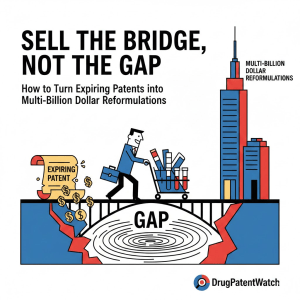
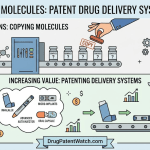
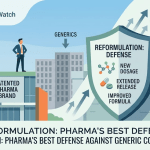
The companies that consistently extract maximum value from pharmaceutical assets — Novo Nordisk’s transformation of semaglutide from a once-weekly injection into a daily oral tablet, AstraZeneca’s reconstitution of quetiapine into an extended-release formulation that generated $5 billion annually after the immediate-release patent fell, Johnson & Johnson’s conversion of paliperidone from once-daily oral into monthly and then three-monthly injectable depots — did not wait for the cliff. They built the bridge first, years before the original patent expired, and sold the bridge to physicians, payers, and patients as a clinical upgrade rather than a legal maneuver.
The distinction between building a bridge and filling a gap is not merely semantic. It is the difference between a second-generation product that commands a premium price and a reformulation that payers immediately equate to a patent extension exercise and refuse to cover. The companies that sell the bridge have clinical data showing real patient benefit. They have physicians who advocate for the new form because it solves a problem the old form created. They have payer coverage that reflects genuine differentiation, not just regulatory approval.
This article is a granular guide to building that bridge — the regulatory mechanics, the patent strategy, the clinical positioning, the commercial timing, and the intelligence infrastructure that determines whether a reformulation becomes a multi-billion dollar franchise extension or a commercial disappointment with good legal papers.
Part One: The Economics of the Reformulation Decision
What the Numbers Actually Say About Second-Generation Products
The pharmaceutical industry has extensive data on what happens to branded drugs after patent expiration. Within 12 months of generic entry, branded drugs typically lose 70 to 90 percent of their prescription volume to generic substitution [1]. Within 24 months, the brand’s remaining volume is a residual — loyalists, patients on assistance programs, and prescribers who perceive genuine differences in formulation quality that don’t exist as a legal matter but persist as a behavioral one.
Against that baseline, a second-generation product that captures meaningful prescribing before generic entry begins provides both revenue continuity and a commercial rationale for sustained investment in the molecule. The math is direct: if a reformulation holds 40 percent of the franchise’s peak revenues while the original goes generic, the total franchise NPV is materially higher than a strategy of milking the original through its full patent life without reinvestment.
The best reformulations do better than that. AstraZeneca’s Seroquel XR (extended-release quetiapine) launched while the immediate-release (IR) formulation was still under patent, but built a patient base through genuine clinical advantages — once-daily dosing, different side-effect timing, simpler titration — that converted prescribers to the XR formulation. When Seroquel IR went generic in 2012, Seroquel XR retained sufficient formulary position and prescriber preference to generate approximately $1.8 billion in U.S. revenues in the year following IR generic entry [2]. The bridge had been built years before it was needed.
The reformulations that fail — and there are notable failures alongside the successes — have either no clinical differentiation (the reformulation is technically different but practically identical from the prescriber’s perspective), poor timing (launched too close to original patent expiration to build a prescriber base), or payer resistance so severe that no formulary position is achievable. Understanding which category a proposed reformulation falls into requires honest clinical assessment, not just IP analysis.
The 505(b)(2) Pathway: Your Primary Regulatory Tool
The FDA’s 505(b)(2) New Drug Application pathway allows an applicant to rely on published literature and the agency’s prior findings about a referenced drug’s safety and efficacy, supplemented by applicant-conducted studies addressing the specific differences in the new product [3]. This makes it the dominant regulatory mechanism for reformulation strategy: you do not need to repeat a full Phase III program proving the active ingredient is safe and effective. You need to demonstrate that your new formulation is bioequivalent to or clinically comparable with the original, and that any unique features — modified release profile, new delivery mechanism, abuse-deterrent properties — are adequately characterized.
The economics of this pathway are compelling. A full 505(b) NDA program costs $1 to $2 billion and takes ten to fifteen years. A well-designed 505(b)(2) program for a reformulation costs $50 to $400 million and takes three to eight years depending on the complexity of the clinical differentiation claimed [4]. For a molecule with $2 billion in peak annual revenues, a $200 million 505(b)(2) program delivering three years of data exclusivity and a new formulation patent portfolio represents an extraordinarily favorable investment.
The critical constraint is what the FDA calls “bridging” — the requirement that the applicant demonstrate a quantitative and qualitative relationship between the new product and the referenced drug sufficient to justify relying on the reference’s safety data. If the new formulation departs so significantly from the original that the safety profile cannot be assumed to be similar, the FDA may require additional clinical safety data that narrows the regulatory cost advantage of the 505(b)(2) pathway.
Formulation strategy and regulatory strategy are therefore inseparable. The reformulation must be different enough to justify a clinical benefit claim and support novel patent claims; it must be similar enough to the original to maintain the 505(b)(2) cost advantage without requiring the full clinical package of a new chemical entity. Navigating that balance is the central engineering challenge of reformulation development.
Three Years of Data Exclusivity: How to Make It Count
When a 505(b)(2) application relies on new clinical investigations essential to approval — studies conducted by or for the applicant that were not previously published or available — the FDA grants three years of data exclusivity [5]. This bars submission (not approval) of competing 505(b)(2) applications or ANDAs referencing those clinical investigations for three years from the date of approval.
Three years sounds modest against the backdrop of a twelve-year biologic franchise or a five-year NCE exclusivity. For a reformulation, it is the legal foundation — necessary but not sufficient. The real commercial protection comes from the formulation patent portfolio that runs concurrently and, ideally, extends well beyond the three-year data exclusivity window.
The clinical investigations that trigger three-year exclusivity must be genuinely new and material to the approval decision. Submitting an application that relies solely on published bioavailability studies conducted by third parties does not trigger data exclusivity. Neither does submitting pharmacokinetic data that the FDA considers merely confirmatory of what it already knows about the original molecule. The applicant must conduct studies — typically bioavailability, bioequivalence, or dedicated clinical studies — that the FDA requires specifically for the new formulation, and those studies must be sponsored or contracted by the applicant.
The practical implication is that cutting corners on clinical studies to reduce program costs may also cut the data exclusivity entitlement. Companies that conduct robust clinical programs — more than the minimum required for approval — often find that the additional studies generate both stronger exclusivity claims and stronger patent claims, because the clinical data themselves inform novel method-of-use and dosing protocol patents.
Part Two: Formulation Science as IP Strategy
Modified Release: The Architecture of Extended Exclusivity
Extended-release (ER), sustained-release (SR), controlled-release (CR), and delayed-release (DR) formulations represent the most extensively developed category of pharmaceutical reformulation — and the most contested IP territory. The basic science is well-established: polymeric matrices, osmotic delivery systems, multi-layered tablet designs, and microbead reservoirs can all extend the drug release profile from hours to days, changing the pharmacokinetic curve in ways that affect clinical outcomes, tolerability, and patient convenience.
What makes modified-release formulations valuable from an IP perspective is that the specific release mechanism — the particular polymer combination, the tablet architecture, the osmotic membrane composition — can be patented at a level of specificity that is genuinely difficult for generic manufacturers to replicate exactly. Unlike a composition-of-matter patent on a well-characterized small molecule, a formulation patent on a specific modified-release mechanism requires the generic manufacturer to reverse-engineer not just the drug substance but the delivery system.
This reverse-engineering difficulty is not insurmountable. Generic formulation scientists are highly capable, and the ANDA regulatory pathway requires only bioequivalence (equivalent rate and extent of absorption), not identical formulation. A generic can use a completely different release mechanism than the brand and still achieve bioequivalence. The patent protection from a modified-release formulation therefore depends not on the generic replicating the exact mechanism but on the patent claims being broad enough to cover any mechanism that achieves the claimed release profile.
That scope question is where most extended-release patent battles are fought. Brand companies want broad claims covering “any formulation achieving a release profile characterized by X” — claims that cover any generic formulation achieving bioequivalence. Generics challenge these claims as obvious over prior art (the release profile characteristics are often described in published pharmaceutical literature) or as lacking adequate written description (the broad functional claim is not enabled by a specification that discloses only specific polymer systems).
The most defensible extended-release patents are those that claim specific formulation features — particular polymer-drug ratios, specific excipient combinations, unique multilayer architectures — that the brand actually uses, combined with functional claims about release profiles as dependent or independent claim alternatives. Multiple patent applications covering different aspects of the same formulation, filed at different times from a single parent application, provide the layered claim portfolio that makes challenge expensive and uncertain.
Abuse-Deterrent Formulations: Clinical Value and Commercial Controversy
Abuse-deterrent formulations (ADFs) represent one of the most commercially significant and legally contested areas of pharmaceutical reformulation. The FDA’s 2015 guidance on ADFs established a framework under which reformulated opioids could receive product labeling that described specific abuse-deterrent properties — physical barriers to crushing, extraction, or solubilization that complicate intravenous or intranasal abuse routes [6].
The commercial rationale for ADF reformulation was straightforward: the FDA could require the brand to reformulate to abuse-deterrent standards as a condition of continued approval, generics would face higher regulatory barriers (requiring abuse-deterrent NDA approval rather than simple bioequivalence), and the new formulation would generate fresh patent protection and potential Orange Book listing.
The controversy, extensively documented in subsequent litigation, congressional investigation, and academic literature, was that some companies — particularly Purdue Pharma with OxyContin — used ADF reformulation in ways that delayed generic entry without providing proportionate public health benefits. The FDA’s 2013 decision to refuse generic approval of immediate-release oxycodone on public health grounds was subsequently overturned [7]. The legal and reputational consequences of opioid-linked reformulation have made this category of ADF strategy commercially radioactive for most companies.
What survives the opioid collapse, however, is the underlying principle: reformulations that address genuine safety concerns — abuse prevention in genuinely high-risk populations, medication errors in pediatric dosing, accidental ingestion risks — receive both FDA support and physician advocacy that translates into payer coverage. The ADF science and patent strategy remain valid; it is the specific application context that determines whether the reformulation is defensible.
For non-opioid products with genuine abuse or diversion risk, ADF development remains an important lifecycle management tool. Stimulants, benzodiazepines, and certain sleep medications have meaningful misuse profiles that ADF reformulations can address, with corresponding clinical data and patent protection.
Nanoparticle and Drug Delivery Technology: Where the Next Generation Lives
Nanoparticle drug delivery — including lipid nanoparticles (LNPs), polymeric nanoparticles, albumin-bound nanoparticles, and liposomal formulations — represents the frontier of reformulation strategy because it can transform drugs that would otherwise be marginal reformulations into clinically distinct second-generation products with genuinely different efficacy and safety profiles.
Abraxane (nab-paclitaxel) is the canonical example. Conventional paclitaxel (Taxol) required Cremophor EL as a solubilizing agent; that formulation caused hypersensitivity reactions serious enough to require premedication and limited the achievable dose. Abraxane’s albumin-nanoparticle formulation eliminated the Cremophor solvent, improved tolerability, and enabled higher dose administration with better tumor penetration [8]. The clinical differentiation was real, measurable, and persuasive to oncologists. The reformulation also generated new formulation patents, a 505(b)(2) approval with three-year data exclusivity, and an Orange Book listing on the nanoparticle delivery technology.
Abraxane reached peak annual revenues exceeding $1 billion — not because it was a patent maneuver but because it was a better clinical product. That distinction is critical. The most commercially durable reformulations are those where the formulation science solves a problem that prescribers already know about and care about. Abraxane solved the Cremophor premedication burden. Seroquel XR solved the three-times-daily dosing schedule. Adderall XR solved the midday school-time dose. Each of these reformulations succeeded because physicians, not lawyers, were its primary advocates.
The nanoparticle delivery field has matured significantly since Abraxane’s 2005 approval. LNP technology, accelerated into mainstream visibility by mRNA vaccine development, now enables delivery of nucleic acids, peptides, and poorly soluble small molecules with pharmacokinetic profiles unachievable through conventional formulation. Companies with existing drug franchises in oncology, CNS, and metabolic disease are systematically evaluating whether LNP or polymeric nanoparticle delivery can transform their first-generation molecules into clinically distinct next-generation products — with corresponding new IP positions.
Transdermal, Sublingual, and Intranasal: Routes as Reformulation Strategy
Changing the route of administration can constitute a genuine reformulation — not merely a delivery convenience but a fundamentally different pharmacokinetic profile, onset of action, or local-versus-systemic delivery ratio. These route-change reformulations often generate compelling clinical differentiation because the clinical benefit is obvious to prescribers: transdermal delivery avoids first-pass metabolism and gastrointestinal side effects; intranasal delivery provides faster CNS exposure than oral dosing for drugs with CNS targets; sublingual delivery achieves rapid onset for acute treatment without the need for water or injection.
The patent strategy for route-change reformulations is particularly rich. A transdermal patch covering a molecule that was originally approved as an oral tablet generates formulation patents on the patch adhesive, drug reservoir design, permeation enhancer system, and backing material — all of which are patentable elements separate from the active ingredient. Method-of-use patents can cover the specific therapeutic application made possible by the new route: transdermal hormone delivery that maintains more stable plasma levels than oral dosing, enabling clinical benefits not available with the first-generation product.
The commercial success of the nicotine patch, the fentanyl patch, and the rivastigmine patch each demonstrated that route-change reformulations can dominate a therapeutic category even when the original oral form remains available as a cheaper generic. Prescribers chose the patch not because it was patented but because it was clinically better for specific patient populations — patients with dysphagia, patients with compliance issues around scheduled oral dosing, patients who experienced GI side effects from oral administration.
Intranasal delivery has generated some of the most commercially significant recent reformulations. Esketamine (Spravato), Janssen’s intranasal reformulation of ketamine for treatment-resistant depression, received FDA approval in 2019 and achieved $540 million in global revenues by 2022 [9]. The intranasal route was not incidental to the clinical case; it was central. Intranasal delivery provided rapid-onset antidepressant effect consistent with ketamine’s known pharmacology while enabling outpatient administration under controlled conditions — a clinical profile that oral ketamine could not replicate and that IV ketamine could not deliver in the outpatient setting. The formulation science and the clinical science were integrated from the beginning.
Part Three: The Patent Strategy Behind Successful Reformulations
Building the Formulation Patent Family: What to File and When
A reformulation patent strategy begins with a systematic question: what is new about this product that a generic cannot simply copy, and can that novelty be claimed in a patent that will survive challenge?
The answer requires close collaboration between formulation scientists, patent counsel, and regulatory strategists working from the same product specification. Too often, formulation patents are drafted after the fact — counsel reviews the product specification and writes claims based on what was made. The result is claims that describe what was done rather than claims designed to cover what a generic would do to achieve bioequivalence.
The correct approach drafts claims prospectively, during formulation development, starting from freedom-to-operate analysis that identifies what prior art a generic manufacturer would use as a starting point and working backward to identify the specific inventive elements of the new formulation that differentiate it from that prior art. Claims should then cover both the specific embodiment (what you actually made) and functional equivalents that achieve the same result by analogous means — a generic might use Polymer X where you used Polymer Y, but if both achieve the same controlled release profile by the same mechanism, a properly drafted claim will cover both.
The filing timeline matters as much as the claim scope. Filing too early — before the formulation specification is final — produces patents with claims that may not cover the commercial product. Filing too late — after the commercial product is already in development and described in internal documents — creates potential prior art problems and loses the ability to claim the broadest possible priority date. The sweet spot is filing a robust provisional application at the point when the formulation concept is established and the clinical program design is determined, then filing the full PCT or U.S. non-provisional application with complete experimental data within 12 months.
Multiple applications from a common priority date, each covering different aspects of the formulation (release mechanism, excipient composition, dosing device, manufacturing process), create the staggered patent family that makes challenge expensive without requiring a single blocking patent with a scope broad enough to attract validity attack.
Orange Book Strategy for Reformulated Products
When a new formulation receives NDA approval under the 505(b)(2) pathway, the applicant must submit Orange Book patent information covering patents that claim the drug product, its approved formulation, or methods of using the drug as approved. The strategic question is how aggressively to list.
For reformulated products, the Orange Book listing strategy should include every formulation patent whose claims are directed to the specific approved product — the release matrix composition, the dosing form, the delivery device if applicable. It should also include any method-of-use patents covering the specific approved indication. What it should not include are patents with claims that, on objective review, do not actually read on the approved product — a listing practice that invites delisting petitions and, increasingly, FTC attention [10].
The practical effect of a robust Orange Book listing is that any generic or authorized generic competitor must file Paragraph IV certifications against each listed patent, triggering the 45-day window for the brand to sue and initiate the 30-month stay. For a reformulated product with five formulation patents and two method-of-use patents listed in the Orange Book, a generic manufacturer faces seven separate Paragraph IV certifications and potentially multiple simultaneous litigations. Even if the generic’s Paragraph IV strategy is well-founded on the merits, the litigation cost and time burden is substantial.
The most sophisticated reformulation patent strategies explicitly design the Orange Book listing to create this multi-front litigation requirement. Rather than filing one broad formulation patent that, if invalidated, takes the entire defense down, they file narrower, more specific patents across different aspects of the formulation, any one of which, if upheld, delays generic entry.
DrugPatentWatch provides Orange Book monitoring that tracks all patent listings, expiration dates, and Paragraph IV certification histories for any listed drug — giving both brand and generic manufacturers visibility into exactly how strong a reformulation’s patent position is and where the litigation pressure is building. Brand strategy teams that routinely monitor their own products through DrugPatentWatch see their position through the same lens their competitors use, enabling preemptive strengthening of weak points before challenge arrives.
Claim Types That Survive Paragraph IV Challenge
Not all patent claims are equally valuable in Hatch-Waxman litigation. The types of claims most consistently upheld in pharmaceutical formulation cases share common characteristics:
Specific polymer-drug interaction claims. Claims directed to specific matrix compositions where the polymer and drug interact in a chemically or physically characterized way — hydrogen bonding, ionic interaction, co-crystallization — are more defensible than claims based solely on the resulting dissolution profile. The interaction is specific; the dissolution profile is a functional result that prior art systems may also achieve.
Particle size distribution claims with functional correlation. Claims on specific particle size ranges (e.g., “wherein 90% of drug particles are less than 200 nanometers”) that correlate with demonstrably improved bioavailability or clinical performance are defensible when the size-performance relationship is experimentally documented in the specification. Bare particle size claims without functional correlation invite obviousness attack.
Device-drug combination claims for delivery systems. When the reformulation involves a dedicated delivery device — an autoinjector, an inhaler, a transdermal patch with specific adhesive geometry — combination claims covering the device-drug combination are difficult for generics to design around because the regulatory requirement for device equivalence limits how far they can deviate from the approved system.
Titration and dosing protocol claims. Method-of-use claims covering specific initiation and titration protocols — particularly those where clinical studies demonstrate that the specific protocol reduces adverse events, improves outcomes, or is required for safe and effective use — can protect the clinical practice even when the formulation itself is eventually generic. Prescribers who have been trained to use the patented protocol may continue to specify the brand or an authorized generic rather than switch to a generic that lacks the labeled protocol.
The claims most consistently invalidated in Paragraph IV litigation are overly broad functional claims (covering “any formulation achieving modified release”), claims where the specification does not enable the full scope of the claim, and claims where obvious prior art combinations squarely anticipate the claimed formulation elements.
Inter Partes Review Vulnerability for Formulation Patents
Formulation patents face specific IPR vulnerabilities that differ from the vulnerabilities of composition-of-matter patents. The primary vector is obviousness based on combinations of published pharmaceutical science literature — excipient technology handbooks, academic polymer science publications, and prior formulation patents in the same drug class that collectively render the claimed formulation obvious to a skilled formulation scientist.
The pharmaceutical formulation literature is vast and well-indexed. A skilled IPR petitioner can construct combinations of Rowe’s “Handbook of Pharmaceutical Excipients,” relevant polymer technology literature, and prior formulation patents to argue that any specific polymer-drug combination was routine formulation development, not invention. PTAB has invalidated formulation patents on these grounds at rates that brand companies find concerning, and the IPR process’s faster timeline and lower evidentiary standard make it a preferred attack route for generic manufacturers [11].
Defensive preparation requires directly addressing the most likely prior art combinations during prosecution. A specification that explicitly compares the claimed formulation to the prior art combinations most likely to be cited in an IPR — demonstrating unexpected results, non-obvious performance advantages, or technical teaching away from the claimed approach — provides the prosecution history that makes IPR invalidity harder to establish.
Post-grant, brand companies can fortify formulation patents by filing continuation applications that specifically address the IPR vulnerabilities of the parent claims, either by presenting claims with more specific dependency on the unexpected results or by presenting alternative independent claims covering different formulation aspects not addressed by the IPR petitioner’s prior art combination.
Part Four: Clinical Positioning — The Science Behind the Commercial Case
Why Payers Reject Reformulations and How to Beat Them
The commercial failure mode for pharmaceutical reformulations is almost always the same: the payer medical director reviews the approval, confirms that the new product contains the same active ingredient as an available generic, and places it in a non-preferred tier with high cost-sharing or explicit prior authorization requiring failure on the generic first. Prescribers then face patient-level access barriers that blunt the commercial impact of whatever clinical differentiation exists.
This is not an irrational payer decision. Payers have been systematically educated, by their own experience and by academic literature, to be skeptical of reformulations as clinical advances. The academic literature on pharmaceutical reformulations includes significant documentation of instances where companies sought and obtained premium pricing for reformulations with marginal or unproven clinical benefit [12]. JAMA Internal Medicine published analyses characterizing a substantial fraction of FDA approvals under 505(b)(2) as incremental improvements without demonstrated clinical superiority over existing treatments.
The companies that beat payer skepticism do so through clinical evidence that meets payers where their decision-making actually happens: on outcome measures that affect their costs, on patient populations where the improvement is concentrated and documentable, and on economic analyses that translate clinical benefit into cost-per-QALY language that payers use in their own formulary decisions.
Payers respond to reformulations that demonstrably reduce hospitalizations (extended-release psychiatric medications that reduce relapse-driven inpatient admissions), reduce adverse event costs (tolerability improvements that reduce management of side effects), or improve adherence-dependent outcomes (once-weekly versus once-daily dosing improvements in chronic disease management where non-adherence drives acute events). Reformulations positioned only on patient convenience — taking one pill instead of two, not needing to take with food — rarely justify a premium price in the current payer environment.
The clinical evidence package for a reformulation should therefore be designed from the outset with payer submission requirements in mind. This means outcome studies, not just pharmacokinetic studies. It means health economic modeling with real-world data inputs from the original molecule’s clinical experience. It means patient-reported outcome instruments that capture the specific quality-of-life dimensions the reformulation is designed to improve. This evidence takes years to generate and must be developed in parallel with the patent and regulatory work, not as an afterthought once approval is obtained.
Therapeutic Area Selection: Where Reformulation Works and Where It Does Not
Not all therapeutic areas offer equal reformulation opportunity. The pharmacological and clinical characteristics of the drug class matter enormously.
CNS conditions — depression, schizophrenia, ADHD, epilepsy, and Parkinson’s disease — represent the most consistently successful reformulation territory for several reasons. Patient adherence in these conditions is chronically poor; reducing dosing frequency demonstrably improves adherence; adherence improvements translate into measurable clinical outcomes (reduced relapse, lower hospitalization rates); and prescribers in these specialties are well-educated about the pharmacokinetic basis of formulation differences. The extended-release antipsychotic franchise — Seroquel XR, Invega (paliperidone ER), Fanapt (iloperidone), Latuda (in its sustained-release development) — succeeded precisely because CNS prescribers understood and valued the pharmacokinetic improvements these formulations offered.
Long-acting injectable (LAI) antipsychotics represent the most commercially successful category of CNS reformulation. Converting once-daily oral antipsychotics into monthly, bimonthly, or three-monthly injectable depots eliminates adherence as a variable entirely. Invega Sustenna (paliperidone palmitate monthly injection) reached $3.4 billion in 2022 revenues; Abilify Maintena (aripiprazole monthly injection) reached $1.2 billion [13]. These are not modest reformulation successes — they are among the most commercially durable products in their class, generating more revenue than the original oral formulations ever achieved. The clinical case for LAIs is well-established, the patent positions are robust, and payers cover them because the alternative — managing the consequences of oral antipsychotic non-adherence — costs more.
Oncology is mixed territory. Reformulations that improve tolerability (nab-paclitaxel’s elimination of Cremophor premedication), enhance tumor penetration (liposomal formulations), or enable oral administration of drugs previously injectable (oral topoisomerase inhibitors) succeed. Reformulations that merely change the infusion schedule without improving outcomes face payer resistance that has become sharper as oncology costs have drawn political scrutiny.
Cardiovascular and metabolic disease are difficult reformulation territories unless the formulation change addresses a specific, documented clinical problem. Extended-release metformin (Glucophage XR) succeeded because the immediate-release formulation had a well-known GI side effect profile that limited dose titration and adherence in a patient population that needed high doses for glycemic control. The clinical case was grounded in a real problem with real prevalence.
Primary care infections, acute pain, and allergy represent poor reformulation territory. Generic prescribing is deeply entrenched, payer oversight is intense, and the marginal clinical benefit required to justify a premium price is rarely achievable with reformulation alone.
Building Physician Advocacy Before Generic Entry
The commercial timeline for a reformulation is inverted from what most companies initially assume. The critical adoption window is not after the original molecule goes generic — when the brand needs defending — but two to three years before, when prescribers are making formulary-agnostic decisions based on clinical performance alone.
Physicians who have managed patients on a reformulation for two or more years, observed its clinical behavior, and built clinical protocols around its characteristics become advocates for the product independent of its price relative to generics. A psychiatrist who has converted her practice to long-acting injectable antipsychotics because she has observed their adherence benefits does not switch her patients back to oral generics when oral paliperidone goes generic. The clinical workflow has been redesigned around the reformulation.
This prescriber behavioral inertia — acquired through genuine clinical experience, not marketing claims — is the most durable commercial protection a reformulation can have. It is also the most time-dependent. It requires years of real clinical experience to accumulate and cannot be accelerated by advertising spend.
The practical implication is that reformulation launches need to happen earlier in the original molecule’s commercial lifecycle than most companies schedule them. A reformulation launched with three years of remaining original patent life has three years to build prescriber experience and advocacy before the original goes generic. A reformulation launched in the same quarter as generic entry has no runway at all.
Novo Nordisk’s semaglutide strategy exemplifies the right timing. Oral semaglutide (Rybelsus) received FDA approval in September 2019, years before injectable semaglutide faces biosimilar competition [14]. The oral formulation has been building its prescriber base and clinical track record for years. By the time injectable biosimilars arrive, a substantial segment of the GLP-1 market will have migrated to oral administration — a segment in which biosimilar manufacturers cannot compete directly without their own oral formulation development.
Part Five: Competitive Intelligence for Reformulation Strategy
How to Identify Reformulation Opportunities Before Your Competitors
The reformulation decision tree begins with an inventory of molecules approaching patent expiration in your therapeutic area — not just your own portfolio, but competitors’ molecules whose patent cliff creates an acquisition or in-licensing opportunity.
A molecule approaching patent expiration that has demonstrated clinical utility but has formulation-addressable problems (GI side effects limiting dose, poor bioavailability reducing efficacy, twice-daily dosing reducing adherence) is a reformulation opportunity. If the original developer has not filed formulation patents beyond the composition-of-matter protection, the molecule may be accessible through 505(b)(2) development without requiring acquisition of the brand.
This analysis requires systematic patent landscape review. DrugPatentWatch provides patent expiration calendars showing when primary patents on any FDA-approved drug will expire, what secondary patents exist, what Paragraph IV challenges have been filed, and what the competitive landscape looks like in each therapeutic area. Running this analysis across an entire drug class — every approved agent in a given therapeutic area, sorted by patent expiration date and revenue — identifies the reformulation opportunities available to a well-positioned developer.
The molecules with the most attractive reformulation profiles combine high revenue (justifying development investment), well-characterized pharmacology (reducing clinical risk), genuine formulation-addressable problems (creating clinical differentiation potential), and limited existing formulation patent protection (reducing the barrier to 505(b)(2) entry). For a mid-sized pharmaceutical company with a 505(b)(2) development capability but limited de novo discovery resources, this landscape analysis is the starting point for pipeline construction.
Monitoring Competitor Reformulation Strategies
Your competitors are running the same analysis. Published patent applications in the formulation technology classes relevant to your molecules — modified release polymers, nanoparticle delivery, transdermal systems — telegraph reformulation programs eighteen months before their public announcement. A competitor that begins filing patents on extended-release polymer combinations for a molecule that competes with your lead product is telling you, in public filings, that they plan to defend their franchise through reformulation.
Monitoring these published applications requires systematic patent surveillance in the relevant formulation technology IPC classes. The intersection of formulation technology patents and molecule-specific method-of-use patents, filed by a common assignee and claiming common priority dates, is a reliable signal of a coordinated reformulation program.
The intelligence from this surveillance has two uses. First, it informs your own competitive response: if a competitor is reformulating their franchise, you need to accelerate your own second-generation development or ensure that your competitive position does not depend on waiting for their franchise to go generic. Second, it identifies potential freedom-to-operate issues for your own reformulation program — if the competitor’s formulation patents might cover your planned reformulation approach, you need to know that before committing development resources.
The Authorized Generic as Reformulation Bridge
One underappreciated aspect of reformulation strategy is the role of authorized generic programs in managing the transition between the original molecule’s patent expiration and the second-generation product’s commercial establishment.
An authorized generic program, launched coincident with or before first generic entry, captures generic-market revenue while preserving brand resources for the reformulation commercial program. The authorized generic also serves as a formulary anchor: payers who switch their formularies to generic-tier coverage for the original molecule may retain the authorized generic as the covered option, maintaining a formulary relationship with the brand’s commercial infrastructure that can be leveraged for the reformulation.
Companies that run authorized generic programs alongside reformulation launches find that the two programs are complementary rather than competitive. The authorized generic addresses the volume-driven pharmacy benefit market; the reformulation addresses the clinically-differentiated specialty or branded market. For products with significant managed care and government payer exposure in the pharmacy channel, the authorized generic strategy can recover 20 to 40 percent of revenues that would otherwise shift to unaffiliated generic manufacturers.
The IP infrastructure for an authorized generic is simple — the brand holds the NDA and can authorize distribution of a generic under any label it chooses — but the commercial execution requires dedicated channel management, separate contracting with PBMs and state Medicaid programs, and pricing strategy that captures generic-tier formulary coverage without undercutting the reformulation’s premium position.
Part Six: Case Studies in Reformulation Success and Failure
Seroquel XR: The $5 Billion Extended-Release Success
AstraZeneca’s quetiapine story is among the most thoroughly documented reformulation successes in modern pharmaceutical history. The immediate-release formulation, Seroquel, became one of the best-selling drugs in the world — reaching $5.7 billion in peak global revenues in 2011 [15] — on the basis of clinical utility across schizophrenia, bipolar disorder, and increasingly as an off-label sedative and anxiolytic.
The original Seroquel patent landscape was complicated. The composition-of-matter patent on quetiapine fumarate expired in 2012 in the U.S. AstraZeneca had filed formulation patents on the IR tablets, but the core compound was well-known, the formulation was not highly differentiated, and generic entry was widely anticipated.
Seroquel XR launched in 2007, five years before IR patent expiration. The once-daily dosing was a genuine clinical improvement for a drug that had been prescribed at two or three times daily for most patients. The tolerability profile differed from the IR formulation in ways meaningful to clinical practice — the extended-release pharmacokinetic curve reduced the peak plasma concentration responsible for some of AstraZeneca’s most commonly reported adverse events.
The clinical program for Seroquel XR went beyond bioequivalence. AstraZeneca conducted dedicated clinical trials demonstrating efficacy of the once-daily formulation across approved indications, including an adjunctive treatment for major depressive disorder that the IR formulation did not have at launch. That additional MDD indication generated three years of data exclusivity and added a method-of-use patent to the Orange Book.
The five years between Seroquel XR’s launch and Seroquel IR’s patent expiration allowed the XR formulation to establish formulary position and prescriber preference. When Seroquel IR went generic in 2012, Seroquel XR retained approximately $1.8 billion in U.S. revenues in the following year — not because it was protected by unassailable patents, but because prescribers had spent five years learning to prefer it for patients where once-daily dosing mattered [2].
Invega and the Long-Acting Injectable Franchise: Extending a Molecule for a Decade
Risperidone, Janssen’s atypical antipsychotic, had one of the most thoroughly managed patent lifecycles in psychiatric pharmacology. The original risperidone composition patent expired in 2008. By then, Janssen had already commercialized paliperidone (Invega) — risperidone’s active metabolite — under a separate composition-of-matter patent, with an OROS extended-release formulation that generated separate formulation patents and data exclusivity.
Paliperidone ER (Invega) reached $1 billion in revenues before Janssen then reformulated it again into a long-acting injectable: paliperidone palmitate, approved in 2009 as Invega Sustenna for once-monthly administration [16]. The palmitate ester modification generated new composition-of-matter patent protection distinct from both risperidone and free paliperidone. The monthly injection generated new delivery technology patents and method-of-use patents on the initiation and maintenance dosing protocols.
The commercial arc continued. In 2015, Janssen received FDA approval for a three-monthly paliperidone palmitate injection — Invega Trinza — requiring only four injections per year [17]. The clinical differentiation was concrete: four injections versus twelve reduced administration burden, reduced the impact of missed appointments, and enabled a patient population that was highly non-adherent with oral medications to maintain therapeutic drug levels continuously.
The result was a single molecule — risperidone’s metabolite — generating over $4 billion in combined annual revenues from its various formulations more than fifteen years after the original active ingredient’s composition patent expired. The molecule’s commercial longevity was entirely a function of deliberate, staged reformulation development with integrated patent strategy, clinical positioning, and commercial execution.
Each reformulation generated new IP protection. The OROS extended-release system was patented. The palmitate prodrug ester was patented. The nanosuspension delivery technology used in the injectable was patented. The specific initiation and maintenance dosing protocols — critical to the clinical success of the LAI products — were patented as method-of-use claims. Any generic manufacturer attacking one of these formulation tiers faced different, independent patents from a different filing date and different claims than those protecting other tiers.
Velcade to Ninlaro: The Oral Reformulation That Created a New Franchise
Bortezomib (Velcade), Millennium Pharmaceuticals’ proteasome inhibitor for multiple myeloma, was an IV injection given twice weekly at clinic. The efficacy was proven; the administration burden was significant. Weekly clinic visits for injection are a substantial quality-of-life burden for patients with a progressive hematologic malignancy.
The pharmacological class lent itself to oral reformulation — proteasome inhibitors can be designed as small molecules with adequate oral bioavailability — and Takeda’s ixazomib (Ninlaro), approved in 2015, was the first oral proteasome inhibitor [18]. The oral formulation was not a reformulation of bortezomib specifically, but it demonstrates the principle: identifying a formulation barrier in an established drug class and developing an oral alternative generates both clinical differentiation (patients take Ninlaro at home; they do not need clinic visits for injection) and a distinct IP position.
The ixazomib story is instructive beyond the reformulation mechanics. Ninlaro reached revenues of approximately $600 million annually — meaningful, but not dominant. The clinical differentiation of oral administration was real, but bortezomib-based regimens remained deeply entrenched, carfilzomib entered as a competing injectable with superior efficacy data, and Ninlaro’s commercial success was limited by the combination regimen in which it was positioned rather than its formulation advantages alone.
The lesson is that reformulation creates necessary, but not sufficient, conditions for commercial success. Ninlaro had genuine formulation differentiation and solid IP. What limited its commercial ceiling was the competitive and clinical context in which it launched — an increasingly crowded myeloma treatment landscape where superior efficacy data from competing agents mattered more to prescribers than the convenience of oral administration.
The Failures: What Happens When the Bridge Goes Nowhere
Not every reformulation strategy delivers the projected return. The graveyard of pharmaceutical reformulations includes products with solid formulation science, respectable Orange Book listings, and FDA approvals that nevertheless achieved minimal commercial impact.
Opana ER (reformulated oxymorphone) received FDA approval as an abuse-deterrent formulation and was extensively marketed as a clinical improvement over the original. The FDA subsequently requested its withdrawal in 2017, citing evidence that the abuse-deterrent reformulation had driven users to switch from nasal to intravenous abuse routes, creating new public health harms [19]. The reformulation’s clinical claim was actively contradicted by real-world outcomes data.
Extended-release versions of several antihypertensive agents — drugs with well-established generic prescribing patterns and payer-level generic mandates — failed to generate meaningful commercial traction despite valid formulation patents and FDA approvals, because payers simply declined to cover them at premium prices and prescribers saw insufficient clinical benefit to advocate for access exceptions.
The pattern in reformulation failures is almost always a mismatch between the clinical claim and the payer’s coverage calculus. A reformulation that offers genuine patient convenience but no measurable clinical outcome improvement in a therapeutic area where payers apply strict cost-effectiveness standards will not achieve formulary coverage at a price that makes it commercially viable, regardless of its patent position. The patent protects the product from generic competition; it does not protect it from commercial irrelevance.
Part Seven: The Regulatory-Commercial Interface
FDA’s Evolving View on Reformulation Science
The FDA’s perspective on 505(b)(2) reformulations has evolved toward greater scrutiny of the clinical relevance of formulation differences — a shift driven partly by congressional and payer pressure and partly by the agency’s own assessment that some approved reformulations offered insufficient clinical benefit relative to their development cost and premium pricing.
The 2023 FDA draft guidance on modified-release products — updated from earlier guidance documents — placed greater emphasis on clinical relevance endpoints in the development program for modified-release formulations [20]. The guidance signaled that bioequivalence data alone, without supporting clinical data demonstrating the relevance of the formulation change to patient outcomes, would receive more scrutiny in the agency’s benefit-risk assessment. This does not mean that all modified-release approvals now require full Phase III trials, but it means that applications relying solely on pharmacokinetic data for products where clinical relevance is not self-evident face longer review cycles and greater likelihood of information requests.
Companies designing 505(b)(2) programs today should assume that the FDA will ask for clinical data addressing the specific clinical benefit claimed for the reformulation, not just bioequivalence data supporting the pharmacokinetic hypothesis. Planning those clinical studies from the outset — not retrofitting them after a Complete Response Letter — keeps the development timeline and budget on track.
The FDA’s position on abuse-deterrent formulations has also evolved following the opioid experience. The current guidance framework requires both in vitro studies demonstrating the abuse-deterrent mechanism and in vivo human abuse potential studies — a significantly higher bar than the framework applied to early ADF approvals [6]. For non-opioid products seeking ADF designations, this higher bar applies equally, which means ADF development programs must budget for human abuse potential studies that were not historically required.
Post-Market Commitments and REMS as Competitive Moats
Post-market commitments and Risk Evaluation and Mitigation Strategies (REMS) attached to NDA approvals can create competitive moats that supplement patent protection, particularly for reformulations with safety features that the original formulation did not require.
A REMS program is a specific safety management program the FDA requires for drugs with serious safety risks. When a reformulation receives approval with a REMS — typically because the drug class carries serious risks that the reformulation is designed to mitigate — any generic version must either use the same shared REMS system or develop its own equivalent. Developing a shared REMS or gaining FDA approval for a separate REMS requires negotiation and regulatory approval that can significantly delay generic launch.
The esketamine REMS is instructive. Spravato’s approval required a REMS mandating certified healthcare settings, patient observation periods, and prescriber education programs [21]. Generic esketamine developers must navigate that REMS requirement as part of their path to approval, adding complexity and cost to the generic development timeline beyond the standard ANDA bioequivalence hurdles.
For companies developing reformulations in therapeutic areas with inherent safety monitoring requirements — CNS stimulants, opioids, drugs with teratogenicity concerns — designing the clinical program to generate data that supports a REMS requirement creates both a regulatory rationale for the safety program and a competitive barrier for generic entry that operates independently of the patent position.
The Pediatric Exclusivity Play for Reformulations
Pediatric exclusivity, available under the Best Pharmaceuticals for Children Act for products with Written Requests from the FDA, attaches six additional months to every Orange Book patent for the relevant product if the required pediatric studies are conducted and submitted [22]. This exclusivity applies to the reformulation’s Orange Book patents just as it does to the original molecule’s patents.
For a reformulation that is genuinely more appropriate for pediatric populations than the original formulation — an oral liquid versus a tablet for younger children, a reduced-dose formulation calibrated for pediatric dosing ranges — the pediatric Written Request may specifically address the reformulation, generating both pediatric exclusivity and clinical data supporting a pediatric indication that the original formulation never had.
Pediatric labeling for reformulations that lack it is a consistently underexploited opportunity. A modified-release formulation for a CNS medication approved only in adults that obtains pediatric studies under a Written Request can add both pediatric exclusivity to its Orange Book patents and a labeled pediatric indication that differentiates it from the original adult-indication product. The clinical studies typically cost $20 to $40 million; the commercial value of the pediatric indication and six months of added exclusivity regularly exceeds $100 million on products with significant revenues.
Part Eight: The Economics of Reformulation Investment
How to Model the ROI Before Committing Development Resources
Pharmaceutical reformulation investment decisions should be modeled explicitly before development resources are committed. The model structure is straightforward in concept, though the inputs require careful validation:
The revenue side projects peak revenues for the reformulation in its target market, accounting for the competitive landscape at the time of expected launch, the clinical differentiation achievable, and the payer environment’s likely coverage decision. This projection should include base, upside, and downside scenarios — the reformulation’s commercial success is not certain, and the range of outcomes from well-chosen reformulations is wide.
The cost side includes development costs (formulation science, manufacturing scale-up, clinical program, regulatory submission), commercial launch costs, and ongoing manufacturing and litigation costs. The 505(b)(2) pathway material cost advantage over a full NDA should be quantified explicitly, because it is one of the primary economic justifications for the reformulation investment over alternative uses of capital.
The IP value component should model the expected effective exclusivity duration under different scenarios — granted, challenged and upheld, challenged and invalidated — and the expected commercial impact of each outcome on revenues and pricing. A model that treats all patents as certain to be upheld materially overstates the expected value.
The key output is the risk-adjusted net present value of the reformulation program against the alternative of not developing it — either continuing to defend the original molecule through its patent life or diverting the development investment to new molecular entity programs. For most established franchise holders, this comparison favors reformulation development when the original molecule has $500 million or more in revenues and genuine formulation-addressable clinical problems.
Capital Allocation: When Reformulation Competes With NME Development
Pharmaceutical companies face a genuine capital allocation tension between reformulation lifecycle management and new molecular entity discovery. The financial return on successful reformulations is high and relatively predictable. The financial return on NME development is higher in expectation but enormously variable — Phase III failure rates exceed 40 percent even in therapeutic areas where earlier development succeeded [23].
The argument for prioritizing reformulation investment over NME development is strongest when the existing franchise has high revenues, clear formulation-addressable problems, and limited competition from drugs that could replace it rather than compete with it on price. A drug that holds a therapeutic category by clinical inertia — where there are few superior alternatives and prescribers have extensive experience with it — is a much better reformulation candidate than a drug in a competitive market where a superior therapeutic alternative is likely to emerge during the reformulation’s commercial lifecycle.
The argument for NME prioritization over reformulation is strongest when the existing franchise is in a therapeutic area facing category disruption — where a fundamentally new mechanism of action is replacing the existing drug class — or where the formulation-addressable problems are minor relative to the drug’s inherent limitations. Reformulating a drug with adequate efficacy but serious mechanism-related adverse events does not fix the mechanism-related adverse events; it just changes the packaging.
The most sophisticated pharmaceutical companies do not treat this as an either/or decision. They segment the capital allocation: NME investment for pipeline categories with high unmet need and scientific opportunity; reformulation investment for franchise categories with high revenues, defensible clinical positions, and formulation-addressable problems. The reformulation program generates cash flow that funds the NME program. The NME program generates the next generation of assets to reformulate.
Licensing Reformulation Technology as a Revenue Stream
Reformulation technology developed for one product can generate licensing revenue when the technology platform is applicable to multiple molecules. Extended-release polymer systems, nanoparticle delivery platforms, and transdermal delivery technologies are inherently platform technologies — once developed and validated for one molecule, they can be licensed to other companies for use with different active ingredients.
The licensing model for formulation technology is well-established. Drug Delivery Corporation, ALZA (later acquired by J&J), Noven Pharmaceuticals, and various specialty delivery companies built significant businesses licensing their formulation platforms to brand manufacturers seeking to extend their franchises. The licensor collects upfront payments, development milestones, and royalties on product sales; the licensee obtains validated formulation technology without the development cost and risk.
For pharmaceutical companies with proprietary reformulation technology that has been validated across multiple molecules, the technology licensing model is an underutilized revenue stream. The patent portfolio supporting the formulation platform is independently licensable and can generate significant value from molecules that would not otherwise be commercially attractive to develop directly.
Part Nine: International Reformulation Strategy
European Market Dynamics and Supplementary Protection Certificates
The European reformulation landscape differs from the U.S. in several respects that directly affect commercial strategy. Supplementary Protection Certificates (SPCs) extend the basic patent term by up to five years for medicinal products that received EU marketing authorization — analogous to U.S. PTE — but the SPC attaches to a specific active ingredient and marketing authorization, not to the patent itself [24].
For reformulations, the SPC eligibility question is whether the reformulated product constitutes a new marketing authorization for purposes of SPC calculation. European courts have wrestled with this question extensively, particularly regarding fixed-dose combinations and new delivery routes. The general principle that has emerged from European Court of Justice case law is that a new marketing authorization triggers a new SPC right only when the active ingredient itself is new — a reformulation of a previously authorized active ingredient does not generate a new SPC independent of the active ingredient’s original SPC [25].
This means that European reformulation strategy relies more heavily on the underlying formulation patent term than on regulatory exclusivity extensions. European formulation patents run from filing date, typically 20 years, with potential pediatric extension of six months under EU Pediatric Regulation. The commercial protection window for a European reformulation is therefore primarily determined by the patent portfolio’s construction and the SPC position on the original molecule.
European payer dynamics also differ sharply from the U.S. in ways that affect reformulation commercial strategy. European health technology assessment (HTA) bodies — NICE in the UK, HAS in France, G-BA in Germany — apply clinical comparator assessments that evaluate the reformulation against the existing standard of care. A reformulation that does not demonstrate superior efficacy or safety versus available treatment alternatives (including generic versions of the original molecule) is unlikely to receive recommendation for use at premium pricing. The clinical evidence standard for European HTA is, in several respects, higher than the FDA’s approval standard.
This creates a practical requirement for European reformulation commercial programs: the clinical program must generate data that meets the HTA evidence threshold, not just the regulatory approval threshold. Companies that plan their clinical programs for FDA approval without simultaneously considering NICE, HAS, and G-BA data requirements find themselves with EU approvals they cannot commercialize at premium prices.
Japanese, Korean, and Australian Regulatory Considerations
Japan’s pharmaceutical regulatory framework includes a “proprietary data protection” system for new formulations that provides up to six years of data protection — longer than the U.S. three-year formulation exclusivity — but applies it only to new formulations that demonstrate genuine clinical innovation rather than mere pharmaceutical convenience [26]. The PMDA (Pharmaceuticals and Medical Devices Agency) applies this distinction actively in its review process.
South Korea’s MFDS (Ministry of Food and Drug Safety) has developed a patent linkage system similar to Hatch-Waxman, providing a 9-month stay mechanism for listed patents — shorter than the U.S. 30-month stay but creating meaningful generic entry friction for reformulations with robust Korean patent portfolios [27].
Australia’s Therapeutic Goods Administration provides data exclusivity periods of five years for new chemical entities and three years for new formulations, with patent linkage administered through the therapeutic goods regulations. Australia is a relatively small market but a significant data point for international pricing reference — several Australian regulatory approvals can be used as reference points in other markets’ pricing negotiations.
Global reformulation strategy therefore requires country-specific regulatory and patent planning that accounts for these differences, not a single approach applied uniformly. The clinical program, the patent filing strategy, and the HTA submission strategy should all be designed from the beginning with the major markets’ specific requirements in mind.
Part Ten: The Integration Imperative
Building the Cross-Functional Team That Makes Reformulations Work
Reformulation strategy fails more often through organizational dysfunction than through scientific or regulatory failure. The scientific capability to develop a modified-release formulation, conduct the clinical program, build the patent portfolio, and launch the commercial product exists within most mid-to-large pharmaceutical companies. What fails is the coordination among the teams that hold those capabilities.
Formulation scientists making a technological choice may not know which choices generate patentable claims. Patent counsel writing formulation claims may not know which formulation features are clinically differentiated versus merely technically novel. Clinical teams designing endpoint selection for the 505(b)(2) program may not know what endpoint data payers require for formulary decisions. Commercial teams setting launch pricing may not know what the patent portfolio’s timeline looks like under IPR challenge scenarios.
The companies that consistently execute successful reformulations — Janssen’s paliperidone franchise, Novo Nordisk’s semaglutide portfolio, AstraZeneca’s quetiapine XR program — have all invested in cross-functional teams in which formulation science, patent strategy, regulatory affairs, clinical development, market access, and commercial strategy operate from a shared product development plan with integrated timelines and decision gates.
The shared product development plan should document: the formulation features that are clinically differentiated and patentable, the clinical program designed to generate data supporting both regulatory approval and payer coverage, the patent filing timeline and continuation strategy, the Orange Book listing strategy and litigation preparation, the commercial launch timing relative to original patent expiration, and the authorized generic strategy for the original molecule.
This is not a committee document or a strategic planning deck. It is a working operational plan, updated quarterly, with named accountabilities across functions. Companies that treat reformulation strategy as a legal department responsibility or a clinical development responsibility — rather than a shared responsibility — consistently underperform against the potential of their assets.
Timing the Bridge: When to Start, When to Launch, and When to Stop
Reformulation development should begin five to seven years before original patent expiration. This timeline allows sufficient development time for the formulation program (typically two to four years from concept to IND-enabling studies), clinical program execution (typically two to four years for a 505(b)(2) program), and regulatory review (typically one to two years). Launching against the original patent’s expiration date requires starting development work that is underway before most companies have even acknowledged the cliff.
Launch timing should target two to four years before original generic entry. This window provides adequate time for prescriber adoption, formulary negotiation, and clinical experience accumulation before the generic-market transition forces the commercial conversation onto price rather than clinical differentiation. Companies that launch reformulations within twelve months of generic entry are selling the bridge after the gap has already opened.
The decision to stop investing in reformulation support — to recognize that a second-generation product has reached its commercial peak and subsequent lifecycle management investments will not generate returns — requires the same honesty that the initial investment decision required. The operational and commercial infrastructure built to support a reformulation should be continuously evaluated against the product’s actual commercial trajectory. A reformulation that achieved its formulary position and prescriber base continues to generate cash at modest cost; one that has failed to establish clinical differentiation does not get salvaged by additional commercial investment.
Conclusion: The Bridge Is the Business
The $400 billion patent cliff is real, but it is not a wall. It is a gradient — the point at which each molecule in a branded portfolio begins an inevitable descent from exclusive to contested commercial territory. How steep that descent is, and how long it takes, depends almost entirely on what the company built before it arrived.
Reformulation is not a defensive maneuver. The companies that execute it well do not describe their extended-release antipsychotic as a response to the original molecule’s patent expiration. They describe it as a clinical advance in a patient population with well-documented adherence problems. They describe their LAI program as an outcome-improving innovation in a disease characterized by recurrence. They describe their oral GLP-1 formulation as a patient-preference improvement that opens the market to patients who cannot or will not self-inject.
The bridge, in other words, is real clinical infrastructure, not regulatory vocabulary. Building it requires formulation science that addresses genuine clinical problems, clinical programs that generate data payers actually use, patent portfolios that cover commercially relevant product features rather than laboratory curiosities, and commercial execution that begins building prescriber experience years before the original molecule’s generic entry makes the comparison unavoidable.
The companies that sell the bridge — rather than narrating the gap — generate franchise lifespans measured in decades rather than patent terms. The molecules do not change. The strategies around them do.
Key Takeaways
Reformulation strategy must start five to seven years before generic entry, not after. The prescriber experience and formulary position that protect a reformulation’s commercial position take years to build and cannot be compressed.
The 505(b)(2) pathway delivers a 3 to 5x cost advantage over full NDA development. Three years of data exclusivity and a new formulation patent family make the economics compelling for molecules with revenues exceeding $500 million annually.
Payers reject reformulations without clinical outcome data. Pharmacokinetic differentiation alone does not justify formulary coverage at premium pricing. The clinical program must generate outcomes data addressing the payer’s cost calculus from day one.
Modified-release, long-acting injectable, and oral bioavailability enhancement are the three most commercially productive reformulation categories. They succeed because they solve clinical problems prescribers already know about — adherence in psychiatry, bioavailability in oncology, injection burden in endocrinology.
Orange Book listings for reformulated products should cover all formulation and method-of-use patents with legitimate claim scope. Each additional listed patent creates a separate Paragraph IV certification requirement and an independent litigation front.
PTAB IPR vulnerability for formulation patents is real and should be assessed proactively. Prosecution history that explicitly addresses the prior art combinations most likely to support an IPR petition significantly improves survival rates.
Competitive intelligence through patent monitoring — including via tools like DrugPatentWatch — reveals competitor reformulation strategies eighteen months before public announcement through published patent applications in formulation technology classes.
The authorized generic and the reformulation are complementary programs, not competitive ones. The authorized generic captures the volume market; the reformulation captures the clinically differentiated market. Both generate value that a single-product strategy misses.
Global reformulation strategy requires country-specific planning. EU HTA standards, Japanese data protection terms, and Korean and Australian patent linkage rules each differ from the U.S. framework in ways that materially affect commercial returns.
Frequently Asked Questions
Q1: How do you determine whether a formulation change is clinically meaningful enough to support premium pricing, before spending $200 million on development?
The pre-development test is whether the formulation change addresses a clinical problem that prescribers in the target specialty already manage actively — a problem they describe in their own language during market research, not one you introduce to them. Survey practicing specialists: what are the most common reasons you switch patients off the existing formulation? What would make you prefer the product for a specific patient type? What adverse events or compliance problems most often limit your use of this drug class? If the proposed reformulation’s clinical advantages directly address the top two answers to those questions, the clinical differentiation case is real and the premium pricing rationale is defensible. If the reformulation’s advantages require explaining a clinical benefit that prescribers do not spontaneously identify as a problem, the commercial ceiling is limited. This qualitative assessment, conducted rigorously before development begins, is the most cost-effective research investment in the reformulation development process.
Q2: Can a company develop and commercialize a 505(b)(2) reformulation of a competitor’s molecule, and what are the IP constraints?
Yes, with important caveats. The 505(b)(2) pathway explicitly allows reliance on a competitor’s approved product as the reference listed drug, provided the reference product is appropriately cited and the applicant conducts the studies required to bridge to the reference. The IP constraint is freedom to operate: the applicant must not infringe any valid and enforceable patents covering the referenced product or its formulation. This means a comprehensive freedom-to-operate analysis is required before committing development resources. If the competitor holds formulation patents that cover the proposed reformulation approach, the developer must either design around those patents (which may require a different formulation approach with corresponding clinical and regulatory re-bridging), challenge the patents’ validity before or during development, or wait for the patents to expire. A competitor molecule with weak or absent formulation patent protection, expiring composition-of-matter patents, and demonstrated clinical utility is the ideal 505(b)(2) target. DrugPatentWatch’s patent expiry and landscape data are useful for identifying exactly these molecules — compounds with high revenues, established clinical utility, and thin secondary patent protection.
Q3: What is the relationship between the reformulation’s clinical development program and its freedom from PTAB inter partes review attack?
The relationship is tighter than most companies realize. Clinical studies conducted in support of the 505(b)(2) approval can generate experimental data that directly addresses the obviousness questions most likely to arise in an IPR petition. A formulation that demonstrates unexpected improved bioavailability relative to the closest prior art formulation, for example, provides a response to the primary IPR petitioner’s argument that the claimed formulation was obvious to a skilled formulator. This unexpected results evidence is far more powerful when it comes from a well-designed controlled study with statistically rigorous comparisons than from laboratory observations noted in a patent specification. Designing the clinical program to include comparator arms against the prior art formulations most likely to be cited in an IPR — not just the original branded product — gives the brand both clinical differentiation data for payers and unexpected results data for patent defense. The incremental clinical program cost is modest; the patent defense value is significant.
Q4: How should a small biotech or specialty pharma company with a single major asset approach reformulation strategy differently from a large pharma company?
The core framework is the same. The resource constraint is different. A small company with a single asset faces a genuine capital allocation dilemma: the development capital required for a 505(b)(2) reformulation program may compete directly with the operating capital required to maintain the commercial organization for the original product. The practical solution for most small and mid-cap companies is earlier partnership engagement — licensing the reformulation rights to a larger company with the clinical and regulatory execution capability, in exchange for upfront payments, development milestones, and royalties. The original company retains the formulation IP, the royalty stream, and the commercial infrastructure focus on the original product; the partner executes the development program and commercialization. Alternatively, smaller companies can focus their reformulation investment narrowly on the highest-ROI opportunity — typically a once-monthly or less frequent injection version of a psychiatric or chronic disease medication — rather than attempting a comprehensive lifecycle management strategy. The goal is not to execute every lifecycle management option simultaneously but to identify the single reformulation that offers the highest risk-adjusted return and execute it with full resource commitment.
Q5: How does the IRA’s drug price negotiation framework change the calculation for reformulation investment?
The Inflation Reduction Act’s negotiation provisions affect reformulation economics in two ways that cut in opposite directions. Negatively: if a small-molecule drug becomes eligible for negotiation in year nine after approval, and a reformulation is approved in year six, the reformulation has only three years of free-pricing commercial life before it, too, enters the negotiation eligibility window (as a drug containing the same active moiety). The negotiated price for the reformulation will reflect its clinical differentiation relative to available alternatives, including the original generic — but it will be a negotiated price, not a market price. This compresses the premium-price window for reformulations of mature molecules. Positively: the IRA’s negotiation rules create a structural advantage for genuine clinical differentiation. A reformulation that demonstrates superior clinical outcomes — reduced hospitalization rates, improved adherence-dependent disease control — can command a higher negotiated price than a reformulation with marginal differentiation. The negotiation process explicitly considers clinical benefit relative to alternatives. Companies that invest in robust outcome evidence for their reformulations will negotiate better prices than those whose clinical differentiation case is thin. The net effect is that the IRA increases the premium on clinical evidence quality for reformulation programs and reduces the premium on reformulations with only convenience-based differentiation.
Citations
[1] IQVIA Institute for Human Data Science. (2023). Generic and biosimilar medicines in the U.S.: Competitive dynamics and savings 2022. IQVIA.
[2] AstraZeneca PLC. (2012). Annual report and form 20-F 2012: Product sales data. AstraZeneca.
[3] 21 U.S.C. § 355(b)(2) (2023). Applications relying on published literature or prior approvals. United States Code.
[4] Tufts Center for the Study of Drug Development. (2022). Cost of developing a new drug: 2022 update. Tufts CSDD Impact Report.
[5] 21 U.S.C. § 355(c)(3)(E)(iii) (2023). Three-year exclusivity for new clinical investigations. United States Code.
[6] U.S. Food and Drug Administration. (2015). Abuse-deterrent opioids: Evaluation and labeling: Guidance for industry. FDA.
[7] U.S. Food and Drug Administration. (2013). Determination that Oxycontin (oxycodone hydrochloride) tablets were withdrawn from sale for reasons of safety or effectiveness: Federal Register notice. FDA.
[8] Gradishar, W. J., Tjulandin, S., Davidson, N., Shaw, H., Desai, N., Bhar, P., Hawkins, M., & O’Shaughnessy, J. (2005). Phase III trial of nanoparticle albumin-bound paclitaxel compared with polyethylated castor oil-based paclitaxel in women with breast cancer. Journal of Clinical Oncology, 23(31), 7794-7803.
[9] Janssen Pharmaceuticals. (2022). Spravato (esketamine) global revenue summary 2022. Johnson & Johnson Annual Report.
[10] Federal Trade Commission. (2023). Policy statement on improper Orange Book patent listings. FTC.
[11] Vishnubhakat, S., Rai, A. K., & Kesan, J. P. (2016). Strategic decision making in dual PTAB and district court proceedings. Berkeley Technology Law Journal, 31(1), 45-117.
[12] Kesselheim, A. S., Darby, D., Kulldorff, M., Gruber, J., & Avorn, J. (2006). Pharmaceutical company payments to physicians: Early experiences with disclosure laws in Vermont and Minnesota. JAMA, 295(23), 2752-2757.
[17] U.S. Food and Drug Administration. (2015). FDA approves Invega Trinza (paliperidone palmitate): NDA 207533 approval. FDA.
[18] U.S. Food and Drug Administration. (2015). FDA approves Ninlaro (ixazomib): NDA 208462 approval. FDA.
[19] U.S. Food and Drug Administration. (2017). FDA requests removal of Opana ER for risks related to abuse. FDA News Release.
[20] U.S. Food and Drug Administration. (2023). Modified release solid oral dosage forms: Scale-up and post-approval changes (SUPAC-MR): Chemistry, manufacturing, and controls; in vitro dissolution testing; draft guidance for industry. FDA.
[21] U.S. Food and Drug Administration. (2019). Spravato (esketamine) risk evaluation and mitigation strategy: REMS program documentation. FDA.
[22] Best Pharmaceuticals for Children Act, Pub. L. 107-109, 115 Stat. 1408 (2002) (codified at 21 U.S.C. § 505A).
[23] Wong, C. H., Siah, K. W., & Lo, A. W. (2019). Estimation of clinical trial success rates and related parameters. Biostatistics, 20(2), 273-286.
[24] Regulation (EC) No 469/2009 of the European Parliament and of the Council concerning the supplementary protection certificate for medicinal products. Official Journal of the European Union.
[25] Neurim Pharmaceuticals Ltd. v. Comptroller-General of Patents, Case C-130/11, European Court of Justice (2012).
[26] Pharmaceuticals and Medical Devices Agency (Japan). (2021). Data protection for pharmaceutical products: Regulatory guidance for new formulation applications. PMDA.
[27] Ministry of Food and Drug Safety (South Korea). (2020). Pharmaceutical patent linkage system: Implementation guidance. MFDS.