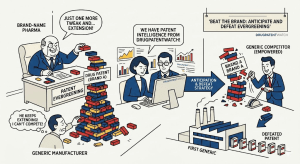
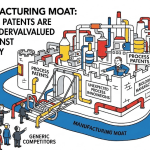
Evergreening is not a conspiracy. It is a rational economic strategy executed by legal means, and understanding it as anything else causes analysts and generic manufacturers to misread the competitive landscape and make expensive mistakes.
When a pharmaceutical company files secondary patents covering a drug’s formulations, dosing regimens, polymorphic crystal forms, and manufacturing processes, it is pursuing the same objective every business pursues: extending the economic life of its most profitable assets. The fact that the strategy uses patent law as its mechanism, and that the mechanism imposes costs on the healthcare system, does not make it illegal. Courts have upheld thousands of secondary pharmaceutical patents. The Orange Book lists them by the hundreds. And generic manufacturers who treat every secondary patent as a weak afterthought, rather than a genuine legal obstacle requiring strategic intelligence, lose Paragraph IV challenges they should have won.
What does make evergreening systematically beatable is that it follows identifiable patterns. Brand manufacturers do not invent new evergreening architectures for each drug. They draw from a playbook developed over thirty years of post-Hatch-Waxman pharmaceutical patent strategy, refined through thousands of litigation outcomes and regulatory interactions. That playbook is largely visible in advance to anyone who knows where to look and what to analyze.
This article is for the legal, business development, and regulatory affairs professionals on the generic manufacturer side who need to read that playbook before the brand executes it, not after. It covers the eight primary evergreening mechanisms, the patent intelligence inputs required to anticipate each one, the specific vulnerabilities that make each mechanism beatable, and the strategic sequencing that turns patent intelligence into market entry decisions.
Tools like DrugPatentWatch, which aggregates and structures FDA Orange Book data, patent family records, litigation histories, and ANDA filing information, appear throughout because the intelligence work described here requires organized, pharmaceutical-specific data infrastructure. The analysis is only as good as the data feeding it.
How Evergreening Works: The Economic Logic
A branded drug in the United States typically launches with one primary asset protecting its revenue: the compound patent, which covers the active molecular entity and runs roughly twenty years from the filing date. By the time the drug reaches commercial launch, often twelve to fifteen years of that term has been consumed by development and regulatory review. The real commercial protection period for most drugs is six to eight years after approval. <blockquote> “Of the 100 best-selling drugs in the United States, 74 received at least one new patent in the last decade, and the median number of secondary patents per drug exceeded seven, with some products accumulating over 100 patents each.” [1] </blockquote>
That six-to-eight-year window is not long enough to recover the fully-loaded development cost for a successful drug, which industry estimates from the Tufts Center for the Study of Drug Development place in the range of $2.6 billion when accounting for the cost of failed programs [2]. Brand manufacturers rationally extend revenue protection wherever patent law allows, which means filing additional patents as the drug moves through development, clinical trials, and post-approval experience.
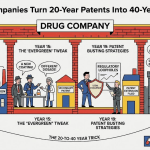
The economic consequence for generic manufacturers is a staggered set of barriers rather than a single expiration date. The compound patent expires, but a formulation patent runs three years longer. That expires, but a method-of-treatment patent covering the primary indication runs two more years. That expires, but a pediatric extension adds six months, and a dosage regimen patent covers the commercially-preferred dose for four more years after that. Each individual patent is weaker than the original compound patent, and many will not survive a Paragraph IV challenge. But each one requires its own analysis, its own litigation decision, and its own risk calculus – consuming resources and extending timelines in exactly the ways that reduce the generic industry’s return on investment in any specific product.
The brand’s goal is not necessarily to win every patent battle. It is to make generic entry expensive, risky, and delayed long enough that the drug’s revenue has shifted naturally to a next-generation product also under patent protection. A successful evergreening strategy converts patent expiration from a binary cliff into a prolonged slope.
A successful counter-strategy converts that slope back into something close to the original cliff by systematically challenging, invalidating, or designing around each secondary patent before it becomes a barrier.
Intelligence Source 1: The Orange Book as a Strategy Map
The FDA’s Orange Book – formally, Approved Drug Products with Therapeutic Equivalence Evaluations – is often described as a list of pharmaceutical patents. That description understates its strategic value. The Orange Book is a real-time map of every patent the brand manufacturer has chosen to assert against potential generic entrants for every approved drug product.
What Orange Book Listings Reveal About Brand Strategy
The timing, clustering, and category distribution of Orange Book patent listings contain signals about the brand’s evergreening intentions that go beyond the face value of any individual patent.
When a brand manufacturer adds a new patent to the Orange Book for a drug whose original compound patent has already been filed and listed, that addition reveals that the manufacturer believes it has secured legally-sufficient coverage worth asserting. The date of the listing relative to the drug’s approval date, the patent’s expiration date, and the patent category (compound vs. formulation vs. method of use) collectively define the shape of the evergreening architecture.
Generic manufacturers should monitor Orange Book listings for competitor products not just at the moment of ANDA filing consideration, but continuously from the drug’s initial approval. A brand manufacturer that begins adding secondary patents to the Orange Book three years before the compound patent expires is signaling its evergreening intentions in advance – and that three-year window is exactly when a sophisticated generic competitor should be conducting its own prior art searches, assessing claim scope, and preparing the challenge strategy.
DrugPatentWatch’s patent monitoring and alert system allows exactly this kind of ongoing tracking. It provides structured views of all Orange Book-listed patents by product, with expiration dates, patent categories, and update histories. A generic company monitoring a target product can set alerts for new Orange Book listings and respond to each addition with an immediate preliminary assessment of the listing’s strategic significance, rather than discovering a new barrier patent at the moment it files its ANDA.
Patent Category Analysis: Code Mapping
The Orange Book uses patent category codes that reveal whether each listed patent covers the drug substance (DS), the drug product formulation (DP), or a method of use (MU). This categorization is coarse but commercially significant.
A drug product page showing only DS category patents is in a fundamentally different competitive position from one showing a DS patent expiring soon and three DP patents expiring several years later. The DS-only profile means the generic manufacturer’s primary challenge is defeating the compound patent, and success means full market entry. The multi-layered DS-plus-DP profile means defeating the compound patent is only the first step, and market entry may still be blocked or conditioned by the formulation patents.
The strategic intelligence question is not just which categories are listed, but whether the formulation patents genuinely cover the commercial product or represent over-listing. Over-listing is widespread enough that the FTC devoted a 2023 enforcement action to it [3], but even legitimately-listed formulation patents require defeating before an ANDA can receive final approval.
Analysts mapping a target drug’s Orange Book listing profile should calculate the effective protection extension attributable to secondary patents: the difference between the compound patent expiration and the last-expiring secondary patent. That figure – which can range from zero to a decade or more – defines the commercial urgency and economic potential of the Paragraph IV opportunity.
The Over-Listing Opportunity
The FTC’s 2023 enforcement against drug-device combination product patents listed in the Orange Book for insulin products and other injectables opened a specific strategic avenue for generic manufacturers [4]. The agency challenged patents on delivery devices – autoinjectors, pen injectors, prefilled syringes – as not meeting the statutory standard for Orange Book listing, which requires that the patent “claim the approved drug product” or “a method of using such approved drug product.”
A drug delivery device patent does not claim the drug product itself. It claims the device. The FTC’s position, supported by subsequent district court proceedings, is that listing such patents creates a fraudulent assertion of Hatch-Waxman procedural rights, including the ability to trigger a 30-month stay of ANDA approval through an infringement suit.
For generic manufacturers targeting injectable drugs, combination products, and any drug sold with a proprietary delivery device, the over-listing challenge is a powerful counter-move. Rather than accepting the 30-month stay that follows a brand’s infringement suit based on device patents, the generic manufacturer can move in district court to delist the patent from the Orange Book, potentially eliminating that barrier and the associated stay while the primary patent litigation proceeds.
The delisting route requires identifying the challenged patents quickly, making a factual case that they do not meet the listing standard, and moving early enough that the delisting proceeding runs concurrent with, rather than after, the underlying ANDA review timeline. This is a time-sensitive strategic decision that depends on having current, organized Orange Book data available to analyze promptly.
The Eight Primary Evergreening Mechanisms
Each evergreening mechanism has a characteristic patent profile, a primary legal vulnerability, and a specific intelligence-gathering requirement. Understanding all eight allows generic manufacturers to map any target drug’s complete evergreening architecture and prioritize attack strategies accordingly.
Mechanism 1: Formulation Patents
Formulation patents cover the specific dosage form, excipients, release profile, or physical characteristics of the drug product as manufactured and sold. They are the most common evergreening tool in branded pharmaceutical practice, and they are the most frequently invalidated class of secondary patent in Paragraph IV litigation.
The legal vulnerability is primarily obviousness under 35 U.S.C. § 103. Pharmaceutical formulation chemistry is a mature science. Formulators working from standard reference texts – Remington’s Pharmaceutical Sciences, for example, or the published literature on controlled-release systems – can reach most commercially-employed formulations by routine experimentation. The combination of known excipients with a known active ingredient, adjusted to achieve known release characteristics, is textbook obviousness if the prior art shows each component independently and a motivation to combine them.
Courts have found pharmaceutical formulation patents obvious with significant frequency. In Daiichi Sankyo Co. v. Apotex Inc. [5], in several ANDA litigations involving proton pump inhibitors, and in the extensive litigation surrounding extended-release opioid formulations, courts invalidated formulation patents on prior art grounds that could have been identified before filing the Paragraph IV certification.
The intelligence requirement for attacking formulation patents begins with a thorough prior art search covering not just the patent literature but the scientific and technical literature – published papers, conference proceedings, regulatory submissions, and international patent filings. Formulation approaches published in journal articles before the patent’s priority date are prior art. Prior art searches limited to patent databases miss a substantial fraction of the relevant disclosure.
Generic manufacturers conducting pre-filing prior art searches should use the patent’s specific formulation claims as the search framework. Each claim element – the specific excipient, the release profile parameter, the particle size specification – is a separate search target. A claim requiring the combination of four elements can potentially be invalidated by showing that the prior art disclosed each element separately and provided a motivation to combine them, even if no single reference discloses the complete combination.
Mechanism 2: Polymorph Patents
Active pharmaceutical ingredients can often exist in multiple crystalline forms (polymorphs) or amorphous states, each with slightly different physical and chemical properties – solubility, melting point, stability, bioavailability. When the commercial drug product uses a specific polymorph, the brand manufacturer often patents that form, asserting that competitors cannot manufacture the drug using the same crystal structure.
Polymorph patents are structurally vulnerable on two separate grounds. The first is inherent anticipation: if the compound was previously disclosed in the prior art and would naturally crystallize in the patented form when a skilled person followed standard synthesis procedures, the polymorph is “inherently anticipated” by the prior art even though that prior art never described the polymorph specifically. Several Federal Circuit decisions have applied this doctrine to pharmaceutical polymorph cases, including the influential SmithKline Beecham Corp. v. Apotex Corp. [6] litigation over the paroxetine hydrochloride hemihydrate polymorph.
The second ground is obviousness: with a finite number of possible polymorphic forms and standard analytical techniques available to characterize them, courts have found that systematically screening a compound for polymorphs is routine experimentation, and patenting the result of that routine work is not inventive.
The intelligence requirement for polymorph patents is identifying the specific crystalline form used in the commercial product (usually disclosed in the NDA and obtainable through analytical characterization of the commercial product), then conducting an independent polymorph screening study that produces the target form and documents the method. If the form can be produced by following standard screening procedures described in the prior art, the inherent anticipation and obviousness arguments are both available.
DrugPatentWatch’s patent listing data identifies polymorph patents by claim content analysis, allowing generic manufacturers to flag these patents for early-stage polymorph characterization work as part of their ANDA development program rather than treating the patent analysis as a separate downstream task.
Mechanism 3: Active Metabolite Patents
When a parent drug is metabolized in the human body, its metabolites may themselves be pharmacologically active. Brand manufacturers have patented active metabolites as separate compositions of matter, then obtained separate drug approvals for the metabolite as a “new” product – a strategy that generates independent patent protection on what is chemically a derivative of the original compound.
The paradigm cases are well-known. Terfenadine (Seldane) was the parent drug; fexofenadine (Allegra) was its active metabolite, separately patented and commercially launched as the compound patent on terfenadine approached expiration [7]. Loratadine (Claritin) begat desloratadine (Clarinex). Omeprazole (Prilosec) begat esomeprazole (Nexium). These transitions became commercially valuable because the brand could market the “improved” second-generation product and shift patients to it before generic competition on the parent drug arrived.
For generic manufacturers, active metabolite patents present a distinct challenge from other secondary patents because they cover genuinely different chemical entities, not simply variations on the original compound. The generic manufacturer targeting the parent drug is not directly affected by the metabolite patent. The metabolite patent becomes relevant if the generic manufacturer wants to enter the metabolite drug market separately, which requires its own ANDA and its own Paragraph IV strategy.
The intelligence requirement here is monitoring the brand manufacturer’s pipeline filings for metabolite compounds beginning several years before the parent compound’s patent expiration. When a brand files a new NDA for a compound that is structurally or pharmacologically related to an existing drug with an approaching patent cliff, that filing is a signal that evergreening-by-metabolite may be in progress.
Mechanism 4: Dosage Regimen Patents
Dosage regimen patents cover the specific schedule, frequency, dose level, or duration of administration of an approved drug. A patent claiming “a method of treating [disease] by administering [drug] once daily” when the drug was previously approved only for twice-daily dosing is a method-of-treatment patent covering a specific dosing optimization.
These patents present a nuanced challenge for generic manufacturers because they can be both genuinely clinically significant and legally vulnerable simultaneously. A once-daily formulation may represent real therapeutic improvement in patient adherence. But if the prior art showed that once-daily dosing was previously tested, or if a skilled clinician would have had reason to test it based on the drug’s known pharmacokinetics, the patent may be obvious.
The commercial significance of dosage regimen patents lies in their Orange Book listing status. A generic ANDA for the drug must include a Paragraph IV certification against each listed method-of-use patent if the generic seeks approval for the same labeled indication. The generic manufacturer’s alternative is to request approval with a “carved-out” label that omits the patented indication or dosing regimen – a label carve-out under 21 C.F.R. § 314.94(a)(8)(iv). This approach avoids the need to certify against the method-of-use patent but may also reduce the commercial addressable market for the generic product.
The strategic intelligence question for dosage regimen patents is: which patents can be carved out without materially reducing market opportunity, and which must be challenged directly? This requires understanding the actual prescribing patterns for the drug – what percentage of prescriptions use the patented dosing regimen, what percentage use the unpatented regimen, and whether physicians treating the primary indication would switch patients from the generic (labeled with the carved-out regimen) to the brand (labeled with the full regimen) upon product launch.
Market research, physician prescribing database analysis, and formulary positioning data inform this assessment. A dosage regimen patent covering a regimen used by 90 percent of patients must be challenged. One covering a regimen used by 8 percent of patients in a non-primary subpopulation may be worth carving around.
Mechanism 5: Process Patents
Process patents cover the manufacturing steps used to produce the active pharmaceutical ingredient or the finished drug product. They do not directly cover the compound itself, but they can create legal risk for generic manufacturers whose manufacturing processes overlap with the patented methods.
Process patents are theoretically easier to design around than compound patents: a generic manufacturer can use a different synthesis route and avoid infringement entirely. In practice, the design-around is constrained by chemistry. For many active pharmaceutical ingredients, only a small number of economically viable synthesis routes exist, and if the brand has patented the most efficient ones, generic manufacturers face higher manufacturing costs or complex synthesis modifications that require regulatory pre-approval as manufacturing changes.
The intelligence requirement for process patents begins during the ANDA development stage, when the generic manufacturer’s chemistry team selects a synthesis route. That selection should be informed by a freedom-to-operate analysis covering the brand’s process patent portfolio. Generic manufacturers that design their synthesis routes without this analysis may find themselves manufacturing in a way that infringes a process patent, triggering litigation that delays launch or forces costly process redesign after ANDA approval.
The practical challenge is identifying process patents that cover the drug, since they are not always listed in the Orange Book. The Orange Book listing requirement applies to patents that claim the drug product or methods of use; process patents that do not claim the final product may not qualify for listing and therefore may not appear in the Orange Book record. They remain enforceable, however, under regular patent infringement law.
Comprehensive process patent surveillance requires searching beyond the Orange Book to the full patent literature using the drug’s compound name, relevant CAS registry numbers, and the brand manufacturer’s assignee name as search terms. DrugPatentWatch’s patent family tracking, combined with USPTO full-text patent search capabilities, enables this broader search. The combination of the Orange Book view (for listed patents subject to Hatch-Waxman) and a full patent landscape search (for unlisted process and manufacturing patents) constitutes the complete IP risk picture for an ANDA development program.
Mechanism 6: Pediatric Exclusivity
Pediatric exclusivity is not a patent at all. It is a regulatory exclusivity period – six months attached to the end of all existing patents and exclusivities for a drug – granted to manufacturers that conduct FDA-requested pediatric clinical studies of their products [8]. Congress created it to incentivize pediatric research that would otherwise be commercially unviable.
The evergreening application has been straightforward: a brand manufacturer approaching a patent cliff voluntarily conducts pediatric studies and earns six months of additional exclusivity across all its Orange Book-listed patents. Six months of exclusivity on a drug generating $2 billion annually is worth $1 billion in simple arithmetic – far more than the cost of the pediatric studies. The FDA has issued Written Requests for pediatric studies in hundreds of cases, and manufacturers have earned pediatric exclusivity at high rates.
Generic manufacturers cannot challenge pediatric exclusivity directly. Once the FDA grants it, the six-month extension is legally established and the ANDA cannot receive final approval until it expires. The counter-strategy is temporal: file the ANDA early enough, and conduct the Paragraph IV litigation aggressively enough, that the 30-month stay period created by the infringement suit and the Paragraph IV litigation process both conclude before, or close to, the pediatric exclusivity expiration date.
The intelligence requirement is monitoring FDA Written Requests under section 505A, which are published on the FDA website and represent advance notice that pediatric exclusivity is being sought for a specific drug [9]. When a Written Request appears for a drug you are planning to target, the six-month extension becomes a planning assumption in your entry timeline modeling. Failing to account for pediatric exclusivity in the ANDA timing strategy is one of the most common and costly planning errors in generic entry analysis.
Mechanism 7: New Indication and Supplemental NDA Patents
A brand manufacturer can file a supplemental NDA to add a new approved indication to an existing drug, then list the patents covering the method of use for that new indication in the Orange Book. These supplemental NDA patents can run for years beyond the compound patent expiration, creating a fresh set of listed patents against which generic filers must certify.
The strategic complexity lies in the relationship between the old indication and the new one. A generic ANDA filed for the original indication can certify under Paragraph III against the supplemental indication patent (indicating the generic will not seek approval until the patent expires) or can carve out the new indication from its label entirely. The label carve-out approach allows market entry for the original indication while leaving the supplemental indication protected – a commercially viable strategy if the original indication represents the bulk of prescriptions.
The problem arises when the new indication is not genuinely new but is instead the primary indication for which the drug is actually being prescribed off-label. A brand manufacturer that obtains a new patent on the method of treating condition X, where the drug is already widely used off-label for condition X, can use the supplemental patent to delay generic entry for what is in practice the drug’s primary market even after the original compound patent has expired. This is the mechanism behind much of the most commercially significant evergreening in psychiatric medications, pain management, and oncology, where off-label use is common.
The intelligence requirement is tracking all supplemental NDA filings and new Orange Book patent additions for target drugs from initial compound patent filing through commercial launch. A supplemental NDA filing in the three to five years before compound patent expiration is a high-probability signal that new indication patents are coming to the Orange Book. Identifying this in advance allows generic manufacturers to begin prior art searches for the new indication claims well before the Paragraph IV certification is filed.
Mechanism 8: Continuation and Continuation-in-Part Applications
Brand manufacturers file continuation applications from their original patent applications to claim different aspects of the same disclosed invention. A continuation-in-part (CIP) adds new matter to the specification while retaining some priority claims to the original filing date. These continuation strategies allow brand manufacturers to create new patents long after the original filing, potentially with later expiration dates than the parent, and potentially with claims tailored to cover competitor approaches developed after the original filing.
The “submarine” quality of continuation prosecution – the ability to amend claims after seeing what competitors have developed – was more potent under pre-1995 patent term rules, but continuation practice remains commercially significant for pharmaceutical products. A brand manufacturer with a pending continuation application can amend its claims during prosecution to specifically cover the formulation, manufacturing process, or clinical method that a generic manufacturer is using in its own ANDA.
For generic manufacturers, the intelligence requirement is monitoring pending continuation applications for each target drug’s patent family. The USPTO publishes patent applications 18 months after the earliest claimed priority date, making the existence of pending applications publicly known before they issue [10]. Generic manufacturers should maintain watch services on patent applications filed by brand manufacturers in the relevant chemical and therapeutic class spaces, treating each new application publication as a potential future barrier.
DrugPatentWatch tracks patent families including continuation relationships for Orange Book-listed products, enabling generic manufacturers to identify where a brand has active pending applications related to a commercial product. When a continuation family has multiple pending applications, the risk of claim amendment targeting the generic manufacturer’s ANDA specifications is at its highest, and monitoring USPTO prosecution activity for those applications is warranted.
Patent Intelligence Workflows: Building the Counter-Evergreening System
Understanding the eight mechanisms is necessary but not sufficient. Beating them requires an organized intelligence workflow that generates timely, actionable information at each stage of the generic development and regulatory process.
The Target Selection Intelligence Audit
Before committing resources to an ANDA development program, a generic manufacturer should conduct a full target selection intelligence audit of the branded drug’s patent and exclusivity landscape. This audit has four outputs:
A complete listing of all Orange Book-listed patents with expiration dates, PTA/PTE adjustments, and patent categories. DrugPatentWatch’s product-level patent view provides this structured data directly, and the expiration dates it provides are adjusted for known term extensions – a material improvement over manual Orange Book review.
An identification of all relevant unlisted patents – process patents, CIP applications, and any international patent family members that may signal litigation strategy even where U.S. patents have different scope.
A preliminary categorization of each patent by its primary evergreening mechanism, its most likely legal vulnerability, and the estimated cost of a Paragraph IV challenge.
A net present value estimate of the Paragraph IV opportunity, accounting for the development cost, the expected litigation cost, the probability of success, the expected entry timeline, and the duration and revenue opportunity of any 180-day first-filer exclusivity period.
This audit is the basis for the go/no-go decision on ANDA investment. A drug with $1 billion in annual U.S. sales protected primarily by three formulation patents with strong obviousness arguments and no pending continuation applications presents a very different NPV profile from one with the same sales figures but protected by a compound patent plus seven secondary patents including active CIP prosecution.
Prior Art Search Protocol
Once the target selection decision is made, the prior art search for each Orange Book-listed patent begins in parallel with the formulation development work. This parallel execution is important: waiting until the ANDA is ready to file before beginning the prior art search delays the Paragraph IV certification by months and costs 180-day exclusivity timing.
A pharmaceutical patent prior art search has a specific structure that differs from general patent searches:
The compound and formulation literature search covers published scientific papers, conference abstracts, and regulatory submissions (including international drug applications and WHO drug assessments) that predate each patent’s priority date. PubMed, Embase, and SciFinder are primary databases for this work.
The patent literature search covers U.S. patents, U.S. patent applications, and international patent publications that predate the priority date. USPTO full-text search, Espacenet, and commercial databases like Derwent Innovation provide this coverage.
The commercial disclosure search covers product launches, marketing materials, and regulatory approvals in foreign jurisdictions that predate the priority date. A drug formulation that was commercially sold in Europe before the U.S. patent’s priority date is prior art under 35 U.S.C. § 102(a).
The regulatory submission search covers FDA submissions – including disclosed clinical trial protocols and published clinical study reports from ClinicalTrials.gov – that may disclose the patented formulation or method of use before the patent’s priority date.
These four search streams produce a prior art landscape that informs both the invalidity arguments in the Paragraph IV certification letter and the eventual IPR petition, if the brand responds to the certification by filing an infringement suit.
The Certification Letter as Strategic Document
A Paragraph IV certification letter is not merely a legal filing. It is the opening move in a litigation strategy, and its content shapes the entire subsequent proceeding. Under 21 C.F.R. § 314.95, the certification letter must describe “the factual and legal basis” for the generic manufacturer’s belief that the listed patents are invalid or will not be infringed.
The strategic objectives of the certification letter are: to provide legally sufficient notice to the brand manufacturer while preserving maximum flexibility for the generic manufacturer’s litigation strategy; to frame the invalidity and non-infringement arguments in their strongest form; and to select which patents to certify against under Paragraph IV versus which to accept under Paragraph III (waiting for expiration) or to carve around under a label carve-out.
The patent-by-patent certification decision is one of the highest-stakes strategic choices in the entire ANDA process. Certifying under Paragraph IV against a patent triggers the brand’s 45-day window to sue. If the brand sues within 45 days, a 30-month stay of ANDA approval begins automatically, and the generic manufacturer must litigate through the stay period or seek to end it early by prevailing in the infringement case. If the brand does not sue within 45 days, the ANDA can receive final approval when FDA review is complete, and the patent cannot generate a stay.
A brand’s decision not to sue within 45 days is itself strategically significant information. It often signals that the brand’s internal analysis of the patent’s strength was less favorable than expected, or that the brand calculated that the costs of litigation outweigh the likely commercial benefit. Monitoring brand litigation response patterns across multiple Paragraph IV certifications, which DrugPatentWatch compiles from public court records and FDA sources, helps generic manufacturers calibrate their expectations for specific brand litigants and specific patent types.
Defeating Specific Evergreening Mechanisms: Legal Strategies in Detail
Each evergreening mechanism requires a tailored legal response. Generic manufacturers whose legal teams apply the same Paragraph IV playbook to every patent category leave substantial success probability on the table.
Defeating Formulation Patents: The Obviousness Framework
Formulation patent invalidity arguments at the PTAB and in district court converge on the same legal framework: Graham v. John Deere Co. [11] as applied to pharmaceutical combination formulations. The four Graham factors are the scope of the prior art and the differences between it and the claims, the level of ordinary skill in the art, the existence of a motivation to combine prior art teachings, and objective indicia of non-obviousness.
The pharmaceutical-specific challenge is the motivation-to-combine element. Brand manufacturers consistently argue that their patented formulations achieved unexpected results – improved stability, better bioavailability, reduced side effects – that were not predictable from the prior art, and that these unexpected results negate obviousness. To defeat this argument, generic manufacturers need both compelling prior art showing that the claimed combination was obvious, and experimental data demonstrating that the alleged unexpected results are not statistically significant or are actually predictable from prior art principles.
The investment in experimental work – conducting the stability studies, bioavailability experiments, or in vitro dissolution testing that produces the data to rebut unexpected results arguments – is frequently decisive in formulation patent IPRs. Generic manufacturers that treat IPR petitions as paper exercises without experimental support lose cases that were winnable.
Successful examples include the IPR proceedings challenging extended-release opioid formulation patents. In a series of IPR decisions between 2015 and 2018 involving Purdue Pharma’s patents on OxyContin ER formulations, the PTAB cancelled claims after generic filers presented prior art showing that high-viscosity polymer matrices for extended opioid release were known in the literature before the priority date [12]. The combination of strong prior art searching and the absence of genuinely unexpected results proved dispositive.
Defeating Polymorph Patents: The Inherent Anticipation Argument
The inherent anticipation argument for polymorph patents requires a specific technical showing: that a person of ordinary skill in the art, following the synthesis procedures disclosed in the prior art for the active compound, would inevitably produce the patented polymorph without knowing it. The argument does not require showing that the prior art researchers identified the polymorph, only that their process necessarily produced it.
This argument succeeded in SmithKline Beecham Corp. v. Apotex Corp. [6], where the Federal Circuit affirmed that the hemihydrate form of paroxetine was inherently anticipated because it would inevitably form when the prior art’s synthesis process was used in the presence of ambient moisture. The court’s analysis turned on experimental evidence showing that the prior art process, conducted under normal laboratory conditions, consistently produced the patented polymorph.
For generic manufacturers pursuing polymorph patent challenges, the key investment is running the prior art synthesis process under controlled conditions, with moisture and atmosphere controlled at different levels, and characterizing the crystalline output by X-ray powder diffraction (XRPD). If the patented polymorph consistently appears when following the prior art procedures, the inherent anticipation case is strong.
This experimental work takes time – typically six to twelve months for a thorough polymorph screening and characterization study. Starting this work at the same time as the ANDA formulation development, rather than after ANDA filing, prevents the experimental timeline from becoming a bottleneck in the Paragraph IV litigation preparation.
Defeating Method-of-Treatment Patents: The Label Carve-Out Analysis
Label carve-outs are available for method-of-treatment patents but require careful analysis of the drug’s actual market to determine whether the carve-out materially reduces commercial viability. The analysis framework has two steps.
First, determine whether the claimed method corresponds to the primary commercial use of the drug (in which case carving it out would materially impair market entry) or a secondary or niche use (in which case the carve-out preserves the core commercial opportunity). Prescribing data from IQVIA or Symphony Health, broken down by indication code, provides the empirical basis for this assessment.
Second, assess whether the carved-out label would expose the generic manufacturer to induced infringement liability if physicians use the generic product for the patented indication anyway. The Supreme Court’s decision in Global-Tech Appliances v. SEB S.A. [13] established that induced infringement requires knowledge of the patent and specific intent to induce infringement. A generic manufacturer with a carved-out label that does not include any instruction or promotion of the patented use has strong arguments against induced infringement liability, but the case law on this issue remains actively contested and jurisdiction-dependent.
The 2021 Federal Circuit decision in GlaxoSmithKline LLC v. Teva Pharmaceuticals USA, Inc. [14] significantly tightened the induced infringement analysis for label carve-outs, finding that Teva’s label, even though it formally carved out the patented cardiac indication for carvedilol, contained enough reference to cardiac conditions to support an induced infringement finding. This decision made label carve-outs materially riskier for generic manufacturers in cases where the patented and unpatented uses are not cleanly separable on the label.
Patent intelligence requirement: before relying on a label carve-out to avoid a Paragraph IV certification, analyze whether the brand’s method-of-use patent covers a use that is genuinely separable from the drug’s standard prescribing context. Where separability is uncertain, the safer course is certifying under Paragraph IV and challenging the patent directly.
Defeating Process Patents: Freedom-to-Operate and Design-Around
Process patent freedom-to-operate (FTO) analysis for ANDA programs requires a different approach from listing and challenging patents. The goal is not necessarily invalidation but rather designing a synthesis route that demonstrably does not infringe the brand’s process patents.
The analysis begins by claim-mapping the brand’s process patents against the proposed generic synthesis route. Each step in the synthesis is compared against the process patent claims to determine whether the generic route performs a “substantially similar function in a substantially similar way to achieve the same result” – the doctrine of equivalents standard that extends infringement beyond literal claim language.
Where the claim mapping reveals potential overlap, the generic manufacturer’s process chemistry team modifies the synthesis to create clear differentiation from the patented steps. This may mean using different reagents, different reaction conditions, different intermediate compounds, or a different sequence of steps. The modifications must achieve sufficient differentiation to survive a doctrine of equivalents analysis while still producing the active pharmaceutical ingredient at acceptable purity and yield.
The competitive intelligence dimension of process patent FTO is monitoring the brand manufacturer’s process patent portfolio for continuation applications that might claim the design-around route directly. A brand manufacturer that knows a generic filer is likely to use a specific alternative synthesis route can file a continuation with claims covering that route, attempting to capture the design-around before the generic manufacturer has finalized its process.
This cat-and-mouse dynamic is real and documented. Generic manufacturers should file continuation-watch monitoring services for the brand’s patent family on any high-value ANDA program, reviewing newly published applications for claim scope that might reach the generic’s proposed synthesis route.
The First-Filer Calculus: When to Be First and When Not to Be
The 180-day exclusivity period available to the first ANDA filer to include a Paragraph IV certification against each Orange Book-listed patent is the primary commercial incentive driving aggressive generic entry strategies. During the 180-day period, only the first filer and the brand can sell in the U.S. market, creating a duopoly that allows substantial price premium over the fully-competitive generic market price.
Calculating 180-Day Exclusivity Value
The commercial value of 180-day exclusivity has been modeled extensively by industry analysts and academics. In a widely-cited 2001 analysis, Congressional Budget Office economists estimated that first-filer exclusivity generates roughly twice the market share and three to five times the revenue per unit sold compared to post-exclusivity generic market conditions [15]. For drugs with annual sales exceeding $500 million, first-filer exclusivity commonly generates $50 million to $300 million in incremental revenue for the winning generic manufacturer.
This value proposition explains why multiple generic manufacturers often file ANDAs targeting the same product simultaneously, competing for the first-filer status. When multiple filers share first-filer eligibility (having all certified against the same patent on the same day), they must share the 180-day exclusivity period. The commercial mathematics of shared exclusivity still favor entry over non-entry, but the premium is smaller.
The patent intelligence inputs to first-filer strategy are:
The likely date of first potential ANDA approval for the target drug, which determines when the 180-day exclusivity period begins and ends.
The number of competitive ANDA filers who have already filed or are likely to file, which determines whether first-filer status is individual or shared.
The strength of the Paragraph IV challenge against each listed patent, which determines the probability of winning the litigation battle that precedes commercial entry.
The brand’s likely litigation strategy, including whether it will file suit within 45 days of the certification notice, which determines whether the 30-month stay period applies and how it interacts with the FDA review timeline.
DrugPatentWatch’s ANDA filing database provides competitive intelligence on which filers have targeted a specific product, the filing dates of their ANDAs, and the patent certification status of each ANDA. This data allows generic manufacturers to assess their first-filer position and the competitive dynamics they will face during the exclusivity period.
The Forfeiture Risk
First-filer exclusivity can be forfeited under the conditions established in the MMA 2003 amendments to Hatch-Waxman, including failure to begin commercial marketing within 75 days of specified triggering events or a court determination that the patent is invalid or not infringed [16]. Forfeiture strips the first filer of its exclusivity period, which then becomes available to subsequent filers.
Generic manufacturers who have earned first-filer status should be aware of the forfeiture trigger conditions and manage their commercial launch readiness accordingly. A first filer that achieves a litigation victory or ANDA approval but cannot manufacture and launch within the 75-day window forfeits the exclusivity it spent years and millions of dollars earning. Launch readiness – commercial manufacturing capacity, distribution agreements, insurance contracting, and pricing decisions – must be in place before the exclusivity trigger events, not after.
The patent intelligence dimension of forfeiture management is monitoring the litigation status of all Paragraph IV cases involving the target product. If the brand settles its lawsuit with a co-filer on terms that include commercial launch rights, the settlement itself may trigger a forfeiture condition for other first filers who have not yet marketed.
Using IPR Petitions Strategically
Inter partes review is the most powerful legal tool available to generic manufacturers for challenging pharmaceutical patents outside the Hatch-Waxman litigation context. It is faster than district court litigation (final decisions within twelve months of institution), focused on prior art arguments (limiting the issues to novelty and obviousness), and conducted before a panel of technically-experienced administrative patent judges rather than generalist district court judges.
The Timing Optimization Problem
Filing an IPR petition requires strategic timing. The petition can be filed at any time before the earlier of: one year after the petitioner is served with a complaint alleging infringement of the patent, and the date the PTAB finds good cause to deny under the one-year bar [17]. For ANDA-related petitions, the clock starts when the brand files its infringement lawsuit in response to the Paragraph IV notification.
Generic manufacturers can and should file IPR petitions independently of ANDA proceedings, before any infringement lawsuit is filed. An IPR petition filed before ANDA filing has no one-year bar issue and can proceed on its own timeline. If the IPR succeeds in invalidating the claims before the ANDA litigation is concluded, the patent is removed as a barrier. If the IPR is denied institution, the denial itself – particularly one that addresses the merits of the prior art arguments – provides strategic information about how the PTAB views the patent’s strength.
The 2022 Supreme Court decision in Thermo Fisher Scientific Inc. v. Regents of University of California [18] clarified that PTAB institution denials based on the Fintiv framework (weighing parallel district court proceedings) remain subject to discretion, but the agency’s NHK-Fintiv practice has been repeatedly litigated and modified. Generic manufacturers should monitor the current PTAB guidance on Fintiv discretionary denials when timing their IPR petitions relative to any parallel district court ANDA litigation.
Coalition Petitions and Multi-Petitioner Strategies
High-value pharmaceutical patents often face IPR petitions from multiple generic filers independently and often with similar prior art arguments. Coalition petitions – where multiple potential ANDA filers jointly fund and file a single IPR petition – have emerged as an efficiency mechanism that avoids duplicative proceedings and pools the resources available for expert witnesses, experimental work, and attorney fees.
Coalition petitions are not without risk. Each petitioner becomes estopped from raising in subsequent district court proceedings any ground of invalidity that was or could have been raised in the IPR, under 35 U.S.C. § 315(e)(2) [17]. This estoppel applies to grounds that were actually raised in the IPR, not just those that were theoretically available. A coalition petition that raises comprehensive prior art arguments creates comprehensive estoppel for all petitioners; a petition that deliberately reserves certain prior art arguments for district court use retains optionality.
The strategic intelligence requirement for coalition petition design is understanding the full prior art landscape before deciding which arguments to include in the petition. Arguments included in the petition are subject to estoppel; arguments deliberately excluded are preserved for district court use. This division-of-arguments strategy requires comprehensive prior art mapping as a precondition.
The Patent Owner Response Strategy and Its Predictive Value
When a brand manufacturer files a Patent Owner Response (POR) in an IPR proceeding, it reveals its theory of why its patent is valid – the specific claim construction arguments, the specific distinctions from prior art, and the specific unexpected results evidence it will rely on. This response is a public document.
For generic manufacturers who are not participants in a given IPR but who are considering their own Paragraph IV challenges on the same patent, the POR is valuable intelligence. It shows the brand’s strongest defenses and allows the non-participating generic manufacturer to assess whether it can address those defenses with stronger evidence than the current IPR petitioner has marshaled.
A POR that relies heavily on expert testimony characterizing prior art as non-analogous can be countered in a subsequent Paragraph IV challenge by presenting expert testimony from a different expert in the same field who characterizes the art differently. A POR that relies on unexpected results data from internal studies can be countered by requesting that data in discovery if the brand files suit on the same patent. The POR’s public availability compresses the preparation time for subsequent challengers.
Authorized Generics and Settlements: The Brand’s Negotiating Tools
Brand manufacturers do not always fight Paragraph IV challenges to final judgment. Settlement, often including authorized generic agreements, is a frequent outcome. Understanding the brand’s settlement incentives is part of the competitive intelligence picture.
The Economics of Pay-for-Delay Post-Actavis
Following FTC v. Actavis [19], reverse-payment settlements in which the brand pays the generic to delay entry are subject to antitrust scrutiny using a rule-of-reason analysis. The Supreme Court’s decision meant that patent settlements in which the brand makes large, unexplained cash payments to the generic filer in exchange for delayed entry could be challenged by the FTC as anticompetitive.
This precedent changed the structure of pharmaceutical patent settlements but did not eliminate them. Brand manufacturers shifted from cash payments to non-cash consideration – authorized generic agreements, side business arrangements, supply agreements, and co-promotion deals that have commercial value to the generic filer without taking the form of a direct payment.
For generic manufacturers evaluating potential settlement terms, the post-Actavis framework requires assessing whether any settlement consideration received from the brand, in whatever form, represents value that exceeds what the generic would realistically obtain from winning the Paragraph IV litigation. Settlement terms that include authorized generic rights, particularly rights to market a branded version of the drug during the period when generic competition is excluded, can be commercially valuable but also reduce the overall competitive impact of the settlement.
The intelligence requirement is understanding the brand’s authorized generic history. Brands that have authorized generic agreements already in place with other manufacturers at the time of Paragraph IV settlement negotiations have different leverage than those entering the authorized generic market for the first time. Checking whether a brand already has authorized generic agreements in place – visible through FDA’s Orange Book records of authorized generics – informs the generic manufacturer’s assessment of settlement offer economics.
The 180-Day Exclusivity Trigger in Settlements
A settlement between the brand and a Paragraph IV first filer can trigger forfeiture conditions that affect other generic filers’ exclusivity positions. If a settlement includes commercial launch rights for the first filer before the compound patent expiration, other generic filers with approved ANDAs may be able to begin commercial launch (subject to their own patent situation) once the first filer’s 180-day period begins, compressing the exclusivity advantage.
Tracking settlement agreements in Paragraph IV cases – which are reported to the FTC and published in FTC Drug Price Competition filings, and are also available in district court records – allows other ANDA filers to model their own commercial entry timelines based on actual rather than assumed first-filer behavior.
The Biosimilar Context: A Parallel Evergreening Battleground
While this article focuses primarily on small-molecule Hatch-Waxman dynamics, the same evergreening logic applies to biologics under the Biologics Price Competition and Innovation Act (BPCIA). The mechanisms, the legal standards, and the specific strategies differ, but the intelligence requirements are structurally similar.
The Reference Product Sponsor Patent Estate
Biologic reference product sponsors build patent estates around their products using the same layered strategy as small-molecule brand manufacturers. AbbVie’s Humira estate, discussed in this publication’s companion article, reached over 130 U.S. patents – a volume that makes comprehensive patent analysis genuinely resource-intensive.
For biosimilar manufacturers, the BPCIA’s “patent dance” exchange process requires the biosimilar applicant to provide a copy of its Biologics License Application (BLA) to the reference product sponsor, who responds with a list of potentially infringed patents [20]. The exchange creates a structured, confidential dialogue about which patents are at issue before any litigation begins – quite different from the Hatch-Waxman model where the Paragraph IV certification letter is the first formal communication of the validity challenge.
The strategic intelligence work for biosimilar manufacturers begins long before the BLA filing, with comprehensive mapping of the reference product sponsor’s patent estate and a systematic freedom-to-operate analysis of the biosimilar candidate’s manufacturing process and formulation. Given the complexity of biologic manufacturing processes – the extensive use of cell culture conditions, purification processes, and formulation choices that can each be the subject of separate patents – this FTO work is substantially more complex than for small-molecule ANDAs.
The Interchangeability Distinction
Biosimilars approved as “interchangeable” with their reference product – meaning pharmacists can substitute them without physician intervention, as they can with small-molecule generics – face a distinct commercial advantage over non-interchangeable biosimilars but also a distinct patent hurdle. Interchangeability requires additional clinical data showing that the product produces the same clinical result as the reference product in any given patient, and it requires demonstrating that alternating between the products does not create safety or efficacy risks [21].
Brand manufacturers have the incentive to patent the specific dosing, administration, and clinical titration characteristics that support interchangeability designations, creating patents that specifically cover the biosimilar’s pathway to its most commercially advantageous designation. Anticipating and designing around these interchangeability-related patents is an emerging front in biosimilar patent strategy.
Case Study 1: The Quetiapine Extended-Release Battle
AstraZeneca’s Seroquel XR (quetiapine fumarate extended-release) provides a case study in how an organized counter-evergreening strategy succeeded against a layered secondary patent estate.
The immediate-release quetiapine compound patent expired in 2012. AstraZeneca’s Orange Book listing for Seroquel XR included formulation patents covering the extended-release matrix system that ran until 2017, plus a dosing regimen patent covering the once-daily nighttime dosing schedule that ran until 2022. The company had built a ten-year exclusivity extension on top of the original compound patent through the secondary patent estate [22].
Multiple generic manufacturers filed Paragraph IV certifications against the formulation and dosing regimen patents. The formulation patents were challenged primarily on obviousness grounds: the extended-release matrix technology using polymer-based erosion systems was extensively described in the prior art before AstraZeneca’s priority date, and formulating quetiapine for extended release was a logical extension of well-known technology. The PTAB received IPR petitions on the key formulation patents and instituted review based on the petitioners’ prior art arguments.
The dosing regimen patent – covering once-daily nighttime administration – was challenged on the grounds that circadian pharmacokinetic principles and the clinical literature on quetiapine’s efficacy profiles made once-daily nighttime dosing an obvious optimization. Expert testimony on pharmacokinetic principles and the prior art literature on sleep-inducing drug administration timing was central to the obviousness case.
The combination of strong prior art in both the formulation and dosing regimen challenges, coordinated IPR proceedings across multiple generic filers sharing common prior art search infrastructure, and AstraZeneca’s eventual settlement with several major generic manufacturers on terms allowing earlier-than-patent-expiration entry produced commercial market access years ahead of the last-expiring Orange Book patent. The counter-evergreening strategy worked because the prior art searches were comprehensive, the expert testimony was specific and technical, and the filers had organized their attack around the patents’ actual legal vulnerabilities rather than their commercial importance to AstraZeneca.
Case Study 2: The Lipitor Formulation Patent Endgame
Pfizer’s atorvastatin calcium (Lipitor) lost its compound patent in November 2011, at which point it was the best-selling drug in the world with approximately $11 billion in annual U.S. sales [23]. Pfizer had listed formulation and process patents in the Orange Book with later expiration dates, and it litigated those patents aggressively against ANDA filers.
The formulation patents covering Lipitor’s specific tablet composition – including patents on atorvastatin’s crystalline form and stabilized formulation – had been challenged in Paragraph IV litigation by Ranbaxy Laboratories beginning in 2003. Ranbaxy earned first-filer status and the associated 180-day exclusivity, but the litigation over the formulation patents continued for years while the compound patent remained in force.
The competitive intelligence lesson from the Lipitor case relates to parallel track execution. Ranbaxy had earned first-filer status based on its Paragraph IV certification against the compound patent. The formulation patent challenges proceeded as secondary litigation tracks. By the time the compound patent expired in November 2011, the formulation patent challenges had been substantially resolved through settlement and litigation outcomes, clearing the path for Ranbaxy’s commercial launch during the 180-day exclusivity window.
The critical intelligence insight is that the 180-day exclusivity value depends entirely on having the formulation and process patent challenges resolved – or at least resolved sufficiently to launch without injunction risk – by the time the compound patent expires. A first filer who wins the compound patent fight but cannot launch because formulation patents remain active and actively litigated forfeits substantial exclusivity value. Managing the multiple patent challenge tracks so that they converge on resolution near the compound patent expiration date is a project management problem that requires tracking the litigation status of multiple simultaneous proceedings across multiple patents – exactly the kind of multi-source monitoring that structured patent intelligence systems support.
Building the Counter-Evergreening Intelligence Function
The analytical work described in this article cannot be conducted from a standing start at ANDA filing time. It requires an ongoing intelligence function that operates years before any specific ANDA filing decision, continuously monitoring the patent landscapes of target drugs and generating early-warning signals when evergreening activity accelerates.
The Intelligence Calendar
A well-organized counter-evergreening intelligence function operates on a rolling calendar tied to the compound patent expiration dates of target drugs:
At patent expiration minus 7 years: Initial landscape mapping. Orange Book listing audit, patent family identification, first-pass evergreening architecture assessment, and commercial NPV screening.
At patent expiration minus 5 years: Detailed prior art searches begin on formulation, polymorph, and method-of-treatment patents. Polymorph characterization studies initiated if relevant. Brand pipeline monitoring intensified for supplemental NDA and continuation application activity.
At patent expiration minus 3 years: ANDA development program initiated in parallel with ongoing patent analysis. First-filer competitive assessment conducted based on ANDA filing activity data from DrugPatentWatch and FDA sources. IPR petition drafts prepared for highest-priority challenge targets.
At patent expiration minus 18 months: Paragraph IV certification strategy finalized. Carve-out analysis completed for method-of-treatment patents. IPR petitions filed if the timing calculation supports pre-ANDA-filing institution.
At patent expiration minus 6 months: ANDA submission. Paragraph IV certification letters sent. Litigation response readiness preparations begin.
At patent expiration minus 0: Commercial launch readiness preparations complete. Marketing, distribution, and inventory in place for day-one entry if litigation is resolved.
This calendar-driven approach ensures that the intelligence work feeds the commercial decision-making process at the right time. The biggest failure mode in counter-evergreening strategy is conducting the patent intelligence work reactively, after problems appear, rather than proactively, before they become barriers.
Integrating DrugPatentWatch Into the Intelligence Workflow
The workflow described above requires multiple data inputs across multiple time horizons. DrugPatentWatch’s pharmaceutical-specific data integration reduces the time required for several steps materially.
The product-level patent and exclusivity view – which presents all Orange Book-listed patents, their expiration dates (including PTA and PTE adjustments), and the regulatory exclusivity periods stacked against them – compresses the initial landscape mapping step from days to hours. The ANDA database, which tracks all ANDA filings by product with filer, status, and patent certification information, provides the competitive intelligence inputs for first-filer position assessment without requiring manual searches of FDA’s publicly accessible databases.
The patent family tracking feature, which connects Orange Book listings to their continuation relationships and international counterparts, identifies where pending applications create future barrier risks that static Orange Book analysis would miss. The Paragraph IV litigation tracking aggregates court case information by product, allowing the litigation calendar management that multi-patent challenge tracks require.
No single data source eliminates the need for attorney-level legal analysis, experimental work, or strategic judgment. But structured data infrastructure determines how quickly the analytical team can move from target identification to actionable strategy. In markets where 180-day first-filer status depends on filing ANDA applications on the same day as competitors, the speed of data access and analysis is a direct competitive variable.
The Cross-Functional Team Requirement
Effective counter-evergreening intelligence requires inputs from four professional disciplines that rarely share the same reporting structure in generic pharmaceutical companies:
Patent attorneys who can assess claim scope, prosecution history, and litigation risk.
Medicinal and formulation chemists who can assess the feasibility of design-arounds and the strength of prior art characterization.
Regulatory affairs specialists who understand the FDA exclusivity structure, label carve-out mechanics, and ANDA review timeline.
Commercial analysts who can model the NPV of entry scenarios and the market dynamics of the 180-day exclusivity period.
Organizing these functions around a specific product targeting committee – rather than having each function operate independently and sequentially – allows the iterative intelligence updates that compound patent cliff dynamics require. A chemist’s finding that a polymorph patent can be invalidated by inherent anticipation changes the patent attorney’s Paragraph IV certification strategy, which changes the commercial analyst’s entry timeline model, which changes the regulatory affairs specialist’s label carve-out recommendation. The disciplines must communicate continuously, not just at handoff points.
Regulatory Reform and Its Implications for Evergreening
The competitive landscape for pharmaceutical patent strategy is shifting under several regulatory and legislative pressures that generic manufacturers should incorporate into their long-term planning.
FDA’s Orange Book Delisting Authority
The FTC’s 2023 Orange Book enforcement action, and the subsequent FDA guidance clarifying delisting procedures for improperly listed patents, established a more active regulatory mechanism for challenging Orange Book over-listing [3]. Generic manufacturers can now petition the FDA directly to delist a patent they believe does not meet the statutory listing standard, rather than exclusively relying on litigation to address improper listings.
The delisting petition route is potentially faster and less expensive than district court litigation for certain categories of clearly ineligible patents – particularly device patents on drug delivery systems. The practical effectiveness of FDA delisting petitions is still being tested, but the mechanism creates an additional strategic option that did not exist at scale before 2023.
IRA and the Price Negotiation Effect on Secondary Patent Value
The Inflation Reduction Act’s Medicare drug price negotiation provisions interact with evergreening patent strategy in a specific and underappreciated way. For small-molecule drugs, price negotiation eligibility begins nine years after initial FDA approval, before the compound patent expires for most drugs with standard development timelines [24].
When the federal government negotiates a Medicare price ceiling for a drug, the economic benefit of the brand’s secondary patent estate for the Medicare portion of the market is partially captured by the government rather than by the brand. The brand still benefits from the exclusivity (there is still no generic competition), but the secondary patents generate less incremental revenue than they would in the absence of price negotiation because the price premium is negotiated away.
For generic manufacturers, this dynamic changes the timing calculus for Paragraph IV challenges on IRA-eligible drugs. The commercial value of winning the challenge and entering the market is higher relative to the value of delaying, because the brand’s secondary patent estate – and the revenue it protects – is being progressively eroded by negotiated price reductions.
Patent Reform Legislative Proposals
Several legislative proposals have targeted pharmaceutical evergreening practices specifically. The PATENT Act, the Affordable Prescriptions for Patients Act, and various bills targeting “product hopping” (the practice of switching patients to a slightly-modified, separately-patented product as the original patent expires) have circulated in Congress with varying levels of support [25].
None of these proposals has enacted fundamental changes to pharmaceutical patent law as of mid-2024, but the legislative environment creates strategic uncertainty for long-range planning on both sides of the generic-brand divide. Generic manufacturers should monitor legislative activity for provisions that might accelerate Orange Book transparency requirements, limit continuation prosecution targeting, or restrict authorized generic agreement structures – each of which would shift the competitive balance in generic entry strategies.
Conclusion: The Intelligence Advantage Is Structural
Every competitive industry has information asymmetries, and pharmaceutical patent competition is no exception. Brand manufacturers have detailed knowledge of their own patent estates and litigation strategies; generic manufacturers must infer that knowledge from public records. The quality of that inference determines the quality of every strategic decision in the Paragraph IV process, from target selection through commercial launch.
The structural advantage available to well-organized generic intelligence operations comes from systematically exploiting all available public information sources – the Orange Book, USPTO patent databases, PTAB records, FDA ANDA filings, and district court dockets – and integrating them into an analytical framework that maps the brand’s evergreening architecture years before the Paragraph IV certification is filed.
What separates the generic manufacturers who consistently beat the brand’s evergreening strategy from those who consistently lose expensive litigation or miss first-filer windows is not primarily the quality of their patent attorneys or the strength of their prior art. It is the quality and timeliness of their intelligence. Attorneys working from comprehensive, structured, timely data on the brand’s patent estate make better strategic decisions than attorneys working from partial or belated information. Prior art searchers who begin their work three years before ANDA filing find better prior art than those who begin six months before. Formulation chemists who know which polymorph patents they need to design around before they start their crystallization studies save six months of development time versus those who discover the patent risk later.
The generic cliff is also an opportunity cliff. Every dollar of branded drug revenue protected by a patent that can be invalidated is a dollar that a successful generic manufacturer can capture. The tools, methodologies, and intelligence infrastructure to find and invalidate those patents are available. Using them well, and early, is the competitive advantage that separates the generic manufacturers with consistent first-filer economics from those who perpetually find themselves in a crowded market at the back of the ANDA queue.
Key Takeaways
Evergreening follows identifiable patterns. Brand manufacturers draw from a finite playbook of secondary patent mechanisms – formulations, polymorphs, dosing regimens, active metabolites, process patents, pediatric exclusivity, supplemental NDA patents, and continuation applications. Mapping the playbook for each target drug in advance is the foundation of effective counter-strategy.
Orange Book monitoring should be continuous, not triggered by ANDA filing. New patent listings added to the Orange Book in the three-to-five years before compound patent expiration are the clearest signal of evergreening escalation, and responding to them requires years of preparation.
Prior art search quality is the single most controllable variable in Paragraph IV success rates. Searches limited to patent databases miss scientific literature prior art that is often the strongest invalidity argument for formulation and polymorph patents. All four search streams (compound literature, patent literature, commercial disclosure, regulatory submission) must be run.
Polymorph patent challenges require experimental investment. Inherent anticipation arguments succeed when the generic manufacturer can demonstrate through controlled laboratory work that the prior art synthesis procedure produces the patented polymorph. This work takes six to twelve months and must start at ANDA development initiation.
Label carve-outs are a viable strategy for method-of-treatment patents that cover minor commercial indications, but the GlaxoSmithKline v. Teva induced infringement decision narrowed the safety margin for carve-outs where patented and unpatented uses are not cleanly separable. Legal analysis specific to the target drug is required.
First-filer 180-day exclusivity requires managing multiple parallel patent challenge tracks simultaneously. Winning the compound patent fight while losing on a formulation patent – and being unable to launch during the exclusivity window – forfeits the commercial value of first-filer status.
IPR petitions should be filed on the brand’s highest-value secondary patents independently of, and often before, the ANDA filing. Pre-filing IPR petitions are not subject to the one-year bar and can proceed on their own schedule, potentially cancelling patent claims before they become active litigation barriers.
Pediatric exclusivity is not challengeable and must be modeled into ANDA timing plans as a fixed six-month extension to the last-expiring Orange Book patent. FDA Written Requests under section 505A provide advance notice of upcoming pediatric exclusivity awards.
Structured pharmaceutical patent intelligence databases – including DrugPatentWatch’s integration of Orange Book, ANDA, litigation, and exclusivity data – are operational infrastructure, not optional supplements. The speed advantage in first-filer competition makes timely, organized data access a direct commercial variable.
The post-Actavis settlement landscape requires generic manufacturers to evaluate the antitrust implications of any settlement consideration they receive from brand manufacturers. Non-cash settlement benefits that exceed the realistic value of winning the Paragraph IV litigation may create antitrust exposure for both parties.
FAQ
Q1: How does a generic manufacturer determine which Orange Book-listed patents to certify against under Paragraph IV versus which to accept or carve around?
A1: The decision framework has three variables. First, commercial necessity: if a patent covers the primary market for the drug – the dominant indication and standard dosing regimen – certifying under Paragraph IV is commercially necessary because carving around it would eliminate most of the market opportunity. Second, litigation risk: patents with strong prior art, narrow independent claims, or active PTAB proceedings are better certification targets than those with broad, untested claims and no available prior art. Third, timing: certifying against a patent with ten years of remaining term triggers a different litigation economics calculation than one with two years remaining, since the commercial value of winning a ten-year patent challenge justifies much greater litigation investment. For method-of-treatment patents specifically, prescribing data analysis should quantify the percentage of the commercial market covered by the patented indication or dosing regimen; patents covering less than approximately fifteen percent of prescriptions in secondary indications are generally better carve-out candidates than litigation targets, assuming the induced infringement risk of the carve-out is manageable under the post-GlaxoSmithKline analysis.
Q2: What is the practical difference between filing an IPR petition before versus after an ANDA infringement suit has been filed?
A2: Filing before the brand’s infringement complaint creates no one-year IPR bar issues and allows the petitioner to control the timing of the PTAB proceeding independently of the district court litigation. The downside is that a pre-ANDA IPR petition does not benefit from discovery in the infringement case, so the petitioner must build its invalidity case entirely from public information. Filing after the infringement complaint subjects the petitioner to the one-year bar and may be affected by PTAB discretionary denials under the Fintiv framework if there is a closely-scheduled district court trial on the same patent. Post-complaint IPR petitions do benefit from the discovery process in the infringement case, which can surface internal brand documents about prior art and unexpected results that are valuable in the PTAB proceeding. The practical guidance is: for patents with strong, publicly-available prior art, file IPR before ANDA and before any infringement lawsuit. For patents where the strength of the invalidity case depends on discovery of internal brand documents, file after the infringement lawsuit and manage the one-year bar and Fintiv risk strategically.
Q3: How should a generic manufacturer assess the risk that a brand will file a continuation application specifically covering the generic’s ANDA formulation?
A3: The risk assessment has two dimensions. First, determine whether the brand has any pending continuation applications in the relevant patent family. DrugPatentWatch’s family tracking and USPTO application publication monitoring will identify pending applications. If pending applications exist, review their published claims and specification to assess whether they could be amended to cover the generic’s proposed formulation or process. Second, assess whether the brand has historically used continuation prosecution targeting against ANDA filers. Several large brand manufacturers have well-documented histories of filing continuation claims that specifically cover generic formulations disclosed in ANDA public filings. If the target brand has this history, the risk of continuation targeting is elevated, and the generic manufacturer should consider defensive strategies: filing the ANDA before the continuation issues (to preserve Hatch-Waxman estoppel arguments), designing the formulation with maximum differentiation from the brand’s claimed compounds, and monitoring the continuation prosecution weekly once the ANDA is filed.
Q4: When does it make sense to challenge an Orange Book-listed patent through a delisting petition to the FDA rather than through Paragraph IV litigation or IPR?
A4: FDA delisting petitions are most appropriate for patents that clearly fail to meet the statutory listing standard, particularly device patents on drug delivery systems that do not claim the drug product or a method of using the drug product. The delisting petition is appropriate when: the basis for delisting is clear and documentable from the patent’s face and claim language without extensive claim construction litigation; the patent is being used to trigger a 30-month stay that would otherwise block ANDA approval; and the cost and timeline of the delisting petition compares favorably to district court litigation on the same question. Delisting petitions are not appropriate as the primary challenge strategy for patents with any colorable claim that they meet the listing standard, since the FDA has limited authority to adjudicate complex claim construction disputes. In those cases, district court delisting claims under 21 U.S.C. § 355(c)(3)(D) are the appropriate forum. The strategic use of delisting petitions increased significantly after the FTC’s 2023 enforcement actions, and the FDA has shown greater willingness to act on well-documented petitions since then, but the body of administrative precedent is still developing.
Q5: How should generic manufacturers approach the intelligence challenge of monitoring a brand’s continuation application prosecution when the applications are not yet published?
A5: U.S. patent applications are confidential from filing until 18 months after their earliest claimed priority date, after which they are published by the USPTO. During the pre-publication period, continuation applications are genuinely invisible to outside parties. The practical response has three components. First, monitor published continuation applications from the target brand’s patent families continuously using USPTO application number sequences and assignee name searches, and flag each new publication for immediate review. Second, use the brand’s historical continuation filing frequency as a prediction baseline: brands with active continuation prosecution programs typically file new continuations within specific time windows after parent patent issuance or ANDA filing events. Third, design formulations with more differentiation from the brand than is strictly commercially necessary, creating a larger buffer zone of freedom-to-operate against potential continuation claims that may not yet be visible. Complete elimination of continuation application risk is not achievable; the goal is reducing exposure and maintaining early-warning detection so that any newly issued continuation patent is identified within days of issuance rather than weeks.
Sources
[1] Feldman, R., & Frondorf, E. (2017). Drug wars: A new generation of generic pharmaceutical delay. Harvard Journal on Legislation, 53(2), 499-560.
[2] DiMasi, J. A., Grabowski, H. G., & Hansen, R. W. (2016). Innovation in the pharmaceutical industry: New estimates of R&D costs. Journal of Health Economics, 47, 20-33.
[3] Federal Trade Commission. (2023). FTC challenges hundreds of patents listed in the FDA’s Orange Book. Federal Trade Commission. https://www.ftc.gov/news-events/news/press-releases/2023/09/ftc-challenges-hundreds-patents-listed-fdas-orange-book
[4] Federal Trade Commission. (2023). Policy statement regarding the listing of patents in the Orange Book. Federal Trade Commission. https://www.ftc.gov/policy/advocacy-research/tech-at-ftc/2023/09/ftc-takes-action-against-manufacturers-improperly-listing-patents-fda-orange-book
[7] Mossinghoff, G. J. (1999). Overview of the Hatch-Waxman Act and its impact on the drug development process. Food and Drug Law Journal, 54(2), 187-194.
[8] 21 U.S.C. § 505A. (2024). Pediatric studies of drugs. United States Code.
[9] Food and Drug Administration. (2024). Pediatric exclusivity: Written requests and grants. U.S. Department of Health and Human Services. https://www.fda.gov/drugs/development-resources/pediatric-exclusivity-written-requests-and-grants
[10] 35 U.S.C. § 122(b). (2024). Confidential status of applications; publication of patent applications. United States Code.
[11] Graham v. John Deere Co., 383 U.S. 1 (1966).
[12] Purdue Pharma L.P. v. Depomed, Inc., IPR2014-00656 (P.T.A.B. 2014).
[13] Global-Tech Appliances, Inc. v. SEB S.A., 563 U.S. 754 (2011).
[14] GlaxoSmithKline LLC v. Teva Pharmaceuticals USA, Inc., 7 F.4th 1320 (Fed. Cir. 2021).
[15] Congressional Budget Office. (2001). How increased competition from generic drugs has affected prices and returns in the pharmaceutical industry. Congress of the United States.
[16] Medicare Prescription Drug, Improvement, and Modernization Act of 2003, Pub. L. No. 108-173, 117 Stat. 2066 (2003).
[17] 35 U.S.C. §§ 315, 316. (2024). Inter partes review: Relation to other proceedings; conduct of inter partes review. United States Code.
[18] Thermo Fisher Scientific Inc. v. Regents of University of California, 143 S. Ct. 855 (2023).
[19] FTC v. Actavis, Inc., 570 U.S. 136 (2013).
[20] 42 U.S.C. § 262(l). (2024). Biosimilar patent resolution procedures. United States Code.
[21] Food and Drug Administration. (2019). Considerations in demonstrating interchangeability with a reference product: Guidance for industry. U.S. Department of Health and Human Services.
[22] Kesselheim, A. S., Wang, B., Franklin, J. M., & Darrow, J. J. (2015). Trends in utilization of FDA expedited drug development and approval programs, 1987-2014: Cohort study. BMJ, 351, h4633. https://doi.org/10.1136/bmj.h4633
[23] Pfizer Inc. (2012). Annual Report 2011 (Form 10-K). U.S. Securities and Exchange Commission.
[24] Inflation Reduction Act of 2022, Pub. L. No. 117-169, § 11001, 136 Stat. 1818 (2022).
[25] Affordable Prescriptions for Patients Act of 2019, S. 1416, 116th Cong. (2019).