The Metamorphosis of the Global GLP-1 Market: A Strategic Overview
The pharmaceutical landscape is currently undergoing a structural transformation of unprecedented scale, driven by the meteoric rise of glucagon-like peptide-1 (GLP-1) receptor agonists. Once confined to the specialized management of type 2 diabetes mellitus (T2DM), these therapies have transitioned into the vanguard of global metabolic health, redefining therapeutic expectations for obesity, cardiovascular protection, and potentially neurodegenerative disorders.1 The global GLP-1 agonists market, valued at approximately $64.42 billion in 2025, is projected to surge to $170.75 billion by 2033, expanding at a compound annual growth rate (CAGR) of 13.0%.1 This growth trajectory is underpinned by a profound expansion of clinical indications and a shift toward “whole-body” health management, which has necessitated a sophisticated and multi-layered approach to market exclusivity.
At the heart of this commercial explosion is a duopoly dominated by Novo Nordisk and Eli Lilly. The performance of their flagship products—Ozempic, Wegovy, Rybelsus, Mounjaro, and Zepbound—has fundamentally altered the financial metrics of the industry. By 2024, the top five GLP-1 products generated a combined $46.1 billion in revenue, eclipsing the performance of established oncological blockbusters like Keytruda.4 Projections indicate that by 2030, five of the top ten best-selling drugs in the world will be GLP-1 based therapies, with Eli Lilly’s Mounjaro expected to lead the global market at $36 billion in annual sales.4 This massive concentration of value in a single therapeutic class has made the protection of market exclusivity the paramount strategic objective for pharmaceutical leadership.
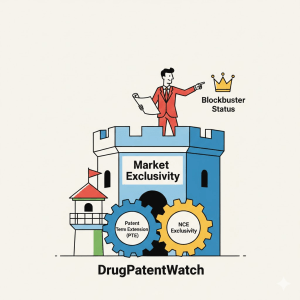
The strategy for maximizing exclusivity is no longer limited to the defense of a single molecule patent. Instead, it involves a complex orchestration of statutory mechanisms, including Patent Term Extension (PTE) under 35 U.S.C. § 156, Patent Term Adjustment (PTA), New Chemical Entity (NCE) exclusivity, and the construction of “patent thickets” covering formulations, dosing regimens, and delivery mechanisms.5 As global demand for these therapies outstrips supply, and as political pressure for price transparency and generic entry intensifies, understanding the nuances of these legal and regulatory safeguards is essential for maintaining the blockbuster status of GLP-1 assets.
Market Dynamics and Regional Growth Projections
The expansion of the GLP-1 market is characterized by significant regional divergence and shifts in patient utilization patterns. North America currently commands the largest share, approximately 75%, due to a well-structured ecosystem for the early adoption of innovative biologics, high prevalence of metabolic disease, and significant investment in clinical trials.1 However, the Asia Pacific region is identified as the fastest-growing geographic segment, driven by improving healthcare access and the anticipated entry of lower-cost generic versions of semaglutide in 2026.7
Market Attribute
2025/2026 Baseline
2033/2035 Projection
CAGR
Global GLP-1 Market Value
$64.42 Billion 1
$170.75 – $180 Billion 2
8.7% – 13.0% 2
North American Market Share
~75% 7
Sustained Dominance 1
High
Obesity Drug Segment
~$21.4 Billion (2022) 9
~$100 – $150 Billion 10
17% – 20%+ 9
Dominant Product (2024)
Ozempic (Novo Nordisk) 1
Mounjaro (Eli Lilly) 4
N/A
Preferred Delivery Format
Single-dose Injectable 1
Oral/Tablet Formulations 7
Accelerating
The transition of GLP-1 therapies from diabetes specialty medications to broader cardiometabolic treatments is further evidenced by the rising prevalence of obesity, which is expected to exceed 165 million people in China alone by 2031.8 This sustained demand ensures that the stakes for exclusivity extension are not merely national but global in scope.
The Statutory Architecture of Exclusivity: Hatch-Waxman and the 1984 Compromise
The contemporary framework for pharmaceutical market protection in the United States is rooted in the Drug Price Competition and Patent Term Restoration Act of 1984, commonly known as the Hatch-Waxman Act.5 This legislation was designed as a “grand compromise” to incentivize high-risk medical innovation while facilitating the rapid entry of low-cost generic drugs once patent protection expires. For the innovators of GLP-1 receptor agonists, two components of Hatch-Waxman are particularly critical: the restoration of patent life through PTE and the provision of non-patent regulatory exclusivities such as NCE status.5
The Mechanics of Patent Term Extension (PTE) under 35 U.S.C. § 156
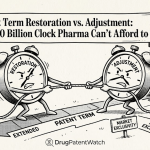
Patent Term Extension is a statutory mechanism intended to compensate innovators for the significant portion of a patent’s 20-year term that is consumed by the mandatory FDA regulatory review process. Because a patent is often granted years before a drug is approved for commercial sale, the “effective patent life” (EPL) available for commercial exploitation is substantially reduced.5 Section 156 allows for the extension of a single patent’s term per approved product to restore some of this lost time.5
The calculation of PTE is a precise mathematical exercise defined by the “Regulatory Review Period” (RRP), which is divided into the Testing Phase and the Approval Phase.15 The Testing Phase begins when an Investigational New Drug (IND) application becomes effective and ends when a New Drug Application (NDA) is submitted. The Approval Phase spans from the NDA submission to the final FDA approval. The formula for the extension is defined as follows:
Crucially, the statute imposes strict caps to prevent excessive extensions. The total extension period cannot exceed five years, and the total effective patent life after FDA approval is limited to 14 years.15 This “14-year rule” is a critical constraint; if a drug moves efficiently through the regulatory process and has 15 years of term remaining at launch, it is ineligible for any PTE.15 This leveling mechanism ensures that no drug enjoys more than 14 years of patent-protected monopoly, regardless of the length of its development cycle.
New Chemical Entity (NCE) Exclusivity: The Five-Year Shield
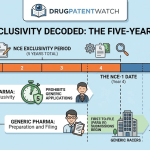
In addition to patent-based protection, the FDA administers non-patent regulatory exclusivities. The most robust of these is the New Chemical Entity (NCE) exclusivity, granted to drug products containing an active moiety that has not been previously approved by the agency.15 NCE exclusivity provides a five-year period during which the FDA is prohibited from accepting any Abbreviated New Drug Application (ANDA) that references the NCE.15
A significant nuance of this system is the “NCE-1” provision, which allows a generic manufacturer to file an ANDA with a Paragraph IV certification four years after the NCE’s approval, provided they challenge at least one of the patents listed in the FDA’s “Orange Book”.18 For example, Novo Nordisk’s Rybelsus (oral semaglutide) reached its NCE-1 date on December 5, 2021, opening the door for the first wave of generic challenges.18
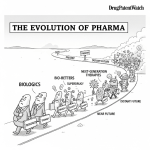
For biologics—a category that includes some GLP-1 analogues—the Biologics Price Competition and Innovation Act (BPCIA) provides a more generous 12-year period of data exclusivity.15 This divergence between small molecule (5 years) and biologic (12 years) exclusivity has created a strategic incentive for pharmaceutical companies to prioritize biological development, particularly in light of new pricing negotiation frameworks that treat the two modalities differently.15
Semaglutide Case Study: Novo Nordisk’s Multi-Layered Defense
Novo Nordisk’s management of the semaglutide molecule—marketed as Ozempic for T2DM, Wegovy for obesity, and Rybelsus for oral T2DM—represents a masterclass in lifecycle management. The company has utilized a combination of compound patents, method-of-use patents, and device patents to create an IP fortress that extends well beyond the molecule’s original 20-year term.6
The ‘343 and ‘122 Compound Patents: The Foundation of Exclusivity
The primary protection for the semaglutide peptide is anchored by two key compound patents: U.S. Patent No. 8,129,343 (‘343) and U.S. Patent No. 8,536,122 (‘122).6 While both patents cover the acylated GLP-1 compounds that constitute semaglutide, they have diverged in their legal lifespans due to regulatory adjustments.
The ‘122 patent is set to expire in March 2026, marking 20 years from its filing date.6 However, the ‘343 patent has been significantly extended. Through the application of PTE and Patent Term Adjustment (PTA), Novo Nordisk succeeded in pushing the expiration of the ‘343 patent to December 5, 2031.6 This extension is of staggering economic importance; analysts at the Initiative for Medicines, Access & Knowledge (I-MAK) estimate that these additional five years of protection will generate an estimated $166 billion in revenue from Ozempic and Wegovy that would have otherwise been lost to generic competition.6
Patent/Exclusivity
Target Product
Key Function
Expiration Date
US 8,536,122
Semaglutide Line
Base Compound Patent
March 20, 2026 6
US 8,129,343
Semaglutide Line
Extended Compound (PTE/PTA)
Dec 5, 2031 6
US 9,764,003
Wegovy/Ozempic
Method of Use (Weight Loss)
2032+ 21
US 10,278,923
Rybelsus
Oral SNAC Formulation
May 2034 18
US 11,833,248
Rybelsus
Formulation/Composition
Feb 2039 18
US 12,239,739
Wegovy/Ozempic
New Method/Dosing
2040+ 22
The durability of this protection was reinforced in 2023 when a high-profile Inter Partes Review (IPR) challenge filed by Mylan (now Viatris) against the ‘343 patent failed.22 This legal victory for Novo Nordisk removed the primary avenue for a pre-2031 generic entry in the U.S. market, as any generic semaglutide would almost certainly infringe the claims of the ‘343 compound patent.22
Enabling the Oral Frontier: The IP Strategy for Rybelsus
Rybelsus (oral semaglutide) represents a distinct technological and legal achievement: the successful oral delivery of a peptide that is normally degraded by gastric enzymes. This was made possible by co-formulating semaglutide with the absorption enhancer sodium N-(8-(2-hydroxybenzoyl)amino)caprylate, better known as SNAC.18
The IP strategy for Rybelsus extends far beyond the core peptide. Novo Nordisk has secured a suite of patents covering the specific interaction between semaglutide and SNAC, including the precise concentration of magnesium stearate required for optimal absorption.21 Key patents such as US 10,278,923 (expiring 2034) and US 11,833,248 (expiring 2039) ensure that even after the core semaglutide compound patent expires in 2031, the oral market remains protected for nearly another decade.18
However, this strategy is not without risk. Once injectable semaglutide (Ozempic) goes off-patent in 2032, there is a substantial likelihood of “market erosion” for Rybelsus. Physicians may choose to prescribe generic injectable semaglutide for off-label oral use or utilize generic versions in compounding, potentially undermining the premium price of the still-patented oral formulation.22
Eli Lilly and the Tirzepatide Portfolio: Manufacturing as a Moat
While Novo Nordisk has focused heavily on the longevity of a single molecule, Eli Lilly’s strategy for tirzepatide (Mounjaro and Zepbound) is defined by clinical differentiation and an aggressive “manufacturing moat”.7 As the first approved dual agonist targeting both GLP-1 and glucose-dependent insulinotropic polypeptide (GIP) receptors, tirzepatide demonstrated weight loss exceeding 20% in its pivotal trials, establishing a new therapeutic ceiling.11
Tirzepatide Exclusivity and Lifecycle Management
Tirzepatide received its initial FDA approval in 2022, placing it earlier in its lifecycle than semaglutide. Its primary compound patent (US 9,474,780) is not set to expire until January 5, 2036.17 Lilly has bolstered this with a range of secondary patents covering formulations and dosing regimens, some of which extend as far as June 2039.17
A critical component of Lilly’s strategy is the rapid development of its oral candidate, orforglipron. Unlike Rybelsus, which is a peptide formulation requiring strict dietary restrictions, orforglipron is a small-molecule, non-peptide GLP-1 agonist.27 Orforglipron can be taken at any time of day without restrictions on food or water intake and possesses significantly higher oral bioavailability—estimated at 21-28% in primates, compared to less than 1% for peptide oral formulations.27 By transitioning patients from injectable tirzepatide to a more convenient oral small molecule, Lilly aims to refresh its IP clock and maintain market dominance well into the 2040s.
Manufacturing and API Supply as Strategic Barriers
The sheer complexity of manufacturing GLP-1 and GIP peptides at a global scale serves as a practical, non-legal barrier to competition. Eli Lilly has committed over $50 billion to manufacturing infrastructure since 2020 to ensure supply chain integrity and meet surging demand.7 This “brute force” approach to manufacturing is a significant deterrent to potential generic entrants who may lack the capital or technical expertise to produce high-purity peptides at such massive volumes.
The importance of manufacturing efficiency is highlighted by comparing tirzepatide to emerging challengers. For instance, Viking Therapeutics’ dual-agonist candidate, VK2735, reportedly requires two to four times more active pharmaceutical ingredient (API) than tirzepatide to achieve comparable results, placing it at a significant cost and supply-chain disadvantage.30
The Convergence of Drug and Device: Protecting the Mechanical Moat
For GLP-1 receptor agonists, the delivery mechanism is often as much a part of the “product” as the drug itself. Novo Nordisk and Eli Lilly have both built extensive patent portfolios around their injection pens—FlexTouch and KwikPen, respectively.6
FlexTouch and KwikPen: Ergonomics as Intellectual Property
The injection devices are sophisticated mechanical systems designed to improve patient adherence and dose accuracy. Novo Nordisk’s FlexTouch pen is unique in its use of a torque spring mechanism that provides a “low activation force,” meaning the force of the injection is driven by the internal spring rather than the user’s thumb pressure.31 Laboratory studies show that the activation force for FlexTouch is 56% to 86% lower than that of competing pens, making it easier for patients with limited dexterity to use.32
Eli Lilly’s KwikPen, conversely, is marketed for its compact design and shorter “thumb reach” required to activate the dose knob.33 These ergonomic features are not merely marketing points; they are protected by a dense web of patents. For example, Novo Nordisk has listed 21 device patents in the Orange Book for Ozempic, accounting for 84% of its total patent listings.34
The FTC Challenge and the Future of Device Patenting
The practice of listing mechanical device patents in the Orange Book—which triggers an automatic 30-month stay on generic approval upon litigation—has come under legal and political fire. In April 2024, the Federal Trade Commission (FTC) challenged more than 300 “junk” patent listings for medications including Ozempic, Victoza, and Saxenda.35 The FTC and some legal analysts argue that patents covering mechanical components like springs and gears should not be listed unless they specifically claim the drug substance or a method of use.22
A recent ruling by the Federal Circuit in Teva v. Amneal has further complicated the landscape for device patents. The court held that it is improper to list device patents in the Orange Book if they do not recite or require the FDA-approved active ingredient.22 If this precedent is broadly applied, it could result in the removal of the majority of device-related patents from the Orange Book, significantly weakening the ability of innovators to delay generic entry through secondary patent litigation.22
Litigation and the Generic Challenge: The Rise of the “Skinny Label”
As GLP-1 sales skyrocket, generic and biosimilar manufacturers are increasingly willing to engage in high-stakes litigation to break through patent thickets. Paragraph IV challenges have become routine for almost every major GLP-1 product shortly after they become eligible.9
The Viatris Victory and the Mono-therapy Limitation
A pivotal moment in recent GLP-1 litigation was the 2025 decision in Novo Nordisk v. Mylan (Viatris) involving Wegovy. Novo Nordisk alleged that Viatris’ proposed generic infringed US Patent No. 9,764,003, which covers the use of semaglutide “without another therapeutic agent” for weight loss.23 Viatris successfully argued that its generic label did not “encourage, promote, or recommend” the drug be used without other therapies. The court agreed, finding that while the label cautioned against using multiple GLP-1s together, it did not explicitly instruct physicians to avoid all other drugs. This ruling was a significant blow to Novo Nordisk, as it removed a key method-of-use patent barrier for a generic version of the world’s most popular obesity drug.36
“Skinny Labeling” and Induced Infringement Risks
Generic manufacturers also frequently utilize “skinny labeling,” also known as Section viii carve-outs.39 This strategy involves seeking FDA approval for only those uses of a drug that are no longer protected by patents, while “carving out” patented indications. For example, a generic could launch semaglutide for the management of type 2 diabetes while omitting the still-patented weight loss indication.40
However, the legal protection afforded by a skinny label is fragile. Innovators often sue for “induced infringement,” claiming that the generic manufacturer’s broader marketing strategy—such as calling the drug a “generic version” of the branded product or referencing the branded drug’s overall sales—effectively encourages doctors to prescribe the generic for the patented, carved-out use.42 The upcoming Supreme Court decision in Hikma v. Amarin will be a watershed moment for this strategy, as it will define whether routine marketing statements are sufficient to plead induced infringement even when a label is technically compliant with carve-out regulations.42
Global Divergence: The EU SPC and the China Patent Cliff
While the U.S. remains the primary theater for GLP-1 exclusivity battles, the global landscape is characterized by significant jurisdictional divergence. The different formulas for extending patent life and the varying expiration dates for core molecule patents create a “patchwork” of exclusivity that global generic firms are eager to exploit.
The European Supplementary Protection Certificate (SPC)
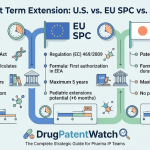
In Europe, the Supplementary Protection Certificate (SPC) provides an extension of up to five years for patents on medicinal products that require marketing authorization.15 The EU formula for extension is based on the elapsed time between the patent filing and the first marketing authorization in the European Economic Area (EEA), minus a five-year “deductible”.15
Unlike the U.S. 14-year rule, the EU cap is 15 years of total exclusivity from the date of first authorization.15 A major regulatory shift is currently underway with the introduction of the “Unitary SPC,” which will allow applicants to obtain a single extension covering all EU member states participating in the Unified Patent Court (UPC) system.44 This harmonization is expected to reduce the complexity and cost of maintaining exclusivity across the continent but also centralizes the risk of a single invalidity challenge toppling protection for the entire region.47
The 2026 China Patent Cliff: A Global Inflection Point
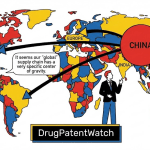
China, the second-largest pharmaceutical market in the world, is facing an imminent “patent cliff” for semaglutide. While Novo Nordisk successfully defended the validity of its compound patent in the Beijing Supreme People’s Court in late 2025, the patent is still set to expire on March 20, 2026.49
This expiration is a critical event for the global market. At least 16 Chinese companies are currently developing generic versions of semaglutide, with several in the final stages of pre-registration.8 The entry of these low-cost generics—which may cost as little as $10 per dose to manufacture—could radically shift global reference pricing and influence payer negotiations in high-income markets.8 Analysts project that once Chinese and Indian generics enter the market in 2026, at least one in three people living with obesity globally will reside in a country where semaglutide is available off-patent.52
Economic and Political Headwinds: The IRA and “TrumpRx”
The traditional model of maintaining high-monopoly prices for GLP-1 therapies is facing new challenges from U.S. federal policy, most notably through the Inflation Reduction Act (IRA) and the recent “TrumpRx” pricing agreements.
The Inflation Reduction Act and the 9-year vs 13-year Rule
The IRA granted the Centers for Medicare & Medicaid Services (CMS) the power to negotiate prices for top-spending drugs. Semaglutide (Ozempic) was approved in 2017, placing it on the list of drugs subject to negotiation for the first time in 2025.53 Under the IRA’s framework, there is a fundamental incentive distortion between small molecules and biologics:
Small Molecules: Subject to price negotiation 9 years after approval.15
Biologics: Subject to price negotiation 13 years after approval.15
This “9-year vs 13-year” rule has significantly compressed the return on investment (ROI) for small-molecule innovations. A longitudinal study of post-approval clinical trials found that the number of newly initiated trials for small-molecule drugs dropped by 45.3% following the IRA’s passage, as companies redirected capital toward biologics that offer a longer window of pricing freedom.20
The Trump Administration and the $245 Cap
In a dramatic shift in late 2025, the Trump administration announced landmark agreements with Novo Nordisk and Eli Lilly to implement “most-favored-nation” (MFN) pricing for GLP-1 therapies in the U.S..13 Under the new “TrumpRx” platform launching in 2026, the monthly price for Ozempic, Wegovy, Mounjaro, and Zepbound for eligible Medicare and Medicaid patients will be capped at $245—a nearly 75% reduction from the original list price of ~$1,000.13
This policy change marks the first time Medicare will cover GLP-1s for standalone obesity management.13 While the volume of patients is expected to skyrocket, the reduction in per-patient revenue will force originators to rely even more heavily on their long-term IP strategies and manufacturing scale to sustain the growth rates expected by Wall Street. Novo Nordisk has already cautioned that these agreements will result in a “negative low-single-digit impact” on global sales growth in 2026.50
Next-Generation Modalities: Small Molecules and Poly-Agonists
As the patent cliffs for current GLP-1 peptides approach, the industry is racing to develop next-generation assets that can achieve higher efficacy, better adherence, and refreshed IP protection.
The Small Molecule Revolution: Orforglipron
The development of small-molecule oral agonists like Eli Lilly’s orforglipron represents the “holy grail” of weight loss therapy.57 Unlike peptide-based drugs (semaglutide and tirzepatide), small molecules are not degraded by the stomach’s acidic environment and do not require specialized absorption enhancers like SNAC.28 Orforglipron demonstrated over 12% weight loss in a 72-week Phase III study, positioning it as a potent alternative to weekly injections.60
The IP landscape for small molecules is distinct from peptides. Small molecules generally have a more defined chemical space, making it easier to secure broad composition-of-matter patents that are difficult to design around.28 However, small molecules also face a higher risk of “9-year” IRA negotiations, leading to a strategic tension between ease of administration and longevity of premium pricing.15
Poly-Agonists and the “Quality Weight Loss” Race
The next phase of innovation involves poly-agonist biology—molecules that target two, three, or even four different metabolic receptors simultaneously.25 Eli Lilly’s Retatrutide (GLP-1/GIP/Glucagon triple agonist) and Viking Therapeutics’ VK2735 (GLP-1/GIP dual agonist) are leading this charge.4 These multi-receptor agonists aim to achieve “bariatric-like” results while simultaneously addressing the loss of lean muscle mass, a common side effect of rapid weight reduction.61
Development Phase
Molecule Type
Lead Asset
Target Receptors
Marketed (1st Gen)
Peptide Single Agonist
Semaglutide (Ozempic)
GLP-1 1
Marketed (2nd Gen)
Peptide Dual Agonist
Tirzepatide (Mounjaro)
GLP-1 + GIP 9
Phase III (Oral)
Small Molecule Agonist
Orforglipron (Lilly)
GLP-1 27
Phase III (Injectable)
Peptide Triple Agonist
Retatrutide (Lilly)
GLP-1 + GIP + Glucagon 4
Preclinical/Early Ph
Quadruple Agonist
VK-Quad (Viking)
GLP-1 + GIP + Amylin + Calcitonin 25
This “poly-agonist escalation” allows innovators to continually raise the bar for “best-in-class” therapy, making it harder for first-generation generics to compete on clinical grounds alone. Even as the patent on semaglutide expires, the market may have already moved toward these superior multi-receptor agents, effectively creating a new cycle of exclusivity.
Conclusion: Synthesizing a Strategic Defense for GLP-1 Assets
Maximizing market exclusivity for GLP-1 receptor agonists is no longer a linear process of patent defense but a multidimensional orchestration of law, science, and economics. The blockbuster status of these drugs is protected through a “layered defense” strategy:
Compound Restoration: Leveraging Patent Term Extension (PTE) and PTA to extend core molecule protection as close to the 14-year EPL cap as possible, as seen with semaglutide’s 2031 extension.6
Technological Moats: Developing oral small molecules and high-potency poly-agonists to switch the patient population away from aging peptide assets before generic entry.27
Mechanical Fortification: Protecting delivery devices through extensive pen-injector patents, while navigating the increasing regulatory scrutiny of Orange Book listings.32
Jurisdictional Agility: Adapting to global differences in SPC calculations and the looming 2026 patent cliff in China and other middle-income markets.8
The impending entry of generics in 2026, the legislative pressure of the IRA, and the pricing caps introduced by the Trump administration signify the end of the “uncontested” era for GLP-1 blockbusters. Success in the next decade will be determined by the ability of pharmaceutical innovators to balance the defense of their existing patent thickets with the rapid commercialization of next-generation modalities that redefine the therapeutic standard of care. As the “9-year rule” compresses the lifecycle of small-molecule drugs, the industry must evolve toward even faster innovation cycles, ensuring that the next “holy grail” of weight loss is ready to launch just as the previous one enters its sunset years.
The Heavy Price of GLP-1 Drugs: How Financialization Drives Pharmaceutical Patent Abuse and Health Inequities for GLP-1 Therapies – I-MAK, accessed February 2, 2026, https://www.i-mak.org/glp-1/
FlexTouch: A Prefilled Insulin Pen with a Novel Injection Mechanism with Consistent High Accuracy at Low- (1 U), Medium- (40 U), and High- (80 U) Dose Settings – PMC – NIH, accessed February 2, 2026, https://pmc.ncbi.nlm.nih.gov/articles/PMC3208880/
FlexTouch: An Insulin Pen-Injector with a Low Activation Force Across Different Insulin Formulations, Needle Technologies, and Temperature Conditions – NIH, accessed February 2, 2026, https://pmc.ncbi.nlm.nih.gov/articles/PMC5653146/
FlexPen® and KwikPen™ Prefilled Insulin Devices: A Laboratory Evaluation of Ergonomic and Injection Force Characteristics – PMC – NIH, accessed February 2, 2026, https://pmc.ncbi.nlm.nih.gov/articles/PMC2769724/