Part I: The Strategic and Economic Foundations of Your Patent Portfolio
1. Introduction: Beyond Legal Documents—Patents as the Financial Engine of Pharma
In the high-stakes, fiercely competitive world of pharmaceutical innovation, intellectual property (IP) is far more than a collection of legal documents gathering dust in a file room. For those of us in the trenches—executives, investors, and strategists—it’s crucial to reframe our thinking. Drug patents are not merely a defensive shield; they are the fundamental pillars upon which the entire drug development ecosystem is constructed. They are the financial engines that fuel the relentless pursuit of new therapies, transforming abstract scientific discoveries into tangible, life-saving medicines. A meticulously managed drug patent portfolio functions as an unassailable fortress, safeguarding groundbreaking innovations, securing vital market exclusivity, and ultimately, dictating an organization’s long-term viability and profitability.
To grasp the profound strategic significance of patents, we must first appreciate the staggering economic realities of our industry. Bringing a single new drug to market is an odyssey of immense risk and colossal investment. The journey from a laboratory bench to a patient’s bedside routinely takes more than a decade and can cost anywhere from $300 million to an eye-watering $4.5 billion.3 This is not hyperbole; it is the brutal cost of entry. The Tufts Center for the Study of Drug Development famously pegged the capitalized cost at $2.6 billion, a figure that accounts not just for out-of-pocket expenses but also for the cost of capital over a decade-long development cycle and, most critically, the cost of the many failures along the way.
Indeed, the high failure rate is a factor that cannot be overstated. Only about 12% of drugs that enter clinical trials ever receive regulatory approval. This means that for every successful product that reaches the market, there are eight or nine others that have failed, consuming billions of dollars in the process. The revenues from that one successful drug must therefore subsidize the entire R&D enterprise, funding not only its own development costs but also the accumulated costs of all the projects that never made it.
This unique economic model gives rise to what can be described as the “Innovation-Exclusivity-Reinvestment Cycle”. It works like this:
Innovation: A company makes a massive, high-risk investment in R&D to discover and develop a new therapy.
Exclusivity: If successful, the innovation is protected by a patent, which grants a temporary period of market exclusivity.
Reinvestment: This exclusivity allows the company to generate the revenue necessary to recoup its initial investment (including the cost of failures) and, crucially, to reinvest those profits into the next generation of R&D, starting the cycle anew.
Without the promise of market exclusivity, this cycle breaks down. The financial incentive to undertake such high-risk, high-investment ventures would be severely diminished, potentially stifling the development of new therapies. This is why patents are consistently recognized as the “backbone of medical innovation” and the “cornerstone of pharmaceutical innovation”. They are tangible assets that grant a company the freedom to operate and provide the exclusivity necessary to navigate the intensely competitive pharmaceutical landscape.1
Furthermore, a strong patent portfolio acts as a magnet for the capital that fuels the industry. For startups and smaller biotechs, a robust patent position is often the most valuable asset they possess, serving as a crucial “insurance policy” for investors.1 It signals a protected market opportunity and a clear path to profitability, making the company a far more attractive investment. For established players, the strength of the patent portfolio is a key determinant of stock valuation and the ability to fund ongoing operations and strategic acquisitions.
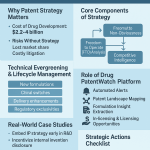
Consequently, patent strategy in the pharmaceutical sector extends far beyond the legal department. It is a fundamental element of corporate strategy, influencing decisions on which drug candidates to pursue, how to structure R&D investments, and how to finance development.1 It is a sophisticated discipline that requires a dynamic, proactive approach, seamlessly aligning IP efforts with overarching business objectives.2 In this report, we will deconstruct this discipline, providing a comprehensive playbook for transforming your patent portfolio from a static legal necessity into a dynamic engine of competitive advantage.
2. The Patent Cliff: Quantifying the Existential Threat of Exclusivity Loss
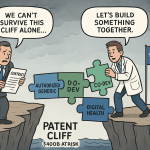
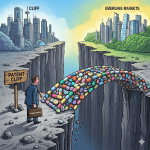
To truly comprehend the immense value locked within a drug patent portfolio, we must first confront the terrifying financial abyss that opens up when that protection disappears. In industry parlance, we call this the “patent cliff,” a term that aptly captures the sharp, sudden, and often catastrophic decline in revenue a company experiences when a blockbuster drug loses its patent and faces a flood of generic competition.11 This is not a minor dip in sales; it is an existential threat.
The financial impact is staggering. It is not uncommon for a blockbuster drug’s revenue to plummet by 80-90% within the first year of generic entry. For a company heavily reliant on a single product, this can be a devastating blow. The industry as a whole is perpetually staring down this precipice.
This is not a distant, abstract threat; it is a clear and present danger that demands strategic foresight and proactive management. The history of the pharmaceutical industry is littered with cautionary tales of companies that failed to adequately prepare for the loss of exclusivity (LOE) on their star products. Let’s look at a few iconic examples to understand the scale of the challenge.
Drug Name (Brand)
Innovator Company
Peak Annual Sales
Year of U.S. Patent Expiration
Revenue Impact
Lipitor (atorvastatin)
Pfizer
~$13 Billion
2011
Sales plummeted by over 50% in the first year; worldwide revenues fell 59% from $9.5 billion in 2011 to $3.9 billion in 2012.
Plavix (clopidogrel)
BMS / Sanofi
~$9 Billion
2012
Experienced a significant and rapid drop in sales as cheaper generic alternatives flooded the market.
Humira (adalimumab)
AbbVie
~$21.2 Billion
2023 (effective)
Sales fell 30.8% in the first nine months of 2023, a less severe drop than anticipated due to aggressive defensive strategies.
Keytruda (pembrolizumab)
Merck
~$29.5 Billion (2023)
2028
Sales are projected to decline by 19% in the first year post-expiration, from an estimated $33.7 billion to $27.4 billion.11
Eliquis (apixaban)
BMS / Pfizer
>$10 Billion
~2026-2028
Facing a significant patent cliff alongside other major products for Bristol-Myers Squibb, creating substantial revenue pressure.
These figures illustrate that the patent cliff is a predictable, recurring, and accelerating feature of the industry landscape. The current wave of expirations is the inevitable consequence of the blockbuster drug era of the early 2000s reaching the end of its typical 20-year patent term. This predictability means that a company’s strategy for navigating its patent cliff is a primary litmus test for its management quality and strategic foresight. Investors scrutinize a company’s pipeline and patent portfolio for signs of vulnerability. A looming, unaddressed patent cliff can erode investor confidence, depress stock prices, and severely limit a company’s access to the capital needed for future innovation.
This immense pressure acts as a powerful forcing function for corporate strategy. It compels companies to aggressively restock their pipelines, either through increased R&D investment, in-licensing of promising experimental therapies, or, most visibly, through strategic mergers and acquisitions. In this sense, the entire M&A cycle of the biopharmaceutical industry can be seen as a direct response to the collective patent expiration calendar. Companies with strong balance sheets and less immediate patent cliff exposure often acquire companies with promising pipelines to fill their own future revenue gaps.
It’s also important to recognize that the nature of the patent cliff is evolving. The current wave of expirations involves a much higher proportion of complex biologics compared to previous waves, which were dominated by small-molecule drugs. Small-molecule drugs typically face rapid and deep sales erosion upon generic entry. Biosimilars, the “generic” equivalents of biologics, generally gain market share more slowly due to their complex manufacturing processes, higher costs, and more stringent regulatory hurdles. This suggests that while the initial revenue drop for a blockbuster biologic might be less precipitous, the period of sustained erosion could be more prolonged. For strategists, this means the “cliff” for biologics might look more like a “long, steep slope,” requiring a different set of lifecycle management strategies focused on sustained competition and patient retention rather than preparing for an immediate revenue collapse.
Part II: Architecting a Defensible and Strategic Patent Portfolio
3. Aligning Your Portfolio with Business Objectives: The Strategic Blueprint
If the patent cliff represents the ultimate failure of a portfolio, then the foundation of success lies in building that portfolio with purpose from day one. A collection of patents developed in a legal vacuum, disconnected from the commercial realities and strategic ambitions of the business, is not an asset; it’s a costly liability. The most fundamental principle of effective portfolio management is the explicit and continuous alignment of patent strategy with the company’s overarching business objectives.2 This is what we call an “IP-aligned business strategy,” and it is the essential blueprint for transforming your patent portfolio into a powerful competitive weapon.
What does this alignment look like in practice? It means that the patent strategy is not an isolated legal function but a direct extension of the company’s corporate strategy. It’s a dynamic, exhaustive approach that involves evaluating, maintaining, and strategically leveraging intellectual property in a manner that directly supports and enhances the company’s long-term goals. This requires a radical shift in mindset. The IP department can no longer be a reactive service provider that simply processes invention disclosures from R&D. Instead, it must become a proactive strategic partner, deeply integrated with every facet of the business.
This transformation is built on a foundation of seamless, cross-functional collaboration. The traditional silos separating R&D, legal, business development, and commercial teams must be demolished. A continuous feedback loop must be established to ensure that patentable innovations are identified and protected early in the drug development process and that every IP investment is positioned for maximum market success.2
Consider the common points of failure. The R&D team, brilliant as they are, may develop a novel manufacturing process without realizing its immense strategic value as a protectable process patent. The commercial team may identify a significant unmet patient need—for instance, a desire for less frequent dosing—without a clear channel to communicate this insight back to R&D in a way that spurs the development of a patentable extended-release formulation. The legal team, operating without commercial context, may secure a patent that is technically sound but protects a feature that has no real market value or can be easily designed around by a competitor.
An IP-aligned strategy prevents these costly disconnects. It creates a system where:
Business objectives drive IP focus: The company’s core goals—whether it’s market leadership in oncology, expansion into rare diseases, or building a best-in-class delivery platform—dictate where IP resources are concentrated.
IP informs business strategy: The IP team provides critical intelligence on the patent landscape, identifying “white spaces” for innovation, flagging potential “freedom to operate” risks, and analyzing competitor portfolios to anticipate their next moves. This intelligence helps shape R&D priorities and business development targets.
Collaboration is continuous: Regular, structured interactions between legal, R&D, and commercial teams ensure that everyone is working from the same strategic playbook. This collaborative approach ensures that patent strategy is not an afterthought but an integral part of the decision-making process from the earliest stages of discovery.
A powerful tool for achieving and maintaining this alignment is patent mapping. This involves systematically mapping your entire patent portfolio against your existing product lines, your R&D pipeline, and your identified emerging market opportunities. This visual representation makes it immediately clear where your protections are strong, where you have critical gaps, and where you may be holding patents that are no longer relevant to the business’s direction. This map should be a living document, constantly updated as the business evolves, ensuring that your portfolio remains a dynamic asset that actively supports your growth and provides a sustainable competitive advantage.7
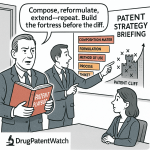
4. Building Your Fortress: The Anatomy of a Modern “Patent Thicket”
In the world of pharmaceutical patents, a single wall is rarely enough to protect a multi-billion-dollar franchise. A single patent, no matter how strong, represents a single point of failure. A determined competitor with deep pockets can focus all its resources on invalidating that one patent, and if they succeed, the fortress crumbles. This is why modern pharmaceutical patent strategy is not about building a single wall, but about constructing an intricate, multi-layered fortress. This dense and overlapping network of protection is often referred to as a “patent thicket” or a “web of protection”.1
The goal of a patent thicket is to create a formidable legal and economic barrier to entry for generic and biosimilar competitors. It’s a deliberate strategy designed to make a legal challenge so complex, costly, and time-consuming that potential challengers are deterred from even trying, or are forced to the negotiating table to seek a license or settlement. This strategy is so prevalent that one study found that a staggering 78% of new patents associated with drugs were not for new medicines, but for existing ones.
Building this fortress requires a deep understanding of the different types of patents available and how they can be strategically deployed in concert. Let’s deconstruct the anatomy of a typical patent thicket.
Patent Type
Description
Strategic Value
Composition of Matter
The foundational patent covering the active pharmaceutical ingredient (API) itself—the new chemical or molecular entity.2
This is the cornerstone of the entire structure, providing the broadest and strongest form of protection. It is the most difficult for competitors to challenge or design around and establishes the initial 20-year period of market exclusivity.
Formulation
Protects the specific “recipe” of the final drug product, including the API combined with inactive ingredients (excipients), coatings, or delivery mechanisms.10
Can offer genuine patient benefits (e.g., an extended-release version for once-daily dosing) while creating a new, 20-year patent term that extends well beyond the expiration of the original composition of matter patent, a classic “evergreening” technique.
Method of Use / New Indication
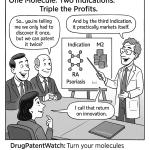
Protects a new therapeutic use for an existing drug. This is the legal foundation for drug repurposing.2
Can revitalize older compounds by opening up entirely new markets and revenue streams. Pfizer’s Viagra, originally studied for heart conditions, was protected by method-of-use patents for erectile dysfunction, its blockbuster indication.
Process (Methods of Manufacture)
Protects a specific, novel, and non-obvious method of manufacturing the drug.7
Especially critical for complex biologics, where the manufacturing process is as innovative as the product itself. It forces competitors to invest heavily in developing their own non-infringing process, creating a significant barrier to entry.
Polymorph
Protects specific crystalline structures of the drug molecule. Different polymorphs can have different properties like stability or solubility.
Patenting a specific, advantageous polymorph creates another layer of protection that a competitor must navigate, potentially with a later expiration date than the original compound patent.
Chiral Switch
Protects the single, more therapeutically active enantiomer (mirror-image molecule) of a drug that was previously marketed as a mixture of both.
Offers an improved version of an older drug with potentially better efficacy or fewer side effects, creating a new product with a new patent life and blocking competitors from marketing the superior single-enantiomer version.
Delivery Device
For drugs administered via a specific device (e.g., an inhaler, auto-injector), the device itself can be patented.7
Forces competitors to not only replicate the drug but also to design, test, and get regulatory approval for their own non-infringing delivery system, adding significant time, cost, and complexity to their market entry plan.
The true power of the patent thicket lies in its cumulative effect. A generic competitor is no longer facing a single, clear target. Instead, they must navigate a legal minefield. They must conduct expensive freedom-to-operate (FTO) analyses for dozens of patents. They must prepare for litigation on multiple fronts, challenging patents on the formulation, the manufacturing process, and multiple methods of use. The risk is immense; even if they succeed in invalidating ten patents, the eleventh could still block their market entry.
This strategic complexity fundamentally alters the cost-benefit analysis for a potential challenger. The sheer scale of the legal risk and financial cost often makes a full-frontal assault on a well-constructed patent thicket prohibitively expensive. This is precisely the intended outcome. The goal is to make the path of litigation so daunting that it pushes competitors towards a settlement that is favorable to the brand manufacturer, often involving a delayed and managed entry into the market. Thus, the patent thicket is as much a tool for forcing favorable business outcomes as it is a tool for pure legal defense. AbbVie’s strategy for Humira, one of the best-selling drugs in history, is a masterclass in this approach, involving a dense thicket of over 100 patents to delay biosimilar competition for years.
5. The Art of the Claim: Drafting for Maximum Breadth and Defensibility
Within the architecture of any patent, the claims are the most critical component. They are the legally operative heart of the document, the precise language that defines the boundaries of the invention and the scope of the patentee’s right to exclude others. Everything else in the patent—the detailed description, the drawings, the data—exists to support the claims. In the brutal arena of patent litigation, the entire battle is fought over the meaning and validity of these carefully chosen words. As such, the quality and strategic construction of your patent claims will ultimately determine your portfolio’s true value and its ability to withstand attack.
Drafting patent claims is a strategic tightrope walk. The goal is to secure the broadest possible protection for your invention, but this ambition is constantly checked by the need to be specific enough to be valid and defensible. This creates a fundamental tension:
Claims written too broadly risk being invalidated. If a claim is so expansive that it reads on the “prior art”—that is, it also describes technology that was already known before your invention—it will be rejected by the patent office or struck down in court for being non-novel or obvious.
Claims written too narrowly, on the other hand, create an open invitation for competitors to “design around” your patent. If your claim is overly specific, a rival can make minor, insignificant modifications to their product to fall just outside the literal wording of your claim, thereby avoiding infringement while still capturing the essence of your invention.
The 2015 Supreme Court case Teva Pharmaceuticals v. Sandoz provides a salient cautionary tale. Teva’s patent claim for its multiple sclerosis drug, Copaxone, discussed the active ingredient having a specific molecular weight. However, the claim was ambiguous about how that molecular weight was calculated. This lack of precision made the claim so indefinite that other companies were able to replicate the drug, arguing that their product, measured differently, fell outside the claim’s scope. The case underscores a critical lesson: in patent law, ambiguity is the enemy of enforceability.
So, how do you navigate this treacherous terrain? The most robust and defensible patents are not built around a single claim but employ a sophisticated, layered strategy. Think of it as building a “picture frame” of protection, with a hierarchy of claims ranging from broad to narrow.
The Broadest Independent Claim: This is the outer edge of your picture frame. It is drafted to capture the widest possible territory, defining the invention in its most general, essential terms. This claim provides the greatest potential market power, but it is also the most vulnerable to a validity challenge, as it is the most likely to be read on some unforeseen piece of prior art.
Narrower Dependent Claims: Nested inside the broad independent claim are a series of dependent claims. Each dependent claim incorporates all the limitations of the independent claim and adds at least one more specific feature or limitation. For example, if the independent claim is for “a pharmaceutical composition comprising compound X,” a dependent claim might be “the pharmaceutical composition of claim 1, wherein the composition is an extended-release tablet.” Another might be “the composition of claim 2, wherein the tablet provides a therapeutic effect for at least 24 hours.”
This layered or “nested” claiming strategy is a powerful defensive tool. It creates a series of fallback positions for litigation. Imagine a generic challenger attacks your patent. They will likely focus their efforts on invalidating your broadest independent claim. If they succeed, you have not lost everything. You can fall back to your next, narrower dependent claim. The challenger must now prove that this more specific version of your invention is also invalid. With each added limitation, the challenger’s task becomes more difficult. This ensures that even if parts of your patent protection are chipped away during litigation, the core of your invention remains shielded by the narrower, more specific claims.
This strategy has become even more critical with the advent of post-grant challenge procedures like Inter Partes Review (IPR) at the Patent Trial and Appeal Board (PTAB). PTAB proceedings are adjudicated by technically expert administrative patent judges who scrutinize claim language with a fine-toothed comb. A patent that relies solely on a few broad, vaguely worded claims is exceptionally vulnerable in this forum. In contrast, a patent with a well-supported specification and a deep, logical hierarchy of claims is far more likely to have at least some of its claims survive an IPR challenge. Therefore, modern patent drafting is no longer just about preparing for a potential jury trial in a district court; it is about building a patent that is resilient enough to withstand the intense technical scrutiny of the PTAB.
Part III: Dynamic Management and Intelligence
6. The Global Chessboard: Mastering International Filing Strategy
In our interconnected world, a blockbuster drug is rarely confined to a single market. Commercial success is a global endeavor, and so too must be your patent strategy. A U.S. patent provides powerful protection, but its authority ends at the U.S. border. It offers zero protection against a competitor manufacturing and selling your product in Europe, China, or India. This fundamental principle—that patent rights are territorial—means that building a truly valuable portfolio requires playing a complex and costly game of global chess.
The prospect of filing patents around the world can be daunting. The costs are staggering. A single, relatively simple patent filed across just 10 different countries can easily cost over $250,000 during its lifetime. For complex pharmaceutical patents, the costs are even higher. A significant portion of this expense comes from translation fees, which can be a massive multiplier, and the fees for local counsel in each jurisdiction.5 A company cannot afford to file everywhere, nor should it. A global filing strategy is, at its core, an exercise in strategic capital allocation under conditions of uncertainty. The goal is not blanket coverage but targeted protection in the markets where the return on that investment will be highest.
Fortunately, there are powerful tools and strategies to manage this process. The most crucial of these is the Patent Cooperation Treaty (PCT). Filing a single international PCT application is a cornerstone of modern global patent strategy. It does not result in a “world patent,” but it provides an invaluable strategic advantage: time. A PCT application effectively preserves your right to seek patent protection in over 150 member countries for up to 30 months (or 31 in some cases) from your earliest filing date. This 30-month window is a critical period for a pharmaceutical company. It allows you to delay the enormous expense of “national phase entry”—the process of filing individual applications in each desired country—while you gather more clinical data, refine your commercial strategy, and assess the market potential of your drug.
The central question, then, is how to use that 30-month window to decide where to file. A scattershot approach is a recipe for financial waste. A strategic approach involves a rigorous analysis based on several key factors:
The Two-Thirds Market Strategy: This is a direct application of the Pareto principle to patent filing. Instead of trying to cover the globe, you focus your resources on the limited number of jurisdictions that will cover the most lucrative percentage—say, two-thirds—of your potential market. For many blockbuster drugs, this might mean focusing on the United States, the European Union (via the European Patent Office), China, and Japan. This targeted approach captures the majority of potential worldwide revenue while dramatically reducing costs.
Competitor Intelligence: One of the smartest ways to develop your filing strategy is to study your competitors. Where are they filing patents for similar drugs? Their filing patterns provide a clear map of the markets they deem valuable and strategically important. Leveraging patent databases to conduct a worldwide search on the key foreign patents of your rivals can provide a strong baseline for your own filing decisions.
Legal and Regulatory Environment: The analysis must go beyond pure market size. You must also assess the strength and predictability of the patent system in each potential country. Is the legal system fair when it comes to enforcing the patent rights of foreign companies? What is the likelihood of your patent being granted? How dense is the existing patent landscape in your specific technology area? Filing in a country with a large population but a weak and corrupt legal system may be a wasted investment.
This strategic calculus inevitably leads to the conclusion that some markets will be deliberately left unprotected. A company might make the calculated decision not to file in a country with notoriously weak patent enforcement, accepting the risk that local copies may emerge. This is not a failure of strategy but a conscious trade-off, preserving precious capital to secure and defend patents in the core, high-revenue markets that are critical to the company’s financial success. The final global filing map of your portfolio should be a direct and deliberate reflection of your company’s commercial priorities, its risk tolerance, and its long-term strategic vision.
7. Active Portfolio Management: Strategic Audits and Cost-Saving Pruning
A drug patent portfolio is not a static monument to be built and then admired from afar. It is a living, dynamic asset that requires constant attention, cultivation, and, most importantly, pruning. In a rapidly evolving industry, a portfolio that is not actively managed can quickly transform from a valuable asset into a significant liability, draining resources while providing diminishing returns. The effective execution of portfolio management involves a continuous feedback loop of assessment and adaptation, ensuring that your IP assets remain tightly aligned with your dynamic business objectives.2
The cornerstone of active management is the regular portfolio audit. This is a systematic, periodic review of every patent and patent application in your portfolio to assess its ongoing strategic value. This process should be a cross-functional effort, involving not just the legal team but also representatives from R&D, commercial, and business development. The audit should ask a series of tough questions for each asset:
Does this patent protect a current commercial product or a key pipeline candidate?
Does it align with our company’s future strategic direction and emerging market opportunities?
Does it provide a significant competitive advantage, or can it be easily designed around?
Is the technology it protects still relevant, or has it become obsolete?
What is the cost of maintaining this patent versus its projected value to the business?
The answers to these questions will inevitably reveal that some patents are no longer pulling their weight. This is where the critical process of patent pruning comes in. Patent pruning is an essential business strategy for optimizing your portfolio by systematically identifying and eliminating patents that no longer provide significant value.
Many companies are hesitant to abandon any form of IP protection, viewing it as a loss. This is a strategic error. Maintaining a patent incurs real and ongoing costs. In the United States, maintenance fees alone total over $14,000 for the life of a single patent. In Europe and other jurisdictions, annual annuity fees can be even higher. For a company with a portfolio of hundreds or thousands of patents spread across multiple countries, these maintenance costs can run into millions of dollars annually. Continuing to pay these fees for patents that protect obsolete technology, failed drug candidates, or products with negligible market share is a profound waste of capital. This is the “zombie portfolio”—a collection of assets that are technically alive but provide no real value, instead just consuming precious resources that could be better deployed elsewhere.
The benefits of a disciplined pruning strategy are manifold:
Cost Reduction: The most immediate benefit is a significant reduction in maintenance fees, legal costs, and administrative overhead, freeing up capital for more productive investments.
Improved Focus: By eliminating low-value assets, the company can concentrate its resources—both financial and human—on its most valuable patents, those that protect its core technologies and revenue streams.
Risk Mitigation: Pruning outdated or irrelevant patents can reduce the risk of being targeted in patent infringement lawsuits and other potential legal disputes.
The pruning process should be as systematic as the audit itself. Once a patent is identified as a candidate for pruning, a decision must be made: should it be abandoned, sold, or licensed?. Abandoning the patent simply means stopping the payment of maintenance fees, allowing it to expire. However, a patent that is non-core to your business might be highly valuable to another company. The audit and pruning process can therefore uncover hidden monetization opportunities. By actively seeking to sell or license out these non-essential patents, you can generate immediate cash flow or create new, recurring revenue streams. This transforms portfolio maintenance from a purely defensive, cost-cutting exercise into a proactive, value-creation activity.
8. The Intelligence Edge: Leveraging Data Analytics and AI
In the modern pharmaceutical landscape, the race for innovation is inextricably linked to a race for information. The company that can most effectively gather, analyze, and act upon intelligence will invariably gain a decisive competitive advantage. Your patent portfolio is not just a collection of legal rights; it is a rich, dynamic dataset. When properly leveraged, this data can serve as a powerful predictive tool, illuminating market trends, uncovering competitor strategies, and revealing untapped opportunities for innovation.
The traditional approach to IP management, relying on manual analysis and siloed information, is no longer sufficient. Today, we operate in an era of augmented intelligence, where human expertise is amplified by sophisticated computational capabilities and artificial intelligence. Let’s explore the key intelligence-gathering disciplines that are essential for modern portfolio management.
Patent Landscape Analysis: Mapping the Terrain
A patent landscape analysis is a deep dive into the patent data of a specific technology area. It’s like creating a detailed topographical map of the innovation terrain. This analysis can reveal:
Key Players: Who are the major patent holders in this space? Who are the emerging new entrants?
Technological Trends: Where is the R&D focus shifting? What new approaches are gaining traction?
Opportunities and Threats: It can uncover “white spaces”—areas within a technology field with little or no patent protection, representing prime opportunities for your own R&D efforts. Conversely, it can identify crowded areas where the risk of infringement is high. A sudden spike in patent filings by a single company or in a specific technology area can be a powerful early warning signal of a new competitor entering the market or an existing one pivoting its strategy.
Competitive Intelligence: Decoding Your Rivals’ Playbook
While landscape analysis provides a broad view of a technology area, competitive intelligence is a targeted, systematic process of collecting and analyzing information about specific rival companies. This goes far beyond simply knowing what products they have on the market. It involves a multidimensional assessment of their R&D capabilities, their pipeline assets, their regulatory strategies, their manufacturing capacity, and their patent filing patterns.
The true power of this intelligence comes from synthesis. Patent data tells you what a competitor was working on 18 months ago when their application was published. But when you fuse that data with other, more real-time intelligence sources—such as clinical trial registrations, scientific publications, regulatory filings, and R&D announcements—you can build a remarkably predictive, 360-degree view of their strategy.7
Imagine this scenario: You use a specialized platform like DrugPatentWatch to identify a new patent application from a key competitor for an extended-release formulation of their leading drug. This is an interesting but lagging indicator. You then cross-reference this finding with clinical trial databases and discover they have just initiated a Phase I trial for that exact formulation. Finally, you note that their CEO mentioned “improving patient convenience” as a strategic priority at a recent investor conference. By connecting these dots, you can predict with a high degree of confidence that they are planning a “product hop” to a new formulation in 2-3 years, just before their original patent expires. This foresight allows you to adjust your own R&D and commercial strategy years in advance, rather than being caught by surprise.
The Transformative Role of AI and Machine Learning
Artificial intelligence (AI) and machine learning (ML) are revolutionizing this intelligence-gathering process. AI-driven tools are now capable of performing tasks that once required thousands of hours of manual effort by highly trained specialists. These technologies are being deployed across the IP lifecycle:
Automated Prior Art Searches: AI algorithms can scan millions of global patent documents and scientific articles in minutes to identify the most relevant prior art, helping attorneys draft stronger, more defensible patent applications.
Predictive Analytics: ML models can analyze historical data from patent offices to predict the likelihood of a patent application being approved, and even forecast the behavior of specific patent examiners, allowing companies to refine their prosecution strategies.
Enhanced Patent Drafting: AI can be used to generate thousands of potential examples or “species” to include in a patent application, providing broader support for the claims and significantly strengthening the patent’s defensibility.
Portfolio Management and Analytics: Platforms like Anaqua and PatSnap are integrating AI to automate portfolio classification, track KPIs, and generate sophisticated analytics dashboards that provide real-time insights into portfolio health and competitive positioning.25
By embracing these advanced analytical tools, you can transform your patent management function from a reactive administrative task into a proactive, intelligence-driven strategic weapon. The competitive edge no longer belongs to the company with the most patents, but to the company with the deepest, most actionable insights derived from them.
Part IV: Defending, Monetizing, and Navigating the End of Life
9. Defending Your Territory: Litigation, Enforcement, and Risk Mitigation
A patent is not a self-enforcing document. It is, in essence, a license to sue. Its value is therefore directly proportional to your willingness and ability to enforce it against infringers. In the pharmaceutical industry, where the stakes involve billions of dollars in revenue, patent litigation is not an unfortunate exception; it is an expected and integral part of the business lifecycle. Preparing for and strategically navigating these conflicts is a critical component of effective portfolio management.
The financial commitment required for patent litigation is immense. The average cost for a patent case in the U.S. is around $2.8 million. However, for high-stakes pharmaceutical cases where more than $25 million is at risk—a common scenario for a blockbuster drug—the median cost through trial and appeal skyrockets to $5.5 million. This is a strategic investment to protect a revenue stream that could be hundreds of times larger.
In the United States, the landscape of pharmaceutical patent litigation is largely defined by the Drug Price Competition and Patent Term Restoration Act of 1984, more commonly known as the Hatch-Waxman Act. This landmark legislation created the modern generic drug industry by establishing an abbreviated approval pathway. A key feature of the Act is the Paragraph IV certification. When a generic company files for approval, it must certify one of four things about the brand-name drug’s patents. A Paragraph IV certification is an assertion by the generic company that the brand’s patent is either invalid, unenforceable, or will not be infringed by their generic product. This filing is considered an act of “artificial” infringement and is the starting gun for litigation. The brand company then has 45 days to sue the generic filer, which typically triggers a 30-month stay on the FDA’s approval of the generic drug while the case is litigated.
Historically, these battles were fought exclusively in federal district courts. However, the America Invents Act (AIA) of 2011 introduced a new, parallel battlefield: the Patent Trial and Appeal Board (PTAB), an administrative tribunal within the U.S. Patent and Trademark Office (USPTO). The PTAB offers several post-grant challenge procedures, the most prominent of which is the Inter Partes Review (IPR). An IPR allows a third party to challenge the validity of an issued patent on the grounds of novelty and obviousness based on prior art consisting of patents and printed publications.
The creation of the PTAB has fundamentally altered the strategic calculus of patent litigation. For generic challengers, the PTAB offers a faster, cheaper, and often more favorable venue for invalidating patents.30 This has led to a critical strategic decision for both sides: choosing the right battlefield.
Feature
District Court Litigation (Hatch-Waxman)
PTAB Inter Partes Review (IPR)
Venue
U.S. Federal District Court
U.S. Patent and Trademark Office (USPTO)
Decision-Maker
Judge and (often) a lay jury
Panel of 3 technically expert Administrative Patent Judges (APJs)
Standard of Proof
Patent is presumed valid. Challenger must prove invalidity by “clear and convincing evidence”.
No presumption of validity. Challenger must prove unpatentability by a “preponderance of the evidence” (a lower standard).
Timeline
Typically 2-3 years to trial.
Faster. By statute, a final written decision is typically issued within 12 months of institution.
Cost
Very high. Median total cost for high-stakes cases is $5.5 million.
Lower. Typically in the hundreds of thousands of dollars.
Scope of Challenge
Can challenge validity on any grounds (novelty, obviousness, enablement, written description, inequitable conduct).
Limited to novelty and obviousness based on patents and printed publications only.
Estoppel
If a challenger loses, they are barred from raising the same invalidity arguments again in a future case.
Broader estoppel effect. If a challenger loses an IPR, they are barred from raising any invalidity ground that they “raised or reasonably could have raised” during the IPR in any future district court or ITC proceeding.
The statistics reveal the impact of this new venue. While bio/pharma patents account for a relatively small percentage of total IPR petitions filed (around 6-7%), they have one of the highest institution rates, with 73% of petitions proceeding to trial.33 However, once instituted, claims in bio/pharma patents have a significantly better survival rate than those in other technology areas. This suggests that while the PTAB is willing to hear challenges, the underlying patents in the pharmaceutical space may be of higher quality and better able to withstand scrutiny.
The existence of the PTAB means that a comprehensive defense strategy must now be two-pronged. It’s no longer enough to prepare a case that will persuade a lay jury in district court. You must also build a patent portfolio with claims that are precise, well-supported by data, and robust enough to survive the intense technical dissection performed by the expert judges at the PTAB. This has forced innovator companies to invest more heavily in creating “litigation-proof” patents from the very beginning, with stronger data packages and more meticulously drafted claims. A proactive defense now includes constantly monitoring for potential IPR filings and preparing counter-arguments and claim amendments well in advance of any challenge.
10. Maximizing Returns: Advanced Lifecycle Management and Monetization
The true value of a drug patent portfolio extends far beyond mere defensive protection. A well-managed portfolio is a powerful tool for actively generating diverse revenue streams and sustaining a product’s market presence long after its initial regulatory approval. This proactive approach, often referred to as lifecycle management, involves a suite of strategic and legal maneuvers designed to maximize the commercial life of a drug. While some of these strategies are controversial, they are a fundamental and widespread feature of the modern pharmaceutical business model.
Extending the Clock: Patent Term and Regulatory Exclusivities
The first set of tools in the lifecycle management toolbox are those designed to formally extend the period of market protection.
Patent Term Extension (PTE): Recognizing that a significant portion of a patent’s 20-year term is consumed by lengthy clinical trials and regulatory review, the Hatch-Waxman Act created a mechanism to restore some of this lost time. A PTE can extend the term of a single patent on an approved drug for up to five years, though the total effective patent life post-approval cannot exceed 14 years.37 This is a critical mechanism for ensuring a viable period of return on investment.
Regulatory Exclusivities: Separate from patents, regulatory bodies grant their own periods of market exclusivity to incentivize development in specific areas. In the U.S., these are crucial layers of protection:
New Chemical Entity (NCE) Exclusivity: A 5-year period of data exclusivity for drugs containing a new active ingredient.
Orphan Drug Exclusivity (ODE): A powerful 7-year period of market exclusivity to encourage the development of drugs for rare diseases (affecting fewer than 200,000 people in the U.S.).3
Pediatric Exclusivity: A 6-month extension added to all existing patents and exclusivities on a drug as a reward for conducting pediatric studies requested by the FDA.
“Evergreening”: The Art and Science of Lifecycle Extension
Beyond these formal extensions, companies employ a range of strategies, collectively known as “evergreening,” to prolong market exclusivity by securing new, secondary patents on incremental improvements or new aspects of an existing drug. These strategies exist in a complex space at the intersection of innovation, law, and public policy. Proponents in the industry prefer the term “lifecycle management,” arguing that these strategies represent genuine, ongoing innovation that provides real benefits to patients. Critics, however, contend that evergreening often involves minor tweaks designed to exploit legal loopholes, delay generic competition, and maintain high prices.4
Regardless of the terminology, these strategies are ubiquitous. Common evergreening tactics include:
New Formulations: Developing and patenting an extended-release version of a pill that allows for once-daily dosing instead of twice-daily. This can improve patient compliance while being protected by a new 20-year patent. The launch of Adderall XR just four months before the original Adderall faced generic competition is a classic example.
New Indications: Discovering and patenting a new therapeutic use for an existing drug. This strategy can significantly expand a drug’s market and extend its commercial life.
Combination Products: Combining two previously separate drugs into a single pill. This can simplify treatment regimens for patients while creating a new, patent-protected product.
“Product Hopping”: A more aggressive strategy where a company makes a minor modification to a drug (e.g., changing from a capsule to a tablet) and then heavily markets the new version while removing the old one from the market just before it faces generic competition. AstraZeneca’s strategic transition of patients from its blockbuster heartburn drug Prilosec to its next-generation, patent-protected drug Nexium (a single-enantiomer version of Prilosec) is a textbook example of this approach.12
These strategies create a significant ethical and reputational tightrope for companies to walk. While legally permissible and commercially rational, aggressive evergreening tactics attract intense scrutiny from regulators, payers, and the public, and can lead to antitrust litigation or calls for legislative reform. A successful lifecycle management strategy must therefore carefully balance the commercial imperative to maximize value with the need to demonstrate genuine therapeutic benefit to patients and the broader healthcare system.
Monetizing Non-Core Assets
Finally, a dynamic portfolio management strategy recognizes that not all patents need to be held for defensive purposes. The regular portfolio audits discussed earlier will inevitably identify patents that are no longer core to the company’s strategic direction. These assets should not be left to languish. Instead, they represent opportunities for monetization:
Licensing: Granting a third party the right to use your patented technology in exchange for upfront payments, milestones, and/or ongoing royalties can create a valuable, recurring revenue stream with minimal additional investment.
Strategic Partnerships and Joint Ventures: Non-core patents can be contributed to a joint venture to co-develop new products or leverage a partner’s complementary technology or market access.
Outright Sale: Selling non-essential patents to another company can generate an immediate infusion of non-dilutive cash that can be reinvested into core R&D programs or other strategic initiatives.
By actively seeking to monetize these non-core assets, you can transform your patent portfolio from a cost center into a profit center, unlocking hidden value and further fueling your innovation engine.
11. Navigating International Patent Challenges: A Focus on EU, China, and Japan
A truly global pharmaceutical company cannot afford a one-size-fits-all approach to patent strategy. The legal, regulatory, and political landscapes of major international markets are vastly different, each shaped by unique societal priorities and historical contexts. A strategy that is highly effective in the United States may be unworkable in the European Union or fraught with risk in China. This section will provide a high-level overview of the unique challenges and strategic considerations in three key international markets, emphasizing the critical need for local nuance in your global playbook.
The European Union: Balancing Innovation and Access
The EU represents a massive, harmonized market, but its approach to pharmaceutical IP is guided by a delicate and often contentious balance between incentivizing innovation and ensuring broad, affordable access to medicines for its citizens. This philosophy is embodied in the “Pharmaceutical Strategy for Europe,” a comprehensive policy framework that aims to create a future-proof system that is both competitive and patient-centered.
Key features of the EU system include:
Supplementary Protection Certificates (SPCs): Similar to the U.S. PTE system, SPCs can extend the effective patent protection for a drug by up to five years to compensate for the time lost during regulatory review.38 A further six-month extension is possible if the drug has undergone pediatric studies.
The “Bolar Exemption”: This provision provides a “safe harbor” for generic and biosimilar manufacturers, allowing them to conduct the necessary research and clinical trials for regulatory approval while the innovator’s drug is still under patent, so they are ready to launch as soon as the patent expires.
A Shifting Landscape: The European Commission has proposed significant revisions to the pharmaceutical legislation. While aimed at improving access and addressing drug shortages, industry groups like the European Federation of Pharmaceutical Industries and Associations (EFPIA) have expressed grave concerns that the proposals could significantly weaken IP rights and reduce the regulatory data protection baseline, thereby disincentivizing R&D investment and harming Europe’s competitiveness as a hub for innovation.
For strategists, the EU presents a complex environment where the fundamental value proposition of IP is under constant political debate. Navigating this requires deep engagement with policymakers and a strategy that emphasizes the value and innovation a product brings to the European healthcare system.
China: The Double-Edged Sword
China has rapidly transformed into one of the world’s most important pharmaceutical markets and has made significant strides in strengthening its IP enforcement regime. However, its patent litigation system remains a “double-edged sword,” offering both immense opportunity and significant risk.
On the one hand, the opportunities are compelling:
High Success Rates for Patent Holders: China’s courts have become increasingly favorable to patent owners. In 2022, foreign plaintiffs achieved an impressive 77% success rate in patent infringement cases against Chinese defendants.
Rising Damage Awards: Courts are awarding increasingly substantial damages, reflecting a growing recognition of the value of IP. The average damage award in Beijing, for example, rose from $80,000 in 2018 to $450,000 in 2022.
Efficient Litigation: The Chinese legal system is known for its speed, with 70% of patent cases resolving within 12 months.
On the other hand, the challenges are formidable:
No U.S.-Style Discovery: This is perhaps the single greatest hurdle. The burden of collecting evidence falls almost entirely on the plaintiff. For complex pharmaceutical cases, proving infringement without a formal discovery process to compel the defendant to produce documents can be exceptionally difficult.
Exclusion of Treatment Methods: China’s patent law explicitly excludes methods for the diagnosis or treatment of diseases from patentability for ethical reasons. This means that standard “method of use” claims are not allowed. To protect new indications, companies must use the more complex “Swiss-type” claim format (e.g., “Use of compound X in the manufacture of a medicament for the treatment of disease Y”).
Local Protectionism: While major urban IP courts are generally considered impartial, perceptions of local protectionism persist, particularly in inland provinces where courts may be more inclined to favor local companies.
Success in China requires a strategy that leverages the favorable win rates while meticulously preparing for the unique procedural challenges, particularly around evidence gathering.
Japan: A System of Unwritten Rules
Japan’s patent system is highly developed, but its approach to pharmaceutical patents is characterized by a unique, informal “patent linkage” system that operates largely through unwritten rules and administrative guidance from the Ministry of Health, Labour and Welfare (MHLW). This creates a landscape that can be opaque and unpredictable for foreign companies.
The system operates as a de facto two-stage challenge:
PMDA Approval Review: During the scientific review of a generic application, the Pharmaceuticals and Medical Devices Agency (PMDA) checks for potential infringement of the originator’s substance and use patents. Crucially, this review relies on a list of patents provided by the brand company that is not publicly available, creating significant uncertainty for generic developers.
Pre-NHI Listing Negotiation: After PMDA approval but before the generic is listed on the National Health Insurance (NHI) price list, the system encourages the brand and generic companies to negotiate and resolve any outstanding disputes over other patents, such as formulation and process patents. However, these negotiations are not mandatory, and the brand company can still sue for infringement.
Compounding this complexity is the relentless downward pressure on drug prices. Japan’s NHI system implements annual price revisions that are almost always cuts, creating a perpetually deflationary environment that makes long-term profitability a major challenge.
Navigating Japan requires a strategy built on superior intelligence. Companies must use platforms like DrugPatentWatch to build their own “Orange Book” for the Japanese market, meticulously tracking all relevant patents and regulatory exclusivities to forecast market entry dates with precision. Furthermore, recent quality and supply crises have shifted the MHLW’s focus from “cost-first” to “stability-first,” meaning that demonstrating a robust and reliable supply chain is now a critical component of commercial success in Japan.
12. Conclusion and Key Takeaways
The journey through the intricate world of drug patent portfolio management reveals a fundamental truth: in the pharmaceutical industry, intellectual property is not a peripheral legal function but the very heart of corporate strategy. A patent portfolio is a dynamic, multi-faceted asset that, when managed with foresight and skill, can secure market dominance, attract vital investment, and fuel the engine of innovation. Conversely, a portfolio that is neglected, misaligned, or poorly defended can lead to catastrophic value destruction and threaten a company’s very existence.
The modern IP strategist must be a master of many disciplines—a legal scholar, a business analyst, a financial planner, and a global chess player. They must understand that building a defensible portfolio is not about a single “killer patent” but about constructing a dense, multi-layered “patent thicket” designed to deter and defeat challenges. They must appreciate that the art of claim drafting is a delicate balance between breadth and precision, creating a hierarchy of protection that can withstand the intense scrutiny of both district courts and the PTAB.
Effective management is an active, continuous process. It demands a relentless focus on aligning every patent with core business objectives, creating a seamless feedback loop between R&D, commercial, and legal teams. It requires the discipline to conduct regular portfolio audits and the courage to prune “zombie” assets that drain resources without providing value. It necessitates a commitment to leveraging the power of data analytics and artificial intelligence, transforming patent data from a static record into a predictive intelligence tool for mapping competitive landscapes and identifying the “white spaces” of future opportunity.
Finally, a successful strategy must be global in scope but local in its execution. It must navigate the unique legal and regulatory landscapes of key markets like the EU, China, and Japan, adapting its approach to each region’s distinct challenges and priorities. From defending territory in high-stakes litigation to maximizing returns through sophisticated lifecycle management, the entire process is a testament to the fact that in the pharmaceutical industry, managing your patent portfolio effectively is not just a best practice—it is the ultimate competitive advantage.
Key Takeaways
Patents are Financial Assets, Not Just Legal Documents: A drug patent portfolio is the cornerstone of the pharmaceutical business model, enabling the “Innovation-Exclusivity-Reinvestment Cycle” that funds R&D. Its management is a core financial and strategic function.
The Patent Cliff is a Predictable Forcing Function: The massive, recurring revenue loss from patent expirations is the single greatest financial threat, compelling companies to strategically manage their pipelines through R&D, licensing, and M&A.
Alignment is Everything: The most effective patent portfolios are those that are explicitly and continuously aligned with the company’s core business objectives, requiring deep, cross-functional collaboration.
Build a Fortress, Not a Wall: Modern patent protection relies on building a “patent thicket”—a dense, multi-layered web of different patent types (composition, formulation, method-of-use, etc.) that creates a formidable economic and legal barrier to competitors.
Intelligence is Your Ultimate Weapon: Leveraging advanced data analytics, competitive intelligence platforms like DrugPatentWatch, and AI is essential for transforming patent data into a predictive tool for strategic decision-making.
Active Management Creates Value: A portfolio must be continuously audited and pruned to eliminate low-value assets. This reduces costs and uncovers monetization opportunities (licensing, sale) for non-core patents.
Defense is a Two-Front War: The existence of both district court litigation and PTAB/IPR proceedings requires a dual defense strategy and patents that are drafted to withstand both legal and intense technical scrutiny.
Global Strategy Requires Local Nuance: A successful international patent strategy must be tailored to the unique legal, regulatory, and commercial environments of key markets like the EU, China, and Japan.
Frequently Asked Questions (FAQ)
1. How early is “too early” to file a provisional patent application, and what are the risks?
This is a critical strategic question that involves a trade-off between securing an early priority date and having sufficient data to support your claims. Filing a provisional application is a powerful tool, as it establishes a legal filing date for your invention while giving you a 12-month window to gather more data before filing the full, non-provisional application. The primary risk of filing too early is that your initial disclosure may be insufficient to support the claims you ultimately want to make. If you discover a crucial aspect of the invention after filing the provisional, you may not be able to claim priority back to that early date for the new subject matter. Furthermore, the 20-year patent term starts from the filing date of the non-provisional application (which is linked to the provisional), so filing exceptionally early can mean more of your patent term is consumed during the lengthy R&D and regulatory approval process, shortening your effective market life. The best practice is to file as soon as you have a “constructive reduction to practice”—meaning you can describe the invention in enough detail for someone skilled in the art to make and use it, and you have data suggesting it works for its intended purpose.
2. For a small biotech with a limited budget, what are the three most critical investments to make in building a defensible patent portfolio?
For a small biotech, where the IP portfolio is often its most valuable asset, every dollar must be spent wisely. The three most critical investments are:
A Broad, Well-Supported Composition of Matter Patent: This is the cornerstone. Secure the broadest possible protection on your core molecule(s). This means investing in high-quality patent counsel to draft a robust application with a strong specification and a strategic, layered set of claims.
Strategic International Filing in Key Markets: You cannot afford to file everywhere. Focus your limited budget on securing protection in the most critical commercial markets, typically the U.S. and the E.U. Use the PCT application to delay the high costs of national filing for as long as possible while you seek funding or partnership deals.
A Thorough Freedom-to-Operate (FTO) Analysis: Before you invest millions in clinical trials, you must invest in a comprehensive FTO analysis to ensure that your planned product does not infringe on any existing patents. Discovering a blocking patent late in development can be a company-ending event.
3. Beyond revenue, how can we measure the ROI of our patent portfolio?
While direct revenue from a protected product is the primary measure, the ROI of a patent portfolio has several other crucial, though less direct, components. These include:
Attracting Investment: For early-stage companies, the portfolio’s strength is a key driver of valuation and the ability to secure venture capital or partnership funding. The ROI can be measured in the amount of capital raised and the valuation achieved.
Deterrence Value: A strong patent thicket can deter competitors from even entering a therapeutic area, preserving market share and pricing power. This can be measured by tracking the lack of new entrants compared to less well-protected markets.
Licensing and Cross-Licensing Opportunities: The portfolio can be used to generate revenue from non-core assets or as a bargaining chip to gain access to another company’s technology through cross-licensing, saving on R&D costs.
Freedom to Operate: The portfolio provides the legal security needed to conduct R&D and commercialize products without fear of being blocked by competitors, thus enabling all future revenue.
4. What is the single biggest mistake companies make when their blockbuster drug is 5 years away from patent expiry?
The single biggest mistake is starting too late. Effective lifecycle management is not something that begins when the patent cliff is looming; it should be an integral part of the drug’s strategic plan from the moment it enters Phase II or Phase III clinical trials. Five years out from expiry is often too late to successfully develop, patent, and receive regulatory approval for a new formulation or indication and, crucially, to transition a significant portion of the market to that new product before the original faces generic competition. Companies that wait until the last minute are left with only reactive, less effective options like aggressive price cuts or launching an authorized generic. The most successful lifecycle management strategies, like the transition from Prilosec to Nexium, are planned and executed over a decade or more.
5. How is the rise of AI-driven drug discovery changing the nature of what is patentable in the pharmaceutical space?
AI is creating fascinating new challenges and opportunities for patent law. The key issue revolves around inventorship. Current patent law in most jurisdictions, including the U.S., requires an inventor to be a human being. An invention generated entirely by an AI, with no significant human conceptual contribution, may not be patentable. This is forcing companies to meticulously document the contributions of their human scientists in directing the AI, interpreting its output, and forming the final conception of the invention. Furthermore, AI can generate vast numbers of potential drug candidates. This could raise the bar for the “non-obviousness” requirement. If an AI can be programmed to find a new compound by routinely screening virtual libraries, it may be argued that such a discovery is “obvious to a person of ordinary skill in the art” (where that person is now augmented by AI). This will likely push the focus of patentability towards more complex inventions, such as novel AI-driven discovery platforms themselves, unique biological targets identified by AI, or drugs with truly unexpected properties that could not have been predicted by standard algorithms.
Find Your Next Blockbuster – Biotech & Pharmaceutical patents, sales, drug prices, litigation – DrugPatentWatch, accessed August 2, 2025, https://www.drugpatentwatch.com/about.php