Why China’s Patent System Demands Your Full Attention Now
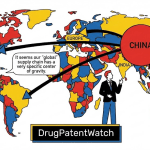
China filed more than 1.5 million patent applications in 2022, making it the largest single-country source of patent filings on the planet. Its pharmaceutical market contributed roughly 20.3% of global pharmaceutical industry output that same year. Those two facts, taken together, mean that any IP team treating China as a secondary enforcement jurisdiction is actively misallocating legal budget.
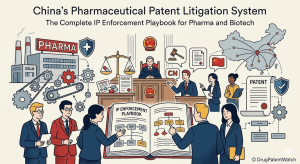
What changed between 2017 and 2025 is not just volume. The Chinese patent system rebuilt its enforcement infrastructure from the ground up. Specialized IP courts now operate in Beijing, Shanghai, Guangzhou, and Hainan. The Supreme People’s Court (SPC) runs a dedicated IP Tribunal that handles second-instance appeals in technical patent cases nationwide, eliminating the patchwork of inconsistent provincial decisions that once made enforcement a lottery. Twenty-seven IP tribunals operate across major commercial cities including Nanjing, Shenzhen, Wuhan, Chengdu, and Xi’an.
China also introduced, in a single legislative cycle between 2021 and 2024, a suite of tools that parallel the U.S. Hatch-Waxman framework: pharmaceutical patent linkage under Article 76 of the Patent Law, patent term extension (PTE), patent term adjustment (PTA), and punitive damages for willful infringement. The CNIPA simultaneously launched the Major Patent Infringement Dispute Adjudication channel, which can deliver a nationwide injunction in under four months.
The result is a system that no longer tolerates the assumption that Chinese courts are slow, biased, or unable to award meaningful relief. Foreign plaintiffs won 77% of civil patent cases in major urban jurisdictions in 2022. Average damages in Beijing rose from $80,000 in 2018 to $450,000 by 2022. The statutory ceiling for damages now sits at 5 million RMB per case, with punitive multiples of up to five times that figure available for willful infringement.
This guide covers the full enforcement spectrum: how to file, how to litigate, how to calculate the IP asset value at stake in each proceeding, and what institutional investors should be modeling when they see a Chinese patent challenge in a company’s litigation queue.
The Legal Architecture: What the Patent Law Actually Says
Three Patent Types and Their Pharmaceutical Relevance
China’s Patent Law, established in 1984 and substantially amended four times since, recognizes three patent categories. Invention patents cover new technical solutions relating to a product, process, or method, and carry a 20-year term from filing. Utility model patents cover products with a definite shape or structure, run 10 years, and receive no substantive examination before grant. Design patents run 15 years and cover ornamental appearance.
For pharmaceutical IP strategy, invention patents are the operative category. A composition-of-matter patent on an active pharmaceutical ingredient (API), a pharmaceutical use patent, a method-of-treatment patent, and a formulation patent all qualify as invention patents. Crystal form patents, metabolite patents, and dosing regimen patents can also qualify, though their eligibility for listing on the patent linkage platform is narrower and increasingly litigated.
Utility model patents matter in one specific pharmaceutical context: dual filing. An applicant can file a utility model and an invention patent on the same day for the same innovation. The utility model typically grants within 12 months with no substantive examination, giving the patentee an immediately enforceable right while the invention patent works through a 3-to-5-year examination cycle. Pharmaceutical companies use this strategy to bridge the enforcement gap between filing and grant for manufacturing process innovations and device-drug combination products.
The Four Amendments: A Cumulative Reform Record
China’s Patent Law has been amended in 1992, 2000, 2008, and 2021. Each cycle expanded scope and enforcement. The 1992 amendment extended protection to pharmaceutical products directly, reversing the earlier position that only processes were patentable in the sector. The 2000 amendment aligned the law with TRIPS obligations. The 2008 amendment introduced absolute novelty as the global standard and strengthened patent abuse provisions.
The 2021 Fourth Amendment is where modern pharmaceutical patent strategy in China actually begins.
The Fourth Amendment’s Real Impact on IP Asset Valuation
Punitive Damages: The Deterrence Architecture
Before 2021, Chinese courts calculated damages primarily from three bases: the patent holder’s lost profits, the infringer’s gained profits, or a reasonable royalty (typically 1-3% of infringing sales). Statutory damages ran from 10,000 to 1,000,000 RMB when neither of the first two bases could be proved.
The Fourth Amendment restructured this calculation in two ways. Statutory damages now run from 30,000 to 5,000,000 RMB (approximately $4,100 to $685,000 at current exchange rates). Willful infringers face punitive multiples of 1 to 5 times the compensatory base. The amendment also shifted the burden of financial disclosure: if a patent holder demonstrates they have made reasonable efforts to collect evidence of damages, a court can order the infringer to produce its financial records, with adverse inference consequences for non-compliance.
The punitive damages provision has already appeared in pharmaceutical trade secret cases. In Hunan Changsheng v. Hunan Huize, a trade secret misappropriation case closed by the SPC in January 2024, the court applied 1.5 times punitive damages. As of mid-2025, courts have not yet applied the full 5x multiplier in a reported pharmaceutical case, but the statutory authority exists and active litigants know it.
IP Asset Valuation: What the Fourth Amendment Changed for Deal Teams
For pharmaceutical M&A and licensing, the practical significance of enhanced damages is this: a Chinese invention patent on a blockbuster drug now has a credible floor value that deal teams can model. Pre-2021, a Chinese patent’s enforcement value was often discounted to zero or near-zero in DCF models because the expected damages recovery did not justify litigation cost. Post-2021, the expected value calculation changes materially.
A composition-of-matter patent on a drug with 500 million RMB in annual Chinese revenue, if litigated to a willful infringement finding, can now support a punitive damages claim of up to 25 million RMB (5 times the 5 million RMB statutory ceiling) per case, plus injunctive relief. When multiple defendants in multiple provinces are infringing simultaneously, strategic litigation across several jurisdictions can generate aggregate exposure that shapes generic entry decisions before trial.
IP valuation analysts should model Chinese patent assets on the following architecture:
Primary composition patent (API): Highest value. Broad scope, defensible at CNIPA, eligible for PTE. Valued at 60-75% of the discounted excess revenue attributable to patent exclusivity in the Chinese market.
Method-of-treatment and pharmaceutical use patents: Secondary value. Eligible for patent linkage listing. Key tool for blocking Paragraph IV-equivalent generics. Valued at 20-35% of primary composition patent value in most models.
Formulation patents: Tertiary, context-dependent. Not eligible for linkage listing under current CDE rules (unlike U.S. Orange Book practice). Valued primarily for their injunction utility in blocking generic market entry when the primary patent has expired or is vulnerable.
Crystal form and metabolite patents: High uncertainty. The SPC ruled in (2023) Zui Gao Fa Zhi Min Zhong No. 7 that crystal form claims are not eligible for linkage listing. Enforcement value depends entirely on infringement claim construction and court-specific expertise.
Patent Term Extension and Patent Term Adjustment: The 2024 Implementation Rules
PTE: The Framework and Its Critical Limitation
The 2021 Patent Law authorized PTE for pharmaceutical patents, but the implementing regulations did not take effect until January 20, 2024, with the release of the 2023 Implementing Regulations and 2023 Patent Examination Guidelines. The delay cost international companies three years of PTE eligibility certainty.
The framework now in place allows the CNIPA to grant a PTE of up to five years to compensate for regulatory review time, with the total effective patent term after marketing approval capped at 14 years. Eligible patent categories are defined narrowly:
Chemical drugs: Class 2.1 (esters or salts of known active ingredients) and Class 2.4 (new indications for approved drugs)
Therapeutic biological products: Class 2.2, limited to new indications
Preventive biologics and vaccines: Class 2.2, limited to improvements in vaccine strains
Traditional Chinese medicine: Class 2.3, limited to new indications
The critical limitation, and the one that drew the sharpest reaction from multinational pharma companies, is the definition of ‘new drug’ for PTE purposes. CNIPA restricts PTE to drugs that had not been marketed anywhere in the world at the time of Chinese marketing approval application. Any drug already approved in the U.S., EU, or Japan before Chinese filing is ineligible for PTE. This effectively excludes the majority of innovative drugs from multinationals operating in China through standard sequential global launch strategies.
Early PTE Grants: Building the Precedent Record
The first PTE approvals arrived in late 2024 and into 2025, establishing the practical parameters of the system.
Risdiplam, approved by CNIPA for spinal muscular atrophy, received the first small-molecule chemical drug PTE on November 22, 2024. The compensation period was 36 days, extending the patent term from May 11, 2035, to June 16, 2035. The 36-day period reflects the difference between the Chinese marketing approval date and the patent’s statutory expiry.
Penpulimab, an anti-PD-1 antibody approved for lymphoma and lung cancer indications, received the first biological drug PTE the same day, with a 140-day compensation period extending the patent to January 10, 2037.
The longest biological drug PTE granted to date, as of March 2025, went to antibody patent ZL201480011008.6, covering camrelizumab, with a 389-day extension. The patent’s expiration shifted from November 14, 2034, to December 8, 2035.
For the traditional Chinese medicine category, compound patent ZL03156365.1 received the statutory maximum: 1,827 days (five years), pushing expiry from September 5, 2023, to September 5, 2028.
PTA: Compensating for Examination Delays
PTA adjusts patent term for examination delays on the CNIPA’s side of the prosecution process. Where examination takes longer than the statutory periods, PTA adds compensatory days to the 20-year base term. Unlike PTE, PTA applies broadly and is not restricted to ‘new drug’ eligibility.
PTA is most valuable for high-complexity biologics prosecutions, where examination frequently extends well beyond standard timelines due to sequence analysis and inventive step disputes. Applicants using the Patent Prosecution Highway (PPH) between the USPTO and CNIPA can accelerate Chinese examination by leveraging USPTO allowances, reducing the PTA opportunity but accelerating grant and thus the period of enforceable protection.
Key Takeaways: PTE and PTA
The PTE system, though finally operational, covers a narrow slice of multinational pharmaceutical pipelines due to the ‘not previously marketed’ requirement. Companies that structure Chinese regulatory filings as first-in-world approval applications, or that develop indications commercially launched in China before global rollout, have a credible PTE path. For standard sequential launchers, PTA optimization during prosecution is the more accessible term-extension tool. Any M&A or licensing model valuing a Chinese pharmaceutical patent portfolio should now include a discrete PTE eligibility analysis per asset, because the incremental value of a five-year PTE on a multi-billion RMB revenue drug can be worth hundreds of millions of RMB in present value terms.
The Patent Linkage System: Article 76, Paragraph IV Filings, and the First-Generic Exclusivity Race
The Statutory Framework
Article 76 of the 2021 Patent Law created China’s patent linkage system, modeled on the U.S. Hatch-Waxman Act but with structural differences significant enough to alter litigation strategy at every stage. The implementing rules took effect July 4, 2021, through the ‘Measures for the Implementation of the Mechanism for Early Resolution of Drug Patent Disputes (for Trial Implementation).’
Under this framework, a marketing authorization holder (MAH) for a branded drug lists its relevant patents on the CDE’s Patent Information Registration Platform. When a generic manufacturer files an abbreviated new drug application (ANDA) with the NMPA, it must submit a certification as to each listed patent. Four certification categories exist, directly analogous to Paragraph I-IV certifications under Hatch-Waxman:
Category I: The patent has expired.
Category II: No relevant patent is listed on the platform.
Category III: The generic will not be launched until the listed patent expires.
Category IV: The listed patent is invalid, or the generic does not infringe it.
Category IV certifications, the ones that trigger litigation, account for only 5.1% of all certifications filed as of March 15, 2024. The total certification volume reached 7,991 by that date, covering 7,923 chemical drug ANDAs, 67 biologics ANDAs, and one traditional Chinese medicine ANDA. The low Category IV rate reflects two dynamics: generic manufacturers prefer regulatory certainty over litigation exposure, and CNIPA’s procedural standards for Category IV create a meaningful evidentiary burden.
The 9-Month Stay and Its Practical Effect
When a MAH receives notice of a Category IV certification and files a patent linkage challenge within 45 days, NMPA approval of the generic is stayed for nine months while the CNIPA or Beijing IP Court resolves the dispute. The nine-month stay is substantially shorter than the 30-month automatic stay under U.S. Hatch-Waxman. Its practical effect is further diluted by ANDA review timelines: the statutory review period for Chinese ANDAs converts to more than nine months in calendar days, meaning the stay rarely extends the generic’s time to market in practice.
From July 2021 to June 2024, the CNIPA processed 171 patent linkage administrative cases and closed 162 of them, with an average closure period of 162 days, roughly 5.4 months. The SPC IP Tribunal closed 17 appellate patent linkage cases by end of 2023.
Forum statistics confirm a strong patentee preference for CNIPA over the Beijing IP Court. By March 15, 2024, CNIPA disclosed 76 linkage case decisions with an average trial period of 6.1 months. The Beijing IP Court published 43 rulings on linkage lawsuits with an average trial period of 7.7 months. The CNIPA preference is structural: CNIPA decisions on administrative adjudication can block generic approval without requiring the effective first-instance decision that court proceedings demand. Because China operates a two-instance system, most court cases do not reach an effective decision within nine months, leaving patentees unable to trigger the stay even after winning at first instance.
Burden-of-Proof Architecture in Linkage Cases
The burden-of-proof dynamics in Article 76 proceedings favor originators in a specific way. In CNIPA administrative adjudication, a generic applicant filing a Category IV certification bears the burden to disclose the technical solution of its generic drug. If the generic manufacturer refuses to submit technical documentation supporting its non-infringement or invalidity position, CNIPA rules against it by adverse inference. The SPC confirmed this framework in Pfizer v. Yunnan Sincere, where CNIPA ruled that the generic drug fell within the listed patent’s scope because the generic manufacturer refused to submit its technical documents.
This burden architecture is structurally different from U.S. ANDA litigation, where the brand company bears the burden of proving infringement. In China’s administrative track, the generic effectively must prove non-infringement, or lose by default.
China’s first-generic exclusivity is 12 months, double the 180-day exclusivity under U.S. Hatch-Waxman. The higher reward comes with higher standards. To qualify, a generic must be the first to receive NMPA marketing approval and must have ‘successfully challenged’ the patent. Under current rules, success requires full invalidity of the challenged patent at CNIPA or court, not merely a design-around finding. A generic that designs around the patent without invalidating it does not qualify for the 12-month exclusivity period, even if it received Category IV certification and prevailed in litigation.
This standard is more demanding than the U.S. regime and has suppressed generic patent challenges. As of mid-2024, the share of Category IV certifications relative to total certifications (5.1%) remains far below the proportion of Paragraph IV filings in the U.S., where patent challenges are a standard entry strategy for generic manufacturers.
Eligible Patent Categories: What Can and Cannot Be Listed
The CDE’s patent listing platform accepts API patents, medical use patents, and formulation patents for chemical drugs. Biological drugs can list sequence patents and medical use patents, but formulation patents for biologics are not eligible for listing. Crystal form patents cannot be listed, following the SPC ruling in (2023) Zui Gao Fa Zhi Min Zhong No. 7. Metabolite patents present unsettled eligibility questions. Combo-use patents remain a live dispute category with no definitive CNIPA or SPC guidance as of 2025.
The formulation patent exclusion for chemical drugs matters strategically. In the U.S., formulation patents are standard Orange Book entries and routinely generate Paragraph IV litigation. In China, a company relying on a formulation patent alone to block a generic must pursue the claim through ordinary civil infringement litigation, not the streamlined Article 76 pathway. This changes the economics of formulation-based patent strategies for drugs approaching primary patent expiry.
Key Takeaways: Patent Linkage
Article 76 gives originators a structured pre-launch challenge mechanism, but it is not a direct analog to Hatch-Waxman. The 9-month stay is procedurally available but rarely delays generic approval in practice. CNIPA administrative adjudication is faster and procedurally more favorable to patentees than the court track for linkage cases. Generic manufacturers face a real evidentiary burden in Category IV proceedings that suppresses patent challenges. First-generic exclusivity at 12 months is substantial, but the invalidity requirement makes it harder to earn than its U.S. equivalent.
Biologics and Biosimilars: Where the Linkage System Breaks Down
Coverage Without Teeth
China’s linkage system covers biologics in name but delivers materially weaker protection than it does for small molecules. Biosimilar applicants must file patent certifications against listed biologic patents, and MAHs can challenge those certifications under Article 76. The key structural gap: a patent linkage case for a biosimilar does not trigger a stay of NMPA regulatory review. Biosimilar applicants do not receive first-generic market exclusivity.
The patent types eligible for biologic listing are narrow: sequence patents and medical use patents only. Process patents, formulation patents, and manufacturing method patents cannot be listed for biological drugs. This leaves a significant portion of a typical biologic patent estate outside the linkage framework entirely.
As of March 15, 2024, only 67 biologic ANDAs had submitted patent certifications to the platform out of 7,991 total certifications. The Pfizer and Warner-Lambert cases that generated important CNIPA doctrine were both small-molecule cases. The biologic patent linkage jurisprudence is still early-stage.
The Biosimilar IP Strategy Gap
For originators with major biologic products in China, the absence of a regulatory stay for biosimilars means that infringement litigation cannot prevent biosimilar market entry during proceedings. The practical enforcement path for biologic patent holders is the ordinary civil infringement route combined with preliminary injunction applications, or the Major Case administrative channel at CNIPA. Neither provides the automatic pre-launch protection that the U.S. BPCIA’s 12-year data exclusivity and patent dance provisions deliver.
Chinese biosimilar competition is also accelerating in volume. The NMPA approved its first biosimilar in 2019 and has since approved 60-plus biosimilars across therapeutic categories including oncology, rheumatology, and endocrinology. Domestic Chinese biosimilar manufacturers have filed applications against originators including AbbVie’s adalimumab, Roche’s trastuzumab and bevacizumab, and Amgen’s denosumab. For originators, the absence of a linkage stay means that the litigation clock and the commercial clock are running simultaneously from the moment a biosimilar ANDA is accepted.
Dual-Track Strategy for Biologic Patent Holders
IP teams managing biologic assets in China should run a dual-track strategy. The administrative track covers sequence patents and medical use patents through CNIPA adjudication under Article 76, which does not trigger a stay but does generate a binding infringement or non-infringement determination that can inform settlement leverage. The civil track covers all other patent types (process, formulation, manufacturing) through IP court litigation, combined with an aggressive preliminary injunction application citing the 48-hour emergency relief provision.
Sequence patent prosecution strategy for biologics in China requires structuring claims at the sequence level with sufficient definiteness to survive CNIPA examination, while avoiding the functional claim scope that the SPC has implicitly disfavored following global trends in antibody patent law post-Amgen v. Sanofi. Chinese prosecution on biologic antibody patents should target narrow, structurally defined claims on both the heavy and light chain CDR sequences, with use claims covering each approved indication separately.
Enforcement Mechanisms: Courts, CNIPA, and the Major Case Pathway
The Court System Architecture
Patent infringement civil actions in China go to designated IP courts and IP tribunals with technical expertise. The four dedicated IP courts in Beijing, Shanghai, Guangzhou, and Hainan handle first-instance cases for invention patents and utility model patents with national impact. Twenty-seven IP tribunals embedded in intermediate courts in major cities handle first-instance cases within their geographic jurisdiction. Second-instance appeals from all IP courts and tribunals go to the SPC IP Tribunal, which has appellate jurisdiction over all technical IP cases nationwide.
This centralization is deliberately designed to eliminate the forum-shopping problem that plagued the pre-2019 system, where plaintiffs could file in sympathetic provincial courts with limited technical capability and extract inconsistent rulings. The SPC IP Tribunal now creates a unified, publicly reported body of patent doctrine that IP teams can actually rely on for claim construction predictions.
The Major Case Channel: Nationwide Injunction in Four Months
Article 70.2 of the 2021 Patent Law created a new administrative enforcement channel through CNIPA itself: the Major Patent Infringement Dispute Adjudication, commonly called the ‘Major Case’ mechanism. This channel is available where a patent infringement has significant national influence, typically multi-province infringement or cases implicating national industry policy.
The Major Case mechanism delivers a nationwide injunction, not monetary damages. CNIPA must issue a final decision within four months of docketing the case. The first Major Case decision, as of 2024, arose from a pharmaceutical case in which a drug was copied and offered for sale across more than 20 provinces simultaneously. CNIPA issued an infringement decision within months of filing, effectively halting nationwide generic sales before any court proceeding concluded.
For pharmaceutical patent holders facing widespread generic infringement prior to a formal ANDA linkage challenge, the Major Case pathway is the fastest available mechanism for market-wide relief. IP teams should include it in standard infringement response protocols alongside civil injunction applications.
Administrative Enforcement: Local IP Protection Centers
Beyond CNIPA and the courts, local IP protection centers affiliated with local administrations for market regulation handle lower-volume infringement at the regional level. These bodies can issue injunctive-type stop orders and coordinate with customs for seizure of infringing products. CNIPA has progressively expanded this network and issued updated guidelines for local enforcement activity. Administrative enforcement is particularly effective for straightforward pharmaceutical manufacturing infringement in regions where the local IP protection center has pharmaceutical sector expertise.
Evidence, Discovery, and the Burden-of-Proof Problem
No Discovery: The Structural Challenge
China has no civil discovery equivalent to U.S. Federal Rules of Civil Procedure Rule 26-37 or English disclosure orders. Parties bear the independent obligation to collect and present evidence at the time of filing. For pharmaceutical patent cases, this creates a specific operational problem: the best evidence of infringement, specifically the generic manufacturer’s formulation specifications, process parameters, clinical batch records, and ANDA technical dossier, sits entirely within the alleged infringer’s possession.
Courts can issue evidence preservation orders and evidence collection orders, but these require the moving party to identify precisely what evidence it seeks, where it is located, and why it cannot be obtained independently. Courts also have authority to draw adverse inferences when a party possesses evidence relevant to damages but refuses to produce it under a court order, a provision added in the 2021 amendments.
In practice, pharmaceutical companies have addressed the discovery gap through a combination of technical analysis of commercially available products (purchase, test, and report), regulatory submissions analysis (where NMPA publicly discloses portions of ANDA technical information), and expert testimony from formulation scientists who can reconstruct generic manufacturing processes from product analysis.
Evidence Notarization Requirements
Foreign evidence submitted in Chinese patent litigation must typically be notarized and authenticated through the consular chain, or through an apostille process for countries that are parties to the Hague Convention. China acceded to the Apostille Convention effective November 7, 2023, which eliminated the full consular authentication chain for evidence from member states and materially reduced document preparation costs and timelines for foreign pharmaceutical companies.
For electronic evidence, courts have accepted blockchain-timestamped evidence submissions and notary-platform certified digital records since 2019. Several IP courts have integrated with China’s Internet courts, which accept online evidence filing systems directly.
Damages Calculation: From Statutory Floors to Punitive Ceilings
The Four-Layer Damages Architecture
Chinese courts use a sequential approach to patent damages. The preference order runs as follows: actual losses to the patent holder first, infringer’s gained profits second, reasonable royalty third, and statutory damages last. Courts apply the highest provable layer.
Actual losses in pharmaceutical cases are calculated from the patent holder’s lost sales volume multiplied by its profit margin per unit, adjusted for market share. Where the infringing generic captured a specific portion of the market, courts accept econometric market models showing displaced branded sales. This calculation methodology has become more sophisticated as courts have hired economic experts and accepted third-party market research data as evidence.
Infringer’s gained profits require access to the generic manufacturer’s financial records, which the 2021 burden-shift provision now facilitates. CNIPA-registered licensee royalty rates, where publicly available, give courts a reasonable royalty baseline. For biologics, reference to international licensing transactions in comparable technologies is permitted, though Chinese courts have not yet developed the FRAND-equivalent royalty determination methodology that SEP litigation has generated.
Statutory damages now run from 30,000 to 5,000,000 RMB per case. Punitive damages from 1 to 5 times the compensatory base apply for willful infringement. The combination can generate aggregate awards reaching 25 million RMB from the statutory ceiling alone. When actual losses are provable, punitive damages apply to the actual loss figure, not the statutory cap.
The Beijing Damages Trend
Average damages in Beijing courts rose from approximately $80,000 in 2018 to $450,000 by 2022. This trajectory reflects judicial policy direction from the SPC, which has explicitly instructed lower courts to ‘step up’ damages to reflect actual IP value and prevent the low-damages equilibrium that previously made infringement economically rational. The SPC IP Tribunal has issued guidance on damages calculation methodology in the SEP/FRAND and life sciences sectors throughout 2024, creating a more consistent doctrinal framework for large-scale pharmaceutical patent damages claims.
Injunctive Relief: The 48-Hour Weapon
Preliminary Injunction Standards and Timeline
Chinese courts may grant a preliminary injunction (called a ‘preservative measure’ in Chinese civil procedure) at any point during proceedings, including before trial. In urgent cases, courts must rule on a preliminary injunction application within 48 hours of receipt. If granted, the injunction takes immediate effect.
In evaluating a preliminary injunction application, courts examine the validity and stability of the patent (with presumptive stability for invention patents that have survived substantive examination), evidence of current or threatened infringement, the balance of hardships between the parties, and the public interest. Courts routinely require the applicant to post a bond calibrated to the potential harm to the alleged infringer from a wrongful injunction.
AstraZeneca’s preliminary injunction against Zhejiang Haizheng is the most-cited pharmaceutical example of this mechanism operating efficiently. The court held that AstraZeneca’s invention patent, having undergone substantive examination and remaining within its protection period, was presumptively valid. AstraZeneca posted a litigation preservation guarantee of 15 million RMB through the Beijing Branch of China People’s Property Insurance Company. The court granted the injunction. Both parties settled shortly after the ruling took effect.
The AstraZeneca-Haizheng outcome illustrates the strategic use of preliminary injunctions in pharmaceutical cases. The economics of the bond (15 million RMB, roughly $2 million) versus the commercial stakes of blocked generic entry (potentially hundreds of millions of RMB in branded product revenue) make the preliminary injunction a high-ROI enforcement tool when the patent estate is solid and the timeline is urgent.
Pre-Litigation Preservation: Evidence and Asset Preservation
Before filing a civil suit, patent holders can seek two forms of pre-litigation preservation: evidence preservation orders (to prevent destruction or concealment of infringement evidence) and property preservation orders (to freeze assets pending a damages award). Property preservation orders in pharmaceutical cases have been granted against both generic manufacturers and distributors. Courts may attach bank accounts, inventory, and manufacturing equipment.
The CNIPA’s Major Case pathway does not require a bond for its nationwide injunction, which is an economic advantage over the civil preliminary injunction track when the bond amount would be prohibitively large.
Evergreening Tactics Inside the Chinese System
The Standard Evergreening Portfolio Architecture
Pharmaceutical patent evergreening in China follows the same conceptual logic as the U.S., but the specific available tactics are constrained by China’s linkage eligibility rules and the CNIPA’s more restrictive approach to secondary patent examination.
A standard evergreening portfolio for a small-molecule drug in China runs on four layers. The primary composition patent covers the API, filed as close to the development decision as possible to maximize the 20-year term. The use patent covers approved therapeutic indications and files with or shortly after the primary composition patent, often with continuation-type claims in China’s file wrapper. The process patent covers manufacturing route steps, purification methods, or crystallization processes, and provides infringement claims against generic manufacturing even after API patent expiry. The formulation patent covers the specific drug delivery technology, though this layer is excluded from linkage listing and must be enforced through civil infringement channels.
The Crystal Form Tactic: Increasingly Constrained
Crystal form patents have historically been one of the most contested evergreening tools globally, and China has moved sharply to restrict their utility. The SPC’s 2023 ruling in Zui Gao Fa Zhi Min Zhong No. 7 held that crystal form claims, and claims covering the use of a crystal form, do not qualify for listing on the CDE patent linkage platform. A patent whose claims cover a crystal form of a compound cannot serve as the basis for triggering Article 76 administrative adjudication against a generic ANDA.
This does not eliminate crystal form patents from the Chinese enforcement toolkit. They remain enforceable through ordinary civil infringement litigation if the generic’s product contains the claimed crystal form. But the exclusion from linkage listing means that a crystal form patent alone cannot trigger the 9-month ANDA stay, and it cannot serve as the sole basis for a CNIPA administrative adjudication. Originator companies relying on crystal form patents as primary exclusivity vehicles need a parallel active litigation strategy to use them defensively.
New Indication and Formulation Strategies
Use patents on new therapeutic indications are eligible for linkage listing and represent a viable evergreening pathway for compounds approaching primary patent expiry. China’s PTE framework covers new indications under Class 2.4 for chemical drugs, making a successful new-indication strategy both IP-extending and PTE-eligible.
Formulation-based strategies, while excluded from linkage eligibility, remain active in the Chinese market. Extended-release formulations, co-crystal technologies, nanoparticle delivery systems, and combination products all generate separate patent estates that can be enforced through civil litigation. The enforcement value depends on whether the generic replicates the specific formulation technology, which in the case of extended-release products involving proprietary polymer matrices is often technically mandatory.
The Combination Product and Dosing Regimen Frontier
Dosing regimen patents cover specific dosing schedules, patient selection criteria, or combination treatment protocols. Their validity in China remains contested. The CNIPA and courts have not resolved whether a dosing schedule claim constitutes patentable subject matter as a ‘use’ patent or whether it is excluded as a method of medical treatment. Warner-Lambert v. Qilu, decided by the SPC in 2024, addressed a linkage certification for a drug with multiple dosages but did not fully resolve the eligibility question for dosing regimen claims. Combination product patents, covering fixed-dose combination formulations, are an active prosecution strategy particularly in oncology and metabolic disease.
Case Studies: AstraZeneca, Chugai, Spin Master, Pfizer, Warner-Lambert
Chugai Pharmaceutical v. Wenzhou Haihe: The First Article 76 Civil Action
Chugai Pharmaceutical’s case against Wenzhou Haihe Pharmaceutical was the first civil patent linkage case litigated under the Article 76 framework. Filed at the Beijing IP Court in 2021 concerning Chugai’s eldecalcitol soft capsule product (a vitamin D3 analog for osteoporosis), the case was decided by the SPC on August 5, 2022, as (2022) Zui Gao Fa Zhi Min Zhong No. 905.
The SPC’s decision established several foundational Article 76 doctrines: the definition of a ‘related patent’ eligible for platform listing, the procedural requirements for MAH qualification to bring a linkage action, and the standards for applying the ‘all-elements’ rule to generic technical solution analysis. For IP teams handling Article 76 strategy, the Chugai decision is the baseline procedural reference.
The Chugai-Haihe litigation also illustrates the timing dynamics of the dual-forum system. The case ran through CNIPA administrative adjudication and Beijing IP Court civil proceedings concurrently, with the CNIPA decision arriving faster but the SPC civil appellate decision creating the binding precedent. For assets with genuine patent strength, running both tracks simultaneously optimizes the probability of an effective decision within the nine-month stay window.
AstraZeneca v. Zhejiang Haizheng: The Preliminary Injunction Template
AstraZeneca obtained a preliminary injunction against Zhejiang Haizheng at the Beijing IP Court under an expedited 48-hour review process. The drug at issue, a small-molecule oncology or cardiovascular product, carried an invention patent that had passed substantive examination, establishing the presumptive validity baseline that the court cited in its injunction analysis.
AstraZeneca’s team structured the application with a 15 million RMB litigation preservation guarantee posted through China People’s Property Insurance Company, demonstrating that the applicant could cover potential harm from a wrongful injunction. The court granted the injunction and served the ruling on Haizheng post-implementation, limiting Haizheng’s ability to present a pre-grant defense.
The swift post-injunction settlement confirms what the pharmaceutical patent litigation bar has observed consistently: a Chinese preliminary injunction in a pharmaceutical infringement case, properly structured and filed with adequate bond, generates settlement pressure that resolves most cases before full trial. The preliminary injunction is therefore both an enforcement tool and a negotiation accelerant.
Spin Master v. Guangzhou Lingdong: The Damages Ceiling Case
While not a pharmaceutical case, Spin Master Corp.’s 2020 judgment from the Suzhou Intermediate People’s Court is the most-cited foreign-plaintiff damages award in Chinese patent litigation and remains relevant as a damages benchmarking reference for any IP enforcement action involving manufacturing-scale infringement.
The court awarded 15 million RMB ($2.2 million USD at prevailing exchange) to Spin Master against Guangzhou Lingdong’s ‘Eonster Hunter’ toys, which replicated Spin Master’s Bakugan product design and mechanism patents. The court’s damages calculation drew on defendants’ sales data, applying a profits-based methodology that went beyond the then-standard statutory damages floor. Spin Master’s counsel, Doug Clark of Weil Gotshal, described the court’s approach as applying a broader view of damages than prior Chinese practice.
For pharmaceutical patent holders seeking to model litigation ROI, the Spin Master case establishes that Chinese courts, given adequate sales data, will apply damages methodologies that generate awards material enough to justify litigation costs. A 2022 average Beijing award of $450,000 placed against a typical pharmaceutical litigation cost of $500,000-1,500,000 suggests that cases with demonstrated large-scale infringing sales are litigatable on an economic basis that was not available five years earlier.
Pfizer v. Yunnan Sincere: The Adverse Inference Doctrine
Pfizer’s linkage case against Yunnan Sincere Pharmaceutical at CNIPA established the adverse inference doctrine in Article 76 proceedings. When the generic manufacturer refused to submit its ANDA technical documents supporting its non-infringement position, CNIPA ruled directly that the generic drug fell within the scope of Pfizer’s listed patent. The CNIPA did not require Pfizer to prove infringement through technical comparison. The generic’s silence served as the infringement determination.
This precedent is operationally significant. It means that a well-structured Article 76 filing by an originator, supported by adequate claim mapping and infringement analysis, puts the generic in a structural dilemma: disclose the formulation and accept claim-scope analysis, or withhold it and accept an adverse ruling. Neither option is commercially comfortable for a generic manufacturer whose ANDA has been filed and whose commercial launch timeline is fixed.
Warner-Lambert v. Qilu: Dosage-Linkage Certification Scope
The SPC’s decision in Warner-Lambert v. Qilu confirmed that a generic drug applicant must file a patent linkage certification against the relevant branded drug even where the only marketed branded version carries a different dosage strength than the generic ANDA product. This decision expanded the practical scope of Article 76 coverage and closed a potential gap through which generics had sought to avoid certification by pointing to dosage-strength mismatches.
IP Valuation: How Chinese Patent Assets Get Priced
The Patent Cliff in the Chinese Context
When the primary composition patent on a blockbuster drug expires in China, generic entry typically drives price declines of 70-90% within 12 to 18 months, with revenue falling 60-80% within two years of first generic approval. The patent cliff dynamics in China are accelerated relative to the U.S. by China’s volume-based procurement (VBP) system, which conducts annual group-purchasing tenders that generic manufacturers enter at prices far below branded levels. Any drug that clears the patent cliff and enters VBP competition can see branded products effectively displaced from public hospital formularies within one procurement cycle.
IP valuation for pharmaceutical patents in China must incorporate this VBP-accelerated cliff dynamic. A U.S.-standard DCF model that assumes a 2-year revenue decline post-patent expiry will overvalue Chinese patent assets if applied without adjustment. The appropriate adjustment is a sharper revenue step-down function beginning at first generic approval, reflecting both price erosion and volume displacement through VBP channel exclusion.
Patent Portfolio Valuation Framework
A rigorous Chinese pharmaceutical patent portfolio valuation runs through five analytical layers:
First, claim-scope mapping against known or anticipated generic technical approaches, assessing both composition and use patent coverage. Second, CNIPA validity analysis, including prior art landscape review and comparison with any pending invalidation petitions. Third, patent linkage eligibility assessment per CDE listing rules, identifying which patents can trigger Article 76 and which must be enforced through civil channels only. Fourth, litigation-outcome probability weighting, drawing on judicial win rates, venue selection, and the specific judge or technical panel assigned. Fifth, revenue-at-risk modeling applying VBP cliff dynamics to the post-patent revenue trajectory.
The output of this framework is a per-patent, per-molecule valuation that IP teams can use for licensing negotiations, litigation ROI analysis, and M&A due diligence.
CNIPA Quality Shift and Its Valuation Implications
CNIPA’s subsidy-elimination campaign, targeting what regulators labeled ‘abnormal patent applications,’ caused a 28.8% decline in Chinese invention patent grants in the first half of 2025 relative to the same period in 2024. This is a controlled policy outcome reflecting the 14th Five-Year Plan’s shift from patent quantity to ‘high-quality development.’ Provincial subsidies that previously paid per-granted patent (Shenzhen paid 3,000 RMB per granted invention patent) created incentives for low-quality filing farms. Those subsidies are now eliminated or heavily curtailed.
For valuation purposes, the quality shift has a counterintuitive positive implication: Chinese patent grants from CNIPA are now more difficult to obtain and, on average, cover more genuinely novel inventions. A granted Chinese invention patent from 2024 or later carries more presumptive validity than one from the 2015-2020 subsidy-inflated era. Due diligence teams acquiring Chinese patent portfolios should weight validity analysis differently based on grant date and originator identity, with higher presumptive validity for post-2022 grants from pharmaceutical applicants.
Investment Strategy for Analysts
Modeling Chinese Patent Exposure in Pharma Equity Analysis
Chinese patent status is a material, financially quantifiable input to pharmaceutical company valuations, particularly for companies with products that generate more than $200 million in annual Chinese revenue. Institutional investors and sell-side analysts should integrate the following frameworks:
For branded pharmaceutical companies with Chinese market exposure, the critical monitoring variables are: primary composition patent expiry date at CNIPA, current linkage platform listing status, any pending ANDA certifications (especially Category IV), and any filed or pending invalidity petitions at CNIPA. These variables predict the probability distribution of generic entry timing, which drives the patent-cliff adjustment to peak-sales forecasts.
For companies in M&A processes, Chinese patent portfolio quality directly affects deal pricing. A target company with a clean Chinese primary composition patent, PTE eligibility confirmed, and no pending Category IV certifications commands a Chinese-market revenue premium relative to one facing imminent ANDA challenge. The 12-month first-generic exclusivity window is a negotiable asset in structured licensing arrangements with Chinese generic manufacturers.
Monitoring Generic Pipeline Activity
Generic entry risk in China is most accurately tracked through the CDE’s publicly accessible ANDA application database and the Patent Information Registration Platform. ANDA filings are disclosed by drug name and applicant; patent certification categories are disclosed with a 45-day lag after filing. The window between a Category IV certification disclosure and the 45-day linkage challenge deadline is the highest-urgency response period for originator companies and, by extension, for investors monitoring litigation risk.
Investors in branded pharmaceutical companies with significant China exposure should build a quarterly monitoring cadence covering: new ANDA filings by drug, new Category IV certifications, CNIPA invalidity petition filings against key patents, and Article 76 case dockets at CNIPA and the Beijing IP Court.
Short-Thesis Triggers and Long-Thesis Catalysts
For pharmaceutical equity investors, the following events function as short-thesis triggers on branded pharmaceutical companies: a Category IV certification against a primary composition patent for a drug generating more than 15% of a company’s Chinese revenue; a successful CNIPA invalidity finding against a primary composition patent before its statutory expiry; a Major Case proceeding opened against the company’s own product (indicating widespread multi-province infringement and imminent revenue displacement); or VBP procurement cycle results that bundle the company’s drug into a competitive tender before primary patent expiry.
Long-thesis catalysts run in the opposite direction: a successful Article 76 CNIPA decision in the originator’s favor on a primary composition patent, with an effective ruling issued within the 9-month stay window; a PTE grant confirmed by CNIPA for a high-revenue asset; a preliminary injunction granted against a generic manufacturer with significant ANDA market share; or a SPC IP Tribunal decision clarifying claim scope favorably for the originator’s patent claims.
Regional Variation and Forum Selection
The Court Geography of Pharmaceutical Patent Enforcement
Pharmaceutical patent litigation in China concentrates in three primary venues: the Beijing IP Court, the Shanghai IP Court, and the Guangzhou IP Court. Beijing handles roughly 26% of all IP case volume nationally and has the most developed pharmaceutical patent jurisprudence, reflecting its jurisdiction over CNIPA decisions and the SPC IP Tribunal’s appellate authority.
Shanghai IP Court, covering the Yangtze River Delta manufacturing and biopharma cluster, handles significant pharmaceutical formulation and process patent cases. Guangzhou IP Court, serving Guangdong province and the Pearl River Delta generic manufacturing hub, handles the highest volume of generic drug patent cases due to the concentration of domestic pharmaceutical manufacturers in the region.
Forum selection for pharmaceutical patent enforcement follows a two-step analysis. First, determine whether the infringement is localized (in which case the local IP court or tribunal is mandatory) or multi-provincial (in which case the Major Case CNIPA pathway or a strategic choice among multiple eligible venues applies). Second, within eligible venues, assess judicial panel expertise, average case duration, historical win rates for patent holders in the relevant technology class, and the speed of preliminary injunction processing.
The SPC IP Tribunal’s appellate jurisdiction over all technical patent cases means that first-instance forum variation matters less than it did before 2019. The doctrinal ceiling is set at the SPC level. But first-instance timing still varies, and in pharmaceutical cases where generic entry timing is the central commercial question, a faster first-instance court can provide effective relief that a technically superior but slower court cannot.
Local Protectionism: The Empirical Record
Perceptions of local protectionism in Chinese patent courts persist, but the empirical record in major urban jurisdictions does not support the claim as a systematic pattern. Vanderbilt Law research covering 2006-2011 found foreign patentees winning more than 70% of their cases in Beijing courts. The post-2019 centralization of IP appeals at the SPC IP Tribunal has further reduced the structural opportunity for local courts to systematically favor domestic parties, because adverse first-instance decisions appealing to Beijing face a national-standard doctrinal review.
Regional protectionism risk is higher in inland provinces and lower-tier cities whose IP tribunals have less pharmaceutical patent case experience and whose local economies have stronger dependence on domestic pharmaceutical manufacturers. Pharmaceutical companies facing infringement in inland provinces should consider whether the infringement volume qualifies for the Major Case CNIPA pathway (which bypasses local courts entirely) or whether consolidating claims in a major urban jurisdiction through cross-regional infringement strategies is feasible.
Key Takeaways
Legal Framework. China’s 2021 Patent Law and its 2024 implementing regulations created a pharmaceutical IP system that is now structurally comparable to the U.S. in its statutory scope, if not yet its damage levels. Punitive damages of up to five times compensatory base, statutory damages to 5 million RMB per case, nationwide injunction capability through the Major Case channel, and PTE and PTA for innovative drugs are all live operational tools.
Patent Linkage. Article 76 gives originators a pre-launch challenge mechanism through CNIPA or the Beijing IP Court, but the 9-month stay rarely delays generic approval in practice. CNIPA administrative adjudication is faster, generates binding determinations, and places the evidentiary burden on generic applicants in ways that functionally favor well-organized patent holders.
Biologics. The patent linkage system does not stay biosimilar approvals. For biologic patent holders, preliminary injunction applications and the Major Case channel replace the linkage stay as the primary pre-launch protection tools.
PTE. Patent term extension is operational but restricted to drugs first marketed globally in China. Multinationals with standard sequential launch strategies are largely ineligible. For those with China-first or China-concurrent development strategies, PTE adds material economic value that belongs in IP asset valuation models.
Damages. The trajectory is clearly upward. Average Beijing patent damages rose from $80,000 to $450,000 between 2018 and 2022. The statutory framework and judicial instructions from the SPC support continued growth. Large-scale pharmaceutical infringement is now litigatable on an economic basis that did not exist before 2021.
Forum. Beijing IP Court and CNIPA are the dominant venues for pharmaceutical patent enforcement. The SPC IP Tribunal creates national doctrinal consistency on appeal. The Major Case channel, available for multi-provincial infringement, delivers a nationwide injunction faster than any court track and without a damages bond requirement.
Evergreening. Crystal form patents cannot trigger Article 76 linkage stays. Formulation patents cannot be listed on the CDE platform. Use patents and combination patents are the most viable secondary patent strategies within the current linkage framework, supplemented by PTE applications for new-indication extensions.
Investment. Chinese pharmaceutical patent status is a financially material, trackable variable. IP-literate investors should monitor the CDE certification platform quarterly for Category IV certifications against key assets, and model patent-cliff dynamics using VBP-adjusted revenue step-down functions rather than standard U.S. generic entry assumptions.
FAQ
What is the difference between CNIPA administrative adjudication and civil litigation under Article 76?
CNIPA administrative adjudication under Article 76 handles the specific question of whether a generic ANDA’s technical solution falls within the scope of a listed patent. It is faster than court litigation (average 162 days to close versus 7.7 months for a Beijing IP Court first instance), but it cannot award damages. Courts can award both infringement determinations and damages, and court decisions create binding precedent. In practice, patentees file both tracks simultaneously to maximize the probability of an effective decision within the 9-month stay window.
Can a foreign pharmaceutical company obtain a preliminary injunction in China as a first enforcement step?
Yes. Foreign pharmaceutical companies can apply for a preliminary injunction directly without prior court proceedings. In urgent cases, courts rule within 48 hours. The applicant must demonstrate patent validity (presumptively established for examined invention patents), infringement evidence, irreparable harm, and post a bond. AstraZeneca’s action against Zhejiang Haizheng demonstrates that Chinese courts will grant 48-hour preliminary injunctions in pharmaceutical cases when these elements are properly structured.
How does China’s patent linkage system differ from U.S. Hatch-Waxman in practice?
Five operational differences dominate. China’s ANDA stay is 9 months versus 30 months in the U.S. China’s first-generic exclusivity is 12 months versus 180 days, but requires full patent invalidity to qualify, not just a successful Paragraph IV challenge. Crystal form patents cannot be listed in China but can be Orange Book-listed in the U.S. Formulation patents cannot be listed in China but are standard Orange Book entries in the U.S. The evidentiary burden in CNIPA administrative adjudication falls on the generic applicant to prove non-infringement, the reverse of U.S. ANDA litigation where the brand bears the infringement burden.
What are the key patent types eligible for CDE platform listing?
For chemical drugs: API composition patents, pharmaceutical use patents, and formulation patents. Crystal form patents are expressly ineligible following the 2023 SPC ruling. For biological drugs: sequence patents and medical use patents only. Process patents, manufacturing method patents, and formulation patents for biologics cannot be listed. A drug may list an average of 1.8 patents per product based on data through June 2023.
How should pharma M&A teams integrate Chinese patent status into deal valuation?
Run a five-layer analysis: (1) claim-scope mapping against generic technical approaches; (2) CNIPA validity review and prior art analysis; (3) linkage eligibility assessment per CDE listing rules; (4) litigation outcome probability weighting by venue and judicial panel; and (5) revenue-at-risk modeling using VBP-adjusted cliff dynamics. The output provides a per-patent valuation that distinguishes composition patents (highest value, PTE-eligible), use patents (secondary value, linkage-eligible), formulation patents (civil-channel only), and crystal form patents (no linkage value, civil-channel dependent).
What is the Major Case CNIPA channel and when should it be used?
The Major Case mechanism allows CNIPA to adjudicate patent infringement cases with significant national influence, typically multi-province infringement, and issue a nationwide injunction within four months of docketing. Unlike preliminary injunctions in civil courts, the Major Case remedy does not require a bond. The Major Case pathway is most appropriate when a generic product is being manufactured and sold across multiple provinces simultaneously before any ANDA linkage process has concluded, or when the primary commercial goal is injunctive relief rather than damages.
Sources: PatentPC China Patent Litigation Statistics; Armstrong Teasdale, ‘Revised China Patent Law Makes Litigation More Attractive’; Vanderbilt Journal of Entertainment and Technology Law, ‘Patent Litigation in China’; IAM Global Life Sciences Guide 2024-2025; Chambers & Partners Life Sciences & Pharma IP Litigation 2025 China; Bird & Bird ‘China’s Pharmaceutical Patent Term Extension Cases’; King & Wood Mallesons, ‘Navigating China’s New Protections for Life Science Patents’; Globalization and Health, ‘Characteristics and Outcomes of the Drug Patent Linkage System in China’ (Yao, 2024); CNIPA CCPIT Patent data; Jones Day ‘Patent Linkage and Article 76 Proceedings in China’; DrugPatentWatch pharmaceutical intelligence database.