The Inherent Limitations of the Orange Book: A Foundation, Not a Fortress
The U.S. Food and Drug Administration’s (FDA) Approved Drug Products with Therapeutic Equivalence Evaluations, universally known as the Orange Book, has long served as the foundational text for a generic drug manufacturer’s strategy. Its purpose, born from the landmark Hatch-Waxman Act, was to provide a streamlined, cost-effective pathway to market by allowing generic manufacturers to prove bioequivalence to an already-approved brand-name drug rather than replicating costly and time-consuming clinical trials.1 The Orange Book, therefore, stands as a critical reference, identifying drugs approved by the FDA and, crucially, listing the patents and regulatory exclusivities that protect them.3 It serves as a resource for healthcare providers and pharmacists to identify therapeutically equivalent products and, most importantly, for generic manufacturers to plan their market entry.4
The Orange Book: A Solid Foundation, Not a Complete Picture
The Orange Book is an indispensable tool and the starting point for any Abbreviated New Drug Application (ANDA) strategy. It offers a structured view of the U.S. market, cataloging approved small-molecule drugs, their dosage forms, routes of administration, and a list of related patents and exclusivity periods.3 An ANDA applicant must consult this list to submit one of four patent certifications for each patent tied to the reference listed drug (RLD).6 This certification process ensures a transparent legal relationship between the generic application and the innovator’s intellectual property (IP), which, in turn, influences the regulatory review timeline and can trigger potential litigation.6 For decades, the Orange Book has been the go-to reference, simplifying a complex regulatory process into a searchable database. However, to view it as the sole source of intelligence for a modern generic strategy is to operate with a dangerous, and often financially catastrophic, blind spot. While a solid foundation, the Orange Book offers a partial and often misleading view of the global IP landscape—it represents a snapshot in time and a fraction of the total intellectual property that can impede a generic drug’s path to market.
The Patents Not Listed: The Hidden Threats to Your ANDA
The most profound limitation of the Orange Book is not what it contains, but what it deliberately excludes by design. For an ANDA strategy focused solely on this database, a critical gap exists where the most formidable threats can lie in wait. The FDA’s regulations explicitly exclude certain types of patents from being listed in the Orange Book, including “process patents, patents claiming packaging, patents claiming metabolites, and patents claiming intermediates”.4 This regulatory fact creates a significant strategic vulnerability. While an ANDA applicant may successfully navigate the Orange Book’s listings, they could still face a costly and protracted legal battle for infringement on a non-listed process patent held by the innovator.
This is not a theoretical problem; it represents a profound business risk. A generic drug, once approved, must be manufactured. If the innovator holds a key process or manufacturing patent—a type of patent that is explicitly excluded from the Orange Book—they can still sue for infringement on that basis, even if the product patent has expired. An ANDA applicant could invest tens of millions of dollars in research and development, building a manufacturing facility, and securing a supply chain, only to be hit with a lawsuit over a patent that was never listed in their primary reference source. A clean entry in the Orange Book provides no guarantee of what is known as “Freedom to Operate” (FTO).8 A comprehensive FTO analysis is a systematic process of identifying and assessing all potential infringement risks from third-party IP, a task that goes far beyond the scope of a U.S.-only database. The absence of a listed patent in the Orange Book is not a signal of an open path to market; it is an invitation for a deeper, more rigorous investigation into the global IP landscape.
Data Accuracy and Currency: A Caveat for Decision-Makers
Even for the information it does contain, the Orange Book is not a flawless, real-time reflection of a drug’s IP status. Research has demonstrated that the database can be susceptible to inaccuracies in expiration dates, particularly concerning patents that have received Patent Term Extensions (PTE) or Patent Term Adjustments (PTA).1 A more significant issue is the database’s static nature; it does not capture patents that have expired early due to non-payment of maintenance fees.1 This creates the risk of a generic manufacturer delaying an ANDA filing based on a listed patent that has already been rendered invalid. Conversely, a manufacturer might proceed with an ANDA only to discover the listed expiration date was an error, exposing them to an unexpected patent challenge. The existence of the
Orange Book Patent Listing Dispute List demonstrates that the accuracy of these entries is routinely challenged by industry players.3
For a generic company, whose entire business model is predicated on timing, this is a direct and quantifiable financial risk. The timeline for an ANDA filing and market entry is meticulously planned around patent expiration dates. An error of even a few months can result in the loss of a critical launch window and the forfeiture of a first-mover advantage. This underscores a crucial point: relying on a static, government-maintained database, while a necessary first step, is insufficient for making high-stakes, data-driven decisions. An effective strategy demands a dynamic, continuously updated dataset that integrates information from multiple sources to provide a more accurate and comprehensive timeline.
From Reactive to Proactive: The Paradigm Shift in ANDA Strategy
The pharmaceutical industry operates on a fundamental and powerful principle, a “societal bargain” in which a temporary, government-granted monopoly is exchanged for the monumental risk and expense of inventing new life-saving medicines.7 A patent serves as the legal “shield” that allows a company to recoup its massive investment, which can exceed $2 billion for a single drug.7 However, this period of exclusivity is often short. The protracted timeline of clinical trials and regulatory approval means that a significant portion of the standard 20-year patent term is consumed before a single dollar of revenue is generated, leaving an effective market exclusivity period of often just 7 to 8 years.9 During this brief window, drugs protected by robust patents generate 80-90% of their lifetime revenue.9 The moment this protection expires—a phenomenon known as the “patent cliff”—the consequences are immediate and severe, with revenue plummeting by as much as 90% following the entry of generic competition.9
The Grand Bargain of Innovation: A Global Perspective
The concept of the “patent cliff” reveals the zero-sum nature of the biopharmaceutical market. A profound loss for an innovator company is a massive, quantifiable opportunity for a generic manufacturer. The numbers are staggering. Between 2025 and 2030 alone, an estimated $236 billion in global pharmaceutical revenue is projected to be lost as patents for blockbuster drugs expire.9 This immense figure represents the exact value that generic companies are competing to capture. It makes a clear and compelling business case for investing in a sophisticated global ANDA strategy. The days of simply waiting for an Orange Book patent to expire are over. The competition is too fierce, and the rewards for being first to market are too high. A proactive, data-driven approach is no longer a luxury; it is the cost of entry to participate in this high-stakes, high-reward competition.
Navigating the Global IP Landscape: A Patchwork, Not a Unified Map
The notion of a single “world patent” is a dangerous fiction.9 A patent is a national right, meaning protection must be sought and granted in each individual country where a company wishes to prevent others from making, using, or selling its invention.9 This creates a complex patchwork of legal systems, with each jurisdiction having its own unique rules, from how patentability is assessed to how infringement is litigated. While international treaties like the TRIPS Agreement have established a baseline for patent protection, they do not unify the legal frameworks, leaving significant strategic differences between key markets.9
Patents as National Rights: A Primer on International Protection
A sophisticated ANDA strategy must recognize this reality. A patent that is considered robust in the U.S. may be more vulnerable to challenge in another country with a different legal standard, such as Canada’s “promise doctrine”.10 A generic company that confines its analysis to the U.S. misses crucial opportunities and, more importantly, overlooks significant risks. By examining the patent landscape in key markets like Europe, China, and Japan, a generic manufacturer can gain a panoramic view of the IP fortress they intend to breach, identifying potential weak points that might not be apparent from a U.S.-only perspective.
The Strategic Genius of the PCT System and its Implications
A key part of this global IP architecture is the Patent Cooperation Treaty (PCT).9 The PCT allows an innovator to file a single international application that has the same legal effect as filing separate national applications in all designated member countries.9 The true strategic brilliance of the PCT system is not just its legal convenience but its financial and strategic utility. It allows a company to defer the major costs associated with national filings—which can easily exceed $250,000 for just 10 countries—for up to 30 months.9 This two-and-a-half-year window is a strategic time bomb. Innovators use this period to conduct further clinical trials, raise capital, and thoroughly assess a drug’s commercial viability before committing to a costly global defense.9
For a savvy generic company, this same 30-month window is a powerful intelligence opportunity. By monitoring PCT applications, a generic team can gain an early indication of which drugs the innovator is truly committed to pursuing globally. The filing of a PCT application is not a low-stakes event; it is a signal of a high-conviction bet on a drug’s international potential. The absence of a PCT application for a promising drug candidate is just as informative, suggesting a lack of international focus that could signal a less-defended target. This intelligence allows generic teams to prioritize their own R&D targets, avoiding those that will be heavily defended and focusing their resources on those that offer a clearer path to market, years before a U.S. patent is even granted.
Phase I: The Pre-ANDA Strategic Blueprint
In the modern pharmaceutical landscape, an ANDA strategy cannot be a reactive process that begins once a brand-name drug’s patent is set to expire. The most successful generic companies engage in a proactive, intelligence-driven approach that begins years, if not a decade, before an anticipated patent cliff. This foundational work involves a deep and continuous analysis of the global IP landscape to identify opportunities, mitigate risk, and position the company for a decisive market entry.
Competitive Intelligence as an Early Warning System
Patent filings represent one of the most valuable and underutilized sources of competitive intelligence in the pharmaceutical industry.11 The vast majority of patent applications are published 18 months after filing, creating a predictable window for intelligence gathering.11 This provides an early warning system, revealing “emerging technologies” and “market trends years before a product is launched”.11 By systematically monitoring these applications, a generic company can detect new competitor products years before they enter clinical trials or receive regulatory approval.11 This intelligence allows an organization to make informed decisions about its own R&D investments, potentially redirecting resources to more promising or less crowded therapeutic areas and facilitating more accurate forecasting of market dynamics.11
A McKinsey & Company report indicates that companies that use patent data for trend forecasting are 2.3 times more likely to be market leaders in their fields.11 This is not simply about tracking what competitors are doing; it is about understanding their strategic intent and anticipating their next move. The analysis of patent filings reveals shifting research priorities, new therapeutic targets, and evolving approaches to addressing specific mechanisms of action, providing a rich tapestry of data from which to weave a winning strategy.11
Identifying “White Spaces” and Untapped Opportunities
Beyond merely tracking the competition, a deep analysis of the global patent landscape can reveal “white spaces”—areas characterized by “limited patent activity but significant therapeutic potential”.12 This is where competitive intelligence moves from a defensive practice to an offensive one. A detailed gap analysis can identify therapeutic targets with minimal patent coverage, indicating less crowded areas for innovation and a higher potential for a return on investment.7 For example, a thorough search might reveal that all existing patents for a particular compound are clustered around a few known delivery mechanisms, leaving an “unmet need” for a different formulation, such as an oral pill versus an injectable, that could be developed with its own new patentable claims.7
This type of strategic analysis allows a generic company to guide its R&D investments toward areas with reduced competitive pressure and a higher probability of success.12 It is the foundation of a high-ROI generic strategy that prioritizes finding the path of least resistance rather than fighting a costly war for a crowded market.
Mapping the Global Patent “Thicket” for a Robust FTO Analysis
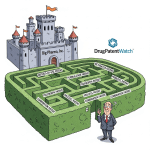
Before a single dollar is committed to development, a comprehensive Freedom-to-Operate (FTO) analysis is an absolute necessity. The “patent thicket”—the dense, overlapping web of secondary patents that innovators build around their core drug—is a formidable barrier to market entry for generics.7 A proper FTO analysis is the only way to navigate this minefield safely.
FTO vs. Patentability: Clarifying a Critical Misconception
A common and dangerous misconception in IP strategy is the confusion between a patentability search and a Freedom-to-Operate analysis.8 These are two fundamentally different inquiries with distinct objectives. A patentability search asks, “Is my idea new? Can I patent this invention?”.8 Its goal is to find prior art that would prevent an invention from being granted a patent, and it searches all public disclosures regardless of their age or legal status.8 In contrast, an FTO analysis asks a completely different question: “Can I commercialize my invention without trespassing on someone else’s property?”.8 The search focuses on in-force patents and published applications in specific commercial jurisdictions to identify infringement risk.8 A patent, after all, grants its owner a “negative right”—the right to exclude others from making, using, or selling the patented invention—but it does not grant an affirmative right for the patent owner to practice their own invention.8 This distinction is the bedrock of a robust FTO. A company could invent and patent a new formulation for a drug, but still be blocked from selling it because the drug’s core active ingredient is protected by a broader, still-in-force patent.
Navigating the Thicket: Methods, Formulations, and Lifecycle Management
Innovator companies strategically build a “picket fence” of secondary patents around their core product.7 These patents can cover “methods of use,” “formulations,” “delivery devices,” and specific “dosages”.8 These are a cornerstone of “evergreening” strategies, allowing companies to launch improved versions of a drug with fresh patent protection just as the original composition of matter patent is set to expire.13
The existence of these patents gives rise to one of the most sophisticated and high-stakes legal strategies in the generic world: the “skinny label” strategy. A generic manufacturer can use a detailed, globally informed FTO analysis to identify which specific methods of use or indications are protected by patents in a given jurisdiction. This analysis allows the generic company to then “carve out” or omit that indication from its own generic drug’s labeling to avoid infringing on the method-of-use patent.15 This legal maneuver was at the heart of the litigation between Teva and GSK over a method-of-use patent.15 Such a precise and delicate legal strategy is impossible to execute without the granular detail provided by a comprehensive, global patent database that links patents to specific indications and claims.
Phase II: The ANDA Filing and Paragraph IV Certification
Once a generic manufacturer has identified a promising target and completed a comprehensive pre-filing strategy, the next phase is the ANDA submission itself. The core of this submission, particularly for a first-to-file manufacturer, is the Paragraph IV (PIV) certification. This certification is a formal legal claim that a brand-name drug’s listed patent is either “invalid, unenforceable, or will not be infringed” by the generic product.7 It is a high-stakes “act of war” that triggers a cascade of legal and regulatory events, often culminating in litigation.7
Building the Case: Leveraging International Data for Paragraph IV Challenges
The success of a PIV challenge hinges on the strength of the “prior art” that the generic manufacturer can present.16 Prior art can include existing patents, publications, or other public disclosures that predate the invention in question and prove that it was not novel or was obvious at the time of its creation.16 The Orange Book’s U.S.-centric and selective nature is a liability here. An effective PIV challenge requires an exhaustive, global search for prior art.
International patent databases, such as those maintained by WIPO, the EPO, and national offices in Japan and China, provide a much larger “arsenal” of prior art with which to work.17 An invalidity argument that might fail with only U.S. prior art could succeed by using a patent or publication from a foreign jurisdiction where the innovator’s claims are different or the legal standards for novelty are more favorable. By leveraging this global data, a generic manufacturer can identify prior art that the innovator may have overlooked, increasing the probability of a successful challenge and a first-to-file, 180-day market exclusivity period.16
De-risking Litigation: The Power of Data in Court
The filing of a PIV certification triggers a 45-day window for the brand-name company to sue, which in turn initiates a 30-month FDA approval stay.16 The modern generic strategy involves more than just fighting the battle in U.S. District Court. It requires a “parallel global challenge,” coordinating with international teams to challenge patents in multiple key markets simultaneously.16 This multi-front attack creates immense pressure on the brand company, increasing the likelihood of a favorable settlement and an early market entry date.16
The Eli Lilly case in Canada serves as a stark example of a company that had to defend its IP on an international stage.10 After losing two patent cases in Canada, Eli Lilly filed a claim under NAFTA, arguing that Canada’s unique “promise doctrine” altered its “legitimate expectations of a stable business and legal environment”.10 This case highlights a crucial point: a patent’s strength is not uniform across jurisdictions. For a generic company, this variance represents an opportunity to find a weaker legal framework in another country that can be leveraged to mount a successful parallel challenge. A sophisticated generic strategy requires this level of strategic, globally informed legal and business planning.
Beyond Generics: Transforming the Entire Business with Patent Data
The application of international patent data extends far beyond the confines of ANDA strategy. For modern biopharmaceutical companies, this intelligence is a strategic compass, capable of guiding every critical decision from early-stage pipeline architecture to late-stage partnering and lifecycle management. It transforms a legal document into a source of competitive, scientific, and commercial intelligence.13
For R&D and Clinical Teams: De-risking the Pipeline and Guiding Innovation
A company’s R&D pipeline is a perilous gauntlet where the vast majority of projects fail.13 Investing in a project that is already patented by a competitor is a waste of time and capital. This is where global patent data becomes an indispensable tool. R&D teams can leverage this intelligence to streamline research, identify emerging technological trends, and make informed “go/no-go” decisions on internal projects.11 By identifying new patent filings in their therapeutic areas of interest, an organization can detect emerging competitive threats years before they enter clinical trials.11
A modern, proactive R&D strategy is built on a global intelligence loop. Patent data tells a team what a company hopes to do. Integrated data from platforms like DrugPatentWatch, which links patents to clinical trial and regulatory information, tells them how well they are doing it.14 For example, if a competitor files a patent on a new compound and a related Phase II clinical trial is initiated soon after, it is a strong signal that they are serious about this program. This real-time intelligence allows an R&D team to “redirect resources to more promising or less crowded therapeutic areas” and avoid duplicating a competitor’s research, thereby enhancing capital efficiency and accelerating their own pipeline.11 This is a direct de-risking of the R&D process, where the value of a comprehensive patent intelligence platform can be measured in avoided losses.
For Business Development and M&A: Valuing and Acquiring Intellectual Property
For a biotech company, whose most valuable assets are often intangible—locked in a freezer or on a server—a patent portfolio is the “defensible, revenue-generating intellectual property that underpins its entire valuation”.7 For a business development team or an investor, patent data is a goldmine. It allows for thorough IP due diligence, the assessment of a portfolio’s strength, and the identification of undervalued companies with powerful, overlooked patents.7
A primary use of global patent data in M&A is to conduct a rigorous FTO analysis before a deal closes. A strategic mistake would be to acquire a promising drug candidate that infringes on an unlisted international patent. The FTO analysis serves as the ultimate gatekeeper, preventing catastrophic financial blunders by identifying and assessing all potential infringement risks.8 The value in M&A is not in the sheer number of patents, but in their quality, their scope, and the lack of infringement risk. A company could have a dozen promising patents, but if a single one is blocked by a broader international patent, its value plummets. Therefore, a proper M&A due diligence process must include a comprehensive, global FTO analysis to de-risk the investment and ensure the acquired asset has a clear path to market.
Tools and Technologies: The Modern IP Strategist’s Toolkit
A globally minded ANDA strategy requires a sophisticated toolkit capable of navigating the complex and voluminous IP landscape. While public, free databases can provide a baseline, they are often insufficient for the granular, integrated analysis required for a high-stakes generic market entry.
The Public and Free Global Patent Databases
A good starting point for any IP search is the array of free, public databases. The USPTO provides its Patent Public Search tool, while the World Intellectual Property Organization (WIPO) offers PATENTSCOPE, which provides full-text access to millions of published international PCT applications and documents from national and regional offices.17 Other countries, including Europe and Japan, also provide free access to their patent collections.17 These public databases are invaluable for basic searches and for gaining a preliminary understanding of a technology area.17 However, their limitations quickly become apparent to a professional audience. They often lack integrated data, advanced analytics, and the continuous updates necessary for a truly proactive strategy.
The true power of modern IP strategy lies in the use of commercial platforms that go beyond basic searching to provide integrated, actionable intelligence. These platforms transcend the limitations of free databases by connecting disparate data points into a cohesive narrative. For example, a platform like DrugPatentWatch provides “deep actionable business intelligence on small-molecule drugs and the 1.3 million global patents and applications” that cover them.20 It integrates a wide range of data, including worldwide patents, FDA regulatory data, litigation records, and clinical trial information.14
The power of this integrated data cannot be overstated. It creates “greater-than-additive benefits”.20 The platform doesn’t just tell a user about a patent; it tells them about the clinical trials, litigation, and regulatory exclusivities associated with that patent. This integration is what creates intelligence from raw data. The platform automates the time-consuming process of manual data aggregation, which is a quantifiable benefit that contributes directly to a patent portfolio’s ROI by reducing overhead costs.25 The return on investment is not just in the data itself, but in the efficiency and strategic clarity it provides to an IP team.
Feature
Public Databases (e.g., USPTO, PATENTSCOPE)
Commercial Platforms (e.g., DrugPatentWatch)
Coverage
Varies by database; primarily national or regional.
Comprehensive, with access to patents in over 130 countries.20
Data Types
Raw patent documents, limited non-patent literature.17
Integrated data, including patents, FDA regulatory data, litigation records, and clinical trials.14
Search Functionality
Keyword, IPC, and chemical compound searches.22
Advanced AI-powered searching, semantic analysis, and the ability to identify “white spaces” and trends.7
Key Insights
Basic expiration dates and legal status.
Competitive intelligence, market entry projections, FTO analysis, and strategic ROI calculation frameworks.20
Primary Value
A free starting point for basic searches and preliminary research.17
A tool to transform raw data into actionable intelligence, accelerate workflows, and de-risk strategy.26
Real-World Case Studies: Lessons from the Front Lines
The theoretical benefits of a global, data-driven ANDA strategy are best illustrated by the real-world successes and failures of major pharmaceutical players. These case studies provide a clear blueprint for how to leverage international patent intelligence to gain a competitive advantage or, conversely, what happens when a company fails to do so.
A Successful Generic Market Entry: Mylan’s Strategic Use of IP Data
The story of Mylan, which grew into a global generic powerhouse, provides a compelling blueprint for a successful, data-driven ANDA strategy. Mylan built its leadership position in the U.S. generic market on its “ability to obtain Abbreviated New Drug Application (‘ANDA’) approvals”.27 They focused on “difficult-to-produce, limited competition products” and leveraged a “vertically integrated platform” with global scale to achieve operational efficiencies.27 The company’s success was not an accident; it was a result of a methodical strategy to identify high-potential targets and then execute a complex, data-driven ANDA process to secure approval and market exclusivity. A deep understanding of the global IP landscape allowed them to pursue complex generics where competition was limited, ensuring a high return on investment.
A Global IP Dispute: The Eli Lilly Case Study in Canada
The Eli Lilly case in Canada serves as a powerful cautionary tale and a perfect illustration of the legal complexities that exist “Beyond the Orange Book”.10 After losing two patent cases in Canadian courts, Eli Lilly filed a claim under the North American Free Trade Agreement (NAFTA), arguing that Canada’s unique “promise doctrine” violated its “legitimate expectations of a stable business and legal environment”.10 This case is a stark reminder that a patent’s strength is not uniform across jurisdictions. The same patent that is considered rock-solid in the U.S. could be invalidated in a country with a different legal standard. For a generic company, this presents an opportunity to launch a “parallel global challenge,” coordinating with international teams to challenge a brand-name drug’s patents in multiple jurisdictions simultaneously.16 For a brand-name company, it underscores the need for a robust and defensible global strategy that anticipates these legal variances.
Dr. Reddy’s: A Pioneer in International Generic Strategy
The story of Dr. Reddy’s Laboratories is a powerful example of a company from a developing nation successfully entering and disrupting a regulated market.28 Dr. Reddy’s successfully transformed from a small local company into a worldwide industry leader by building a strong R&D and manufacturing foundation and targeting “specialty generics products in western markets”.28 The company’s success was built on its ability to analyze the global IP environment to find entry points and then execute with a vertically integrated platform. It serves as proof that with a clear, focused strategy and a sophisticated understanding of the IP landscape, a company can turn a legal challenge into a competitive advantage and a path to market dominance.
Calculating the ROI of Your Global Patent Strategy: A Financial Imperative
For business leaders and financial professionals, the question always comes down to return on investment. The value of a global patent strategy is not always easily captured in a spreadsheet, but it is deeply and profoundly tied to the bottom line. The return on investment (ROI) of a patent portfolio can and should be calculated and used to communicate its value to the business and improve that value.25
An effective ROI calculation requires a comprehensive look at both the costs and benefits. The explicit costs include initial filing fees, attorney fees, international translation expenses, and ongoing maintenance fees.30 The benefits are both tangible and intangible. Tangible benefits include direct revenue from product sales and licensing income.30 Intangible benefits include the strategic value of an exclusive right, risk reduction by preventing infringement, and the leverage it provides for M&A or financing.31
Component
Description
Costs
Initial Filings & Acquisitions: Application fees, attorney costs, and translation expenses for international filings.30
Ongoing Maintenance: Periodic renewal fees required to keep patents in force.30
Overheads: Administrative expenses, legal oversight, and salary costs for managing the portfolio.25
Benefits
Direct Revenue: Revenue attributable to product sales and licensing deals supported by the patent.30
Cost Savings: Savings from market exclusivity, reduced litigation risk, and strategic pruning of low-value assets.30
Strategic Value: Increased asset value for M&A, leverage for financing, and the deterrent value against competitors.25
The most significant return on a global patent strategy isn’t always from a successful product launch; it is from the decision not to pursue a high-risk, low-potential target. An FTO analysis on a promising drug candidate might cost anywhere from $50,000 to over $500,000.8 When framed against the cost of a failed drug program, which can run into hundreds of millions of dollars, the ROI becomes incalculable. It is a risk mitigation strategy whose value is best measured in avoided losses. A global patent strategy, therefore, is not a cost center; it is a financial imperative that de-risks a business and positions it for long-term success.
“Between 2025 and 2030 alone, an estimated $236 billion in global pharmaceutical revenue is projected to be lost as patents for blockbuster drugs expire. This unforgiving economic reality places an immense premium on crafting a sophisticated, forward-thinking global patent strategy.”
— DrugPatentWatch, “Protecting Your Drug Patent in Global Markets” 9
Conclusion: The Path Forward
The analysis indicates that the FDA’s Orange Book, while an essential starting point, is fundamentally insufficient as the sole source of intelligence for a modern ANDA strategy. Its U.S.-centric and selective nature, coupled with its static data, creates significant blind spots that can expose a generic manufacturer to hidden threats and missed opportunities. The pharmaceutical landscape is not a unified map but a complex patchwork of national rights and legal systems, where a patent’s strength can vary dramatically from one country to the next.
A truly effective ANDA strategy must be a proactive, global, and data-driven endeavor. It requires a paradigm shift from a reactive approach to a strategic blueprint that begins years before an anticipated patent cliff. This new model demands the use of comprehensive, integrated patent intelligence platforms that connect disparate data points—from global patent filings and clinical trials to litigation and regulatory exclusivities. This integrated approach allows legal, R&D, and business development teams to work together to identify market “white spaces,” de-risk the R&D pipeline, and execute a multi-pronged, globally coordinated legal strategy.
The ROI of this approach is not measured solely in successful product launches but, just as importantly, in the avoidance of costly legal battles and failed drug programs. It is a financial imperative that transforms intangible IP assets into tangible competitive advantage, positioning a company to capture its share of the hundreds of billions of dollars in revenue poised to shift from innovator to generic firms in the coming years.
Key Takeaways
The FDA’s Orange Book is an essential but limited resource that only provides a partial view of the IP landscape, as it excludes key patent types like process and manufacturing patents and does not capture global data.
A truly effective ANDA strategy must be proactive and globally focused, leveraging international patent data to identify opportunities, mitigate legal risks, and gain a competitive advantage.
The “patent cliff” and the expiration of blockbuster drug patents represent a massive, quantifiable opportunity for generic manufacturers, reinforcing the financial imperative of a sophisticated, data-driven strategy.
Global patent intelligence serves as a powerful early warning system, allowing companies to track competitor R&D pipelines, identify new market “white spaces,” and make informed “go/no-go” decisions years before a product reaches the market.
A comprehensive Freedom-to-Operate (FTO) analysis, which goes far beyond the Orange Book, is the ultimate gatekeeper in both ANDA strategy and M&A due diligence, preventing catastrophic financial losses from unforeseen infringement risks.
Leveraging commercial platforms that integrate global patent data with clinical trial, regulatory, and litigation records creates a powerful feedback loop, transforming raw data into actionable intelligence and contributing directly to a patent portfolio’s ROI.
Frequently Asked Questions
1. What is the fundamental difference between an Orange Book-listed patent and a non-listed patent, and why does this matter for my ANDA strategy?
The fundamental difference lies in a legal and regulatory distinction. Orange Book-listed patents are those that claim the drug substance, drug product, or a method of using the drug for which the FDA has granted approval. These are the patents that an ANDA applicant must formally address in their submission. Non-listed patents, which are explicitly excluded from the Orange Book, include process patents, packaging patents, and patents on metabolites or intermediates. This distinction is critical because an ANDA applicant can proceed with a clean Orange Book entry and still be sued for infringing on a non-listed, and therefore hidden, process patent. This can result in costly, protracted litigation even if the drug product itself is not an infringement, highlighting the critical need for a comprehensive global FTO analysis that extends beyond the Orange Book.
2. How can a generic company use a brand-name company’s PCT application to its advantage?
A generic company can use a brand-name company’s Patent Cooperation Treaty (PCT) application as a powerful, predictive intelligence tool. The PCT system allows innovators to defer major national patent filing costs for up to 30 months while establishing an early priority date. The act of filing a PCT application is a strong signal that a company believes in a drug’s long-term global potential and is a high-conviction bet on its commercial viability. A generic company can monitor these applications to identify which drugs an innovator is serious about pursuing internationally, allowing them to prioritize their own R&D resources and avoid developing products that will be heavily defended across multiple jurisdictions.
3. What is a “patent thicket,” and what is the “skinny label” strategy used to navigate it?
A “patent thicket” is a dense, intricate web of overlapping, secondary patents—including patents on formulations, methods of use, or delivery devices—that an innovator builds around a core drug to extend its market exclusivity and deter generic competition. A “skinny label” is a counter-strategy used by generic companies to navigate this thicket. It involves launching a generic drug with a “carved out” label that omits a specific indication or method of use still protected by a patent. This legal maneuver is designed to avoid infringing on the brand-name company’s method-of-use patents, allowing the generic to enter the market for other, unpatented uses.
4. How do I calculate the ROI of investing in a global patent intelligence platform?
The ROI of a global patent intelligence platform can be calculated by comparing its cost to the tangible and intangible value it delivers. Tangible value is a measure of the time saved by automating manual data aggregation, allowing staff to focus on analysis rather than data entry. Intangible value is a measure of the risk avoided. The most significant ROI is often the “return on no”—the value created by using the platform to identify a high-risk, low-potential target and deciding not to pursue it, thereby avoiding a multi-million-dollar failure. The investment in a platform can also increase a company’s M&A value and provide a quantifiable competitive advantage.
5. What is the difference between an FTO analysis and a patentability search, and why is this distinction so important for a biopharma company?
An FTO analysis and a patentability search are often confused but serve two distinct purposes. A patentability search answers the question, “Is my idea new enough to be patented?” It focuses on all public disclosures, regardless of age, to determine if an invention is novel and non-obvious. In contrast, an FTO analysis answers the question, “Can I commercialize my product without infringing on someone else’s patent?” It focuses on in-force patents in specific commercial jurisdictions to identify and assess infringement risk. This distinction is critical because an invention can be highly patentable, yet a company’s freedom to operate can still be blocked by a broader, pre-existing patent held by a third party.