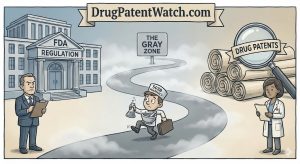
In pharmaceuticals 503B outsourcing facilities occupy a unique and often contentious space. Born from the ashes of a public health crisis, they exist in a perpetual gray zone, navigating the narrow channel between the Food and Drug Administration’s (FDA) mandate to ensure public health and the U.S. Patent and Trademark Office’s (USPTO) charge to protect intellectual property. These entities are not traditional pharmacies, nor are they conventional drug manufacturers; they are a hybrid, deliberately engineered by Congress to serve as a critical pressure valve in the U.S. drug supply chain.
The genesis of the 503B facility traces back to the tragic 2012 fungal meningitis outbreak linked to the New England Compounding Center (NECC), which exposed a dangerous regulatory gap for large-scale compounders.2 In response, Congress passed the Drug Quality and Security Act (DQSA) in 2013, a landmark piece of legislation that fundamentally reshaped the landscape of drug compounding.4 The DQSA did not simply tighten the rules; it created an entirely new category of entity—the Section 503B outsourcing facility.6 These facilities were granted specific, powerful exemptions from the Federal Food, Drug, and Cosmetic Act (FD&C Act), most notably the exemption from the new drug approval process.6 This allows them to produce large batches of sterile drugs without patient-specific prescriptions, a practice forbidden for traditional pharmacies.10
However, this power comes with a significant trade-off. In exchange for these exemptions, 503B facilities must voluntarily register with the FDA and adhere to the same stringent Current Good Manufacturing Practices (cGMP) that govern large-scale pharmaceutical manufacturers.8 This dual nature is the source of their strength and their controversy. They are designed to step in when the conventional, patent-protected market fails—most notably during drug shortages—by legally producing what would otherwise be considered copies of FDA-approved drugs.6
This unique role places them in direct tension with the foundational principles of the U.S. patent system. How can an entity, designed to function almost like a generic manufacturer, coexist with a legal framework built to grant innovators a temporary monopoly to recoup their massive R&D investments? This report will dissect this very question. We will explore the complex regulatory framework, the intricacies of patent law, the flashpoints of conflict, and the strategic maneuvers that allow 503B facilities to operate—and thrive—in this high-stakes environment. For business leaders, legal counsel, and strategists in the pharmaceutical industry, understanding this landscape is not merely an academic exercise; it is a critical imperative for navigating one of the most dynamic and disruptive forces in the modern drug supply chain.
The Foundation: Understanding the 503B Outsourcing Facility
To grasp the strategic role of 503B facilities, one must first understand their precise legal and operational identity. They were not an afterthought but a deliberate legislative creation designed to fill a very specific void. Their function is predicated on a clear distinction from their more traditional counterparts, 503A pharmacies, and is defined by a rigorous set of federally mandated standards that set a high bar for entry and operation.
A Tale of Two Compounders: The Critical Distinction Between 503A and 503B
The DQSA bifurcated the world of drug compounding into two distinct models: Section 503A and Section 503B.9 While both are involved in creating customized medications, their regulatory frameworks, operational scales, and market roles are fundamentally different. Misunderstanding this distinction is the most common and critical error in analyzing this sector.
503A Compounding Pharmacies represent the traditional model of pharmacy compounding. Their operations are defined by the following characteristics:
Patient-Specific Prescriptions: The cornerstone of 503A practice is the requirement for a valid prescription for an identified, individual patient.9 They are permitted to engage in limited “anticipatory compounding” based on a history of prescriptions, but they are expressly forbidden from compounding large batches for general “office use” by healthcare facilities.3
State-Level Regulation: Primary oversight of 503A pharmacies falls to state boards of pharmacy.10 While the FDA can inspect these facilities, particularly “for-cause” , the day-to-day regulation resides at the state level.
USP Compliance: 503A pharmacies must comply with United States Pharmacopeia (USP) standards, specifically USP Chapter for non-sterile compounding and USP Chapter for sterile compounding.10
Exemption from cGMP: Crucially, if a 503A pharmacy meets all the conditions of the statute, its compounded products are exempt from federal cGMP requirements.9 This significantly lowers their operational complexity and cost compared to 503B facilities.
503B Outsourcing Facilities, by contrast, were created to operate on a different scale and under a different set of rules:
Office Use and Bulk Production: The defining feature of a 503B is its ability to compound large batches of sterile drugs with or without patient-specific prescriptions.8 These products can then be sold directly to hospitals, clinics, and physician offices for administration to their patients, filling a critical need for ready-to-use medications.11
Federal Oversight: A 503B facility must voluntarily register with the FDA and is subject to direct federal oversight.7 This includes routine, risk-based inspections by the FDA, much like a conventional drug manufacturer.8
Mandatory cGMP Compliance: This is the most significant differentiator. 503B facilities are not exempt from cGMP. They must comply with the rigorous quality standards outlined in 21 CFR Parts 210 and 211.8 This requires them to validate every process, conduct stability and sterility testing on every batch, maintain a fully independent quality department, and operate in highly controlled cleanroom environments that mirror those of pharmaceutical plants.10 This makes them, in essence, FDA-regulated drug manufacturers of unapproved drugs.1
This bifurcation was intentional. The legislative thinking behind the DQSA recognized that the NECC tragedy occurred because an entity operating under a pharmacy-like regulatory model was behaving like a mass manufacturer. The solution was to create a legal pathway for entities that wished to act like manufacturers to do so, provided they accepted the corresponding regulatory burden of cGMP. This ensures a higher level of quality and safety for drugs compounded in bulk while preserving the traditional, patient-specific model for 503A pharmacies.
blockquote
The U.S. 503B compounding pharmacies market, estimated at approximately $920 million in 2021, is expected to grow to approximately $1.5 billion by 2028, representing a compound annual growth rate of 7.3 percent. This growth is driven by continued hospital cost pressures, concerns over liability for in-house compounding errors, and the expansion of specialty and sterile injectable therapeutics.
The following table provides a clear, at-a-glance comparison of these two models, highlighting the critical differences that shape their respective business strategies and risk profiles.
Table 1: 503A vs. 503B: A Head-to-Head Regulatory Comparison
Feature
Section 503A Compounding Pharmacy
Section 503B Outsourcing Facility
Primary Regulatory Authority
State Boards of Pharmacy 10
U.S. Food and Drug Administration (FDA)
Prescription Requirement
Required for an identified individual patient 9
Not required; can compound for “office use” 9
Production Scale
Limited quantities based on patient-specific needs
Permitted to manufacture large batches
Guiding Quality Standards
USP Chapters and 10
Current Good Manufacturing Practices (cGMP) 8
FDA Registration
Not required to register with FDA 14
Must voluntarily register with FDA annually 8
Key FD&C Act Exemptions
cGMP, New Drug Approval, Adequate Directions for Use
New Drug Approval, Adequate Directions for Use, Drug Supply Chain Security
Adverse Event Reporting
Not explicitly required by federal statute
Mandatory reporting to FDA 8
The Regulatory Gauntlet: The High Bar for 503B Compliance
The ability to operate in the lucrative space of bulk compounding does not come easily or cheaply. The regulatory requirements for 503B facilities are intentionally onerous, serving as both a quality control mechanism and a significant barrier to entry. Any organization contemplating entering the 503B market must be prepared for a substantial and ongoing investment in compliance infrastructure.
The lynchpin of 503B regulation is the mandate to comply with cGMP, as detailed in 21 CFR Parts 210 and 211.10 This is a world away from the USP standards governing 503A pharmacies. cGMP compliance is a comprehensive quality paradigm that touches every aspect of the operation. It requires facilities to produce multiple validation batches and submit them for rigorous testing and stability studies before a new product can even be brought to market. Every single batch of medication produced must be tested for sterility, potency, and endotoxins prior to its release. This necessitates a fully equipped, in-house quality control laboratory or contracts with qualified third-party labs.
Furthermore, a 503B facility must establish and maintain its own quality department as an entity that is completely independent of operations and sales, with full autonomy to conduct investigations and make decisions about product release. This structural requirement is designed to prevent commercial pressures from compromising quality standards. Environmental monitoring is also far more stringent than for 503A pharmacies. Instead of biannual checks, 503Bs must perform monitoring at least per production shift in the most critical ISO 5 compounding areas.
Beyond the internal operational requirements, 503B facilities live under the direct and continuous scrutiny of the FDA. They must register with the agency annually, a process that involves paying a substantial establishment fee, which was initially set at $15,000 and is subject to inflation adjustments.5 Failure to re-register and pay the fee results in removal from the FDA’s public list of registered facilities.
Once registered, a facility can expect to be inspected by the FDA on a risk-based schedule.8 These are not cursory visits; they are comprehensive audits of cGMP compliance. An unfavorable inspection can result in the issuance of an FDA Form 483, which lists observed deviations from cGMP, or a more serious Warning Letter that demands corrective action.22 These enforcement actions are publicly available and can severely damage a facility’s reputation and business prospects with health systems that perform rigorous due diligence on their outsourcing partners.
Finally, 503B facilities have mandatory reporting obligations that create a direct line of accountability to the FDA. They must submit a list of all drugs they compounded during the previous six-month period twice a year, and they are required to report all serious adverse events associated with their products to the agency.8
These stringent requirements serve a dual purpose. The stated goal, and a critical one, is to ensure patient safety and prevent a repeat of the NECC disaster. However, the practical effect is also economic. The high cost and complexity of cGMP compliance act as a formidable barrier to entry, ensuring that the 503B market is not flooded with undercapitalized or unsophisticated operators. This regulatory gauntlet effectively selects for serious, well-funded organizations, which in turn has made the 503B sector a more stable and predictable market. This stability has not gone unnoticed, attracting significant interest from private equity firms and even traditional pharmaceutical manufacturers like Hikma, which announced plans to expand into the 503B sector. The regulatory burden, therefore, is not a bug but a feature of the system, shaping the very structure and competitive dynamics of the market.
The Patent Ecosystem: A Primer for the Compounding Strategist
To navigate the complex world of 503B compounding, one cannot simply understand FDA regulations. It is equally crucial to have a firm grasp of the intellectual property ecosystem that governs the pharmaceutical industry. The relationship between brand-name drugs and their generic competitors is defined by a landmark piece of legislation and a critical FDA publication. 503B facilities operate in the shadow of this system, and their unique position can only be appreciated by first understanding the rules of the game they are not required to play.
The Hatch-Waxman Balancing Act and the Power of the Orange Book
The modern generic drug industry in the United States owes its existence to the Drug Price Competition and Patent Term Restoration Act of 1984, commonly known as the Hatch-Waxman Act.24 This legislation was a masterful compromise designed to balance two competing interests: incentivizing innovation by brand-name drug companies and increasing patient access to lower-cost medicines through generic competition.
Before Hatch-Waxman, the path to market for a generic drug was arduous. A generic manufacturer often had to conduct its own expensive and time-consuming clinical trials to prove safety and effectiveness, even though the innovator drug had already done so. The Act revolutionized this process by creating the Abbreviated New Drug Application (ANDA) pathway.27 Under this streamlined process, a generic company no longer needs to repeat clinical trials. Instead, it only needs to demonstrate that its product is “bioequivalent” to the innovator drug—meaning it acts the same way in the human body. This dramatically lowered the cost and time required to bring a generic to market. As a result, the share of prescriptions filled with generic drugs in the U.S. has skyrocketed from just 19% in 1984 to over 90% today.
In exchange for making generic entry easier, the Act provided significant benefits to innovator companies. These included provisions for restoring a portion of a patent’s term that was lost during the lengthy FDA approval process and granting periods of market exclusivity, during which the FDA cannot approve a generic competitor.28
Central to this entire framework is the FDA’s publication, Approved Drug Products with Therapeutic Equivalence Evaluations, universally known as the Orange Book.30 The Orange Book is the bible of the generic drug industry. It is a publicly available, continuously updated database that lists all FDA-approved drugs and, most importantly for strategic purposes, identifies the patents and regulatory exclusivities that protect them.30 Any company planning to launch a generic drug begins its journey by consulting the Orange Book to map out the intellectual property landscape of its target product.
The Hatch-Waxman Act also established a formal, and often litigious, process for challenging patents. When a generic company files an ANDA, it must make a certification regarding the patents listed in the Orange Book for the brand-name drug. A Paragraph IV certification is a declaration by the generic applicant that it believes a listed patent is invalid, unenforceable, or will not be infringed by the generic product. Filing a Paragraph IV certification is considered an act of technical patent infringement and serves as a notice to the brand company, which then has 45 days to sue the generic applicant for patent infringement. If a lawsuit is filed, it triggers an automatic 30-month stay of FDA approval for the generic drug, giving the parties time to resolve the patent dispute in court.29
This entire system—the ANDA pathway, the Orange Book, and the Paragraph IV litigation process—creates a highly structured, predictable, and confrontational “game” for generic competition. It is a game with clear rules, high stakes, and established playbooks for both sides.
The critical insight for any 503B strategist is this: 503B outsourcing facilities operate entirely outside of this established system. They do not file ANDAs. They do not make Paragraph IV certifications. They are not subject to the 30-month stay. Their path to market is not governed by the intricate dance of patent litigation defined by Hatch-Waxman. Instead, their ability to compound a drug is governed by a completely different set of rules found in the DQSA, primarily centering on the “essentially a copy” provision and the status of the FDA’s drug shortage list.6 This makes them an “asymmetric” competitor. While a generic company must engage in a costly and lengthy legal battle to challenge a patent, a 503B facility might be able to legally compound a version of that same drug if it appears on the shortage list, completely bypassing the Hatch-Waxman framework. This asymmetry is precisely why 503Bs are viewed as such a disruptive force and are the subject of intense legal and strategic scrutiny from both brand and generic manufacturers.
Decoding Intellectual Property: Patents vs. FDA Exclusivity
A common point of confusion for business professionals is the distinction between patents and FDA-granted exclusivity. While they both serve to block competition, they are distinct legal concepts arising from different statutes and granted by different government agencies. Understanding this difference is crucial for accurately assessing a drug’s period of market protection.
Patents are a form of intellectual property granted by the U.S. Patent and Trademark Office (USPTO). They are a property right that protects an invention, which for a drug could be the chemical composition of the active molecule, a specific formulation, a method of manufacturing, or a particular method of use. A standard patent term is 20 years from the date the application was filed.36 However, because companies typically file for patents very early in the development process, a significant portion of this 20-year term—often 10 to 15 years—is consumed by preclinical research, clinical trials, and FDA review. This means the “effective patent life,” the actual time a drug is on the market with patent protection and without generic competition, is often much shorter, typically in the range of 7 to 10 years.
Exclusivity is a statutory marketing right granted by the FDA at the time of a drug’s approval. It is not a property right but a directive that prevents the FDA from approving a competing drug application (like a generic ANDA) for a specific period. The duration and type of exclusivity depend on the nature of the drug and the data submitted for its approval. Key types include:
New Chemical Entity (NCE) Exclusivity: 5 years of protection for drugs containing an active ingredient never before approved by the FDA.
Orphan Drug Exclusivity (ODE): 7 years of protection for drugs developed to treat rare diseases (affecting fewer than 200,000 people in the U.S.).
New Clinical Investigation Exclusivity: 3 years of protection for new applications or supplements that contain reports of new clinical investigations essential to the approval (e.g., for a new indication or dosage form).
A drug can have patent protection, exclusivity, both, or neither. These protections can run concurrently or at different times. For a 503B strategist, it is vital to deconstruct a drug’s IP shield into these component parts. Is generic entry being blocked by a strong patent that expires in 2035, or by a 5-year NCE exclusivity that ends next year? The answer dramatically changes the strategic calculation. The following table clarifies these critical distinctions.
Table 2: The Drug Patent Lifecycle vs. FDA Exclusivity
Dimension
Patents
FDA Exclusivity
Granting Body
U.S. Patent and Trademark Office (USPTO)
U.S. Food and Drug Administration (FDA)
Governing Statute
U.S. Patent Act
Federal Food, Drug, and Cosmetic Act (FD&C Act)
Scope of Protection
Protects the invention itself (e.g., composition, method of use)
Grants exclusive marketing rights, preventing FDA approval of competitor drugs
Timing of Grant
Can be issued at any time during a drug’s lifecycle 35
Granted only upon FDA approval of a drug product 35
Standard Duration
20 years from the patent application filing date 35
Varies: 5 years (NCE), 7 years (Orphan), 3 years (New Clinical Investigation)
How It’s Overcome
Expires at the end of its term or can be invalidated in court
Expires at the end of its statutory period
Listed In
FDA Orange Book
FDA Orange Book
The Crux of the Conflict: Decoding the “Essentially a Copy” Provision
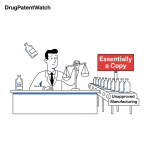
At the very heart of the legal and commercial tightrope that 503B facilities walk is a single, deceptively simple phrase in the FD&C Act: “essentially a copy”.6 Section 503B(a)(5) states that for a compounded drug to qualify for its exemptions, it must not be “essentially a copy of one or more approved drugs”. This prohibition is the primary firewall preventing 503B facilities from becoming a full-fledged, unregulated generic industry. However, the exceptions to this rule are what create both the immense opportunity and the profound legal risk that define the 503B market. Understanding the nuances of this provision is non-negotiable for any stakeholder in this space.
The Five Pillars of “Copying”
The statute itself defines “essentially a copy” as a drug that is “identical or nearly identical” to an FDA-approved drug. But what does “identical or nearly identical” mean in practice? Through guidance documents and enforcement posture, the FDA has clarified that it evaluates identity based on five key characteristics. This interpretation has been reinforced by legal experts analyzing the regulatory landscape, such as Shweta Kumar in her commentary on GLP-1 compounding. A compounded drug is generally considered a copy if it has the:
Same Active Pharmaceutical Ingredient (API): The core therapeutic substance must be the same.
Same Route of Administration: For example, a drug approved for oral administration and a compounded version intended for oral administration.
Same Dosage Form: For example, an approved tablet versus a compounded tablet.
Same Dosage Strength: For example, an approved 10 mg tablet versus a compounded 10 mg tablet.
Same Excipients (Inactive Ingredients): This refers to the binders, fillers, dyes, and other non-therapeutic components of the drug.
The FDA’s interpretation is strict. The agency has made it clear that making minor, clinically insignificant changes to a formulation is not a valid way to circumvent the “copy” designation. For instance, adding vitamins to a compounded drug that are not present in the approved version would likely not be considered a meaningful difference. Similarly, if an approved drug is labeled for intramuscular (IM) injection but is commonly and safely used subcutaneously off-label, a 503B facility compounding a version specifically for subcutaneous use would likely still be deemed to have the same route of administration. The agency’s goal is to prevent compounders from creating slightly different but functionally equivalent versions of approved drugs to exploit a loophole. The change must be clinically meaningful to the patient.
The Golden Ticket: The Drug Shortage Exception
While the prohibition on copying is broad, it contains a powerful and critically important exception. The rule against making copies does not apply if the approved drug appears on the FDA’s official drug shortage list, maintained under section 506E of the FD&C Act, at the time of compounding and distribution.6
This exception is, without exaggeration, the “golden ticket” for 503B outsourcing facilities. It is an explicit, legal green light from Congress and the FDA for these facilities to step in and fill a supply void when a conventional manufacturer fails to meet market demand. This provision fundamentally transforms the role of the 503B from a niche provider of customized medications to a sanctioned, large-scale source of supply during a public health need. It is this exception that allowed 503Bs to compound large quantities of GLP-1 agonists like semaglutide and tirzepatide when they were in shortage, creating a multi-million-dollar market opportunity almost overnight.
However, this opportunity is transient. Once a manufacturer resolves the supply issues and the FDA removes the drug from the shortage list, the legal window for compounding copies closes. The FDA has clarified its policy on this transition, often providing a “wind-down” period. For example, in the case of GLP-1s, the agency stated its intent not to take enforcement action for a specified period (e.g., 60 or 90 days) after the shortage ended, allowing facilities to dispense product compounded while the drug was still on the list, but not to compound new batches to fill new orders.13
This dynamic nature—where the legality of producing a specific drug can change with a single update to an FDA webpage—means that successful 503B operators must be exceptionally agile. Their business model cannot be one of static production lines; it must be one of dynamic opportunity response. This requires constant, vigilant monitoring of the FDA shortage list, rapid and reliable sourcing of APIs, and the operational flexibility to scale production up and down in response to these regulatory triggers. It is this cycle of shortage-driven opportunity that also fuels the most intense legal battles, as brand manufacturers have an enormous financial incentive to challenge a drug’s shortage status or the actions of the compounders filling the void.41
The Narrow Path: The “Clinical Difference” Justification
Beyond the drug shortage exception, there is another, much narrower path for a 503B to legally compound a version of an approved drug. This pathway is available if the compounded drug is made from a bulk drug substance (API) that is a component of an approved drug, but the compounder makes a change to the drug that produces a “clinical difference” for an individual patient, as determined by the prescribing practitioner.39
This is not a loophole for bulk production. It is intended to serve legitimate, specific patient needs that cannot be met by the commercially available product. The classic example is a patient with a documented allergy to a specific dye or preservative in an FDA-approved tablet. A physician could determine that a compounded version made without that specific allergen would produce a clinical difference for that patient (i.e., allow them to take the medication without an allergic reaction) and could order it from a 503B facility.6
The bar for using this justification is extremely high, especially for the non-patient-specific “office use” model of 503Bs. If a physician is ordering a stock of such a modified drug from a 503B, they must provide a statement on the order specifying the change and assuring the facility that the compounded drug will only be administered to patients for whom that change produces a clinical difference.39 This is a significant legal and ethical attestation for a physician to make, as it requires them to take responsibility for that clinical determination for a future, unidentified group of patients. As a result, this “clinical difference” pathway, while important for individual patient care, is a much less significant commercial driver for 503Bs than the broad-based opportunity presented by the drug shortage exception.
The Legal Battleground: Precedent-Setting Lawsuits and the Enforcement Landscape
The unique position of 503B facilities, operating at the nexus of FDA regulation and patent law, has inevitably made them a target for litigation. Brand-name drug manufacturers, protective of their market share, have launched creative legal challenges to curb the activities of these quasi-competitors. The outcomes of these lawsuits have been pivotal, establishing a legal “shield” for 503Bs in some areas while exposing clear vulnerabilities in others.
The Preemption Shield: Why Brand Manufacturers Can’t Enforce the FD&C Act
A foundational principle of U.S. administrative law is that the authority to enforce a federal statute lies with the government agency charged with its administration, unless the statute explicitly says otherwise. The FD&C Act does not grant a “private right of action,” which means that private entities—like a competing drug company—cannot sue another party for allegedly violating the Act’s provisions. Enforcement is the exclusive domain of the FDA and the Department of Justice.
This principle, known as preemption, has become a powerful legal shield for 503B facilities. Brand manufacturers, frustrated by what they see as 503Bs improperly compounding copies of their drugs, have attempted to use other laws as a “backdoor” to enforce the FD&C Act. The courts have consistently rejected this strategy.
A landmark case in this area was Azurity Pharmaceuticals, Inc. v. Edge Pharma, LLC (2020). Azurity, the maker of an FDA-approved oral vancomycin solution, sued Edge Pharma, a 503B facility that was compounding a nearly identical product. Azurity’s complaint did not allege a direct violation of the FD&C Act. Instead, it ingeniously argued that by violating the 503B rules (specifically the “essentially a copy” provision), Edge was misrepresenting its product’s legality to consumers and healthcare providers, thereby engaging in false advertising under the federal Lanham Act and unfair competition under state law.
The First Circuit Court of Appeals ultimately dismissed Azurity’s claims. The court reasoned that to decide whether Edge’s advertising was “false,” it would first have to determine whether Edge was, in fact, violating the complex compounding provisions of the FD&C Act. The court held that making such a determination would require it to usurp the FDA’s exclusive enforcement authority.41 In essence, a private lawsuit cannot proceed if its success depends on litigating an underlying FDCA violation.
This precedent was powerfully reinforced by the Nexus Pharmaceuticals cases in 2022. Nexus, a manufacturer of an FDA-approved, ready-to-use ephedrine syringe, sued several 503B facilities (including Central Admixture Pharmacy Services, or CAPS) that were compounding similar products. The lawsuits alleged violations of state unfair trade practice laws. The Ninth Circuit Court of Appeals, echoing the First Circuit’s reasoning in Azurity, dismissed the cases. It ruled that allowing these state-law claims to proceed would create a patchwork of enforcement and directly interfere with the comprehensive federal regulatory scheme for compounding established by the DQSA. The court affirmed that the power to police the line between legal and illegal compounding rests with the FDA, not with private competitors in a courtroom.
The Chinks in the Armor: Where 503Bs Remain Vulnerable
The preemption shield, while robust, is not a cloak of absolute immunity. It protects 503Bs from lawsuits that are, in substance, attempts to privately enforce the FD&C Act. However, it does not protect them from direct claims of patent or trademark infringement.
Direct Patent Infringement: The Azurity and Nexus rulings did nothing to alter the fundamental rights of a patent holder under the U.S. Patent Act. If a 503B facility compounds a drug product that is covered by a valid and unexpired patent, the patent holder can sue them for infringement, plain and simple.45 The fact that a drug is on the FDA shortage list, which permits compounding under the FD&C Act, is
not a statutory defense to patent infringement under the Patent Act. These are two separate bodies of law with two separate purposes. The FDA’s permission to compound addresses a public health need for drug availability; it does not and cannot extinguish a private property right granted by the USPTO. This creates the central unresolved conflict for 503Bs: the very act that the FDA sanctions during a shortage is the act that exposes them to the greatest risk of a costly patent infringement lawsuit.
Trademark Infringement and False Advertising: The preemption shield also has limits when it comes to the Lanham Act. While manufacturers cannot sue a 503B for being non-compliant with FDA rules, they absolutely can sue if the 503B’s marketing and advertising practices create consumer confusion. This has been the central strategy in the recent wave of litigation brought by Novo Nordisk and Eli Lilly against pharmacies compounding GLP-1 agonists.41
These lawsuits have been successful where the manufacturers could show that pharmacies were:
Using the Brand Name: Advertising products as “compounded Ozempic” or “compounded Mounjaro,” which can mislead patients into believing they are receiving the authentic, FDA-approved product.
Making False Claims: Falsely claiming that their compounded products are “FDA-approved”.48
Using Brand Trade Dress: Mimicking the colors, logos, or packaging of the brand-name product, further contributing to consumer confusion.
These are classic trademark infringement and false advertising claims that do not require a court to interpret the intricacies of the FD&C Act. They are based on the straightforward principle of preventing one company from unfairly trading on the goodwill and reputation of another. This legal avenue remains wide open for brand manufacturers and represents a significant area of risk for any 503B that is not disciplined in its marketing practices.
The following table summarizes these key legal precedents and their strategic takeaways for 503B facilities.
Table 3: Key Legal Precedents and Their Implications for 503Bs
Case(s)
Plaintiff/Defendant
Core Allegation
Court’s Ruling
Strategic Implication for 503Bs
Azurity v. Edge Pharma
Azurity (Brand) vs. Edge Pharma (503B)
Unfair competition & false advertising (Lanham Act) based on alleged violations of FD&C Act compounding rules.
Dismissed. A private lawsuit cannot proceed if it requires a court to litigate an underlying FDCA violation, which is the FDA’s exclusive authority.41
Strengthens the “preemption shield” against indirect lawsuits that attempt to enforce FDA regulations through other statutes.
Nexus v. CAPS, et al.
Nexus (Brand) vs. Multiple 503Bs
Violations of state unfair trade practice laws for compounding copies of an approved drug.
Dismissed. Federal law (DQSA) preempts state-law claims that would interfere with the FDA’s comprehensive oversight of compounding.
Confirms that the FDA, not private litigants or state courts, is the primary enforcer of compounding rules, providing a strong defense against such challenges.
GLP-1 Litigation (e.g., Novo Nordisk v. Various Pharmacies)
Novo Nordisk (Brand) vs. Compounding Pharmacies
Direct trademark infringement & false advertising for using brand names (e.g., “Ozempic”) and making false claims (“FDA-approved”).
Ongoing/Settled. Courts have allowed these direct trademark claims to proceed, as they do not require enforcement of the FDCA. Some cases have settled.41
Highlights a major vulnerability. 503Bs must avoid using brand names or making misleading claims in marketing to avoid direct liability under the Lanham Act.
The Drug Shortage Lifeline: Opportunity, Risk, and Responsibility
Drug shortages are not a new phenomenon in the United States, but their frequency, duration, and severity have reached crisis levels. This persistent market failure has become the single most important driver of the 503B outsourcing industry’s growth and relevance. For these facilities, a drug shortage is not just a public health problem; it is a significant, legally sanctioned market opportunity. However, capitalizing on this opportunity requires navigating a landscape fraught with both operational challenges and profound legal risks.
The Market Reality: Quantifying the Drug Shortage Crisis
The data on drug shortages paints a stark picture of a supply chain under strain. In the first quarter of 2024, the American Society of Health-System Pharmacists (ASHP) reported a record high of 323 active drug shortages, surpassing the previous peak set in 2014. An analysis by the Department of Health and Human Services found that between 2018 and 2023, a total of 258 unique active ingredients went into national shortage, affecting nearly 2,000 unique drug products.
Crucially, these shortages are not randomly distributed across all drug types. They disproportionately affect the very categories of products that 503B facilities are designed to produce. According to the HHS analysis, injectable drug products accounted for half of all shortages between 2018 and 2023, a highly disproportionate number given that oral medications are far more common in the market.51 ASHP has specifically highlighted that the most worrying shortages involve
generic sterile injectable medications, including critical drugs like cancer chemotherapy agents and emergency medications stored in hospital crash carts.
Furthermore, these shortages are not fleeting. The median duration of a shortage for an injectable product is a staggering 4.6 years, compared to just 1.6 years for an oral product.51 This chronic instability creates a sustained demand for alternative sources of supply. The root causes are often economic; many of the drugs in shortage are older, off-patent generics with very slim profit margins, giving large manufacturers less economic incentive to maintain robust production capacity or invest in aging facilities. This creates a perfect storm: a persistent, long-term need for essential sterile drugs that the conventional market is failing to reliably supply.
The Strategic Play: Capitalizing on Shortages
This market failure is precisely the gap that 503B outsourcing facilities were created to fill. They have become an essential part of the national strategy for supply chain resiliency and drug shortage mitigation.53 When a drug appears on the FDA’s shortage list, 503Bs can leverage their cGMP-compliant operations and automation capabilities to rapidly scale up production. A well-prepared 503B facility can typically begin manufacturing a shortage drug within five to six weeks of its appearance on the list, providing a vital buffer that reduces supply disruptions for hospitals and patients.53
This capability has led to the development of deep partnerships between 503B facilities and health systems. Hospitals, facing their own cost pressures and liability concerns related to in-house compounding, are increasingly outsourcing the production of critical and frequently used medications to trusted 503B partners.20 This strategy allows hospitals to ensure a more stable and predictable supply of high-quality compounded drugs, while freeing up their internal pharmacy staff to focus on more complex, patient-specific clinical activities. Some large hospital systems now source as much as 10 to 20 percent of their compounded medications from 503B facilities.
However, this strategic role places 503Bs at the epicenter of a fundamental conflict of interest. The very act that the FDA sanctions—compounding a copy of a patented drug that is in shortage—is the act that exposes the 503B to the greatest potential for patent litigation. Imagine a scenario: a brand-name drug, still protected by patents, goes into shortage because the manufacturer cannot meet demand. The FDA, fulfilling its public health mission, adds the drug to the shortage list. This action lifts the “essentially a copy” prohibition, and a 503B facility legally begins compounding the drug to supply desperate hospitals and patients.13
In doing so, the 503B is directly cutting into the brand manufacturer’s sales and market share. The manufacturer, despite being the cause of the supply failure, still owns the patent rights. The Patent Act provides them with a clear right to sue for infringement.47 This creates a perverse incentive. The brand manufacturer may be motivated to use the threat of a multi-million-dollar patent lawsuit to deter 503Bs from compounding, even during the shortage, in order to protect their market for the moment supply is restored. This dynamic pits the public health goals of the FDA directly against the private commercial interests protected by the USPTO. It is this unresolved tension that makes the drug shortage space the most lucrative, and the most legally perilous, arena for 503B outsourcing facilities.
The Final Frontier: Compounding Biologics and Navigating the Thicket
If the world of small-molecule compounding is a complex legal and regulatory maze, the realm of biologics is the final, uncharted frontier. Biologics—large, complex molecules like monoclonal antibodies and therapeutic proteins—represent some of the most advanced and expensive therapies available. The prospect of compounding these products offers immense potential rewards, but the scientific and legal barriers to entry are an order of magnitude higher than for traditional drugs. For 503Bs, this space represents the ultimate high-risk, high-reward challenge.
The Scientific Challenge: Why Biologics Are Different
Small-molecule drugs are typically simple, stable chemical compounds that can be precisely replicated. Biologics are the opposite. They are massive, intricate proteins produced in living cell systems, and their structure and function are exquisitely sensitive to their environment. This inherent fragility presents enormous scientific challenges for compounding.
The FDA has expressed significant concern that acts as simple as diluting, mixing, or repackaging a biologic by transferring it from its original vial can alter the product’s characteristics in ways that are difficult to detect but could profoundly impact its safety and efficacy. These manipulations can cause the protein to degrade, aggregate, or become contaminated, potentially leading to a loss of therapeutic effect or, worse, a dangerous immunogenic reaction in the patient.58
Because of these heightened risks, the FDA’s oversight of any compounding involving biologics is exceptionally strict. In its draft guidance, the agency has proposed extremely short Beyond-Use Dates (BUDs) for biologics that are mixed, diluted, or repackaged outside the scope of their approved labeling—often as short as four hours. To justify a longer BUD, a 503B facility would need to conduct extensive and costly microbial challenge and stability studies specific to that biologic in that specific container-closure system. In some cases, the agency has suggested that a new Biologics License Application (BLA) might be required, effectively pushing the compounder into the realm of a full-fledged manufacturer. These scientific and regulatory hurdles mean that compounding biologics is a technical feat that only the most sophisticated and well-equipped facilities can even attempt.
The Legal Challenge: Patent Thickets and the BPCIA
Just as the science of biologics is more complex, so too is their intellectual property landscape. The approval pathway for “biosimilars”—the biologic equivalent of a generic drug—is governed by the Biologics Price Competition and Innovation Act (BPCIA), a framework analogous to Hatch-Waxman but with its own unique and convoluted procedures, such as the pre-litigation information exchange known as the “patent dance”.
More significantly for a potential compounder, innovator biologic products are often protected by what is known as a “patent thicket”. Unlike a small-molecule drug that might be protected by a handful of key patents, a blockbuster biologic can be covered by dozens or even hundreds of overlapping patents.60 Innovator companies strategically file patents not only on the primary molecule but also on secondary aspects like specific formulations, manufacturing processes, purification methods, dosage regimens, and delivery devices.
This dense web of patents creates a formidable, almost impenetrable legal barrier for any would-be competitor, including a 503B facility. To even consider compounding a biologic, a facility would need to conduct an exhaustive and eye-wateringly expensive freedom-to-operate analysis to navigate this thicket. The sheer volume of patents and the high cost of challenging them in court can be enough to deter entry, even if the core molecule’s primary patent has expired.
The combination of these extreme scientific and legal challenges suggests a potential future evolution of the 503B market. The immense investment in specialized cleanrooms, advanced analytical testing capabilities, and top-tier legal expertise required to safely and legally compound biologics is beyond the reach of most current operators. This could lead to a new tier of “super-503Bs” that specialize in this high-margin, high-complexity space. Such a development would create further stratification within the industry, with a handful of elite, highly capitalized facilities tackling biologics, while the majority of the market remains focused on the less complex (but still challenging) world of small-molecule compounding.
Proactive Defense: Building a Bulletproof Risk Mitigation Strategy
In an industry defined by regulatory scrutiny and litigation risk, a reactive posture is a recipe for failure. The most successful 503B outsourcing facilities are those that embed a proactive, defense-oriented mindset into every aspect of their operations, from product selection to marketing. This involves rigorous legal due diligence, meticulous quality control, and a culture of disciplined compliance.
The Non-Negotiable: Freedom-to-Operate (FTO) Analysis
The single most critical legal due diligence a 503B facility can undertake before launching a new product is a Freedom-to-Operate (FTO) analysis. An FTO is a formal legal opinion, prepared by qualified intellectual property counsel, that concludes a proposed product or process can be made, used, or sold without infringing on the valid and enforceable patent rights of another party.
While there is no law requiring a company to obtain an FTO, its strategic value is immense. In the event of a patent infringement lawsuit, having a well-reasoned FTO opinion from a competent attorney is the most powerful defense against a charge of “willful infringement.” A finding of willfulness can allow a court to award up to three times the actual damages (treble damages), a potentially catastrophic financial blow. The FTO demonstrates that the company performed its due diligence and had a good-faith belief that it was not infringing, thereby mitigating the risk of these enhanced damages. An FTO is also often a prerequisite for securing investment or entering into partnerships, as it provides assurance to stakeholders that the company has managed its IP risks.
The FTO process is a systematic investigation :
Patent Searching: The attorney conducts comprehensive searches of issued patents and published patent applications to identify any IP that could potentially cover the 503B’s proposed product or manufacturing process.
Claim Analysis: The legal claims of any relevant patents are carefully analyzed and compared to the specific formulation, ingredients, and methods the 503B intends to use.
Risk Assessment: The attorney assesses the risk posed by each identified patent, considering factors like the patent’s strength, the likelihood of it being found valid if challenged, and the patent holder’s history of litigation.
Design-Around Strategy: If a high-risk patent is identified, the attorney can work with the 503B’s scientific team to “design around” it. This might involve modifying the formulation, using a different excipient, or altering a manufacturing step to avoid literally infringing the patent’s claims.
This process is not a one-time checkmark but an integral part of product development. The following checklist provides a practical framework for integrating FTO analysis into a 503B’s operational workflow.
Table 4: A 503B’s Risk Mitigation and FTO Analysis Checklist
Step
Action
Purpose
1. Initial Product Identification
Identify a potential product, often a drug on or likely to appear on the FDA shortage list.
Focus resources on commercially viable and legally permissible opportunities.
2. Preliminary IP Scan
Use business intelligence tools (e.g., DrugPatentWatch) to conduct an initial screen for key patents and exclusivities.
Quickly triage opportunities and identify obvious “no-go” products with extensive, unexpired patent protection.
Ensure the analysis is conducted by experts qualified to render a legal opinion that will stand up in court.
4. Define Scope of FTO
Clearly define the exact product formulation, manufacturing process, and geographic markets to be covered by the opinion.
Ensure the legal opinion is relevant and precisely tailored to the planned commercial activity.
5. Conduct Formal Patent Search
Have counsel perform a thorough, professional patent search.
Identify all potentially relevant patents that may not have appeared in a preliminary scan.
6. Analyze Patent Claims
Counsel meticulously compares the claims of identified patents against the proposed product/process.
Determine if a literal infringement or infringement under the doctrine of equivalents exists.
7. Assess Validity & Enforceability
For any high-risk patents, counsel assesses their potential weaknesses (e.g., prior art that could invalidate them).
Determine if a blocking patent could be successfully challenged in court if necessary.
8. Explore “Design Around” Options
If blocking patents are found, work with counsel and scientists to modify the product or process to avoid infringement.
Find a non-infringing path to market, preserving the commercial opportunity.
9. Obtain Formal Written FTO Opinion
Receive a formal, written legal opinion from counsel detailing the analysis and its conclusions.
Create the documented evidence of due diligence needed to defend against a charge of willful infringement.
10. Document All Steps
Meticulously document every step of the FTO process, including all communications with counsel.
Build a comprehensive record that can be used to demonstrate a good-faith belief of non-infringement.
Comprehensive Risk Management Beyond the FTO
While the FTO is the cornerstone of IP risk management, a truly robust strategy is multifaceted. 503B facilities must also focus on two other critical areas:
Robust Supplier Vetting and Supply Chain Integrity: The quality of a compounded drug is only as good as its starting materials. cGMP compliance begins with the supply chain. It is imperative for 503Bs to source their bulk drug substances (APIs) and excipients exclusively from FDA-registered facilities that can demonstrate their own compliance with quality standards. This involves a rigorous supplier qualification program, which includes obtaining and verifying Certificates of Analysis (CofAs) for every lot of raw material, and potentially conducting on-site audits of key suppliers.10 Meticulous documentation of the entire supply chain is not just a best practice; it is a cGMP requirement and a critical defense during an FDA inspection.
Vigilant Regulatory Monitoring and Disciplined Marketing: The legal landscape for 503Bs is not static; it is in constant flux. A product that is legal to compound today may be prohibited tomorrow when it is removed from the shortage list. Facilities must have a dedicated process for continuously monitoring FDA communications, including updates to the drug shortage database, the issuance of new guidance documents, and the publication of warning letters sent to other compounders.12 This regulatory intelligence must be paired with extreme discipline in marketing and advertising. As the GLP-1 lawsuits demonstrate, using brand names, mimicking trade dress, or making any claims of superiority or FDA approval is a direct invitation for a lawsuit.48 Marketing materials should be scrupulously reviewed by legal counsel to ensure they are factually accurate, non-promotional, and do not create any potential for consumer confusion.
The Strategist’s Toolkit: Leveraging DrugPatentWatch for Competitive Advantage
In a market where opportunities are transient and risks are ever-present, access to timely, accurate, and integrated data is not a luxury—it is a core operational necessity. For a 503B outsourcing facility, a sophisticated business intelligence platform like DrugPatentWatch can be as critical to success as a state-of-the-art cleanroom. It provides the tools to transform a reactive business model into a proactive, data-driven strategy, enabling facilities to identify opportunities, assess risks, and operate with a significant competitive advantage.
Identifying Opportunities: The lifeblood of a 503B’s growth is identifying the right products to compound at the right time. This requires synthesizing several disparate data streams. Using a platform like DrugPatentWatch, a strategist can execute a multi-layered screening process. First, they can search the comprehensive patent database to identify drugs with expiring patents or those already off-patent but with few commercial suppliers (i.e., single-source generics).64 This creates a universe of potential targets. Next, this list can be cross-referenced with data on historical and current drug shortages. A drug that is off-patent and has a history of supply disruptions is a prime candidate for a 503B. The platform allows users to search patents by dosage form or therapeutic class, further refining the search to align with the facility’s specific technical capabilities (e.g., sterile injectables, ophthalmic solutions).64 This systematic approach allows a 503B to move beyond simply reacting to the FDA’s public shortage list and proactively identify the
next likely shortage candidates, giving them a crucial head start in sourcing APIs and preparing for production.
Assessing Risk: Every opportunity comes with risk, and DrugPatentWatch provides critical tools for quantifying and managing it. The platform’s U.S. Drug Patent Litigation module is invaluable. A 503B strategist can track patent infringement lawsuits, contract disputes, and Patent Trial and Appeal Board (PTAB) challenges across the industry. This provides direct intelligence on which brand manufacturers are most litigious, what legal arguments they favor, and how successful they have been. If a 503B is considering compounding a drug made by “Company X,” they can quickly see if Company X has a history of suing compounders. This information is vital input for the FTO process and helps in making a more nuanced risk-benefit calculation. By monitoring ongoing litigation, a facility can also get early warnings of shifting legal interpretations or new precedent-setting rulings that could impact their own operations.
Securing the Supply Chain: A strategic plan is useless without the ability to execute, and for a 503B, execution depends on a reliable supply of cGMP-compliant raw materials. Identifying and vetting suppliers is a time-consuming but essential task. DrugPatentWatch streamlines this process by providing integrated databases of API vendors and finished product suppliers.64 When a target drug is identified, a strategist can immediately pull up a list of potential API sources. This allows the procurement team to begin the qualification process—requesting documentation, verifying FDA registration, and obtaining samples—in parallel with the legal and commercial analysis, dramatically shortening the time from opportunity identification to operational readiness.
Market Sizing and Pricing: Finally, a 503B must ensure that a compounding opportunity is commercially viable. The US Drug Prices module on DrugPatentWatch provides crucial data for this analysis. By comparing the price gap between a brand-name drug and its generic versions (if any), a facility can gauge the market’s price sensitivity and the potential demand for a more affordable compounded alternative. Access to data on average pharmacy costs and historic sales figures allows for more accurate revenue forecasting and helps in setting a launch price for the compounded product that is both competitive and profitable.65
In the dynamic and high-stakes environment of 503B compounding, the ability to see around corners is the ultimate competitive advantage. By leveraging an integrated business intelligence platform, a 503B facility can shift its strategy from being reactive to being predictive. It can anticipate shortages, pre-empt legal risks, secure its supply chain, and make data-driven decisions about which markets to enter. In this context, sophisticated data analysis is not just a support function; it is a central pillar of a successful and sustainable business strategy.
Conclusion: Thriving in the Gray Zone
The existence and operation of 503B outsourcing facilities represent one of the most fascinating and complex realities of the modern U.S. pharmaceutical landscape. They are a direct legislative response to the failures of a rigid, patent-driven market, created to function within the inherent tension between the FDA’s mission to ensure patient access and safety, and the patent system’s mandate to protect and reward innovation. 503Bs do not just exist in this gray zone; they thrive in it. Their business model is predicated on navigating the very conflicts and exceptions that define the intersection of public health needs and intellectual property rights.
As this analysis has shown, the path for a 503B is anything but simple. It is a regulatory gauntlet that demands adherence to the highest manufacturing standards, a legal minefield that requires constant vigilance and sophisticated legal strategy, and a commercial tightrope that balances immense opportunity with significant risk. The prohibition on creating drugs that are “essentially a copy” of approved products serves as the primary guardrail, but the exception for drugs in shortage provides a powerful, if transient, engine for growth. This dynamic transforms the business from one of static production to one of agile, intelligence-driven response.
The legal battles of the past decade have clarified the rules of engagement. The preemption shield, solidified in cases like Azurity and Nexus, protects 503Bs from competitors seeking to privately enforce the FD&C Act. However, this shield offers no protection from direct patent infringement claims or from lawsuits targeting deceptive marketing practices. The threat of patent litigation, particularly when compounding a drug in shortage, remains the most significant and unresolved conflict in this space.
The path forward for 503B facilities is not about finding clever loopholes or skirting regulations. On the contrary, the future belongs to those who embrace the highest standards of excellence on two parallel fronts. First is operational and regulatory mastery: unwavering compliance with cGMP, robust quality systems, and an impeccable inspection record are the price of admission. Second is sophisticated legal and market intelligence: the ability to conduct rigorous FTO analyses, monitor the regulatory and legal landscape in real-time, and make data-driven decisions is the key to survival and growth. As the market for 503B services continues to expand, driven by chronic drug shortages and increasing reliance from health systems, the stakes will only get higher. The facilities that will lead the industry are those that understand that in the gray zone, clarity of purpose, quality of execution, and strategic foresight are the ultimate competitive advantages.
Key Takeaways
Dual Identity is Key: 503B facilities are a hybrid entity, regulated like manufacturers (cGMP compliance) but granted exemptions from drug approval, allowing them to fill a niche between traditional pharmacies and large pharmaceutical companies.
“Essentially a Copy” is the Central Conflict: The prohibition on copying FDA-approved drugs is the main restriction, but the exception for drugs on the FDA shortage list is the primary driver of market opportunity and legal conflict.
The Legal Shield is Real but Limited: The “preemption doctrine” protects 503Bs from lawsuits by competitors trying to enforce the FD&C Act. However, it does not protect them from direct patent infringement or trademark infringement lawsuits.
Drug Shortages Drive the Business: The chronic and worsening problem of drug shortages, particularly for generic sterile injectables, creates a sustained and legally sanctioned market for 503B facilities. Their business model must be agile enough to respond to these transient opportunities.
FTO Analysis is Non-Negotiable: A thorough Freedom-to-Operate (FTO) analysis is the most critical risk mitigation tool to defend against claims of willful patent infringement, which can result in treble damages.
Data Intelligence is a Core Competency: In a market defined by dynamic regulatory triggers and legal threats, using business intelligence tools like DrugPatentWatch to monitor patents, litigation, and suppliers is a core operational necessity, not a luxury.
Discipline in Marketing is Paramount: Using brand names or making false claims (e.g., “FDA-approved”) is a clear vulnerability that invites trademark and false advertising lawsuits, as seen in the GLP-1 litigation.
Frequently Asked Questions (FAQ)
1. If a brand manufacturer’s patent is weak and likely invalid, can a 503B facility compound the drug even if it is not on the FDA shortage list?
This is a high-risk strategy that is generally not advisable. While the patent may be weak, it is presumed valid until proven otherwise in court. Compounding a patented drug that is not in shortage would be a direct act of patent infringement. To legally proceed, the 503B would need to first successfully challenge and invalidate the patent in court or through a PTAB proceeding, which is a costly and lengthy process. Unlike a generic manufacturer filing an ANDA with a Paragraph IV certification, a 503B has no similar structured pathway to challenge a patent as part of its regulatory process. Simply believing a patent is invalid does not provide a defense against an infringement lawsuit; only a court or the USPTO can make that determination. The safer legal course is to perform an FTO analysis that concludes the patent is not infringed or to wait for the drug to appear on the shortage list.
2. How does the “preemption shield” apply if a 503B’s compounded product directly causes patient harm?
The preemption shield would not apply to a product liability or medical malpractice lawsuit brought by an injured patient. The shield, as established in cases like Nexus and Azurity, prevents competitors from suing a 503B for alleged violations of the FD&C Act (e.g., unfair competition claims based on non-compliance with cGMP). A lawsuit from a patient who was harmed by a contaminated or improperly formulated drug is a different matter entirely. This would typically be a state-level tort claim for negligence or product liability. The FDA’s exclusive authority to enforce the FD&C Act does not preempt a patient’s right to seek damages for personal injury. In fact, evidence of cGMP violations found during an FDA inspection could be used by the patient’s attorneys to help prove negligence.
3. What is the role of state-level regulations, and can a state prohibit a 503B from operating or compounding a drug that is federally permissible during a shortage?
This is a complex issue of federalism. While 503B facilities are federally registered and overseen by the FDA, they are not entirely immune from state law. States still regulate the practice of pharmacy and can impose their own licensing requirements on outsourcing facilities operating within their borders.67 As the
Fusion IV v. California Board of Pharmacy case illustrates, a state can deny a license to a 503B facility based on state-level requirements, effectively preventing it from operating in that state, even if it is federally registered. It is less likely that a state could legally prohibit the compounding of a specific drug that the FDA explicitly permits during a shortage, as this would likely be seen as conflicting with and being preempted by the federal framework of the DQSA. However, states retain significant authority over licensing, and a 503B must comply with both federal and state requirements.
4. Could a brand manufacturer use a “product hopping” or “evergreening” strategy with a new patented formulation to block a 503B from compounding an older version that goes into shortage?
This is a plausible and sophisticated strategy brand manufacturers could employ. “Evergreening” refers to tactics used to extend market protection, such as obtaining new patents on minor modifications of a drug. If an older formulation of a drug goes into shortage, a 503B would be permitted to compound it under the shortage exception. However, if the brand manufacturer has introduced a “new and improved” version with its own patent protection and has discontinued the old version, the situation becomes murky. The FDA’s “essentially a copy” guidance focuses on comparison to an approved drug. If the old version is no longer marketed, the 503B might argue it is not copying a “commercially available” drug. However, the brand could still sue for patent infringement on the original drug’s patents if they are still in force. This creates a complex legal scenario where the 503B’s right to compound a shortage drug could be challenged by the innovator’s broader patent portfolio and product lifecycle strategy.
5. Given the high risks and stringent regulations, why would a traditional pharmaceutical company or a private equity firm invest in or acquire a 503B facility?
There are several compelling strategic reasons. For a private equity firm, the 503B market offers attractive growth dynamics, driven by the persistent drug shortage crisis and the trend of hospitals outsourcing their compounding.20 The high regulatory bar (cGMP) acts as a barrier to entry, which creates a more consolidated and predictable market with a limited number of serious competitors, making it an appealing investment. For a traditional pharmaceutical company (like Hikma), acquiring or building a 503B capability offers several advantages. It can serve as a hedge against their own supply chain vulnerabilities, provide a new revenue stream in the hospital channel, and offer valuable market intelligence on drug demand. It also allows them to supplement market demand for certain products without having to file a new ANDA, effectively using the 503B as a flexible manufacturing arm to manage SKU proliferation and address niche market needs. It is a strategic diversification that turns a potential competitive threat into an integrated part of their own business.
Compounded Drug Products That Are Essentially Copies of Approved Drug Products Under Section 503B of the Federal Food, Drug, and Cosmetic Act – FDA, accessed August 7, 2025, https://www.fda.gov/media/98964/download
Facility Definition Under Section 503B of the Federal Food, Drug, and Cosmetic Act Guidance for Industry – FDA, accessed August 7, 2025, https://www.fda.gov/media/97359/download
Drug Compounding: Survey of State Pharmacy Regulatory Bodies (GAO-17-363SP, March 2017), an E-supplement to GAO-17-64, accessed August 7, 2025, https://www.gao.gov/products/gao-17-363sp
COMPOUNDED DRUGS Payment Practices Vary across Public Programs and Private Insurers, and Medicare Part B Policy Should Be – GAO, accessed August 7, 2025, https://www.gao.gov/assets/gao-15-85.pdf