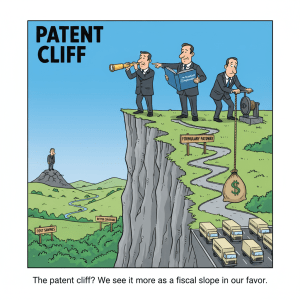
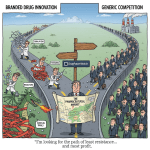
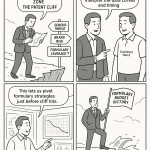
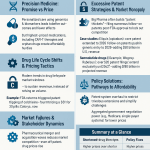
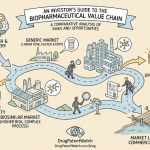
The U.S. healthcare system operates under the immense and escalating pressure of pharmaceutical expenditures, a challenge that consistently tops the list of concerns for health plans, employers, and government programs. Within this complex ecosystem, the expiration of a brand-name drug’s market exclusivity—an event colloquially known as the “patent cliff”—represents the single most powerful and predictable mechanism for cost containment. For the prepared payer, this is not a threat to be weathered but a multi-billion-dollar strategic opportunity to be systematically exploited. Between 2025 and 2030 alone, an estimated $236 billion in global pharmaceutical revenue is at risk due to patent expirations, creating a seismic shift in market dynamics that payers can harness to drive substantial savings.1
This report provides a definitive playbook for healthcare payers and their Pharmacy Benefit Manager (PBM) partners to transform patent expiry intelligence from a passive observation into an active, offensive strategy. It moves beyond a surface-level acknowledgment of generic savings to provide a granular, actionable framework for optimizing both cost and coverage. The analysis is built upon three core strategic pillars: proactive formulary and coverage design, enhanced rebate negotiation leverage, and advanced budget forecasting.
First, the report details how to construct a multi-year formulary strategy that anticipates generic and biosimilar entry, designing clear pathways that steer members toward high-value, low-cost therapies. This includes overcoming the unique challenges of biosimilar adoption, as demonstrated by the pivotal case of Humira, where proactive formulary exclusion of the brand drug yielded hundreds of millions in savings for payers who dared to break from the status quo.3
Second, the analysis illuminates how the ticking patent clock fundamentally shifts the power dynamic in negotiations with brand manufacturers. By understanding a manufacturer’s pre-expiry vulnerabilities and defensive tactics—such as “product hopping” and “surge pricing”—payers can counter these moves and use the impending loss of exclusivity as a powerful lever to secure deeper rebates and more favorable terms in the critical years leading up to the cliff.4
Third, this guide provides the methodologies for building sophisticated budget impact models that accurately forecast the financial consequences of patent expiry. By integrating key variables such as the number of competitors, predictable price erosion curves, and market share shifts, payers can move from reactive budgeting to precise, data-driven financial planning, turning uncertainty into a quantifiable advantage.6
Ultimately, this report frames patent intelligence as a cornerstone of modern pharmacy benefit management. It is a discipline that requires a deep understanding of the legal and regulatory fortress of market exclusivity, a mastery of public and commercial data sources, and the strategic foresight to act on intelligence before the market shifts. By mastering the patent cliff, payers can not only achieve unprecedented cost control but also create the essential financial headroom to fund coverage for the next generation of innovative, life-saving therapies, thereby aligning the financial health of the plan with the long-term health of its members.
II. The Modern Payer’s Dilemma: Navigating the Pharmaceutical Cost Landscape
The environment for healthcare payers—a group comprising health insurers, large self-insured employers, unions, and government entities like Medicare and Medicaid—is defined by a persistent and intensifying conflict. On one side is the mission to provide comprehensive and affordable access to medical care and life-saving therapies for their members. On the other is the unrelenting financial pressure exerted by the rising costs of that care, with prescription drugs representing the most volatile and rapidly growing category of expenditure. Successfully navigating this dilemma requires a deep understanding of the market’s key actors, the economic forces driving costs, and the fundamental opportunities for containment.
The Central Role of Payers and PBMs in the Drug Value Chain
Payers sit at the financial center of the U.S. healthcare system, but they do not manage the complexities of the pharmaceutical market alone. To handle this specialized and high-stakes domain, the vast majority of payers contract with Pharmacy Benefit Managers (PBMs), third-party administrators that function as powerful intermediaries between the payer, drug manufacturers, and pharmacies.8 Emerging in the 1960s to process claims, PBMs have evolved into central architects of the drug benefit landscape. Today, the three largest PBMs—CVS Caremark, Express Scripts, and OptumRx—process approximately 80% of all prescription claims in the U.S., managing benefits for around 270 million Americans.10
The core functions of a PBM are multifaceted and deeply influential. They leverage the aggregated purchasing power of their clients to negotiate rebates and discounts from pharmaceutical manufacturers. In exchange for these rebates, a manufacturer’s drug may receive preferential placement on a PBM-designed formulary—the official list of covered drugs.8 PBMs also create and manage networks of retail and mail-order pharmacies, setting the reimbursement rates for dispensed medications and processing billions of claims annually.9
The business models that underpin these functions are complex and often opaque. PBMs derive revenue from several streams: administrative fees paid by their payer clients, a retained portion of the manufacturer rebates they negotiate, and a practice known as “spread pricing”.8 In a spread pricing model, a PBM charges the payer a higher price for a drug than it reimburses the pharmacy for dispensing it, pocketing the difference or “spread”.9 This model, particularly common with generic drugs, has drawn significant scrutiny from lawmakers and regulators concerned about a lack of transparency and potential conflicts of interest.8 This financial architecture is critical for payers to understand, as the incentives driving PBM revenue may not always align perfectly with the payer’s goal of achieving the lowest possible net cost.
The Unrelenting Pressure of Specialty Drug Costs
The single greatest driver of rising pharmaceutical spending is the explosion in the cost and utilization of specialty drugs. These are complex, often biologic, medications used to treat chronic, rare, or life-threatening conditions such as cancer, rheumatoid arthritis, and multiple sclerosis.15 While fewer than 5% of the population uses a specialty medication, these drugs now account for over 50% of total pharmaceutical spending, a dramatic inversion of the market that has occurred over the last two decades.17
Several factors fuel this trend. The launch prices for novel specialty drugs are extraordinarily high, with many therapies costing tens or even hundreds of thousands of dollars per patient per year.19 The world’s best-selling drug, Humira, commanded an average annual cost of $77,000 per patient, while newer gene therapies can carry one-time price tags in the millions.19 These prices are driven by sophisticated manufacturing processes, such as genetic engineering of living cells, which are far more complex and costly than traditional chemical synthesis.17 Furthermore, manufacturers of established specialty drugs have consistently implemented annual price increases that far outpace the rate of general inflation. From January 2022 to January 2023, the average list price increase for over 4,200 drug products was 15.2%.21 The specialty pharmaceutical market is projected to continue its exponential growth, expanding from $129 billion in 2024 to a forecasted $966 billion by 2030.18
This relentless cost pressure places an immense burden on payers. Rising specialty drug costs are consistently cited by employers as their number one benefits concern, leading to projected healthcare cost increases of 6% to 9% for 2025.15 To cope, payers and their PBMs have intensified the use of utilization management tools like prior authorizations, which require physician justification before a high-cost drug is approved for coverage.16 In more extreme cases, some employers have turned to controversial “alternative funding programs” (AFPs), which essentially carve out specialty drugs from the standard benefit and outsource access to third-party vendors that seek coverage through patient assistance programs or drug importation.15 While intended to save the plan money, these programs can create significant care delays and financial hardship for patients, more than a third of whom experience delays of a month or longer in receiving their medication.15
The Economic Imperative: Quantifying the Generic and Biosimilar Opportunity
Acting as a powerful countervailing force to the rising tide of specialty drug costs is the market entry of generic and biosimilar medications. The competition introduced following a brand drug’s patent expiry is the primary mechanism for cost control in the pharmaceutical sector, presenting a massive and essential opportunity for payers. The savings generated are staggering: in 2022 alone, generic and biosimilar drugs saved the U.S. healthcare system a record $408 billion, with cumulative savings over the prior decade reaching $2.9 trillion.22
The market dynamics starkly illustrate this value proposition. Generic and biosimilar products now account for 90% of all prescriptions filled in the United States, yet they represent only 13.1% of total prescription drug spending.23 This means the remaining 10% of prescriptions—all branded drugs—are responsible for a staggering 86.9% of the nation’s drug bill. The average out-of-pocket copay for a generic drug is around $7.05, while the average for a brand drug is nearly four times higher at $27.10.23
The source of these savings is a streamlined regulatory pathway established by the Hatch-Waxman Act of 1984.24 To gain FDA approval, a generic manufacturer submits an Abbreviated New Drug Application (ANDA), which does not require them to repeat the expensive and time-consuming clinical trials conducted by the brand manufacturer. Instead, they must simply demonstrate that their product is bioequivalent—meaning it is absorbed into the body at the same rate and to the same extent as the original drug.24 By eliminating the largest cost component of drug development, the ANDA process dramatically lowers the barrier to entry for competitors, enabling them to price their products at a fraction of the brand’s cost.24
Biosimilars, which are highly similar versions of complex biologic drugs, follow a similar but more rigorous abbreviated pathway. While their development is more costly than for simple generics, ranging from $100 million to $250 million, this is still a fraction of the cost of developing a novel biologic.25 As a result, biosimilars deliver substantial savings, with their average sales price being roughly 50% less than the reference brand’s price at the time of the biosimilar launch.22 The introduction of this competition not only provides a lower-cost alternative but also forces the brand manufacturer to lower its own price, creating a dual benefit for payers.22 For payers grappling with unsustainable cost trends, mastering the ability to forecast and accelerate the transition to these lower-cost alternatives is not just a strategic advantage; it is an economic necessity.
III. Deconstructing Market Exclusivity: A Payer’s Guide to the Patent and Regulatory Fortress
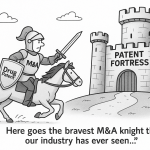
To effectively capitalize on the patent cliff, payers must develop a sophisticated understanding of what constitutes a drug’s market monopoly. It is not a single, simple expiration date. Rather, it is a multi-layered fortress constructed from various types of patents, patent term extensions, and separate FDA-granted regulatory exclusivities. Brand manufacturers are masters at building and defending this fortress through strategies like “evergreening” and the creation of “patent thickets”.26 For a payer, deconstructing this fortress is the first step toward accurately predicting and influencing the timing of generic and biosimilar entry.
Beyond the 20-Year Myth: Understanding “Effective Patent Life”
A foundational misconception in pharmaceutical strategy is that a new drug enjoys a 20-year monopoly on the market. While the statutory term for a U.S. patent is indeed 20 years from the date the application is filed with the U.S. Patent and Trademark Office (USPTO), this figure is profoundly misleading from a commercial standpoint.28 The patent clock starts ticking from the moment of filing, which often occurs very early in the drug development process, years before the product ever reaches a patient.31
The subsequent journey through preclinical research, multiple phases of clinical trials, and rigorous FDA review routinely consumes a massive portion of that 20-year term—often 10 to 15 years.28 The critical concept for any strategist is the “effective patent life”: the actual period of market exclusivity a company enjoys
after a drug has been approved by the FDA and launched.31 Due to the lengthy development timeline, the average effective patent life for a new drug is dramatically shorter than the statutory term, typically ranging from just 7 to 12 years.30 This erosion of the exclusivity period creates immense financial pressure on manufacturers to maximize revenue during their limited window of monopoly and to employ every available legal and regulatory tool to defend and extend that window.
The Anatomy of a “Patent Thicket”
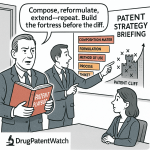
Brand manufacturers do not rely on a single patent to protect their blockbuster assets. Instead, they strategically build a dense, overlapping web of intellectual property known as a “patent thicket”.1 This multi-layered approach, often referred to as “evergreening” or “patent layering,” is designed to create a formidable and expensive legal maze for potential generic and biosimilar challengers to navigate, with the ultimate goal of delaying competition long after the foundational patent has expired.5 Understanding the different types of patents that constitute this thicket is essential for payers.
Composition of Matter Patents: This is the cornerstone of pharmaceutical protection and the most valuable patent type. It covers the active pharmaceutical ingredient (API)—the core molecule itself.28 These patents provide the broadest protection and are the most difficult for a generic competitor to invalidate or design around. For any payer analysis, the expiration date of the primary composition of matter patent is the most critical event to monitor.1
Formulation and Delivery Patents: These secondary patents do not cover the drug molecule itself but rather novel ways of preparing or administering it. Examples include patents on an extended-release tablet that allows for once-daily dosing, a new inhaler device, or a nanoparticle formulation that improves drug delivery.35 While these patents may represent genuine improvements in patient compliance or efficacy, they are also a key tool in “product hopping,” where a manufacturer attempts to switch the market to a new, patent-protected formulation just before the original’s patent expires.4
Method-of-Use Patents: These patents cover a specific, novel way of using a drug to treat a particular disease or condition. A company might first get a drug approved for rheumatoid arthritis and later discover it is also effective for psoriasis. They can then secure a new method-of-use patent for the psoriasis indication.28 This allows them to expand the drug’s market while adding another layer of protection that a generic manufacturer must contest.
Other Secondary Patents: The thicket can be further reinforced with patents on specific manufacturing processes, stable crystalline forms of the drug (polymorphs), or even the drug’s metabolites (the substances the body breaks the drug down into).30
The archetypal example of this strategy is AbbVie’s defense of Humira. The company filed an astonishing 247 patent applications on its blockbuster drug, with 89% of them filed after the drug was already approved and on the market. This created a patent fortress that successfully delayed U.S. biosimilar competition until 2023, years after it began in Europe, where the patent system is less permissive of such extensive layering.37
The Second Wall: FDA Regulatory Exclusivities
Operating entirely separately from the patent system is a second wall of protection: FDA-granted regulatory exclusivities. These are statutory periods of market monopoly awarded by the FDA upon a drug’s approval, and they can block the approval of a generic or biosimilar even if all relevant patents have expired or been invalidated in court.1 A comprehensive payer forecast must account for both the patent landscape and this concurrent regulatory timeline.
Key regulatory exclusivities include:
New Chemical Entity (NCE) Exclusivity: When the FDA approves a drug containing an active moiety (the therapeutically active part of the molecule) never before approved in the U.S., it grants a five-year period of data exclusivity.1 During this time, the FDA cannot accept an ANDA for a generic version, providing a hard stop on competition for the first five years of a new drug’s life.
Orphan Drug Exclusivity (ODE): To incentivize the development of treatments for rare diseases (affecting fewer than 200,000 people in the U.S.), the FDA grants a seven-year period of market exclusivity to designated “orphan drugs”.28 This exclusivity prevents the FDA from approving another manufacturer’s application for the same drug for the same rare disease for seven years. This is a critical factor in forecasting for the high-cost specialty drug market.
Biologics Exclusivity: Under the Biologics Price Competition and Innovation Act (BPCIA), novel biologic products are granted a 12-year period of market exclusivity from the date of their first licensure.28 This is the longest and one of the most powerful forms of exclusivity, providing a substantial monopoly period for these complex and expensive therapies.
Other Exclusivities: The FDA also grants shorter periods of exclusivity for other innovations. A three-year exclusivity is available for new clinical investigations that are essential to the approval of a change to a previously approved drug, such as a new indication or a new dosage form.32 Additionally, if a manufacturer conducts pediatric studies requested by the FDA, a six-month pediatric exclusivity is granted. This valuable six-month period is tacked on to any other existing patents and exclusivities for that drug, often providing a final, crucial delay in generic entry.28
The interplay between these different layers of protection is complex. A drug may have its core patent expire, but an unexpired seven-year Orphan Drug Exclusivity could still block generic entry. A payer’s strategic analysis must therefore build a complete “exclusivity map” for each key drug, accounting for all patent and regulatory barriers to accurately forecast the true loss of exclusivity (LOE) date.
Exclusivity Type
Typical Duration
Strategic Implication for Payers
Composition of Matter Patent
20 years from filing date
The primary driver of LOE for most small-molecule drugs. The expiration date of this patent is the key event to track, and any Paragraph IV litigation challenging it is a critical signal of impending competition.1
New Chemical Entity (NCE) Exclusivity
5 years from FDA approval
A hard stop on generic approval for 5 years post-launch. This provides a minimum guaranteed monopoly period, even if patents are invalidated early. Payers can confidently forecast no generic competition during this window.28
Orphan Drug Exclusivity (ODE)
7 years from FDA approval
Blocks competition for rare disease drugs for the same indication. This is a crucial factor for forecasting budgets for high-cost specialty drugs, as it can extend monopoly well beyond patent expiry.28
Biologics Exclusivity
12 years from FDA licensure
The longest and most robust exclusivity period, creating a significant delay for biosimilar entry. This 12-year clock is the fundamental starting point for all biosimilar forecasting models.28
Pediatric Exclusivity
Adds 6 months
A highly valuable extension that is tacked onto all other existing patents and regulatory exclusivities. This can push a forecasted generic launch date back by a critical half-year, impacting budget cycles.28
Method-of-Use/Formulation Patents
20 years from filing date
These secondary patents form the “patent thicket.” They can be used to delay full generic competition or enable “product hopping.” Payers must track litigation against these patents to understand if a generic will be able to launch with all of the brand’s indications.5
IV. The Payer’s Intelligence Toolkit: Sourcing and Analyzing Patent Data
Translating the complex theory of pharmaceutical exclusivity into an actionable strategic advantage requires a robust intelligence-gathering and analysis capability. Payers must move beyond passive observation and develop a systematic process for monitoring the patent and regulatory landscape. This involves mastering foundational public data sources, leveraging sophisticated commercial intelligence platforms, and, most importantly, learning to recognize the earliest and most reliable signals of impending market competition.
The Foundation: Mastering the FDA Orange Book
The definitive public resource for patent and exclusivity information on small-molecule drugs is the FDA’s publication, Approved Drug Products with Therapeutic Equivalence Evaluations, universally known as the “Orange Book”.39 The Orange Book is more than just a list; it is the central repository where brand manufacturers must publicly declare the patents they assert could reasonably be infringed by a generic competitor.41 This makes it the official battlefield for patent disputes and the foundational data source for any payer’s predictive analysis.1 While the data is publicly available and updated daily, its raw format can be dense and challenging to interpret without a clear understanding of what each data field signifies for a payer’s strategy.43
Key FDA Orange Book Data Field
Description
Strategic Utility for Payers
Patent Number
The unique identifier for each patent listed against the drug product.
Core data for tracking the size and complexity of a drug’s “patent thicket.” Allows for cross-referencing with USPTO data and litigation records.43
Patent Expire Date
The date the patent expires, including any Patent Term Extensions (PTE).
Crucial for building the LOE timeline. However, this date is a theoretical maximum and must be viewed as dynamic, subject to change based on litigation outcomes.1
Drug Substance / Drug Product Flag
A “Y” flag indicating whether the patent claims the active ingredient (substance) or the finished dosage form (product).
Helps identify evergreening strategies. A thicket with many “Drug Product” flags but only one “Drug Substance” flag indicates a strategy focused on secondary formulation patents.43
Patent Use Code
A code designating a method-of-use patent that covers a specific approved indication of the drug.
Indicates if a generic can launch for some, but not all, of the brand’s indications (a “skinny label”). This can limit the initial market impact and savings potential.43
Exclusivity Code
A code representing a specific type of FDA-granted regulatory exclusivity (e.g., NCE, ODE, PC).
Identifies non-patent monopolies that can delay generic entry. This is a critical cross-check; a drug may have expired patents but still be protected by an active exclusivity period.39
Therapeutic Equivalence (TE) Code
The FDA’s rating of a generic’s equivalence to the brand drug. An “A” rating signifies therapeutic equivalence.
Determines if a generic is auto-substitutable at the pharmacy. “A”-rated generics see much faster market uptake and generate savings more quickly than “B”-rated drugs, which are not considered equivalent.42
Accelerating Intelligence: The Role of Commercial Platforms
While the Orange Book provides the raw data, its interpretation requires significant expertise and analytical effort. For this reason, sophisticated payers and PBMs increasingly rely on commercial business intelligence platforms, such as DrugPatentWatch or IPD Analytics, to accelerate and enhance their strategic analysis.45 These platforms serve as intelligence aggregators and analytical engines, providing significant value beyond raw government data.47
The primary benefit of these services is their ability to curate and synthesize vast amounts of disparate information into actionable intelligence. They track not only U.S. patents but also international patents, which is critical for understanding global market dynamics.45 Crucially, they actively monitor and report on patent litigation, including new lawsuits, court decisions, and settlement agreements, providing the real-time insights that are often missing from static databases.45 These platforms are purpose-built to help payers “anticipate future budget requirements and proactively identify generic sources”.45 By providing alerts on key events, identifying likely first generic entrants, and offering forecasting tools, they enable payer strategy teams to focus on decision-making rather than data collection, effectively turning raw data into a decisive competitive advantage.49
Monitoring the First Signal: The Critical Importance of Paragraph IV (PIV) Litigation
The most reliable leading indicator of future generic competition is not a date on a calendar but a specific legal event: the filing of a Paragraph IV (PIV) certification by a generic manufacturer.1 Under the framework of the Hatch-Waxman Act, when a generic company submits its ANDA to the FDA, it must make a certification for each patent listed in the Orange Book for the brand drug it seeks to copy.1
A PIV certification is a bold declaration by the generic manufacturer that it believes the brand’s patent is “invalid, unenforceable, or will not be infringed by the manufacture, use, or sale of the new drug”.1 This filing is effectively the first shot fired in the war for market entry. It triggers a series of predictable and closely watched events:
Notification: The generic filer must notify the brand manufacturer of its PIV certification.
Lawsuit and 30-Month Stay: The brand manufacturer then has 45 days to sue the generic company for patent infringement. If a lawsuit is filed within this window, the FDA is automatically barred from granting final approval to the generic’s ANDA for up to 30 months.34 This “30-month stay” provides a cooling-off period during which the patent litigation is intended to be resolved in court.
180-Day Exclusivity: As a powerful incentive to encourage these challenges to potentially weak patents, the Hatch-Waxman Act grants a 180-day period of marketing exclusivity to the “first-to-file” generic company that successfully challenges a brand’s patent.32 During this lucrative six-month period, only the brand drug and this single generic can be on the market, creating a duopoly that allows the first generic to capture significant market share at a premium price relative to a fully competitive market.
For a payer, the moment a PIV certification is made public is the most critical intelligence signal. It confirms that at least one competitor has invested the resources to challenge the brand’s monopoly and starts the 30-month countdown clock. Tracking the progress of the ensuing litigation—including court rulings, appeals, and potential settlement agreements—provides the most accurate and dynamic forecast of the actual generic launch date. A patent’s listed expiration date is merely a possibility; a PIV filing is an active probability. Therefore, a payer’s intelligence function must be oriented around the real-time monitoring of these legal challenges, as they are the true harbingers of a market-altering patent cliff.
V. Strategic Application 1: Proactive Formulary and Coverage Design
Possessing advanced patent intelligence is strategically useless unless it is translated into concrete actions that control costs and optimize member benefits. The primary lever for achieving this is proactive formulary management. By using patent expiry forecasts to inform coverage decisions well in advance, payers can design formularies that create clear, cost-effective pathways for members, maximize the uptake of generics and biosimilars, and navigate the unique challenges posed by high-cost biologic drugs. This transforms the formulary from a static list of covered drugs into a dynamic tool for strategic financial management.
From Reactive to Predictive: Building a Multi-Year Formulary Strategy
The traditional model of conducting an annual review of the drug formulary is insufficient in the modern pharmaceutical landscape. The timelines associated with patent litigation and generic drug development demand a longer strategic horizon. Sophisticated payers are shifting from a reactive, one-year-at-a-time approach to a predictive, multi-year rolling strategy. This involves building a 2- to 3-year roadmap that maps out anticipated Loss of Exclusivity (LOE) events for major drugs within the plan’s spending portfolio.30
This forward-looking approach allows the Pharmacy & Therapeutics (P&T) Committee—the body of clinicians and pharmacists responsible for evaluating drugs for formulary inclusion—to make more strategic decisions. Planning for a blockbuster drug’s patent expiry should begin 18 to 24 months in advance.30 This lead time allows the P&T committee to align its therapeutic class reviews with the LOE timeline. For example, if a major cardiovascular drug is expected to go generic in 20 months, the committee can schedule its review of the entire cardiovascular class to coincide with that event, preparing the necessary policy changes to capitalize on the new, low-cost alternative immediately upon its arrival.30 This proactive planning also prevents suboptimal decisions, such as adding a new, slightly different branded drug to the formulary just months before a dominant drug in the same class becomes generic. Such a move would fragment the market and dilute the potential savings from converting a high volume of patients to the new generic.30
Tiering and Utilization Management: Designing Pathways to High-Value, Low-Cost Alternatives
The core tactical execution of a patent-aware formulary strategy involves the strategic use of tiering and utilization management (UM) tools to guide prescribing and dispensing toward the most cost-effective options. The moment a new generic or biosimilar becomes available, a series of pre-planned formulary changes should be triggered automatically:
Promote the Generic/Biosimilar: The new generic drug is immediately placed on the most favorable formulary tier, typically Tier 1, which carries the lowest patient copayment (e.g., $0 to $10).30 This provides a strong financial incentive for members to switch.
Demote the Brand: Simultaneously, the original brand-name drug is moved to a non-preferred tier (e.g., Tier 3 or higher) with a significantly higher copayment, or it is excluded from the formulary altogether.30 This creates a powerful disincentive for continued use of the now-overpriced innovator product.
Implement Step Therapy: The availability of a new, low-cost generic fundamentally alters the value equation for all other branded drugs within the same therapeutic class. These competitor brands, which may have previously been considered preferred options, now become subject to a step-therapy protocol. This UM requirement mandates that a patient must first try and fail on the new, cost-effective generic before the plan will cover the more expensive branded alternative.30 This “ripple effect” extends the savings far beyond the single drug that lost its patent.
The ultimate goal of this strategy is to reach a “tipping point” within a therapeutic class. Once two or three generic alternatives are available for a given condition, the justification for covering any high-cost branded products diminishes significantly. At this point, the formulary strategy can shift to making all branded drugs in the category non-preferred or non-formulary, driving nearly all utilization to the low-cost generic core.30
The Biosimilar Challenge: Navigating Interchangeability, Physician Skepticism, and Payer-Driven Adoption
While the strategic principles for generics are well-established, applying them to biosimilars requires navigating a more complex set of challenges. Unlike small-molecule generics, which are identical copies of the original, biologics are large, complex molecules produced in living systems, making exact replication impossible. Biosimilars are therefore “highly similar” to their reference product, with no clinically meaningful differences in safety and efficacy, but they are not identical.23
This distinction creates several barriers to uptake that payers must actively manage:
Physician and Patient Skepticism: Concerns about minor differences from the reference product, coupled with the “nocebo effect” (where negative expectations lead to negative outcomes), can make both physicians and patients hesitant to switch from a stable therapy to a biosimilar.53
The Interchangeability Hurdle: In the U.S., the FDA has a separate, higher designation of “interchangeability,” which requires manufacturers to conduct additional, costly switching studies. An interchangeable biosimilar can be automatically substituted for the reference product at the pharmacy level (subject to state law), much like a generic.53 However, few biosimilars have achieved this status. For non-interchangeable biosimilars, a new prescription is required to make a switch, creating a significant administrative barrier.54
Manufacturer Reliability: Given the complexity of biologic manufacturing, payers must consider factors beyond price when selecting a preferred biosimilar. The reliability of the manufacturer’s supply chain and their history of on-time production are critical considerations to avoid treatment disruptions for patients.53
Because of these barriers, payers cannot assume that biosimilar adoption will happen automatically. They must take a more active role in driving the transition through education, physician outreach, and, most importantly, decisive formulary design.
Case Study: The Humira Biosimilar Transition and Lessons for Payer Strategy
The 2023 launch of biosimilars for Humira (adalimumab), the world’s best-selling drug for many years, serves as a pivotal case study in payer strategy. Despite the availability of multiple lower-cost, FDA-approved biosimilars, initial market uptake was astonishingly low, hovering at less than 2%.56 The primary reason for this failure was the “rebate wall”: many PBMs and payers chose to keep the high-list-price, high-rebate brand Humira on their formularies in a preferred position. This structure maximized PBM revenue and provided a large rebate back to the payer, but it ultimately resulted in higher net costs and blocked patients from accessing more affordable alternatives.56
In stark contrast, a handful of proactive payers, such as Navitus Health Solutions, adopted a more aggressive and ultimately far more effective strategy. Navitus made the bold decision to remove brand-name Humira from its standard formularies entirely. In its place, it gave preferred status to several low-list-price biosimilars, including a citrate-free, high-concentration version that matched the user experience of the most popular Humira formulation.3
The results were dramatic and immediate. Within just three months, 94% of members on adalimumab had successfully switched to a lower-cost biosimilar. This decisive formulary action generated over $315 million in upfront cost savings for Navitus’s clients and resulted in a 60% reduction in the net cost per claim. Patients also benefited directly, with average out-of-pocket costs plummeting by nearly 97%.3 The lesson for payers is unequivocal: for high-cost biologics enmeshed in the rebate system, passive strategies are doomed to fail. Realizing the immense savings potential of biosimilars requires the strategic courage to break the rebate wall through decisive formulary design, actively removing the high-cost brand to create an unobstructed path to the lower-cost alternative.
VI. Strategic Application 2: Enhancing Rebate Negotiation Leverage
Patent expiry intelligence is not only a tool for formulary design and budget forecasting; it is also one of the most powerful levers a payer can wield in rebate negotiations with pharmaceutical manufacturers. The period leading up to a drug’s Loss of Exclusivity (LOE) is a time of maximum vulnerability for the brand manufacturer. By understanding the manufacturer’s strategic imperatives and defensive tactics during this window, payers can fundamentally shift the power dynamic at the negotiating table, securing deeper discounts and countering strategies designed to prolong market monopoly.
Shifting the Power Dynamic: Using the Patent Cliff as a Negotiation Lever
A brand manufacturer’s primary goal in the final 12 to 24 months before its patent cliff is to defend market share at all costs. Every prescription converted to a competitor during this period represents not only lost revenue but also a smaller base from which to compete with the impending flood of low-cost generics. This desperation creates a “window of maximum leverage” for payers.33 The threat of moving the brand drug to a non-preferred formulary tier—a move that would immediately shift market share to competitors—becomes a highly credible and potent negotiating tactic.
During this pre-LOE period, manufacturers are often far more willing to concede on rebates to maintain their preferred formulary status and maximize their final years of monopoly revenue. A payer armed with precise intelligence on the LOE timeline, including the status of any PIV litigation, can enter negotiations with a clear understanding of the brand’s diminishing timeline. This allows the payer to demand significant price concessions in exchange for continued favorable access, effectively extracting value from the brand’s precarious market position. The negotiation is no longer just about the drug’s clinical value; it is about the brand’s rapidly expiring commercial clock.
Countering Brand Manufacturer Pre-LOE Tactics
As a blockbuster drug approaches its patent cliff, manufacturers deploy a predictable playbook of defensive strategies designed to mitigate revenue loss and extend their franchise. Payers must be able to identify and counter these moves.
Brand Manufacturer Tactic
Manufacturer Goal
Payer Counter-Strategy
Product Hopping / Evergreening4
Shift market share from the soon-to-be-generic original product to a “new and improved,” patent-protected version (e.g., extended-release, new combination).
Block the Switch: Refuse to grant preferred formulary status to the new formulation. Maintain preferred status for the original drug only, ensuring the patient base remains on the product that will soon have a low-cost generic equivalent.
Surge Pricing4
Maximize revenue in the final 12-18 months of exclusivity by implementing aggressive list price increases, often multiple times per year.
Negotiate Away the Hike: Use the threat of immediate non-preferred status to demand rebates that fully offset the list price increase. The payer’s position is: “We will grant you continued access, but not at this inflated price.”
Aggressive Rebates on a Line Extension4
Offer deep discounts on a different, but related, patent-protected drug to switch patients away from the drug facing LOE.
Maintain Therapeutic Class Focus: Keep the line extension non-preferred. The long-term savings from converting the entire class to a new generic far outweigh the short-term rebate on the line extension.
Authorized Generic (AG) Launch33
Launch a branded-generic version of their own drug to capture a portion of the generic market and potentially deter other generic competitors.
Promote True Generic Competition: Welcome the AG as another market competitor that helps drive down price, but ensure it is not given preferential treatment over independent generics, which are essential for maximum price erosion.
“Pay-for-Delay” Settlements5
Settle patent litigation with a generic challenger by paying them to delay their market entry beyond the date a court might have allowed.
Monitor Litigation and Adjust Forecasts: Use intelligence platforms to track litigation. A settlement is a key signal that can alter the generic entry date. Payers can use this information to adjust formulary plans and budget models accordingly.
One of the most common tactics is “product hopping.” A manufacturer will launch a slightly modified version of their drug—for instance, switching from a twice-daily tablet to a once-daily extended-release formulation—and heavily promote it to physicians and patients just before the original product’s patent expires.5 The goal is to move the market to the new, patent-protected product, leaving the soon-to-be-available generic with a much smaller pool of patients to convert. The payer’s counter-strategy is simple but powerful: refuse to add the new formulation to the preferred formulary tier. By keeping the original product as the preferred option, the payer preserves the market for the impending generic launch, maximizing future savings.30 This requires the discipline to reject the manufacturer’s marketing of a marginal improvement in favor of the massive long-term value of generic competition.
The Impact of Policy: How the Inflation Reduction Act (IRA) Alters the Landscape
The negotiating landscape for the most expensive drugs has been fundamentally altered by the passage of the Inflation Reduction Act (IRA) of 2022. A key provision of the law empowers the federal government, for the first time, to negotiate drug prices directly with manufacturers for a selection of high-spend drugs covered under Medicare Parts B and D.58 This provision effectively circumvents the long-standing “noninterference” clause that had previously prohibited the government from leveraging its immense purchasing power.58
Under the new Drug Price Negotiation Program, the Secretary of Health and Human Services (HHS) selects a number of single-source drugs with the highest Medicare spending that have been on the market for a specified period (9 years for small-molecule drugs, 13 years for biologics) and do not yet have generic or biosimilar competition.58 Following a year-long negotiation process, HHS establishes a “Maximum Fair Price” (MFP) for each selected drug, which serves as a price ceiling for the Medicare program.58
The implications for commercial payers are profound. While the IRA’s negotiation power is technically limited to Medicare, the public disclosure of the MFP creates a powerful new pricing benchmark for the entire market. A commercial payer negotiating for one of these selected drugs can now enter the room with a clear, government-validated price target. It becomes exceedingly difficult for a manufacturer to justify charging a commercial plan a net price significantly higher than what it has agreed to accept from Medicare. This gives commercial payers unprecedented leverage to demand rebates that align their net cost with the publicly known MFP, dramatically strengthening their position in negotiations for some of the costliest and most widely used drugs in the country. The IRA has, in effect, provided a new and powerful anchor point that shifts the entire negotiation dynamic in the payer’s favor.
VII. Strategic Application 3: Advanced Budget Forecasting and Impact Modeling
Effective management of the patent cliff requires more than just strategic negotiation and formulary design; it demands rigorous, data-driven financial planning. Payers must develop the capability to accurately forecast the budgetary impact of upcoming LOE events. This involves moving from simple, top-down projections to sophisticated, bottom-up budget impact models (BIMs) that systematically quantify the expected savings. By building a robust forecasting function, payers can transform the uncertainty of the patent cliff into a predictable and manageable financial event, enabling better resource allocation and long-term financial stability.
Horizon Scanning: A Systematic Approach
The foundation of any advanced forecasting effort is a systematic process of “horizon scanning”.60 This is an active and continuous monitoring of the pharmaceutical landscape to identify future events that will have a significant budgetary impact. Rather than conducting ad-hoc analyses of individual drugs, a mature payer organization establishes a formal process to scan for two key types of events: the launch of new, high-cost drugs and, critically, the upcoming patent expiries of existing high-spend drugs.7
This process involves creating a multi-year map of the patent cliff, identifying all major drugs in the payer’s portfolio that are expected to lose exclusivity within the next 3-5 years. This map should be a living document, continuously updated with the latest intelligence on PIV litigation, settlement agreements, and new secondary patent filings. The goal is to create a comprehensive timeline of future market shifts, allowing the organization to anticipate budgetary pressures and savings opportunities well in advance and to prioritize its strategic resources accordingly.32
Building a Budget Impact Model (BIM): Key Inputs and Methodologies
Once a significant LOE event is identified on the horizon, the next step is to build a BIM to quantify its financial impact. Following best practices outlined by organizations like the International Society for Pharmacoeconomics and Outcomes Research (ISPOR), a payer can construct a model that projects the change in spending over a defined period.7 The research question for this type of model shifts from the traditional “What is the impact of a new drug entering the market?” to “What is the budget impact of our strategy to manage the transition to generics following patent expiry?”.7
A robust BIM for a patent expiry event must incorporate several key inputs:
Eligible Population: The starting point is to use claims data to accurately determine the number of plan members currently being treated with the brand-name drug that is facing LOE. The model should also account for any expected growth or decline in this patient population over the forecast period.7
Time Horizon: The time horizon for a patent cliff BIM is typically short, often 1 to 3 years post-LOE. The pharmaceutical landscape changes so rapidly with new drug launches and evolving clinical guidelines that forecasts beyond this window become less reliable.7
Treatment Mix and Market Share Shift: The model must project the rate at which patients will switch from the brand drug to the new generic/biosimilar alternatives. Historical data provides a strong guide: for small-molecule drugs, generics can capture 80% or more of the prescription volume within the first year of launch.24 The model should reflect the payer’s own formulary strategy (e.g., brand exclusion, step therapy), which will accelerate this shift.
Drug Costs and Price Erosion Curves: This is the most critical and sensitive input. The model cannot simply assume a single discount. It must incorporate a dynamic price erosion curve that reflects the realities of market competition. The price of a generic falls as more competitors enter the market. Studies show that with a single generic competitor, the price may only be modestly lower. With two competitors, prices can fall by over 50%. With six or more, the price can plummet by as much as 95% from the original brand price.63 The model must therefore include a forecast of the number of generic entrants over time. Furthermore, the model must use different erosion curves for small-molecule generics versus biosimilars. Small-molecule generics experience rapid and deep price declines, while biosimilars see more modest initial price reductions of 30% to 70%, with a slower subsequent decline.6
By combining these inputs, the BIM can generate a year-by-year forecast of the net savings the plan can expect to achieve from the patent expiry, providing a solid, data-driven foundation for the organization’s overall budget.
Case Study: The Lipitor “Patent Cliff”
The 2011 patent expiry of Pfizer’s Lipitor (atorvastatin), the best-selling drug in history at the time with peak annual sales exceeding $13 billion, serves as the quintessential case study for the predictable and massive impact of a patent cliff.33 The event was not a surprise; it was a well-understood date on the calendar that payers had years to prepare for.
The financial consequences for Pfizer were immediate and severe, validating the forecasts of market analysts and payers. In the first year following generic entry, Pfizer’s global revenue from Lipitor plummeted by 59%, falling from $9.6 billion in 2011 to just $3.9 billion in 2012.33 In the U.S. market, sales erosion was even more dramatic. This precipitous drop was a direct result of the rapid uptake of generic atorvastatin by payers who had prepared their formularies to maximize the switch.67
This case demonstrates the immense value of accurate forecasting. Payers who had built robust BIMs for the Lipitor LOE were able to anticipate a dramatic reduction in their spending on statins, the most widely used class of drugs. This allowed them to reallocate budget resources, manage premium calculations with greater accuracy, and demonstrate significant value to their clients and members. The Lipitor cliff proved that with proper intelligence and modeling, even the largest market disruptions can be transformed into predictable financial opportunities.
Drug (Brand/Generic Name)
Manufacturer
Peak Annual Sales (Pre-LOE)
Year of LOE (U.S.)
Documented Market Impact
Lipitor (atorvastatin)
Pfizer
~$13 Billion 33
2011
Sales plummeted by 59% in the first year post-expiry. The entry of multiple generics led to price erosion of over 80%, dramatically reducing healthcare system costs.33
Plavix (clopidogrel)
BMS / Sanofi
~$9 Billion 33
2012
Experienced a similar catastrophic revenue decline as Lipitor, demonstrating a predictable pattern for small-molecule blockbusters facing their first generic competition.
Humira (adalimumab)
AbbVie
~$21 Billion
2023
Initial biosimilar uptake was <2% due to brand rebates. Proactive payers who excluded brand Humira saw a 60% net cost reduction per claim and saved over $315 million in the first year.3
VIII. The Next Frontier: AI, Value-Based Care, and Reinvestment of Savings
As payers master the fundamentals of patent expiry strategy, the next frontier involves leveraging advanced technologies to enhance predictive capabilities and, most importantly, strategically reinvesting the resulting savings to fund innovation and improve member health. The ultimate goal is to create a virtuous cycle where cost containment on legacy drugs directly enables access to the cutting-edge therapies of the future. This transforms pharmacy benefit management from a purely defensive, cost-cutting function into a proactive, value-creating engine for the entire healthcare enterprise.
The Role of AI and Predictive Analytics
The process of tracking patents, monitoring litigation, and building budget impact models, while effective, is data-intensive and requires significant analytical resources. Artificial Intelligence (AI) and machine learning (ML) are poised to revolutionize this field by automating complex analyses and uncovering insights at a scale and speed beyond human capability.57
The application of AI in pharmaceutical market access and pricing is rapidly emerging. AI algorithms can be trained on vast datasets encompassing patent filings, clinical trial results, regulatory documents, and real-world claims data to predict LOE events with greater accuracy and provide more nuanced forecasts of market impact.70 For instance, AI can analyze competitor activities and market dynamics to generate dynamic pricing models or optimize negotiation strategies with payers.72
PBMs and health technology companies are already integrating these tools. Platforms like Xevant use AI-powered analytics to provide PBMs with real-time, predictive insights into their pharmacy data, moving away from the traditional “look-back” analysis model.73 Instead of waiting weeks for a quarterly report, an AI-driven dashboard can issue an alert the moment a negative trend is detected, such as a drop in generic dispensing rates or a spike in a high-cost brand’s utilization.73 These systems can simulate the financial impact of different formulary designs, predict the success of various rebate negotiation scenarios, and even identify individual members at high risk of non-adherence who would benefit from a targeted intervention.74 As these technologies mature, they will become an indispensable tool for payers seeking to maintain a competitive edge in managing pharmacy costs.
Funding Innovation: Reinvesting Generic Savings
The strategic payoff of mastering the patent cliff extends far beyond simple cost reduction. The billions of dollars in savings generated through the systematic promotion of generics and biosimilars create essential financial “headroom” within a payer’s budget.76 This newfound capacity is critical for affording the next wave of medical breakthroughs, particularly high-cost specialty drugs and revolutionary treatments like cell and gene therapies, which can have curative potential but come with seven-figure price tags.19
This creates a direct and powerful link between past and future: the savings realized on a 20-year-old statin or antidepressant directly fund access to a life-saving cancer immunotherapy or a gene therapy for a rare pediatric disease. This strategic reinvestment resolves one of the central dilemmas for payers: how to balance the responsibility of controlling today’s costs with the need to provide access to tomorrow’s innovations.
Furthermore, these savings can be channeled into value-based care (VBC) initiatives that improve long-term health outcomes and generate further cost efficiencies.77 For example, a payer could reinvest savings from generic diabetes medications into a comprehensive diabetes management program that provides members with connected glucose monitors, nutritional counseling, and proactive pharmacist support. Such programs are proven to improve medication adherence and clinical outcomes, reducing the risk of costly long-term complications like hospitalizations and kidney failure.77 This approach aligns the financial incentives of the health plan with the clinical needs of its members, using savings from one area to create greater value in another. Real-world examples of this philosophy are already emerging. Penn Medicine, for instance, has explicitly stated that its partnership with Mark Cuban’s Cost Plus Drug Company is designed to generate savings on generic drugs that will be directly reinvested into patient care programs and services.79 Similarly, integrated delivery networks like Kaiser Permanente leverage their high generic utilization rates (94%) to fund superior preventive care and chronic disease management programs, which in turn lower total healthcare costs.77
Conclusion: The Future of Pharmacy Benefit Management as a Data-Driven Strategic Function
The effective management of pharmaceutical patent expirations is no longer a niche or optional capability for healthcare payers. In an era defined by escalating specialty drug costs and the promise of transformative but expensive new therapies, it has become a core strategic function essential for financial survival and the fulfillment of the payer’s mission. Mastering the patent cliff requires a multi-disciplinary approach that integrates legal and regulatory expertise, advanced data analytics, and shrewd negotiation tactics.
The future of this field lies in a data-driven, predictive, and integrated operating model. Payers and their PBM partners must continue to invest in the intelligence tools, analytical talent, and AI-powered platforms that can provide a clear view of the horizon. They must have the strategic discipline to use this intelligence to build proactive, multi-year formulary and budget plans. And they must have the negotiating courage to challenge manufacturer tactics and leverage the power of the patent cliff to secure the best possible terms for their plans and members.
Ultimately, the goal is to create a sustainable pharmaceutical ecosystem. By systematically capturing the value released when drug monopolies end, payers can ensure the affordability of established therapies for all members. More importantly, they can secure the financial resources necessary to embrace and provide access to the medical innovations that will define the future of healthcare. This transforms pharmacy benefit management from a reactive cost center into a forward-looking strategic asset, one that balances the books of today while investing in the health of tomorrow.
Real-world familiarity with US biosimilar regulatory guidelines and interchangeability state laws among pharmacists and physicians treating immunological disorders, accessed August 7, 2025, https://www.jmcp.org/doi/10.18553/jmcp.2025.31.6.552