How to win 180-day exclusivity, survive the price erosion curve, and build a future-proof portfolio in a $491B market
The global generic drug market is worth approximately $491 billion as of 2024 and is on track to cross $926 billion by 2034, compounding at a 6.55% CAGR. In the United States alone, generics accounted for over 90% of all prescriptions filled in 2023 while representing only 13-18% of total prescription drug spending. That gap, savings of $445 billion in a single year and $3.1 trillion over the decade, defines both the industry’s social value and its strategic paradox: enormous volume, brutal margins.
Success in this market no longer flows to the cheapest manufacturer. It flows to the operator who can convert a patent estate into a legal attack vector, navigate an ANDA submission to first-cycle approval, run a supply chain that holds when competitors fail, price through the erosion curve intelligently, and rotate capital from cash-generating simple generics into complex product categories that carry genuine competitive moats. This pillar page dissects each of those five disciplines at the depth required for executive decision-making.
Generic drugs account for over 90% of U.S. prescriptions yet represent only 13-18% of total prescription drug spending. Winning this market means mastering complexity, not racing to the bottom on price.
Market Sizing: What the Forecasts Actually Show
Different research firms use different base years and methodologies, producing a spread of estimates. The table below consolidates the major forecasts. The central tendency across all six sources: the market grows at 5-8.5% per year through the early 2030s. No credible firm is projecting contraction.
Research Firm
Base Year & Value
Forecast Year & Value
CAGR
Period
Custom Market Insights
2024: $491.4B
2034: $926.5B
6.55%
2025-2034
Precedence Research
2024: $445.6B
2034: $728.6B
5.04%
2025-2034
Vision Research Reports
2025: $515.1B
2033: $775.6B
5.25%
2025-2033
IMARC Group
2024: $389.0B
2033: $674.9B
5.66%
2025-2033
BCC Research
2023: $435.3B
2028: $655.8B
8.5%
2023-2028
Grand View Research
2022: $361.7B
2030: $682.9B
8.3%
2023-2030
Strategy 1: Crack the Patent Gauntlet Before You File Anything
The phrase ‘patent cliff’ implies a single date. In practice, brand manufacturers construct layered patent portfolios designed to force generic entrants through years of expensive litigation. The real structure is a gauntlet, and the companies that win are those who map every obstacle before they commit capital.
The Anatomy of Evergreening: How Brands Extend Market Exclusivity
A base compound patent grants 20 years from filing date, but the Hatch-Waxman framework’s patent term restoration provisions can extend that by up to five years, compensating for the time lost to FDA review. By the time effective exclusivity is calculated, a brand may hold market protection well into its patent’s third decade of existence.
What follows expiration of the base compound patent is the second wave: the ‘patent thicket.’ This refers to an overlapping web of secondary patents covering formulations, delivery mechanisms, salt forms, metabolites, polymorphs, methods of use, and dosing regimens. AbbVie’s adalimumab (Humira) is the most studied example. The company filed over 132 patents covering the drug, with roughly 90% filed after Humira was already on market. That strategy held U.S. biosimilar competition off for years beyond the primary patent’s expiration, preserving a product that generated approximately $21.2 billion in global sales in its final full year of exclusivity.
The financial logic of evergreening is straightforward. Filing a new patent on a once-daily formulation of a twice-daily drug costs a few hundred thousand dollars. If that patent survives challenge, it can protect $1-2 billion in annual sales for an additional three to seven years. The ROI on that legal spend is enormous, which is why generic teams that treat patent expiration dates as definitive launch windows routinely get outmaneuvered.
IP Valuation: What a Patent Estate Is Actually Worth
Before committing to a Paragraph IV challenge, the generic team must assess the economic value of the IP standing in its way. A defensible primary compound patent protecting a $2 billion-a-year drug is a different obstacle than a late-filed formulation patent that has already been invalidated in European proceedings. IP valuation for generic strategy purposes rests on four variables: remaining exclusivity life, the strength of the patent’s claims (novelty, non-obviousness, written description), litigation history in other jurisdictions, and the size of the addressable market post-LOE.
For drugs with active Orange Book listings, patent term expiration data and pediatric exclusivity add-ons are publicly available. The harder analysis is claim-level strength. A method-of-use patent covering only a single indication, for example, may be designed around without triggering infringement. A composition-of-matter patent on the active moiety itself is far more durable. R&D teams need to work alongside IP counsel to produce a formal claim chart for every patent in the Orange Book listing, mapping each claim to the proposed generic product’s formulation and manufacturing process. Claims that the generic product clearly does not read on are off the table. Claims where infringement is even marginally possible require either a legal challenge or a design-around strategy.
Freedom-to-Operate Analysis: The Correct Starting Point
A Freedom-to-Operate (FTO) analysis is not a patent search. A patent search tells you what patents exist. An FTO analysis determines whether your specific product, manufactured by your specific process, would infringe any valid claim in any unexpired patent. The distinction matters because a patent’s existence does not automatically mean infringement, and many thicket patents are vulnerable to invalidity arguments.
A rigorous FTO for a complex generic or biosimilar target should include a full Orange Book analysis, a search for patents not listed in the Orange Book but potentially applicable (method-of-manufacture patents, for instance, are frequently not Orange Book-listed), a review of pending patent applications that could publish and issue before your launch date, and an assessment of any inter partes review (IPR) petitions already filed at the Patent Trial and Appeal Board (PTAB). A PTAB institution decision that invalidates key claims can fundamentally alter the launch window. Platforms like DrugPatentWatch consolidate these data streams, mapping patent term expirations, exclusivity end dates, litigation history, and new application filings into a single intelligence layer.
The output of the FTO process should not be a binary ‘clear to launch’ or ‘blocked’ verdict. It should be a risk-stratified landscape: patents that pose no infringement risk, patents that could be designed around, patents that require challenge, and patents that are probably invalid and worth attacking. That stratification directly drives the litigation investment decision.
The Hatch-Waxman Chess Match: Paragraph IV Strategy in Depth
The Drug Price Competition and Patent Term Restoration Act of 1984 (Hatch-Waxman) is the foundational statute of the U.S. generic industry. Its ANDA pathway allows generics to rely on the innovator’s clinical data, replacing full Phase I-III programs with a bioequivalence demonstration. Its Paragraph IV certification mechanism converts patent litigation from a defensive nuisance into an offensive investment strategy.
When a generic company files a Paragraph IV certification, it declares that the listed patents are invalid, unenforceable, or will not be infringed by the proposed generic product. This act is legally defined as an artificial act of infringement under 35 U.S.C. Section 271(e)(2). The declaration triggers a 45-day response window for the brand. If the brand files suit within that window, an automatic 30-month stay goes into effect, preventing FDA from granting final approval during that period while litigation proceeds. If the brand does not sue within 45 days, the 30-month stay does not trigger, and approval can proceed on the statutory timeline.
The 180-day first-to-file exclusivity is the prize that makes the litigation investment rational. The company that files the first substantially complete ANDA with a Paragraph IV certification against a given Orange Book patent is eligible for 180 days of market exclusivity, during which FDA cannot approve any other generic applicant’s ANDA for the same drug. This creates a temporary duopoly between the brand and the first-filer. With pricing only modestly discounted from the brand, first-filer margins in that window often exceed 60-70% gross margin, a figure that collapses to single digits once the market opens to five or more competitors.
In 2020, generics that launched with 180-day exclusivity saved the U.S. healthcare system approximately $20 billion while simultaneously generating the bulk of their sponsors’ annual profits. That is the dual nature of the exclusivity prize: enormous public health value and enormous private financial return, aligned in the same event.
Hatch-Waxman Mechanism
Trigger
Duration / Effect
Strategic Use
Paragraph I Certification
Patent expired before ANDA filing
No litigation risk
Entry into markets where brand patents have already lapsed
Paragraph II Certification
Patent will expire before projected approval date
No litigation risk
Low-risk entry where timing is favorable
Paragraph III Certification
Generic will not launch until patent expires
Entry delayed to expiration date
Used when challenge is not viable; avoids litigation cost
Paragraph IV Certification
Applicant asserts patent is invalid or not infringed
30-month stay if brand sues within 45 days
Offensive tool to challenge patent; gateway to 180-day exclusivity
Section viii Statement
Generic does not seek the patented use/indication
No stay; carve-out of labeling
Enables launch without covering patented method-of-use; limits label
180-Day Exclusivity
Awarded to first substantially complete P-IV filer
6 months before FDA approves additional ANDAs
Most profitable phase of generic lifecycle; creates temporary duopoly
Litigation Execution: What Wins in Delaware and New Jersey
The two primary venues for Hatch-Waxman litigation are the District of Delaware and the District of New Jersey. Between them, these courts handle the substantial majority of all ANDA patent cases. Winning requires understanding not just the legal arguments but the procedural terrain each court creates.
Delaware courts under Judge Connolly have implemented case-narrowing orders that limit plaintiffs to asserting no more than 32 patent claims total against a single defendant, with defendants limited to 30 prior art references. This constraint eliminates the historical ‘shotgun’ approach where brands asserted every marginally applicable claim hoping to find a winner during discovery. Generic defendants must now identify their highest-probability invalidity arguments before the case even begins, because the procedural framework will not permit a course correction mid-litigation.
The most productive invalidity theories across historical Hatch-Waxman litigation have been obviousness under 35 U.S.C. Section 103 and inadequate written description under Section 112. Successful obviousness arguments typically hinge on demonstrating that a skilled formulator or medicinal chemist would have been motivated to arrive at the claimed compound or formulation from the prior art, with a reasonable expectation of success. Inadequate written description attacks succeed when the patent’s specification does not demonstrate that the inventors possessed the full scope of what the claims cover, a particularly effective argument against broadly-drafted method patents filed after the drug was already commercially successful.
Historical win rates for generic challengers in Paragraph IV litigation have ranged from approximately 60% to 76% across studied cohorts, depending on the methodology used to measure ‘win’ (invalidation, consent judgment allowing early entry, or favorable settlement). At $5-15 million in fully-loaded litigation costs per case, and with 180-day exclusivity prizes for major brands potentially exceeding $500 million in revenues, the expected value calculation frequently favors challenge.
Key Takeaways
• The patent cliff is a marketing construct. Every major brand has a secondary patent portfolio designed to delay generic entry past the primary compound patent expiration.
• IP valuation for a specific target requires claim-level analysis, not just expiration date monitoring. A late-filed formulation patent with weak written description support is a fundamentally different obstacle than a composition-of-matter patent on the active moiety.
• The Paragraph IV / 180-day exclusivity framework converts patent litigation from a legal cost center into a capital investment with quantifiable expected returns. Model the ROI explicitly, including probability-weighted scenarios for brand AG launch.
• Delaware’s case-narrowing orders mean your invalidity strategy must be substantially complete before the ANDA is filed. Legal and regulatory teams cannot operate in silos.
• Section viii carve-out statements allow entry without infringing method-of-use patents, but they restrict labeling and may limit the addressable market.
Investment Strategy
→ Screen P-IV targets by calculating risk-adjusted exclusivity value: (projected 180-day revenue) x (probability of litigation win) x (probability of brand not launching AG) – (estimated litigation cost). Any target above $80M expected value warrants serious resource allocation.
→ Monitor PTAB inter partes review petitions against brand patent portfolios. A successful IPR institution at PTAB can render a P-IV challenge unnecessary and accelerate your launch timeline without litigation cost.
→ In M&A screening, a generic company’s active P-IV docket is a forward-looking revenue indicator. A portfolio of five or more ongoing P-IV challenges in blockbuster categories represents significant optionality value not captured in current earnings.
Strategy 2: Engineer a First-Cycle ANDA Approval
An ANDA approval is not a milestone; it is a prerequisite. The real milestone is first-cycle approval, getting through FDA review without a Complete Response Letter (CRL) that delays market entry, potentially long enough to cost you first-to-file exclusivity status.
The ANDA Submission Architecture
Every ANDA submission must be delivered in eCTD (Electronic Common Technical Document) format, a hierarchical XML-based structure organized across five modules: administrative information, summaries, quality (CMC), nonclinical study reports, and clinical study reports. For ANDAs, Module 3 (quality/CMC) and Module 5 (bioequivalence studies) carry the most weight. The submission must include a full description of the dosage form and composition, specifications for all raw materials and the finished product, detailed manufacturing process descriptions with in-process controls, container closure system information, and stability data from at least three manufacturing batches under ICH Q1A-compliant conditions.
Before FDA begins substantive review, it screens every incoming ANDA for basic completeness. A failure here produces a Refuse-to-Receive (RTR) determination. Beyond losing the filing fee (approximately $321,920 in 2025, with 25% forfeited on RTR), the strategic damage is the loss of first-to-file standing. If a competing ANDA arrives on the same day or later but is deemed substantially complete when yours is not, the competitor takes the 180-day exclusivity prize permanently. There is no remedy for that loss after the fact.
The most common RTR triggers identified across FDA inspection records and regulatory consultant analyses are: inadequate stability data (fewer than six months of accelerated data on three batches), insufficient dissolution characterization for complex dosage forms, formulation deviation from the Reference Listed Drug without adequate justification, incomplete or untimely response to FDA’s initial information requests, and administrative errors on Form 356h including missing signatures or incorrect facility registration information. Even accumulations of ten or more ‘minor deficiencies’ in eCTD hyperlinking can aggregate into an RTR determination. The standard for a first-cycle-ready ANDA is perfection, not adequacy.
Bioequivalence Science: From Simple PK Studies to Complex BE Programs
Bioequivalence establishes that the generic product delivers the same rate and extent of absorption of the active ingredient as the Reference Listed Drug. For simple oral solid dosage forms, this is demonstrated through a crossover pharmacokinetic study in healthy volunteers measuring two primary endpoints: Cmax (peak plasma concentration, a proxy for absorption rate) and AUC (area under the plasma concentration-time curve, a measure of total systemic exposure). FDA’s acceptance criterion requires that the 90% confidence interval for the geometric mean ratio of each parameter fall entirely within the range of 80.00% to 125.00%.
The 80-125% window is frequently misunderstood as allowing a 20% deviation from the brand. It does not. The confidence interval, not a point estimate, must fall within the range. For a study with substantial within-subject variability, this can require a large number of subjects and precise analytical methods to achieve. FDA’s regulatory guidance documents for specific products often mandate specific study designs, including fed versus fasted conditions, specific sampling timeframes, and validated bioanalytical methods with documented specificity, accuracy, precision, and stability parameters.
Complex generics require fundamentally different approaches. Products like metered-dose inhalers, dry powder inhalers, nasal sprays, transdermal patches, topical dermatological products, and ophthalmic solutions cannot rely on systemic PK measurements to establish bioequivalence, because the therapeutic action is local. FDA has developed product-specific guidances for many of these categories, but for novel complex generics where guidance does not yet exist, the development program becomes a scientific negotiation with the agency through pre-ANDA meetings. Approaches FDA has accepted for specific complex products include pharmacodynamic endpoint studies (measuring a physiological response rather than blood levels), in vitro comparative studies using validated surrogate models, comparative clinical endpoint studies in patient populations, and hybrid approaches combining in vitro characterization with abbreviated clinical data.
The regulatory investment required for a complex generic BE program can reach $15-40 million, versus $2-8 million for a standard oral solid. That cost, however, creates the moat. Fewer competitors will clear the regulatory hurdle, and those who do typically enter markets where pricing remains durable for five to ten years post-launch, rather than the 12-18 months before commoditization that characterizes simple generic markets.
cGMP Compliance and Pre-Approval Inspections
Current Good Manufacturing Practice (cGMP) requirements under 21 CFR Parts 210 and 211 govern every aspect of how a drug product is made. The ‘current’ in cGMP is not figurative. FDA evaluates manufacturing practices against contemporary standards, meaning that a facility last inspected four years ago may have compliant historical records but still receive a Warning Letter today based on practices that have since been reclassified as deficient.
FDA conducts Pre-Approval Inspections (PAIs) as a standard component of ANDA review for new manufacturing facilities and for existing facilities launching into new product categories. The PAI examines whether the facility, its equipment, its validated processes, and its quality management system are capable of producing the proposed product consistently at commercial scale. PAIs are not announced with the same lead time as routine surveillance inspections. A facility that has not maintained continuous cGMP compliance will be exposed.
The critical implication for launch strategy is that commercial-scale manufacturing capability, including process validation at batch sizes representative of commercial production, must exist before FDA will grant final ANDA approval. A company cannot gain approval based on development-scale batches and plan to scale up after commercialization. The PAI makes this sequence impossible. That means capital expenditure on manufacturing infrastructure is a prerequisite for revenue, not a consequence of it, substantially increasing the upfront investment required and the financial risk of any ANDA project.
ANDA Deficiency Category
Common Specific Failures
Risk Level
Mitigation
Stability Data
Fewer than 6 months accelerated data; fewer than 3 batches; non-ICH storage conditions
RTR / CRL
Begin stability studies 18-24 months before target ANDA filing date
Bioequivalence
Failed 80-125% CI; inadequate bioanalytical validation; wrong study design for dosage form
CRL
Consult FDA-specific product guidance; conduct pre-ANDA meeting for complex products
CMC / Q1-Q2 Sameness
Formulation deviates from RLD without justification; excipient quality issues
RTR / CRL
QbD-based formulation development; full characterization of RLD before formulation design
Manufacturing / cGMP
PAI findings; process not validated at commercial scale; equipment qualification gaps
Approval hold
Conduct process validation at commercial batch size before ANDA submission
Labeling
Carve-out not properly implemented; deviations from RLD label without basis
CRL
Legal review of every section against Orange Book-listed patents and Section viii carve-outs
Administrative / eCTD
Missing signatures; incorrect facility registration; hyperlinking errors; incorrect form version
RTR
Conduct internal QC review using FDA’s eCTD validation criteria before submission
The IRA’s Impact on ANDA Strategy
The Inflation Reduction Act of 2022 introduced Medicare drug price negotiation for a defined set of small-molecule drugs (nine years post-approval) and biologics (thirteen years post-approval). For generic strategy, the IRA creates two distinct effects. First, drugs selected for negotiation may see their brand price compressed before generic entry, reducing the revenue base over which the first-filer’s exclusivity premium is calculated. Second, the IRA’s selection criteria for negotiated drugs, primarily high Medicare Part D spend with no generic competition, function as a public signal of which molecules represent the highest unmet need for generic or biosimilar competition. A drug appearing on the CMS negotiation shortlist is, by definition, a high-value ANDA target.
Key Takeaways
• First-cycle ANDA approval is a commercial imperative, not a regulatory aspiration. A CRL or RTR can permanently forfeit 180-day exclusivity if a competitor files a complete application first.
• Stability studies must begin 18-24 months before the target filing date. They cannot be accelerated after the filing decision is made.
• Complex generic bioequivalence programs require $15-40M in development spend but create competitive moats that protect pricing for years. Simple generics require less upfront but compete in markets that commoditize within 12-18 months of launch.
• Commercial-scale manufacturing validation must precede ANDA approval. The PAI enforces this sequencing.
• IRA negotiation shortlists are a leading indicator of high-value generic targets. Cross-reference CMS shortlists with your pipeline prioritization process.
Strategy 3: Build a Supply Chain That Holds When Competitors Break
Drug shortages in the United States reached a decade-long high of 323 active shortages in Q1 2024. The cause is structural: the economics of generic manufacturing create relentless downward pressure on margins, which eliminates investment in redundancy and resilience. A company that treats supply chain as a cost-reduction function will eventually face a stockout. A company that treats supply chain as a competitive weapon will capture market share when competitors inevitably fail.
API Sourcing: Beyond Unit Price
Active Pharmaceutical Ingredients represent 25-40% of a generic drug’s cost of goods, depending on the molecule’s complexity. The majority of APIs used in the U.S. generic market originate in India and China. India accounts for approximately 40% of generic drug exports to the United States by volume, with China supplying an estimated 80% of the key starting materials and intermediates used to make those APIs. This concentration creates systemic fragility that the COVID-19 pandemic made visible. In 2020 and 2021, export restrictions and factory shutdowns in both countries contributed to shortages of antibiotics, antivirals, and cancer drugs.
The strategic response is not a blanket rejection of offshore sourcing, which would make most generic drugs economically unviable. It is a Total Cost of Ownership (TCO) framework that quantifies risks previously treated as externalities. TCO for API procurement includes the unit price of the ingredient, logistics costs including freight, customs, and insurance, quality costs including the expense of testing, rejected batches, and investigations, carrying costs for the safety stock required to buffer lead time variability, and disruption costs: the revenue lost during a stockout, the cost of qualifying an emergency alternative supplier on short notice, and the potential market share permanently lost to a competitor who stays in supply.
When all these factors are modeled explicitly, the cost differential between a low-priced offshore supplier and a more expensive but more reliable nearshore supplier frequently collapses. In some categories, particularly sterile APIs with complex cold-chain requirements, the TCO favors domestic or nearshore supply even at 30-40% higher unit cost. A risk-adjusted procurement analysis, rather than a unit-price comparison, should drive sourcing decisions.
Supplier diversification is the structural implementation of that analysis. No single API should have a single qualified supplier. The minimum viable diversification posture for a drug generating over $50 million in annual revenue is two qualified suppliers across different geographic regions. For a drug generating over $200 million, three or more suppliers, including at least one with domestic or nearshore capability, is the appropriate target.
Manufacturing Scalability: Closing the Valley of Death
The transition from development-scale biobatches to commercial-scale production is the ‘valley of death’ in generic manufacturing. A formulation that performs consistently at 10 kilogram batch sizes frequently fails at 500 kilogram commercial scale due to changes in mixing dynamics, heat transfer, granulation behavior, and coating uniformity. R&D teams optimizing for regulatory submission speed often underinvest in demonstrating scalability, creating a disconnect that surfaces only when manufacturing attempts to produce the product commercially.
Design for Manufacturability (DfM) closes this gap by requiring that commercial-scale feasibility be evaluated during, not after, the formulation development phase. DfM criteria include whether each processing step can be executed on available commercial equipment without parameter adjustment, whether the in-process analytical testing methods are compatible with commercial production rates and volumes, whether the excipients and API are available from qualified suppliers at commercial quantities without specification drift, and whether the batch record as written can be executed reliably by production personnel with standard training.
Continuous manufacturing represents a technology roadmap for closing this gap systematically. Traditional batch manufacturing involves discrete, sequential steps, each requiring completion, testing, and release before the next begins. Continuous manufacturing integrates all steps into an uninterrupted flow, with inline analytical monitoring providing real-time quality assurance. FDA has actively encouraged adoption of continuous manufacturing through regulatory guidance and expedited review pathways. Companies that have implemented continuous manufacturing for oral solid dosage forms, including Eli Lilly and Johnson & Johnson, have reported 30-50% reductions in manufacturing footprint, faster response to demand fluctuations, and improved batch-to-batch consistency. For generic manufacturers, the capital investment in continuous manufacturing infrastructure can be justified by the combination of operational savings and the premium market position that reliable supply quality creates.
Distribution Strategy: Weaponizing Reliability
Three wholesale distributors, McKesson, AmerisourceBergen (now Cencora), and Cardinal Health, collectively handle approximately 90% of pharmaceutical distribution in the United States. Their purchasing programs, which include preferred supplier agreements and Generic Source programs, determine which generic manufacturers get consistent order flow and which are treated as spot suppliers called upon only when primary sources stock out.
Preferred supplier status with large distributors requires meeting minimum service level requirements, typically 98%+ order fill rates, consistent lead times, and advance notice of supply constraints. Companies that cannot maintain these service levels are rotated to secondary supplier status, which means significantly lower volumes and more volatile order patterns. The practical consequence is that supply reliability determines market share independent of price, particularly for distributors’ house brand programs where they lock in a single generic source for long-term contracts.
The safety stock investment required to maintain high service levels conflicts directly with the industry’s dominant ‘just-in-time’ inventory philosophy. Just-in-time minimizes working capital tied up in inventory at the cost of buffer against disruption. A contrarian strategy that maintains 90-120 days of finished goods safety stock for key products carries a working capital cost, but it creates a competitive position that converts competitor stockouts into market share gains. When a competing generic manufacturer faces an API shortage or a manufacturing hold and cannot supply the market, the company with safety stock coverage captures that demand. In markets with two to four competitors, a 60-90 day stockout by one competitor can permanently shift 15-25% of market share to the remaining suppliers.
Key Takeaways
• 323 active U.S. drug shortages in Q1 2024 is not an anomaly. It is the structural consequence of margin pressure eliminating investment in supply redundancy. This creates an ongoing competitive opportunity for companies that invest in supply reliability.
• API sourcing decisions should use Total Cost of Ownership, not unit price. When quality failures, disruption risk, and lead time variability are quantified, nearshore and domestic sources often achieve comparable or lower TCO.
• Design for Manufacturability must be a criterion in formulation development, not a post-approval activity. Technology transfer failures after ANDA approval are both costly and preventable.
• Preferred distributor supplier status requires 98%+ fill rates. Companies that do not invest in safety stock forfeit the preferred supplier relationships that drive consistent volume.
• Competitor stockouts are a predictable market event. Companies with supply coverage during competitor outages permanently capture share.
Investment Strategy
→ When evaluating a generic company’s operational quality, examine its drug shortage history and FDA supply chain-related Warning Letter history. A company with multiple shortage notifications or API supplier-related enforcement actions carries structural supply chain risk that standard financial due diligence misses.
→ A generic company with preferred supplier status across two or more of the three major distributors has a revenue quality premium worth modeling explicitly. That status is not easily replicated by new entrants and represents durable competitive positioning.
→ Continuous manufacturing infrastructure, when present, is an underappreciated quality indicator. It signals investment capacity, technical sophistication, and commitment to supply reliability that lower-capex competitors cannot match.
Strategy 4: Price and Access Strategy for the Full Competitive Lifecycle
Approval is the starting gun, not the finish line. The commercialization phase requires managing price erosion, navigating formulary placement with PBMs and GPOs, and building a value proposition that survives commoditization. Companies that execute this phase well can extend profitable revenue for two to three years beyond what their weaker competitors achieve. Companies that execute poorly accelerate their own irrelevance.
The Price Erosion Curve: What the Data Shows
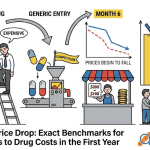
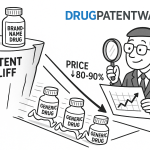
The generic price erosion curve is one of the most documented phenomena in pharmaceutical economics. The pattern is consistent across therapeutic categories and market eras: each additional competitor reduces average market price in a nonlinear, accelerating fashion. The first generic entrant prices at approximately 60-70% of brand WAC and captures a large share of the market. The second entrant forces prices down further. By the time the market has four to six competitors, pricing has typically settled at 10-20% of the original brand price, sometimes lower for high-volume commodity generics.
Number of Generic Competitors
Approximate Price vs. Brand WAC
Typical Time to This Stage
Margin Environment
1 (First-to-file, exclusivity)
60-70%
Day 1 of launch
High margin; temporary duopoly
2
45-54%
180 days post first launch
Margin compression begins
3-5
20-40%
6-18 months post LOE
Commoditization phase; COGS discipline critical
6-10
10-20%
18-36 months post LOE
Volume-driven; only low-cost operators survive
10+
5-13%
3+ years post LOE
Near-commodity; margin depends entirely on manufacturing cost
Authorized Generics: Modeling the Triopoly Scenario
An authorized generic (AG) is the innovator’s own product, sold through a subsidiary or licensing partner under a generic label, using the original NDA rather than an ANDA. Because it requires no new regulatory approval, a brand company can launch an AG on the same day the first-filer enters the market. This converts the expected duopoly (brand + first-filer generic) into a triopoly (brand + AG + first-filer generic), fundamentally altering the economics of the 180-day exclusivity window.
The Federal Trade Commission’s analysis of authorized generic market dynamics found that AG presence during the 180-day exclusivity period reduces the first-filer generic’s revenues by approximately 40-52% relative to a no-AG scenario. The mechanism is pricing pressure: the AG, carrying the brand’s manufacturing cost advantage and quality reputation, typically prices between the brand WAC and the first-filer generic, capturing the segment of the market most willing to pay a modest premium for a familiar product.
No-AG agreements, where a brand company commits in a settlement agreement not to launch an authorized generic during the first-filer’s exclusivity period, were historically a common component of pay-for-delay settlements. FTC antitrust enforcement and the Supreme Court’s 2013 Actavis decision, which held that reverse-payment settlements are subject to antitrust scrutiny, have reduced but not eliminated this practice. When evaluating a P-IV opportunity, your financial model must run two scenarios explicitly: one in which no AG launches, and one in which an AG launches on day one of your exclusivity period. The expected value of the opportunity should be a probability-weighted blend of those scenarios, not the optimistic no-AG case alone.
A 2024 Health Affairs analysis found that AG launches have been declining as a share of first-filer markets over the past decade, partially due to the legal risk associated with pay-for-delay arrangements and partially because brand companies have shifted toward deploying AGs selectively in categories where they retain significant brand loyalty rather than routinely deploying them against all P-IV challengers. This trend is product-specific and brand-specific; it does not eliminate the AG risk but does create space for a more nuanced probability assessment than a blanket assumption of AG launch.
PBM and GPO Dynamics: The Formulary Access Battle
Three PBMs, CVS Caremark, Express Scripts (Cigna), and OptumRx (UnitedHealth), collectively control formulary access for approximately 80% of commercially insured U.S. prescription volume. Three GPOs, Vizient, Premier, and Intalere (now part of Vizient), control purchasing for approximately 90% of hospital and clinic generic drug volume. These six organizations are the actual gatekeepers of market access for most generic launches.
PBM formulary placement for generics operates differently than for brands. Brand formulary negotiations revolve around rebate negotiations, where manufacturers pay rebates to PBMs for preferred tier placement. Generics pay minimal or no rebates; their value proposition is lowest net cost. The complication is that PBM business models have historically been structured around retaining a spread between what they charge plan sponsors and what they pay pharmacies, a practice known as ‘spread pricing.’ In categories where the spread is thin, PBMs have incentive to create pricing complexity that benefits themselves at the expense of both manufacturers and patients.
GPO contracting for hospital generics operates on a competitive bid structure. Generic manufacturers submit pricing for inclusion on contracted product lists, typically at fixed or tiered prices valid for one to three year contract periods. The winning bid on a major GPO formulary for a high-volume hospital generic can secure hundreds of millions in committed volume. The losing bid loses access to that channel for the contract duration. GPO contracting requires a pricing discipline that balances the need to win the bid against the need to maintain margin through the contract period as manufacturing costs evolve.
The essential message for generic commercialization teams is that formulary access is not automatic, even for the lowest-priced product. PBMs have sufficient purchasing power to exclude any individual generic from preferred placement. Building relationships with medical affairs and formulary committee staff at PBMs, demonstrating supply reliability, and presenting a credible total-cost-of-care argument (not just a WAC price comparison) are prerequisites for favorable placement in competitive categories.
Stakeholder Communication: The Reliability Value Proposition
Generic marketing does not create demand for a new therapy. It drives substitution of an existing one. The messages required by each stakeholder segment differ in technical depth but share a common underlying value proposition: this product is safe, equivalent to the brand, and will be available when you need it.
Physicians who have prescribed a brand for years have an ingrained familiarity with that product’s clinical profile. The message to physicians should be grounded in FDA’s therapeutic equivalence ratings, specifically the ‘AB’ rating that designates a generic as substitutable for the brand in all patient populations. AB-rated products have passed the same bioequivalence standard regardless of the dosage form’s complexity. Detailing teams should be prepared to address questions about formulation differences (which are irrelevant to therapeutic equivalence), about patient-specific concerns like pediatric or geriatric populations, and about product stability and storage.
For hospital pharmacists and pharmacy directors, the dominant concerns are formulary compliance, supply reliability, and total acquisition cost. A generic entrant that can demonstrate a track record of zero drug shortage notifications in its commercial history, a dual-source API supply, and a committed service level agreement for fill rates is presenting a fundamentally different value proposition than a competitor whose selling point is a one-cent-per-unit price advantage. Hospital systems that have experienced the operational burden of managing a drug shortage, including staff time, gray-market purchases, and clinical substitution protocols, place quantifiable value on supply reliability that exceeds what standard price comparisons capture.
Key Takeaways
• The 180-day exclusivity window is the highest-revenue period a generic product will ever have. It must be managed with the same intensity as a brand launch, including supply readiness, channel contracts, and pricing strategy, all executed before day one.
• AG launch probability must be modeled explicitly in P-IV ROI analysis. A 40-52% revenue reduction in the exclusivity period fundamentally changes the investment case for many targets.
• PBM formulary placement requires demonstrating supply reliability and total-cost-of-care value, not just WAC price. Companies without a supply reliability story cannot compete effectively for preferred formulary status.
• GPO contracting determines hospital channel access for one to three year periods. A winning bid secures committed volume; a losing bid forfeits the channel for the contract term.
Investment Strategy
→ In revenue forecasting for first-to-file exclusivity products, run three scenarios: no-AG launch (full duopoly), AG launch on day one (triopoly), and AG launch at month three of exclusivity. Weight the scenarios by historical AG frequency for that brand category and by the company’s historical behavior.
→ A generic company’s GPO contract win rate is a proprietary competitive intelligence indicator. Companies with preferred status on all three major GPO formularies have a structural volume advantage in the institutional channel that is not visible in standard market share data.
Strategy 5: Build a Portfolio That Generates Cash Today and Wins Tomorrow
No single product strategy survives long-term in the generic industry. Markets commoditize, competitors multiply, and manufacturing costs eventually exceed revenues in saturated segments. Sustainable generic businesses require portfolio architecture: a deliberate mix of product types, maturity stages, and competitive positions that generates current cash flow while funding the next generation of high-value launches.
The Simple vs. Complex Portfolio Balance
Simple generics, oral solid dosage forms including immediate-release and standard modified-release tablets and capsules, remain the revenue foundation of most generic companies. They require shorter development timelines ($2-8M in development cost), lower bioequivalence study complexity, and more predictable regulatory pathways. Their weakness is low barriers to entry: any competent generic manufacturer can file an ANDA for a simple oral solid, which means markets routinely attract eight to fifteen competitors and commoditize within 18-24 months of patent expiration.
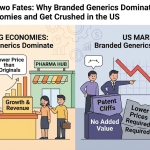
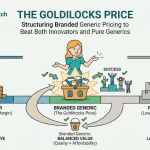
Complex generics carry development costs of $15-40M and regulatory programs that span five to seven years, compared to three to four years for simple generics. However, their competitive fields are narrow. A complex inhaler product in the U.S. might see two to four generic competitors even years after patent expiration, not because of legal barriers but because the scientific and manufacturing capabilities required to demonstrate device equivalence and formulation equivalence simultaneously are held by very few companies. Pricing in these markets remains durable at 30-50% of brand WAC rather than 5-15%, generating gross margins that are categorically different from the commodity oral solid space.
The portfolio allocation logic that follows from this analysis is a venture capital model applied to pharmaceutical development. Simple generics generate predictable, lower-margin cash flows that fund operations and maintain manufacturing utilization. Complex generics absorb that capital through long development programs and generate asymmetric returns when successful. A portfolio without simple generics lacks the cash flow to fund complex development. A portfolio without complex generics lacks the upside to compensate for simple generic margin erosion over time. The ratio of spend allocation is company-specific, but leading generic manufacturers by market capitalization consistently allocate 30-50% of R&D budgets to complex and specialty generic categories.
Biosimilar Strategy: The Next Frontier in Patent-Cliff Opportunity
Biologic drugs, large-molecule therapies manufactured in living cell systems, account for approximately 40% of total U.S. drug spend by value. The next major patent expiration wave involves several of the best-selling biologics in history. Humira’s U.S. biosimilar market opened in 2023 and is being followed by Stelara (ustekinumab), Eylea (aflibercept), Dupixent (dupilumab), and multiple oncology biologics through the early 2030s. These represent a biosimilar opportunity of scale that dwarfs historical small-molecule patent cliffs.
Biosimilar development requires a structural departure from the ANDA paradigm. The regulatory pathway under Section 351(k) of the Public Health Service Act (the ‘biologic ANDA’ equivalent) requires a totality-of-evidence demonstration that the proposed biosimilar has no clinically meaningful differences from the reference product in terms of safety, purity, and potency. The development package typically includes extensive analytical characterization comparing the biosimilar’s structural and functional properties to the reference product (often called ‘fingerprint’ analysis), comparative nonclinical pharmacology studies, one or more clinical pharmacokinetic/pharmacodynamic studies, and often at least one comparative clinical efficacy and safety trial.
The further distinction between ‘biosimilar’ and ‘interchangeable biosimilar’ carries major commercial implications. An interchangeable biosimilar has met the additional evidentiary standard to demonstrate that it can be substituted at the pharmacy level without prescriber intervention, the same automatic substitution right that AB-rated small-molecule generics have had since Hatch-Waxman. Without interchangeability designation, biosimilar uptake depends on active prescriber switching rather than automatic pharmacist substitution, which is a materially slower adoption pathway. FDA has granted interchangeability to a growing number of biosimilars, and this designation is increasingly a standard commercial objective for biosimilar development programs.
The patent landscape for biologics is even more complex than for small molecules. AbbVie’s Humira portfolio, as noted above, contained over 132 patents. Amgen’s etanercept (Enbrel) and Roche’s bevacizumab (Avastin) similarly have dense secondary patent coverage on manufacturing processes, formulations, and dosing regimens. Biosimilar developers must conduct extensive patent clearance work using the 12-step ‘patent dance’ process established under the Biologics Price Competition and Innovation Act (BPCIA), a structured information exchange between the biosimilar developer and the reference product sponsor that is intended to resolve patent disputes before commercial launch but which has generated substantial litigation of its own.
Technology Roadmap: AI, Continuous Manufacturing, and 3D Printing
Artificial intelligence applications in generic drug development fall across several distinct functional areas. In formulation development, machine learning models trained on historical formulation data can predict which excipient combinations are likely to achieve acceptable bioequivalence outcomes before a single tablet is made, reducing experimental cycles by 30-60% in published pilot studies. In regulatory affairs, natural language processing tools are being applied to FDA Complete Response Letter databases and historical ANDA review correspondence to identify the most common submission deficiencies by drug type and dosage form, enabling proactive remediation before submission. In supply chain management, AI-driven demand forecasting models that incorporate real-time payer claims data, competitor launch intelligence, and clinical pipeline information are producing forecast accuracy improvements of 15-25% compared to historical time-series methods.
Continuous manufacturing is moving from pilot programs to standard commercial infrastructure at the largest generic manufacturers. The FDA’s emerging technology program has cleared multiple continuous manufacturing processes for oral solid dosage forms, and the agency has indicated that it will not impose additional regulatory burden on sponsors who adopt continuous manufacturing relative to equivalent batch processes. The capital investment in a continuous manufacturing line for oral solids ranges from $15-50M depending on scale and automation level. The operational savings, including reduced cycle time from weeks to hours, lower labor costs, and improved quality consistency, typically produce payback periods of five to eight years for high-volume products.
3D printing for pharmaceuticals, while still a niche technology, has demonstrated specific utility for personalized dosing applications, complex release profiles that are difficult to achieve with conventional tableting, and pediatric formulations requiring precise low doses. The FDA approved the first 3D-printed drug product (Spritam, levetiracetam) in 2015. In the generic context, 3D printing’s primary near-term application is in complex generics that require unusual physical architecture, such as porous matrix systems for extended release, rather than high-volume commodity production.
Once products are launched, the portfolio requires systematic monitoring to prevent both complacency (failing to defend winning products) and distraction (continuing to allocate resources to products that have already commoditized beyond profitability). A KPI dashboard for a generic portfolio should cover four domains: financial health, market and commercial performance, R&D and regulatory pipeline, and supply chain operational resilience.
Domain
Key Performance Indicator
Target Direction
Strategic Question
Financial Health
Portfolio Gross Margin by Product Tier
Stabilize / Increase
Which product segments are maintaining pricing power?
Financial Health
Return on Research Capital (RORC)
Increase
Are R&D investments generating adequate commercial returns?
Financial Health
COGS as % of Net Revenue
Decrease
Is manufacturing efficiency keeping pace with price erosion?
Market & Commercial
Market Share by Product and Channel
Stabilize / Increase
Where are we losing share and why?
Market & Commercial
Price Erosion Rate vs. Forecast
Align with model
Is market entry timing matching our competitive models?
Market & Commercial
New Product Launch Revenue vs. Target
Increase
Is the pipeline converting to commercial revenue on schedule?
R&D & Regulatory
Active ANDA Pipeline Count by Stage
Increase (early stages)
Is the pipeline deep enough to sustain five-year revenue goals?
R&D & Regulatory
First-Cycle Approval Rate
Increase toward 80%+
Is submission quality improving or declining?
R&D & Regulatory
Average ANDA Cycle Time
Decrease
Are regulatory bottlenecks being identified and resolved?
Supply & Operations
Order Fill Rate by SKU
Maintain 98%+
Which products are at stockout risk?
Supply & Operations
Single-Sourced API % of Portfolio
Decrease below 20%
Where is supply chain concentration risk highest?
Supply & Operations
Quality System Audit Score
Increase
Is manufacturing quality management improving?
Emerging Markets: The Next Volume Engine
The United States, European Union, and Japan have historically represented the large majority of pharmaceutical revenues. That distribution is shifting. India, China, Brazil, Mexico, South Africa, and Southeast Asia are projected to account for an increasing share of pharmaceutical volume growth through the 2030s, driven by expanding middle-class populations, improving healthcare infrastructure, and government programs expanding medication access. These markets are attractive for generic manufacturers because they are underserved by high-cost originator products and because many governments actively prefer domestic or low-cost sourcing for their public formularies.
Entering emerging markets requires a regulatory strategy that extends well beyond FDA. Each country has its own regulatory authority, and data requirements vary substantially. Brazil’s ANVISA, India’s CDSCO, South Africa’s SAHPRA, and the Southeast Asian registration authorities each have distinct data standards for bioequivalence, labeling, and manufacturing certification. Mutual recognition agreements between certain regulators (EU mutual recognition, for example) can reduce redundant data requirements, but these agreements do not extend to most emerging market jurisdictions. A company entering five emerging markets for a single product must plan for five distinct regulatory submissions, five distinct inspection programs, and five distinct post-market surveillance obligations.
The commercial model in emerging markets typically differs from the developed-market model in critical ways. Tender-based procurement, where government agencies award volume contracts based on competitive bids, dominates public market access in Brazil, India, South Africa, and much of Southeast Asia. Winning a national tender can deliver significant volume but at prices that make the U.S. generics market look luxurious by comparison. The business case for emerging markets rests on volume, not margin, and requires manufacturing cost structures that are substantially lower than what is needed to compete profitably in the U.S. market.
Key Takeaways
• Portfolio balance between simple and complex generics is a capital allocation decision, not a product development decision. Simple generics fund operations; complex generics fund growth.
• Biosimilar interchangeability designation is not a regulatory formality. It is the commercial differentiator that enables automatic pharmacy substitution. Without it, biosimilar uptake depends on active prescriber behavior change, which is a significantly slower adoption curve.
• The BPCIA ‘patent dance’ creates structured information exchange obligations before biosimilar launch. It is a litigation trigger mechanism as much as a dispute resolution mechanism. Biosimilar developers need dedicated IP counsel experienced in BPCIA patent dance procedure.
• AI-driven formulation prediction, regulatory submission optimization, and supply chain forecasting are each at the stage of generating documented efficiency improvements. They are not speculative future capabilities.
• First-cycle ANDA approval rate is the highest-leverage regulatory KPI. A 10-percentage-point improvement in first-cycle approval rate has a direct, quantifiable impact on time-to-revenue and on the probability of capturing 180-day exclusivity.
Investment Strategy
→ When evaluating a generic or biosimilar company for investment, apply a ‘pipeline quality score’ that weights each ANDA by (a) probability of first-cycle approval based on dosage form complexity, (b) probability of first-to-file exclusivity based on P-IV certification status, (c) expected AG-risk-adjusted 180-day revenue, and (d) post-exclusivity revenue durability based on competitive landscape at the molecule level.
→ Biosimilar interchangeability designation is an undervalued commercial asset in most buyside models. Interchangeable biosimilars can access automatic pharmacy substitution channels that non-interchangeable biosimilars cannot. This creates a product-specific revenue premium worth modeling explicitly.
→ Companies with established commercial infrastructure in two or more emerging markets carry a market entry cost advantage that is not easily replicated. A network of regulatory dossiers, local partnerships, and tender relationships is a durable competitive asset for companies targeting volume-based international growth.
Frequently Asked Questions
What is the single costliest mistake in generic launch planning?
Filing an ANDA without completing a comprehensive Freedom-to-Operate analysis. Companies that identify a patent expiration date, verify it against the Orange Book, and immediately begin development routinely encounter secondary patents, pediatric exclusivities, or NCE exclusivity extensions that block their planned launch window. The FTO analysis, including claim-level assessment of every Orange Book-listed and potentially applicable non-listed patent, must precede any significant development spend. The cost of discovering a blocking patent after filing is vastly higher than discovering it before.
Is it still possible to build a profitable business on simple oral solid generics?
Yes, but only at operational scale and with relentless COGS discipline. Companies generating over $2 billion in annual generic revenues from primarily oral solid portfolios, including certain divisions of Teva, Mylan (now Viatris), and Aurobindo, remain profitable in this space because they manufacture at volumes that generate fixed-cost leverage and because they source APIs at scale pricing that smaller competitors cannot access. For a mid-sized company, an oral-solid-only portfolio is not a growth strategy. It is a cash generation strategy that must be paired with a meaningful allocation to complex generics to sustain long-term growth.
How should a mid-sized generic company approach biosimilar development?
The build-versus-buy question for biosimilar capabilities is nearly always resolved in favor of partnerships for mid-sized companies. Establishing an internal cell line development capability, protein characterization infrastructure, and clinical trial execution platform for biosimilars requires $200-400M in cumulative capital over five to eight years. Most mid-sized generics cannot absorb that investment while maintaining their existing business. The practical alternatives include co-development agreements with biologic CDMOs (Contract Development and Manufacturing Organizations) that provide the technical infrastructure in exchange for manufacturing revenue at commercial scale, licensing agreements with smaller biotech firms that have completed the development phase but lack commercial infrastructure, and acquisition of late-stage biosimilar programs from companies that have run out of capital before reaching commercial scale.
How does the Inflation Reduction Act change generic launch economics?
The IRA’s Medicare price negotiation program compresses the brand price of selected drugs before generic entry, reducing the revenue base over which first-filer exclusivity premiums are calculated. For drugs on the negotiated price list, the brand’s Medicare price may be 25-60% below its commercial WAC by the time a generic enters. This reduces the market size for both the brand and the generic in the Medicare Part D channel specifically, though it does not directly affect commercial insurance or self-pay channels. Generic developers should model IRA negotiation probability into their revenue forecasts for any ANDA target with significant Medicare utilization. Conversely, drugs selected for IRA negotiation are by definition high-spend, high-utilization products, confirming their status as high-value generic targets even with compressed Medicare pricing.
Where is AI in generic drug development today versus hype?
Machine learning for formulation prediction is past the pilot stage and generating documented cycle time reductions at companies including Pfizer, Novartis, and several generic manufacturers with disclosed AI development programs. NLP-based ANDA review analytics are being deployed by regulatory consulting firms and are in commercial use at a small number of larger generic companies. AI-driven demand forecasting using real-time payer data is commercially available from multiple vendors and is being adopted broadly across the industry. The areas that remain at the research stage include end-to-end automated formulation design without human expert review, real-time in silico bioequivalence prediction that would replace human clinical studies, and fully autonomous supply chain response systems. The gap between the documented applications and the speculative ones is significant, and generic executives should distinguish between the two when evaluating technology investment proposals.
The Five Disciplines: A Strategic Summary
Winning in the generic drug market requires five capabilities operating in parallel, not sequentially. Legal intelligence must feed regulatory planning. Regulatory timelines must drive manufacturing investment. Manufacturing capability must be ready before approval. Commercialization strategy must be built before launch. Portfolio decisions must be made years before the capital is deployed.
Strategy
Core Capability
Primary Risk if Neglected
Key Metric
1. Patent Gauntlet
FTO analysis + P-IV litigation execution
Blocked launch; forfeited exclusivity
180-day exclusivity capture rate
2. Regulatory Execution
First-cycle ANDA approval discipline
CRL / RTR; competitor captures exclusivity
First-cycle approval rate
3. Supply Chain Resilience
API diversification; safety stock strategy
Stockout; lost market share; GPO delisting
Order fill rate; shortage notifications
4. Commercialization
Formulary access; AG-risk pricing model
Revenue compression beyond forecast
180-day revenue vs. model; market share
5. Portfolio Architecture
Simple/complex balance; biosimilar pipeline
Margin erosion without growth assets
RORC; complex generic % of pipeline
The companies that will define the next decade of the generic industry are those treating legal strategy, regulatory science, supply chain management, commercial execution, and portfolio architecture as integrated disciplines rather than separate department functions. The market rewards integration. It punishes silos.
The generic drug market does not reward the cheapest manufacturer. It rewards the most capable one.
This analysis is intended for informational purposes and does not constitute legal, regulatory, or investment advice. Patent and regulatory landscapes are subject to change. Consult qualified legal and regulatory counsel before making launch decisions. Market data derived from publicly available sources including FDA, FTC, IQVIA, and independent research firms.