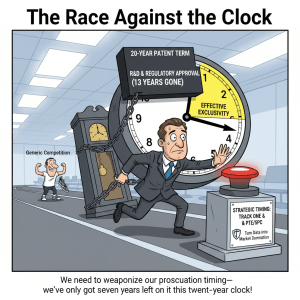
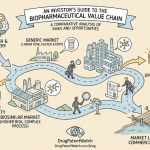
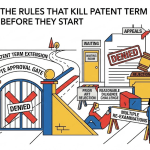
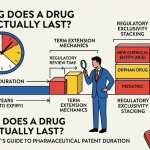
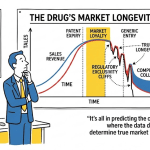
The 20-year patent term is the most cited number in pharmaceutical business strategy. It is also, in practice, a fiction. By the time a drug clears FDA review, the company behind it has typically burned through 12 to 15 years of that term on R&D and regulatory work, leaving a commercial window of 7 to 12 years. On a blockbuster molecule with $3 billion to $4.5 billion in development costs sitting on the ledger, those remaining years are not abstract legal milestones. They are the entire return-on-investment thesis.
That compression is the central problem pharmaceutical IP strategy exists to solve. The tools for solving it, including prosecution timing, accelerated examination pathways, term extension mechanisms, and coordinated international filing sequences, are operational variables that legal, R&D, and finance teams can actually control. The companies that treat these variables as passive administrative timelines leave revenue on the table. The ones that treat them as engineered levers are the ones that consistently extract superior commercial value from equivalent science.
This guide covers every major lever in detail, across the four dominant patent jurisdictions: the USPTO, the EPO, China’s CNIPA, and the JPO. It includes the mechanics of each system, the data on real-world timelines, specific IP valuation implications, and the cross-border overlay strategies that tie everything together.
The Effective Patent Life Problem: Why 20 Years is Really 9
Before getting into jurisdiction-specific tactics, it is worth anchoring the entire strategic discussion in the core economic reality.
The statutory patent term under both U.S. law (35 U.S.C. § 154) and the TRIPS Agreement runs 20 years from the filing date of the earliest non-provisional application. But the clock on that 20 years starts the moment the application is filed, often 10 to 13 years before the drug reaches pharmacy shelves. Preclinical work, IND-enabling studies, Phase I, II, and III trials, and the FDA review period itself all consume patent life before a single prescription is written.
The result is that the average effective patent life for a new molecular entity, meaning the actual period of post-approval market exclusivity still covered by a patent, runs approximately 11 to 12 years, with a meaningful subset falling below 9 years when prosecutions are delayed. For biologics with complex manufacturing validation requirements, the number can be worse. For drugs that require companion diagnostic development or post-market studies as a condition of approval, pressure on the effective patent window is even more acute.
The financial consequence is direct. Each additional year of exclusivity on a drug generating $2 billion in annual revenue is worth roughly $1.3 to $1.5 billion in net present value, discounted at a typical pharma WACC of 8 to 10 percent. A two-year extension from a well-structured patent term restoration filing can represent more enterprise value than most mid-size biotech acquisitions. A two-year shortfall from a mismanaged prosecution adds an equally sized hole to the revenue forecast, which is why pharmaceutical IP now sits on the CFO’s dashboard alongside clinical trial milestone probability estimates.
Key Takeaways
The effective patent life problem is not a legal technicality. It is the primary economic constraint on pharmaceutical R&D returns. Companies that systematically measure and optimize effective patent life, rather than managing prosecution as a cost center, operate with a structural financial advantage over those that do not. Portfolio managers valuing a pharma pipeline asset should model effective patent life explicitly, not proxy it from the patent filing date.
Investment Strategy Note
When analysts model a drug’s revenue curve for a DCF, most use the nominal patent expiry date as the exclusivity end point. The more accurate approach is to model the date of anticipated generic entry, which is a function of the primary patent’s expiration date, any patent term extension grants, the Orange Book listing and pediatric exclusivity status, and the historical Paragraph IV challenge rate in that therapeutic class. A drug with a nominal expiry of 2031 but no PTE filing and an active Paragraph IV challenge from a well-capitalized generic manufacturer may face at-risk generic entry in 2029. The delta between those two dates can swing a valuation model by 15 to 20 percent.
The USPTO: Flexibility, Complexity, and the Two-Year Penalty for Slow Prosecution
How the Prosecution Timeline Actually Works
The standard USPTO prosecution sequence for a pharmaceutical patent has four operative phases that a strategist needs to understand quantitatively, not just procedurally.
A provisional patent application (PPA) opens the sequence. It costs less, requires no formal claim set, and most critically, establishes a priority date without starting the 20-year term clock. The PPA gives an organization 12 months to continue development work, run additional assays, lock down manufacturing parameters, or close a licensing deal before committing to the formal prosecution process. For a biotech company with a promising lead compound but incomplete in vivo data, that 12-month window is often what separates a defensible filing from a premature one.
The non-provisional application, filed within 12 months of the PPA to claim priority, starts the 20-year term clock. The application is published 18 months after the earliest priority date regardless of prosecution status, which is why patent publication remains the most reliable early-warning signal in competitive intelligence. A competitor’s first PCT publication, timed 18 months after their provisional, tells you what they were working on more than a year before they filed anything that required substantive examination.
From the non-provisional filing, the average wait to a first office action at the USPTO is currently 23.3 months across all technology classes. For chemical and pharmaceutical patents specifically, the figure is closer to 25.5 months. After the first office action, prosecution involves iterative rounds of examiner rejections and applicant responses. Most pharmaceutical patents require at least two rounds before reaching allowance or final rejection. When an applicant files a Request for Continued Examination (RCE) to reopen prosecution after a final rejection, total pendency extends substantially. The USPTO’s own dashboard shows that average total pendency for applications requiring at least one RCE is 30.3 months, compared to 22 to 24 months for those that proceed to allowance without an RCE.
That eight-month gap is analytically significant. An applicant resorting to an RCE typically faces one of three underlying problems: initial claims were over-broad relative to the prior art, the specification lacked sufficient support for the claimed scope, or the invention sits in a technology art unit where examiners are applying particularly rigorous scrutiny to claim language. All three scenarios affect not only prosecution speed but patent quality, meaning the resulting patent is more vulnerable to post-grant challenge through Inter Partes Review (IPR) at the Patent Trial and Appeal Board. A competitor watching a rival’s USPTO prosecution and seeing a pattern of multiple RCEs is observing a patent family with elevated vulnerability, useful intelligence whether the context is freedom-to-operate analysis or litigation strategy.
IP Valuation Implications of USPTO Prosecution Dynamics
A patent’s value as a balance sheet asset in pharmaceutical M&A is not binary. Buyers in pharma acquisitions run detailed patent due diligence that examines prosecution history for indicators of quality: were there voluntary amendments that narrowed claims significantly? Did the applicant use continuation applications to capture additional embodiments? Are there prosecution history estoppel issues that might limit claim scope in litigation?
A prosecution history showing Track One acceleration to a rapid, clean allowance with minimal amendments generally commands a premium interpretation. A prosecution history showing four office action rounds, two RCEs, substantial claim narrowing, and argumentation that limits the claims’ equivalents doctrine reach commands a significant discount. For a drug generating $500 million in annual U.S. revenue, the difference in patent quality can shift the acquirer’s bid by hundreds of millions of dollars.
Patent Term Adjustment: Clawing Back USPTO-Caused Delays
Patent Term Adjustment (PTA) compensates patent holders for delays caused by the USPTO during prosecution. The statutory framework under 35 U.S.C. § 154(b) sets specific response deadlines for the Office: issue a first office action within 14 months of filing, respond to applicant submissions within four months, and achieve total pendency within three years. Every day the USPTO misses these benchmarks generates a PTA day added to the patent’s term at the back end.
PTA is not free money. The statute also deducts days attributable to applicant delay. Taking the full three-month response period allowed on an office action rather than responding in two weeks costs PTA days. Filing an extension of time costs PTA days. Using an RCE costs PTA days for the period between the filing of the RCE and a subsequent office action. The net PTA on a pharmaceutical patent can range from zero to more than two years, depending on the interplay between USPTO delays and applicant response behavior.
For prosecution strategy, this creates a direct incentive to respond promptly to office actions while monitoring USPTO compliance with its own deadlines. Patent prosecutors at sophisticated firms track USPTO pendency in their assigned art units against the statutory benchmarks and file PTA petitions proactively when the Office falls behind. Over a portfolio of 40 patents covering a major drug, accumulating an average of six additional months of PTA per patent through disciplined prosecution management can be worth well over $1 billion in aggregate exclusivity value.
Patent Term Extension Under Hatch-Waxman: The Primary Instrument
Patent Term Extension (PTE) under the Drug Price Competition and Patent Term Restoration Act of 1984 is the most commercially significant timing provision in U.S. pharmaceutical patent law. It exists specifically to compensate innovators for the time a patent cannot be commercially exploited because the drug is under FDA regulatory review.
The PTE calculation credits the patent holder with half the time in the clinical trial (IND) phase and the full duration of the FDA review (NDA or BLA) phase. The resulting extension is capped at five years, and the total remaining term post-extension cannot exceed 14 years from FDA approval. Only one patent per approved product can receive a PTE, and the patent must relate to the product, a method of using the product, or a method of making the product.
The 60-day filing window after FDA approval is a hard deadline. Missing it forfeits the extension entirely. Given that a five-year extension on a blockbuster drug can represent $10 billion or more in additional revenue in present value terms, the 60-day deadline should be calendared by legal, regulatory affairs, and executive teams simultaneously, with backup contacts identified for each.
One underappreciated consideration is which patent to select for PTE when a drug is covered by multiple patents. The optimal selection depends on which patent has the greatest commercial vulnerability to generic challenge (generally, selecting the patent with the broadest composition claims), which patent expires latest relative to market maturity, and whether any of the candidate patents are subject to terminal disclaimers that link their expiration to another patent in the family. These are not always the same answer, and the selection decision should involve structured analysis rather than defaulting to the first composition patent filed.
Track One Prioritized Examination: When Speed is Worth $4,515
The USPTO’s Track One program grants prioritized examination status in exchange for a fee ($4,515 for large entities, $2,258 for small entities, and $903 for micro-entities as of 2025). The program caps applications at four independent claims and 30 total claims, prohibits multiple dependent claims, and removes Track One status immediately if the applicant requests any extension of time to respond to an office action.
The performance data is exceptional. The USPTO reports average pendency from Track One petition grant to final disposition of 4.5 months as of fiscal year 2025. Track One applications have an 87 percent allowance rate, compared to 77 percent for standard filings. For a pharmaceutical patent covering a drug approaching FDA approval, that 18-to-24-month acceleration can mean having a granted patent in the Orange Book before the first Abbreviated New Drug Application (ANDA) filer submits a Paragraph IV certification, which materially strengthens the innovator’s Hatch-Waxman litigation position.
Track One is not appropriate for every asset. The claim count limitations constrain filing strategy, and the prohibition on time extensions demands that prosecution counsel be fully prepared at filing and able to respond to any office action within the standard deadline. For platform technology patents covering broad mechanistic claims where the right scope will only become clear through prosecution dialogue, Track One’s compressed timeline can result in a weaker final claim set than a more deliberate prosecution would produce. The program is best reserved for specific high-value product patents, formulation patents, or method-of-treatment patents where the commercial landscape and the prior art are well understood and the goal is speed to enforcement, not breadth.
Key Takeaways
U.S. prosecution strategy has two distinct levers for maximizing exclusivity: PTA (compensating for USPTO delays during prosecution) and PTE (compensating for FDA regulatory review time post-prosecution). They operate independently and should both be tracked as live financial assets in any portfolio model. Track One’s 4.5-month average to final disposition is the fastest path to an enforceable patent in the U.S. system, but it trades claim flexibility for speed, a trade-off that requires asset-specific analysis.
Investment Strategy Note
When conducting pharmaceutical patent due diligence pre-acquisition, request prosecution histories for all Orange Book-listed patents, not just the granted patent files. The prosecution history shows applicant arguments made to distinguish prior art, which creates prosecution history estoppel limiting the claims’ scope in future infringement litigation. A composition claim that required the applicant to explicitly disclaim certain structural variants during prosecution to overcome an examiner rejection is narrower in practice than its text suggests, even if the text looks broad. Post-grant IPR petitions that successfully cancel claims rely heavily on exactly this kind of prosecution history analysis.
The EPO: Three to Five Years, Strict Plausibility, and the SPC as a Separate Asset Class
Why the EPO Takes Longer and Why That Matters Commercially
The European Patent Office operates on a fundamentally different model than the USPTO. Where the USPTO conducts parallel search and examination, the EPO separates them. An application enters a search phase first, producing a European Search Report accompanied by a preliminary opinion on patentability. Then, the applicant requests examination, and a three-member Examining Division conducts substantive review in a process that routinely runs three to five years from filing to grant, with published data from third-party analyses identifying average pendency closer to 5.5 years for complex pharmaceutical applications.
The length reflects deliberate institutional design. The EPO’s mandate is quality. European patent grants face re-examination in national opposition proceedings within nine months of grant, and the EPO’s Boards of Appeal further scrutinize contested grants. A grant that survives EPO examination and opposition tends to be durable. For a pharmaceutical innovator, that durability matters: European patents covering major drugs are litigated in national courts across Germany, the UK (post-Brexit via its own system), the Netherlands, France, and increasingly through the Unified Patent Court (UPC), which began operations in June 2023 and covers most EU member states through a single, centralized forum.
The UPC introduces a new strategic dimension. A European patent validated as a Unitary Patent through the new system provides uniform coverage across participating member states in a single filing and maintenance payment. The downside is that a central UPC revocation action can invalidate coverage across all member states simultaneously, creating portfolio concentration risk that did not exist under the prior national validation system. For a drug with significant European revenue, the choice between Unitary Patent protection and traditional national validation in individual jurisdictions is a genuine risk management decision, not a mere procedural default.
The Plausibility Doctrine: Europe’s Front-Loaded Data Requirement
The EPO’s ‘plausibility’ doctrine is the single most consequential doctrinal difference between European and U.S. patent law for pharmaceutical innovators. The doctrine emerged from EPO case law and was substantially confirmed by the EPO Enlarged Board of Appeal in G2/21 (Sumitomo), issued in 2023. Its practical effect: a technical effect relied upon to support inventive step must have been made plausible by the application as filed.
This matters because pharmaceutical innovation rarely produces complete efficacy data at the moment a patent is first filed. The race to the patent office incentivizes early filing. The plausibility doctrine penalizes filing before sufficient data exists. If an application claims a compound for treating a specific condition but contains only in vitro binding data without in vivo efficacy evidence, and the inventive step argument rests on that therapeutic use, the EPO Examining Division will very likely find the claimed technical effect implausible, regardless of what in vivo data the applicant later generates and tries to submit.
Post-filing data can be submitted during prosecution in limited circumstances, specifically to confirm an effect already made plausible by the original disclosure. It cannot introduce or establish plausibility that the application itself did not create. The G2/21 decision clarified this boundary but did not resolve every edge case, and national courts interpreting European patents under their own rules have not all converged on identical plausibility standards.
For a U.S.-centric biotech company accustomed to filing provisionals early and supplementing with data during the 12-month provisional period or even during non-provisional prosecution, this doctrine requires a fundamental rethinking of EPO filing timing. The optimal EPO filing date is typically six to twelve months later than the optimal USPTO filing date for the same compound, pushed back to a point where at least one well-designed animal model study supporting the core therapeutic claim is complete and includable in the specification. The cost of that timing discipline is a later European priority date with corresponding exposure to intervening prior art. That trade-off must be modeled explicitly for each asset.
Supplementary Protection Certificates: A Separate IP Right, Not an Extension
European Supplementary Protection Certificates are not an extension of the underlying patent term. They are a distinct sui generis IP right, established under EU Regulation 469/2009, that takes effect the day after the basic patent expires. This structural difference from U.S. PTE is commercially meaningful and is frequently misunderstood in cross-border portfolio valuations.
The SPC duration formula is: (Date of First EEA Marketing Authorization) minus (Date of Patent Filing) minus 5 years. The result is capped at five years of SPC term. A pediatric extension of six months is available if the drug has been studied under a Paediatric Investigation Plan agreed with the European Medicines Agency. The maximum combined SPC plus pediatric extension term is thus 5.5 years.
SPC applications are filed nationally, at the patent office of each member state where the patent is validated and where the marketing authorization is in force. Filing deadlines vary slightly by country but are generally within six months of marketing authorization. Missing the national deadline in any given country permanently forfeits the SPC in that country. For major markets like Germany, France, Italy, and Spain, each carrying nine-figure revenue potential for a blockbuster drug, the consequences of an administrative miss are severe.
An underappreciated strategic consideration is SPC selection when multiple patents cover a single product. EU regulations and national patent office practice limit each product to one SPC per patent, but a single patent can only generate one SPC. If a product is covered by a composition patent expiring in 2032 and a formulation patent expiring in 2034, the SPC can be based on either. The formulation patent may generate a longer effective extension in certain calculation scenarios. The optimal selection requires a jurisdiction-by-jurisdiction calculation because the marketing authorization dates that feed into the formula can differ across member states, particularly when centralized EMA authorization preceded national market launch.
PACE: Europe’s Free But Unforgiving Accelerated Examination Program
The EPO offers free accelerated prosecution through its Programme for Accelerated Prosecution of European patent applications (PACE). A PACE request, filed via EPO Form 1005, commits the EPO to issue its next communication within three months of the request. The program is available once during the search phase and once during examination.
The critical constraint is the no-extension rule. If an applicant requests any extension of time to respond to an EPO communication while PACE is active, the application is permanently removed from PACE for that phase. Unlike the USPTO’s Track One, where a request for extension of time simply ends program participation without other penalty, EPO removal from PACE cannot be appealed or reversed. An applicant who requests PACE and then needs more time to respond to a complex inventive step objection must make a real-time choice between maintaining PACE status and getting the response right.
For assets where European prosecution is proceeding along a clear, well-defined strategy, PACE is an obvious choice. It costs nothing and meaningfully accelerates the timeline. For complex pharmaceutical applications where inventive step arguments may require extensive claim drafting and technical expert input, the applicant should assess honestly whether they can commit to prompt responses before activating PACE.
Key Takeaways
The EPO’s plausibility doctrine, the structural complexity of SPC applications across multiple member states, and the no-extension constraint on PACE together create a prosecution environment that requires more front-loaded preparation than any other major jurisdiction. Filing a European pharmaceutical application without in vivo plausibility data and without a pre-filed national SPC calendar is a risk that experienced IP teams don’t take on blockbuster assets. The SPC, properly managed as a separate IP right, can represent the most valuable single IP asset in a European pharmaceutical portfolio.
Investment Strategy Note
When acquiring a European pharmaceutical business or licensing in-licensed rights, model the SPC portfolio separately from the underlying patents. Buyers frequently value SPCs as a simple extension of patent term without accounting for: SPC validity risks (national courts across Europe have diverged on certain SPC eligibility questions, particularly for combination products and biological molecules); the pediatric extension status and whether the PIP compliance documentation is complete; and the territorial scope of each SPC relative to the product’s actual European revenue geography. An SPC covering Germany, France, and Italy but not Spain or the Netherlands may represent 65 to 70 percent of a product’s total European revenue. Model each country explicitly.
CNIPA: The Speed Revolution, Dual-Filing, and China’s New Patent Term Deal
From Afterthought to First-Tier Jurisdiction
A decade ago, China was typically a second or third wave patent filing destination for Western pharmaceutical companies. Application quality was uneven, enforcement was uncertain, and the absence of patent term compensation for regulatory delays meant that filing early in China consumed patent life without the recovery mechanism available in the U.S. and Europe. That calculus has changed completely.
CNIPA processed approximately 16,000 invention patent examiners by 2024, deployed AI-assisted prior art search systems across multiple technology fields, and drove average pharmaceutical patent pendency from 22.2 months in 2019 to 16 months in 2023, with a 2025 target of 15 months or below. For context, a pharmaceutical patent filed simultaneously at the USPTO and CNIPA in 2024 will almost certainly be examined, granted, and appealable in China before the USPTO issues its first office action. China is now the world’s fastest major patent office for substantive examination of pharmaceutical applications.
The commercial context driving that policy investment is explicit. China’s National Healthcare Security Administration (NHSA) negotiates drug prices through its annual National Reimbursement Drug List (NRDL) inclusion process, and the Chinese hospital market for innovative drugs is growing at 8 to 12 percent annually. Multinational pharmaceutical companies that once launched in China two to three years after U.S. and European approval are now synchronizing global launches to protect Chinese patent life and qualify for first-wave NRDL pricing. That commercial shift and the underlying CNIPA policy reforms reinforce each other.
The Dual-Filing Strategy: Utility Models as a Rapid Enforcement Placeholder
China’s patent system offers two protection tiers for technical innovations: invention patents (发明专利) and utility model patents (实用新型专利). An invention patent undergoes full substantive examination and provides 20-year protection. A utility model undergoes only formal examination and provides 10-year protection, but grants within six to eight months of filing.
The dual-filing strategy, permitted under Chinese patent law when filed on the same day for the same invention, gives companies an enforceable utility model patent within a year while the longer-term invention patent application proceeds through full examination. The utility model can be cited in cease-and-desist letters, licensing negotiations, and customs recordation proceedings immediately upon grant. It functions as an enforcement placeholder that deters competitive entry during the 16-month invention patent examination period.
The strategy has well-documented limits. Utility models are not eligible for patent term compensation under the Supplemental Protection Period system. Their lower inventive step standard makes them more vulnerable to invalidity proceedings. And before the invention patent is granted, the applicant must elect either the utility model or the invention patent, abandoning the other. In practice, most well-resourced companies use the utility model for its enforcement window and then convert to the invention patent, which provides superior long-term protection. For a medical device, pharmaceutical formulation, or drug delivery technology where fast enforcement against Chinese manufacturers is a priority, the dual-filing strategy materially reduces the window of unprotected exposure.
Supplemental Protection Period: China Joins the Term Compensation System
China’s amended Patent Law, effective June 2021, introduced the Supplemental Protection Period (SPP), creating a pharmaceutical patent term compensation mechanism for the first time in Chinese IP history. The SPP applies to patents covering new chemical drugs, biological drugs, and traditional Chinese medicines, including product patents, process patents, and medical use patents.
The SPP formula mirrors the European SPC structure: (Date of NMPA Marketing Approval in China) minus (Date of Patent Filing) minus 5 years. The resulting extension is subject to a five-year cap and a 14-year post-approval total term cap identical to the U.S. PTE framework. Applications must be filed within three months of NMPA marketing approval, a tighter window than the 60-day U.S. deadline and the six-month European SPC deadline.
For companies managing simultaneous global launches, the three-month NMPA window requires pre-approval coordination between regulatory affairs and patent prosecution teams. A company that receives NMPA approval on Monday needs its patent attorneys to have the SPP application package substantially prepared by Thursday. The CNIPA implementing regulations specify documentation requirements that include a copy of the patent certificate, proof of marketing approval, and a calculation worksheet demonstrating the claimed extension period. Missing the three-month window has permanent consequences.
Beyond the mechanics, the SPP’s existence represents a structural shift in how China positions itself in the global pharmaceutical IP ecosystem. By matching the term compensation frameworks of the U.S. and Europe, China eliminated the primary argument that Western innovators historically used to deprioritize early Chinese filings: that patent life consumed during Chinese regulatory review was unrecoverable. With that argument gone, the commercial case for including China in the first wave of global product launches is now based entirely on market potential, which is substantial, rather than on whether IP protection economics make sense.
China’s Patent Linkage System: The Paragraph IV Parallel
The 2021 patent law amendments also established a pharmaceutical patent linkage system that parallels, with meaningful structural differences, the U.S. Hatch-Waxman framework. Under the Chinese system, NMPA maintains a patent database (analogous to the FDA’s Orange Book) where innovators can register qualifying patents covering approved drugs. Generic and biosimilar applicants referencing an innovator’s approved drug must declare their patent position: either that no relevant patents exist, that patents will expire before they seek approval, or that the referenced patents are invalid or will not be infringed.
A Category IV declaration (the equivalent of a U.S. Paragraph IV certification) triggers a 9-month stay of NMPA review of the generic application, during which the innovator can initiate patent litigation in Chinese courts. Unlike the U.S. system’s 30-month stay, which is automatic upon suit filing, the Chinese 9-month window provides a shorter litigation runway. Chinese courts have moved to adjudicate these cases with reasonable speed, though the evidentiary standards and claim construction approaches differ from U.S. practice in ways that require specialized counsel.
The practical effect is that Chinese pharmaceutical patent litigation is no longer a purely defensive exercise. With a functioning linkage system, SPP compensation, and an efficient CNIPA examination process, China has built a comprehensive pharmaceutical IP infrastructure. Companies that developed generic entry strategies premised on China being an IP-light environment are operating on outdated assumptions.
Key Takeaways
CNIPA’s 15-month examination target, the dual-filing strategy for rapid enforcement coverage, the SPP term compensation system, and the new patent linkage framework collectively make China a first-tier pharmaceutical IP jurisdiction. The filing strategy implications are direct: China belongs in the first wave of PCT national phase entries alongside the USPTO and EPO. The SPP three-month application deadline requires pre-approval preparation starting no later than the day NMPA approval is received.
Investment Strategy Note
When valuing a pharmaceutical company’s Asia-Pacific IP position, most analysts still apply a simple discount to Chinese patent assets relative to U.S. and European coverage. That discount may be appropriate for assets filed before 2021 that lack SPP eligibility, but it is increasingly wrong for post-2021 filings where SPP compensation and linkage protection are available. The Chinese oncology market alone exceeded $15 billion in 2024, making Chinese patent exclusivity economically significant on any drug with a strong oncology indication. Model Chinese patent life separately, with SPP compensation applied where eligible, and distinguish between pre- and post-2021 filings in any portfolio assessment.
The JPO: World-Class Efficiency, a Hard Three-Year Deadline, and Favorable PTE Math
Speed and Quality as Institutional Philosophy
The Japan Patent Office has explicitly stated its goal as achieving the world’s fastest and highest-quality patent examination. The data supports both claims. Average first action pendency from the request for examination is 10.1 months. Average total pendency from examination request to final disposition is 15.3 months. For applicants using the JPO’s accelerated examination programs, the average time to a first office action compresses to 2.7 months.
These numbers make the JPO the most time-efficient examination system among major pharmaceutical jurisdictions, faster than CNIPA and roughly twice as fast as the USPTO. For a company trying to sequence a global patent portfolio to maximize the value of Patent Prosecution Highway (PPH) benefits across jurisdictions, a rapid JPO allowance can be the starting point for an accelerated prosecution cascade across the U.S., Europe, China, and Korea.
The JPO’s examination quality is not merely a self-characterization. Post-grant invalidity rates for Japanese pharmaceutical patents in litigation are lower than in the U.S. or Germany, reflecting a rigorous pre-grant examination process. Japanese courts interpret claims with reference to prosecution history, as U.S. courts do, meaning a clean prosecution history with minimal amendments carries real value in enforcement proceedings.
The Three-Year Request for Examination: Portfolio Management’s Hard Constraint
Unlike the USPTO, where substantive examination begins automatically after filing and publication, the JPO requires a formal request for examination. That request must be filed within three years of the international filing date for PCT-originated applications, or within three years of the Japanese national filing date for direct filings. Missing this deadline means the application is irrevocably deemed withdrawn. There is no reinstatement provision for a missed examination request deadline in Japan.
This three-year window is simultaneously a constraint and a portfolio management tool. Companies with large PCT portfolios routinely file in Japan as part of a standard national phase entry package, then face a pipeline of examination request deadlines three years after each PCT filing date. The administrative cost of tracking these deadlines across hundreds of active applications is not trivial, and the consequences of a miss on a high-value asset are severe enough to warrant systematic calendar tracking with escalating alerts at six months, three months, and one month before each deadline.
From a strategic perspective, the mandatory decision point forces organizations to make an affirmative value assessment of each Japanese patent asset within three years of filing. Applications where the commercial case for Japanese protection has weakened, whether because the drug’s development has slowed, the Japanese market potential has been reassessed, or a competitor has established prior art that undermines the claims, can be abandoned without incurring ongoing maintenance fees. Competitors watching a peer’s Japanese portfolio can treat examination request decisions as a signal: abandonment of a promising early application suggests the underlying technology may be in trouble or deprioritized.
Japan’s PTE Calculation: Why the Math Favors More Extension Than the U.S.
Japan’s patent term extension framework under Article 67 of the Patent Act compensates for periods during which a patented pharmaceutical or agrochemical invention could not be commercially worked because regulatory approval was pending. The maximum extension is five years, matching U.S. and European caps.
The calculation methodology has a structural difference from U.S. PTE that systematically favors longer extensions in Japan for many drugs. The U.S. PTE formula credits the patentee with only half of the time spent in the clinical trial phase, then all of the FDA review period. The Japanese PTE formula, if the relevant patent was granted before clinical trials began, permits inclusion of the entire clinical trial period in the extension calculation, not half, subject only to the five-year maximum cap. For a drug where the patent was granted early in development and clinical trials ran for six or more years, the Japanese PTE could be substantially longer than the U.S. PTE for the same drug.
The application for Japanese PTE must be filed within three months of regulatory approval by the Pharmaceuticals and Medical Devices Agency (PMDA). As with the CNIPA SPP, the tight window requires advance preparation. The PMDA approval timeline for priority review drugs has been compressing, with some products receiving approval in Japan within two to six months of FDA approval, meaning the global regulatory approval sequence can produce a series of overlapping PTE filing deadlines across the U.S., Japan, and China in rapid succession. Managing those simultaneous deadlines requires a coordinated regulatory-IP project management function, not ad hoc email chains.
Key Takeaways
The JPO is the most efficient major patent office in the world and deserves first-tier status in any global pharmaceutical filing strategy. The three-year examination request deadline requires systematic calendar management but also creates a useful forced portfolio rationalization process. Japan’s PTE calculation methodology can produce meaningfully longer term extensions than the U.S. PTE formula for the same drug, particularly for assets where the patent was granted before clinical trials commenced.
Investment Strategy Note
Japanese pharmaceutical revenues for multinational innovators average 7 to 12 percent of global sales for most therapeutic categories, with oncology and rare disease products often running higher. At that revenue scale, a two-year difference between the U.S. and Japanese PTE awards is worth $300 million to $600 million in NPV on a $1.5 billion peak-sales drug. Analysts who apply a single global effective patent life figure to a drug’s revenue model are systematically mis-modeling the Japanese component. Use jurisdiction-specific effective patent life calculations for Japan, the U.S., EU top-5, and China separately.
PCT and PPH: The Architecture of Global Prosecution Efficiency
The 30-Month Window: What It Buys and What It Costs
The Patent Cooperation Treaty, administered by WIPO, allows a single international application to secure a priority date in over 150 member countries simultaneously. But the PCT’s most important commercial function is not the geographic coverage it creates. It is the 30-month deferral it provides before national phase entry.
From the earliest priority date, an applicant has 30 months before spending the substantial costs of national phase entry fees, translation costs (particularly significant for Japan and China), and local counsel fees in each jurisdiction. For a single PCT application entering national phase in the U.S., Europe, Japan, China, South Korea, Canada, and Australia, the total cost of translations, national fees, and local attorney retainers can exceed $150,000 to $200,000. The PCT’s 30-month window defers that spend while preserving the full priority date coverage.
The strategic value of those 30 months depends on how an organization uses them. A company that treats the PCT period as administrative holding time is using the tool poorly. A company that uses it to complete a Phase I study, secure a licensing partner, read Phase II interim data, or decide whether a candidate merits continued global investment is using the PCT as a staged financial option, purchasing the right to enter national phase without incurring the full cost until the investment decision is better informed.
The International Search Report (ISR) and Written Opinion issued during the PCT international phase provide a preliminary but substantive prior art search from a qualified examining authority. A favorable ISR, particularly one issued by the EPO or JPO (both highly regarded for search quality), can be used to support PPH requests in multiple national offices, accelerating prosecution in the national phase. An unfavorable ISR revealing significant prior art is equally valuable intelligence: it tells the applicant to restructure claims before national phase entry, preserving prosecution resources and avoiding early rejections.
The Patent Prosecution Highway: A Global Domino Effect
The Patent Prosecution Highway is a bilateral and multilateral framework allowing patent offices to leverage each other’s examination work. When one participating office (the Office of Earlier Examination, OEE) finds claims allowable, the applicant can request accelerated examination at a second participating office (the Office of Later Examination, OLE) by presenting claims that sufficiently correspond to the allowed claims at the OEE. The OLE uses the OEE’s search results and decision as a starting point rather than conducting a full independent search.
The benefits are documented and consistent. At the JPO, filing a PPH request reduces the average time to a first office action from approximately 13 months to 2 months. At the USPTO, PPH applications receive fewer office actions on average and have higher allowance rates than the general application pool. At both offices, there are no official fees for PPH participation.
The constraint is claim scope. Claims in the OLE application must sufficiently correspond to the allowed claims at the OEE, generally meaning they must be of equal or narrower scope. If the OEE allowed claims cover a compound class of 200 structural variants and the OLE applicant wants claims covering 400 variants, the PPH does not automatically accelerate those broader claims. The EPO is particularly rigorous about independent examination even when PPH is invoked, and will raise fresh objections based on European-specific standards for inventive step and added matter even if the U.S. prosecution was clean.
The most effective PPH strategy sequences examination to maximize the value of each office’s work. A common pharmaceutical playbook: file with Track One at the USPTO to secure a rapid, broad U.S. allowance, then use that allowance as the OEE for PPH requests at the JPO, CNIPA, and the EPO. The JPO allowance that follows quickly can then reinforce the CNIPA and EPO PPH requests. This cascade approach compresses global prosecution from an average of four to five years per jurisdiction to a coordinated 18-to-24-month sequence across all major markets.
The table below compares the three primary acceleration pathways:
Pathway
Official Fee
Speed to First Action
Claim Flexibility
Best Use Case
USPTO Track One
$4,515 (large entity)
1-3 months
High
Initiating a global PPH cascade; drugs approaching FDA approval
EPO PACE
None
~3 months
Medium (no extensions allowed)
European acceleration where prosecution strategy is clear
Global PPH
None
2-4 months (office-dependent)
Low (claims must correspond to OEE allowance)
Cost-efficient global acceleration using a first-granted patent
Sequencing the Global Portfolio: A Practical Roadmap
A complete global prosecution strategy for a major pharmaceutical asset typically follows a five-stage sequence, though the precise timing varies with clinical development milestones.
Stage one is the provisional or PCT filing, often 18 to 24 months before the anticipated Phase II data readout, designed to establish the earliest defensible priority date with whatever data is available.
Stage two is the PCT international phase, during which the ISR and Written Opinion are received and evaluated. If the preliminary opinion is favorable, the applicant may use this period to target national phase entry with an optimized claim set. If unfavorable, claims are restructured before national phase entry to address the prior art identified.
Stage three is coordinated national phase entry at month 30, with Track One filed simultaneously at the USPTO for priority assets, and direct national filings in Japan and China. EPO entry occurs with the benefit of the EPO’s own search if a Euro-PCT route was chosen.
Stage four is the PPH cascade. As the JPO (fastest examiner) or the USPTO (if Track One was used) approaches allowance, PPH requests are filed at the remaining major offices, triggering accelerated examination.
Stage five is term extension filing. Within 60 days of FDA approval, the U.S. PTE application goes in. Within 3 months of PMDA approval, the Japanese PTE application follows. Within 3 months of NMPA approval in China, the SPP application is filed. European SPC applications go into each validated member state’s national patent office within 6 months of EMA marketing authorization.
Each stage has its own decision gates, costs, and strategic trade-offs. Running this process reactively, based on whoever is asking this week, consistently underperforms relative to running it as a structured project with calendar triggers, pre-assigned decision authority, and integration with the clinical development and commercial planning processes.
Key Takeaways
The PCT’s 30-month deferral window and the PPH acceleration mechanism are not independent tactics. The maximum value comes from deploying them in sequence: use PCT to preserve optionality and defer cost while clinical data matures, then use Track One or JPO speed to create an early OEE allowance, then deploy PPH to cascade that allowance across the global portfolio. Companies that execute this sequence consistently operate with global prosecution timelines 30 to 40 percent shorter than the standard average, which at scale translates to years of additional effective exclusivity per product.
Competitive Intelligence: Turning Patent Data Into Predictive Market Analytics
The 18-Month Publication Rule as an Intelligence Asset
Every patent application published 18 months after its earliest priority date is a structured disclosure of its filer’s R&D direction, molecular targets, claimed inventions, and anticipated commercial territory. The global patent databases produced by this publication process, comprising roughly 3 to 4 million pharmaceutical patent publications annually across all major offices, constitute the most comprehensive public record of pharmaceutical R&D activity in existence, more detailed than clinical trial registries and more current than regulatory disclosures.
A competitor who filed a U.S. provisional application in January 2024 on a novel GLP-1 receptor agonist has a PCT application publishing in July 2025 regardless of where their clinical program stands. That publication tells you the compound’s structural class, the claimed therapeutic indications, the jurisdictions where the company plans to commercialize, and enough of their mechanism-of-action understanding to allow a skilled medicinal chemist to characterize their differentiation thesis. This intelligence is available 18 months after the provisional filing date, often two to four years before any press release or clinical data is public.
Operationalizing this intelligence requires systematic monitoring rather than ad hoc searching. Setting alerts on competitor assignee names, international patent classification codes relevant to your therapeutic areas, and specific molecular target nomenclature (receptor subtypes, pathway nomenclature, biomarker names) across the major patent databases generates a continuous feed of competitive R&D intelligence. Companies that do this systematically consistently outperform those that rely on scientific conference presentations and clinical trial registries for pipeline visibility, which lag patent publications by 18 to 36 months on average.
Reading Prosecution Signals: What Examiner Interactions Reveal
The substantive content of patent prosecution, including office actions, applicant responses, and examiner interviews, is public in the U.S. and Japan. EPO prosecution files are publicly accessible through the European Patent Register. CNIPA file histories are increasingly accessible. This prosecution history data is a real-time signal of patent quality and strategic intent.
A competitor patent family where the applicant has amended claims multiple times in response to prior art rejections and made explicit arguments distinguishing specific prior art references has created prosecution history estoppel on those distinctions. A litigation analyst can often predict the defensible scope of a granted patent before it issues by reading the prosecution history as it develops. That predictive capability is particularly valuable in freedom-to-operate work: a competitor’s claim that appeared broad in its original published form may have been narrowed to a scope that does not reach your compound class by the time prosecution closes.
Conversely, a competitor using Track One at the USPTO on a particular patent family signals that this family is a corporate priority. Track One costs money and demands prosecutorial attention. Companies do not spend Track One fees on secondary or speculative assets. A competitor’s Track One filing on a patent covering a compound class adjacent to your lead program is actionable intelligence: it means they believe they have something worth defending quickly, and your freedom-to-operate analysis should prioritize assessing that family’s scope.
Forecasting Generic Entry: The Analyst’s Patent-to-Market Model
Patent prosecution data, when combined with Orange Book listing data, Paragraph IV filing history, and clinical trial registry information, supports quantitative modeling of generic entry probability and timing. The model has several components.
First, identify all Orange Book-listed patents for the target drug, their nominal expiration dates, and any PTE awards already granted or pending. Second, assess whether any ANDAs have been filed referencing the drug, and whether any carry Paragraph IV certifications. Third, research the litigation status of any Paragraph IV challenges: have they been settled (often with a negotiated authorized generic date), decided (upholding or invalidating the patent), or are they ongoing? Fourth, assess the quality and scope of the Orange Book patents relative to known prior art and prosecution history to estimate invalidity risk. Fifth, model the conditional probability of generic entry in each of the next five years given the above factors.
This kind of model, built on patent prosecution data rather than assumptions, consistently produces more accurate near-term revenue forecasts for drugs within five years of patent expiry than analyst estimates that use nominal expiry dates. For a company managing a portfolio with multiple assets approaching their patent cliffs, this model is a core financial planning tool, not an advisory nicety.
Key Takeaways
Patent prosecution data is simultaneously a competitive intelligence input, a patent quality signal, and a revenue forecasting tool. The 18-month publication rule gives continuous visibility into competitor R&D pipelines. Prosecution history reveals claim scope and invalidity risk before a patent is granted. Orange Book and Paragraph IV data, combined with prosecution history analysis, enables quantitative modeling of generic entry timing with material accuracy improvement over nominal expiry-based assumptions.
Evergreening: The Roadmap for Extending Pharmaceutical Exclusivity Beyond the Primary Patent
What Evergreening Actually Means and How It Works
Evergreening is the practice of filing additional patents on innovations related to an approved drug to extend the commercially relevant patent protection beyond the expiry of the primary composition patent. The term is often used pejoratively in policy debates, but from an IP strategy perspective, it is a legitimate extension of the standard pharmaceutical lifecycle management toolkit when the underlying patents reflect genuine innovation rather than trivial modifications.
The primary evergreening strategies operate on four distinct dimensions: formulation, dosing, metabolites, and method of treatment. Each generates a different type of patent with different strength characteristics and a different relationship to the innovator’s core commercial franchise.
Formulation patents cover improved drug delivery systems: extended-release capsules, transdermal patches, injectable depots, nanoparticle carriers, and co-crystal forms with improved bioavailability. For an oral tablet drug where patient compliance is a genuine issue, an extended-release formulation that enables once-daily instead of three-times-daily dosing is a real clinical improvement. The formulation patent may expire 10 to 12 years after the original composition patent, extending the protected commercial window significantly if the improved formulation can be established as the standard of care.
Polymorph and salt form patents cover crystalline or amorphous forms of the active ingredient with different physicochemical properties. Polymorphs can affect dissolution rate, bioavailability, stability, and manufacturability. A drug whose free acid form is poorly absorbed but whose calcium salt form has superior bioavailability has a legitimately patentable salt form. The commercial leverage comes when the formulation in clinical use and on pharmacy shelves is the patented salt or polymorph, meaning a generic manufacturer cannot simply use the free base compound to substitute.
Metabolite patents cover active metabolites formed in vivo from the parent drug. When a parent compound is metabolized to an active form, the metabolite may itself be patentable as a new molecular entity, with its own patent term and potential regulatory exclusivity. The commercial value depends on whether the metabolite can be dosed as a standalone therapy and whether the metabolite patent covers the compound specifically generated by patients taking the parent drug, potentially capturing the in vivo mechanism regardless of which compound is administered.
Method of treatment patents cover specific therapeutic indications, patient populations, dosing regimens, and combination therapies. A composition patent on a molecule may have expired while method of treatment patents covering its use in specific chemotherapy combinations, its use in pediatric populations with different dosing protocols, or its use in biomarker-defined patient subsets (a label supported by a companion diagnostic) remain in force. Carfilzomib’s patent landscape exemplifies this structure: Amgen’s patent portfolio included composition, formulation, and method patents that collectively extended the commercial protection timeline well beyond any single patent.
The Technology Roadmap for Biologic Evergreening
Biologics have a distinct evergreening architecture because the primary IP protection for a biologic comes from a combination of patents and regulatory exclusivity rather than patents alone. Under the Biologics Price Competition and Innovation Act (BPCIA), a reference biologic receives 12 years of regulatory exclusivity from first approval in the U.S., independent of patent status. For antibodies, fusion proteins, and other large molecules, the relevant patent types include antibody sequence patents, epitope patents, glycosylation pattern patents, manufacturing process patents, and formulation patents.
The biologic evergreening technology roadmap typically has four phases. The first phase covers the original molecule’s sequence, structure, and manufacturing process, filed at IND and covering the compound class broadly. The second phase covers formulation innovation, filed as Phase II data establishes the clinical dose and route of administration, capturing the specific pharmaceutical compositions that will reach patients. The third phase covers companion diagnostics and biomarker selection, filed as Phase III data generates the patient population definition, protecting the diagnostic-therapeutic combination that defines the drug’s commercial niche. The fourth phase covers next-generation molecules in the same class, filed in parallel with ongoing clinical development of the original molecule, protecting the second-generation improved compounds that will replace the first in the next product cycle.
AbbVie’s Humira (adalimumab) patent portfolio illustrates this structure across a longer timeline. The original composition patent on adalimumab expired in 2016 in the U.S. and in Europe. A portfolio of additional patents covering manufacturing processes, formulations including a low-citrate citrate-free formulation reducing injection-site pain, and combination therapy methods extended effective U.S. market exclusivity to 2023. The European strategy was different: AbbVie licensed biosimilar entry earlier in exchange for royalties, managing the competitive transition rather than fighting it.
Key Takeaways
Evergreening works commercially when the additional patents cover genuine clinical improvements that physicians and patients prefer over the original formulation or administration route. Formulation patents covering improved patient convenience, safety improvements through elimination of excipient-related adverse effects, or delivery innovations enabling outpatient versus inpatient administration are the most commercially durable. Polymorph and salt form patents on widely studied compounds are the most litigation-exposed and are subject to Paragraph IV challenge at the highest rate.
Paragraph IV Litigation: When Generic Entry Is Challenged
The ANDA-Paragraph IV Process as a Patent Quality Test
A Paragraph IV ANDA filing is the generic pharmaceutical industry’s formal assertion that an Orange Book-listed patent is either invalid or will not be infringed by the generic product. Under Hatch-Waxman, the innovator has 45 days from receiving the Paragraph IV notice to file suit in federal district court. Filing suit triggers an automatic 30-month stay of ANDA approval, preventing FDA from approving the generic while litigation proceeds.
The 30-month stay is the primary mechanism by which Hatch-Waxman patent litigation operates as a commercial stay of execution for innovators. If the innovator wins the litigation or if the 30 months expire before a court decision (at which point FDA can approve the ANDA regardless), the generic either does not enter or enters after litigation concludes. For drugs generating $500 million or more in annual U.S. revenue, the NPV of winning a Paragraph IV case is enormous: a favorable district court decision, even if appealed, can extend exclusivity by two to four years while appeals run.
The percentage of Paragraph IV cases where the generic prevails (patent invalidated or found not infringed) has historically ranged from 50 to 75 percent, depending on the study methodology and timeframe. This is not because the patents are necessarily weak; it is because generics selectively challenge patents they believe they can defeat, particularly polymorph patents, patents on inactive metabolites with thin written description support, and formulation patents on common excipient combinations with extensive prior art. Patents with a clean prosecution history, strong written description support for all claimed embodiments, and claims that were not materially narrowed during prosecution win at higher rates.
Inter Partes Review as a Second Challenge Vector
Post-grant patent validity challenges at the USPTO’s Patent Trial and Appeal Board (PTAB) through Inter Partes Review (IPR) have fundamentally changed the risk profile of pharmaceutical patents since PTAB’s creation under the America Invents Act of 2011. Generic manufacturers and hedge funds with short positions in innovator stocks have both used IPR petitions to challenge pharmaceutical patents, with institution rates historically running above 60 percent for petitions that reach merits review.
The combination of IPR and Paragraph IV creates a dual-threat dynamic. A generic filer may simultaneously file a Paragraph IV ANDA and petition for IPR on the same patent family. The IPR can potentially cancel claims faster than district court litigation concludes (IPR proceedings have a statutory 12-month limit for a final written decision), and a favorable IPR outcome on claim cancellation can effectively moot the district court patent case. Pharmaceutical innovators defending against this dual-threat face significantly higher litigation costs and greater strategic uncertainty than under pre-AIA practice.
For prosecution strategy, IPR risk means that the quality of the written description and the prior art distinguished during prosecution are not just examination concerns. They are litigation preparation. Claims that exceed the written description support may be vulnerable to an IPR petition based on lack of written description under 35 U.S.C. § 112. Prosecution arguments distinguishing prior art on narrow technical grounds create estoppel but also identify the weakest points in the patent’s validity that an IPR petition will target.
Key Takeaways
Paragraph IV challenges are a predictable feature of the patent lifecycle for any drug generating above $100 million in annual U.S. revenue. Prosecution strategy should anticipate Paragraph IV risk from filing, ensuring that claims are supported by robust written description, that prosecution history is clean and free of unnecessarily narrow arguments, and that the patent family includes backup positions through continuation applications covering formulations, methods, and dosing regimens that are independently patentable and independently listed in the Orange Book.
Building the IP Intelligence Infrastructure
What a Mature Patent Intelligence Function Looks Like
At companies generating more than $1 billion in pharmaceutical revenue, patent intelligence is not a research service that legal performs on request. It is a continuous function with dedicated analysts, systematic monitoring workflows, and direct integration with business development, R&D, and finance planning processes.
The monitoring layer tracks competitor PCT publications within 18 months of filing, CNIPA and JPO publications where examination is faster, Paragraph IV certifications filed against the company’s own Orange Book-listed patents, IPR petitions filed against the company’s portfolio, and patent term extension applications filed by competitors on drugs approaching their regulatory milestones. Each of these data streams has a different latency and requires different analytical treatment.
The analytical layer converts raw patent data into strategic outputs: freedom-to-operate assessments for compounds entering late-stage development, claim scope analyses for competitor patents where the company needs to understand the design-around space, invalidity analyses for Orange Book-listed patents that might be challenged, and portfolio gap analyses identifying technology areas where the company’s own coverage is thin relative to competitors.
The integration layer connects patent intelligence outputs to business decisions. An upcoming patent cliff identified 36 months in advance gives the business development team runway to explore licensing transactions, the R&D team time to accelerate a next-generation compound, and the commercial team time to build a brand-switching program before generic entry. A competitive patent publication identifying a competitor’s entry into an adjacent indication triggers a freedom-to-operate review and potentially a patent application on the company’s own mechanism-based differentiation.
Specialized Platforms: What They Do That Spreadsheets Cannot
Manual patent monitoring across the USPTO, EPO, CNIPA, JPO, and national offices in 20 to 30 secondary markets is not a tractable problem with spreadsheets and database subscriptions alone. The data sources are heterogeneous, update on different schedules, and require cross-referencing with regulatory databases (FDA Orange Book, EMA European Public Assessment Reports, PMDA databases, NMPA Chinese drug registration database) to generate the integrated picture that supports strategic decisions.
Specialized platforms built for pharmaceutical patent intelligence, including DrugPatentWatch, integrate patent expiration data with FDA regulatory data, clinical trial registries, and ANDA/Paragraph IV filing records in a single query environment. These platforms allow users to model patent expiry on a product-by-product basis including PTE and pediatric exclusivity, monitor competitor patent families across global jurisdictions, set automated alerts on specific events (new Paragraph IV certifications, patent grants, PTE application filings), and access historical data on Paragraph IV litigation outcomes by patent type to support invalidity risk assessments.
The specific value-add is integration. A pharmaceutical analyst who can identify in a single query that Drug X has a primary composition patent expiring in 2028, a formulation patent expiring in 2031 that has received a Paragraph IV certification from three generic filers, an active district court case that is 18 months from a scheduled Markman hearing, and no PTE application on file has a complete picture of the generic entry risk in under a minute. The same analysis built from separate patent database searches, Orange Book queries, court docket reviews, and USPTO PAIR records might take an analyst two to three days and would require significant manual cross-referencing.
Key Takeaways
Patent intelligence at scale is a data integration problem, not just a search problem. The value of specialized pharmaceutical patent intelligence platforms lies in their integration of heterogeneous data sources, their coverage of global prosecution status, and their ability to model exclusivity scenarios that incorporate patents, regulatory exclusivity, and litigation outcomes simultaneously. Companies that staff dedicated patent intelligence functions and equip them with purpose-built platforms consistently make better-informed strategic decisions on R&D investment, business development, and competitive positioning than those treating patent intelligence as an ad hoc legal research service.
Conclusion: Managing the Clock as a Core Business Competency
Patent prosecution timing is not a legal function adjacent to pharmaceutical strategy. It is pharmaceutical strategy. The decisions made during prosecution, the speed at which claims are obtained, the jurisdictions prioritized, the term extension opportunities pursued, the lifecycle management positions filed, and the competitive intelligence systems monitoring the landscape all directly determine the revenue profile of a pharmaceutical asset.
The effective patent life problem is real, persistent, and manageable. The U.S. system’s PTA and PTE mechanisms, the EPO’s SPC regime, China’s new SPP framework, and Japan’s favorable PTE calculation methodology each provide genuine opportunities to recover meaningful term, but only if the applications are prepared and filed within hard windows that close permanently. Missing the 60-day U.S. PTE deadline, the three-month CNIPA SPP deadline, or the six-month European SPC deadline does not create a recoverable problem. It creates a permanent loss of value that appears in the revenue forecast as an earlier patent cliff.
The four jurisdictions covered here require distinct tactical approaches, but they share a common strategic logic: preparation precedes the deadline, not by days but by months. The company that treats term extension applications, accelerated examination requests, and PPH cascade strategies as planned events in a prosecution project plan consistently outperforms the company treating them as reactive responses to incoming regulatory milestones.
The clock on a pharmaceutical patent starts at filing and does not pause for clinical failures, management changes, or competing priorities. The organizations that build the infrastructure to manage that clock systematically, with dedicated IP intelligence, coordinated prosecution teams, and direct integration between legal, regulatory, and commercial planning, operate with a structural advantage in one of the most capital-intensive businesses in the world.
Data cited in this article draws from USPTO Patents Dashboard, EPO Statistics Report, CNIPA official publications, JPO annual performance reports, and IP5 comparative statistics.