Zolgensma’s seven-year orphan drug exclusivity expired in May 2026. Novartis has faced this moment for a year without a single competing spinal muscular atrophy gene therapy reaching the market to take advantage of it. Kymriah and Yescarta, the first two CAR-T therapies ever approved, lost their own orphan exclusivity in 2024. No biosimilar application has been filed against either one. The industry has spent a decade preparing for a patent cliff modeled on Lipitor and Humira. The cliff arriving for cell and gene therapy does not look like that at all.
This analysis tracks FDA approval dates, statutory exclusivity terms, patent litigation outcomes, and commercial results across the seventeen cell and gene therapies (CGTs) approved in the United States between 2017 and 2024. It finds that the twelve-year biologic reference product exclusivity for the first three products expires in 2029, opening a window that runs through 2036 for the full cohort. It also finds that this window may not matter much, because no company has ever attempted a biosimilar filing against a CAR-T or gene therapy, three of the seventeen products have already failed commercially before reaching exclusivity expiration, and the composition-of-matter and platform patents meant to backstop that exclusivity keep losing in court.
The Short Answer: What This Analysis Found
Seventeen cell and gene therapies were approved by the FDA between August 2017 and April 2024. Their twelve-year BPCIA reference product exclusivities expire in a cluster running from 2029 (Kymriah, Yescarta, Luxturna) through 2036 (Lenmeldy).
The seven-year orphan drug exclusivities for the three earliest products, Kymriah, Yescarta, and Luxturna, already expired between August and December 2024. Zolgensma’s followed in May 2026. No competing product has been approved against any of them.
No 351(k) biosimilar application has ever been filed against a CAR-T or gene therapy product, according to a 2024 peer-reviewed analysis built on interviews with 21 FDA, industry, and legal experts.[1]
A $1.2 billion patent verdict against Gilead’s Yescarta was reversed on appeal in 2021 for claiming antibody-binding function too broadly, the same defect the Supreme Court later found fatal in Amgen v. Sanofi.[1][2][3]
A foundational AAV vector patent licensed by REGENXBIO, covering manufacturing methods used across the gene therapy field, was ruled patent-ineligible in January 2024, then revived by the Federal Circuit in February 2026, and remains unresolved.[4][5][6]
The Broad Institute/CVC CRISPR-Cas9 patent interference, now fourteen years old, was sent back to the USPTO for reconsideration in May 2025, after Casgevy, the first CRISPR-based therapy, was already on the market.[7][8]
bluebird bio, once valued above $10 billion, sold to Carlyle and SK Capital for approximately $29 million in 2025 after activating fewer than 60 patient starts across its three approved gene therapies.[9][10]
Pfizer discontinued its hemophilia B gene therapy Beqvez in February 2025, less than a year after approval and before treating a single commercial patient.[11][12]
Roche recorded a $2.4 billion goodwill impairment on its Spark Therapeutics gene therapy unit in 2025, five years after acquiring it for $4.3 billion.[13][14]
Sarepta’s Elevidys had its label restricted to ambulatory patients only in November 2025, following three reported deaths from acute liver failure, a safety-driven loss of addressable market that arrived years ahead of any patent issue.[15][16]
Why “Patent Cliff” Means Something Different for Cell and Gene Therapy
The patent cliff vocabulary built for small molecules and monoclonal antibodies assumes a predictable sequence: composition-of-matter patent expires, generic or biosimilar manufacturer files an abbreviated application, price falls 60 to 90 percent within a year or two of entry. Analysts currently project more than $230 billion in annual small-molecule and antibody revenue exposed to this sequence between 2025 and 2030, as patents on drugs including Keytruda and a wave of other blockbusters expire.[17] DrugPatentWatch has covered that mechanism extensively elsewhere. Cell and gene therapy runs on a different set of clocks entirely, and it is worth being precise about which ones.
Composition-of-Matter Patents Aren’t the Only Moat
A small-molecule drug typically has one dominant composition patent that, once it expires, opens the door to bioequivalent generic competition. A CGT product is a manufacturing process wrapped around a biological starting material, frequently the patient’s own cells. There is no single compound to reverse-engineer. Protection is distributed across vector patents, transfection method patents, cell-culture patents, and purification patents, layered with trade secrecy that never expires on its own.[1]
Two FDA Exclusivities Run on Different Clocks
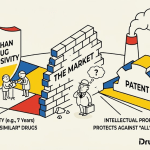
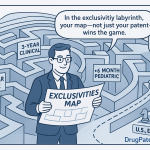
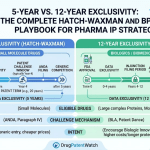
Two separate statutory exclusivities apply to most approved CGTs, and they run on different timelines. Orphan drug exclusivity lasts seven years from approval and blocks FDA from approving the “same drug” for the same rare disease through any pathway.[18] Every gene therapy approved to date has qualified for orphan designation.[1] Separately, the Biologics Price Competition and Innovation Act (BPCIA) grants twelve years of reference product exclusivity from first licensure, specifically blocking a 351(k) biosimilar application from relying on the innovator’s approval data.[1][19] Because orphan exclusivity is shorter, it is usually superseded by the twelve-year biologic exclusivity well before it would matter to a biosimilar filer, unless the product later gains a second orphan indication after the twelve-year clock runs out.[1]
Manufacturing Process Patents and Trade Secrecy: “The Process Is the Product”
Roughly half of all patent assertions against biosimilar applicants for ordinary biologics involve manufacturing process patents rather than composition claims, and these are often filed later in a product’s life specifically because a later filing date means later expiration.[1] For CGTs, manufacturing process protection is more extensive still, because the treatment is inseparable from how it is made. Vector design, cell-line preparation, transfection conditions, and analytical release testing can each carry their own patents, and manufacturers frequently keep the most valuable process know-how as an unpublished trade secret, which has no expiration date at all as long as it stays confidential.[1]
The First Wave: 17 Approved Cell and Gene Therapies and When Their Exclusivity Runs Out
Timeline Table: Approval Dates and Calculated Exclusivity Windows
The expiration dates below are DrugPatentWatch calculations, derived from each product’s public FDA approval date plus the statutory seven-year orphan and twelve-year BPCIA terms. They are not independently published FDA expiration dates, and actual outcomes can shift with pediatric exclusivity extensions, indication-specific carve-outs, or the orphan-exclusivity “sameness” disputes discussed below.
Product
Company
Indication
FDA Approval
Orphan Exclusivity (7-yr, calculated)
BPCIA Exclusivity (12-yr, calculated)
Kymriah
Novartis
B-ALL, DLBCL
Aug. 2017[20]
Aug. 2024
Aug. 2029
Yescarta
Kite/Gilead
DLBCL
Oct. 2017[20]
Oct. 2024
Oct. 2029
Luxturna
Spark/Roche
RPE65 retinal dystrophy
Dec. 2017[20]
Dec. 2024
Dec. 2029
Zolgensma
Novartis/AveXis
Spinal muscular atrophy
May 24, 2019[21]
May 2026
May 2031
Tecartus
Kite/Gilead
Mantle cell lymphoma
2020[20]
2027
2032
Breyanzi
Bristol Myers Squibb
DLBCL
Feb. 2021[20]
Feb. 2028
Feb. 2033
Abecma
BMS/2seventy bio
Multiple myeloma
March 2021[20]
March 2028
March 2033
Carvykti
Janssen/Legend Biotech
Multiple myeloma
Feb. 2022[20]
Feb. 2029
Feb. 2034
Zynteglo
bluebird bio
Beta-thalassemia
Aug. 2022[22]
Aug. 2029
Aug. 2034
Skysona
bluebird bio
Cerebral ALD
Sept. 2022[20]
Sept. 2029
Sept. 2034
Hemgenix
CSL Behring/uniQure
Hemophilia B
Nov. 22, 2022[23]
Nov. 2029
Nov. 2034
Roctavian
BioMarin
Hemophilia A
June 28, 2023[23]
June 2030
June 2035
Elevidys
Sarepta/Roche
Duchenne muscular dystrophy
June 2023[19]
June 2030
June 2035
Casgevy
Vertex/CRISPR Therapeutics
Sickle cell disease; beta-thal.
Dec. 2023 / Jan. 2024[6][19]
Dec. 2030
Dec. 2035
Lyfgenia
bluebird bio
Sickle cell disease
Dec. 2023[19]
Dec. 2030
Dec. 2035
Beqvez
Pfizer
Hemophilia B
April 2024[11]
discontinued Feb. 2025[11]
—
Lenmeldy
Orchard Therapeutics/Kyowa Kirin
Metachromatic leukodystrophy
March 18, 2024[24]
March 2031
March 2036
Reading the Table: Three Waves of Expiration
Wave One (2029-2031): Kymriah, Yescarta, Luxturna, Zolgensma
These four products already lost their seven-year orphan exclusivity between 2024 and 2026. Their twelve-year BPCIA exclusivity, the barrier that actually blocks a biosimilar filing, runs out between 2029 and 2031. This is the cohort to watch first, and also the cohort where competitors have had the longest runway to prepare a biosimilar and have not done so.
Wave Two (2032-2034): Tecartus, Breyanzi, Abecma, Carvykti, Zynteglo, Skysona, Hemgenix
This wave includes the two competing BCMA-targeted CAR-T products, Abecma and Carvykti, whose patent disputes have already migrated to European courts, discussed below.
Wave Three (2035-2036): Roctavian, Elevidys, Casgevy, Lyfgenia, Lenmeldy
This is the youngest cohort and includes both products that have already suffered serious commercial or safety setbacks, Elevidys, whose label was restricted in 2025, and Casgevy, whose underlying CRISPR patent ownership is still contested.
Why No Biosimilar Has Ever Been Filed for a CAR-T or Gene Therapy
The 351(k) Pathway Was Written for Proteins, Not Living Cells
The BPCIA biosimilar pathway requires a showing that a proposed product is “highly similar” to a reference product with no clinically meaningful differences.[1] That standard was built around therapeutic proteins with a defined amino acid sequence. Researchers who interviewed FDA regulators, manufacturing experts, and IP attorneys on the question concluded that gene therapies are more plausible biosimilar candidates than cell therapies, because a transgene has a defined genetic sequence that can be compared directly, whereas a CAR-T product’s mode of action depends on a multi-step manufacturing process performed on living cells.[1]
Autologous Manufacturing Makes “Reference Product” a Slippery Concept
Most approved CAR-T products are autologous: a patient’s own T-cells are extracted, engineered, and reinfused. There is no single reference product batch to compare a biosimilar against, only a manufacturing process applied to different starting material for every patient. Some of the experts interviewed for the 2024 analysis argued that this self-donor structure makes autologous cell therapies economically unsuited to the biosimilar framework altogether, regardless of what the science eventually allows, and that only allogeneic “off the shelf” products manufactured in reproducible batches are realistic biosimilar candidates.[1]
What the Experts Who’ve Studied This Actually Think
A 2024 Duke-Margolis Institute for Health Policy analysis, published in the Journal of Law and the Biosciences and built on structured interviews with 21 subject-matter experts across regulatory, manufacturing, intellectual property, and payment fields, is the most detailed public treatment of this question.[1] Its authors concluded that no CGT biosimilar was likely before 2027 at the earliest, that manufacturing standardization across the industry remains immature, and that trade secrecy, not patents, may end up being the more durable barrier to entry, because unlike a patent’s fixed twenty-year term, a trade secret lasts as long as the information stays confidential.[1]
An industry analysis of gene therapy patent filings found roughly 2,000 new gene-therapy patents filed globally each year between 2000 and 2020, with the United States accounting for more than half the global total; a separate count found 683 CAR-T patent publications and 124 granted U.S. patents in 2019 alone.[1]
The Patents That Do Exist Keep Failing in Court
Even where CGT developers hold composition patents rather than relying solely on process protection and trade secrecy, those patents have had an uneven record when tested in litigation. Three cases illustrate the same underlying problem: patent claims written broadly enough to cover an entire category of binding molecules or vector constructs, rather than the specific structures the inventors actually built and tested.
Three Cases, One Lesson: Functional Claims Don’t Hold Up
Juno v. Kite: A $1.2 Billion Verdict That Became Zero Dollars
In 2019, a jury found that Gilead’s Kite Pharma had willfully infringed a Sloan Kettering patent (U.S. Patent 7,446,190) licensed exclusively to Juno Therapeutics, covering the CAR construct used in Yescarta, and awarded Juno $752 million upfront plus a 27.6 percent running royalty, later calculated at more than $1.2 billion in total damages.[3][25] Juno’s patent claimed the antibody-binding component of the CAR by function, any single-chain variable fragment capable of binding a cancer target, rather than by specific structure. On appeal, the Federal Circuit reversed in August 2021, holding that the patent disclosed neither representative examples nor common structural features sufficient to support a claim covering “millions of billions” of possible binding molecules, and that Juno had not demonstrated it possessed the full scope of what it claimed.[2][3] The Supreme Court declined to hear Juno’s appeal.[26]
Amgen v. Sanofi and the Supreme Court’s Warning to Genus Claims
In May 2023, the Supreme Court unanimously affirmed invalidation of Amgen antibody patents that claimed, by function, the entire genus of antibodies capable of binding and blocking a specific site on the PCSK9 protein, on grounds that the patents did not enable a person skilled in the art to make and use the full breadth of what was claimed.[1] The ruling reinforces the same reasoning the Federal Circuit applied in Juno v. Kite two years earlier, and researchers studying CGT patent strategy have concluded that manufacturers will likely need to shift toward narrower, structurally defined claims, for example specifying the exact CAR sequence rather than any binder that achieves the same function, if they want their patents to survive a validity challenge.[1]
REGENXBIO v. Sarepta: The AAV Vector Patent Nobody Can Rely On Yet
REGENXBIO and the University of Pennsylvania sued Sarepta in September 2020, alleging that Sarepta’s manufacturing process for what became Elevidys infringed a Penn-owned, REGENXBIO-licensed patent (U.S. Patent 10,526,617) covering engineered AAV vector host cells.[27] In January 2024, a Delaware district court granted Sarepta summary judgment, ruling the claims patent-ineligible as directed to a naturally occurring phenomenon.[4][28] REGENXBIO appealed, and in February 2026 the Federal Circuit reversed, holding that a recombinant nucleic acid molecule spliced together from two different species and inserted into a host cell does not exist in nature and is not an ineligible natural phenomenon, reviving the case and remanding it for further proceedings.[5][6] A second, related REGENXBIO suit against Sarepta over a separate Penn patent (U.S. Patent 11,680,274), covering the AAVrh74 vector actually used in Elevidys, remains pending; both patents-in-suit run through October 2027.[27][29] Sarepta has since filed for rehearing en banc.[29] Because REGENXBIO’s NAV Technology platform underlies AAV vectors licensed to multiple gene therapy developers beyond Sarepta, the eventual outcome will affect royalty obligations across the field, not just one company’s product.
Platform Patent Uncertainty Compounds the Problem
The Broad/CVC CRISPR Interference Isn’t Over
The foundational patent dispute over CRISPR-Cas9 gene editing, between the Broad Institute, Harvard, and MIT on one side (“Broad”) and the University of California, University of Vienna, and Emmanuelle Charpentier on the other (“CVC”), has run since 2012. In February 2022, the Patent Trial and Appeal Board ruled that Broad scientists were first to invent CRISPR-Cas9 editing in eukaryotic cells, the application relevant to human therapeutics.[7] CVC appealed, and in May 2025 the Federal Circuit vacated that decision and sent the case back to the PTAB for reconsideration of the conception evidence, finding the board had erred.[8] The dispute remains unresolved as of this writing, fourteen years after it began.[8][30] DrugPatentWatch has covered the full litigation history and its licensing implications in a separate analysis; the summary relevant here is that Casgevy, the first FDA-approved CRISPR therapy, reached patients while the ownership of the underlying editing technology was still being litigated.[30]
What This Means for Casgevy Licensing Costs
Vertex and CRISPR Therapeutics licensed Broad-side CRISPR intellectual property through Editas Medicine ahead of Casgevy’s December 2023 approval, a deal reported to be worth immaterial sums relative to Casgevy’s commercial potential according to analysts who track the space.[31] That licensing decision was made without waiting for the interference or the subsequent appeal to resolve. It is a template other developers appear to be following: commercialize on the strength of a license from whichever party currently holds the stronger position, rather than waiting years for finality that may never arrive on a normal commercial timeline.
The BCMA Patent Wars Move to Europe
2seventy Bio vs. J&J and Legend Biotech at the Unified Patent Court
Bristol Myers Squibb acquired 2seventy bio, the bluebird bio spinout that co-developed the BCMA-targeted CAR-T therapy Abecma, for approximately $286 million in 2025.[32] In January 2026, 2seventy bio filed an infringement action at the Unified Patent Court’s Brussels local division against thirteen Janssen-Cilag entities and four Legend Biotech entities, alleging that Carvykti, the rival BCMA CAR-T therapy developed by Janssen and Legend, infringes European patent EP 3 689 383, which covers a chimeric antigen receptor targeting B-cell maturation antigen.[9] J&J has separately filed a revocation action against the same patent at the UK High Court, and the patent is also under challenge at the European Patent Office.[9] 2seventy bio and bluebird bio hold eight patent families covering BCMA CAR-T technology published between 2015 and 2020, none of them co-filed with BMS or its predecessor Celgene.[32]
Why US Companies Are Now Litigating CAR-T Patents in Belgium
The Unified Patent Court, operational since 2023, lets a patent holder seek a single ruling covering multiple European jurisdictions rather than litigating country by country, which shortens the path to a continent-wide injunction against a competing CAR-T product. Legend Biotech’s own securities filings list an expanding roster of BCMA-focused competitors beyond BMS and J&J, including Arcellx, Autolus, CARsgen, Gracell/AstraZeneca, and several others, reflecting a crowded field in which patent disputes are likely to keep surfacing as more entrants seek approval.[33]
Commercial Failure Is Arriving Before Patent Expiration
Three Failures, One Pattern
bluebird bio: From a $10 Billion Valuation to a $29 Million Buyout
bluebird bio priced Zynteglo at $2.8 million and Skysona at $3 million at their 2022 launches, and Lyfgenia at $3.1 million in 2023.[10] By November 2024, the company reported just 57 total patient starts across all three products, 35 for Zynteglo, 17 for Lyfgenia, and 5 for Skysona, out of more than 70 activated treatment centers, only 40 percent of which had dosed a single patient.[10] Facing default on its debt agreements with Hercules Capital, bluebird agreed in February 2025 to be acquired by Carlyle and SK Capital for roughly $3.00 per share, a transaction valued at approximately $29 million, plus a contingent value right tied to reaching $600 million in combined product sales by the end of 2027.[34][35][36][10] The company’s board stated that absent the transaction, stockholders faced significant risk of receiving nothing in a bankruptcy or liquidation.[37]
Pfizer Zeroes Out Its Gene Therapy Portfolio: The Beqvez Withdrawal
Pfizer’s hemophilia B gene therapy Beqvez, licensed from Spark Therapeutics in 2014 and priced at $3.5 million per dose, received FDA approval in April 2024.[11][38] No patient received it commercially. In February 2025, Pfizer discontinued global development and commercialization, citing limited interest from patients and physicians, and directed resources instead toward its non-gene-therapy hemophilia treatment Hympavzi.[11][12] The withdrawal followed Pfizer’s earlier termination of a hemophilia A gene therapy partnership with Sangamo Therapeutics and an unrelated Duchenne gene therapy failure, leaving Pfizer with no active gene therapy programs.[11]
Roche’s $2.4 Billion Write-Down of the Spark Therapeutics Deal
Roche acquired Spark Therapeutics, developer of Luxturna, for $4.3 billion in 2019.[39] Roche wrote down Spark-related assets for three consecutive years through 2022, when Luxturna sales stood at just under $50 million, and recorded a further $2.4 billion full goodwill impairment in 2025 alongside a “fundamental reorganization” of the unit, while confirming Luxturna itself would keep being commercialized.[13][14][40] Separately, Roche shelved its most advanced pipeline gene therapy asset, a hemophilia A candidate, in December 2024.[13]
What Three Failures in 18 Months Tell Us About “Exclusivity Value”
Patent and exclusivity protection only has commercial value if there is a product worth protecting. Across bluebird bio, Pfizer’s Beqvez, and Roche’s Spark unit, the binding constraint was never a competitor’s ability to copy the product. It was the manufacturer’s inability to build a sustainable market for it at a multimillion-dollar price point, against slow physician uptake, reluctant payers, and, in bluebird’s case, active balance-sheet distress. A biosimilar cliff assumes a healthy originator business first. For several first-wave CGTs, that assumption never held.
Safety Signals Are Becoming a Second Patent-Cliff-Adjacent Risk
Elevidys: Boxed Warning, Label Restriction, and Three Deaths
Sarepta’s Elevidys received accelerated approval in June 2023 for ambulatory Duchenne muscular dystrophy patients and was later expanded to non-ambulatory patients.[16] Following two reports of fatal acute liver failure in non-ambulatory patients, the FDA issued a safety communication in June 2025, and Sarepta voluntarily paused non-ambulatory shipments.[15][16][41] A third death, in a patient treated with a related investigational therapy using the same AAVrh74 vector platform, followed shortly after.[42] In July 2025 the FDA permitted Sarepta to resume shipping to ambulatory patients while the non-ambulatory pause continued, and in November 2025 the agency approved updated labeling that added a boxed warning for acute liver injury and removed the non-ambulatory indication from the label entirely, restricting Elevidys to ambulatory patients four years of age and older.[15][16] The FDA also required a new postmarketing observational study of roughly 200 patients to further assess liver injury risk.[41]
How an FDA Label Restriction Functions Like an Early Loss of Exclusivity
A label restriction that removes an entire patient population has the same commercial effect on addressable market as a competitor entering that segment, except it arrives with none of the price competition a generic or biosimilar would bring, and it can arrive at any point in a product’s life rather than on a predictable statutory schedule. For Elevidys, the restriction landed roughly two years after approval, more than a decade before its calculated BPCIA exclusivity would expire in 2035. Manufacturers modeling “patent cliff” exposure for CGTs need to model this risk separately, because it is not driven by intellectual property at all.
Original Analysis: Ranking Exposure Across the First-Wave Portfolio
Method: How We Classified Exclusivity Status
DrugPatentWatch classified each of the seventeen first-wave products against four categories based on public FDA approval and exclusivity data, litigation dockets, and company disclosures cited throughout this analysis. A product was counted as having “dormant” exclusivity if its seven-year orphan exclusivity had already lapsed as of September 2026 with no competing product approved. A product was counted as having “contested platform IP” if a patent covering its vector, editing technology, or CAR construct was, as of this writing, the subject of unresolved litigation or an unresolved USPTO interference. A product was counted as a “commercial non-starter” if the manufacturer discontinued it, sold the company at a loss, or wrote down its value by nine figures or more. A product was counted as having a “safety-driven” exposure if the FDA restricted its label for a serious safety signal. Products can fall into more than one category.
Orphan exclusivity has already lapsed for all four products with no competitor approved. This is the clearest evidence that regulatory exclusivity alone was never the binding constraint on competition for this cohort.
Category 2: Contested Platform IP (Yescarta, Elevidys, Casgevy, and by extension any product built on REGENXBIO-licensed AAV vectors or Broad/CVC-licensed CRISPR technology)
Patent ownership or validity for the underlying platform technology remains unresolved in active litigation for this group, independent of the calculated BPCIA exclusivity dates in the table above.
These four products, three from bluebird bio and one from Pfizer, have either changed hands at a steep loss or been discontinued outright, for commercial rather than IP reasons.
Category 4: Safety-Driven De Facto Exclusivity Loss (Elevidys)
A November 2025 label restriction cut Elevidys’s approved population before any of its calculated exclusivity windows came close to expiring.
What Happens When Cell and Gene Therapy Exclusivity Actually Expires
Scenario One: No Biosimilar, Ever
For narrow, ultra-rare indications, several of the experts interviewed for the 2024 Duke-Margolis analysis expect the patient population may simply be too small to support a second entrant of any kind, branded or biosimilar, once the innovator has already treated the available prevalent population and the disease’s incidence among new patients is very low.[1] Trade secret protection over manufacturing know-how, which does not expire on a fixed calendar the way a patent does, would keep this outcome in place indefinitely.[1]
Scenario Two: Branded “Creative Destruction” Instead of Generic Competition
For higher-prevalence indications, competition is more likely to come from a next-generation branded product than a biosimilar copy. Sickle cell disease already has three approved cell and gene therapies, Casgevy, Lyfgenia, and (for related indications) Zynteglo, and analysts interviewed for the same study expect further branded entrants in areas like hemophilia and macular degeneration to compete on differentiated data and pricing rather than on being interchangeable copies of an incumbent.[1]
Scenario Three: A Regulatory Push Forces Standardization
FDA’s Advanced Manufacturing Technologies designation program and its 2023 platform technology designation initiative are both aimed at reducing the bespoke, non-standardized nature of CGT manufacturing that currently makes biosimilarization difficult.[1] If those programs succeed in pushing the industry toward common manufacturing platforms, the manufacturing barrier to biosimilar entry could erode over time, even if the legal and market barriers described above remain.
What This Means for Payers, Manufacturers, and Patent Strategy
For Payers: Outcomes-Based Contracts Fill the Gap Biosimilars Would Have Filled
Without biosimilar price competition to rely on, payers including Medicaid programs and commercial insurers such as Cigna’s Embarc program have turned to outcomes-based contracts and reinsurance risk pools to manage CGT cost exposure, tying payment to whether a treatment’s effect actually holds up over time rather than to a competitor entering the market.[1]
For Originators: Manufacturing Trade Secrets Are Now the Primary Asset to Protect
Given that composition and platform patents have repeatedly failed validity challenges while manufacturing know-how has not been meaningfully tested by any biosimilar filer, originator companies have more reason to invest in trade secret protection and internal process controls than in patent prosecution alone. That shift has strategic implications for freedom-to-operate analysis, since trade secrets, unlike patents, generate no public record for a would-be competitor to search against.
For Would-Be Challengers: The Fastest Path to Competition Is a Better Drug, Not a Copy
Given the regulatory, manufacturing, and litigation barriers described throughout this analysis, generating independent clinical data for a differentiated next-generation product, as Carvykti did against Abecma and as Casgevy and Lyfgenia did against each other, has so far been a more viable competitive strategy than pursuing a biosimilar filing against any first-wave CGT.
Frequently Asked Questions
What is a patent cliff, and how is it different for cell and gene therapies? A patent cliff is the revenue decline that follows loss of exclusivity, once generics or biosimilars enter and cut prices. For cell and gene therapies, FDA exclusivities are expiring on a predictable calendar starting in 2029, but no biosimilar pathway has ever actually been used against one of these products, so the price-competition drop that normally defines a cliff has not materialized on the same schedule.
Has any biosimilar ever been approved for a CAR-T or gene therapy product? No. As of 2026, no 351(k) biosimilar application has been filed against any approved CAR-T or gene therapy, according to a 2024 peer-reviewed analysis built on interviews with 21 FDA, industry, and legal experts, which concluded that biosimilar CGT competition is unlikely before 2027 at the earliest.[1]
When does Zolgensma’s exclusivity expire? Zolgensma was approved May 24, 2019.[21] Its calculated seven-year orphan drug exclusivity expired in May 2026. Its calculated twelve-year BPCIA reference product exclusivity, the barrier that actually blocks a biosimilar filing, runs until May 2031. No competing SMA gene therapy has been approved in the interim.
Why did the $1.2 billion Juno v. Kite verdict get reversed? The Federal Circuit found that Juno’s patent claimed any antibody fragment capable of binding a cancer target, functionally, without describing which specific structures would actually work, a written description failure consistent with the reasoning the Supreme Court later applied in Amgen v. Sanofi.[2][3][1]
What is the difference between orphan drug exclusivity and BPCIA exclusivity? Orphan drug exclusivity lasts seven years and blocks FDA from approving the same drug for the same rare disease through any pathway. BPCIA reference product exclusivity lasts twelve years and specifically blocks a 351(k) biosimilar application from relying on the innovator’s data. For most CGTs, the twelve-year clock is the one that actually matters commercially, since it runs longer and directly targets the biosimilar pathway.[1]
Is the CRISPR patent dispute between the Broad Institute and UC Berkeley settled? No. The Federal Circuit sent the interference back to the Patent Trial and Appeal Board in May 2025 for reconsideration, more than a decade after the dispute began, and it remains unresolved.[8] Casgevy, the first approved CRISPR therapy, was commercialized while the underlying patent priority question was still being litigated.[30][31]
Why did bluebird bio sell for $29 million after being worth more than $10 billion? bluebird bio held three approved gene therapies but had activated fewer than 60 total patient starts across all of them by late 2024 and faced default on its debt agreements.[10] Carlyle and SK Capital acquired the company for roughly $29 million in cash in 2025, an outcome driven entirely by commercial underperformance rather than any patent or exclusivity issue.[34][10]
What happened with Elevidys and why was its label restricted? Elevidys was linked to three deaths from acute liver failure in non-ambulatory patients. In November 2025, the FDA added a boxed warning and removed the non-ambulatory indication from the label, restricting use to ambulatory patients four and older.[15][16] The restriction cut Elevidys’s addressable market roughly two years after approval, well ahead of any calculated patent or exclusivity expiration.
Will gene therapy prices come down without biosimilar competition? Experts interviewed for the 2024 Duke-Margolis analysis expect branded competition, rather than biosimilars, to be the main source of future price pressure for CGTs treating larger patient populations, such as sickle cell disease, where three branded products already compete.[1] For narrow, ultra-rare indications, the patient pool may be too small to support any second entrant at all.
Which cell and gene therapy exclusivities expire soonest? Kymriah, Yescarta, and Luxturna, all approved in 2017, are the first products whose calculated twelve-year BPCIA reference product exclusivity expires, in 2029. Their seven-year orphan drug exclusivities already lapsed between 2024 and 2025 with no competing product approved against any of them.
Key Takeaways
Seventeen cell and gene therapies approved between 2017 and 2024 carry calculated BPCIA reference product exclusivities that expire between 2029 and 2036, a genuine second patent cliff distinct from the small-molecule and monoclonal antibody cliff currently underway.
The seven-year orphan drug exclusivity for the earliest four products, Kymriah, Yescarta, Luxturna, and Zolgensma, has already lapsed, between 2024 and 2026, with zero competing products approved.
No 351(k) biosimilar application has ever been filed against a CAR-T or gene therapy, and peer-reviewed research concluded such a filing is unlikely before 2027 at the earliest.
Composition and platform patents backing several first-wave CGTs, including Yescarta’s foundational CAR patent, REGENXBIO’s AAV vector patents, and the Broad Institute’s CRISPR patents, have all faced unresolved or adverse litigation outcomes.
Three of the seventeen products, Zynteglo, Skysona, and Lyfgenia (bluebird bio) plus Beqvez (Pfizer), have already failed commercially, independent of any patent issue.
A November 2025 FDA label restriction on Elevidys shows that safety-driven market restriction can arrive years ahead of any calculated exclusivity expiration.
DrugPatentWatch tracks FDA exclusivity data, Orange Book and Purple Book listings, and patent litigation dockets across small-molecule, biologic, and cell and gene therapy products. For a deeper look at the CRISPR ownership dispute referenced in this analysis, see DrugPatentWatch’s dedicated coverage of the Broad/CVC interference and its licensing consequences.[30]
References
Canter B, Sussman S, Colvill S, Arad N, Staton E, Rai A. Introducing biosimilar competition for cell and gene therapy products. Journal of Law and the Biosciences. 2024;11(2):lsae015. https://academic.oup.com/jlb/article/11/2/lsae015/7713607
Ropes & Gray LLP. Another Genus Claim Bites the Dust for Lack of Written Description. IP Update. September 9, 2021. https://www.ipupdate.com/2021/09/another-genus-claim-bites-the-dust-for-lack-of-written-description/
Justia. Juno Therapeutics, Inc. v. Kite Pharma, Inc., No. 20-1758 (Fed. Cir. 2021). August 26, 2021. https://law.justia.com/cases/federal/appellate-courts/cafc/20-1758/20-1758-2021-08-26.html
Lawyer Monthly. Federal Circuit Revives REGENXBIO Gene Therapy Patent Suit Against Sarepta. February 2026. https://www.lawyer-monthly.com/2026/02/federal-circuit-regenxbio-sarepta-patent-eligibility/
IPWatchdog. CAFC Reverses 101 Ineligibility Ruling, Finds Gene Therapy Claims Are Not Directed to a Natural Phenomenon. February 2026. https://ipwatchdog.com/2026/02/22/cafc-reverses-101-ineligibility-ruling-gene-therapy-claims-not-directed-natural-phenomenon/
Broad Institute. Statements and background on CRISPR patent process. February 28, 2022. https://www.broadinstitute.org/crispr/journalists-statement-and-background-crispr-patent-process
Sanders R. Federal Appeals Court Sends CRISPR-Cas9 Patent Case Back To Patent Office for Reconsideration. UC Berkeley Research. May 12, 2025. https://vcresearch.berkeley.edu/news/federal-appeals-court-sends-crispr-cas9-patent-case-back-patent-office-reconsideration
JUVE Patent. BMS and Johnson & Johnson battle over novel CAR-T cell therapy in Europe. March 3, 2026. https://www.juve-patent.com/cases/bms-battles-johnson-johnson-over-novel-cell-therapy-in-europe/
Liu A. Once valued $10B, bluebird bio sells to private equity firms for $29M. Fierce Pharma. May 30, 2025. https://www.fiercepharma.com/pharma/once-valued-10b-bluebird-bio-sells-private-equity-firms-29m
Liu A. Pfizer discontinues hemophilia treatment Beqvez, emptying its gene therapy portfolio. Fierce Pharma. February 21, 2025. https://www.fiercepharma.com/pharma/pfizer-empties-gene-therapy-portfolio-discontinues-hemophilia-treatment-beqvez
Bell J. Pfizer stops selling hemophilia gene therapy, citing weak demand. BioPharma Dive. February 21, 2025. https://www.biopharmadive.com/news/pfizer-beqvez-hemophilia-halt-sales-gene-therapy/740590/
McKenzie H. Roche Absorbs $2.4B Impairment in Overhaul of Spark Gene Therapy Unit. BioSpace. March 11, 2025. https://www.biospace.com/business/roche-absorbs-2-4b-impairment-in-overhaul-of-spark-gene-therapy-unit
Fierce Pharma. Roche overhauls Spark gene therapy unit, recording $2.4B in full impairment. April 17, 2025. https://www.fiercepharma.com/pharma/roche-overhauls-spark-gene-therapy-unit-recording-24b-full-impairment
U.S. Food and Drug Administration. FDA Approves New Safety Warning and Revised Indication that Limits Use for Elevidys Following Reports of Fatal Liver Injury. November 14, 2025. https://www.fda.gov/news-events/press-announcements/fda-approves-new-safety-warning-and-revised-indication-limits-use-elevidys-following-reports-fatal
Fierce Pharma. FDA restricts Sarepta’s gene therapy Elevidys after Duchenne patient deaths. November 14, 2025. https://www.fiercepharma.com/pharma/fda-restricts-sarepta-elevidys-gene-therapy-use-after-duchenne-patient-deaths
Drug Discovery News. Blockbuster drugs face a massive patent cliff in 2026. February 24, 2026. https://www.drugdiscoverynews.com/blockbuster-drugs-face-a-massive-patent-cliff-in-2026-17019
Food and Drug Law Institute. Gene Therapy: FDA Takes Steps Toward Clarifying Scope of Orphan Drug Exclusivity. November 2018. https://www.fdli.org/2018/11/gene-therapy-fda-takes-steps-toward-clarifying-scope-of-orphan-drug-exclusivity/
Boston Children’s Hospital. Gene Therapy Program: FDA-Approved Gene Therapies. https://www.childrenshospital.org/services/gene-therapy-program/fda-approved-gene-therapies
BioInformant. List of U.S. FDA Approved Cell and Gene Therapy Products. November 2, 2025. https://bioinformant.com/u-s-fda-approved-cell-and-gene-therapies/
U.S. Food and Drug Administration. FDA approves innovative gene therapy to treat pediatric patients with spinal muscular atrophy. May 24, 2019. https://www.fda.gov/news-events/press-announcements/fda-approves-innovative-gene-therapy-treat-pediatric-patients-spinal-muscular-atrophy-rare-disease
Ascella Health. 2023 Notable FDA Approvals Include Several Cell and Gene Therapies, First-Time Biosimilars. January 18, 2024. https://ascellahealth.com/in-the-news/2023-notable-fda-approvals-include-several-cell-and-gene-therapies-first-time-biosimilars
National Institutes of Health, Office of Technology Transfer. Archived HHS-Licensed Products Approved by the FDA (Roctavian, Hemgenix). https://www.techtransfer.nih.gov/archived-hhs-licensed-products-approved-fda
U.S. Food and Drug Administration. Summary Basis for Regulatory Action: LENMELDY. March 18, 2024. https://www.fda.gov/media/177578/download
Pearce IP. The Rise and Rise of CAR-T Cell Therapy and the Future of Patent Disputes in Australia. August 2, 2022. https://www.pearceip.law/2022/08/02/the-rise-and-rise-of-car-t-cell-therapy-and-the-future-of-patent-disputes-in-australia/
Supreme Court of the United States. Docket No. 21-1566, Juno Therapeutics, Inc. v. Kite Pharma, Inc. https://www.supremecourt.gov/docket/docketfiles/html/public/21-1566.html
REGENXBIO Inc. REGENXBIO and University of Pennsylvania File NAV Technology Patent Infringement Lawsuit. June 20, 2023. https://regenxbio.gcs-web.com/news-releases/news-release-details/regenxbio-and-university-pennsylvania-file-navr-technology
Opinion: Ruling in REGENXBIO-Sarepta Patent Case Threatens Gene Therapy Market. BioSpace. August 28, 2024. https://www.biospace.com/policy/opinion-ruling-in-regenxbio-sarepta-patent-case-threatens-gene-therapy-market
Ropes & Gray LLP. Navigating the Section 101 Landscape: REGENXBIO v. Sarepta and Its Implications for Patent Eligibility. April 23, 2026. https://www.ropesgray.com/en/insights/alerts/2026/04/navigating-the-section-101-landscape-regenxbio-v-sarepta
DrugPatentWatch. Platform Patents Were Supposed to Protect Gene Editing. Fourteen Years of CRISPR Litigation Say Otherwise. 2026. https://www.drugpatentwatch.com/blog/platform-patents-were-supposed-to-protect-gene-editing-fourteen-years-of-crispr-litigation-say-otherwise/
BioSpace. Ongoing CRISPR Patent Dispute Complicates Licensing but Hasn’t Deterred Gene-Editing Investment. July 22, 2024. https://www.biospace.com/business/ongoing-crispr-patent-dispute-complicates-licensing-but-hasnt-deterred-gene-editing-investment
Knowmade. Acquisition around the CAR-T Abecma: BMS and 2seventy bio sign. April 3, 2025. https://www.knowmade.com/technology-news/life-sciences-news/healthcare-technology-news/bristol-myers-squibb-acquired-its-abecma-partner-2seventy-bio/
Legend Biotech Corp. Form 20-F, Fiscal Year 2025. U.S. Securities and Exchange Commission. https://www.sec.gov/Archives/edgar/data/1801198/000180119826000008/legn-20251231.htm
Carlyle. Carlyle and SK Capital Partners Announce Expiration of bluebird bio Tender Offer. May 30, 2025. https://www.carlyle.com/media-room/news-release-archive/carlyle-and-sk-capital-partners-announce-expiration-bluebird-bio
McKenzie H. Bluebird, Facing Cash Crunch, To Go Private In Deal Valued at $30M. BioSpace. February 21, 2025. https://www.biospace.com/deals/bluebird-facing-cash-crunch-to-go-private-in-deal-valued-at-30m
MedCity News. Cash-Strapped Gene Therapy Firm Bluebird Bio Agrees to Acquisition by Private Equity. February 22, 2025. https://medcitynews.com/2025/02/bluebird-bio-acquisition-gene-therapy-private-equity-carlyle-sk-capital-blue-pfizer-pfe/
bluebird bio, Inc. Form SC 14D9/A, Exhibit (a)(5)(KK). U.S. Securities and Exchange Commission. May 27, 2025. https://www.sec.gov/Archives/edgar/data/1293971/000119312525127577/d70326dex99a5kk.htm
Coalition for Hemophilia B. Pfizer Discontinues Gene Therapy for Hemophilia B. February 24, 2025. https://www.hemob.org/resource-library/pfizer-discontinues-gene-therapy-for-hemophilia-b
Fierce Pharma. Roche bulks up in gene therapy and hemophilia with $4.3B Spark buyout. 2019. https://www.fiercepharma.com/pharma/roche-bulks-up-gene-therapy-and-hemophilia-4-3b-spark-buyout
BioPharma Dive. Roche writes off $3B on lower sales forecasts for gene therapies, cancer drugs. February 3, 2023. https://www.biopharmadive.com/news/roche-impairment-write-down-spark-gene-therapy/641939/
Parent Project Muscular Dystrophy. FDA Approves New Safety Warning and Revised Indication for ELEVIDYS. November 2025. https://www.parentprojectmd.org/fda-approves-new-safety-warning-and-revised-indication-for-elevidys/
CGTLive. FDA Gives Sarepta Green Light to Restart Shipment of DMD Gene Therapy Elevidys to Patients Who Are Ambulatory. 2025. https://www.cgtlive.com/view/fda-gives-sarepta-green-light-restart-shipment-dmd-gene-therapy-elevidys-patients-ambulatory