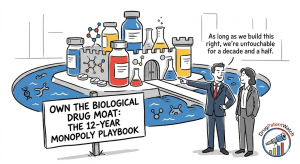
The most profitable legal monopoly in the United States does not belong to a tech giant with a locked-down ecosystem or a defense contractor with classified contracts. It belongs to a biologic drug manufacturer who has figured out how to stretch a single FDA approval into a 20-year revenue wall that generic competitors cannot legally breach. The mechanism is not a conspiracy. It is statute, precedent, and deliberate IP architecture working together in ways that Congress arguably did not fully anticipate when it passed the Biologics Price Competition and Innovation Act of 2009.
Understand this system and you understand why AbbVie generated more than $21 billion from Humira in a single year while simultaneously running a patent portfolio of 136 related patents, why Amgen spent a decade in court rather than a year in the lab when Sandoz tried to copy Neupogen, and why a biosimilar that is scientifically indistinguishable from its reference product can still fail commercially because of a four-letter suffix that physicians refuse to memorize. The 12-year exclusivity period written into the BPCIA is the starting point of the moat, not the whole thing.
This article maps the complete architecture of biologic IP protection, from the statutory foundation through the patent thicket strategies, the regulatory friction tools, the international dimensions, and the intelligence resources professionals use to track it all. It is written for executives, investors, policy analysts, and IP counsel who need to understand not just how the system works but how it gets exploited, and what that means for competitive positioning on both sides of the biosimilar divide.
The Architecture of Biologic Exclusivity
What Makes Biologics Different from Small-Molecule Drugs
A small-molecule drug is a chemical compound. Atorvastatin, the active ingredient in Lipitor, has a molecular weight of 558.6 daltons and a structure that can be drawn on a napkin. A generic manufacturer can synthesize an identical compound in a laboratory, run a bioequivalence study, and file an Abbreviated New Drug Application with the FDA. The regulatory pathway, the Hatch-Waxman Act, was designed precisely to make that process tractable, and it has worked: generic drugs now account for roughly 90 percent of prescriptions dispensed in the United States [1].
Biologics are fundamentally different objects. Adalimumab, the active ingredient in Humira, is a monoclonal antibody with a molecular weight of approximately 148,000 daltons, produced by living Chinese hamster ovary cells using a manufacturing process that took AbbVie years to develop and validate. You cannot synthesize it in a laboratory in any conventional sense. You grow it, purify it, test it for dozens of quality attributes that affect safety and efficacy, and then try to demonstrate to regulators that what you made is sufficiently similar to the original product to be presumed safe and effective without repeating full clinical trials. The FDA uses the word “biosimilar” rather than “generic” for exactly this reason: the science does not permit a true copy.
This biological complexity creates two distinct advantages for the originator company. The first is regulatory: the standard of proof for biosimilarity is higher, more expensive, and more time-consuming than bioequivalence for small molecules. The second is intellectual property: the complexity of the molecule, its manufacturing process, and its clinical applications creates a much larger surface area for patent protection than a small molecule ever could.
The result is a drug category where competitive protection runs not for a few years after patent expiry but for decades after first approval, layered through patent law, regulatory exclusivity, and market dynamics that biosimilar developers must navigate simultaneously.
The BPCIA Framework: How Congress Built a 12-Year Wall
The Biologics Price Competition and Innovation Act was passed as part of the Affordable Care Act in March 2010. Its core purpose was to create an abbreviated approval pathway for biosimilars, mirroring what Hatch-Waxman did for small-molecule generics. Before the BPCIA, there was no legal mechanism for a competitor to reference another company’s biologic approval. Every new biologic needed its own full clinical program, which made biosimilar development economically irrational.
The BPCIA created that pathway under Section 351(k) of the Public Health Service Act. A biosimilar applicant can reference a previously approved biologic product and rely on the FDA’s prior finding of safety and effectiveness for that product, conducting only the additional studies needed to demonstrate biosimilarity rather than starting from scratch.
But Congress included a trade-off that the pharmaceutical industry had lobbied hard for: a 12-year period of reference product exclusivity. For 12 years from the date of first FDA licensure of the reference biologic, the FDA cannot approve a biosimilar application that references it. A biosimilar application can be submitted after four years, but approval cannot be granted until the 12-year clock expires.
This 12-year period is longer than any other drug exclusivity period in the US system. Standard new chemical entity exclusivity under Hatch-Waxman is five years. Orphan drug exclusivity is seven years. New clinical investigation exclusivity is three years. The 12-year biologic exclusivity was a deliberate policy choice, premised on the argument that the cost and risk of developing a first-in-class biologic justified an extended protection period to recoup investment.
“Biologic drugs account for roughly 40 percent of total US drug spending despite representing only about 2 percent of prescriptions filled,” according to the Congressional Budget Office’s 2022 analysis of pharmaceutical pricing [2].
That figure captures the economic stakes. Biologics are expensive to make and extraordinarily expensive to buy, and the 12-year exclusivity period is the primary legal mechanism that keeps them expensive long after the original R&D cost has been recovered.
Reference Product Exclusivity vs. Patent Exclusivity
The 12-year exclusivity period and patent protection are separate and cumulative, not interchangeable. Reference product exclusivity is a pure regulatory mechanism: it prohibits the FDA from approving a competing biosimilar application regardless of the patent landscape. Patent exclusivity is a property right: it gives the originator the right to sue any competitor who practices the patented invention, regardless of FDA approval status.
In practice, these two systems interact in complex ways. A biosimilar might clear the 12-year regulatory hurdle but still face a patent infringement lawsuit that delays commercial launch for additional years. A product might have all relevant patents expire before 12 years are up, but competitors still cannot enter because the FDA is legally prohibited from acting on their applications. And a single biologic drug can benefit from both types of protection simultaneously and sequentially.
The practical implication is that the effective market exclusivity period for a biologic is almost never exactly 12 years. It is almost always longer, because patents extend beyond the statutory exclusivity period, because litigation adds delay, and because originator companies have developed sophisticated strategies for maintaining market dominance even after both forms of protection formally expire.
The “Patent Dance” and What It Actually Does
The BPCIA created a multi-step information exchange process between biosimilar applicants and reference product sponsors, colloquially called the “patent dance.” Under Section 351(l), after a biosimilar application is accepted for review, the biosimilar applicant must provide the reference product sponsor with a detailed description of its manufacturing process and product. The reference product sponsor then identifies which patents it believes may be infringed. The two parties exchange lists, negotiate, and eventually litigate a subset of patents before the biosimilar launches.
The patent dance was designed to front-load patent disputes so they happen before market entry rather than through emergency injunctions after launch. In theory, it is efficient. In practice, it is a source of substantial strategic complexity for both sides.
For the reference product sponsor, the patent dance is an intelligence windfall. Getting detailed manufacturing information from a biosimilar applicant before any product reaches the market allows the originator to assess exactly how a competitor is making its product and which patents are actually at risk. For the biosimilar applicant, the dance creates obligations that require careful management, and opting out of it carries its own risks (explored later in this article).
The Supreme Court addressed the patent dance in Sandoz v. Amgen (2017) [3], clarifying several ambiguities in the statute. The Court held that the dance is optional for biosimilar applicants, that the 180-day commercial marketing notice can be given when the FDA accepts the biosimilar application rather than only upon approval, and that state law remedies were preempted by the BPCIA. The practical result: biosimilar applicants gained more flexibility about when to trigger patent disputes, and reference product sponsors lost some procedural leverage they had expected to have.
How the 12-Year Clock Starts and How Companies Manipulate It
The Approval Date Trigger and Its Implications
The 12-year exclusivity period begins on “the date of first licensure” of the reference biological product. That phrase seems straightforward but creates substantial strategic room for manipulation. The key question is what counts as a “first licensure” that starts a new 12-year clock.
Under FDA regulations [4], a change to an already-licensed biologic product starts a new exclusivity period only if it meets three conditions: the product contains a new active ingredient, it involves a change in the structure of the principal molecular structural feature, and the change results in a new indication, route of administration, dosing schedule, dosage form, delivery system, delivery device, or strength. Minor reformulations, new presentations of existing products, or line extensions that do not meet all three criteria do not get a new 12-year period.
Companies have tested the boundaries of this definition repeatedly. A new indication for an existing biologic does not start a new clock. A new formulation without a structural change does not start a new clock. But a bispecific antibody derived from an existing monoclonal antibody might start a new clock, depending on how the FDA interprets structural similarity. Next-generation biologics such as antibody-drug conjugates, bispecifics, and gene therapies are pushing this analysis into new territory as companies seek to determine whether their product modifications are novel enough to warrant a fresh exclusivity period.
The strategic implication is direct: originator companies have an incentive to invest in genuine molecular innovation that creates a new clock rather than running out the existing one, while biosimilar developers have an incentive to time their programs to reference products whose clocks are closest to expiry. Both behaviors have shaped the biologic pipeline in ways that extend beyond pure science.
Pediatric Exclusivity: The Six-Month Extension Play
The Best Pharmaceuticals for Children Act of 2002 [5] created a mechanism that applies to biologics as well as small-molecule drugs: conduct a pediatric study as requested by the FDA, and receive six months of additional exclusivity added to any existing exclusivity or patent protection.
For a blockbuster biologic generating $5 billion per year, six months of additional exclusivity is worth approximately $2.5 billion in protected revenue at current gross pricing. The cost of a pediatric clinical study is typically in the range of $5 million to $50 million depending on complexity and patient population. The return on investment for seeking pediatric exclusivity is therefore extraordinary, which is why virtually every major biologic manufacturer pursues it as a matter of course.
The mechanism works because the pediatric exclusivity attaches to all pending exclusivities and patent protections simultaneously. If a biologic has six months of reference product exclusivity remaining and 14 patents still in force, the six months attaches to all of them, extending every patent and the regulatory exclusivity by the same six months. Critics of the system have noted that it produces something closer to a windfall for large manufacturers than an incentive for pediatric research that would not otherwise occur.
Orphan Drug Designation and the 7-Year Overlay
The Orphan Drug Act of 1983 [6] provides seven years of market exclusivity for drugs designated to treat rare diseases affecting fewer than 200,000 people in the United States. For biologics, orphan drug exclusivity can stack on top of the 12-year BPCIA exclusivity in ways that produce total protection periods well beyond 12 years.
The stacking works in both directions. A biologic approved first for an orphan indication gets both seven years of orphan exclusivity and 12 years of reference product exclusivity, running concurrently from approval. The longer period controls, so effectively the product has 12 years of combined protection for that indication. But if the same biologic is subsequently approved for additional non-orphan indications, the 12-year clock on the reference product covers all indications, while the orphan exclusivity covers only the orphan indication.
More strategically valuable is the reverse: a biologic approved first for a large non-orphan indication and later seeking orphan designation for a subset indication. The orphan exclusivity for the narrow indication would run separately from the reference product exclusivity, potentially providing a second protective layer for a commercially valuable patient subpopulation.
Sotorasib (Lumakras), Amgen’s KRAS G12C inhibitor, illustrates the dynamics. The product has orphan drug designation for multiple cancer types, and while it is a small molecule rather than a biologic, the strategic logic of stacking orphan and non-orphan protections applies equally to biologic products pursuing tumor-specific indications. For biologic oncology products, where tumor type often determines regulatory status, the orphan designation strategy is a standard part of the approval planning process.
The Patent Thicket: Layering Protection Beyond 12 Years
Composition of Matter Patents: The Foundation
A composition of matter patent on a biologic molecule is the most valuable and difficult-to-design-around form of IP protection. It covers the molecular structure itself, which means any version of that structure, regardless of how it is made or used. For a monoclonal antibody, the composition of matter patent typically covers the amino acid sequences of the heavy and light chain variable regions that define the antibody’s binding specificity.
These foundational patents are usually filed during early drug development, often years before clinical data is available. Filing priority dates can precede FDA approval by a decade or more, meaning the composition of matter patent may have only 10 or 12 years of life remaining by the time the drug reaches the market. This is the cliff that the patent thicket strategy is designed to address.
Compound patent term extensions under the Hatch-Waxman Act partially mitigate this problem. A biologic with a composition of matter patent that was delayed by the FDA review process can receive a patent term extension of up to five years, with a cap of 14 years of effective post-approval patent life [7]. In practice, this extension is essentially universal for major biologic products and is a routine part of the approval process.
Even with the extension, the composition of matter patent often expires within five to seven years of a biologic product’s commercial peak. The real work of the patent thicket is extending effective protection beyond that expiry through layered claims on different aspects of the product.
Method of Use Patents: Claiming Every Indication
A method of use patent covers a specific therapeutic application of a molecule rather than the molecule itself. As a biologic product expands from its initial indication into additional uses, each new use can generate new method of use patents with later expiry dates.
The filing strategy here is remarkably systematic. At launch, a biologic typically has method of use patents covering its approved indication. As clinical development continues into additional disease areas, each new trial generates data that supports new claims: claims on dosing regimens, patient populations, combination therapies, biomarker-defined subgroups, and treatment sequences. Each claim is potentially patentable if it meets novelty and non-obviousness requirements.
Rituximab (Rituxan), originally developed by IDEC Pharmaceuticals and Genentech for B-cell non-Hodgkin lymphoma, was subsequently approved for rheumatoid arthritis, chronic lymphocytic leukemia, granulomatosis with polyangiitis, and microscopic polyangiitis. Each new indication came with new method of use patents, and each patent listed a different expiry date. By the time biosimilars began entering the US market in 2019, the original composition of matter patents had expired, but method of use patents covering specific approved indications were still active, creating a patchwork protection landscape that different biosimilar manufacturers navigated differently.
The legal doctrine of “skinny labeling” allows biosimilar manufacturers to launch with a label that deliberately omits still-patented indications, relying only on the methods of use that have come off patent. The originator can then argue that physicians will use the biosimilar for the patented indication anyway, a theory of induced infringement that has been tested repeatedly in litigation. The law remains unsettled on exactly when off-label use by physicians exposes a biosimilar manufacturer to infringement liability, and the uncertainty itself creates a barrier to market entry.
Formulation and Delivery Patents: The Second Wall
After composition of matter and method of use, the next layer of protection covers how the drug is prepared and administered. Formulation patents can cover the specific buffer system used to stabilize the antibody during storage, the concentration of the active ingredient, the excipients that prevent aggregation, the preservatives that allow multi-dose vials, and the pH range that maintains potency.
These patents often have later filing dates than composition of matter patents, because formulation work happens during late clinical development and commercial manufacturing scale-up rather than early discovery. A formulation patent filed three years before FDA approval might expire 17 years after the composition of matter patent, creating a substantial protection window.
For biosimilar developers, formulation patents create a genuine technical challenge. A biosimilar manufacturer must match the safety and efficacy profile of the reference product, but it need not use the same formulation. However, demonstrating that a different formulation achieves sufficient similarity can require additional clinical data. When the reference product formulation is protected by unexpired patents, the biosimilar developer faces a choice between designing around the formulation, challenging the patent, or waiting for it to expire.
Delivery system patents add another dimension. Subcutaneous autoinjector devices, pre-filled syringes with specific needle geometries, wearable on-body injectors, and needle-free delivery systems can all be separately patented. An originator company that has trained a large patient population to use a specific autoinjector has a practical market advantage that exists even if the delivery device patent expires, because patients and healthcare providers resist switching to a different device regardless of therapeutic equivalence.
Manufacturing Process Patents: The Hidden Moat
Process patents on biologic manufacturing are perhaps the least visible but most strategically durable element of the patent thicket. They cover the specific techniques used to produce the biologic: cell culture conditions, purification sequences, chromatography methods, viral inactivation steps, and quality control assays.
Because the manufacturing process for a biologic substantially determines the quality attributes of the resulting molecule, and because those quality attributes affect safety and efficacy, a biosimilar manufacturer typically cannot use a different manufacturing process and assume the resulting product is still biosimilar. The FDA’s biosimilarity standard requires demonstrating that any differences between biosimilar and reference product are not clinically meaningful, but if the manufacturing process produces different glycosylation patterns, different aggregation profiles, or different impurity signatures, the analytical comparison becomes more difficult.
Process patents, therefore, create a bind: the biosimilar developer may need to use a similar manufacturing process to achieve biosimilarity, but using a similar process may infringe process patents. Designing around those patents is scientifically complex in ways that designing around a formulation patent is not, because manufacturing changes can cascade through multiple product quality attributes simultaneously.
Cell line patents represent a particularly durable subset of process protection. The Chinese hamster ovary cell lines used to produce most monoclonal antibodies are proprietary to the originator companies, and the specific genetic modifications that make those cells highly productive and stable are patentable. Biosimilar developers must develop their own cell lines, which takes substantial time and investment and may produce a molecule with different post-translational modifications, particularly glycosylation, that complicates the biosimilarity assessment.
Cell Line and Expression System Patents
Beyond the cell line itself, the expression system, the genetic regulatory elements that control protein production within the cell, can be separately patented. Promoter sequences, gene amplification systems, signal peptides that direct protein secretion, and codon optimization strategies that maximize protein yield all represent distinct patentable subject matter.
Patent databases tracked by services such as DrugPatentWatch regularly surface expression system patents that are not immediately obvious from product-level searches, because they may be assigned to a different legal entity than the drug product itself, filed years before the product was publicly disclosed, or referenced only obliquely in the product’s patent landscape documentation.
Purification Process Patents
Downstream processing, separating the target protein from cell culture debris, host cell proteins, DNA, and product-related impurities, is as complex as the upstream cell culture. Protein A affinity chromatography, anion and cation exchange steps, hydrophobic interaction chromatography, and ultrafiltration methods can all be protected by process patents.
The specificity of purification patents is often underestimated. A patent claiming a purification process with a specific sequence of chromatography steps and defined operating parameters can be genuinely difficult to design around if the operating parameters are critical to achieving the product quality needed for biosimilarity. Biosimilar developers routinely spend two to three years on process development before filing an application, and process patent navigation is a material component of that work.
The Humira Blueprint: A Case Study in Maximum Exclusivity
How AbbVie Built 136 Patents Around One Drug
Adalimumab, sold as Humira, was first approved by the FDA in December 2002 for rheumatoid arthritis. It subsequently received approvals for plaque psoriasis, psoriatic arthritis, ankylosing spondylitis, Crohn’s disease, ulcerative colitis, juvenile idiopathic arthritis, hidradenitis suppurativa, uveitis, and non-infectious intermediate uveitis. Each approval was accompanied by clinical development work, and that work generated patent applications.
AbbVie has publicly disclosed that Humira is protected by more than 250 patents worldwide, with approximately 136 US patents [8]. These patents cover the antibody molecule itself, its crystal structure, its method of manufacture, the formulations used in various presentations, the autoinjector devices used for self-administration, methods of treating each approved indication, dosing regimens within those indications, patient selection criteria based on biomarkers, and manufacturing quality control methods.
The composition of matter patent on adalimumab itself expired in 2016. Had that been the only protection, biosimilars could have entered the US market in 2016 or shortly thereafter. Instead, the wall of remaining patents delayed US biosimilar entry until 2023, despite the fact that nine biosimilar products were approved by the FDA before 2023. Each of those approved biosimilars entered into patent litigation with AbbVie, and each ultimately settled for a delayed US launch date in exchange for license agreements permitting eventual market entry.
By 2023, Humira had generated cumulative US revenues exceeding $160 billion [9]. The extended exclusivity produced by the patent thicket, rather than the composition of matter patent or the BPCIA exclusivity alone, is responsible for a substantial portion of that revenue. The composition of matter patent ran out in 2016, the BPCIA exclusivity would have run until 2014 (12 years from the 2002 approval), yet effective market exclusivity persisted until 2023.
The Settlement Strategy: Buying Time, Not Winning Cases
AbbVie’s approach to biosimilar patent litigation was not primarily to win in court. It was to extract settlement terms that delayed biosimilar launch as long as possible in exchange for license agreements that would eventually allow market entry on terms favorable to AbbVie. This is a rational strategy when you hold a portfolio of 136 patents and when litigation over each one could take years, because even losing cases consume years of a competitor’s resources and delay their products.
The settlement terms in the Humira cases generally provided biosimilar manufacturers with licenses to launch in international markets before the US market opened. This allowed companies like Amgen, Samsung Bioepis, and Sandoz to generate international biosimilar revenue from their adalimumab programs while waiting for their US launch windows, making the overall business case for the biosimilar viable while simultaneously allowing AbbVie to maintain US exclusivity.
From a competition policy perspective, this settlement structure has been described as problematic. The Humira patent thicket generated Congressional scrutiny, FTC investigation, and academic literature characterizing it as an example of excessive IP protection that serves shareholder interests at the cost of patient access [10]. From a pharmaceutical company IP strategy perspective, it is widely studied as a template.
What Humira Teaches Every Biologic Manufacturer
The Humira case crystallized several lessons that biologic IP strategists have incorporated into their planning:
Early and continuous patent filing is essential. AbbVie was not filing patents at launch only, it was filing continuously throughout the product life cycle as new clinical data, new formulations, and new manufacturing improvements became available. The portfolio was built over 15 years, not at a single point in time.
Indication expansion drives patent portfolio depth. Each new indication AbbVie pursued for adalimumab was not just a revenue expansion opportunity; it was a patent generation opportunity. The investments in pursuing indications like uveitis and hidradenitis suppurativa paid returns in both revenue and IP protection that far exceeded what the indication revenues alone would justify.
Delivery device innovation extends protection into patient behavior. The transition from vials to autoinjectors to smaller-volume autoinjectors created a series of device-related patents and, more importantly, created a patient population trained on specific devices. Even when device patents expire, the patient experience creates switching costs that biosimilar competition cannot easily overcome through scientific equivalence alone.
Settlement economics can make a losing patent portfolio profitable. Even patents that would not survive litigation can extract value through settlements that delay competitor entry, provided the originator has enough patents in the portfolio to make full litigation economically unattractive for challengers.
The Patent Dance: Strategic Choreography Under the BPCIA
The 351(l) Process Step by Step
The patent dance under Section 351(l) of the Public Health Service Act has eight distinct phases, though in practice some phases are often omitted when parties fail to meet statutory deadlines or when the biosimilar applicant chooses to opt out.
Phase one begins when the FDA accepts the biosimilar application for review. The biosimilar applicant has 20 days to provide the reference product sponsor with its application and manufacturing information. This disclosure is the core of the patent dance, and it includes detailed descriptions of the biosimilar’s production cell line, culture conditions, purification process, formulation, and quality control testing.
Phase two is the reference product sponsor’s response. Within 60 days, the sponsor provides a list of patents it believes might be infringed by the biosimilar’s manufacture, use, importation, sale, or offer for sale. This list can include patents that are already listed in the Purple Book as well as patents that are not publicly associated with the product but which the sponsor believes are relevant based on the manufacturing information it has just received.
Phase three gives the biosimilar applicant an opportunity to provide its own list of patents it believes would be infringed, plus a statement of whether it will challenge validity or enforceability for each patent the sponsor identified. This is a genuinely significant decision: stating an intention to challenge a patent triggers procedural obligations that can accelerate or complicate subsequent litigation.
Phases four through six involve an exchange of detailed litigation positions, negotiations about which patents to litigate in a first wave, and a dispute resolution process if the parties cannot agree on the first-wave litigation list. Phase seven is the actual patent litigation. Phase eight is the 180-day notice of commercial marketing that the biosimilar applicant must provide before launch.
Why Some Biosimilar Makers Opt Out of the Dance
The Supreme Court’s Sandoz v. Amgen decision [3] confirmed that the patent dance is optional for biosimilar applicants. A biosimilar developer can skip the information exchange entirely, provide the 180-day commercial marketing notice upon FDA acceptance of its application, and simply wait for the reference product sponsor to file an infringement lawsuit in the ordinary course.
The strategic calculus for opting out depends on several factors. Opting out denies the reference product sponsor the detailed manufacturing information that the dance would provide, which may reduce the sponsor’s ability to identify process-related patents that could be asserted. Against a sophisticated sponsor with a large patent portfolio, the informational advantage the dance provides may outweigh this benefit. Against a smaller originator with a focused patent portfolio, opting out may simply accelerate the litigation timeline without the informational downside.
Opting out also affects the legal remedies available to the reference product sponsor. Under the BPCIA, if a biosimilar applicant does not engage in the patent dance, the reference product sponsor can seek a preliminary injunction and can potentially recover enhanced damages for willful infringement. In practice, courts have varied in how they apply these provisions, and the practical litigation risk of opting out is less severe than the statutory language might suggest.
For smaller biosimilar developers who cannot afford multi-year patent dance negotiations and first-wave litigation on top of their development costs, opting out and going directly to litigation may be the more efficient approach, particularly if the reference product’s most important patents are clearly valid and infringed (making settlement the inevitable outcome regardless of process) or clearly invalid (making early invalidation through IPR proceedings more attractive than dance participation).
Litigation Timing and the 30-Month Stay
When a reference product sponsor asserts patent infringement against a biosimilar applicant, and if the infringement claim is filed within 30 days of the final phase of the patent dance, the FDA will not approve the biosimilar application for a period of 30 months from the date the reference product sponsor received the biosimilar’s manufacturing information [11]. This automatic 30-month stay is borrowed from the Hatch-Waxman small-molecule framework and represents a substantial delay for the biosimilar applicant.
The 30-month stay does not prevent the biosimilar applicant from continuing to develop its product or pursuing FDA approval. The FDA process continues in parallel. But commercial launch cannot happen while the stay is in effect, even if the FDA approves the biosimilar application before the 30 months expire. The stay can be shortened if a court issues a final judgment before the 30-month period ends, which incentivizes both parties to seek expedition in some cases and delay in others depending on their respective litigation positions.
The interaction between the 30-month stay, the patent litigation timeline, and the 12-year reference product exclusivity creates a multi-track timeline that sophisticated biosimilar developers model carefully when planning their entry strategy. In many cases, the 30-month stay begins and ends entirely within the 12-year exclusivity window, making it irrelevant to the commercial timeline. In products approaching the end of their 12-year period, the 30-month stay can add meaningful delay beyond the exclusivity cliff.
Citizen Petitions and Regulatory Delay Tactics
How Citizen Petitions Slow FDA Review
A citizen petition is a formal submission to the FDA requesting that the agency take or refrain from a specific action. The FDA is legally required to respond to properly filed petitions, and while it is not required to grant them, it is required to consider them before taking the requested action. For biosimilar applications, this creates a mechanism through which a reference product sponsor can file a petition arguing that the FDA’s biosimilarity standard is inadequate, that additional clinical data is needed for a specific product, or that the interchangeability standard has not been met, and the FDA must respond before it can approve the referenced biosimilar.
Data on citizen petitions filed around biosimilar approvals shows a clear pattern: petitions frequently arrive close to the expected approval date of a competing biosimilar, suggesting that the timing is strategic rather than arising from genuine scientific concern that had only recently become apparent [12]. The FDA has become increasingly skeptical of late-filed petitions that appear primarily designed to delay competitor approvals and has streamlined its response process accordingly.
A 2017 analysis by the FDA of citizen petitions related to generic and biosimilar drug approvals found that petitions filed within three months of a competitor’s PDUFA date were denied at substantially higher rates than petitions filed earlier in the review process, consistent with the agency’s view that late petitions are often tactical rather than substantive [13]. Despite this, the tactic persists because even a denial requires agency resources and creates some degree of uncertainty that may affect a biosimilar applicant’s commercial planning.
The FDA’s Track Record on Late-Filed Petitions
The FDA’s response to late-filed biosimilar petitions has hardened considerably over the past decade. The agency has issued guidance making clear that petitions will not delay approval when the issues raised were known or could have been raised earlier in the review process, and when the petition does not raise substantial new questions of safety or effectiveness [14].
High-profile examples include petitions filed by reference product sponsors against biosimilars of infliximab, filgrastim, and trastuzumab. In most cases, the FDA responded with a denial that acknowledged the petition but found that it did not provide adequate grounds for delaying approval. In several cases, the petition was filed on the same day as or within 48 hours of biosimilar approval, leaving essentially no time for the delay mechanism to operate.
The strategic calculus for filing a citizen petition has therefore shifted. The primary value today is not necessarily achieving a long delay but rather creating a record of objections that might be relevant to subsequent litigation, generating uncertainty in the investment community that may affect a biosimilar applicant’s financing, or establishing arguments that could support a preliminary injunction application in patent litigation.
Other Regulatory Friction Points
Beyond citizen petitions, originators have used several other regulatory mechanisms to complicate biosimilar development and approval. Risk Evaluation and Mitigation Strategies (REMS) programs, required by the FDA when a drug has serious safety risks that require specific management, were for a time used to restrict access to reference product samples needed for biosimilar comparability testing. The FDA ultimately adopted rules requiring REMS-covered drugs to be made available for comparative testing, but the dispute consumed several years and resulted in litigation [15].
Risk Evaluation and Mitigation Strategies apply to a number of biologic products, including some cancer immunotherapies, certain TNF inhibitors in specific populations, and products with complex administration requirements. While the REMS access issue has largely been resolved as a legal matter, the practical logistics of obtaining reference product samples for comparability work remain a barrier that adds time and cost to biosimilar development programs.
Orphan Drug Strategy in Biologics
How ODD Interacts with BPCIA Exclusivity
The Orphan Drug Act was designed to incentivize development of treatments for rare diseases by providing market exclusivity and tax credits that make otherwise uneconomic development programs viable. When the BPCIA passed in 2010, the interaction between orphan drug exclusivity and the new 12-year biologic exclusivity was not explicitly addressed, creating interpretive uncertainty that took years to resolve.
The FDA’s current position is that orphan drug exclusivity and BPCIA exclusivity run concurrently from the date of approval and that the longer period governs for a given indication [16]. For a biologic with both orphan drug designation and 12-year BPCIA exclusivity for the same indication, the 12-year period controls because it is longer than the seven-year orphan period. For indications where the product lacks either orphan designation or BPCIA coverage, neither applies.
The practical implication is that orphan drug designation rarely adds significant protection for biologics beyond the BPCIA period, because the BPCIA period is almost always longer. The value of orphan designation for biologics comes primarily from the tax credits for clinical development costs, the fee waivers for FDA applications, and the opportunities for accelerated approval that orphan designation can facilitate, rather than from the exclusivity period itself.
The exception arises for indications developed after the 12-year BPCIA exclusivity has expired. If a biologic that has lost its BPCIA exclusivity seeks approval for a new orphan indication, the orphan exclusivity for that indication runs as a fresh seven-year period, potentially extending meaningful protection for that patient population even after the general BPCIA protection has expired.
Stacking Orphan and Non-Orphan Indications
Several large-market biologic products have pursued a strategy of moving from an initial non-orphan approval into progressively narrower orphan subpopulations, each of which qualifies for fresh orphan exclusivity. This is particularly relevant in oncology, where tumor type defines the orphan status and where the trend toward biomarker-defined patient populations creates multiple potentially orphan-eligible subsets of what was once a large indication.
Pembrolizumab (Keytruda), while primarily a small-molecule checkpoint inhibitor rather than a traditional biologic, illustrates the pattern: it has received more than 35 FDA approvals across dozens of cancer types and biomarker combinations, many of which are classified as orphan or rare disease indications. Each approval adds to the product’s commercial profile and its IP portfolio, and the interaction between the various exclusivities creates a complex protection landscape for any potential biosimilar developer.
Biologic manufacturers developing next-generation monoclonal antibodies and bispecifics are designing their clinical development programs from inception with this indication-stacking strategy in mind. The scientific question “which patient population benefits most from this drug?” and the commercial question “which population stacking creates the best IP and exclusivity profile?” have converged into a single drug development strategy question.
What Biosimilar Developers Face
The Analytical Complexity Gap
Developing a biosimilar requires demonstrating that the product is “highly similar” to its reference product, with no clinically meaningful differences in safety, purity, or potency. The FDA’s guidance on the biosimilarity standard requires a stepwise analytical comparison before any clinical work begins, and that analytical comparison is far more complex for a biologic than bioequivalence testing is for a small molecule [17].
A biosimilar analytical package typically includes primary structure verification (confirming the amino acid sequence matches the reference), higher-order structure characterization (confirming that the molecule folds correctly and has the same three-dimensional structure), glycosylation profiling (confirming that the sugar modifications on the protein match the reference product’s profile), charge variant analysis, aggregate and fragment quantification, binding assays showing that the biosimilar binds its target with comparable affinity and kinetics, and functional assays demonstrating comparable biological activity.
Each of these analytical methods has to be developed and validated specifically for the product in question, because no standardized analytical toolkit applies across all biologics. A company that has developed biosimilar analytical capabilities for monoclonal antibodies must substantially rebuild those capabilities for a fusion protein or a bispecific. The investment in analytical capability is a major barrier to entry for biosimilar development and explains why the biosimilar industry is dominated by a relatively small number of companies with deep scientific infrastructure.
The consequence for originators is instructive: the analytical complexity of biologics means that biosimilar developers who do enter the market are large, sophisticated, and well-funded. Unlike the Hatch-Waxman small-molecule generic market, where hundreds of manufacturers compete on price, the biosimilar market for any given product typically attracts fewer than ten competitors, and market share erosion after biosimilar entry is slower and less complete than in the small-molecule world.
Interchangeability Status: The Extra Hurdle
The BPCIA created two distinct regulatory categories for biosimilars: biosimilar status, which means the product is approved as highly similar to the reference, and interchangeable status, which means the product can be substituted for the reference at the pharmacy level without prescriber intervention. Interchangeable status requires biosimilar status plus additional data demonstrating that alternating between the biosimilar and the reference product produces no greater risk than continuing to use the reference product.
Automatic pharmacy substitution for biologics, analogous to what pharmacists do with small-molecule generics, is only possible for interchangeable products. In most US states, pharmacists cannot substitute a non-interchangeable biosimilar for a reference biologic without explicit prescriber approval. This regulatory distinction substantially reduces the commercial advantage of biosimilarity for products that have not achieved interchangeability.
As of 2023, only a small number of biosimilar products had achieved interchangeable status in the US [18]. The additional clinical data required for interchangeability, typically one or more switching studies showing that patients who alternate between biosimilar and reference product have comparable outcomes to patients who receive only the reference, adds cost and time to biosimilar development. Reference product sponsors have had an incentive to advocate for a high interchangeability standard precisely because it creates an additional barrier to the automatic substitution that would most aggressively erode their market position.
Naming Conventions and Physician Prescribing Behavior
The FDA requires that all biosimilar products have a nonproprietary name that differs from the reference product’s name by a four-letter suffix. Humira’s adalimumab biosimilars are adalimumab-atto, adalimumab-adbm, adalimumab-afzb, and so forth. The stated purpose of these distinguishable suffixes is to enable pharmacovigilance tracking, so that adverse events can be attributed to the specific product that caused them rather than to the class as a whole.
The practical effect is a reduction in prescribing comfort among physicians who must actively choose to prescribe a biosimilar rather than having a biosimilar automatically substituted for a reference product. When a physician prescribes “adalimumab,” the pharmacy dispenses Humira unless a biosimilar is explicitly prescribed by its full nonproprietary name or substituted under state pharmacy laws with an interchangeable product. The four-letter suffix creates enough ambiguity that many prescribers default to the reference product name rather than navigating the biosimilar list.
This behavioral dynamic is not an accident of naming policy. It reflects a genuine tension in the biosimilar regulatory framework between the scientific goal of ensuring product-specific pharmacovigilance and the commercial goal of making biosimilars as easy to prescribe as traditional generics. Reference product sponsors have supported the four-letter suffix requirement, while biosimilar manufacturers and payers have argued for naming conventions that would facilitate easier substitution.
The Cost of Developing a Biosimilar
The average cost of developing a biosimilar through FDA approval is estimated at $100 million to $250 million, with some complex products requiring closer to $500 million in development investment [19]. This is far less than the cost of developing a new biologic drug, which averages more than $1 billion when accounting for the cost of failure, but it is substantially more than the cost of developing a small-molecule generic.
The cost structure of biosimilar development breaks down roughly into analytical development and comparability studies (approximately 30-40 percent of total development cost), clinical development including the pharmacokinetic/pharmacodynamic studies and clinical immunogenicity studies typically required (30-40 percent), manufacturing scale-up and process validation (15-25 percent), and regulatory and legal work including patent landscape analysis and potential litigation (10-20 percent).
The patent component of that last category has grown substantially as originators have built larger and more aggressive patent portfolios. A biosimilar developer entering the adalimumab market today must budget not just for FDA approval but for the possibility of multi-year patent litigation, including the cost of inter partes review proceedings at the USPTO that can cost $500,000 to $1 million per patent challenged, multiplied across a portfolio of dozens of relevant patents.
Intelligence Tools for Tracking Biologic Patent Portfolios
How to Use DrugPatentWatch for Competitive Analysis
DrugPatentWatch is one of the primary intelligence platforms used by pharmaceutical executives, IP counsel, investors, and policy analysts to track the patent and exclusivity landscape for drug products. The platform aggregates data from the FDA’s Orange Book (for small-molecule drugs) and Purple Book (for biologics), the USPTO patent database, litigation records, and regulatory filings to provide a consolidated view of the IP and exclusivity protection surrounding specific products.
For biologic products, DrugPatentWatch provides several analytical capabilities that are practically valuable for competitive intelligence. Patent expiration tracking shows when each patent in a product’s portfolio is scheduled to expire, allowing competitors and investors to model when market entry becomes legally feasible. Litigation tracking shows which patents have been challenged, which cases are pending, and how similar cases have resolved, providing insight into the likely cost and duration of any future litigation.
The platform’s biosimilar application tracking captures when biosimilar applications have been filed with the FDA, when they have been accepted, when advisory committee meetings are scheduled, and when approval decisions are expected. For reference product sponsors, this data provides early warning of competitive threats. For biosimilar developers, it provides insight into how many other companies are pursuing the same target and at what stage of development.
One particularly useful application of DrugPatentWatch for biologic IP strategy is the analysis of patent portfolio depth for specific products. By reviewing the full list of patents associated with a reference biologic, categorizing them by type (composition of matter, method of use, formulation, process), and mapping their expiration dates, an analyst can construct a timeline showing when each layer of protection falls away and what remains. This analysis reveals whether a product is protected primarily by a few core patents that could be challenged, by a broad formulation and process patent thicket that would be expensive to challenge but would eventually expire, or by a mix that creates specific strategic windows.
Reading the Orange Book vs. the Purple Book
The FDA’s Orange Book lists the patents that apply to approved small-molecule drug products, as reported by the manufacturers themselves. The Purple Book, created by the BPCIA, performs the same function for biologics. However, there is a critical structural difference: unlike the Orange Book, which requires manufacturers to list all patents that could reasonably be asserted against a generic, the Purple Book only lists patents that the reference product sponsor has already submitted, and the submission requirements are less extensive.
The Purple Book does not include patents that are not directly related to the approved formulation or use, which means process patents, manufacturing patents, and patent applications that have been filed but not yet granted are often not in the Purple Book. A biosimilar developer who relies only on Purple Book patents as its landscape assessment will miss a substantial fraction of the patents that a reference product sponsor might ultimately assert.
This is why professional patent landscape analyses for biosimilar development typically go well beyond the Purple Book. They include systematic searches of the USPTO database using the originator company and its affiliates as assignees, using CPC classification codes relevant to biologics and specific product types, and using keyword searches based on the molecule’s structure and known manufacturing methods. DrugPatentWatch’s aggregation layer sits between the raw USPTO data and the analyst, reducing the time needed to conduct comprehensive landscape research.
Deconstructing a Biologic’s IP Stack
Conducting a complete IP stack analysis for a reference biologic product requires searching across four distinct layers of protection, each with different data sources and analytical methods.
The composition of matter layer is the most straightforward to identify. The core molecule patent is usually referenced in the Orange or Purple Book, is often listed in the product’s label, and can be found through a USPTO search using the molecule’s INN as a keyword. Extension certificates and pediatric exclusivity attachments are tracked by both the FDA and commercial databases.
The method of use layer requires reviewing each approved indication and searching for patents claiming therapeutic methods in those disease areas using the reference molecule. This search is complicated by the fact that method patents may be assigned to entities other than the marketing authorization holder, may cover treatment combinations rather than the molecule alone, and may claim patient selection methods using biomarkers that are not included in the current label but may be relevant to off-label use.
The formulation and delivery layer requires reviewing patents claiming specific compositions, concentrations, excipients, delivery devices, and presentation types associated with the reference product. This search is complicated by the diversity of marketed presentations: a biologic may be available as a lyophilized powder for reconstitution, a pre-filled syringe, an autoinjector pen, and a prefilled cartridge for a patch-type delivery device, each potentially protected by different patents.
The process layer is the most challenging because process patents are often not disclosed in product-specific filings and may be owned by contract manufacturing organizations, upstream technology providers, or subsidiary entities of the originator company. Cell culture media suppliers, chromatography resin manufacturers, and filtration technology companies may all have relevant IP that could affect a biosimilar manufacturer’s freedom to operate. Identifying process-layer patents requires a combination of USPTO searches using the manufacturing entities’ assignee names, forward citation searches from known platform technology patents, and FTO opinions from IP counsel with deep technical backgrounds in biologic manufacturing.
The Investor’s Guide to Biologic IP Cliffs
When Does the Moat Actually Erode?
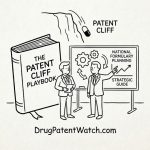
Investors frequently model pharmaceutical companies using “patent cliff” analyses that assume revenue drops sharply when key patents expire. For biologics, this framework is directionally correct but quantitatively misleading. The biologic IP cliff is not a cliff in the vertical-drop sense; it is a sequence of erosion events spread over a period that can span five to ten years after the first patent expires.
The erosion sequence for a major biologic typically follows a pattern. The composition of matter patent expires, often five to eight years before all other protection lapses. Reference product exclusivity expires at 12 years post-approval (14 years if pediatric exclusivity has been added). Method of use patents on specific indications expire at various dates over the subsequent three to seven years. Formulation and delivery patents expire over a period that may extend another five years beyond that. Process patents may still be active as long as 20 to 25 years post-approval.
At each stage, biosimilar market share increases, but not uniformly. The first biosimilar entry typically captures 10 to 20 percent market share within 12 months, significantly slower than small-molecule generic penetration because of prescriber inertia, formulary management by pharmacy benefit managers, and the complexity of biologic procurement in hospital and clinic settings [20]. As additional biosimilar entrants arrive and as payer pressure increases, market share erosion accelerates, but the reference product typically retains 30 to 50 percent market share even after multiple biosimilar competitors are available.
For Humira, after the first wave of US biosimilar launches in 2023, AbbVie reported that the reference product retained significant market share through aggressive contracting with pharmacy benefit managers, rebate arrangements that made the biosimilar alternatives economically unattractive for payers despite their lower list prices, and authorized generic adalimumab products that AbbVie itself introduced to capture value in the biosimilar-like pricing segment. The Humira case suggests that for biologic drugs with large patient populations and established physician preferences, brand loyalty can sustain significant market presence even after nominal IP protection has expired.
Market Share Dynamics After Biosimilar Entry
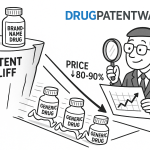
The economics of biosimilar market penetration are less favorable than the small-molecule generic analogy suggests. A small-molecule generic typically launches at 80 percent below the reference drug’s price and captures 80 percent of market share within six months, a dynamic that produces massive aggregate savings but makes the individual generic manufacturer’s business model dependent on volume rather than margin. The biosimilar market is different in both dimensions.
Biosimilar launch prices in the US market have historically been set at 15 to 35 percent below the reference product’s list price, compared to 70 to 90 percent discounts in the European market [21]. The discrepancy reflects the higher development costs for biosimilars, the smaller number of competitors in any given biosimilar market, and the greater pricing power that specialty product distribution channels and pharmacy benefit manager contracting give to reference product sponsors.
Market share penetration is also slower for biologics than small molecules. A combination of physician prescribing inertia, lack of automatic substitution for non-interchangeable products, and active reference product sponsor contracting programs has produced biosimilar penetration curves that plateau at 30 to 50 percent market share rather than the 80 to 90 percent that small-molecule generic competition achieves.
For investors, this dynamic means that the biologic “patent cliff” produces a more gradual revenue decline than the small-molecule equivalent. A company that loses Hatch-Waxman protection on a small-molecule blockbuster may see revenue fall 80 percent within 18 months. A company that loses BPCIA protection on a comparable biologic blockbuster will see revenue decline 20 to 40 percent over three to five years, with the steepest declines occurring as more biosimilar competitors enter and payers become more aggressive about formulary management.
Pricing Strategy After Loss of Exclusivity
Reference product sponsors have developed a set of pricing and contracting strategies specifically designed to maintain market position after biosimilar entry. The most widely used approach is the rebate wall: negotiating with pharmacy benefit managers to maintain preferred formulary status for the reference product in exchange for rebates that effectively reduce the net price below the biosimilar’s launch price, without publicly cutting the reference product’s list price.
This approach, sometimes called a rebate strategy or access contracting, creates a paradoxical situation where the reference product’s net price is lower than the biosimilar’s net price despite the biosimilar having a lower list price. Payers who have signed contracts requiring them to give the reference product exclusive or preferred formulary status must cover the reference product at lower patient cost-sharing than the biosimilar, directing prescriptions away from the biosimilar regardless of its scientific equivalence.
The FTC and Congress have examined this practice as a potential anticompetitive behavior, and several legislative proposals have sought to limit the use of rebate arrangements to maintain brand drug market position after biosimilar entry. The outcome of those legislative efforts remained unsettled as of early 2026, but the pressure suggests that the rebate wall strategy may face increasing legal and regulatory risk in coming years.
International Dimensions of Biologic Exclusivity
EU vs. US: A Tale of Two Frameworks
The European Union’s regulatory framework for biosimilars predates the US BPCIA by approximately five years. The European Medicines Agency approved its first biosimilar in 2006 [22], nearly four years before the BPCIA created the US biosimilar pathway. The EU framework provides eight years of data exclusivity and ten years of market exclusivity (the “8+2” system), compared to the US 12-year reference product exclusivity period.
The shorter EU exclusivity period has several consequences. Biosimilars have been commercially available in Europe for most major biologic products earlier than in the US. Biosimilar price competition in Europe has been more aggressive, with typical discounts of 30 to 70 percent below reference product prices in competitive tender situations. Market penetration has been deeper, with biosimilars achieving 60 to 90 percent market share in several therapeutic categories in some European markets.
The contrast between EU and US biologic markets has been central to the policy debate in the US about whether the 12-year exclusivity period is appropriate. Critics argue that the European experience demonstrates that eight to ten years of exclusivity is sufficient to incentivize biologic innovation, while the additional two to four years of US exclusivity primarily extends monopoly pricing without producing additional innovation benefits [23]. Proponents of the current US system argue that the US pharmaceutical market funds a disproportionate share of global pharmaceutical R&D, and that reducing exclusivity without commensurate changes in drug pricing in other markets would reduce total innovation funding.
How Companies Arbitrage Global Filing Strategies
The disparity between US and EU exclusivity periods creates filing strategy opportunities for originator companies. A biologic approved in the EU first might exhaust its EU exclusivity while the US 12-year period is still running, allowing biosimilar competition in Europe while maintaining protected pricing in the US. This is not a bug in the system but a structural feature: the US market’s longer exclusivity period creates a US price premium that partially offsets the revenue lost to biosimilar competition in Europe.
For biosimilar developers, the reverse arbitrage applies. A company that launches in Europe before the US exclusivity expires can generate cash flow from European operations that partially funds the clinical development and patent litigation costs associated with eventual US entry. Several biosimilar manufacturers have explicitly described this as their financial model: use European revenues to fund the multi-year, multi-hundred-million-dollar investment required for US market entry.
Novartis/Sandoz, Samsung Bioepis, Pfizer, and Amgen’s biosimilar division have all pursued global biosimilar strategies that use non-US markets as both development proving grounds and revenue sources while building toward the more valuable US market. AbbVie’s strategic use of global settlement agreements to allow early European biosimilar entry of adalimumab products, while maintaining US exclusivity, is the most prominent example of an originator managing the global/US arbitrage from the other direction.
Emerging Markets and the Biosimilar Opportunity
While the US and EU attract most analytical attention, emerging markets represent the largest growth opportunity for biosimilar manufacturers. Brazil, India, South Korea, and China each have domestic biologic manufacturing capabilities and regulatory frameworks that permit biosimilar approval, but each framework differs in the biosimilarity standard required, the data package needed, and the intellectual property protections available to reference product sponsors.
India has been particularly active in biologic manufacturing and biosimilar development, with companies including Biocon, Cipla, and Dr. Reddy’s Laboratories developing biosimilar portfolios for both domestic and export markets. Indian biosimilars have often been approved under regulatory standards that are less stringent than FDA or EMA requirements, creating both a cost advantage and a market access limitation: Indian biosimilars approved under the Indian Central Drugs Standard Control Organization framework cannot be used as evidence of biosimilarity for US or EU applications.
South Korea has developed a biosimilar industry of global scale. Samsung Bioepis and Celltrion, the two largest Korean biosimilar developers, have achieved FDA and EMA approval for multiple biosimilar products and compete directly with established Western pharmaceutical companies in the US and European markets. Korean biosimilar developers have benefited from government support for biologics manufacturing as an industrial policy priority, with the Korean government subsidizing the construction of large-scale biologic manufacturing facilities and supporting clinical development partnerships.
The Future of Biologic IP Strategy
AI-Assisted Patent Portfolio Construction
The application of machine learning to patent portfolio management is an emerging area that is beginning to change how originator companies plan and execute their IP strategy. AI tools can analyze patterns in biosimilar development timelines, identify which patents in a portfolio have historically been most effective at delaying competitor entry, and suggest new patent claims that address likely biosimilar design-arounds before competitors have the opportunity to develop them.
Several pharmaceutical companies have reported using AI-based patent analytics platforms to manage their biologic IP portfolios, though the specific tools and outcomes are rarely disclosed for competitive reasons. The general capabilities being deployed include natural language processing to identify potentially relevant prior art before filing new applications, machine learning models trained on patent litigation outcomes to assess the likely validity and enforceability of contemplated new claims, and predictive models that estimate the remaining commercial value of specific patents given their likely remaining term and the state of biosimilar development.
For biosimilar developers, AI patent analytics tools offer the reverse capability: systematic prior art searches that can identify potential invalidity arguments for reference product patents before IPR petitions are filed, landscape analyses that identify freedom-to-operate risks earlier in the development process when they can be addressed at lower cost, and competitive intelligence about which biosimilar programs are most advanced based on patent filing activity by competitor companies.
DrugPatentWatch and similar platforms provide the underlying data that AI-assisted analytics tools are increasingly built on top of, making the quality and comprehensiveness of those databases a material competitive factor in pharmaceutical IP strategy.
Next-Generation Biologics: ADCs, Bispecifics, and Cell Therapies
The next generation of biologic drugs extends far beyond traditional monoclonal antibodies into categories with even more complex IP landscapes. Antibody-drug conjugates (ADCs) combine a monoclonal antibody with a cytotoxic small molecule via a linker, creating a product with patentable antibody components, patentable linker chemistry, patentable drug payloads, and patentable conjugation methods, each potentially owned by different entities.
The ADC space illustrates how the patent thicket concept extends into more complex molecules. A company developing a HER2-targeting ADC must navigate patents on the HER2-targeting antibody (potentially owned by the reference product sponsor), patents on the linker chemistry (potentially owned by the company that invented the linker platform), patents on the specific cytotoxic payload (potentially owned by yet another party), and patents on the combination and the manufacturing process for the combined product. The freedom-to-operate analysis for an ADC biosimilar is substantially more complex than for a monoclonal antibody biosimilar.
Bispecific antibodies, which bind two different targets simultaneously, present a related challenge. Several bispecific platforms have extensive patent protection on the molecular architectures that allow two binding arms to be combined in a single molecule. Amgen’s BiTE (bispecific T-cell engager) platform, Roche’s CrossMAb technology, and AstraZeneca/AZ’s Fc-fused bispecific approaches are all protected by platform patents that apply to any product using those architectures, not just to specific drug molecules.
Cell therapies, particularly CAR-T products, represent the most novel IP challenge. A CAR-T cell therapy is a living cellular product manufactured from a patient’s own immune cells. Its “biosimilar” equivalent, if one could be developed at all, would need to demonstrate not just molecular similarity but functional similarity at the cellular level, a scientific standard that does not yet have clear regulatory articulation. The IP landscape for cell therapies includes patents on the CAR construct design, the vector used to insert the CAR gene into patient cells, the manufacturing process for T-cell expansion and selection, and the clinical protocols for conditioning patients before infusion.
Congressional Pressure to Shorten Exclusivity
The 12-year biologic exclusivity period has been a target of legislative reform efforts in multiple Congresses, with proposals ranging from reducing the period to seven years (matching the US orphan drug standard and approximating the EU standard) to eliminating or substantially modifying the period for products whose development costs were partially funded by government grants.
The CREATES Act, enacted in 2019 [24], addressed one specific aspect of the problem: it created a cause of action for biosimilar developers who cannot obtain reference product samples because of REMS restrictions, allowing them to sue for access to samples needed for comparative testing. The Act was a targeted fix rather than a systemic reform, but it addressed a practical barrier that had delayed several biosimilar programs by years.
Proposals to reduce exclusivity from 12 years to seven years have not advanced in recent Congresses, primarily because of pharmaceutical industry opposition supported by arguments about the potential impact on innovation incentives. The policy debate has been complicated by difficulty in attributing causality: it is genuinely difficult to measure how much biologic innovation would be lost if exclusivity were shortened, because the relevant counterfactual (what would have been developed under a seven-year system) does not exist.
The most plausible near-term reform trajectory is a combination of targeted adjustments: tighter standards on pediatric exclusivity eligibility for products with minimal pediatric patient populations, limits on the ability to use REMS programs to delay competitor sample access, and stronger FTC scrutiny of rebate arrangements that maintain reference product market share after biosimilar entry. A wholesale reduction in the 12-year exclusivity period requires legislative action that faces significant political headwinds given pharmaceutical industry lobbying power and the genuine complexity of the innovation incentive arguments.
The Integrated Strategy: Putting It Together
Building a Biologic Moat from Day One
The companies that have most successfully extended biologic exclusivity did not build their patent portfolios reactively in response to biosimilar development. They built them prospectively, as a deliberate commercial strategy that began at the earliest stages of drug development and continued through the product’s commercial life.
The integrated IP strategy for a biologic product starts with the composition of matter filing, which should be made as early as possible given the inevitably long FDA review process and the desire to maximize remaining patent term at approval. It continues through formulation development, where any novel formulation approach warrants patent protection even if the formulation is not the most commercially important aspect of the product. It extends through the clinical program, where method of use patents covering emerging indications, patient selection methods, and combination therapies should be filed as the data becomes available.
The critical insight from the Humira case is that IP strategy must be resource-intensive and long-term. AbbVie’s 136-patent portfolio was not built cheaply or quickly. It required decades of systematic patent filing, prosecuting patents aggressively even when individual claims were challenged, filing continuation patents that captured incremental improvements as they were developed, and monitoring competitor activity to identify potential design-arounds before they were publicly disclosed.
For companies with smaller portfolios or shorter time horizons, the Humira model may not be fully replicable. But the principles apply at any scale: file early, file continuously, cover all layers of protection, use pediatric and orphan incentives where available, and manage the settlement economics of biosimilar patent litigation to maximize the value extracted from the existing portfolio.
The Biosimilar Developer’s Counterstrategy
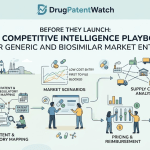
For biosimilar developers, the integrated strategy requires equally systematic thinking about how to navigate the originator’s portfolio rather than simply react to it. The most effective biosimilar developers engage in patent landscape analysis at the earliest stages of program selection, before significant investment in analytical or clinical development.
Programs selected for biosimilar development should be evaluated not just on the commercial size of the reference product market but on the patent landscape’s navigability. A $5 billion reference product with a thin patent thicket and expiring key patents may be a better biosimilar target than a $10 billion product protected by 100 active patents spanning multiple categories and expiry dates spanning 15 years.
When a biosimilar program is selected despite a complex patent landscape, the developer should invest in IPR proceedings at the USPTO as early as possible on the highest-value, most-likely-invalid patents. IPR has a success rate of 60 to 70 percent for patents on which the trial is instituted [25], and successful IPR cancellation of even one or two key reference product patents can substantially change the litigation settlement dynamics.
The interchangeability standard, while expensive to achieve, represents a genuine competitive advantage for biosimilar developers who can demonstrate it. An interchangeable biosimilar occupies a fundamentally different commercial position than a non-interchangeable one: it can be automatically substituted at the pharmacy level, creating a frictionless patient transition pathway that does not require prescriber action. For high-volume biologic products prescribed by primary care physicians or in retail pharmacy settings, interchangeability can be the difference between meaningful market penetration and marginal commercial success.
Key Takeaways
The biologic drug IP system is designed to produce overlapping, layered protection that extends well beyond any single exclusivity period or patent. Understanding the architecture requires separating the components and analyzing each individually.
Reference product exclusivity under the BPCIA runs 12 years from first FDA approval, with potential extensions from pediatric exclusivity and orphan drug designation. This statutory period is the floor of biologic protection, not the ceiling.
The patent thicket, comprising composition of matter, method of use, formulation, and process patents, can extend effective market exclusivity by five to fifteen years beyond the BPCIA period, as the Humira case demonstrates with its 21-year effective US exclusivity despite a composition of matter patent that expired in 2016.
The patent dance under Section 351(l) creates strategic choices for both originator companies and biosimilar developers. Participation provides originators with manufacturing intelligence; non-participation gives biosimilar applicants more timing flexibility but changes the litigation framework.
Citizen petitions, REMS access restrictions, and interchangeability standards are secondary regulatory tools that add cost and delay to biosimilar development without affecting the underlying IP rights. Their commercial impact is real but decreasing as the FDA has strengthened its regulatory processes against obvious delay tactics.
Market share erosion after biosimilar entry is slower and less complete for biologics than for small-molecule generics. Reference product sponsors retain 30 to 50 percent market share even after multiple biosimilar competitors are available, primarily through rebate-based contracting and physician prescribing inertia.
The international IP landscape is not uniform. The EU’s 8+2 framework produces faster biosimilar entry and deeper market penetration than the US system, and the resulting price differential creates a US revenue premium that cross-subsidizes global IP strategy costs.
Next-generation biologic products, including ADCs, bispecifics, and cell therapies, have IP landscapes substantially more complex than traditional monoclonal antibodies, with platform patents owned by multiple parties and a regulatory biosimilarity framework that is still being developed.
Intelligence platforms such as DrugPatentWatch provide systematic access to patent, exclusivity, and litigation data that is essential for competitive analysis on both the originator and biosimilar developer sides of the market.
Frequently Asked Questions
What happens to a biologic’s market position when the 12-year reference product exclusivity expires but multiple patents remain active?
The FDA can approve biosimilar applications after year 12, but approved biosimilars cannot legally be sold in the US if any valid, infringed patent covers the reference product. A biosimilar developer who has received FDA approval must either successfully challenge or design around the remaining active patents, enter into a licensing agreement with the originator, or wait until those patents expire. In practice, most situations are resolved through licensing agreements reached in the context of litigation settlements, with the originator granting the biosimilar developer a license to launch on a specific future date in exchange for the biosimilar developer agreeing to respect specific patents and pay a royalty during the license period. The commercial result is that the originator’s revenue timeline extends beyond year 12 even when the FDA pathway is technically open.
How do pharmaceutical investors identify which biologic products are most vulnerable to biosimilar competition in the near term?
The most useful analytical framework combines four inputs: the remaining life of the most durable patents in the product’s portfolio (not just the composition of matter patent), the state of biosimilar development programs as tracked through FDA biosimilar application databases and resources such as DrugPatentWatch, the history of litigation outcomes for patents in the same category as those protecting the product, and the market structure of the therapeutic area, including the degree of payer pressure and the availability of competing treatments. Products where the patent portfolio is thin or composed primarily of formulation patents that have historically been held invalid, where multiple biosimilar applications are already accepted, where the FDA has signaled regulatory confidence in its biosimilarity framework for that molecule type, and where payers have strong incentives to mandate biosimilar substitution are the most vulnerable to rapid revenue erosion after exclusivity expires.
What is the practical difference between a biosimilar and an authorized generic for biologics?
An authorized generic small-molecule drug is an exact copy of the reference product, manufactured by or under license from the originator, and sold under a different label at a lower price. The biologic equivalent is an originator-produced product sold under a new label at a reduced price, capturing value in the price-sensitive segment without requiring the originator to actually lose market share to a competitor. AbbVie’s strategy with adalimumab in 2023 included introducing its own Humira biosimilar-equivalent (called Hadlima in partnership with Samsung Bioepis) under a licensing arrangement, allowing AbbVie to capture revenue from the price-sensitive formulary tier while maintaining Humira’s market position in the premium tier. Authorized generics in biologics are legally and commercially distinct from true biosimilars: they do not require a separate FDA biosimilarity determination, they can be sold as interchangeable with the reference product because they are made by the same manufacturer, and they give the originator a direct role in the competitive erosion of its own reference product’s market.
Can a biologic manufacturer restart the 12-year exclusivity clock by modifying the original molecule?
Yes, under specific conditions. The FDA will grant a new 12-year exclusivity period to a modified biologic that contains a new molecular entity, involves a structural modification to the principal molecular structural feature, and produces at least one new clinical benefit relative to the original product. In practice, this standard has been interpreted conservatively by the FDA: minor modifications such as changing the glycosylation pattern or adding a PEGylation moiety do not qualify, while genuine new molecular constructs such as a bispecific antibody developed from a reference monoclonal antibody’s binding domain may qualify. The practical strategy implication is that manufacturers who can invest in genuine molecular innovation that meets the FDA’s new exclusivity threshold, rather than incremental modification, can restart the clock and effectively extend the 12-year protection period for updated product generations. Biosimilar developers must track whether a reference product has received a new exclusivity determination as part of their landscape analysis.
How does the US biologic exclusivity framework compare to what is available for small-molecule drugs under Hatch-Waxman?
The comparison reveals how substantially more protective the biologic framework is. Under Hatch-Waxman, a small-molecule new chemical entity receives five years of data exclusivity (three years for new clinical investigations). A biologic receives 12 years of reference product exclusivity, more than double. Hatch-Waxman’s 30-month stay from patent litigation operates similarly to the BPCIA’s 30-month stay, but small-molecule patent thickets are generally thinner because the molecular complexity is lower and the range of patentable improvements to a small molecule is narrower. The Paragraph IV certification process for small-molecule generics directly creates an invalidity challenge trigger that does not have a precise equivalent in the BPCIA system, though IPR proceedings serve a similar function. The net result is that small-molecule drugs on average face meaningful generic competition 12 to 14 years after launch, while biologic drugs on average face meaningful biosimilar competition 15 to 20 years after launch, a gap that translates directly into higher lifetime revenues for biologic products and higher long-term costs for payers and patients.
References
[1] Association for Accessible Medicines. (2023). Generic drug access and savings report 2023. Association for Accessible Medicines.
[2] Congressional Budget Office. (2022, October). Prices for and spending on specialty drugs in Medicare Part D and Medicaid: An in-depth analysis. Congressional Budget Office.
[3] Sandoz Inc. v. Amgen Inc., 582 U.S. 1 (2017).
[4] U.S. Food and Drug Administration. (2014). Guidance for industry: Biosimilars: Questions and answers regarding implementation of the Biologics Price Competition and Innovation Act of 2009. FDA.
[5] Best Pharmaceuticals for Children Act, Pub. L. No. 107-109, 115 Stat. 1408 (2002).
[6] Orphan Drug Act, Pub. L. No. 97-414, 96 Stat. 2049 (1983).
[7] 35 U.S.C. § 156 (Patent term extensions for drug regulatory review periods).
[8] I-MAK. (2021). Overpatented, overpriced: How excessive pharmaceutical patenting is extending monopolies and driving up drug prices. Initiative for Medicines, Access, and Knowledge.
[9] AbbVie Inc. (2023). Annual report 2022. AbbVie Inc.
[10] Feldman, R., & Frondorf, E. (2018). Drug wars: How big pharma raises prices and keeps generics off the market. Cambridge University Press.
[12] Sarpatwari, A., Barenie, R., Curfman, G., Kesselheim, A. S., & Doshi, P. (2019). The US biosimilar market: Stunted growth and possible reforms. Clinical Pharmacology and Therapeutics, 105(1), 92-100.
[13] U.S. Food and Drug Administration. (2017). Citizen petition denial related to the approval of biosimilar applications: Summary of FDA responses. FDA.
[14] U.S. Food and Drug Administration. (2023). Manual of policies and procedures: 6400.13 — Handling and priority review of citizen petitions that raise issues that are pending in an abbreviated new drug application or biosimilar application. FDA.
[15] CREATES Act of 2019, Pub. L. No. 116-94, § 610 (2019).
[16] U.S. Food and Drug Administration. (2015). Guidance for industry: Reference product exclusivity for biological products filed under Section 351(a) of the PHS Act. FDA.
[17] U.S. Food and Drug Administration. (2019). Guidance for industry: Development of therapeutic protein biosimilars: Comparative analytical assessment and other quality-related considerations. FDA.
[18] U.S. Food and Drug Administration. (2023). Purple book database of licensed biological products [Database]. FDA. Retrieved from https://purplebooksearch.fda.gov
[19] Mulcahy, A. W., Hlávka, J. P., & Case, S. R. (2018). Biosimilar cost savings in the United States: Initial experience and future potential. RAND Health Quarterly, 7(4), 3.
[20] IQVIA Institute for Human Data Science. (2023). Biosimilars in the United States 2023-2027: Competition, savings, and sustainability. IQVIA Institute.
[21] Lyman, G. H., Zon, R., Harvey, R. D., & Schuchter, L. M. (2018). Rationale, opportunities, and reality of biosimilar medications. New England Journal of Medicine, 378(21), 2036-2044.
[22] European Medicines Agency. (2006). European public assessment report: Omnitrope (somatropin). EMA.
[23] Kesselheim, A. S., Tan, Y. T., & Avorn, J. (2015). The roles of academia, rare diseases, and repurposing in the development of the most transformative drugs. Health Affairs, 34(2), 286-293.
[24] CREATES Act of 2019, Pub. L. No. 116-94, Division N, § 610 (establishing Section 505(q) of the FDCA regarding shared REMS requirements).
[25] Vishnubhakat, S., Rai, A. K., & Kesan, J. P. (2016). Strategic decision making in dual PTAB and district court proceedings. Berkeley Technology Law Journal, 31(1), 45-117.