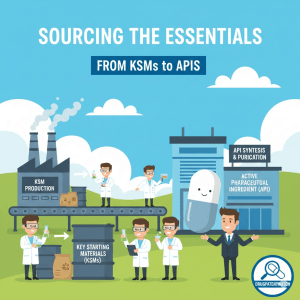
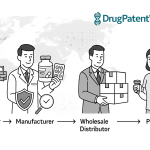
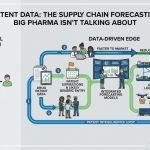
Three decades of aggressive outsourcing to low-cost geographies suppressed the Cost of Goods Sold (COGS) for Active Pharmaceutical Ingredients (APIs) while building a supply chain that now qualifies as a systemic national security risk. The Key Starting Material (KSM) — the molecular foundation from which all APIs are synthesized — sits at the center of that risk.
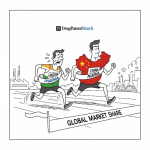
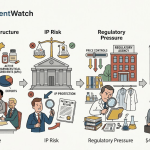
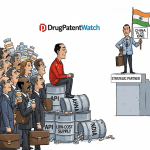
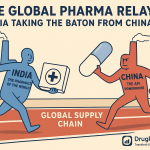
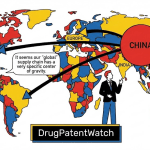
China produces roughly 40% of global API volume and is the dominant global supplier of KSMs. India, widely branded as the ‘Pharmacy of the World,’ imports 70-80% of its total API and KSM requirements from Chinese manufacturers, rising to 90-100% for critical antibiotic intermediates like Penicillin G, cephalosporins, and macrolides. These two facts, read together, describe a funnel — not a network.
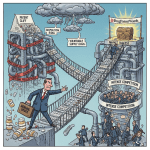
The COVID-19 pandemic exposed that funnel. So did the explosion at a chemical park in Weifang, China, in May 2025. So did the Red Sea crisis in 2024 that stretched shipping lead times by weeks and pushed API procurement teams to hold months of safety stock, tying up working capital that should have been deployed elsewhere. In response, the industry narrative has shifted from ‘just-in-time’ efficiency to ‘just-in-case’ resilience — a phrase that is easier to say in an investor presentation than to operationalize across a global supply chain.
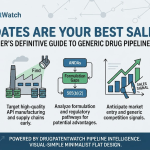
This pillar page deconstructs every layer of that challenge: the regulatory battleground where the definition of a KSM can add millions to your manufacturing cost structure; the geopolitical realities behind ‘China Plus One’ (a strategy that is frequently more rhetoric than operational fact); the technology roadmap that is finally making domestic production economically viable; the price volatility in commodity KSMs driven by sectors pharma barely monitors; and the patent intelligence frameworks that allow procurement teams to predict generic entry and lock in supply two years before competitors do.
Part I: Regulatory Battlefield — The Economics of KSM Designation
What a KSM Is, and Why the Line Matters
Under ICH Q11, a Key Starting Material is a raw material, intermediate, or API that is incorporated as a significant structural fragment into the final drug substance. That sounds straightforward. In practice, it is the most financially consequential designation decision a process chemistry team makes.
The KSM designation marks the formal start of Good Manufacturing Practice (GMP) controls. Steps prior to the KSM are generally non-GMP. Every step after it must meet the documentation, environmental monitoring, personnel qualification, and facility standards codified in ICH Q7. The cost difference between a GMP synthesis step and a non-GMP fine chemical step is enormous — and entirely predictable from the regulatory definition.
The Economics of Late-Stage Designation
Manufacturers face a structural economic incentive to push the KSM designation as far downstream as possible — a practice called ‘late-stage designation.’ The logic is straightforward.
Fewer steps under GMP oversight means lower documentation costs, reduced environmental monitoring expenses, and the ability to run upstream chemistry in standard fine chemical plants rather than expensive pharma-grade facilities. Sourcing non-GMP intermediates also opens access to a broader supplier pool without GMP compliance overhead, which drives prices down and speeds procurement. Changing a non-GMP supplier is operationally simple and requires no regulatory variation filing, while swapping a GMP supplier for a registered step requires a Prior Approval Supplement (PAS) in the US or a Type II variation in the EU — processes that take months and carry approval risk.
These incentives are real and rational. The regulatory response to them is also real and increasingly adversarial.
Why Regulators Are Pushing Back
The FDA and EMA are skeptical of complex molecules that effectively ‘appear’ in a drug application as starting materials with no transparent synthetic lineage. Their core concern is impurity purging.
When a KSM is introduced only one or two steps before the final API, the available unit operations — crystallizations, distillations, extractions — are limited. That means impurities generated in the non-GMP synthesis of the KSM have few chances to be removed before they end up in the drug. This is particularly critical for mutagenic impurities, which regulatory bodies assess under ICH M7. A nitrosamine contamination event in a compound with a short GMP route is not a hypothetical; it is a liability that regulators price into their scrutiny of the proposed starting point.
The EMA’s reflection paper on starting materials explicitly states that assessors will not accept ‘third party confidential information’ to justify the purity of an advanced intermediate if the applicant cannot demonstrate full knowledge of its synthesis. If a regulator rejects a proposed KSM designation, the consequences cascade: forced redesignation to an earlier precursor, retrospective validation of upstream steps, mandatory GMP audits of upstream suppliers, and months or years of market delay. In a competitive generic launch, a six-month delay is commercial death.
The ‘Significant Structural Fragment’ Debate
ICH Q11 requires that a KSM contribute a ‘significant structural fragment’ to the final API. In practice, this requirement creates a spectrum of materials that are clearly KSMs, clearly not KSMs, and genuinely contested.
Simple commodity chemicals — benzene, toluene, basic alcohols — are raw materials. Their impurity profiles are well-characterized and their use is non-controversial. Custom-synthesized molecules created exclusively for one pharmaceutical client are the difficult cases. When a supplier produces a unique chemical for a single pharma customer, regulators often interpret that relationship as outsourced pharmaceutical manufacturing rather than raw material supply. The consequence is that the sponsor must control that custom molecule’s synthesis with the same depth of oversight they would apply to their own manufacturing step. Citing ‘commercial availability’ as the basis for a KSM designation — arguing that the material can be purchased, therefore it is a starting material — no longer satisfies either FDA or EMA without accompanying scientific data on impurity fate and purging capability across the remaining GMP steps.
FDA vs. EMA: The Divergence That Forces a Highest-Common-Denominator Strategy
ICH Q11 was designed to harmonize FDA and EMA approaches to starting material designation. The harmonization is incomplete, and the gap has material consequences for companies developing global regulatory strategies.
The FDA’s assessment framework emphasizes the applicant’s ability to demonstrate a robust control strategy. If a manufacturer can prove through process validation data and impurity fate studies that contaminants generated upstream are consistently purged across the GMP steps, the FDA is sometimes willing to accept a later starting point. The agency focuses heavily on the risk to drug substance quality rather than on the number of steps performed under GMP.
The EMA applies a distinctly different lens. EU assessors scrutinize the propinquity of the KSM to the final API — the number of chemical transformation steps performed under GMP — with explicit skepticism toward routes that run fewer than three GMP steps. The EMA also takes a harder line on custom-synthesized materials, treating any molecule manufactured specifically for the applicant as presumptively requiring GMP oversight regardless of where it falls in the synthetic sequence. A KSM designation strategy calibrated to FDA expectations can and does generate Major Objections during EMA assessment.
For companies filing both an NDA/ANDA in the US and an MAA in the EU, this divergence forces a highest-common-denominator position: design the GMP boundary to satisfy EMA scrutiny, then confirm FDA alignment rather than optimizing separately for each jurisdiction.
Comparative Regulatory Assessment Framework: FDA vs. EMA
Feature
FDA
EMA
Guidance basis
ICH Q11 + ICH Q7; risk-to-quality focus
ICH Q11 + Reflection Papers; propinquity focus
Primary criterion
Control strategy and impurity purging data
Number of chemical steps under GMP; complexity of proposed KSM
Custom synthesis treatment
Risk-based; requires impurity fate data
Treated as outsourced manufacturing; GMP oversight expected
Short GMP route tolerance
Moderate; data-dependent
Low; fewer than 3 GMP steps triggers Major Objection risk
Rejection mechanism
Complete Response Letter (CRL) citing CMC deficiency
Synthesis details must be fully transparent to applicant; ‘blind’ sourcing rejected
Case Study: The Cost of Regulatory Redesignation
A stereoselective synthesis case circulated in EMA regulatory training materials illustrates the stakes precisely. An applicant proposed a KSM that fell two chemical steps from the final API. The assessor rejected the designation on the grounds that the remaining GMP route was insufficient to provide confidence that unexpected impurities from the non-GMP synthesis were consistently purged.
The manufacturer was required to redesignate to a precursor used three steps earlier in the synthesis, bring those three steps under GMP, conduct new process validation studies for each, and audit the upstream supplier to GMP standards — a supplier that had never been subject to GMP oversight. The total project delay ran to over 14 months. The remediation cost exceeded seven figures. The commercial window for a profitable generic launch shrank materially.
The lesson is not that late-stage designation is wrong. The lesson is that it requires a scientific dossier — ICH M7 impurity fate studies, process validation data, and a control strategy that demonstrates purging — not simply a commercial argument about availability.
Key Takeaways: Regulatory Designation
The financial difference between a KSM designated two steps versus five steps from the API can represent 15-40% of the API’s total manufacturing cost. That gap is real, and it is rational to pursue it. The risk is regulatory rejection, which produces costs that dwarf the savings. Any late-stage designation requires an impurity fate and purging dossier as foundational support, not an afterthought. Global regulatory strategy must be calibrated to EMA standards first; FDA alignment is the confirmation step, not the starting point.
Part II: Geopolitical Chokehold — Mapping the Dependency
China’s Structural Dominance
China accounts for roughly 40% of global API volume by weight and is the primary upstream KSM supplier to the entire global pharmaceutical industry. The aggregate US import figure from China — approximately 13% of API imports by declared origin — understates the exposure because it does not capture Chinese-origin KSMs processed in India or Europe before re-export to the US market.
Chinese dominance was built deliberately over two decades through state subsidies, integrated chemical park infrastructure, captive fermentation capacity, and a willingness to tolerate margins that drove Western producers out of the market entirely. Penicillin G synthesis, which requires large-scale fermentation capacity, was effectively abandoned by Indian and European manufacturers in the 2000s when Chinese producers priced the product below the cost of Western production. That capacity did not disappear — it consolidated in Shijiazhuang and Inner Mongolia. In late 2024, Chinese manufacturers cut prices on 41 key APIs and KSMs by 40-50%, a move that analysts at Prosperous America attributed to a strategic effort to maintain market share against nascent Indian and European competition rather than to genuine demand weakness.
India’s Downstream Processing Exposure
India supplies 48% of US API imports and provides the majority of the world’s generic formulations. It is also critically dependent on Chinese KSMs. Approximately 70-80% of India’s total API and KSM requirements originate in China. For antibiotic intermediates, that figure approaches 90-100%. India functions as a processing hub — it converts Chinese intermediates into finished APIs and ships them westward. When Chinese supply is disrupted, Indian production is disrupted within weeks, and US generic drug availability follows within months.
This dependency is structural, not incidental. India’s fine chemical and fermentation industries shrank in direct proportion to Chinese market penetration during the 2000s and 2010s. The economic logic that destroyed domestic fermentation capacity in Western markets operated identically in India for earlier-stage chemistry. Rebuilding that capacity requires time, capital, and process expertise that takes years to re-accumulate.
The ‘China Plus One’ Strategy: What It Actually Achieves
Pharmaceutical executives have cited ‘China Plus One’ in investor calls since 2020. The strategy, in theory, involves cultivating alternative KSM and API suppliers in India, Vietnam, or Europe while maintaining Chinese primary supply, thereby reducing single-source dependency. In practice, the implementation varies enormously.
India’s Production Linked Incentive (PLI) scheme, launched in 2020 and expanded through 2025, allocated over $2 billion to incentivize domestic manufacturing of 53 critical KSMs and APIs previously sourced predominantly from China. By 2025, 48 projects were approved under the scheme, and meaningful capacity has been established for fermentation-based products. India’s Aurobindo Pharma, Cipla, and Divi’s Laboratories have all announced PLI-supported capacity expansions in API segments where Chinese pricing had previously made domestic investment unviable.
Divi’s Laboratories’ trajectory is instructive. The company is one of India’s largest API exporters, with revenues exceeding $900 million in FY2024, and holds a strong position in nutraceutical and custom synthesis markets. Its PLI projects target fermentation-based APIs and complex synthesis where backward integration into basic chemistry is commercially viable given the scale of Divi’s existing operations. However, even Divi’s acknowledges in filings that certain KSM precursors for its own synthesis remain sourced from China, illustrating that backward integration is a multi-step process, not a binary switch.
The underlying problem with ‘China Plus One’ as executed is that many Indian manufacturers who are the designated ‘Plus One’ remain dependent on Chinese precursors for their own KSMs. The alternative source is, in many cases, a processor of the same Chinese material rather than a genuine alternative origin. Procurement teams evaluating Indian suppliers must specifically verify the backward integration of those suppliers — confirming that they manufacture or dual-source the precursors to their own KSMs — or risk discovering that ‘supplier diversification’ is a label applied to a longer version of the same supply chain.
Vietnam and Southeast Asia: Near-Term Limits
Vietnam is genuinely attracting pharmaceutical FDI through competitive tax structures and preferential trade arrangements, including access to the CPTPP. Several multinational CDMOs have established formulation and packaging facilities in Vietnam. For finished dose forms, Vietnam is viable. For complex KSM synthesis, it is not — the petrochemical and fine chemical ecosystem that underpins commercial-scale pharmaceutical chemistry does not exist in Vietnam in 2025 at the depth required to substitute Chinese supply. Vietnam is a five-to-ten year infrastructure build-out away from being a credible alternative for advanced KSMs, and treating it as one in sourcing plans overstates the actual risk mitigation achieved.
Reshoring to the West: Policy, Investment, and Reality
The US government moved to fill a Strategic Active Pharmaceutical Ingredients Reserve (SAPIR) via executive order in 2025, mandating domestic sourcing requirements for essential medicines. This policy creates an economic floor for Western manufacturing that did not exist before.
Eli Lilly’s $2 billion parenteral products facility in Concord, North Carolina, is the most visible example of the investment wave this policy environment has triggered. Amgen operationalized a biomanufacturing campus in Central Ohio in 2024. Both represent genuine capacity, though their focus is on the injectable biologics and large-molecule end of the spectrum rather than the small-molecule KSM chemistry where Chinese dominance is most acute.
In Europe, EUROAPI — the API manufacturing subsidiary spun out of Sanofi — has received state support through EU health sovereignty frameworks to upgrade facilities in France for peptide and oligonucleotide production. This positions EUROAPI specifically for the high-value synthetic modalities (GLP-1 peptides, antisense oligonucleotides) where Western manufacturing has economic justification because the KSM chemistry is proprietary, technically demanding, and the volumes relatively small. For high-volume, low-margin generic API KSMs, Western reshoring remains economically difficult without sustained policy support.
Supply Chain Disruptions: The 2024-2025 Event Log
The May 2025 explosion at a Weifang chemical plant killed at least five workers and disrupted supply of pharmaceutical and agrochemical intermediates across multiple API categories. Factory accidents in Telangana and Andhra Pradesh in India during the same period highlighted that the safety and regulatory oversight gaps that create supply disruption risk are not unique to China.
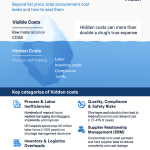
The Red Sea security crisis and the 2024 Panama Canal drought extended Asia-to-Americas shipping transit times by two to three weeks and drove index rates on key routes to multi-year highs. Higher transit costs and longer lead times force companies to hold larger safety stocks of KSMs — capital tied up in inventory that earns nothing while sitting in a warehouse.
The US government’s September 2025 additions to the Entity List, including 32 Chinese and Indian firms involved in dual-use chemistry, added a new category of supply disruption risk: compliance-driven forced supplier changes with no ready alternative qualified to GMP standards.
Key Takeaways: Geopolitics
‘China Plus One’ is a risk management framework, not a supply chain solution, when the ‘Plus One’ supplier remains dependent on Chinese precursors. India is the most credible near-term alternative for fermentation-based APIs and select generic chemistry, but backward integration verification at the supplier level is non-negotiable. Vietnam and Southeast Asia are five or more years from being genuine KSM alternatives at commercial scale. Western reshoring is happening but is concentrated in high-value synthetic modalities (peptides, oligonucleotides, biologics) rather than the commodity KSM chemistry where Chinese dominance is deepest.
Investment Strategy: Geopolitics
Portfolio managers evaluating pharma supply chain exposure should distinguish between companies with genuine backward integration in India or domestic US/EU capacity and those managing marketing slides rather than actual procurement diversification. Audit disclosures, regulatory filings, and CDMO partnership announcements provide the data. Publicly traded Indian API manufacturers with PLI-funded fermentation capacity and documented reduction in China-origin precursor purchases represent a more defensible investment thesis than those claiming diversification while maintaining high Chinese KSM dependency in their Cost of Goods.
Part III: Strategic Sourcing — Data-Driven Procurement
Patent Intelligence as a Procurement Tool
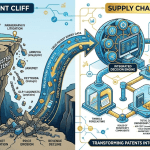
KSM sourcing is a timing business as much as a chemistry business. A generic manufacturer who secures API supply two years before a patent cliff at a negotiated volume price has a structural cost advantage over a competitor who scrambles to qualify a supplier in the twelve months before launch. Patent intelligence platforms convert expiration data into sourcing calendars.
DrugPatentWatch aggregates global patent data, litigation status, Paragraph IV certification filings, and regulatory exclusivity periods — including pediatric exclusivity extensions and orphan drug designations — to generate calculated ‘Probable Generic Entry’ dates for thousands of compounds. For a procurement team, this data translates directly into a backward-planning model.
If DrugPatentWatch indicates a patent cliff in 2027 for a high-volume branded drug, the sourcing timeline works backward: KSM supplier qualification should begin in 2023-2024, synthetic route evaluation and process validation in 2022-2023. Teams that execute this sequence have API supply secured and batch records complete well before the Abbreviated New Drug Application (ANDA) approval window opens. Teams that begin at ANDA filing face compressed timelines, premium pricing from suppliers who recognize the urgency, and the risk of delay.
Paragraph IV certification filings in the Orange Book are particularly useful for KSM procurement intelligence. A Paragraph IV notice is a public declaration that a generic challenger has formed the legal opinion that an Orange Book-listed patent is invalid or will not be infringed by the generic product. At the time of filing, that challenger has already secured an API source — either in-house or from a qualified supplier — completed process validation batches, and submitted an ANDA. Monitoring Paragraph IV certifications through DrugPatentWatch tells a competitor exactly which compounds are in active generic development and approximately how far along the commercial preparation is. It is a signal to accelerate or acknowledge the competitive position is already compromised.
Competitor patent filings carry secondary intelligence. A brand manufacturer filing a new process patent for a polymorphic form, a specific particle size specification, or a novel synthetic route discloses their manufacturing strategy. A KSM supplier who identifies this filing early can pre-position capacity for the specific grade and specification the competitor is likely to require, front-running demand before the market recognizes it exists.
Supplier Qualification: The Full Risk Matrix
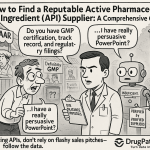
KSM supplier qualification in 2025 is a multi-dimensional risk management exercise, not a price negotiation. The lowest bid from a supplier with regulatory deficiencies is a liability, not a cost saving, because the consequences of a supplier-related Complete Response Letter (CRL) include months of market delay, legal fees, and reputational damage that exceeds any procurement savings by orders of magnitude.
Modern procurement teams use weighted decision matrices that score suppliers on regulatory history, supply chain resilience (including the supplier’s own backward integration into precursor chemistry), cost competitiveness, geopolitical risk, sustainability credentials, and financial health. Applying a 30% weight to regulatory history and 15% to geopolitical risk in a supplier scoring model — as opposed to overweighting price — frequently results in a different supplier selection than a pure COGS-minimization approach, and a more defensible one.
The audit checklist for KSM suppliers has expanded significantly in response to FDA Warning Letter patterns from 2020-2025. Data integrity — confirming that raw instrument data on laboratory hard drives matches the summary reports submitted with batch records — is now a mandatory audit element. Gaps here have generated Warning Letters against multiple Indian and Chinese API manufacturers. Traceability now extends one level upstream: can the KSM supplier trace the starting materials of their starting materials? This is essential for nitrosamine risk assessment. N-Nitrosodimethylamine (NDMA) contamination events in valsartan, ranitidine, and metformin APIs originated from trace impurities in solvents and reagents used in non-GMP steps upstream of the registered KSM. Verifying the impurity profiles of the supplier’s own precursors is no longer optional. Financial health is an underweighted criterion in most qualification frameworks. A KSM supplier operating with thin margins and high debt in a tariff-volatile environment is a supply chain break waiting to happen.
Weighted Supplier Decision Matrix Example
Criterion
Weight
Supplier A (China)
Supplier B (India)
Supplier C (Europe)
Regulatory history (FDA/EMA audits)
30%
6/10 — Minor 483 observations
5/10 — Warning Letter 2022
10/10 — Clean history
Supply chain resilience (backward integration)
25%
9/10 — In-house KSM synthesis
6/10 — Imports KSMs from China
8/10 — Dual-sourced precursors
Cost competitiveness
20%
10/10 — Lowest price
9/10 — Competitive
4/10 — Highest price
Geopolitical risk
15%
3/10 — High tariff/Entity List exposure
7/10 — Moderate
9/10 — Stable
Sustainability / green chemistry
10%
5/10 — Standard
6/10 — Standard
9/10 — Advanced
Weighted total
100%
6.95
6.60
8.15
In this model, Supplier C wins despite the highest sticker price, because regulatory risk and geopolitical exposure are priced appropriately. That modeling reflects the actual cost of a CRL-generating supplier failure, not a notional concern.
Building the Dual-Source Architecture
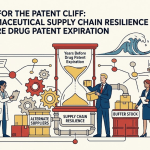
The minimum viable resilience strategy for any high-volume API is a qualified dual-source structure — two independently qualified KSM suppliers from different geographies, each capable of meeting full commercial volume requirements. Maintaining two suppliers at partial volume is more expensive than single-source procurement on a per-unit basis, but the insurance value against supply disruption in a concentrated supply chain environment justifies the premium.
The qualification of a secondary supplier before it is needed is a recurring challenge. Procurement teams frequently defer secondary qualification during periods of supply stability, then discover when the primary supplier has a regulatory action or factory incident that the qualification process for the backup takes eight to eighteen months. Building secondary qualification into the routine product lifecycle planning — not as a crisis response — is the operational discipline that separates resilient supply chains from fragile ones.
Key Takeaways: Strategic Sourcing
Patent expiration intelligence should drive KSM procurement calendars, not ANDA filing dates. A sourcing team using DrugPatentWatch to work backward from Probable Generic Entry dates has a structural timing advantage over competitors who react to approval windows. Dual-source architecture is the minimum viable resilience standard. Weighted decision matrices that correctly price regulatory and geopolitical risk almost always select a different supplier than COGS-only optimization.
Part IV: Technology as the Cost Equalizer
Continuous Manufacturing and Flow Chemistry: The Reshoring Enabler
Batch processing has dominated pharmaceutical chemistry for over a century. Large stirred-tank reactors, scheduled GMP campaigns, manual sampling, and extensive downstream workup define the economics of conventional API manufacturing. Those economics favor China and India, where lower labor costs and depreciated infrastructure offset the geographic disadvantage.
Flow chemistry — running reactions continuously in small-diameter reactor tubes rather than large batch tanks — changes that cost structure in ways that matter specifically for Western reshoring. The footprint of a continuous manufacturing plant can be one-tenth the footprint of a batch equivalent, which reduces construction costs, HVAC and utilities expense, and the regulatory compliance burden associated with large-volume GMP facilities. This is the difference between a $200 million batch API facility and a $40-60 million continuous plant producing equivalent output.
Safety is the other decisive argument. Hazardous reaction classes — nitrations, hydrogenations, azidations, fluorinations — that are operationally difficult and capital-intensive in large batch reactors become manageable in continuous flow, where the volume of reactive material in process at any moment is measured in milliliters rather than thousands of liters. This does two things: it reduces the risk to personnel and facility (and the regulatory scrutiny that comes with high-hazard batch processes), and it opens access to synthetic routes that are impractical at batch scale. A more efficient synthetic route from an earlier KSM often reduces API cost even before accounting for the equipment economics.
Quantitative economics from peer-reviewed techno-economic analyses at the University of Edinburgh show that integrated continuous manufacturing can reduce Capital Expenditure by 20-76% and Operating Expenditure by up to 40% relative to batch processing for equivalent production volumes. The range is wide because it depends heavily on the chemistry — reactions where heat and mass transfer are rate-limiting benefit most; simple mixing reactions benefit less. For complex, multi-step API syntheses of the kind where flow chemistry’s advantages compound across multiple steps, the economics are compelling.
Adoption has moved from proof-of-concept to commercial deployment. SK pharmteco has expanded continuous manufacturing capabilities at its California facilities to support commercial-scale peptide synthesis for US customers who require domestic production. WuXi STA, which operates continuous flow platforms at its Changzhou facility, reports that client demand for flow chemistry-enabled synthesis has grown consistently as brands seek more predictable yields and narrower impurity profiles for complex molecules. The US flow chemistry market is projected to grow at a compound annual rate of 10.3% through 2030, driven by reshoring investment and process intensification requirements for next-generation therapeutic modalities.
The regulatory pathway for continuous manufacturing is now clear. ICH Q13, finalized in 2022, provides specific guidance on development and manufacture of drug substances using continuous processing, including control strategy requirements, batch definition for continuous processes, and the regulatory filing approach for switching from batch to continuous manufacturing post-approval. The ambiguity that made regulators and manufacturers hesitant in the early 2010s has been resolved.
Green Chemistry: The Procurement Case
Green chemistry in pharmaceutical manufacturing has historically been framed as a sustainability initiative — a response to environmental regulations, ESG investor pressure, or corporate responsibility commitments. The more accurate framing for a procurement audience is that green chemistry is a cost reduction strategy with sustainability co-benefits.
Solvent procurement and disposal are two of the largest variable cost components in API manufacturing. Acetonitrile, tetrahydrofuran, dimethylformamide, and dichloromethane are used in large volumes across API synthesis, chromatographic purification, and crystallization operations. Increasing solvent recovery rates — through improved distillation infrastructure and closed-loop solvent management systems — from a typical 30-40% recovery rate to 60-70% or above reduces direct solvent procurement costs in proportion to recovery improvement. A McKinsey analysis of API decarbonization found that increasing solvent recovery from 30% to 70% reduced cradle-to-gate emissions by 26%; the COGS reduction from that same recovery improvement, for a manufacturer spending $10 million annually on solvents, is $4 million.
Enzymatic and biocatalytic synthesis pathways reduce direct material costs by a different mechanism. Biocatalysts operate at ambient temperature and pressure, eliminating the energy costs of high-temperature or high-pressure batch reactions and removing the need for stoichiometric metal catalysts like palladium, rhodium, or ruthenium. Palladium-catalyzed cross-coupling reactions are ubiquitous in pharmaceutical synthesis; the palladium cost, and the cost of subsequent palladium removal from the API to meet ICH Q3D elemental impurity specifications (oral limit: 100 mcg/day), is a meaningful line item in COGS for any compound requiring a Pd-catalyzed step. Replacing those steps with biocatalytic alternatives where feasible removes both the palladium cost and the analytical burden of demonstrating elemental impurity compliance.
Regulatory engagement with green chemistry is moving toward active encouragement. FDA’s Emerging Technology Program has reviewed multiple continuous manufacturing and flow chemistry submissions, and the agency has publicly stated that it will work collaboratively with manufacturers implementing these technologies to reduce regulatory uncertainty.
Technology Roadmap: Biologics and Advanced Modalities
GLP-1 receptor agonists have dominated pharma revenue growth since 2022. Semaglutide (Ozempic/Wegovy, Novo Nordisk) and tirzepatide (Mounjaro/Zepbound, Eli Lilly) have driven unprecedented demand for synthetic peptide manufacturing capacity, exposing supply constraints in the global peptide KSM ecosystem.
Synthetic GLP-1 peptides are produced through solid-phase peptide synthesis (SPPS), which requires Fmoc-protected amino acid building blocks as the core KSMs. The supply chain for Fmoc amino acids runs through a relatively concentrated set of fine chemical manufacturers, including Bachem (Switzerland), Iris Biotech (Germany), and several Chinese producers. The semaglutide patent estate, managed by Novo Nordisk, includes composition-of-matter patents (US10806797, expiry extended with pediatric exclusivity to approximately 2032), method-of-use patents across Type 2 diabetes and obesity indications, and formulation patents covering the specific injectable pen delivery system. When those patents expire, a generic semaglutide market will create enormous demand for Fmoc-amino acid KSMs. Procurement teams planning for that generic wave need to be qualifying Fmoc amino acid suppliers now, not in 2030.
Oligonucleotide therapeutics — including antisense oligonucleotides (ASOs) like inclisiran (Novartis, approved for LDL-lowering) and RNA interference therapies like patisiran (Alnylam) — require phosphoramidite building blocks as their core KSMs. The phosphoramidite supply chain is highly concentrated; Thermo Fisher Scientific and a small number of European and Japanese chemical companies control the majority of GMP-grade phosphoramidite capacity. As oligonucleotide approvals accelerate — the FDA approved eight new oligonucleotide therapies between 2020 and 2025 — the KSM supply constraint for this modality is real and will intensify as generic entry in earlier approved oligonucleotides begins.
Key Takeaways: Technology
Continuous manufacturing is no longer an R&D curiosity; it is a commercially deployed technology with a clear regulatory pathway under ICH Q13 and documented CapEx/OpEx advantages that make Western production of certain APIs competitive. Green chemistry’s value is in the P&L, not the ESG report. For advanced modalities, KSM supply planning requires monitoring patent estates of the innovator drugs to anticipate generic demand waves years before they materialize.
Investment Strategy: Technology
CDMOs that have committed capital to continuous flow infrastructure — Lonza, Recipharm, SK pharmteco, Cambrex — are positioned to capture the Western reshoring premium because their technology enables the cost structure that makes domestic production viable. CDMOs without continuous manufacturing capabilities face a deteriorating competitive position for complex generic API synthesis, particularly as ICH Q13 adoption reduces the regulatory hurdle for switching from batch to continuous post-approval.
Part V: KSM Price Trends — 2024-2025 Market Intelligence
Understanding Cross-Sector Price Coupling
KSM procurement teams who monitor only pharmaceutical sector demand signals operate with incomplete information. Several of the most important pharmaceutical KSMs and synthetic enablers — lithium compounds, palladium, key solvents, fermentation-based antibiotic intermediates — have prices set by non-pharmaceutical demand that dwarfs pharma’s own consumption. Automotive, energy transition, and textile sectors drive price signals that pharma procurement absorbs as external volatility. The teams that track those cross-sector signals have the forecasting advantage.
Lithium Carbonate (Pharmaceutical Grade)
Lithium carbonate is a direct pharmaceutical product (the active drug in bipolar disorder treatment) and also a precursor chemical in certain specialized synthesis pathways. Its price is dominated by the electric vehicle battery supply chain, which consumes roughly 60% of global lithium production.
Prices stabilized in late 2025 at approximately $11.18/kg in Europe and $9.04/kg in Northeast Asia, following the sharp run-up during the 2021-2022 EV demand surge and the subsequent correction as new mining capacity from Australia (Pilbara Minerals) and South America (SQM, Livent) came online. For pharmaceutical buyers of lithium products, the current environment is more favorable than 2022 but remains structurally linked to EV demand forecasts — any acceleration in EV adoption beyond current projections will tighten lithium supply and push pharma-grade pricing upward before producers can respond.
Palladium
Palladium is the catalyst metal most widely used in pharmaceutical synthesis, enabling Heck, Suzuki, and Buchwald-Hartwig cross-coupling reactions that form carbon-carbon and carbon-heteroatom bonds in complex API frameworks. Its price tracks automotive demand — automotive catalytic converters consume approximately 40% of annual palladium production.
Palladium prices fell from the 2021-2022 peak of over $2,700/oz to approximately $953-$1,000/oz in early 2025, driven by slower-than-projected automotive production and the structural shift toward battery electric vehicles (BEVs), which require no palladium. This price level represents a significant reduction in catalyst cost for pharma manufacturers using Pd-catalyzed synthesis steps. The medium-term outlook depends on the pace of BEV adoption — further acceleration would continue to pressure palladium demand and sustain lower prices for pharmaceutical buyers.
Solvents: Acetonitrile and THF
Acetonitrile, produced primarily as a co-product of acrylonitrile manufacturing, has a price set by acrylonitrile capacity utilization rather than by pharmaceutical demand. US prices were approximately $2,477/MT in Q2 2025, nearly double the Chinese price of $1,212/MT in the same period. This arbitrage persists because the cost of importing Chinese acetonitrile — including freight, tariff exposure, and quality verification for GMP-grade material — still undercuts domestic US pricing for many volume buyers. Reducing that import dependency would require either a significant domestic acrylonitrile capacity expansion or a sustained Chinese price increase, neither of which appears imminent.
Tetrahydrofuran (THF) prices declined in late 2025 to approximately $2.30/kg in Europe, driven by reduced demand from the global textiles sector, where THF is a precursor to spandex production (via polytetramethylene ether glycol). The spandex demand contraction reflects broader softness in consumer textiles rather than anything pharmaceutical-specific. For procurement teams able to execute multi-year supply contracts, a period of THF oversupply is the correct window to lock in favorable pricing.
Penicillin G: The Antibiotic Backbone
Penicillin G Sodium prices declined to approximately $46,000/MT in the US in late 2025, normalizing from pandemic-era shortages. The price reduction reflects two converging dynamics: PLI scheme-supported capacity additions in India (Aurobindo Pharma and Orchid Pharma both added fermentation capacity for Penicillin G under PLI funding) and normalized global logistics following the pandemic disruption. India now produces meaningful commercial volumes of Penicillin G that it had not manufactured domestically for over a decade.
The risk in Penicillin G and its derivative cephalosporin intermediates remains Chinese consolidation. Zhuhai United Laboratories, North China Pharmaceutical (NCPC), and CSPC Pharmaceutical Group collectively control the majority of global Penicillin G fermentation capacity. If any of those facilities were to have a regulatory enforcement action, a serious industrial accident, or an export restriction imposed by the Chinese government, Indian Penicillin G production additions — still a fraction of Chinese volume — would not cover the shortfall.
Key Takeaways: Price Intelligence
Pharma procurement teams must monitor automotive, energy, and textile sector demand signals to anticipate price movements in palladium, lithium, acetonitrile, and THF. The current palladium and THF price environments offer favorable windows for contract negotiations. The persistent US-China acetonitrile price spread reflects a structural import dependency that does not resolve without either policy intervention or domestic capacity investment. Penicillin G price normalization masks continued Chinese concentration risk at the fermentation level.
Part VI: Case Studies in Regulatory Failure and Supply Chain Resilience
Stealth BioTherapeutics: The Third-Party Failure
Stealth BioTherapeutics’s Complete Response Letter for elamipretide — a peptide therapeutic for Barth syndrome, an ultra-rare cardiomyopathy — was issued in 2021 on the basis of manufacturing deficiencies observed at a third-party facility. The drug itself had no efficacy or safety issues. The regulatory failure was entirely on the supply side.
The case is instructive because elamipretide is a synthetic peptide, meaning its manufacturing relied on a SPPS process at a CDMO — exactly the kind of outsourced, complex chemistry arrangement that is now standard for peptide therapeutics. A single manufacturing site, a single CDMO partner, and a GMP deficiency that the applicant did not identify before the FDA did: the outcome was a CRL that delayed approval and ultimately contributed to the company’s commercial difficulties. The supplier’s failure was the applicant’s regulatory failure, because that is how the FDA’s Quality System framework assigns responsibility.
Johnson & Johnson / Janssen: Subcutaneous Amivantamab
Janssen’s US regulatory application for subcutaneous amivantamab (Rybrevant in intravenous form, approved for EGFR-mutated NSCLC) encountered a CRL in 2024 related to inspection issues at a manufacturing facility. The compound itself — a bispecific antibody targeting EGFR and MET — had compelling clinical data. The regulatory delay was manufacturing-driven, not clinical. This delayed a commercially significant line extension and allowed competing EGFR-directed therapies additional competitive time in the market.
The amivantamab CRL illustrates the particular vulnerability of biologics manufacturing, where facility-specific issues are harder to remediate with supplier changes than in small-molecule chemistry. A biologic’s manufacturing process is its product — changing a facility requires a substantial comparability package and a new inspection. The supply chain resilience problem is more acute for complex biologics than for small-molecule APIs precisely because the manufacturing is less transferable.
Lupin’s Integrated Digital Operations Model
Lupin Limited has pursued a different path: consolidating manufacturing, supply chain, and procurement under a unified ‘Global Technical Operations’ function with AI-enabled inventory optimization and batch cycle time analytics. CTO Christoph Funke has described the model as treating digital transformation not as an IT project but as the operating system for manufacturing decisions. The practical result has been reduced stockouts for high-velocity generic products and improved batch yield consistency, translating into measurable COGS reduction.
The model works because it treats supply chain data and manufacturing data as a single integrated system rather than separate functional domains. An inventory signal propagates directly into production scheduling and procurement triggers without manual intervention. For a company operating 15 manufacturing facilities across India, the US, and Europe, that integration capability is worth more than marginal improvements in any individual facility’s efficiency.
Key Takeaways: Case Studies
The pattern across regulatory failure cases is consistent: single-source dependency combined with insufficient supplier oversight. FDA’s 2025 policy of releasing CRLs in real time — posting previously unpublished batches of deficiency letters publicly — means manufacturing failures now carry immediate reputational consequences for both the applicant and the CDMO involved. Regulatory due diligence on KSM suppliers and CDMOs is as material to commercial success as clinical trial design.
Part VII: The 2025-2030 Outlook and Strategic Recommendations
The New Normal for KSM Sourcing
The structural changes underway in KSM sourcing are not temporary pandemic-era disruptions returning to equilibrium. They represent a durable realignment driven by four forces that will continue through the end of the decade: geopolitical decoupling between the US/EU and China, regulatory intensification around supply chain transparency, the cost economics of continuous manufacturing, and demand surges in new therapeutic modalities (GLP-1 peptides, oligonucleotides, antibody-drug conjugates) that are creating new KSM supply constraints.
Companies that treat KSM sourcing as a procurement execution problem will continue to manage from crisis to crisis. Companies that treat it as a strategic capability — with patent intelligence integrated into procurement calendars, weighted supplier evaluation frameworks, dual-source qualification programs, and process technology investments that change the cost structure — will operate with structural advantage.
Adopt ‘China Plus One’ with Verification
Diversify into India for fermentation-based and generic small-molecule APIs, particularly where PLI-supported capacity expansion has produced genuine backward integration. For complex, high-value KSMs where IP protection and continuous manufacturing create a defensible cost structure, evaluate European and US suppliers even at a cost premium. Verify the backward integration of every Indian supplier — confirm that their KSM precursors are not Chinese-origin before treating them as a genuinely diversified source.
Integrate Patent Data Into Procurement Timelines
Use platforms like DrugPatentWatch not only for legal strategy but as supply chain forecasting infrastructure. A calculated Probable Generic Entry date is a sourcing start date. A Paragraph IV certification notice is a competitor readiness signal. Procure KSM supply commitments 24 months before the patent cliff opens, not 12 months after the ANDA approval.
Invest in Continuous Manufacturing for High-Volume Generic APIs
The regulatory pathway under ICH Q13 is clear. The economic case — CapEx reduction of 20-76%, OpEx reduction up to 40% — is documented in peer-reviewed literature, not marketing materials. For any API with annual production requirements above a threshold where continuous manufacturing’s fixed cost advantage becomes decisive (typically above 1 MT/year for complex molecules), the business case for conversion deserves formal evaluation. The window to build or contract continuous manufacturing capacity before competition intensifies is narrowing.
Prepare for Radical Transparency
FDA’s policy of releasing CRLs and detailed deficiency letters in real time converts manufacturing failures into public events. A Warning Letter against a KSM supplier is now a reputational risk for every customer of that supplier, not just the company that received the enforcement action. Continuous audit readiness — data integrity across all instrument systems, traceability through at least one tier upstream, financial health monitoring of critical suppliers — is the appropriate response.
Summary: Key Takeaways Across All Segments
Regulatory designation of a KSM determines the GMP boundary and, with it, a significant portion of API manufacturing cost. Late-stage designation is economically rational but requires an impurity fate and purging dossier sufficient to satisfy EMA’s propinquity standards, not only FDA’s control strategy framework. Regulatory redesignation post-submission costs more in time and capital than conservative GMP boundary design costs upfront.
China’s dominance in KSM supply is structural, not incidental, built on two decades of subsidized investment in integrated chemical park infrastructure and captive fermentation capacity. India is the most credible near-term alternative for specific categories but remains dependent on Chinese precursors for much of its own KSM supply. ‘China Plus One’ achieves genuine risk reduction only when the alternative supplier has verified, documented backward integration that does not trace back to Chinese-origin precursors.
Continuous manufacturing has crossed from technology demonstration to commercial deployment, with a clear ICH Q13 regulatory framework and quantified economic advantages. For complex generic API synthesis at commercial scale, continuous manufacturing is the technology that makes Western production cost-competitive. Green chemistry’s value case is in COGS reduction through solvent recovery and catalyst elimination, not in ESG reporting.
Patent intelligence translates into procurement calendars. Paragraph IV filings signal competitor readiness. Probable Generic Entry dates set sourcing start dates. The teams using patent data proactively in procurement planning are not doing something sophisticated — they are doing the obvious thing, which most procurement functions still have not operationalized.
KSM price signals for lithium, palladium, acetonitrile, and THF originate in automotive and textile sectors. Pharma procurement teams that monitor only pharmaceutical sector demand operate with a structural forecasting disadvantage relative to teams with cross-sector commodity intelligence.
Data sources: DrugPatentWatch, FDA Orange Book, EMA assessment reports, ICH Q11/Q13, IMARC Group pricing indices, Atlantic Council, Observer Research Foundation, McKinsey Life Sciences, US Federal Register, company regulatory filings (Novo Nordisk, Eli Lilly, Amgen, Lupin, Divi’s Laboratories, Aurobindo Pharma, SK pharmteco, WuXi STA, EUROAPI, Janssen), peer-reviewed techno-economic analyses (University of Edinburgh, ACS Sustainable Chemistry & Engineering, PMC/NIH).