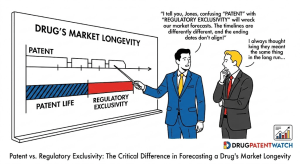
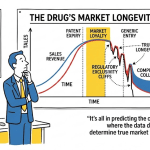
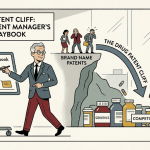
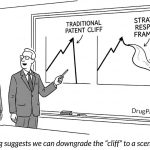
The strategic landscape of the pharmaceutical industry is defined by a paradoxical relationship between regulatory transparency and market reality. At the center of this relationship is the United States Food and Drug Administration (FDA) publication formally titled “Approved Drug Products with Therapeutic Equivalence Evaluations,” but universally recognized across the sector as the Orange Book. For investors, pharmaceutical executives, and healthcare payers, the Orange Book is often perceived as a definitive calendar for the “patent cliff”—the moment when a blockbuster drug loses its monopoly and lower-cost generic alternatives flood the market. However, the expiration dates listed in the Orange Book are rarely synchronized with actual market entry. The journey from a brand-name drug’s patent expiration to the first day of generic competition is a legal and regulatory gauntlet characterized by statutory stays, negotiated settlements, and strategic exclusivities. Understanding why these dates diverge is not merely an academic exercise; it is a fundamental requirement for assessing the risk-adjusted net present value of pharmaceutical assets and predicting the structural shifts in healthcare expenditure.
The Structural Foundations of the Orange Book and the Ministerial Role of the FDA
The Orange Book was born of the Drug Price Competition and Patent Term Restoration Act of 1984, better known as the Hatch-Waxman Act.1 This legislation was a grand compromise designed to solve two disparate problems: the lack of a clear pathway for generic drug approval and the erosion of effective patent life due to lengthy clinical trial durations.3 Under Hatch-Waxman, manufacturers of brand-name drugs (New Drug Application or NDA holders) are required to submit to the FDA any patents that claim the drug substance (active ingredient), the drug product (formulation or composition), or a specific method of using the drug for an approved indication.1 These patents are then listed in the Orange Book alongside their expiration dates.
A critical nuance that often leads to market entry discrepancies is the ministerial nature of the FDA’s role in this process. The FDA does not independently verify the validity of the patents submitted by brand-name manufacturers, nor does it review the accuracy of the patent claims.7 The agency acts purely as a registry. This ministerial role creates an environment where brand companies may list “tertiary” patents—those covering delivery devices, such as inhalers or injector pens, or secondary polymorphic forms of the drug—that may or may not satisfy the statutory requirements for listing.6 For example, in the case of Teva v. Amneal, the Federal Circuit recently affirmed that patents covering inhaler components that do not recite the active pharmaceutical ingredient (API) should not be listed in the Orange Book, as their inclusion can improperly trigger regulatory delays.6 When such patents are listed, they create an illusion of protection that may extend years beyond the expiration of the primary compound patent, leading to a disconnect between the “apparent” patent life and the “enforceable” patent life.
The Hatch-Waxman Patent Certification Mechanism
The disconnect between Orange Book dates and actual entry begins at the point of the generic application. When a generic manufacturer submits an Abbreviated New Drug Application (ANDA), it must address every patent listed in the Orange Book for the reference drug.8 The applicant must choose one of four certifications for each patent.
Certification Type
Legal Assertion and Strategic Consequence
Effect on Market Entry Timeline
Paragraph I
The patent information has not been filed by the brand-name sponsor.
Immediate approval is possible upon meeting scientific requirements.
Paragraph II
The listed patent has already expired naturally.
Approval is possible once other regulatory exclusivities lapse.
Paragraph III
The generic will not launch until the listed patent expires.
Approval is stayed until the natural expiration date in the Orange Book.
Paragraph IV
The patent is invalid, unenforceable, or will not be infringed by the generic.
Triggers high-stakes litigation and potential early market entry.
The Paragraph IV certification is the primary “igniter” of the discrepancy between listed dates and reality.10 By filing a Paragraph IV certification, a generic company is performing an “artificial act of infringement” before it has even manufactured a single pill for sale.10 This mechanism allows the patent dispute to be resolved in a controlled, pre-launch environment. If the generic firm is successful in its challenge, it may enter the market years before the date listed in the Orange Book.3 Conversely, the litigation process itself can introduce delays that the Orange Book cannot predict.
The 30-Month Stay: A Statutory Barrier Beyond Patent Law
The most significant regulatory tool that decouples patent expiration from market entry is the automatic 30-month stay.3 If a brand-name manufacturer initiates a patent infringement lawsuit within 45 days of receiving notice of a Paragraph IV certification, the FDA is prohibited from granting final approval to the generic drug for 30 months.3 This stay is not a court-ordered injunction; it is a statutory pause that occurs regardless of the merits of the underlying litigation.6
The 30-month stay acts as a de facto preliminary injunction, preserving the brand’s monopoly while the legal system adjudicates the dispute.6 However, for certain drugs, the stay is even longer. If a Paragraph IV certification is filed against a drug with New Chemical Entity (NCE) exclusivity—which provides five years of data protection—the generic can only file its ANDA four years after the brand drug’s approval (the “NCE-1” date).8 If litigation ensues, the 30-month stay is added to the NCE period, meaning the FDA cannot approve the generic until 7.5 years after the brand’s initial approval.3
The existence of this stay means that even if a generic company is scientifically ready to launch, and even if the primary patents have expired, the presence of a single challenged patent in the Orange Book can block entry for two and a half years.10 Conversely, if the litigation concludes in favor of the generic manufacturer before the 30 months have elapsed, the stay is terminated, and the generic can launch immediately—rendering the remaining months of the stay, and the years of the challenged patent, irrelevant.3
The 180-Day Exclusivity and the Duopoly Phase
The Hatch-Waxman Act provides a massive economic incentive for generic companies to challenge patents: the 180-day exclusivity period.8 This period is awarded to the “first applicant”—the first company to submit a substantially complete ANDA with a Paragraph IV certification.13 During this six-month window, the FDA is prohibited from approving any subsequent generic applicants for the same drug.8
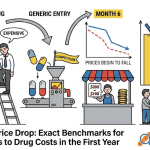
This 180-day period creates a high-margin “duopoly” between the brand manufacturer and the first generic entrant.8 For a first-to-file generic, this window can capture up to 80% of the product’s lifetime profits.8 However, this exclusivity also serves to delay subsequent competitors. Even if multiple generic companies have finished their clinical studies and are ready to launch, they must wait until the first applicant’s 180-day period has concluded.16
A critical reason why entry dates deviate from the Orange Book is “exclusivity parking”.10 Historically, if a first applicant reached a settlement with the brand company to delay its own entry, it could effectively block all other generics from the market for years, as the 180-day clock would not start until the first applicant launched.13 While the Medicare Modernization Act (MMA) of 2003 introduced forfeiture triggers to combat this, the strategic management of 180-day exclusivity remains a primary driver of launch timing.8
Number of Generic Competitors
Price Reduction vs. Brand
Market Dynamic
1 (First-to-File)
15% – 39%
High-margin duopoly; often includes an Authorized Generic.
2 Competitors
50% – 55%
End of premium generic pricing.
3 – 5 Competitors
60% – 80%
Commoditization cliff begins.
6 – 10+ Competitors
80% – 95%
Pure commodity pricing; brand usually loses 90%+ volume.
The data illustrates that the 180-day exclusivity period is not merely a bonus; it is a structural barrier that ensures a tiered entry process, which the Orange Book’s simple list of expiration dates does not reflect.9
Forfeiture Triggers and the “Use It or Lose It” Rules
Under the MMA of 2003, the 180-day exclusivity is no longer a guaranteed right; it is a conditional incentive.8 A first applicant can forfeit its exclusivity if it fails to meet specific regulatory milestones. The most critical of these is the failure to obtain “tentative approval” from the FDA within 30 months of filing the ANDA.10 Tentative approval signifies that the generic product is scientifically sound but cannot be marketed due to existing patents or exclusivities.8
If a first applicant forfeits its exclusivity, the 180-day prize does not necessarily pass to the next company in line. Instead, it may disappear entirely, allowing all subsequent generic filers to enter the market as soon as the patents are resolved or expired.8 This “forfeiture event” can cause a sudden and unexpected acceleration of the generic launch date that would not be apparent from monitoring the Orange Book alone.
Forfeiture Trigger
Description of Event
Legal Basis (FD&C Act)
Failure to Market
Launch does not occur within 75 days of a final court decision or patent expiry.
§ 505(j)(5)(D)(i)(I)
Withdrawal of ANDA
The applicant voluntarily withdraws the application or it is deemed withdrawn.
§ 505(j)(5)(D)(i)(II)
Amendment of Certification
Changing Paragraph IV to Paragraph III or a Section viii carve-out.
§ 505(j)(5)(D)(i)(III)
Failure to Obtain TA in 30 Months
The FDA does not grant tentative approval within the 30-month window.
§ 505(j)(5)(D)(i)(IV)
Anticompetitive Agreement
A settlement is found by the FTC or a court to violate antitrust laws.
§ 505(j)(5)(D)(i)(V)
Expiration of All Patents
The patents qualifying the applicant for exclusivity naturally expire.
§ 505(j)(5)(D)(i)(VI)
These triggers introduce a level of “regulatory volatility” where the date of entry can shift based on a generic company’s manufacturing performance or its legal strategy, both of which are hidden from the Orange Book’s public ledger.15
Pay-for-Delay: The Negotiated Market Entry
The most opaque and controversial reason for the discrepancy between the Orange Book and reality is the practice of “pay-for-delay” settlements.18 These agreements occur when a brand-name manufacturer settles patent litigation by providing compensation to the generic challenger in exchange for the generic staying off the market for a set period.18 This compensation can take many forms, including cash payments, “no-authorized generic” (no-AG) commitments, or licenses to other products.18
From the brand company’s perspective, a pay-for-delay settlement is a tool to preserve monopoly profits that might be lost if a court finds their patent invalid.18 For the generic challenger, it provides a guaranteed future entry date and a financial payout without the risk of an at-risk launch or an adverse court ruling.18 According to the Federal Trade Commission (FTC), these deals prohibit generic entry for an average of 17 months longer than agreements without such payments.22
These negotiated entry dates are strictly private and are not published in the Orange Book. A drug might have a patent that expires in 2030, but a settlement might allow generic entry in 2026.23 Conversely, a generic might be ready to launch in 2024 but agrees not to enter until 2026. This “negotiated peace” creates a unique entry date that is entirely independent of patent law but is the governing factor for market competition.20
Defensive Strategies: Authorized Generics and Skinny Labeling
Brand-name companies frequently use authorized generics (AGs) as a defensive moat.8 An AG is the original brand drug sold under a generic label, often through a partner.8 Because the AG is approved under the brand’s original NDA, it can enter the market at any time—including during the first-to-file generic’s 180-day exclusivity.8
The entry of an AG transforms the 180-day window from a duopoly into a three-player market, which can reduce the first traditional generic’s revenue by 40% to 52%.8 This economic reality often influences generic companies to settle litigation rather than fight for a diluted 180-day prize, thus indirectly affecting the launch date by making settlements more attractive.8
On the other side of the ledger, generic companies use “skinny labeling” to bypass certain patents.10 Under Section viii of the FD&C Act, a generic can “carve out” a patented method of use from its label.10 If the generic is only seeking approval for an indication that is no longer patented, it can theoretically avoid the 30-month stay and launch while other patents for other uses are still in force.10 This creates a scenario where a generic enters the market for some patients but not all, a nuance that the Orange Book’s “one date fits all” listing cannot capture.28
The Impact of Life Cycle Management and Patent Thickets
Innovative pharmaceutical companies often employ Life Cycle Management (LCM) strategies to extend their period of exclusivity well beyond the expiration of the original compound patent.5 This typically involves the creation of “patent thickets”—a dense web of secondary patents covering new formulations, specific crystalline polymorphs, methods of treatment, or pediatric indications.7
These secondary patents often have later expiration dates than the primary chemical entity patent. While a generic may successfully challenge the “crown jewel” compound patent, it may still be blocked by these secondary patents.7 Furthermore, these secondary patents can trigger additional 30-month stays if they are added to the Orange Book and subsequently challenged.14 The cumulative effect of these thickets is a “staggered” patent cliff where the actual date of competitive entry is determined by the weakest link in the thicket, rather than the date of the primary patent.9
The Cascading Power of Pediatric Exclusivity
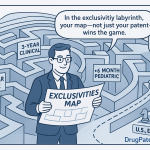
Pediatric exclusivity adds a unique layer of complexity to predicting market entry.4 If a manufacturer conducts pediatric studies at the FDA’s request, it is granted an additional six months of market protection.4 Crucially, this is not a patent extension but a regulatory exclusivity that attaches to the end of every existing patent and exclusivity listed in the Orange Book for that drug.11
In the Orange Book, a patent with pediatric exclusivity is shown twice: once with the original expiration date and once with the six-month extension.33 For an analyst, this means the “true” expiration date is always six months later than the latest patent or exclusivity listed. However, there is a further nuance: during this six-month “pediatric window,” the FDA cannot grant final approval to an ANDA even if the generic has a license from the brand manufacturer, unless the generic obtains a specific “Pediatric Exclusivity Waiver”.29 This requirement can delay approvals for months even after a settlement agreement suggests the generic should be on the market.29
The Purple Book and the Divergent Realities of Biologics
As the focus of pharmaceutical innovation shifts toward large-molecule biologics, the role of the Purple Book has become increasingly important.5 The Purple Book is the biological equivalent of the Orange Book, listing licensed biologics and their biosimilar or interchangeable counterparts.35 However, the legal and scientific frameworks for biologics—governed by the Biologics Price Competition and Innovation Act (BPCIA)—are fundamentally different from those for small molecules.5
Feature of Competition
Small-Molecule (Orange Book)
Biologic (Purple Book)
Scientific Standard
Bioequivalence (Identicality).
Biosimilarity (No clinically meaningful differences).
Patent Information
Proactive Transparency (Mandatory).
Historically Opaque (Reactive).
Dispute Resolution
Paragraph IV Litigation.
“Patent Dance” (351(l) Mechanics).
Regulatory Stay
Automatic 30-month stay.
No automatic regulatory stay.
Exclusivity
5-year NCE exclusivity.
12-year Reference Product exclusivity.
The Purple Book has historically lacked the proactive patent transparency found in the Orange Book.5 Instead of listing patents upfront, the BPCIA created the “Patent Dance”—a private, choreographed exchange of patent information between the biosimilar applicant and the brand sponsor.5 Because there is no automatic 30-month stay for biologics, the brand company must seek a preliminary injunction in court to block biosimilar entry.5 This means biosimilar entry dates are governed more by judicial speed and the outcome of the “dance” than by the simple expiration of exclusivity dates listed in the Purple Book.5
Case Study Analysis: Revlimid and Januvia
Two major pharmaceutical products, Revlimid (lenalidomide) and Januvia (sitagliptin), provide concrete examples of why Orange Book dates fail to predict reality.
Revlimid: The Negotiated Volume Ramp
In the case of Revlimid, the Orange Book lists patents extending until April 2027.24 However, Celgene (now Bristol Myers Squibb) entered into settlements with several generic manufacturers, including Natco and Teva, that permitted entry as early as March 2022.24 These settlements were “volume-limited,” meaning generics could only sell a small percentage of the total capsules dispensed in the U.S., with the volume increasing annually.24
Revlimid Expiry Source
Indicated Date
Market Reality
Orange Book (Last Patent)
April 27, 2027
Monopoly continues until 2027.
Settlement Agreement
March 2022
Generic entry with volume caps.
Actual Impact
2022 – 2027
Gradual revenue erosion; duopoly phase.
For an investor relying on the Orange Book, the “patent cliff” appeared to be in 2027. In reality, the market began its transition five years earlier through a private, negotiated peace.32
Januvia: The Settlement Cluster
Merck’s Januvia has a primary compound patent that, with pediatric exclusivity, expired in early 2023.25 However, the Orange Book lists a salt/polymorph patent that expires in May 2027.41 While the Orange Book implies a 2027 cliff, Merck has settled with 25 different generic companies, allowing them to enter in May 2026.25
Furthermore, combination products like Janumet XR have different exclusivities extending into July 2026.25 The Januvia example shows that when a brand settles with dozens of competitors, the settlement date—not the patent date—becomes the definitive market entry signal.23
Beyond the Orange Book: The Analyst’s Playbook for Forecasting Entry
Because the Orange Book is an insufficient guide for predicting market entry, domain experts must utilize a multi-source investigative process. This process requires cross-referencing government databases with corporate disclosures and legal activity.
The FDA Paragraph IV List: The Competitive Ignition Signal
The first step in any forensic entry analysis is the FDA’s Paragraph IV Certification List.15 This list is updated regularly and identifies the date on which the first generic challenger submitted its application.15 This date is critical for two reasons:
It marks the beginning of the 30-month stay clock.3
It identifies whether “first-to-file” 180-day exclusivity is in play and whether it is shared by multiple companies.8
If the Paragraph IV list shows multiple filers on the first possible day (the NCE-1 date), it suggests a highly competitive market where prices will drop rapidly upon launch.44 If only one company has filed, the market may remain a high-margin duopoly for much longer.8
SEC Filings and Corporate Intelligence
For publicly traded pharmaceutical companies, the SEC’s EDGAR database is a primary source of entry information.23 Companies must disclose material litigation and settlements in their annual 10-K and quarterly 10-Q filings.31
Within these filings, analysts should search the “Legal Proceedings” section (Item 3) and the “Management’s Discussion and Analysis” section (Item 7).31 Keywords such as “Paragraph IV notice,” “settlement agreement,” “30-month stay,” and “permitted launch date” often reveal definitive entry dates that are absent from the Orange Book.23 For instance, a brand company’s disclosure that it has “settled all outstanding patent litigation” for a specific drug usually implies that a fixed entry date has been established.23
USPTO Patent Center: Maintenance and Adjustments
A patent’s expiration date is not static. Analysts must check the USPTO Patent Center for two specific variables:
Maintenance Fees: If a brand company fails to pay maintenance fees at the 3.5, 7.5, or 11.5-year marks, a patent may expire early.43
Patent Term Adjustment (PTA) and Extension (PTE): These can add months or years to a patent’s life to compensate for government delays.4 A PTA of 400 days, for example, would push the Orange Book date back by over a year, a detail that requires verifying the underlying patent certificate.4
Specialized Intelligence Platforms
Given the complexity of aggregating these disparate data points, the use of specialized intelligence platforms is standard for professional IP analysts. Tools such as DrugPatentWatch, Clarivate’s Cortellis, and Patsnap integrate FDA data, USPTO records, and litigation dockets into a single interface.43 These platforms often provide “Constraint Date Forecasts”—predictive models that synthesize patent life, regulatory exclusivity, and litigation status into a single, probabilistic launch date.47
Data from cohort studies of generic drugs approved between 2013 and 2020 provide a “reality check” for Orange Book predictions.3 While the legal frameworks imply entry should occur shortly after patent expiration, the median timeline for generic launch is significantly longer.
Milestone in Generic Entry
Median Years After Brand Approval
Interquartile Range (Years)
First Paragraph IV Filing
5.2
4.0 – 8.0
Expiration of 30-Month Stay
7.7
7.5 – 10.2
FDA Final Approval of ANDA
11.5
9.4 – 14.5
Actual Generic Launch
14.1
11.1 – 15.2
The research indicates that 30-month stays rarely delay generic entry directly, as they typically expire well before the generic is ready for market.3 Instead, the final launch date is determined by a combination of scientific bioequivalence hurdles, manufacturing inspections, and the resolution of late-stage patent litigation.3 For an analyst, the 14-year median serves as a much more reliable benchmark for forecasting long-term revenue erosion than any single patent date in the Orange Book.9
Conclusion: Synthesizing the Competitive Landscape
The Orange Book is a vital component of the U.S. pharmaceutical regulatory system, providing a high degree of transparency that is unparalleled in other global jurisdictions. However, it is not a prophetic document. Its expiration dates are the starting point of a strategic chess match, not the conclusion. The divergence between the Orange Book and market reality is driven by the structural mechanics of the Hatch-Waxman Act—specifically the 30-month stay and the 180-day exclusivity—and the strategic responses of both brand and generic manufacturers to those incentives.
To navigate this landscape, one must look beyond the static list of patents and engage in a forensic analysis of the “litigation ledger.” This involves monitoring Paragraph IV certification filings to identify competitive clusters, scouring SEC filings for the definitive signals of negotiated settlements, and tracking the scientific progress of generic applications through tentative approval milestones. In the realm of biologics, the opacity of the Purple Book and the complexity of the “patent dance” necessitate an even more intensive focus on real-time legal docket tracking.
Ultimately, the actual date of generic market entry is the outcome of a complex interaction between patent law, regulatory policy, corporate strategy, and manufacturing capability. By understanding the mechanisms that cause these dates to diverge, professional stakeholders can move from simple observation to predictive mastery, accurately identifying the “true” patent cliff and the subsequent shift toward a commoditized pharmaceutical market.