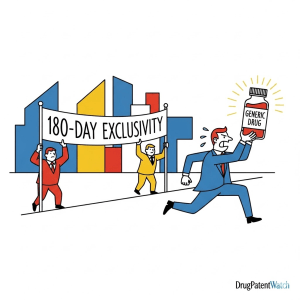
This “golden six months” of market exclusivity, awarded to the first generic company to successfully challenge a brand-name drug’s patents, is the single most powerful strategic asset in the generic pharmaceutical arsenal. It is a government-sanctioned head start in a multi-billion-dollar marathon, a golden ticket that can transform a risky legal challenge into a monumental financial windfall.
For the uninitiated, 180-day exclusivity might seem like a simple regulatory footnote. But for the seasoned professionals in pharmaceutical intellectual property, research and development, and business strategy, it is the central pillar upon which the entire generic drug industry was built and continues to thrive. It is the engine of the landmark Hatch-Waxman Act, the incentive that fuels the costly and uncertain process of patent litigation, and the mechanism that ultimately brings lower-cost medicines to patients years ahead of schedule.
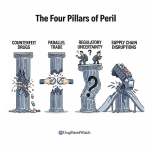
However, the path to securing and, more importantly, successfully monetizing this exclusivity is anything but simple. It is a treacherous landscape fraught with legal complexities, regulatory tripwires, and aggressive countermeasures from brand-name incumbents. Winning this race is no longer just about being the first to file an Abbreviated New Drug Application (ANDA) with a patent challenge. Today, it is a complex, multi-front strategic campaign. It demands a sophisticated fusion of deep legal expertise to navigate the intricate rules of the game, proactive risk management to avoid the numerous pitfalls that can lead to forfeiture, and cutting-edge competitive intelligence to anticipate the moves of both the brand manufacturer and other generic rivals.
This report is designed to be your definitive strategic guide to this critical subject. We will move far beyond a basic definition, dissecting the very DNA of 180-day exclusivity. We will journey back to its legislative origins to understand the “why” behind the rule, meticulously deconstruct the legal mechanics of how it is earned and triggered, and quantify the staggering financial rewards that await the victor. Crucially, we will then explore the modern battlefield, analyzing the primary threats—forfeiture provisions, the rise of the “authorized generic,” and the controversial practice of “pay-for-delay” settlements—that can diminish or completely nullify this advantage. Finally, we will bring these concepts to life through an in-depth analysis of the legendary battle over Lipitor, the best-selling drug in history, to reveal the real-world strategies that separate the winners from the also-rans. For the skeptical, data-driven professional looking to turn patent intelligence into a decisive competitive advantage, this is your playbook.
The Architects of Competition: Legislative History and the Intent Behind the Incentive
To truly master the strategic application of 180-day exclusivity, one must first understand its origins. This is not merely an academic exercise; the legislative intent and the historical context of its creation provide the foundational logic for how the U.S. Food and Drug Administration (FDA) and the courts interpret its provisions today. The story of 180-day exclusivity is a dynamic one, a legislative chess match between Congress, innovators, and generic manufacturers, marked by a grand initial bargain and a significant course correction to close unintended loopholes.
The Genesis: The 1984 Hatch-Waxman Act’s Grand Bargain
Before 1984, the American pharmaceutical landscape was dramatically different. For brand-name drug companies, patents provided a robust monopoly, but the effective life of that monopoly was often eroded by the lengthy FDA approval process. For generic companies, the path to market was a nightmare. They were required to conduct their own expensive and duplicative clinical trials to prove safety and efficacy, and even the act of conducting research for a generic version of a patented drug could be considered patent infringement, forcing them to wait until a patent had fully expired to even begin their work. The result was a sluggish, inefficient system that delayed the availability of affordable medicines for years.1
The Drug Price Competition and Patent Term Restoration Act of 1984, universally known as the Hatch-Waxman Act, was a masterful piece of legislative compromise designed to fix this broken system.2 It created a “grand bargain” with two core mandates. For the innovators, it offered a significant reward for their R&D investment by allowing for the restoration of patent term lost during the FDA review process and granting periods of data exclusivity for new chemical entities.4 This ensured that innovation remained a profitable and attractive endeavor.
In exchange, the Act created a streamlined pathway for generic drug approval: the Abbreviated New Drug Application (ANDA). The ANDA process allowed a generic manufacturer to rely on the brand company’s original safety and efficacy data, requiring them only to prove that their product was bioequivalent to the innovator drug.4 This dramatically lowered the cost and time required to bring a generic to market.
But Congress recognized a critical problem: what if a brand company’s patents were weak, invalid, or simply not infringed by a generic product? Without an incentive, no generic company would undertake the enormous financial risk and legal expense of challenging those patents. To solve this, the architects of Hatch-Waxman included a brilliant incentive, a “carrot” to encourage these challenges. This carrot was the 180-day exclusivity period. The law stipulated that the first generic applicant to file an ANDA with a “Paragraph IV certification”—a bold declaration that a brand’s patent was invalid or not infringed—would be rewarded with a six-month period of marketing exclusivity against any subsequent generic challengers.3 In essence, it was a “mini-patent” for the generic challenger, a bounty for weeding out bad patents and accelerating the arrival of competition for the benefit of the entire healthcare system.4
The 2003 MMA Overhaul: Closing Loopholes and Reshaping the Battlefield
The 1984 Act was a resounding success in creating a vibrant generic drug industry. However, as the stakes grew, so did the sophistication of the strategies employed by both brand and generic companies to manipulate the system. A significant and pernicious loophole emerged around the 180-day exclusivity provision. The original statute was interpreted in a way that allowed the first-to-file generic applicant to secure the rights to exclusivity and then, through a settlement with the brand manufacturer, simply fail to bring its product to market. This strategy became known as “parking” the exclusivity.2
The effect was profoundly anticompetitive. The first-filer, often compensated handsomely by the brand in a “pay-for-delay” deal, would sit on their exclusivity, creating a bottleneck that blocked all other generic companies from entering the market. The very incentive designed to promote competition was being used as a shield to protect the brand’s monopoly, subverting the entire purpose of the Hatch-Waxman Act.4
Congress was forced to act. The legislative countermove came in the form of the Medicare Prescription Drug, Improvement, and Modernization Act of 2003 (MMA).6 The MMA was a surgical strike, aimed directly at the problem of parked exclusivity. It fundamentally reshaped the battlefield by introducing a series of “forfeiture provisions.” These provisions created a “use it or lose it” framework, specifying a set of conditions under which a first applicant would lose their eligibility for the 180-day exclusivity.6 If the first applicant failed to launch their product in a timely manner after approval, for example, they could forfeit their exclusivity, clearing the path for the next generic in line.
This amendment created two distinct legal regimes that operated in parallel for many years: the pre-MMA rules for ANDAs filed before December 8, 2003, and the post-MMA rules for those filed after.6 Today, virtually all relevant applications fall under the post-MMA framework. Understanding this evolution is not just a history lesson; it’s fundamental to modern strategy. The MMA’s forfeiture provisions are now a central element of the risk assessment for any first-to-file applicant and a key area of opportunity for subsequent filers. The legislative history reveals a clear, ongoing pattern: as industry strategists find new ways to game the system, lawmakers and regulators will eventually respond. This dynamic nature of the law means that today’s winning strategy must also anticipate tomorrow’s legislative or judicial countermove.
Feature
Pre-MMA Rule (1984 Act)
Post-MMA Rule (2003 Act)
Strategic Implication
Who Qualifies?
First applicant to file a substantially complete ANDA with a Paragraph IV certification.
First applicant to file a substantially complete ANDA with a Paragraph IV certification.
The core qualification remains the same: speed and completeness of the ANDA filing are paramount.
How is Exclusivity Triggered?
(1) First commercial marketing by the first applicant, OR (2) A final, non-appealable court decision of non-infringement or invalidity.
(1) First commercial marketing by the first applicant, OR (2) A court decision (interpreted to include district court level) of non-infringement or invalidity.
The shift to include lower court decisions (post-Mova case) accelerated the potential trigger but introduced significant “at-risk launch” calculations for generics.
Forfeiture Provisions
None specified in the statute.
A detailed list of seven forfeiture events, including failure to market, withdrawal of application, and collusive agreements.
This is the most significant change. First-filers face a “use it or lose it” scenario, while subsequent filers have a strategic incentive to monitor the first-filer for missteps.
Impact of Settlements
Allowed for the “parking” of exclusivity, where a first-filer could agree with the brand to delay launch indefinitely, blocking all other generics.
Forfeiture provisions and increased antitrust scrutiny (post-Actavis) make “parking” much more difficult and legally perilous.
The ability to indefinitely block competition via settlement has been severely curtailed, forcing a more dynamic and competitive landscape.
The Path to Exclusivity: Deconstructing the Core Mechanics
Having established the “why” behind 180-day exclusivity, we now turn to the “how.” The process of earning this coveted prize is a meticulously defined legal and regulatory gauntlet. It begins with a high-stakes declaration, progresses to a frantic race to be first, and culminates in one of two specific events that start the six-month clock. Mastering these mechanics is non-negotiable for any generic company seeking to leverage this powerful advantage.
The Challenger’s Declaration: The Paragraph IV Certification
The journey to 180-day exclusivity begins with the ANDA submission itself. When a generic company files an ANDA, it must address every patent listed by the brand manufacturer for the reference drug in the FDA’s publication, “Approved Drug Products with Therapeutic Equivalence Evaluations,” more commonly known as the Orange Book. For each patent, the ANDA filer must make one of four certifications 3:
Paragraph I Certification: That no patent information has been filed with the FDA.
Paragraph II Certification: That the patent has already expired.
Paragraph III Certification: A statement of intent to not market the generic drug until the patent expires.
Paragraph IV Certification: A bold assertion that the patent is invalid, unenforceable, or will not be infringed by the manufacture, use, or sale of the proposed generic drug.
Certifications under Paragraphs I and II are straightforward and allow for immediate ANDA approval if all other requirements are met. A Paragraph III certification essentially puts the ANDA on hold until the patent’s expiration. The true high-stakes bet, and the only path to 180-day exclusivity, is the Paragraph IV certification.3
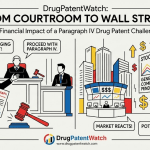
Filing a Paragraph IV certification is, by its very nature, a provocative act. Under U.S. patent law, it is considered a technical act of patent infringement, deliberately inviting a lawsuit from the brand-name drug company.3 The generic filer must provide notice of this certification to the brand company and the patent holder. This notice triggers a 45-day window during which the brand can sue the generic for patent infringement. If a suit is filed within this window, the FDA is automatically barred from granting final approval to the ANDA for a period of 30 months, or until the patent litigation is resolved in the generic’s favor, whichever comes first.3 This “30-month stay” is a critical cooling-off period, providing a defined timeline for the initial stages of patent litigation and strategic preparation for a potential launch.16
Winning the Race: The Legal Definition of a “First Applicant”
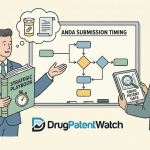
The statute awards the 180-day exclusivity to the “first applicant.” But what does this legally mean? The definition is precise and unforgiving. A “first applicant” is an applicant that, on the very first day that any company submits a substantially complete ANDA containing a Paragraph IV certification for a given drug, also submits its own substantially complete application.17
The term “substantially complete application” is critical. It means the ANDA, upon its initial submission, is considered by the FDA to be sufficiently complete on its face to permit a substantive review.17 Any significant deficiencies can result in a “Refuse-to-Receive” letter from the FDA, disqualifying the application from being considered filed on that date and costing the company its shot at first-applicant status. This places an immense premium on meticulous preparation and flawless execution in the ANDA drafting and submission process.
The “first-day” provision also creates a fascinating dynamic. If multiple generic companies manage to submit substantially complete ANDAs with Paragraph IV certifications on the same day, they are all considered “first applicants” and will share the 180-day exclusivity.14 This has led to what is often called the “first-day dash,” where multiple competitors, having monitored a drug’s patent landscape for years, race to submit their applications at the earliest possible moment, sometimes within minutes of each other.
Finally, to maintain eligibility, the applicant must “lawfully maintain” its Paragraph IV certification.18 If, for instance, a first applicant loses a key court decision and subsequently amends its filing to a Paragraph III certification (agreeing to wait for patent expiry), it will forfeit its claim to the exclusivity period.
Pulling the Trigger: The Two Events That Start the 180-Day Clock
Once a company has successfully established itself as a first applicant, the 180-day clock does not start automatically. It must be “triggered” by one of two specific events, as defined by the statute and refined by landmark court decisions.3
Trigger 1: First Commercial Marketing
This is the most direct and common trigger. The 180-day exclusivity period begins on the day the first applicant commences the commercial marketing of its generic drug product. This puts the control squarely in the hands of the first applicant; they decide when to launch and, therefore, when to start their six-month clock.
Trigger 2: The “Court Decision”
The clock can also be started by a legal event. Originally, this was interpreted by the FDA to mean a final, non-appealable decision from the highest court, often the U.S. Court of Appeals for the Federal Circuit. However, this interpretation was successfully challenged in a series of pivotal court cases, most notably Mova Pharmaceutical Corp. v. Shalala and Granutec, Inc. v. Shalala.3 These decisions established that the “court decision” trigger could be a ruling from a lower federal district court holding the patent invalid, unenforceable, or not infringed.3
This reinterpretation had profound strategic implications. It meant that a first applicant could potentially trigger their exclusivity period much earlier, upon a favorable district court ruling. However, it also created a significant dilemma. A district court’s decision is almost always appealed by the losing party. Should the generic company launch its product “at risk” after a district court win, knowing that if the decision is reversed on appeal, it could be liable for potentially crippling damages for willful patent infringement?.3
This risk calculation is one of the most critical strategic decisions a generic company’s leadership will face. A decision to launch “at risk” is a high-stakes gamble, weighing the immense revenue potential of the 180-day period against the catastrophic financial risk of an appellate loss. Conversely, a decision to wait for the appeal to conclude could mean that the 180-day exclusivity period begins to run—triggered by the court decision—while the generic is still on the sidelines, effectively wasting the most valuable commercial period it will ever have.3 This transforms the litigation strategy from a simple pursuit of a “win” into a complex, time-sensitive analysis of risk, reward, and the appellate landscape.
The Financial Prize: Quantifying the First-to-File Advantage
The intense legal and regulatory maneuvering to secure 180-day exclusivity is driven by one thing: an extraordinary financial prize. This six-month period represents a unique and fleeting market dynamic that allows the first generic entrant to achieve a level of market dominance and profitability that is impossible once full competition arrives. To understand the strategic importance of being first-to-file, we must quantify this advantage in terms of market share, revenue, and long-term competitive positioning.
Market Dominance: The Race to Capture Share
The context for this financial windfall is the phenomenon known as the “patent cliff.” When a brand-name drug loses its market exclusivity, the subsequent drop in revenue is notoriously steep and swift. It is not uncommon for an innovator drug to lose 80% to 90% of its market share within the first one to two years of generic entry.23 The 180-day exclusivity allows the first generic to be the sole catalyst for this cliff, capturing the vast majority of that migrating market share for itself.
The first-mover advantage in the generic market is staggering and well-documented. Research consistently shows that the first generic to market can secure a commanding competitive position:
An analysis from DrugPatentWatch highlights that first movers can capture up to a 90% market share advantage over later entrants.24
Further studies found that the initial generic entrant enjoys an 80% market share advantage over the second entrant and a remarkable 225% advantage over the third.24
During the 180-day period, the market structure is effectively a duopoly, consisting only of the high-priced brand and the new, lower-priced generic (or a triopoly if the brand launches an authorized generic, a dynamic we will explore later). This limited competition is the key. Payers, pharmacy benefit managers (PBMs), and pharmacies are highly incentivized to switch from the brand to the generic to realize cost savings, and with only one generic option available, the first-filer reaps all the benefits of this mass conversion.20
The Revenue Windfall: Pricing Power and Profitability
This temporary market dominance translates directly into exceptional revenue and profitability. The pricing strategy during the 180-day period is fundamentally different from the period of full generic competition.
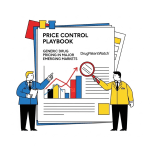
The first generic typically launches at a relatively modest discount of 15-30% below the brand price.24 This is a strategic price point—low enough to incentivize switching, but high enough to maintain substantial profit margins.
Once the 180-day period ends and multiple generics enter the market, intense price competition ensues. With two generic competitors, prices can fall by over 50% compared to the brand. With six or more, price reductions can exceed 95%.8
This stark contrast in pricing power means that a disproportionate amount of a generic product’s lifetime profit is concentrated in its first six months on the market. Industry estimates suggest that a generic company often makes 60% to 80% of its total potential profit on a drug during the 180-day exclusivity period.4
“In a 2013 opinion, the US Supreme Court noted that the 180-day exclusivity period can be worth ‘several hundred million dollars’ to generic manufacturers.” 26
The economic impact extends beyond the company’s balance sheet. This incentive has been a powerful engine for public health savings. In 2020 alone, generic medicines that were launched with the benefit of 180-day exclusivity saved the U.S. healthcare system nearly $20 billion.8 This underscores the success of the public policy goal: rewarding the first challenger ultimately leads to massive, system-wide cost reductions.
The Enduring Lead: The Persistent Advantage Beyond 180 Days
Perhaps the most underappreciated aspect of the first-mover advantage is its persistence. The market share captured during the golden six months is not a fleeting gain; it establishes a deep and lasting competitive moat. This “stickiness” is due to several factors:
Prescriber Habits: Physicians who begin prescribing the first generic may be slow to switch to subsequent generics, seeing no clinical difference.
Pharmacy Logistics: Pharmacies prefer to minimize inventory complexity and often stick with the first generic supplier they have established a relationship with.
Patient Inertia: Once a patient is on a specific generic, there is little incentive for them or their pharmacy to switch to another company’s bioequivalent version.24
This means the initial market capture is not just a short-term revenue boost but a strategic asset that depreciates very slowly over time. The lead established in the first 180 days can persist for three years or even longer, creating a compounding effect where early market share translates into a sustained revenue stream that later entrants find nearly impossible to disrupt.24 The financial prize, therefore, is not just about the first six months of sales, but about establishing a dominant, long-term position in the market.
Metric
Value / Statistic
Source / Note
First Generic Market Share Advantage
Up to 90% over later entrants
24
Typical Price Discount (vs. Brand)
15-30% during exclusivity period
24
Share of Total Profit Earned in 180 Days
60-80%
4
Estimated Value (Blockbuster Drug)
“Several hundred million dollars”
26
System-Wide Savings (2020)
~$20 Billion
8
Price Reduction with 6+ Generics
>95%
8
Navigating the Minefield: The Forfeiture Provisions of the MMA
Securing first-applicant status is a monumental achievement, but it is only the first half of the battle. The 2003 Medicare Modernization Act (MMA) introduced a series of regulatory tripwires designed to prevent the “parking” of exclusivity. These forfeiture provisions represent a critical minefield that every first-filer must navigate with extreme care. A single misstep can lead to the complete loss of the 180-day exclusivity, vaporizing hundreds of millions of dollars in potential revenue and opening the door for competitors. This section serves as a crucial risk management guide to the “use it or lose it” framework that now governs this valuable asset.
A Systematic Breakdown of Forfeiture Events
The MMA established seven distinct events that can cause a first applicant to forfeit their exclusivity. Understanding the nuances of each is essential for any strategic plan.11
1. Failure to Market
This is arguably the most complex and strategically significant forfeiture provision. It is designed to force a first applicant with an approved ANDA to either launch their product or step aside. Exclusivity is forfeited if the first applicant fails to market the drug by the later of two dates 18:
(aa) 75 days after their ANDA is approved, OR 30 months after their ANDA was submitted.
(bb) 75 days after a court enters a final, non-appealable decision of non-infringement or invalidity in favor of either the first applicant or another subsequent ANDA filer who has obtained tentative approval.
The inclusion of “any other applicant” in sub-paragraph (bb) is a game-changer. It means a subsequent filer who wins their own patent litigation can effectively start the 75-day clock on the first applicant, forcing them to either launch or forfeit. This creates a powerful lever for second- and third-to-file companies to break a potential logjam.18
2. Withdrawal of Application
This is a straightforward forfeiture event. If the first applicant withdraws their ANDA, or if the FDA deems it to have been withdrawn, the exclusivity is lost.
3. Amendment of Certification
As discussed earlier, the first applicant must lawfully maintain their Paragraph IV certification. If they amend their certification to a Paragraph III (stating they will wait for patent expiry), for example, after an unfavorable court ruling or as part of a settlement, they forfeit their exclusivity.
4. Failure to Obtain Tentative Approval
The first applicant must demonstrate progress in their application. They will forfeit exclusivity if they fail to obtain tentative approval for their ANDA from the FDA within 30 months of the date of filing (unless the failure is due to a change in FDA requirements). This prevents a company from filing a shell application simply to block competitors without making a good-faith effort to meet the regulatory standards for approval.
5. Agreement with Another Applicant
Exclusivity is forfeited if the first applicant enters into an agreement with another ANDA applicant for the same drug, and an antitrust authority (like the Federal Trade Commission or Department of Justice) files a complaint and a court enters a final, non-appealable order finding that the agreement violates antitrust laws.
6. Patent Expiration
The exclusivity is tied to the patents that were challenged. If all of the patents for which the first applicant submitted a Paragraph IV certification expire, the exclusivity is forfeited. This prevents a company from claiming exclusivity based on patents that are no longer in force.
7. Collusive Agreements (Pay-for-Delay)
This is a direct response to anticompetitive settlement practices. If the first applicant enters into an agreement with the brand company (the NDA holder) or a patent owner, and a court finds that this agreement violates antitrust laws, the exclusivity is forfeited. This provision works in tandem with antitrust enforcement to police “pay-for-delay” deals.
Strategic Mitigation and Real-World Implications
Each of these forfeiture provisions carries significant strategic weight. For a first-filer, avoiding forfeiture requires meticulous planning. For “Failure to Market,” for instance, the company must have its manufacturing capacity, supply chain, and commercial launch teams in a state of constant readiness, prepared to launch within a tight 75-day window following a triggering event.
For subsequent filers, these provisions create opportunity. The entire dynamic shifts from a simple linear race to a multi-player strategic game. A second- or third-to-file company is no longer a passive bystander waiting for the first-filer’s exclusivity to expire naturally. Instead, they become active monitors, scrutinizing every action of the first applicant. Is the first-filer struggling to get tentative approval? Have they entered into a questionable settlement agreement? This surveillance is a core part of their strategy.
The battle over generic Lipitor provides a stark example of this dynamic in action. Mylan, a subsequent filer, sued the FDA in an attempt to force the agency to declare that Ranbaxy, the first applicant, had forfeited its exclusivity due to significant data integrity issues at its manufacturing facilities.30 While Mylan’s suit was ultimately unsuccessful, it perfectly illustrates the modern strategic reality: subsequent filers will not hesitate to use the forfeiture provisions and litigation as a weapon to dislodge the first applicant and accelerate their own path to market. This constant pressure from followers means the leader of the race can never rest.
The Brand Strikes Back: Authorized Generics and Market Dilution
Just as generic companies have developed sophisticated strategies to challenge patents, brand-name manufacturers have engineered equally sophisticated countermeasures to defend their revenue streams. The most potent of these weapons is the “authorized generic” (AG). The AG is a brilliant strategic maneuver that allows a brand company to blunt the financial impact of 180-day exclusivity, transforming what should be a clear victory for the first-filer into a shared and significantly diminished prize.
Defining the “Authorized Generic” (AG) and its Legal Standing
An authorized generic is, quite simply, the brand-name drug product, packaged and marketed under a generic label.10 It is chemically identical to the brand product because it is manufactured under the brand’s original New Drug Application (NDA). The brand company can either market the AG itself, through a subsidiary, or license it to another generic company.
The strategic genius of the AG lies in a critical legal loophole. The 180-day exclusivity provision of the Hatch-Waxman Act prevents the FDA from granting final approval to any other Abbreviated New Drug Applications (ANDAs) during that period. However, an AG does not require an ANDA because it is already approved under the brand’s NDA.33 The courts have consistently upheld that the 180-day exclusivity does not block a brand company from launching its own AG.26 This allows the brand to parachute a competitor directly into the first-filer’s exclusive territory, fundamentally altering the market dynamics.
The Economic Impact of AG Competition
The launch of an AG during the 180-day period has a dramatic and immediate impact on the first-filer’s bottom line. The market, which should have been a profitable duopoly, instantly becomes a triopoly (Brand vs. First Generic vs. AG). The consequences are severe:
Massive Revenue Dilution: A landmark report by the Federal Trade Commission (FTC) quantified the damage. The presence of an authorized generic during the 180-day exclusivity period reduces the first-filer generic’s revenues by an average of 40% to 52%.32 This single move can wipe out hundreds of millions of dollars from the first-filer’s expected return on investment. The impact often persists beyond the exclusivity period as well, with revenues for the first-filer remaining 53% to 62% lower in the 30 months following exclusivity when facing an AG.33
Increased Price Competition: From a consumer and payer perspective, the AG has a clear benefit. The added competition drives prices down further and faster. The same FTC report found that AG competition during the 180-day period is associated with retail generic prices that are 4-8% lower and wholesale prices that are 7-14% lower than they would be with only a single generic on the market.33
This creates a significant policy tension. While the AG provides short-term price benefits to consumers, it also significantly weakens the very incentive Congress created to encourage the patent challenges that lead to long-term generic competition in the first place.
Strategic Implications for First-Filers and Brands
The ability to launch an AG has become a cornerstone of the brand manufacturer’s lifecycle management strategy. It allows the company to pivot from defending its monopoly to capturing a significant share of the newly formed generic market. It is a strategic retreat that salvages a substantial portion of revenue from the patent cliff.
For the first-to-file generic, the threat of an AG launch is now a fundamental part of the strategic calculation. The FTC concluded that this threat has not, on a macro level, significantly reduced the overall number of patent challenges.26 However, for any individual company assessing a specific drug, particularly one with smaller market potential, the prospect of having their potential profits cut in half can certainly influence the decision to invest millions in high-risk litigation.
Most importantly, the AG has become a powerful bargaining chip in settlement negotiations. A brand company can offer a “no-AG agreement” as a form of valuable, non-cash consideration to a generic challenger. In exchange for the generic agreeing to a later market entry date, the brand promises not to launch an AG during the eventual 180-day exclusivity period, thereby preserving the full value of the prize for the generic. The FTC has found strong evidence that these “no-AG” commitments have become a common component of settlements that delay generic entry, linking them directly to the broader issue of “pay-for-delay”.35 This demonstrates how the AG is not just a market tool, but a potent lever in the complex legal negotiations that shape the competitive landscape.
The Controversial Handshake: Pay-for-Delay Settlements
If the authorized generic is the brand’s primary commercial countermeasure, the “pay-for-delay” settlement is its most controversial legal one. These agreements, also known as “reverse payment” settlements, represent a strategic convergence of interests between a brand manufacturer and a first-to-file generic challenger that can effectively neutralize the pro-competitive intent of the Hatch-Waxman Act. They have been the subject of intense scrutiny from antitrust regulators and the focus of a landmark Supreme Court decision, and they remain a critical, albeit risky, feature of the pharmaceutical landscape.
Explaining the Mechanics of “Reverse Payment” Agreements
In most patent litigation, a settlement involves the alleged infringer paying the patent holder to resolve the dispute. In the pharmaceutical world, this is often flipped on its head. A “pay-for-delay” or “reverse payment” settlement occurs when the brand-name patent holder pays the generic challenger to settle the patent litigation.4 In exchange for this payment, the generic company agrees to drop its patent challenge and delay the launch of its product for a specified period.41
The economic logic, while anticompetitive, is perversely rational for the two parties involved. The brand company faces the catastrophic risk of losing its monopoly, which could be worth billions in annual revenue. The generic company faces the high cost and uncertainty of litigation, with a less than 50% chance of success at trial.10 A settlement allows both parties to eliminate risk and achieve a financially superior outcome than if they continued to fight. The brand pays a fraction of its monopoly profits to the generic, which in turn receives a guaranteed, risk-free payment that may exceed what it could have earned from a successful but heavily contested market launch.40
The clear loser in this arrangement is the public. Consumers, insurers, and government payers are forced to continue paying monopoly prices for the brand-name drug long after a lower-cost generic might otherwise have become available. The Federal Trade Commission (FTC) has estimated that these deals cost consumers and taxpayers $3.5 billion in higher drug costs every year.37
The Antitrust Shadow: FTC v. Actavis and its Aftermath
For years, the FTC has waged a legal war against pay-for-delay settlements, arguing that they are a form of illegal market allocation and a violation of antitrust law.32 Brand and generic companies countered that these were legitimate settlements of patent disputes, protected by the scope of the patent itself.
This battle culminated in the 2013 landmark Supreme Court decision, FTC v. Actavis, Inc..38 The Court charted a middle course. It rejected the FTC’s argument that these payments should be considered
per se illegal. However, it also rejected the pharmaceutical industry’s claim that they were immune from antitrust scrutiny as long as the generic’s entry was delayed no longer than the patent’s expiration date. Instead, the Supreme Court held that large and unexplained reverse payments could be subject to antitrust scrutiny under the “rule of reason.” This standard requires courts to conduct a full analysis of the agreement’s competitive effects to determine if it imposes an unreasonable restraint on trade.38
The Actavis decision was a major victory for the FTC, giving it the legal authority to continue challenging these settlements. In the years since, while the most blatant forms of cash payments may have become less common, the scrutiny has shifted to more subtle forms of value transfer. As discussed previously, a brand’s promise not to launch an authorized generic (a “no-AG agreement”) is now widely recognized as a form of valuable consideration that can be part of an anticompetitive settlement.35
“Parking” Exclusivity and Blocking Competition
The anticompetitive harm of a pay-for-delay settlement is magnified when it involves the first-to-file generic applicant. Such a deal allows the brand and the first-filer to effectively “park” the 180-day exclusivity.2 The first-filer agrees to delay its launch in exchange for payment, but it retains its exclusivity. Because no other generic can get FDA approval until the first-filer’s exclusivity has run or been forfeited, this single settlement creates an impenetrable barrier to entry for the
entire generic market.
This dynamic reveals the most insidious aspect of these agreements. They weaponize the 180-day exclusivity—the very tool Congress created to foster competition—and transform it into an instrument of collusion. The brand effectively pays the first-filer to act as its gatekeeper, using a public-interest incentive to enforce a private, anticompetitive arrangement that harms not only consumers but also other generic companies that are ready and willing to compete. It is a fundamental market failure that demonstrates why regulatory and antitrust oversight in this area remains so critically important.
Anatomy of a Blockbuster Challenge: The Lipitor Case Study
Theory and legal mechanics are essential, but to truly grasp the strategic complexity of 180-day exclusivity, we must examine it in action. There is no better case study than the decade-long battle over Lipitor (atorvastatin), the best-selling drug in the history of the pharmaceutical industry. The Lipitor saga is a masterclass in modern pharmaceutical strategy, where every concept we have discussed—the high-stakes patent challenge, the strategic settlement, the second-filer intervention, and the brand’s aggressive commercial defense—converged in a fight for a multi-billion-dollar market.
The Players and the Prize
At its peak, Pfizer’s cholesterol-lowering drug Lipitor was a commercial juggernaut, generating annual revenues of over $13 billion and total sales exceeding $125 billion over its patent-protected life.42 It was the undisputed king of the blockbuster era, and Pfizer built a formidable fortress of patents around it, determined to defend its crown jewel for as long as possible.
Entering the ring as the primary challenger was Ranbaxy Laboratories, an aggressive and ambitious generic manufacturer from India. Starting in 2003, Ranbaxy launched a global legal assault, filing Paragraph IV certifications and challenging Pfizer’s Lipitor patents in the United States and numerous other countries. As the first to file a substantially complete ANDA in the U.S., Ranbaxy was in line for the incredibly lucrative 180-day exclusivity for the world’s biggest drug.43 The stage was set for an epic confrontation.
The Timeline of a Decade-Long War
The legal battle was a protracted and complex war of attrition, fought in courtrooms around the world over multiple patents covering not just the basic Lipitor compound but also its specific enantiomer and crystalline forms, which had later expiration dates.43
After five years of intense litigation, the two companies reached a landmark settlement in 2008. This was not a classic “pay-for-delay” deal in which the generic’s entry was postponed indefinitely in exchange for cash. Instead, it was a highly strategic agreement that provided market certainty for both sides. The terms stipulated that Ranbaxy would receive a license to launch its generic version of Lipitor in the United States on a specific date: November 30, 2011.43 This agreement gave Pfizer three more years of monopoly sales, while guaranteeing Ranbaxy its coveted 180-day exclusivity and a clear path to market.
However, the drama was not over. As the 2011 launch date approached, another major generic player, Mylan, saw an opportunity. Ranbaxy was facing significant regulatory trouble with the FDA over data integrity and manufacturing practices at several of its facilities. Seizing on this, Mylan filed a lawsuit against the FDA, arguing that Ranbaxy’s compliance issues should force it to forfeit its 180-day exclusivity, which would clear the path for Mylan’s own generic Lipitor to be approved.30 This was a perfect real-world example of a subsequent filer attempting to use the forfeiture provisions as a strategic weapon to dislodge the first applicant. Mylan’s gambit ultimately failed, and Ranbaxy held on to its exclusivity, but the move highlighted the intense, multi-player chess game that unfolds behind the scenes.
The Market Entry and the Authorized Generic Play
On November 30, 2011, as scheduled, Ranbaxy launched its generic atorvastatin, triggering its 180-day exclusivity period.45 For most drugs, this would mark the beginning of the end for the brand’s market dominance. But Pfizer was not prepared to go quietly. Instead, it executed one of the most brilliant and aggressive commercial defense strategies the industry has ever seen.
Pfizer’s counter-attack was multi-pronged:
The Authorized Generic: Pfizer had struck a deal with Watson Pharmaceuticals (now a part of Teva) to launch an authorized generic version of Lipitor on the very same day as Ranbaxy’s launch.45 This immediately cut the market in half, forcing Ranbaxy to compete on price from day one and dramatically diluting the value of its “exclusive” period.
Aggressive Rebates and Contracting: Pfizer went directly to PBMs and health insurers with unprecedented deals. They offered massive rebates on branded Lipitor, making the net cost to the payer so low that it was competitive with, or in some cases even cheaper than, Ranbaxy’s generic.45 This disrupted the normal financial incentive for payers to aggressively push patients to the new generic.
Direct-to-Patient Strategy: Pfizer also targeted patients directly, offering co-pay cards and other discounts that could lower a patient’s out-of-pocket cost for branded Lipitor to a level comparable to the generic co-pay.45
The outcome was a stunning success for Pfizer and a sobering lesson for the generic industry. Pfizer’s strategy severely blunted the impact of Ranbaxy’s launch. The uptake of generic atorvastatin was significantly slower than typical generic launches. During the 180-day period, there was no meaningful difference in out-of-pocket spending for patients between the brand and the generic.46 It was only
after the six-month period ended and multiple other generics flooded the market that prices dropped precipitously and the full cost-saving benefits were realized.
The Lipitor case study is the ultimate playbook for modern pharmaceutical lifecycle management. It proves that even when facing a determined first-filer armed with 180-day exclusivity, a well-resourced and strategically savvy brand manufacturer can shift the battle from the courtroom to the marketplace. By using a sophisticated combination of authorized generics, aggressive contracting, and direct marketing, Pfizer demonstrated that it could control the narrative, retain significant market share, and maximize revenue long after the patent cliff was supposed to have arrived. For generic companies, the lesson was clear: winning the legal battle for exclusivity is no longer the end of the war; it is merely the beginning of the commercial one.
The Strategic Edge: Leveraging Competitive Intelligence
In the fast-paced, high-stakes race for 180-day exclusivity, information is not just power—it is the difference between a multi-million-dollar victory and a costly failure. The window of opportunity to become a first applicant can be a matter of hours, and the strategic landscape is constantly shifting due to litigation, settlements, and regulatory actions. In this environment, operating in a vacuum is a recipe for disaster. Success demands a proactive, data-driven approach, and this is where sophisticated competitive intelligence becomes an indispensable strategic weapon.
The Critical Need for Real-Time Data
The entire framework of 180-day exclusivity is built on timing. A generic company must know the precise moment it becomes legally possible to submit a Paragraph IV certification. It needs to monitor the patent portfolios of target brand drugs for new listings in the Orange Book, track the expiration dates of existing patents, and stay abreast of any patent term extensions.
Simultaneously, it must have a 360-degree view of the competitive landscape. Who else is likely preparing an ANDA for the same product? What is the litigation history and success rate of potential rivals? If another company secures first-applicant status, what is the real-time status of their ANDA review and their ongoing patent litigation? Answering these questions is essential for making informed decisions about portfolio management, R&D investment, and litigation strategy. Manually gathering and analyzing this vast amount of data from disparate sources like the FDA, the USPTO, and court dockets is a herculean task, prone to delays and errors that can be fatal in a race where every day counts.
The Role of Competitive Intelligence Platforms
This is where specialized competitive intelligence services have become essential tools for the modern pharmaceutical strategist. Platforms designed specifically for the life sciences industry aggregate, analyze, and deliver the critical data needed to make timely and effective decisions.
A prime example of such a platform is DrugPatentWatch. This service provides an integrated database that is purpose-built to address the unique intelligence needs of both brand and generic pharmaceutical companies. By leveraging such a platform, professionals can transform raw data into actionable strategic insights:
Track Patent Landscapes:DrugPatentWatch allows users to monitor the complete patent and regulatory status of any drug in real-time. This includes tracking all patents listed in the Orange Book, their expiration dates, and any new patent filings or listings, ensuring a company never misses the earliest possible filing date.47
Identify and Monitor Paragraph IV Challenges: The platform provides detailed information and alerts on Paragraph IV filings and subsequent litigation. This allows a company to immediately identify a first-to-file opportunity for a new target drug. It also enables subsequent filers to closely monitor the progress of the first applicant, watching for any signs of trouble—such as an unfavorable court ruling or a delay in obtaining tentative approval—that could lead to a forfeiture of exclusivity.16
Assess Competitors and Inform Portfolio Strategy: By providing data on the litigation history of various generic challengers, the platform helps companies assess the strengths and strategies of their rivals. This intelligence, combined with market size and patent expiration data, is crucial for effective portfolio management, helping companies decide which drugs represent the most attractive targets for generic development and which to avoid.47
Turning Data into Market Dominance
Ultimately, the value of a competitive intelligence platform like DrugPatentWatch is not in the data it provides, but in the superior strategic decisions it enables. The insights gleaned from these services are not passive background information; they are active inputs that directly inform the highest-stakes decisions a generic company makes.
When should we invest millions in developing a specific generic product? On what exact day and at what hour should we file our ANDA to maximize our chances of being first? What is our opponent’s track record in court, and how should that inform our litigation or settlement strategy? In the 21st-century pharmaceutical industry, the company with the best and fastest answers to these questions is the one that wins. Competitive intelligence is no longer a support function; it is a core competency, as critical to success as the scientists in the lab and the lawyers in the courtroom.
Conclusion: The Future of First-to-File Strategy
The 180-day exclusivity period remains the most potent incentive in the generic pharmaceutical industry, a powerful engine for competition and a catalyst for billions of dollars in healthcare savings. Yet, as we have seen, the journey from identifying a target to successfully monetizing this “golden six months” has evolved into a strategic gauntlet of immense complexity. It is a multi-dimensional chess match that plays out across legal, regulatory, and commercial battlefields.
Our deep dive has revealed that securing this advantage is no longer a simple race to the courthouse. It is a holistic campaign that demands the seamless integration of multiple corporate functions. The legal team must not only be prepared to litigate aggressively but must do so with a keen eye on the triggers and forfeiture provisions that govern the exclusivity clock. The regulatory affairs team must execute a flawless and timely ANDA submission, as the race can be won or lost on the very first day. The R&D and manufacturing teams must ensure product readiness, prepared to launch at a moment’s notice to avoid a “failure to market” forfeiture. And the business development and commercial teams must anticipate and plan for a sophisticated counter-attack from the brand, including the near-certainty of an authorized generic and aggressive contracting strategies.
Overseeing this entire effort, the modern generic strategist must be armed with real-time, comprehensive competitive intelligence. The ability to monitor patent landscapes, track competitor litigation, and identify opportunities and threats as they emerge is no longer a luxury but a fundamental prerequisite for success.
Looking ahead, this dynamic landscape is unlikely to stand still. We can anticipate continued legislative and judicial scrutiny of settlement agreements, potentially leading to even stricter rules governing “no-AG” commitments and other forms of value transfer. The rise of biosimilars, with their own complex and distinct exclusivity frameworks, will offer new strategic lessons that will undoubtedly influence and be influenced by the decades of strategic learning from the small-molecule world.
What is certain is that the companies that will thrive in this environment are those that embrace this complexity. They will be the ones who see 180-day exclusivity not as a static regulatory prize, but as the outcome of a dynamic, integrated, and intelligence-driven strategic process. They will understand that you don’t just win the exclusivity; you must earn it, defend it, and be prepared to fight for every dollar of its value in the marketplace.
Key Takeaways
A High-Stakes Incentive: The 180-day exclusivity is the primary financial driver for generic patent challenges, often accounting for 60-80% of a product’s total profit and worth hundreds of millions of dollars for blockbuster drugs.
A Legislative Chess Match: The rules governing exclusivity have evolved, most notably with the 2003 MMA, which introduced forfeiture provisions to combat the anticompetitive “parking” of exclusivity. The law is dynamic and continues to adapt to industry strategies.
Speed and Perfection are Paramount: Securing “first applicant” status hinges on submitting a “substantially complete” ANDA on the very first day of eligibility. Any delay or deficiency can mean losing the race entirely.
Forfeiture is a Constant Threat: The MMA’s “use it or lose it” forfeiture provisions create a minefield for the first-filer and a strategic opportunity for subsequent filers, who can actively monitor for missteps to accelerate their own market entry.
The Authorized Generic is the Brand’s Silver Bullet: Brand companies can launch their own “authorized generic” during the 180-day period, a legal maneuver that can slash the first-filer’s revenues by 40-52% and is a key feature of modern commercial defense.
Antitrust Scrutiny is High: “Pay-for-delay” settlements, where brands pay generics to delay entry, are under intense scrutiny from the FTC following the Supreme Court’s Actavis decision. These agreements weaponize exclusivity to suppress competition.
Winning the Legal Battle is Only Half the War: The Lipitor case study proves that a brand can lose the patent fight but still win the commercial battle through a sophisticated strategy of authorized generics, rebates, and marketing, severely diluting the value of the 180-day prize.
Competitive Intelligence is Non-Negotiable: In this complex and fast-moving environment, leveraging real-time data platforms like DrugPatentWatch to track patents, litigation, and competitors is a core competency required to make winning strategic decisions.
Frequently Asked Questions (FAQ)
1. Can a 505(b)(2) application be used to circumvent a first-filer’s 180-day exclusivity?
Yes, this is a sophisticated and effective strategy that has been used successfully. The 180-day exclusivity provision specifically blocks the FDA from approving subsequent Abbreviated New Drug Applications (ANDAs). A 505(b)(2) application is a hybrid New Drug Application (NDA), not an ANDA. Therefore, it is not subject to the 180-day exclusivity block. A notable example involved the drug Norvasc (amlodipine besylate). After a first-filer secured exclusivity for a generic version of the besylate salt, another company, Dr. Reddy’s Laboratories, filed a 505(b)(2) application for a different salt form (amlodipine maleate). Because their application was not an ANDA, they were able to launch their product and circumvent the first-filer’s exclusivity, gaining a significant market advantage.51
2. What is the role of Inter Partes Review (IPR) in a generic’s patent challenge strategy?
Inter Partes Review (IPR) is a trial proceeding conducted at the Patent Trial and Appeal Board (PTAB) of the U.S. Patent and Trademark Office to review the patentability of one or more claims in a patent. For generic challengers, IPRs have become a powerful parallel weapon to district court litigation. They offer several advantages: they are typically faster and less expensive than federal court litigation, and the cases are decided by technically expert administrative patent judges rather than a lay jury.16 A generic company can file an IPR to challenge a brand’s patent while simultaneously pursuing district court litigation. A successful IPR that invalidates key patent claims can provide a faster path to a “court decision” that could trigger the 180-day exclusivity or provide powerful leverage in settlement negotiations.9
3. If multiple companies file on the same day and share exclusivity, how is the 180-day period managed?
When multiple applicants are deemed “first applicants” by filing on the same day, they share the 180-day exclusivity period. The period is triggered by the first commercial marketing by any one of the eligible first applicants. Once one of them launches, the 180-day clock starts for everyone. This creates a delicate strategic dance. All the first applicants can then market their products during this six-month window, competing against each other, the brand, and any potential authorized generic. This scenario, while still valuable compared to facing unlimited competition, is less lucrative than being the sole generic. It incentivizes each of the co-first-filers to be prepared for launch but also creates a “game of chicken,” as no single company may want to be the one to trigger the clock until market conditions are optimal.
4. How does the launch of an authorized generic (AG) affect the calculation of potential damages if a first-filer launches “at risk” and later loses their patent appeal?
This is a complex and fascinating legal question. If a generic launches “at risk” and is later found to infringe, damages are typically calculated based on the brand’s “lost profits” due to the generic’s sales. The brand would argue that “but for” the infringing generic, it would have sold X amount of its high-priced brand product. However, if the brand also launched an AG, the generic company has a powerful counterargument. It can claim that the brand’s “lost profits” calculation is flawed. The proper comparison is not a monopoly market versus a market with one infringing generic, but rather a market with the brand and its own AG versus a market with the brand, its AG, and the infringing generic. Since the AG would have already captured significant market share and driven down prices, the incremental harm caused by the infringing generic is much smaller. This can dramatically reduce the potential damages, thereby lowering the financial risk of an “at-risk” launch.
5. What happens to the 180-day exclusivity if the patent that served as the basis for the challenge is “delisted” from the Orange Book by the brand company?
This is a strategic move brand companies can use to try and disrupt a generic’s path. If a first applicant’s Paragraph IV certification is based on a single patent, and the brand company asks the FDA to remove that patent from the Orange Book (a process called “delisting”), the basis for the exclusivity can disappear. The FDA’s position on this has evolved, but generally, if the patent is delisted before the ANDA is approved, the applicant may be required to change its certification, which could lead to a loss of first-applicant status. However, if the delisting happens after the generic has already established its eligibility, the situation is more complex. This has been the subject of litigation and citizen petitions, and the outcome can be fact-specific. It highlights the importance for generic challengers, where possible, to file Paragraph IV certifications against multiple patents to avoid having their exclusivity hopes pinned to a single, delistable patent.
A brief history of 180-day exclusivity under the Hatch-Waxman Amendments to the Federal Food, Drug, and Cosmetic Act – PubMed, accessed August 20, 2025, https://pubmed.ncbi.nlm.nih.gov/15298013/
Effect of Generic Competition on Atorvastatin Prescribing and Patients’ Out-of-Pocket Spending – PubMed, accessed August 20, 2025, https://pubmed.ncbi.nlm.nih.gov/27367749/