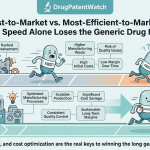
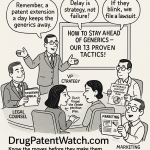
Generic drugs fill 90% of U.S. prescriptions and capture 18% of revenue. That gap is the whole game. The companies that understand it — and time their Abbreviated New Drug Application submissions around it with precision — turn patent law into a profit engine. Everyone else races to the bottom on price.
This is the operating manual for the first group.
Why ANDA Filing Date Is the Most Valuable Number in Generic Pharma
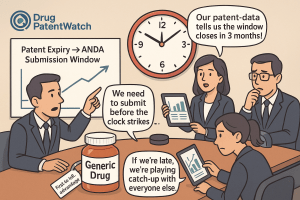
The day a generic company submits its ANDA to the FDA isn’t a regulatory event. It is a commercial declaration. It sets the clock on a potential 180-day exclusivity window worth hundreds of millions of dollars, it triggers patent litigation timelines, and it determines whether the company enters a market as a price-setter or a price-taker.
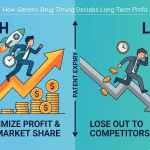
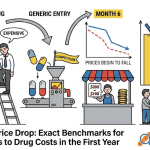
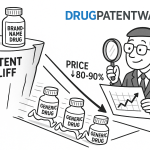
First generic entrants can capture 80% to 90% of unit market share over later entrants. Prices in a duopoly period — brand plus one generic — typically fall 15% to 25% from the brand price. Once five or more generics are approved, prices fall 80% to 90%. This arithmetic makes clear that the difference between launching first and launching third is often the difference between a profitable product and a commoditized one.
The mechanism that delivers this advantage is the Paragraph IV patent challenge. Filing a Paragraph IV certification is how a generic company declares that a brand’s listed patent is invalid, unenforceable, or not infringed — and thereby bids for the right to enter the market before that patent expires.
Understanding exactly how that mechanism works, and how to time every step of it with precision, is the subject of this analysis.
The Hatch-Waxman Act: What the Grand Bargain Actually Created
Why 1984 Changed Everything for Generic Competition
Before the Drug Price Competition and Patent Term Restoration Act of 1984, a generic manufacturer had to conduct its own full clinical trial program to demonstrate safety and efficacy. That meant replicating years of work the innovator had already done. The cost was prohibitive, the timeline was long, and the generic dispensing rate sat at 19%. Patients and payers had no meaningful alternative to brand-name pricing.
The Hatch-Waxman Act dismantled that barrier. It created the Abbreviated New Drug Application pathway, which lets a generic applicant rely on the FDA’s prior finding of safety and efficacy for the innovator’s Reference Listed Drug (RLD). The scientific burden for the ANDA filer reduces to demonstrating bioequivalence: that the generic delivers the same amount of active ingredient into the bloodstream in the same time as the RLD. Clinical equivalence without clinical trials. That shift made generic development economically viable overnight.
The generic dispensing rate is now above 90%. The Act cut an estimated $2.9 trillion from U.S. healthcare spending over the subsequent decade. The trade-off was intentional: innovators received new patent protections in exchange for the generic pathway they’d now compete against.
What the Bolar Exemption Actually Allows
The safe harbor provision in 35 U.S.C. § 271(e)(1), known as the Bolar Exemption, allows generic companies to conduct all development activities — formulation work, testing, bioequivalence studies — needed for an ANDA submission while a brand’s patents are still in force. Without this provision, a generic company could be sued for infringement simply for running the experiments necessary to file with the FDA.
The practical effect: a well-organized generic company can be manufacturing-ready and ANDA-ready on the day a patent expires or is invalidated. The safe harbor is not a regulatory footnote. It is the legal foundation for the entire strategy of parallel preparation and precise timing.
Patent Term Extension: How Brands Recapture Lost Clock Time
The Act’s Title II created a compensatory mechanism for innovators: Patent Term Extension (PTE). Because a significant portion of a patent’s 20-year statutory term erodes during clinical development and FDA review, Title II allows the holder of one qualifying patent to apply for an extension to recover some of that regulatory delay. The extension caps at five years, and the total effective patent life post-approval cannot exceed 14 years.
For a major biologic or small-molecule drug, this extension can represent multiple additional years of exclusivity and billions of dollars in protected revenue. PTE analysis — identifying which patents are eligible and when they actually expire — is one of the most commercially consequential pieces of intelligence a generic company can develop.
How the 30-Month Stay Functions as Negotiating Leverage
When a brand company files a patent infringement suit within 45 days of receiving a Paragraph IV notice letter, the FDA is automatically prohibited from granting final approval to the ANDA for up to 30 months. This automatic stay was designed to give innovators time to resolve patent disputes before generic entry. In practice, it functions as something more complex: a structured countdown that forces both sides to continuously reassess the cost and likelihood of continued litigation versus settlement.
A 2021 National Bureau of Economic Research working paper found that for drugs that eventually launched after a Paragraph IV challenge, the 30-month stay expired a median of 3.2 years before the actual generic launch. The stay itself was rarely the binding constraint on timing. Additional patent litigation, manufacturing readiness, and settlement terms typically determined the final entry date. That gap is the negotiating zone — the period where both sides are calculating whether a settlement with a defined entry date is worth more than the uncertain outcome of continued litigation.
Data Exclusivities: The Non-Patent Layer of Market Protection
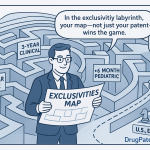
Separate from Orange Book patents, the Hatch-Waxman framework created FDA-administered exclusivities that run independently of any IP filing. The five-year New Chemical Entity (NCE) exclusivity prevents the FDA from even accepting an ANDA for five years after a drug with a new active ingredient receives approval. A three-year exclusivity applies to supplements supported by new clinical investigations, such as new indications or dosage forms.
These exclusivities matter because they are not challengeable via Paragraph IV certification. A generic company cannot file a Paragraph IV against a patent and circumvent NCE exclusivity if it has not yet expired. Timing an ANDA requires integrating both the patent landscape and the exclusivity calendar — and confusing the two is a costly strategic error.
The FDA’s Orange Book: How to Read the Battlefield
What the Orange Book Lists and What It Deliberately Excludes
The Orange Book connects regulatory approval status to intellectual property protection. When a brand company files a New Drug Application, it must list patents for which a claim of patent infringement could reasonably be asserted. Three categories qualify: drug substance patents (covering the active molecule), drug product patents (covering formulations, compositions, and dosage forms), and method-of-use patents (covering specific FDA-approved indications).
What cannot be listed is equally important. FDA regulations explicitly prohibit listing of process patents, packaging patents, metabolite patents, and intermediate patents. The Federal Circuit has reinforced this, holding that any Orange Book-listed patent must claim at least the active ingredient of the approved drug product. A ruling in early 2025 applied this standard to combination drug-device products, blocking the listing of patents that covered only the device component (for example, the inhaler mechanism) without claiming the drug substance itself.
That exclusion is commercially significant. A brand company holding patents on a sophisticated delivery device — an auto-injector, a dry powder inhaler, a prefilled syringe system — cannot list those patents in the Orange Book if they do not explicitly claim the active ingredient. Generic companies that build this analysis into their freedom-to-operate work can identify apparent patent thickets that are less formidable than they appear.
The FDA’s Ministerial Role and Why It Creates Strategic Opportunity
The FDA does not conduct substantive review when a brand company submits a patent for Orange Book listing. The agency takes the submission at face value. This hands-off posture is described internally as a “ministerial role.” Its effect is to shift enforcement responsibility elsewhere — and to create an environment where brand companies may list patents of questionable listability.
The FTC has become an increasingly active counterweight. In 2024 and into 2025, the agency sent a series of warning letters to brand manufacturers challenging Orange Book listings it deemed to cover device components or other ancillary technologies rather than the active ingredient itself. These challenges, which the FTC frames as violations of Section 5 of the FTC Act, add a new dimension to Orange Book strategy. A listed patent that draws an FTC challenge is also a patent whose 30-month stay, if triggered, becomes commercially and legally vulnerable.
For generic companies, the practical implication is straightforward: the Orange Book is not a definitive list of legitimate barriers. It is a starting point for analysis. The distinction between a patent that must be litigated and one that can be disputed through an Orange Book delisting petition or an FTC complaint changes the economics of a Paragraph IV program significantly.
How Patent Thickets Are Built — and Where They Break Down
AbbVie’s protection of Humira (adalimumab) is the most-studied example of deliberate patent thicket construction. At peak, AbbVie had listed more than 130 patents covering the antibody, formulations, dosing regimens, manufacturing processes, and delivery device components. Many of those patents were filed years after the original compound patent. The result was a wall of IP that delayed U.S. biosimilar entry until 2023, despite the compound patent expiring years earlier and biosimilar approvals having been granted as early as 2016.
The Humira case illustrates both the power and the limits of the patent thicket strategy. AbbVie extracted approximately $200 billion in cumulative U.S. revenue during the exclusivity period. When biosimilars did enter, they arrived in a coordinated wave — seven on a single day in July 2023 — and price competition was immediate. The thicket delayed the cliff; it did not eliminate it.
For small-molecule ANDAs, the thicket analysis follows a different structure. Brand companies often list formulation patents — covering extended-release matrices, enteric coatings, crystalline polymorphs, or salt forms — that expire years after the compound patent. A generic company that challenges only the earliest-expiring patent while overlooking later-expiring formulation patents can win a Paragraph IV case and still be blocked from launch. The complete patent estate must be assessed, not just the headline patent.
The Four Paragraph Certifications: Which Door Leads Where
Why Paragraph III Is Often the Wrong Default
Generic companies with risk-averse cultures sometimes default to Paragraph III certification — agreeing to wait until each listed patent expires. This approach avoids litigation entirely. It also forfeits the 180-day exclusivity, concedes first-mover advantage to bolder competitors, and restricts market entry to the period of maximum generic competition.
For any product with more than one potential generic challenger, a company that files only Paragraph III certifications will enter the market after first-filer companies have already claimed exclusivity, established pharmacy relationships, and signed payer contracts. The commoditization clock starts before the Paragraph III filer even ships product.
The only rational use case for Paragraph III is when a patent’s validity is effectively unassailable and the litigation cost would outweigh any commercial gain from early entry. Even in that scenario, a parallel Paragraph IV challenge against a weaker secondary patent can preserve optionality.
What Makes a Paragraph IV Certification Legally Adequate
The Paragraph IV process formally begins not with the FDA filing but with the notice letter sent to the NDA holder and patent owner within 20 days of FDA acknowledgment that the ANDA is sufficiently complete for review. The quality of that notice letter shapes the entire litigation that follows.
Legally, the notice letter must provide a detailed statement of the factual and legal basis for the invalidity, unenforceability, or non-infringement argument. In practice, this means the letter should be constructed with the same rigor as an opening brief. Courts have held that deficiencies in the notice letter — missing claim charts, insufficient factual basis, inadequate identification of prior art — can affect litigation posture and timeline.
The 45-day window after the brand company receives the notice letter determines whether the 30-month stay is triggered. If the brand does not sue within 45 days, there is no stay and the FDA can approve the ANDA on its own scientific timeline. Most brand companies file suit within the window for any commercially significant drug. The question is not whether they will sue, but which patents they will assert — a choice that signals which parts of their patent estate they consider most defensible.
How Paragraph IV Certifications Interact with Method-of-Use Patents
A method-of-use patent in the Orange Book creates a specific strategic option: the “section viii” carve-out. If the brand’s drug is approved for multiple indications and only some of those indications are covered by a method-of-use patent, a generic can file an ANDA that explicitly carves out the patented indication from its label. Instead of a Paragraph IV certification against the method-of-use patent, it files a section viii statement acknowledging the patent but asserting that the generic’s narrower label does not infringe.
This is not a theoretical maneuver. Carve-outs have been used successfully against method-of-use patents covering specific dosing regimens, patient subpopulations, and second indications. The brand company’s counter-strategy — attempting to narrow a generic’s label after approval, or arguing that the carved-out indication will be “skinny-labeled” in a way that still induces infringement — has generated significant Federal Circuit case law. The 2021 GSK v. Teva ruling on carve-outs, which found Teva liable for induced infringement despite using a skinny label, created compliance uncertainty that persists across the industry.
The 180-Day Exclusivity: Economics, Mechanics, and Forfeiture Risk
What the Duopoly Period Actually Generates in Revenue
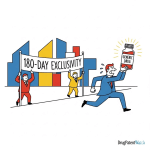
During the 180-day exclusivity window, the FDA will not approve any subsequent ANDA for the same drug. The market operates as a duopoly — brand and one generic — rather than the multi-competitor environment that follows. Pricing dynamics in the duopoly period differ fundamentally from competitive generics markets.
A single generic entrant during the 180-day period typically prices at 15% to 30% below brand and captures 50% to 70% of unit volume within the first month. For a drug with $1 billion in annual brand sales, this translates to roughly $300 million to $400 million in generic revenue over the six-month window. For a $3 billion drug, the figure scales proportionally. The Supreme Court has noted that this period can be worth “several hundred million dollars” to a first-filer. On the largest products, it has been worth considerably more.
Once the exclusivity expires and subsequent generics enter, prices fall to 15% to 25% of the original brand price within six to twelve months. The 180 days may generate more profit than the subsequent three years of post-exclusivity competition combined.
The First-to-File Standard: What ‘Substantially Complete’ Actually Requires
The 180-day exclusivity goes to the “first applicant” — the first entity to submit a substantially complete ANDA with a Paragraph IV certification. The substantially complete standard is not a low bar. An ANDA that receives a Refuse-to-Receive (RTR) letter from the FDA is not considered filed on the date of submission; it must be corrected and resubmitted. If a competitor files a complete ANDA in the interim, that competitor is the first-filer.
RTR rates fluctuate by year and product type, but applications with bioequivalence deficiencies, incomplete patent certifications, or missing chemistry, manufacturing, and controls (CMC) data are the most common failure modes. In competitive first-filer races, a single RTR can cost a company the entire strategic value of its Paragraph IV program on a given product.
For the highest-value targets — products with annual sales above $500 million — multiple companies often submit ANDAs on the same day. The FDA maintains a public Paragraph IV Certifications List that shows the date of first submission and the number of first-day filers. When multiple companies file on the same day, they share the 180-day exclusivity. The economics of shared exclusivity are materially worse than solo exclusivity because the companies effectively compete against each other during the duopoly period, compressing margins.
The Six Ways to Forfeit 180-Day Exclusivity
The Medicare Prescription Drug, Improvement, and Modernization Act of 2003 introduced forfeiture provisions designed to prevent first-filers from “parking” their exclusivity — winning the right to exclusivity and then sitting on it, blocking all subsequent generics while negotiating an indefinitely delayed settlement with the brand.
The six forfeiture triggers are:
Failure to market within 75 days of ANDA approval or within 75 days of a final court decision finding the challenged patents invalid or not infringed. Withdrawal of the ANDA. Amendment of a Paragraph IV certification to a Paragraph III certification. Failure to obtain tentative approval from the FDA within 30 months of filing. Entry into an agreement with the brand company or another generic applicant found by the FTC or a court to be anticompetitive under federal antitrust law. Expiration of the patents that were the subject of the Paragraph IV certification.
The 30-month tentative approval deadline is operationally demanding. It requires the FDA review to proceed without major deficiencies that would consume time in a Complete Response Letter cycle. Companies that file first-to-file ANDAs but fail to respond promptly to FDA information requests can find that the 30-month clock expires, triggering forfeiture regardless of how strong their Paragraph IV case is.
Patent Litigation Strategy: From Notice Letter to Settlement
The Anatomy of a Paragraph IV Notice Letter
The notice letter is the opening brief. Its factual and legal basis for invalidity or non-infringement arguments will be used by the brand company’s patent litigation team to build their response strategy. A thorough claim-by-claim analysis, supported by prior art citations and scientific expert input, signals to the brand that the challenge is credible. A thin or formulaic letter signals the opposite.
Non-infringement arguments require the generic company to compare the claim elements of the asserted patent against the formulation or process it has developed. The argument is essentially that the generic product does not fall within the scope of the claim because it lacks one or more claim elements. These arguments are most powerful when supported by a deliberate “design around” — a formulation strategy that produces a bioequivalent product while specifically avoiding the technical details that appear in the patent claims.
Invalidity arguments attack the patent itself. The most common grounds are anticipation (prior art showed the same invention before the patent’s priority date), obviousness (a skilled formulator would have arrived at the invention from the available prior art without inventive contribution), and inadequate written description or enablement (the patent does not sufficiently disclose the invention). The prosecution history of the patent — the complete record of communication between the inventor and the USPTO during examination — is critical source material. Statements the inventor made to distinguish prior art during prosecution can narrow claim scope significantly and create invalidity arguments based on prosecution history estoppel.
The 30-Month Stay as a Commercial Tool
Brand companies that receive a notice letter have 45 days to file suit and trigger the stay. Most do. The stay provides up to 30 months of continued exclusivity while the patent case proceeds through fact discovery, expert discovery, claim construction, and trial or summary judgment.
For a blockbuster drug with $3 billion in annual sales, 30 months of protected revenue is worth roughly $7.5 billion. The legal fees to defend a Paragraph IV case typically run $10 million to $30 million per side. The return on litigation investment for the brand is asymmetric: the cost of fighting is a small fraction of the revenue at stake.
The stay’s end date creates a defined negotiating deadline for both parties. As the 30 months approach, the probability that the generic company will launch at risk if no settlement is reached increases substantially. This threat is real — empirical data shows generics launch at risk essentially 100% of the time after winning at the district court level. The brand knows this. The converging pressure on both sides typically produces a wave of settlement activity in the months before stay expiration.
How Authorized Generics Erode First-Filer Economics
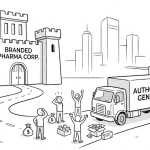
A brand company can authorize a subsidiary or a partner generic manufacturer to sell a generic version of its own drug, at generic prices, concurrent with the first generic entrant’s 180-day exclusivity. The authorized generic does not trigger or reduce the first-filer’s 180-day period — it simply competes within it, converting the duopoly into a three-party race.
The health economics data on authorized generics is clear. Their presence during the 180-day exclusivity period reduces the first-filer’s revenue by 40% to 60% compared to a duopoly without an authorized generic. AstraZeneca deployed this tactic against Ranbaxy during the omeprazole (Prilosec) litigation. Pfizer used it against multiple generic entrants for several products. The practice is legal under Hatch-Waxman and has been upheld in litigation. First-filers that model their exclusivity revenue without accounting for the authorized generic probability in their financial cases often discover the commercial value is materially lower than forecast.
What the FTC Considers a ‘Pay-for-Delay’ Settlement
Following the Supreme Court’s 2013 ruling in FTC v. Actavis, reverse-payment settlements — in which a brand company pays a generic challenger to drop its Paragraph IV case and delay market entry — are subject to antitrust scrutiny under the rule of reason. The FTC must show that the payment was “large and unjustified” to prove anticompetitive harm. This standard is litigated on the specific facts of each settlement.
In response, settlement structures have evolved. Direct cash payments have largely given way to more complex arrangements: a license for the generic to sell another product in the brand’s portfolio, a distribution or co-promotion agreement, a supply deal for active pharmaceutical ingredient at favorable pricing, or a settlement that includes an authorized generic provision that reduces the value of the first-filer’s exclusivity. These structures are designed to transfer value without the appearance of a naked cash payment.
The FTC reviews all patent settlement agreements under the MMA requirement that parties file agreements with the agency within ten days of execution. Companies structuring settlements must now account for the probability that any arrangement conveying value from brand to generic will draw scrutiny. The legal and reputational cost of an FTC investigation can rival the cost of continued litigation.
At-Risk Launch: When to Pull the Trigger and When to Wait
The Financial Logic of Launching Before Final Resolution
An at-risk launch occurs when a generic company holds final FDA approval, the 30-month stay has expired, but patent litigation has not yet reached a final decision or all appeals are not exhausted. The company launches commercially knowing it could be held liable for damages if the courts ultimately find the patent valid and infringed.
The reward is direct and immediate: revenue from the market entry, potential 180-day exclusivity income, and first-mover positioning that can persist even after additional generics enter. For a $2 billion annual revenue drug, an at-risk period of 12 to 18 months could generate $700 million to $1.2 billion in generic revenue.
The risk is treble damages. If a court finds infringement was willful, damages can be tripled. The brand’s damages are typically calculated on its lost profits during the at-risk period. For a drug generating $2 billion annually, lost profits damages over 18 months can reach $2 billion or more before the treble multiplier. Companies with limited balance sheets cannot absorb this exposure. Larger generic companies with diversified portfolios often can.
NBER Data on At-Risk Launch Outcomes
The 2021 NBER working paper “No Free Launch: At-Risk Entry by Generic Drug Firms” is the most rigorous empirical analysis of at-risk launch economics to date. Its core finding: in the dataset analyzed, every generic company that held FDA approval before a favorable district court decision, and had not settled, launched at risk 100% of the time.
The paper also examined what happened to the companies that launched at risk and ultimately lost. In the Plavix (clopidogrel) litigation, generic firm Apotex paid approximately $444 million in damages after an at-risk launch but generated sufficient revenue during the period to cover the liability. In the Protonix (pantoprazole sodium) case, Teva and Sun Pharma paid a combined $2.15 billion — but their at-risk profits offset 64% and 101% of their respective payments. The expected value calculation for at-risk launches, even in worst-case scenarios, was often positive.
This data challenges the intuition that losing an at-risk bet is catastrophic. The more accurate framing: it is expensive, but frequently less expensive than foregone revenue from waiting. Companies that can model their specific litigation probability and expected damages exposure with rigor are better positioned to make this decision than companies that treat it as binary.
How District Court Outcomes Shape Launch Probability
The probability of an appellate reversal of a district court patent invalidity decision is the critical variable in any at-risk launch decision. The Federal Circuit reverses or modifies district court patent judgments in approximately 30% to 40% of cases on appeal, depending on the issue. Claim construction rulings — how the court defines the scope of patent claims — are reviewed de novo and carry the highest reversal rate. Factual findings of invalidity are reviewed for clear error and are harder to reverse.
A generic company that won a district court case on an obviousness ground, supported by documented expert testimony and a strong prior art record, faces a lower appellate reversal probability than one that won on a narrow claim construction argument that the Federal Circuit might read differently. The specific legal basis of the district court win is the primary input to the at-risk launch probability model, not the simple fact of the win.
Landmark Case Studies: What Prozac, Lipitor, and Prilosec Actually Teach
Why the Prozac (Fluoxetine) Case Rewired the Industry’s Risk Calculus
Barr Laboratories’ challenge to Eli Lilly’s Prozac (fluoxetine hydrochloride) in the 1990s was not just a legal event — it was a proof of concept that rewired how the generic industry evaluated patent risk. Lilly’s drug was the best-selling antidepressant globally. The idea that a small generic firm could take it on seemed implausible. The legal theory centered on double patenting: Barr argued that a later-expiring patent was invalid because it claimed an invention not patentably distinct from the earlier compound patent.
The litigation was extended. Barr’s challenge succeeded in important respects, and the subsequent entry of generic fluoxetine — ultimately with Teva Pharmaceuticals capturing first approval for a liquid formulation alongside the 180-day exclusivity — produced seismic market consequences. Generic fluoxetine captured approximately 65% of unit volume within the first month of launch. Within 12 months, it held close to 90% of the market.
The commercial outcome established a template. The Paragraph IV challenge against a major CNS drug produced enormous financial returns. It validated the double patenting argument as a viable weapon against late-expiring secondary patents. Every subsequent first-to-file ANDA race against a major brand can be traced, in part, to the Prozac precedent.
The Lipitor (Atorvastatin) Litigation: How a $14 Billion Annual Franchise Was Negotiated Away
Pfizer’s Lipitor (atorvastatin calcium) held the record as the best-selling drug in pharmaceutical history, generating more than $12 billion annually at peak. Ranbaxy Laboratories was the first to file a Paragraph IV ANDA, putting it in line for 180-day exclusivity on the largest generic opportunity in history.
The litigation involved multiple patent families: the original compound patent, an enantiomer patent covering the specific stereoisomer of atorvastatin, and patents on crystalline forms and downstream chemistry. The case became globally complex, with parallel proceedings across major markets. A separate antitrust action included allegations that Pfizer had fraudulently obtained one of its key patents from the USPTO to delay generic competition — allegations that, if proven, would have voided the patent entirely.
Rather than risk a full loss at trial, Pfizer and Ranbaxy reached a global settlement in 2008. The settlement granted Ranbaxy a license to begin U.S. commercial marketing on November 30, 2011, years before Pfizer’s latest-expiring patents and well after most critics thought Pfizer could sustain protection. Pfizer preserved several additional years of blockbuster sales. Ranbaxy locked in its 180-day exclusivity with certainty.
The FTC and consumer plaintiffs subsequently argued the settlement was a pay-for-delay arrangement that kept prices artificially high, spawning years of antitrust litigation. The Lipitor saga is the clearest case study in pharmaceutical patent litigation for one reason: neither side won in court. Both sides negotiated a business outcome that replaced legal uncertainty with commercial certainty. The $14 billion franchise was not defended — it was wound down on a mutually agreed schedule.
Prilosec (Omeprazole) and the Science of Formulation Patents
AstraZeneca’s omeprazole formulation — marketed as Prilosec — was chemically unstable in acid. The molecule degrades in stomach acid before it can reach the small intestine. AstraZeneca’s scientists developed a layered delivery system: an alkaline reacting compound in the drug core to stabilize omeprazole, an outer enteric coating to prevent acid exposure in the stomach, and an inert subcoating between the two layers to prevent direct contact during storage.
The subcoating patents became the focus of “second wave” litigation against Mylan, Andrx, Dr. Reddy’s Laboratories, and others. Each company developed its own formulation attempting to design around the subcoating patents. Whether each succeeded depended on the specific chemical and functional identity of its own intermediate layer — and on how the Federal Circuit construed the patent claims.
The outcomes were not uniform. Some generic defendants prevailed on non-infringement; others did not. The Federal Circuit’s interpretation of terms like “alkaline reacting compound” and “inert subcoating” was outcome-determinative. Claim construction, not trial, was where the case was decided.
The omeprazole litigation teaches two things. First, secondary formulation patents can protect a brand’s commercial position for years after the compound patent expires, if they are technically valid and broadly drafted. Second, generic companies that invest in genuine formulation innovation — a design-around that is both scientifically distinct and therapeutically equivalent — can prevail where companies that rely on legal arguments alone cannot.
Revenue at Risk: The Biggest ANDA Opportunities in the Current Cycle
Which Drug Classes Carry the Largest Generic Revenue Potential Through 2030
Patent expiry timelines for major branded drugs through 2030 define the generic opportunity pipeline. The drugs generating the most investor attention as exclusivity cliffs approach fall into several categories.
The GLP-1 receptor agonist class — semaglutide (Ozempic, Wegovy) and tirzepatide (Mounjaro, Zepbound) — carries the largest long-term generic revenue potential of any drug class currently on market. Novo Nordisk’s base patent on semaglutide expired in 2033 in key markets. However, formulation patents, autoinjector device patents, and method-of-use patents covering obesity indications create a layered exclusivity structure that generic entrants will need to address systematically. The complexity of GLP-1 manufacturing — involving peptide synthesis, formulation stability challenges, and specialized delivery devices — adds a technical moat on top of the patent estate.
Merck’s pembrolizumab (Keytruda), the leading checkpoint inhibitor with approximately $25 billion in annual global sales, faces compound patent expiry between 2028 and 2030 depending on the jurisdiction. The biosimilar pathway for Keytruda runs through the BPCIA rather than Hatch-Waxman, given its biologic nature. At least three biosimilar developers have initiated programs. The manufacturing complexity — large-molecule antibody production at commercial scale with consistent glycosylation profiles — represents a significant barrier that purely financial patent analysis understates.
Bristol-Myers Squibb’s nivolumab (Opdivo), competing in the same PD-1 inhibitor class, faces an earlier exclusivity cliff in several international markets and has attracted biosimilar interest from Samsung Bioepis, Pfizer, and others. The Opdivo and Keytruda biosimilar programs are the highest-value biologic generic opportunities in the current development pipeline.
Among small molecules, apixaban (Eliquis, Bristol-Myers Squibb/Pfizer) is one of the most closely watched generics targets. The compound patent expires in 2026 in the U.S. BMS and Pfizer have listed numerous secondary patents covering formulations, crystalline forms, and dosing regimens that could extend effective exclusivity. Multiple Paragraph IV ANDAs were filed years in advance. The litigation outcomes for those applications will determine whether the market sees generic apixaban in 2026 or later.
How Loss of Exclusivity Affects Brand Revenue in the First 12 Months
The financial impact of loss of exclusivity (LOE) on brand revenue is not linear. It is front-loaded and steep. Studies of historical LOE events show that brands typically retain 10% to 30% of unit market share within 12 months of first generic entry, depending on the therapeutic class and the number of generic entrants. In crowded markets where five or more generics launch simultaneously, brand erosion can reach 90% of unit volume within six months.
The revenue implications for brand companies extend beyond lost sales of the specific product. Patent cliff exposure affects pipeline replacement pressure, R&D allocation decisions, credit ratings, and dividend sustainability. Investors tracking companies with near-term LOE events — AstraZeneca’s portfolio through 2027, Pfizer’s post-Paxlovid realignment, Merck’s Keytruda dependency risk beyond 2028 — are essentially analyzing whether current pipeline assets can replace exclusivity revenue on a dollar-for-dollar basis before the cliff arrives.
Brand companies with heavy concentration in one or two products approaching LOE trade at measurable discounts to peers with diversified pipelines or early-stage replacement assets. The patent expiry date of a single drug can move a company’s equity valuation by double-digit percentage points.
The BPCIA and Biosimilar Patent Strategy: Why the Hatch-Waxman Playbook Fails
How the ‘Patent Dance’ Differs from a Paragraph IV Filing
The Biologics Price Competition and Innovation Act of 2010 created an abbreviated approval pathway for biosimilars modeled loosely on Hatch-Waxman. But the patent resolution mechanism is fundamentally different, and treating it as equivalent to the ANDA process is a strategic error.
Under the BPCIA, there is no Orange Book. A biosimilar applicant that wants to identify which patents cover the reference product must either participate in the “patent dance” — a multi-step confidential exchange of information with the reference product sponsor — or forgo the dance and face a different litigation posture. The Supreme Court confirmed in Sandoz Inc. v. Amgen Inc. (2017) that a biosimilar applicant cannot be compelled to participate in the dance.
There is no automatic 30-month stay under the BPCIA. A brand company can seek a preliminary injunction against biosimilar launch, but it must demonstrate likelihood of success on the merits, irreparable harm, and favorable balance of equities — a higher bar than the automatic stay triggered by a Paragraph IV filing. This means biosimilar litigation is more fluid and less predictable in its timeline effects than small-molecule Paragraph IV litigation.
Why 12 Years of BPCIA Data Exclusivity Resets the Competitive Clock
Biologics approved under the Public Health Service Act receive 12 years of data exclusivity from the date of first licensure. The FDA will not accept a biosimilar application until four years into this period and cannot approve one until the 12-year exclusivity expires. For a biologic approved in 2020, no biosimilar approval is possible before 2032, regardless of patent status.
This 12-year exclusivity, compared to the five-year NCE exclusivity for small molecules, reflects the regulatory judgment that biologics require additional incentive protection due to higher development costs. It also means that any biosimilar development program initiated today against a recently approved biologic is a decade-long project, with substantial capital committed before any revenue is possible.
The interplay of BPCIA data exclusivity, patent term extension, and the complexity of biologic manufacturing creates effective exclusivity windows that frequently extend 15 to 20 years from first approval. Portfolio managers evaluating biosimilar developer valuations must distinguish between companies with programs against biologics near exclusivity expiry and companies investing in programs against recently approved reference products — the financial return profiles differ by years.
Manufacturing Complexity as a Non-Patent Barrier in Biologics
Manufacturing a biosimilar at commercial scale involves replicating the three-dimensional protein structure, post-translational modifications including glycosylation patterns, aggregation profiles, and other critical quality attributes of the reference product — all without access to the innovator’s cell line, process parameters, or formulation know-how. The FDA’s demonstration of biosimilarity requires extensive analytical characterization, often including clinical pharmacology studies and sometimes clinical efficacy data for extrapolated indications.
The capital cost of a biologic manufacturing facility capable of supporting commercial biosimilar launch is $200 million to $500 million, depending on capacity and technology. Only a limited number of global manufacturers have the combination of analytical capability, regulatory track record, and manufacturing capacity to execute this at scale. Samsung Bioepis, Celltrion, Pfizer’s biosimilar division, Sandoz, and a small number of others are positioned to compete across multiple reference products. Companies without either internal manufacturing capability or a contract development and manufacturing organization (CDMO) partnership at this level are not credible entrants.
This manufacturing moat shapes the biosimilar competitive landscape as directly as the patent estate. An investor modeling biosimilar entry timing against Keytruda or Dupixent (dupilumab) must assess not just patent expiry but also how many manufacturers have the process capability and capital to file a biologics license application (BLA) for the biosimilar — and how many will actually complete the regulatory gauntlet.
Global Patent Linkage: What Changes Outside the United States
Canada’s 24-Month Stay and Stricter Listing Standards
Canada’s Patented Medicines (Notice of Compliance) Regulations create a patent linkage framework that resembles Hatch-Waxman but differs in material ways. The patent register functions similarly to the Orange Book, but Health Canada applies stricter criteria for which patents can be listed. Method-of-manufacture patents are explicitly excluded — a standard the Orange Book did not historically apply with the same rigor, though FTC pressure is moving U.S. practice closer to the Canadian standard.
When a generic company challenges a listed patent in Canada, a proceeding can result in a 24-month automatic stay on the Notice of Compliance — shorter than the U.S. 30-month stay. The shorter stay creates less negotiating runway and changes the settlement economics for both parties.
The European Union’s De-Linked System and What It Means for Launch Timing
The EU does not permit patent linkage. The European Medicines Agency evaluates generic marketing authorization applications on scientific grounds — bioequivalence and pharmaceutical quality — without reference to patent status. A generic can receive EMA approval while the reference product’s patents remain in force. The patent dispute, if any, proceeds through national courts in EU member states separately from and without effect on the regulatory timeline.
This creates a different risk profile. A European generic company can time its launch for the day a patent expires (or after winning a national court challenge) without having to coordinate the regulatory timeline with the litigation. But it also means that a generic launching in Europe can be immediately enjoined by a national court if the innovator obtains an injunction order — there is no structured framework preventing a post-launch injunction the way the 30-month stay pre-empts it in the U.S.
Companies with global generic programs must model each jurisdiction’s linkage rules separately. A Paragraph IV filing strategy optimized for the U.S. does not translate directly to European market entry planning.
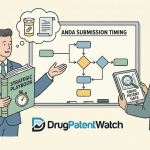
Building the ANDA Timing Decision Framework
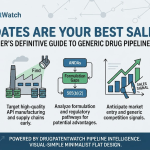
How to Prioritize Targets Using Patent Expiry Data
The initial screen for ANDA opportunity targets combines two variables: commercial value and patent vulnerability. A drug with $2 billion in annual sales and a single composition-of-matter patent expiring in 18 months with no secondary patents listed is a higher-priority target than a drug with $3 billion in annual sales protected by a 40-patent thicket with expirations staggered through 2035.
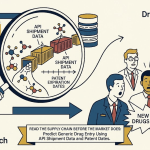
Platforms like DrugPatentWatch allow systematic filtering across both dimensions. The database integrates Orange Book patent data, FDA exclusivity records, litigation history, and Paragraph IV certification filings to produce a structured view of each product’s IP position. Analysts can identify drugs where the gap between the headline patent expiry and the last-listed patent expiry is narrow — suggesting the thicket may be thinner than it appears — and cross-reference against active Paragraph IV filings to assess competitive density.
The output of this screening process is a tiered target list: high-priority products where early Paragraph IV filing is commercially justified, medium-priority products where a second-to-file position still offers positive expected value, and products where the patent estate is too dense or the market too small to justify the investment.
Freedom-to-Operate Analysis: Where Patent Law Meets Formulation Chemistry
A freedom-to-operate (FTO) analysis for a generic product program is not a literature search. It is an integrated legal and scientific review that connects each Orange Book-listed patent claim to the specific formulation the generic company intends to manufacture.
The analysis has three outputs. First, an infringement opinion for each asserted patent claim: does the proposed generic formulation fall within the scope of the claim as properly construed? Second, an invalidity opinion: are there grounds — prior art, obviousness, written description deficiency — to challenge the patent’s validity? Third, a design-around assessment: if both infringement and invalidity arguments are uncertain, what modifications to the formulation would move it clearly outside the patent claims while preserving bioequivalence?
The prosecution history review is often the most commercially valuable part of this analysis. Inventors routinely make arguments during patent prosecution that narrow the scope of their claims — statements distinguishing prior art, claim amendments made to overcome rejections, responses to office actions that define the invention’s limits. These statements create prosecution history estoppel that forecloses certain claim interpretations at trial. A thorough prosecution history review identifies arguments that the innovator cannot now make in litigation even if the plain language of the claim would otherwise support them.
Monitoring the Paragraph IV Certification List for Competitive Intelligence
The FDA publishes an updated Paragraph IV Certifications List that shows the drug, the date of the first P-IV submission, and the number of applicants who filed on that first date. This list is the primary tool for tracking competitive activity in the ANDA filing space.
For any target product where a company has not yet filed, the list shows whether the first-to-file window is still open or has closed. For products where a company is already in the race, it shows how many competitors share exclusivity eligibility. For products where the company is monitoring competitors, it shows new entrants and the intensity of competitive interest.
Automated surveillance of this list, combined with alerts for new patent litigation filings related to specific drugs, allows a generic company’s strategy team to operate reactively and proactively. When a new Paragraph IV certification appears for a product in the company’s pipeline, the team must immediately assess whether the new entrant changes the expected value of continued investment — or whether an accelerated filing is warranted to get into the first-day cohort.
What Investors Are Watching
How Patent Expiry Dates Move Generic Company Valuations
Generic pharmaceutical company valuations are driven less by current earnings and more by the pipeline of first-to-file ANDA opportunities with 180-day exclusivity potential. Analysts tracking Teva, Viatris, Sandoz, Sun Pharma, and Dr. Reddy’s Laboratories build revenue models around exclusivity timelines — identifying which products will generate exclusivity revenue in the next 24 months and what the probability-adjusted value of those programs is.
The probability adjustment is material. A Paragraph IV program where the company holds first-to-file status, has already won at district court, and faces a weakened opponent on appeal is valued differently from a program where the company is a fifth filer, the district court ruled against it, and an appeal is pending. Modeling these distinctions requires access to litigation docket data and ANDA filing records, not just patent expiry dates.
Key Patent Expiry Dates Through 2030 That Define Generic Revenue Timelines
The following product-level patent expiry profiles are among the most commercially significant for generic company revenue planning:
Apixaban (Eliquis, BMS/Pfizer): compound patent expires 2026, formulation patent challenges active. Generic apixaban entry timing is one of the most actively litigated questions in U.S. generic pharma.
Ustekinumab (Stelara, J&J): compound patent expired 2023 in the U.S. Multiple biosimilar approvals received in 2023. Biosimilar launch dates have been subject to settlement agreements with J&J that define entry timing rather than litigation outcomes.
Dupilumab (Dupixent, Regeneron/Sanofi): peak annual sales approaching $15 billion. Biologics license application data exclusivity runs through 2031. Patent estate extends further. No credible biosimilar entry before the early 2030s.
Semaglutide (Ozempic/Wegovy, Novo Nordisk): compound patent expires 2033 in the U.S. Formulation and device patents may extend beyond that. The manufacturing complexity of GLP-1 peptide synthesis at commercial scale means that even when patents expire, only manufacturers with existing peptide API capacity will be positioned to supply commercial biosimilar volume quickly.
Pembrolizumab (Keytruda, Merck): core patent expiry between 2028 and 2030. Biosimilar programs underway at multiple manufacturers. FDA approval of the first Keytruda biosimilar, whenever it arrives, will represent the single largest LOE event in pharmaceutical history in terms of annual revenue exposed.
How Biosimilar Launch Timing Works After Patent Expiry
The timeline from biosimilar BLA submission to FDA approval averages 12 to 18 months for products going through the standard review pathway. Companies that have completed the BPCIA patent dance — or have litigated their way to a final court determination — can obtain tentative approval before the reference product’s data exclusivity expires, allowing for commercial launch on the first eligible date.
The delay between tentative approval and commercial launch is often driven by settlement agreements rather than regulatory timing. In the ustekinumab (Stelara) case, multiple biosimilar developers received FDA approval in 2023 but agreed in their litigation settlements with J&J not to launch until specified dates in 2025. The regulatory pathway was clear. The commercial entry date was a negotiated outcome.
This pattern — regulatory readiness followed by negotiated delay — is becoming the standard for major biologic LOE events. Investors and commercial teams modeling biosimilar launch timing need to track not just FDA approval status but the specific settlement terms disclosed in court filings, which often include the earliest permitted launch dates.
Common Investor Questions
What is the financial value of 180-day exclusivity for a $1 billion drug?
For a brand drug generating $1 billion annually, the first generic entrant during the 180-day exclusivity period can generate approximately $150 million to $300 million in revenue, depending on pricing strategy and market capture speed. Gross margins during this period are typically 60% to 70%, producing $90 million to $210 million in gross profit from a single six-month window.
What happens to brand company revenue immediately after loss of exclusivity?
Revenue decline is front-loaded. Historical data across multiple therapeutic classes shows that brands typically lose 50% to 80% of unit volume in the first three months after first generic entry. In classes with multiple simultaneous entrants, the decline reaches 90% within six months. The brand price itself rarely falls — brand companies often maintain price while volume erodes. Net revenue decline typically tracks unit volume erosion.
How does a Paragraph IV loss affect a generic company’s pipeline strategy?
A loss in Paragraph IV litigation — a court finding that the challenged patent is valid and infringed — does not necessarily end the program. The generic company must cease at-risk sales, pay damages if it launched at risk, and then either wait for the patent to expire, attempt an appeal, or develop a new design-around formulation. Companies with deep enough balance sheets to absorb damages and continue development often do. For smaller companies, a Paragraph IV loss on a major product can trigger a strategic review of the entire pipeline.
Why do brand companies sometimes prefer settlement to winning in court?
A court verdict, even a brand victory, leaves the patent’s validity and scope subject to appeal. Appeals create ongoing uncertainty. A settlement provides a defined commercial outcome: a specific market entry date for the generic, certainty on authorized generic terms, and an end to litigation costs. Brand companies that have already booked the patent’s remaining value into their financial guidance often prefer the certainty of a settlement date over the uncertainty of litigation, particularly when the expected generic entry date from a settlement is close to the date they would lose at trial anyway.
Key Takeaways
The ANDA filing date is not an administrative milestone. It is the first move in a commercial competition that determines whether a generic product is profitable or commoditized.
The Orange Book is a strategic tool, not a neutral database. Brand companies use it to construct patent thickets. Generic companies should analyze it skeptically, distinguishing defensible patents from listability-questionable filings that may not survive scrutiny.
The 180-day exclusivity period is the primary driver of economic value in the Hatch-Waxman framework. It depends entirely on being the first substantially complete ANDA filer with a Paragraph IV certification. Speed and quality on submission day are the two variables that determine whether a company captures this prize.
The 30-month stay creates a structured negotiating timeline that usually produces a settlement rather than a trial verdict. Understanding that dynamic — and modeling the settlement value relative to litigation risk — is as important as understanding the legal merits of the patent challenge.
At-risk launches after district court wins are common and financially rational. The NBER data shows they occur effectively 100% of the time in that scenario and that even losses often result in net positive financial outcomes. Companies that model this decision rigorously, rather than reflexively, make better commercial choices.
The BPCIA operates on different mechanics from Hatch-Waxman. No automatic stay, no Orange Book, no 180-day exclusivity for biosimilar entrants, and 12 years of data exclusivity for reference products. Companies with programs in both small molecules and biologics must maintain distinct playbooks for each pathway.
Manufacturing complexity is a non-patent barrier that financial patent analysis systematically underweights. In biologics especially, the ability to manufacture at commercial scale with consistent critical quality attributes is as determinative of competitive position as any patent filing.
Investment Strategy
Generic company valuations are forward-looking on exclusivity timelines. The most actionable investment signals come from monitoring first-to-file ANDA status on major upcoming LOE events, tracking Paragraph IV litigation outcomes at the district and appellate court level, and assessing the realistic manufacturing readiness of biosimilar developers against the highest-revenue reference products approaching data exclusivity expiry.
Brand company valuations need to price in LOE exposure explicitly. Companies with single-product concentration risk — where one drug accounts for more than 30% of revenue and is within five years of its primary patent expiry — deserve scrutiny on pipeline replacement capacity. The historical base rate for brand companies replacing LOE revenue with new approvals on a dollar-for-dollar basis is poor.
The most mispriced situations tend to involve complex Paragraph IV outcomes where settlement terms are not fully public, or where the authorized generic variable has not been fully incorporated into first-filer revenue models. These are the information gaps that produce alpha for investors and commercial teams with access to primary source litigation and regulatory data.