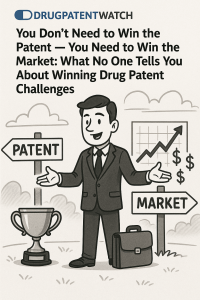
A deep-dive for pharma IP teams, portfolio managers, and institutional investors on the strategies, IP valuations, and commercial mechanics that actually determine who captures post-exclusivity revenue.
1. The Central Argument: Why Legal Wins Are Necessary but Insufficient
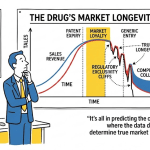
The pharmaceutical industry has spent decades organizing itself around a flawed mental model: patent equals revenue. The patent’s statutory 20-year term looks compelling on paper. In practice, the average effective market exclusivity for a small molecule drug runs closer to 11.4 years, per a 2024 USPTO analysis, because clinical development and regulatory review consume years before a single prescription is written.
That number deserves to sit at the center of every IP valuation model and every lifecycle management plan. It means the window for commercial execution is shorter, the cost of litigation-as-delay is more calculable, and the case for treating a patent as a commercial instrument rather than a legal trophy is more urgent than ever.
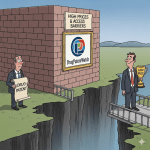
The argument here is straightforward: a company can win every Paragraph IV trial it faces and still watch 80-90% of its branded market share evaporate within 12 months of first generic entry. Conversely, a generic company can lose its Paragraph IV trial at the district court level and still achieve its primary commercial objective because it settled for an authorized early-entry date and captured the 180-day exclusivity window. The legal scoreboard and the commercial scoreboard are not the same document.
This piece maps both of them, with specific attention to the IP valuation mechanics, regulatory incentives, and operational requirements that decide which companies actually capture post-exclusivity revenue.
2. The Legal and Regulatory Framework, Decoded for Strategists
2.1 Hatch-Waxman and the Paragraph IV Certification Machine
The Drug Price Competition and Patent Term Restoration Act of 1984, known universally as Hatch-Waxman, created two parallel tracks that continue to shape pharmaceutical competition. One track, the Abbreviated New Drug Application (ANDA), allows a generic manufacturer to seek FDA approval by relying on the safety and efficacy data already established in the innovator’s New Drug Application (NDA), provided the generic can demonstrate bioequivalence to the reference listed drug.
The second track, which gets far less operational attention from brand companies until it is too late, is the Paragraph IV (PIV) certification. When a generic applicant includes a PIV certification in its ANDA, it is asserting that one or more patents listed in the FDA’s Orange Book are invalid, unenforceable, or will not be infringed by the proposed generic product. The ANDA applicant must notify the NDA holder and patent owner within 20 days of the FDA accepting the filing. From receipt of that notification, the brand has exactly 45 days to file an infringement suit. If it does, the FDA is generally blocked from granting final ANDA approval for 30 months.
The strategic calculus embedded here is often misread. Brand companies treat the 30-month stay primarily as a legal defense. It is more accurately described as a revenue extraction mechanism with a known endpoint. For a drug generating $3 billion annually, a 30-month stay has a nominal value of $7.5 billion in retained revenue before any court ruling, before any injunction, before any trial. The litigation does not need to produce a win. It needs to run the clock.
Key Takeaways for IP and Commercial Teams
The decision to sue within the 45-day window should be evaluated commercially, not just legally. For any drug where branded sales exceed $1 billion annually, the financial value of a 30-month stay typically justifies the litigation cost even if the probability of a final trial win is below 50%. Brands with multiple Orange Book-listed patents should sequence their infringement claims to maximize the likelihood of at least one stay-triggering suit remaining active, since courts have progressively narrowed the triggers for stays on secondary patents.
2.2 The 30-Month Stay as a Commercial Instrument
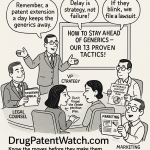
The 30-month regulatory stay, mischaracterized as a defensive tool, is a revenue bridge. During those 30 months, an innovator with commercial discipline executes multiple simultaneous programs. Patient conversion to a reformulated product, authorized generic preparation, payer contract renegotiation with updated formulary terms, and copay assistance program restructuring all happen in parallel. The brand that treats the 30 months as ‘waiting for the verdict’ leaves hundreds of millions on the table compared to the brand that treats it as a commercial runway.
Generic companies understand the mirror logic: the 30-month stay is not passive time. It is the window for manufacturing scale-up, supply chain qualification, distribution partner negotiations, and regulatory preparation for launch. A generic that cannot ship within 30 days of FDA final approval forfeits a measurable fraction of its 180-day exclusivity economics. Speed-to-shelf is a core competitive capability, not a logistics detail.
2.3 180-Day Exclusivity: The Real Prize in Generic Litigation
The 180-day exclusivity period granted to the first ANDA applicant to file a substantially complete application containing a PIV certification — and then either prevail in litigation or have the claim dropped — is the primary financial incentive driving the entire Paragraph IV ecosystem. During these 180 days, the FDA cannot approve any other generic ANDA for the same drug. The result is a temporary duopoly between brand and first-filer generic.
The pricing economics during 180-day exclusivity are well-documented. A single generic entrant typically prices at 15-25% below the branded list price, compared to the 70-80% price decline seen once ten or more generics compete in the same market. The first-filer captures the majority of its lifetime return on the entire Paragraph IV challenge during this window.
This explains the apparent paradox in the litigation data. Generic companies win roughly 48% of PIV trials at the district court level. Their overall success rate across all Paragraph IV challenges, including settlements and withdrawn suits, runs to approximately 76%. The gap between 48% and 76% is the settlement premium: generic companies are not litigating to win in court. They are litigating to negotiate a settlement that delivers an authorized early-entry date, often accompanied by royalty payments to the brand, and preserves their first-filer status.
Investment Strategy Note
For portfolio managers tracking PIV litigation as a catalyst, the settlement rate differential is the key variable. A generic stock price reaction to a district court loss is frequently an overreaction if the company retains first-filer status and settlement negotiations remain active. Conversely, a brand’s district court win does not necessarily prevent generic entry at a negotiated early date that may arrive years before the nominal patent expiry.
2.4 The BPCIA ‘Patent Dance’ and Biologic IP Architecture
The Biologics Price Competition and Innovation Act of 2010 created an abbreviated pathway — the abbreviated Biologics License Application (aBLA) — for biosimilar developers, structured around a mandatory information-sharing and dispute-resolution process that practitioners call the ‘patent dance.’ The choreography matters because it shapes which patents get litigated and when.
The dance begins when a biosimilar applicant provides its manufacturing process, cell line data, and analytical comparability package to the reference product sponsor, typically within 60 days of FDA acceptance of the aBLA. The sponsor has 60 days to identify patents it believes would be infringed. The biosimilar applicant then provides its non-infringement and invalidity positions. The parties negotiate a list of patents to litigate in a first wave, with a second wave of patents available after licensure. The whole process, if both parties comply with each step’s timeline, can unfold across 18-24 months before any court filing.
Biologic innovators with well-constructed IP portfolios use the patent dance to sequence their most defensible patents into the first wave, forcing biosimilar developers to clear multiple hurdles before market entry. The strategic depth of this approach requires that biologic IP portfolios be built around at least four distinct layers: the primary biologic molecule or sequence, formulation patents covering pH, excipients, and concentration ranges, manufacturing process patents covering cell line modifications and purification steps, and delivery device patents covering the auto-injector or prefilled syringe. Each layer adds litigation complexity and potential delay.
2.5 Inter Partes Review: The PTAB as a Market Disruptor
Inter Partes Review before the Patent Trial and Appeal Board, available since 2012 under the America Invents Act, changed the patent challenge landscape in a way many brand IP teams still underestimate. IPR allows any party to petition for cancellation of issued patent claims on grounds of novelty (35 U.S.C. § 102) or non-obviousness (35 U.S.C. § 103), using only patents and printed publications as prior art. The PTAB applies a preponderance of evidence standard — lower than the clear and convincing evidence standard used in district courts — and issues final decisions within 12-18 months of institution.
The PTAB has historically instituted review in roughly 60% of petitions and cancelled all or some challenged claims in a majority of instituted proceedings. For pharmaceutical patents, the institution rate and cancellation rate are both meaningful because secondary patents (formulation, method-of-use, dosing regimen) tend to be more vulnerable to prior art challenges than primary composition patents.
The rivastigmine and glatiramer acetate cases demonstrate the commercial impact directly. Successful IPR proceedings that cancelled key patents for both drugs led to price reductions of up to 98% and accelerated generic entry by years. The PTAB’s technical sophistication in evaluating complex chemistry and pharmacology prior art makes it a faster and often more reliable forum for invalidating secondary pharmaceutical patents than district court litigation.
Brands routinely file parallel district court suits to maintain stays while IPR proceedings run. The interaction between the two tracks requires careful coordination: a final written decision from the PTAB invalidating a patent can moot the district court infringement claim while the stay remains in effect, creating a gap between legal resolution and commercial entry that neither party anticipated in their litigation budget.
Key Takeaways for Brand IP Teams
Treat IPR risk as a quantifiable variable in every Orange Book patent’s commercial lifetime projection. Patents with prior art exposure that predates the 2012 AIA cutoff are not automatically safe in IPR; PTAB’s standard of review for pharmaceutical claims has consistently rejected obviousness defenses that succeeded in district courts. Every secondary patent in a high-revenue product’s Orange Book listing should carry an explicit IPR probability haircut in its exclusivity valuation.
2.6 The FDA-USPTO Divide and What It Means for Exclusivity Calculations
The FDA does not evaluate patent validity or determine infringement. Its function in the patent context is purely administrative: it maintains the Orange Book based on information submitted by NDA holders, grants the 30-month stay when a brand sues on a listed patent within 45 days of PIV notification, and enforces regulatory exclusivities (New Chemical Entity exclusivity, orphan drug exclusivity, pediatric exclusivity) independently of patent status.
The USPTO grants patents and administers IPR proceedings but has no role in FDA’s exclusivity determinations. A patent can be invalidated at the PTAB, and the FDA continues to enforce any remaining regulatory exclusivity until its statutory term expires. A drug can lose all of its Orange Book patents and still maintain market exclusivity through a five-year New Chemical Entity designation or a seven-year orphan drug designation.
The 2024 USPTO study made two findings that directly affect how IP teams should model patent portfolio value. First, the number of patents listed in the Orange Book for a given drug has no statistically meaningful correlation with the timing of generic entry. Second, follow-on patents covering improvements do not extend the exclusivity of the original drug. If a brand launches a modified-release formulation with its own Orange Book patents, those patents protect only the modified-release version. Generic manufacturers can enter the market with the original immediate-release formulation once its core patents expire, regardless of how many formulation patents the brand holds on the modified-release product.
3. IP Valuation as a Core Asset: How to Price Patent Portfolios Correctly
3.1 Valuing Orange Book-Listed Patents
An Orange Book-listed patent’s commercial value is the discounted revenue protected during its remaining exclusivity term, adjusted for litigation risk, IPR cancellation probability, and the probability of a successful design-around by a generic competitor. The standard DCF model for pharmaceutical patent valuation applies a risk-adjusted royalty rate to the drug’s projected revenue stream through the patent’s expiry, but this approach fails to incorporate the distinct risk profiles of different patent types.
A more rigorous framework separates Orange Book patents into tiers based on their litigation track record and prior art vulnerability:
Tier 1 patents cover the active pharmaceutical ingredient itself — the composition of matter. These patents are hardest to invalidate because the prior art bar is high for novel chemical entities. A Tier 1 patent for a genuinely new molecule has an IPR invalidation probability below 20% based on PTAB historical outcomes for pharmaceutical composition patents. Its commercial value approaches the full NPV of exclusivity revenue during its term.
Tier 2 patents cover formulations: excipients, release profiles, particle size, and pH ranges. These are meaningfully more vulnerable at PTAB. A formulation patent that relies on combining known excipients without a demonstrated unexpected result faces institution rates above the PTAB average. Its exclusivity value should carry a 30-50% probability haircut depending on the prior art landscape.
Tier 3 patents cover methods of use, dosing regimens, and patient populations. These are the most commercially contested because they are often the basis for label-carve-out strategies by generics, which can enter the market with a ‘skinny label’ that omits the patented indication. A Tier 3 patent’s Orange Book value depends almost entirely on whether the generic can actually market without infringing — a determination that requires a detailed label carve-out analysis, not a generic infringement opinion.
3.2 Valuing Patent Thickets and Follow-On IP
A patent thicket, at its most useful, is a set of overlapping claims that collectively covers the product’s commercial embodiment across multiple dimensions, making it prohibitively expensive for a generic to design around all claims simultaneously. At its least useful, it is a collection of patents with overlapping claims that provide no incremental commercial value because each can be designed around independently.
The distinction matters for valuation. When AbbVie built the Humira patent estate to over 130 U.S. patents, the commercial value of that estate was not the sum of each patent’s individual DCF value. The value was the interaction effect — the probability that a biosimilar developer would face enough combined litigation risk across the full portfolio to accept a settlement with a negotiated U.S. entry date substantially later than the core biologic patent’s expiry. AbbVie’s approach delayed U.S. biosimilar entry to 2023 on a molecule whose primary patent expired in 2016. The incremental commercial value of the secondary patent thicket was approximately $50 billion in retained U.S. revenue between 2016 and 2023, based on Humira’s peak U.S. annual sales of approximately $14 billion.
3.3 Biologic IP Valuation: The 12-Year Clock and What Comes After
The BPCIA’s 12-year regulatory exclusivity for reference biologics creates a distinct valuation structure compared to small molecules. The 12-year clock runs from the date of FDA approval, independently of patent status. A biosimilar aBLA cannot receive FDA approval within the first 12 years regardless of patent outcomes. This means the first four years of a biologic’s commercial life are insulated from regulatory approval risk for biosimilars even if all patents are invalidated on day one.
The practical implication is that biologic IP valuation should assign near-full exclusivity value to the first 12 years of commercialization, because no regulatory pathway exists for a biosimilar to enter during that period regardless of patent challenge success. The patent portfolio’s commercial contribution comes primarily in years 12-20, where it either extends de facto exclusivity beyond the regulatory floor or fails to do so if biosimilar developers successfully navigate the patent dance and clear their claims.
This structure also means that the strategic priority for biologic IP teams should be building manufacturing process patents and device patents that can survive PTAB challenges and support injunctive relief arguments after year 12, when the regulatory moat disappears. Cell line patents, purification process patents, and formulation patents are the relevant defensive perimeter, not the primary biological sequence, which will typically expire before year 12 in any case.
4. Evergreening: The Full Technology Roadmap
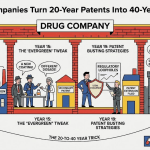
Evergreening describes the practice of securing additional patents on existing drugs to extend effective market exclusivity beyond the primary patent term. The practice is real, widespread, and frequently litigated. What the evidence actually shows is more nuanced than either industry advocates or critics typically acknowledge.
4.1 Formulation and Delivery System Patents
A brand converting its immediate-release tablet to an extended-release capsule — think Wellbutrin XL from Wellbutrin SR, or Concerta from Ritalin — generates a new patent estate covering the release mechanism, the coating technology, and the specific polymer matrix. The commercial strategy pairs the formulation patent with a step-down or discontinuation of the immediate-release product, driving patient conversion before generic entry into the IR market.
The IP technical roadmap for formulation evergreening typically runs through osmotic release technology (OROS, used extensively in Concerta), multiparticulate systems using coated beads or pellets, and lipid-based drug delivery systems for poorly soluble compounds. Each delivery platform generates distinct patentable claims covering the release profile, the physical structure of the dosage form, and specific manufacturing process steps.
Delivery device patents for injectables extend this logic further. Auto-injector patents covering needle retraction mechanisms, needle-free systems, dose-confirmation features, and connectivity modules (for digital tracking devices) create a secondary patent estate that biosimilar developers must separately invalidate or design around, even after the biologic sequence patent expires. AbbVie’s adalimumab device patent strategy is the most studied example: the Humira auto-injector’s specific features were protected by patents with expiry dates extending well past the biologic sequence patent, contributing to the negotiated settlement terms that shaped all U.S. biosimilar entry timing.
4.2 Method-of-Use and Dosing Regimen Patents
Method-of-use patents claim the use of a compound to treat a specific condition or patient population. Dosing regimen patents claim a specific dose, dosing interval, or titration schedule. Both are vulnerable to label carve-outs: a generic manufacturer can file an ANDA with a label that omits the patented indication, and the FDA’s ‘skinny label’ mechanism allows approval of that narrower label.
The commercial effectiveness of a method-of-use patent therefore depends on whether the generic can achieve bioequivalence and commercially viable labeling without the patented indication, and whether the brand can prove induced infringement when physicians prescribe the skinny-label generic for the patented use. Induced infringement claims based on skinny labels have produced inconsistent outcomes in district courts and the Federal Circuit, making this patent category the most commercially uncertain in the evergreening toolkit.
4.3 Combination and Metabolite Patents
Fixed-dose combination (FDC) patents cover products that combine two or more active ingredients in a single dosage form. The commercial logic is well-established: a combination product with its own brand identity, new NDA, and new patent estate allows a brand to transition patients before individual component generics enter the market. Janssen’s Symtuza (darunavir/cobicistat/emtricitabine/tenofovir alafenamide) is one recent example of a combination product extending HIV franchise revenue beyond the darunavir core patent.
Metabolite patents claim the active metabolite of a parent compound. The parent compound’s patent expires; the metabolite’s patent continues. This approach has faced significant legal challenge on obviousness grounds — if the parent compound’s metabolic conversion to an active form was predictable, the metabolite patent may be invalid. Successful metabolite patenting requires demonstrating unexpected pharmacological activity or a distinct clinical benefit for the metabolite relative to the parent.
4.4 Manufacturing Process Patents in Biologics
Manufacturing process patents in biologic production cover fermentation conditions, cell culture media, purification sequences (chromatography steps, ultrafiltration parameters), viral inactivation protocols, and fill-finish specifications. These patents do not prevent a biosimilar developer from manufacturing a biosimilar using different processes, but they create significant information hazards during the BPCIA patent dance, where the biosimilar applicant’s process disclosure is compared against the innovator’s process patent claims.
A biologic company with robust manufacturing process patents can force a biosimilar developer into expensive process modifications to avoid infringement, potentially affecting product quality, yield, and the developer’s analytical comparability data. The commercial implication is that manufacturing process patents operate as indirect entry barriers that increase the biosimilar developer’s cost of goods and time-to-market even when the developer can ultimately establish freedom to operate.
4.5 What the 2024 USPTO Report Actually Changed
The USPTO’s 2024 study on drug patent and exclusivity data resolved several recurring arguments in pharmaceutical IP policy. The study found that the number of Orange Book-listed patents for a given product has no statistically significant relationship to the timing of first generic entry, directly contradicting the popular narrative that patent thickets reliably delay generic competition.
The study’s most operationally significant finding for brand IP teams: follow-on patents covering improvements to an existing product do not extend the market exclusivity of the original drug. A generic manufacturer can enter the market with the original formulation once the primary patents expire, regardless of how many secondary patents the brand holds on improved versions. The secondary patents protect only those improved versions. This means that brands relying on formulation patents as the primary exclusivity extension mechanism, without also converting the prescribing base to the new formulation and discontinuing the original, are holding IP with limited commercial value for their core product.
5. Brand Manufacturer Playbook: Sustaining Revenue Through Loss of Exclusivity
5.1 Authorized Generics: Mechanics, Timing, and Revenue Impact
An authorized generic is the brand-name drug sold in generic form, either by the brand’s own subsidiary or under a license to a third-party generic manufacturer, using the same formulation, manufacturing process, and facilities as the branded product. The brand’s NDA covers the authorized generic, so no new FDA approval is required.
The commercial mechanics matter. An authorized generic launched simultaneously with the first-filer generic eliminates the first-filer’s 180-day duopoly. Where the first-filer expected to charge 15-25% below brand price with no generic competition during 180 days, it now competes directly with the authorized generic at a similar price point, compressing margins. This is the authorized generic’s primary strategic purpose: extracting value from the 180-day exclusivity window by denying the first-filer a true monopoly.
Brands that employ authorized generics effectively have documented market share retention of up to 50% post-patent expiry, compared to a typical 10-20% retention where authorized generics are absent. The revenue split between branded and authorized generic product streams requires separate accounting and distinct commercial infrastructure, but the aggregate revenue capture significantly outperforms a patent defense-only strategy.
The timing decision is commercially critical. An authorized generic launched before the 180-day exclusivity period costs the brand relatively little in branded sales cannibalization (patients converting to generics were lost regardless) while directly reducing the first-filer’s profit margin and deterring future Paragraph IV challenges on other products by reducing the expected value of first-filer status.
5.2 Product Hopping: A Roadmap with IP and Commercial Dimensions
Product hopping describes the brand’s strategy of discontinuing an original formulation and transitioning patients to a new patented version before generic entry into the original formulation market. The practice has two variants: hard switches, where the original formulation is withdrawn from the market, and soft switches, where both versions remain available but marketing and copay support shift entirely to the new formulation.
The Federal Circuit and several district courts have addressed the antitrust implications of hard switches, finding liability in some cases where the switch was timed specifically to frustrate state generic substitution laws. Soft switches carry lower antitrust risk but require demonstrating genuine clinical differentiation in the new formulation to sustain payer coverage and prescriber conversion.
The IP roadmap for a successful product hop requires that the new formulation’s patent estate be filed and published at least three to four years before the original product’s primary patent expiration, giving the FDA time to approve the new formulation and giving the prescribing base time to convert. Brands that file formulation patents too late relative to the original product’s LOE date find that patients convert to generic before the new formulation achieves prescriber traction.
5.3 Patient Loyalty and Payer Access Programs
Copay assistance programs reduce the patient’s out-of-pocket cost for the branded drug, often to zero, preventing the patient from switching to a generic on cost grounds alone. These programs are commercially effective in commercially insured populations but cannot be used for Medicare or Medicaid patients, which limits their reach in older populations and high-prevalence chronic disease categories.
Patient support programs that provide disease management education, adherence monitoring, and injection training (for biologics) create a clinical relationship between the patient and the branded product that transcends price. A Humira patient enrolled in AbbVie’s myAbbVie Assist program who receives injection training, has a dedicated care coordinator, and uses AbbVie’s patient app faces higher friction switching to a biosimilar than a patient with no program engagement, regardless of the biosimilar’s price difference.
From a payer’s perspective, brands negotiate formulary position by combining value-based contracts (where rebates adjust based on outcomes) with patient access commitments. A brand willing to accept outcome-linked rebates — where higher rebates apply if the drug fails to achieve target HbA1c reductions in a diabetes population, for example — can maintain preferred formulary status even against generic competition.
5.4 Pay-for-Delay (Reverse-Payment) Settlements: Antitrust Risk vs. Commercial Logic
A reverse-payment settlement, or pay-for-delay agreement, involves the brand paying the generic challenger to delay market entry, either through cash payments, co-promotion agreements, or supply agreements. The Supreme Court’s 2013 FTC v. Actavis decision established that these settlements are not immune from antitrust scrutiny and must be evaluated under a rule-of-reason analysis.
The post-Actavis landscape has reduced but not eliminated reverse-payment settlements. The commercial logic remains compelling: a brand paying a generic $200 million to delay entry by three years on a $3 billion annual revenue product captures approximately $8.8 billion in revenue net of the payment. The FTC’s enforcement posture, combined with private antitrust litigation by payers and pharmacy benefit managers, has increased the litigation risk but has not made the math negative for high-revenue products.
Brands structuring settlements post-Actavis typically avoid large cash payments in favor of co-promotion licenses, supply agreements at below-market prices, and negotiated entry dates with no-authorize-generic commitments. Each of these structures carries its own antitrust exposure and requires careful transactional counsel.
5.5 Proactive Patent Vulnerability Assessment
A proactive patent vulnerability assessment, conducted three to five years before a product’s first significant patent expiry, identifies the claims most likely to be challenged in a PIV filing or IPR petition, maps the prior art landscape for each patent tier, and evaluates the likelihood that any given patent can survive district court litigation, IPR, or both.
The output of a rigorous vulnerability assessment is a commercial timeline adjustment: if secondary patents have a high probability of invalidation, the commercial LOE date is the primary patent expiry, not the secondary patent expiry. Lifecycle planning, authorized generic preparation, and product hop timing all depend on this adjusted estimate. Companies that rely on the nominal patent expiry without adjusting for IPR risk consistently underprepare for LOE and lose incremental revenue that better-informed competitors capture.
6. Generic Manufacturer Playbook: From Paragraph IV Filing to Market Capture
6.1 Target Selection: Identifying High-Value Paragraph IV Opportunities
The economic return on a Paragraph IV challenge is a function of five variables: the target drug’s annual U.S. sales, the probability of securing first-filer status, the expected duration of the 180-day exclusivity period, the litigation cost and duration, and the likelihood of early entry through settlement. Drugs with annual U.S. revenues above $500 million attract Paragraph IV challenges with near certainty. Below $200 million, the litigation economics become marginal unless the generic manufacturer already has the API in development for another market.
Patent vulnerability is the second major screen. Primary composition patents filed in the early 1990s, now approaching expiry, tend to have cleaner prior art landscapes than patents filed after 2000, when both the USPTO and district courts began applying stricter obviousness standards post-KSR. Secondary patents filed in the last decade on established molecules are frequently the most productive IPR targets because they were granted under post-KSR obviousness standards but can still be challenged on prior art grounds if the combination of references is well-constructed.
Competitive intensity — the number of other Paragraph IV filers already in the queue — directly affects the value of first-filer status. If four companies already hold first-filer status (which can happen through simultaneous filing), the 180-day exclusivity is shared and each filer’s revenue is a fraction of the single-filer case. Target screening that identifies drugs with no existing PIV filings is a core competitive intelligence function for generic manufacturers’ business development teams.
6.2 IPR as a Strategic Complement to District Court Litigation
The standard generic playbook for patent challenges now runs two tracks simultaneously: district court litigation on the PIV claim and an IPR petition at PTAB targeting the same or overlapping claims. The tracks serve different functions. District court litigation triggers the 30-month stay and keeps the commercial timeline in view. IPR targets the patent’s validity through a faster, cheaper, and often more favorable forum for the challenger.
The coordination between tracks requires careful management. A PTAB final written decision cancelling patent claims moots the corresponding district court infringement claim, potentially resolving the stay before the 30-month period expires and accelerating the FDA’s ability to grant approval. If the IPR petition is denied or the claims survive, the district court litigation continues.
Brands routinely file stays in district court during IPR pendency, and courts have significant discretion on whether to grant those stays. Courts that deny stays create the possibility of parallel proceedings where the brand is simultaneously defending infringement claims in district court and patent validity at PTAB — a resource-intensive posture that some brands have used as a deterrent against IPR petitions on high-revenue products.
6.3 Design-Around Engineering: Clearing the Path Without the Lawsuit
Design-around strategies allow a generic to enter the market with an FDA-approved product that achieves bioequivalence without infringing the brand’s patent claims. For formulation patents, design-arounds typically involve different excipients, different polymer grades, or different particle size distributions that achieve the same release profile through a distinct physical mechanism. For dosing regimen patents, the skinny label strategy serves as the label-level design-around.
The technical feasibility of a design-around is a core input to the PIV target assessment. For drugs where formulation patents are the primary Orange Book barrier and the release mechanism is achievable through multiple technical routes, design-around generics can enter the market without triggering a 30-month stay because they can certify Paragraph III (non-infringement) rather than Paragraph IV (invalidity) on the formulation claims. A Paragraph III certification requires waiting for patent expiry but avoids all litigation risk. The strategic choice between Paragraph III and Paragraph IV on individual patents within a multi-patent Orange Book listing is a key commercial decision that brand IP teams often underweigh in their threat assessments.
6.4 Manufacturing Readiness During the 30-Month Stay
The 30 months between PIV notification and potential generic entry is the operational execution window for generic manufacturers. The critical path items are API supply qualification, manufacturing site FDA registration and inspection readiness, bioequivalence study completion and data package assembly, and distribution partner agreements.
Generic companies that treat the 30-month stay as a waiting period consistently miss their launch windows. The companies that capture the largest share of 180-day exclusivity revenue are those that ship to wholesale distributors within 14-21 days of FDA final approval. This requires completed manufacturing runs of commercial-scale batches in stability storage before approval, distribution contracts signed, and retail chain purchase orders committed contingent on approval.
Cold-chain products, including modified biologics and temperature-sensitive formulations, require additional logistics preparation: qualified cold storage in regional distribution centers, carrier qualification, and pharmacist training on handling requirements. The operational complexity scales with the product’s handling requirements and the number of distribution channels targeted.
6.5 Pricing Architecture for Market Penetration
A single generic entrant in the 180-day exclusivity window prices at 15-25% below the brand’s WAC. This pricing reflects the economics of a temporary duopoly: the generic captures rapid market share from payers seeking cost savings while maintaining margins that justify the Paragraph IV investment. Once the 180-day period ends and additional generics enter, the pricing cascade accelerates. A market with five generics typically sees prices at 40-60% below brand WAC; a market with ten or more generics sees prices at 70-85% below brand WAC.
Retail chain pharmacy preferences are a significant pricing variable during 180-day exclusivity. Large chain pharmacy buyers frequently negotiate exclusive or semi-exclusive supply agreements with first-filer generics during the exclusivity window in exchange for pricing concessions below the 15-25% initial discount. These agreements guarantee volume but compress per-unit margin. Generic manufacturers targeting maximum 180-day profitability must model the trade-off between broad distribution at a higher price and concentrated distribution at a lower price with volume guarantee.
7. Biosimilar Market Strategy: A Distinct Competitive Rulebook
7.1 Biosimilar Interchangeability: The Designation That Moves Market Share
The FDA grants ‘interchangeable’ designation to biosimilars that meet an additional evidentiary standard: the biosimilar must be expected to produce the same clinical result as the reference product in any given patient, and for products administered more than once, the risk of alternating between the reference and the biosimilar must not be greater than using the reference product alone.
Interchangeability is commercially significant because it allows pharmacists in most U.S. states to substitute the interchangeable biosimilar for the reference product without prescriber intervention, paralleling the generic substitution mechanism for small molecules. A biosimilar without interchangeability designation requires active prescriber choice or pharmacy benefit manager steering to generate substitution. A biosimilar with interchangeability can be substituted at the pharmacy counter, which in high-volume chronic disease categories translates to measurably faster market penetration.
The first interchangeable biosimilar to each reference product also receives a period of interchangeability exclusivity (12 months from first commercial marketing) during which no other biosimilar can receive interchangeable designation for the same reference product. This exclusivity layer adds another incentive for being first to market with a biosimilar seeking interchangeability.
7.2 Biosimilar Commercialization Failures and What Went Wrong
The U.S. biosimilar market has consistently underperformed volume projections relative to European biosimilar markets, where substitution rates for key reference products reach 60-80% within two years of biosimilar entry. The structural reasons are well-documented: U.S. payer rebate structures historically rewarded high-list-price reference products through formulary exclusivity arrangements, physician brand loyalty in self-administered biologics is harder to shift than in hospital-administered drugs, and patient assistance programs (for qualifying patients) reduced the out-of-pocket incentive for patients to request substitution.
The Humira biosimilar experience in the U.S. illustrates the pattern. Multiple biosimilars received FDA approval starting in 2016, but negotiated entry dates under patent settlements pushed first U.S. commercial launch to January 2023. By mid-2023, seven biosimilars were on the market. Uptake in the first year was significantly below European benchmarks, with a combination of AbbVie’s aggressive rebate contracts with pharmacy benefit managers, existing patient assistance program participants, and physician inertia all contributing to slower-than-modeled substitution rates.
The commercial lesson: biosimilar interchangeability, competitive pricing, and regulatory clearance are necessary conditions for market penetration, but they are not sufficient. Payer contracting strategy, formulary access, and patient and physician education programs determine actual market share, often more than any regulatory or IP factor.
7.3 Humira’s Patent Thicket: An IP Valuation and Competitive Analysis
AbbVie’s adalimumab (Humira) patent portfolio represents the most extensively documented pharmaceutical patent thicket. The portfolio grew to over 130 U.S. patents covering the antibody sequence, formulation (high-concentration, citrate-free), manufacturing process, dosing regimens across multiple indications (rheumatoid arthritis, psoriasis, Crohn’s disease, ankylosing spondylitis), and the auto-injector device.
The core biologic patent expired in the U.S. in December 2016. AbbVie’s negotiated settlement with each biosimilar developer established U.S. entry dates in January 2023, seven years later. European biosimilar entry occurred in October 2018 under different settlement terms. The commercial value of the U.S. delay, based on Humira’s U.S. peak annual revenues of approximately $14 billion between 2016 and 2022, represents roughly $50-55 billion in retained U.S. net revenue attributable to the patent estate and settlement strategy.
For IP valuation purposes, the Humira case establishes a benchmark for what a well-constructed secondary patent thicket can achieve for a reference biologic with global sales above $10 billion annually. The key inputs were: a formulation patent covering the citrate-free, high-concentration version that AbbVie transitioned most patients to before biosimilar entry; device patents that biosimilar auto-injectors had to design around; and the negotiating leverage that a 130-patent portfolio creates in settlement discussions, even where individual patents carry significant invalidity risk.
8. Case Studies: Where Legal Outcomes Diverged from Commercial Ones
Pfizer’s atorvastatin (Lipitor) held the record for the highest-revenue drug in pharmaceutical history before losing U.S. patent protection in November 2011. In the years before LOE, Pfizer did not rely primarily on patent defense. Instead, it executed a multi-channel commercial strategy: massive direct-to-consumer advertising reinforcing Lipitor’s brand identity, a copay assistance program that reduced patient cost to near zero, and a wholesale pricing strategy designed to maintain Lipitor’s presence on formulary alongside the incoming generics.
Watson Pharmaceuticals launched the first authorized generic of Lipitor simultaneously with the first generic entry — a Pfizer-structured arrangement that denied Watson’s Ranbaxy (the first-filer) the duopoly economics of 180-day exclusivity. By sharing the exclusivity window with an authorized generic, Pfizer captured approximately 30% of the post-LOE atorvastatin market for itself through the AG channel while retaining a premium-priced branded segment through its patient assistance and copay programs.
The commercial outcome: Pfizer’s Lipitor revenue declined significantly but not catastrophically in the first year post-LOE. The authorized generic strategy, combined with the copay assistance program that kept branded patients in place, produced a more gradual revenue curve than the 80-90% first-year decline typical of blockbusters without active commercial defense programs.
8.2 Viagra/Sildenafil: Settlement as Strategy
Pfizer’s sildenafil (Viagra) litigation against Teva produced a district court ruling affirming Viagra’s patent and delaying Teva’s generic. Pfizer then settled with Teva on negotiated terms: Teva agreed to pay royalties in exchange for an authorized early-entry date. The settlement gave Pfizer a royalty stream that partially replaced branded revenue, gave Teva an entry date earlier than the nominal patent expiry, and avoided the uncertainty of a Federal Circuit appeal for both parties.
Simultaneously, Pfizer launched its own authorized generic version of sildenafil at a price substantially below branded Viagra but above the expected multi-generic price floor. This allowed Pfizer to capture cost-sensitive patients who would otherwise switch to Teva’s generic, while maintaining the Viagra brand for patients in copay-assistance programs or with strong brand preference.
The Viagra case is a clean illustration of the settlement-as-strategy principle. Pfizer did not need to win the appeal. It needed a settlement structure that delivered both a royalty revenue stream and retained commercial optionality through an authorized generic. The legal outcome — a favorable district court ruling — gave it the negotiating leverage to get those terms.
8.3 Humira Biosimilars: Seven Years of Delay, Then a Cliff
AbbVie’s settlement strategy with Humira biosimilar developers established U.S. entry in January 2023. By the end of 2023, AbbVie’s U.S. Humira net revenues had declined substantially as biosimilar penetration accelerated through payer-mandated formulary shifts. AbbVie’s commercial mitigation strategy relied on its immunology portfolio transition — Skyrizi (risankizumab) and Rinvoq (upadacitinib) — to replace Humira revenue. Both products carry clean patent estates without imminent biosimilar threat, and both achieved rapid uptake in overlapping indications.
The strategic implication for biologic portfolio management: a seven-year delay through patent thicket and settlement strategy is most valuable when it is used to build and commercialize the next-generation product that replaces the threatened asset. AbbVie’s pipeline investment in Skyrizi and Rinvoq during the Humira defense period converted the patent estate’s commercial value into time for portfolio transition. Companies that use patent thicket delay without concurrent next-generation development simply postpone the revenue cliff without reducing its magnitude.
8.4 Rivastigmine and Glatiramer Acetate: IPR as Price Corrector
The rivastigmine and glatiramer acetate IPR cases demonstrate the PTAB’s capacity as a direct market intervention mechanism. In both cases, IPR petitions successfully challenged patents that the petitioners argued were wrongly granted — patents that covered methods and formulations already in the prior art. The PTAB’s final written decisions cancelling the challenged claims removed the patent barriers that had supported above-generic pricing.
In each case, generic entry following the PTAB decisions produced price reductions of up to 98% from the branded reference price. These were not marginal price changes. They were near-complete price collapses that reflected the elimination of all IP-based pricing power. For patients, the price reductions represented a meaningful access improvement. For the reference product sponsor, the outcomes illustrated the commercial consequence of maintaining Orange Book listings on patents that cannot survive PTAB review.
The cases also establish a benchmark for the IPR mechanism’s speed advantage over district court litigation. PTAB final written decisions in both cases arrived within 18 months of petition filing, compared to the three to five year average for district court patent trials through appeal.
8.5 Gilead HIV Patents: Winning the Trial, Losing the Narrative
In 2023, a federal jury found that the U.S. government’s patents on HIV pre-exposure prophylaxis (PrEP) technology were invalid, ruling in Gilead’s favor. The legal outcome was unambiguous. Gilead’s PrEP drugs — Truvada and Descovy — were not infringing government-owned patents.
The commercial and policy context around the case, however, reshaped how payers, legislators, and advocacy organizations viewed Gilead’s pricing of PrEP drugs. HIV-AIDS advocacy organizations and members of Congress used the trial’s public attention to amplify pressure on Gilead over PrEP pricing, arguing that drugs developed with substantial federal research funding should be priced to enable broad access. The trial’s outcome settled the patent question but amplified the access narrative.
The case illustrates a dimension of pharmaceutical market dynamics that pure legal analysis cannot capture: public and legislative sentiment around drug pricing can constrain commercial behavior even when IP rights are legally validated. Gilead’s legal win did not prevent ongoing congressional pressure on PrEP pricing or the IRA’s subsequent framework for Medicare drug price negotiation, which affects the commercial trajectory of high-revenue products including HIV antiretrovirals.
9. Defining and Measuring Market Success: The Metrics Framework
9.1 Financial KPIs
Revenue and market share are the most direct measures of market success, but their interpretation requires product-lifecycle context. A branded drug retaining 20% market share two years after generic entry may represent a significant commercial achievement (if the category norm is 10%) or a failure (if the brand invested heavily in authorized generic and copay programs and still only retained 20%). Benchmarking against comparable LOE events is essential.
Gross margin on post-LOE authorized generic sales typically runs 40-60%, compared to 75-85% on branded products before LOE. Net profit contribution from the authorized generic channel is meaningful but structurally lower than the branded channel. Portfolio managers modeling aggregate LOE impact should disaggregate branded and AG revenue streams and apply appropriate margin assumptions to each.
The 180-day exclusivity period’s profitability for first-filer generics is well-documented. ROI on a successful PIV challenge for a $2 billion+ drug routinely exceeds 500% on the litigation investment, even after accounting for legal costs averaging $10-30 million per challenge. This return profile explains why generic business development teams invest aggressively in first-filer target identification.
9.2 Patient Access KPIs
New prescription rates, patient enrollment in support programs, time-to-fill metrics, refill rates, and covered dispenses all measure the commercial system’s ability to translate legal exclusivity into actual patient treatment. A product that wins all its patent litigation but fails to achieve payer coverage at competitive copay tiers will not achieve market success regardless of its IP position.
For biosimilars specifically, the share of new prescriptions versus conversions from reference product is the key penetration metric. New patient starts on a biosimilar indicate prescriber confidence in the product independent of its reference product heritage. Conversions indicate payer or pharmacy benefit manager influence. The ratio between these two sources of volume predicts the biosimilar’s long-term market share trajectory.
9.3 Operational KPIs
Time-to-shelf after FDA approval is the single most commercially consequential operational KPI for generic manufacturers in the 180-day exclusivity window. Every day of delay in reaching distribution represents a measurable revenue loss. For a first-filer generic with $500 million in projected 180-day exclusivity revenue, each week of distribution delay costs approximately $19 million in lost net revenue.
Supply chain reliability post-launch is equally critical. A generic manufacturer that achieves rapid initial distribution but faces stock-outs in months three and four of the 180-day period loses repeat orders to pharmacy chains, which may shift preference to the next generic entrant once the exclusivity period ends.
10. The $400 Billion Patent Cliff: Economic Implications Through 2030
Industry data places the pharmaceutical revenue at risk from patent expiries at $200-400 billion through 2030, a range that reflects methodological differences in how ‘at risk’ is defined. The more conservative estimates count only drugs with clear patent expiry dates and existing generic or biosimilar development pipelines. The higher estimates include drugs where patent expiry is projected but generic entry is still uncertain.
Within this aggregate, biologics represent the most structurally significant category. The expiry of patents on Keytruda (pembrolizumab), Opdivo (nivolumab), Dupixent (dupilumab), Stelara (ustekinumab), and the Eliquis (apixaban) franchise — among others — will create the largest biosimilar commercialization wave in the BPCIA’s history over the next five years. The competitive dynamics of these LOE events will be shaped by whether biosimilar developers achieve interchangeability designation, how aggressively payers restructure formularies, and whether reference product sponsors deploy the full suite of patient retention and authorized biosimilar strategies.
The patent cliff is also a restructuring catalyst for R&D investment. Companies facing concentrated LOE exposure are accelerating business development activity — acquiring pipeline assets, entering co-development agreements, and pursuing platform acquisitions to replace at-risk revenue. This activity creates both acquisition premiums in biotech valuations and increased strategic licensing deal flow, with direct implications for IP valuation in transaction due diligence.
Investment Strategy Note
Portfolio managers with exposure to large-cap pharma should disaggregate each company’s revenue exposure by LOE date, modeling best-case and worst-case IP protection scenarios separately. The spread between scenarios, adjusted for the company’s authorized generic preparation, biosimilar development, and next-generation pipeline readiness, determines the appropriate discount to apply to current earnings multiples. Companies like AbbVie and Bristol Myers Squibb have demonstrated that pre-LOE pipeline transitions can substantially reduce the commercial cliff’s magnitude; companies without credible pipeline replacements for at-risk assets deserve a more aggressive discount.
11. Investment Strategy: How to Position Around Drug Patent Events
Drug patent events are among the most precisely dated catalysts in equity markets. PIV filing dates, 30-month stay expirations, PTAB institution decisions, district court trial dates, and FDA ANDA approval dates are all publicly tracked and create identifiable investment windows.
The PIV notification date triggers a predictable brand stock reaction: a decline reflecting the probability-weighted commercial impact of early generic entry. The magnitude of the decline correlates with the challenged drug’s revenue concentration (how much of the brand’s revenue depends on the drug), the number of PIV filers, and the market’s assessment of the patent’s validity. Brands with diversified portfolios and multiple new launches show smaller declines than brands with high revenue concentration in a single at-risk product.
The 30-month stay expiration, particularly when the litigation outcome remains uncertain, creates a volatility event. Settlement announcements within the 30-month window typically produce a more muted stock reaction than anticipated, because sophisticated investors have already priced in the probability of settlement. Settlements that include unexpected terms — such as earlier-than-modeled entry dates or higher royalty payments — are the transactions most likely to produce meaningful price moves.
PTAB institution decisions on high-profile pharmaceutical patents are underrated as investment catalysts. Institution of an IPR is not a final decision, but PTAB’s historical institution and cancellation rates create a meaningful probability update on the patent’s commercial survival. For secondary patents on high-revenue drugs, an IPR institution decision can advance the market’s expected LOE date by 18-24 months, a shift with material DCF impact.
For generic manufacturers specifically, first-filer ANDA acceptances for high-value drug targets are confirmatory events that professional investors in specialty generic equities track closely. The combination of a first-filer ANDA acceptance, a multi-billion-dollar target drug, and a clean competitive landscape (few or no co-first-filers) is among the highest-quality near-term catalysts available in pharmaceutical equity markets.
12. Emerging Trends Reshaping the Patent-Market Interface
12.1 The Inflation Reduction Act’s Impact on Launch Strategy
The Inflation Reduction Act (IRA) introduced Medicare drug price negotiation for high-expenditure drugs without generic or biosimilar competition. Small molecule drugs become eligible for negotiation nine years after approval; biologics become eligible 13 years after approval. The negotiated price applies to Medicare Part D sales, which represent a material share of revenue for many chronic disease drugs.
The IRA’s negotiation timeline creates a new inflection point in product lifecycle planning. A small molecule drug facing negotiation eligibility at year nine now has a shorter effective commercial window than the nominal 20-year patent term suggests, because the negotiated Medicare price significantly reduces revenue per unit from year nine onward. This compresses the window for lifecycle management actions and accelerates the timeline for product hop decisions.
The IRA also creates a perverse incentive structure for formulation innovation. A reformulated product filed as a new NDA resets the negotiation clock, because it is treated as a new drug for IRA eligibility purposes. This may incentivize brands to pursue product hop strategies primarily to reset the IRA negotiation eligibility date, rather than for genuine clinical differentiation, a dynamic that regulators and the FTC have begun to address.
12.2 AI-Driven Patent Surveillance
Artificial intelligence tools for patent landscape surveillance and freedom-to-operate analysis are reducing the cost and increasing the speed of patent challenge target identification for both brand and generic manufacturers. Machine learning models trained on PTAB outcomes can predict IPR institution and cancellation probabilities with meaningful accuracy, providing generic companies with a quantitative basis for prioritizing their IPR petition investments.
For brand IP teams, AI-driven prosecution surveillance tools monitor competitor ANDA pipelines, Paragraph IV notification patterns, and PTAB petition activity in near-real-time, enabling faster defensive responses to emerging challenges. The combination of these tools with comprehensive patent databases is making the patent challenge ecosystem more transparent and faster-moving, compressing the planning horizons that brand companies historically relied on.
12.3 Small Molecule vs. Biologic IP Strategy Divergence
The IP strategy gap between small molecule and biologic drugs continues to widen. Small molecule LOE events remain primarily legal events: the primary patent expires or is invalidated, generic entry follows, and price declines rapidly. The commercial mitigation tools (authorized generics, product hops, copay programs) are well-established and relatively predictable in their effectiveness.
Biologic LOE events are primarily commercial events with a legal superstructure. The BPCIA’s patent dance, interchangeability requirements, payer formulary dynamics, and physician brand loyalty create a far more complex and longer-duration competitive transition than small molecule LOE. Biosimilar penetration rates depend as much on payer strategy and patient education as on any patent outcome, making commercial preparation and payer contracting as important as the IP defense.
Companies that manage small molecule and biologic portfolios with identical IP strategy frameworks miss this structural difference. Biologic IP teams need closer integration with market access and payer contracting functions than small molecule IP teams, because the commercial outcome of a biologic LOE event is determined more by payer formulary design than by any legal ruling.
13. Conclusion: The Integrated Market-Winning Framework
The central argument of this analysis holds in the data, in the case studies, and in the financial outcomes. A patent is a necessary condition for pharmaceutical market success but not a sufficient one. The 11.4-year average effective exclusivity demonstrates that the commercial window is shorter than most IP models assume. The 76% overall generic success rate (against a 48% trial win rate) demonstrates that commercial outcomes routinely diverge from legal outcomes in generic challengers’ favor. The $50+ billion retained by AbbVie through the Humira thicket-and-settlement strategy demonstrates the commercial value of using IP as a delay mechanism while building replacement revenue.
The actionable framework for each stakeholder group:
For brand IP teams: value your Orange Book portfolio by patent tier, apply IPR probability haircuts to secondary patents, model LOE dates based on probable litigation outcomes rather than nominal patent expiry, and calibrate your authorized generic and lifecycle management timelines accordingly. Treat the 30-month stay as a commercial runway, not a legal waiting room.
For generic and biosimilar business development teams: the 180-day exclusivity economics should anchor all PIV target selection. First-filer status is the asset; the trial outcome is secondary. Operational readiness — specifically time-to-shelf after approval — is as important to the ROI calculation as litigation probability.
For portfolio managers: drug patent events are datable, probability-weighted catalysts with predictable stock price mechanics. PIV notifications, PTAB institution decisions, settlement announcements, and FDA approval dates all create investment windows. The companies that outperform across LOE events are those with diversified portfolios, credible pipeline replacements for at-risk assets, and demonstrated commercial capabilities in authorized generic management and biosimilar defense.
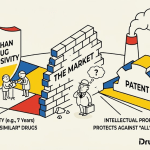
The market is the arena. The patent is the entry ticket.
This analysis reflects publicly available regulatory and litigation data. It does not constitute legal or investment advice.