Business Intelligence on Biologic and Small Molecule Drugs
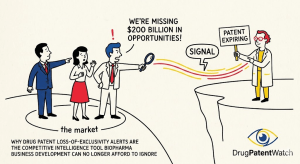
The $200 Billion Signal Most BizDev Teams Miss Every Year: Why drug patent loss-of-exclusivity alerts are the competitive intelligence tool biopharma business development can no longer afford to ignore
Every year, branded pharmaceutical companies watch billions in revenue walk out the door, and generic manufacturers sprint for a market their competitors reached first. The difference between winning that market and watching it go to someone else comes down, almost entirely, to when you started preparing.
Loss of exclusivity (LOE) is the moment a branded drug’s patent protection ends and generic or biosimilar competition can legally enter. For the originator company, it is the beginning of rapid revenue erosion. For every other company in the sector, it is an opening. Some teams catch that opening six years out. Others find out about it six weeks before generic approval.
The gap between those two timelines is what LOE-triggered competitive alerts are designed to close. This article breaks down how those alert systems work, who benefits from them most, and why the best ones have become core infrastructure for business development teams at generic manufacturers, specialty pharma companies, licensing desks, and payer strategy groups across the industry.
What Loss of Exclusivity Actually Means
The phrase ‘loss of exclusivity’ sounds like a single event. It is not. It is a cascade of legal, regulatory, and commercial milestones that can span years, and getting the sequencing right matters enormously to anyone trying to time a market entry.
Patent Expiry vs. LOE: Not the Same Thing
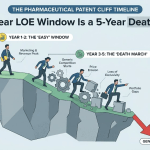
A drug’s composition-of-matter patent might expire in 2026 while the product’s actual LOE date — the point at which generic competition can realistically enter — sits in 2029, thanks to additional patents covering formulations, methods of use, or pediatric exclusivity extensions added to the Orange Book. Originator companies routinely build these secondary patent portfolios specifically to extend exclusivity past the primary patent expiry. The legal term for this strategy is ‘evergreening,’ and it works often enough that tracking only primary patents misses a large share of the competitive picture.
The Orange Book — the FDA’s official publication listing approved drug products and their patent and exclusivity information — is the authoritative source for understanding U.S. LOE timelines. But reading the Orange Book in isolation is not enough. You also need to track:
Orange Book patent listings and their expiry dates, including patent term extensions granted by the USPTO
Non-patent exclusivities such as New Chemical Entity (NCE) status, orphan drug designation, and pediatric exclusivity, which can add six months to several years of protection beyond patent expiry
Paragraph IV certifications filed by ANDA applicants, which signal that a generic manufacturer believes they can invalidate or work around listed patents
Inter Partes Review (IPR) proceedings at the USPTO, which can accelerate LOE by invalidating patents before their listed expiry date
Miss any of these signals and your LOE timeline is wrong, possibly by years.
The Timeline Between Patent Filing and Generic Entry
The average time from a drug’s initial patent filing to generic entry in the U.S. runs roughly 12 to 15 years, though this varies significantly by therapeutic area and the complexity of the originator’s patent portfolio. Small molecule drugs generally have more predictable LOE timelines than biologics, where biosimilar entry involves additional regulatory hurdles under the Biologics Price Competition and Innovation Act (BPCIA).
Understanding where a product sits on that timeline — not just its nominal patent expiry date — is what separates useful competitive intelligence from noise.
The Scale of the Opportunity
How Much Revenue Moves When a Drug Goes Off-Patent
The numbers are not subtle. IQVIA data published in 2023 estimated that branded drugs worth approximately $236 billion in annual global sales faced patent expiry between 2023 and 2028 [1]. In the U.S. alone, generic drugs saved patients, payers, and the healthcare system over $408 billion in 2021, according to the Association for Accessible Medicines [2].
For generic manufacturers, each major LOE event represents a potential revenue opportunity. The first generic to market typically captures a 180-day period of generic exclusivity under the Hatch-Waxman Act, during which it faces no generic competition and can price accordingly. Being second to market versus first is not a minor commercial distinction. In the 12 months following Lipitor’s generic entry in 2011, the first generic entrant generated revenues that second and third entrants split against significantly lower margins.
“Drugs losing patent protection between 2023 and 2028 account for approximately $236 billion in annual global brand sales, with the U.S. representing the largest single market for generic conversion.”— IQVIA Institute for Human Data Science, Global Use of Medicines 2023 [1]
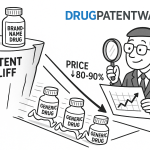
The stakes on the originator side are equally clear. A branded drug facing first generic entry can lose 80% to 90% of its market share by volume within 12 months of generic launch, per historical FDA data on generic market dynamics [3]. Revenue decline follows more slowly as price erosion compounds, but the trajectory is predictable once generic entry occurs.
The Geography Factor
LOE timing is not uniform across markets. A drug with a 2026 U.S. LOE might face European generic entry in 2024 or Japanese generic competition in 2027, depending on national patent laws, supplementary protection certificates, and the timing of original approvals in each jurisdiction.
Companies operating across multiple geographies need alert systems that track LOE by market, not just by compound. A U.S.-only LOE view misses competitive dynamics that can affect global revenue forecasts, originator lifecycle management decisions, and the strategic timing of any licensing or co-promotion arrangements tied to a product’s commercial life.
Why Traditional Competitive Intelligence Fails at LOE
Most business development teams have some form of patent monitoring: a few subscriptions, an internal team running periodic searches, perhaps an alert from a law firm partner when something significant happens. This approach produces late, incomplete, and inconsistently formatted intelligence that requires manual synthesis before it is useful.
The Lag Problem
Manual patent monitoring typically produces a lag of weeks to months between when a relevant filing occurs and when a BD team knows about it. In a patent landscape that moves daily — with new Paragraph IV certifications, patent term extensions, IPR decisions, and ANDA approvals hitting public databases continuously — weekly or monthly monitoring cycles miss events that can change competitive timelines significantly.
A Paragraph IV certification is a good example. When a generic manufacturer files an ANDA with a Paragraph IV certification, the originator has 45 days to file an infringement suit, which then triggers an automatic 30-month stay of FDA approval. If a BD team finds out about that Paragraph IV certification three months after filing, it has already missed the window to respond strategically before competitors processed the same information and adjusted their plans accordingly.
The Volume Problem
The U.S. patent system processes hundreds of thousands of applications annually. The Orange Book lists patents for more than 11,000 drug products. The USPTO docket of pharmaceutical-relevant IPR proceedings runs into the thousands per year. No internal team monitoring these sources manually can do so comprehensively and cost-effectively at the same time.
The result is that most BD teams have selective visibility: good coverage of the products they already track closely, poor coverage of adjacent opportunities they have not yet thought to monitor. That blind spot is where the most valuable early-mover positions get claimed by better-prepared competitors.
LOE-Triggered Alerts as Business Development Infrastructure
What an LOE Alert Actually Is
An LOE-triggered competitive alert is an automated notification — delivered via email, API, or dashboard — that fires when a specified condition related to patent exclusivity changes for a monitored drug or set of drugs. At the most basic level, this means getting a notification 90 days before a patent expires. At the more sophisticated end, it means receiving structured intelligence that combines multiple signals: patent expiry, exclusivity status, ANDA filing activity, IPR proceedings, and relevant litigation outcomes.
The goal is not just awareness. A useful alert gives a BD team enough structured data to make a decision: whether to accelerate an internal program, file an ANDA, initiate licensing conversations, or adjust M&A screening criteria.
The Four Layers of a Useful Alert
The weakest LOE alerts are single-signal: they tell you a patent expired. The strongest alerts combine four data layers:
Regulatory status — Orange Book listings, exclusivity codes, FDA approval dates, and Purple Book data for biologics
Patent landscape — primary patents, secondary formulation and method-of-use patents, patent term extensions, and any certifications filed against Orange Book-listed patents
Competitive activity — ANDA and BLA filing counts, Paragraph IV certifications, biosimilar regulatory submissions, and first-filer status determinations
Legal status — IPR proceedings, district court patent litigation, settlement agreements with authorized generic provisions, and REMS restrictions that can constrain generic entry even after FDA approval
The gap between single-signal and four-layer alerts is the gap between knowing a door exists and knowing whether it is locked, who else has a key, and how long it has been standing open.
The Data Inputs That Drive Actionable Alerts
Orange Book and Purple Book Data
The FDA’s Orange Book (for small molecules) and Purple Book (for biologics) are the primary regulatory data sources for LOE analysis. They list each approved product’s associated patents and exclusivities, and the FDA updates them on a rolling basis. However, the raw Orange Book data requires significant processing to extract actionable intelligence. Products appear across different strengths and dosage forms, patent expiries shift with extensions, and exclusivity codes carry meanings that vary by regulatory context.
A drug listed with both NCE exclusivity and a pediatric extension requires different LOE modeling than a drug listed with only Orange Book patent protection. Getting that distinction right before building a pipeline model is the difference between a credible BD thesis and an embarrassing miscalculation in front of senior management.
USPTO and International Patent Filings
Orange Book listings are only part of the picture. A drug’s full patent landscape includes patents that are not Orange Book-listed but still protect aspects of the product through broader claims covering active metabolites, manufacturing intermediates, or related compounds. Monitoring USPTO filings, patent continuations, and IPR proceedings gives BD teams visibility into the originator’s strategy for extending exclusivity beyond what the Orange Book shows.
For international LOE tracking, data from the European Patent Office, national patent offices, and supplementary protection certificate databases is required. Each jurisdiction has its own rules on patent term extension and generic entry conditions. A drug originator may hold European supplementary protection certificates that extend effective exclusivity several years past the base patent expiry, creating different competitive entry windows in the EU than in the U.S.
ANDA and 505(b)(2) Filing Activity
Generic manufacturers signal their intentions through ANDA filings well before receiving FDA approval. Monitoring ANDA filing activity for a target product tells you how many competitors are working toward generic entry, which Paragraph IV certifications have been submitted, and therefore whether litigation is likely to delay the actual LOE date.
The 505(b)(2) pathway matters separately. A company using 505(b)(2) can develop a modified or reformulated version of an existing drug, relying on published safety and efficacy data from the original product. These applications can lead to products with their own periods of exclusivity, providing a competitive differentiation window in a market that is simultaneously approaching standard generic entry.
DrugPatentWatch’s Role in Aggregating These Signals
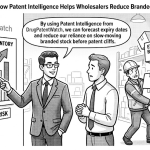
DrugPatentWatch has built one of the more comprehensive commercial databases aggregating these data streams for the pharmaceutical sector. Its platform tracks Orange Book expirations, ANDA filing activity, Paragraph IV certifications, patent litigation, and exclusivity timelines across the U.S. market, with international coverage for key markets including the European Union and Canada. For BD teams that need alerts calibrated to specific therapeutic areas, drug classes, or individual products, DrugPatentWatch provides both the alert functionality and the underlying data infrastructure to make those alerts meaningful rather than merely timely.
The practical value is not just the data itself. It is the synthesis. A team monitoring a complex patent estate needs to understand not just when a core composition-of-matter patent expires, but how subsequent formulation and method-of-use patents interact with the regulatory dispute resolution process, the approval timeline for each competing applicant, and the settlement dynamics that have historically shaped similar markets. That level of structured historical context is what companies use to calibrate how they approach their own LOE-adjacent opportunities.
Who Uses LOE Alerts and How
Generic and Biosimilar Manufacturers
Generic manufacturers live and die by LOE timing. Their entire business model depends on identifying which branded products are approaching patent expiry, estimating the competitive field size, and deciding whether the expected post-LOE market justifies the ANDA filing investment.
An ANDA filing is not cheap. Full development costs including API sourcing, formulation work, bioequivalence studies, and legal review to address Paragraph IV litigation risk can run from $2 million to $5 million per compound for a straightforward small molecule, and substantially more for complex dosage forms or biosimilar biologics [4]. A generic manufacturer needs to make that investment decision years before the product reaches market, which means making it based on a projected competitive landscape that does not exist yet.
LOE alerts allow generics companies to build a pipeline funnel that starts 6 to 8 years before LOE, filters candidates based on market size, competitive field depth, and patent vulnerability, and focuses internal resources on the most attractive opportunities. Teams that do this systematically accumulate first-to-file advantages over teams that discover opportunities reactively.
Specialty Pharma Business Development Teams
Specialty pharma BD teams use LOE intelligence differently. Rather than filing ANDAs themselves, they are often looking for licensing opportunities: products approaching LOE where the originator might be receptive to licensing terms, or where a 505(b)(2) pathway could produce a reformulated version with its own period of exclusivity.
For these teams, an LOE alert on a product with $500 million in annual U.S. sales, a primary patent expiring in 36 months, and no secondary patents in the Orange Book is a direct trigger for a licensing conversation. The alert creates the opening for a BD approach with a clear rationale: the originator knows revenue is about to erode, and a licensing deal that generates royalty income may be preferable to watching market share collapse with no reciprocal economic benefit.
Licensing Desks and M&A Target Screening
Corporate development teams at large pharma companies use LOE intelligence as an input to M&A screening. A mid-size specialty pharma company with a strong branded franchise might become an acquisition target as its core products approach LOE, because the acquirer calculates that it can manage the post-LOE transition more effectively, extend exclusivity through reformulation, or monetize the asset through licensing before generic entry erodes its value.
LOE timeline data feeds directly into the DCF models and strategic rationale documents that support acquisition decisions. A company whose primary products are 4 to 6 years from LOE has a different strategic posture than one whose products are already in generic competition, and LOE alert systems help teams identify and track those transition windows in real time rather than reconstructing them manually each time a target company comes into discussion.
Payers and PBM Strategy Teams
This use case gets less attention but represents real commercial value. Pharmacy benefit managers and health plan formulary teams have strong financial incentives to track LOE timelines because generic entry creates opportunities to convert branded utilization to generic, generating substantial cost savings that are often shared with plan sponsors through performance guarantees.
A PBM formulary team that knows a high-volume branded product is approaching LOE can begin planning formulary changes, step therapy requirements, and prior authorization policies 12 to 18 months in advance, rather than scrambling to respond after generic entry occurs. That preparation gap translates directly into how quickly the plan captures savings from generic conversion and how credibly it can represent those savings to employer clients during renewal negotiations.
Two Case Studies Worth Studying
Humira’s Biosimilar Avalanche
Humira (adalimumab) had been the world’s best-selling drug for more than a decade when its core U.S. composition-of-matter patent expired in December 2016. What followed was not immediate biosimilar competition. AbbVie had built a patent estate of more than 130 patents protecting the product’s formulation, manufacturing process, and methods of use — a portfolio that delayed U.S. biosimilar entry until January 2023, when settlement agreements with Amgen and other biosimilar developers allowed the first launches [5].
For biosimilar developers who had been tracking Humira’s patent landscape through platforms like DrugPatentWatch, the 2016 composition-of-matter expiry was not the starting gun. It was a checkpoint in a long-running analysis of which patents were most vulnerable to IPR challenge, which settlement structures were most likely given AbbVie’s litigation history, and what the commercial opportunity would look like given the expected number of entrants.
By the time Amgen launched Amjevita in January 2023, it was doing so after years of preparation that included manufacturing scale-up, commercial infrastructure buildout, and payer contracting strategy — all of which required accurate LOE projections years in advance. Teams that started preparation only after the January 2023 launch date found a market where first-mover advantages were already established and payer rebate contracts were already signed.
Revlimid’s Managed Generic Entry
Bristol Myers Squibb’s Revlimid (lenalidomide) had a 2022 LOE, but its actual generic entry was carefully managed through a series of volume-limited licensing agreements with generic manufacturers that BMS negotiated well before expiry. Under these agreements, generic entrants could launch in 2022 but faced volume caps that limited market penetration until 2026 [6].
For generic manufacturers, tracking this deal structure required monitoring not just the patent landscape but the litigation settlements that shaped the commercial terms. An ANDA filer that modeled Revlimid’s 2022 LOE as a standard generic-entry opportunity would have projected very different economics than what the actual volume-capped market produced.
This case makes clear that LOE date is necessary information but not sufficient. The competitive alert system that actually serves BD decision-makers also monitors litigation settlements, authorized generic agreements, and REMS restrictions that can fundamentally alter the post-LOE commercial landscape.
Building the Alert Architecture That Works
Signal vs. Noise: The Filtering Problem
The core challenge in building a useful LOE alert system is not data access. Most of the relevant data is publicly available for U.S. products. The challenge is filtering. A large pharma company might monitor several hundred active compounds across multiple therapeutic areas. An alert system that fires every time any patent anywhere in that universe changes will produce a volume of notifications that makes the system unusable in practice.
Effective alert architectures have two components: a broad monitoring layer that captures all relevant changes across the monitored universe, and a relevance filter that scores and prioritizes those changes based on commercial importance, timeline proximity, and competitive significance. The broad layer ensures nothing is missed. The filter ensures that what reaches a BD professional’s inbox is worth evaluating.
CRM and Workflow Integration
The best alert systems do not just send emails. They pipe structured data into the CRM and project management tools that BD teams already use. A Salesforce integration that creates a new opportunity record when an LOE alert fires on a monitored product turns passive notification into active pipeline management. A Slack integration that routes high-priority alerts to the right team channel means the alert reaches the people who need it at the speed the market moves.
The practical test for workflow integration is simple: when an alert fires at 8:00 PM on a Thursday, what happens next? If the answer requires a BD analyst to log in to a separate platform, download data, and paste it into an email, the friction slows the response. If the answer is that a structured summary automatically arrives in the right Slack channel with the key data points synthesized and linked to the relevant regulatory filings, the team acts faster.
Frequency and Escalation Logic
Different LOE milestones warrant different alert frequencies and escalation paths. A patent expiry that is 7 years away might warrant a quarterly review flag and no immediate action. A Paragraph IV certification on a drug your company is actively monitoring as an M&A target warrants an immediate notification to the BD lead and the relevant legal team.
Building escalation logic into the alert system — where frequency and distribution of notifications scales with event urgency — reduces both alert fatigue and the risk that a high-priority signal gets buried in a standard weekly digest. The companies that get this architecture right treat LOE intelligence as a live operational input, not a periodic research function.
The ROI Case for LOE Intelligence
The Cost of Being 18 Months Late
For a generic manufacturer targeting a product with $800 million in annual U.S. sales, the difference between being the first-to-file ANDA and the third-to-file ANDA is the 180-day exclusivity period. The first filer, if it succeeds in its Paragraph IV challenge, earns that exclusivity and the premium margins that come with it. A reasonable estimate for the commercial value of 180-day exclusivity on an $800 million branded product is $150 million to $250 million in additional gross profit compared to entering as a later generic filer, based on historical pricing patterns for the exclusivity period [4].
The cost of being 18 months late in identifying that opportunity is that the first-filer position was already claimed before your team started its analysis. No amount of fast execution can recover a first-filer advantage once a competitor has filed. The only way to compete for it is to know about the opportunity before the filing window closes.
Quantifying Speed-to-Market Advantage on the Originator Side
For originator companies, the ROI of early LOE intelligence shows up in lifecycle management decisions. A company that identifies its product’s LOE vulnerability 6 years out has time to develop a next-generation formulation, pursue an extended-release version with its own exclusivity period, or negotiate a licensing deal that generates royalty income even as the original product faces generic competition.
A company that identifies the same vulnerability 18 months out has fewer options, higher development costs for any lifecycle extension it pursues, and less negotiating leverage in partnership discussions. The value of early awareness is the option space it creates. Companies with better LOE intelligence systems have consistently broader option sets at each decision point — which over time produces better outcomes in both generic market share capture and branded lifecycle management.
What to Look for in an LOE Alert Provider
Data Freshness
Ask providers how frequently they update their patent and exclusivity data. Orange Book updates are published by the FDA on a rolling basis. USPTO proceedings update continuously. An alert system that refreshes data weekly will miss patent-relevant events that occur between update cycles. The best providers process changes as close to real time as their data sources allow and are transparent about lag times by data type — distinguishing, for example, between their update cadence for Orange Book entries versus USPTO IPR proceedings versus ANDA approval actions.
Coverage Breadth
U.S. Orange Book data is the starting point, not the endpoint. If your BD pipeline includes European markets, Japanese products, or biosimilars under BPCIA pathways, confirm that the provider’s coverage includes those geographies and regulatory frameworks with the same depth as their U.S. data. Some providers have excellent U.S. coverage and nominal international coverage that amounts to patent expiry dates with no underlying regulatory or litigation context.
DrugPatentWatch covers both the U.S. patent landscape and key international markets, with its database tracking not just patent expiry dates but the ANDA filing activity, Paragraph IV certifications, and litigation records that give those dates commercial context. For teams that need to work from a single source rather than reconciling data across multiple subscriptions, that integration matters operationally.
API Access and Integration Capabilities
Enterprise BD teams need their alert data integrated into existing workflows, not siloed in a separate portal that requires separate logins and manual data export. Before selecting a provider, evaluate whether they offer API access, what data fields are accessible via API, and whether they have pre-built integrations with CRM platforms your team already uses.
Providers that have invested in API infrastructure tend to have thought harder about how their data actually gets used in practice, which is often a proxy for the overall quality of their product design. A vendor willing to show you their API documentation before you sign a contract is telling you something about how seriously they take the integration use case.
Key Takeaways
→
LOE is not a single event. It is a sequence of regulatory, patent, and competitive milestones that requires continuous monitoring, not periodic review. Patent expiry and LOE date are different things, often by 2 to 4 years.
→
The 180-day exclusivity period for first-to-file ANDA applicants creates a financially material gap between first and second place. Early LOE intelligence is what enables first-mover positioning — there is no substitute for it.
→
Four data layers make an alert actionable: regulatory status, full patent landscape including secondary and non-Orange Book patents, competitive ANDA activity, and legal and litigation developments. Single-signal alerts miss too much to drive sound BD decisions.
→
Originator companies that identify LOE vulnerability early have more lifecycle management options and better negotiating leverage in licensing and partnership discussions than those acting late.
→
Effective alert systems route intelligence into existing workflows. A notification requiring manual processing before it becomes actionable loses time in markets that reward speed above most other factors.
→
Platforms like DrugPatentWatch provide the aggregated patent, exclusivity, ANDA, and litigation data that makes LOE alerts meaningful rather than just timely — including the historical context needed to calibrate future competitive projections.
→
The ROI of LOE intelligence compounds over time. Teams with better intelligence accumulate first-mover advantages, sharper pipeline prioritization, and stronger M&A screening — outcomes that individual alerts do not capture but that years of systematic early-alert discipline consistently produce.
FAQ
Q1. What is the difference between patent expiry and LOE date, and why does it matter for BD planning?
Patent expiry refers to the end of a specific patent’s term. LOE date is the point at which generic competition can actually enter the market. These dates differ when products have multiple Orange Book-listed patents with different expiry dates, when NCE or pediatric exclusivities extend protection beyond patent expiry, or when litigation settlements and authorized generic agreements create managed entry timelines. Using patent expiry as a proxy for LOE produces planning errors that can be 2 to 4 years in magnitude. BD teams need LOE-specific analysis, not just patent calendar data.
Q2. How do Paragraph IV certifications change LOE timelines?
A Paragraph IV certification is a generic manufacturer’s assertion in its ANDA filing that one or more of the originator’s Orange Book-listed patents are invalid, unenforceable, or would not be infringed by the generic product. If the originator files suit within 45 days, FDA approval of the ANDA is automatically stayed for 30 months — or until a court resolves the dispute, whichever comes first. This can extend the effective LOE by 30 months beyond the patent expiry date. Monitoring Paragraph IV activity is essential for accurate LOE forecasting and for understanding whether the first ANDA filer will actually launch on the nominal LOE date or later due to pending litigation.
Q3. For a biosimilar manufacturer, how does LOE analysis differ from small-molecule generic analysis?
Biosimilar entry follows the BPCIA rather than Hatch-Waxman and involves a patent dispute process — the ‘patent dance’ — that can delay launch even after FDA approval. The relevant data sources include the Purple Book rather than the Orange Book, and the competitive landscape must account for substantially higher development costs and longer regulatory timelines. LOE alerts for biosimilar targets need to incorporate BPCIA filing activity, the 12-year reference product exclusivity period, interchangeability designations, and the settlement dynamics that have characterized major biosimilar launches. The Humira biosimilar market is the definitive case study: core patent expiry in 2016, actual competitive entry in 2023, with the intervening years shaped entirely by secondary patent litigation and negotiated settlements.
Q4. What does ‘authorized generic’ mean, and how should it factor into LOE competitive strategy?
An authorized generic (AG) is a version of a branded drug that the originator licenses to a generic manufacturer — or sells under its own generic label — during the 180-day exclusivity period of the first Paragraph IV filer. An AG competes directly with the first-to-file generic during its exclusivity period, reducing the exclusivity filer’s revenue advantage. Originators use AG agreements to generate revenue from generic market entry while limiting competitor profitability during the exclusivity window. For generic manufacturers assessing the value of first-to-file ANDA positions, knowing whether an AG is likely is critical to projecting margins during the exclusivity period. Specialized data providers track historical AG patterns by originator company, which informs the expected economics of future first-filer positions.
Q5. How should a BD team prioritize which LOE opportunities to monitor, given the volume of compounds approaching expiry?
Start with a two-dimension filter: market size and competitive complexity. Products with high annual U.S. revenues and straightforward patent landscapes — few secondary patents, no pediatric exclusivity, no active IPR proceedings — represent the clearest generic opportunities. Products with high revenues and complex patent estates represent opportunities for Paragraph IV challenges or specialty pharma lifecycle management plays via 505(b)(2). Products with modest revenues and complex patent estates typically do not justify the development investment. Running this filter systematically, updated quarterly with fresh LOE data, keeps pipeline prioritization rational. Platforms like DrugPatentWatch allow custom alerts tied to revenue thresholds, therapeutic areas, and expiry windows — automating much of the filtering that would otherwise require sustained manual analysis.
References
[1] IQVIA Institute for Human Data Science. (2023). The Global Use of Medicines 2023: Outlook to 2027. IQVIA.
[2] Association for Accessible Medicines. (2022). 2022 Generic Drug & Biosimilar Access & Savings in the U.S. Report. AAM.
[3] U.S. Food and Drug Administration. (2019). Generic Competition and Drug Prices. FDA Office of Generic Drugs.
[4] Grabowski, H., Long, G., Mortimer, R., & Boyo, A. (2016). Updated trends in drug development costs. Journal of Health Economics, 43, 168-172.
[5] Renwick, M. J., Smyth, E., & Mossialos, E. (2016). Biosimilar market entry and the role of regulatory frameworks. LSE Health Policy. London School of Economics.
[6] Hernandez, I., Gellad, W. F., & Good, C. B. (2022). Lenalidomide access and affordability. JAMA Internal Medicine, 182(3), 235-237.