Section 1: What Biosimilar Cost-Effectiveness Actually Measures
The Misread Metric
Most coverage of biosimilars collapses cost-effectiveness into a single question: how much cheaper is it? That framing gets the analysis backwards. A 30% list-price discount on a biosimilar that captures 8% market share in year three generates less system-level savings than a 15% discount product that reaches 70% share in month six. Price is the input. Cost-effectiveness is the output, and the output depends on the healthcare architecture through which that price signal travels.
The formal definition matters here. Cost-effectiveness is health outcomes achieved per unit of expenditure. Because biosimilar regulatory approval requires demonstrating ‘no clinically meaningful differences’ relative to the reference biologic — the EMA’s ‘totality of evidence’ standard, codified since 2005, and the FDA’s BPCIA framework since 2009 — the outcomes numerator is, for all practical purposes, fixed. The analysis therefore collapses into a cost-minimization question, which means everything downstream, market uptake rates, formulary placement, switching policies, tender design, rebate structures, and supply chain resilience, determines whether the theoretical savings materialize in actual healthcare budgets.
Why the Gap Between Potential and Realized Savings Is So Large
Global spending on biologic medicines exceeded $400 billion in 2024. Credible estimates from IQVIA and the Association for Accessible Medicines (AAM) consistently show that actual biosimilar savings in the U.S. alone run at roughly 30-40 cents on every dollar of theoretical potential, primarily because structural market barriers suppress uptake. In contrast, markets like Norway, Denmark, and the UK’s NHS routinely capture 80-95% of the theoretical savings pool within 12-18 months of a biosimilar launch. The delta between these outcomes is not pharmacology. It is policy, incentive design, and contracting architecture.
That gap is the subject of this analysis.
The Reference Biologic: A Brief on Biological Complexity
A small-molecule drug like atorvastatin can be synthesized to atom-level precision. Its generic equivalent is, by definition, chemically identical. A biologic is expressed in living cells — a mammalian cell line like CHO (Chinese hamster ovary), or a microbial host like E. coli or S. cerevisiae. The protein product folds into a three-dimensional structure; it is glycosylated (decorated with sugar chains); it exists as a population of molecular variants rather than a single pure compound. No two manufacturers, running identical gene sequences in identical bioreactors with identical upstream and downstream processes, will produce exactly the same population of molecules. What regulators require is not identity, but demonstrated equivalence across a comprehensive battery of analytical, functional, and, where necessary, clinical data.
This manufacturing complexity has two strategic consequences. First, it keeps the biosimilar development cost high — typically $100 million to $300 million per product, compared to $1-5 million for a small-molecule generic. Second, it creates a durable set of regulatory and technical barriers that limit the number of credible competitors, which directly affects the price erosion dynamics a health system can expect.
Key Takeaways: Section 1
Cost-effectiveness is a system-level output, not a product attribute. The same biosimilar can be highly cost-effective in Norway and essentially cost-neutral in the U.S. depending on market structure.
Because regulatory standards fix the outcomes numerator, system-level cost-effectiveness is almost entirely determined by uptake rate and net price achieved.
Biosimilar development costs ($100M-$300M per asset) mean the number of market entrants for any given reference biologic is structurally limited, which constrains long-term price erosion unless policy actively compensates.
Section 2: The IP Architecture Behind Every Biologic: Patent Thickets, Exclusivity Cliffs, and Valuation
How Biologic IP Is Built
Every major biologic franchise rests on multiple, overlapping layers of intellectual property protection. The compound patent — covering the active molecule itself — is typically the most commercially important, but it is rarely the only or even the longest-lived. A fully developed biologic IP estate commonly includes:
Composition-of-matter patents on the protein sequence and structural variants
Manufacturing process patents covering upstream cell culture conditions, downstream purification steps, and formulation chemistry
Formulation patents on excipients, pH, concentration, and delivery vehicle
Device patents on auto-injectors, pre-filled syringes, and combination products
Method-of-use patents covering specific indications, dosing regimens, and patient subpopulations
Data exclusivity periods granted by regulators independently of patent protection (12 years in the U.S. under the BPCIA; 8 years data exclusivity plus 2 years market exclusivity in the EU, with a possible additional year for new indications)
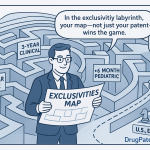
The cumulative effect is what patent scholars call a ‘patent thicket’: a dense web of overlapping rights that a biosimilar developer must either design around, license, or challenge through litigation before launch. AbbVie’s adalimumab (Humira) franchise is the archetype. At peak, the Humira patent estate in the U.S. comprised more than 130 patents. European exclusivity expired in October 2018, opening the European market to biosimilar entry. In the U.S., AbbVie negotiated settlement agreements with all biosimilar developers, with the last of those settlements deferring U.S. entry until January 2023 — four years after European entry. That four-year difference, maintained through legal architecture rather than clinical differentiation, was worth roughly $40 billion in protected U.S. revenue.
IP Valuation as a Core Portfolio Asset
For pharma IP teams and portfolio managers, the monetizable value of a biologic’s IP estate is the present value of the cash flows protected by that estate. The key valuation inputs are: (1) the identity and expiration dates of every material patent, (2) the probability of surviving a Paragraph IV-equivalent challenge (in biologic terms, an inter partes review or a BPCIA ‘patent dance’ litigation), (3) the geography-adjusted timing of biosimilar entry across major markets, and (4) the revenue erosion curve following entry — typically steeper in Europe than in the U.S., given the structural factors discussed in this analysis.
The practical methodology used by most IP valuation teams applies a risk-adjusted NPV (rNPV) model. Each patent is assigned a probability of remaining valid through the relevant exclusivity period; that probability discounts the protected revenue contribution. For a high-value biologic with a contested manufacturing process patent, the difference between a 70% and a 90% validity probability can translate into hundreds of millions of dollars of rNPV difference — which directly affects M&A pricing, licensing royalty floors, and IPO disclosures.
Patent intelligence platforms become essential at this stage. A biosimilar developer running a build/partner/acquire decision on a target biologic needs precise expiration dates for every patent in the thicket, litigation history across jurisdictions, and inter partes review (IPR) petition outcomes. That is the kind of granular, current data that platforms like DrugPatentWatch are built to provide: not just a single expiration date, but the full stratified map of a franchise’s exclusivity lifecycle.
Evergreening: The Originator’s Lifecycle Defense
Evergreening is the practice of filing successive patents on incremental improvements — a new crystalline form, a co-formulation, a device modification — to extend effective market exclusivity beyond the compound patent’s expiration date. In small-molecule drugs, the FDA Orange Book tracks these secondary patents explicitly. In biologics, the BPCIA’s ‘patent dance’ process requires a biosimilar applicant to identify which of the originator’s listed patents it believes are invalid or not infringed, triggering a structured exchange of information and, if unresolved, litigation.
From a cost-effectiveness standpoint, successful evergreening delays the entry of biosimilar competition and prolongs the period of high biologic prices. A study published in the Journal of Law and the Biosciences found that the average biologic in the U.S. faces its first biosimilar competition approximately 12.5 years after initial market launch, compared to a median of 6.2 years for branded small-molecule drugs facing generic competition. That differential is almost entirely a product of IP strategy rather than patent term.
For payers, this has a concrete budget consequence: every year of delayed biosimilar entry on a drug with $1 billion in annual spend at a 60% theoretical biosimilar discount represents roughly $600 million in unrealized savings. Quantifying that figure is now standard practice in many advanced HTA submissions and is increasingly used by payer coalitions to apply political pressure for IP reform.
Technology Roadmap: From Compound Patent to Post-Exclusivity Competition
The lifecycle of a major biologic from first IND filing to a fully competitive biosimilar market typically spans 25-30 years and passes through distinct phases:
Phase 1 (Years 0-5): Pre-clinical and clinical development. The originator files composition-of-matter and early manufacturing patents. IP is the primary asset.
Phase 2 (Years 5-12): Regulatory approval and market launch. The originator builds its thicket through formulation, device, and method-of-use filings. Revenues ramp.
Phase 3 (Years 12-18): Peak revenue and biosimilar development begins. Biosimilar developers file INDs and begin their own analytical similarity programs. Patent litigation risk is assessed. Intelligence platforms are used intensively to map the thicket and identify freedom-to-operate.
Phase 4 (Years 18-22): Data exclusivity expiry in the EU; first biosimilar approvals in Europe. Potential for at-risk launches in the U.S. pending patent litigation resolution. Originator begins lifecycle management, often launching a citrate-free auto-injector or high-concentration formulation to shift the market before biosimilar entry.
Phase 5 (Years 22+): Full market competition across major geographies. Multiple biosimilars drive sustained price erosion. Originator revenue from the original molecule declines steeply, though reformulated versions may retain a premium segment.
Understanding where a specific biologic sits on this roadmap — and which phase-specific IP risks apply — is the core competency of both biosimilar business development teams and originator lifecycle management groups.
Key Takeaways: Section 2
A biologic franchise’s IP estate is a stratified asset class. Compound patents, process patents, formulation patents, and device patents have different expiration dates, different litigation profiles, and different commercial consequences when they fall.
The Humira precedent — 130+ U.S. patents enabling a four-year delay in U.S. biosimilar entry relative to Europe — illustrates the billion-dollar stakes of patent thicket architecture.
rNPV modeling of the IP estate, using granular patent expiration and litigation probability data, is now the standard valuation methodology for biologic-heavy M&A and licensing transactions.
Evergreening adds an average of roughly six years to the effective market exclusivity of major biologics in the U.S. relative to Europe, with direct budget consequences for payers.
Investment Strategy Note: IP Valuation for Analysts
When underwriting a pharma or biotech position in a company with a major biologic in its revenue base, the key IP questions are: (1) What is the earliest credible date of first biosimilar entry in each major market? (2) How robust is the thicket protecting delay beyond that date? (3) What is the company’s lifecycle management pipeline — auto-injector devices, high-concentration formulations, subcutaneous versions of IV biologics — and how much market share do those reformulations historically capture? Analysts who do not independently verify patent expiration timelines using primary patent databases routinely misprice the revenue cliff risk.
Section 3: The Health Economist’s Full Toolkit: ICERs, QALYs, BIAs, and Their Limits
Cost-Minimization Analysis: The Default Framework for Biosimilars
Because biosimilar approval requires demonstrated equivalence in safety, purity, and potency, HTA bodies in most countries do not require a full cost-utility analysis — measuring cost per QALY gained — when evaluating a biosimilar against its reference biologic. The outcomes are stipulated to be equivalent. The analysis reduces to cost-minimization: which option achieves the same clinical outcome at lower cost?
This simplification is commercially consequential. It means payers do not need to model disease progression differences, surrogate endpoint controversies, or long-term quality-of-life trajectories. The review is faster, cheaper, and more predictable for biosimilar developers than a full Phase III-style HTA dossier. Regulators in the UK, Germany, France, and Canada have all codified this approach, which accelerates time-to-reimbursement for approved biosimilars.
The QALY Framework and Its Practical Relevance
Despite the cost-minimization default, the QALY framework remains important context for biosimilar portfolio decisions for two reasons. First, in health systems with tight willingness-to-pay thresholds — NICE’s £20,000-£30,000/QALY standard is the most cited — a reduction in the cost of treating a patient population with a biosimilar frees up budget headroom that can be reallocated to other interventions. Biosimilar savings directly improve a system’s portfolio-level cost-per-QALY performance. Second, for biosimilars of high-cost oncology agents — where the reference biologic’s own cost-per-QALY ratio is already close to or above the threshold — a meaningful price reduction from biosimilar entry can shift the entire drug class from ‘restricted access’ to ‘broadly reimbursed,’ dramatically expanding the patient population.
The QALY calculation for a reference biologic in, say, metastatic colorectal cancer — a disease area where pembrolizumab biosimilars are now in late development — could run to $200,000-$400,000 per QALY at current U.S. list prices. A biosimilar entering at a 40% discount instantly repositions the therapy from ‘economically borderline’ to ‘strongly cost-effective’ within most HTA frameworks, potentially unlocking coverage for patients currently denied access. That is a market expansion effect, not merely a market share shift, and it generates additional QALY gains that the static cost-minimization model entirely misses.
Budget Impact Analysis: The Finance Minister’s Model
A Budget Impact Analysis (BIA) answers the question payers actually care about in the short term: what will this cost my budget in years one through five? It is a financial forecast, not an economic evaluation. A rigorous BIA for a biosimilar launch requires:
Current eligible patient population, segmented by line of therapy, indication, and prior treatment history
Current average net price of the reference biologic (list price minus negotiated rebates, which in the U.S. may not be publicly disclosed and must be estimated from net revenue data)
Projected biosimilar list price and expected net price after contracting
Market uptake model: S-curve adoption assumptions, segmented by new-to-therapy patients (typically faster to convert) versus stable existing patients (slower, especially without switching mandates)
Number of expected biosimilar competitors and the expected price erosion trajectory over the forecast period
System-level cost offsets: administrative savings from simplified prior authorization, reduced specialty pharmacy markup on lower-cost products
In markets where BIA submissions are required before reimbursement (Germany’s AMNOG process, Canada’s CADTH Common Drug Review), the quality of the uptake model and the net price assumptions are frequently contested between manufacturers and payers. A biosimilar developer that submits an optimistic uptake model against a payer’s conservative prior from the reference biologic’s launch experience will face pushback. Grounding the BIA in real-world uptake data from comparable markets — for example, using the British Columbia mandatory switching conversion rate as a benchmark for a Canadian provincial BIA — substantially strengthens the submission.
Multi-Competitor Market Modeling: Where Standard HTA Fails
Standard HTA processes compare one intervention to one comparator at one point in time. The biosimilar market violates all three constraints. When the first biosimilar enters a market, the relevant comparator set includes the reference biologic and the biosimilar. Six months later, a second biosimilar may enter. Twelve months after that, a third. Each new entrant changes the competitive equilibrium: the reference biologic responds with rebate adjustments; biosimilar manufacturers may lower net prices to maintain or gain formulary position; new entrants may use device improvements or patient support programs to differentiate.
A static HTA model cannot capture this dynamic. Payers increasingly use simulation-based market models — sometimes agent-based models, sometimes Monte Carlo simulations around key price and uptake parameters — to project the multi-year savings trajectory of a biosimilar market rather than the single-year savings of a single product. The practical implication for biosimilar developers is that their market access teams need to model not just their own product’s cost-effectiveness, but the likely competitive landscape two to four years out, because payers increasingly price biosimilar access agreements with multi-year performance assumptions.
The Access Expansion Value: A Routinely Missing Credit
One of the most consistent failures of standard HTA in the biosimilar context is the omission of access expansion value. When a high-cost biologic drops in net price by 50-60%, health systems can afford to treat patients who were previously rationed off treatment entirely. This generates real QALYs — not from switching existing patients, but from treating new patients. Those QALYs are attributable to biosimilar competition, but they rarely appear in a formal cost-effectiveness submission.
Two research teams — one at the London School of Economics and one at the Karolinska Institute — have attempted to quantify this effect for the adalimumab biosimilar market in Europe. Their estimates suggest that for every 10% expansion in the treated rheumatoid arthritis population enabled by price reductions, the system generates approximately 2,000-3,000 additional QALYs per year per million covered lives. At NICE’s £30,000/QALY threshold, that represents £60-90 million in health value generated annually, above and beyond the direct budget savings from price reduction on existing patients. These numbers are not in any standard BIA. They should be.
Key Takeaways: Section 3
Biosimilar HTA defaults to cost-minimization rather than full cost-utility analysis, which accelerates reimbursement review and reduces the evidentiary burden on developers.
QALYs matter indirectly: biosimilar savings free up budget headroom that enables cost-per-QALY improvement across a payer’s whole portfolio, and price reductions on oncology biologics can shift entire drug classes from ‘restricted’ to ‘broadly reimbursed.’
BIA quality — particularly the uptake model and net price assumptions — is a primary point of negotiation between biosimilar developers and payers. Real-world uptake data from comparable markets is the most persuasive input.
Standard HTA systematically under-credits the access expansion value of biosimilar competition. Developers who quantify this value and present it in payer submissions gain a commercial differentiation advantage.
Section 4: Single-Payer Systems: How Centralized Power Drives Rapid Uptake
The Structural Advantage
In a single-payer system, one entity — a national health authority or its delegated purchasing body — controls access to the entire covered population. That concentration of purchasing power is the most effective lever for biosimilar cost-effectiveness that a health system can have. The single payer can: run binding competitive tenders covering the full national market; mandate prescribing behavior through formulary design and clinical guidelines; implement switching policies for existing patients without requiring individual physician agreement; and immediately re-deploy savings to other priorities within the same budget.
No fragmented, multi-payer system can replicate any of those capabilities at scale.
Case Study: NHS England’s Adalimumab Procurement — A Detailed Reconstruction
Adalimumab (Humira, AbbVie) had peak UK annual expenditure exceeding £400 million. When European patent exclusivity expired in October 2018, NHS England executed a three-stage procurement strategy that became the reference case for biosimilar procurement globally.
Stage 1 — Market Intelligence and Supplier Qualification (2018): NHS England, through its Commercial Medicines Unit, conducted a full market analysis. It identified eight biosimilar manufacturers with imminent EMA approvals, assessed their manufacturing capacity, their device portfolios (citrate-free, low-volume formulations to match AbbVie’s updated SureClick auto-injector), and their supply chain resilience. This stage explicitly excluded any single-supplier outcome from the design.
Stage 2 — Competitive Tender with Online Reverse Auction (2019): NHS England ran a sealed-bid process followed by an electronic reverse auction. Bidders competed in real time on price. The target was to secure supply from at least four approved sources to protect supply chain continuity — a direct response to the single-supplier vulnerability identified in earlier Nordic tender designs. AbbVie participated alongside biosimilar entrants, aware that exclusion from NHS supply would accelerate its own share loss.
Stage 3 — National ‘Best Value Biologic’ Policy Implementation (2019-2020): NHS England published clinical guidance confirming biosimilar interchangeability, established a 90-day switching timeline for existing stable patients, and provided regional trusts with financial incentive frameworks. Importantly, the communications program to patients and physicians explicitly reframed switching as a positive policy enabling expanded patient access, not a cost-cutting exercise.
The outcome: NHS England secured adalimumab supply at approximately 75% below the pre-tender list price. Within 12 months, biosimilar volume share reached approximately 80% across all adalimumab indications. First-year savings were estimated at over £150 million, with sustained annual savings of £100 million-plus projected thereafter. AbbVie retained a minority share of the market at a substantially reduced price point, participating in the new equilibrium rather than being locked out entirely.
The NHS model demonstrates that a well-designed single-payer procurement, with explicit supply diversity requirements, physician and patient communication infrastructure, and clear switching timelines, can capture the large majority of the theoretical biosimilar savings within a single contract cycle.
IP Valuation Implication: Adalimumab’s UK Franchise Value Post-Tender
AbbVie’s U.S. Humira franchise remained protected until January 2023 through its settlement agreements with biosimilar developers. Its European franchise, however, began its price collapse in late 2018. For investors modeling AbbVie’s revenue trajectory in 2017-2018, the key variable was the speed and depth of European price erosion — exactly the kind of market dynamics that require country-by-country biosimilar uptake modeling rather than a single global revenue curve. AbbVie’s total revenue from adalimumab across all geographies peaked at approximately $21 billion globally in 2022 (U.S. sales still protected) before the U.S. biosimilar entry in 2023 triggered the anticipated erosion on the most lucrative segment.
For an analyst valuing AbbVie’s pipeline-to-cliff transition during this period, the precision of the European erosion curve — driven by NHS and similar single-payer procurement outcomes — was the single most important near-term cash flow input. Broad agreement on the UK’s 75% discount rate and 80%+ biosimilar share enabled a reasonably tight range of European revenue forecasts. U.S. forecasting remained harder due to structural opacity.
Canada: Provincial Single-Payer Systems and Mandatory Switching
Canada’s ten provincial drug plans and three territorial plans each operate as independent single-payer systems within a federated structure. The Pan-Canadian Pharmaceutical Alliance (pCPA), formed in 2010, conducts joint national negotiations to establish price floors. Individual provinces then design their own uptake policies within those price parameters.
The pattern of mandatory switching, pioneered by British Columbia in 2019 for adalimumab, infliximab, and etanercept biosimilars, has now diffused across most major provinces. British Columbia’s implementation gave patients a six-month transition window, supported by physician and patient communications, and then removed public coverage for the reference biologic. The conversion rate exceeded 90%. Alberta, Quebec, and Ontario have since implemented structurally similar policies, with reported conversion rates in the 85-95% range across multiple molecules.
Canada’s experience answers a question that many health systems still treat as open: is mandatory switching for stable biologic patients clinically safe? The post-market safety surveillance data from British Columbia’s cohort — now covering tens of thousands of patient-years — shows no statistically significant difference in adverse event rates, disease flare rates, or treatment discontinuation rates between switched and non-switched patients. That data set is now routinely cited in European and Australian policy debates about mandatory switching feasibility.
Challenges in Single-Payer Biosimilar Procurement
Despite the clear cost-effectiveness advantages of centralized single-payer procurement, two structural risks deserve attention:
Single-supplier tender outcomes — common in smaller Nordic markets — create supply chain concentration risk. The COVID-19 pandemic exposed how quickly pharmaceutical supply chains can fracture under manufacturing stress. A national health system dependent on a single biosimilar supplier for a critical immunosuppressant or oncology agent faces catastrophic supply risk if that manufacturer encounters API shortages, contamination events, or logistics failures. NHS England’s multi-supplier procurement design partially addresses this; the Nordic model generally does not.
Clinical guidelines lag behind procurement timelines. In large integrated systems like the NHS, national procurement decisions can move faster than specialty society clinical guideline updates. When rheumatologists or gastroenterologists have not yet received updated society guidance endorsing switching — or have received guidance that is ambiguous — individual physician resistance can slow conversion even when the system-level incentive is clear. Strong advance engagement with specialty societies, ideally resulting in published switching guidance before the tender is awarded, substantially reduces this friction.
Key Takeaways: Section 4
Single-payer systems capture 80-95% of theoretical biosimilar savings within 12-18 months when procurement is competitively designed and switching policy is clearly implemented.
NHS England’s multi-supplier adalimumab tender (2019) — delivering ~75% price reduction with four approved suppliers — is the reference-standard procurement design for markets that want both aggressive pricing and supply chain resilience.
Canada’s mandatory switching programs now provide a substantial body of post-market safety data confirming the clinical safety of non-medical switching for stable biologic patients.
Single-supplier tender design creates supply concentration risk that is commercially rational for the winning manufacturer but systemically dangerous for the payer.
Section 5: The U.S. Multi-Payer Maze: Rebate Walls, PBMs, and the IRA’s Disruption
Why the U.S. Market Has Historically Failed at Biosimilar Cost-Effectiveness
The U.S. spends more on biologic medicines per capita than any other high-income country, and has historically extracted less benefit from biosimilar competition than any comparable market. The causes are structural, not cultural. Three distinct mechanisms suppress biosimilar uptake and prevent the theoretical savings from materializing:
The first is the rebate wall. Pharmacy Benefit Managers negotiate confidential rebates from manufacturers in exchange for formulary access and market share guarantees. An originator biologic manufacturer — facing biosimilar entry — can offer a larger rebate to maintain preferred formulary status. If the rebate is large enough, the originator’s net-net cost to the payer can actually fall below the biosimilar’s list price. The biosimilar must then either match the rebate (sacrificing its margin) or accept non-preferred formulary placement, which suppresses dispensing volume.
The second is the spread-pricing mechanism. Under traditional Medicare Part B reimbursement, providers (physicians and hospitals that administer biologics by infusion) are reimbursed at ASP (Average Selling Price) + 6%. A higher-priced originator generates a larger absolute dollar margin on the 6% add-on. This creates a physician-level financial incentive to maintain originator prescribing even when a biosimilar is clinically equivalent and available at lower cost.
The third is payer fragmentation itself. With hundreds of distinct formulary designs across commercial plans, Medicare Advantage plans, Medicaid managed care organizations, and fee-for-service Medicare, no biosimilar developer can execute the single negotiation that unlocks the whole market. Each PBM, each plan, each hospital system requires separate access agreements. The transaction cost of achieving broad formulary coverage across U.S. payers is an order of magnitude higher than the cost of achieving equivalent access in a single-payer system.
The Infliximab Case Study: Quantifying the Cost of Market Dysfunction
Infliximab (Remicade, Janssen/J&J) was the first major biologic to face U.S. biosimilar competition when Pfizer’s Inflectra launched in November 2016 with a 15% list-price discount. The story of what happened over the following six years is the canonical case study in U.S. biosimilar market failure.
J&J executed a sophisticated multi-element defensive strategy. It created ‘Remicade Advantage,’ a rebate bundling program that tied Remicade’s market share guarantees to rebates across J&J’s broader drug portfolio. Hospitals and health systems faced the prospect of losing substantial rebates on multiple J&J products if they switched infliximab volume to biosimilars. J&J also implemented direct discounting to hospital systems, offering confidential net prices that undercut the biosimilars’ list prices while maintaining Remicade’s high list price for the rebate calculation.
The result: four years after biosimilar entry, Remicade still held approximately 80% of U.S. infliximab market volume by some estimates. Multiple biosimilars from Pfizer, Merck, and Samsung Bioepis were on the market and effectively locked out of major PBM formularies. The Department of Justice launched an antitrust investigation into J&J’s contracting practices. Separately, the city of Berkeley, California, filed a lawsuit alleging that J&J’s bundling practices constituted unlawful monopolization. By a conservative estimate, U.S. payers and patients paid $5-8 billion more for infliximab between 2016 and 2022 than they would have in a functionally competitive biosimilar market.
That figure is not a rounding error. It is a direct transfer of value from payers and patients to a single manufacturer, enabled by the structural deficiencies of the U.S. pharmaceutical market.
The Inflation Reduction Act: Mechanism-by-Mechanism Analysis
The Inflation Reduction Act, signed in August 2022, contains four provisions with direct consequences for biosimilar cost-effectiveness.
First, Medicare direct drug price negotiation. Beginning with a small set of high-cost drugs in 2026 and expanding each year, Medicare can negotiate prices directly with manufacturers. Any biologic with more than $200 million in Medicare Part D or Part B spend and without a generic or biosimilar competitor for at least seven years (small-molecule drugs) or eleven years (biologics) is eligible. The maximum fair price negotiated may be 40-75% below the non-federal average manufacturer price. Critically, the threat of negotiation — with its mandatory, hard-capped maximum price — creates an incentive for originator manufacturers to keep their effective market prices closer to biosimilar net prices before their molecule becomes negotiation-eligible, because negotiation-eligibility criteria explicitly exclude drugs with existing biosimilar competition.
Second, Part D benefit redesign. The IRA caps Medicare Part D patient out-of-pocket costs at $2,000 per year (from 2025) and restructures the catastrophic benefit so that plans bear a much higher share of drug costs above the catastrophic threshold. Historically, plans had relatively weak incentive to prefer lower-list-price drugs once patients crossed into catastrophic coverage, because the federal government absorbed most of the cost. Under the redesigned benefit, plans have direct financial liability for catastrophic-tier costs. This makes a lower-list-price biosimilar materially more attractive than a high-list-price originator with a large rebate, because the rebate primarily reduces the plan’s share of pre-catastrophic costs while the plan bears more of the post-catastrophic cost regardless. The net effect is a structural weakening of the rebate wall for high-cost biologics.
Third, Medicare Part B biosimilar add-on payment. The IRA temporarily changes the reimbursement formula for biosimilars administered in clinical settings. Instead of ASP + 6% of the biosimilar’s ASP (which generates a smaller absolute dollar margin than the originator’s ASP + 6%), Part B biosimilars receive ASP + 8% of the reference biologic’s ASP. For a biosimilar priced at 30% below a $5,000-per-infusion reference biologic, this change can increase the per-infusion margin for prescribing the biosimilar by $100-$200 — a meaningful incentive in a high-volume practice.
Fourth, IRA’s small-molecule exception does not apply to biologics without biosimilar competition. The law’s negotiation clock explicitly runs longer for biologics. This preserves the innovation premium for complex biologic development while still introducing a terminal price pressure at the end of the exclusivity runway.
The IRA’s full effects will take years to manifest. But the directional shift is clear: the policy architecture is moving toward rewarding lower-net-price products and imposing price pressure on high-list-price originators who resist biosimilar competition.
FDA Interchangeability: What the Adalimumab Launch Actually Showed
The FDA’s ‘interchangeable biosimilar’ designation allows state-licensed pharmacists to substitute an interchangeable biosimilar for a prescribed reference biologic without prior physician authorization, subject to state pharmacy board regulations. Pre-2023, the industry assumed interchangeability would be the key to unlocking U.S. biosimilar market share, particularly for self-injected products dispensed through specialty pharmacies.
The January 2023 U.S. adalimumab biosimilar launches — the largest simultaneous biosimilar launch in U.S. history, with nine products entering the market — provided the most comprehensive test of this assumption. Some products launched with interchangeability designation; others did not. The early market data through mid-2024 suggests that interchangeability provided a differentiating advantage in some specialty pharmacy channels, particularly where state law permitted substitution, but that formulary placement and net price remained the primary determinants of market share.
A biosimilar with non-preferred formulary status but interchangeability designation achieved lower volume than a non-interchangeable biosimilar with preferred formulary status on a major PBM’s national formulary. Put plainly: in the U.S., formulary access is more valuable than regulatory designation. Interchangeability is a necessary but not sufficient condition for commercial success.
Key Takeaways: Section 5
Three structural mechanisms suppress U.S. biosimilar cost-effectiveness: the rebate wall, Part B spread pricing, and payer fragmentation. The infliximab case documents $5-8 billion in unnecessary spending as the tangible consequence.
The IRA’s Part D redesign structurally weakens the rebate wall for high-cost biologics by giving plans direct financial liability for catastrophic-tier costs, shifting incentives toward lower list-price products.
The Part B biosimilar add-on payment change directly counteracts the ASP-based spread-pricing incentive that historically favored originator prescribing in infusion settings.
FDA interchangeability is commercially valuable but not sufficient for market success. Formulary placement and net price dominate.
Investment Strategy Note
For analysts underwriting U.S. biosimilar developer positions, the priority question is not ‘does this product have interchangeability?’ It is ‘what is the PBM and payer contracting strategy, and what net price will be required to achieve preferred formulary status across the top five PBMs?’ A product that needs to price at 25% below the originator to win formulary contracts with a 6% PBM rebate layer on top is operating on very thin margins. Investors should stress-test the BIA assumptions at varying formulary capture rates (30%, 50%, 70%) to understand the revenue sensitivity to access outcomes.
Section 6: Europe’s Policy Laboratory: From Nordic Tenders to German Quotas
The Intra-European Variation Problem
‘European biosimilar policy’ is a category error. There are 27 EU member states plus Switzerland, Norway, Iceland, and the UK — each with its own national HTA body, its own reimbursement framework, its own prescribing culture, and its own tolerance for supply concentration risk. The EMA provides a single marketing authorization covering all EU member states, but reimbursement, pricing, and uptake policy are entirely national competencies. The same biosimilar can be the dominant market product in Denmark and a marginal competitor in Italy.
Understanding these differences is not an academic exercise. It is the difference between a biosimilar developer forecasting €800 million in European peak sales and €200 million.
The Nordic Tender Model: Maximum Savings, Maximum Risk
Norway and Denmark run annual national tenders for most biologic medicines covered under their national health systems. The process: all approved manufacturers — originator and biosimilar — submit sealed bids. The lowest bid wins an exclusive or near-exclusive contract to supply the national market for the contract period, typically one year. The results can be dramatic: Norway has achieved adalimumab prices below 5% of the original list price through successive annual tender cycles. Annual savings on the Norwegian adalimumab market alone have exceeded 1.5 billion NOK.
The commercial dynamics for manufacturers are brutal. A company that loses a Norwegian tender gets zero revenue from Norway for 12 months, regardless of its investment in development and market access. Companies must bid aggressively to win, but cannot sustain pricing that destroys margin over multiple cycles. This creates a complicated multi-year game theory dynamic: bid too high and lose; bid too low and win at unsustainable economics. Some manufacturers have exited Nordic tender participation entirely for certain molecules, accepting zero market presence rather than the margin destruction of winning at the required price.
For health systems, the supply concentration risk is real. Norway experienced supply disruption in etanercept in 2020 when the exclusive supplier encountered production constraints. The incident accelerated discussions about whether future tenders should guarantee at least two supply sources, at a modest price premium over single-supplier contracting.
Denmark has moved toward ‘split-award’ tenders for some molecules, where two suppliers share the market at slightly different volumes and slightly different prices, trading some price efficiency for supply security. This design deserves wider adoption.
The German AMNOG and Regional Quota System
Germany’s market design for biosimilars rests on two mechanisms that operate in parallel.
The AMNOG process (Arzneimittelmarkt-Neuordnungsgesetz) requires a benefit assessment for all new drugs, including biosimilars, within three months of launch. For biosimilars, the benefit assessment almost always concludes ‘no added benefit’ relative to the reference biologic — confirming therapeutic equivalence — which immediately subjects the biosimilar to mandatory price negotiation with the GKV-Spitzenverband (the federation of statutory health insurers). Negotiated prices apply retroactively from month 13 of launch. The negotiated price typically reflects a discount relative to the reference biologic’s statutory rebate-adjusted price, though the exact discount is bilaterally negotiated rather than tendered.
Separately, regional prescribing quotas operate through the GKV’s regional associations. Each Kassenärztliche Vereinigung (KV, or regional physicians’ association) negotiates annual biosimilar prescribing targets with the GKV funds. Physicians in each region receive quarterly reports on their biosimilar prescribing rate relative to their peers, relative to the regional target, and relative to the national average. Sustained deviation from targets can trigger budget audits. In severe cases, a physician practice may be assessed for cost overruns and required to repay a portion of the excess spending.
The German system also permits ‘aut-idem’ substitution at the pharmacy level for biosimilars that appear on approved substitution lists — a mechanism that bypasses physician prescribing inertia for some products. In practice, the uptake rates Germany achieves — typically 50-75% biosimilar share within 24 months of launch — reflect the combined effect of negotiated prices, peer-comparison reporting, prescribing targets, and pharmacy substitution, rather than any single mechanism.
France: Physician Incentives and the Evolution from Initiation to Switching
France historically prioritized ‘initiation’ policies — new patients would be started on biosimilars, but existing stable patients remained on the originator. This approach was politically durable (it avoided forcing switching on patients who did not consent) but economically suboptimal, because the savings rate was limited by the natural turnover of the patient population. In therapeutic areas with stable, long-term patient populations (rheumatoid arthritis, inflammatory bowel disease), the initiation-only approach could take a decade to shift the majority of market volume to biosimilars.
France began reforming this approach from 2020 onward. The ‘PRADO’ physician incentive program introduced financial rewards for general practitioners and specialists who meet biosimilar prescribing targets. Pharmacists received similar incentives for proactively substituting approved biosimilars at the point of dispensing. More recently, France has introduced conditional reimbursement frameworks that reduce the originator’s reimbursement rate when biosimilars are available, effectively imposing a financial penalty on continued originator prescribing.
The combination of positive incentives and reimbursement penalty has accelerated French biosimilar uptake, though France remains behind the UK, Germany, and the Nordic countries on most metrics. Structural factors — a strong tradition of physician prescribing autonomy, a politically influential originator industry, and the institutional inertia of the Haute Autorité de Santé’s review process — mean France is likely to remain a mid-tier biosimilar market rather than a leader.
Italy: The North-South Divide
Italy’s highly decentralized health system (21 regional health systems under the Servizio Sanitario Nazionale) creates the most pronounced intra-country variation in biosimilar uptake of any major European market. Northern regions — particularly Lombardia, Veneto, Emilia-Romagna, and Toscana — have run aggressive regional tenders and implemented mandatory switching policies that achieve uptake rates comparable to the Nordic countries. Southern regions — particularly Campania, Calabria, and Sicily — lag significantly, with biosimilar share in some therapeutic areas still below 30%.
The causes of the north-south divide are multiple. Northern regions have more sophisticated regional procurement agencies with dedicated health technology assessment capacity. They have more transparent budget accountability frameworks that create clear political incentives for procurement officials to optimize spending. Southern regions have historically weaker administrative capacity, higher rates of informal prescribing relationships with originator company representatives, and less infrastructure for the patient communication programs required to support switching.
For a biosimilar manufacturer’s Italian market access team, this creates a resource allocation challenge: the northern regions offer the greatest near-term volume, but the southern regions represent the growth opportunity, and the investment required to achieve meaningful penetration in the south is fundamentally different from the commercial infrastructure needed in the north.
Key Takeaways: Section 6
European biosimilar markets are not a single entity. A manufacturer must forecast and access 20+ distinct national and regional procurement systems, each with different tender designs, switching policies, and physician incentive frameworks.
Nordic tenders deliver the lowest prices globally (potentially below 5% of original list price in mature cycles) but impose single-supplier concentration risk that is increasingly recognized as a systemic vulnerability.
Germany’s dual mechanism — AMNOG negotiation plus regional prescribing quotas with peer-comparison reporting — achieves 50-75% biosimilar share within 24 months without mandatory switching mandates, through ‘soft power’ incentives rather than hard mandates.
Italy’s north-south divide illustrates that national HTA approval is a necessary but not sufficient condition for biosimilar cost-effectiveness: regional administrative capacity and procurement infrastructure determine whether national savings goals translate into actual budget outcomes.
Section 7: Asia-Pacific and Emerging Markets: The Next Biosimilar Frontier
Japan: Regulatory Precision and Governmental Volume Targets
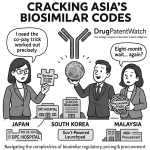
Japan’s pharmaceutical pricing system is administered by the Ministry of Health, Labour and Welfare (MHLW) through a fee schedule updated every two years. Biosimilar launch prices are set at 70% of the originator’s current price at initial listing; if multiple biosimilars are available at the time of listing, the price may be set at 60%. The biennial NHI drug price revision then applies market-based adjustments: products with higher-than-expected sales volumes face proportionally larger price reductions. This creates a continuous downward price pressure on both originators and biosimilars over time.
The MHLW has set explicit biosimilar volume share targets: 80% of prescriptions for products with available biosimilars by FY2029. These targets are accompanied by formulary management guidance, physician education programs administered through the Japan Pharmaceutical Manufacturers Association, and financial incentives for hospitals that meet their institutional biosimilar prescribing targets. The transparency of the target framework — published, time-bound, measurable — provides biosimilar manufacturers with a reliable policy tailwind for forecasting Japanese market share trajectories.
Japan’s approval pathway for biosimilars is scientifically rigorous. PMDA (Pharmaceuticals and Medical Devices Agency) requires a similar analytical and clinical data package to the EMA standard, and has increasingly coordinated its review timelines with the EMA and FDA to streamline global development programs. A product approved simultaneously by EMA and PMDA — which is now achievable for developers who coordinate their development programs from the outset — can access both markets within the same approval cycle, reducing the time and cost of country-by-country submissions.
South Korea: Industrial Policy Meets Global Export Strategy
South Korea’s biosimilar sector is a product of deliberate industrial policy executed over approximately 15 years. The Korean government designated biopharmaceuticals as a strategic national industry in the early 2010s and provided substantial support — through the Korea Drug Development Fund, regulatory fast-track programs, and export market development support — to domestic developers.
Celltrion and Samsung Bioepis are the two firms that most visibly benefited. Celltrion’s CT-P13 (infliximab biosimilar, branded Remsima in Europe and Inflectra in the U.S.) was the first monoclonal antibody biosimilar to receive EMA approval in 2013. Samsung Bioepis followed with a range of high-profile biosimilars across anti-TNF, anti-VEGF, and supportive care categories.
Both companies’ primary commercial focus has been export to European and North American markets, where the revenue opportunity dwarfs the domestic Korean market. Their competitive advantage is cost: Korean manufacturing operations, particularly Celltrion’s vertically integrated Incheon facility (with over 140,000-liter bioreactor capacity) and Samsung Bioepis’s partnership with Samsung BioLogics, operate at production costs significantly below European and U.S. comparators. This cost structure allows Korean biosimilar developers to bid aggressively in European tenders while maintaining acceptable gross margins, and to price competitively in U.S. PBM negotiations.
From a domestic market perspective, the South Korean National Health Insurance Service (NHIS) has been supportive of biosimilar adoption but has not implemented the mandatory switching policies seen in Canada or the UK. Biosimilar share in domestic Korea is solid but not exceptional by global standards. The primary policy lever NHIS uses is price linkage: when a biosimilar enters, the originator’s reimbursement price is progressively reduced, creating financial pressure for physician prescribing to shift toward lower-cost options without an explicit mandate.
China: Volume-Based Procurement and the NMPA Regulatory Overhaul
China’s biosimilar market is on a trajectory that will make it the single largest national biosimilar market by volume within a decade. Two developments are driving this.
The first is the NMPA’s (National Medical Products Administration) 2020 technical guideline for biosimilar development, which brought China’s regulatory standard into substantive alignment with the ICH Q11 guideline and the EMA’s biosimilar framework. The previous standard permitted a less rigorous analytical comparison that produced approved products acceptable for China’s domestic market but not for regulatory submission in the EU or U.S. The 2020 reform means that new Chinese biosimilar programs meeting NMPA standards are now compatible with simultaneous EMA and potentially FDA submissions, opening export pathways for Chinese developers.
The second is China’s national Volume-Based Procurement (VBP) program, administered by the National Healthcare Security Administration (NHSA). VBP is effectively a national tender for drugs that have achieved approved generic or biosimilar competition. In each procurement cycle, all qualified suppliers submit price bids; the lowest-bid suppliers win guaranteed volume commitments from public hospitals across China. The price reductions achieved in VBP have been extraordinary: in early small-molecule tender rounds, prices fell 90%+ from pre-tender levels. Biologic VBP rounds are now underway for some products, with early results suggesting price reductions in the 40-70% range — less dramatic than small-molecule outcomes but still substantial.
For international biosimilar developers considering China market entry, VBP creates a classic winner’s dilemma: to win the tender and access the enormous volume, you must bid at prices that may be difficult to sustain and that could establish price-anchoring problems for other markets if your China pricing becomes publicly visible.
India: Regulatory Modernization and the Export Ambition
India’s biosimilar regulatory history is complex. The Central Drugs Standard Control Organisation (CDSCO) permitted approval of ‘similar biologics’ under 2012 guidelines that required less analytical and clinical rigor than EMA or FDA standards. This generated a large domestic market for affordably priced biologics, but these products were generally not approvable in highly regulated Western markets.
The regulatory reform process, accelerated from 2018 onward with World Health Organization technical assistance, has progressively strengthened CDSCO’s biosimilar guidance toward international alignment. Indian developers — including Biocon Biologics, Dr. Reddy’s Laboratories, and Intas Pharmaceuticals — have invested substantially in upgrading their analytical characterization capabilities and GMP compliance infrastructure to pursue EMA and FDA approvals alongside CDSCO submissions.
Biocon Biologics has been the most aggressive in executing this dual-track strategy, achieving EMA approval for insulin glargine and trastuzumab biosimilars and then pursuing FDA approval. Its partnership with Viatris (formerly Mylan) on global commercialization was a landmark structure: Biocon provided development and manufacturing expertise; Viatris provided the global commercial infrastructure, regulatory affairs capacity, and market access relationships. This kind of asset-pooling between a cost-advantaged developer and a commercially experienced partner is likely to become the dominant model for Indian biosimilar internationalization.
Key Takeaways: Section 7
Japan’s biennial NHI pricing revisions and explicit 80%-share-by-FY2029 biosimilar targets provide a transparent, favorable policy environment with predictable market share progression.
South Korea’s Celltrion and Samsung Bioepis have built globally competitive biosimilar enterprises through cost-advantaged manufacturing and European market access, with domestic market development as a secondary priority.
China’s NMPA regulatory overhaul (2020) and VBP tender system together position China as the highest-volume biosimilar market globally within the coming decade, but VBP pricing creates margin challenges for both domestic and international competitors.
India’s leading biosimilar developers are executing a dual-track regulatory strategy — CDSCO domestic approval plus EMA/FDA international approval — with asset-pooling partnerships to access global commercial infrastructure.
Section 8: Beyond the Sticker Price: Competition Dynamics, Nocebo Effects, and Supply Chain Risk
The True Value of Market Competition: Price Erosion Over Time
The most commonly discussed biosimilar benefit is the per-unit cost saving from the first product to enter the market. The economically more significant benefit is the multi-year price erosion driven by sustained competition. First-entrant biosimilars typically launch at 15-30% below the originator list price in the U.S. and 20-40% in Europe. Second and third entrants must undercut both the originator and the first biosimilar to gain formulary access. By the time a market has four or more credible competitors — as seen in European adalimumab, infliximab, and etanercept markets — cumulative price erosion from the original reference biologic can reach 60-80%.
The mathematical consequence: the system-level savings from the fourth biosimilar entering a market can exceed the savings from the first entrant, because the fourth entrant drives the market clearing price down across all players, including the originator’s contract price. For a payer managing a formulary, the optimal strategy is not to lock in a single biosimilar at the first available contract cycle but to maintain competitive tension by awarding non-exclusive preferred-tier placement to multiple products, allowing each annual contracting cycle to extract additional price reduction.
Originator Price Response: An Underestimated Savings Source
In markets where biosimilar competition is credible and growing, originators respond. AbbVie in Europe, Janssen in Norway, and Amgen in Germany have all been documented reducing their effective net prices — through higher rebates, through direct price adjustments, or through participation in competitive tenders — in response to biosimilar market share pressure. In the UK, AbbVie participated in the NHS adalimumab tender, winning a portion of the multi-supplier contract at a price far below its pre-biosimilar list price.
This originator price response is entirely attributable to biosimilar market pressure. Without biosimilar entry, these price reductions would not have occurred. Including the originator price response in a complete BIA for biosimilar competition roughly doubles the estimated budget savings relative to a model that counts only the biosimilar volume at a discounted price, leaving the originator price unchanged on residual volume.
The Nocebo Effect: A Clinically Grounded Barrier
The nocebo effect — negative health outcomes attributable to negative expectations rather than to pharmacological properties — is a documented phenomenon in biologic switching. Patients informed that they are being switched to a ‘cheaper’ version of their medication report higher rates of perceived adverse events, disease flares, and treatment dissatisfaction compared to patients switched in masked clinical settings or patients who receive positive-framing communication about the switch.
A 2017 Norwegian study (the NOR-SWITCH trial) is the most frequently cited switching study in the biosimilar literature. It randomized 482 patients stable on infliximab to either remain on Remicade or switch to CT-P13 (Remsima). The primary endpoint — disease worsening at 52 weeks — showed a non-inferiority result, with the switching group performing equivalently to the maintenance group. However, the study was not blinded, and subsequent analyses noted higher rates of subjective symptom reporting in the switching arm in some disease sub-groups — findings that have been interpreted by some specialists as consistent with a nocebo contribution.
For biosimilar developers and payers implementing switching programs, the practical implication is that communication design is not a soft consideration — it is a clinical risk management strategy. Switching programs that use positive, outcome-focused language (‘your treatment costs less, so your health system can treat more patients without reducing your care quality’) consistently achieve better adherence and lower nocebo-related discontinuation rates than programs framed around cost savings alone. The Canadian provincial switching programs — which invested substantially in patient communication infrastructure — report very low nocebo-related event rates, which partially explains their high conversion rate success.
Supply Chain Reliability as a Component of Cost-Effectiveness
A biosimilar that is 40% cheaper than the reference biologic but that experiences a six-month supply disruption generates net harm to cost-effectiveness: the health system must revert to the higher-priced originator, often at short notice and without the negotiating leverage of a planned procurement. The direct incremental cost of a supply disruption event on a high-volume biologic can reach tens of millions of dollars for a national health system.
Biosimilar manufacturers with proven supply chain infrastructure — dual-site manufacturing, redundant API sourcing, demonstrated batch release reliability over multiple years — command a credibility premium with sophisticated payers. NHS England’s multi-supplier tender design explicitly acknowledges this, requiring bidders to demonstrate supply security as a qualification criterion, not just offer the lowest price. Health systems that procure on price alone, without supply reliability diligence, are not optimizing cost-effectiveness; they are optimizing for unit price at the expense of system resilience.
Key Takeaways: Section 8
Multi-competitor biosimilar markets generate cumulative price erosion of 60-80% over multiple tender cycles, substantially exceeding the savings from first-entrant competition alone. Payers who maintain competitive tension across contracting cycles extract the most value.
Originator price responses to biosimilar competition are a major and frequently undercounted source of budget savings; including this effect approximately doubles the estimated system-level benefit in a complete BIA.
The nocebo effect is a clinically real phenomenon that can be substantially mitigated through positive-framing patient communication programs. Communication design is a clinical risk management activity.
Supply chain reliability is a quantifiable component of biosimilar cost-effectiveness. Supply disruption events have documented direct costs ranging into the tens of millions for national health systems.
A biosimilar development program requires $100-$300 million in investment and 7-10 years of development time before first revenue. The decision of which reference biologic to pursue is therefore the most capital-intensive choice a biosimilar company makes. The commercial modeling for target selection requires:
Assessment of the reference biologic’s peak annual global revenue and its geographic distribution across markets with accessible procurement frameworks. A biologic with $10 billion in global sales but 80% concentrated in the U.S. market is a different risk profile than one with $8 billion in sales distributed across EU, U.S., and Japan.
Mapping of the full patent thicket, including compound patents, manufacturing process patents, formulation patents, and device patents, with estimated expiration dates, litigation vulnerability assessment, and any relevant settlement agreements from prior art challenges. This analysis requires a combination of primary patent database work and specialized intelligence services.
Assessment of the competitive development landscape: how many other biosimilar programs are in development for the same reference biologic, at what clinical stage, and from which manufacturers? A market with two credible competitors will have very different pricing dynamics from a market with eight.
Regulatory pathway assessment: does the molecule require human switching data for interchangeability, or will the totality of analytical and clinical evidence support approval without a dedicated switching study?
First-Mover Versus Fast-Follower Strategy
The first biosimilar to market for a given reference biologic carries advantages: ability to establish formulary relationships before competitors arrive, 180-day exclusivity in some regulatory contexts (not formally codified in the EU, but effectively conferred by the time gap before the next approval), and the reputational benefit of being associated with the biosimilar’s introduction.
The disadvantages of being first are real. The first entrant bears higher market education costs: it must invest in physician and payer education about biosimilar science, in switching study infrastructure if required for interchangeability, and in establishing the clinical evidence base that later entrants will free-ride on. Early tender pricing also sets expectations; a first entrant that wins the Norwegian tender in year one by pricing aggressively may find the price it established becomes the floor for subsequent cycles.
Fast-follower strategy — entering the market 12-24 months after the first biosimilar — can benefit from the market access groundwork laid by the pioneer, an established physician comfort level with switching, and the ability to differentiate on device or support program rather than having to invest in basic market education. The optimal timing depends on the specific market structure and the company’s competitive advantages.
Device Innovation: The Emerging Differentiator
In self-injected biologic categories (adalimumab, etanercept, ustekinumab, secukinumab), the auto-injector device is a meaningful differentiator. Patients develop familiarity with the feel, injection force, and step sequence of a specific device. Switching to a biosimilar with an inferior device — more injection pain, a more complex administration sequence, a less ergonomic grip — is a genuine patient adherence risk.
AbbVie explicitly used device strategy as a lifecycle management tool: it launched a citrate-free, low-volume formulation of adalimumab in Europe in 2018, just ahead of biosimilar entry. Citrate-free formulation significantly reduces injection-site pain, which is a commonly reported patient complaint with the citrated original formulation. This device and formulation upgrade created a patient preference that biosimilar developers had to match.
Several biosimilar developers have responded by investing in device engineering programs specifically designed to meet or exceed the patient experience of the originator’s updated device. Mylan/Viatris’s Hulio (adalimumab biosimilar) and Coherus’s Yusimry both launched with auto-injector designs benchmarked against patient preference research. The ability to demonstrate device parity or superiority in patient advisory board testing has become a standard element of biosimilar market access dossiers submitted to major EU payers and U.S. PBMs.
Originator Lifecycle Management: The Bio-Better Roadmap
For originator companies facing biosimilar entry, the most durable strategic response is genuine clinical improvement — developing a ‘bio-better’ that offers a meaningful patient benefit not available from any biosimilar. A bio-better is a new molecular entity using the same therapeutic target or mechanism but with a modified structure or formulation that delivers: longer half-life (enabling less frequent dosing), higher potency (enabling lower dose or better efficacy), improved selectivity (reduced off-target effects), or a novel route of administration.
The clearest current example of this strategy is Roche’s development of subcutaneous formulations for its IV-administered cancer biologics (atezolizumab, pertuzumab, trastuzumab). The subcutaneous versions reduce clinic time from 30-60 minutes of IV infusion to a 5-minute injection, a meaningful benefit for patients and a significant cost reduction for health systems (no infusion chair, no nursing time, no IV preparation). When subcutaneous atezolizumab or subcutaneous trastuzumab is available, the competitive reference for a biosimilar of the original IV product is partially displaced by a clinically superior alternative.
This lifecycle strategy works when the bio-better’s clinical advantage is real, documented, and valued by payers and patients. It fails when the ‘improvement’ is cosmetic — a minor reformulation or a new auto-injector color — that payers correctly assess as delivering no clinical benefit. HTA bodies in Germany and the UK have shown increasing willingness to reject bio-better premium pricing claims where the clinical evidence does not support added benefit.
Key Takeaways: Section 9
Biosimilar target selection is a capital allocation decision requiring full patent thicket mapping, competitive development landscape assessment, market size and geographic distribution analysis, and regulatory pathway feasibility modeling.
First-mover advantage is real but comes with higher market education investment costs. Fast-follower strategy is viable when the pioneer has established physician comfort and regulatory precedent.
Device differentiation is a commercially significant but often underinvested area of biosimilar development. Device parity with the originator’s latest formulation is a market access requirement, not a nice-to-have.
Originator lifecycle management via genuine bio-betters (subcutaneous reformulation, extended half-life variants) can partially displace biosimilar competition when the clinical advantage is real and HTA-validated.
Section 10: Second-Wave Pipeline: Oncology, Ophthalmology, and Rare Disease
Oncology mAbs: The Largest Opportunity in Biologic History
The two most commercially successful cancer immunotherapy drugs in history — pembrolizumab (Keytruda, Merck) and nivolumab (Opdivo, Bristol Myers Squibb) — are both approaching their biosimilar entry windows. Keytruda generated approximately $25 billion in global sales in 2024. Nivolumab generated approximately $9 billion. Together, these two molecules represent a larger target than the entire adalimumab franchise at its global peak.
Pembrolizumab’s core U.S. patents on the anti-PD-1 antibody structure expire in the late 2020s, though the full thicket of manufacturing and formulation patents extends into the early 2030s. Multiple developers — including Samsung Bioepis, Celltrion, and several Indian manufacturers — have pembrolizumab biosimilar programs in Phase III development. EMA and FDA biosimilar filings are anticipated in the 2026-2028 window for leading programs.
The clinical trial design challenge for pembrolizumab biosimilars is substantial. Unlike adalimumab, where the efficacy endpoints in rheumatoid arthritis are relatively well-characterized and comparator trials are feasible at manageable sample sizes, pembrolizumab’s oncology indications involve endpoints (overall survival, progression-free survival) that require large, long-duration trials. The FDA and EMA have signaled willingness to accept PK/PD equivalence plus biomarker bridging data in lieu of full survival endpoint comparisons, which would significantly reduce the trial cost and timeline for developers. The regulatory science on oncology biosimilar approval pathways is still evolving, and the first approved oncology mAb biosimilar programs will establish the precedents that shape all subsequent development.
From a cost-effectiveness standpoint, the payer implications of pembrolizumab biosimilar entry are enormous. At a current U.S. list price of approximately $13,000 per infusion for Keytruda, a 40% biosimilar discount on a drug used in over 30 approved tumor indications would generate Medicare and commercial payer savings of several billion dollars annually. Countries with universal health coverage that currently restrict pembrolizumab access due to cost — including many middle-income countries and some European systems that have accepted pembrolizumab only in narrow indications — could substantially expand coverage with biosimilar pricing.
Anti-VEGF Ophthalmology: Ranibizumab, Bevacizumab, and Aflibercept
Biosimilars for anti-VEGF biologics used in retinal diseases (age-related macular degeneration, diabetic macular edema) are in active development. The reference products — ranibizumab (Lucentis), bevacizumab (Avastin, used off-label for retinal disease), and aflibercept (Eylea) — collectively account for billions in annual spend globally and are administered by injection into the vitreous humor of the eye, typically monthly or bi-monthly.
The cost-effectiveness argument for anti-VEGF biosimilars is particularly compelling for health systems managing aging populations. Age-related macular degeneration is the leading cause of severe vision loss in adults over 60 in high-income countries. Per-patient treatment costs with ranibizumab can reach $20,000-$30,000 per year in the U.S. At biosimilar pricing, the cost-per-QALY ratio of treating previously undertreated or untreated AMD populations shifts dramatically.
Samsung Bioepis’s ranibizumab biosimilar (SB11, approved by EMA in 2020 and FDA in 2022) and Coherus’s aflibercept biosimilar (Yesafili) are the leading commercial entrants. Early market uptake has been moderate: ophthalmologists have been cautious about switching stable patients with well-controlled retinal disease, given the high stakes of any treatment disruption (the consequence of disease flare in neovascular AMD can be irreversible vision loss). This caution is clinically understandable, but the switching study data supporting equivalence is robust, and payer pressure in both Europe and the U.S. to adopt anti-VEGF biosimilars is intensifying.
Rare Disease Biologics: The Next Frontier
Ultra-high-cost biologics for rare diseases — enzyme replacement therapies, complement inhibitors, and targeted biologics for specific genetic conditions — are the next wave of biosimilar development targets. Products like eculizumab (Soliris, Alexion/AstraZeneca), at a U.S. list price exceeding $500,000 per patient per year, represent extreme cases where biosimilar entry could generate immediate, enormous cost-effectiveness gains.
Eculizumab faces biosimilar competition from Samsung Bioepis’s SB17 (in development) and other programs. The rare disease biosimilar market presents unique challenges: patient populations are small (sometimes only hundreds to low thousands in a major market), clinical trials are difficult to power for traditional equivalence endpoints, and specialist physician networks are tightly concentrated around a handful of academic medical centers. These factors slow the development and commercialization timeline but do not reduce the cost-effectiveness potential.
For health systems, eculizumab biosimilar entry at even a 30% discount on a $500,000/year therapy represents $150,000 per patient per year in savings — enough to fund treatment for additional rare disease patients with the same budget. The budget impact for rare disease biosimilars is compressed (small patient populations) but the per-patient value is exceptional.
Key Takeaways: Section 10
Pembrolizumab biosimilars represent the largest single cost-effectiveness opportunity in biologic history, with potential Medicare and commercial savings of several billion dollars annually post-entry. Regulatory precedent-setting for oncology mAb biosimilar approval is the current critical path.
Anti-VEGF ophthalmology biosimilars have robust clinical equivalence data but face physician switching hesitancy driven by the high-consequence nature of retinal disease treatment. Payer pressure will ultimately drive conversion.
Rare disease biosimilars (e.g., eculizumab biosimilars) deliver exceptional per-patient savings despite small total patient populations. The development challenge is powering equivalence studies in very small patient cohorts.
Section 11: Investment Strategy for Portfolio Managers
Framework for Underwriting Biosimilar Developers
When underwriting a position in a pure-play or mixed biosimilar developer, the key commercial variables are: pipeline breadth and stage (how many assets in late-stage development, across how many reference biologic targets, with development risk spread across a portfolio rather than concentrated in one molecule?); manufacturing cost structure (what is the production cost per gram of protein, and how does this compare to the originator and direct competitors?); geographic market access footprint (does the company have established payer relationships and commercial infrastructure in both European and North American markets, or is it dependent on a distribution partnership?); and IP exposure on the development side (do any of the biosimilar programs face unresolved patent litigation that could delay launch or impose royalty obligations?).
Gross margin in the biosimilar business is structurally lower than in originator biologics. A biosimilar developer with a best-in-class cost structure might achieve 50-60% gross margin on European tender wins; North American gross margins are often lower due to the access investment required (rebates, co-pay assistance, support program costs). Net margin depends heavily on the SG&A required for market access in each geography. Companies that over-invest in direct salesforce in markets where payer-level access negotiation is the primary commercial activity often have structurally inefficient cost structures.
Originator Biologic Companies: Modeling the Revenue Cliff
For originator companies with high revenue concentration in aging biologic franchises, the key analytical task is precise biosimilar entry dating and erosion curve modeling. The erosion curve varies by market architecture:
In Nordic markets: Year 1 post-biosimilar entry can see 70-90% volume loss for the originator in the tendered product, with commensurate revenue impact.
In German/UK markets: Year 1-2 erosion of 40-70%, continuing to 80%+ by year 3-4 as multiple competitors establish positions.
In the U.S.: Pre-IRA, erosion was slow and structural (20-40% volume loss over 3-5 years). Post-IRA, the trajectory depends on Part D redesign effects and PBM formulary evolution. Conservative modeling should use a 40-60% volume erosion by year 3, with risk-weighting for faster erosion if IRA effects materialize more quickly than expected.
For portfolio managers, the critical question when valuing an originator franchise is whether the company’s pipeline can offset biologic revenue losses on a timeline that avoids a sustained earnings gap. Companies with a single major biologic franchise and a thin development pipeline face a genuine cliff risk. Companies with multiple biologics at different lifecycle stages, active next-generation bio-better programs, and small-molecule pipeline diversification have more manageable transition profiles.
Key Metrics for Biosimilar Market Intelligence
Active portfolio managers in biopharma track these data points for biosimilar market monitoring:
Monthly biosimilar volume share data by molecule and market (IMS/IQVIA national data, reported with a 2-3 month lag). This is the most direct measure of whether a biosimilar launch is meeting commercial expectations.
Tender award results in European markets, particularly Norway, Denmark, and UK NHS procurement rounds. Tender price data often leaks into trade press within days of award and provides the best available real-time indicator of competitive pricing dynamics.
FDA and EMA biosimilar approval dates and interchangeability designations. The approval calendar is publicly available and allows forward-looking modeling of launch timing and market share shift initiation dates.
Patent litigation docket updates for U.S. BPCIA cases. Patent dance filings, IPR petitions, and district court scheduling orders are all publicly available and provide signal on the likely timing of contested biosimilar launches.
PBM formulary updates, particularly from Express Scripts, CVS Caremark, and OptumRx, the three largest U.S. PBMs. Formulary tier changes for biosimilars versus originators are publicly disclosed in beneficiary communications (though often obscured in dense formulary documents) and signal the access trajectory for specific molecules.
Section 12: Key Takeaways by Segment
For Payers and HTA Bodies
Standard cost-minimization HTA is necessary but not sufficient for extracting full biosimilar value. A complete economic model must include originator price response, access expansion value (QALYs generated by treating previously undertreated patients), and multi-year competitive dynamics rather than point-in-time price comparisons. Procurement design that maintains multi-supplier competition — rather than awarding winner-takes-all single-supplier tenders — is more cost-effective over a 5-year horizon despite appearing more expensive in year one.
For Biosimilar Developers
Market access strategy is as important as clinical development. A biosimilar with perfect analytical similarity and a competitive price that fails to secure preferred formulary placement in the U.S. or loses the Norwegian tender generates no return on a $200 million investment. Build the market access infrastructure, the payer relationship network, and the BIA modeling capability before the regulatory application is filed, not after approval.
For Originator Companies
Rebate-wall defense strategies that depend on perverse intermediary incentives face increasing regulatory and legislative risk. The IRA’s Part D redesign is the first of what will likely be multiple policy interventions that gradually reduce the rebate wall’s effectiveness. Life cycle management through genuine bio-better development — with clinically meaningful improvement validated by HTA — is the durable long-term strategy.
For Institutional Investors
The $400 billion biologic market is the most important near-term source of structural pharmaceutical cost reduction globally. The gap between theoretical biosimilar savings potential and actual realized savings represents both a policy failure and an investment opportunity. Companies — on both the biosimilar developer and the originator side — whose strategies are adapted to the post-IRA, post-mandatory-switching regulatory environment are better positioned for the next decade than those whose strategies were built for the pre-2020 status quo.
Section 13: Frequently Asked Questions
Why doesn’t a lower price automatically make a biosimilar cost-effective in every system?
Because cost-effectiveness is a system-level output. A 30% discounted product that achieves 5% market share generates less system savings than a 15% discounted product at 70% share. Uptake rate — determined by formulary design, prescribing incentives, switching policies, and physician trust — is the primary driver of realized savings. Price is necessary but not sufficient.
What is a ‘rebate wall,’ and why does it exist?
A rebate wall occurs when an originator manufacturer offers large confidential rebates to PBMs in exchange for preferred formulary status and market share guarantees. The rebate may be large enough that the originator’s net cost to the payer matches or beats the biosimilar’s list price, eliminating the payer’s incentive to prefer the lower-priced biosimilar. The rebate wall exists because U.S. pharmaceutical contracting law has historically permitted and even incentivized this behavior. The IRA’s Part D benefit redesign is the most significant structural intervention to date that reduces — but does not eliminate — the rebate wall’s effectiveness.
Is mandatory switching for stable biologic patients clinically safe?
The body of evidence from Canadian provincial switching programs, Norwegian tender-driven switches, and the UK’s NHS Best Value Biologic program consistently shows no statistically significant difference in adverse event rates, disease flare rates, or treatment discontinuation rates between switched and non-switched patient cohorts. The NOR-SWITCH trial, the DANBIO registry data from Denmark, and the British Columbia post-market surveillance database all support this conclusion. Physician-mediated switching with positive patient communication substantially reduces the nocebo-related discontinuation risk.
How should a biosimilar developer prioritize geographic market entry?
Priority typically follows this logic: Europe first, because single procurement decisions can unlock national-scale access and because EMA approval provides a credible reference for subsequent FDA submissions. Within Europe, prioritize the UK (NHS has clear procurement timelines and is a high-volume market), Germany (managed entry without mandatory tender, but strong physician quota system drives uptake), and the Nordic countries (highest unit price reductions through tenders, but smaller absolute patient volumes). Japan is a strong second-priority market given transparent policy targets and regulatory alignment with EMA. The U.S. requires the largest market access investment but carries the largest revenue potential; enter with a well-developed PBM contracting strategy or a commercial partner with established U.S. payer relationships.
How do I assess the patent thicket risk for a biosimilar development target?
The rigorous approach requires: (1) identifying all patents in the U.S. Patent and Trademark Office and EPO databases that name the reference biologic’s active molecule, manufacturing process, formulation, or delivery device; (2) assessing each patent’s likely validity — does it cover claims that are likely novel and non-obvious in light of prior art?; (3) determining the applicant’s freedom to operate — can the biosimilar’s manufacturing process be designed around the process patents? — and (4) estimating the cost and probability of success of patent challenges (IPR petitions, BPCIA litigation) versus the cost of licensing or settlement. Specialized patent intelligence platforms that track litigation history, IPR outcomes, and patent expiration timelines across all key jurisdictions are essential inputs to this analysis.