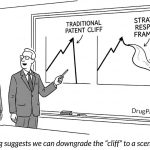
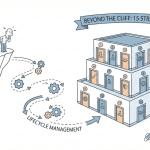
The pharmaceutical industry in 2026 stands at a critical juncture where the traditional “patent cliff”—the once-dreaded moment when a blockbuster drug’s revenue plummeted upon the arrival of generic competition—has been systematically dismantled and replaced by what analysts call the “patent slope”.1 This transformation is the result of a sophisticated, decade-long evolution in intellectual property strategy known as patent thicketing, a practice that has effectively converted legal protections intended for innovation into durable economic moats for established manufacturers.2 For high-level professionals in the healthcare and investment sectors, understanding the current legislative and regulatory offensive against these “thickets” is not merely a matter of public policy; it is a fundamental requirement for assessing the long-term valuation and competitive risk of the world’s most profitable pharmaceutical assets.1
The Strategic Evolution of Pharmaceutical Monopolies
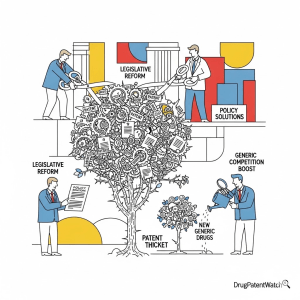
The concept of the “patent thicket” has moved from the periphery of legal academic theory to the center of global pharmaceutical commerce.2 At its core, a thicket is a dense web of overlapping patents covering multiple aspects of a single product, ranging from the base chemical molecule to manufacturing methods, dosage forms, and even secondary medical indications discovered long after the drug’s initial launch.6 While proponents of the current system, such as PhRMA and BIO, argue that these protections are a rational and necessary response to the skyrocketing costs of research and development—estimated at a capitalized average of $\$2.6$ billion per successful drug—critics see a coordinated effort to stifle competition and keep prices punishingly high for patients and payers.4
The mechanism of “evergreening” is the primary engine behind these thickets.6 By filing for new patents on minor, often clinically insignificant modifications just as earlier patents are set to expire, drugmakers can extend their market exclusivity well past the original twenty-year statutory term.4 These modifications often include switching from a pill to a capsule, altering inactive ingredients, or introducing extended-release formulations—a practice known as “product hopping” or “product switching”.6
The Mechanics of Market Exclusivity Extension
The strategic calculus behind these moves is driven by the brutal economic reality of generic entry.4 When a drug’s patent protection finally ends, the resulting competition from bioequivalent products at a fraction of the cost can lead to an immediate and devastating loss of market share for the innovator.1 To mitigate this, companies engage in “hard switches,” where they remove the original product from the market shortly before generic entry to force patients onto a new, patent-protected version, or “soft switches,” where they aggressively market the new version while leaving the old one on the shelves.4
Patent Strategy Type
Definition and Primary Mechanism
Strategic Business Objective
Patent Thicket
Amassing a large number of patents (often 100+) on a single drug product, covering manufacturing, formulation, and use.6
Discourage generic entry by increasing the complexity and cost of litigation to $5M+ per case.6
Evergreening
Filing for secondary patents on minor modifications (salts, polymorphs, dosages) as primary patents expire.7
Extend the effective monopoly period by 3 to 7.5 years beyond the original 20-year term.4
Product Hopping
Discontinuing an older drug and switching patients to a new, reformulated version protected by later-expiring patents.7
Shift the market to a new “moat” before generics can capture the demand for the original formulation.4
Patent Linkage
Regulations linking marketing approval for generics to the patent status of the reference drug.11
Prevent generic launch during active patent terms, often triggering automatic 30-month stays.12
The scale of this “over-patenting” is most evident in the respiratory and biologic fields.4 For example, the drug combination in Combivent Respimat has been off-patent for over 25 years, yet the product remains protected by a thicket of 17 patents on its inhaler device, with some protections stretching as far as 2028.4 Similarly, Novo Nordisk’s semaglutide (Ozempic/Wegovy) is currently surrounded by 320 patent applications, with 154 already approved, providing an estimated 49 years of total monopoly protection when the staggered expiration dates are combined.7
Economic Costs and the Litigation Barrier
The impact of these strategies on the U.S. healthcare system is not theoretical; it is measured in billions of dollars of avoidable spending.14 A study published in JAMA Health Forum in 2025 found that delayed generic competition for just four major brand-name drugs—imatinib (Gleevec), glatiramer (Copaxone), celecoxib (Celebrex), and bimatoprost (Lumigan)—led to $\$3.5$ billion in excess spending over a two-year period.14 Of this amount, approximately $\$1.9$ billion was absorbed by commercial insurance plans and $\$1.6$ billion by Medicare Part D.15
The barrier to entry for generics and biosimilars is often more financial than technological.2 Patent litigation in the pharmaceutical sector has become a “crucible of market dominance,” where the median cost of a high-stakes infringement case can exceed $\$5$ million for Hatch-Waxman (ANDA) litigation and as much as $\$8$ million for Section 337 cases involving the International Trade Commission (ITC).9 For smaller generic manufacturers and startups, these costs are prohibitively high, effectively granting larger incumbent firms a “litigation-as-revenue” advantage where the mere act of filing a lawsuit can delay a competitor for the duration of a 30-month stay.1
Quantitative Impact of Delayed Competition
The cost of these delays is particularly pronounced in the first year following a potential generic entry date.15 During this window, brand-name drugs often retain a dominant market share even if a generic is technically available, due to long-running marketing campaigns and rebates offered to Pharmacy Benefit Managers (PBMs).7
Brand-Name Drug
Manufacturer
Primary Indication
Estimated Excess Spending Due to Delayed Competition (2021-2023)
Copaxone
Teva
Multiple Sclerosis
$\$1.7$ Billion 15
Gleevec
Novartis
Leukemia
$\$1.0$ Billion 15
Celebrex
Pfizer
Arthritis/Pain
$\$726$ Million 15
Lumigan
AbbVie
Glaucoma
$\$67$ Million 15
Humira/Enbrel
AbbVie/Amgen
Autoimmune
$\$167$ Billion (Cumulative estimated impact since primary expiry) 1
The I-MAK organization’s 2024 analysis suggested that the cumulative cost of delayed entry for Humira, Eliquis, and Enbrel reached an astounding $\$167$ billion compared to a scenario where generics had entered immediately upon the expiration of the primary molecule patents.1 This highlights the effectiveness of the “patent wall” as a tool for stabilizing brand revenue at the expense of public and private payers.1
Case Study: The AbbVie Fortress and the Adalimumab Wall
The most cited example of contemporary patent thicketing is AbbVie’s defense of Humira (adalimumab).1 For years, Humira was the world’s best-selling drug, generating more than $\$ 20$ billion in annual revenue at its peak.1 Although the primary patent on the adalimumab molecule expired in 2016, the first biosimilar competition did not enter the U.S. market until 2023.1
AbbVie achieved this seven-year delay by filing over 300 patent applications, resulting in 160 issued patents.1 The strategic nature of this filing becomes clear when examining the timing: over 90% of these applications were filed after the drug received FDA approval in 2002.1 This “drip-feed” strategy ensures that as one patent expires, another (perhaps covering a different formulation or a new use) remains in force, forcing biosimilar makers into a perpetual cycle of litigation.1
Facing the prospect of litigating through 160 patents, major biosimilar competitors—including Amgen, Sandoz, and Samsung Bioepis—chose to settle.1 These settlements were structurally complex: they allowed competitors to launch immediately in European markets (where the patent estate was thinner) in exchange for a commitment to stay off the U.S. market until 2023.1 This “Atlantic Divide” in patent strategy underscores how variations in international patent standards can be leveraged to protect the high-value U.S. market.1
The Enbrel and Revlimid Models of Persistence
While Humira utilized volume, Amgen’s Enbrel (etanercept) utilized legal persistence.5 Approved in 1998, Enbrel is projected to maintain exclusivity in the U.S. until 2029—a 31-year monopoly.18 This was made possible by the “Brockhaus Patents,” which Amgen licensed from Roche and successfully amended through the patent office to extend protection for the base fusion protein long after the original etanercept patent expired in 2012.5
Similarly, Celgene (now Bristol Myers Squibb) utilized “volume-limited settlements” for Revlimid (lenalidomide).1 Instead of a single date for full market entry, BMS engineered a “slope” where generics were permitted to launch in 2022 but were strictly capped at single-digit market share percentages until 2026.1 This strategy ensures that generic prices remain artificially high because manufacturers have no incentive to cut prices if they cannot capture more volume, thus preserving billions in revenue for the brand manufacturer.1
Legislative Solutions: The 2023-2026 Policy Offensive
Recognizing that administrative and judicial remedies have struggled to keep pace with these corporate strategies, a bipartisan coalition of U.S. lawmakers has introduced several high-stakes legislative proposals between 2023 and 2026.22
The Affordable Prescriptions for Patients Act (S. 1041 / S. 150)
The Affordable Prescriptions for Patients Act, reintroduced in the 119th Congress in March 2025 by Senators John Cornyn (R-TX) and Richard Blumenthal (D-CT), targets the very core of biologic patent thicketing.22 The bill seeks to modify the patent infringement framework between biosimilar manufacturers and brand manufacturers, often referred to as the “patent dance”.22
Patent Assertion Limits: The act would limit a branded biologic manufacturer to asserting a total of no more than 20 patents in any single infringement action against a biosimilar maker.23
Timing Restrictions: It further limits the number of patents that can be asserted based on when they were filed, specifically targeting those issued more than four years after the reference product received market approval.22
CBO Scoring: A 2023 score from the Congressional Budget Office estimated that enacting this bill would reduce direct federal spending by $\$2.4$ billion and increase revenues by $\$585$ million over a ten-year period, resulting in a net deficit decrease of $\$3.0$ billion.14
The ETHIC Act: Closing the Double-Patenting Loophole
The Eliminating Thickets to Increase Competition (ETHIC) Act, introduced in July 2025 by Senators Peter Welch (D-VT), Josh Hawley (R-MO), and Amy Klobuchar (D-MN), focuses on the practice of amassing families of nearly identical patents.22 This legislation codifies a practice already used by some district courts, limiting a drug company to asserting only one patent per terminally disclaimed group against a competitor.26
This means that if a generic competitor successfully challenges one patent in a “thicket” or family of duplicates, all associated duplicates will also be invalidated.22 The goal is to ensure that a drug company can assert only one patent for each patentably-distinct improvement, effectively dismantling the “legal web” that currently protects duplicative ideas.26
The Medication Affordability and Patent Integrity Act (S. 2658)
Introduced in August 2025, this bipartisan bill led by Senators Maggie Hassan (D-NH) and Josh Hawley (R-MO) addresses the “transparency gap” between the FDA and the USPTO.22 Drug manufacturers have historically exploited the lack of coordination between these agencies by submitting partial or inconsistent information to help secure patents later in a product’s lifecycle.22
The Medication Affordability and Patent Integrity Act requires manufacturers to certify that any information submitted to the FDA relating to patentability is consistent with submissions to the USPTO.22 If a manufacturer is found to have provided inconsistent information, their patents could be rendered unenforceable in litigation.22 The CBO estimates this reform would save approximately $\$100$ million over ten years by preventing strategic misinformation that delays generic entry.22
The 2026 Consolidated Appropriations Act: A Technical Breakthrough
A significant turning point occurred on February 3, 2026, when President Trump signed the Consolidated Appropriations Act of 2026, which integrated several targeted drug-competition reforms that had been stalled for years.27
The Q1/Q2 Transparency Provision
One of the most technical but impactful provisions in the 2026 Act is the reform of the “Q1/Q2” requirement for generic drugs.28 For many complex medications, the FDA requires generic versions to have qualitatively and quantitatively (Q1/Q2) the same inactive ingredients as the reference drug.28 Historically, generic makers were forced to play a “guessing game,” submitting controlled correspondence to the FDA and receiving only a simple “no” if their formulation didn’t match perfectly.28
The new law allows the FDA to “identify and disclose” to generic applicants why and how a drug is not Q1/Q2 and discloses the specific amount of deviation required to achieve sameness.28 This eliminates the need for repeated, blind iterations and accelerates the approval process.28 Furthermore, the law now binds the FDA to its prior Q1/Q2 determinations, preventing the agency from “pulling the rug out” from applicants during the final stages of approval—a common complaint from generic firms.28 The CBO estimates this reform will save taxpayers $\$871$ million over ten years.30
The Orphan Drug Exclusivity Fix
The 2026 Spending Bill also legislatively overruled the Catalyst court decision, which had allowed companies to use orphan drug exclusivity (intended for rare diseases) to block competitors from the entire market for a drug, even for non-rare indications.28 The new statute clarifies that orphan drug exclusivity only blocks the approval of the same molecule for the same approved use or indication, not the entire “disease or condition”.28 This distinction is critical for maintaining the narrow intent of the Orphan Drug Act and preventing its use as a tool for broad market exclusion.28
Regulatory Warfare: The FTC’s Orange Book Crusade
While Congress has focused on legislation, the Federal Trade Commission (FTC) under its 2025-2026 leadership has utilized antitrust enforcement to purge the FDA’s Orange Book of “junk” patents.7 The Orange Book is the registry where brand-name manufacturers list patents they claim are relevant to their drugs; a listing triggers an automatic 30-month stay on generic competitors if a lawsuit is filed.12
The Teva Delisting Precedent
In a landmark action on December 10, 2025, Teva Pharmaceuticals—under intense pressure from the FTC and following a decisive ruling from the U.S. Court of Appeals for the Federal Circuit—requested that the FDA remove more than 200 improper patent listings from the Orange Book.1 These patents were primarily related to device components (like inhaler counters) that did not contain the drug’s active ingredient.33 The removal of these listings is a massive win for competition, as it allows generic manufacturers to file applications without the threat of a multi-year automatic delay.1
The FTC has continued this “streak” of enforcement into 2026, sending warning letters to dozens of other companies, including Novartis, Azurity, and Covis Pharma, challenging hundreds of additional “improper” device patents.33 This represents a fundamental shift in the regulatory environment, where manufacturers can no longer rely on the Orange Book as an automatic shield against competition.33
Judicial Reversals and the Post-Chevron Era
The efforts to reform patent thickets are occurring against a backdrop of significant judicial shifts. The USPTO’s attempt to administratively curb thickets through new rules for “terminal disclaimers” was a primary casualty of this changing environment.35
The Withdrawal of the Terminal Disclaimer Rule
In May 2024, the USPTO proposed a rule that would have rendered a patent unenforceable if it was tied via terminal disclaimer to another patent where even a single claim was held invalid.35 The intent was to “sync” the fate of a patent family, so that a challenger wouldn’t have to defeat dozens of nearly identical patents individually.31
However, the USPTO formally withdrew this rule on December 4, 2024.35 The withdrawal was driven by two factors:
Public Opposition: The agency received over 300 comments, including a strongly-worded letter from five former USPTO directors urging withdrawal.35
The Loper Bright Decision: The Supreme Court’s decision to overturn Chevron deference means that agencies no longer receive the benefit of the doubt when interpreting their statutory authority.36 Legal experts argued that the USPTO lacked the explicit legislative mandate to implement such a sweeping rule, making it vulnerable to immediate judicial reversal.36
This judicial climate emphasizes that meaningful reform must come from Congress rather than administrative rulemaking.36
Comparative Analysis: The US vs. European Systems
The divergence between the U.S. and European patent systems provides a roadmap for what U.S. reformers hope to achieve. Analysts argue that the European Patent Office (EPO) applies “higher standards for patent quality” than the USPTO, particularly in the pharmaceutical sector.39
The Quality Gap in Patent Examination
The USPTO’s interpretation of patent eligibility is significantly broader than that of the EPO.39 The USPTO frequently allows patents on “natural phenomena” or medical methods so long as there is a vaguely defined “practical application”.39 In contrast, the EPO bars patents on medical methods and strictly limits protection for naturally occurring substances.39
Policy Feature
USPTO (United States)
EPO (European Union)
Non-Obviousness Standard
Often requires evidence of a specific motivation to combine prior elements, making rejections harder.39
Prohibits patents if a person skilled in the art would have a “reasonable expectation of success”.39
Experimental Data Requirement
Permits “prophetic examples”—hypothetical descriptions with no actual data.39
Demands verifiable experimental data and proof that the invention can be practiced across its full scope.39
Exclusivity Model
Heavily reliant on patent litigation and settlements to determine entry dates.17
“8+2+1” System: 8 years data exclusivity, 2 years market exclusivity, +1 for new indications.17
Post-Grant Challenges
Inter Partes Review (IPR)—high-stakes, high-cost litigation.17
Administrative opposition proceedings—more collaborative and lower cost.17
The European “8+2+1” system provides a more predictable and innovation-friendly environment by granting an innovator ten years of total exclusivity from the date of authorization, regardless of the underlying patent count.17 This predictability prevents the formation of 40-year thickets and explains why biosimilar entry is often years ahead in the EU compared to the U.S..1
Industry Perspective: The R&D Defense and the PBM “Myth”
In the face of these legislative and regulatory threats, the pharmaceutical industry has mounted a vigorous defense of its intellectual property practices. PhRMA and BIO argue that the focus on “patent thickets” is a distraction from the real drivers of drug costs: the PBMs and insurers.10
The Post-Approval Innovation Argument
Manufacturers contend that research does not end when a drug is first approved.10 They point to “meaningful medical advances” such as new dosing schedules that increase patient compliance, or the discovery of new uses for existing medications (e.g., a cancer drug found to treat heart disease).5 According to this view, IP protections for these post-approval advances are critical to incentivizing the continued study of existing therapies.10
Furthermore, they argue that “evergreening” is a misnomer, as inventors must still prove to the USPTO that their inventions are new, useful, and non-obvious.10 They cite a USPTO report suggesting that the number of patents is a “poor indicator” of market exclusivity duration, as many patents are never litigated or are invalid on their face.10
The Role of Middlemen in Blocking Access
The industry’s counter-offensive centers on the “hyper-consolidated” PBM sector.10 Manufacturers allege that PBMs—which are often vertically integrated with insurers and pharmacies—routinely keep lower-cost generics off their formularies because they profit from the high rebates associated with brand-name drugs.10 The 2026 Consolidated Appropriations Act addressed this in part by delinking PBM revenue from drug list prices, a move that industry leaders suggest is more relevant to patient out-of-pocket costs than patent reform.27
Conclusions and Outlook for 2026-2027
The pharmaceutical intellectual property landscape in 2026 has transitioned from a period of administrative experimentation to a period of legislative and enforcement “hardball”.1 The “grand bargain” of the Hatch-Waxman Act is being renegotiated through a series of bipartisan bills that aim to cap the assertion of patents and force greater transparency between drug agencies.22
For high-level professionals, several trends are now irreversible:
The Erosion of the Automatic 30-Month Stay: The FTC’s aggressive purge of device patents from the Orange Book means that “secondary” thickets are far less effective as a delay tactic than they were five years ago.1
Legislative Momentum for assertion Caps: The Affordable Prescriptions for Patients Act has moved past the Senate and is a primary focus for the 2026-2027 legislative cycle, signaling a move toward “20-patent limits” for biologics.14
The Rise of Technical Generic Acceleration: Provisions like the Q1/Q2 transparency reform will fundamentally shorten the development-to-launch timeline for generics, making the “patent slope” steeper for brand manufacturers.28
As the U.S. system moves toward a model that more closely resembles the European focus on patent quality and predictable exclusivity windows, the “competitive advantage” in the sector will shift from those who can build the largest thickets to those who can produce the most clinically significant innovations.17 The 10,000-word reality of modern pharmaceutical competition is that the legal moats are shrinking, and the ability to defend a multibillion-dollar asset will increasingly rely on genuine therapeutic value rather than tactical patent volume.4