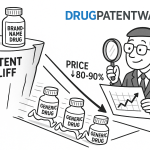
The market value of a pharmaceutical company is the discounted sum of its future cash flows, and those cash flows are almost entirely dependent on the legal strength of its patent portfolio. For institutional investors, a drug is not a medical miracle; it is a time-limited monopoly. When a generic manufacturer files an Abbreviated New Drug Application (ANDA) with a Paragraph IV certification, it represents a direct challenge to that monopoly. This event forces the market to recalibrate the probability of early revenue erosion, often resulting in immediate and significant stock price volatility.1
Between 2025 and 2030, the pharmaceutical industry faces a period where an estimated $200 billion to $400 billion in annual branded revenue is at risk due to patent expirations.3 Blockbuster therapies like Keytruda, Eliquis, and Revlimid are approaching the end of their exclusivity periods.3 To anticipate the resulting market movements, analysts use predictive modeling to quantify the likelihood of patent challenges and the timing of generic entry. These models move beyond qualitative assessments to transform raw legal data into financial metrics.5
The Economic Foundation of Patent Protection
The pharmaceutical business model relies on a period of market exclusivity to recoup the costs of drug development. These costs are high. The average capitalized cost to bring a new drug to market is estimated to be between $2.23 billion and $2.6 billion.3 This figure includes the cost of the thousands of compounds that fail during clinical trials. For every successful drug that reaches the market, approximately eight others fail, often after significant investment in late-stage trials.8
The 20-year patent term granted by the USPTO is often a misleading indicator of actual market protection. Because companies must file for patents early in the development process, the R&D and regulatory review periods consume a significant portion of the patent life. Most drugs reach the market with only 7 to 12 years of effective patent life remaining.2 This window is the only time a company can charge premium prices without direct competition.2
Quantifying Research and Development Efficiency
Analysts use the Return on Research Capital (RORC) to measure how effectively a company converts its R&D spending into profit. A declining RORC often signals that a company is struggling to replace revenue from products approaching the patent cliff.2 The formula for RORC is calculated as follows:
$$RORC = \frac{Gross\ Profit}{R\&D\ Expense}$$
When R&D productivity stagnates despite increasing investment, the industry faces an economic paradox. In 2019, the sector spent $83 billion on R&D, which is ten times the inflation-adjusted spending of the 1980s.8 Despite this investment, industry-level R&D return on investment has been flat since 2012.8 This pressure forces companies to use aggressive patent strategies to protect existing revenue streams.
Predictive Modeling of Patent Challenges
Generic drug manufacturers do not challenge every patent. They target drugs where the potential profit exceeds the cost of litigation. Recent studies using random forest and elastic net classification models show that patent challenges can be predicted with over 80% accuracy.11
Market Size as the Primary Driver
The single most important predictor of a patent challenge is the annual market value of the drug at the time of challenge eligibility. Larger markets provide a higher return for generic firms, making the cost of litigation—which averages $3 million to $5 million through trial—more justifiable.11
Annual Market Value Decile
Elastic Net Coefficient
Prediction Significance
Decile 10 ($1B – $9.4B)
0.58
High Likelihood of Challenge 11
Decile 9 ($483M – $1B)
1.26
High Likelihood of Challenge 11
Decile 2 ($7M – $21M)
-1.24
Low Likelihood of Challenge 11
Decile 1 ($9K – $7M)
-1.16
Low Likelihood of Challenge 11
The data indicates that drugs in the highest revenue brackets are almost certain to face a challenge within the first year of eligibility. Conversely, drugs in smaller therapeutic classes or those with anti-infective properties are significantly less likely to be targeted.11 This suggests that generic entry is not uniform across the market, leaving some patents unchallenged simply because the economics do not support a legal battle.
Model Accuracy and Performance Metrics
The random forest model outperformed the elastic net model in specificity, meaning it was better at identifying which drugs would not be challenged. However, the elastic net model showed higher sensitivity, accurately identifying a larger portion of actual challenges.11
Performance Metric
Random Forest
Elastic Net
Overall Accuracy
81.0%
76.2%
Area Under Curve (AUC)
0.807
0.770
Sensitivity
0.815
0.926
Specificity
0.706
0.400
Positive Predictive Value
0.880
0.735
Predictive models help investors adjust their valuation of a company by moving beyond single-point estimates for market exclusivity. Instead of assuming a drug is protected until its nominal patent expiration, analysts use these models to assign a probability of early generic entry.5
The Hatch-Waxman Regulatory Framework
The Drug Price Competition and Patent Term Restoration Act, known as the Hatch-Waxman Act, established the modern system for generic drug approval in the United States. It created a balance between incentivizing innovation and promoting access to affordable medications.7
Paragraph IV Certifications and the 30-Month Stay
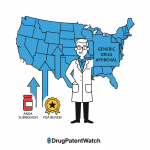
When a generic manufacturer seeks to launch a version of a branded drug before its patents expire, it must file an ANDA with a Paragraph IV certification. This certification asserts that the brand’s patents are invalid, unenforceable, or will not be infringed by the generic product.13 This filing is considered an “artificial act of infringement” that allows the brand manufacturer to sue the generic company immediately.7
If the brand manufacturer files an infringement lawsuit within 45 days of receiving the Paragraph IV notice, the FDA triggers an automatic 30-month stay of approval for the generic drug. This stay provides the brand company with continued market exclusivity while the legal case proceeds through the courts.12 For an investor, this 30-month window is a critical period of revenue certainty that is factored into the stock’s valuation.
The 180-Day Generic Exclusivity Prize
The first generic company to file a successful Paragraph IV challenge is awarded 180 days of market exclusivity. During this period, the FDA will not approve other generic versions of the drug.7 This “golden ticket” is extremely valuable because the first-filer can capture significant market share while pricing the product only 15% to 25% below the brand price.7 For a blockbuster drug, this six-month window can generate hundreds of millions of dollars in revenue for the generic firm.
Patent Thickets and Defensive Strategies
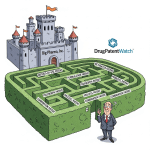
Innovator companies use “patent thickets” to protect their most profitable drugs. A patent thicket is a dense web of overlapping patents covering different aspects of a single drug, such as its formulation, manufacturing process, or method of use.4 The goal is to make it logistically and financially impossible for a generic competitor to challenge the entire portfolio.
The Case of Humira
AbbVie’s adalimumab (Humira) serves as the primary case study for this strategy. While the core compound patent for Humira expired in 2016, AbbVie successfully delayed biosimilar competition in the U.S. until 2023.3 The company achieved this by securing more than 130 patents, 89% of which were filed after the drug received its initial FDA approval.4
Metric
Humira Portfolio Detail
Total Patent Applications
Over 240 3
U.S. Patents Granted
132 4
Post-Approval Filings
89% of total 4
U.S. Revenue Protected (2021)
$17.3 Billion 4
This strategy was less effective in Europe, where stricter rules on “inventive steps” prevented the same level of patenting. Biosimilars entered the European market in 2018, five years earlier than in the U.S..4 This delay in the U.S. market cost the healthcare system an estimated $80 billion to $100 billion.4
Evergreening and Product Hopping
Product hopping is a tactic where a company develops a new version of a drug and attempts to switch patients to it before the original version loses patent protection. Merck is currently employing this strategy with its blockbuster oncology drug, Keytruda. The company secured FDA approval for a subcutaneous version of the drug, Keytruda Qlex, and expects up to 40% of users to transition to this new version before biosimilars for the original intravenous version enter the market.14
This transition is often accompanied by aggressive marketing and the withdrawal of the older version of the drug. While companies frame these reformulations as innovations that improve patient convenience, critics argue they are primarily designed to extend monopoly pricing power.14
Market Volatility and Information Asymmetry
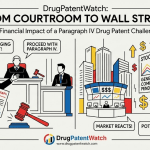
The stock market reacts to patent litigation news with high volatility. This reaction is often asymmetric; negative news typically causes a more severe and lasting drop in stock price than positive news causes a rise.1
The Impact of Litigation Milestones
Litigation is not a single event but a series of milestones. Each milestone provides the market with new information, allowing investors to update their models of the drug’s future cash flows.1
Litigation Event
Typical Market Reaction
Filing of Complaint
Sudden drop in brand stock as risk is priced in.1
Markman Hearing
High volatility as claim construction favors one side.13
Trial Verdict
Large “abnormal return” (positive or negative).1
Settlement Announcement
Nuanced reaction based on the negotiated entry date.15
A study by Navigant Economics found that shareholders lose an average of $39 billion annually in market value upon the announcement of securities class action lawsuits, compared to the average of $5 billion they receive in settlements. 1
This statistic highlights the disconnect between the legal resolution of a case and the destruction of shareholder value that occurs during the process. For the patent holder, the risk of a catastrophic loss—leading to a “patent cliff”—is a constant drag on the stock price.
Information Sensitivity in Small-Cap Biotech
Small-cap biotechnology companies are particularly sensitive to litigation rumors. Because these firms often rely on a single asset for their entire valuation, a negative ruling in a Markman hearing can cause the stock to tumble even if a final decision is weeks away.1 Investors in this space must manage the “excess volatility” that fundamentals alone cannot explain.1
Biologics and the BPCIA Framework
The Biologics Price Competition and Innovation Act (BPCIA) established a pathway for biosimilar versions of biologic drugs. While similar to the Hatch-Waxman Act, the BPCIA has several key differences that affect stock volatility and investment strategy.7
Lack of an Automatic Stay
The most significant difference is that the BPCIA does not provide an automatic 30-month stay of FDA approval.15 If an innovator company wants to block a biosimilar launch, it must go to court and seek a preliminary injunction. This requires the company to prove “irreparable harm,” which is a higher legal burden than the procedural stay provided under Hatch-Waxman.15
The Patent Dance
The BPCIA also includes a complex process for sharing patent information between the innovator and the biosimilar applicant, known colloquially as the “patent dance”.7 This process is designed to narrow the issues for litigation but often results in a protracted legal battle involving dozens of patents. For investors, the lack of transparency in the early stages of the patent dance can make it difficult to predict the timing of biosimilar entry.
Case Study: The Hepatitis C Patent War
The litigation between Gilead Sciences and Merck over hepatitis C (HCV) treatments demonstrates how legal reversals can “whipsaw” investors. The dispute centered on whether Gilead’s blockbuster drugs, Sovaldi and Harvoni, infringed on patents owned by Idenix, a Merck subsidiary.17
In December 2016, a jury awarded Merck $2.54 billion in damages, the largest patent verdict in history.17 However, in February 2018, a federal judge overturned the verdict, ruling that the Merck patent was invalid due to a lack of enablement.17 Furthermore, another court threw out a separate $200 million verdict against Gilead because of “unclean hands” on the part of a Merck attorney who lied under oath.20 These contradictory outcomes resulted in massive swings in market capitalization for both companies as the probability of a multi-billion dollar payout shifted.
Managing the Hidden Risks of Litigation
Beyond the immediate stock price reaction, patent litigation carries hidden costs that can erode a company’s long-term value. These operational impacts are often overlooked by traditional financial analysts.16
Talent Siphoning and R&D Attrition
Litigation diverts key scientific and executive talent from innovation to defense. Researchers who should be working on the next generation of drugs are instead forced to spend countless hours assisting outside counsel with discovery and depositions.16 This operational drain can stifle creativity and lead to a risk-averse corporate culture.16 The opportunity cost of this “talent siphoning” is a weaker future pipeline, making the company even more dependent on the outcome of its current legal battles.
Precautionary Savings and Capital Allocation
Firms facing high litigation risk tend to hold more cash on their balance sheets as a defensive measure.1 This “precautionary savings” motive reduces the capital available for R&D, capital expenditures, and strategic acquisitions.1 Analysts must account for this “chilling effect” when projecting a company’s growth trajectory.
M&A as a Strategic Hedge
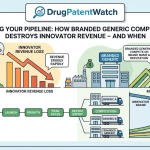
As blockbuster drugs approach their patent cliffs, many companies use mergers and acquisitions (M&A) to backfill their revenue streams. The urgency to acquire new assets increases as the loss of exclusivity (LOE) date approaches.
The 2025-2026 M&A Landscape
Global life sciences dealmaking jumped in 2025, with M&A investment reaching $240 billion, an 81% increase from the prior year.21 Companies are prioritizing “de-risked” assets—those that are already in late-stage clinical trials or near-launch-ready—rather than early-stage pipeline plays.21
Company
Key Strategy
Recent Major Deal Value
Merck
Replacing Keytruda Revenue
$10 Billion (Verona Pharma) 21
AbbVie
Diversifying post-Humira
$9 Billion+ (Multiple deals) 22
Pfizer
Mitigating $17B LOE wave
$43 Billion (Seagen) 23
The patent cliff pressure is intense, with drugs like Eliquis, Entresto, and Stelara expected to see revenue losses of over $2 billion each in the near term.21 This environment favors larger deals and strategic acquisitions to bolster pipelines before cliff-side impacts appear in earnings reports.21
Licensing and Synthetic Royalties
Licensing has become the primary value driver in the industry, with biopharma companies announcing more than $250 billion in deals in 2025.25 Upfront payments for these deals have increased to 9%, reflecting the high competition for quality assets.22 Furthermore, the market for synthetic royalties reached a record $10 billion in 2025, providing companies with non-dilutive capital to fund their R&D programs.27
The Impact of Supreme Court Jurisprudence
The legal landscape for pharmaceutical patents has been shaped by several restrictive Supreme Court decisions. Rulings in cases like Alice, Mayo, and Myriad have made it more difficult to obtain and defend patents in the biotechnology and diagnostics sectors.28
Subject Matter Eligibility Uncertainty
The “Alice/Mayo framework” requires that an invention involving a natural law or abstract idea must include an “inventive concept” to be patent-eligible.28 This heightened standard has led to the invalidation of numerous patents, particularly in the field of telemedicine diagnostics.30 The resulting uncertainty complicates R&D investment strategies and heightens litigation risk for innovative companies.30
The Role of Inter Partes Review (IPR)
The America Invents Act (AIA) introduced Inter Partes Review, a process that allows parties to challenge the validity of a patent before the Patent Trial and Appeal Board (PTAB).28 IPR is often faster and less expensive than traditional district court litigation. Some hedge fund managers have utilized IPR as a profit-generating opportunity, shorting a pharmaceutical company’s stock and then challenging its patents.32 While controversial, this tactic is legal and has forced companies to defend their intellectual property on two fronts simultaneously.28
Legislative Reform and Future Outlook
To address the confusion surrounding patent eligibility, Congress has introduced the Patent Eligibility Restoration Act (PERA). This bill aims to eliminate all judicial exceptions to patent eligibility and codify a clearer framework for what can be patented.34
The Potential Impact of PERA
If enacted, PERA would restore protection for diagnostic markers and precision medicine, areas that have been negatively impacted by recent Supreme Court rulings.35 Supporters argue that PERA is essential to maintaining U.S. leadership in biomedical innovation and preventing capital from flowing to countries with broader patent protection.35 However, retail industry groups oppose the bill, fearing it could revive “patent trolls” and increase litigation costs for businesses.37
The PREVAIL Act
Another significant piece of legislation is the PREVAIL Act, which seeks to reform the PTAB process. The bill would limit the ability of entities to challenge patents if they have not been sued or threatened with an infringement lawsuit.35 By making PTAB proceedings a “cheaper, swifter, more efficient alternative” to federal court, the act aims to reduce the “serial petitions” that currently plague the system.35
Alternative Data as an Information Edge
Sophisticated investors increasingly use alternative data to complement their analysis of drug patents and clinical trials. This data provides a more holistic view of a company’s competitive position.
Tracking Court Dockets and Regulatory Filings
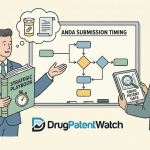
By monitoring court dockets and legal filings in real-time, investors can develop a probabilistic model to predict generic launch dates more accurately than by relying solely on the core patent expiration date.38 This data is a leading indicator for market growth and can signal when a product is entering a new stage of its lifecycle.39
Patient-Generated and Social Media Data
Online health communities and social media platforms are used to assess the “unmet need” for a drug.38 This information can inform market forecasts and help identify “white spaces”—areas with limited patent activity but significant therapeutic potential.38 Furthermore, tracking adverse event reports can provide an early warning sign of safety issues that could lead to litigation or regulatory action.38
Key Takeaways
Patent litigation is not a sideshow; it is the primary arena where pharmaceutical market value is determined. Investors must move beyond nominal expiration dates to calculate the effective patent life of a product, accounting for the 7 to 12-year window of true profitability. Predictive models show that drugs with annual sales exceeding $1 billion have a high probability of facing a patent challenge within their first year of eligibility.
Successful companies like AbbVie and Merck use patent thickets and product hopping to manage the revenue impact of the patent cliff, providing themselves with the time necessary to launch successor therapies. However, these strategies are under increasing scrutiny from regulators and are complicated by restrictive Supreme Court rulings on subject matter eligibility.
The shift toward biologics introduces new risks, as the absence of an automatic stay under the BPCIA forces companies to rely on the uncertain process of seeking preliminary injunctions. To gain a competitive advantage, professionals must integrate patent intelligence with alternative data sources, monitoring court milestones and legislative shifts like PERA to anticipate market movements before they are priced in.
FAQ
What is the most accurate way to predict when a generic drug will enter the market? Predictive models using market value and therapeutic class reach over 80% accuracy. The most reliable indicator is the drug’s annual revenue at the time of challenge eligibility, as generic firms prioritize blockbusters to recoup their litigation costs.11
How does the 30-month stay affect pharmaceutical stock valuations? The 30-month stay provides a window of revenue certainty for the brand manufacturer while litigation proceeds. Investors price this certainty into the stock, and any event that could shorten or terminate the stay—such as a negative ruling in a Markman hearing—results in immediate volatility.12
What are the primary differences between the Hatch-Waxman Act and the BPCIA for investors? The main difference is the lack of an automatic stay for biologics under the BPCIA. This makes the timing of biosimilar entry more unpredictable and forces innovator companies to meet a higher legal standard to block “at-risk” launches.15
How do patent thickets influence the ROI of a blockbuster drug? Thickets extend the period of market exclusivity beyond the life of the core patent. By building a fortress of secondary patents, companies can delay competition for years, as seen with Humira, which protected billions in revenue long after its original patents expired.3
Why is the FDA Orange Book considered an incomplete source for patent research? The Orange Book excludes process and manufacturing patents. These unlisted patents can still be the basis for infringement lawsuits, potentially blocking a generic launch even after the patents listed in the Orange Book have expired.10