A complete guide for pharmaceutical executives, IP strategists, generic manufacturers, and investors navigating one of the world’s most distinctive patent regimes
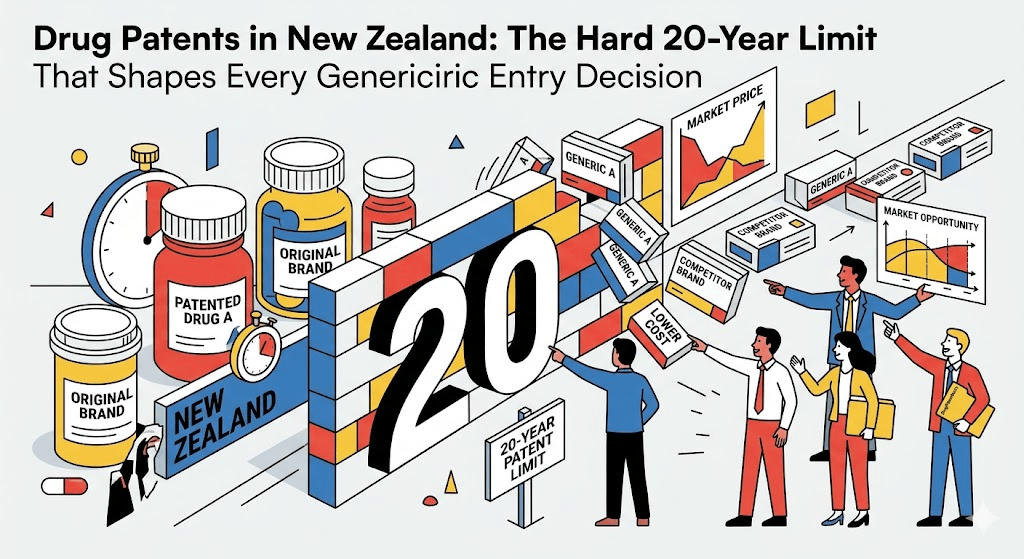
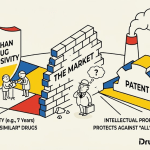
New Zealand runs one of the cleanest pharmaceutical patent systems among OECD nations. There are no supplementary protection certificates. There are no patent term extensions for regulatory delay. The clock starts when you file. When twenty years expire, competitors can sell. That is the deal.
For an originator company accustomed to working within the US or European frameworks—where patent term extensions and SPCs routinely add four or five years of exclusivity after regulatory approval—New Zealand reads like a different jurisdiction entirely. For a generic manufacturer, it reads like an invitation. Understanding exactly how the system works, where the edges are, what PHARMAC’s single-buyer model does to post-expiry economics, and how litigation actually plays out in the New Zealand courts is not an academic exercise. It is the competitive intelligence that determines whether a product launch succeeds or fails, whether a licensing deal gets done, and whether an originator’s lifecycle management strategy survives contact with this market.
This guide covers all of it: the statutory term, the effective term, data exclusivity, the springboarding provision, CPTPP’s impact, PHARMAC’s role as a patent expiry accelerant, and the litigation environment generics and originators both need to understand.
Part I: The Statutory Framework
The 20-Year Term: What the Law Actually Says
The Patents Act 2013 sets the maximum patent term at 20 years from the filing date of the complete specification, or from the PCT international filing date for applications entering New Zealand through the Patent Cooperation Treaty [1]. There is no provision to extend this term. The legislation is unambiguous on the point, and it replaced the Patents Act 1953 which operated on a similar principle.
The Patents Regulations 2014 govern the procedural mechanics. Annual renewal fees are due starting from the fourth anniversary of the complete specification filing date [2]. Miss the renewal and the patent lapses. Late renewal is possible, but restoration carries its own procedural requirements and is not guaranteed. For pharmaceutical companies managing large global portfolios, New Zealand’s annual fees are low relative to Europe or the US—but they are mandatory, and the administrative burden of tracking them across a portfolio still matters.
The 20-year rule applies universally. A patent covering a new pharmaceutical compound, a novel formulation of a known compound, or a new use of an existing molecule all run on the same clock. There is no special pharmaceutical category, no premium term for blockbuster drugs, and no mechanism to petition for additional time on the grounds that Medsafe’s approval process consumed a decade of the available commercial window. <blockquote> ‘New Zealand does not provide any extension of patent term on the grounds of a delay in gaining marketing approval of pharmaceuticals. Thus the patent term of a new pharmaceutical is limited to 20 years even if it takes 10 to 15 years of that period to obtain approval to sell the pharmaceutical.’ — Henry Hughes IP, Patent Term Extensions briefing [3] </blockquote>
That statement, drafted by New Zealand patent attorneys who track this system closely, captures the structural consequence that every pharmaceutical company entering this market must internalize. A compound patented in year one of discovery may spend twelve to fifteen years in clinical development and Medsafe review before a single New Zealand dollar of revenue is generated. At that point, as few as five to eight years of commercial exclusivity may remain on the foundational compound patent.
Comparing the New Zealand Term to Global Benchmarks
To understand why New Zealand is unusual, it helps to map it against what originators receive elsewhere.
In the United States, the Drug Price Competition and Patent Term Restoration Act—commonly called Hatch-Waxman—allows a patent owner to apply for a patent term extension of up to five years to compensate for time lost during FDA regulatory review [4]. The extension is capped such that the remaining patent life after FDA approval does not exceed fourteen years. The system is imperfect and subject to gaming through serial litigation, but it meaningfully extends the commercial window for successful drugs.
In the European Union, a Supplementary Protection Certificate is a legally distinct intellectual property right that can extend protection for up to five additional years beyond patent expiry, targeting a total post-approval exclusivity of fifteen years from first marketing authorization in the EU [5]. The EU system is not a patent extension—it is a separate instrument, which means different claim scope rules apply. Still, the economic effect is that European originators typically access a longer commercial window than New Zealand provides.
Australia, New Zealand’s closest geographic and regulatory neighbor, introduced a pharmaceutical patent term extension system in 1999 [6]. Extensions of up to five years are available to compensate for the period between patent filing and first therapeutic goods registration. The Australian Therapeutic Goods Administration’s approval process is also materially faster than Medsafe’s historically, which affects how much of the extension is consumed by pure regulatory wait time.
Canada, like New Zealand, does not offer a pharmaceutical patent term extension, making it one of the only other OECD nations in that category [3]. The comparison matters because both countries use public purchasing models with significant monopsony power—Canada’s provincial drug plans, New Zealand’s PHARMAC—and both have historically attracted criticism from the international research-based pharmaceutical industry for limiting the commercial return on patented drugs.
Japan, South Korea, and Switzerland all offer term extensions of varying designs. The OECD consensus, reflected in what the original Trans-Pacific Partnership Agreement would have required, is that an extension mechanism is the international norm. New Zealand has, to date, declined to join it.
The Effective Patent Life Problem
The statutory 20-year term and the commercially useful patent life are different numbers. This distinction is central to everything that follows.
A pharmaceutical company filing a patent application on a new chemical entity typically does so early in the drug development process—often before or shortly after entry into Phase I clinical trials. This timing is driven by the need to establish a priority date before publication of results or competitor disclosure. But drug development does not stop at filing. Phase II and III trials take years. Regulatory dossier preparation takes additional time. Medsafe review consumes further months to years.
In the United States, research published in academic journals consistently shows that the average time between patent filing and FDA approval for new molecular entities runs between nine and twelve years, leaving an effective patent life—the time between FDA approval and patent expiry—of eight to eleven years before any extensions are applied [7]. The picture in New Zealand is structurally similar, with one critical difference: the extensions that US companies can apply for simply do not exist here.
Medsafe does not publish a consistent average review time for New Medicine Applications in the same granular format that the FDA tracks and reports its performance. Independent analysis suggests the process can run from twelve to twenty-four months for standard applications, with complex biologics and novel compounds taking longer [8]. The 2025 Medicines Amendment Act introduces a verification pathway that may reduce approval times for medicines already approved by two recognized overseas regulatory authorities—potentially to thirty working days [9]. But the verification pathway applies to the registration process, not the patent clock.
The practical result is that a drug filed for patent in year one, approved by Medsafe in year fourteen, and marketed until patent expiry at year twenty has six years of protected commercial life in New Zealand. An otherwise identical drug that took sixteen years from filing to Medsafe approval has four years. There is no mechanism to recover that time.
Part II: What You Can and Cannot Patent in New Zealand
Patentable Subject Matter: The Pharmaceutical Categories
The Patents Act 2013 requires that an invention be a ‘manner of manufacture’ within the meaning of section 6 of the Statute of Monopolies, novel, and involve an inventive step—meaning it would not be obvious to a person skilled in the relevant art at the priority date [10]. For pharmaceuticals, these requirements translate into four main categories of patentable subject matter.
New active ingredients—new drug molecules with identifiable therapeutic utility—are the clearest category. A synthetic compound with a defined structure and demonstrated pharmacological activity can be patented provided it meets novelty and inventive step requirements and has not been disclosed before the priority date.
New formulations of known compounds are also patentable, provided the formulation itself involves inventive step. A controlled-release capsule formulation of a molecule that has only been available as an immediate-release tablet can potentially support a patent claim if the formulation technology was not obvious and if the resulting product has meaningfully different clinical properties—improved bioavailability, reduced side effects, or a dosing schedule that provides real patient benefit.
New uses of known compounds—sometimes called second medical use patents—are patentable in New Zealand through the mechanism of ‘Swiss-type claims.’ The Court of Appeal confirmed the validity of this approach in the 1999 Pharmaceutical Management Agency Ltd v Commissioner of Patents decision, commonly called the Pharmac case [11]. A Swiss-type claim covers the use of a substance in the manufacture of a medicament for the treatment of a new therapeutic indication. It protects the use, not the compound itself, allowing patent protection even where the underlying molecule is in the public domain.
Dosage regime patents—patents covering a new and inventive dosing schedule or route of administration for a known compound—were the subject of regulatory evolution in New Zealand. The Intellectual Property Office of New Zealand has confirmed that intermittent or novel dosing regimens can support Swiss-type claims where the regimen itself is inventive [12]. This expanded the toolkit for lifecycle management strategies around known molecules.
What Is Not Patentable
New Zealand law explicitly excludes methods of medical treatment of humans from patentability [10]. This exclusion, codified in section 16(2) of the Patents Act 2013, reflects longstanding policy that physicians should not have their clinical judgment constrained by patent rights. The exclusion is why Swiss-type claims exist as a workaround—they claim the manufacturing use of a compound rather than the therapeutic method directly.
Human beings and biological processes for their generation are excluded. Plant varieties are excluded. Computer programs ‘as such’ are excluded, a point relevant for AI-driven drug discovery platforms trying to patent algorithmic outputs rather than the compounds those algorithms identify.
Inventions contrary to public order or morality are excluded, though this is a narrow category. The Commissioner may seek advice from the Māori Advisory Committee on whether commercial exploitation of an invention would be contrary to the principles of the Treaty of Waitangi—a distinctive feature of New Zealand’s intellectual property framework that reflects the country’s bicultural constitutional context [10].
The Inventive Step Standard
New Zealand’s inventive step standard has historically been regarded as moderate. The Patents Act 2013 adopts an objective test: whether the invention would have been obvious to a person skilled in the art having regard to all matter in the prior art base at the priority date [10]. New Zealand courts interpret this standard with reference to UK case law, though divergences exist.
For pharmaceutical applicants, the practical consequence is that incremental modifications to known drugs—changing a crystal form without demonstrating improved clinical properties, or adding a tablet coating without inventive formulation work—face genuine rejection risk. The DrugPatentWatch database tracks global patent families including New Zealand filings, and analysis of challenge and opposition outcomes in this jurisdiction shows that narrowly supported claims survive better than broad genus claims [13].
The 2024 pre-grant opposition in Suntory Holdings Limited v IPONZ, in which sodium concentration ranges in a patent claim were narrowed to align with experimental data, illustrates how the Intellectual Property Office of New Zealand applies these standards in practice [13]. Pre-grant oppositions—available to third parties who become aware of a pending application before acceptance—are a procedural tool that generic manufacturers and originators both use to shape claim scope before grant.
Part III: Data Exclusivity — The Second Layer of Protection
Five Years: New Zealand’s Data Protection Window
A pharmaceutical patent and data exclusivity are legally distinct. Patents protect inventions through the Intellectual Property Office. Data exclusivity protects the clinical trial data submitted to Medsafe during the regulatory approval process.
Under section 23B of the Medicines Act 1981, New Zealand provides five years of data protection from the date of marketing approval for a new pharmaceutical product [3]. During that five-year window, a generic company applying to Medsafe for approval of a bioequivalent product cannot rely on the originator’s clinical data. The generic applicant must either wait out the exclusivity period or generate its own data—a prohibitively expensive option that effectively means waiting.
The five-year period is meaningfully shorter than what other jurisdictions provide. The United States offers five years of data exclusivity for new chemical entities and twelve years for biologics under the Biologics Price Competition and Innovation Act [4]. The European Union provides eight years of data exclusivity, extended by a further two years of market exclusivity for the first approved product, with an additional year if a new indication is approved during the reference period [14].
For biologics specifically, New Zealand’s five-year data exclusivity stands in sharp contrast to the US twelve-year standard and the EU ten-year standard. This matters because biosimilar development is expensive and requires its own comparability studies—the data exclusivity window is not theoretical; it materially shapes when biosimilar applicants can realistically get a product to Medsafe.
The CPTPP negotiations in their original TPP form included US proposals to extend biologic data exclusivity to twelve years in all signatory markets. The US withdrawal from the TPP and the subsequent negotiation of the CPTPP with the pharmaceutical provisions suspended means that New Zealand’s five-year standard survived intact [15]. The CPTPP as signed contains no obligations on data protection or market protection for new pharmaceutical products, including biologics [15]. This is one of the most practically significant outcomes of the US exit from the original agreement.
How Data Exclusivity Interacts with Patent Term
The relationship between the five-year data exclusivity period and the 20-year patent term is not always additive. If a drug is approved by Medsafe with fifteen years remaining on the compound patent, the data exclusivity period of five years expires well before the patent. The patent is the binding constraint.
The scenario where data exclusivity becomes the binding constraint occurs when a drug’s patent expires before the five-year data protection window closes—for example, if the compound patent was filed early, expired while the drug was still in development or had only recently been approved, and the originator continues to rely on data exclusivity to block generic entry in the absence of patent protection. This is uncommon for primary compound patents but can arise with formulation or use patents that were granted later in the product lifecycle.
For generic manufacturers modeling entry timing, both the patent expiry date and the data exclusivity expiry date need to be tracked. DrugPatentWatch provides this data for New Zealand filings, cross-referenced against global patent families, allowing generic company IP teams to map the complete exclusivity landscape before committing to a development program [13]. This is not a trivial exercise. A molecule approved in New Zealand may have multiple patent layers with different expiry dates, data exclusivity running separately, and PHARMAC funding timelines that are independent of either.
Part IV: The Springboarding Provision and Generic Entry Mechanics
What Springboarding Means in Practice
New Zealand law explicitly allows generic manufacturers to conduct the tests, trials, and data generation necessary to obtain Medsafe marketing approval before the originator’s patent expires [3]. This is the ‘springboarding’ or ‘Bolar-style’ exemption. It is codified in the Patents Act 2013 as a research exception and reflects a deliberate policy choice: that the administrative time required for regulatory approval should not be added onto the originator’s exclusivity period by default.
The practical effect is that a generic company can run its bioequivalence studies, prepare its regulatory dossier, and submit to Medsafe while the compound patent is still in force. If the Medsafe process takes two years, and the patent expires in two years, the generic can theoretically obtain approval coincident with patent expiry and launch immediately.
This provision does not exist in all jurisdictions. In markets without a Bolar exemption, generic manufacturers cannot begin development activities until patent expiry, creating an additional delay of one to three years post-expiry before a generic product reaches the market. New Zealand’s explicit inclusion of this right accelerates the competitive dynamic considerably—and this is compounded by the absence of patent term extensions, which means generics know the expiry date with certainty and can plan accordingly.
The CPTPP requires each party to provide this exception to patent rights [16]. New Zealand’s existing law already satisfied that requirement without amendment, confirming that the springboarding provision was not a CPTPP innovation but longstanding New Zealand policy.
Patent Linkage: Notification Without Automatic Delay
The CPTPP introduced a formal patent linkage mechanism in New Zealand: a system under which pharmaceutical patent holders can be notified when a generic company submits a product to Medsafe for approval [16]. This allows the originator to assess whether its patents are implicated and, if so, to seek preliminary injunctions before the generic enters the market.
New Zealand’s Ministry of Foreign Affairs and Trade assessed that existing law and practice already met the CPTPP linkage requirements through the information Medsafe publishes on its website, the availability of injunctive relief under standard civil procedure, and the time it takes Medsafe to process applications [16]. No additional legislative changes were required.
This is a materially different system from the US patent linkage under Hatch-Waxman, where a generic’s paragraph IV certification triggers an automatic 30-month stay of FDA approval pending litigation outcome. New Zealand has no automatic stay. An originator that wishes to delay a generic’s entry must go to court and obtain a preliminary injunction—a burden that requires demonstrating a serious question to be tried, balance of convenience favoring the injunction, and typically the willingness to offer an undertaking in damages.
This distinction has significant commercial implications. In the US, the 30-month stay is a powerful tool that originators can trigger even with relatively weak patent positions, because the delay itself has value. In New Zealand, the originator’s position must be strong enough to persuade a judge to grant injunctive relief—a higher bar that systematically advantages generic entrants with clear design-around strategies or strong invalidity arguments.
Part V: The CPTPP and What It Did — and Did Not — Change
The TPP That Was and the CPTPP That Happened
The original Trans-Pacific Partnership Agreement, negotiated under US leadership and finalized in 2016, would have substantially altered New Zealand’s pharmaceutical patent landscape. It proposed pharmaceutical patent term extensions of up to five years for regulatory delay, twelve years of data exclusivity for biologics, extended data exclusivity for new formulations and uses of known drugs, and an explicit patent linkage system modeled on the Hatch-Waxman framework [3]. Had these provisions been implemented, New Zealand’s system would have moved significantly closer to the US model.
The US withdrawal from the TPP in January 2017 changed the calculus entirely. The eleven remaining parties renegotiated as the CPTPP and suspended a substantial list of the US-promoted IP provisions. On pharmaceuticals, the result was decisive: no patent term extensions for regulatory delay, no extended biologic data exclusivity beyond what New Zealand already provided, no new patent linkage requirements beyond existing practice [15].
PHARMAC’s purchasing model survived intact. The provisions that would have required Pharmac to make administrative changes primarily benefiting the pharmaceutical industry—projected to cost New Zealand NZ$4.5 million upfront and NZ$2.2 million annually—were suspended [15]. The CPTPP pharmaceutical chapter, as actually ratified, left New Zealand’s framework essentially unchanged from its pre-agreement position.
What the CPTPP Did Change
The CPTPP did introduce one meaningful change relevant to pharmaceutical IP in New Zealand: a twelve-month grace period for patent applicants.
Under the prior framework, any public disclosure of an invention before the patent filing date could destroy novelty. The CPTPP-aligned amendment means that disclosures made by the inventor or their assignee within twelve months before the New Zealand filing date can be disregarded for novelty purposes [17]. For pharmaceutical companies whose scientists publish academic papers, present at conferences, or file PCT applications that publish internationally, this grace period provides a meaningful safety net against inadvertent self-disclosure destroying New Zealand patent rights.
The grace period is particularly useful for biotechnology and academic institution spinouts, where the publishing norms of research institutions do not always align with the pre-filing discipline that commercial patent strategy requires. It does not, however, excuse disclosures by third parties—if a competitor independently publishes the same invention before your priority date, the grace period does not save you.
The Future: CPTPP Renegotiation and the UK Trade Deal
The CPTPP continues to expand. The UK acceded in 2023, and the intellectual property chapter of the CPTPP-UK relationship is now part of the agreement landscape. The UK Medicines and Healthcare products Regulatory Agency is one of the overseas regulatory authorities whose approval will count toward New Zealand’s new verification pathway under the Medicines Amendment Act 2025 [9].
Whether future CPTPP renegotiations, or bilateral agreements that New Zealand signs with countries that insist on stronger pharmaceutical IP—the EU-NZ Free Trade Agreement entered into force on 1 May 2024 [18]—will eventually require New Zealand to introduce patent term extensions remains a live question. The EU-NZ FTA should be examined closely by IP strategists. The EU is a strong advocate for pharmaceutical exclusivity in its trade agreements. Whether the FTA’s IP chapter imposed new obligations on New Zealand’s pharmaceutical patent system is a point worth monitoring through legal analysis of the ratified text.
Part VI: PHARMAC — The Variable That Changes Everything After Patent Expiry
How PHARMAC Works
The Pharmaceutical Management Agency—PHARMAC—is New Zealand’s single national purchaser of subsidized medicines. It operates a fixed budget set by the government and decides which medicines will be listed in the Pharmaceutical Schedule for government funding [19]. The Combined Pharmaceutical Budget for 2023/24 was NZ$1.806 billion [20]. In June 2024, the government announced a NZ$604 million increase to the medicines budget to fund or expand access to medicines including cancer treatments [21].
PHARMAC’s purchasing model is monopsonistic. It negotiates prices with manufacturers on behalf of the entire New Zealand population and can grant sole supply contracts, meaning a single supplier wins a tender and competitors are excluded from the funded market. It uses reference pricing, competitive tendering, bundling deals, and risk-sharing agreements to drive down costs [22]. From 2006 to 2014, PHARMAC saved New Zealand’s District Health Boards NZ$2.87 billion against what would have been spent without its active price management [36].
New Zealand’s per capita pharmaceutical expenditure was NZ$372 per person in 2015 compared to the Canadian equivalent of approximately C$1,015—among the lowest in the OECD—driven substantially by PHARMAC’s buying power and its systematic preference for generics once patents expire [36].
Why Patent Expiry Is Not the Same as Competitive Entry in New Zealand
In most markets, patent expiry triggers automatic generic competition. Multiple manufacturers enter, prices fall, and the originator retains some share. This dynamic operates quite differently in New Zealand.
Because PHARMAC controls the funded market, generic entry timing depends not just on patent expiry but on PHARMAC’s decision to list a generic product and on the terms of any existing sole supply arrangements with the originator. An originator that holds a sole supply contract with PHARMAC may retain exclusive funding access even after patent expiry if the contract has not been renegotiated. PHARMAC’s contracting timeline may lag behind patent expiry by months or years.
Conversely, PHARMAC actively incentivizes generics by running tendering processes that generic manufacturers can win outright, displacing the originator from funded status entirely. In a country where nearly all commercially significant drug sales run through the funded market—because paying NZ$5 in patient co-payment for a funded product versus potentially hundreds for an unfunded one is an overwhelmingly powerful incentive—losing PHARMAC funding is close to losing the market.
The practical consequence is that lifecycle management strategies that work in the US or Europe—product hops to new formulations, authorized generics to control the first wave of competition—have limited effect in New Zealand. PHARMAC is not obligated to fund a new formulation simply because it has been approved by Medsafe. It will evaluate the new formulation against the existing funded product on cost-effectiveness grounds. If the new formulation does not demonstrate sufficient clinical benefit to justify its price premium over the about-to-be-generic original, PHARMAC will not list it.
This dynamic systematically reduces the value of formulation patents in New Zealand relative to compound patents. It also means that the absence of patent term extensions is compounded by PHARMAC’s structure: originators lose patent protection earlier than in comparable markets, and the post-expiry pricing collapse is deeper and faster.
The Generic Entry Model Under PHARMAC
For generic manufacturers, the PHARMAC system creates a specific opportunity structure. Winning a PHARMAC tender for a molecule going off patent can deliver high volume at negotiated prices with national distribution. Losing means effectively being locked out of the funded market.
Generic companies planning New Zealand entries need to model not just patent expiry dates but PHARMAC tender timelines, contract durations, and the possibility that an originator may preemptively restructure its PHARMAC relationship before patent expiry to complicate the transition. A major originator facing patent expiry may offer PHARMAC a significant price concession in exchange for a new sole supply contract at a lower price—keeping generics off the funded list even though they could legally sell in New Zealand.
PHARMAC’s Cost Resource Manual explicitly instructs applicants to consider the length of the pharmaceutical patent, timing of generic entry, and expected price reduction from a generic pharmaceutical when modeling pharmaceutical costs for economic analyses [33]. This means PHARMAC’s own internal models factor patent expiry into pricing projections—it is not merely a legal event for IP teams, it is a budget planning variable for the national buyer.
Part VII: Patent Litigation in New Zealand
The Structure of Pharmaceutical Patent Disputes
Pharmaceutical patent litigation in New Zealand runs through the High Court. There is no specialized patent court, and no dedicated pharmaceutical patent proceedings track equivalent to the US Patent Trial and Appeal Board or the specialized patent lists that operate in the UK and Australia. This matters for how disputes are resourced and timed.
Infringement proceedings can be brought by a patent owner against any party that makes, uses, sells, or imports a patented product or process in New Zealand without authority. The remedies available include injunctions—both interim and permanent—damages or account of profits, and delivery up of infringing goods [1].
Validity can be challenged either through revocation proceedings before the Commissioner of Patents, or through a counterclaim in infringement proceedings before the High Court [1]. In practice, generic manufacturers challenging a patent they expect the originator to enforce will typically raise invalidity as a counterclaim in response to infringement proceedings rather than initiating separate revocation proceedings, though both routes are available.
The standard for a preliminary injunction in New Zealand follows the American Cyanamid approach: there must be a serious question to be tried, the balance of convenience must favor the grant of the injunction, and the applicant must typically provide an undertaking in damages. The absence of an automatic stay—unlike the US 30-month Hatch-Waxman stay—means that preliminary injunction applications in New Zealand pharmaceutical cases are genuinely contested and outcome-uncertain.
Swiss-Claim Litigation: The Open Question
Swiss-type claims present a distinctive litigation challenge in New Zealand. The Court of Appeal in the Pharmac case confirmed their patentability, but the question of when a third party infringes a Swiss-type claim—and what mental element, if any, is required—has not been resolved by New Zealand courts [29].
In the UK, the Supreme Court’s 2018 decision in Warner-Lambert v Generics addressed this question in detail, finding that a generic could infringe a Swiss-type claim only where it knew or could reasonably foresee that its product would be prescribed for the patented indication [29]. The UK analysis was contentious and the law remains unsettled. In New Zealand, there is no equivalent precedent. A court hearing a Swiss-claim infringement case will inevitably look to UK and Australian authority, but New Zealand’s different economic and regulatory context—including PHARMAC’s formulary control and the absence of the kind of active pharmaceutical promotion that characterizes the UK and US markets—may produce a different policy outcome [29].
This uncertainty is a genuine risk factor for originators who rely on Swiss-type claims as the primary protection for lifecycle management products in New Zealand. The Pharmac case confirmed their validity; it did not answer what it takes to infringe them. The first contested infringement case under a Swiss-type claim in New Zealand courts will be a significant event in New Zealand pharmaceutical IP law.
Pre-Grant Oppositions and the Post-Grant Landscape
Third parties can oppose a patent application before it is accepted by IPONZ—the Intellectual Property Office of New Zealand. Opposition proceedings run before the Commissioner of Patents and are a relatively efficient way to narrow overly broad claims before they crystallize into granted patents [1]. Generic companies and competitors use pre-grant oppositions as a targeted tool against formulation and use patents that they consider strategically problematic.
Post-grant revocation is also available on a range of grounds, including lack of novelty, lack of inventive step, and insufficient specification. The DrugPatentWatch patent family analysis tool tracks New Zealand revocation proceedings alongside US invalidity challenges, EU opposition proceedings, and Australian revocation applications, allowing IP teams to understand whether a compound patent has been challenged in comparable jurisdictions and whether those challenges have succeeded [13].
The absence of a Hatch-Waxman style paragraph IV certification procedure means there is no systemic mechanism for forcing pharmaceutical patent disputes into the open before generic launch. Disputes in New Zealand tend to arise reactively—when an originator learns that a generic has obtained or is seeking Medsafe approval and determines that its patents are implicated—rather than through a structured advance notification system.
Part VIII: Lifecycle Management Strategies That Work in New Zealand
What Carries Over from Global Strategy
Not all lifecycle management tools that work in the US and Europe translate to New Zealand, but some do. Formulation patents, combination therapy patents, and polymorph patents are all potentially grantable under New Zealand law, subject to meeting inventive step requirements [13]. These secondary patents can extend the period during which an originator has some patent protection over a product, even after the compound patent expires.
The practical limitation is PHARMAC’s formulary gatekeeping. As noted above, PHARMAC does not automatically fund new formulations or combination products simply because they have received Medsafe consent. A controlled-release formulation patent may prevent a competitor from making the controlled-release version—but if PHARMAC elects to fund only the original immediate-release formulation (or its generic equivalent once the compound patent expires), the controlled-release patent is commercially hollow in the funded market.
Combination therapy patents are similarly PHARMAC-constrained. If PHARMAC determines that the combination product’s incremental clinical benefit does not justify its price premium over the separate components, the combination will not be listed, and the combination patent provides no funded market protection.
Polymorph patents—patents covering specific crystalline forms of a drug with improved stability, processability, or dissolution characteristics—have been used globally as secondary protection tools. New Zealand’s inventive step standard applies to these as it does to any other claim type. A polymorph patent will stand if the specific crystalline form was not obvious and has genuine technical advantage. It will face challenge if the advantages are trivially predictable.
What Does Not Work Here
The product hop strategy—launching a new formulation and discontinuing the old one to prevent generic substitution—has limited utility in New Zealand. The classic product hop involves an originator ceasing supply of the original product shortly before its patent expiry, thereby forcing prescribers and pharmacists to use only the new formulation, which is still patent-protected. In New Zealand, PHARMAC could simply list the generic equivalent of the original formulation and fund it preferentially, regardless of whether the originator has withdrawn it. The product hop only defeats generic substitution if the regulator funds only the new product—and PHARMAC has no obligation to do so.
Authorized generics—where an originator launches its own generic under a different label before patent expiry to capture first-mover generic market share—are also of limited value in a PHARMAC-controlled market. The tender system awards supply contracts, not label prestige. An authorized generic competes on price in a PHARMAC tender the same way any generic does.
Pay-for-delay agreements—settlements in which an originator pays a generic manufacturer to delay market entry—are a distinctively US phenomenon, where Hatch-Waxman’s 180-day first-filer exclusivity gives the first generic an asset worth monetizing through settlement. Victoria University of Wellington Law Review analysis of the New Zealand pharmaceutical market identified pay-for-delay as a concept that exists in theory under New Zealand competition law but that the PHARMAC model makes economically marginal: a generic that delays entry may find PHARMAC has funded a competitor in the interim, eliminating the value of the delay [11].
Early Filing Discipline
The single most powerful lifecycle management tool available in New Zealand is the one global pharmaceutical companies already use: rigorous early filing of all patentable innovations, followed by disciplined prosecution to obtain the broadest possible claims that the prior art and inventive step standards will support.
In a jurisdiction without term extensions, the filing date is the commercial clock. Every month of delay between an invention and its patent filing date is a month of commercial exclusivity lost at the back end. Companies that file in the US first, then enter New Zealand via the PCT route with a twelve-month national phase deadline, need to be disciplined about not allowing that twelve-month window to pass without a well-resourced New Zealand prosecution strategy.
The twelve-month grace period introduced by the CPTPP provides a safety net for inadvertent disclosures—but it is not a substitute for prompt filing. The grace period protects the applicant’s own prior disclosures, not third-party disclosures that might constitute relevant prior art. A competitor who independently makes the same invention and discloses it before your filing date creates a prior art problem that the grace period cannot solve.
Part IX: Biosimilars and the Special Case of Biologics
The Regulatory Pathway for Biosimilars
Medsafe evaluates biosimilar applications using comparability exercises demonstrating that the biosimilar has no clinically meaningful differences from the reference biologic in terms of quality, safety, and efficacy [8]. The evaluation follows international guidance frameworks, primarily from the World Health Organization and, as New Zealand increasingly looks to accept data from overseas regulators, from the European Medicines Agency and US FDA.
The verification pathway introduced by the Medicines Amendment Act 2025 is particularly relevant for biosimilars. Biologics that have received approval from two recognized overseas regulatory authorities—the EMA and FDA being the obvious candidates—may be candidates for the streamlined thirty-working-day review [9]. This accelerated pathway could materially shorten the Medsafe approval timeline for biosimilars, reducing the gap between patent expiry and actual market entry.
For biologic reference products, the compound patent (typically on the protein sequence or production process) runs on the same 20-year clock as small molecule drug patents. There is no extended term for the complexity or cost of biologic development. The five-year data exclusivity under the Medicines Act 1981 applies to new biologics on the same terms as small molecules. There is no analog to the US twelve-year biologic exclusivity.
This means that for originator biologic manufacturers, New Zealand provides some of the shortest total exclusivity periods in the developed world. A biologic approved by Medsafe with eight years of patent life remaining has a maximum of eight years of patent protection and five years of data exclusivity—but the data exclusivity expires within the patent term in this scenario, making the patent the binding constraint.
For biosimilar developers, New Zealand’s framework is correspondingly attractive. The absence of extended biologic data exclusivity, the springboarding provision, and the verification pathway’s potential to accelerate approval all point toward a market where biosimilar entry can realistically be planned to coincide with patent expiry.
PHARMAC and Biosimilars
PHARMAC has demonstrated willingness to fund biosimilars when they have been approved by Medsafe and when the pricing economics support listing. The agency’s competitive tendering process applies to biologics as it does to small molecules—a biosimilar that undercuts the reference product’s price sufficiently to satisfy PHARMAC’s cost-effectiveness thresholds can win sole or preferred supply status on the funded Schedule.
The NZ$604 million budget increase announced in June 2024 specifically included cancer medicines, many of which are biologics or monoclonal antibodies [21]. As biosimilars for major oncology biologics—including adalimumab, bevacizumab, and trastuzumab—have entered global markets, PHARMAC has listed biosimilar versions when their economics satisfy funding criteria. The pattern is consistent with PHARMAC’s generic medicine approach: reference the price of the lowest-cost clinically equivalent product.
For originators of biologic medicines facing biosimilar competition in New Zealand, the limited toolkit available to delay or complicate that competition is apparent. Without extended data exclusivity and without patent term extensions, the commercial strategy for aging biologics in New Zealand must focus on PHARMAC relationship management, demonstrating clinical differentiation that justifies pricing premiums, and competing in tender processes where possible on quality and supply reliability rather than IP barriers.
Part X: Filing Strategy for New Zealand — A Practical Guide
PCT Entry vs. Direct Filing
Most pharmaceutical companies with global patent portfolios enter New Zealand via the PCT route. An international application filed under the PCT designating New Zealand as a designated state can be used as the basis for a national phase application, with a deadline of thirty-one months from the earliest priority date [1]. This provides significant filing flexibility—an inventor who files a provisional application in the US or Australia can enter New Zealand up to thirty-one months later while retaining the original priority date.
Direct filing—submitting a patent application directly to IPONZ without going through the PCT—is simpler for smaller portfolios or where speed of grant is prioritized over geographic breadth. New Zealand accepts both complete and provisional applications. A provisional application reserves a priority date but does not start the examination clock; a complete application must follow within twelve months.
Prosecution Strategy and Claim Drafting
The scope of protection available in New Zealand depends on claim drafting decisions made at prosecution. New Zealand follows the UK approach to claim interpretation—purposive construction, meaning claims are read in light of the description and drawings to give effect to the inventor’s evident purpose—rather than the strict literal approach that characterized older common law patent practice [7].
For pharmaceutical claims, the practical implications of purposive construction include a moderate range of equivalents doctrine. Designing around a New Zealand pharmaceutical patent by using a structurally related but chemically distinct compound may or may not constitute infringement depending on whether the variant achieves the same result by the same means—a factual inquiry that courts resolve case by case.
Claims should be drafted to reflect genuine inventive step at multiple levels of specificity. A patent with a broad compound claim supported by limited experimental data is vulnerable to post-grant invalidity challenge. Building a claim structure with genus claims at the broadest level and increasingly narrow dependent claims, each supported by experimental data demonstrating the properties claimed, creates a layered patent that is more defensible.
Renewals and Portfolio Maintenance
Annual renewal fees are due from the fourth anniversary of the complete specification filing date [2]. The fee schedule escalates over the life of the patent. IPONZ publishes the current schedule, and companies managing global portfolios typically use patent annuity management services to track New Zealand renewals alongside their other jurisdictions.
Pharmaceutical companies face a genuine portfolio rationalization question in New Zealand specifically because of the absence of patent term extensions. A formulation patent granted in year fifteen of a 20-year compound patent term has, at most, five years of life. If the compound patent expires first and no generic is positioned to challenge the formulation patent, the formulation patent provides no additional exclusivity over the compound patent’s remaining term. Renewing it may not be commercially justified.
PHARMAC’s funding decisions also affect portfolio rationalization logic. A patent on a formulation that PHARMAC does not and will not fund on the Schedule has negligible commercial value even while it remains in force. Companies should assess their New Zealand patent portfolio not just against patent law metrics but against PHARMAC’s actual funding priorities.
Part XI: Cross-Border Considerations and the Global Patent Family
Australia and New Zealand: Similar but Not the Same
Australia and New Zealand share common law roots, regulatory alignment on many matters, and a closer economic relationship than any other bilateral pair. Their pharmaceutical patent systems, however, have diverged on the single most commercially important point: Australia offers patent term extensions; New Zealand does not.
An originator with a compound patent filed in both Australia and New Zealand on the same date, following the same clinical development timeline, and obtaining regulatory approval at roughly the same time in both markets, may ultimately have four to five more years of commercial exclusivity in Australia than in New Zealand. The extension in Australia can run up to five years, subject to the cap that total patent term post-regulatory approval does not exceed fifteen years [6].
The Therapeutic Goods Administration in Australia also accepts TGA Provisional Approval, Priority Review, and other mechanisms that can accelerate access for certain drugs, but none of these affect the patent term calculation. The Australian patent term extension is calculated on the approval date for the substance in Australia specifically, not on the fastest global approval.
For generic companies, the consequence is that patent expiry in Australia and New Zealand may not be simultaneous even for the same compound. A generic planning both an Australian and New Zealand entry for the same molecule needs to calculate expiry dates independently for each jurisdiction. The absence of an extension in New Zealand means the New Zealand expiry will typically be earlier—sometimes by years.
DrugPatentWatch and Global Patent Intelligence
DrugPatentWatch aggregates patent data across jurisdictions, allowing pharmaceutical executives and IP analysts to map global patent families including New Zealand filings against clinical development timelines, Medsafe approval histories, and competitive generic landscapes [13]. For a drug with patent protection in multiple countries, the New Zealand entries in the DrugPatentWatch database show filing dates, expected expiry dates, and any known challenge or opposition proceedings.
This kind of cross-jurisdictional patent intelligence matters specifically because decisions made in one jurisdiction affect another. A patent invalidated in Australia on prior art grounds creates prior art that is equally applicable in New Zealand—the prior art does not respect national borders. An originator managing a global challenge to a formulation patent in multiple jurisdictions simultaneously needs real-time visibility into how each jurisdiction’s proceedings are developing. DrugPatentWatch’s alert functionality can be configured to track these developments as they occur.
For New Zealand-specific due diligence, the IPONZ online search tool provides access to New Zealand patent records, including the status of applications, the date of acceptance, and any oppositions filed. Integrating IPONZ data with global patent family databases gives the complete picture: what the global family looks like, what has been filed in New Zealand specifically, and whether the New Zealand claims have been narrowed relative to the US or European equivalents.
Part XII: The Medicines Amendment Act 2025 and Upcoming Regulatory Changes
The Verification Pathway
The Medicines Amendment Act 2025 introduces the verification pathway as a new route to Medsafe approval [9]. Under this pathway, a medicine that has received full marketing authorization from two recognized overseas regulatory authorities—with the list of recognized authorities yet to be formally finalized but expected to include the US FDA, the EMA, the UK MHRA, the Australian TGA, and Health Canada—can apply for New Zealand consent through an expedited process.
Medsafe is targeting a thirty-working-day decision period for verification pathway applications [9]. This is a substantial acceleration relative to the standard New Zealand Medicine Application process, which can take twelve to twenty-four months. Industry organizations and pharmaceutical companies were consulted over the preceding eighteen months, and Medsafe assessed that most companies wishing to use the verification pathway would be able to do so.
The patent implications of the verification pathway are indirect but real. A faster approval process means a longer effective patent life for the approved product. A drug that previously took eighteen months to move through Medsafe review—eating eighteen months of available commercial patent life—might now obtain approval in six to eight weeks, restoring roughly a year and a quarter of effective exclusivity. This is not a patent term extension; it is a regulatory efficiency gain that has the same economic effect.
For generic manufacturers, the verification pathway is a double-edged consideration. On one hand, faster originator approval means faster patent expiry in absolute calendar time—the 20-year term still runs from filing, and faster approval simply moves the approval date forward relative to that fixed endpoint. On the other hand, faster originator approval may mean a longer effective exclusivity window for the reference product against which biosimilars and generics must demonstrate bioequivalence, potentially making the regulatory comparison data more current and the comparability exercise more complex.
The Medical Products Bill
New Zealand’s Medicines Act 1981 is under review and scheduled for replacement by a Medical Products Bill projected to be enacted by 2028 [29]. The Medical Products Bill is expected to consolidate the regulatory framework for medicines, medical devices, and natural health products. Its implications for pharmaceutical patent protection will depend on whether it alters the data exclusivity provisions of the Medicines Act 1981—currently five years under section 23B—or introduces new market exclusivity mechanisms.
IP practitioners tracking the Medical Products Bill should monitor whether the bill incorporates any form of regulatory market exclusivity that goes beyond the current data protection framework—for example, whether it introduces any analog to the US or EU orphan drug exclusivity periods, which grant marketing exclusivity for a defined period to incentivize drug development for rare diseases. New Zealand currently has no orphan drug exclusivity. If the Medical Products Bill changes that, it would represent a meaningful addition to the exclusivity toolkit available to innovators in this market.
Part XIII: The Investment Calculus — What This Means for Capital Allocation
New Zealand’s Market Size in Global Context
New Zealand has approximately 5.2 million people. Its pharmaceutical market is small by global standards—the country’s entire medicines budget runs at roughly NZ$1.806 billion annually [20]. For a blockbuster drug generating billions in US or European sales, New Zealand’s market contribution is marginal.
This market size argument cuts both ways. For originators, the small market size and the absence of patent term extensions mean that New Zealand-specific revenue projections are modest, and the incremental cost of filing, prosecuting, and defending New Zealand patents must be evaluated against those modest projections. Some originators elect not to pursue full lifecycle management in New Zealand because the return does not justify the investment.
For generic manufacturers, the small market size means that winning a PHARMAC tender—while commercially useful—is not transformative. The real value of a New Zealand generic launch is often strategic rather than purely financial: establishing a track record with PHARMAC, demonstrating supply reliability, and positioning for expanded PHARMAC contracts as the company grows its portfolio.
The OECD Access Gap
Some analyses have found that access to innovative pharmaceuticals in New Zealand is among the lowest in the OECD [10]. The combination of PHARMAC’s tight budget management, the absence of incentives that might encourage originators to prioritize New Zealand for early commercial launches, and the relatively low prices achievable for funded products has resulted in delays in patient access to newly approved drugs relative to comparator countries.
The NZ$604 million budget increase announced in June 2024—the largest in PHARMAC’s history—is a partial response to this access gap [21]. It allowed PHARMAC to fund or expand access to dozens of medicines, including multiple cancer treatments. But the underlying structural tension between the fiscal constraints of a national single-payer system and the commercial expectations of originators operating in a small market without extended exclusivity mechanisms has not been resolved.
Whether this access gap should be addressed through patent term extensions—which would increase originator revenues at the cost of delayed generic entry and higher public expenditure—or through increased PHARMAC budgets is a policy question on which reasonable analysts disagree. The Henry Hughes IP analysis summarizing academic literature on the subject concluded that since New Zealand’s market is so small on a global scale, the lack of patent term extension is unlikely to make a meaningful difference to global R&D investment decisions [10]. The implication is that originators would not increase research investment specifically for New Zealand market access even if extensions were introduced. Whether that is accurate, or whether it understates New Zealand’s role as a reference jurisdiction for pricing and IP policy in the Asia-Pacific region, is contested.
Part XIV: Country Comparison — Positioning New Zealand in the Regional Landscape
New Zealand vs. Australia: The Extension Gap
The fundamental difference between New Zealand and Australia on pharmaceutical patents is the presence or absence of patent term extensions. Australia’s Therapeutic Goods Administration approval is also generally faster than Medsafe’s, which means Australian effective patent lives tend to be longer on both ends: shorter regulatory consumption of the patent term, plus up to five years of extension [6].
For a drug that is both patent- and PHARMAC-listed in New Zealand and PBS-listed in Australia, the New Zealand revenue stream ends earlier and the Australian stream continues—sometimes by years. Generic companies targeting both markets need to plan accordingly, potentially launching in New Zealand while the Australian originator’s extended term is still running.
New Zealand vs. Japan and South Korea
Japan and South Korea both offer pharmaceutical patent term extensions. Japan’s system allows an extension of up to five years for the period during which the patent could not be worked due to regulatory review [14]. South Korea operates a similar system.
Both Japan and South Korea also have substantially larger pharmaceutical markets than New Zealand. Originators who make the investment to file and prosecute pharmaceutical patents in Japan and Korea derive material commercial benefit from those jurisdictions’ extension systems. New Zealand, as a small market, lacks the commercial leverage to attract the same level of originator advocacy for extension reform.
New Zealand vs. Singapore
Singapore is another CPTPP party and an increasingly important pharmaceutical hub in the Asia-Pacific. Singapore operates a Supplementary Protection Certificate system for pharmaceutical products modeled loosely on the EU approach, providing extensions of up to five years for regulatory delay [14]. Singapore’s patent office is regarded as commercially sophisticated and responsive.
The contrast between Singapore’s SPC system and New Zealand’s hard 20-year limit reflects the different industrial policy objectives of the two governments. Singapore seeks to attract pharmaceutical manufacturing and IP holding to its jurisdiction and has structured its IP regime to be competitive with Europe and the US. New Zealand’s IP policy has historically prioritized pharmaceutical access and cost containment through PHARMAC’s model over providing originator incentives.
Part XV: Practical Steps for Pharmaceutical Companies Operating in New Zealand
For Originator Companies
File early and file well. The absence of patent term extensions makes the filing date the single most important commercial variable in New Zealand pharmaceutical patent strategy. Every month of delay between invention and filing date is a month of commercial exclusivity lost at the back end of the product lifecycle.
Build claim depth. With no mechanism to extend the term, the quality of the granted claims matters more than in jurisdictions where regulatory delay can be recovered. Claims that survive examination and any opposition with meaningful breadth provide the longest possible protected window. Dependent claims with narrow but robust fallback positions are essential in the event the broad claims are challenged.
Engage PHARMAC early. Patent protection in New Zealand only has commercial value if the product is listed on the Pharmaceutical Schedule. Understanding PHARMAC’s funding criteria, cost-effectiveness thresholds, and decision-making timeline from the earliest stages of New Zealand market planning allows originator companies to align their regulatory strategy with their commercial access strategy.
Track the Medical Products Bill. The bill’s provisions on data exclusivity and any new market exclusivity mechanisms will affect the framework. Companies with long development timelines should monitor whether the five-year data exclusivity period is maintained, reduced, or extended in the new legislation.
For Generic Companies
Use DrugPatentWatch and IPONZ patent records to build a complete picture of the patent landscape for target molecules at least three to five years before planned launch. New Zealand’s lack of patent term extensions makes expiry dates more predictable than in jurisdictions with extension systems—but multiple secondary patents with different expiry dates can still create complexity.
Activate the springboarding provision. Begin bioequivalence development and Medsafe dossier preparation in advance of patent expiry. The verification pathway for medicines already approved by two recognized overseas regulatory authorities may provide a route to Medsafe consent within weeks of the reference authority approvals, dramatically shortening the time to New Zealand market.
Build a PHARMAC relationship. Winning a PHARMAC tender requires more than a low price offer. Supply reliability, manufacturing quality credentials, and a track record of meeting contracted volumes matter to PHARMAC’s evaluation. Companies with no prior PHARMAC relationship face a credibility gap that takes time and evidence to close.
Model the post-expiry price environment carefully. PHARMAC’s reference pricing and competitive tender mechanisms will drive the net price for a generic product down, sometimes aggressively. A business case for New Zealand generic entry needs to be built on realistic post-tender price assumptions, not on the originator’s listed price.
For Investors and Analysts
When evaluating pharmaceutical companies with New Zealand exposure, account for the shorter effective patent lives that New Zealand’s hard 20-year term and absence of extensions produce. Revenue projections for products approaching patent expiry in New Zealand should use earlier generic entry dates than equivalent US or EU models would suggest.
For PHARMAC-listed drugs, recognize that the funded market and the patent are independent variables. A drug can be in-patent but unfunded by PHARMAC. A drug can be out of patent but retain PHARMAC funding if no generic has been listed yet. Both scenarios affect revenue trajectories in ways that a simple patent expiry model will miss.
Monitor biosimilar developments specifically. New Zealand’s five-year biologic data exclusivity is among the shortest in the developed world, and the verification pathway may accelerate biosimilar approval for products already cleared by EMA and FDA. Companies holding biologic assets with significant New Zealand revenue should model earlier biosimilar competition than their US or EU business plans would assume.
Key Takeaways
New Zealand’s pharmaceutical patent system is defined by a hard 20-year term with no extensions. There are no supplementary protection certificates, no Hatch-Waxman analogues, no mechanism to recover regulatory delay. The clock starts at filing and stops at 20 years.
Data exclusivity provides five years of protection from the marketing approval date for new pharmaceutical products and biologics alike. This is shorter than the US and EU equivalents, and for biologics, substantially shorter than the US 12-year standard.
The springboarding provision explicitly permits generic manufacturers to prepare Medsafe applications and conduct bioequivalence studies before patent expiry. Patent linkage exists through Medsafe publication practices and court injunction availability—but there is no automatic approval stay.
The CPTPP as finalized suspended all US-promoted pharmaceutical IP provisions, leaving New Zealand’s framework unchanged. No patent term extensions for regulatory delay. No extended biologic data exclusivity. PHARMAC’s purchasing model protected.
PHARMAC’s single-buyer model amplifies the effect of patent expiry. Losing funded market access at patent expiry is, in many therapeutic categories, losing the New Zealand market entirely. Lifecycle management strategies that work in other jurisdictions—product hops, authorized generics, pay-for-delay—have limited utility against PHARMAC’s tender-based formulary control.
The Medicines Amendment Act 2025’s verification pathway may shorten Medsafe review to thirty working days for products approved by two recognized authorities. This regulatory efficiency gain restores some effective patent life for new products without changing the statutory 20-year term.
Biosimilar entry is structurally favored by New Zealand’s framework relative to originator biologics. Five-year data exclusivity, no extended biologic protection, and a potential fast-track verification pathway combine to produce one of the most biosimilar-accessible regulatory environments in the developed world.
For IP strategists operating globally, New Zealand is a useful test case: what does a 20-year hard limit without extensions actually produce in terms of market access, pricing, innovation incentives, and generic competition? The answers are instructive—and for companies with significant Asia-Pacific exposure, directly commercially relevant.
FAQ
Q1: If my drug’s compound patent expires in New Zealand before Medsafe approves it, can I rely on data exclusivity to block generics?
Yes, subject to conditions. If the compound patent expires before or shortly after Medsafe approval, the five-year data exclusivity period under section 23B of the Medicines Act 1981 runs from the date of marketing approval. During that window, generic applicants cannot rely on your clinical data to support their Medsafe applications. However, they can still submit applications using independently generated data—an expensive route that is rarely pursued but is not legally blocked. The practical effect of data exclusivity without patent protection is a window of protection that ends five years after your approval date, after which generics can piggyback on your data and seek PHARMAC listing.
Q2: How do New Zealand courts treat a patent that was held valid in the US but faces invalidity challenge in New Zealand proceedings?
Foreign validity decisions are persuasive, not binding. New Zealand courts will look at the US, UK, and Australian decisions for guidance on factual and legal questions where the law is aligned—particularly inventive step analyses on the same prior art, where a US court’s assessment of the technical state of the art at the priority date is relevant context. But New Zealand courts will reach their own conclusions applying New Zealand law, and divergences are not uncommon, particularly where claim construction differs between jurisdictions. A US invalidity finding does not automatically invalidate the equivalent New Zealand patent, though it provides ammunition for a New Zealand challenger.
Q3: Does the twelve-month CPTPP grace period protect against publications by my own research collaborators at universities who publish before we file?
The grace period protects disclosures made by the applicant or their predecessor in title—meaning the inventor or the company that owns the invention [17]. A publication by a university collaborator who is listed as a co-inventor on the patent application would likely be covered. A publication by a collaborator who is not listed as an inventor and whose contribution to the specific claims is unclear would be in a grayer area. The safest approach is to maintain a filing discipline that ensures applications are submitted before any publication regardless of authorship, treating the grace period as a safety net for the unexpected rather than a routine part of filing strategy.
Q4: Can a New Zealand company use a compulsory license to access a patented pharmaceutical that PHARMAC has not listed?
New Zealand’s Patents Act 2013 contains provisions for compulsory licensing, allowing the Commissioner of Patents to grant a license where a patent is not being commercially exploited or is being exploited on unreasonable terms. In practice, compulsory licensing of pharmaceutical patents in New Zealand has not been used as a tool for accessing unfunded medicines. The mechanism exists in theory, and New Zealand’s TRIPS obligations preserve the right to issue compulsory licenses for public health purposes. But PHARMAC’s access mechanism—negotiating listing on the Schedule—is the primary route through which Medsafe-approved medicines are made accessible to New Zealanders. Compulsory licensing has not been tested in New Zealand courts as a pharmaceutical access tool.
Q5: If I win a PHARMAC sole supply tender for a generic product, what happens if the originator’s secondary patents cover certain aspects of the product—for example, a controlled-release formulation?
Winning a PHARMAC tender grants you a contractual right to supply the funded Schedule product. It does not grant you immunity from patent infringement claims. If your generic product falls within the claims of a valid secondary patent—a formulation patent, for example—the originator can bring infringement proceedings against you regardless of your PHARMAC contract. The PHARMAC contract is between you and the New Zealand government. The patent infringement claim is between you and the patent owner. They operate on parallel tracks. You would need to design your product to avoid the relevant claims, challenge the patent’s validity, or obtain a license. PHARMAC’s tender process does not independently clear IP—winning the tender is a commercial milestone, not an IP clearance.
Sources
[1] New Zealand Parliament. (2013). Patents Act 2013, No 68. New Zealand Legislation. https://www.legislation.govt.nz/act/public/2013/0068/latest/whole.html
[2] Intellectual Property Office of New Zealand. (2024). Patents: Annual fees and renewal requirements. IPONZ. https://www.iponz.govt.nz/get-ip/patents/
[3] Henry Hughes IP. (2015). Pharmaceuticals, patents, data protection and the TPP. Henry Hughes. https://www.henryhughes.com/site/news/pharmaceucticals-data-patents-and-tpp.aspx
[4] U.S. Congress. (1984). Drug Price Competition and Patent Term Restoration Act (Hatch-Waxman Act), Pub. L. No. 98-417, 35 U.S.C. § 156.
[5] Council of the European Communities. (1992). Council Regulation (EEC) No 1768/92 concerning the creation of a supplementary protection certificate for medicinal products.
[6] IP Australia. (2023). Pharmaceutical patent term extensions. Australian Government. https://www.ipaustralia.gov.au
[7] National Institutes of Health / academic literature on US drug development timelines. See generally: DiMasi, J. A., Grabowski, H. G., & Hansen, R. W. (2016). Innovation in the pharmaceutical industry: New estimates of R&D costs. Journal of Health Economics, 47, 20–33.
[8] Freyr Solutions. (2024). How to register medicinal products in New Zealand: Regulatory requirements explained. Freyr. https://www.freyrsolutions.com/blog/how-to-register-medicinal-products-in-new-zealand-regulatory-requirements-explained
[9] New Zealand Ministry of Health. (2025). Medicines Amendment Act: Verification pathway. Ministry of Health. https://www.health.govt.nz/regulation-legislation/medicines-legislation/medicines-amendment-act/verification-pathway
[10] Henry Hughes IP. (2015). Pharmaceuticals, patents, data protection and the TPP [citing New Zealand OECD access data]. https://www.henryhughes.com/site/news/pharmaceucticals-data-patents-and-tpp.aspx
[11] Victoria University of Wellington Law Review. (2019). ‘Pay for delay’: Legitimate conduct to defend valid patent rights. Victoria University of Wellington Law Review. https://ojs.victoria.ac.nz/vuwlr/article/download/5310/4658/7352
[12] AJ Park. (2015). New dosage regimes for pharmaceuticals now patentable in New Zealand. AJ Park. https://www.ajpark.com/insights/new-dosage-regimes-for-pharmaceuticals-now-patentable-in-new-zealand/
[13] DrugPatentWatch. (2025). Global patent family analysis: New Zealand pharmaceutical filings. thinkBiotech LLC. https://www.drugpatentwatch.com
[14] DrugPatentWatch. (2025). Pharmaceutical patent term extensions and supplementary protection certificates: The complete technical reference for IP strategists, R&D leads, and institutional investors. thinkBiotech LLC. https://www.drugpatentwatch.com/blog/understanding-patent-term-extensions-an-overview/
[15] New Zealand Ministry of Foreign Affairs and Trade. (2018). Pharmaceuticals: CPTPP. MFAT. https://www.mfat.govt.nz/en/trade/free-trade-agreements/free-trade-agreements-in-force/cptpp/understanding-cptpp/pharmaceuticals
[16] New Zealand Ministry of Foreign Affairs and Trade. (2018). Intellectual property: CPTPP. MFAT. https://www.mfat.govt.nz/en/trade/free-trade-agreements/free-trade-agreements-in-force/cptpp/understanding-cptpp/intellectual-property
[17] AJ Park. (2018). How the amended TPP agreement will affect IP in New Zealand. AJ Park. https://www.ajpark.com/insights/how-the-amended-tpp-agreement-will-affect-ip-in-new-zealand/
[18] New Zealand Ministry of Foreign Affairs and Trade. (2024). Free trade agreements in force. MFAT. https://www.mfat.govt.nz/en/trade/free-trade-agreements/free-trade-agreements-in-force/
[19] PHARMAC. (2024). Collecting and paying for medicines. New Zealand Government. https://www.pharmac.govt.nz/medicine-funding-and-supply/what-you-need-to-know-about-medicines/collecting-and-paying-for-medicines
[21] PHARMAC. (2025). Budget increase for more medicines. Pharmaceutical Management Agency. https://www.pharmac.govt.nz/news-and-resources/publications/corporate-publications/year-in-review/year-in-review/budget-increase-for-more-medicines
[22] Government of Canada / National Institutes of Health. (2018). Daw, J. R., & Morgan, S. G. (2012). Ontario and New Zealand pharmaceuticals: Cost and coverage. International Journal of Health Services. https://pmc.ncbi.nlm.nih.gov/articles/PMC6044260/
[25] DrugPatentWatch. (2024). Global patent family NZ718365. thinkBiotech LLC. https://www.drugpatentwatch.com/p/international/index.php?query=NZ718365
[29] Pearce IP. (2025, December 18). Swiss-style patent claims in New Zealand — Part 3: Infringement considerations. Pearce IP. https://www.pearceip.law/2025/12/18/swiss-style-patent-claims-in-new-zealand-part-3-infringement-considerations/
[36] Daw, J. R., & Morgan, S. G. (2018). Ontario and New Zealand pharmaceuticals: Cost and coverage. PMC / National Institutes of Health. https://pmc.ncbi.nlm.nih.gov/articles/PMC6044260/