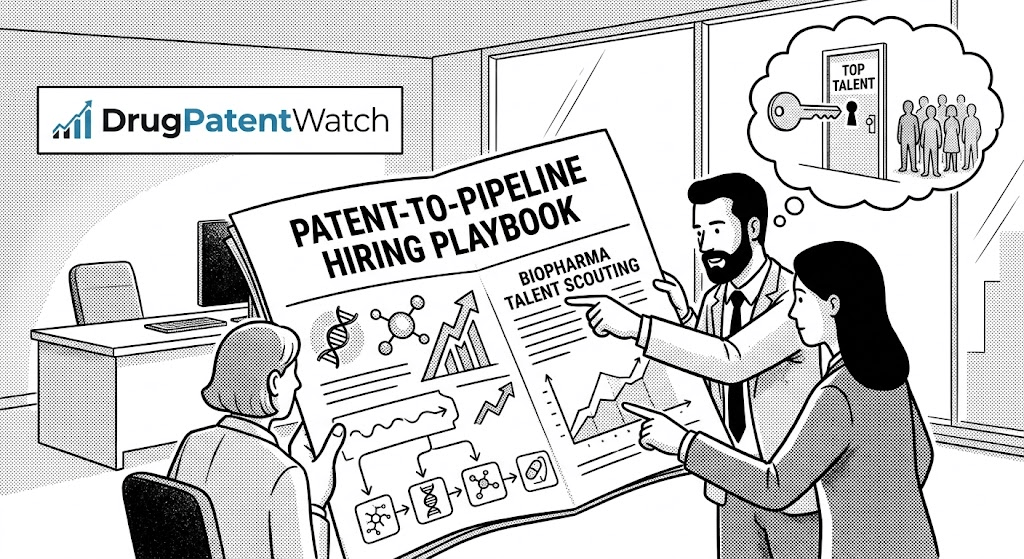
The most sought-after scientists in biopharma rarely post their resumes to LinkedIn. They don’t have to. Their work announces them years before any recruiter calls. It shows up in patent filings — specifically in the inventor fields of composition of matter claims, method-of-use patents, and IND-enabling study applications — published by the USPTO 18 months after filing, long before a company announces a clinical program or an acquisition closes.
Most talent acquisition leaders in pharma still rely on conference attendance, alumni networks, and keyword searches across job boards. Those tools are fine for volume hiring. They are poor instruments for identifying the dozen or so exceptional scientists, translational leads, and commercial strategists who will define the next cycle of innovation at your organization. For that kind of precision, you need to read the public patent record the way a competitive intelligence analyst reads it — systematically, early, and with a specific theory of what the filing tells you about the person named on it.
This article builds that playbook from the ground up. It covers the signal hierarchy of patent filings, how to read inventor profiles across an R&D career arc, where the scientific and commercial talent concentrations are right now, and how platforms like DrugPatentWatch give you an integrated view of patent, regulatory, and pipeline data that would otherwise require weeks of manual cross-referencing. The goal is not to turn hiring managers into IP attorneys. It is to give the people making critical science and commercial hires a structured method for finding candidates the rest of the market hasn’t found yet.
Part I: Why Patent Data Is a Talent Signal
The Inventor Field Is a Public Résumé
Under U.S. patent law, every patent application must identify each human who contributed to the conception of the claimed invention. The inventor must be a natural person who made a significant contribution to the claimed invention — not merely someone who supervised the work, managed the lab, or funded the research. The legal pressure to name inventors accurately is real: incorrect inventorship creates grounds for patent invalidation and litigation exposure. Identifying the wrong inventors makes a patent vulnerable to challenges.
This precision is precisely what makes the inventor field so valuable as a talent signal. Every named inventor has, by legal definition, made a documented, substantive contribution to a specific technical claim. They are not being listed for prestige or organizational politics. They are listed because removing them from the patent would constitute a legal defect. That is a different and higher standard than almost any résumé credential.
When you read a composition of matter patent and find three named inventors on a novel GLP-1 receptor modulator, you are looking at three people who conceived the compound in a legally defensible sense. When you find the same three names on a follow-on method-of-use patent filed 18 months later, you know they are still active on the program. When one of those names disappears from the next filing and reappears as an inventor on a patent assigned to a different company, you are watching talent move in real time.
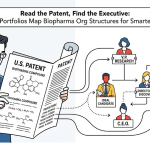
Tracking an inventor’s transition from one organization to another, by noting a change in the assignee on the inventor’s patents, may yield information regarding competitor R&D strategies. Recent changes in the assignee a prolific inventor is working for should be monitored carefully — especially when prolific inventors move to a top business competitor.
The 18-Month Window: Your Structural Advantage
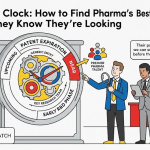
USPTO publishes most patent applications 18 months after their earliest priority date. This creates a window between when a scientist files a provisional application and when the world learns about the underlying invention. Inside that window, the inventor has been hired, is actively working on the program, and has not yet become a known quantity in the talent market. The 18-month delay is not a limitation — it is the gap that lets you build a shortlist before anyone else knows these people exist as candidates.
For hiring purposes, the most actionable filings are provisionals and non-provisional applications at the composition of matter stage. These are the earliest claims — they describe what the molecule is, not just how to use it or what dose to administer. Composition of matter patents carry the broadest exclusivity scope and represent the deepest scientific contribution. The people named on them are typically the lead chemists, structural biologists, and computational scientists who did the foundational synthesis or design work. They are the scientists companies most struggle to find and most aggressively compete for.
Patent Filing Stage Maps to Career Stage
Not all patent inventors are at the same point in their careers, and not all patent types indicate the same kind of talent. A useful way to organize this is by the stage of the patent claim:
Composition of matter claims typically involve bench scientists at the peak of their discovery-phase productivity — medicinal chemists, chemical biologists, and structural biologists with deep expertise in a specific target or chemotype. These are people two to five years post-PhD or post-postdoc, working at early-stage biotechs or academic spinouts, often with five or fewer prior patents in their name.
Method of use and dosing patents tend to bring in a broader inventor group. You start to see translational scientists, early clinical pharmacologists, and formulation specialists added to the list. These people are often mid-career and bridge the laboratory and clinical development functions.
Formulation and manufacturing patents — the kind filed during late clinical development — name process chemists, bioprocess engineers, and analytical scientists whose work makes a compound manufacturable at scale. In an era where CDMOs are absorbing a disproportionate share of process development talent, these inventors are increasingly difficult to recruit.
Principal scientists and executive directors of research lead complex experiments, supervise junior researchers, shape project strategy, and contribute to patents and publications, connecting scientific innovation to pipeline deliverables. These are the senior inventors — the people who appear across multiple patent families, bridging from early discovery to late development. They are the most visible targets and, consequently, the most competitive to hire.
Part II: How to Read a Patent Filing for Talent Intelligence
Anatomy of an Inventor Profile
Start with the name, then build the profile across three dimensions: depth, breadth, and trajectory.
Depth means how many patents in the same technical area this inventor has contributed to. An inventor with six patents in KRAS inhibitor chemistry over four years has demonstrable, concentrated expertise. An inventor with six patents across oncology, CNS, and inflammation over the same period is a generalist who may be more versatile but less technically specialized.
Breadth means how many assignee organizations appear in their patent history. A scientist who has contributed to patents assigned to an academic institution, a Series A biotech, and then a mid-size pharma has demonstrated the ability to translate across institutional contexts — a meaningful signal for companies building translational capabilities.
Trajectory means whether the most recent patents show increasing or decreasing technical contribution. If a scientist appears as a primary inventor on the first patent in a series but only as a peripheral contributor on subsequent continuations, they may be moving into a leadership role where their scientific contributions are more supervisory. That is a very different hire than someone whose inventor ranking is rising.
The Assignee as Context
The assignee field tells you who legally owns the patent — typically the company employing the inventor. But it also tells you about the organizational environment in which the work was done, which shapes what kind of candidate you are recruiting.
An inventor who has filed exclusively at a single large pharma company has worked in a resourced, structured environment with broad support infrastructure. They may need a different kind of onboarding to a lean biotech than someone who has spent their career at a series of early-stage startups where every protocol required justifying the reagent budget.
An inventor named on a university patent who then appears on a startup’s composition of matter patent within 12 months is almost certainly a founder or early scientific team member. That pattern — academic patent to startup patent, same inventor, different assignee, close time proximity — is one of the most actionable talent signals available. You are watching an academic scientist commercialize their own discovery. Whether or not the startup succeeds, that individual now has a different and broader professional profile than a pure academic.
Continuation Patents and Inventor Drift
Companies file continuation applications to pursue additional claim scope after the original patent issues. Monitoring the assignee and inventor names associated with a drug company’s key patents will surface new applications before they issue. In continuation series, watch the inventor list carefully. If the original four inventors shrink to two by the third continuation, one of two things has happened: either the work has become more technically narrow (and fewer contributors qualify), or the other inventors have left the organization. Both are worth knowing.
Inventor attrition in a continuation series is one of the few patent signals that indicates involuntary talent departure. When a scientist’s name disappears from a patent continuation covering a drug they helped invent, and no new filing at a different company bears their name within 12-18 months, they may have left the industry, moved into management, or joined an organization that files fewer patents. All three scenarios are worth investigating if the original patents indicate significant scientific ability.
What PCT Applications Tell You
Patent Cooperation Treaty (PCT) applications are filed by companies with serious global commercial intentions. The cost and complexity of PCT prosecution signals that the organization is prepared to defend the invention internationally and, by extension, has meaningful commercial infrastructure or the capital to build it. Inventors named on PCT applications are working on programs their employers consider commercially material. This is a useful filter for prioritizing which inventors to research further.
Part III: The Talent Concentration Map — Where the Best Scientists Are Right Now
Oncology: Dense, Competitive, and Segmenting
Oncology remains the therapeutic area with the most intense talent competition and the highest density of early-stage patent activity. Smaller biotech firms and midsized companies offering promising innovations, particularly in high-demand therapeutic areas such as oncology, immunology, neuroscience, and cardio-metabolic conditions, are expected to become highly attractive targets.
The inventors concentrated in oncology right now span several distinct technical clusters, and they are not interchangeable. A medicinal chemist who has built her career on KRAS G12C covalent inhibitor chemistry is not the same recruit as a scientist with deep expertise in antibody-drug conjugate linker chemistry, even though both work in oncology and both will appear in cancer-targeted patent families.
The most strategically valuable oncology inventors right now are in three areas: ADC chemistry (specifically linker-payload optimization and site-specific conjugation), targeted protein degradation (TPD) — including PROTAC and molecular glue degraders — and precision radioligand therapy. Each of these areas is at a stage where composition of matter patents are being filed aggressively, and the inventor pools are small enough that most of the qualified candidates in the world can be identified by reading the last two years of USPTO filings in those categories.
Bristol-Myers Squibb’s 2024 acquisition of Mirati Therapeutics for $5.8 billion, centered on the KRAS inhibitor adagrasib, concentrated the R&D talent that built that program inside BMS. That talent — the chemists, the structural biologists, the translational scientists who took a covalent KRAS inhibitor from composition of matter to NDA — is now embedded in a large organization with a different resource environment. Some of those scientists will be looking for the next early-stage opportunity within the next 24-36 months. Patent history will tell you who they are before they start looking.
Cardiometabolic: The New Crowded Space
GLP-1 receptor agonism has generated more patent filing activity in the last three years than almost any other mechanism in memory. The strong showing of CVRM in second place, ahead of perennial favourite oncology, reflects a wider cardiometabolic renaissance.
The GLP-1 patent landscape is now saturated with composition of matter claims from Novo Nordisk, Eli Lilly, Pfizer, AstraZeneca, and dozens of smaller biotech companies pursuing differentiated structures. The first wave of hiring in this space focused on peptide chemists and endocrinologists. The current wave — the one not yet visible in job boards — is targeting formulation scientists who can solve oral bioavailability, process chemists who can manufacture complex peptides at scale, and translational leaders who understand the cardiovascular outcomes literature well enough to design differentiated clinical programs.
The talent signal here is specific: look for inventors named on GLP-1 analogue patents who are also named on patents related to oral peptide delivery technologies, lipidation chemistry, or self-assembling nanoparticles. That combination — mechanism expertise plus delivery chemistry — defines the skill set required to advance next-generation GLP-1 candidates. It is not a combination you find by posting a job description.
Neuroscience: Returning Capital, Returning Talent
Neuroscience talent left the large pharma sector in waves between 2010 and 2020, as companies like AstraZeneca, GSK, and Pfizer shuttered or reduced their CNS research units. That talent dispersed into academia, small biotechs, and adjacent industries. It has been quietly reconcentrating for the past four years.
The M&A backdrop is clearly more active than it was a year ago, with 2025 already producing visible examples of large and targeted dealmaking: Merck agreed to buy Terns Pharma for $6.7 billion, Gilead agreed to acquire Tubulis for up to $5 billion to strengthen its oncology pipeline, and GSK agreed to buy 35Pharma for $950 million. The CNS segment has seen its own version of this: Johnson & Johnson’s acquisition of Intra-Cellular Therapies (the maker of lumateperone, Caplyta) for a reported $14.6 billion in January 2025, and Sanofi’s acquisition of Vigil Neuroscience’s TREM2 agonist program for Alzheimer’s disease, both signal large pharma’s recommitment to neuroscience pipeline building.
The neuroscience inventors most in demand are those working at the intersection of target biology and small-molecule discovery — specifically in Alzheimer’s, Parkinson’s, rare neurological diseases, and treatment-resistant depression. The provisional patent record from 2023 and 2024 shows significant filing activity in this space from academic medical centers, small biotechs backed by patient advocacy-linked venture funds, and spinouts from university neuroscience programs. These are the organizations where the next generation of CNS talent is concentrated.
Cell and Gene Therapy: The Specialist Scarcity Problem
Cell and gene therapy presents a different talent problem. The science requires deep specialization in viral vector biology, CRISPR system optimization, T-cell engineering, or ex-vivo manufacturing — and the number of people with that expertise at sufficient depth to make a meaningful scientific contribution is genuinely small.
As cell and gene therapy pipelines have expanded dramatically, talent in this niche commands a significant premium. The key inventors in this space are almost entirely identifiable through patent filings, because the technical contributions required for inventorship — designing specific guide RNA sequences, engineering novel AAV capsid variants, developing proprietary manufacturing process innovations — are precisely the kind of work that generates composition of matter and method of manufacture claims.
What makes the patent signal especially valuable in CGT is that the work often originates in academic medical centers and national laboratories before it transfers to commercial entities. Inventors who appear first on university-assigned patents and then on startup-assigned filings within two years are the people who built the foundational science and then chose to commercialize it. They are founders or near-founders, which means their equity stakes, organizational commitments, and career timelines are knowable from the patent record without ever speaking to them.
Part IV: The Commercial Talent Hidden in Patent Data
Beyond Scientists: Reading the Patent Record for Commercial Signals
Most hiring leaders who use patent data think about it as a tool for finding bench scientists. That is accurate but incomplete. Patent filings also carry strong signals about commercial talent concentration — specifically, the leaders who build organizations around protected IP and drive it through regulatory milestones to market.
The mechanism is indirect but reliable. When a series of patents assigned to a small biotech shows a consistent expansion of claim scope across composition of matter, method of use, and formulation filings — covering multiple indications, filing in 15+ countries via PCT, and adding continuation claims as the original patents near issuance — you are looking at a company with serious commercial intent and the organizational capacity to execute on it. That company has, or urgently needs, a VP of Business Development, a Chief Commercial Officer, a Head of Market Access, and a Regulatory Affairs Director.
The patent record tells you the company exists, what it owns, and how aggressively it is protecting its assets. From that, you can infer what commercial roles it will need within the next 12-24 months, before any job posting appears, before any recruiter has been briefed, and before the broader market becomes aware the opportunity exists.
IND Filings as a Commercial Talent Signal
An IND (Investigational New Drug) application is the regulatory step that translates a preclinical asset into a clinical program. The decision to file an IND represents a commitment of capital and organizational focus that typically precedes 12-18 months of intensive hiring across translational, clinical, regulatory, and early commercial functions.
Patent filings that closely precede IND activity — composition of matter claims followed within 12-18 months by method-of-use claims in human therapeutic contexts — are a reliable early indicator of IND intention. One of the most important industry shifts since 2024 has been the growth of specialized support organizations — vendors, consultancies, CROs, CDMOs, and boutique recruiting partners built to solve targeted problems in discovery, development, clinical execution, and CMC. The companies that build these relationships now will have access to talent, expertise, and bandwidth that others won’t.
The commercial hires that follow IND filings follow a predictable sequence: clinical operations leadership first, then regulatory affairs, then medical affairs and clinical pharmacology, then early access and patient advocacy. Recruiters and talent acquisition leaders who read patent timelines can map that sequence onto specific companies 18-24 months before those roles appear in the market.
The Regulatory Affairs Talent Signal
Research and development topped survey respondents’ lists, with half expecting to add R&D professionals to their teams. Clinical, manufacturing and production, regulatory, and quality assurance and control rounded out the top five.
Regulatory affairs is the function where hiring demand structurally outpaces supply, and patent data gives a clear predictive signal for when that demand will spike. A composition of matter patent covering a novel biologic or small molecule, combined with active Phase I trial listings at ClinicalTrials.gov, places a company 18-36 months from its first regulatory submission. That is the window to identify and approach regulatory affairs directors and submission strategists.
While 2024’s layoffs temporarily increased the availability of regulatory staff, a large portion of those professionals have since been rehired, absorbed through M&A, or moved into consulting. With dozens of programs preparing for accelerated filings, expedited pathways, and global registrations, the competition for experienced regulatory strategists will return sharply.
The specific regulatory talent that early-stage companies undervalue until it is too late includes: regulatory strategists with expedited pathway experience (Breakthrough Therapy, Fast Track, Accelerated Approval), CMC regulatory specialists who can write Module 3 for complex biologics or cell therapies, and global regulatory affairs leads who can manage EMA, PMDA, and Health Canada submissions in parallel with FDA.
Part V: Building the Patent-to-Pipeline Talent Intelligence System
The Data Infrastructure You Actually Need
Building a systematic patent-based talent intelligence capability does not require a large technology investment. It requires discipline, the right data sources, and a clear workflow for converting patent signals into candidate profiles.
The core data sources are: USPTO’s Patent Application Full-Text and Image Database (AppFT) for pre-grant applications, the USPTO Patent Full-Text Database for issued patents, the European Patent Office’s Espacenet for PCT and EP filings, and ClinicalTrials.gov for the IND-to-Phase-I signal. For pharmaceutical-specific integration — combining patent data with Orange Book listings, ANDA filings, litigation records, and drug development histories — DrugPatentWatch offers the most complete picture of any drug’s IP trajectory. Platforms such as DrugPatentWatch are designed specifically for the biopharma ecosystem. Their key advantage is the deep integration of disparate but critically linked datasets. They don’t just provide patent information; they connect it directly to FDA regulatory data including Orange Book listings and exclusivities, litigation records, clinical trial information, and commercial data including drug prices and sales histories.
For talent intelligence specifically, the workflow is:
Step one: Define the therapeutic areas and technology platforms where you have current or projected hiring needs. Step two: Run inventor searches across those areas in AppFT and Espacenet, filtered to applications filed in the last 24-36 months. Step three: Build inventor profiles by aggregating all patents attributed to each name, cross-referenced by assignee, filing date, and claim type. Step four: Cross-reference inventor activity against ClinicalTrials.gov to identify whose programs have reached IND or Phase I — these inventors are at the most commercially interesting stage of their career arc. Step five: Layer in DrugPatentWatch to identify which of those programs have Orange Book listings, NDA or BLA filings in progress, or active Paragraph IV litigation.
Normalizing Inventor Names: The Practical Challenge
The single largest operational challenge in patent-based talent intelligence is inventor name disambiguation. The USPTO does not assign unique identifiers to inventors the way academic databases assign ORCIDs or LinkedIn assigns profile IDs. A search for ‘J. Chen’ in oncology chemistry patents will return thousands of results.
Several commercial solutions address this. Clarivate’s Derwent World Patents Index normalizes inventor names against publication and citation records. Inventor and assignee names are normalized, and patents are linked to inventors, companies, corresponding litigation and in many other ways for seamless analysis. For organizations without access to enterprise patent analytics tools, the practical alternative is cross-referencing patent names against PubMed author records, institutional faculty pages, and LinkedIn — building a triangle of identification that reduces false positives to a manageable level.
The normalization problem is less severe in highly specialized technical areas. If you are searching for inventors on PD-L1/TIM-3 bispecific antibody patents, the inventor pool is small enough that name disambiguation requires minimal computational sophistication. The problem scales with the breadth of the search — it is a limitation to know going in, not a reason to abandon the methodology. <blockquote> ‘69% of life sciences and healthcare employers report difficulty sourcing skilled talent.’ — ManpowerGroup U.S. Talent Shortage Survey [1] </blockquote>
That statistic reflects what happens when talent acquisition operates reactively, waiting for scientists to signal availability through job boards and agency submissions. Patent-based intelligence is structurally proactive: it identifies the people you want before they know they are available.
Setting Up the Alert System
The most efficient patent talent intelligence programs run on automated monitoring rather than periodic manual searches. USPTO’s AppFT allows for assignee-based monitoring. Google Patents supports inventor name and keyword-based alerts. Platforms like Innography (Clarivate) and PatSnap offer more sophisticated monitoring tools with normalization and filtering capabilities.
For talent purposes, the most useful alert configurations are: new applications naming a specific inventor whose work you have already identified as strategically valuable; new applications in a specific technology class filed by a defined set of target organizations; and assignee changes — new patents from an inventor whose prior work was assigned to a competitor, now assigned to a new or unfamiliar organization. The last alert type is particularly valuable. Inventor analysis — tracking the named inventors on competitor patents — reveals whether key inventors are leaving (creating potential recruitment opportunities). Inventor patterns reveal the human capital behind the innovation strategy.
Part VI: The Commercialization Arc — Reading Talent Through the Development Funnel
From Discovery to IND: The Five-Year Career Window
The average time from composition of matter patent filing to IND submission in small molecule drug development is approximately four to six years. For biologics, the timeline is often shorter at the front end — target validation and lead molecule generation — but longer at the CMC and manufacturing development stages.
This timeline creates a predictable career arc for the scientists involved. In year one to two after a composition of matter filing, the lead inventors are typically still in discovery mode — optimizing the lead series, running ADME profiling, beginning toxicology. By year three to four, the team expands to include clinical pharmacology, regulatory affairs, and formulation expertise. By year five to six, the organization is preparing for first-in-human studies and adding clinical operations, medical affairs, and patient recruitment capabilities.
Reading patent filings in chronological order across a single company’s portfolio maps that expansion. When a company that filed only composition of matter and method-of-use patents for three years suddenly begins filing formulation patents, you know they are approaching the CMC threshold. That is the moment to engage the VP of CMC you have been tracking through her own patent history.
The Acquisition Trigger: How M&A Releases Hidden Talent
Acquisitions are the single largest source of talent displacement in biopharma, and patent-based intelligence gives you the clearest advance signal of which acquisitions are coming.
The pattern of M&A deal activity in 2024 showed a decisive shift in acquirers’ focus towards earlier stage targets. Pre-clinical and Phase 1 focused deals together accounted for just over a quarter of total 2024 biopharma M&A value, by far the highest share seen in the past five years. Pre-clinical and Phase 1 deals are exactly the stage where the foundational patent work has recently been done — meaning the acquired company’s inventors are highly identifiable, and the post-acquisition integration process will displace a predictable fraction of them within 12-24 months.
Companies not actively recruiting during M&A waves risk losing access to top-tier candidates who get absorbed into newly strengthened organizations. The reverse is equally true: companies that map the acquisition landscape against the inventor record know exactly who will become available when the integration process begins and the cultural friction of joining a large pharma from a lean startup drives departures.
The post-acquisition window for recruiting displaced inventors typically opens 9-18 months after deal close. It closes within 24 months, as most scientists who are going to leave will have done so and either joined a new organization or founded a new company. The patent record helps you find them in either scenario.
When Inventors Become Founders: The Spinout Signal
The most valuable talent signal in the entire patent record may be the academic-to-startup transition. This is the moment when a scientist with a deep technical track record — demonstrated by years of academic or government-funded patent filings — makes the decision to commercialize their own IP.
The mechanics are visible in the data. An inventor who has appeared on 12 patents assigned to a university technology transfer office over the past seven years suddenly appears on a patent assigned to an LLC or a corporation with a name that matches a recently incorporated Delaware entity. In almost every case, that patent represents the founding IP of a new company. The inventor is almost certainly one of the co-founders or scientific co-founders of that company.
That company, at the time the patent publishes, is typically raising a seed round or Series A. It has fewer than 20 employees. It has at least one founding scientist with a proven track record and a protected asset. And it is about to begin the most intensive period of talent acquisition in its existence — needing to hire a Head of Biology, a Director of Chemistry, a VP of Translational Medicine, and a Chief Scientific Officer who can interface with investors and partners.
Drug R&D has increasingly shifted from in-house development by large companies towards development by smaller companies, including biotechnology startups. Biotechnology companies and universities account for half of innovative new drugs, and venture capital is one of the fastest growing sources of funding for biopharmaceutical R&D. This shift concentrates the most scientifically important early-stage work — and the most important early-stage talent — outside the visible perimeter of large pharma. Patent monitoring is the primary mechanism for seeing it.
Part VII: Integrating Patent Intelligence with Other Talent Signals
The Three-Source Triangle
Patent data alone is a strong starting point, but the most complete picture of a candidate’s current status comes from triangulating across three sources: patents, publications, and professional movement signals.
Patents tell you what they built and who paid for it. Publications tell you what they think — their theoretical frameworks, their scientific priorities, the colleagues they cite and collaborate with. Professional movement signals — changes in LinkedIn affiliations, conference presentations in new institutional capacities, Twitter or X posts announcing a new role or a new company — tell you where they are now.
The triangulation matters because patent data has a structural lag. The 18-month publication delay means the most recent filing visible to you today was filed a year and a half ago. A scientist who filed a provisional patent in October 2024 won’t see that filing published until April 2026. By combining patent history with recent publication and conference activity, you narrow the gap between what the public record shows and where the scientist is today.
Combine patent analysis with job postings and conference presentations for the most complete picture of competitor innovation direction. The same principle applies to talent intelligence: job postings at a company tell you what roles they are trying to fill; conference presentations tell you who their scientists are and how they are being positioned externally; patent filings tell you what the underlying science is and who did it.
Reading Conference Programs as a Talent Signal
Scientific conferences are live inventories of biopharma talent. AACR, ASH, ASCO, AHA, ASHP, and the relevant specialty society meetings present early and pre-clinical data that, in many cases, corresponds directly to patent filings in the same therapeutic area.
The connection is not incidental. A company presenting preclinical data at a major oncology conference in June 2025 almost certainly filed the underlying patents 12-18 months earlier — meaning the composition of matter claims for the compound being discussed are either already published or will publish within the next six months. The lead presenter at that session is almost certainly a named inventor on those patents.
Following conference presentations backward to patent filings gives you an inventor’s name, their institutional affiliation, their stage of scientific development, and the quality of their science as judged by peer review (because conference acceptance is competitive). That is a richer candidate profile than most recruiters ever construct, and it is assembled from entirely public information.
PubMed Author Records and Patent Cross-Reference
Publications and patents are the two documented records of scientific contribution, and they cross-reference powerfully. A scientist named as an author on five papers investigating BTK degrader chemistry in STAT3-driven lymphomas, who also appears as an inventor on two provisional patents in the same area, is not a coincidence. They are a specialist — someone who has spent three or more years building expertise in a specific mechanism at both the bench and the legal documentation level.
The PubMed cross-reference also helps resolve ambiguous inventor names. If two scientists named ‘Sarah Williams’ appear in the same therapeutic area on different patents, checking their PubMed author records — institutional affiliations, co-author networks, publication dates — almost always disambiguates them within a few minutes.
Part VIII: Specific Inventor Profile Types and How to Recruit Them
The Platform Builder
Some inventors are specialists in a single target or molecule. Others are platform builders — scientists whose patent history spans multiple compounds, multiple mechanisms, and multiple therapeutic areas, all built on a common underlying technology. CRISPR delivery scientists, bispecific antibody engineers, and ADC process chemists tend to fall into this category.
Platform builders are the most strategically valuable recruits for organizations that want to build durable research capabilities rather than single-asset programs. They are also the most actively courted, because their skills are transferable across therapeutic areas and their patent records make their value obvious to any competitor who looks.
Recruiting platform builders requires speed, a compelling scientific environment, and a realistic offer of equity upside. They are not typically motivated by salary alone. The organizations that successfully recruit them tend to offer meaningful scientific autonomy, a credible path to IND, and a leadership team that can articulate a genuine technical differentiation. Patent data tells you who they are; the pitch has to do the rest.
The Serial Founder
A growing category of biopharma inventor is the serial founder — a scientist who appears on patents assigned to three or four different companies over a 10-15 year career, each with a different technology platform and different venture backing. These individuals have invented in academia, translated at a first-generation biotech, pivoted to a second company, and may now be between companies or leading a company too small to be visible in standard recruiting databases.
Serial founders show up clearly in the patent record. Look for an inventor whose assignees span an academic institution, a Series B biotech that was acquired, a stealth-mode startup that recently went dark, and a recent provisional application with an LLC assignee that doesn’t yet have a website. That is the profile of someone who has been building high-value scientific assets for years and is about to do it again. Whether you want to hire them into your organization or partner with their new company depends on your strategy, but you want to know they exist before anyone else does.
The Translational Bridge
The hardest hire in most clinical-stage biotechs is the translational scientist who can hold the science together across the transition from animal models to first-in-human studies. This role requires deep mechanistic understanding of the biology, enough pharmacology literacy to interpret PK/PD relationships, and enough clinical judgment to design a Phase I protocol that generates scientifically meaningful data, not just safety data.
Translational scientists appear in the patent record at a specific transition: they are typically added to the inventor list at the method-of-use and clinical stage claim filings, after the composition of matter work is complete. Their contributions are to the therapeutic application claims — the claims that define which patients, at what dose, administered by what route, benefit from the compound. Those contributions are precisely what differentiates a drug candidate from a research compound.
A translational scientist who appears on composition of matter claims as well as method-of-use claims is unusual, and when you find one, they are likely among the most productive scientists in the field — someone who bridges the synthetic and biological sides of the program.
Part IX: Competitive Intelligence and Ethical Boundaries
What You Can and Cannot Do
Patent-based talent intelligence is built entirely from public information. Every piece of data described in this article — inventor names, assignees, claim types, filing dates — is published by sovereign patent offices and accessible to any member of the public. Using that information to identify and recruit candidates is legal, ethical, and increasingly standard practice among the most sophisticated talent acquisition teams in the industry.
What you cannot do is misrepresent why you are contacting someone, use information obtained through deception or unauthorized access, or make hiring decisions based on information that would be impermissible under employment law (national origin, age, disability status, and so on). Patent data presents none of those risks — it is, by design, a public disclosure of technical contribution.
IP competitive intelligence is an ethical process, which means no hacking, no spyware or spying. It is based on both primary and secondary research. The same ethical standard applies when that intelligence is directed at talent rather than technology strategy.
Respecting Current Employer Relationships
Contacting an inventor directly while they are clearly active on a current employer’s patent program requires judgment about timing and context. An inventor who filed a patent two years ago and has had no subsequent filings at that employer may be more receptive to a conversation than one who filed three months ago and appears to be at the center of an active, funded program.
The most productive approach is to build relationships before urgency exists on either side. Adding an inventor to a professional network, following their publications, attending sessions where they present — these are relationship-building activities that establish context for future conversations without the transactional awkwardness of a cold approach during an active project.
Part X: The Tools and Platforms That Make This Work at Scale
DrugPatentWatch for Integrated Pharmaceutical Intelligence
For companies whose talent needs are tied to specific drug programs, mechanisms, or therapeutic areas, DrugPatentWatch provides the most complete integrated view of pharmaceutical patent and regulatory data available. The platform connects patent data directly to FDA Orange Book listings, ANDA filings, litigation records, and drug development histories, enabling analysts to move from a specific compound’s IP status to its competitive landscape and regulatory position in a single workflow.
DrugPatentWatch aggregates data from the Orange Book, Purple Book, USPTO, ANDA filings, patent litigation records, and licensing transaction databases to give users an integrated view of pharmaceutical IP across the product lifecycle. Where the raw government databases require analysts to manually cross-reference multiple sources, DrugPatentWatch presents a consolidated landscape: which patents cover a product, when each expires, which have been challenged, the status of pending litigation, and projected generic entry dates.
For talent intelligence, the specific value of this integration is the ability to identify which drug programs are at commercially significant IP moments — approaching patent expiry, facing Paragraph IV challenges, or advancing through late-stage clinical development — and then map the inventor records for those programs to find the scientists who built the foundational IP. Platforms like DrugPatentWatch effectively collapse what would be a multi-week manual research process into a structured query workflow, allowing talent teams to be analytical rather than clerical in their approach to patent-based sourcing.
USPTO Tools: AppFT and PAIR
The USPTO’s Patent Application Full-Text and Image Database (AppFT) contains all published patent applications, including pre-grant publications, and is searchable by inventor name, assignee, classification code, and full-text keyword. For pharmaceutical talent intelligence, full-text keyword searches across the description and claims fields allow you to find applications that never mention a company name in the assignee field — a pattern common in stealth-mode startups that list an LLC as the assignee without a recognizable organizational name.
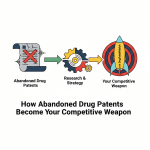
USPTO’s Patent Center (formerly PAIR) provides prosecution history for all applications — meaning you can track an application from provisional to non-provisional to examination to grant or abandonment. Abandoned applications are a useful negative signal: they indicate programs that didn’t survive examination, which may reflect either prior art issues or a company decision to abandon the technology. Inventors on abandoned applications in a technology area you are actively pursuing may be available and interested.
Espacenet and Global Patent Databases
For internationally active inventors — scientists who have filed in Europe, Japan, China, and the United States — the European Patent Office’s Espacenet database provides a consolidated global view. The PCT application database at WIPO’s PatentScope offers similar coverage specifically for PCT filings.
International filing patterns are useful for identifying scientists whose work has global commercial relevance. An inventor whose patents are filed only in the United States may be working on a domestically-focused program. One who files broadly — PCT, EP, JP, CN — is working on a program with significant global commercial potential, which implies better-resourced development infrastructure and, by extension, a more experienced and capable scientific team.
AI-Assisted Name Disambiguation and Profile Building
Natural language processing and machine learning technologies are changing how organizations assess candidate qualifications. These tools parse scientific literature, patent filings, and research citations to better understand a candidate’s domain impact and potential trajectory.
Several commercial platforms now offer AI-assisted disambiguation of inventor records across patent databases, combined with cross-referencing to publication records, conference presentations, and professional profiles. ClinicoTarget, referenced in GQR’s 2025 talent acquisition analysis, applies NLP to patents, publications, and technical records to identify professionals in specific technical domains. Advanced tools like ClinicoTarget enable precision hiring by analyzing patents, publications, and technical records to identify professionals proficient in CRISPR, FDA compliance, or mRNA technologies.
The practical value of AI-assisted patent analysis in talent intelligence is primarily in scale — the ability to monitor hundreds of assignees and thousands of inventor names simultaneously, with automated alerts when a monitored name appears in a new filing or assignment. For organizations hiring at high volume across multiple therapeutic areas, that scale is essential. For organizations making a small number of highly targeted scientific hires, the manual triangulation method remains competitive.
Part XI: The Commercial Talent Signal — Beyond the Bench
VP of Business Development as a Patent-Readable Signal
Business development talent in biopharma concentrates around the same early-stage programs that generate the most interesting patent activity. A VP of BD who has negotiated two successful licensing agreements for composition of matter patents in oncology — driving those assets through to clinical proof-of-concept and eventual acquisition — has a track record that is partly readable from the public transaction record.
The acquisition history of specific drug programs is fully public. When a compound changes hands from a small biotech to a large pharma, the deal terms, the stage of the asset, and often the names of the key negotiators become part of the public record through SEC filings, press releases, and conference presentations. The BD professional who originated that deal — who identified the asset early, built the relationship, structured the terms — appears in the public record even if their name doesn’t show up on any patent.
Cross-referencing deal histories with patent inventor records gives you a way to identify BD professionals who have worked closely with foundational scientists, understand the IP landscape of specific mechanisms, and have the industry relationships to source similar deals. These are the profiles that mid-stage biotechs competing for early-stage licensing opportunities struggle most to find.
Market Access and HEOR Talent: The Patent Expiry Signal
Health economics and outcomes research professionals, and the market access leaders who deploy their work, face a specific demand pattern driven directly by patent timelines. In the years before a branded drug faces its first generic competition — the period between the composition of matter patent expiry and the downstream formulation and process patents — branded manufacturers need to build and deploy the HEOR evidence base that justifies payer formulary preference in a post-exclusivity environment.
Patents on 190 drugs are set to expire by 2030, and a drug’s price can drop as much as 90% after it loses patent protection. The market access leaders who build and deploy value-based contracting frameworks, real-world evidence programs, and payer-facing HEOR packages are hired 18-24 months before those expiry dates. Patent cliff data — exactly the kind of analysis that DrugPatentWatch supports through its loss-of-exclusivity forecasting tools — maps directly to market access hiring timelines.
Part XII: Building the Internal Capability
Structuring a Patent Talent Intelligence Function
The organizations that do this well have made a structural decision: they treat patent intelligence as a shared resource between the competitive intelligence function and talent acquisition, rather than siloing it in either. The CI team owns the technology monitoring workflow; the talent acquisition team owns the candidate development workflow. Where they connect is in the weekly or monthly list of inventors flagged by CI as scientifically important to the organization’s priorities.
That handoff requires a common vocabulary. The talent acquisition leader needs to understand enough about the patent to ask the right questions — what kind of chemistry is this, what stage is the program, is the inventor the lead scientist or a supporting contributor — and the CI analyst needs to understand enough about hiring to know what makes a candidate actionable versus merely interesting.
The practice of allocating full-time IP competitive intelligence personnel and developing a dedicated IP competitive intelligence capability can benefit almost every company. That investment pays the highest returns when the CI capability extends beyond technology analysis to talent signal identification.
Training Hiring Managers to Read Patent Claims
You do not need every hiring manager to become a patent attorney. You need them to recognize the difference between a composition of matter claim and a method-of-use claim, understand what it means to be a lead inventor versus a peripheral contributor, and know how to use the assignee field to contextualize a scientist’s organizational background.
A two-hour training session covering patent anatomy, the inventor legal standard, and how to run a basic inventor name search in AppFT is sufficient to give most scientific hiring managers a workable foundation. The investment is modest relative to the cost of a failed hire — or the cost of missing the best candidate because no one was looking in the right places.
Part XIII: Case Studies in Patent-Based Talent Intelligence
Case Study 1: Spotting a Platform Chemist Before the Series B
In 2022, a medicinal chemist named on four composition of matter patents assigned to a University of California technology transfer office — all covering novel macrocyclic peptide architectures for intracellular protein-protein interaction targets — disappeared from university patent records and reappeared 18 months later on two provisional applications assigned to a Delaware LLC with no web presence.
A talent team tracking inventors in the macrocyclic chemistry space flagged this transition. A search of the LLC’s Delaware incorporation records showed it had been incorporated six months earlier with the scientist listed as a director. A concurrent search of SEC EDGAR showed no Form D filings for venture investment yet. The scientist was effectively in stealth formation mode — building a company around the IP he had originated in academia, with institutional support but before external venture funding.
The talent team made contact through a mutual conference connection. Three months later, the company announced a $32 million seed round. By that point, two competing companies had independently identified the same scientist through the same patent monitoring methodology. The team that established the relationship first had a structural advantage in the eventual conversation about roles, partnerships, and collaboration.
Case Study 2: Reading Acqui-Hire Signals in Real Time
In mid-2023, a clinical-stage biotech in the KRAS inhibitor space was acquired by a large pharma. The acquiring company’s integration playbook was standard: retain the key discovery scientists, integrate the clinical team, and wind down the commercial infrastructure that the acquiree had built for its lead compound’s initial rollout.
A recruiting team that had been monitoring the acquired company’s patent record identified six inventors who had contributed to compositions of matter patents for the KRAS program’s second-generation molecules. These were the scientists working on the next wave of the program — not the first-generation compound that drove the acquisition, but the follow-on chemistry that would determine whether the program had lasting value.
Post-acquisition, three of those six inventors departed within 12 months. The patent record showed that none of them appeared on any new filings for 18 months after their departure. Two eventually appeared as co-inventors on patent applications filed by a new stealth biotech. The third became a faculty member at a prominent academic medical center. All three were identifiable and contactable through patent data, 12 months before they appeared in any job posting.
Case Study 3: The Regulatory Affairs Hire That Came From a PCT Filing
A regulatory affairs director at a Series C biologic-stage biotech in the GLP-1 space had managed the IND submission and Phase I clinical protocol for a novel long-acting GLP-1/GIP co-agonist. She wasn’t named on any composition of matter patents — her contributions were to the regulatory strategy, not the molecule itself. But she was listed as an author on two conference presentations and appeared in two investor call transcripts describing the company’s regulatory pathway.
A rival company tracking the public record found her through a combination of conference program monitoring and a PCT application that named her company’s regulatory consultant as a co-inventor on a process patent covering their proprietary lipidation chemistry. The connection between the regulatory consultant and the company’s internal regulatory affairs leadership was visible in the patent prosecution record — the regulatory consultant’s name appeared in the correspondence section of the prosecution file, alongside the internal regulatory contact’s email domain.
The rival company made contact six months before the scientist’s company entered a period of post-Series C integration that disrupted the regulatory team. She was hired 90 days after that integration began. The patent record gave the rival company 18 months of advance notice that she existed and was working on a program relevant to their pipeline.
Key Takeaways
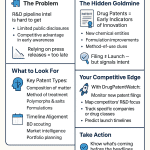
Patent data is a structural talent intelligence asset, not a supplementary one. Every composition of matter patent names the scientists who built the underlying IP by legal definition, not by attribution or prestige. Those names are public, searchable, and 18 months ahead of the talent market’s awareness of who these people are.
The most actionable patent signals for talent purposes are four: the academic-to-startup assignee transition (indicates a founding scientist commercializing their own IP), the inventor list expansion across claim types (maps career arc from discovery to development), the inventor disappearance from a continuation series (signals departure from a program or organization), and the first PCT filing by a previously domestic-only assignee (signals serious commercial intent and incoming hiring demand).
Therapeutic areas with the highest current inventor concentration are oncology (particularly ADC chemistry, targeted protein degradation, and radioligand therapy), cardiometabolic (second-generation GLP-1 architectures and oral peptide delivery), neuroscience (TREM2, alpha-synuclein, and novel glutamate receptor mechanisms), and cell and gene therapy (AAV capsid engineering, CRISPR guide RNA design, and ex-vivo manufacturing).
Commercial talent — BD leaders, market access directors, regulatory affairs strategists — is readable from patent timelines through a predictive logic: composition of matter filing predicts IND, IND predicts Phase I, Phase I predicts NDA/BLA, NDA predicts commercial team build-out. Each transition opens a specific talent demand window.
Platforms like DrugPatentWatch reduce the data acquisition burden significantly by integrating patent records with FDA filings, litigation history, and development stage data in a single interface. For organizations that lack dedicated patent intelligence staff, these integrated platforms make pharmaceutical-specific patent talent intelligence accessible without requiring expert-level patent search skills.
The talent acquisition function that reads patent filings the way a CI analyst reads them will find candidates two years ahead of the market’s awareness of them. In a sector where the most critical scientific and commercial hires take 6-12 months to recruit when approached reactively, that lead time is not a minor operational improvement. It is a structural competitive advantage.
Frequently Asked Questions
Q1: Is it legal to use patent inventor records to identify and recruit candidates without their consent?
Yes. Patent applications and issued patents are published public documents. The inventor field in every patent is public information, as are the assignee, filing date, and claim text. Identifying candidates from this public record involves no privacy violation, no unauthorized data access, and no misrepresentation. The same ethical standards that govern any professional recruiting outreach apply here — no deception, no misuse of personal data, and compliance with applicable employment law.
Q2: How do I distinguish between a lead inventor and a peripheral contributor on a multi-inventor patent?
The patent document itself does not rank inventors — all named inventors are legally equal contributors. However, several proxies indicate relative contribution. The order in which inventors are listed sometimes (though not always) reflects contribution priority. More reliable indicators are: whether the inventor appears across the full patent family or only on later-stage continuations; whether their name appears in the prosecution correspondence record as the primary point of contact; and whether their publication record in the same technical area shows them as a lead author. Cross-referencing all three sources gives a reasonable approximation of scientific centrality.
Q3: How far back in a scientist’s patent history should I look?
For most purposes, the last four to six years of patent activity is the most relevant. Earlier filings establish the scientist’s technical foundation and track record, but patents filed more than a decade ago may reflect work in a technology area or at a career stage that is no longer relevant to current hiring needs. The exception is serial founders and platform builders, whose full patent history across multiple assignees tells an important career trajectory story. For those individuals, reviewing the full history — sometimes spanning 15-20 years — is worthwhile.
Q4: What is the best way to approach a scientist identified through patent records who is currently active at a competitor?
The standard professional approach applies: a connection request through a shared professional network, a conference introduction through a mutual colleague, or a direct but non-pressuring message through LinkedIn or email that acknowledges their work and expresses genuine interest in their expertise. The patent context actually helps here — you can open a conversation by referencing specific technical work you found impressive, which demonstrates seriousness and scientific literacy that pure recruiter outreach rarely achieves. Avoid any approach that suggests you know more about their internal situation than their public record justifies, and be straightforward about your purpose.
Q5: How does the AI-assisted drug discovery trend change the talent signal in patent records?
The change is significant and worth tracking carefully. The USPTO’s position, as of 2024, is that a human must make a significant creative contribution to the claimed invention. If an AI system generates the molecular structure without meaningful human intervention beyond setting up the model, the inventorship claim is vulnerable to challenge. This means that as AI-assisted discovery becomes standard, the human scientists named on the resulting patents are the ones who made the qualifying scientific judgment calls — curating training data, designing reward functions, interpreting structure-activity relationships, and selecting candidates based on predicted properties. Those contributions are increasingly specialized and strategically valuable. A scientist with a track record of meaningful, legally defensible inventive contributions to AI-assisted drug discovery programs is a qualitatively different hire than one who managed the computational infrastructure. The patent record, read carefully, still distinguishes them.
References
[1] ManpowerGroup. (2024). U.S. Talent Shortage Survey: Life sciences and healthcare findings. ManpowerGroup North America.
[2] GeneCoda. (2025, December 5). Biopharma market update 2025: Impacts on talent, hiring, and growth. https://www.genecoda.com/blog/biopharma-market-update-2025-impacts-on-talent-hiring-and-growth/
[3] BioSpace. (2026, February 5). Hiring plans show promise for biopharma job seekers: BioSpace report. https://www.biospace.com/job-trends/hiring-plans-show-promise-for-biopharma-job-seekers-biospace-report
[4] IQVIA. (2025, January). Biopharma M&A: Outlook for 2025. https://www.iqvia.com/locations/emea/blogs/2025/01/biopharma-m-and-a-outlook-for-2025
[5] IQVIA. (2026, January). Biopharma M&A: Outlook for 2026. https://www.iqvia.com/locations/emea/blogs/2026/01/biopharma-m-and-a-outlook-for-2026
[6] AlphaSense. (2025). Biotech and pharma M&A: 2025 outlook. https://www.alpha-sense.com/blog/trends/biotech-pharma-m-and-a-2025-outlook/
[7] 44 International. (2026, April). From deal rooms to talent pipelines: How the 2026 biopharma M&A wave, FDA instability, and AI adoption are reshaping hiring across US and UK life sciences. https://www.44international.com/from-deal-rooms-to-talent-pipelines-how-the-2026-biopharma-ma-wave-fda-instability-and-ai-adoption-are-reshaping-hiring-across-us-and-uk-life-sciences/
[8] GQR. (2025, January 8). Navigating talent acquisition in 2025: Biotech and pharma in focus. https://www.gqr.com/blog/2025/01/navigating-talent-acquisition-in-2025-biotech-and-pharma-in-focus
[9] Experis. (2025). Life sciences recruitment trends in pharma and medical device. https://www.experis.com/en/insights/articles/life-sciences-recruitment-trends
[10] VentureOutsource. (n.d.). Playbook for IP patent competitive intelligence and better business decisions. https://ventureoutsource.com/contract-manufacturing/benchmarks-best-practices/executive-management/playbook-for-patent-competitive-intelligence-and-better-bu
[11] Rathvane. (2026, January 6). Patent analysis as competitive intelligence: Reading the innovation pipeline your competitors cannot hide. https://rathvane.ai/blog/patent-analysis-competitive-intelligence.html
[12] Pargaonkar, Y. R. (2016). Leveraging patent landscape analysis and IP competitive intelligence for competitive advantage. World Patent Information, 44, 10–19. https://doi.org/10.1016/j.wpi.2016.01.002
[13] DrugPatentWatch. (2026, March 8). Crack the patent wall: How hard data beats big pharma’s IP strategy every time. https://www.drugpatentwatch.com/blog/crack-the-patent-wall-how-hard-data-beats-big-pharmas-ip-strategy-every-time/
[14] DrugPatentWatch. (2025, August). The basics of drug patent searching. https://www.drugpatentwatch.com/blog/the-basics-of-drug-patent-searching/
[15] DrugPatentWatch. (2026, April). How to track competitor R&D pipelines through drug patent filings. https://www.drugpatentwatch.com/blog/how-to-track-competitor-rd-pipelines-through-drug-patent-filings/
[16] DrugPatentWatch. (2026, March 24). Who owns the AI-discovered drug? The patent ownership guide pharma IP teams need now. https://www.drugpatentwatch.com/blog/ai-meets-drug-discovery-but-who-gets-the-patent/
[17] Orrick. (2024, October 10). Developing and patenting AI inventions: 5 things for biotech companies to consider. https://www.orrick.com/en/Insights/2024/10/Developing-and-Patenting-AI-Inventions-5-Things-for-Biotech-Companies-to-Consider
[18] Cooley. (2024, October 23). Immaculate conception: Inventorship in the age of AI. https://www.cooley.com/news/insight/2024/2024-10-23-immaculate-conception-inventorship-in-the-age-of-ai
[19] Jones Day. (2025, April 2). Blurring the line between the dry and wet lab: Joint inventorship in AI-assisted life science inventions. https://www.jonesday.com/en/insights/2025/04/blurring-the-line-between-the-dry-and-wet-lab-joint-inventorship-in-ai-assisted-life-science-inventions
[20] Wouters, O. J., Vogel, M., Feldman, W. B., Beall, R. F., Kesselheim, A. S., & Tu, S. S. (2024). Differential legal protections for biologics vs small-molecule drugs in the US. JAMA, 332(24), 2101–2108. https://doi.org/10.1001/jama.2024.16911
[21] Kang, S., Liu, M., Ballreich, J., Gupta, R., & Anderson, G. (2024). Biopharmaceutical pipeline funded by venture capital firms, 2014 to 2024. Health Affairs Scholar, 2(10). https://doi.org/10.1093/haschl/qxae124
[22] EPM Scientific. (2026). Life sciences careers 2026: Top hiring trends and roles to advance your career. https://www.epmscientific.com/en-us/industry-insights/career-advice/life-sciences-careers-2026-top-hiring-trends