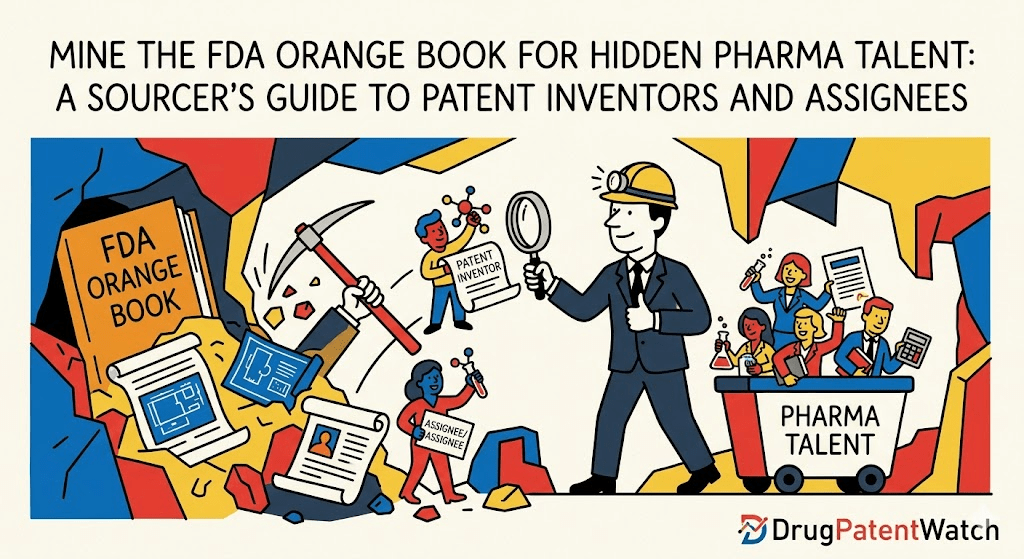
Every pharmaceutical patent filed with the FDA Orange Book names two things: who owns the invention, and who made it. Most recruiters never look at either one.
That oversight is expensive. ManpowerGroup’s U.S. Talent Shortage Survey found that 69% of life sciences and healthcare employers report difficulty sourcing skilled talent [1]. A separate Deloitte survey found that 83% of pharmaceutical and life sciences companies have difficulty finding skilled talent, with 75% anticipating the shortage to worsen over the next five years [2]. And yet the same companies spending hundreds of thousands of dollars on agency retainers and LinkedIn Recruiter licenses are sitting on a public, structured, and entirely free database that maps the precise scientific expertise of tens of thousands of pharmaceutical scientists by drug, by therapeutic area, by company, and by year.
That database is the FDA Orange Book. And most talent teams don’t know it exists as a sourcing instrument.
This guide will walk you through exactly how to use Orange Book patent listings — combined with USPTO inventor records and tools like DrugPatentWatch — to build patent-derived talent maps for any therapeutic area, any molecule type, or any competitive set of companies. When you are done reading, you will have a repeatable sourcing methodology that your competitors are almost certainly not using.
What the FDA Orange Book Actually Is (and Why Recruiters Should Care)
The FDA Orange Book — formally titled Approved Drug Products with Therapeutic Equivalence Evaluations — has been published since 1980 [3]. Its primary purpose is regulatory: it lists every non-biologic drug approved under the Federal Food, Drug, and Cosmetic Act, along with each product’s patent and exclusivity information. Pharmacists use it to identify approved generic substitutes. Generic manufacturers use it to time ANDA filings and assess patent challenge risk. Investors use it to model loss-of-exclusivity events.
Recruiters use it for almost nothing. That is a gap worth closing.
Here is what the Orange Book actually contains for each approved drug product: the NDA (New Drug Application) number, the applicant name, the product’s active ingredient, dosage form, route of administration, and — critically — every patent number the NDA holder has certified as covering the drug. Each of those patent numbers, when cross-referenced against the USPTO’s public patent database, reveals the names of the scientists who invented the compound, formulation, or method of use. It also reveals the assignee — typically the company that owns the patent — and the filing date, which tells you roughly when that team of scientists was actively working on the chemistry or biology behind the drug.
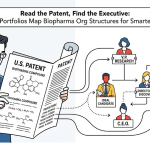
Pull that thread across a therapeutic area, and you do not get a list of patents. You get a map of human expertise: who built what, where they worked when they built it, and what scientific problems they solved. That map is a sourcing goldmine.
What Types of Patents Are Listed
The Orange Book lists three categories of pharmaceutical patents, and understanding the distinction matters for sourcing because each type points to a different kind of scientist.
Drug substance patents — sometimes called active ingredient or composition-of-matter patents — claim the molecule itself. The inventors named on these patents are almost always medicinal chemists, synthetic organic chemists, or computational chemists who designed or optimized the active ingredient. If you are building a pipeline for a drug discovery team or hiring for a small-molecule chemistry role, drug substance patents give you the most direct signal.
Drug product patents cover formulations, delivery systems, and compositions. The inventors here tend to be pharmaceutical scientists and formulation chemists — people who figured out how to make the molecule bioavailable, stable, and manufacturable at scale. If you are hiring for formulation science, drug delivery, or CDMO partnerships, these are your targets.
Method-of-use patents claim approved therapeutic applications. Inventors on these patents are frequently clinical pharmacologists, translational scientists, or physician-researchers who worked on mechanism of action or dosing. For medical affairs, clinical pharmacology, or translational medicine roles, method-of-use inventors are worth your attention.
Manufacturing process patents — the fourth category — are deliberately excluded from the Orange Book. If you are hiring for process chemistry or manufacturing science, you need to go directly to the USPTO and conduct separate assignee searches, because that talent pool does not appear in Orange Book listings at all.
The Talent Shortage That Makes This Methodology Worth Learning
To understand why patent-derived sourcing matters enough to build into a workflow, you need to look at where pharma talent acquisition is right now.
Life sciences occupations carry an unemployment rate below 2%, making the competition for qualified workers exceptionally tight [1]. Filling a non-executive role in life sciences typically takes two to three months [2]. Specialized roles — computational biologists, formulation scientists, CMC directors, regulatory chemists — routinely sit open longer. Bristol Myers Squibb cut approximately 2,200 workers in 2024, representing about 30% of all biopharma job cuts in that period, which did push some talent into the market [4]. But that wave was largely absorbed by the same companies bidding against each other on LinkedIn.
The structural problem is not that good pharma scientists don’t exist. It is that most of them are not active job seekers, and traditional sourcing methods do not find passive candidates with scientific precision. A LinkedIn keyword search for “formulation chemist with oncology experience” returns hundreds of profiles with variable reliability. A targeted search of the inventors named on Orange Book-listed patents for oncology drugs returns a much smaller, much more verified list of people who have demonstrably built, patented, and successfully navigated FDA approval for exactly the kind of work you need done.
“Lack of specific skills and talents was the single biggest obstacle to digital transformation in pharma, cited by 49% of surveyed professionals.” — GlobalData Industry Report, November 2024 [5]
The real issue is signal quality. Most pharma talent teams are swimming in resumes and applications while struggling to identify the 3% of candidates who have done the work at the level required. Patent records strip out the noise. They are a third-party validation system for scientific expertise: the USPTO, the FDA, and the courts have all reviewed and confirmed that the named inventor contributed to a patentable invention that survived the drug approval process.
You cannot fake that.
The Sourcing Workflow: Step by Step
Step 1: Identify Your Target Drug or Therapeutic Area in the Orange Book
Start at the FDA’s Orange Book search interface at accessdata.fda.gov. You can search by active ingredient, proprietary (brand) name, applicant, NDA number, dosage form, or patent number [3].
The most useful entry points for talent sourcing are:
Active ingredient — search for a specific compound to find all approved products and their associated patent listings. This is useful when you are hiring for a specific drug program.
Applicant name — search by company name to pull every approved product from a specific company and see the full patent portfolio, revealing which scientific domains they have invested in.
Therapeutic class searches — the Orange Book’s data files, available as downloadable ZIP files, include products with their active moiety and application class, allowing you to segment by pharmacological category.
For systematic work across a therapeutic area, download the Orange Book data files directly from the FDA. The main files you want are the products file, the patents file, and the exclusivity file. These are updated daily and can be cross-referenced programmatically [3].
As a practical starting point: if you are building a talent pipeline for an oncology program, search the Orange Book for the five to ten key branded molecules in your target tumor type. Pull the NDA number for each. Record every patent number listed against those NDAs. You now have the raw input for the next step.
Step 2: Pull Inventor and Assignee Data from the USPTO
Inventor names (first name, last name, and usually city/country)
Assignee (the company or institution that owns the patent at time of grant)
Filing date and grant date
Classification codes (CPC and USPC) that describe the technical field
Abstract and claims — the actual scientific substance of the invention
For a single molecule like, say, a kinase inhibitor approved via NDA, you might find four to twelve patents listed in the Orange Book, each naming a different inventor team. Work through each patent and extract all inventor names into a spreadsheet. Note the assignee for each patent — it may differ across patents for the same drug if the IP was acquired or if academic collaborators filed separately.
The USPTO’s PatentsView database is worth knowing about here. It uses machine learning disambiguation algorithms to resolve inventor name variants across the patent corpus, producing clean researcher profiles that account for name changes, misspellings, and co-inventor attribution [7]. PatentsView data can be downloaded and queried at scale, which becomes valuable when you are mapping a large therapeutic area rather than a single drug.
The USPTO Assignment Center adds another layer: it shows every recorded assignment of a patent, including transfers from inventors to companies and from one company to another [8]. If a patent was originally assigned to a university and later transferred to a pharma company, you can see that history. If a patent was transferred to a new company following an acquisition, you can see that too — which tells you exactly who has the relevant expertise now and how they got there.
Step 3: Use DrugPatentWatch to Accelerate the Process
Manual patent-by-patent lookups across the Orange Book and USPTO work, but they are slow. DrugPatentWatch pulls directly from primary sources — the USPTO, FDA Orange Book, ANDA filings, and litigation records — and structures the data in ways that compress the research cycle considerably [9].
For sourcing purposes, DrugPatentWatch is useful at several points in the workflow. First, its drug profiles show every Orange Book-listed patent for a given product in a single view, with expiration dates, drug substance and drug product flags, and submission dates — saving the step of pulling NDA data manually from the FDA interface. Second, its patent detail pages link to the full USPTO patent record, making it easy to jump from a patent number to the inventor list. Third, its assignee search capability lets you query patents by company and see the full portfolio of a given assignee, which is precisely the tool you need when conducting a competitive talent mapping exercise against a specific firm.
The platform was built primarily for pharmaceutical business intelligence — patent expiration forecasting, generic entry timing, loss-of-exclusivity modeling — but its underlying data maps directly onto the sourcing workflow described here [9]. Talent teams that build a DrugPatentWatch subscription into their competitive intelligence budget have a material advantage in patent-derived sourcing speed.
Step 4: Profile and Locate the Inventors
Once you have a list of inventor names from the patent records, the next task is translating those names into findable professionals. This is where the workflow connects to conventional sourcing channels.
Most pharmaceutical scientists with granted patents have some form of professional digital footprint, though its nature varies substantially by career stage and role type. The most effective approach uses three sources in combination:
LinkedIn: Search the inventor’s full name combined with their last known employer (the assignee company at the time of the patent), their city, and the scientific domain. Patent records often include the inventor’s address at the time of filing, which helps narrow geography. For scientists who have moved companies since filing, you can also cross-reference the assignee transfer records from the USPTO Assignment Center to see where the IP went — companies that acquire patents often acquire the scientists along with them.
PubMed and Google Scholar: Pharmaceutical inventors frequently publish academic papers alongside their patent work, particularly if they are in discovery science roles. A search for the inventor name alongside the drug’s active ingredient or mechanism often surfaces publication records, institutional affiliations, conference presentations, and co-author networks that extend the talent map considerably. The co-authors on a published paper from a scientist you have identified are themselves potential candidates — and they are not named on any patent that a competitor recruiter might already be mining.
Professional association and conference records: The American Chemical Society, the American Association of Pharmaceutical Scientists, and disease-specific professional bodies publish speaker rosters, award recipients, and committee member lists. Cross-referencing inventor names against these records yields career trajectory information and often reveals current employers more reliably than stale LinkedIn profiles.
Step 5: Map the Assignee Ecosystem
Inventor-level sourcing targets individuals. Assignee-level analysis targets populations — the talent pools of specific companies, institutions, and research consortia that concentrate expertise in a given area.
When you look at the assignees across all Orange Book-listed patents in a given therapeutic area, a specific pattern almost always emerges. A small number of companies appear repeatedly as innovators — original NDA holders with large, diverse inventor rosters. A second tier of companies appears as developers of formulation or delivery innovations — often CDMOs or specialty pharma companies that have done substantial IP-generating work without holding the original NDA. Universities and research foundations appear as original assignees on early-stage patents that were later transferred to commercial developers, revealing the academic institutions that trained the scientists who built the drugs.
Each layer of this ecosystem is a sourcing target with a distinct talent profile. The original NDA holder’s inventor roster gives you the medicinal chemists and early discovery scientists. The formulation patent assignees give you the pharmaceutical scientists and drug delivery specialists. The academic assignees give you the researchers who trained the generation of scientists who came next — the professors whose graduate students went on to build careers at those same companies and who can often be recruited directly from their post-doctoral or early-career roles.
Building a Competitive Talent Map: A Worked Example
Theory is useful. A worked example is more useful. Walk through the methodology applied to a real therapeutic category.
Target: CDK4/6 Inhibitors in Breast Oncology
The CDK4/6 inhibitor class — which includes palbociclib (Ibrance, Pfizer), ribociclib (Kisqali, Novartis), and abemaciclib (Verzenio, Eli Lilly) — is a reasonable test case because all three drugs are approved, extensively patented, and involve different inventor and assignee ecosystems.
A search of the FDA Orange Book for these three products returns a combined total of over thirty individual patent listings. Pulling those patent numbers into the USPTO database reveals inventor rosters for each. Palbociclib, for example, has its core composition-of-matter patents tracing back to scientists at Pfizer’s oncology research group in La Jolla, California, with a separate set of formulation inventors from a later stage of development. Ribociclib’s early composition patents name inventors with ties to Novartis Institutes for BioMedical Research. Abemaciclib traces to an Eli Lilly research program with inventors based in Indianapolis.
Running the assignee-level analysis across all three products reveals:
The three large pharma companies (Pfizer, Novartis, Eli Lilly) as primary composition-of-matter assignees
Academic institutions that published foundational CDK biology — including work that predates all three commercial programs — whose faculty and trainees populated the discovery teams at the commercial companies
Contract research organizations named on formulation patents that did the pharmaceutical development work on delivery systems
A small number of individual inventor names who appear across patents assigned to multiple companies, indicating scientists who changed employers mid-development or who consulted across programs
That last observation — inventors who have worked across multiple assignees — is particularly valuable for sourcing. A scientist who has contributed to CDK4/6 chemistry at two different organizations is not just expert in the science; they have demonstrated the organizational mobility that makes them a realistic recruiting target and the breadth of exposure that makes them valuable in a new role.
From this analysis, you now have the raw material for sourcing conversations at multiple levels: the original discovery chemists who built the scaffolds, the formulation scientists who took the molecules into clinical-grade dosage forms, the academic collaborators who contributed mechanistic insights, and the mobile inventors who have navigated multiple organizational contexts. You have this for all three major CDK4/6 inhibitors — meaning you understand the competitive talent pool across the entire class, not just within a single drug program.
Reading Patent Filing Dates as Career Signal
One detail that most sourcing workflows miss: patent filing dates are career timing signals, not just legal milestones.
A patent filed in 2008 and granted in 2011 for a drug approved in 2015 tells you that the core invention was made roughly fifteen to seventeen years ago. The scientists named as inventors were working on that problem then. If they were, say, a research scientist at the time of filing, they are now likely a senior director or VP. If they were already a senior scientist, they may now be heading a department or have moved to a smaller company in a more senior role.
Filing dates also reveal when companies were actively investing in specific scientific areas. A company whose Orange Book-listed patents cluster in filings from 2012 to 2018 was building that capability during that period. If you see a more recent cluster — say, 2019 to 2023 — that company was adding to or rebuilding that capability recently, and the scientists named on those newer patents are often in mid-career roles that coincide with high mobility and competitive interest.
The patent date combined with the inventor’s career stage at the time of filing, reconstructed from LinkedIn or publication records, gives you a reasonable estimate of where that person is in their career now — which determines the appropriate role level for outreach.
Assignee Transfers and What They Tell You About Talent Movement
Pharmaceutical IP moves. It moves through acquisitions, through licensing deals, through divestitures, and through spinouts. Each transfer event recorded in the USPTO Assignment Center is, from a talent sourcing perspective, an indicator of where key scientific teams have gone.
When Pfizer acquires a biotech, the patents transfer to Pfizer — and typically so do the scientists. When a large pharma divests a therapeutic area, the patents often go with the divested entity — and again, often so do the scientists. When a university licenses a patent to a startup, the graduate student or postdoc who was lead inventor on the original university patent frequently takes a role at the startup that licensed their work.
Tracking assignee transfers over a five to ten-year window for a given drug or drug class builds a map of corporate M&A activity that tracks directly onto talent movement patterns. Pfizer’s acquisition of Array BioPharma in 2019 for $11.4 billion, for example, brought not just the oncology drug binimetinib and encorafenib into the Pfizer portfolio but the inventor teams behind those molecules [10]. A recruiter who had mapped the Array BioPharma patent assignee ecosystem before that acquisition and tracked where those scientists landed post-deal would have had a two-year head start on identifying that talent for competitive targeting.
The pattern is consistent across the industry. Big pharma buys innovation from biotech; the patents transfer; some of the scientists integrate into the acquirer, and some leave within twelve to twenty-four months of the deal close. The ones who leave are often the most entrepreneurial and the most technically accomplished — and they are, at the moment they leave, in the labor market and interested in their next challenge. Patent assignment transfer records tell you, with reasonable precision, when to expect those moments.
The University-to-Industry Pipeline
Academic institutions appear as original patent assignees on a substantial proportion of pharmaceutical patents, particularly for first-in-class mechanisms where the foundational biology was done in university labs. When the FDA Orange Book shows a patent originally assigned to a research university and subsequently transferred to a pharmaceutical company, the history of that transaction is visible in the USPTO Assignment Center.
More useful for sourcing is the generation of scientists trained in those university labs who did not transfer with the patent. The graduate students and postdoctoral researchers who contributed to the foundational science — some of whom may be named as inventors on the university patent, and all of whom can be identified through the laboratory’s publication record — are the talent the industry has not yet claimed.
Mapping the academic labs that produced the scientific foundation for a given class of drugs, then identifying the trainees who came through those labs in the five to ten years surrounding the key patent filings, gives you a forward-looking talent pipeline: researchers who were trained in exactly the right science and who are now, depending on their career trajectory, at the associate director or director level in the industry, or who have built academic careers of their own and represent potential consultants, advisors, or in-licensing partners.
Tools like Google Scholar and PubMed are essential for this part of the work. A search for the laboratory PI’s name combined with the mechanism or target identified in the Orange Book patents typically surfaces the key publications, their co-authors (who are the trainees), and the academic lineage of the science — all of which can be traced forward in time through LinkedIn and conference records to find where those researchers are now.
From Patent Data to Talent Intelligence: The Broader Framework
Individual sourcing searches are useful. A systematic talent intelligence framework is transformative. Here is how to build one.
Building a Therapeutic Area Patent-Inventor Database
Select a therapeutic area that represents a current or anticipated hiring need — say, GLP-1 receptor agonists for a company entering the cardiometabolic space, or KRAS inhibitors for an oncology pipeline. Conduct a structured Orange Book search for all approved products in that space. Extract every patent number. Pull every patent from the USPTO and record inventor names, assignee names, filing dates, and CPC classification codes. Supplement with DrugPatentWatch for depth and speed on the patent-product linkages.
The resulting database — which you can build and maintain in a structured spreadsheet or a lightweight CRM — is your therapeutic area talent inventory. It is a list of every scientist who has demonstrably built, patented, and navigated through FDA approval for a drug in your target space. That is the starting population for every future search in that area.
Maintain it. The Orange Book updates daily. New patents are listed. Existing patents expire. New NDAs are approved. A quarterly refresh of the database, pulling new patent listings for products in your target area, keeps the talent inventory current and identifies new inventors entering the space — typically early-career researchers on recent filings who represent the next generation of recruitable talent in that area.
Segmenting the Inventor Population
Not all inventors are equally recruitable, and not all are appropriate for the same kinds of roles. Segmenting the inventor population based on observable characteristics from the patent record improves targeting efficiency considerably.
By patent type: drug substance inventors versus drug product inventors versus method-of-use inventors each represent distinct scientific disciplines. Drug substance inventors skew toward discovery chemistry; drug product inventors toward pharmaceutical sciences; method-of-use inventors toward clinical and translational research.
By inventor frequency: a scientist who appears as a named inventor on ten or more patents is operating in a different professional category than someone with one or two. High-frequency inventors are typically senior scientists or scientific directors who have been consistently productive over a long career. They are harder to recruit and more expensive, but represent the highest-value targets for senior individual contributor or scientific leadership roles.
By recency: inventors on patents filed in the last five years are typically earlier in their careers than those on patents filed in the last fifteen. Targeting recent filings identifies researchers at the associate director or senior scientist level — the pipeline for future senior roles and often the most mobile segment of the pharma scientific workforce.
By assignee type: inventors at large pharma have typically worked in structured, well-resourced programs. Inventors at smaller biotechs have often worn more hats and navigated the full spectrum from discovery through CMC. Inventors at contract research organizations or CDMOs have deep technical expertise but often narrower pipeline exposure. Each profile has a distinct value proposition for different roles, and understanding which type of inventor maps to which hiring need saves time and improves placement quality.
Mapping Inventor Networks
Patent inventorship is inherently collaborative. A patent with seven named inventors represents seven scientists who worked closely enough on the same problem to jointly claim authorship. That team structure, preserved in the patent record, is a sourcing network.
When you identify one inventor from a patent who is actively interested in a role, the remaining co-inventors on the same patent are warm leads. They worked on the same problem, at the same time, probably in the same physical location. They share scientific context and — in many cases — career trajectory. If one person from that team has moved on and is open to new opportunities, there is a meaningful probability that others from the same team are similarly positioned.
This is how patent-derived sourcing compounds. The first inventor you identify from the Orange Book opens access to their co-inventor network. Each co-inventor, when engaged, opens access to their own additional patent collaborations. A disciplined recruiter who starts from the Orange Book and maps inventor co-authorship networks can build a multi-degree network of verified scientific expertise in a target area within a few weeks, without spending any time on job boards, resume databases, or cold outreach to profiles that have not been verified for actual scientific depth.
Practical Tools and Workflows for Scaling the Methodology
Free Tools
The core methodology requires no subscription expenditure. The FDA Orange Book search interface and downloadable data files are free [3]. The USPTO Patent Public Search is free [6]. PatentsView is free [7]. The USPTO Assignment Center is free [8]. PubMed is free. Google Scholar is free. With these six tools alone, a determined talent professional can build a robust patent-derived talent inventory for any therapeutic area in a few days of structured work.
The limitation is speed and integration. Manual cross-referencing across these six tools is slow, and the data does not naturally join across sources in a way that makes programmatic analysis easy. For a one-time sourcing sprint targeting a specific drug or small set of drugs, manual tools are adequate. For ongoing competitive talent intelligence across multiple therapeutic areas, some investment in tools that aggregate and cross-reference the data is worth considering.
DrugPatentWatch as a Research Hub
For talent professionals who do not have a background in patent research, DrugPatentWatch is the most practical entry point for the Orange Book-to-inventor workflow. Its drug profiles surface the relevant patents in a structured view; its patent links connect directly to the underlying USPTO records; its assignee search functionality enables the competitive portfolio analysis described above [9]. The platform was built for pharmaceutical business intelligence and is most commonly used by business development, IP, and market access teams — but its underlying patent-product-company data structure maps directly onto the talent intelligence use case.
Teams at branded pharmaceutical companies in particular can use DrugPatentWatch to assess the patent portfolios of competitors in any therapeutic area — revealing not just what they are working on but, through the inventor records linked to those patents, who their key scientific talent is. That information is competitive intelligence about human capital, not just intellectual property, and it is available from the same public data that competitive intelligence teams already analyze for market entry and portfolio strategy purposes.
LinkedIn Boolean Searches Informed by Patent Data
Once you have inventor names, companies, locations, and scientific domain classifications from the patent record, you have the structured inputs for highly precise LinkedIn boolean searches. Instead of guessing at keywords for a search string, you know the specific compound class (from the patent’s CPC classification), the specific companies that have employed inventors in that class (from the assignee records), the cities where those companies’ research operations are located (from the inventor address fields in the patent), and the specific named individuals you are targeting.
A LinkedIn recruiter search built on patent data is structurally different from a keyword search. You are not casting a net; you are making targeted inquiries against a verified population. The conversion from search to qualified candidate is substantially higher because you have eliminated the qualification step: the patent record is the qualification.
Building Outreach That Works
The outreach message to a patent inventor requires a different approach than standard recruiter cold outreach. The scientist on the receiving end knows, with certainty, that the recruiter has done non-trivial research. You cannot pretend you found their LinkedIn profile through a keyword search. You are clearly referencing their patent work, which means the opening sentence of your message needs to reflect genuine engagement with that work.
This is not a problem; it is an advantage. A message that opens by referencing a specific patent, the scientific problem it solved, and why that expertise is relevant to the role you are filling immediately differentiates the outreach from the hundreds of generic LinkedIn messages that scientists receive. Scientists respond to demonstrated scientific credibility, not recruitment patter. Showing that you understand what they built, why it mattered, and why your client’s problem is related creates a conversation that generic sourcing does not.
Practically: read the abstract and at least the claims of the relevant patent before reaching out. Understand what the invention was — whether it was a new synthesis route, a novel salt form for bioavailability, a specific dosing regimen. Frame the outreach around the intersection of their proven expertise and the open scientific challenge at the hiring company. Do not lead with compensation or titles. Lead with the science.
Legal and Ethical Considerations
Patent records are public documents. Inventor names, assignee names, filing dates, and classification data are all public record as a matter of U.S. patent law — the quid pro quo of the patent system is that inventors disclose their inventions publicly in exchange for the time-limited monopoly the patent confers [12]. Using that public disclosure to identify the inventors for professional outreach is no different from any other form of professional networking through publicly available information.
Several practical boundaries apply.
Patent records show where inventors worked when they filed, not necessarily where they work now. Reaching out to someone at the company listed on a patent when they left that company years ago is at best ineffective and at worst an irritant. Always verify current employment before outreach.
Inventor addresses in patent records are historical. Many older patents include home addresses for individual inventors, particularly from independent inventors or academic researchers. Using a residential address from a patent record for any outreach purpose other than formally required patent correspondence is both inappropriate and almost certainly unnecessary — LinkedIn and publication records provide current professional contact information.
Companies have non-solicitation agreements that may limit direct outreach to employees of specific firms. Check any such restrictions in your client’s vendor agreements before conducting targeted outreach to employees of specific assignees. The patent-derived talent map itself has no legal restriction on construction, but the outreach execution is subject to whatever contractual constraints exist.
Finally, patent inventorship is not always complete. On collaborative projects, not all contributors to the scientific work are necessarily named as inventors — patent inventorship has specific legal requirements around the conception of claims, and contributors who did important experimental work without conceiving the claimed invention may not appear. The patent record is a strong signal for scientific expertise, but it understates the total population of people who worked on the project. Use it as a starting point, not as a complete census.
Special Cases: Generic Drug Manufacturers and the ANDA Ecosystem
The Orange Book’s primary focus is on branded NDA products. But it also includes ANDA (Abbreviated New Drug Application) approvals — the generic drug approvals that follow the 180-day exclusivity and patent challenge process. Generic drug manufacturers don’t usually list patents in the Orange Book in the way that brand companies do, but the Paragraph IV patent challenge ecosystem generates substantial public litigation records that create a parallel talent intelligence signal.
When a generic manufacturer files a Paragraph IV certification — claiming that a brand company’s listed patents are invalid or will not be infringed by the generic product — the subsequent litigation names the parties, the patents at issue, and produces expert witness disclosures, claim construction briefings, and technical declarations that reveal in extraordinary detail who knows what about the relevant chemistry. Expert witnesses in pharmaceutical patent litigation are almost universally among the most scientifically accomplished individuals in their field. They are also, by definition, publicly named in court records.
A search of patent litigation records through CourtListener or the PACER federal court records system for litigation involving the drugs on your target list will surface expert witness names that do not appear in the Orange Book itself. These are specialists whom both sides of high-value pharmaceutical patent litigation were willing to pay to opine on the science. Their expertise is as well-documented as that of any named inventor, and they are identifiable and sourceable through the same professional channels.
For talent teams building pipelines in contested therapeutic areas — where brand and generic companies are both actively investing — the combination of Orange Book inventor records and patent litigation expert witness records gives a more complete picture of the expert talent population than either source alone.
Measuring the ROI of Patent-Derived Sourcing
Talent acquisition investments are routinely evaluated on time-to-fill, cost-per-hire, and quality-of-hire metrics. Patent-derived sourcing performs well on all three when properly implemented.
Time-to-fill: The primary bottleneck in specialized pharma roles is not the interview process; it is identifying a sufficient population of genuinely qualified candidates. A patent-derived talent inventory for a therapeutic area, built once and maintained quarterly, eliminates that bottleneck for every subsequent search in that area. The first time you build the inventory for, say, PCSK9 inhibitor chemistry, it takes substantial research time. The second search in that space takes a fraction of the time because the population is already mapped.
Cost-per-hire: Agency retainers for specialized pharmaceutical roles typically run 20% to 30% of first-year compensation. For a VP of Chemistry at $400,000 total compensation, that is an $80,000 to $120,000 fee. Patent-derived sourcing, done internally, eliminates the agency dependency for roles where you have built sufficient talent intelligence. The cost of a DrugPatentWatch subscription, USPTO access tools, and the researcher’s time is a small fraction of a single retained search fee for a senior scientific role.
Quality-of-hire: This is where the methodology has its most durable advantage. Scientists identified through patent records have a verified, independently validated track record of scientific productivity. They have produced inventions that survived USPTO examination, commercial development, and FDA approval. The baseline quality of the population is structurally higher than a keyword-matched resume database because the selection criterion — named inventorship on an approved drug patent — is an objective measure of scientific output at a level that matters to the pharmaceutical industry.
The Korn Ferry analysis that projected 85 million unfilled jobs globally by 2030 [11] and the BIO industry survey finding that 80% of pharma firms struggle to fill critical research roles [13] both describe a sourcing problem, not a candidate problem. The scientists exist. Finding them through patent records is a structural solution to a structural problem.
Integration with Competitive Intelligence Functions
Most pharmaceutical companies maintain some form of competitive intelligence function — a team or individual responsible for tracking competitor pipelines, patent filings, and strategic moves. In most organizations, that function and the talent acquisition function operate independently, sharing almost no data or methodology.
That separation is a missed opportunity.
The data that competitive intelligence teams use to track competitor R&D strategy — Orange Book listings, USPTO patent filings, ANDA activity, litigation records — is the same data that produces the talent intelligence methodology described in this article. The analytical work is largely shared. A competitive intelligence analyst who has built a map of all active patents in a competitor’s oncology portfolio has already done 70% of the work required to build a patent-derived talent map of that competitor’s scientific staff.
Companies that bridge the gap between competitive intelligence and talent acquisition gain two advantages simultaneously. Their competitive intelligence function gains a human capital dimension — understanding not just what competitors are doing scientifically but who is doing it and how stable that capability is. And their talent acquisition function gains access to structured, continuously updated scientific intelligence about the candidate population that no amount of LinkedIn searching can replicate.
The organizational change required is not structural — you do not need to merge departments. You need a workflow connection: a shared data repository where competitive intelligence outputs are formatted in a way that talent teams can query by therapeutic area, role type, or company. DrugPatentWatch’s exportable patent data and PatentsView’s downloadable inventor tables are both compatible with standard spreadsheet or database tools that most teams already use.
Building the Researcher’s Capability: Training Talent Teams to Read Patents
The most common objection to implementing patent-derived sourcing at scale is that talent professionals are not trained patent analysts. That is true and mostly irrelevant. You do not need to be a patent attorney to use patent records for sourcing purposes. You need to know how to read a patent’s front page — which lists the inventors, the assignee, the filing date, and the abstract — and how to navigate the USPTO search interface to retrieve it. That takes about an hour to learn.
The more substantive training requirement is building enough scientific literacy to understand what you are reading when you look at a pharmaceutical patent abstract. A recruiter who understands the difference between a drug substance claim and a formulation claim, who can read a CPC classification code and know whether it refers to kinase inhibitors or formulation science, and who can identify from an abstract whether an invention is relevant to the role they are filling — that recruiter is measurably more effective in this methodology than one who cannot.
Building that literacy takes time, but it is possible. A reading list of introductory pharmaceutical science texts, a few sessions with a scientist on the company’s research team to understand the domain-specific vocabulary, and some supervised practice reading patent abstracts in the relevant therapeutic area produces adequate scientific literacy for sourcing purposes within a few months. The investment pays back on every specialized search thereafter.
For talent teams that cannot build that literacy internally, the alternative is a structured partnership with a scientific advisor — someone from a research function within the company, or an external consultant with the relevant domain expertise — who reviews the patent-derived candidate list for scientific relevance before outreach begins. The talent team handles the Orange Book search, inventor extraction, and LinkedIn identification; the scientific advisor reviews the resulting candidate list and flags the highest-priority targets based on scientific fit. This division of labor scales reasonably well and preserves the efficiency advantage of the methodology without requiring full scientific training for every sourcer.
The Purple Book and Biologics: An Adjacent Opportunity
The Orange Book covers small-molecule drugs — the traditional pharmaceutical category. Biologics — vaccines, monoclonal antibodies, gene therapies, cell therapies — are listed in the FDA Purple Book, which underwent significant changes with the Purple Book Continuity Act that took effect in March 2021 [14].
The Purple Book now includes biosimilar information, reference product data, and licensure history, but it does not include patent information in the same direct way the Orange Book does. Biosimilar patent information enters the public record primarily through the patent dance — the formal exchange of patent lists between reference product sponsors and biosimilar applicants under the Biologics Price Competition and Innovation Act — and through subsequent litigation.
For biologics talent sourcing, the workflow differs slightly. Because Purple Book patent listings are less structured than Orange Book listings, the primary patent sources for biologics talent mapping are the USPTO assignee records for the relevant biologic companies (searching by assignee name for the NDA holder) and the publication record of the scientific teams, which for biologics tends to be more extensive than for small-molecule programs. The inventor analysis methodology is the same; the entry point is different.
The biologics space also has a more developed academic-to-industry talent pipeline for certain categories — CAR-T development, CRISPR technology, mRNA therapeutics — where the foundational science originated in specific academic laboratories whose inventors are well-documented. The Broad Institute patents on CRISPR-Cas9, for example, name specific inventors whose subsequent career paths, entrepreneurial activities, and institutional affiliations are well-documented and highly sourceable.
Common Mistakes and How to Avoid Them
Treating Patent Listings as Current Employment Records
A patent is a snapshot of who was working on a problem at a specific point in time. A drug substance patent filed in 2009 and granted in 2012 tells you where those scientists worked in 2009. It says nothing about where they are in 2026. Always verify current employment before outreach, and treat the patent as a starting point for research rather than a current directory.
Ignoring the Claims in Favor of the Abstract
The abstract summarizes the patent in plain language and is useful for quickly assessing relevance. But the claims — the numbered legal statements that define exactly what the patent covers — are where the scientific specificity lives. A recruiter who reads only abstracts may confuse a broad composition-of-matter patent (covering the molecule across all uses) with a narrow method-of-use patent (covering only a specific approved indication). The inventor profiles on those two types of patents are different, and the distinction matters for role matching.
Over-Relying on High-Frequency Inventors
Scientists with twenty or thirty patents to their name are extraordinary scientists, but they are rarely the easiest candidates to recruit. They tend to be senior, well-compensated, and often deeply embedded in a role they built over many years. Using high-frequency inventor status as a sourcing filter without also considering career trajectory, mobility signals, and company context produces a list that looks impressive but does not convert to hires. Balance high-frequency inventors (senior leadership targets) with mid-career inventors (one to five patents, filed in the last five to eight years) who represent the most recruitable segment of the expert population.
Skipping the Assignment Transfer Search
Many sourcing professionals who engage with this methodology at all will pull inventor names from patents and stop there. They miss the assignment transfer data entirely. Assignment transfers are where you find the M&A-driven talent movement — the scientists who moved with an acquisition, the ones who did not, the ones who founded spinouts and took the university IP with them. That layer of the data is where the most mobile and entrepreneurially motivated scientists appear, and it requires the additional step of querying the USPTO Assignment Center specifically.
Limiting the Search to One Drug or One Company
The value of the methodology scales with the breadth of the patent search. A single drug gives you one team of inventors. An entire therapeutic area gives you the full expert population across all companies actively working in that space. Always expand the search to at least the top five to ten approved products in your target area before drawing any conclusions about the available talent pool.
The Competitive Horizon: Who Else Is Doing This
A small number of pharmaceutical companies and specialized executive search firms have already integrated patent data into their sourcing workflows. HardSkills, for example, has built a STEM candidate database of over 29 million experts sourced from patent records across technical fields including pharmaceuticals [15]. Their platform explicitly markets what they call “IP recruitment” — identifying, validating, and contacting patent holders as a primary sourcing channel.
That the methodology has a dedicated commercial platform is evidence that it works at scale. It is also evidence that the window for first-mover advantage among internal talent teams is not unlimited. As more recruiting operations — both in-house and agency — adopt patent-derived sourcing as a standard workflow, the exclusive access advantage of the methodology diminishes. The time to build the capability is before competitors do, not after.
On the competitive intelligence side, firms like DrugPatentWatch already position patent data as a lens for understanding what competitors are building and where their capabilities are concentrated [9]. The extension of that analysis from “what is the competitor doing” to “who is the competitor using to do it” is a small methodological step with significant practical consequences for talent acquisition.
The pharmaceutical companies best positioned to capitalize on patent-derived talent mapping are those that have already invested in competitive intelligence infrastructure. They have the data workflows, the analytical capacity, and the domain expertise to extend the methodology from IP analysis to human capital mapping without starting from scratch. For those organizations, the primary investment required is organizational — connecting the competitive intelligence and talent acquisition functions — rather than technical.
A Note on Confidentiality and Strategic Sensitivity
One aspect of patent-derived talent mapping that deserves explicit attention: the same methodology that helps you source talent also tells your competitors where your key scientific staff are, what they have built, and what areas they are most expert in. Your Orange Book listings are as public as anyone else’s.
This is not a reason to avoid the methodology; it is a reason to understand it clearly. If your core scientific capabilities are defensible only because competitors have not thought to look at your inventor records, those capabilities are less defensible than you might assume. Patent-derived talent mapping is a competitive intelligence tool that runs in both directions simultaneously.
Companies that take the methodology seriously for sourcing should, as a consequence, take seriously the talent retention implications. The scientists most likely to be identified and targeted by competitors using this methodology are the high-frequency inventors — the scientists whose names appear repeatedly across your most significant patents, whose work is publicly verifiable as foundational to your most valuable products. Those are exactly the people whose retention should be a strategic priority, addressed through compensation, organizational status, and scientific autonomy, not just salary.
Key Takeaways
The FDA Orange Book is a public, structured database of approved drug patents that names the inventors and assignees behind every listed patent — making it a systematic, verifiable map of pharmaceutical scientific expertise.
Three patent types appear in the Orange Book — drug substance, drug product, and method-of-use — and each identifies a distinct scientific discipline. Drug substance patents target medicinal chemists; drug product patents target formulation scientists; method-of-use patents target clinical and translational researchers.
Cross-referencing Orange Book patent numbers with the USPTO Patent Public Search and Assignment Center reveals inventor names, career histories, employer changes, and collaborative networks that LinkedIn searches alone cannot surface reliably.
DrugPatentWatch compresses the research cycle by aggregating Orange Book patent listings with USPTO records, assignee data, and litigation information in a single platform — making it a practical hub for patent-derived talent intelligence workflows.
USPTO Assignment Center transfer records map M&A-driven talent movement: when companies acquire assets, they often acquire teams, and when those teams subsequently move on, the assignment records provide timeline and trajectory information that improves targeting precision.
Patent filing dates are career timing signals: the date a patent was filed tells you when a scientist was actively working on a specific problem, which — combined with publication and LinkedIn records — helps estimate their current career stage and role level.
Co-inventor networks on single patents represent pre-built sourcing clusters: scientists who filed a patent together worked in close proximity on the same problem and often share career trajectory, making one identified inventor a natural bridge to five or more additional qualified candidates.
Patent-derived sourcing delivers measurable ROI through reduced time-to-fill (pre-built talent inventories for target therapeutic areas), lower cost-per-hire (reducing or eliminating agency dependency for specialized roles), and higher quality-of-hire (independently validated scientific productivity as the selection criterion).
Frequently Asked Questions
1. Does patent-derived sourcing work for biologics, or only for small-molecule drugs?
The Orange Book covers small-molecule drugs only. Biologics are listed in the FDA Purple Book, which has a different patent disclosure structure — biologics patent information enters the public record primarily through the patent dance litigation process and through USPTO assignee searches rather than through structured product-level listings. Patent-derived sourcing works for biologics, but the entry point is the USPTO assignee search and publication records rather than the Purple Book itself. For mRNA, CAR-T, and CRISPR-based therapies, the foundational patents are well-documented in USPTO records and the inventor networks are extensively mapped in academic literature, making this category quite sourceable despite the different database structure.
2. How do you handle cases where the patent assignee is different from the company that actually holds the NDA?
This situation is common. A patent may be assigned to a biotech that was subsequently acquired, or to a research institution that licensed the IP to an NDA holder, or to a holding company rather than the operating entity. The USPTO Assignment Center tracks every recorded transfer, so you can trace the chain from original assignee to current owner. For sourcing purposes, the assignment history tells a story about where the inventors went: if the biotech was acquired and the patent transferred to the acquirer, some inventors integrated into the acquirer’s organization, while others left and are findable through their post-acquisition LinkedIn activity and publication records.
3. What is the best therapeutic area to start with for building a patent-derived talent inventory?
Start with the area where you have the most urgent and recurring hiring need, not the one with the most patents. The value of building a talent inventory in an area where you have no foreseeable demand is low. Areas with particularly well-developed Orange Book patent records — oncology, cardiovascular, CNS, metabolic disease — tend to have large inventor populations and extensive assignment histories that make the sourcing methodology most productive. Oncology is the most common starting point because the therapeutic area has generated a disproportionate share of the industry’s recent innovation and because the inventor networks are large, well-interconnected, and highly mobile.
4. How should a recruiter approach a scientist who is named on a patent but has never engaged with a recruiter before?
The key is scientific specificity and genuine engagement with the work. Open with a reference to the specific patent and what it accomplished — not a generic compliment, but an accurate description of the scientific problem the invention solved. Connect that to the specific challenge at the hiring company or client organization in a way that is scientifically accurate. Scientists respond to evidence that you understand their work; they are immediately turned off by messages that are clearly templated or that mischaracterize what they did. Keep the opening message short and specific. Do not mention compensation or job title until the scientist has indicated interest. The first message is not a pitch; it is an informed introduction.
5. Can this methodology be used to build competitive intelligence about a target acquisition’s scientific depth, not just to source talent?
Yes, and this is one of the most underutilized applications of the methodology. Before a pharmaceutical acquisition, the acquiring company’s business development team typically conducts IP due diligence on the target’s patent portfolio. Extending that diligence to inventor-level analysis tells you not just what IP the acquisition brings, but who holds the scientific knowledge that makes that IP valuable. Inventor frequency analysis reveals whether the target’s key patents are concentrated in one or two scientists (a dependency risk) or distributed across a larger team (a more defensible capability). Assignment history reveals whether the target’s inventors have been stable or have shown high turnover — a signal about organizational health. Career trajectory analysis for key inventors reveals whether they are likely to stay post-acquisition or leave when their vesting schedules permit. All of that information is available in public patent records and can be assembled before the deal closes, informing both the valuation and the retention planning that follows.
References
ManpowerGroup. (2025). U.S. Talent Shortage Survey: Life Sciences and Healthcare. ManpowerGroup. https://www.manpowergroup.us/
Deloitte. (2024). Pharmaceutical and Life Sciences Talent Shortage Survey. Deloitte Insights. https://www.pharmexec.com/view/three-ways-to-close-talent-gap
U.S. Food and Drug Administration. (2025). Approved Drug Products with Therapeutic Equivalence Evaluations (Orange Book). FDA. https://www.fda.gov/drugs/drug-approvals-and-databases/approved-drug-products-therapeutic-equivalence-evaluations-orange-book
Hunter Recruiting. (2025). Life Science Hiring Trends in 2025. Hunter Recruiting. https://www.hirecruiting.com/newsroom/life-science-hiring-trends-in-2025/
GlobalData. (2024, November). Pharmaceutical Digital Transformation Industry Report. GlobalData. As cited in: IntuitionLabs. (2025). Pharma’s AI Skills Gap: A 2025 Data-Driven Analysis. https://intuitionlabs.ai/articles/pharma-ai-skills-gap
United States Patent and Trademark Office. (2025). Patent Public Search. USPTO. https://ppubs.uspto.gov/pubwebapp/static/pages/landing.html
United States Patent and Trademark Office. (2025). PatentsView. USPTO. https://www.uspto.gov/ip-policy/economic-research/patentsview
United States Patent and Trademark Office. (2025). Assignment Center. USPTO. https://assignmentcenter.uspto.gov/
DrugPatentWatch. (2026). About DrugPatentWatch. thinkBiotech LLC. https://www.drugpatentwatch.com/about.php
Pfizer Inc. (2019, June 17). Pfizer to acquire Array BioPharma. Pfizer press release. https://www.pfizer.com
Korn Ferry. (2023). The Global Talent Crunch. Korn Ferry. As cited in: TurboHire. (2024). Pharma Recruitment 2024: Navigating New Talent Trends. https://turbohire.co/resources/blog/pharma-talent-2024-navigating-the-new-normal-in-recruitment-trends/
Library of Congress / Congressional Research Service. (2026, January). Patent Listing in FDA’s Orange Book (IF12644). Congress.gov. https://www.congress.gov/crs-product/IF12644
GQR Life Sciences. (2025, January). Navigating Talent Acquisition in 2025: Biotech and Pharma in Focus. GQR. https://www.gqr.com/blog/2025/01/navigating-talent-acquisition-in-2025-biotech-and-pharma-in-focus
DrugPatentWatch. (2026). The Complete Expert Guide to FDA Orange Book and Purple Book Patent Research. thinkBiotech LLC. https://www.drugpatentwatch.com/blog/drug-patent-research-expert-tips-for-using-the-fda-orange-and-purple-books/
HardSkills. (2025). IP Recruitment for the Pharmaceutical Industry. HardSkills. https://www.hardskills.io/pharmaceutical
U.S. Food and Drug Administration. (2025). Orange Book Data Files. FDA. https://www.fda.gov/drugs/drug-approvals-and-databases/orange-book-data-files
DrugPatentWatch. (2025). How to Search Drug Patents: The Competitive Intelligence Guide. thinkBiotech LLC. https://www.drugpatentwatch.com/blog/the-basics-of-drug-patent-searching/
AMS (Alexander Mann Solutions). (2024). Solving the Pharma and Life Sciences Talent Deficit. AMS. https://www.weareams.com/stories/solving-the-pharma-and-life-sciences-talent-deficit/
Experis / ManpowerGroup. (2025). Life Sciences Recruitment Trends in Pharma and Medical Device. Experis. https://www.experis.com/en/insights/articles/life-sciences-recruitment-trends
Novotechip. (2024, March). A Complete Guide to USPTO Patent Assignment Search. Novotechip. https://novotechip.com/2024/03/29/navigating-the-uspto-patent-assignment-search-a-comprehensive-guide/