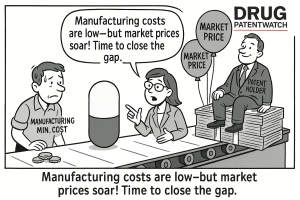
The WHO Essential Medicines List covers more than 500 drugs that health systems are expected to keep available, affordable, and in stock at all times. The data says they are failing at all three. A 2018 BMJ Global Health analysis — still the most granular cost-versus-price benchmarking study in the peer-reviewed literature — found that 77% of EML items in the UK were priced above their estimated generic production cost, and 47% were priced at more than three times that cost. Daclatasvir 30 mg in the UK was priced at 8,803 times its estimated production cost. These are not edge cases. They are the structural outcome of a system in which manufacturers hold information advantages, IP rights function as price ceilings on competition rather than floors on quality, and procurement bodies lack the negotiating architecture to close the gap.
The average biologic on the EML costs approximately $60 per pack to manufacture versus $5 for a small molecule, a 12x gap that is permanent and worsens as the EML adds more complex therapies.
Manufacturing unit costs fall 29% for every doubling of product volume and 17% for every doubling of site size. These scale economies are accessible to generic manufacturers but require upfront capital investment that low-income country producers rarely hold.
India offers API development cost reductions of 63-80% versus US-based production across personnel, lab equipment, and qualification categories, but those savings are structural, not contractual — they require in-country manufacturing infrastructure, not just sourcing relationships.
Intellectual property instruments, including composition-of-matter patents, evergreening secondary patents, data exclusivity, and biologic reference product exclusivity, collectively function as a multi-layer lock on price competition. Each instrument has a distinct legal attack surface and a distinct procurement workaround.
The 323 active drug shortages recorded in the US in Q1 2024 are the direct result of under-priced generics and geographically concentrated API sourcing. Both conditions are policy choices, not market inevitabilities.
Pooled procurement and advance market commitments can achieve price reductions of 40-90%, but only when volume guarantees are legally binding and supplier payment obligations are underwritten by a creditworthy institution.
Compulsory licensing under TRIPS Article 31 remains the most powerful single-drug price intervention available to governments, capable of reducing treatment costs by 80-95%, but it has been invoked rarely because of bilateral trade pressure from originator country governments.
Section 1: The WHO EML Architecture and Its Cost Implications
From 186 Medicines to 500-Plus: What the List’s Expansion Means for Procurement
The WHO Model List of Essential Medicines was first published in 1977 with 186 drugs. The current 23rd edition (July 2023), alongside the 9th Essential Medicines List for Children, lists more than 500 items. That numerical expansion is also a structural cost escalation. The 1977 list was dominated by off-patent small molecules with mature generic supply chains, where production costs were low and competition was the norm. The 2023 list includes insulin analogues, cancer biologics, HIV integrase inhibitors, and novel antimicrobials, many of them still under active patent protection in high-income countries and all of them carrying higher manufacturing cost profiles than the antibiotic and analgesic core of the original list.
The Expert Committee’s 2021 decision to remove absolute medication cost as an exclusion criterion sharpened this dynamic. The Committee said cost-effectiveness differences should be evaluated within therapeutic areas, not across the full list. In practical terms, that means a biologic priced at $50,000 per treatment course can be listed as essential if it is the most cost-effective option within its therapeutic category. The clinical logic is sound. The procurement implication is that health systems are now required to provide access to drugs whose price structures are orders of magnitude above what traditional generic market mechanisms can compress.
146 countries had adopted the EML concept as the basis for their national essential medicines lists as of 2018. Those national adaptations determine which drugs public health systems are obligated to stock and reimburse. When a drug is listed at the national level, its procurement becomes a recurring budget line rather than an optional purchase. The price paid for that drug, and the reliability of its supply, are therefore health system solvency questions, not just public health questions.
EML Drug Categories and Their Structural Cost Profiles
The EML organizes its medicines into therapeutic sections, each with a distinct cost profile driven by the maturity of the supply chain, the IP status of key molecules, and the manufacturing complexity of the dosage forms involved.
The anti-infective section (469 items) contains the broadest range: from fully genericized antibacterials like amoxicillin at pennies per dose, to direct-acting antivirals for Hepatitis C that were priced above $80,000 per course at originator list price before generic competition, to bedaquiline for drug-resistant tuberculosis, which remained under Janssen patent protection in most countries until 2023. The immunomodulators and antineoplastics section (332 items) is where the cost pressure is most acute: adalimumab (AbbVie’s Humira), rituximab (Roche/Genentech), and trastuzumab are all listed, and all carry the full manufacturing cost profile of monoclonal antibody production from CHO cell lines, with the associated facility requirements, quality monitoring costs, and biologic reference product exclusivity periods.
The anaesthetics section (17 items) is the opposite end of the spectrum: ketamine, halothane, lidocaine, and their peers are fully off-patent, cheaply manufactured, and widely available generically. Yet even here, supply chain fragility creates access problems. Sterile injectable anaesthetics are among the most commonly reported shortage drugs in both high-income and low-income country settings because their low price points generate insufficient manufacturer margin to sustain production quality investment.
Key Takeaways: EML Architecture
The EML’s expansion from 186 to 500+ items incorporates drugs with fundamentally different cost architectures. Procurement systems designed for off-patent small molecules are structurally misaligned with the biologics now listed.
The 2021 decision to evaluate cost-effectiveness within therapeutic areas, rather than against absolute price thresholds, formally permits the listing of high-cost biologics as essential, creating an obligation on national health systems that generic procurement models cannot satisfy.
The anti-infective and antineoplastic sections contain the greatest price risk for procurement teams: both include drugs with active patent protection, complex manufacturing requirements, and documented histories of extreme price-to-cost ratios.
Section 2: Manufacturing Cost Anatomy for EML Drugs
The Six Cost Layers and What Drives Each One
Pharmaceutical manufacturing costs are built in layers, and the weight of each layer depends on drug type, production scale, regulatory destination, and manufacturing geography. Understanding the specific contribution of each layer is a prerequisite for any serious negotiation or procurement optimization program, because cost reduction is not uniformly available across all categories.
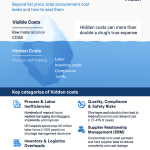
Raw materials, primarily APIs and excipients, are the most variable cost component. API prices span six orders of magnitude. Paracetamol API trades at $1-$10 per kilogram. Anastrozole API, used for breast cancer, exceeds $10,000 per kilogram. The price of a specific API depends on its chemical synthesis route complexity, the number of qualified global suppliers, regulatory certification requirements, and the volumes purchased. Excipients contribute less to per-unit cost but are not negligible; an average Finished Pharmaceutical Product (FPP) incorporates approximately $2.63 of excipients per kilogram of product. Strategic API sourcing and supplier qualification are the primary levers for raw material cost reduction, but supplier qualification itself carries quality investment costs.
Labor is a more predictable 10-15% of total manufacturing costs, but its absolute magnitude varies enormously by geography. A manufacturing operation in India carries personnel costs 47% below a US operation of comparable output; for API development functions the differential reaches 63.8%. China’s labor cost advantage over Western manufacturers persists at 35-40% for API production, but India’s labor costs are lower than China’s for factory workers, with average monthly wages of $150-$300 in India versus $600-plus in major Chinese industrial zones. These differentials are structural, not cyclical, and they explain why approximately 60% of global finished-dose generic production is concentrated in India and China.
Quality control and GMP compliance is the cost layer where negotiation has the least room. QC and assurance costs are estimated at 25% or more of total manufacturing cost, and this floor is not compressible without accepting manufacturing quality risk that translates directly into drug shortages, product recalls, and regulatory enforcement actions. A typical medium-to-large pharmaceutical production facility in a GMP-compliant market spends up to 25% of its total site operating budget, excluding raw materials, on compliance, potentially reaching 40 million euros annually. GMP compliance initial setup for a smaller operation runs $20,000-$26,000, with annual maintenance between $46,000 and $184,000. These numbers explain why low-income country manufacturers struggle to enter supply chains for regulated markets without external technical assistance.
Cost Component
% of Total Mfg Cost
Key Drivers / Notes
Raw Materials (APIs + Excipients)
Variable; often largest single line
API range: $1-$10/kg (paracetamol) to >$10,000/kg (anastrozole); excipients avg ~$2.63/kg FPP
Direct Labor
10-15%
India labor 47% below US for mfg; China ~40% below Western peers
Equipment, Facilities & GMP Compliance
10-20%
Biologic facilities: $500M+ build cost; continuous mfg reduces facility footprint by >10x vs batch
Quality Control & Assurance
>25%
GMP compliance alone can consume 25% of total site OPEX; “cost of poor quality” far exceeds prevention spend
Secondary packaging counted in distribution overhead; scales with SKU count
Total Average Cost: Small Molecule (per pack)
~$5
BCG benchmark; excludes R&D amortization
Total Average Cost: Biologic (per pack)
~$60
BCG benchmark; 12x higher than small molecule; excludes $2-4B R&D amortization
Source: BCG Biopharma Cost Performance Study (2017); DS InPharmatics; Scilife CoQ analysis; AlQalam Journal drug production cost data. Percentages are illustrative ranges; actual figures vary by drug type, manufacturing scale, and regulatory destination.
Small Molecules vs. Biologics: The 12x Cost Gap That Defines the Access Problem
The most consequential cost divide in the pharmaceutical manufacturing landscape is between small-molecule drugs and biologics. It is not marginal. BCG’s benchmarking across biopharma manufacturers put average production cost per pack at $5 for small molecules and $60 for biologics. That 12-fold gap is not primarily driven by labor or raw materials. It is driven by the biological production platform itself.
Small molecules are manufactured through controlled chemical synthesis. Reactions are deterministic, scalable in standard multipurpose chemical plants, and produce outputs with high batch-to-batch consistency. The R&D phase for a small molecule averages $1-2 billion over 8-10 years, but once that hurdle is cleared and a manufacturing process is validated, the cost of goods structure is stable and improvable through process chemistry optimization. Paracetamol, methotrexate, amoxicillin, and ciprofloxacin are all small molecules. Their manufacturing cost floors are measurable in cents per dose.
Biologics are manufactured in living cells, most commonly Chinese Hamster Ovary (CHO) cell lines, under conditions requiring precise control of temperature, pH, dissolved oxygen, and nutrient supply. Minor deviations in any parameter alter the glycosylation profile of the protein, which can affect both safety and efficacy. This sensitivity means that biologic manufacturing is never fully commoditized: each product’s cell culture process is unique to its molecular target and cell line, and process changes require regulatory revalidation. Specialized biologic manufacturing facilities cost upward of $500 million to build. R&D averages $2-4 billion over 10-12 years. The consequence is that even when a biologic’s originator patent expires, biosimilar manufacturers face a cost-of-goods structure that is categorically different from and far higher than small-molecule generic production.
Parameter
Small Molecule
Biologic
Access Implication
R&D Cost
$1-2B / 8-10 yrs
$2-4B / 10-12 yrs
Higher R&D floor for biologics
Avg Manufacturing Cost/Pack
~$5 (BCG)
~$60 (BCG)
12x cost gap; biologic “essential” designation is expensive
Facility Build Cost
Standard pharma plant
>$500M specialized
Barrier to low-income country production
Production Cell Line
Chemical synthesis (deterministic)
CHO or other mammalian cells (variable)
Biosimilar non-interchangeability risk
Post-Patent Competition Vehicle
Generic (ANDA; near-full substitution)
Biosimilar (351(k); partial substitution until interchangeability)
Price erosion slower for biologics (10-30% vs 80-90%)
Source: BCG biopharma cost benchmarking (2017); FDA biosimilar guidance; Synerg BioPharma biologics vs small molecules analysis (2025).
IP Valuation Context: Adalimumab and What It Reveals About Biologic EML Economics
Adalimumab (AbbVie’s Humira), listed on the EML under immunomodulators, is the clearest case study in biologic IP valuation intersecting with access economics. At peak US revenue, Humira generated $21.2 billion globally in 2022. AbbVie filed more than 250 patents covering the antibody, its manufacturing process, formulations, and delivery devices, creating a patent thicket that delayed biosimilar entry in the US until January 2023, eight years after the primary composition-of-matter patent expired. During those eight years, AbbVie sustained list prices above $80,000 per patient per year while biosimilar manufacturers with comparable manufacturing capability were excluded from the market by the patent thicket alone.
The first wave of US adalimumab biosimilars, including Amjevita (Amgen), Hadlima (Samsung Bioepis/Organon), and Hyrimoz (Sandoz), entered at discounts of 5-20% in their initial months, far below the 50-80% discounts characteristic of small-molecule patent cliffs. This restrained price erosion is structural. Biosimilar development costs range from $100-$250 million per program, compared to $1-5 million for a small-molecule ANDA. Market entry at steep discounts would be economically irrational given those development cost floors. For the EML, the implication is explicit: adalimumab will remain expensive relative to its theoretical minimum production cost for the foreseeable future, regardless of patent status, because the biosimilar market structure cannot generate the competitive pressure that the generic small-molecule market produces.
Scale Economics: The BCG Data and Its Procurement Implications
BCG’s analysis of biopharma manufacturing cost drivers identified three scale variables with quantified unit cost effects. Company size generates a 15% unit cost reduction for every doubling of total production volume. Site size generates a 17% reduction for every doubling of site scale. Product volume generates a 29% reduction for every doubling of individual product throughput. These are compounding effects: a manufacturer that doubles company volume, doubles site size, and doubles product volume simultaneously does not reduce unit costs by 15+17+29 = 61% but by a compound factor that approaches 50%.
For procurement teams, these scale curves have a direct operational implication. Pooled procurement that concentrates volume with fewer manufacturers generates better unit economics for those manufacturers, which can be captured as lower prices under volume-guarantee contracts. The GAVI Pneumococcal AMC demonstrated this: by guaranteeing a viable demand pool, the commitment induced manufacturers to invest in scale, driving prices from $70-plus per dose down to approximately $3.50, a 95% reduction that no negotiation without demand certainty could have achieved.
Advanced manufacturing technologies, specifically continuous manufacturing in place of batch processing, offer additional cost reduction pathways. Continuous manufacturing increases production output by approximately 20%, reduces energy consumption by 20%, and requires equipment footprints more than ten times smaller than batch equivalents, reducing facility capital costs and ongoing maintenance expenses. FDA has actively encouraged continuous manufacturing adoption since its 2019 guidance document, and several generic manufacturers have received ANDA approvals for continuous-manufactured products. But adoption remains slow because the capital investment required, combined with the regulatory revalidation burden of converting existing batch processes, creates a payback period that exceeds the planning horizon of many generic manufacturers operating on thin margins.
Key Takeaways: Manufacturing Cost Anatomy
The $5 vs $60 per-pack small-molecule/biologic cost differential is structural and permanent. It is not reducible through procurement optimization alone. EML access strategies for biologics require fundamentally different financial architectures than those for off-patent small molecules.
Quality control and GMP compliance is a non-negotiable cost floor. Procurement pressure that compresses prices below the cost of maintaining compliance does not save money; it defers drug shortages and product recall costs.
India’s API manufacturing cost advantages of 47-80% versus US production across labor, lab, and quality control categories are validated by peer-reviewed medrxiv data (April 2025). These are not estimates. They are quantified from actual project cost comparisons.
Scale economies of 15-29% per volume doubling mean that pooled procurement is not merely a buying-power tool. It is a manufacturing cost reduction tool that can make previously uneconomic production viable.
Section 3: Price Discrepancy Analysis: What the BMJ Global Health Data Actually Shows
The 8,803x Problem: Understanding the Price-to-Cost Gap
The foundational empirical work on EML price discrepancies is the Hill et al. 2018 study published in BMJ Global Health (“Estimated costs of production and potential prices for the WHO Essential Medicines List”). The methodology was rigorous: the study estimated minimum viable generic production costs using a bottom-up ingredient-and-process model, then compared those estimates to the lowest available market prices in the UK, South Africa, and India. The findings were stark. In the UK, 77% of comparable EML items were priced above estimated generic production cost. In South Africa, 67%. In India, 40%, which is remarkable given that India is the world’s largest generic supplier.
The most extreme ratios were concentrated in Hepatitis C direct-acting antivirals. Daclatasvir 30 mg (Bristol Myers Squibb, subsequently licensed to generic manufacturers in some markets but not all) was available at 8,803 times its estimated production cost in the UK. Sofosbuvir 400 mg (Gilead’s Sovaldi) was priced at 958 times its estimated production cost. These numbers reflect the market conditions of the study period, when Gilead and BMS held originator pricing positions in high-income countries while generic versions were available in Egypt and India under voluntary or compulsory licenses. The UK prices were not a function of manufacturing costs. They were a function of patent protection and absence of price regulation.
The Hill et al. methodology has been critiqued — notably by the Office of Health Economics (OHE) — on the grounds that it excludes R&D cost amortization, regulatory compliance costs, pharmacovigilance obligations, and post-marketing surveillance. These are legitimate points. The production cost estimates represent the technical floor of what a fully licensed, GMP-compliant manufacturer would pay to make a drug that already exists, not the full cost of having developed and approved it. That distinction matters for policy. It does not alter the access reality: the drugs exist, the development costs have been paid, and the prices charged in regulated markets bear no systematic relationship to the cost of manufacturing additional units of a drug that is already on the market.
Drug / Formulation
Est. Generic Production Cost (USD)
Lowest Market Price (USD)
Country
Price/Cost Ratio
Daclatasvir 30 mg
$0.001
$8.803
UK
8,803x
Daclatasvir 60 mg
$0.001
$5.063
UK
5,063x
Sofosbuvir 400 mg
$0.001
$0.958
UK
958x
Ledipasvir/Sofosbuvir 90/400 mg FDC
$0.001
$0.593
UK
593x
Dexamethasone 1.5 mg
$0.0003
$0.116
UK
387x
Ondansetron 24 mg
$0.006
$0.834
South Africa
139x
Mercaptopurine 50 mg
$0.001
$0.106
South Africa
106x
Omeprazole 40 mg
$0.003
$0.098
South Africa
33x
Zidovudine 250 mg
$0.001
$0.045
India
45x
Capecitabine 150 mg
$0.001
$0.0138
India
14x
Efavirenz/Emtricitabine/Tenofovir FDC
$0.001
$0.0107
India
11x
Source: Hill et al. (2018), BMJ Global Health 3(1): e000571. Prices reflect lowest available market prices at time of study. Current prices may differ due to generic entry, negotiated contracts, or regulatory changes.
Information Asymmetry as a Structural Barrier
The price gaps in Table 1 are not primarily the result of greed. They are the result of information asymmetry. Health systems and procurement agencies do not know what drugs actually cost to manufacture, which means they cannot distinguish between a price that reflects reasonable return on investment and a price that is pure rent extraction. Manufacturers operate with completely non-transparent cost structures. NDAs and BLAs submitted to the FDA contain detailed manufacturing cost data in Module 3, but those documents are protected as trade secrets and are not available to procurement negotiators.
This information asymmetry functions as a structural subsidy to originator manufacturers and to any generic manufacturer that can maintain pricing above the competitive floor in a concentrated market. A procurement agency that knows daclatasvir can be manufactured for fractions of a cent per milligram has a completely different negotiating position than one that accepts a $30 per-tablet price as market-determined. The Hill et al. study was precisely an attempt to close this information gap. Its finding that production cost data can be estimated with enough precision to anchor procurement negotiations has had direct policy consequences: UNITAID and the Medicines Patent Pool both reference cost-of-goods benchmarks in their licensing negotiations for HIV and Hepatitis C drugs.
IP Valuation Case Studies: Sofosbuvir and Daclatasvir
Sofosbuvir: IP Architecture and Its Access Consequences
Sofosbuvir (marketed as Sovaldi by Gilead Sciences) is the paradigmatic case of how IP architecture converts a cheaply manufacturable compound into a $1,000-per-pill product. The drug’s active moiety can be synthesized from relatively inexpensive starting materials; the Hill et al. study estimated its production cost at approximately $1 per 400 mg tablet at generic manufacturing scale, or less. Gilead launched Sovaldi at $1,000 per 84-pill treatment course in the US in December 2013, approximately 1,000 times the estimated production cost.
The IP architecture underlying that price consisted of a primary composition-of-matter patent on the nucleotide prodrug structure, a series of secondary patents on synthesis processes and crystalline forms, and a US FDA data exclusivity period that would have blocked generic approval even absent patent protection. Gilead held the patent rights globally and employed a tiered-licensing strategy: voluntary licenses to generic manufacturers in 101 low-income countries through the Medicines Patent Pool, enabling Egyptian and Indian generic production at $200 per course, while maintaining originator pricing in high-income markets. The result was a global price disparity where the same 12-week treatment cost $84,000 in the US, $28,000 in Germany, $900 in Egypt, and $300 in India simultaneously, with the price differences driven entirely by IP position and regulatory jurisdiction rather than production cost.
For IP and procurement strategists, sofosbuvir’s value trajectory illustrates a key principle: the IP valuation of a pharmaceutical asset at peak exclusivity includes not just the patent term remaining but the geographic scope of that protection and the viability of the voluntary licensing strategy in unlicensed markets. Gilead’s sofosbuvir licensing to the Medicines Patent Pool was strategically shrewd because it defused compulsory licensing threats in the 101 included countries without conceding price in the markets that generated 90% of revenue. The 30 middle-income countries excluded from the MPL voluntary license, including Brazil, Thailand, and China, became the focus of compulsory licensing pressure and political conflict.
Daclatasvir: BMS IP Strategy and the Generic Entry Differential
Daclatasvir (Bristol Myers Squibb’s Daklinza) presents a contrast to sofosbuvir’s licensing strategy. BMS pursued a more restrictive IP approach, and the consequences for the 8,803x UK price ratio are directly traceable to that strategy. BMS filed narrow voluntary licenses for low-income countries while maintaining patent enforcement in middle-income and high-income markets. The result was that generic daclatasvir was available at under $0.001 per 30 mg tablet in licensed markets while UK NHS procurement faced prices above $8 per tablet.
The IP valuation of daclatasvir from an investor perspective was always constrained by the same factor that created the access problem: a restrictive licensing strategy in a product category where WHO and UNITAID were actively working to create generic alternatives. BMS ultimately withdrew Daklinza from the US and European markets in 2019-2020 as generic competition in licensed markets eroded the drug’s commercial rationale and newer pangenotypic regimens (Epclusa, Mavyret) captured the remaining branded market. The lesson for IP strategists: exclusive market positions in access-critical drugs are politically and commercially fragile in ways that IP positions in other therapeutic categories are not. Licensing architecture that accounts for this fragility preserves revenue more effectively than maximum exclusivity enforcement.
Key Takeaways: Price Discrepancy Analysis
The Hill et al. BMJ Global Health study remains the most rigorous peer-reviewed cost-to-price benchmarking analysis for EML drugs. Its finding that 77% of UK EML items are priced above estimated production cost, with 47% priced at more than 3x that cost, is not disputed by originator manufacturers. It is critiqued only on the grounds that production cost is not the appropriate pricing reference.
Information asymmetry between manufacturers and procurement agencies is the structural mechanism through which price gaps are maintained. Cost-of-goods benchmarks are the primary tool for closing that gap in negotiation.
Sofosbuvir’s IP architecture and tiered-licensing strategy demonstrates that geographic price differentiation can be sustainable when the licensing architecture is designed to manage compulsory licensing risk in non-licensed middle-income markets. BMS’s more restrictive daclatasvir strategy led to market exit rather than price sustainability.
The 8,803x price-to-cost ratio for daclatasvir in the UK reflects not manufacturing economics but IP enforcement combined with an absence of NHS price negotiation authority for single-source products. That ratio collapses to 11x in India where generic competition is permitted, confirming that competition, not cost, is the dominant price determinant.
Investment Strategy: Reading Price Discrepancies as Asset Signals
For institutional investors in pharmaceutical equities, extreme EML price-to-cost ratios are not simply indicators of profitability. They are leading indicators of political and regulatory risk. The history of sofosbuvir, daclatasvir, bedaquiline, and insulin pricing in the post-2010 period shows a consistent pattern: sustained price-to-cost ratios above 100x on drugs listed as essential generate compulsory licensing threats, national formulary exclusions, differential procurement negotiations, and ultimately either voluntary price reductions or market exit.
For investors, the practical signal is this: a brand company holding an EML drug at a price-to-cost ratio above 50x in a high-income market is carrying political risk that is not captured in its standard IP exclusivity model. The risk is not just that a government will issue a compulsory license, which remains rare, but that the political pressure will produce negotiated price concessions that compress margins before generic entry. Gilead’s sofosbuvir revenue trajectory in Europe after 2015 illustrates the pattern: national health technology assessment bodies negotiated prices 50-80% below initial list prices under implicit threats of formulary exclusion or parallel importation, compressing margins well before the patent term expired.
Section 4: IP Architecture of EML Drugs: Patents, Exclusivities, and TRIPS
How IP Instruments Stack to Create Effective Price Monopolies
The price gaps documented in the Hill et al. study are maintained by layered IP instruments that operate independently of each other and can be stacked to extend effective market exclusivity well beyond any single protection’s nominal term. Understanding each instrument’s legal mechanism and access impact is necessary for procurement teams, generic manufacturers, and government negotiators to identify where legal leverage exists and where it does not.
IP Instrument
Duration
Access Impact
Relevant EML Examples
Composition-of-Matter Patent
20 yrs from filing; eff. 7-12 yrs post-launch
Complete generic bar; enables monopoly pricing
Sofosbuvir (Gilead), Daclatasvir (BMS before generics), Bedaquiline (J&J)
Blocks regulatory reference data; prevents generic approval even if patent-free
Newer EML antimicrobials; novel antifungals
Biologics License Exclusivity (US: 12 yrs)
12 yrs US; 8+2 EU
Blocks biosimilar approval; higher price floor than small-molecule generics
Adalimumab (AbbVie), Rituximab (Roche/Genentech)
Patent Thicket (multiple overlapping patents)
Varies; designed to compound
Litigation cost barrier; even valid designs-around require bioequivalence revalidation
Insulin analogues; pegylated biologics
TRIPS Flexibility: Compulsory License
Jurisdiction-specific; time-limited
Can reduce price 80-95%; rarely invoked due to political pressure
Used for sofosbuvir, ARVs in LMICs; Egypt, Bangladesh, India cases
Sources: CRS Report R46679; TRIPS Agreement Arts. 27-34; FDA 21 CFR 314.108 (data exclusivity); Biologics Price Competition and Innovation Act (BPCIA) 12-year reference product exclusivity; BMJ Global Health EML analysis; public WIPO and USPTO records.
Evergreening on EML Drugs: A Technical Taxonomy
Polymorph and Salt Form Patents
After a composition-of-matter patent expires, manufacturers commonly hold additional patents on specific crystalline polymorphs or salt forms of the active ingredient. The commercial rationale is that a particular polymorph may offer superior stability, bioavailability, or processability. For EML drugs, the practical impact is to delay generic market entry because a generic applicant must either challenge the polymorph patent through Paragraph IV litigation (in the US context) or demonstrate that its formulation does not infringe the patented crystalline form. PTAB has cancelled polymorph patent claims in multiple pharmaceutical cases on obviousness grounds, applying the Hoffmann-La Roche v. Apotex framework that requires more than obvious-to-try analysis when prior art discloses the amorphous form. But each challenge requires the generic manufacturer to absorb litigation costs that can reach $10-30 million per case, a significant deterrent for manufacturers targeting low-margin EML drugs.
Data Exclusivity as a Non-Patent IP Barrier
Data exclusivity protects the clinical trial data submitted to regulatory agencies from being referenced by generic or biosimilar applicants for a fixed period, regardless of patent status. In the US, new chemical entities receive five years of data exclusivity under the Hatch-Waxman Act, and biologics receive 12 years under the BPCIA. In the EU, the standard is eight years of data protection plus two years of market exclusivity. The consequence for EML access is that a drug can be completely off-patent and still be inaccessible to generic or biosimilar competition because no regulatory agency will accept a marketing application that references the originator’s clinical data until the exclusivity period expires.
For recently added EML drugs approved under novel chemical entity status — including newer HIV integrase inhibitors, novel antimicrobials, and some cancer therapies — data exclusivity is often the binding constraint on generic entry, not patent expiry. Procurement teams in countries outside the voluntary licensing scope of Medicines Patent Pool agreements need to assess data exclusivity status independently from patent databases. A drug can be patent-free in a given jurisdiction but still commercially inaccessible to generic competition because data exclusivity prevents regulatory approval.
TRIPS Flexibilities: The Compulsory License Mechanism and Its Practical Limits
TRIPS Article 31 permits WTO members to issue compulsory licenses authorizing local production or importation of a patented pharmaceutical product without the patent holder’s consent, subject to specific conditions including prior negotiation attempts, payment of adequate remuneration, and limitations on use to the domestic market except under TRIPS waiver or paragraph 6 procedure. The Doha Declaration on TRIPS and Public Health (2001) affirmed that WTO members have the right to grant compulsory licenses and to determine the grounds for such licenses, including public health emergencies.
In practice, compulsory licensing has been invoked rarely despite widespread need. Between 2001 and 2023, fewer than 30 countries issued compulsory licenses for pharmaceutical products, concentrated in antiretrovirals for HIV, Hepatitis C antivirals, and oncology drugs. The constraint is not legal; it is political. High-income country governments, primarily the US and EU member states, have historically used trade agreements, bilateral investment treaties, and diplomatic pressure to discourage compulsory licensing in countries seeking market access agreements. TRIPS-plus provisions in bilateral free trade agreements have imposed data exclusivity terms and patent linkage requirements beyond TRIPS minimums in exchange for trade concessions.
The quantified price impact of compulsory licensing, where it has been used, is not modest. Egypt’s compulsory license for sofosbuvir enabled generic production that reduced treatment costs from $84,000 per course to $200 per course within two years. Thailand’s compulsory licenses for Kaletra (lopinavir/ritonavir) and Plavix (clopidogrel) reduced prices by 80-90%. These outcomes confirm that the instrument works when it is used. The policy question is not whether compulsory licensing is effective but whether the political cost of invoking it, in terms of trade relationship consequences, is acceptable to the country considering it.
IP Valuation Case Study: Bedaquiline and J&J’s Exclusivity Strategy
Bedaquiline (Sirturo, Johnson & Johnson / Janssen) is the first new drug approved for drug-resistant tuberculosis in more than 40 years. It was added to the WHO EML in 2019 and has been central to WHO-recommended treatment regimens for multidrug-resistant TB since 2022. Janssen’s primary composition-of-matter patent for bedaquiline expired in 2023 in most jurisdictions after receiving a 10-year priority review voucher extension in the US. The subsequent market dynamics illustrate how the gap between patent expiry and actual generic market entry works in practice.
Despite the primary patent expiry, bedaquiline generic entry was delayed by a combination of secondary patents on the fumarate salt form and specific formulation characteristics, data exclusivity in some jurisdictions, and the absence of a pre-qualified generic supply chain ready to scale. The Stop TB Partnership and MSF documented continued prices of $400 per six-month course in many markets even after primary patent expiry, with generic versions available only from Macleods and Viatris at $60-$68 per six-month course under Medicines Patent Pool licensing agreements. The delta between $68 (MPL generic) and $400 (off-patent originator pricing in non-MPL markets) exists because generic entry requires not just patent expiry but WHO prequalification, regulatory authorization in each destination country, and procurement infrastructure capable of accessing the generic supply chain.
For IP analysts, bedaquiline demonstrates that the economic value of a pharmaceutical patent estate is not fully captured by its nominal expiry date. Janssen’s patent-expiry-independent pricing power in non-MPL markets is maintained by supply chain inertia, regulatory qualification requirements for generics, and procurement system defaults toward originator product. These factors function as de facto IP extensions with no legal basis but real commercial consequence.
Key Takeaways: IP Architecture
The effective IP exclusivity period for an EML drug is the maximum of its last patent expiry, its data exclusivity end date, and its biologic reference product exclusivity period, measured in each specific jurisdiction. These three instruments can run concurrently or sequentially and are assessed independently.
Evergreening through polymorph, salt form, formulation, and method-of-use patents extends effective exclusivity on average 3-6 years beyond primary composition patent expiry. For EML drugs with high access stakes, PTAB IPR filing against these secondary patents is the fastest legally available challenge mechanism, with average resolution in 18-24 months.
Compulsory licensing can reduce treatment costs by 80-95% but has been used in fewer than 30 countries since 2001 due to bilateral trade pressure. The Doha Declaration affirms the right; the political economy constrains its exercise.
Bedaquiline demonstrates that patent expiry does not guarantee price competition. Generic entry also requires WHO prequalification, national regulatory authorization, and procurement system adaptation to access the generic supply chain. These requirements are addressable but require proactive action by procurement systems and donor organizations.
Section 5: Supply Chain Vulnerabilities and the Drug Shortage Crisis
Geographic Concentration as a Structural Risk Factor
Global pharmaceutical supply chains underwent a fundamental restructuring from roughly 1990 to 2015. Vertical integration gave way to horizontal outsourcing, with API production and finished-dose manufacturing concentrating in India and China to capture labor, regulatory, and capital cost advantages. The result was a dramatic reduction in manufacturing cost per unit, but at the price of supply chain resilience. The United States and India now account for 45% and 60% of global injectable and solid dosage production, respectively. For many specific molecules, the number of qualified global suppliers is two or fewer.
This concentration creates a propagation mechanism for disruptions: a quality failure at a single major API plant in India or China can simultaneously eliminate supply for dozens of finished-dose manufacturers in multiple countries. The COVID-19 pandemic exposed this vulnerability in 2020 when Indian API export restrictions and Chinese plant shutdowns contributed to shortages of more than 150 drugs within 60 days. The lesson was not acted on systematically. The US recorded 323 active drug shortages in Q1 2024, the highest level reported. The FDA’s Drug Shortage Staff reports that sterile injectable medications account for a disproportionate share of shortages, driven by their manufacturing complexity, low price points, and the resulting underinvestment in production quality.
The Low-Margin Generic Trap: Why Cheap Drugs Keep Running Out
The drug shortage problem for EML medicines is not primarily a manufacturing capacity problem. It is a margin problem. Generic drug price competition drives prices toward marginal production cost, which is appropriate from a procurement perspective but creates a structural disincentive to maintain production quality investment. A manufacturer of a sterile injectable antibiotic at $0.50 per vial, producing at volumes that generate $2-5 million in annual revenue for that product, has no economic incentive to invest $10 million in a manufacturing line upgrade to address an FDA warning letter. The rational decision is to exit the market.
The Association for Accessible Medicines documents that generics account for 90% of US prescriptions but only 26% of total drug expenditure, reflecting both their price competitiveness and their margin profile. When a product accounts for 90% of volume but generates 26% of revenue, the economics of maintaining complex sterile manufacturing lines for that product are frequently not viable at scale. This is particularly acute for essential medicines, which by design are the oldest, most off-patent drugs in the formulary. A drug that has been off-patent for 40 years does not generate the margins needed to fund continuous manufacturing technology adoption, GMP facility upgrades, or supply chain redundancy.
Tariff policy has added a new dimension to this problem. The Trump administration’s executive orders on pharmaceutical tariffs, proposed at rates of 25% or higher on pharmaceutical imports, would raise costs for US-based manufacturers who source APIs or finished-dose products from India and China. A 25% tariff on Indian-sourced APIs for a $0.50 per vial generic product compresses or eliminates the manufacturer’s margin entirely. USP’s analysis of tariff impacts on generic drug supply found that cost increases from tariffs are likely to trigger further market exits by generic manufacturers, reducing supplier concentration further and worsening shortage frequency.
India’s Manufacturing Advantage: Validated Data and Its Limits
The medrxiv preprint by Desai et al. (April 2025) provides the most granular quantified comparison of India versus US pharmaceutical manufacturing costs published to date. It is worth citing in detail because the magnitudes are larger than widely assumed. Total API CAPEX for India-destined products is 70.3% below US-destined products ($677K versus $2,280K). The gap is driven primarily by building costs (49.9% lower), analytical development lab equipment (78.5% lower), and qualification and validation costs (80.0% lower). Personnel costs for API development are 63.8% lower, and for manufacturing, 47.1% lower.
Cost Category
US Cost ($K)
India Cost ($K)
India Reduction vs US
API Total CAPEX
$2,280K
$677K
70.3%
Building Costs
Baseline
Lower
49.9%
Analytical Development Lab Equipment
Baseline
Lower
78.5%
Qualification & Validation
Baseline
Lower
80.0%
Quality Control Costs
$1,490K
$727K
51.2%
Personnel Costs (API Development)
$665K
$241K
63.8%
Personnel Costs (Manufacturing)
$2,102K
$1,112K
47.1%
Total API OPEX Differential
–
–
32-37%
Source: Desai et al. (2025), medrxiv preprint 2025.04.16.25325941. Data reflects actual project costs for pharmaceutical manufacturing in India versus US-destined production specifications. All figures in USD thousands unless otherwise noted.
These advantages are real, but they come with conditions. India-based manufacturing targeting regulated markets (FDA, EMA) requires equivalent GMP compliance costs to domestic production. The $727K quality control cost figure in the table is 51.2% below the US equivalent, but it still represents a substantial fixed cost that price-compressed generic producers struggle to sustain. India’s reliance on Chinese API imports for key starting materials means that any trade disruption affecting China propagates through India’s manufacturing cost structure. The Indian Pharmaceutical Alliance estimates that 68-70% of Indian API production depends on Chinese key starting materials.
Key Takeaways: Supply Chain
323 active US drug shortages in Q1 2024 represent a structural system failure, not a temporary disruption. The causes — concentrated geographic production, low generic margins, and quality underinvestment — are chronic and worsening.
Sterile injectable EML medicines are the highest-risk shortage category because their manufacturing complexity and low price points create the worst margin/investment ratio in the generic market.
India’s 70.3% API CAPEX advantage and 32-37% OPEX advantage over US production are validated in 2025 peer-reviewed data, but they are contingent on Chinese KSM supply chain stability. The Indian cost advantage is not fully independent.
Pharmaceutical tariffs on Indian and Chinese imports would reduce generic manufacturer margins further and accelerate market exits from already thin-margin EML drug supply chains, worsening shortage risk.
Investment Strategy: Supply Chain Risk Signals for EML-Adjacent Equities
For investors in specialty pharma, CDMO, and generics equities, supply chain concentration is a direct earnings risk factor that is systematically underweighted in consensus models. A generic manufacturer with 60%+ of revenue concentrated in products where only two or three global suppliers exist for the primary API is carrying supply disruption risk that can materially affect quarterly earnings when an FDA warning letter, a hurricane, or a geopolitical trade action removes one of those suppliers from the market. FDA Form 483 issuances and warning letters against key API suppliers are public information and are leading indicators of shortage risk for any finished-dose manufacturer dependent on those suppliers.
On the CDMO side, the supply chain vulnerability of EML generic manufacturers is a demand driver for outsourced manufacturing and quality management services. CDMOs with WHO prequalification, GMP certification in multiple jurisdictions, and geographic diversification across India, Europe, and the US are positioned to capture market share as EML drug manufacturers seek supply redundancy. The highest-value CDMO contracts in the essential medicines space will go to operators who can demonstrate sterile injectable manufacturing capability, WHO prequalification, and multi-site supply chain redundancy simultaneously.
Section 6: Procurement Strategies That Actually Work
Bulk Purchasing and Pooled Procurement: The Mechanics of Price Leverage
Bulk purchasing and pooled procurement are the most widely deployed price reduction mechanisms in the essential medicines space, and the evidence on their effectiveness is consistent: they work when volume commitments are credible and legally binding, and they fail when they are merely aspirational. The distinction matters because health systems routinely announce “pooled procurement initiatives” that aggregate forecast demand without creating actual demand guarantees, which give manufacturers no incentive to price at competitive levels because they carry no obligation to purchase.
The CDC’s Vaccines for Children Program illustrates the difference. CDC purchases more than 40% of all childhood vaccines administered in the US, creating a monopsonist-scale buying position that allows it to negotiate prices significantly below private-sector rates. The key is not just volume; it is contractual certainty. Manufacturers know that CDC will actually purchase the contracted volumes because the program is statutory and funded. That certainty allows manufacturers to plan production at scale, reducing unit costs through the BCG-documented volume effects, and then pass some of those savings to the buyer.
Inter-country pooled procurement adds coordination complexity but multiplies the leverage. PAHO’s Regional Revolving Fund for vaccines, which pools procurement across 43 countries in the Americas, has negotiated prices for vaccines that are typically 20-70% below prices available to individual country purchasers. The PAHO model works because it standardizes product specifications across countries, eliminates duplicated quality assurance work, and presents manufacturers with a single consolidated demand signal covering hundreds of millions of beneficiaries. For EML drugs beyond vaccines, similar pooling mechanisms have been developed through UNICEF Supply Division, the Global Fund, and WHO’s own procurement support services.
Innovative Financing: Volume Guarantees and Procurement Guarantees in Practice
Volume guarantees and procurement guarantees are legally binding financial instruments designed to de-risk market entry or supply scale-up for manufacturers of essential medicines. They are distinct from procurement agreements: a procurement agreement commits a buyer to purchase if the product meets specifications; a volume guarantee commits a guaranteeing entity to compensate the manufacturer for shortfalls below a specified volume even if those shortfalls occur because market demand did not materialize.
MedAccess, a social impact company backed by UK aid and DFID, has deployed volume guarantees for contraceptive implants, HIV diagnostics, and other essential health products. Its guarantee for the contraceptive implant Nexplanon resulted in a 53% price reduction, from approximately $8.50 to $4.00 per unit, by assuring the manufacturer of a minimum revenue floor that justified production scale-up investment. The mechanism is commercially straightforward: the manufacturer sets a ceiling price and a minimum acceptable demand level; if actual demand falls below that level, MedAccess compensates the difference. The manufacturer bears product quality risk but not demand risk. That risk transfer is what enables lower prices.
Procurement guarantees, which bridge the timing gap between purchase orders and payment receipt, address a different constraint: the working capital problem that prevents global health procurers from entering high-volume purchase agreements when their funding flows are irregular or donor-dependent. By guaranteeing payment obligations under a purchase order, a financial intermediary allows the procurer to commit to larger volumes and longer supply agreements than its immediate cash position would support. The practical effect is that procurement agencies can access volume discount tiers that would otherwise be available only to private-sector buyers with reliable payment histories.
Subscription-Based Purchasing: The Louisiana/Washington State Hepatitis C Model
The subscription model for Hepatitis C treatment access in Louisiana and Washington State represents the most innovative application of bulk-purchasing principles to a high-cost EML drug in a high-income country setting. Both states negotiated flat-fee licensing agreements with AbbVie (Mavyret) that granted unlimited access to the drug for their Medicaid populations in exchange for a fixed annual payment, regardless of the number of patients treated. The model was structured explicitly as a “Netflix for drugs” arrangement.
Louisiana’s agreement, finalized in 2019, covered up to 31,000 Hepatitis C patients annually under its Medicaid and corrections populations. The flat-fee structure eliminated the per-treatment cost barrier that had previously rationed access to approximately 1-2% of the eligible patient population annually. By 2022, treatment rates had increased tenfold. The total program cost was lower on a per-patient-treated basis than any prior negotiated rate, because the subscription model converted a variable cost into a fixed overhead, allowing the state to treat as many patients as clinically appropriate without additional expenditure.
For EML procurement strategists, the subscription model is directly applicable to other high-prevalence, high-cost essential medicines with defined treatment courses. The model requires three conditions: a single-payer or consolidated payer structure that can commit to a multi-year flat fee, a manufacturer willing to accept reputational and access obligations in exchange for guaranteed revenue, and a disease with a large enough untreated population to make unlimited access commercially meaningful for the manufacturer. HIV antiretroviral programs in national health systems and insulin procurement in middle-income countries are natural candidates.
Mechanism
Price Reduction Potential
Complexity
Real-World Example
National Bulk Purchasing
15-35%
Low-Medium
CDC Vaccines for Children Program (>40% US childhood vaccine supply)
Inter-Country Pooled Procurement
Up to 90% (vaccines)
High
GAVI Pneumococcal AMC; PAHO Regional Revolving Fund for vaccines
Subscription Model (“Netflix” pricing)
Variable; outcome-based
Medium
Louisiana/Washington State Hepatitis C subscription; flat fee for unlimited sofosbuvir access
Volume Guarantee (Innovative Finance)
Avg 53% (contraceptive implants)
Medium-High
MedAccess contraceptive implant guarantee; Etonogestrel price cut from $8.50 to $4.00
Advance Market Commitment (AMC)
40-90% vs. pre-AMC price
High
GAVI Pneumococcal AMC generated $1.5B pledges; drove price from $70 to ~$3.50/dose
Sources: American Progress Bulk Drug Purchasing analysis (2021); MedAccess innovative finance product descriptions; MSH Pooled Procurement Why Guide; GAVI AMC evaluation data; Egyptian Ministry of Health sofosbuvir compulsory license records. Price reduction estimates are specific to referenced programs and may not be generalizable.
Key Takeaways: Procurement Strategies
Volume guarantees that are legally binding and backed by creditworthy guarantors generate actual price reductions. Volume commitments that are aspirational or unfunded do not. Distinguishing between the two is the first analytical task for any procurement team evaluating a pooled procurement proposal.
The GAVI Pneumococcal AMC achieved 95% price reduction through guaranteed demand, not through price negotiation. The mechanism was economic: guaranteed volumes allowed manufacturers to invest in scale, which reduced production costs, which enabled lower prices. Demand guarantee is more powerful than price negotiation for products where scale economies are large.
The Louisiana/Washington subscription model for Hepatitis C is directly transferable to other high-prevalence EML drugs with defined treatment courses. The model’s critical requirement is a consolidated payer with multi-year budget authority. Fragmented payer systems cannot implement it.
Compulsory licensing achieves 80-95% price reductions but has been used in fewer than 30 countries since 2001. Volume guarantees and subscription models achieve 40-90% price reductions with lower political cost. For most health systems, innovative finance is the better risk-adjusted procurement strategy.
Investment Strategy: Procurement Mechanism Implications for Generic and Specialty Pharma
For generic pharmaceutical companies, the shift toward pooled procurement and volume guarantee instruments in EML drug markets represents both opportunity and margin risk. Companies that can meet WHO prequalification standards and participate in GAVI, UNICEF, and Global Fund procurement tenders have access to predictable, high-volume supply contracts that compress margin per unit but increase total revenue through volume. The BCG scale economics data predicts that unit costs fall 29% for every doubling of product volume; a large pooled procurement contract can be the catalyst for that doubling.
For specialty pharma companies holding originator positions on recently added EML drugs, the subscription model signals a negotiating approach that is increasingly politically viable in high-income markets with unified payer structures. Companies that proactively offer subscription-style agreements for high-burden EML drugs in markets where affordability is a political issue will preserve longer-term market positions than those that hold to per-unit list prices until forced to negotiate under compulsory licensing threat. The revenue certainty of a subscription agreement, even at a lower per-patient price, is worth more to a company’s financial planning than the theoretical maximum per-unit price that it will never achieve across the full eligible population.
Section 7: Local Manufacturing, Technology Transfer, and Supply Resilience
Why Technology Transfer Is Not Just About Cost
Technology transfer in pharmaceutical manufacturing is the systematic relocation of validated production knowledge from a drug developer to a manufacturing site. In the EML context, it is often framed as a cost-reduction strategy: if low-income countries can manufacture their own essential medicines, they avoid the price markup between production cost and import price. That framing is correct but incomplete. Technology transfer for EML drugs is primarily a supply resilience strategy. The access problem for most essential medicines in most low-income countries is not that prices are unaffordable; it is that products are unreliable or unavailable. Building local manufacturing capability addresses that problem directly.
WHO prequalification is the gateway quality standard for EML drug production in low-income markets. A manufacturing site that holds WHO prequalification for a specific product can supply procurement agencies including UNICEF, the Global Fund, and PAHO, with confidence that the product meets international quality standards. As of 2025, approximately 700 products from manufacturers in 36 countries hold WHO prequalification. The distribution is heavily concentrated in India (approximately 40% of prequalified products) and China, with sub-Saharan African countries holding fewer than 5% of prequalifications despite bearing a disproportionate share of the essential medicine disease burden.
The technology transfer process from a validated commercial manufacturing site to a new facility typically takes 24-48 months and costs $5-20 million per product depending on complexity, dosage form, and the gap between the receiving site’s existing capabilities and the requirements of the specific technology being transferred. For sterile injectables, which represent the highest-shortage-risk category, technology transfer is particularly complex because the aseptic processing validation requirements for WHO prequalification are stringent and the equipment qualification process is lengthy. The Medicines for Malaria Venture and Global Fund have both funded technology transfer programs for artemisinin-based combination therapies in African manufacturing sites; the timelines and costs have consistently exceeded initial estimates.
Ecosystem Requirements for Successful Technology Transfer
Technology transfer to a new manufacturing site is a necessary but not sufficient condition for establishing a sustainable local supply chain. The receiving site requires several supporting ecosystem elements that are frequently absent in low-income countries and require parallel investment. Qualified analytical chemistry laboratories capable of conducting release testing to international pharmacopeial standards are the first requirement. These laboratories require not just equipment but trained analysts with several years of method validation and stability testing experience, a workforce that takes years to develop.
Regulatory agency capacity in the destination country is the second constraint. A locally manufactured product requires approval from the national medicines regulatory authority before it can be legally distributed. Many low-income country regulatory agencies lack the technical staff to review manufacturing dossiers for complex products on commercially meaningful timelines. WHO’s Collaborative Registration Procedure and the African Medicines Agency’s joint assessment procedures are designed to address this bottleneck, but both require participating country agencies to meet minimum technical standards that many are still building toward.
Continuous manufacturing technology, which could reduce the facility size requirements for local production by more than 10x, has not been widely adopted in low-income country manufacturing contexts because the upfront capital requirements remain high and the regulatory validation pathways for continuous manufacturing in non-FDA/EMA jurisdictions are not well established. The FDA’s active encouragement of continuous manufacturing since 2019 has produced a growing body of ANDA approvals for continuous-manufactured products in the US, but this regulatory experience has not yet been systematically extended to WHO prequalification or to national regulatory agencies in low-income countries.
Key Takeaways: Local Manufacturing and Technology Transfer
Technology transfer for EML drugs is primarily a supply resilience investment, not a cost-reduction strategy. The direct cost savings from local production are often smaller than the stability and availability benefits of eliminating single-source import dependency.
WHO prequalification requires 24-48 months and $5-20 million per product, with sterile injectables at the upper end of both ranges. These costs must be budgeted alongside the manufacturing investment itself.
Sub-Saharan Africa holds fewer than 5% of WHO prequalifications despite representing a major share of essential medicine disease burden. Closing this gap requires parallel investment in regulatory agency capacity, laboratory infrastructure, and workforce development alongside manufacturing facility investment.
Continuous manufacturing could reduce facility footprint by more than 10x and lower per-unit costs by 20%, but adoption in low-income country settings requires regulatory pathway development that has not kept pace with the technology’s commercial uptake in high-income markets.
Section 8: Policy Design for the Essential Medicines Market
Why Price Controls Alone Create Shortages
The economic logic of pharmaceutical price controls is straightforward: if manufacturers charge too much, set a maximum price. The consequences of this logic applied naively to essential medicines markets have been well documented. When price controls are set below the cost of quality-compliant manufacturing, manufacturers exit the market. When they are set at the marginal cost of production for the most efficient global manufacturer, they eliminate the margin that covers quality system investment, supply redundancy, and demand volatility buffering. The result in both cases is drug shortages.
The empirical evidence is clearest for sterile injectable generics in the US. These products, most of which are off-patent EML medicines, face the most intense price competition in the pharmaceutical market. Their prices have been driven to levels where manufacturing margins are frequently below the cost of maintaining GMP compliance. The 323 active US shortages in Q1 2024 are concentrated in this category. The FDA has documented the causal chain explicitly: low prices, insufficient margins for quality investment, manufacturing quality problems, FDA enforcement action, production shutdowns, shortages.
The policy implication is not that price controls are wrong but that price floors are as important as price ceilings in essential medicines markets. Any procurement price that drives a product below the quality-maintenance cost floor is a price that will eventually produce a shortage. USP’s framework for balancing drug cost, quality, and access recommends that procurement mechanisms explicitly incorporate quality and resilience metrics alongside price, rewarding suppliers who maintain supply redundancy, quality certifications in multiple jurisdictions, and demonstrated capacity to scale in response to demand surges.
Rebate Architecture and the PBM Problem in US Drug Pricing
The US pharmaceutical pricing system contains a structural paradox embedded in the rebate architecture that governs Pharmacy Benefit Manager (PBM) negotiations. PBMs control approximately 80% of the US drug benefit market and negotiate confidential rebates from manufacturers in exchange for preferred formulary placement. The rebate negotiation creates a perverse incentive: a $1 increase in a drug’s list price is associated with a $1.17 increase in the rebate demanded by PBMs, meaning manufacturers must raise list prices to cover the rebate, which increases the reported price without changing the net cost to the PBM. The consequence is an opaque system where list prices bear no necessary relationship to either production costs or net transaction prices, making price transparency analysis and cost-based procurement nearly impossible from publicly available data.
For EML drugs that are covered by US Medicaid, the ACA’s mandatory Medicaid rebate system, requiring manufacturers to provide rebates equal to 23.1% of average manufacturer price (AMP) for branded drugs, creates an additional pricing dynamic. Manufacturers facing large Medicaid rebate obligations have an incentive to raise list prices to maintain net revenue, shifting the cost burden to commercial payers and patients while the government program collects the rebate. The Inflation Reduction Act’s Medicare drug price negotiation provisions, which produced negotiated prices 38-79% below list price for the first ten selected drugs announced in August 2024, represent the most significant structural change to US drug pricing in decades. Expanding the negotiation to more products and earlier in a drug’s lifecycle would compress the list-price inflation incentive that the rebate system currently creates.
Transparency as a Prerequisite for Effective Negotiation
The foundational policy requirement for improving essential medicines pricing is transparency, specifically public disclosure of production cost data, clinical trial public funding contributions, and the revenue received by manufacturers across jurisdictions. Without cost transparency, procurement agencies are negotiating against a manufacturer that knows its own cost floor precisely while the buyer has only list prices and published financial reports to reference. The information asymmetry is asymmetric by construction.
Several transparency mechanisms are being developed or expanded. WHO’s Fair Pricing Forum has called for the disclosure of clinical trial costs disaggregated by public and private funding contributions. The European Commission’s pharmaceutical legislation reform proposals under the EU Pharmaceutical Strategy include provisions for manufacturers to disclose development cost data to national health authorities in exchange for market access. UNITAID’s open licensing program for EML antivirals requires licensees to publicly report cost of goods data to enable procurement benchmarking. Each of these mechanisms is partial, but their cumulative effect is to narrow the information gap that sustains above-competitive pricing for essential medicines.
Key Takeaways: Policy Design
Price controls set below quality-maintenance cost floors produce drug shortages. Procurement policy for essential medicines must establish price floors alongside price ceilings, incorporating quality resilience requirements as explicit evaluation criteria.
The US PBM rebate architecture creates a structural inflation pressure on list prices that is decoupled from production costs. IRA Medicare negotiation provisions are the first systematic correction to this structure. Expanding them to earlier lifecycle products and more drugs per negotiation cycle is the highest-impact near-term US policy lever.
Transparency in production cost data is the prerequisite for effective price negotiation. Without it, procurement agencies accept manufacturer pricing positions that have no cost-based validation. Hill et al.’s cost estimation methodology, and its successors, are policy instruments, not merely academic exercises.
TRIPS flexibilities, including compulsory licensing and parallel imports, remain underutilized relative to their legal availability. The constraint is political, not legal. Policy frameworks that reduce the bilateral trade consequences of compulsory licensing invocation would expand their use without requiring any TRIPS amendment.
Conclusion: What Affordable Access to Essential Medicines Actually Requires
The WHO EML is a list of drugs that the world has agreed its populations must have access to. The data shows that access, by any credible definition encompassing availability, affordability, and quality, is not being achieved for a substantial fraction of those drugs in most countries. The reasons are not mysterious. IP architecture converts cheap-to-manufacture compounds into high-price monopolies for their commercial life. Generic competition, the most effective price-compression mechanism, is structurally fragile in a market where margins are too thin to sustain quality investment. Supply chains concentrate in ways that optimize cost at the expense of resilience. And procurement systems lack the information and financial architecture to close the gap between what things cost to make and what they are sold for.
None of these problems are solved by a single intervention. The evidence supports a clear hierarchy of policy effectiveness: pooled procurement with legally binding volume guarantees reduces prices 40-90% on high-demand products; compulsory licensing reduces prices 80-95% on single high-value drugs but is rarely invoked; transparency in production cost data narrows the information asymmetry that sustains above-competitive pricing; technology transfer and local manufacturing investment improves supply resilience; and price controls without quality floors produce the shortages they were designed to prevent.
For pharmaceutical IP strategists, the EML context signals a specific risk profile: drugs with extreme price-to-cost ratios that are formally listed as essential carry political and regulatory risks that IP exclusivity models do not capture. For procurement teams, the available evidence on volume guarantees, subscription models, and pooled procurement provides a tested toolkit for achieving prices that more closely reflect production costs. For investors, the same dynamics create a landscape where companies with sustainable pricing strategies, diversified supply chains, and transparent cost structures will outperform those whose business models depend on information asymmetry and regulatory exclusivity that is increasingly subject to political challenge.
Data Sources and Methodology Note
Primary data sources: Hill et al. (2018), BMJ Global Health 3(1): e000571 (production cost estimates and market price discrepancies); BCG Biopharma Cost Performance analysis (2017) (scale economics and manufacturing cost benchmarks); Desai et al. (2025), medrxiv preprint 2025.04.16.25325941 (India vs US API manufacturing cost differentials); FDA Drug Shortage Database Q1 2024; WHO EML 23rd Edition (July 2023); CRS Report R46679 on patents and drug pricing; MedAccess innovative finance product data; GAVI AMC evaluation reports. All financial estimates are drawn from cited sources and are presented for analytical purposes only. This document does not constitute investment advice.