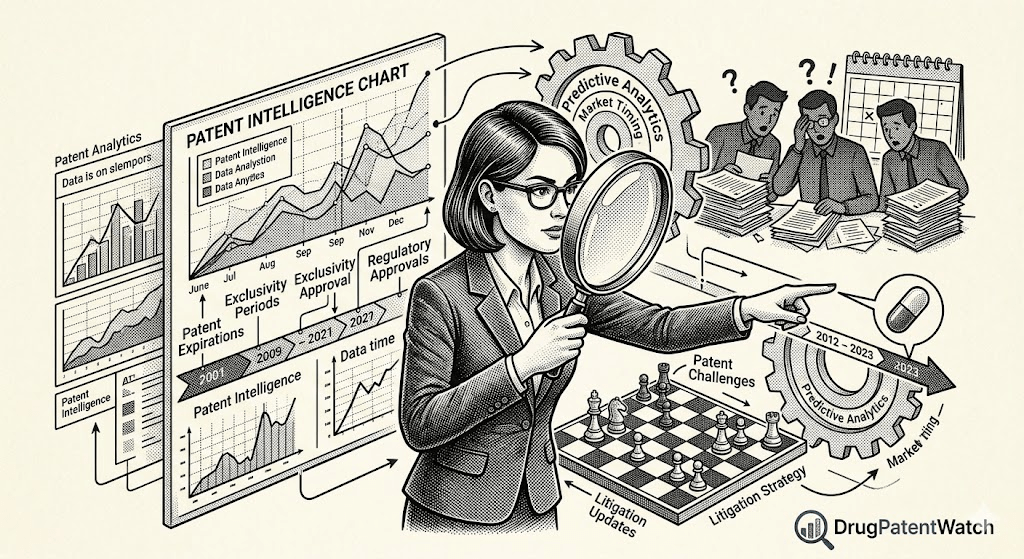
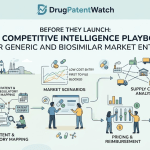
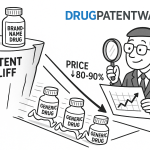
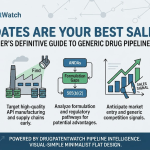
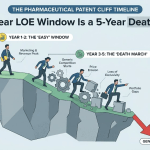
Every year, brand-name pharmaceutical manufacturers watch billions of dollars in revenue disappear within weeks of a generic competitor hitting pharmacy shelves. The drop is not gradual. IMS Health data has long documented the ‘generic cliff’: within 12 months of a first generic entry, brand products routinely lose 80 to 90 percent of their prescription volume. For a blockbuster generating $3 billion annually, that is a $2.4 billion revenue event compressed into roughly four quarters.
The executives who get blindsided by that cliff are not uninformed. They have legal teams. They have IP departments. They know their own patents. What they lack is a systematic, data-driven process for converting raw patent data into a forward-looking forecast of exactly when a generic manufacturer will be legally and practically positioned to launch a competing product. That process is patent intelligence, and it has become one of the most operationally consequential disciplines in pharmaceutical business strategy.
This article explains how patent intelligence works in practice: how to read the Orange Book, how to decode Paragraph IV certifications, how to model the 30-month stay, how to identify the weak links in a patent portfolio before a generic manufacturer does, and how to use the output of that analysis to make real business decisions about capital allocation, lifecycle management, and litigation strategy. The audience is not law students. It is the VP of Commercial Strategy at a mid-size specialty pharma company who needs to brief the board on revenue exposure, the BD analyst building a DCF model for a potential acquisition, and the payer account director who needs to know whether the competitor’s product is 12 months or 36 months from generic erosion.
Part I: The Architecture of Pharmaceutical Patent Protection
Why the Patent Expiration Date on the Certificate Is Almost Never the Real Expiry
The first mistake most non-specialist analysts make is pulling a patent expiration date from a database, writing it into a model, and calling it done. The date on the patent certificate is the base expiration: 20 years from the filing date of the application. In pharmaceutical development, that number is almost always wrong as a planning assumption, because it ignores the four major legal mechanisms that modify effective patent life.
The first is the patent term extension under 35 U.S.C. § 156, commonly called a Hatch-Waxman PTE. Because FDA approval takes years and erodes commercially useful patent life, Congress created a mechanism to restore up to five years of patent life for the regulatory review period. The calculation is precise: the PTE equals half the time from IND filing to NDA submission, plus the full time from NDA submission to approval, minus any time the applicant did not act with due diligence. The maximum restored term is five years, and the remaining patent life after restoration cannot exceed 14 years from the date of FDA approval. Drug companies routinely apply for PTEs as a matter of course, but the PTE is granted only on one patent per product, and the PTO’s calculation can be challenged.
The second mechanism is pediatric exclusivity under the Best Pharmaceuticals for Children Act. If a company conducts FDA-requested pediatric studies and submits a written request response, FDA grants six months of exclusivity that attaches to all existing Orange Book patents and runs concurrent with any unexpired exclusivity periods. This is not technically a patent extension; it is a regulatory exclusivity that blocks FDA from approving ANDAs during the six-month window regardless of patent status. For a product with a patent expiring in March 2027, pediatric exclusivity pushes the effective ANDA approval date to September 2027.
The third is the 30-month litigation stay, which is not an extension of patent life at all, but is operationally equivalent when a generic filer is your concern. When a generic manufacturer files a Paragraph IV certification challenging an Orange Book-listed patent, and the brand company sues within 45 days, FDA is automatically prohibited from approving the ANDA for 30 months from the date the brand company received notice of the Paragraph IV certification. If the litigation resolves before 30 months through a court ruling of invalidity or non-infringement, the stay ends early. If the brand company wins, FDA cannot approve the ANDA until the challenged patent expires. The 30-month stay is the primary litigation tool that brand manufacturers use to delay generic entry, and its timing is often the most important variable in a launch forecast model.
The fourth mechanism is market exclusivity, which is separate from patents entirely. New Chemical Entities receive five years of exclusivity during which no ANDA can even be filed (with a one-year carve-out for Paragraph IV filers at the four-year mark). Orphan drugs receive seven years. New clinical investigators receive three years. These exclusivities can stack with patent protection in complex ways that require careful timeline mapping.
The Orange Book: What It Actually Contains and What It Does Not
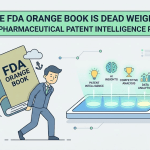
FDA’s Approved Drug Products with Therapeutic Equivalence Evaluations, universally called the Orange Book, is the authoritative list of drug products approved under NDAs and the patents and exclusivities associated with them. Every patent that could reasonably be asserted against an ANDA for the listed product must be submitted to FDA for listing. The NDA holder has 30 days from patent issuance to list it.
Orange Book listings cover three patent types: drug substance patents covering the active moiety, drug product patents covering formulations and dosage forms, and method of use patents covering approved therapeutic indications. What the Orange Book does not list: process patents covering manufacturing methods, metabolite patents, and patents that the NDA holder chooses not to list (whether strategically or in error). This omission matters enormously. A generic manufacturer can conceivably launch ‘at risk’ even while an unlisted process patent is theoretically infringed, because FDA’s approval mechanism is not gated on process patents.
The Orange Book also assigns patent use codes to method of use patents. These codes describe the specific indication covered by the patent. A generic manufacturer can carve out a patented indication from its label – a so-called ‘skinny label’ – to avoid infringing a use patent while still selling the product for unpatented indications. The strategic use of skinny labels is one of the more sophisticated plays in generic launch strategy, and brand companies have increasingly tried to block it through legislative and regulatory means.
‘Branded pharmaceutical companies lose an average of 90% of their market share within 12 months of first generic entry for small molecule drugs, with revenue erosion beginning within weeks of the launch date.’ – IQVIA Institute for Human Data Science, The Use of Medicines in the U.S. 2023 [1]
Reading a Patent Portfolio as a Generic Manufacturer Reads It
When a generic manufacturer evaluates whether to file an ANDA, their legal team does not look at the Orange Book listing in isolation. They build what is effectively an attack tree: a systematic analysis of every listed patent, organized by how likely it is to be invalidated or found non-infringed. The brand company that wants to protect its franchise must conduct the same analysis from the other side of the table.
The generic manufacturer’s first screen is claim scope. Broad, pioneering claims covering a new chemical entity are harder to design around but may be more vulnerable to prior art challenges. Narrowly drafted formulation claims may be easier to design around through reformulation, but if the generic must use the same formulation to achieve bioequivalence, the narrow claim may be ironclad. The brand company’s exposure depends on which of these two scenarios applies to each patent in its portfolio.
The second screen is prosecution history. Every argument made during patent prosecution to distinguish prior art becomes a potential estoppel argument in litigation. Generic manufacturers and their counsel read prosecution histories carefully. If the patentee argued during prosecution that the invention was novel because it excluded a particular salt form, a generic using that salt form has a credible non-infringement argument. These arguments are not always obvious from the patent claims themselves.
The third screen is prior art. The explosive growth of published chemistry literature, combined with the globalization of research, means that the prior art landscape for pharmaceutical compounds is genuinely complex. Compounds described in foreign patent applications filed before the US priority date, compounds disclosed in journal articles, and compounds disclosed in conference presentations can all qualify as prior art. Generic manufacturers with strong ANDA programs employ teams of scientists specifically to identify prior art that patent examiners may have missed.
The fourth screen is obviousness under 35 U.S.C. § 103. The KSR standard, established by the Supreme Court in 2007, significantly expanded the scope of what counts as obvious by allowing courts to consider the knowledge and creativity of a person of ordinary skill in the art when evaluating whether a combination of prior art references would have been obvious to try. Post-KSR, pharmaceutical patent claims that cover obvious structural modifications of known compounds, obvious salt forms, and obvious prodrugs have been significantly more vulnerable.
Part II: The Paragraph IV Ecosystem
How the Certification Process Works and Why It Is Public Information
The Hatch-Waxman Act created four certification categories for patent status in ANDA filings. Paragraph I certifies that no relevant patents are listed. Paragraph II certifies that all listed patents have expired. Paragraph III certifies that the ANDA applicant will wait until all listed patents expire before marketing. Paragraph IV – the one that drives virtually all pharmaceutical patent litigation in the United States – certifies that the listed patent is invalid, unenforceable, or will not be infringed by the generic product.
When a generic manufacturer files a Paragraph IV certification, it must notify the NDA holder and the patent owner within 20 days. That notification letter is the starting gun for the 45-day window during which the brand company can sue to trigger the 30-month stay. The notification letter itself is not publicly filed, but the filing of the ANDA with a Paragraph IV certification becomes public when FDA publishes it in the Official Gazette or when litigation is filed. Tracking these signals is a core function of patent intelligence.
The first Paragraph IV filer on a given ANDA application for a given drug product receives a 180-day exclusivity period during which FDA cannot approve any subsequent ANDA for the same product. This exclusivity is enormously valuable – it allows the first generic filer to enter the market and capture high margins before competition from other generics compresses prices. Generic manufacturers therefore race to be first filers on attractive products, and the first-filer race is itself an important signal for brand companies tracking competitive threats.
If multiple ANDA applicants file on the same day, they all share the 180-day exclusivity. If the first filer forfeits the exclusivity (by failing to market within a specified time frame, by entering into a settlement that triggers forfeiture, or by other specified events), subsequent filers may become eligible. The mechanics of 180-day exclusivity forfeiture have been the subject of substantial FTC attention and continue to generate litigation.
Reading the Paragraph IV Landscape for a Specific Drug
For a brand-name manufacturer with an approved product, the most important early warning signal is the appearance of an ANDA filing with a Paragraph IV certification. This signals that at least one generic manufacturer has decided the patent is worth challenging and has committed the legal resources to do so. The challenge is identifying that filing as early as possible.
FDA publishes ANDA approval actions and tentative approvals in its databases, and litigation filed in federal district courts is publicly available through PACER. But the earliest publicly available signal is often the notification letter to the NDA holder, which triggers a mandatory 45-day response window. Brand companies track these notifications internally, but analysts outside the brand company must rely on court filings, FDA databases, and patent intelligence services to reconstruct the timeline.
DrugPatentWatch maintains a comprehensive database of Orange Book patent listings, ANDA filings, Paragraph IV certifications, and associated litigation records. The platform aggregates data from FDA databases, federal court dockets, and USPTO records to produce a real-time picture of the patent challenge landscape for any given drug product. For a commercial analyst at a brand-name company or a hedge fund evaluating pharma equity, this kind of aggregated intelligence eliminates the need to manually track dozens of data sources for each product in a portfolio.
The practical question for a brand company is not merely ‘has a Paragraph IV been filed?’ but ‘how strong is the challenge, and what does the litigation trajectory look like?’ Answering that question requires understanding who filed the ANDA, what arguments are likely to be advanced based on the public record, and what precedents exist for similar challenges to similar patents.
The Authorized Generic Maneuver
One of the most effective tools available to brand manufacturers facing imminent generic competition is the authorized generic (AG). An authorized generic is the brand product sold under a license to a generic manufacturer (or by the brand company’s own generic subsidiary) at generic prices. The AG competes directly with the independent generic for market share during the 180-day exclusivity period.
The strategic logic is straightforward: if the first-filing generic manufacturer must share the market with an AG during its 180-day exclusivity window, the profits it earns during exclusivity are lower. This reduces the financial incentive for future Paragraph IV filers, because the expected value of being first is diminished. Some brand companies have used AGs aggressively as a deterrent; others have deployed them selectively as a damage-control measure when generic entry appears inevitable.
AGs have been controversial. FTC has expressed concern that brand-generic settlements that include AG supply agreements can effectively divide markets rather than create genuine competition. The Actavis decision by the Supreme Court in 2013 opened the door to antitrust scrutiny of reverse payment settlements, and subsequent litigation has clarified that settlements involving AGs must be evaluated on their competitive effects, not just their face terms.
The FTC’s Role and Reverse Payment Settlements
The FTC v. Actavis decision in 2013 established that reverse payment settlements – arrangements in which the brand company pays the generic manufacturer to delay launching its product – are subject to antitrust scrutiny under the rule of reason. Before Actavis, the prevailing judicial view in most circuits was that settlements within the ‘scope of the patent’ were immune from antitrust challenge. After Actavis, the size of the payment became evidence of anticompetitive intent: the logic being that a brand company would only pay a large sum to avoid competition if it believed the generic’s invalidity arguments had merit.
Post-Actavis litigation has generated a substantial body of case law on what constitutes a ‘large and unjustified’ payment. Non-monetary consideration – AG rights, co-promotion agreements, service contracts – has been found by some courts to constitute reverse payments subject to the same analysis. The FTC has pursued cases against brand-generic settlements in the pharmaceutical sector with increased intensity since 2013, and the risk of antitrust exposure is now a major factor in how brand companies structure litigation settlements.
For patent intelligence purposes, this means that not every Paragraph IV challenge ends in a judgment of validity or invalidity. Many end in settlements, and the terms of those settlements – even when filed under seal in federal court – often become partially public through FTC oversight, state attorney general actions, or subsequent litigation. Tracking the outcome of Paragraph IV litigation, including settlement terms, is essential to calibrating any forecast of generic entry timing.
Part III: Building a Generic Launch Forecast Model
The Five Inputs Every Forecast Needs
A rigorous generic launch forecast is not a single number. It is a probability-weighted distribution of possible launch dates, each anchored to a specific legal and regulatory pathway. Building it requires five categories of input.
The first is the complete Orange Book patent landscape. Every listed patent, its base expiration date, any PTE application and its likely outcome, any associated pediatric exclusivity, and any market exclusivity periods. This landscape defines the outer boundary of possible launch dates: a generic cannot legally enter until all blocking patents have either expired or been adjudicated invalid or not infringed.
The second is the ANDA filing status. Has any ANDA been filed? If so, was a Paragraph IV certification submitted? Who filed it, and when? Has the brand company received the notification letter? Has litigation been filed? What is the status of that litigation? These facts determine whether the 30-month stay clock is running and when it will expire.
The third is patent quality assessment. For each challenged patent, what is the probability that it will be found valid and infringed? This is a qualitative judgment that requires reading the prosecution history, analyzing the prior art landscape, reviewing any inter partes review (IPR) petitions filed at the USPTO, and benchmarking against comparable litigation outcomes. The assessment should produce a probability distribution, not a single yes/no answer.
The fourth is the competitive ANDA landscape. How many ANDAs have been filed? Are there first-filer exclusivity holders who will gate the timing of any second-wave entrants? What is the manufacturing readiness of the leading ANDA applicants? A generic manufacturer with a tentative FDA approval but without manufacturing capacity is not a real launch threat on the forecasted date.
The fifth is regulatory exclusivity analysis. Are there any non-patent regulatory exclusivities blocking ANDA approval? NDA holders sometimes obtain three-year exclusivities through supplemental NDAs for new clinical studies, and these can reset portions of the competitive timeline even after base patent expiration.
Modeling the 30-Month Stay Expiration
The 30-month stay is calculated from the date the NDA holder receives the Paragraph IV notification letter, not from the date litigation is filed. Brand companies sometimes delay filing suit by a few days to buy additional time, but must file within 45 days to trigger the stay. The 30-month period runs from the notification date regardless of how quickly the lawsuit is filed within that window.
Identifying the notification date precisely requires either internal company knowledge (if you are the NDA holder) or triangulation from public records. The litigation docket in the relevant district court will show the filing date of the complaint. If the notification letter was received on Day 1 and the complaint was filed on Day 40, the 30-month stay expires 30 months from Day 1, not 30 months from Day 40. In practice, most firms model the stay expiration from the complaint filing date plus a small adjustment for the notification-to-filing gap, since the notification date is rarely public.
During the stay period, FDA can continue to review the ANDA and may grant a tentative approval, which signals that the application meets all regulatory requirements and would be approved but for the outstanding patent litigation. Tentative approval is an important signal: it means the only remaining barrier to market entry is the patent dispute. When a generic manufacturer has a tentative approval and the 30-month stay is approaching expiration, the brand company should be on high alert regardless of how confident it feels about the litigation outcome.
Stays can be shortened by the court if it determines that the patent holder has not acted with reasonable diligence in the litigation. In practice, this shortening is uncommon, but it is a factor in very old cases where the brand company has pursued dilatory litigation tactics.
Case Study: Lipitor and the Atorvastatin Patent Wars
Atorvastatin calcium, sold by Pfizer as Lipitor, was the best-selling drug in pharmaceutical history, reaching $13 billion in annual US sales at its peak. The patent litigation that preceded generic entry in November 2011 is the definitive case study in how brand companies use patent portfolios to extend commercial life – and how generic manufacturers systematically dismantle those portfolios.
Pfizer’s Orange Book listings for Lipitor included multiple patents covering the atorvastatin compound, formulations, and manufacturing processes. The compound patent (US 4,681,893) was the primary barrier, expiring in 2010. Pfizer obtained a pediatric exclusivity extension pushing the effective date to March 2010, and a PTE that extended protection further. The key formulation and crystalline form patents added additional layers.
Ranbaxy Laboratories filed the first Paragraph IV certification challenging Pfizer’s patents in 2002, triggering litigation in the District of New Jersey. The case became extraordinarily complex, involving multiple patent claims, counterclaims of unenforceability based on inequitable conduct, and parallel proceedings at the USPTO. Ranbaxy ultimately prevailed on certain patent claims but faced its own regulatory problems, including an FDA import alert over manufacturing concerns at its Indian facilities that delayed its actual generic launch despite having a legal right to market.
The Lipitor situation illustrates a point that models often miss: legal patent expiration and practical generic launch are not the same thing. A generic manufacturer can win in court but fail to launch on time due to manufacturing problems, regulatory issues, or business decisions about launch timing. Patent intelligence models must account for this gap by assessing not just legal timelines but operational readiness of ANDA applicants.
By the time multiple generics entered the atorvastatin market in late 2011 and early 2012, Pfizer had executed a sophisticated pre-launch strategy including authorized generic partnerships, price adjustments for major payers, and patient loyalty programs. These strategies did not prevent revenue erosion – Lipitor US sales fell from $7.7 billion in 2010 to $3.9 billion in 2011 to $1.5 billion in 2012 – but they moderated the initial cliff and preserved some brand volume [2].
Case Study: Humira and the ‘Patent Thicket’ Strategy
AbbVie’s Humira (adalimumab) became the most instructive example of systematic patent thicket construction in modern pharmaceutical history. Humira’s original US patent on the adalimumab compound was set to expire in 2016. In the decade before that expiration, AbbVie filed and obtained hundreds of additional patents covering formulations, manufacturing processes, methods of use, dosing regimens, and device components.
By 2023, AbbVie had listed over 60 patents in the Orange Book for Humira, with expiration dates extending into the 2030s. Biosimilar manufacturers (biosimilars operate under a parallel framework to small-molecule generics, governed by the Biologics Price Competition and Innovation Act rather than Hatch-Waxman) faced the prospect of litigating dozens of patents serially or in parallel. AbbVie settled with most biosimilar developers on terms that allowed US market entry in January 2023, seven years after the base compound patent expiration.
The Humira patent thicket generated enormous controversy. Critics, including FTC commissioners and academic economists, argued that AbbVie’s patent filing strategy was designed primarily to delay competition rather than to protect genuine innovation. The Institute for Clinical and Economic Review estimated that the biosimilar delay cost the US healthcare system approximately $50 billion in excess drug spending [3]. AbbVie disputed these figures but the broader point – that systematic patent accumulation around biologics can create durable market exclusivity well beyond the innovation patent’s life – is now recognized in regulatory and legislative discussions.
For patent intelligence purposes, the Humira case established that counting patents is not the same as assessing patent quality. AbbVie’s later patents faced significant validity challenges in ex parte reexamination proceedings and IPR petitions, and several were found unpatentable by the USPTO. A naive count of Orange Book listings would have suggested protection through the 2030s; a quality-adjusted analysis would have identified substantial vulnerability in the later-expiring patents much earlier.
The Role of Inter Partes Review
The America Invents Act of 2011 created inter partes review (IPR), a USPTO proceeding in which any party can petition the Patent Trial and Appeal Board (PTAB) to review the validity of an issued patent on prior art grounds. IPR has fundamentally changed the patent challenge landscape because it provides a faster, cheaper, and statistically more favorable forum for challengers than federal district court litigation.
PTAB institutes review in roughly 60 to 70 percent of petitions it receives, and of those instituted, invalidates all challenged claims in roughly 40 to 50 percent of cases. For pharmaceutical patent litigation, the implication is significant: a generic manufacturer that files both an ANDA with a Paragraph IV certification and an IPR petition against the same patent is pursuing two parallel tracks toward market entry. Even if the district court upholds the patent, a subsequent PTAB decision invalidating the same patent can unwind that result through the collateral estoppel and res judicata frameworks that govern these proceedings.
Coal truck manufacturers and consumer electronics companies were the original architects of IPR strategy, but pharmaceutical generics and biosimilar developers have become sophisticated IPR practitioners. Coal Alliance Pharma, Mylan (now Viatris), Teva, and other major generic firms have filed hundreds of IPR petitions against branded pharmaceutical patents. Tracking IPR filings alongside ANDA submissions is an essential component of any comprehensive patent intelligence program.
Brand companies have responded by incorporating IPR-resiliency into patent prosecution strategy. This means writing claims with explicit attention to how they would be evaluated under the IPR claim construction standard (the broadest reasonable interpretation, which is less patent-holder-friendly than the district court standard for claim construction), ensuring strong file histories that establish claim scope clearly, and monitoring IPR petitions filed by third parties so that they can file timely motions to amend claims when necessary.
Part IV: The Market Risk Calculus
Quantifying Revenue Exposure Across a Portfolio
Patent intelligence is only valuable if it converts into a number that informs a business decision. For a multi-product pharmaceutical company, the relevant output is a portfolio-level revenue exposure model: for each product in the portfolio, what is the probability-weighted expected revenue loss in each future year, accounting for all possible generic entry scenarios?
The model structure is straightforward in concept but complex in execution. For each product:
Identify all possible generic entry dates, from the earliest possible (if all patent challenges succeed immediately) to the latest possible (if all patent challenges fail and all extensions are obtained)
Assign a probability to each scenario based on patent quality assessment, litigation history, and market intelligence on ANDA applicants
Model the revenue trajectory for each scenario, accounting for the speed and depth of brand erosion under each generic entry timing
Weight the revenue trajectories by their probabilities to produce an expected revenue path
The output is not a single number but a risk-adjusted revenue forecast with explicit uncertainty ranges. A product might have a 30 percent probability of generic entry in 2026, a 50 percent probability in 2028, and a 20 percent probability that existing patents hold until 2031. The expected revenue path reflects all three scenarios weighted by their probabilities.
For a BD team evaluating an acquisition, this model is the core of the IP due diligence work. A target company’s DCF model may show strong revenue for 10 years, but if patent intelligence suggests a 40 percent probability of generic entry in year 5, the acquisition price should reflect that risk.
Understanding Market Share Erosion Curves by Therapeutic Category
The speed and depth of brand erosion after generic entry varies significantly by therapeutic category, dosage form, and patient population. Understanding these differences is as important as the timing of generic entry itself.
Primary care products with large patient populations and commodity-like prescribing patterns – statins, antihypertensives, SSRIs – experience the most rapid and complete erosion. Retail pharmacies substitute automatically under most state substitution laws, PBMs strongly incent generic dispensing through formulary tier placement, and prescribers face minimal pressure to maintain brand prescriptions. Within 90 days of generic entry, brand share can fall below 10 percent for these products.
Specialty products with complex dosing, unique delivery mechanisms, or patient populations that are difficult to switch face slower but still substantial erosion. Biologics, despite having no exact generic equivalent, have experienced faster-than-expected market share loss from biosimilars in markets like Europe where aggressive payer substitution policies apply. In the US, where biosimilar substitution is less automatic, erosion has been slower but is accelerating as payers gain experience managing biosimilar programs.
CNS products in psychiatric indications sometimes retain brand share better than expected because psychiatrists and patients are often reluctant to switch stable patients to generic alternatives. Pediatric specialty products similarly see slower erosion because prescribers are cautious about formulation changes in vulnerable populations. These category-specific dynamics must be calibrated into any launch forecast model.
Formulary Dynamics and the Pre-Launch Window
One of the most actionable outputs of patent intelligence is the pre-launch window it provides for commercial strategy. If a brand company’s analysis indicates a 65 percent probability of generic entry in Q3 2027, the commercial team has a defined window to take specific protective actions.
The most important pre-launch action is formulary management. Brand companies with strong managed care account relationships can negotiate multi-year formulary agreements that provide preferred placement, limited tiering, and step-edit requirements even after generic entry. These agreements are easier to secure 18 to 24 months before anticipated generic launch than 6 months before, when payers are already in active discussions with generic manufacturers about exclusivity contracts.
Patient assistance programs, co-pay assistance cards, and specialty pharmacy relationships can reduce the financial incentive for patients to switch to generics, particularly in specialty categories where cost-sharing differentials between brand and generic are the primary driver of switching behavior. These programs are most effectively deployed in the 12 months preceding anticipated generic entry.
Lifecycle management investments – new formulations, new indications, new delivery mechanisms – require lead times that make patent intelligence critically time-sensitive. Developing an extended-release formulation of an immediate-release product typically requires 3 to 5 years from initiation to approval. A company that identifies in 2025 that its compound patent expires in 2030 has time to develop and launch an ER formulation; a company that identifies the same threat in 2028 does not. The decision to invest in lifecycle management depends directly on the clarity and reliability of the patent expiration forecast.
The ‘At-Risk’ Launch Decision
Generic manufacturers sometimes launch their products before all patent litigation is resolved, accepting the legal risk that they may be required to pay damages if the brand company ultimately prevails. This ‘at-risk launch’ strategy has a clear financial logic: if the generic manufacturer believes it will win the litigation and has a tentative ANDA approval in hand, delaying launch while the litigation concludes means forgoing months of market exclusivity that cannot be recovered. The calculation turns on the probability of losing litigation, the magnitude of potential damages, and the value of early market entry.
At-risk launches have occurred in several high-profile cases. When Barr Pharmaceuticals launched generic Provera (medroxyprogesterone) at risk in 2000 before its Paragraph IV litigation was fully resolved, it faced a court injunction within weeks. When Teva launched generic Provigil (modafinil) at risk in 2006 after PTAB proceedings (then conducted at the Board of Patent Appeals and Interferences) found its claims unpatentable, Cephalon sought an injunction that was denied – allowing Teva to keep its position in the market.
For brand companies, at-risk launches represent an acute threat because they compress the effective protection timeline to zero if an injunction is not obtained. Brand companies tracking patent challenge litigation should maintain standing preliminary injunction motions in readiness as their 30-month stay approaches expiration, so they can move quickly if a generic manufacturer signals an intent to launch before final judgment.
Part V: Patent Intelligence Tools and Data Infrastructure
What Good Patent Intelligence Actually Requires
The term ‘patent intelligence’ is used loosely to describe a spectrum of activities ranging from a paralegal running a quarterly Orange Book check to a sophisticated competitive intelligence program integrating data from a dozen sources into a real-time risk dashboard. The difference in output quality between these approaches is enormous.
At minimum, a functional patent intelligence program needs:
Complete and current Orange Book data, updated daily as FDA makes changes
ANDA filing and approval status from FDA’s ANDA database, including tentative approvals
Federal district court docket tracking for Hatch-Waxman litigation across all relevant districts
USPTO PTAB database access for IPR and post-grant review filings
More sophisticated programs add:
PTO application status tracking to monitor in-prosecution patent applications that have not yet issued
Foreign patent database coverage, particularly European Patent Office and Japanese patent office filings, which often share priority with US applications and provide early signals of patent strategy
FTC settlement filings and state AG actions that reveal terms of patent litigation settlements
SEC filings by generic manufacturers, which sometimes disclose ANDA filing activity in ways not captured by FDA databases
DrugPatentWatch integrates FDA Orange Book data, ANDA filings, patent expirations adjusted for PTEs and pediatric exclusivity, and Paragraph IV litigation history into a unified platform that allows users to pull a comprehensive patent landscape for any approved drug in minutes rather than hours. The platform’s strength is in aggregating and normalizing data that would otherwise require manual collection from multiple government databases. For analysts building portfolio-level exposure models, this kind of aggregation eliminates a substantial proportion of the data collection burden and reduces the risk of missing a patent or ANDA filing that alters the competitive timeline.
The Human Judgment Layer
Data aggregation is necessary but not sufficient. The output of any patent intelligence database is raw information – Orange Book listings, filing dates, litigation docket entries. Converting that information into a forecast of generic launch timing requires legal and scientific judgment that no database provides automatically.
Patent quality assessment is the domain of specialized IP attorneys who can read claim language, prosecution history, and prior art with the expertise to form a credible view on validity and infringement probability. This assessment is not a commodity service; the quality of the analysis varies significantly depending on the attorney’s familiarity with the specific chemistry and the regulatory framework. Firms that specialize in paragraph IV litigation – Fish & Richardson, Axinn Veltrop, Kirkland & Ellis’s IP group, and their counterparts in the generic world – have developed institutional knowledge about which patents in specific therapeutic categories are strong and which are vulnerable.
Market intelligence on generic manufacturer readiness is another human judgment layer. Which ANDA applicants have manufacturing capacity at scale? Which have recent FDA warning letters or import alerts that would delay approval? Which have demonstrated a willingness to launch at risk? These questions require monitoring of FDA enforcement actions, SEC filings, investor calls, and trade press – not just patent databases.
Integrating Patent Intelligence Into Commercial Planning Cycles
The value of patent intelligence is destroyed if it lives in a legal department silo and never reaches the commercial and financial planning functions that need it. The most effective pharmaceutical companies have built governance structures that make patent expiration forecasts a required input into long-range planning, portfolio reviews, and capital allocation decisions.
In practice, this means that patent intelligence outputs – including probability-weighted generic entry date ranges and associated revenue exposure estimates – should be presented at annual portfolio review meetings, included in the financial model assumptions that support product-level P&L projections, and reviewed quarterly alongside litigation status updates. Companies that treat patent status as a legal matter to be resolved by the law department, rather than a commercial matter that affects the P&L, consistently get surprised by generic launches that their own attorneys could have predicted.
The governance model that works is one where the IP/legal function produces a standardized patent risk report for each product, which is then integrated into the finance function’s long-range revenue model. The commercial team uses the output to prioritize lifecycle management investments and managed care strategy. The medical affairs team uses it to time publication strategies for any additional clinical data that could support a label expansion. All of these functions are operating from the same underlying patent intelligence input.
Part VI: Advanced Strategies for Mitigating Generic Entry Risk
Lifecycle Management: Beyond the Me-Too Reformulation
Lifecycle management in the pharmaceutical industry has a poor reputation, largely because the most cynical examples – filing a new patent on a previously approved drug simply by changing the tablet color or adding a coating – have become touchstones in policy debates about patent system abuse. This reputation is not entirely undeserved: the record of pharmaceutical LCM includes genuine innovations alongside obvious attempts to extend exclusivity on products with no clinical benefit improvement.
The most defensible and effective LCM strategies generate genuine clinical value. Extended-release formulations that reduce dosing frequency and improve adherence, fixed-dose combinations that simplify complex regimens, pediatric formulations that address an underserved patient population, and new indications that expand the therapeutic utility of an existing compound – these strategies earn regulatory exclusivity, generate real clinical evidence, and create commercial value that survives generic competition on the original product.
The regulatory path matters enormously for LCM strategy. A new chemical entity that is a metabolite of an existing compound may qualify for full five-year NCE exclusivity if it meets FDA’s definition of a new molecular entity. A new formulation typically qualifies only for three-year exclusivity based on new clinical studies, provided the studies are essential to approval of the supplement. A new dosing regimen that does not require new clinical studies earns no regulatory exclusivity at all, regardless of patent status.
Patent protection for LCM products is strongest when it covers genuinely novel structural or functional features that are not obvious from the prior art. A patent covering an extended-release matrix that delivers a specific pharmacokinetic profile not achievable with conventional formulations is defensible. A patent covering an obvious salt form of an existing compound, or a product-by-process claim that the PTAB has repeatedly found to add nothing novel, is not. The distinction matters because the competitive value of LCM depends on whether the patents covering the new version are strong enough to block generic competition on both the original and the improved product.
Strategic Patent Filing: Building Defense in Depth
The most durable pharmaceutical patent portfolios are designed from early in product development with a view toward creating overlapping layers of protection that a generic manufacturer would have to challenge serially rather than simultaneously. AbbVie’s Humira strategy is the extreme example, but the underlying logic applies even to small and mid-size specialty pharma companies with single-product portfolios.
Effective layered patent protection starts with the compound patent, which is filed at the time of discovery or shortly thereafter. This is the cornerstone claim – the broadest possible claim covering the active moiety itself. On top of this sits the formulation patent, covering the specific pharmaceutical composition used in the approved product. Then come method of use patents covering specific approved indications, dosing regimen patents covering specific dose-frequency combinations, manufacturing process patents covering the production method, and device patents covering any proprietary delivery system.
The key to making this portfolio genuinely protective rather than merely large is ensuring that each layer covers something the generic must actually use to achieve therapeutic equivalence. A formulation patent covering an inactive excipient that the generic could replace with an equivalent alternative provides no real protection. A formulation patent covering a rate-controlling polymer that is essential to the product’s bioequivalence profile is difficult to design around without failing bioequivalence testing.
Companies that engage IP strategy consultants early in product development – before the compound goes into clinical trials – are better positioned to file applications at the right times to maximize patent term and to design formulations and manufacturing processes with patent protection in mind from the outset, rather than retrofitting patent strategy onto existing product decisions.
The decision to sue a Paragraph IV filer is not automatic. Brand companies must decide within 45 days of receiving the Paragraph IV notification whether filing suit to trigger the 30-month stay makes strategic sense. The factors in that decision include:
Patent strength. If the challenged patent has obvious validity problems – prior art issues that were not fully addressed during prosecution, claims that are broader than the actual contribution to the art, or prosecution history that created damaging estoppels – the brand company may be better off conceding that patent while relying on stronger claims in other patents to maintain the 30-month stay. Suing on a weak patent invites a judgment of invalidity that eliminates that patent across all products and all future litigation.
Litigation venue. Not all district courts are equally favorable to patent holders or patent challengers. The District of Delaware handles an enormous volume of Hatch-Waxman litigation and has judges with deep pharmaceutical patent expertise. The Southern District of New York, the District of New Jersey, and the Northern District of Illinois also handle significant volumes. Forum selection is a two-player game: brand companies try to select favorable venues, and generic manufacturers try to file declaratory judgment actions in venues they prefer before the brand company files its infringement suit.
Litigation resources. A Paragraph IV case in federal district court costs millions of dollars in legal fees and expert costs. For a product with $50 million in annual revenue and a base patent expiring in 18 months, the litigation economics may not support a full-scale defense. For a product with $1 billion in annual revenue and a strong patent portfolio, the economics strongly favor aggressive litigation.
Settlement negotiation leverage. The 30-month stay gives brand companies a defined window during which they can negotiate from a position of strength. The generic manufacturer is not selling any product during the stay; it is accumulating legal costs without revenue. Brand companies that have strong patent portfolios can negotiate entry date agreements that allow limited generic entry at a date consistent with the brand company’s lifecycle management timeline. These agreements must now be structured carefully to avoid Actavis scrutiny, but properly structured entry date agreements remain common and legally permissible.
Biosimilar Competition: The New Frontier
The BPCIA pathway for biosimilar approval, established in 2010 as part of the Affordable Care Act, created an entirely different framework for managing competition to biologics. Unlike small-molecule generics, biosimilars are not chemical copies of the reference product – they are highly similar biological medicines with no clinically meaningful differences from the reference product. The complexity of biological manufacturing means that demonstrating biosimilarity requires clinical data rather than simple bioequivalence studies, and the regulatory review process is substantially more expensive and time-consuming than an ANDA.
The patent dance provisions of the BPCIA require biosimilar applicants and reference product sponsors to exchange information about patents and engage in a structured negotiation process to identify which patents will be litigated before launch. This process has been extensively litigated itself, with Amgen v. Sandoz in 2017 establishing that the BPCIA’s patent dance provisions are optional for biosimilar applicants, meaning that biosimilar manufacturers can simply notify the reference product sponsor of their intent to market 180 days before launch and proceed without engaging in the formal exchange process.
The 12-year reference product exclusivity under the BPCIA is the most important protection for biologic manufacturers, providing a floor below which no biosimilar application can be approved regardless of patent status. After this exclusivity expires, the patent landscape for the biologic determines the competitive timeline – and that landscape can be very complex, as Humira demonstrated.
Patent intelligence for biologics requires tracking not just Orange Book listings but the biologics equivalent: the Purple Book, which FDA now maintains for licensed biological products. The Purple Book includes patent information submitted by reference product sponsors under the BPCIA framework. DrugPatentWatch and other intelligence platforms have expanded their coverage to include Purple Book data alongside Orange Book data, reflecting the growing commercial importance of biosimilar competition forecasting.
Part VII: The Investor and BD Perspective
Patent Intelligence in M&A Due Diligence
Pharmaceutical M&A due diligence has historically treated IP as a legal checklist item rather than a valuation driver. The IP schedule in the acquisition agreement lists the relevant patents. The representations and warranties section covers patent validity and non-infringement. The legal team reviews the prosecution history of the key patents. Done.
This approach consistently produces surprises in the years following deal close, because it fails to assess the probability and timing of generic entry with the rigor that the commercial team applies to, say, sales force sizing or managed care contract projections. A pharmaceutical company that pays $2 billion for a product generating $300 million in annual revenue, modeled to generate $2.5 billion in cumulative revenue over 10 years, will be seriously harmed if generic entry occurs in year 4 instead of year 8 – yet the DD process often does not build a probability-weighted view of that risk.
Best-practice IP due diligence for pharmaceutical acquisitions should produce, at minimum:
A complete patent landscape for all major products, including pending applications that have not yet issued
An assessment of the quality and validity risk for each Orange Book-listed patent
An analysis of existing Paragraph IV challenges and the status of associated litigation
A probability-weighted generic entry date range for each significant product
A sensitivity analysis showing acquisition value under each generic entry scenario
The output of this analysis feeds directly into the acquisition price negotiation. If the seller’s financial model assumes 10 years of exclusive sales but the patent intelligence analysis suggests a 40 percent probability of generic entry at year 6, the acquirer should price the risk into its offer accordingly – or negotiate appropriate indemnities and escrow arrangements.
Equity Research and Patent Cliff Modeling
Pharmaceutical equity analysts have become increasingly sophisticated in modeling patent cliff risk, but the quality of analysis still varies widely. The analysts who consistently provide the most accurate revenue forecasts for pharmaceutical companies are the ones who invest in patent intelligence infrastructure: they track ANDA filings in real time, monitor PTAB proceedings, and build explicit probability distributions for generic entry rather than binary assumptions about patent expiration dates.
The equity market does not always price patent risk efficiently. Studies of market reactions to Paragraph IV litigation filings have shown that markets often underreact to early-stage filings against strong patent portfolios and overreact to later-stage litigation outcomes that were predictable from the facts available at the time of filing. An analyst with a more accurate model of patent risk can identify positions where the market is mispricing the generic entry timeline in either direction.
For sell-side analysts covering specialty pharma companies, the most important patent intelligence question is often about products not yet facing generic challenges. Which products in the company’s portfolio are most vulnerable to Paragraph IV filings in the next 24 months? Which patents are analytically weak enough that a well-funded generic manufacturer would view them as viable targets? Answering these questions requires the same quality assessment framework that brand companies use internally, applied prospectively rather than reactively.
Generic Industry Strategy and Patent Intelligence
For generic manufacturers, patent intelligence runs in the opposite direction. The goal is to identify attractive ANDA opportunities: products with large revenue bases, patents with identifiable weaknesses, and competitive ANDA landscapes that are not yet overcrowded. The 180-day first-filer exclusivity creates enormous financial incentives to be the first to challenge a patent that the market has underestimated.
Generic manufacturers’ BD teams use patent intelligence to build ‘target lists’ of molecules where the commercial opportunity justifies the legal investment of a Paragraph IV challenge. The analysis combines market size, patent quality, and competitive ANDA landscape to rank opportunities by expected return. DrugPatentWatch and similar platforms provide the raw data inputs for this analysis, allowing generic manufacturers to screen hundreds of molecules efficiently before investing in the detailed legal analysis required for a serious Paragraph IV challenge.
The most sophisticated generic manufacturers also track IPR petitions filed by third parties against pharmaceutical patents. A third party’s IPR petition that cites strong prior art can provide a ‘free ride’ for a generic manufacturer: if PTAB invalidates the patent in response to the third-party petition, the generic manufacturer benefits from the invalidity ruling without having had to fund the IPR proceeding itself. Monitoring IPR activity against potential ANDA targets is a standard component of generic business development.
Part VIII: The Regulatory Environment and Emerging Trends
FDA Patent Reform Proposals and Their Commercial Implications
FDA and Congress have both been active in recent years in examining the Orange Book listing system and the Hatch-Waxman framework for opportunities to accelerate generic competition. The Biden administration’s executive orders on pharmaceutical pricing directed FDA and FTC to intensify scrutiny of Orange Book listings and take enforcement action against listings that do not meet the statutory requirements for patent listing.
In 2023, FTC sent letters to drug companies challenging what it characterized as improper Orange Book listings of device patents for combination products – specifically, listings of patents covering drug delivery devices like inhaler components for respiratory drugs and auto-injectors for biologics. FTC’s position was that device patents covering only the delivery mechanism, not the drug itself, do not qualify for Orange Book listing because they do not claim the drug product or method of use as required by the statute. Several companies delisted patents voluntarily in response to FTC pressure; others contested the agency’s interpretation.
If FTC’s position on device patent listing is sustained – either through litigation or through legislative clarification – it would accelerate generic competition to several respiratory and specialty injectable products that currently have device patent protection extending years beyond compound patent expiration. Companies with products in these categories should be actively modeling the scenario in which device patents are delisted and the competitive timeline accelerates accordingly.
The IRA and Its Indirect Effects on Patent Strategy
The Inflation Reduction Act of 2022 introduced Medicare drug price negotiation for selected high-cost drugs, with negotiated prices taking effect as early as 2026. The IRA’s selection criteria favor small-molecule drugs that lack generic competition after nine years (later extended to 13 years for small molecules to create parity with biologics, as modified in subsequent regulatory guidance) and biologics after 13 years without biosimilar competition.
The IRA creates a new dimension of patent strategy calculation. A brand-name drug company with a small-molecule product that enters the Medicare negotiation pool can negotiate a lower price, but the price negotiation outcome may be more favorable if the product has strong patent protection that would otherwise support exclusive pricing for many more years. Conversely, a company that anticipates generic entry in year 10 may find that the IRA negotiation creates less incremental harm than feared, because generic competition would have eroded the commercial value of Medicare exclusivity anyway.
Some pharmaceutical economists have argued that the IRA creates perverse incentives to file more patents and more aggressively assert them, in order to create the impression of a longer patent runway that would be disrupted by negotiation. Others argue the opposite: that the value of patent protection in a negotiated pricing environment is lower, which reduces the return on investment for late-cycle patent filings. The empirical evidence on the IRA’s effects on patent filing behavior is still accumulating, but the strategic implications are already informing pipeline investment and patent filing decisions at major pharmaceutical companies.
The Global Dimension: Parallel Imports, Patent Linkage, and Cross-Border Strategy
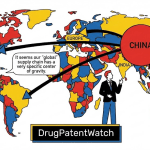
US patent intelligence focuses almost exclusively on FDA/USPTO frameworks, but pharmaceutical companies operating internationally must track patent status across dozens of jurisdictions simultaneously. European patent protection operates through the European Patent Office, with national validation required in each member state. Generic entry in Germany, France, or the UK can occur at different times than in the US, depending on national patent term extension certificates (the European equivalent of US PTEs) and national regulatory exclusivity periods.
Parallel imports, in which products legitimately marketed in a lower-price jurisdiction are imported into a higher-price jurisdiction within the EU’s single market, create a channel through which generic competition effectively arrives before the patent expires in the higher-price market. A pharmaceutical company with compound patent expiration in Germany in 2027 but in the UK in 2029 faces the risk that UK patients and their pharmacists obtain the product from German sources once German generics launch, even before UK generic entry is legally permissible.
Patent linkage systems, in which generic drug approval is formally linked to patent status, exist in the US, Canada, and some other markets but not in the EU. In markets without patent linkage, a generic manufacturer can obtain regulatory approval without any formal patent process and then launch subject to patent infringement risk. Brand companies in non-linkage markets must monitor generic regulatory approvals and be prepared to seek emergency injunctions if an unauthorized launch occurs.
Part IX: Building the Intelligence Program
Organizational Design for Patent Intelligence
The pharmaceutical companies that execute patent intelligence most effectively are those that have resolved the organizational design question clearly: this function sits at the intersection of legal, commercial, and finance, and it must have real authority to influence strategic decisions, not merely to report information that gets ignored.
The most common failure mode is the ‘advisory without authority’ model, in which an IP intelligence team produces detailed analyses that are presented to senior commercial leaders who lack the background to evaluate the legal nuances and default to optimistic assumptions about patent protection. Under this model, patent cliff risks are systematically underweighted in revenue planning until they materialize as actual surprises.
The most effective model embeds patent intelligence outputs directly into the financial planning process with senior executive sponsorship. This means that the IP function owns specific line items in the long-range plan – specifically, the generic entry date assumptions for each product – and those assumptions can only be overridden with explicit executive sign-off on the deviation from the intelligence team’s recommendation. This governance structure creates accountability and ensures that patent risk is treated as a financial planning input rather than a legal footnote.
Staffing and Capabilities
A complete patent intelligence capability requires three types of human expertise that are genuinely rare and expensive. The first is patent attorneys with specific experience in pharmaceutical Hatch-Waxman litigation, not just general patent prosecution or IP transactional work. The second is pharmaceutical scientists with deep enough understanding of chemistry, formulation science, and pharmacology to evaluate the technical merit of patent claims and the feasibility of design-arounds. The third is competitive intelligence analysts with the research skills to track ANDA filings, court dockets, and regulatory databases in real time.
For smaller pharmaceutical companies without the resources to staff all three in-house, the practical solution is a combination of external law firm support, subscription to patent intelligence platforms like DrugPatentWatch for data infrastructure, and a single in-house analyst who owns the governance process and manages external resources. This configuration can deliver 80 percent of the capability of a fully staffed in-house team at a fraction of the cost, provided the in-house analyst has the skills to synthesize legal, scientific, and market intelligence into coherent forecasts.
Technology and Data Integration
The data infrastructure for patent intelligence is more complex than it appears. Orange Book data, ANDA approval databases, PACER court dockets, PTAB filings, and PTO patent application status systems all use different data models, different identifiers for the same drugs and companies, and different update frequencies. Integrating these sources into a coherent real-time dashboard requires significant data engineering investment or the use of commercial platforms that have already done this integration work.
DrugPatentWatch’s architecture addresses this problem by normalizing data across FDA, PTO, and court sources and presenting it through a unified interface organized around drug products and ANDA applicants rather than around legal docket numbers or patent numbers. This normalization allows a commercial analyst who is not a patent attorney to quickly understand the competitive landscape for a specific drug without needing to navigate multiple government systems.
Machine learning applications in patent intelligence are still early-stage but promising. Models trained on historical ANDA filings and litigation outcomes can generate probabilistic predictions of which patents are likely to be challenged and when, based on features like patent age, claim scope breadth, prior art density, and the commercial attractiveness of the underlying product. These models are not yet reliable enough to replace expert legal judgment, but they can efficiently prioritize which patents deserve deeper human analysis.
Part X: Real-World Application and Execution
The Ninety-Day Patent Review: What It Should Cover
A quarterly patent review should accomplish several concrete tasks beyond a status update on pending litigation. It should update the probability weights on each contested patent based on any litigation developments in the prior quarter, including claim construction rulings, expert witness disclosures, summary judgment filings, and any PTAB decisions in parallel IPR proceedings. Claim construction rulings are particularly important because they often determine the practical outcome of patent cases before the final trial; a court’s interpretation of a key claim term can either definitively establish infringement or make it geometrically impossible to find infringement even if the product is therapeutically equivalent.
The review should also cover any new ANDA filings or Paragraph IV certifications identified in the prior quarter, including filings against products that were not previously on the at-risk list. This requires monitoring FDA’s ANDA database updates and any new litigation filings in relevant districts. A single new Paragraph IV filing on a product that previously had no ANDA challenge can shift that product’s risk profile dramatically and should trigger an immediate escalation to commercial and finance leadership rather than waiting for the next quarterly cycle.
The review should produce an updated patent cliff calendar – a visual representation of the revenue at risk in each future year, organized by product and scenario. This calendar should be the primary deliverable that goes to the CFO and Chief Commercial Officer, because it translates legal complexity into business terms that are immediately actionable in financial planning.
Scenario Planning: The Three Futures
For each product with significant patent exposure, commercial teams should maintain three explicit scenarios rather than a single base case. The first is the ‘brand sustains’ scenario, in which the company successfully defends all challenged patents through final judgment or settlement and maintains exclusive status until the last patent expires naturally. The second is the ‘early generic entry’ scenario, in which one or more challenged patents are found invalid or not infringed, generic entry occurs at the earliest legally possible date, and the brand company must execute its pre-planned response immediately. The third is the ‘delayed but certain erosion’ scenario, in which the litigation runs to expiration of the 30-month stay without final judgment, the generic manufacturer launches at risk or waits for a consent judgment, and generic entry occurs at the 30-month milestone or shortly thereafter.
Each scenario should have a complete set of assumptions about revenue trajectory, market share erosion curve, and commercial response (authorized generic launch, managed care negotiations, patient retention programs) and a probability weight that is updated quarterly. The probability-weighted average of these three scenarios is the revenue forecast that should be used for financial planning, capital allocation, and M&A valuation.
This scenario structure forces explicit decision points. If the ‘early generic entry’ scenario has a 35 percent probability, does the commercial team have a response plan ready to execute within 30 days of an adverse court ruling? If the authorized generic has not been arranged, the manufacturing transferred to a partner, and the managed care notifications drafted, a 35 percent probability threat is being managed as a zero percent probability – which is a governance failure, not just a strategy failure.
The Warning Signs That Generic Launch Is Closer Than Your Model Suggests
Beyond the formal litigation timeline, several observable signals indicate that generic launch may be closer than the base case forecast. These signals deserve systematic monitoring as part of any patent intelligence program.
The first is a tentative FDA approval for any ANDA applicant. Tentative approval means the ANDA meets all regulatory requirements; only the patent litigation is blocking final approval. When a tentative approval appears in FDA’s database, the generic manufacturer is operationally ready to launch and is waiting only for the legal barrier to resolve. Any ruling that removes that barrier – a judgment of invalidity, an expiration of the 30-month stay, or a settlement with a specific launch date – immediately triggers market entry by an applicant who has already done all the manufacturing and regulatory work.
The second is a generic manufacturer’s SEC filings disclosing reserves for litigation damages or contingent liabilities. A generic manufacturer that is building financial reserves against adverse patent rulings is signaling that its legal team believes there is a meaningful probability of losing the litigation. This is a warning signal that the brand company’s patent position may be weaker than its internal legal team has assessed.
The third is atypical litigation activity in the final months before the 30-month stay expires. If a brand company begins filing requests for extensions in briefing schedules, seeks continuances of trial dates, or files motions that appear designed to delay the litigation timeline, it may be signaling that its patent position is weaker than public statements suggest. Generic manufacturers’ litigation counsel watch for these patterns as signals that the brand company is not confident in its case.
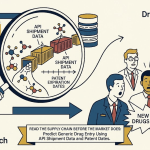
The fourth is supply chain activity by generic manufacturers. Large purchases of active pharmaceutical ingredient from contract manufacturers, scale-up of contract manufacturing organization capacity, and hiring of specialty pharmacy sales staff are observable signals that a generic manufacturer is preparing for imminent launch. These signals are not always publicly visible, but trade press, supply chain databases, and industry contacts can surface them in time to be actionable.
Key Takeaways
The patent expiration date on a drug’s certificate is almost never the date relevant to generic entry planning. PTEs, pediatric exclusivity, market exclusivities, and the 30-month litigation stay all modify the effective competitive timeline and must be explicitly modeled.
Paragraph IV certification filings are the earliest public signal of generic competitive intent. Systematic monitoring of these filings – through FDA databases, federal court dockets, and platforms like DrugPatentWatch – is the foundation of any proactive competitive defense strategy.
Patent quality matters more than patent quantity. AbbVie’s Humira thicket strategy delayed competition for years, but individual patents within the thicket were vulnerable to IPR challenges. Counting Orange Book listings overstates actual protection; quality-adjusted analysis reveals the real competitive window.
The 30-month litigation stay gives brand companies a defined window to negotiate, settle, or prepare for generic competition. Companies that reach the end of that window without a commercial response plan have failed to use a tool that Congress explicitly provided for this purpose.
Authorized generics, formulary management, and lifecycle management investments all require lead times that make patent intelligence a 24-to-36-month-ahead discipline, not a reactive one. The decision to develop an ER formulation cannot be made 18 months before anticipated generic entry; it needed to be made four years earlier.
Generic entry date assumptions must be explicitly integrated into financial planning, M&A due diligence, and capital allocation frameworks. Treating patent expiration as a legal matter isolated from the P&L is the single most common governance failure in pharmaceutical commercial strategy.
Inter partes review at the USPTO provides a parallel path to patent invalidity that can accelerate competitive timelines significantly. Brand companies must track IPR petitions filed against their products alongside district court litigation, and must incorporate PTAB outcomes into their patent risk assessments.
The IRA and FDA’s increased scrutiny of Orange Book listings represent regulatory forces that can accelerate competitive timelines independently of litigation outcomes. Scenario planning for major products should include a regulatory acceleration scenario alongside the litigation scenarios.
FAQ
1. How early should a brand-name pharmaceutical company begin tracking ANDA filings for a specific product?
Monitoring should begin at NDA approval. The four-year period before NDA holders can receive Paragraph IV certifications (a Paragraph IV ANDA can be filed but the brand company receives no notice until after four years of NDA exclusivity) creates a false sense of security; the generic manufacturer is already doing the analytical work during that window. Brand companies should track which molecules in their portfolio have commercial profiles attractive to generic manufacturers and commission patent quality assessments of their Orange Book-listed patents before any ANDA activity is detected, so that when the first Paragraph IV notification arrives, the legal strategy is already prepared rather than being developed under a 45-day clock.
2. What is the practical difference between a patent being found invalid by a district court and being found unpatentable by PTAB in an IPR proceeding?
Both outcomes result in the patent being unenforceable, but the procedural and strategic implications differ substantially. A district court invalidity ruling in a Hatch-Waxman case is appealable to the Federal Circuit and potentially to the Supreme Court, and the litigation timeline for reaching final appellate resolution typically runs three to five years from the district court filing. A PTAB final written decision in an IPR proceeding is also appealable to the Federal Circuit, but the PTAB review is completed in approximately 12 to 18 months from institution, which is faster than district court. A generic manufacturer pursuing both tracks simultaneously – ANDA with Paragraph IV certification plus IPR petition – increases the probability that at least one forum will produce an invalidity ruling before the brand company’s 30-month stay expires, maximizing pressure on the brand company to settle.
3. When a brand-name company settles Paragraph IV litigation with an authorized generic component, what makes that settlement legally permissible under the Actavis framework?
Post-Actavis, the key question is whether the settlement as a whole reflects what the parties would have agreed to absent the patent. An AG supply agreement is not automatically a reverse payment, but if the AG arrangement effectively compensates the generic manufacturer for the value of delayed independent market entry – particularly if the brand company captures most of the economics through the AG structure – it begins to look like reverse consideration. Legally permissible AG settlements typically involve genuine arm’s-length terms, a launch date for the AG that reflects a good-faith assessment of litigation risk, and no features designed to make the arrangement more valuable to the generic than its independent legal position would support. FTC’s ability to obtain document discovery from settling parties in Hatch-Waxman cases has made it very difficult to hide the commercial terms of AG arrangements, so sophisticated brand companies now structure these settlements with explicit attention to how they would look in FTC or DOJ discovery.
4. How should a pharmaceutical company’s commercial team interpret a ‘skinny label’ ANDA approval for a competing product?
A skinny label ANDA approval means the generic manufacturer has obtained regulatory approval for some but not all indications of the branded product, carving out one or more patented indications from the generic’s labeling. The commercial implication is that the generic can be dispensed for unpatented indications through automatic substitution but cannot be labeled or promoted for patented indications. In practice, pharmacies substitute based on active ingredient and dosage form rather than indication, so the clinical uses to which the generic is actually put often include the carved-out indication even if the generic’s label does not cover it. Brand companies have litigated extensively over whether skinny-label generic sales that predictably result in use for the patented indication constitute patent infringement; the Federal Circuit’s GlaxoSmithKline v. Teva decisions have created significant uncertainty in this area that has not been fully resolved.
5. What specific data does DrugPatentWatch provide that is not available for free from FDA or USPTO databases directly?
FDA’s Orange Book and USPTO’s Patent Center each provide raw data – patent numbers, expiration dates, ANDA applicant names – but neither synthesizes this data into a format that allows efficient competitive analysis. DrugPatentWatch integrates these sources with court docket information, exclusivity calculations, Paragraph IV certification histories, and ANDA approval timelines into a normalized database organized around drug products. The platform calculates adjusted expiration dates that account for PTEs and pediatric exclusivity rather than requiring the user to perform those calculations manually. It also tracks the status of IPR proceedings alongside Orange Book data, which requires pulling from separate PTAB databases that use completely different identifiers. For an analyst building a patent cliff model for a portfolio of 20 products, the time savings from using an integrated platform versus manually querying five separate government systems are measured in days, not hours.
References
IQVIA Institute for Human Data Science. (2023). The use of medicines in the U.S. 2023: Usage and spending trends and outlook to 2027. IQVIA Institute.
Pfizer Inc. (2012). Annual report 2011. Pfizer Inc. Securities and Exchange Commission Form 10-K.
Institute for Clinical and Economic Review. (2020). Unsupported price increase report: Humira (adalimumab). ICER.
Federal Trade Commission v. Actavis, Inc., 570 U.S. 136 (2013).
Amgen Inc. v. Sandoz Inc., 877 F.3d 1315 (Fed. Cir. 2017).
GlaxoSmithKline LLC v. Teva Pharmaceuticals USA, Inc., 7 F.4th 1320 (Fed. Cir. 2021).
Hatch-Waxman Act, Drug Price Competition and Patent Term Restoration Act of 1984, Pub. L. No. 98-417, 98 Stat. 1585 (1984).
Biologics Price Competition and Innovation Act of 2009, 42 U.S.C. § 262.
America Invents Act, Leahy-Smith America Invents Act, Pub. L. No. 112-29, 125 Stat. 284 (2011).
KSR International Co. v. Teleflex Inc., 550 U.S. 398 (2007).
Food and Drug Administration. (2023). Approved drug products with therapeutic equivalence evaluations (Orange Book) (43rd ed.). U.S. Department of Health and Human Services.
Inflation Reduction Act of 2022, Pub. L. No. 117-169, 136 Stat. 1818 (2022).
Federal Trade Commission. (2023). FTC challenges hundreds of patents listed in FDA’s Orange Book [Press release]. FTC.
Grabowski, H., Guha, R., & Salgado, M. (2014). Regulatory and patent barriers to biosimilar entry. Nature Reviews Drug Discovery, 13(9), 627–628.
Berndt, E. R., Nass, D., Pitt, M., & Trusheim, M. (2015). Decline in economic returns from new drugs raises questions about sustaining innovations. Health Affairs, 34(2), 245–252.