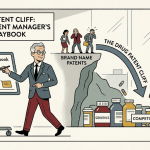
The Gap Between Patent Data and Supply Chain Decisions
Every procurement director at a hospital system, every formulary manager at a pharmacy benefit manager, and every supply chain officer at a generic manufacturer knows what the Orange Book is. Most of them use it the same way: to confirm whether a generic drug has been rated therapeutically equivalent to the brand, and to check when the listed patents expire. They pull the data, note the date, and move on.
That approach leaves enormous value on the table.
The Orange Book, formally titled “Approved Drug Products with Therapeutic Equivalence Evaluations,” is published by the FDA and has been a fixture of pharmaceutical commerce since 1980 [1]. It tells you which drugs are approved, which generic versions are rated equivalent, and which patents the brand manufacturer has claimed cover the product. What it does not do — and was never designed to do — is tell you what the listed patents actually protect, which ones are likely to survive a challenge, which generic manufacturers have filed applications against specific drugs, or how regulatory exclusivity periods interact with patent terms to create market timelines that are completely different from what patent expiration dates alone suggest.
Professionals who use only the Orange Book to build supply chain models are essentially reading a restaurant menu and assuming the wait time is zero. The menu tells you what is available in principle. It says nothing about when it will actually arrive.
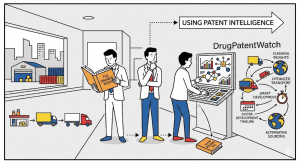
This article is about the intelligence layer that sits between raw Orange Book data and supply chain reality. It covers how pharmaceutical patent data, when properly assembled and interpreted, can predict generic entry timelines with meaningfully greater accuracy, reduce supply disruption risk, improve generic sourcing strategy, and create procurement leverage that most organizations do not know they have. Throughout, it references DrugPatentWatch — a platform that structures and integrates pharmaceutical patent and regulatory exclusivity data in ways that turn the Orange Book’s static listings into actionable competitive intelligence — because the data infrastructure matters as much as the analytical framework.
The professionals who will benefit most from this article are supply chain strategists, pharmaceutical procurement officers, formulary managers, hospital system pharmacy directors, specialty distributor operations teams, and the investment analysts and consultants who advise them.
What the Orange Book Actually Contains (and What It Does Not)
Before describing the intelligence layer beyond the Orange Book, it is worth being precise about what the Orange Book does and does not contain. Many professionals who use it regularly have an incomplete picture of its actual scope and limitations.
The Three Data Categories in the Orange Book
The Orange Book contains three distinct types of information: product approvals, patent listings, and exclusivity designations.
Product approvals are the foundation. The Orange Book lists every approved NDA and ANDA drug product with its active ingredient, dosage form, route of administration, strength, and applicant. The therapeutic equivalence code — the “AB” rating that tells generic buyers a product is substitutable for the brand — appears here. This section of the Orange Book is highly reliable and is the authoritative source for therapeutic equivalence determinations.
Patent listings are self-reported. Under 21 C.F.R. § 314.53, the NDA holder must list patents that claim the approved drug product or an approved method of using the drug [2]. The FDA does not verify that listed patents actually cover the product; it accepts the listing and publishes it. This self-certification standard has produced a documented history of over-listing. The FTC’s enforcement actions against AstraZeneca [3] and the 2023 policy statement challenging hundreds of device combination patents [4] both trace to the fundamental problem that the Orange Book’s patent listings reflect the NDA holder’s assertions, not independent verification.
Exclusivity designations reflect FDA’s own determinations, not self-reporting. New Chemical Entity (NCE) exclusivity, Orphan Drug exclusivity, pediatric exclusivity, and three-year clinical investigation exclusivity are each granted by FDA based on statutory criteria and represent actual regulatory market protections, not just listings.
The Three Things the Orange Book Cannot Tell You
Patent claim scope: The Orange Book lists a patent number and its expiration date. It says nothing about what the claims actually cover, how broad they are, whether prosecution history has narrowed them, or whether the commercial product literally falls within their scope. A supply chain professional who reads an Orange Book expiration date and concludes that the brand’s market protection runs until that date is making an assumption that may be wrong.
ANDA filing activity: The Orange Book does not tell you whether any ANDA has been filed against a listed patent, who filed it, when, or what type of Paragraph IV certification accompanied it. Generic competition timelines depend critically on this filing activity, which is reported separately by FDA through periodic publication and can be systematically tracked through platforms like DrugPatentWatch.
Litigation status: The Orange Book contains no litigation data. You cannot determine from it whether a brand manufacturer has sued a Paragraph IV filer, whether a 30-month stay has been triggered, whether the litigation has settled, or on what terms.
These three data gaps are precisely where supply chain intelligence breaks down for organizations that rely only on the Orange Book. Each gap corresponds to a category of market timing uncertainty that can cost real money: purchasing decisions made too early, too late, or at the wrong price for the wrong drug at the wrong time.
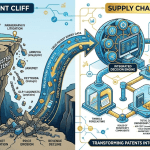
The Patent Cliff in Supply Chain Terms
Most discussions of the pharmaceutical patent cliff focus on revenue impact for brand manufacturers. The supply chain perspective is the mirror image: the generic entry that erodes brand revenue creates sourcing opportunities, price reductions, and supply dynamics that procurement professionals need to anticipate months or years in advance.
What Generic Entry Actually Looks Like
Generic entry does not happen at the stroke of midnight on a patent expiration date. It happens at the end of a process that can take three to seven years from first ANDA filing to first generic sale, and the timing of each step is influenced by patent challenges, litigation outcomes, FDA review timelines, and first-filer exclusivity economics.
The sequence runs roughly as follows: A generic manufacturer decides a drug is commercially attractive and files an ANDA with a Paragraph IV certification challenging the listed patents. FDA notifies the brand manufacturer, who has 45 days to file an infringement suit [5]. If the brand sues, a 30-month stay prevents FDA from approving the ANDA, regardless of its scientific merit, for up to 30 months after the infringement suit date. The litigation runs in parallel. If the generic wins in court or the 30-month stay expires without resolution, FDA can approve the ANDA if it meets all scientific and regulatory requirements. The first generic filer (if there is only one) receives 180 days of first-filer marketing exclusivity, during which FDA cannot approve subsequent ANDAs from other filers.
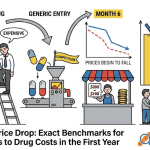
The commercial reality is that the price drop following generic entry is overwhelmingly concentrated in the period after multiple generics enter. One generic rarely drives prices below 50 percent of brand. Five generics routinely drive prices to 15-20 percent of brand within eighteen months [6]. The supply chain opportunity — and the supply disruption risk — is greatest when the transition from branded to multi-source generic occurs. Predicting when that transition will happen with precision is where patent intelligence delivers commercial value.
The 180-Day First-Filer Exclusivity as a Supply Chain Event
For supply chain planners, the 180-day first-filer exclusivity period is a commercially consequential event that is entirely invisible in the Orange Book. During this period, only the first Paragraph IV filer (or, in the case of multiple first filers on the same day, the group of first filers) can sell a generic version. The result is a duopoly, not true generic competition: brand and first-filer generic at a price that is typically 30-50 percent below brand, not the 80-90 percent price reduction that follows multi-source entry.
Procurement teams that understand the first-filer exclusivity calendar can time purchasing contracts appropriately. Locking in a long-term supply agreement at the duopoly price, when the multi-source price will arrive in six months, is a financial mistake that better patent intelligence prevents. Equally, missing the duopoly phase entirely when the supply of a critical drug will be constrained during that window creates a different risk.
DrugPatentWatch tracks first-filer status through its ANDA filing history data, cross-referenced against FDA’s Orange Book exclusivity listings. This combination gives supply chain teams the ability to identify which drugs are currently in first-filer exclusivity, which ones are approaching the multi-source entry date, and which upcoming generic launches will face a competition-free exclusivity window before multi-source entry arrives.
Building the Generic Entry Timeline Model
The most directly actionable output of pharmaceutical patent intelligence for supply chain purposes is a generic entry timeline model — a product-by-product forecast of when generic competition will actually enter the market at each stage of competitive intensity.
The Four Inputs No Spreadsheet Automatically Provides
Building a reliable generic entry timeline model requires four inputs that are not in any single database and are not available to analysts who rely only on the Orange Book.
The first input is the effective patent expiration date: not just the statutory expiration date from the Orange Book, but the date adjusted for Patent Term Adjustment and Patent Term Extension, stacked against all applicable FDA exclusivity periods to identify when ANDA submission and approval first becomes legally possible. This stacked timeline can differ materially from the statutory patent date. A drug with an NCE exclusivity expiring two years after the compound patent’s statutory term is protected differently from one where the exclusivity expired years before the patent.
The second input is the ANDA filing history: how many ANDAs have been filed, who filed them, when, and what type of patent certification each carries. This data stream, which DrugPatentWatch assembles from FDA’s public records on a systematic basis, reveals both the intensity of generic interest in a drug and the current stage of the competitive entry pipeline. A drug with twelve pending ANDAs at various stages of review is heading toward a very different competitive outcome than one with two pending ANDAs, one of which was filed by a manufacturer with a history of settling Paragraph IV cases rather than litigating them.
The third input is the litigation status: whether a 30-month stay has been triggered, when it expires, whether any ANDA filer has prevailed in district court, and whether settlements with entry date provisions have been publicly disclosed. This information is scattered across FDA records, PACER court filings, and press releases, which is why structured aggregation matters.
The fourth input is the first-filer eligibility determination: who holds first-filer status, whether that status has been forfeited (first filers can lose their exclusivity through failure to market within a specified period or through certain types of settlements), and whether the 180-day exclusivity will be triggered before or after the compound patent’s expiration.
Assembling these four inputs across a formulary of several hundred drugs is not a one-time project. ANDA filings arrive continuously, litigation outcomes change the timeline, and first-filer forfeitures can open the market unexpectedly. The supply chain intelligence function that serves a large procurement operation needs to monitor these inputs on an ongoing basis.
How to Calibrate the Model Against Historical Data
Any generic entry timeline model is only as good as its calibration. Analysts can validate their models against the historical record of generic entry timing by pulling the patent and ANDA records for drugs that went off-patent in the past five years and comparing the model’s predicted entry dates against actual entry.
Research by Grabowski, Long, and Mortimer [7] examining generic entry patterns for 120 drugs losing exclusivity between 2001 and 2012 found that the median time from first ANDA filing to first generic launch was 3.4 years, but with a wide variance driven primarily by litigation outcomes. Drugs facing Paragraph IV litigation resolved through settlement entered the market on average 2.1 years before patent expiration. Drugs where the brand prevailed in litigation entered the market at or after patent expiration. Drugs where the generic prevailed in court entered on average 1.7 years before patent expiration.
These empirical distributions allow analysts to assign probability-weighted timeline scenarios rather than single-point entry date estimates. A drug currently in Paragraph IV litigation where the generic filer has a strong prior art case would be modeled with a distribution skewed toward earlier entry, not a single date derived from the patent expiration alone.
The Supply Disruption Dimension
Most pharmaceutical supply chain literature treats generic entry as a pure opportunity — lower prices, broader sourcing options, competitive procurement leverage. The supply disruption side of the ledger receives far less attention, partly because it is harder to anticipate and partly because it requires a different category of patent intelligence.
Drug Shortages and Patent Concentration
When a drug is subject to extensive patent protection and only one manufacturer produces it, the supply chain is exposed to a concentration risk that the patent system itself created. If the brand manufacturer has a manufacturing problem — a warning letter from FDA’s Office of Pharmaceutical Quality, a facility shutdown, a recall — there is no approved alternative supplier to fill the gap during the patent protection period.
The FDA maintains a drug shortage database, and its analysis of shortage causes consistently identifies manufacturing quality problems, lack of redundancy in production, and the economics of low-margin generic markets as primary drivers [8]. The patent intelligence dimension is this: understanding how long the patented exclusivity period runs for a specific drug tells supply chain managers how long they will be exposed to single-source concentration risk. Drugs with five to ten years of patent protection remaining are in the highest-risk window, because the period is long enough to create deep dependency but the patent prevents alternative sourcing.
A supply chain intelligence function that tracks patent expiration for critical drugs can build a protection schedule that identifies when multi-source alternatives will become available, allowing procurement teams to plan transition strategies and reduce dependency on single-source suppliers before a crisis occurs.
The Complex Drug Manufacturing Challenge
For sterile injectables, specialized biologics, extended-release formulations, and drug-device combinations, the supply chain concentration risk extends beyond the patent period for a different reason: manufacturing complexity. Even after a patent expires and multiple ANDAs are approved, the actual manufacturing capacity may be concentrated among a small number of producers who have made the necessary capital investments.
Patent intelligence contributes to managing this risk in two ways. First, monitoring ANDA filings for complex drugs identifies how many manufacturers are building regulatory approval and manufacturing capability during the patent period, which is a leading indicator of post-patent supply capacity. A drug with only one approved ANDA at patent expiration will face a very different supply environment than one with six approved ANDAs.
Second, tracking the type of generic manufacturers filing ANDAs against specific drugs provides intelligence about which suppliers are building capabilities in specific therapeutic areas. A procurement team that identifies, several years before patent expiration, that three of its preferred generic suppliers have filed ANDAs against a critical drug, can begin building supply relationships before the drug reaches multi-source status – when every other procurement team in the market is trying to do the same thing simultaneously.
The Authorized Generic as a Supply Wildcard
An authorized generic is a version of the brand drug sold without the brand name, produced by the brand manufacturer or licensed by it to another company, during the first-filer’s 180-day exclusivity period. Authorized generics are legally permissible and commercially common – Lipitor’s authorized generic, produced by Pfizer and sold by Greenstone immediately after Ranbaxy’s first-filer launch, is perhaps the best-known example [9].
For supply chains, the authorized generic matters in two ways. During the 180-day exclusivity period, the authorized generic provides a second source for what would otherwise be a single-source generic market – good for supply security, but creating uncertainty about which version different pharmacy systems and payers will prefer. After the exclusivity period, the authorized generic often continues as a permanent source, affecting market share distribution among generic suppliers.
Brand manufacturers announce authorized generic launches inconsistently. DrugPatentWatch’s tracking of authorized generic history and ANDA approval records provides some visibility into which drugs have previously had authorized generics, which is a useful predictor of brand behavior on future launches. Companies that have historically launched authorized generics tend to continue the practice; those that have not tend to avoid it.
The Intelligence Value of Paragraph IV Certification Data
Paragraph IV certifications — filed by ANDA applicants who assert that listed Orange Book patents are invalid or will not be infringed by their product — are among the most information-rich events in pharmaceutical competitive intelligence. They are largely invisible to supply chain professionals who use only the Orange Book.
What a Paragraph IV Filing Actually Signals
When a generic manufacturer files an Anda with a Paragraph IV certification against a specific patent, that filing represents several things simultaneously: a regulatory action, a strategic commercial bet, and a public statement about the manufacturer’s assessment of that patent’s validity or scope.
Generic manufacturers do not file Paragraph IV certifications casually. The process requires significant legal and technical investment — a detailed patent challenge included in the ANDA that addresses each listed patent. For drugs with commercially attractive revenue profiles, filing a Paragraph IV is a deliberate strategic decision that a manufacturer has made after evaluating the prior art, the patent claims, and the competitive economics of first-filer exclusivity.
For supply chain intelligence, the presence of a Paragraph IV filing tells you several things the Orange Book alone cannot:
At least one generic manufacturer has decided that the drug is worth pursuing commercially and that the listed patents have identifiable weaknesses. Multiple Paragraph IV filers from major manufacturers tells you the drug is a high-priority target for the generic industry, which accelerates the timeline toward a competitive market.
The filing has initiated a legal clock. If the brand files a 30-month stay suit within 45 days, the 30-month countdown begins. If the brand does not file within 45 days, FDA can approve the ANDA without waiting for litigation — an event that can happen faster than the statutory patent expiration date by years.
The specific patents being challenged by the Paragraph IV certification tell you which patents the generic manufacturer believes are the weakest links in the brand’s protection chain. When multiple manufacturers file Paragraph IV certifications against the same specific patent, that convergence of judgment about a particular patent’s vulnerability is commercially meaningful information.
Reading Paragraph IV Certification Patterns Across a Formulary
For a procurement organization managing a formulary of several hundred drugs, systematically tracking Paragraph IV certifications creates a forward-looking map of where generic competition is being developed and when it will likely arrive.
DrugPatentWatch compiles Paragraph IV certification activity from FDA’s public notices and ANDA records, creating a searchable database that allows formulary managers to filter by drug, therapeutic class, brand manufacturer, or generic filer. This capability transforms a process that would otherwise require manual monitoring of dozens of disparate data sources into a structured intelligence workflow.
Patterns worth monitoring include: new Paragraph IV filings against drugs that previously had no generic challengers (a leading indicator of upcoming price competition); multiple simultaneous Paragraph IV filers on a single drug (a leading indicator of rapid multi-source entry after the first-filer exclusivity period); and withdrawal of Paragraph IV certifications (a possible signal of settlement, or of a challenger who has reassessed the patent’s strength and decided not to pursue litigation).
Using Litigation Outcome Probability to Weight Entry Timelines
Once a 30-month stay is triggered by brand litigation, supply chain planners face a probability distribution of outcomes: the brand wins and entry is delayed until patent expiration; the generic wins or settles with an early entry date; or the litigation resolves through a consent judgment or settlement with an authorized generic provision. Each outcome produces a different supply chain timeline.
Calibrating the probability of each outcome requires patent-specific litigation data, not generic-industry averages. A Paragraph IV challenge where the generic filer is a well-resourced company using a highly credentialed trial team, and the challenged patent is a secondary formulation patent with documented obviousness issues, warrants a different probability distribution than one where the generic is a less-resourced filer and the challenged patent is a strong compound patent with no prior PTAB challenge history.
The empirical literature on Hatch-Waxman litigation outcomes provides calibration anchors. Findings from Brantley, Higgins, and Schwartz [10] analyzing Paragraph IV outcomes between 1992 and 2010 showed that generic challengers prevailed in full or partial settlement in roughly 76 percent of Paragraph IV cases that were litigated or settled, though this aggregate figure masks wide variation by patent type — secondary patents fell more often than compound patents, and formulation patents fell more often than method-of-treatment patents.
For supply chain planning, a probability-weighted entry timeline built on patent-specific data and calibrated to empirical litigation outcomes is substantially more accurate than a binary model that treats patent expiration as the only possible entry date.
Biologics and Biosimilars: A Separate Intelligence Framework
The supply chain intelligence framework for small-molecule drugs described above requires modification for biological products and their biosimilar competitors. The regulatory framework is different, the patent landscape is more complex, and the competitive dynamics of market entry differ from the Hatch-Waxman world in ways that matter commercially.
The BPCIA Patent Dance and Its Supply Chain Implications
The Biologics Price Competition and Innovation Act of 2009 (BPCIA) created a framework for biosimilar approval that includes a mandatory information-exchange process between the biosimilar applicant and the reference product sponsor [11]. This “patent dance” — the term used by practitioners for the sequential disclosure of biosimilar manufacturing information and patent assertions — generates a defined sequence of legal events that supply chain planners can monitor as a timeline proxy.
Unlike the Hatch-Waxman framework, the BPCIA patent dance does not include an automatic 30-month stay. The brand manufacturer can seek a preliminary injunction, but this requires a showing of likelihood of success on the merits, not just the filing of a lawsuit. The result is that biosimilar litigation plays out on a different and generally faster timeline than Paragraph IV small-molecule litigation, though the complexity of biologic patent portfolios often extends the overall competitive entry timeline through multiple rounds of litigation on different patents.
The commercial implication is that biosimilar entry timelines are less predictable from patent expiration dates alone than small-molecule entry timelines are. The reference product’s compound patent may expire years before biosimilar competition actually arrives, because the reference product sponsor holds additional patents on manufacturing processes, formulations, or analytical methods that the biosimilar must also navigate or invalidate.
Tracking Biosimilar BLA Filings as a Supply Chain Signal
For biological products, the equivalent of ANDA filing activity in the small-molecule world is biosimilar Biologics License Application (BLA) filing and approval activity. FDA’s Purple Book — the biologic equivalent of the Orange Book — lists approved biological products and their biosimilar and interchangeable designations [12].
Supply chain planners managing biologics should monitor biosimilar BLA submissions, which are public events reported in FDA’s drug approval database. Each biosimilar BLA submission represents a manufacturer who has invested hundreds of millions of dollars in comparative analytical and clinical studies, a clear signal of commercial intent that is likely to translate into market availability on a predictable timeline.
The interchangeability designation — which allows pharmacists to substitute a biosimilar for the reference biologic without prescriber intervention, mirroring the therapeutic equivalence standard for small molecules — is commercially critical for supply chain planning. Biosimilars without interchangeability designations face significant pharmacy-level substitution barriers even after approval. Tracking which biosimilars have received or applied for interchangeability designations tells supply chain planners which products will be practically substitutable in their procurement contracts.
The Humira Biosimilar Market as a Case Study
The Humira biosimilar market, which opened in the United States in January 2023 after years of patent litigation and portfolio challenges, illustrates both the complexity of biologic supply chain planning and the value of advance patent intelligence in preparing for it.
AbbVie’s Humira patent portfolio, which at various times included over 130 U.S. patents covering the adalimumab antibody, its formulations, manufacturing processes, and dosage regimens, deterred U.S. biosimilar entry until AbbVie negotiated global settlement agreements with biosimilar manufacturers that included U.S. entry dates beginning in January 2023 [13]. European biosimilar entry occurred years earlier, in October 2018, under different patent settlement terms.
For a hospital system or specialty pharmacy managing Humira spend in 2020, the supply chain intelligence task was clear but not easy: monitor the settlement agreements, which were disclosed in AbbVie’s SEC filings; track which biosimilar manufacturers had received FDA approval or were in late-stage approval review; model the interchangeability designation status of the approved biosimilars; and project the competitive pricing dynamics of a market that would transition from one brand to potentially ten approved biosimilars within two years.
Organizations that built this intelligence function in 2021 and 2022 were able to negotiate supplier contracts, structure formulary conversion programs, and prepare their dispensing systems for multi-source adalimumab well before January 2023. Organizations that relied only on the Purple Book’s approval records and began their transition planning at launch found themselves competing for supply, staff attention, and patient consent documentation at the worst possible moment.
Geographic Dimensions of Patent Intelligence for Global Supply Chains
For pharmaceutical supply chain professionals managing global operations — multinational hospital systems, international specialty distributors, global procurement organizations — patent intelligence has an explicit geographic dimension that domestic-focused analysis misses entirely.
Country-Level Patent Coverage Maps
A pharmaceutical compound is covered by patents in each country separately. The U.S. patent protecting a branded drug does not extend to Canada, the European Union, India, Brazil, or any other jurisdiction. Each country or regional bloc has its own patent term, its own validity examination history, and its own generic market structure.
For a supply chain organization operating across multiple markets, mapping which patents are in force in each jurisdiction tells you where generic alternatives are legally available today versus where brand protection remains intact. In many emerging markets, key compound patents from the 1990s and early 2000s have already expired, and generic manufacturers have been producing the active pharmaceutical ingredient and formulated product for years. This means that for some drugs with active U.S. patents, FDA-registered generic manufacturers exist and are producing for non-U.S. markets, and their supply chains are operational even though their products cannot be sold in the U.S. market.
This geographic intelligence is particularly relevant for active pharmaceutical ingredient (API) sourcing. The primary API manufacturers for most small-molecule generics are in India and China. Their production timelines and regulatory compliance status affect global supply availability regardless of where a specific patent is in force. A supply chain manager who understands the global patent landscape — specifically which compound patents have expired in India, giving Indian API manufacturers freedom to manufacture without U.S. patent concern — has better visibility into the actual global supply base for any given active ingredient than one who looks only at the U.S. Orange Book.
The India and Brazil Patent Systems as Supply Chain Intelligence Sources
India’s patent law, particularly the Section 3(d) provision that restricts patentability of modified forms of known substances without demonstrated enhanced efficacy [14], has produced a large domestic generic pharmaceutical sector capable of manufacturing many compounds that are still under patent protection in the United States and Europe. Tracking patent status in India through the Indian Patent Office database tells supply chain professionals which active ingredients have an established Indian generic manufacturing base that will translate into U.S. supply availability after U.S. patent expiration.
Brazil’s pharmaceutical patent system includes a unique linkage mechanism under which ANVISA (Brazil’s FDA equivalent) participates in prior consent procedures for pharmaceutical patents, creating a separate administrative layer that affects patent term effectively [15]. Brazilian patent grants for pharmaceutical compounds have historically been slower and narrower than U.S. grants, meaning some drugs that remain under broad protection in the United States have limited or expired protection in Brazil, and Brazilian manufacturing exists.
For supply chain planning purposes, the practical question is not which countries have valid patents — the relevant question is which countries have active generic manufacturing capacity for specific active ingredients that will be available to the U.S. supply chain once domestic patent barriers fall.
Import Alerts and Manufacturing Quality as a Compounding Factor
Patent expiration creates legal permission for generic entry. Manufacturing quality and FDA compliance determine whether that permission translates into actual supply. The intersection of these two factors is a specific supply chain risk that patent intelligence alone cannot address.
Several of the largest generic manufacturers globally — including Indian API producers and finished dosage manufacturers — have faced FDA import alerts or warning letters that temporarily or permanently restricted their ability to supply the U.S. market [16]. An import alert in force against a major ANDA holder at the moment of patent expiration can delay effective generic competition and create supply tightness that affects all buyers, not just those purchasing from the affected supplier.
Supply chain intelligence that integrates patent expiration timelines with FDA manufacturing compliance records — monitoring warning letters, import alerts, and consent decree status for major ANDA holders — provides a more complete picture of actual supply availability than patent data alone. The FDA’s compliance database, the Warning Letter database, and the Establishment Inspection Report database are all public records that can be systematically monitored.
Patent Intelligence in Specialty Pharmaceutical Procurement
Specialty drugs — broadly defined as high-cost, complex, often biologic products used to treat serious or rare conditions — represent the fastest-growing segment of pharmaceutical spend and the most commercially complex category for supply chain intelligence.
The Orphan Drug Exclusivity Window
Orphan Drug Designation, granted by FDA under the Orphan Drug Act to products targeting diseases affecting fewer than 200,000 U.S. patients, provides seven years of marketing exclusivity that prevents FDA from approving a competing product for the same indication and same active moiety [17]. This exclusivity runs independently of patent protection.
For supply chain purposes, the Orphan Drug exclusivity window defines the practical competition-free period for many specialty drugs. A specialty drug with no remaining compound patent but active Orphan Drug exclusivity is effectively single-source for the exclusivity period, because no competing product can receive FDA approval regardless of patent status. Procurement organizations that fail to account for Orphan Drug exclusivity when modeling competition timelines for specialty drugs routinely underestimate their supply concentration risk.
DrugPatentWatch’s tracking of Orphan Drug exclusivity alongside patent information provides the integrated view needed to identify when the first legally permissible competitive product approval could occur, which is often later than the patent expiration date for drugs with Orphan Drug status.
The REMS Program as a Supply Chain Barrier
Risk Evaluation and Mitigation Strategies (REMS) programs, mandated by FDA for drugs with serious safety risks, impose distribution restrictions and monitoring requirements that can create supply chain complexity that persists regardless of patent status [18]. Some REMS programs restrict which pharmacies can dispense a drug, require patient enrollment registries, or mandate that prescribers complete specific training.
These restrictions are supply chain barriers that do not appear in the Orange Book and are not related to patent protection. A generic version of a REMS-restricted drug may receive FDA approval but face significant market access barriers because generic manufacturers must implement equivalent REMS programs before they can distribute.
For supply chain planning, the REMS intelligence question is: does an approved or pending generic competitor have an approved REMS, or is it in the process of negotiating shared system access? FDA has periodically granted generic manufacturers access to shared REMS systems with brand manufacturers who have resisted sharing, but the negotiation timeline adds unpredictability to the competitive entry estimate.
Formulary Tier Management and Patent Timelines
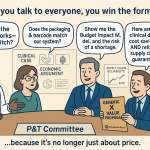
Pharmacy benefit managers and health plan formulary committees use patent expiration intelligence — or should — in making tier placement decisions for specialty drugs. A specialty drug that will face biosimilar competition within 18 months is a different contract negotiation counterparty than one with ten years of uncontested patent protection remaining.
Brand manufacturers know their patent positions precisely and adjust their contracting strategies accordingly. A brand that is twelve months from patent expiration will offer aggressive rebates and access terms to lock in formulary share before generic entry erodes it. The same brand at the beginning of a ten-year patent protection window will offer less compelling economics.
Formulary managers who can model patent expiration timelines and the resulting competition schedule use this information in contract negotiations as explicit leverage. The conversation shifts from “what rebate will you give us today” to “what rebate will you give us today given that we know biosimilar entry is coming in Q1 2026, at which point we will place the biosimilar in Tier 1 and move your brand to Tier 3.” Brand manufacturers negotiate differently when they understand the payer has done the patent intelligence homework.
Hospital System Supply Chain Strategy
Hospital systems occupy a specific position in the pharmaceutical supply chain that creates particular needs for patent intelligence. They manage high-acuity inpatient drug use, face formulary management obligations for both inpatient and outpatient settings, and have typically less price flexibility than retail pharmacy channels because their drug costs are embedded in DRG reimbursement structures.
The 340B Program and Generic Timing
Hospitals qualifying under the 340B Drug Pricing Program can purchase outpatient drugs at significantly discounted prices from manufacturers [19]. The interaction between 340B ceiling prices and generic entry timing is commercially complex: in some cases, the 340B price for a branded drug falls below the eventual multi-source generic price during the transition period, making early generic transition less financially compelling than it would appear.
Patent intelligence for 340B-covered hospitals therefore requires integrating not just the generic entry timeline but the 340B price trajectory and the net-net economics of staying with a deeply discounted brand versus transitioning to generic. This calculation changes at each stage of the competitive entry timeline: during first-filer exclusivity, at multi-source entry, and as additional generics enter. Getting the transition timing right requires monitoring each stage of the competitive entry timeline that patent intelligence provides.
Shortage Preparedness and Patent Intelligence
Drug shortages in hospital systems disproportionately affect sterile injectables, many of which are older generic drugs whose manufacturers operate on thin margins with limited redundancy [20]. For these drugs, the patent protection period is long past, and the relevant supply chain intelligence is about manufacturing capacity and quality compliance rather than patent status.
But a different shortage dynamic affects newer drugs still under patent protection: when a branded drug with no approved generic alternative encounters a manufacturing problem, the supply chain has no fallback. Patent intelligence that identifies when alternatives will become available — either through patent expiration and generic entry, or through the approval of a different formulation covered by fewer patents — gives supply chain teams a forecast horizon for how long they may need to manage through a shortage with conservation protocols or therapeutic alternatives.
Therapeutic Interchange Programs
Many hospital pharmacies maintain therapeutic interchange programs that allow pharmacists to substitute therapeutically equivalent alternatives for prescribed drugs, subject to physician-approved protocols. Patent intelligence informs these programs in two directions:
For drugs approaching generic availability, therapeutic interchange teams can anticipate and prepare conversion protocols for multi-source products well before they become available. The preparation includes formulary review, physician communication, dispensing system updates, and nursing education — all of which take time that patent intelligence provides.
For drugs in therapeutic classes where multiple branded agents compete, understanding the comparative patent positions of each agent tells the pharmacy team which competitors will retain their pricing power longest and which are approaching the competitive entry window. This directly informs which agents are most cost-effective to include in the formulary both now and over the next planning horizon.
Generic Manufacturer Competitive Intelligence
The supply chain intelligence discussion so far has addressed buyers — procurement organizations, hospital systems, formulary managers. The same patent intelligence framework applies to sellers — specifically, to generic manufacturers making investment decisions about which drugs to pursue and when.
ANDA Investment Decisions and the Patent Strength Assessment
A generic manufacturer considering an ANDA filing against a specific drug is making an investment that will cost several million dollars in development and legal expenses before a single unit is sold. The central risk factor in that investment decision is patent litigation — specifically, whether the brand will sue, whether the brand will prevail, and how long the resulting 30-month stay will delay revenue.
The patent strength assessment described in detail elsewhere in this article — claims architecture analysis, prosecution history review, PTAB petition history, prior Paragraph IV litigation outcomes — applies directly to the generic manufacturer’s investment decision. Generic manufacturers who invest in structured patent intelligence before filing decisions make better risk-adjusted investment choices than those who rely on the filed patent list alone.
The first-filer economics make this assessment even more important for the first entrant. First-filer status is extremely valuable — 180 days of protected market at a price premium over the eventual multi-source level creates payouts that can amount to hundreds of millions of dollars for major drugs. But first-filer status only delivers those economics if the manufacturer actually wins its Paragraph IV challenge, or settles at an entry date before patent expiration that still captures material revenue. A manufacturer who pursues first-filer status and then loses in Paragraph IV litigation on a compound patent it underestimated has made an expensive investment with no return.
Monitoring Competitor ANDA Filings to Shape Strategy
For generic manufacturers already pursuing a specific drug, monitoring competitor ANDA filings provides intelligence about the evolving competitive landscape. If a manufacturer files as the only first-filer and subsequently learns that three additional manufacturers have also filed Paragraph IV certifications in the same month, the economics of the investment change materially — the 180-day exclusivity will be shared among all first-filers, and the post-exclusivity market will be more competitive than initially modeled.
DrugPatentWatch tracks ANDA filing activity systematically, including new filers, Paragraph IV certification counts by drug, and first-filer status determinations. Generic manufacturers who monitor this data stream can adjust their development investment and litigation strategy in response to changing competitive dynamics before those dynamics are reflected in market prices.
Building the Supply Chain Intelligence Function
Moving from occasional patent data lookups to a systematic intelligence function requires organizational design, data infrastructure, and analytical workflows.
Organizational Structure Options
For large health systems or major pharmaceutical distributors, a dedicated pharmaceutical patent intelligence analyst or small team can pay for itself many times over annually through better contract timing, improved generic sourcing, and reduced supply disruption. The return is most visible in categories with significant annual spend where patent expiration or competitive entry is proximate.
For medium-sized organizations that cannot justify a dedicated function, the analytical work can be contracted to specialized consultancies or conducted by supply chain analysts with structured access to platforms like DrugPatentWatch that make the data assembly work manageable. The key is establishing the workflow as systematic rather than ad hoc — a regular calendar of patent intelligence updates aligned to the formulary review cycle.
For smaller organizations, a simplified version of the framework — focused on the top twenty to thirty drugs by spend, with quarterly monitoring of ANDA filing activity and patent expiration timelines — can be conducted by an experienced pharmacy or supply chain professional using publicly available data sources supplemented by targeted database subscriptions.
The Annual Intelligence Calendar
A systematic pharmaceutical patent intelligence function operates on a calendar that aligns analytical outputs to business decisions:
The annual formulary review cycle should be preceded by a patent intelligence briefing that identifies all drugs on the formulary approaching generic entry within the next two to three years, the current ANDA filing status for each, and the probability-weighted entry timeline for each competitive stage.
Quarterly contract renewals and renegotiations should be preceded by a targeted update on the patent status and competitive entry timeline for any drug being re-contracted. Brand manufacturers will have conducted the same analysis. Procurement teams without equivalent intelligence are negotiating against a better-informed counterparty.
Monthly monitoring should cover new Paragraph IV certifications, new ANDA approvals, material litigation outcomes in ongoing Paragraph IV cases, and FDA drug shortage notifications — the last of these as a trigger to evaluate whether patent barriers to alternative sourcing contribute to the shortage.
Key Performance Indicators for the Intelligence Function
Any intelligence function needs to demonstrate value against measurable outcomes. For pharmaceutical patent intelligence applied to supply chain, the relevant KPIs include:
Accuracy of generic entry date predictions against actual entry dates: If the intelligence function systematically forecasts entry earlier or later than it occurs, the calibration needs adjustment.
Procurement contract timing versus market price: Contracts signed before multi-source generic entry and priced at the post-entry anticipated level, or contracts with provisions that reset pricing upon competitive entry, measure how effectively the intelligence function translated timeline predictions into contracting action.
Drug shortage impact rate: The frequency with which the organization is caught by drug shortages on drugs where patent barriers to alternative sourcing existed but the expiration timeline was monitored should decline over time as the intelligence function matures.
Practical Case Studies in Supply Chain Patent Intelligence
Case Study: Specialty Pharmacy and the Revlimid Transition
Lenalidomide (Revlimid), Bristol Myers Squibb’s foundational multiple myeloma treatment, generated approximately $12.8 billion in global revenue in 2021 [21]. Its patent protection — covering both the compound and its manufacturing processes — and voluntary settlement agreements with generic manufacturers created a structured generic entry schedule that was published years in advance of actual market entry.
Under the settlement terms, generic lenalidomide entered the U.S. market in limited volumes beginning in January 2022, with full generic competition beginning in 2026 [22]. This was an unusually transparent patent expiration scenario: the entry dates were contractually established and publicly disclosed. Yet many specialty pharmacies, PBMs, and hospital systems with significant Revlimid spend were still caught unprepared for the pricing and formulary management decisions the transition required.
The intelligence lesson from Revlimid is not that organizations failed to read the Orange Book. It is that translating the knowledge of entry dates into operational preparation — contract language that addresses pricing transitions, formulary management protocols for the limited-volume generic period, patient communication plans for medication changes, and inventory management for a high-value specialty drug during a transition period — required analytical and operational work that began well before the entry date.
Organizations that modeled the Revlimid transition three years before January 2022 had time to build all of those components. Those that began twelve months before were scrambling.
Case Study: Hospital Formulary and the Insulin Patent Landscape
Insulin pricing has been one of the highest-profile pharmaceutical cost issues in the United States for a decade. The patent and exclusivity landscape governing insulin products is complex enough that many hospital pharmacy teams have not fully mapped it, contributing to continued reliance on branded insulin at premiums that increasingly lack justification.
Modern insulin analogs — insulin aspart (NovoLog), insulin lispro (Humalog), insulin glargine (Lantus), and others — have faced a complex sequence of patent expirations and biosimilar approvals that does not map neatly to a single entry date. Biosimilar insulin products began receiving FDA approval in 2021 and 2022, but interchangeability designations — which determine whether pharmacists can substitute without prescriber action — arrived on different schedules for different products [23].
A hospital system that mapped the patent and exclusivity status of each insulin product in its formulary, the biosimilar approval and interchangeability status of each competitor, and the 340B pricing dynamics for both branded and biosimilar versions could have built a formulary conversion roadmap that extracted tens of thousands to hundreds of thousands of dollars per year in unnecessary branded insulin spend. Most did not conduct this analysis systematically.
DrugPatentWatch’s integration of biosimilar approval data with reference product exclusivity information provides the starting point for this analysis. Building the operational conversion plan requires additional clinical and contracting work, but the intelligence foundation determines whether the opportunity is identified at all.
Case Study: Generic Manufacturer and the Teriparatide Patent Challenge
Teriparatide (Forteo), Eli Lilly’s bone-building agent for osteoporosis, presented an interesting patent challenge scenario for generic manufacturers in the late 2010s. The compound patent expired in 2019, but Lilly’s Orange Book listed multiple secondary patents covering device components of its injector pen and specific formulation aspects of the product [24].
Generic manufacturers seeking to enter the teriparatide market faced a choice: develop a product that designed around the device patents, file Paragraph IV certifications against the device patents and accept litigation risk, or wait for the device patents to expire. Different manufacturers made different decisions, and the generic market that emerged reflected those choices.
For supply chain planners, the intelligence question was not simply “when does the Forteo patent expire?” The question was “which of the listed patents actually cover the marketed product in a way that a generic cannot work around?” The answer — that the compound patent was the principal commercial barrier and the device patents were at least partially designable around — was available to analysts who read the actual claims, not just the Orange Book expiration dates. Those who did that work, or accessed it through structured intelligence services, had a more accurate picture of when generic teriparatide would actually arrive.
Integrating Patent Intelligence with Demand Planning
The ultimate supply chain value of pharmaceutical patent intelligence is realized when it connects to the organization’s demand planning and financial planning cycles. Patent expiration timelines and competitive entry probabilities are inputs to budget models, inventory decisions, and supplier development strategies.
Budget Modeling with Probabilistic Generic Entry
Standard pharmaceutical budget models use a simplistic switch from branded pricing to generic pricing on a single assumed date. A more accurate model uses the probability-weighted entry timeline framework, projecting expected drug spend as a weighted average of outcomes:
P(entry by date T1) × (brand price during T1 period) + P(entry between T1 and T2) × (blended brand/generic pricing) + P(entry after T2) × (brand price through T2 period)
Applied across a formulary, this probabilistic approach produces a budget estimate that better reflects actual uncertainty than a deterministic model. It also identifies the budget scenarios where patent intelligence uncertainty creates the most financial risk — drugs where the difference in spending between early and late competitive entry is largest.
Inventory Optimization at the Generic Entry Window
Inventory management around generic entry events requires specific optimization that patent intelligence makes possible. In the weeks and months preceding expected generic entry, optimal inventory strategy for branded drugs generally involves reducing forward-buy quantities and avoiding long-term supply commitments that will be mispriced after competitive entry.
This is straightforward for entry events with high certainty. It becomes analytically complex for entry events where probability varies — where a 30-month stay is in place but litigation outcomes are uncertain, or where an ANDA is pending review but the approval timeline is not certain.
Supply chain teams that treat generic entry as a binary event — either it happens on this date or it does not — will sometimes be holding too much high-priced branded inventory the week a generic launches, and sometimes will have depleted inventory in anticipation of a generic launch that got delayed by litigation. Patent intelligence that distinguishes between high-confidence and low-confidence entry timeline estimates allows inventory policy to be calibrated to the uncertainty level, not just the expected date.
Supplier Development Before Patent Expiration
For drugs representing major spend categories, proactively developing relationships with the likely generic suppliers — before they are in the market — is a strategic option that patent intelligence makes possible. During the patent protection period, the manufacturers who have filed ANDAs against a specific drug are publicly identifiable through FDA’s databases and DrugPatentWatch’s aggregated records. A procurement organization can approach these manufacturers, understand their development timelines, assess their manufacturing quality status, and build supply relationships that will activate at generic entry.
This approach is well-established in the healthcare group purchasing organization (GPO) model, where GPOs develop anticipated supply agreements for upcoming generic launches. For independent procurement organizations with the analytical resources to identify the same opportunities, the same strategy is available without the constraints of GPO contracting structures.
Legal and Compliance Dimensions
Supply chain professionals using pharmaceutical patent intelligence need a basic understanding of the legal constraints that govern how that intelligence can be used, particularly in the context of supplier relationships and contract negotiations.
Antitrust Considerations in Patent-Informed Procurement
The pharmaceutical antitrust landscape is active and specifically focused on patent-related market allocation practices. Pay-for-delay settlements between brand and generic manufacturers — in which the brand pays the generic to delay entry — have been subject to antitrust scrutiny since the Supreme Court’s FTC v. Actavis decision in 2013 [25]. Procurement organizations should be aware that supply contracts with both brand and generic manufacturers that have characteristics resembling market allocation could attract scrutiny.
The more common compliance question for procurement is simpler: whether a procurement organization’s use of competitively sensitive patent intelligence in supplier negotiations is within normal commercial bounds. It is. Using publicly available patent expiration data, ANDA filing records, and litigation outcomes to inform contract negotiations is standard commercial practice and is not an antitrust concern. The constraints arise when organizations attempt to coordinate purchasing decisions across competing buyers (horizontal coordination) or enter into exclusive supply agreements specifically designed to prevent generic entry.
Data Accuracy and Decision Risk
Any intelligence function using compiled patent data — including data from DrugPatentWatch or similar services — should apply verification protocols for high-stakes decisions. Patent databases are not perfect. Patent term extension calculations can be incorrectly recorded. Assignment records can lag the actual ownership change. ANDA filing status can be outdated if the database has not been recently refreshed.
For decisions involving significant financial commitments — major supply contracts, formulary conversion programs, capital investment decisions — the intelligence function should verify material data points against primary sources. The USPTO patent database, FDA’s Orange Book, and PACER court records are the authoritative primaries. Commercial databases provide organization and efficiency but should not entirely replace verification against authoritative sources for high-consequence decisions.
Building the Business Case for Investment in Patent Intelligence
For supply chain professionals who need to justify investment in pharmaceutical patent intelligence capability to leadership, the business case rests on a straightforward quantification of the value at risk from decisions made without adequate information.
Quantifying the Cost of Uninformed Generic Timing
Consider a health system with $100 million in annual pharmaceutical spend, of which 25 percent is on branded drugs approaching generic entry within five years. Without patent intelligence, that system makes formulary and contracting decisions based on the statutory patent expiration date alone, without accounting for litigation outcomes that might accelerate or delay entry.
Historical data suggests that approximately 35 percent of Paragraph IV challenges result in earlier-than-expected generic entry through either litigation success or pre-expiration settlement [26]. For drugs where early entry is possible and the annual branded spend is $5 million or more, the financial difference between contracting for generic supply at the right time versus being caught with branded pricing commitments at generic entry amounts to hundreds of thousands of dollars per drug per year.
Across a formulary of ten drugs in this category, the total addressable value from better-timed procurement decisions is several million dollars annually. Against this, the cost of structured patent intelligence tools and the analyst time to apply them is modest.
The Cost of Shortage Exposure
The FDA estimates that drug shortages cost the U.S. healthcare system approximately $4 billion annually through substitute drug costs, nursing and pharmacy labor, patient harm, and administrative burden [27]. Hospital systems bear a disproportionate share of this cost because they manage the highest-acuity patients.
For supply chain professionals, the relevant portion of this cost is the portion attributable to preventable supply concentration on patented drugs where the patent timeline was known but supply diversification planning did not begin in time. Quantifying this is harder than quantifying mispriced contracts, but case-based analysis of specific shortage events — tracing the patent and regulatory history of the drug in shortage and the preparation timeline that better intelligence would have enabled — provides compelling internal justification for the intelligence investment.
The Future of Patent Intelligence in Supply Chain Management
The pharmaceutical patent and supply chain landscape is evolving along several axes that will affect how intelligence functions operate over the next five to ten years.
AI-Assisted Patent Analysis
Artificial intelligence applications for patent claim analysis — specifically, natural language processing systems trained to identify claim scope, prosecution history disclaimer, and prior art proximity — are advancing rapidly. These tools do not replace attorney judgment on legally material questions, but they can substantially reduce the time required to screen a large portfolio of patents for characteristics worth deeper analysis.
For supply chain professionals, the practical implication is that the cost of conducting first-pass patent claim screening across a large formulary is declining. What once required engaging patent counsel for every drug now allows for automated screening that surfaces the cases requiring professional legal analysis. This changes the economics of patent intelligence from a niche high-cost function to a more broadly deployable capability.
Real-Time Data Integration
The current state of pharmaceutical patent intelligence requires assembling data from multiple sources — USPTO, FDA, PTAB, PACER, and commercial databases — that update on different schedules and in different formats. The trend toward API-based data access and real-time database synchronization is gradually improving the integration quality.
Supply chain management systems are beginning to incorporate pharmaceutical patent expiration data as a standard input to procurement workflows, rather than as a separate analytical exercise. When patent expiration timelines, ANDA filing status, and litigation outcome probabilities are directly integrated into purchasing and inventory management systems, the intelligence function becomes embedded in operational decision-making rather than sitting separately in an analytical function.
DrugPatentWatch’s API access capabilities, which allow organizations to integrate structured patent and exclusivity data directly into their own systems, represent the current state of this integration. Over time, this capability will become more standard and more deeply embedded in supply chain management platforms.
Policy Changes and Their Intelligence Implications
The FDA’s ongoing reforms to the Orange Book listing process — specifically the scrutiny of device combination patents following the 2023 FTC policy statement — will reduce over-listing in the medium term. For supply chain professionals, this means that the Orange Book will become a more reliable indicator of actual patent coverage, reducing the gap between what the Orange Book shows and what actually covers the drug.
The Inflation Reduction Act’s price negotiation mechanism, fully implemented for small-molecule drugs beginning with 2026 price negotiations, will directly affect the supply chain value of patent exclusivity for high-spend Medicare drugs. For these drugs, the patent exclusivity period will no longer produce unconstrained brand pricing — government negotiation will cap prices below what the patent alone would support. This changes the financial modeling of patent timelines for affected drugs and requires supply chain teams to integrate the negotiation timeline and its likely pricing outcomes into their planning models.
Conclusion: From Orange Book Lookup to Competitive Advantage
The Orange Book is the starting point, not the finish line. It tells you which drugs are approved, which generics are rated equivalent, and what the brand manufacturer has claimed in terms of patent coverage. It does not tell you whether those claims are enforceable, how long the effective market protection actually runs when all exclusivity layers are stacked and adjusted for litigation risk, who is challenging the patents, or when competitive supply will actually arrive.
The professionals who close this gap — who build or access the intelligence layer that transforms raw Orange Book data into a forward-looking model of competitive supply availability — gain an advantage that is directly measurable in procurement economics, formulary management outcomes, and supply disruption prevention.
The framework is not inaccessible. The underlying data is largely public. The analytical structure is well-defined. The tools to assemble and organize the data — platforms like DrugPatentWatch that integrate FDA exclusivity records, ANDA filing history, Paragraph IV litigation data, and patent term information in a pharmaceutical-specific structure — are available. What most organizations lack is not access to the raw data but the deliberate decision to build the analytical workflow that extracts actionable intelligence from it.
That decision is the one that separates supply chains that react to generic entry from those that anticipate it.
Key Takeaways
The Orange Book’s patent listings are self-reported by NDA holders and are not independently verified by FDA. Supply chain decisions that treat Orange Book expiration dates as definitive entry timelines are built on an assumption that the literature and enforcement record consistently contradict.
Effective patent protection periods differ materially from statutory expiration dates once Patent Term Adjustment, Patent Term Extension, and stacked FDA exclusivity periods are accounted for. Building accurate generic entry timelines requires all four layers of analysis, not patent expiration dates alone.
Paragraph IV certification filings, tracked systematically through DrugPatentWatch and FDA sources, are the most reliable leading indicator of upcoming generic competition. Their presence tells you the drug is a commercial target; the identity of the filers and the specific patents challenged tells you where the weaknesses are.
The 180-day first-filer exclusivity period creates a market structure between single-source brand and fully competitive generic that most supply chain models ignore. Contracts negotiated at duopoly pricing when multi-source pricing is months away represent a quantifiable procurement failure.
Biosimilar supply chain planning requires a distinct analytical framework from the Hatch-Waxman model. The BPCIA patent dance, the absence of an automatic 30-month stay, and the importance of the interchangeability designation all create different competitive entry dynamics that the Orange Book’s biologic equivalent (the Purple Book) does not fully capture.
Geographic patent coverage maps reveal where generic manufacturing capacity is already operational for drugs still under U.S. patent protection, providing supply chain teams with advance knowledge of which suppliers will be ready to enter the U.S. market at patent expiration.
The Humira and Revlimid transitions demonstrated that knowing entry dates in advance is necessary but not sufficient. Converting patent intelligence into operational preparation — formulary conversion protocols, contract language, patient communication, inventory management — requires a lead time measured in years, not months.
AI-assisted patent analysis tools are reducing the cost of first-pass claim screening across large formularies, making portfolio-level patent intelligence more accessible to organizations that previously could not justify the analytical cost.
The Inflation Reduction Act’s Medicare price negotiation mechanism changes the financial value of patent exclusivity for high-spend drugs subject to negotiation. Supply chain models that treat the patented exclusivity period as equivalent to unconstrained brand pricing for affected drugs will overstate the cost impact of delayed generic entry.
A systematic pharmaceutical patent intelligence function, operating on an annual calendar aligned to formulary review and contract cycles, with quarterly monitoring of ANDA filings and litigation outcomes, pays for itself many times over through better procurement timing, improved supply security, and reduced exposure to preventable drug shortages.
FAQ
Q1: How often does actual generic entry differ from the statutory patent expiration date, and in which direction do the surprises typically run?
A1: The gap between statutory expiration and actual competitive entry runs in both directions, but the more commercially consequential surprises are early entries driven by successful Paragraph IV challenges. Research analyzing Paragraph IV litigation outcomes between 1992 and 2010 found that generic challengers prevailed in full or through settlement with pre-expiration entry dates in approximately 76 percent of cases that were litigated or resolved. For supply chain planners, this means that the statutory expiration date is a worst-case scenario for competitive entry, not an expected date. Drugs with active Paragraph IV litigation have a substantial probability of earlier competitive entry, and supply chain models that ignore this tend to overestimate the remaining exclusivity period for challenged drugs. Late surprises — where entry is delayed beyond the statutory date — are less common but do occur, primarily when a brand wins Paragraph IV litigation on a strong compound patent and no other generic filers remain.
Q2: How should supply chain professionals distinguish between a drug shortage caused by manufacturing problems and one where patent barriers are the primary driver of limited supply?
A2: The distinction requires two parallel analyses. For manufacturing-driven shortages, the FDA shortage database and the Warning Letter database will typically show compliance issues at the relevant manufacturing sites. For patent-driven supply constraints, the Orange Book and ANDA filing records will show either no approved ANDAs (meaning generic manufacturing has not begun regulatory development) or pending ANDAs not yet approved (meaning generic manufacturing capacity exists in development but has not cleared regulatory review). Patent-driven supply constraints are prospective risks rather than active shortages — they represent the window during which a manufacturing failure at the brand manufacturer has no fallback supply option. The two types can compound each other: a patent-protected drug whose manufacturer receives a warning letter faces a shortage with no licensed alternative, which is the highest-severity scenario. Mapping the patent protection status of every drug on a critical drug list is a basic shortage preparedness step that many hospital systems have not systematically completed.
Q3: What is the most reliable method for forecasting which of multiple pending ANDAs will launch first after patent expiration, and why does it matter for procurement?
A3: Forecasting launch order among multiple pending ANDAs requires assessing four factors: first-filer status (first filers must launch in order to trigger the 180-day exclusivity clock, and they face forfeiture provisions if they fail to do so within a commercially reasonable period after court approval or patent expiration); manufacturing readiness (ANDA holders with established manufacturing capacity in the active ingredient and dosage form will launch more quickly than those with less experience); supply agreement status (generic manufacturers who have pre-announced distribution agreements with major wholesalers or pharmacy chains have built commercial infrastructure that accelerates launch); and litigation posture (ANDA holders who have already prevailed in or settled Paragraph IV litigation face no residual legal barriers to launch, while those with pending litigation face continued uncertainty). The order of generic launch matters for procurement because the first generic to market typically captures the highest-value contracts with retail pharmacy chains and GPOs, making supply agreements negotiated before launch more reliable than those negotiated after the competitive market is established.
Q4: How should a formulary manager handle a drug where multiple exclusivity periods are stacked and expiring on different schedules over a five-year window?
A4: The right approach is to build a sequential protection timeline that identifies the specific event that controls competitive entry at each stage. Start with the earliest possible ANDA submission date, which is controlled by whichever protection layer (NCE exclusivity or patent term) allows earlier ANDA submission. Then identify the earliest possible approval date, which may be further delayed by 30-month stays from ongoing litigation. Then identify the earliest possible launch date, which may be delayed by first-filer exclusivity if the first filer has not yet triggered its 180-day clock. Mapping this sequence creates a tiered timeline that shows when specific competitive events become possible, not just when the patent technically expires. The formulary management implication is that the drug’s price sensitivity changes at each event: it may be completely inelastic through NCE exclusivity, moderately price-competitive during first-filer exclusivity, and highly price-competitive at multi-source entry. Contract terms, formulary tier placement, and quantity agreements should align to these stages rather than being based on a single assumed transition date.
Q5: Can supply chain organizations use pharmaceutical patent intelligence to identify drugs that are likely to have supply shortages before those shortages appear in the FDA database?
A5: Yes, with important caveats. Patent intelligence contributes to shortage prediction primarily for drugs in specific risk categories: those with only one or two ANDA holders approaching patent expiration (limited competition means limited manufacturing redundancy); those whose primary API is manufactured by a small number of facilities in countries with recent FDA compliance issues (concentrated API supply with documented quality risk); those with high manufacturing complexity relative to the number of approved manufacturers (complex sterile injectables with only two approved generics, for example); and those where brand manufacturers have announced manufacturing facility closures or consolidations coinciding with patent expiration transitions. For each of these risk categories, patent and regulatory data available through FDA’s databases and commercial aggregators like DrugPatentWatch provide the inputs. The caveats are that shortage prediction remains probabilistic rather than certain, and that manufacturing quality deterioration — the most common acute cause of shortages — is not predictable from patent data alone. The combination of patent intelligence with ongoing manufacturing compliance monitoring (Warning Letter tracking, CAPA status for consent decree facilities) provides the most complete early warning picture available from public data.
Sources
[1] U.S. Food and Drug Administration. (2024). Approved drug products with therapeutic equivalence evaluations (Orange Book) (44th ed.). FDA.
[2] 21 C.F.R. § 314.53. (2024). Submission of patent information. U.S. Government Publishing Office.
[3] Federal Trade Commission. (2010). FTC v. AstraZeneca: Complaint and settlement. Federal Trade Commission.
[4] Federal Trade Commission. (2023, September). FTC takes action against manufacturers for improperly listing patents in the FDA Orange Book. Federal Trade Commission. https://www.ftc.gov/news-events/news/press-releases/2023/09/ftc-takes-action-against-manufacturers-improperly-listing-patents-fda-orange-book
[5] 21 U.S.C. § 355(j)(5)(B)(iii). (2024). Thirty-month stay of ANDA approval. United States Code.
[6] Berndt, E. R., Mortimer, R., Bhattacharjya, A., Parece, A., & Tuttle, E. (2007). Authorized generic drugs, price competition, and consumers’ welfare. Health Affairs, 26(3), 790–799.
[7] Grabowski, H., Long, G., & Mortimer, R. (2014). Recent trends in brand-name and generic drug competition. Journal of Medical Economics, 17(3), 207–214.
[8] U.S. Food and Drug Administration. (2019). Drug shortages: Root causes and potential solutions. FDA. https://www.fda.gov/media/131130/download
[9] Berndt, E. R., & Aitken, M. (2011). Brand loyalty, generic entry, and price competition in pharmaceuticals in the quarter century after the 1984 Waxman-Hatch legislation. International Journal of the Economics of Business, 18(2), 177–201.
[10] Brantley, W. E., Higgins, M. J., & Schwartz, J. G. (2014). Who wins patent infringement suits? Evidence from pharmaceutical litigation. SSRN Working Paper. https://doi.org/10.2139/ssrn.2483440
[11] Biologics Price Competition and Innovation Act of 2009, 42 U.S.C. § 262 (2010).
[12] U.S. Food and Drug Administration. (2024). Lists of licensed biological products with reference product exclusivity and biosimilarity or interchangeability evaluations (Purple Book). FDA. https://www.fda.gov/drugs/biosimilars/purple-book-lists-licensed-biological-products-reference-product-exclusivity-and-biosimilarity-or
[13] AbbVie Inc. (2019). Annual Report 2018 (Form 10-K). U.S. Securities and Exchange Commission.
[15] Lei de Propriedade Industrial, Lei n.º 9.279/96, Art. 229-C (Brazil).
[16] U.S. Food and Drug Administration. (2022). Import alert 66-40: Detention without physical examination of drugs from firms which have not met drug GMPs. FDA.
[17] 21 U.S.C. § 360cc. (2024). Orphan drug exclusivity. United States Code.
[18] 21 U.S.C. § 355-1. (2024). Risk evaluation and mitigation strategies. United States Code.
[19] 42 U.S.C. § 256b. (2024). Limitation on prices of drugs purchased by covered entities. United States Code.
[20] Kaakeh, R., Sweet, B. V., Reilly, C., Bush, C., DeLoach, S., Bhatt, B., & Stevenson, J. G. (2011). Impact of drug shortages on U.S. health systems. American Journal of Health-System Pharmacy, 68(19), 1811–1819.
[21] Bristol Myers Squibb. (2022). Annual Report 2021 (Form 10-K). U.S. Securities and Exchange Commission.
[22] Silverman, E. (2021, October 21). BMS sets terms for Revlimid generics to enter market sooner than expected. STAT News. https://www.statnews.com/pharmalot/2021/10/21/bms-revlimid-generics-patents/
[23] U.S. Food and Drug Administration. (2023). Biosimilar product information: Insulin products. FDA. https://www.fda.gov/drugs/biosimilars/biosimilar-product-information
[24] Grabowski, H., & Long, G. (2018). The economics of follow-on biologics and the BPCIA. Journal of Law and the Biosciences, 5(2), 464–483.
[25] FTC v. Actavis, Inc., 570 U.S. 136 (2013).
[26] Hemphill, C. S., & Sampat, B. N. (2012). Evergreening, patent challenges, and effective market life in pharmaceuticals. Journal of Health Economics, 31(2), 327–339.
[27] Premier, Inc. (2022). The high cost of drug shortages: Facing a perfect storm. Premier Healthcare Alliance.