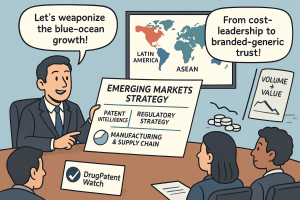
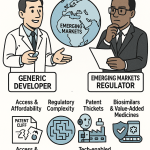
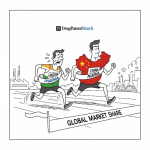
The global generic drug market will cross $700 billion by 2032. Most of that growth will not come from the United States, the EU-5, or Japan. It will come from markets that legacy pharma strategy still treats as afterthoughts: Brazil, India, Indonesia, Nigeria, Kenya, Mexico, Vietnam. The companies positioned to capture it are not the ones with the biggest US portfolios. They are the ones who figured out earlier than everyone else that portfolio architecture, IP strategy, and regulatory sequencing look completely different in a pharmerging world.
This analysis covers what that looks like in practice: which drug categories are worth pursuing, how patent thickets and loss of exclusivity timelines interact with emerging market regulatory timelines, what the litigation landscape means for generic entry windows, and how companies like Cipla, Sun Pharma, Aspen, and Hikma have built durable commercial positions in high-growth regions. For pharma IP teams, portfolio managers, and commercial strategy leads, this is the operational intelligence that precedes any capital allocation decision.
What ‘Pharmerging Markets’ Actually Means for Generic Drug Revenue
The term ’emerging markets’ is analytically useless for pharmaceutical strategy. It groups Indonesia and Argentina under the same label despite radically different regulatory frameworks, IP regimes, disease burdens, and payer structures. ‘Pharmerging markets’ — a term that designates the high-growth pharmaceutical sub-sectors within developing economies — is more precise. Between 2018 and 2023, pharmaceutical sales in Brazil grew 12.3% and in India 9.9%. The average for the EU-5 was 7.4%. The US posted 8.4%.
That differential is structural, not cyclical. Aging populations with rising incidence of type 2 diabetes, cardiovascular disease, and oncologic conditions. Expanding middle classes paying out of pocket. Governments under fiscal pressure to shift branded volumes toward generic substitution. These forces do not reverse. They accelerate.
The revenue consequence is direct. A generic drug that captures 20% market share in a mature EU market at compressed margins may generate less net revenue than the same molecule capturing 40% share in a mid-sized pharmerging market with higher average selling prices and a less saturated competitive field. The math depends entirely on execution. And execution depends on a portfolio selection framework built for these markets specifically, not one retrofitted from a US ANDA filing strategy.
How the 2025-2030 Patent Cliff Creates Asymmetric Entry Windows in Emerging Markets
Between 2025 and 2030, branded drugs generating between $217 billion and $236 billion in annual global sales will lose market exclusivity. The biggest names include Eliquis (apixaban, Bristol-Myers Squibb/Pfizer), Keytruda (pembrolizumab, Merck), Stelara (ustekinumab, Johnson & Johnson), Xarelto (rivaroxaban, Bayer/J&J), Entresto (sacubitril/valsartan, Novartis), and Jardiance (empagliflozin, Boehringer Ingelheim/Eli Lilly).
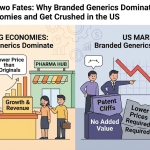
In the US market, loss of exclusivity triggers an almost immediate, well-documented pricing cascade. A second generic filer can expect branded drug prices to fall 20%-40% post-entry. With ten or more approved generics, prices erode 70%-95% from pre-entry brand levels. The economics are thin and the window to profit is narrow for all but the first filer.
In pharmerging markets, the dynamics are different in ways that favor disciplined entrants:
The competitive field is less crowded at launch. Most generic manufacturers that file ANDAs in the US do not simultaneously pursue marketing authorization in Brazil, Nigeria, or Vietnam. Approval timelines are longer, registration costs are higher, and local dossier requirements add complexity. These barriers filter out undercapitalized entrants. The result is that first-to-file advantages in pharmerging markets often persist longer than the 180-day US exclusivity window.
Branded generic premiums are real. In markets where drug quality trust is lower, the manufacturer’s brand commands a price premium over anonymous generics. A generic version of apixaban from a recognized quality manufacturer can sell at 40%-60% below the Eliquis brand price while still commanding 20%-30% above a commodity generic in the same market. That premium is not available in mature markets.
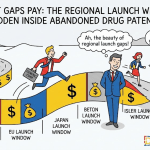
Regulatory timelines interact with patent expiry dates in ways that favor early filing. A company that files for marketing authorization in India, Brazil, and Kenya 18-24 months before US patent expiry will often receive approvals around or shortly after the expiry date — positioned for day-one launch rather than playing catch-up.
Key Patent Expiry Dates: Drugs with Largest Revenue at Risk
Drug (INN)
Brand
Originator
Primary US Patent Expiry
Peak Annual Sales
Biosimilar/Generic Complexity
Apixaban
Eliquis
BMS/Pfizer
2026 (with extensions)
~$12B
Moderate (small molecule, multiple process patents)
Pembrolizumab
Keytruda
Merck
2028
~$25B
High (biologic, >100 patent families)
Ustekinumab
Stelara
J&J
2023 (US); staggered ex-US
~$10B
High (biologic, biosimilar litigation ongoing)
Rivaroxaban
Xarelto
Bayer/J&J
2024-2027 (jurisdiction-specific)
~$6B
Moderate
Sacubitril/Valsartan
Entresto
Novartis
2025-2033 (formulation patents)
~$6B
Moderate-High (combination formulation)
Empagliflozin
Jardiance
BI/Lilly
2025-2028
~$7B
Moderate
Dupilumab
Dupixent
Sanofi/Regeneron
2031+
~$14B
High (biologic)
Adalimumab
Humira
AbbVie
Expired (US 2023)
~$21B
High (biosimilar thicket, 200+ patents filed)
The adalimumab (Humira) case is the most instructive for pharmerging market strategy. AbbVie filed more than 200 patents covering formulation, device, manufacturing, and method-of-use to delay biosimilar entry for years after the core composition-of-matter patent expired. This patent thicket produced settlement agreements with Amgen, Samsung Bioepis, Sandoz, Mylan, Pfizer, and Coherus, each with different authorized biosimilar launch dates in the US (most clustered around 2023) and separate — often earlier — timelines in the EU and pharmerging markets. AbbVie’s royalty income from these settlement agreements represented a deliberate value extraction strategy as the product approached loss of exclusivity.
How Patent Thickets Work and Why They Matter for Generic Entry Timing
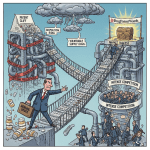
A patent thicket is not a metaphor. It is a deliberate legal architecture in which an originator files dozens to hundreds of secondary patents — covering formulations, crystalline forms, enantiomers, dosing regimens, delivery devices, metabolites, and manufacturing processes — around a primary composition-of-matter patent. The purpose is to require any generic entrant to either design around each secondary patent individually, challenge them through inter partes review or Paragraph IV litigation, or negotiate a settlement that delays launch.
The Hatch-Waxman Act in the US creates a formal mechanism for this through the Orange Book, which lists patents that a generic filer must certify against. A Paragraph IV certification — asserting that a listed patent is invalid, unenforceable, or not infringed by the generic product — automatically triggers a 30-month stay on ANDA approval if the originator sues within 45 days. For high-value drugs, originators routinely list multiple patents to maximize the cumulative stay period.
In pharmerging markets, the patent linkage mechanism varies by jurisdiction:
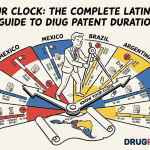
Mexico operates one of the strongest patent linkage systems outside the US. COFEPRIS is legally barred from granting marketing authorization for a generic if a relevant patent remains in force on the ‘linkage gazette.’ This extends effective exclusivity beyond primary patent expiry in ways that directly parallel the US Hatch-Waxman stay mechanism. Generic companies targeting Mexico must therefore assess both the regulatory timeline and the complete patent linkage landscape before filing.
Brazil has deliberately decoupled patent status from ANVISA’s approval process. ANVISA reviews drug applications on scientific merit independent of patent status. A generic can receive marketing authorization in Brazil while an originator’s patent is still in force — the IP dispute is a civil matter between the parties, not a regulatory gatekeeping function. This creates an environment where a well-funded generic company with strong legal capacity can file, receive approval, launch, and defend against litigation simultaneously, rather than waiting for patent expiry. Brazil’s INPI (National Institute of Industrial Property) patent examination process also has a notable backlog, which has historically worked in favor of generic manufacturers in some cases.
India is the most complex and consequential jurisdiction. Section 3(d) of the Indian Patents Act specifically prohibits patents on new forms of existing substances (salts, polymorphs, esters, isomers) unless they demonstrate significantly enhanced efficacy. This provision was designed precisely to prevent the kind of evergreening that characterizes Western patent thickets. The Novartis/Gleevec (imatinib) case, decided by India’s Supreme Court in 2013, confirmed the constitutional validity of Section 3(d) and rejected Novartis’s application for patent protection on a specific crystalline form of imatinib mesylate. The ruling has had lasting implications for how originators structure their IP applications in India and has been repeatedly cited in policy debates across Africa and Latin America as a model for preventing pharmaceutical patent abuse.
Why Keytruda’s Patent Expiry Matters for Merck Investors
Pembrolizumab (Keytruda) is Merck’s largest revenue driver at approximately $25 billion annually — nearly 40% of total company revenue. The primary composition-of-matter patent expires around 2028 in the US, but the full patent family encompasses more than 100 patent families across multiple jurisdictions. Merck has been filing continuation patents on antibody formulations, dosing schedules, combination regimens, and companion diagnostics. Biosimilar developers including Samsung Bioepis, Celltrion, Coherus, and several Chinese biotechs have initiated development programs.
The pharmerging market implication is specific. In markets where Merck’s pricing is out of reach for most patients, pembrolizumab biosimilars would substantially expand treatment volumes. India’s biosimilar regulatory pathway under the CDSCO guidelines, and Brazil’s ANVISA biossimilar resolution (RDC 204/2017), both provide abbreviated development pathways for reference-product biologics with post-marketing comparability requirements. Companies that start pembrolizumab biosimilar programs now and target regulatory filing around 2027-2028 will be positioned for early entry.
Paragraph IV Litigation and What It Means for Generic Revenue Projections
A Paragraph IV certification is both a legal challenge and a commercial signal. The first generic filer to submit a Paragraph IV ANDA receives 180 days of market exclusivity if they successfully defend against or settle the originator’s patent suit. This 180-day window, before other generic entrants can receive final approval, can be worth hundreds of millions of dollars for blockbuster drugs.
The litigation economics are asymmetric. Originators almost always sue upon receiving notice of a Paragraph IV filing — the 30-month stay costs them little beyond legal fees and buys time. Generic filers face a different calculus: they are betting significant litigation costs against the value of first-filer exclusivity. For a drug with $2 billion in US annual sales, 180-day exclusivity at a 15%-20% market share at 80% of brand price can represent $200-$300 million in net revenue. The litigation investment is often justified.
Settlement patterns in Paragraph IV cases are well-documented. Most cases settle before trial. The settlement terms typically include an authorized generic launch date — often 12-18 months before primary patent expiry — and sometimes a royalty arrangement paid to the originator. These settlements have attracted FTC scrutiny under the ‘reverse payment’ or ‘pay-for-delay’ framework following the Supreme Court’s FTC v. Actavis decision in 2013. The Court held that reverse-payment settlements are subject to antitrust scrutiny under the rule of reason standard, rather than being per se lawful. Since Actavis, settlement structures have become more complex, with non-cash consideration (supply agreements, litigation cost reimbursements, co-promotion arrangements) replacing direct cash payments in some deals.
For pharmerging market strategy, Paragraph IV litigation in the US provides directional intelligence even when the mechanism does not apply directly. When a generic company wins or settles a Paragraph IV challenge on apixaban, it signals that the primary IP barriers in the US are resolving, which typically accelerates filing decisions in Brazil, Mexico, India, and Southeast Asia as well.
Biosimilar Entry Timing in Pharmerging Markets: What Changes After Loss of Exclusivity
Biosimilar competition in pharmerging markets operates on a different clock than in the US or EU. The development cost for a biosimilar — analytical characterization, comparability studies, clinical trials, manufacturing scale-up — runs $100-$300 million depending on the molecule. For most pharmerging markets, those economics only pencil out if the biosimilar can achieve meaningful volume quickly. That requires regulatory approval, formulary inclusion, and some form of interchangeability or substitution policy.
The regulatory infrastructure for biosimilar approval varies significantly:
India has the most developed biosimilar sector among emerging markets. Companies including Dr. Reddy’s Laboratories, Biocon, Intas Pharmaceuticals, and Cipla have developed biosimilar portfolios covering adalimumab, trastuzumab, bevacizumab, rituximab, and insulin glargine. India’s abbreviated biosimilar pathway requires physicochemical characterization, preclinical data, and at minimum a Phase I PK/PD study. Full Phase III trials are required when the reference product lacks substantial post-market safety data in Indian populations. Biocon’s insulin biosimilars, marketed across Asia, Africa, and select EU markets, demonstrate the commercial scale achievable from an India-based biosimilar platform.
Brazil has a tiered pathway under ANVISA’s Resolution RDC 204/2017. A ‘biossimilar’ (abbreviated pathway) requires comparability studies. An ‘individual development’ pathway (essentially a standalone biological application) is available for products not referenced against a Brazilian-approved originator. ANVISA has approved biosimilars for adalimumab, etanercept, infliximab, and trastuzumab, with competition intensifying as the first-wave biosimilar approvals begin generating commercial data.
Southeast Asia (ASEAN) has no regional biosimilar harmonization equivalent to the EU’s EMA guidelines. Each member state evaluates biosimilars under its national framework. The Philippines, Thailand, and Indonesia have developing biosimilar approval frameworks, but approval timelines range from 12 to 30 months and interchangeability policies are in early stages.
Africa presents the largest unmet need with the least developed regulatory infrastructure. SAHPRA in South Africa has approved several biosimilars, and the African Medicines Regulatory Harmonisation (AMRH) initiative, facilitated by the African Union and WHO, is working toward a continental framework. Aspen Pharmacare’s deal with the Serum Institute of India to manufacture vaccines in South Africa represents one model for how pharmerging-market companies can position themselves in the biologics space while regulatory infrastructure matures.
What Happens Financially After a Biologic Loses Exclusivity in a Pharmerging Market
The revenue erosion curve for biologics after loss of exclusivity in pharmerging markets is materially different from small molecules. Where a small-molecule generic can erode brand pricing by 70%-90% within 24 months of entry, biosimilar penetration is slower due to physician inertia, switching concerns, formulary negotiations, and the absence of automatic substitution in most pharmerging regulatory systems.
In practice, the originator biologic retains 50%-70% of volume for 3-5 years post-biosimilar entry in most pharmerging markets, compared to 15%-30% of volume in mature markets with aggressive substitution policies. This is commercially significant for both sides. For the originator, it extends revenue life in pharmerging markets well beyond the formal loss of exclusivity date. For the biosimilar developer, it means volume ramp is slower, requiring a longer investment horizon. The companies that win biosimilar competition in pharmerging markets are those that build physician relationships and formulary positions early, not those that simply file and wait.
How to Read a Drug’s Patent Estate Before Filing in a Pharmerging Market
Portfolio selection for pharmerging markets requires a systematic IP analysis that goes beyond the US Orange Book or a single jurisdiction’s patent database. The relevant data sources include:
The WIPO PatStat database and country-specific patent office databases (Brazil’s INPI, India’s IPO, the European Patent Office’s Espacenet) enable cross-jurisdictional patent family mapping. A molecule covered by a primary US composition-of-matter patent filed in 1996 may have a corresponding European patent (EP), Indian patent (IN), and Brazilian patent (BR), each with independently calculated expiry dates that reflect local filing dates, term adjustments, and supplementary protection certificates.
The US FDA Orange Book catalogs patents and exclusivities for approved drug applications. Monitoring Paragraph IV certifications filed against a target drug provides real-time intelligence on which generic manufacturers have assessed the IP landscape and decided the barriers are surmountable.
DrugPatentWatch aggregates this data across patent families, regulatory exclusivities, litigation history, and FDA correspondence, enabling a structured analysis of the full IP estate around a drug rather than a single-patent view.
Composition of matter patents are the most critical to assess. If the primary API patent is still in force in a target jurisdiction, the generic strategy depends on either designing around it (formulation, salt, crystalline form), challenging its validity, or waiting for expiry. The design-around option is more constrained than it appears — secondary patents on formulations and routes of administration are specifically intended to close those routes.
Formulation and process patents define the manufacturing moat. A drug that requires a specific proprietary process to achieve acceptable purity or bioavailability protects the originator even after the composition-of-matter patent expires. Generic entrants must either develop independent processes (which may require significant R&D investment) or acquire process know-how from a licensed CMO.
Regulatory exclusivities are separate from patents and can block generic approval independent of patent status. New Chemical Entity exclusivity in the US (5 years) and data protection periods in the EU (8 years data, 10 years market) both delay when generics can reference the originator’s clinical data. In pharmerging markets, data exclusivity periods vary: Brazil grants 5 years, Mexico 5 years, Argentina none, Kenya 5 years. India does not grant data exclusivity per the TRIPS agreement’s public health flexibilities.
The Latin American Generic Drug Market: Revenue Opportunity and IP Risk by Country
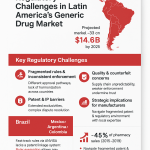
Latin America’s pharmaceutical market will reach $64 billion by 2030 at a CAGR of 6%-7%. Brazil and Mexico together account for more than 60% of that total. The rest — Colombia, Argentina, Chile, Peru — are meaningful but secondary markets. For generic portfolio construction, each requires a distinct IP and regulatory strategy.
Why Brazil’s Patent System Creates Unique Generic Entry Opportunities
Brazil’s ANVISA registration process and IP framework create conditions that favor generic companies willing to manage legal complexity. ANVISA and INPI operate on separate tracks. A generic can receive regulatory approval from ANVISA while an originator’s patent is still under INPI examination or active litigation. The January 2020 law ending INPI’s ‘prior consent’ mechanism — which had allowed ANVISA to block generic approval based on patent status — confirmed this separation and was widely seen as a win for generic market access.
INPI’s examination backlog has historically meant that some secondary patents (formulation, process) remain under examination long after primary patent expiry. A generic entrant that receives ANVISA approval can often launch commercially before INPI resolves secondary patent status, accepting the litigation risk in exchange for early market access. For drugs with large revenue potential (branded metformin XR, branded amlodipine, branded rosuvastatin all have significant Brazilian markets), that risk calculation often favors launch.
ANVISA’s bioequivalence requirements are among the strictest in Latin America. Brazil became an ICH regulatory member in 2016, aligning its standards with FDA and EMA requirements. BE studies must be conducted in Brazilian patients or be specifically validated for the Brazilian population. This increases development costs but also raises the barrier to entry for undercapitalized generic filers.
Mexico’s Patent Linkage System: What Generic Filers Must Know
COFEPRIS’s linkage registry — the Mexican equivalent of the Orange Book — lists patents that COFEPRIS will check before granting generic approval. If a relevant patent is active in the registry, COFEPRIS will not approve the generic application. The originator has 45 days to list a patent after drug approval, and the linkage registry has historically been criticized for including patents of questionable scope.
Mexico formalized its regulatory reliance strategy in 2025, establishing expedited review timelines of 30-45 days for products already approved by reference authorities including the FDA, EMA, and Health Canada. This creates a strategic sequencing opportunity: a company that secures FDA or EMA approval first can unlock a dramatically faster Mexican review. Given Mexico’s $18 billion pharmaceutical market and COFEPRIS’s historical 12+ month review timelines, the reliance pathway represents a major competitive advantage for companies that build regulatory sequencing into their pharmerging market entry plans.
Argentina’s Data Exclusivity Gap: Commercial Implications for Generic Manufacturers
Argentina does not grant data exclusivity on pharmaceutical products, which is among the most significant structural advantages for generic manufacturers in the region. Without data exclusivity, a generic can reference the originator’s clinical data for its ANMAT application immediately after approval, without waiting for any exclusivity period to expire. This compresses the effective time between brand approval and first generic entry significantly compared to Brazil or Mexico.
ANMAT’s registration timelines (12-24 months for a standard generic application) moderate this advantage, but a company with existing ANMAT registration experience and a pre-qualified quality management system can optimize timing. The Argentine market is also heavily branded-generic-oriented, meaning a trusted generic manufacturer can command price points well above commodity levels even in the absence of data exclusivity protection for the originator.
ASEAN Generic Drug Registration: How to Use the ACTD to Compress Regulatory Timelines
The ASEAN Common Technical Dossier format standardizes the structure of drug regulatory submissions across all ten ASEAN member states. For generic drugs, Parts III (Nonclinical) and IV (Clinical) are not required — the generic relies on the originator’s published safety and efficacy data. The core scientific package covers Part II (Quality) and the bioequivalence data embedded within Part I.
The practical efficiency gain from the ACTD is real but incomplete. A single, well-prepared quality dossier can be submitted simultaneously to the Health Sciences Authority (HSA) in Singapore, the Food and Drug Administration in the Philippines, the Food and Drug Administration in Thailand (FDA Thailand), the National Agency of Drug and Food Control (BPOM) in Indonesia, and the Drug Control Authority (DCA) in Malaysia. The core scientific content does not need to be reformatted for each submission.
The inefficiency is in the administrative layer. Part I of the ACTD — which covers administrative data, product information, and labeling — must be customized for each member state. Indonesia requires Indonesian-language labeling. Thailand requires Thai-language package inserts. The Philippines requires specific formatting for the product registration certificate application. Malaysia requires a Certificate of a Pharmaceutical Product from the country of manufacture, legalized and authenticated. Singapore’s HSA, the most advanced regulatory authority in ASEAN, accepts electronic submissions and has streamlined review timelines of 9-12 months for generics from well-known quality manufacturers.
Singapore HSA’s Expedited Pathways and What They Mean for Regional Strategy
Singapore is the optimal anchor market for ASEAN regulatory strategy. HSA offers a Formal Verification Procedure that accepts approvals from the FDA, EMA, TGA (Australia), and Health Canada as the basis for an abbreviated Singapore review. If a product is already FDA-approved and the manufacturer has a clean inspection history, the Singapore review can be completed in as little as 6 months.
An HSA approval, in turn, is one of the most widely recognized reference approvals in Southeast Asia. BPOM in Indonesia maintains a formal reference list that includes HSA. Thailand’s FDA accepts HSA approvals under reliance procedures for certain product categories. This creates a hub-and-spoke dynamic in which Singapore serves as the regulatory anchor for the entire region. A company that invests in securing HSA approval first — even for a product where Singapore itself is not the primary revenue opportunity — can unlock faster reviews across ASEAN markets that collectively represent $24 billion in pharmaceutical sales.
Why Manufacturing Complexity Makes ASEAN Generic Market Entry Hard for New Entrants
The most defensible positions in ASEAN generic markets belong to companies with established manufacturing quality credentials. BPOM in Indonesia requires that foreign manufacturers demonstrate compliance with Indonesian GMP standards, which align with WHO GMP but require an inspection by Indonesian inspectors rather than reliance on FDA or EMA inspection reports. For many potential entrants, the cost and logistics of an Indonesian GMP inspection — separate from any FDA or EMA audit — represents a significant additional barrier.
Thailand’s FDA similarly requires Thai inspections for manufacturing facilities not already inspected by a recognized reference authority. The list of recognized authorities is expanding but remains limited to FDA, EMA, TGA, and a small number of others. Companies from India and China — which supply the majority of APIs and a growing share of finished dosage forms to ASEAN markets — do not have automatic recognition, requiring independent Thai or Indonesian inspection.
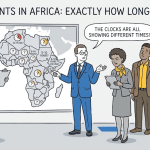
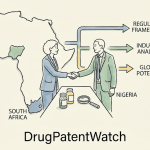
How Africa’s Regulatory Fragmentation Creates Strategic Entry Points for Generic Manufacturers
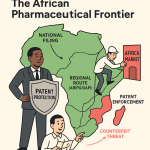
Africa’s pharmaceutical import dependency — 70%-90% of all drugs consumed are imported — is both a structural problem and a commercial opportunity. The 54-country continent has approximately 54 separate drug regulatory systems, most of them underfunded and understaffed. But several anchor markets have developed regulatory frameworks sophisticated enough to serve as reference points for the rest of the continent, and regional harmonization initiatives are creating de facto multi-market approval pathways.
How SAHPRA’s Stringent Standards Create Both Barriers and Advantages
South Africa’s SAHPRA (South African Health Products Regulatory Authority) is an ICH member and PIC/S-affiliated authority. It accepts the full ICH CTD format, requires bioequivalence studies meeting international standards, and conducts GMP inspections aligned with EU standards. For a generic manufacturer, SAHPRA approval requires an investment equivalent to a mid-tier EU or FDA submission — it is not an abbreviated process.
The return on that investment is substantial. South Africa’s pharmaceutical market is the largest on the continent at approximately $5 billion annually. More importantly, SAHPRA approval is recognized by other African regulatory authorities as a reference approval under various bilateral and multilateral agreements. A product approved by SAHPRA can often obtain expedited or abridged review in Botswana, Namibia, Zambia, Zimbabwe, and several other SADC (Southern African Development Community) member states.
SAHPRA also participates in the ZAZIBONA initiative — a collaborative assessment program for the SADC region in which participating regulatory authorities jointly review generic drug dossiers, with one authority serving as the primary reviewer and others adopting that review. A positive ZAZIBONA assessment can unlock registration in multiple SADC countries simultaneously, converting a single high-quality dossier into multi-country market access.
Kenya’s PPB: The Fastest Regulatory Clock in Sub-Saharan Africa
Kenya’s Pharmacy and Poisons Board (PPB) is the most digitized and fastest-moving regulatory authority in East Africa. Electronic submissions are accepted through the PPB’s online portal. Review timelines for generic applications run 6-9 months for products meeting quality standards — faster than SAHPRA, faster than NAFDAC in Nigeria, and among the fastest in the developing world.
Kenya’s PPB is the anchor for the East African Community (EAC) Medicines Regulatory Harmonisation program, which includes Uganda, Rwanda, Tanzania, and Burundi. The EAC-MRH framework allows joint assessments and information sharing, with a Kenya PPB approval providing an expedited path to registration in other EAC member states. For a generic manufacturer targeting East Africa, Kenya is the obvious first filing priority.
Kenya’s pharmaceutical market itself — approximately $1.5 billion annually — is secondary to the regional leverage it creates. A company that secures PPB registration for a chronic disease drug (metformin, amlodipine, losartan, atorvastatin) can cascade that approval into Uganda, Rwanda, and Tanzania within 12-18 months through EAC-MRH procedures, at a fraction of the cost of four independent registrations.
NAFDAC Nigeria: Navigating Africa’s Largest Drug Market
Nigeria is Africa’s most populous country and its second-largest pharmaceutical market. NAFDAC (National Agency for Food and Drug Administration and Control) administers drug registration through an eCTD/CTD submission system with review timelines of 8-12 months for generic applications. NAFDAC requires a CPP from the country of manufacture in WHO format and local stability data meeting Zone IVb requirements (hot and very humid conditions).
Nigeria’s pharmaceutical market is characterized by a high counterfeit drug burden — estimates suggest 15%-30% of drugs sold in informal markets are substandard or falsified. For a quality generic manufacturer, this dynamic creates a distinct brand premium. A visibly quality-assured product with track-and-trace packaging, from a known manufacturer with NAFDAC registration in good standing, commands a material price premium over informal market products, even when sold through formal channels.
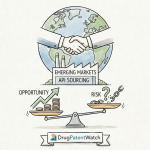
API Sourcing Strategy for Pharmerging Markets: Managing Geopolitical and Supply Risk
India and China supply more than 70% of the active pharmaceutical ingredients used in global generic drug production. India supplies approximately 20% of global generic volume and 40% of US generic demand by volume. China is the dominant global supplier of starting materials and intermediates, with a share of global API production estimated at 40%-60% for key molecules including antibiotics, vitamins, and cardiovascular APIs.
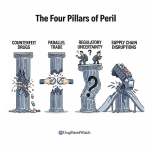
This concentration is a systemic risk that the COVID-19 pandemic made visible. India’s March 2020 export restrictions on 26 pharmaceutical product categories, imposed to protect domestic supply, demonstrated that a single government decision can rupture global supply chains for months. The geopolitical risk dimension has intensified since 2020: US-China trade friction, India-China border tensions, and EU industrial policy initiatives (including the Critical Medicines Act) all affect how regulatory authorities and procurement agencies think about supply chain geography.
For pharmerging market generic manufacturers, the API sourcing calculus is different from the US or EU perspective. Many pharmerging market manufacturers are themselves Indian or operating from Indian manufacturing platforms. The risk they face is different: a domestic supply disruption or export restriction affects their own production, not their imports. But for international generic companies sourcing APIs from India or China to supply pharmerging markets, the multi-sourcing imperative applies fully.
A resilient API strategy for pharmerging market supply requires three structural commitments: geographic diversification of sources (India + one non-Indian option for each critical API), pre-qualified backup supplier qualification (not just emergency sourcing, but ongoing qualification of secondary suppliers who can be activated within 30-60 days), and safety stock policies calibrated to the lead times and regulatory requirements of each market. In markets where ANVISA or NAFDAC require the API supplier to be named in the product registration dossier, switching APIs requires a post-approval variation — a process that can take 6-24 months and cannot be executed reactively during a supply crisis.
The total cost of API ownership must include a risk premium for geographic concentration. A secondary API supplier at $5/kg more than the primary source may cost $500,000 annually in a 100-metric-ton production run. Against a supply disruption that could cost $50-$100 million in lost sales, the economics are unambiguous.
CMO Selection for Pharmerging Market Manufacturing: When the Vendor Is Your Market Access Strategy
The decision between building, buying, or partnering for manufacturing capability in pharmerging markets is consequential in ways that do not apply in mature markets. In the US or EU, a CMO relationship is primarily a capacity and quality decision. In pharmerging markets, the right local CMO is also a regulatory intelligence source, a distribution network partner, a government relations asset, and a local knowledge repository.
Many pharmerging market governments have explicit localization requirements or preferences. Nigeria’s NAFDAC registration process includes documentary requirements that are more straightforward to navigate with a NAFDAC-experienced local partner. Brazil’s government procurement system (via ANVISA’s CONASS and state health secretariats) has historically favored manufacturers with local production or active technology transfer agreements. Indonesia’s national health insurance system (JKN) formulary inclusion has been influenced by local manufacturing commitments.
A local CMO partner that already has approved registration with the relevant regulatory authority — and has demonstrated quality compliance in a recent inspection — reduces the generic developer’s time-to-market by months to years. The due diligence framework for selecting a pharmerging market CMO must therefore include regulatory track record, inspection history, existing relationships with local health authorities, and distribution infrastructure, not just technical capability and cost.
The global CMO market is growing at 6%-9% annually. In pharmerging markets, the fastest-growing segment is fill-finish for injectables and biosimilars, driven by government interest in reducing import dependency for high-cost biologics. Companies with biosimilar ambitions in pharmerging markets that partner with a local CMO for fill-finish manufacturing — while retaining bulk drug substance production in a primary facility — can often satisfy local content requirements, reduce last-mile logistics costs, and qualify for preferential government procurement.
What Investors Are Watching: Generic Drug Revenue Exposure by Company and Market
Portfolio managers assessing generic pharmaceutical exposure in pharmerging markets focus on five variables: revenue concentration by geography, pipeline depth in complex generics and biosimilars, regulatory filing velocity, API supply chain resilience, and branded generic pricing power.
AbbVie faces the most analyzed LOE (loss of exclusivity) cliff in recent history with Humira. US biosimilar competition began in earnest in 2023. The revenue impact in pharmerging markets is lagged — biosimilar infrastructure and physician switching behaviors are slower outside the US. AbbVie’s Skyrizi (risankizumab) and Rinvoq (upadacitinib) are the designated replacement products, but their uptake in pharmerging markets is constrained by pricing and formulary access challenges. For generic and biosimilar manufacturers, Humira’s IP resolution creates direct commercial opportunity in Brazil, India, and Southeast Asia.
Merck faces its own existential cliff with Keytruda in 2028. With Keytruda representing ~40% of total company revenue, the patent expiry creates investor risk that Merck is attempting to manage through subcutaneous formulation development (which would receive new patent protection), combination therapy approvals, and co-formulation with other oncology agents. Biosimilar developers who can navigate the complex pembrolizumab patent estate and clear manufacturing validation will compete in markets where Keytruda’s $15,000-$25,000 per year pricing is inaccessible for most patients.
Johnson & Johnson resolved Stelara (ustekinumab) US biosimilar competition in 2023. The international Stelara biosimilar market — India, Brazil, Southeast Asia — is earlier stage but growing rapidly. Biocon has a biosimilar ustekinumab (Ozuflux) approved in multiple markets. Alvotech’s AVT04 has biosimilarity data in the EU. Multiple Indian biosimilar manufacturers are in development. The commercial question in pharmerging markets is formulary access and physician conversion, not regulatory approval.
Novartis’s heart failure franchise faces an interesting IP situation with Entresto (sacubitril/valsartan). The core compound patents expire in the US around 2025-2027, but Novartis has filed formulation patents claiming the specific crystal form and particle size characteristics that affect bioavailability. Generic filers must either match the innovator’s formulation exactly (risking formulation patent infringement) or demonstrate bioequivalence with an alternative formulation that does not practice the secondary patents. In pharmerging markets, where Novartis’s pricing makes Entresto largely inaccessible, successful generic entry would expand treatment to a large underserved population with heart failure — a growing disease burden in Asia and Latin America.
Revenue Cliff Analysis: Which Generic Companies Have the Most at Stake Through 2030
For generic manufacturers, the patent cliff represents opportunity measured in potential market share and revenue. The most valuable targets are molecules where: (1) the primary composition-of-matter patent has expired or is expiring, (2) the patent thicket has been navigated by first-movers whose Paragraph IV settlements provide useful intelligence on IP barriers, (3) pharmerging market regulatory registration is achievable within 24-36 months, and (4) the therapeutic area aligns with the dominant disease burden in target markets.
By those criteria, the highest-value pharmerging market generic opportunities through 2030 include oral anticoagulants post-apixaban and rivaroxaban LOE (cardiovascular disease burden in India, Southeast Asia), SGLT-2 inhibitors post-empagliflozin LOE (diabetes epidemic in India, Southeast Asia, Latin America), GLP-1 receptor agonists (semaglutide, liraglutide, dulaglutide) as patents expire in the late 2020s and early 2030s (obesity and diabetes in middle-income markets), and oncology biosimilars (trastuzumab, bevacizumab, rituximab, pembrolizumab biosimilars as the market matures).
How Cipla Built a Pharmerging Market Portfolio That Doubles as a Brand
Cipla’s commercial model demonstrates how access-oriented strategy and financial discipline are not mutually exclusive. The company’s decision in 2001 to offer antiretroviral drugs for HIV treatment at $1 per day — against the prevailing global price of $10,000-$15,000 per year — was both a public health intervention and a brand-building exercise at scale. The resulting goodwill with African governments, WHO, and NGOs created a regulatory and commercial facilitation effect that persisted for decades.
Cipla’s India distribution network — over 100,000 points of contact — represents a structural competitive advantage that cannot be replicated quickly. Generic competition in India is intense, with more than 800 licensed domestic manufacturers. The companies that sustain above-average margins do so through distribution depth, consistent supply reliability, and physician relationship management, not purely on price. Cipla’s therapeutic focus on respiratory, cardiovascular, oncology, and anti-infective categories aligns with both India’s disease burden and the growing pharmaceutical needs of Africa.
The ‘Africa for Africa’ strategic initiative represents Cipla’s attempt to replicate its Indian distribution model on the continent. The Ghana expansion is a specific case study: the initial portfolio was curated based on analysis of NHIA (National Health Insurance Authority) formulary data and disease burden statistics, targeting respiratory conditions, gastrointestinal infections, and anti-infectives. The partnership with Cipla Medpro in South Africa as the regional distribution anchor provides access to markets in Nigeria, Tanzania, and Kenya through an existing commercial infrastructure.
How Sun Pharma Built a $5 Billion International Business Through Targeted Acquisition
Sun Pharmaceutical Industries’ international revenue trajectory demonstrates the acquisition-led model for building pharmerging market scale. The company’s founding in 1983 with a focus on psychiatry generics in India preceded a deliberate internationalization strategy that used each acquisition to add either a geographic footprint or a specialized capability.
The Caraco acquisition established a US manufacturing and distribution presence. The Taro Pharmaceuticals deal — a protracted hostile acquisition completed in 2010 after years of litigation — gave Sun Pharma one of the most defensible branded generic dermatology franchises in North America. The Israel-based Taro had strong IP positions in complex topical formulations that are difficult to replicate, providing both margin protection and a product development model for future portfolio additions.
Sun Pharma’s emerging market revenue now accounts for approximately 30% of total sales across markets including Russia, Romania, Brazil, Mexico, South Africa, and Southeast Asia. The company’s strategy in these markets follows a consistent playbook: acquire or build a local presence, introduce a portfolio tailored to local disease burden and pricing expectations, and invest in branded generic positioning to capture a price premium over commodity generics. The acquisition of a 14.5% stake in India’s generic leader, alongside licensing deals with global innovators for specialty products, reflects a hybrid model — generics as the volume base, specialty pharma as the margin driver.
Hikma’s Regional Depth Strategy: Why MENA Dominance Is More Durable Than Global Breadth
Hikma Pharmaceuticals operates 20 manufacturing plants across the Middle East and North Africa, with facilities in Jordan and Saudi Arabia that carry US FDA inspection credentials. This manufacturing depth in a single high-growth region has created a competitive moat that diversified multinational generics cannot easily replicate.
The MENA pharmaceutical market is estimated at $35-$40 billion annually with above-average growth rates driven by high chronic disease prevalence, aging demographics in Gulf Cooperation Council countries, and expanding government health expenditure. Hikma’s branded generic portfolio — tailored specifically for MENA disease profiles and prescribing patterns — commands price premiums in countries where the company’s regional brand recognition exceeds that of EU or US generic labels.
Hikma’s sales force of approximately 2,000 representatives across 17 MENA markets generates prescribing intelligence that feeds back into portfolio selection decisions. When Hikma identifies growing prescribing volumes for a drug class not yet in its portfolio, it can file for marketing authorization in Jordan and Saudi Arabia, leverage FDA-inspected facilities to accelerate SFDA (Saudi FDA) and Jordanian FDA approvals, and commercialize within 18-24 months — a cycle that a less locally integrated competitor would take significantly longer to execute.
The strategic lesson is concentration as a competitive weapon. A company that attempts to compete across all pharmerging regions simultaneously without local manufacturing and commercial infrastructure will lose to regional specialists in each market.
Pricing Architecture for Generic Drugs in Pharmerging Markets: How to Avoid the Margin Trap
The most common pricing error in pharmerging market generic strategy is applying a single cost-plus price across all market channels. This fails because pharmerging markets are not homogeneous in their payer structures. In a single country like Nigeria or Indonesia, three distinct pricing regimes may operate simultaneously:
The government tender/public procurement market purchases essential medicines through centralized tenders managed by health ministries or procurement agencies. Price is the primary selection criterion for products meeting quality standards. Margins are thin, but volumes are high and payment is relatively reliable (though often delayed). Generic manufacturers serving this channel must build their cost structure for efficiency, not premium.
The private insurance and managed care channel is growing in Brazil, Mexico, South Africa, and increasingly in Indonesia and the Philippines. Private payers are cost-conscious but place some weight on clinical data, physician recommendations, and supply reliability. A branded generic from a quality manufacturer can command 15%-25% above commodity generic prices in this channel.
The out-of-pocket/cash retail channel is the dominant payer in most pharmerging markets, averaging 35% of total health expenditure versus 12% in developed markets. In India, out-of-pocket spending represents 65.6% of total healthcare expenditure. In this channel, price sensitivity varies by therapeutic area — patients managing life-threatening chronic conditions will stretch budgets for reliable treatment, while patients making self-care decisions are more price-elastic. The branded generic model is most powerful here, where quality trust and brand recognition can command 20%-40% premiums over commodity generics.
A company that designs separate SKUs, pricing tiers, and marketing approaches for each channel extracts more total value from a molecule than one applying a uniform strategy. This requires commercial sophistication — a dedicated tender team, a hospital sales force for institutional channels, and a community pharmacy strategy for retail — but the incremental revenue justifies the investment for any product with meaningful market potential.
How Biosimilar Interchangeability Policies Affect Generic Market Share in Pharmerging Markets
Biosimilar interchangeability — the designation that allows a pharmacist to substitute a biosimilar for the reference biologic without prescriber intervention — is a policy decision with direct commercial implications. In the US, the FDA’s interchangeability designation requires additional switching studies. The EU’s approach is more permissive, with individual member states making substitution policy decisions and several allowing pharmacy-level substitution.
In pharmerging markets, formal interchangeability policies are largely absent. India has no automatic biosimilar substitution framework. Brazil’s ANVISA biossimilar framework does not include pharmacy-level substitution provisions. Southeast Asian countries have not adopted interchangeability policies. This matters commercially because it means biosimilar penetration in pharmerging markets depends almost entirely on prescriber conversion — convincing physicians to prescribe the biosimilar by brand rather than relying on automatic substitution.
The implications for biosimilar commercial strategy in pharmerging markets:
Physician education programs are not optional — they are the primary market access tool. Key Opinion Leader development, medical science liaison teams, and peer-to-peer clinical data sharing are the mechanisms through which biosimilar market share is built in the absence of substitution policies. Companies that invest in this infrastructure early, before competing biosimilars enter the market, establish prescribing habits that are difficult to displace.
Formulary positioning in hospital systems is the most scalable channel. A single formulary committee decision to include a biosimilar as the preferred agent for a given indication can drive significant volume without requiring individual physician conversion. In Brazil, state-level health secretariats and hospital formulary committees manage biologic drug procurement centrally. A biosimilar that achieves a preferred formulary position in SUS (Sistema Unico de Saude) procurement can reach millions of patients through a relatively concentrated decision-making process.
Common Investor Questions
How does patent thicket depth affect the timeline to profitable generic entry in Brazil versus the US?
In the US, a patent thicket adds litigation costs and timeline uncertainty but is managed through the Hatch-Waxman Paragraph IV process. In Brazil, where patent linkage does not operate at the ANVISA level, a generic company can receive ANVISA approval and launch commercially while patent disputes are resolved in civil courts. The litigation risk is real — an adverse ruling can result in sales injunctions and damages — but the financial calculus of early launch is different from the US, where a 30-month stay prevents approval altogether. A Brazil-specific IP risk assessment is required before launch decisions, including an analysis of INPI patent examination status and the originator’s litigation history.
What is the typical revenue ramp for a first-to-register generic in a major pharmerging market?
In India, a first-to-register generic in a major therapeutic category can achieve meaningful market share within 6-12 months of launch, given the depth of existing distribution networks for established generic manufacturers. In Brazil, the government tender cycle (typically annual) means that first-year revenue depends heavily on tender timing. A product launched after the annual tender deadline may wait 12 months before capturing significant public sector volume. In Nigeria and Kenya, first-to-register advantage is real but market capture depends on distribution infrastructure, which can extend the revenue ramp to 18-24 months.
Is the 180-day first-filer exclusivity in the US relevant to pharmerging market strategy?
Directly, no — the Hatch-Waxman 180-day exclusivity applies only in the US. Indirectly, yes — US Paragraph IV filings provide public intelligence on which generic companies have assessed the IP barriers around a drug and concluded they are manageable. A Paragraph IV filing is a signal to pharmerging market generic developers that the patent landscape is being actively contested, which informs their own filing timing decisions.
How do royalty structures in branded originator licensing deals affect generic manufacturer economics in pharmerging markets?
Licensed generic agreements — in which the originator grants a specific generic manufacturer the right to sell an authorized generic during the first-filer’s exclusivity period — are primarily a US mechanism. In pharmerging markets, licensing deals more commonly take the form of technology transfer agreements (in which the originator licenses a product to a local manufacturer for specific markets) or authorized distribution agreements. In both structures, the originator retains royalty or profit-sharing rights, typically 10%-30% of net sales, in exchange for the license. For a generic manufacturer evaluating a licensing deal as an alternative to independent product development, the royalty burden must be weighed against the R&D cost and timeline savings of not having to independently develop and validate the product.
Key Takeaways for Pharma IP Teams, Portfolio Managers, and Commercial Strategy Leads
The patent cliff through 2030 creates real but unevenly distributed opportunity across pharmerging markets. The companies that will disproportionately capture that opportunity share five characteristics: they use patent intelligence proactively to identify entry windows before competitors do, they design regulatory sequencing strategies that exploit reliance pathways to compress approval timelines, they maintain resilient multi-sourced API supply chains that treat geographic concentration as a financial risk, they operate with separate commercial strategies for public tender and private retail channels within the same market, and they invest in local manufacturing or deep local CMO partnerships that serve as market access infrastructure, not just production facilities.
The generic drug market’s center of gravity has moved. It will not move back.
Investment Strategy: How to Think About Generic Pharma Exposure in Pharmerging Markets
For institutional investors and hedge funds with pharma sector exposure, the pharmerging generic opportunity is best understood through a tiered framework.
Tier 1 companies — those with established manufacturing, regulatory, and commercial infrastructure in multiple pharmerging regions — include Sun Pharma, Cipla, Dr. Reddy’s Laboratories, Aurobindo, Hikma, and Aspen Pharmacare. These companies are already generating revenue from pharmerging markets and are positioned to scale into new product categories as the 2025-2030 patent cliff accelerates. Their valuations reflect this, but the growth runway is durable.
Tier 2 companies — mid-sized generic manufacturers building pharmerging capabilities — offer higher growth optionality but carry regulatory execution risk, supply chain risk, and market access uncertainty. Investment thesis depends heavily on pipeline quality, first-file positioning in high-value molecules, and the depth of local partnerships.
Biosimilar specialists — companies like Biocon, Samsung Bioepis, Celltrion, and Viatris (through its biosimilar platform) — represent a distinct investment category. The biosimilar opportunity in pharmerging markets is earlier-stage but growing faster than the small-molecule generic sector. Valuation depends on pipeline stage, reference market approvals, and pharmerging market registration progress.
The structural tailwind — rising chronic disease burden, expanding middle-class pharmaceutical demand, government pressure for generic substitution, and the 2025-2030 patent cliff — is durable across all three tiers. The question for investors is which companies have built the operational infrastructure to convert that tailwind into durable earnings.
Patent expiry dates cited reflect primary US composition-of-matter patents or earliest publicly disclosed expiry timelines; actual market exclusivity may extend based on patent term extensions, regulatory exclusivities, and secondary patent estates. Revenue figures are approximate and based on publicly disclosed annual reports and analyst consensus. This analysis does not constitute investment advice.