A technical and commercial intelligence guide to complex generic development, patent strategy, regulatory sequencing, and emerging market positioning for pharma IP teams, portfolio managers, and institutional investors.
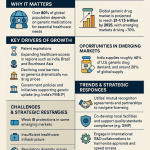
The next generation of generic drug wealth is not in replicating simple pills. It sits at the intersection of scientific complexity, IP litigation, regulatory sequencing, and a demographic wave reshaping healthcare demand across four billion people. Pharmerging markets are projected to grow at a 13% CAGR while the U.S. and European markets slow. The patent cliff is releasing over $200 billion in branded drug sales from exclusivity. And the products most exposed to that cliff, biologics, long-acting injectables, inhaled combination therapies, complex topicals, are precisely the ones that take the longest and cost the most to replicate. That is not a contradiction. It is the commercial thesis.
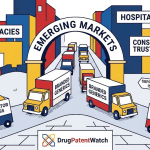
Why the Emerging Market Demand Signal Is Structurally Different This Time
For most of the past 30 years, the conventional wisdom was that high-volume generic production in markets like India and Brazil served as an export engine for Western demand. That framing is now obsolete. The drivers reshaping pharmaceutical consumption in Brazil, India, China, Mexico, Turkey, and Southeast Asia are endogenous: rising median incomes, rapid urbanization, aging demographics, and the epidemiological shift toward noncommunicable diseases. These forces do not depend on Western pricing dynamics or FDA import demand. They compound independently.
The BRIC nations collectively represent approximately 40% of global population. China alone added more people to its middle class between 2000 and 2020 than the entire current population of the United States. That middle class is now experiencing cardiovascular disease, type 2 diabetes, and oncologic diagnoses at rates that resemble U.S. patterns from the 1980s and 1990s. Diabetes and oncology incidence in major emerging markets is forecast to grow by more than 20% through 2030. These are not speculative projections. They reflect the well-documented lag between economic development and epidemiological transition.
What Out-of-Pocket Healthcare Costs Mean for Generic Demand Elasticity
Out-of-pocket healthcare spending averages 35% of total health expenditure across emerging markets, compared to roughly 12% in the U.S. and Western Europe. In India, that figure is 65.6%. In parts of Southeast Asia and sub-Saharan Africa, it exceeds 70%. This creates price sensitivity of a fundamentally different magnitude than in markets where insurance intermediates most pharmaceutical spending. At $4 per month versus $400, a patient does not choose the branded product. The generic wins by default, not preference.
Generics in these markets carry price discounts of 80% to 85% below branded counterparts. That spread is not a margin; it is the mechanism of access. It is also why the question of trust, discussed at length below, matters so much commercially. The product that can close the trust gap while holding even a modest premium over unbranded alternatives captures significantly more value per unit than a commoditized generic facing a race to zero.
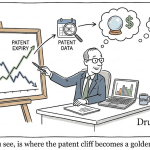
How the Patent Cliff Accelerates Pharmerging Market Opportunity
The patent cliff is not a single event. It is a rolling schedule of loss-of-exclusivity dates on some of the most commercially successful drugs in history, many of which have been inaccessible to large portions of the emerging market population because of price. When Keytruda (pembrolizumab) begins facing biosimilar competition after its core composition patents expire in the late 2020s, it will mark one of the largest single-molecule revenue cliff events in pharmaceutical history. Merck’s oncology franchise generated approximately $25 billion from Keytruda in 2023. A meaningful share of that revenue is concentrated in markets where the biosimilar price point may enable uptake for the first time.
Similarly, Novo Nordisk’s GLP-1 portfolio, including semaglutide (Ozempic, Wegovy) and liraglutide (Victoza), faces both patent litigation and loss-of-exclusivity risk across multiple jurisdictions before 2030. Generic and biosimilar semaglutide would restructure type 2 diabetes and obesity treatment access across every emerging market where the drug currently remains largely unaffordable at branded prices.
Selected high-revenue drugs with significant emerging market exposure approaching loss of exclusivity
What Makes a Generic ‘Complex’ and Why the FDA’s Definition Matters for Investors
The FDA does not define complex generics through a single statute. The framework emerged incrementally through GDUFA II and GDUFA III commitments, product-specific guidance documents, and the work of the Center for Research on Complex Generics (CRCG), established in 2018 through FDA-academic partnerships. The working definition covers four categories: complex active ingredients (peptides, polymeric compounds, naturally derived substances, complex mixtures of active pharmaceutical ingredients), complex formulations (liposomes, colloids, suspensions with narrow particle size specifications, microemulsions), complex routes of delivery (locally acting drugs where systemic bioequivalence is not a reliable surrogate for local therapeutic effect), and complex drug-device combination products (metered-dose inhalers, autoinjectors, prefilled syringes, nasal delivery systems).
The EMA uses different language, referring to these as hybrid medicines, whose authorization rests partly on reference product data and partly on new sponsor-generated clinical evidence. The practical effect is similar: a 505(b)(2) application in the U.S. or a hybrid application under Article 10(3) of Directive 2001/83/EC in the EU represents a middle path between a full new drug application and a standard abbreviated pathway. That middle path often requires new clinical data, sometimes including pharmacokinetic studies, local concentration studies, or pharmacodynamic endpoint trials, in addition to the standard physicochemical characterization and in vitro testing package.
How the FDA’s CRCG Changes the Development Risk Calculus for Complex Generic Sponsors
The CRCG exists because the standard bioequivalence methodology developed under Hatch-Waxman in 1984 was not designed for these product classes. A comparison of Cmax and AUC in plasma, the cornerstone of small-molecule bioequivalence, is not adequate for a liposomal formulation where the drug acts locally on pulmonary tissue, or for a topical corticosteroid where the site of action is the skin and systemic absorption is not the therapeutic target. The CRCG’s collaborations with academic institutions are producing new methodologies: physiologically based pharmacokinetic modeling for bioequivalence assessment, in vitro release testing (IVRT) and in vitro permeation testing (IVPT) for topical products, and cascade impactor specifications for inhaled products.
Each methodology is a potential entry barrier, which makes it a potential competitive moat for first-movers who master it. A company that develops validated PBPK models for a specific complex formulation type, and that validates those models with the FDA through a formal early engagement mechanism like a Type B pre-ANDA meeting, has proprietary scientific infrastructure that a competitor cannot easily replicate on an accelerated timeline.
Without specific guidance documents, FDA’s expectations are unclear and appear to be continuously evolving. This leads to longer approval times, thus delaying availability of these important drugs to impacted patients.FDA Industry Interview Feedback on Complex Generic Development Challenges, 2024
Which Complex Generic Product Classes Face the Highest Regulatory Uncertainty at FDA
As of 2025-2026, FDA has issued product-specific guidance for approximately 2,000 generic drug product types, but many complex formulations still lack clear bioequivalence methodology guidance. This regulatory gap is unevenly distributed. Long-acting injectables (depot formulations of risperidone, naltrexone, paliperidone, and newer candidates in oncology and CNS) remain an area where FDA’s thinking continues to evolve. Complex topicals, particularly semi-solid formulations including corticosteroids, antifungals, and retinoids, have seen methodology refinement through IVRT/IVPT guidance but still present significant uncertainty for novel molecules. Ophthalmological products with complex vehicles (cyclodextrin complexes, mucoadhesive polymers, drug-device combinations) and otic drug-device combinations are areas where industry-FDA interaction remains highly case-specific.
Complex generic product class: regulatory pathway comparison (FDA vs. EMA vs. ANVISA)
Product Class
FDA Pathway
EMA Pathway
ANVISA Pathway
Primary BE Challenge
Moat Potential
Metered-Dose Inhalers (MDIs)
ANDA + device equivalence + cascade impactor + PK/PD
Hybrid (Art. 10(3))
Requires ANVISA-certified site; clinical data often needed
Why Patent Thickets Around Complex Drugs Are Harder to Challenge Than Small-Molecule Thickets
A patent thicket in pharmaceutical context is a dense, overlapping cluster of patents protecting a single drug product through multiple legal theories simultaneously: composition of matter, formulation, method of treatment, manufacturing process, polymorphic form, metabolite, combination, device, and sometimes packaging. For small molecules, the core composition patent is often the decisive battleground. Once it falls, the remaining patents in the thicket face Paragraph IV challenges with a more favorable risk-reward for the generic challenger.
For complex drugs, particularly biologics and drug-device combinations, the thicket architecture is fundamentally different. There is frequently no single decisive patent. Instead, there are dozens of overlapping claims across multiple patent families, covering different aspects of the molecule’s higher-order structure, its formulation pH, excipient concentrations, manufacturing upstream process parameters, device ergonomics, and autoinjector spring mechanisms. AbbVie’s defense of Humira (adalimumab) into the U.S. market provides the definitive case study. AbbVie held approximately 250 patents covering adalimumab at its peak, including formulation patents on the citrate-free high-concentration subcutaneous formulation (licensed globally as part of biosimilar settlement agreements). Amgen, Samsung Bioepis, Sandoz, Pfizer, Coherus, and others all entered the European market years before reaching U.S. settlements, which ranged from 2023 to multi-year royalty-bearing arrangements.
How Paragraph IV Certification Strategy Differs for Complex Generics vs. Small Molecules
A Paragraph IV certification under the Hatch-Waxman Act is a declaration by an ANDA applicant that the listed patents are invalid, unenforceable, or would not be infringed by the proposed generic. For small molecules, this triggers a predictable legal sequence: 30-month stay, patent litigation, settlement or judgment. The economics are well-understood by plaintiff and defendant alike.
For complex generics, particularly drug-device combinations, the Paragraph IV process is more complicated. Device-related patents are often not listed in the FDA’s Orange Book at all, because they cover the device component rather than the drug product. This means a generic developer may receive ANDA approval but still face separate device patent infringement litigation outside the Hatch-Waxman framework. There is no 30-month stay protection for these device patents, no automatic statutory delay. The generic developer may be commercially at-risk from the moment of launch. This risk profile requires generic companies to maintain freedom-to-operate opinions not just on Orange Book-listed drug patents, but on separately listed device patents held by the innovator or third-party device manufacturers.
Evergreening Strategies Specific to Complex Drug Products
Evergreening, the practice of obtaining successive secondary patents to extend effective market exclusivity beyond the core composition patent term, takes product-specific forms in complex drug classes. For inhalers, device redesigns (new actuator geometries, new dose counters, new propellant formulations) generate new device patents that can delay interchangeable generic entry even after the drug composition patents expire. For biologics, formulation changes, concentration changes, and new delivery device designs (prefilled syringe to autoinjector conversion) generate separate patent families. Novo Nordisk’s transition from Victoza (once-daily liraglutide injection) to Ozempic (once-weekly semaglutide) represents a lifecycle management strategy built around molecular innovation, but the principle applies equally to formulation and device-level improvements that generate secondary IP protection.
Innovator companies have a clear incentive to unduly extend the period of exclusivity, creating dense patent thickets that require a sophisticated, offense-oriented IP strategy from any generic entrant.DrugPatentWatch, Complex Generics IP Strategy Analysis
Regulatory Sequencing Across Brazil, India, China, and the EU: How to Build a Market-Entry Queue
One of the most consequential strategic decisions in complex generic development is not which product to develop, but in what order to file for regulatory approval across jurisdictions. This is not a minor operational detail. It directly determines time to revenue, the legal and scientific burden of each submission, and the opportunities for regulatory arbitrage.
The EU hybrid pathway (Article 10(3)) and the FDA’s 505(b)(2) are the gold-standard starting points. Both have relatively clear procedural frameworks, established precedent for complex formulation types, and outcomes that can be cited in subsequent emerging market filings. A company that secures EU approval for a complex generic via the hybrid pathway generates a regulatory dossier, including clinical study reports and bioequivalence data packages, that can serve as a reference package for ANVISA in Brazil, CDSCO in India, and in some cases the NMPA in China. This is regulatory arbitrage in its most direct form: spending once on high-quality clinical data and recovering that cost across multiple regulatory filings.
Brazil’s ANVISA Certification Requirements and Why They Filter Out Weak Entrants
ANVISA’s RDC 620-2022 guidelines require that all clinical sites and analytical laboratories conducting bioequivalence studies for Brazilian registration be certified by ANVISA directly. This is not a paper exercise. ANVISA conducts on-site inspections of proposed study sites, and only certified sites may generate data that Brazilian regulators will accept. For a company without prior Brazil experience, identifying, qualifying, and managing ANVISA-certified bioequivalence study sites adds six to 18 months to the timeline before a single patient is enrolled. Companies with established site relationships in Brazil, or with contract research organization partners who maintain certified site networks, hold a structural advantage that compounds across multiple program filings.
China’s NMPA and the Local Data Requirement: Cost Center or Competitive Barrier?
China’s National Medical Products Administration requires, for most drug categories, that at least some clinical data be generated in Chinese patients. For complex generics, this often means reproducing the bioequivalence study locally, even if equivalent data exists from FDA or EMA submissions. Local testing adds cost and time. The typical NMPA generic review timeline for a new filing is 18 to 24 months following technical acceptance. But the barrier cuts both ways. Companies that have established relationships with NMPA-approved contract research organizations, that understand the specific formatting requirements of the NMPA’s electronic common technical document system, and that can manage Chinese regulatory project timelines hold an advantage that is genuinely difficult for new entrants to replicate quickly.
China’s Volume-Based Procurement (VBP) system adds a commercial layer of complexity that is purely a Chinese market dynamic. Generic drugs that win VBP tenders at national or provincial level gain massive volume but at dramatically compressed margins. The strategic question for a complex generic manufacturer is whether a VBP tender price, which can be 90% or more below the branded reference, is still above fully loaded cost. For companies with high fixed costs from complex manufacturing, it often is not. The profitable China strategy for complex generics is to target products where VBP does not apply or where the formulation’s complexity makes it ineligible for inclusion in standard tender categories.
Regulatory sequencing strategy: optimal market-entry order for complex generic filings
Filing Order
Jurisdiction
Rationale
Data Package Leverage
Typical Timeline Post-Filing
1st
United States (FDA) or EU (EMA)
Clearest regulatory frameworks; generates high-quality clinical data package with recognized precedent
Forms reference dossier for all subsequent filings
ICH-aligned; accepts FDA/EMA data with local bridging; site certification infrastructure must be pre-established
Moderate; local bridging study often required
18–36 months
3rd
India (CDSCO)
CTD format adoption; accepts international reference data; growing regulatory rigor
High; FDA/EMA approval often sufficient with waiver applications
12–24 months
4th
China (NMPA)
Mandatory local data; long review; VBP pricing dynamics require separate commercial strategy
Low; local data required regardless
18–30 months post-technical acceptance
Concurrent
Mexico (COFEPRIS), Turkey (TITCK), ASEAN markets
ICH-aligned or reference-based approval systems; can file simultaneously with EU/FDA packages
High; often approval-based recognition possible
6–18 months (market-dependent)
How Price Erosion Mechanics Change the ROI Model for Complex vs. Simple Generics
Price erosion in the generic market follows a well-documented curve that most pharma finance teams know by rote: the first generic at market captures significant share and can hold a price 30% to 40% below brand. With two or three competitors, the price drops to 50% to 70% below brand. With ten or more entrants, the market price converges toward manufacturing cost, and margins for all but the most efficient producers compress to near zero. This curve is why first-to-file status under the 180-day exclusivity provision of Hatch-Waxman has such dramatic economic consequences.
Complex generics alter this erosion curve in two ways. First, the technical barrier to entry reduces the total number of likely competitors. A long-acting injectable risperidone product, for example, requires specialized manufacturing capabilities (microparticle formation, aseptic fill-finish, validated in vitro release methodology) that fewer than ten generic manufacturers globally can credibly execute. This limits competitive density and slows price erosion substantially. Second, when the product requires a 505(b)(2) or hybrid application, the regulatory investment is higher and the review timeline is longer, which means fewer companies are willing to commit the capital. Both factors preserve margins longer than equivalent simple generic markets.
When the First-to-File 180-Day Exclusivity Applies to Complex Generics
The 180-day marketing exclusivity period, awarded to the first Paragraph IV ANDA filer for a small-molecule drug with Orange Book-listed patents, does not apply to biosimilars or biologics, which have a separate exclusivity framework under the Biologics Price Competition and Innovation Act (BPCIA). For complex small-molecule generics, the 180-day exclusivity does apply if the product is filed as a standard ANDA with Paragraph IV certification. However, for complex generics filed under 505(b)(2), which require additional clinical data but are not full NDAs, the exclusivity landscape is different: a 505(b)(2) approval may generate a new three-year clinical investigation exclusivity for the specific conditions of approval, which can itself become a barrier to subsequent filers relying on the same data.
30–39%Price discount at first generic entry
50–70%Price discount at 2–3 generic competitors
>95%Price discount at 10+ competitors (commoditized)
$321,920FY2025 FDA ANDA filing fee (GDUFA)
How India’s Generic Manufacturing Infrastructure Creates Structural Competitive Advantage
India supplies approximately 20% of global generic drug volume by unit and roughly 40% of U.S. generic demand by volume. This is not a legacy position; it is a continuously reinforced structural advantage built on four decades of regulatory evolution, reverse-engineering expertise, a deep pool of chemistry and pharmaceutical science graduates, and vertically integrated API-to-finished-dose manufacturing capacity. The 1970 Patent Act, which excluded pharmaceutical products from patent protection until India joined the TRIPS Agreement in 2005, was the foundational policy catalyst. It created a 35-year window during which Indian manufacturers developed formulation expertise without the legal overhang of innovator IP protection.
That expertise now extends to complex generics. Sun Pharmaceutical Industries, India’s largest pharma company, has launched complex generic respiratory products (budesonide formoterol pMDI), controlled substances, and specialty injectables in the U.S. market. Cipla, which built its reputation through low-cost HIV/AIDS treatment production in the early 2000s, has an FDA-approved product line that includes complex respiratory, ophthalmic, and anti-retroviral formulations. Dr. Reddy’s Laboratories has a biologics and biosimilars pipeline targeting both Indian and international markets, with its Grafeel and Reditux products among the first commercially successful biosimilars in any market globally.
What Cipla’s HIV Strategy Tells Us About Complex Generic Market Access Today
In 2001, Cipla offered a triple-combination antiretroviral therapy for $1 per day, roughly 1/40th the price charged by branded manufacturers. That offer, made directly to Medecins Sans Frontieres and subsequently to African governments, forced a global repricing of HIV/AIDS treatment and demonstrated what vertically integrated generic manufacturing could accomplish in terms of access economics. The mechanism was straightforward: Cipla controlled its API production, its formulation development, and its manufacturing fill-finish, which allowed it to price at marginal cost rather than at the price required to recoup R&D investment.
The same vertical integration logic applies today to complex generics in emerging markets. A company that develops proprietary liposomal or long-acting injectable manufacturing capability, and that controls its own API supply chain, is structurally positioned to price below any competitor relying on external API sourcing or contract manufacturing. This is the manufacturing moat in its most concrete form.
The Branded Generic Premium: Why Trust Has a Quantifiable Market Value in Emerging Economies
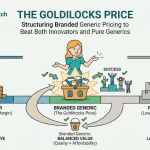
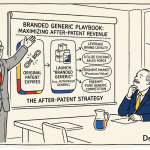
A branded generic is not a marketing artifice. It is a commercial solution to a genuine market problem. In markets where pharmacy dispensing standards are uneven, where cold chain logistics can be unreliable, and where physician and patient confidence in unbranded generics is structurally low, a trademarked name associated with a company’s reputation is a meaningful quality signal. The pricing premium a branded generic commands over its unbranded equivalent, typically 20% to 50%, represents the monetized value of that trust.
India’s branded generic market demonstrates this dynamic at scale. Despite the existence of the Pradhan Mantri Bharatiya Janaushadhi Pariyojana (PMBJP) network, which dispenses unbranded generics through government-run pharmacies at prices 50% to 90% below branded generics, the branded generic segment in India has continued to grow. Physicians trained in private medical colleges prescribe branded generics by name. Patients request them specifically. The government has repeatedly attempted to mandate generic prescribing by INN, most recently in 2023 guidelines from the National Medical Commission, but enforcement has been limited and physician behavior has been resistant to change.
How Branded Generic Pricing Strategy Differs by Market: India vs. Brazil vs. Southeast Asia
Brazil’s branded generic framework is distinctly different from India’s. ANVISA introduced the “similar medicine” category and later the “generic” category with mandatory bioequivalence demonstration, creating a three-tier structure: innovator reference products, ANVISA-certified generics (medicamente generico), and similar medicines (similares) which carry trade names but do not require the same bioequivalence rigor as true generics. The similar medicine category is the Brazilian equivalent of the branded generic and has historically commanded a price premium over ANVISA-certified generics. However, regulatory pressure has increasingly pushed the similares market toward full bioequivalence demonstration, gradually closing the gap between the two categories.
In Southeast Asian markets, the branded generic model varies significantly by country. In Vietnam and Indonesia, branded generics from Indian and local manufacturers dominate private market sales. Thailand’s National Health Security Office uses a reference pricing system that compresses branded generic premiums in the public procurement channel, but the private channel remains more commercially favorable for higher-priced branded formulations.
Branded generic vs. unbranded generic vs. originator: commercial and strategic comparison
Product Category
IP Status
Typical Price vs. Originator
Primary Revenue Driver
Key Markets
Margin Profile
Originator Brand
Patent-protected or exclusivity-covered
100% (reference)
Clinical differentiation, patent monopoly
U.S., EU, Japan
Very high; declining post-LOE
Branded Generic
Off-patent; trademarked product name
25–60% of originator
Brand trust, detailing, channel relationships
India, Brazil, SE Asia, Turkey
Moderate; defensible against unbranded
Unbranded Generic (INN)
Off-patent; no trade name
5–20% of originator
Price; public procurement tenders
Public sector globally; developed market retail
Low; highly volume-dependent
Complex Generic
Off-patent (core); may have secondary IP
40–75% of originator
Technical differentiation; limited competition
U.S., EU, and selected emerging markets
High (initially); more durable than simple generics
Biosimilar
Reference biologic off-patent; own regulatory exclusivity
EU (most penetrated); U.S. (emerging); EM (first access)
Moderate-High; depends on interchangeability designation
Why GLP-1 Patent Litigation Is the Defining IP Battle for the Next Decade
No therapeutic class captures the complexity, commercial stakes, and IP warfare dynamics of complex generic development better than the GLP-1 receptor agonist space. Novo Nordisk’s semaglutide franchise, which spans diabetes (Ozempic), obesity (Wegovy), and cardiovascular risk reduction (SELECT trial label extension), generated roughly $14 billion in revenue in 2023 and is projected to approach $30 billion annually by 2026. Eli Lilly’s tirzepatide (Mounjaro/Zepbound), a dual GLP-1/GIP receptor agonist, has captured meaningful market share and is itself building a substantial IP thicket covering its peptide sequence, formulation concentrations, autoinjector device, and weekly dosing regimen.
Semaglutide’s core peptide composition patent expires around 2026 in some jurisdictions, but Novo Nordisk has filed numerous secondary patents covering the specific fatty acid-linker modification that gives the molecule its albumin binding and extended half-life (the structural basis for once-weekly dosing). These secondary patents, which cover the chemical modification rather than the parent peptide scaffold, are the real defensive wall. A generic manufacturer producing semaglutide would need to either design around this modification or challenge these patents through Paragraph IV or equivalent proceedings.
How Manufacturing Complexity Protects GLP-1 Drugs from Rapid Generic Entry
Semaglutide is a 31-amino-acid GLP-1 analogue with a C18 fatty acid chain attached via a glutamic acid spacer and a short PEG linker to lysine at position 26. This chemical architecture is not a simple peptide synthesis challenge. The site-specific lipidation step requires specialized chemistry that produces the correct regioisomer in high yield and purity. Process-related impurities from incomplete lipidation, incorrect regiochemistry, or fatty acid chain variants must be characterized and controlled at the parts-per-million level, because these impurities can be immunogenic. The autoinjector device that delivers the subcutaneous dose adds a further layer: the FlexTouch pen used for Ozempic requires device validation, human factors testing, and dose accuracy equivalence demonstration.
Generic manufacturers in India and China have announced semaglutide development programs, with Biocon, Lupin, and several Chinese API manufacturers reporting progress. But the gap between synthesizing a semaglutide molecule and producing a commercially approvable, bioequivalent, device-equivalent product is measured in years and hundreds of millions of dollars in development and manufacturing investment.
How Biosimilar Launch Timing Works in Practice and What Delays Mean for Revenue Forecasting
A biosimilar’s path from IND to commercial launch is not a linear regulatory event. It involves a complex interplay of biologics license application (BLA) review, a mandatory patent dance under the BPCIA (the 12-step information exchange process governing biologic patent litigation), potential litigation with a 30-month stay equivalent, interchangeability designation pursuit (which requires additional switching study data), and commercial negotiation with pharmacy benefit managers and hospital formularies.
In the U.S., the most commercially important regulatory milestone for a biosimilar is not FDA approval itself, but the interchangeability designation. An interchangeable biosimilar can be substituted at the pharmacy level without prescriber intervention, the same automatic substitution that applies to small-molecule generics. Without interchangeability, adoption depends on physician-level prescribing changes, which are slower and less predictable. The FDA granted its first interchangeable biosimilar designation to Semglee (insulin glargine-yfgn, Viatris/Biocon) in 2021. Since then, the number of interchangeable biosimilar designations has grown but remains limited relative to the total number of approved biosimilars.
What the Humira Biosimilar Market Reveals About U.S. Biosimilar Penetration Economics
Humira (adalimumab) biosimilars entered the U.S. market in January 2023 following multi-year settlement agreements with AbbVie that included royalty obligations and launch date restrictions. By mid-2024, the U.S. biosimilar adalimumab market had more than ten approved products from Amgen (Amjevita), AbbVie’s Hadlima (Samsung Bioepis), Sandoz (Hyrimoz), Pfizer (Abrilada), Organon (Hadlima interchangeable), Coherus (Yusimry), and others. Despite this competitive density, AbbVie maintained over 80% of the adalimumab market by value well into 2024, due to rebate contracting strategies with PBMs and patient assistance programs that made the branded product effectively price-competitive with biosimilars on a net-cost basis.
This outcome contains a critical lesson for biosimilar forecasting: approved market access is not the same as commercial market penetration. The payer contracting dynamics in the U.S. can sustain branded product market share well beyond what the number of approved competitors would suggest. In emerging markets, where PBM-style intermediaries do not exist and government procurement mechanisms are more directly price-driven, biosimilar penetration rates are structurally faster once regulatory approval is secured.
What Investors Are Watching: Key Financial Metrics for Complex Generic Portfolio Companies
Portfolio managers evaluating generic pharmaceutical companies with complex product exposure need a different analytical framework than the one appropriate for branded pharma. Revenue visibility is different. The first-to-file pipeline, not current product sales, is the primary driver of medium-term earnings upside. IP litigation outcomes can swing a stock 20% to 40% on a single court decision. Regulatory complete response letters for complex ANDA submissions can delay a product by two to four years, destroying the financial model for that program entirely.
Several metrics are worth tracking with particular attention for complex generic-focused companies. First, the ratio of complex to simple generic products in the ANDA pipeline, which signals the company’s long-term margin durability. Second, the number of first-to-file Paragraph IV ANDA positions the company holds across the pipeline, which quantifies the 180-day exclusivity opportunity. Third, the R&D spend as a percentage of revenue, which is structurally higher for complex generic developers than for commodity generic manufacturers. Fourth, the percentage of revenue from products with fewer than five generic competitors, which is the most direct proxy for price erosion risk. Companies like Teva, Hikma, Sun Pharma, Amneal, and Viatris disclose some version of these metrics in investor communications, but coverage of the full pipeline requires direct patent database surveillance.
How Paragraph IV Litigation Outcomes Affect Complex Generic Stock Valuation
A Paragraph IV victory, where a generic manufacturer successfully invalidates or gets around a key Orange Book-listed patent, can unlock hundreds of millions of dollars in 180-day exclusivity revenue from a single product. Conversely, a failed Paragraph IV challenge can result in a judgment of infringement, an injunction against launch, and years of additional delay. The financial model for a complex generic product with Paragraph IV exposure is therefore not a DCF with a discount rate applied to expected revenue. It is a probability-weighted scenario analysis that requires detailed patent claim mapping, an assessment of prosecution history estoppel, and a review of prior art that most standard sell-side financial models do not attempt.
Companies with large Paragraph IV first-to-file pipelines, including Teva (which has historically maintained the largest ANDA pipeline by count of any generic company globally) and Hikma (which has significant U.S. injectables exposure including complex formulations), have stock prices that embed substantial option value from pending Paragraph IV outcomes. Monitoring PACER dockets, Orange Book patent listings, and FDA ANDA approval announcements is the practical intelligence workflow for tracking this option value in real time.
The Role of AI and PBPK Modeling in Accelerating Complex Generic Development Timelines
Physiologically based pharmacokinetic modeling is not new to drug development, but its application to generic bioequivalence assessment is expanding rapidly. The FDA has accepted PBPK simulation results as partial support for bioequivalence waivers on a case-by-case basis, and several product-specific guidances now explicitly endorse PBPK approaches for specific complex formulation types. The practical implication is that a company with validated PBPK models for a specific complex formulation class can potentially reduce the in vivo study burden for a generic candidate, compressing development timelines by six to 18 months in some cases.
Machine learning applications in complex generic development are concentrated in three areas. Formulation optimization, where ML models trained on historical formulation-performance data predict the probability of achieving Q1/Q2 (qualitative and quantitative composition matching) or target dissolution profiles, can reduce the number of experimental iterations required during formulation development. Bioequivalence prediction, where population PK models trained on reference product PK data predict the sample size requirements and study design features for a pivotal bioequivalence study, reduces the cost and risk of underpowered studies. And patent analytics, where NLP tools applied to patent claim language identify design-around opportunities or freedom-to-operate risks, compress the IP due diligence process that is central to any complex generic investment decision.
Key Patent Expiry Dates and Revenue Exposure Through 2030
High-priority patent cliff events for complex generic entrants: 2025–2030
Site-specific lipidation; device equivalence; secondary IP thicket
2026–2027
Ibrance (palbociclib)
Pfizer
CDK4/6 inhibitor; capsule formulation
~$4.5B
Polymorph and salt form patents; formulation IP
2027
Imbruvica (ibrutinib)
AbbVie / J&J
BTK inhibitor; capsule
~$3.5B
Crystal form and formulation patents; PK variability
2028
Keytruda (pembrolizumab)
Merck & Co.
PD-1 biologic; IV/SC formulations
~$25B+
Full biologic biosimilar; BPCIA patent dance; immunogenicity
2028
Opdivo (nivolumab)
Bristol Myers Squibb
PD-1 biologic; IV formulation
~$9B
Biologic; complement to Keytruda loss of exclusivity
2030+
Dupixent (dupilumab)
Regeneron / Sanofi
IL-4Rα biologic; autoinjector
~$11B and growing
Extensive secondary IP thicket; high manufacturing specificity
Most Important Ongoing Patent Litigation in Complex Generics
Patent litigation around complex drug products differs from small-molecule Paragraph IV battles in tempo, cost, and technical depth. Biologic patent cases under the BPCIA are inherently more prolonged than Hatch-Waxman cases, partly because the mandatory patent dance process adds a structured pre-litigation information exchange phase, and partly because the technical complexity of biologic patent claims requires more extensive expert testimony and claim construction proceedings.
The semaglutide patent landscape is generating multiple overlapping litigation tracks simultaneously. Novo Nordisk has filed patent infringement actions in the U.S. against several compounding pharmacy operators who produce semaglutide compounds under the FDA drug shortage exemption, a policy dispute that intersects patent enforcement, FDA regulatory authority, and Congressional scrutiny. At the same time, Novo Nordisk is defending its core composition and formulation patents against generic challenges in the EU, where several generic manufacturers have filed revocation proceedings in the European Patent Office. The outcome of EPO opposition proceedings against Novo Nordisk’s key semaglutide patents will have direct implications for the timeline of generic semaglutide entry in EU markets and by extension the regulatory sequencing strategies of any generic manufacturer targeting European approval.
The Entresto (sacubitril/valsartan) litigation is a relevant recent precedent for complex small-molecule combination products. Novartis’s core U.S. patents faced multiple Paragraph IV challenges. The district court upheld key patents in 2021, but the Court of Appeals for the Federal Circuit’s review of those claims added further uncertainty. Generic manufacturers including MSN Pharmaceuticals and Crystal Pharma were among the filers, with launch timing contingent on appeal outcomes. This pattern, trial court patent validation followed by appellate review, is standard for high-value Paragraph IV battles and is a reminder that patent litigation risk survives district court outcomes.
Which Companies Could Benefit Most from Complex Generic Patent Cliffs Through 2030
The companies best positioned to capture complex generic value from approaching patent cliffs share several characteristics: they have existing regulatory relationships with FDA, EMA, and at least one major emerging market regulator; they have demonstrated manufacturing capability in at least one complex formulation class (biologics, injectables, inhalers, or complex topicals); and they have an established Paragraph IV litigation track record or the legal resources to prosecute one.
Teva Pharmaceutical Industries has the largest global generic ANDA pipeline by count and significant complex generic exposure in injectables, respiratory, and specialty products. Its ongoing corporate restructuring and debt management constrain R&D investment capacity, but the pipeline depth is a real asset. Hikma Pharmaceuticals has a concentrated position in complex injectables in the U.S. market, with manufacturing infrastructure that gives it a cost and regulatory advantage in sterile fill-finish. Sun Pharmaceutical Industries is the most globally diversified of the major Indian generic companies, with complex generic approvals in the U.S. and EU across respiratory, dermatology, ophthalmology, and oncology. Biocon Biologics, the biologics subsidiary of Biocon Limited, has commercial biosimilar products approved in the EU and U.S. including trastuzumab, bevacizumab, and insulin glargine, with a pipeline targeting further oncology and immunology biosimilar opportunities. Amneal Pharmaceuticals has assembled a significant complex product pipeline and has won 180-day exclusivity opportunities in several categories. Sandoz, spun off from Novartis in 2023, is now an independent generics and biosimilar company with one of the deepest biosimilar pipelines globally and significant manufacturing scale.
Common Investor Questions on Complex Generic Portfolio Valuation
How does the 180-day exclusivity period apply to complex generics, and how should it factor into a DCF model?
The 180-day first-to-file exclusivity under Hatch-Waxman applies to standard ANDA filers who certify Paragraph IV against at least one Orange Book-listed patent. It does not apply to biosimilars (governed by the BPCIA with a 12-year reference product exclusivity and separate exclusivity provisions) or to 505(b)(2) applications, which may generate their own clinical investigation exclusivity but do not carry the 180-day ANDA exclusivity.
For a DCF model, the 180-day exclusivity period should be modeled as a high-probability, time-limited revenue window during which the filer can capture 60% to 80% of the generic market at a price 30% to 40% below brand. The discount rate applied to this period should reflect litigation risk (probability of Paragraph IV success) and the risk that the FDA issues a Complete Response Letter before the exclusivity window opens. A risk-adjusted net present value model that explicitly assigns probability weights to these outcomes is more appropriate than a straight-line DCF. What does ‘loss of exclusivity’ actually mean financially for an innovator drug, and how fast does revenue decline?
Loss of exclusivity (LOE) is the date on which a branded drug loses its last meaningful patent or regulatory exclusivity protection and generic or biosimilar competition can legally enter the market. The revenue decline curve after LOE varies by product type. For small-molecule oral drugs with multiple generic entrants, revenue can decline 80% to 90% within 12 to 18 months. For complex generics, the erosion is slower because fewer competitors enter and each entry takes longer to achieve. For biologics and biosimilars, the erosion is market-specific: European biosimilar markets have seen 40% to 60% market share capture by biosimilars within two years of launch; the U.S. market has historically been slower due to PBM rebate dynamics, though this is changing with the Inflation Reduction Act’s drug pricing provisions.
Investors should distinguish between the date of first generic entry and the date of meaningful market share erosion. For complex generics, these can be 12 to 36 months apart. Why is bioequivalence harder to demonstrate for complex generics, and what does that mean for development timelines?
Standard bioequivalence assessment measures the rate and extent of drug absorption in plasma, using Cmax and AUC as primary endpoints. For complex generics where the drug acts locally (topical corticosteroids, inhaled drugs, ophthalmological products, otic products), plasma levels are not a reliable proxy for local tissue concentrations or therapeutic effect. This means the standard PK bioequivalence study is either insufficient or inapplicable, requiring development and validation of alternative methodologies: IVRT/IVPT for topicals, cascade impactor testing plus PK/PD studies for inhalers, direct tissue measurement for some ophthalmic products.
The practical consequence is that a complex generic program may require two to three times the development investment of a comparable simple generic program, and the timeline from IND-equivalent filing to ANDA submission may be four to seven years rather than one to three. This extended development horizon makes competitive intelligence on patent expiry dates and competitor pipeline stages critically important: a company needs to initiate development five to seven years before a patent expires to have a realistic chance of commercial launch at or near LOE. What is the BPCIA patent dance and how does it differ from Hatch-Waxman Paragraph IV litigation for biosimilar investors?
The Biologics Price Competition and Innovation Act (BPCIA) of 2010 created a biosimilar approval pathway through the FDA’s 351(k) BLA route, analogous to the small-molecule Hatch-Waxman ANDA. However, the patent litigation mechanism is fundamentally different. Under the BPCIA, the biosimilar applicant and the reference product sponsor engage in a mandatory information exchange process, the so-called patent dance, in which the applicant provides its manufacturing process and analytical data to the innovator, and the innovator identifies patents it believes would be infringed. This process can be structured to generate a litigation track that proceeds in two phases: an immediate patent phase covering the most critical patents, and a later patent phase for additional patents.
For investors, the BPCIA litigation track is less predictable in timing than Hatch-Waxman, and the 30-month automatic stay does not apply in the same way. Injunctions must be sought separately. Biosimilar companies can elect to bypass portions of the dance at their own risk, as Sandoz did with filgrastim-sndz (Zarxio) in the landmark 2017 Supreme Court case Sandoz v. Amgen. The strategic choice of how to engage with or bypass the patent dance is a material decision for biosimilar commercialization timelines. How should a generic pharmaceutical company decide which emerging market to enter first with a new complex generic?
The decision should be driven by a regulatory risk score that integrates four factors: the clarity and precedent of the target market’s regulatory pathway for this specific product class, the existence of established relationships with qualified local study sites and regulatory consultants, the commercial opportunity size (adjusting for out-of-pocket dynamics, reimbursement coverage, and branded generic versus tender pricing dynamics), and the timeline to first revenue relative to the cost of the regulatory submission.
For most complex generic product classes, the EU hybrid pathway or FDA 505(b)(2) pathway should be the first filing because the data generated will have the broadest downstream utility for subsequent emerging market submissions. Brazil under ANVISA and India under CDSCO are the highest-priority secondary markets for most product categories, based on market size and regulatory data package transferability. China requires separate local data regardless and should generally be planned as a parallel track rather than a sequential dependency. What does a patent thicket mean for a complex generic’s probability-adjusted NPV?
A patent thicket does not simply delay generic entry; it changes the probability distribution of launch timing and the cost structure of the development program. For NPV modeling purposes, a thicket around a complex generic target should be reflected in three ways: a higher litigation cost budget (patent thicket cases require more extensive claim mapping and expert witness preparation), a wider confidence interval on the launch date (multiple patent families mean multiple potential litigation outcomes that compound uncertainty), and a potentially higher probability of settlement versus judgment (innovators with dense thickets often prefer royalty-bearing settlement agreements to the risk of full patent invalidation).
Settlement agreements, like those AbbVie executed with adalimumab biosimilar developers, can actually create a contractually defined revenue-sharing structure that may be preferable to the binary outcome of full litigation. For a complex generic investor, a settlement announcement is therefore not necessarily bad news; it is information that replaces probability-weighted launch date uncertainty with a contractually certain (if royalty-burdened) revenue schedule.
Investment Strategy: Where Complex Generic Value Is Being Created and Destroyed
The structural opportunity in complex generics is real, but it is unevenly distributed across companies, product classes, and geographies. The highest-probability value-creation scenarios share a pattern: a technically capable manufacturer with a first-to-file position in a complex generic product where fewer than five other companies have the manufacturing capability to compete, targeting a reference drug generating over $1 billion in annual sales with less than three years to loss of exclusivity on its key composition patent.
The value-destruction scenarios are equally clear. A company without demonstrated manufacturing capability in the relevant formulation class, pursuing a complex generic target with six or more declared competitors, in a product category where FDA guidance on bioequivalence methodology remains genuinely unresolved, is taking on development risk that the market is unlikely to price correctly until a Complete Response Letter arrives. The asymmetry between these scenarios is large.
For institutional investors, the practical intelligence workflow involves monitoring Orange Book Paragraph IV certifications, FDA ANDA approval action history for the product class, PACER litigation dockets, and patent assignment records that reveal when competitors have begun freedom-to-operate analysis or have filed manufacturing-related provisional applications. For pharma strategy teams, the same data informs portfolio prioritization, in-licensing decisions, and partnership strategies with contract development and manufacturing organizations (CDMOs) that can provide specialized complex formulation capabilities without the full capital expenditure of in-house facility development.
Key Takeaways
Pharmerging markets are growing at 13% CAGR while Western markets slow. The demographic and epidemiological drivers are structural, not cyclical, and they favor generic over branded demand in every major therapeutic category.
The $200 billion patent cliff through 2030 will disproportionately expose complex drugs: biologics, inhaled combinations, long-acting injectables, and peptide-based therapies. These are the most valuable and most technically demanding complex generic targets.
FDA’s complex generic regulatory framework, built around GDUFA commitments and the CRCG, continues to evolve. Companies with established FDA engagement mechanisms, validated bioequivalence methodologies, and documented manufacturing compliance history hold a genuine first-mover advantage that compounds across programs.
Patent thickets around complex drugs require an offensive IP strategy. Freedom-to-operate analysis must extend beyond Orange Book-listed drug patents to device patents, manufacturing process patents, and secondary formulation patents. Settlement negotiations are often preferable to Paragraph IV litigation for thicket-protected biologics.
Regulatory sequencing across FDA or EMA first, then ANVISA and CDSCO, then NMPA, is the highest-ROI filing strategy for complex generics targeting global market access. The EU hybrid or 505(b)(2) data package has the broadest downstream leverage.
The branded generic premium in emerging markets is not marketing; it is the monetized value of trust in quality-uncertain environments. The companies that can close this trust gap while holding a price point above unbranded generics capture the most value per unit in high-growth markets.
Competitive intelligence on patent status, ANDA pipelines, competitor manufacturing investments, and regulatory filing timelines is a prerequisite for complex generic portfolio selection. The decision to pursue a candidate requires real-time data, not static market research reports.
GLP-1 patent litigation, particularly around semaglutide’s secondary patents covering its fatty acid-linker modification and autoinjector device, will be the defining IP battle for complex generic entrants through the end of the decade. Manufacturing complexity provides as much protection as the patent thicket itself.
How the FDA Could Affect Complex Generic Timelines in 2026 and Beyond
Three FDA policy developments warrant close attention from complex generic sponsors and investors. First, the FDA’s ongoing review of its bioequivalence guidance for complex drug-device combination products, particularly autoinjectors and prefilled syringes, is likely to result in updated product-specific guidances that either clarify or add requirements for device equivalence demonstration. New guidance documents in this category can affect the development cost and timeline for in-flight programs that were designed under prior guidance assumptions.
Second, the FDA’s interpretation of interchangeability designation for complex biologics and biosimilars remains a key commercial variable. Interchangeability requires demonstration that switching between the biosimilar and the reference product does not produce greater safety or efficacy risks than continuing on the reference product alone. This switching study requirement adds cost and time but unlocks pharmacy-level substitution, which is the primary driver of rapid market share conversion in the U.S. biosimilar market. Any policy shift that simplifies the interchangeability pathway would accelerate biosimilar penetration and compress innovator revenue durability.
Third, the FDA’s regulatory response to the compounding pharmacy semaglutide situation in 2024-2025, where thousands of patients obtained compounded semaglutide during periods of drug shortage, is likely to generate new policy guidance on the boundaries of 503A and 503B compounding exemptions for complex peptide drugs. That guidance will affect the commercial landscape for any generic or biosimilar semaglutide program by defining the competitive threat from the compounding channel in the pre-approval period.