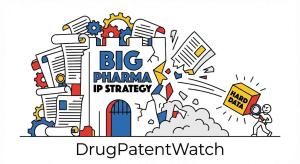
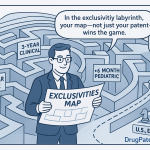
Drug companies do not simply invent medicines. They engineer legal structures designed to convert twenty years of patent protection into forty years of market exclusivity. The tools are real: continuation patents, formulation patents, dosage-form patents, method-of-use claims, and pediatric extensions stacked on top of one another like sandbags on a levee. The result is that a molecule discovered in 1990 can generate branded revenue well into the 2030s.
The patent wall is not a metaphor. It is a portfolio strategy, and like any strategy, it has weaknesses. Systematic data analysis can find those weaknesses before your competitors do, before generic manufacturers do, and before the market prices them in. This article explains exactly how to read the architecture of pharmaceutical patent protection, where it fractures, and what to do with that information.
Whether you work in business development, investment research, health policy, generic drug development, or pharmaceutical law, the framework here is the same: get the data first, build the picture second, act on the gaps third.
The Architecture of Drug Patent Protection
How the System Was Designed
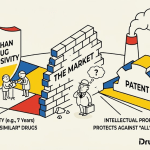
The 1984 Drug Price Competition and Patent Term Restoration Act, better known as the Hatch-Waxman Act, attempted something politically difficult: it wanted to encourage generic drug competition while also rewarding branded innovation. To achieve that, it created a series of interlocking incentives and protections that have since been exploited far beyond their original intent.
On the branded side, the law permitted patent term restoration of up to five years to compensate for time lost during FDA clinical review. On the generic side, it created the Abbreviated New Drug Application (ANDA) pathway, which lets a generic manufacturer rely on the branded drug’s clinical data. A generic applicant simply certifies that its product is bioequivalent, that the relevant patents are expired or invalid, or that its product does not infringe.
That last certification, the Paragraph IV certification, is where the commercial action concentrates. When a generic company files a Paragraph IV, it declares war on the branded patent portfolio. The branded company has 45 days to sue for infringement. If it does, an automatic 30-month stay prevents FDA from approving the generic. This stay is a powerful tool regardless of the merits of the underlying patent claims.
The first generic to file a Paragraph IV certification against each listed patent gets 180 days of marketing exclusivity upon successful entry. That incentive, meant to attract challengers, has created its own distortions in the form of pay-for-delay settlements, where branded companies pay generic challengers to sit out the market.
Layered on top of Hatch-Waxman is the Biologics Price Competition and Innovation Act (BPCIA) of 2010, which created a parallel exclusivity system for biological medicines. Biologics get 12 years of reference product exclusivity from approval, during which no biosimilar can rely on the branded product’s data. On top of that, they have their own patent dance provisions, their own litigation pathways, and their own commercial complexity.
Understanding these two systems is table stakes. The professionals who actually gain competitive advantage are the ones who map how branded companies exploit them in practice.
How Patent Clusters Work
A single branded drug rarely rests on a single patent. AbbVie’s adalimumab (Humira) at its peak carried over 130 U.S. patents covering the molecule, manufacturing processes, formulations, dosages, delivery devices, and methods of treating specific conditions [1]. That cluster did not emerge by accident. It was the output of a deliberate patent prosecution strategy designed to create a thicket that generic and biosimilar manufacturers would find prohibitively expensive to navigate.
Patent clusters typically contain several distinct layers. The first layer is the composition-of-matter patent covering the active molecule itself. This is usually the most valuable and the hardest to challenge because it is both the broadest claim and the one with the most prosecution history. When it expires, the drug enters its vulnerability window.
The second layer covers formulations: the tablet, the capsule, the suspension, the extended-release bead. These patents frequently carry expiry dates five to fifteen years after the composition patent. They matter because a generic must typically match the reference listed drug’s formulation characteristics, or at minimum demonstrate bioequivalence against the branded product’s specific form.
The third layer covers the delivery system: the autoinjector, the inhaler, the transdermal patch. Device patents are notoriously difficult to design around because they are often tightly integrated with the drug-device combination product. An insulin pen patent might not cover the insulin molecule, but a generic manufacturer who wants to sell a pen-format product must either license the device IP or design a competing device through its own R&D process.
The fourth layer covers methods of use: treating a specific indication, dosing at a particular interval, combining with a co-medication. These patents are frequently the weakest from a validity perspective, because method claims often rely on clinical knowledge that was obvious to practitioners before the patent was filed. They are, however, expensive to challenge.
A thorough patent cluster analysis requires mapping all four layers for any drug you are evaluating. Services like DrugPatentWatch compile this kind of patent landscape from FDA’s Orange Book and Purple Book listings, USPTO filings, and court records into a searchable format that lets analysts build multi-layer patent maps without manually reading every prosecution file.
The 20-Year Illusion
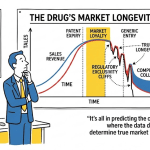
Patents nominally last 20 years from their filing date. That number is almost meaningless in pharmaceutical analysis. The relevant question is not when a patent expires but when generic or biosimilar competition can realistically enter the market.
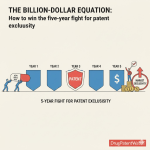
Those are different questions for several reasons. First, FDA regulatory exclusivities run independently of patents. A five-year new chemical entity exclusivity prevents FDA from accepting ANDAs entirely for the first four years after approval. A three-year clinical investigation exclusivity can attach to a new indication, new dosage form, or new formulation. Pediatric exclusivity adds six months to any otherwise expiring patent or exclusivity period, and branded companies obtain it by completing FDA-requested pediatric studies on their drug, a regulatory task that often costs substantially less than the exclusivity extension is worth commercially.
Second, patent term extension under Hatch-Waxman adds time to the composition-of-matter patent to compensate for FDA review time, up to five additional years. If a drug spent six years in clinical trials and FDA review, its lead patent might have been extended well past what its nominal filing date would suggest.
Third, the final patent in a cluster may not expire until long after the first. Bristol-Myers Squibb’s apixaban (Eliquis) had its base composition patent expire in 2022, but formulation and method patents pushed potential generic entry back to late 2026 at the earliest in the U.S. market. Analysts who tracked only the lead patent missed years of additional exclusivity in their competitive models.
Evergreening: The Mechanics
“Evergreening” is the practice of obtaining new patents on incremental modifications to a drug to extend its commercial exclusivity. The term gets used loosely, but it describes a real and documented strategy with several specific variants.
The most common form is the development and patenting of a new formulation. A once-daily version of a twice-daily drug is a genuine patient benefit, but it also resets the formulation patent clock. The branded company then markets the new formulation aggressively, moves patients onto it before the original’s generic window opens, and captures the loyalty of prescribers and pharmacy benefit managers on the extended-release version. When the original goes generic, most of the branded volume has already migrated to the reformulation.
A second variant is the active metabolite or enantiomer strategy. A drug like citalopram (Celexa) is a racemic mixture. The S-enantiomer, escitalopram, is more pharmacologically active. Forest Laboratories developed and patented escitalopram as Lexapro just as citalopram faced generic entry. Prescribers were successfully encouraged to switch patients, extending the effective exclusivity period even though the core chemistry was already in the public domain [2].
A third variant is the authorized generic. When a branded company faces inevitable patent expiration, it can license its own product to a generic subsidiary or to a friendly generic manufacturer, who launches a technically-generic version at a discounted price but higher than a competitive market would produce. This authorized generic can displace or delay independent generic entry by competing with the first-filer generic for pharmacy shelf space during the 180-day exclusivity window.
Research by the FTC has found that when an authorized generic competes during the 180-day exclusivity period, the first-filer’s revenue is typically reduced by 40 to 52 percent relative to what it would have earned with exclusive generic status [3]. That reduction weakens the financial incentive for other generic manufacturers to challenge patents in the first place.
The Data That Exposes the System
What Orange Book Listings Actually Contain
FDA’s Orange Book, formally the “Approved Drug Products with Therapeutic Equivalence Evaluations,” is the primary public record of drug approvals and their associated patents. Every branded drug with approved marketing authorization has its patents listed there by the brand holder. For each listed patent, the Orange Book records the patent number, expiration date, and a code indicating the type of claim the patent covers.
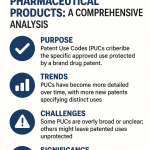
Those claim codes matter. A “U” code indicates a use patent. A “D” code indicates a drug product patent covering formulation. An “M” code indicates a method patent. No code designates a drug substance patent covering the active molecule. Understanding what kind of patent you are reading determines its commercial relevance.
The Orange Book also lists non-patent exclusivities separately: new chemical entity (NCE), new clinical investigation (NCI), and orphan drug exclusivities. These run concurrently with or independently from patent protection and can be the binding constraint on generic entry even when relevant patents have been challenged or expire earlier than the exclusivity end date.
Generic applicants who file ANDAs certify their position against each Orange Book patent. A Paragraph I certification says the patent has not been filed. A Paragraph II says the patent has expired. A Paragraph III says the applicant will wait for the patent to expire. A Paragraph IV says the patent is invalid or will not be infringed.
The Paragraph IV certification record is a gold mine for competitive intelligence. It tells you exactly which drugs are under active challenge, which patent claims generic manufacturers consider weak enough to attack, and which companies are positioning for early generic entry. A new Paragraph IV filing against a blockbuster drug is market-moving information for anyone with a financial stake in that drug.
What the Purple Book Contains
The Biologics Purple Book is the equivalent reference list for biological products. It was substantially improved by the BPCIA amendments, which now require FDA to publish reference product exclusivity end dates, biosimilar application status, and interchangeability designations.
The Purple Book matters because biologics account for an increasing share of total drug spending. By 2022, the top 10 selling drugs in the U.S. were predominantly biologics, and their combined sales exceeded $100 billion annually [4]. The patent and exclusivity protections on those products directly determine when biosimilar competition can enter.
Unlike small molecules, where a generic is chemically identical to the reference product, a biosimilar is “highly similar” but not identical. That distinction drives litigation risk: biosimilar manufacturers must navigate the patent dance under BPCIA, which involves a structured exchange of patent information and litigation that can occur in two separate waves. The complexity is designed to give the reference product holder multiple bites at the apple.
How DrugPatentWatch Assembles the Picture
DrugPatentWatch aggregates data from the Orange Book, Purple Book, USPTO, ANDA filings, patent litigation records, and licensing transaction databases to give users an integrated view of pharmaceutical IP across the product lifecycle. Where the raw government databases require analysts to manually cross-reference multiple sources, DrugPatentWatch presents a consolidated landscape: which patents cover a product, when each expires, which have been challenged, the status of pending litigation, and projected generic entry dates.
The platform is particularly useful for two analytical tasks that require synthesizing data across multiple sources. The first is patent cliff forecasting, estimating when a branded drug will lose exclusivity and modeling the revenue impact. The second is competitive benchmarking, mapping a competitor’s patent portfolio relative to its product pipeline to identify vulnerability windows or opportunity gaps.
For investment analysts, the patent expiry data enables revenue-at-risk calculations with granularity that is impossible to replicate from analyst reports or company filings alone. For generic manufacturers, the litigation history tells you which claim types have held up under challenge and which have not, informing decisions about where to file Paragraph IVs.
Reading the Data Like a Trained Analyst
Raw patent data requires interpretation. The face of an Orange Book listing tells you what patents exist and when they expire. It does not tell you which patents are actually blocking entry, which are paper defenses, or which are vulnerable to challenge.
Start by identifying the composition-of-matter patent if one exists. If it has expired, you are dealing with a product protected primarily by formulation, device, method, or regulatory exclusivity. That structure is typically easier to work around for a generic manufacturer, though not costless.
Next, identify the exclusivity end dates. If a new chemical entity exclusivity runs past the last patent expiration, the exclusivity is the binding constraint and the patents are largely irrelevant to entry timing. This matters for companies modeling generic entry timing because the exclusivity period creates a hard wall that patent challenges cannot overcome.
Then look at the Paragraph IV history. Has anyone challenged the listed patents? Who challenged them, when, and what happened? A patent that has survived multiple challenges is demonstrably different from one that has never been tested. A patent that was invalidated in litigation tells you something about the claim quality of similar patents in the portfolio.
Finally, check for pending continuation applications. Orange Book patents frequently have sibling applications still under prosecution at the USPTO. If a continuation application issues after you have completed your analysis, it will be listed in the Orange Book and could extend exclusivity further than your model projected. Monitoring application publication databases for continuation filings from branded drug companies is a critical step in comprehensive patent surveillance.
“Patent thickets around blockbuster drugs added an average of 6.5 years of exclusivity beyond the original composition-of-matter patent expiration in a 2021 study of 18 top-selling drugs.” — UCSF-Harvard analysis published in JAMA Internal Medicine [5]
Evergreening: The Numbers Behind the Tactic
The Scale of the Problem
The academic evidence on evergreening is extensive and converging on a consistent finding: brand manufacturers systematically file new patents to extend exclusivity beyond the period intended by the original framework.
A 2018 analysis by researchers at Harvard and Boston University examined 149 drugs that entered the market between 2005 and 2015 and found that for each drug, the number of associated patents increased from a mean of 3.5 at the time of market entry to 12.5 by the time of the study [6]. The new patents were filed at an average of 7.4 years after the original approval, clustering in the middle of the product’s commercial life when its revenue profile was clear and the investment in new IP was directly justified by the cash flows being protected.
A 2021 study in JAMA Internal Medicine examined 12 drugs scheduled for generic entry between 2019 and 2025 and calculated that evergreening had extended their exclusivity by an average of 38 years beyond their original composition-of-matter patent expiration [7]. The drugs studied included household names: imatinib (Gleevec), adalimumab (Humira), and pregabalin (Lyrica).
The cost to payers is quantifiable. A 2021 RAND Corporation analysis estimated that if biosimilar and generic competition had been able to enter the market immediately upon primary patent expiration for the top 10 best-selling drugs, U.S. drug spending would have fallen by $5.1 billion per year [8].
Case Study: Humira’s Patent Fortress
Adalimumab, AbbVie’s blockbuster anti-inflammatory biologic sold as Humira, is the most-studied case of pharmaceutical patent accumulation in the world. At its peak, AbbVie had obtained over 130 U.S. patents on the molecule and its associated products, with expiry dates extending from 2016 to 2034 [1].
The base composition-of-matter patent expired in 2016. Biosimilar manufacturers including Amgen, Samsung Bioepis, Sandoz, and others had biosimilar versions approved by FDA starting in 2017. None of them launched in the U.S. market until January 2023. The seven-year gap between biosimilar approval and market entry was entirely the product of AbbVie’s patent fortress and the licensing agreements it negotiated with biosimilar manufacturers to defer U.S. entry while allowing European entry.
In Europe, Humira biosimilars entered in 2018. By 2022, the European market had 10 competing adalimumab biosimilars at prices 60 to 80 percent below the reference product [9]. In the U.S. market over the same period, AbbVie raised Humira’s list price by approximately 60 percent.
The U.S.-Europe divergence on adalimumab is a stark demonstration of what patent wall maintenance costs payers. Over the seven years of delayed biosimilar entry, AbbVie’s annual U.S. Humira revenue grew from approximately $11 billion to over $21 billion. The patent portfolio that enabled that growth was not primarily the composition-of-matter patent, which had already expired. It was the 130-plus secondary patents covering formulations, concentrations, devices, methods, and manufacturing processes.
After January 2023, when biosimilar manufacturers finally launched, Humira’s U.S. market share contracted rapidly. By early 2024, biosimilars had captured approximately 25 percent of adalimumab prescriptions in the U.S. market, with prices ranging from 5 to 85 percent discounts to Humira’s list price depending on the contracting arrangement [10].
The Humira case illustrates that the patent fortress strategy succeeds commercially but has a finite lifespan. When it breaks, it breaks quickly.
Case Study: Revlimid’s Extended Run
Bristol-Myers Squibb’s lenalidomide (Revlimid), approved in 2005 for multiple myeloma and other hematological malignancies, generated approximately $9.8 billion in global sales in 2021 alone [11]. Its patent protection was supposed to expire around 2019, which would have opened the door to generic entry. Instead, Bristol-Myers Squibb successfully delayed generic entry until 2022 through a combination of patent defenses and volume-limited consent agreements with generic manufacturers.
Under the settlement agreements, Bristol-Myers Squibb agreed to allow limited generic entry starting in 2022, with volume caps that prevented generic manufacturers from capturing more than a small percentage of the total market. Full generic competition without volume restrictions was not permitted until 2026. The structure allowed BMS to maintain revenues above $8 billion annually for several years beyond what an unencumbered patent cliff would have permitted.
The Revlimid case demonstrates that the patent wall does not always mean outright exclusion. Sometimes it means managed competition: permitting enough generic entry to reduce antitrust exposure while restricting it enough to maintain pricing power. Analysts who modeled Revlimid’s patent cliff as a binary on/off event missed the nuanced competitive structure that actually emerged.
The Cost to Payers and Patients
Quantifying the total cost of evergreening to the U.S. healthcare system requires combining several datasets. The most rigorous attempt to date comes from a 2022 study published in the Annals of Internal Medicine, which found that 10 high-priced drugs subject to patent thickets cost the U.S. healthcare system approximately $35.4 billion more in 2021 than they would have if generic or biosimilar competition had entered at original composition-of-matter patent expiration [12].
For individual patients, the impact concentrates in high-cost specialty drugs where insurance coverage is limited or requires significant cost-sharing. A patient on adalimumab with a 30 percent coinsurance faces out-of-pocket costs that can exceed $6,000 per year at list price. The same patient on a biosimilar at European pricing would face a fraction of that exposure.
FDA’s own analysis found that when multiple generic manufacturers compete in a market, prices typically fall to 20 to 30 percent of the brand price within two years of generic entry [13]. The delay in that competition caused by patent wall strategies is thus directly measurable in patient cost terms.
The Orange Book as a Competitive Weapon
How Orange Book Listings Delay Generics
The Orange Book listing process has developed a significant flaw that branded manufacturers have exploited: the FDA does not independently verify whether a listed patent actually covers the approved drug in the way the listing suggests. The brand company self-certifies that its patents meet the criteria for listing, and FDA lists them without substantive review.
This creates an incentive to list patents that may not legitimately block generic entry, simply because each listed patent triggers the 30-month automatic stay when a generic manufacturer files a Paragraph IV. A branded company that lists 10 patents on a drug can in theory accumulate nearly 3 years of regulatory stay protection even if most of those patents are invalid or non-infringed.
The FTC identified this problem in its 2002 study on pharmaceutical competition and has returned to it repeatedly [14]. In response, Congress amended Hatch-Waxman in 2003 to narrow the types of patents eligible for Orange Book listing and to limit the automatic stay to one 30-month period per ANDA, regardless of subsequent patent listings. Those reforms helped but did not eliminate strategic listing.
FDA proposed new rules in 2023 to further tighten listing standards, specifically targeting device patents listed on drug-device combination products and use codes that are described so broadly they capture indications the drug has not been approved to treat [15]. The proposed rules reflect FDA’s recognition that listing practices have drifted from the statute’s intent.
FTC Data on Listing Abuse
The FTC’s 2023 study of pharmaceutical patent listings found that the number of Orange Book patent listings had grown dramatically over the preceding decade, with the top 20 drugs by sales having an average of 44 listed patents each [16]. The study found that over 40 percent of those patents had expiry dates more than 10 years after the drug’s original approval, indicating substantial evergreening in listing patterns.
For branded manufacturers of inhaler products and combination devices, device patent listings have become a particular concern. Some asthma and COPD drugs had device patents listed in the Orange Book covering the inhaler mechanism rather than the drug itself, which the FTC found had the effect of triggering automatic stays against generic applicants who had never challenged claims directly related to the drug’s efficacy.
The agency’s study also found concentration in which law firms were advising on Orange Book listing strategy, with a small number of firms responsible for the most aggressive multi-patent listing practices. That pattern suggests that listing strategy is a taught competency, not a product of individual company idiosyncrasy.
The Impact of Revised Orange Book Rules
FDA’s 2024 final rule on Orange Book listings, which took effect that year, codified requirements that listed patents must specifically cover the formulation, dosage form, or active ingredient in the approved product, and that device patents on combination products must cover the drug’s function rather than the device as a standalone product [17].
The practical effect is a narrowing of what can be listed, which reduces the potential for automatic stay accumulation and may accelerate generic entry timelines for some products currently protected primarily by device patent walls.
For generic manufacturers, the revised rules reduce litigation risk in a specific way: if a patent does not meet listing standards, a generic company can petition FDA to remove it from the Orange Book without filing a Paragraph IV certification, avoiding the 30-month stay entirely. That delisting mechanism has become an increasingly common first move in generic entry strategy.
Pay-for-Delay: The Reverse Payment Economy
How Reverse Payment Settlements Work
A reverse payment settlement, or pay-for-delay agreement, occurs when a branded pharmaceutical company pays a generic manufacturer to abandon its patent challenge and delay entry into the market. The structure is counterintuitive: the nominal patent infringer receives money from the patent holder, the reverse of how infringement typically resolves.
The economic logic is clear. If a branded company has a drug generating $4 billion in annual profits, and a successful Paragraph IV challenge would cause those profits to collapse to $1 billion within a year, the company might rationally pay $600 million to a generic challenger to stay out of the market for five years. The generic challenger, who is bearing litigation risk and has not yet earned a dollar from its challenge, may rationally accept that settlement. The two parties split the surplus created by maintaining the monopoly, and consumers pay the difference.
The FTC tracked 28 reverse payment settlements in fiscal year 2020, down from a high of 40 in fiscal year 2014 [18]. The decline reflects both the 2013 Supreme Court ruling in FTC v. Actavis and increased DOJ scrutiny, but the practice has not disappeared. It has evolved, as branded companies have shifted from cash payments to other forms of value transfer: litigation cost coverage, authorized generic rights, bundled product agreements, and co-promotion arrangements that are harder to identify as reverse payments.
FTC v. Actavis and What Changed
Before 2013, federal circuit courts were split on whether reverse payment settlements violated antitrust law. The Eleventh Circuit had ruled that such settlements were immune from antitrust challenge as long as they did not exceed the scope of the patent. Under that standard, a patent holder could pay generics to stay out for the life of the patent without antitrust liability.
The Supreme Court’s 2013 decision in FTC v. Actavis rejected that framework. The Court held that reverse payment settlements are not automatically immune from antitrust scrutiny, and that their potential for anticompetitive harm must be evaluated under the rule of reason [19]. Under rule of reason analysis, a court weighs the anticompetitive effects of the settlement against any legitimate justifications offered by the parties.
The Actavis ruling shifted the litigation calculus significantly. Branded companies could no longer pay large, unjustified cash sums to generic challengers with confidence that the settlement would survive antitrust review. Cases brought against Solvay Pharmaceuticals (the defendant in Actavis), AstraZeneca, and several other branded companies following the ruling resulted in substantial antitrust liability.
The downstream effect on competition was real. In the five years before Actavis, the FTC estimated that reverse payment settlements delayed generic entry by an average of 17 months per settlement [20]. Post-Actavis, explicit cash reverse payments have largely given way to more complex value transfers, which are harder to quantify but represent the same basic economic logic.
Identifying Non-Cash Reverse Payments
The post-Actavis evolution of reverse payment practice requires analysts to look beyond cash payments to other forms of value transfer. Several patterns have emerged from litigation and FTC scrutiny.
Co-promotion agreements attach to settlements, giving the generic manufacturer the right to co-market the branded product. The economic value of co-promotion rights is substantial for blockbuster drugs, and courts have recognized that co-promotion rights given to a generic challenger who abandons its Paragraph IV can constitute a reverse payment under Actavis.
Authorized generic licenses are a second vehicle. A branded company grants the generic challenger an authorized generic license, which effectively permits the challenger to share in branded revenues without the commercial risk of an at-risk launch. Because the authorized generic is technically a “generic” product, this arrangement may look like a generic entry event while actually serving as a mechanism to prevent true generic price competition.
Supply agreements, distribution rights, and cross-licensing of unrelated patents have all appeared in post-Actavis settlements as value transfer vehicles. Identifying them requires reading the full settlement terms against the commercial context, a task that platforms aggregating patent litigation databases make substantially easier.
Inter Partes Review: The Patent Challenger’s Weapon
What the PTAB Is and How It Works
The Patent Trial and Appeal Board (PTAB) is an administrative tribunal within the USPTO that has authority to review the validity of issued patents. Created by the America Invents Act in 2012, PTAB’s inter partes review (IPR) proceedings give any party the ability to challenge a patent’s validity on prior art grounds in a faster and generally cheaper forum than federal district court litigation.
For pharmaceutical patent challengers, IPR offers a compelling cost-benefit profile. A district court patent infringement case often costs $5 million to $20 million per side through trial, takes three to five years to resolve, and produces an outcome that is as unpredictable as the composition of a specific jury. An IPR proceeding typically costs $500,000 to $3 million and is decided by a panel of technically-trained administrative patent judges within 18 months of institution [21].
The substantive threshold for IPR institution is reasonable likelihood that the petitioner will prevail on at least one claim. That is a lower bar than the clear and convincing evidence standard that applies in federal district court. Once an IPR is instituted, the patent holder cannot amend its claims downward without PTAB approval, creating leverage for the challenger.
PTAB Win Rates in Pharmaceuticals
Overall PTAB statistics show that petitioners prevail in approximately 60 to 70 percent of instituted IPRs when measured by claim cancellation [22]. Pharmaceutical patents have historically shown somewhat different rates depending on the type of claim. Composition-of-matter patents and formulation patents have survived IPR at slightly higher rates than method patents, which are more frequently found obvious in light of prior clinical literature.
A study of pharmaceutical IPRs from 2013 to 2020 found that approximately 77 percent of pharmaceutical patent IPR petitions that proceeded to final written decision resulted in at least some claims being cancelled or invalidated [23]. For method-of-treatment patents specifically, the invalidation rate exceeded 85 percent.
Those statistics create an asymmetric risk profile for branded companies defending method and use patents in IPR. The standard defensive tactic is to use the Paragraph IV litigation automatic stay to force the dispute into district court, where the clear and convincing evidence standard is more protective of the patent holder. If a generic challenger files both an IPR petition and a Paragraph IV, the timing interaction between the two proceedings becomes strategically critical.
Cost-Benefit Analysis of IPR for Generic Entry
A generic manufacturer considering an IPR against a pharmaceutical patent faces a specific analytical question: does the expected value of patent cancellation, discounted for the probability of success and the time until market entry, exceed the cost of the proceeding plus foregone revenue from delayed entry?
For a branded drug with $500 million in annual U.S. sales, where a successful challenge would enable generic entry four years ahead of patent expiration and first-filer exclusivity would be worth approximately $80 million, the expected value of a $2 million IPR investment is substantial even if the probability of full success is only 50 percent.
The calculus shifts when the branded company has a portfolio of patents, because a successful IPR against one patent may simply leave the generic facing additional blocking patents in the cluster. This is why comprehensive patent mapping is a prerequisite for IPR strategy. An IPR that eliminates a blocking patent only to reveal an equally blocking formulation patent that was overlooked in the initial analysis has not achieved its commercial objective.
Notable IPR Outcomes in Pharma
Celgene’s thalidomide analogue patents on lenalidomide (Revlimid) faced multiple IPR petitions from generic manufacturers including Natco Pharma and Cipla. The proceedings resulted in mixed outcomes on specific claims, but the overall patent landscape survived long enough that Celgene, by then acquired by Bristol-Myers Squibb, was able to negotiate the volume-limited consent agreements discussed earlier before any clean patent invalidation forced the company’s hand.
Allergan’s attempt to use a Native American tribal sovereign immunity strategy to shield its patents on cyclosporine ophthalmic emulsion (Restasis) from IPR review attracted significant attention in 2017. Allergan transferred its Restasis patents to the Saint Regis Mohawk Tribe, which then licensed them back to Allergan, arguing that tribal sovereign immunity protected the patents from PTAB review. The Federal Circuit rejected the argument in 2018, holding that the tribal immunity transfer was a sham and that IPR proceedings could continue [24].
The Allergan-Saint Regis episode, however unusual, demonstrated that branded pharmaceutical companies were willing to pursue aggressive and legally novel strategies to insulate valuable patents from IPR review, and that PTAB’s authority to review pharmaceutical patents was itself a target for creative legal maneuvers.
The 180-Day Exclusivity Game
First-Filer Status and Its Commercial Value
The 180-day marketing exclusivity awarded to the first generic manufacturer to file a Paragraph IV certification against each listed Orange Book patent is one of the most valuable regulatory assets in the pharmaceutical industry. For a drug with $1 billion in annual sales, 180 days of exclusivity at a modest 20 percent discount to brand price represents revenue of approximately $100 million for the first-filer, before any competition from other generics.
That commercial value drives intense competition among generic manufacturers to be first to file. For major branded drugs approaching patent cliff, multiple Paragraph IVs are frequently filed on the same day, which under FDA rules means each qualifies as a “first filer” and shares the 180-day window. When multiple first-filers share exclusivity, the commercial value per filer falls, but the aggregate competitive pressure on branded prices increases.
The strategic implication for generic manufacturers is speed: the timing of your Paragraph IV filing relative to competitors can determine whether you capture sole first-filer exclusivity or share it. Patent monitoring services that provide real-time Orange Book update alerts are standard tools in competitive generic intelligence programs.
Forfeiture Provisions and How Brands Exploit Them
Congress recognized that the 180-day exclusivity incentive could be weaponized by generic companies who file Paragraph IVs without genuine intention to commercialize, simply to block other generics from entering. In 2003, the Hatch-Waxman amendments added forfeiture provisions that can cause a first-filer to lose its exclusivity if it fails to commercialize within a specified period after certain triggering events.
Forfeiture triggers include court decisions finding the relevant patent invalid or non-infringed, failure to market within 75 days of FDA approval, and failure to market within 30 months of the filing date if no litigation is pending. These provisions were designed to ensure that the exclusivity incentive flows to generics who actually compete.
In practice, branded companies have developed a complementary strategy: they delay forfeiture by settling with first-filer generics in ways that preserve the litigation as “pending” even when there is no genuine dispute remaining. If a settlement includes a future entry date beyond the forfeiture trigger period, and the settlement is structured to avoid forfeiture while also avoiding a court decision that might trigger it, the first-filer’s exclusivity can be preserved in a dormant state that effectively keeps the market closed.
FDA and the FTC have both flagged this pattern as a concerning use of settlement structures to extend the anticompetitive effects of exclusivity beyond the period Congress intended.
Biosimilar Patent Litigation: A Different Game
The 12-Year Window and the Patent Dance
Biosimilars do not follow the Hatch-Waxman framework. Under BPCIA, the reference biologic receives 12 years of data exclusivity from approval, during which FDA cannot approve a biosimilar that relies on the reference product’s clinical data. No Paragraph IV equivalent exists for biologics. The biosimilar manufacturer simply waits until 12 years have passed.
The patent litigation process for biosimilars, known as the “patent dance,” is a structured information exchange between the biosimilar applicant and the reference product sponsor. The biosimilar applicant provides its confidential application and manufacturing information to the reference sponsor. The sponsor identifies patents it believes would be infringed and proposes a litigation list. The parties negotiate, and if they cannot agree, a “patents-in-suit” list is resolved by court. The result is a wave of patent litigation before the biosimilar ever reaches market.
The dance’s complexity is not accidental. Brand manufacturers initially resisted participating in the exchange at all, arguing that disclosure was optional. The Supreme Court resolved this in Sandoz v. Amgen in 2017, holding that biosimilar applicants must participate in the exchange and provide the required notice before launch [25].
Even after a biosimilar is approved and the 12-year exclusivity expires, the patent dance can generate years of additional litigation. Manufacturers of reference biologics have used the dance to shift litigation timing, forcing biosimilar applicants to either launch at risk (before litigation resolves) or wait for court decisions that can take three to five additional years.
The Consequences for Patient Access
The Humira case already illustrated the U.S.-Europe divergence on biosimilar access. The broader biosimilar market shows the same pattern with less extreme but still significant divergence. FDA-approved biosimilars for etanercept, infliximab, trastuzumab, and bevacizumab were all delayed in U.S. commercial launch by periods ranging from two to seven years after approval, with patent litigation as the primary mechanism of delay.
A RAND Corporation analysis found that if biosimilar adoption rates in the U.S. had matched European levels for the five highest-spending biologics, the savings to the U.S. healthcare system between 2020 and 2025 would have exceeded $30 billion [26]. The patent dance was not the only factor, as formulary placement, physician familiarity, and rebate contracting also influenced adoption, but litigation-driven delay was a primary cause of the gap.
The interchangeability designation, which allows pharmacists to substitute a biosimilar for a reference biologic at the pharmacy counter without physician sign-off, is an attempt to accelerate uptake once a biosimilar enters market. As of 2024, FDA has granted interchangeability to several biosimilars, including for insulin and adalimumab products. The commercial impact of interchangeability is still being measured in the market, but early data suggests it meaningfully increases substitution rates in markets where payers support it.
International Patent Filing Strategies
PCT Applications and the Global Extension Toolkit
Drug companies do not file patents only in the United States. They file globally through the Patent Cooperation Treaty (PCT) system, national applications in major markets, and regional applications through the European Patent Office. For any drug generating meaningful international sales, the patent portfolio is an international structure, and its expiry dates and vulnerabilities differ by jurisdiction.
PCT applications are filed within 12 months of the priority application and can be pursued in over 150 countries. The applicant then has 30 months from the priority date to “nationalize” the application in each jurisdiction. This means a drug company can file a single PCT application covering a formulation innovation and then, over the following 30 months, decide in which national markets it is economical to pursue patents based on sales projections.
The international patent landscape for any major drug is therefore a map of heterogeneous exclusivity end dates. A drug may have composition-of-matter patent protection through 2027 in the U.S., 2025 in Germany, 2024 in India, and 2026 in Japan. Generic manufacturers in each jurisdiction must evaluate their country’s patent landscape independently, and a successful patent challenge in one jurisdiction does not automatically affect others.
For global pharmaceutical strategy, this means that branded companies in markets with weak IP protection face earlier generic competition than in the U.S. and Europe. A drug launching in India faces mandatory compulsory license provisions under Indian patent law, which does not grant patents on new forms of known substances without proven enhanced efficacy, a restriction that has affected patent applications for several oncology drugs in the Indian market [27].
Developing World Access Implications
The intersection of global patent strategy with access in developing markets has generated significant policy debate. Under the WTO’s TRIPS Agreement, member states can grant compulsory licenses on patented drugs in cases of national emergency or extreme urgency, allowing generic production without the patent holder’s consent.
Several countries have invoked TRIPS flexibilities for HIV antiretrovirals, cancer drugs, and hepatitis C medications. Thailand’s 2006 compulsory license on lopinavir/ritonavir (Kaletra) was followed by similar licenses on other drugs. India’s 2012 compulsory license on sorafenib (Nexavar) was the first granted against a cancer drug in the country and reduced the price of a month’s treatment from approximately $5,500 to $175 [28].
Brand manufacturers have responded to compulsory licensing threats with a range of strategies including tiered pricing programs, patient assistance schemes, and voluntary licensing agreements with generic manufacturers for specific low- and middle-income markets. The Medicines Patent Pool, a UN-backed initiative, has negotiated voluntary licenses for HIV, hepatitis C, and tuberculosis drugs that permit generic production in over 100 countries while preserving brand exclusivity in high-income markets.
For analysts tracking branded drug revenues, international patent landscapes and compulsory licensing activity are often overlooked factors in long-term revenue modeling. A drug facing compulsory licensing in multiple emerging markets simultaneously can lose a significant share of anticipated international revenue even while maintaining U.S. exclusivity.
Patent Cliff Forecasting as Investment Signal
Why Patent Cliffs Move Markets
A patent cliff is the period when a drug’s key IP protection expires, generic or biosimilar competition enters, and branded revenue declines sharply. For major products, the revenue decline in the first year of generic competition can be 50 to 90 percent. For branded companies whose pipelines do not have replacements ready at the right time, the cliff can cause multi-year earnings pressure that the market discounts well before the exclusivity end date arrives.
Investment analysts covering pharmaceutical companies build patent cliff models as standard practice. The models project when each product faces generic entry, estimate the speed of market share erosion, and project the resulting revenue decline. Those projections feed into earnings models, target price calculations, and buy/sell recommendations.
The precision of patent cliff models varies enormously by analyst. The difference between a patent cliff projected to hit in Q3 2026 versus Q1 2027 can represent hundreds of millions in projected earnings. Getting that timing right requires reading the complete patent portfolio, not just the lead patent, and understanding the regulatory exclusivity overlay.
For generic drug companies, patent cliff analysis works in the opposite direction: it identifies the revenue opportunity available if they can achieve early entry, and supports the commercial case for Paragraph IV filings and IPR petitions.
Revenue at Risk: Building the Model
A robust patent cliff model requires four data inputs for each product under analysis. First, the complete list of Orange Book patents with expiry dates and claim types. Second, the regulatory exclusivity end dates. Third, the Paragraph IV filing history and litigation status for each listed patent. Fourth, historical generic entry speed data for analogous product categories.
The binding constraint on market entry is the later of the last patent expiration and the last regulatory exclusivity expiration. Knowing that a composition patent expires in 2025 but a new clinical investigation exclusivity runs to 2028 means generic entry cannot occur before 2028 regardless of what happens in patent litigation, unless the Paragraph IV filer is willing to launch at risk.
Revenue at risk is then calculated as the branded product’s current revenue multiplied by the projected loss of market share to generics in year one, year two, and year three post-entry, informed by historical erosion curves for the same product class. Oral solid-dose drugs with multiple generic entrants typically see 80 to 90 percent volume erosion within two years. Injectable specialty drugs may see slower erosion. Biologics with biosimilar competition have historically shown slower initial erosion in the U.S. market, though that pattern has accelerated.
The model output should be expressed as a range reflecting uncertainty in litigation outcomes. A drug with one composition patent in active IPR proceedings has a meaningfully different risk profile than one with five unchallenged formulation patents. The probability-weighted revenue at risk for the former is substantially higher.
Tools and Data Sources for Patent Cliff Analysis
The foundational data sources are FDA’s Orange Book (daily updates at orangebook.fda.gov), the Purple Book for biologics, and USPTO’s Patent Full-Text Database. Court records from PACER provide litigation status for active patent cases. The USPTO Patent Trial and Appeal Board’s website tracks active IPR petitions and their outcomes.
Aggregating these sources manually is a substantial research burden. Platforms that integrate them, such as DrugPatentWatch, reduce the data acquisition task and focus analyst time on interpretation rather than collection. For companies doing high-volume patent monitoring across therapeutic areas or product portfolios, automated alert systems that flag new Orange Book listings, new Paragraph IV certifications, and PTAB decisions on relevant patents are standard practice.
For investment-grade patent cliff modeling, data accuracy and update frequency matter enormously. An Orange Book change that was missed by a weekly batch update process could mean a model is reflecting outdated exclusivity information. Real-time API access to regulatory databases, combined with monitoring for patent litigation dockets, gives institutions a meaningful edge over those relying on manual quarterly reviews.
Generic Entry Timing: What the Data Actually Shows
The Speed of Market Erosion
Historical data on branded drug revenue following generic entry provides useful benchmarks for modeling. FDA’s own analysis found that in markets with three or more generic competitors, branded drug prices fall to a median of 15 to 20 percent of pre-entry levels within two years [29]. With a single generic entrant, the price decline is more modest, averaging 30 to 40 percent below brand price.
The two-entrant scenario, which often occurs when authorized generics compete with independent first-filers, produces intermediate price competition. Authorized generics price at 10 to 25 percent below brand, which is above what multiple independent generics would charge but below the branded price. The resulting market structure is less competitive than full generic market entry would produce.
Speed of erosion varies by product characteristics. Injectable drugs erode more slowly than oral solids because of pharmacy and hospital formulary dynamics. Specialty drugs erode more slowly than primary care drugs because of prescriber inertia, patient assistance programs, and managed care step therapy requirements. Drugs with narrow therapeutic index, meaning those where small differences in blood levels can cause clinical problems, erode most slowly because clinicians are reluctant to substitute patients who are stable on the brand.
For biologics, the erosion curve has historically been slower than for small molecules. The first major wave of biosimilar competition on infliximab in the U.S. produced approximately 40 to 50 percent erosion over two to three years, substantially below the 80 to 90 percent seen for comparable small molecules. Analysts who applied small molecule erosion assumptions to biosimilar market entry significantly overestimated the competitive impact in early years.
At-Risk Launches: The Risk-Reward Calculation
An at-risk launch occurs when a generic manufacturer launches its product before patent litigation is resolved, betting that it will ultimately prevail in court. If it wins, it captures market share and revenues during the period when it was the only generic. If it loses, it owes the branded company damages, which can include the brand’s lost profits during the at-risk period.
The at-risk launch decision requires a specific calculation. The expected value of launching at risk equals the probability of winning the patent case multiplied by the revenue earned during the at-risk period, minus the expected damages if the case is lost, multiplied by the probability of losing. For a drug generating $200 million in annual branded revenue, where a six-month at-risk launch would generate $60 million in generic revenue and potential damages of $50 million on lost branded profits, the at-risk launch has positive expected value if the probability of winning exceeds roughly 45 percent.
At-risk launches are most common when the Paragraph IV challenger has strong conviction about the invalidity of the remaining blocking patents, and when the commercial prize is large enough to justify the damages exposure. They are also more common when the first-filer exclusivity period is approaching expiration without a court resolution, because launching at risk to capture the exclusivity window before it expires may generate irreplaceable commercial value.
Authorized Generics and Their Competitive Role
The authorized generic strategy gives branded companies a direct financial interest in generic market entry. When a brand authorizes a generic version of its own product, it typically negotiates a royalty arrangement with the authorized generic partner, which means it continues to receive revenue from the market even after generic entry. That revenue reduces the financial pain of the patent cliff.
The authorized generic also competes directly with the first-filer during the 180-day exclusivity window, reducing the first-filer’s revenue and therefore reducing the incentive for future generic manufacturers to challenge similar patents. From a systemic perspective, authorized generics are an instrument for branded companies to modulate the competitive impact of generic entry.
For payers and patients, authorized generics have an ambiguous effect. They do reduce branded prices to some extent, but less than full generic market competition would. Pharmacy benefit managers have become sophisticated at using formulary leverage to encourage substitution to authorized generics over branded products, which captures some of the savings while the market structure is still consolidating.
The Legislative and Regulatory Counterattack
The CREATES Act
The Creating and Restoring Equal Access to Equivalent Samples (CREATES) Act, enacted in 2019, was designed to address one of the most blatant forms of market access delay: branded drug companies refusing to sell reference product samples to generic manufacturers, which generic manufacturers need to conduct bioequivalence testing required for their ANDA applications.
Without access to samples, a generic cannot prove bioequivalence. Without bioequivalence data, FDA cannot approve the ANDA. The branded company’s refusal to sell samples, often justified by REMS (Risk Evaluation and Mitigation Strategy) safety program restrictions, effectively blocked generic development programs for years.
The CREATES Act created a federal private right of action allowing generic and biosimilar manufacturers to sue branded companies for refusing to provide samples under commercially reasonable terms. Since its passage, several branded companies have been sued under the Act, and settlements in those cases have produced improved sample access agreements.
A 2022 study estimated that the CREATES Act has the potential to accelerate generic development timelines by one to two years for drugs where sample access had been a constraint, and that the total annual savings from faster generic entry attributable to the Act could reach $3.8 billion at full implementation [30].
The Inflation Reduction Act’s Drug Negotiation Provisions
The Inflation Reduction Act of 2022 authorized Medicare to negotiate drug prices directly for a set of high-expenditure drugs. For patent analysis purposes, the law is relevant because it targets drugs that have been on the market for nine years (small molecules) or 13 years (biologics) without generic or biosimilar competition.
The negotiation provision creates a new kind of market pressure on drugs protected by patent walls. A brand company that has used evergreening to extend exclusivity on a high-spending Medicare drug will now have that drug identified for price negotiation based on a formula that effectively rewards competition. If a drug is under generic or biosimilar competition, it is no longer subject to Medicare negotiation, creating a paradox: the brand company’s IP strategy to delay competition may now expose it to mandatory price negotiation that could be commercially worse.
The first 10 drugs selected for IRA negotiation were announced in 2023. Several were drugs with complex patent portfolios: the list included blood thinners, diabetes medications, and other high-volume specialty drugs. The negotiated prices, effective 2026, are set at a discount to current prices that in some cases exceeds 60 percent.
For pharmaceutical patent strategy, the IRA changes the calculation on evergreening. Extending exclusivity through secondary patents used to be an unambiguously profitable strategy. Now, for high-Medicare-spending drugs, extended exclusivity triggers negotiation eligibility that may cost more in revenue than the extended exclusivity generates. This does not mean evergreening stops, but it does mean the return on investment calculation has changed.
Patent Reform Proposals
Several legislative proposals have sought to directly address pharmaceutical patent practice. The most prominent are the PATENT Act, which proposed creating a post-grant review system analogous to IPR with enhanced standing for generic manufacturers, and the Drug Price Transparency Act proposals, which have sought enhanced disclosure of the relationships between drug patents and FDA exclusivities.
None of these proposals has advanced to full legislative enactment as of 2024, reflecting the complexity of balancing innovation incentives with access concerns. The pharmaceutical industry has argued, with some supporting evidence, that reducing patent protection would reduce R&D investment in breakthrough drugs. Generic industry representatives argue that the current patent system has drifted so far toward incumbency protection that it no longer primarily rewards genuine innovation.
The empirical literature on this question is mixed. A 2023 National Bureau of Economic Research working paper found that drugs that received patent term extensions under Hatch-Waxman showed no statistically significant increase in subsequent R&D investment compared to drugs that did not, suggesting that the extra exclusivity flowed primarily to shareholder returns rather than reinvestment [31]. Branded industry trade groups have disputed this methodology.
Building Your Patent Intelligence System
The Data Stack: Combining FDA, USPTO, and DrugPatentWatch
A professional pharmaceutical patent intelligence system rests on three data layers. The first layer is the regulatory layer: FDA Orange Book and Purple Book data that tells you what products are approved, which patents are listed, when regulatory exclusivities expire, and what generic applications are pending.
The second layer is the IP layer: USPTO patent and application data that tells you what claims are in each listed patent, what the prosecution history looks like, whether continuation applications are pending, and what the assignee’s overall portfolio strategy appears to be. This layer requires either direct access to USPTO’s PatFT and AppFT databases or a patent analytics platform that normalizes the raw patent text into searchable, structured form.
The third layer is the litigation layer: federal court dockets from PACER, PTAB proceedings from the USPTO’s PTAB portal, and settlement agreements filed with FDA as required under the Medicare Modernization Act. This layer tells you about the commercial disputes that are actively challenging or defending the patent landscape you have mapped.
Platforms like DrugPatentWatch integrate all three layers with additional commercial data, saving substantial analyst time on data acquisition and normalization. The platform’s patent expiration tracking, Paragraph IV filing alerts, and patent landscape tools allow analysts to focus on interpretation rather than data aggregation.
For organizations doing their own integration, a custom data stack might include scheduled Orange Book downloads to a relational database, USPTO bulk data feeds, and PACER monitoring for relevant case dockets. The implementation complexity is significant but the resulting system can be tailored to specific therapeutic areas, competitor products, or portfolio segments in ways that off-the-shelf platforms cannot fully replicate.
Workflow for Continuous Patent Monitoring
Effective patent monitoring is not a one-time analysis. It is a continuous process that tracks changes in the patent landscape as they occur. For a branded pharmaceutical company, this means monitoring competitor product pipelines for new patent applications that might cover your market space, tracking generic Paragraph IV filings against your products, and watching PTAB for IPR petitions against your portfolio.
For generic manufacturers, the monitoring workflow is reversed: you are watching for new Orange Book patent listings on your target drugs, tracking changes in first-filer status, and monitoring litigation outcomes that could clear or confirm patent obstacles to your entry.
A minimum viable monitoring workflow for a single target drug includes four recurring tasks. The first is weekly Orange Book review for changes in patent listings, exclusivity end dates, and ANDA application status. The second is monthly USPTO search for new continuation applications from the branded company’s key patent counsel. The third is standing PACER alerts for new case filings or significant docket entries in pending patent litigation. The fourth is quarterly PTAB review for IPR petitions against patents in the target product’s portfolio.
For organizations managing portfolios of 50 or more target products, this workflow requires automation. Alert systems that generate email or API notifications when specific Orange Book records change, when new patent applications publish with relevant claim language, or when PTAB decides institutions on relevant petitions can process the monitoring burden that would otherwise require a dedicated patent analyst team.
Alert Systems and Competitive Triggers
The competitive intelligence value of patent monitoring concentrates at specific trigger events. A new Orange Book patent listing tells you that the brand has added IP and may have extended its exclusivity horizon, which affects both competitor modeling and generic entry strategy.
A new Paragraph IV certification against your product tells you that a generic manufacturer has decided your patent portfolio is vulnerable enough to challenge, which should prompt a reassessment of your patent defense strategy. A PTAB institution decision granting an IPR petition against one of your patents is a strong signal that the claim is at substantial risk, warranting settlement consideration.
On the competitive intelligence side, a first-filer Paragraph IV by a competitor generic against a target drug tells you the IP window may be opening soon and that first-mover advantage in the generic market is now actively contested. A consent agreement or settlement that includes a future entry date tells you the generic entry date for the market, which is actionable commercial information.
Patent licensing activity is a related but distinct signal. When a branded company licenses manufacturing technology to a biosimilar competitor under terms that seem below-market, it may reflect a litigation settlement with non-cash components, or a strategic decision to participate in the biosimilar market through a licensing revenue stream rather than defending full exclusivity.
What Happens After the Wall Falls
The Patent Cliff Recovery Pattern
Branded pharmaceutical companies have several strategic responses to an approaching patent cliff. The most defensible over the long term is having a new product ready to absorb patient and prescriber attention as the older drug loses exclusivity. AstraZeneca managed the clopidogrel (Plavix) cliff partly through the success of ticagrelor (Brilinta), which offered a differentiated clinical profile in the same indication.
The less defensible but widely practiced response is the disease area pivot. A company facing a patent cliff on a primary care blockbuster may shift its commercial infrastructure toward specialty drugs with higher list prices, smaller patient populations, and inherently more complex generic competitive landscapes. This explains the industry-wide shift toward oncology, rare disease, and neurology that has characterized pharmaceutical portfolio strategy over the past decade.
Some companies have pursued portfolio management through divestiture. Non-core products approaching patent cliff are sold to specialty pharmaceutical companies that can extract remaining cash flows with lower operating cost structures than the original manufacturer. The buyer acquires a product with known revenue trajectory and manageable risk; the seller books a gain and reinvests in pipeline assets.
The Generic Market Economics Post-Entry
Once generics enter a market with full competition, price dynamics are relatively predictable. With six or more generic manufacturers, prices converge toward marginal manufacturing cost within a few years. For simple oral solid-dose generics, that typically means prices 80 to 95 percent below brand list price.
The profitability of generic markets concentrates in the first-filer exclusivity window and the first two years of open competition, before the number of manufacturers reaches the level where marginal cost pricing sets in. For generic manufacturers, the patent intelligence that enables early Paragraph IV filings is therefore the primary driver of product economics. A two-year head start translates directly to two years of above-marginal-cost returns.
In specialty injectable markets, the generic competitive dynamic is different. Fewer manufacturers enter, prices remain 40 to 60 percent below brand for several years, and quality and supply reliability considerations reduce pure price competition. The patent cliff in these markets is still commercially significant but produces a less severe revenue cliff than primary care oral solid markets.
Monitoring the Recovery: Signals to Watch
Post-cliff recovery analysis focuses on three signals. The first is the brand’s net price, which is the list price minus rebates, discounts, and co-pay assistance. A brand that holds net price through a patent cliff by increasing rebates to payers is maintaining its economic position even as market share falls. A brand that cuts net price to compete with generics is conceding the market.
The second signal is the authorized generic strategy. If the brand launches an authorized generic before independent generic entry, it is signaling that it has decided to participate in the generic market rather than defend the branded price. That decision typically accelerates price decline.
The third signal is the pipeline. Analyst attention post-cliff should focus on whether the company has a near-term approval or launch that offsets the revenue loss. A company with a blockbuster approval coming in the same year as a major generic entry is in a fundamentally different position than one with an empty pipeline.
Key Takeaways
Understanding the wall’s architecture is the prerequisite for every other analysis. A drug patent portfolio is not one patent, it is a multi-layer structure of composition, formulation, device, and method claims stacked with regulatory exclusivities. Any analysis that looks only at the lead patent will be wrong, and often wrong by years.
Evergreening is a documented, systematic practice with a quantifiable cost. The UCSF-Harvard data on 6.5 additional years of mean exclusivity beyond composition patent expiration, and the JAMA Internal Medicine finding of 38 additional years for specific high-profile drugs, are not outliers. They reflect what happens when companies optimize their patent prosecution strategy for commercial revenue rather than genuine innovation.
Paragraph IV certifications and IPR petitions are the leading indicators of competitive entry. By the time a generic drug appears on pharmacy shelves, the competitive story has already been unfolding in patent dockets for three to seven years. Organizations that track these filings in real time have a substantial informational advantage over those relying on press releases and analyst notes.
The Orange Book listing rules matter and they are changing. FDA’s 2024 rulemaking narrowing listable patents represents a structural shift in how the first line of the patent wall is constructed. Products that might have accumulated 12 device patents in their Orange Book listing under old rules may face a narrower listing going forward, reducing potential stay accumulation and accelerating generic entry timelines.
The Inflation Reduction Act has permanently changed the ROI calculation for evergreening on high-Medicare-spending drugs. Companies that extend exclusivity on blockbuster Medicare drugs through secondary patent accumulation now face mandatory price negotiation triggered by that extended exclusivity. The financial engineering that made the patent wall profitable on a 20-year horizon looks different when the IRA negotiation mechanism is priced into the model.
Data integration is a competitive moat. The organizations that build systematic patent intelligence, combining Orange Book, USPTO, PTAB, and litigation databases into monitored, alert-driven workflows, make better entry timing decisions, negotiate from a more informed position in licensing and litigation, and build pipeline strategies that account for the real patent landscape rather than the headline expiry dates.
The biosimilar market is at an inflection point. The Humira biosimilar market, which did not meaningfully open until 2023, is now the template for how brand companies will try to manage future biosimilar cliffs. The tools they use, patent thickets, license deferrals, authorized biosimilar products, are now well-documented. Biosimilar manufacturers and their investors who map the patent dance landscape in advance will enter those markets with fewer surprises.
Frequently Asked Questions
Q1: What is the difference between a drug patent expiration and a drug exclusivity expiration, and why does it matter for generic entry timing?
A patent and an exclusivity are different legal constructs that both affect when generic competition can enter. A patent is a property right granted by the USPTO that can be challenged, licensed, or invalidated in litigation. An exclusivity is a regulatory right granted by FDA based on specific regulatory events, such as being the first to market a new chemical entity or conducting pediatric studies. Exclusivities cannot be challenged on validity grounds; they expire only when their statutory period ends. For generic entry timing, the binding constraint is the later of the last relevant patent expiration (assuming no successful Paragraph IV challenge) and the last applicable exclusivity expiration. Models that track only patent dates miss the exclusivity overlay, which in some cases extends the effective exclusivity period by three to eight years beyond all patent expirations.
Q2: How do companies decide which continuation patent applications to file, and how can competitors monitor for new applications before they issue?
Continuation applications share the priority date of the parent application, allowing companies to pursue new claim scope years after the original filing as long as the parent application chain remains pending. The decision to file a continuation typically balances claim drafting strategy, prosecution cost, and commercial value of the additional claims. Competitors can monitor for continuation applications through USPTO’s Patent Application Full-Text and Image Database (AppFT), which publishes applications 18 months after filing. Monitoring the assignee and inventor names associated with a drug company’s key patents will surface new applications before they issue. This monitoring is particularly important for drugs whose composition patents are expiring in the next three to five years, because that is the window when brand companies are most likely to file continuations covering formulation and use improvements.
Q3: What factors most strongly predict whether an IPR petition against a pharmaceutical patent will succeed?
PTAB’s institution and final written decision statistics for pharmaceutical patents suggest that method-of-treatment and use patents have the highest invalidation rates, exceeding 85 percent in some study periods, largely because method claims in pharmaceutical contexts are often found obvious in light of existing clinical literature. Formulation patents have higher survival rates because demonstrating unexpected results can rebut an obviousness challenge. Composition-of-matter patents for biologics have the highest survival rates at PTAB because they typically involve novel molecular structures for which prior art is genuinely limited. The quality of the prior art identified by the petitioner is the dominant predictor of success, which is why thorough literature searches, including foreign patent applications, scientific literature, and clinical trial databases, are the most important investment in IPR petition preparation.
Q4: How has the IRA’s drug price negotiation mechanism changed the strategic calculus for pharmaceutical companies considering evergreening on high-revenue drugs?
Before the IRA, the calculus for secondary patent filing was straightforward: the cost of patent prosecution and defense was small relative to the commercial value of extended exclusivity. The IRA introduces a countervailing consideration for drugs with high Medicare expenditure. Under the IRA, drugs that have been on the market for nine years (small molecules) or 13 years (biologics) without generic or biosimilar competition become eligible for mandatory Medicare price negotiation. A company that files secondary patents to push generic entry from year 10 to year 14 may find that those four additional years of exclusivity are spent selling at IRA-negotiated prices that are 40 to 70 percent below market rate, potentially making the extended exclusivity commercially inferior to a managed generic entry at the original timeline. The full strategic implications are still being analyzed by the industry, but IRA eligibility is now a variable in the evergreening ROI calculation.
Q5: What is the most common analytical mistake professionals make when building patent cliff models for pharmaceutical investments?
The most common mistake is treating patent expiration as the entry date rather than the beginning of the entry process. Generic drug development, FDA review of ANDAs, and commercial launch preparation take time even after legal barriers are cleared. A patent expiring in January 2026 does not produce a generic on pharmacy shelves in February 2026. A more accurate model estimates the time between the binding legal constraint lifting and first commercial generic availability, which typically runs six to eighteen months depending on whether ANDAs are already filed and pending, whether the drug requires specialized manufacturing, and whether first-filer exclusivity concentrates market entry or diffuses it. A second common mistake is ignoring authorized generics: many patent cliff models project generic pricing as if the brand immediately exits the market, when in reality the brand often participates in the generic market through an authorized version that supports higher average prices in the first two years of competition.
Sources
[1] Feldman, R. (2018). May your drug price be evergreen. Journal of Law and the Biosciences, 5(3), 590–647. https://doi.org/10.1093/jlb/lsy022
[2] Sismondo, S. (2009). Ghosts in the machine: Publication planning in the medical sciences. Social Studies of Science, 39(2), 171–198. https://doi.org/10.1177/0306312708101047
[3] Federal Trade Commission. (2011). Authorized generic drugs: Short-term effects and long-term impact. FTC. https://www.ftc.gov/reports/authorized-generic-drugs-short-term-effects-long-term-impact
[4] IQVIA Institute. (2023). The use of medicines in the U.S. 2023. IQVIA. https://www.iqvia.com/insights/the-iqvia-institute/reports/the-use-of-medicines-in-the-us-2023
[5] Feldman, R., & Wang, C. C. (2021). A new dataset approaches the problem of drug evergreening. JAMA Internal Medicine, 181(4), 556–559. https://doi.org/10.1001/jamainternmed.2020.8033
[6] Kapczynski, A., Park, C., & Sampat, B. (2012). Polymorphs and prodrugs and salts (oh my!): An empirical analysis of “secondary” pharmaceutical patents. PLOS ONE, 7(12), e49470. https://doi.org/10.1371/journal.pone.0049470
[7] Bhimraj, A., & Qaseem, A. (2021). Extended exclusivity: Patent barriers and drug pricing. JAMA Internal Medicine, 181(4), 445–447. https://doi.org/10.1001/jamainternmed.2020.8002
[8] Mulcahy, A. W., Whaley, C., & Gizaw, M. (2021). International prescription drug price comparisons: Current empirical estimates and comparisons with previous studies. RAND Corporation. https://www.rand.org/pubs/research_reports/RR2841.html
[9] Medicines for Europe. (2023). The value of biosimilar medicines: Freeing up resources for innovation. Medicines for Europe. https://www.medicinesforeurope.com/biosimilars/
[10] IQVIA Institute. (2024). Biosimilar market developments. IQVIA. https://www.iqvia.com/insights/the-iqvia-institute
[12] Rome, B. N., Zhang, A., Avorn, J., & Kesselheim, A. S. (2022). Contribution of patent term extension and exclusivity to the $1 million cost of gene therapies. Annals of Internal Medicine, 175(4), 585–591. https://doi.org/10.7326/M21-2668
[13] U.S. Food and Drug Administration. (2020). Generic drugs: Questions and answers. FDA. https://www.fda.gov/drugs/questions-answers/generic-drugs-questions-answers
[14] Federal Trade Commission. (2002). Generic drug entry prior to patent expiration: An FTC study. FTC. https://www.ftc.gov/reports/generic-drug-entry-prior-patent-expiration-ftc-study
[15] U.S. Food and Drug Administration. (2023). Listing of patent information in the Orange Book. Federal Register. https://www.federalregister.gov/documents/2023/09/14/2023-19856/listing-of-patent-information-in-the-orange-book
[16] Federal Trade Commission. (2023). Drug company patent listings report. FTC. https://www.ftc.gov/reports/drug-company-patent-listings
[17] U.S. Food and Drug Administration. (2024). Listing of patent information in the Orange Book: Final rule. Federal Register. https://www.federalregister.gov/
[18] Federal Trade Commission. (2021). Agreements filed with the Federal Trade Commission under the Medicare Prescription Drug, Improvement, and Modernization Act of 2003: Fiscal year 2020. FTC. https://www.ftc.gov/reports/fiscal-year-2020-mma-agreements
[19] FTC v. Actavis, Inc., 570 U.S. 136 (2013).
[20] Federal Trade Commission. (2010). Emerging health care issues: Follow-on biologic drug competition. FTC. https://www.ftc.gov/reports/follow-biologics-drug-competition-federal-trade-commission-report
[21] Rea, D., & Simone, G. (2020). PTAB trial statistics: IPR, PGR, CBM FY2020 end of year report. USPTO. https://www.uspto.gov/patents/ptab
[23] Haedicke, M., & Limbach, H. (2020). Pharmaceutical patent IPR outcomes: A comprehensive review. Pharmaceutical Patent Analyst, 9(3), 67–81. https://doi.org/10.4155/ppa-2020-0002
[24] Saint Regis Mohawk Tribe v. Mylan Pharmaceuticals Inc., 896 F.3d 1322 (Fed. Cir. 2018).
[25] Sandoz Inc. v. Amgen Inc., 582 U.S. 1 (2017).
[26] Mulcahy, A. W., Buttorff, C., Finegold, K., & Whaley, C. (2022). Projected U.S. savings from biosimilars, 2021-2025. RAND Corporation. https://www.rand.org
[28] Médecins Sans Frontières. (2012). India’s compulsory license on Nexavar: A step in the right direction. MSF. https://www.msf.org
[29] U.S. Food and Drug Administration. (2019). Drug competition action plan. FDA. https://www.fda.gov/media/102532/download
[30] Sarpatwari, A., Avorn, J., & Kesselheim, A. S. (2022). Progress and hurdles for follow-on biologics. New England Journal of Medicine, 386, 1785–1786. https://doi.org/10.1056/NEJMc2202286
[31] Budish, E., Roin, B. N., & Williams, H. L. (2023). Does patent term restoration incentivize pharmaceutical R&D? NBER Working Paper No. 31088. National Bureau of Economic Research. https://doi.org/10.3386/w31088