When Johnson & Johnson’s multiple myeloma franchise Darzalex (daratumumab) generated roughly $10 billion in global revenue in 2024, it stood as one of the most commercially successful cancer biologics ever developed. In August 2025, a Saint Petersburg biotechnology company called BIOCAD became the first organization anywhere on earth to receive regulatory approval for a biosimilar version of that drug. The approval came not from the FDA, not from the EMA, but from Russia’s Ministry of Health — a jurisdiction most Western pharma executives barely track.
That fact alone should command attention. It says something precise about where Russia’s pharmaceutical ambitions have arrived.
BIOCAD’s Daratumia approval was not a fluke or a regulatory shortcut. It was the logical endpoint of a two-decade strategy that began in 2006 with a filgrastim knockoff and has now positioned the company as the world’s most prolific developer of oncology biosimilars outside of the United States, Europe, and South Korea. In a market shaped by geopolitical rupture, aggressive import substitution policy, and a procurement system that increasingly excludes foreign-origin products, BIOCAD has built what is, by most measures, the most technologically sophisticated biotechnology company in the Russian Federation — and possibly the most globally underestimated biosimilar company anywhere.
This is not a story about Russia. It is a story about how patent cliffs, procurement rules, geopolitical isolation, and molecular biology interact to create competitive disruption — and what the rest of the global biosimilar industry should learn from it before BIOCAD’s products start appearing on formularies in Brazil, Vietnam, Egypt, and eventually, if the company has its way, in regulated Western markets.
Part I: The Company, the History, and the Architecture of a Biotech Franchise
From Filgrastim to Forteca: Twenty Years of Platform Building
BIOCAD was founded in Saint Petersburg in 2001 with a stated goal of vertical integration — handling every step of drug development from molecule identification through clinical development, manufacturing, and commercial distribution under one roof. It is privately held, controlled by CEO Dmitry Morozov and key management shareholders, and has never sought external equity financing in Western capital markets. That private structure turned out to be strategically important: it insulated the company from the shareholder expectations that typically force Western biotechs to prioritize near-term revenue over long-cycle platform investment.
The company’s first commercial product was a filgrastim biosimilar launched in 2006, before Russia even had a formal biosimilar regulatory pathway. It was registered under the country’s small-molecule generic framework — a technically questionable but functionally pragmatic approach that got the product to oncologists who were otherwise rationing granulocyte-colony stimulating factor in chemotherapy patients. Since that first launch, the price of filgrastim in Russia dropped 70 percent in local currency, and the G-CSF market expanded nine-fold despite that price erosion, making more effective chemotherapy regimens the standard of care in Russia. That outcome — price compression combined with volume expansion — became the mental model the company has applied to every oncology biosimilar it has developed since.
The next product was more consequential. AcellBia, BIOCAD’s rituximab biosimilar (BCD-020), received Russian Ministry of Health approval in April 2014, making it the first biosimilar monoclonal antibody to be approved in Russia. The significance here is structural rather than merely chronological: rituximab (Roche’s MabThera) was at that point the backbone of treatment for B-cell non-Hodgkin’s lymphoma, chronic lymphocytic leukemia, and rheumatoid arthritis. The Russian government was spending billions of rubles each year importing it. BIOCAD’s rituximab arrived at a 10 percent minimum discount required by federal regulation for the first biosimilar entrant — a rule that would become a recurring feature of the company’s pricing calculus for every subsequent molecule.
By 2015, BIOCAD had added bevacizumab. By 2016, trastuzumab. It was building what the Western pharmaceutical industry calls a “mAb platform” — the manufacturing, analytical, and clinical infrastructure capable of taking any monoclonal antibody target and systematically replicating the molecule, characterizing it, running comparative clinical trials, and moving through regulatory review. BIOCAD’s VP of R&D Roman Ivanov has described the portfolio as having started with rituximab, trastuzumab, and bevacizumab, which he says had a dramatic impact on drug availability for Russian patients.
Today, the company’s portfolio includes 30 marketed products, of which 19 are for cancer and 6 for infectious diseases. A more recent figure from the company’s own communications puts the marketed product total at over 45, with more than 40 additional drugs at various stages of development, including 37 biologics and 8 small-molecule compounds. The gap between those figures reflects how rapidly the portfolio has expanded in the 2022-2025 period, a dynamic driven in large part by the post-invasion restructuring of Russia’s pharmaceutical supply chain.
The Manufacturing Infrastructure: Why This Matters More Than It Sounds
One reason Western analysts discount BIOCAD is a widely-held assumption that Russian biologics manufacturing is technically inferior to standards in the US or Europe. This assumption was more defensible in 2010 than it is in 2026. BIOCAD operates a biologics production facility in the Lyubuchany settlement in Moscow Oblast that has been designed and built to international GMP standards, not just Russian ones. The company was developing its European clinical program for prolgolimab in multiple cancer indications before geopolitical events complicated that path.
The architecture of BIOCAD’s manufacturing matters for a specific reason: biosimilar development is less about the chemistry — which any competent contract research organization can execute — and more about the manufacturing consistency required to demonstrate analytical similarity to the reference product. The FDA’s and EMA’s biosimilar pathways both require extensive physicochemical and functional characterization data. BIOCAD’s successful completion of such characterization for multiple molecules suggests a process analytical capability that goes well beyond what most Russian pharmaceutical companies possess.
The company describes having proprietary phage display libraries ‘among the best in the industry’ and proprietary in silico structure-optimization algorithms, and is now developing technology platforms for AAV-based gene therapies and RNA vaccines. These are not biosimilar-production capabilities. These are novel drug discovery capabilities. The distinction matters when you are trying to understand what kind of company BIOCAD actually is.
The Integrated R&D Model and Its Competitive Logic
Most biosimilar companies in regulated markets partner out components of their development process — they license the candidate molecule, use a CDMO for manufacturing, and hire a clinical CRO for trials. BIOCAD does virtually none of this. The company handles molecular biology, cell line development, upstream and downstream bioprocessing, analytical characterization, preclinical toxicology, and clinical trial execution internally. This model has several implications.
First, it dramatically compresses cycle time. A Western biosimilar developer might take 8-10 years from molecule selection to first approval. BIOCAD has demonstrated consistently shorter timelines by eliminating the contractual interfaces and coordination lags that slow externalized programs.
Second, it reduces per-unit cost of goods. When you own every step of the manufacturing process, you do not pay CDMO margins. This is what allows BIOCAD to price biosimilars competitively in markets where government procurement is price-sensitive to the point of absurdity.
Third, and most importantly for understanding the company’s strategic trajectory, it means BIOCAD has been accumulating institutional knowledge across the entire biologic drug development process for more than twenty years. The company is not just a biosimilar producer. It is a biologics development organization that happens to be deploying its capabilities first in biosimilars, using biosimilar revenues to fund an original drug pipeline.
Part II: The Patent Pipeline — What BIOCAD Is Actually Building
The Biosimilar Molecules: A Systematic Sweep of Oncology’s Patent Cliff
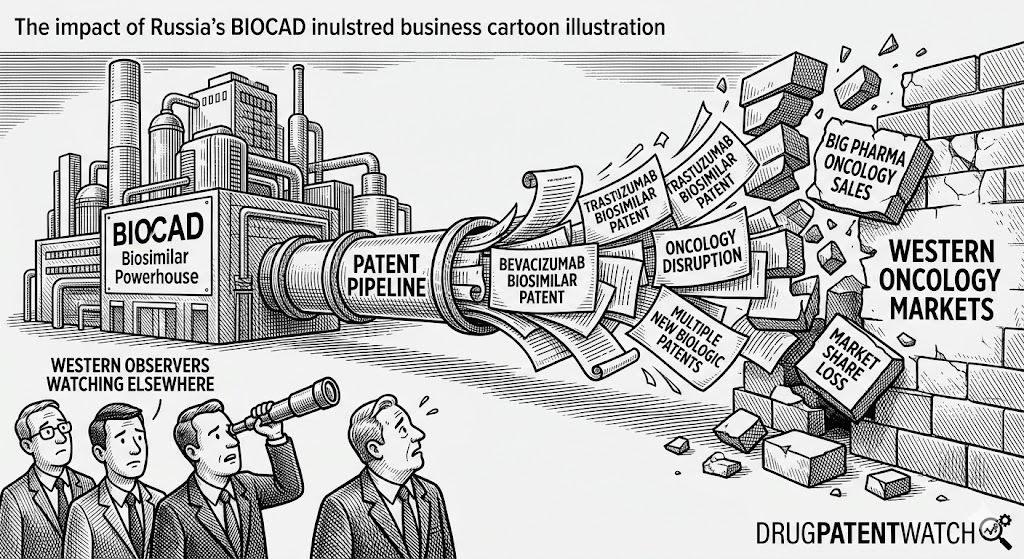
To understand BIOCAD’s patent strategy, start with a list of the target molecules and work backwards to the expiration dates. This is exactly the kind of analysis that DrugPatentWatch enables for professionals tracking competitive patent intelligence across global markets — identifying which reference products face imminent generic or biosimilar exposure, which markets offer first-mover advantages, and where the regulatory and IP landscape creates a viable entry path.
Rituximab (BCD-020 / AcellBia / Acellbia)
European Roche patents expired in 2013. Russian market entry 2014. This was BIOCAD’s proof-of-concept for the entire mAb biosimilar franchise. The product has since been registered in over 50 countries, predominantly across Latin America, Southeast Asia, and MENA. BIOCAD obtained marketing authorizations for its rituximab biosimilar in Bolivia and Honduras, where it trades as USMAL, and has argued that competitive pricing for its product will effectively double the availability of rituximab in those markets. For a company building a global commercial network, that kind of access narrative is politically useful as well as commercially accurate.
Trastuzumab (BCD-022 / HERtiCAD / Herticad)
Herceptin’s patents expired in Europe in July 2014, in Asia in 2017, and in the US in June 2019, triggering biosimilar entry in emerging markets. BIOCAD’s trastuzumab biosimilar HERtiCAD received Russian approval in January 2016, at a price at least 10% cheaper than Roche’s Herceptin, as required by federal regulation for the first biosimilar entrant. The Russian government was spending more than 5 billion rubles annually on Roche’s originator at the time of approval, making this the single largest displacement opportunity in BIOCAD’s early mAb portfolio.
Bevacizumab (BCD-021 / Avegra)
In November 2015, Russia’s Ministry of Health approved BCD-021, BIOCAD’s bevacizumab non-originator biological, referencing Roche’s Avastin. The design of the clinical trials was developed with the advice of the EMA for clinical trials of biosimilars of monoclonal antibodies. This was a notable detail: BIOCAD was actively engaging European regulatory standards even when producing for the Russian domestic market. This preparatory investment in EMA-compatible development has created optionality for Western market entry that pure domestic manufacturers would never have.
Pertuzumab (Pertuvia)
On 28 May 2025, Russia’s Ministry of Health approved BIOCAD’s Pertuvia, biosimilar to Roche’s Perjeta (pertuzumab), making it the country’s first domestic biosimilar pertuzumab approved for HER2-positive breast cancer. Pertuzumab is typically used in combination with trastuzumab for HER2-positive disease. BIOCAD’s approval of both drugs means the company can now offer the standard-of-care dual-antibody combination therapy entirely from its own portfolio — a commercial bundling advantage that matters enormously in government procurement tenders.
The pertuzumab approval carries a subtle competitive insight. It came a month after Roche stated it did not expect Perjeta to face biosimilar competition from Henlius’ HLX11 until late 2027, as HLX11 is currently under consideration by regulators in the EU, US, and China. In other words, BIOCAD beat every regulated-market biosimilar competitor to the global first approval on pertuzumab — a drug with approximately $4 billion in annual global revenue — by operating in a jurisdiction that the Western competitive intelligence infrastructure largely ignores.
Daratumumab (Daratumia) — The World-First Approval
This is the most strategically consequential product in BIOCAD’s current portfolio. On 22 August 2025, BIOCAD announced that the Russian Ministry of Health approved Daratumia, biosimilar to Johnson & Johnson’s Darzalex (daratumumab), as the first daratumumab biosimilar approved in the country — and the first reported regulatory approval for a daratumumab biosimilar worldwide.
Darzalex generated approximately $10 billion in global 2024 revenues. It is approved across multiple myeloma treatment settings, from newly diagnosed patients to relapsed/refractory disease, often in combination with other agents. The J&J patent estate on daratumumab is extensive and complex, involving composition-of-matter, method-of-use, and formulation patents that the company has aggressively maintained across major markets.
The fact that BIOCAD secured a regulatory approval before any competitor in Europe, the US, India, or South Korea reached the same milestone reflects two things simultaneously: the technical capability required to characterize a large, complex IgG1 monoclonal antibody to biosimilarity standards, and the relative flexibility of Russia’s post-2022 regulatory environment regarding the IP considerations that might delay or complicate regulatory review in other jurisdictions.
BIOCAD stated that a domestic Daratumia analogue will facilitate earlier access to therapy during the initial stages of treatment for multiple myeloma patients — the company’s standard patient-access framing that also serves as the regulatory and political justification for each new biosimilar launch in a tightly-controlled procurement market.
Celltrion has now received EU approval for a Phase III trial of its own daratumumab biosimilar, and Henlius has received Chinese clinical trial approval. But BIOCAD is already manufacturing, already pricing, and already embedding Daratumia into Russian oncology treatment protocols. In markets where BIOCAD’s products are registered — which now spans over 50 countries — Daratumia arrives years ahead of Western-developed alternatives.
The Original Drug Program: Prolgolimab and the Immuno-Oncology Bet
Here is where BIOCAD’s story becomes genuinely unusual among biosimilar companies. Most biosimilar developers are exactly that: companies that identify patent cliffs, replicate reference molecules, and compete on price. BIOCAD is also building an original drug pipeline, and its most advanced novel product is a PD-1 inhibitor that went through randomized Phase III trials and won marketing approval.
Prolgolimab (Forteca, BCD-100) is an IgG1-type monoclonal antibody targeting PD-1, developed internally from BIOCAD’s phage display libraries. It is structurally distinct from pembrolizumab and nivolumab — it carries a modified Fc fragment that removes effector function while retaining the anti-tumor activity that comes from PD-1 blockade. The Russian Ministry of Health authorized prolgolimab for the treatment of non-small cell lung cancer, with the new indication based on the results of the BCD-100-3/DOMAJOR Phase III clinical trial — a multicenter, randomized, double-blind, placebo-controlled study of prolgolimab in combination with pemetrexed and cisplatin/carboplatin as first-line therapy in patients with advanced non-squamous NSCLC.
Prolgolimab is the first Russian PD-1 inhibitor approved for first-line treatment of unresectable or metastatic melanoma and advanced non-small cell lung cancer. Its initial approval for unresectable or metastatic melanoma in April 2020 came from the MIRACULUM Phase II/III study, which showed an objective response rate of 33.3% across 126 patients, with 12-month overall survival rates comparable to international checkpoint inhibitor benchmarks.
The flat-dose approval story is instructive about BIOCAD’s clinical development sophistication. The company conducted pharmacokinetic modeling to justify a 250 mg Q3W fixed dose — analogous to the switch pembrolizumab made from 2 mg/kg to the flat 200 mg dose — using an approach that was accepted by the Russian Ministry of Health. BIOCAD showed that the 250 mg dose provides prolgolimab blood concentration no less than the previously approved doses of 1 mg/kg and 3 mg/kg, which were studied in pivotal trials and demonstrated similar results in terms of safety and efficacy.
The drug is now approved in Russia, Belarus, and Kazakhstan, and BIOCAD has been actively recruiting patients for European Phase III studies in cervical cancer and NSCLC. Those European trials have stalled in the wake of the invasion of Ukraine — most Western contract research organizations and clinical trial sites have suspended Russian-sponsored studies — but the underlying clinical data from the Russian program is robust and peer-reviewed. Prolgolimab represents approximately 5-6 years of immuno-oncology development work that a Western company would have spent $500 million to produce.
BCD-201: The Pembrolizumab Biosimilar
If prolgolimab is BIOCAD’s original PD-1 inhibitor, BCD-201 is the company’s follow-on program: a biosimilar to Merck’s pembrolizumab (Keytruda), the world’s best-selling cancer drug with over $25 billion in 2024 revenues. Clinical study BCD-201-1 is a double-blind randomized study evaluating the pharmacokinetics, pharmacodynamics, safety, and immunogenicity of BCD-201 versus Keytruda following intravenous administration to subjects with advanced unresectable, metastatic, or recurrent melanoma and NSCLC, aimed at establishing PK equivalence and similarity of safety, immunogenicity, and PD profiles.
Pembrolizumab’s patent situation in the US and Europe involves a primary composition-of-matter patent that provides substantial exclusivity through the early 2030s, along with a portfolio of method-of-use and formulation patents. Russia’s approach to those patents — particularly in the post-2022 environment where the government has expansively interpreted “drug security” as grounds for overriding patent protections — means BIOCAD can advance BCD-201 through clinical development and potentially obtain Russian regulatory approval years before any pembrolizumab biosimilar could enter the US or European markets.
What makes BCD-201 strategically interesting beyond Russia is the regulatory precedent value. A complete clinical biosimilarity package for pembrolizumab — generated to EMA-compatible standards — creates a data asset that could support ex-Russia regulatory filings in jurisdictions that have bilateral recognition arrangements with the EAEU (Eurasian Economic Union), or in lower-regulated markets where a Russian approval provides sufficient reference data.
Eculizumab (BCD-057)
In 2019, BIOCAD started comparative studies of the effectiveness of Alexion’s Soliris (eculizumab) and its eculizumab non-originator biological in patients with paroxysmal nocturnal hemoglobinuria, following approval of the clinical investigation from the Russian Ministry of Health. Eculizumab was at that point the most expensive orphan drug in Russia, with the Russian government spending approximately 2 billion rubles annually. An eculizumab biosimilar that achieves Russian approval does not break the global market — but it demonstrates that BIOCAD’s technical platform can handle highly complex complement inhibitors, not just the more tractable oncology mAbs.
Part III: The Market Architecture — How Russia Made BIOCAD
Pharma 2020, Pharma 2030, and the Policy Engine
BIOCAD did not build its biosimilar franchise in a market vacuum. It built it inside a deliberate industrial policy. Russia’s Pharma 2020 program, launched by Putin’s government in 2011, set explicit targets for domestically produced pharmaceutical sales and funded biosimilar development programs through concessional loans and R&D grants. The successor Pharma 2030 framework has extended those targets, setting an ambition of reducing import dependence on essential medicines to below 20% in the state procurement segment.
Drug production in Russia increased by 21.5% in 2024, with the share of domestic drugs exceeding 64%, according to Russian Prime Minister Mikhail Mishustin. According to Ministry of Economic Development forecasts, by 2027, pharmaceutical production and medical supplies in Russia will grow by 33.1% compared to 2023.
The Pharma 2020 program included a specific mandate — the “first bioanalogue” pricing rule — that required any newly approved biosimilar to enter the market at no more than 90% of the reference product’s registered price. This may sound modest, but in a state procurement system where the government buys oncology drugs through centralized tenders and selects by price (with quality assurance considered a threshold requirement), a reliable 10% undercut is sufficient to win the dominant share of procurement volume.
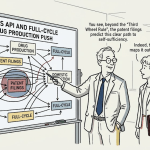
From 2025, procurement preferences for locally-made medicines have become more significant. When procuring medicines from an essential drug list or medical devices from a government list, clinics must reject any bids to supply foreign products if there is at least one bid offering products that originates from the EEU. EDL medicines with full-cycle production within the EEU enjoy a 15% pricing privilege over those with partial localisation of production.
The practical effect of this “second extra” rule — sometimes called the “third wheel” rule depending on how many domestic bidders are present — is that a BIOCAD biosimilar manufactured entirely in Russia enjoys a structural procurement advantage against any imported alternative that is essentially insurmountable in the state-funded segment. If BIOCAD bids on an oncology tender and a foreign manufacturer also bids, the foreign manufacturer’s bid is automatically rejected, regardless of price. BIOCAD does not need to win on price. It simply needs to be present.
In 2024, within the framework of the program ‘Fight against oncological diseases,’ 162.7 billion rubles were spent on the purchase of drugs for the needs of medical institutions. That is approximately $1.8 billion at 2024 exchange rates. The oncology procurement budget is BIOCAD’s primary revenue source, and the company’s product strategy maps almost exactly onto the molecules that dominate that budget.
The Biosimilar Procurement Flywheel
The financial logic of BIOCAD’s position in Russian government procurement deserves careful examination, because it drives the investment cycle that funds novel drug development.
Here is the mechanics of it: A government oncology tender for trastuzumab, rituximab, or bevacizumab is conducted annually or biannually. The winning bidder contracts to supply the government’s hospitals and cancer centers at the bid price for the contract period. BIOCAD, with fully domestically manufactured products and the procurement preference that comes from that, wins the majority of those contracts. The volumes are substantial — these are among the most commonly prescribed cancer drugs in Russia, used in hundreds of thousands of patient-treatment cycles annually.
The revenue from those contracts — collected in rubles, at stable prices set by the Essential Drug List registration, subject to government price controls but also protected against foreign competition — provides a predictable, recurring cash flow that is essentially unaffected by exchange rate volatility, Western sanctions, or patent disputes in other markets. That cash flow funds BIOCAD’s R&D budget. And BIOCAD’s R&D budget is what built prolgolimab, what is funding BCD-201, and what is supporting the expansion of the portfolio into next-generation targets.
BIOCAD’s reasoning is that in Russia, the government sees oncology, diabetes, and vaccines as the priorities for healthcare expenditure. As a result, many biosimilar developers in Russia have steered away from anti-TNF drugs, even though they have been popular targets for biosimilars in other countries. The big focus is on oncology biosimilars, particularly monoclonal antibodies, as well as insulin and vaccines, because these are all well-reimbursed by the government.
This deliberate sector focus — ignoring anti-TNFs that are dominant in European and American biosimilar markets, concentrating on oncology mAbs — is a rational response to the specific structure of Russian healthcare financing. BIOCAD is not building a globally optimal biosimilar portfolio. It is building a portfolio optimized for the procurement market it actually operates in, and using the rents from that position to fund moves beyond it.
The Drug Shortage Context: How Sanctions Reshuffled the Market
Russia’s pharmaceutical market after February 2022 is simultaneously growing in rouble terms and contracting in dollar terms. The Russian consultancy RNC Pharma estimated that the cost of imported drugs increased by a third in 2024, driven by a weakened rouble, disrupted logistics chains, and the withdrawal of European and American suppliers. Simultaneously, Sanctions have restricted access to Western innovative technologies, leading to the suspension of more than 1,300 clinical trials conducted by foreign companies. The figure on suspended trials comes from DrugPatentWatch’s monitoring of clinical trial registries, and it represents the abrupt withdrawal of Roche, Merck, AstraZeneca, Pfizer, and dozens of smaller sponsors from Russian trial sites.
In 2024, Russian pharmacies had 134 fewer essential drugs than the year before, of which about 15% treat cancer. Among the cancer drugs that have disappeared or become scarce: cyclophosphamide (Endoxan), several targeted lung and biliary tract cancer agents, and a range of supportive care medications. The oncology shortage is not hypothetical. It is measurable and documented.
For BIOCAD, this market dislocation is both a moral challenge and a commercial opportunity. The moral challenge is real: drug shortages harm patients, and some of BIOCAD’s biosimilars have not yet been approved or scaled to meet the full demand left by departing multinational suppliers. The commercial opportunity is also real: every foreign company that stops selling in Russia is ceding market share to domestic producers, and BIOCAD is positioned as the only Russian company capable of supplying high-quality monoclonal antibody biosimilars at scale.
While the commercial sector drove overall market growth in 2024, the state segment showed renewed momentum. In the first quarter of 2025, government procurement of medicines grew by 15% year-over-year, reaching 261 billion rubles, significantly outpacing the 8.4% expansion of the broader pharmacy market. State procurement growth benefits BIOCAD directly, because BIOCAD’s products are concentrated in exactly the types of biologic drugs that dominate state procurement rather than retail pharmacy channels.
Part IV: The Intellectual Property Architecture — Patents, Compulsory Licenses, and the Limits of Exclusivity
How Russia Treats Patent Rights After 2022
This section is essential reading for any intellectual property professional working in the pharmaceutical sector, and it is where the analysis requires the most precision. Russia’s relationship with pharmaceutical patents has never been straightforward. What has changed since 2022 is the explicit weaponization of legal mechanisms that previously existed but were seldom deployed.
Article 1360 of the Russian Civil Code grants the government the right to authorize the use of an invention without the patent holder’s consent in cases of “extreme necessity” related to defense or security. In recent years, “security” has been reinterpreted to include “drug security,” allowing the mechanism to be used for economic import substitution. The most high-profile application involves Novo Nordisk’s semaglutide. Following Novo Nordisk’s decision to suspend supplies to Russia in 2023, the Russian government issued a compulsory license to two domestic companies, Geropharm and Promomed. The Russian Supreme Court upheld the license in 2025, ruling that the withdrawal of the original drug constituted a direct threat to the health of Russian citizens, satisfying the “extreme necessity” clause.
The semaglutide compulsory license is the clearest precedent that matters for oncology IP analysis. If a government product withdrawal can justify an Article 1360 license for a non-oncology drug, the same logic applies with even greater force to cancer treatments, where the “threat to citizens’ health” framing carries stronger emotional and jurisprudential weight. Any Western pharmaceutical company that has voluntarily withdrawn its cancer drugs from Russia — or announced it will no longer invest in Russian supply chain — has potentially handed the Russian government legal authority to authorize BIOCAD or another domestic manufacturer to make the drug without patent compensation.
There are tools available in the Russian legal system allowing the government to bypass patent rights based on the catch-all justification of ensuring state defense and security and protecting citizens’ life and health, including the patents of foreign pharmaceutical companies. These legal mechanisms — effectively compulsory licenses under Article 1360 or suspensions of IP rights under Law no. 46-FZ — could be resorted to for purposes of international economic policy, functioning as de facto countersanctions.
For BIOCAD specifically, this legal architecture means that even where BIOCAD’s biosimilar development technically engages a patent still in force in Russia (which is an increasingly rare situation, since many European and US patents have no Russian equivalent or have expired), the company operates in an environment where the regulatory and legal risks associated with patent infringement are substantially lower than they would be for the same activity in the US or Europe.
The Patent Linkage Question: Russia’s Approach
Russia has never implemented a patent linkage system analogous to the US Hatch-Waxman framework, under which a generic or biosimilar applicant must certify its product’s relationship to listed patents before the FDA can approve it. In Russia, drug registration and patent protection are legally separate. A biosimilar can receive Ministry of Health marketing authorization while a reference product’s patents are still in force — the registration authority makes no assessment of whether the applicant’s product infringes those patents. Patent infringement, if any, must be litigated separately in civil courts.
The practical consequence is that BIOCAD can apply for and receive registration approval for a biosimilar before relevant Eurasian or Russian patents expire, without triggering an automatic infringement claim. This is different from the US, where a biosimilar applicant who certifies invalidity of a listed patent triggers an immediate 30-month stay on FDA approval while the patent dispute is resolved.
Russian courts and the Federal Antitrust Service typically support innovators in patent infringement cases. In 2024, the FAS deemed the early market launch of generics for several well-known innovator medicines to be unfair competition, imposing fines exceeding 1 billion rubles. The AstraZeneca-Axelpharm osimertinib dispute illustrates this dynamic: a Russian generic manufacturer registered a version of AstraZeneca’s Tagrisso (osimertinib) and applied for a compulsory license, triggering FAS and court proceedings that continued for over two years before a mixed outcome. The court decision indicated that clear evidence is required to classify competition as unfair, namely the existence of competition and proof of infringement, and emphasized that the FAS must take Eurasian law into account.
BIOCAD’s biosimilar strategy largely avoids this category of dispute because the company predominantly targets molecules where Russian or Eurasian patents have already expired, or where the regulatory certainty is high enough to proceed. The company is not primarily a compulsory license applicant — it is a biosimilar developer that has timed its pipeline to align with patent cliffs.
Patent Intelligence as Competitive Infrastructure
For pharmaceutical executives and investors tracking the competitive biosimilar landscape, the implication of Russia’s IP environment is that standard patent monitoring tools tuned to US and European patent estates may give systematically incomplete pictures of where Russian companies like BIOCAD actually stand.
A company like DrugPatentWatch provides comprehensive databases tracking patent expiration dates, Paragraph IV certifications, patent litigation outcomes, and FDA Orange Book listings across jurisdictions. In the Russian and EAEU context, this type of patent intelligence is especially valuable because the gap between US/European patent status and Russian/Eurasian patent status can be substantial — sometimes by years. A molecule with robust US exclusivity through 2030 might have no valid Russian patent protection at all, making it immediately actionable for BIOCAD without any compulsory license mechanism being required.
Platforms like DrugPatentWatch provide comprehensive databases and analysis of the Russian patent landscape, offering critical intelligence on key patent expiration dates — identifying the exact date a blockbuster drug loses its primary patent protection, crucial for planning a generic launch. For anyone assessing competitive exposure to BIOCAD’s pipeline across emerging markets, this kind of jurisdiction-specific patent status intelligence is not optional. It is what separates a credible competitive threat assessment from a wishful one.
Part V: The Global Dimension — Where BIOCAD’s Products Actually Compete
The 50-Country Footprint
BIOCAD’s biosimilar mAbs are approved and marketed or in the process of registration in over 50 countries worldwide, mainly in Latin America, Southeast Asia, and the MENA region. This is a meaningful commercial presence in markets that are collectively home to several hundred million cancer patients with limited or no access to originator biologic therapy.
The commercial logic in these markets is straightforward. In Bolivia, Honduras, Vietnam, Sri Lanka, Kazakhstan, and dozens of similar countries, the choice for an oncology patient is typically not between Roche’s Herceptin and BIOCAD’s HERtiCAD. It is between HERtiCAD and nothing, or between HERtiCAD and another biosimilar from India or South Korea priced at levels that strain local healthcare budgets. BIOCAD competes on price and on the regulatory credibility conferred by its Russian approval, which in many MENA and Southeast Asian jurisdictions is sufficient reference data for a streamlined local registration.
Emerging biosimilar markets in Latin America and the Middle East and Africa have exhibited strong growth potential at a CAGR of over 40% from 2019 to 2023, driven by the need to reduce healthcare costs. That growth rate represents exactly the markets where BIOCAD has invested in registration infrastructure. The company’s international commercial operations are headquartered in countries where it has established subsidiaries: Brazil, China, Vietnam, and UAE.
The Eurasian Economic Union dimension adds another layer. Under EAEU mutual recognition rules, a drug approved in any EAEU member state — Russia, Kazakhstan, Belarus, Armenia, Kyrgyzstan — is eligible for recognition in other member states. This gives BIOCAD’s Russian approvals immediate commercial reach into Central Asia without requiring separate clinical programs for each country.
The Roche Lawsuit and the US Market: A Complicated Relationship
BIOCAD’s relationship with Western markets has not been entirely cooperative. In statements around its Latin American expansion, BIOCAD alleged: “While Roche and Genentech keep raising prices in the US, they engage in predatory pricing in Russia, where they sell such drugs at a loss — all to destroy us and prevent us from entering the US market with cheaper biosimilars.” Roche called the lawsuit “frivolous.”
The core allegation — that Roche engaged in aggressive below-cost pricing in Russia specifically to undermine BIOCAD’s financial foundation before BIOCAD could mount a challenge in higher-margin Western markets — reflects the competitive stakes of the biosimilar business. Western pharmaceutical companies cannot use litigation in Russia to protect patents that have expired. But they can engage in pricing strategies that erode the revenues of domestic biosimilar producers, limiting those producers’ ability to fund the global regulatory programs needed to compete elsewhere.
The post-2022 sanctions environment has made US market entry essentially impossible for BIOCAD in the near term. BIOCAD’s Finnish partnership, announced before the invasion of Ukraine as a European clinical development and manufacturing platform, has not produced the European regulatory filings that were originally intended. The company’s European ambitions are effectively frozen, not because of technical or scientific limitations, but because of geopolitical ones.
The China Angle
Prolgolimab clinical trials are currently ongoing in China. This is strategically significant because China represents a massive oncology market with its own domestic biosimilar producers (Innovent, Henlius, BeiGene) but also with regulatory pathways — through the NMPA — that can accept foreign clinical data in certain circumstances. BIOCAD’s China presence is primarily oriented around prolgolimab’s novel drug program rather than biosimilars, since Chinese domestic biosimilar producers for rituximab, trastuzumab, and bevacizumab are already well-established and the price competition would be severe.
The Global South more broadly remains the clearest near-term commercial opportunity. The global biosimilars market reached $30.3 billion in 2024, growing at a CAGR of 14% since 2020. Emerging markets are the fastest-growing segment of that market, and BIOCAD is among the few non-Western biosimilar producers with a meaningful registered product footprint across those geographies.
Part VI: What the Daratumia Approval Actually Means for Competitive Intelligence
Reading the Daratumia Signal
When BIOCAD announced its Daratumia approval in August 2025, the press release was picked up quickly by IP monitoring services like Pearce IP and translated into competitive intelligence notes for biosimilar developers watching J&J’s Darzalex patent position. The signal has several layers.
First, the technical signal: BIOCAD has demonstrated that its manufacturing and analytical characterization capabilities extend to daratumumab, a large IgG1 kappa monoclonal antibody with a complex mechanism involving both direct cytotoxicity and immunomodulatory functions. Characterizing daratumumab to biosimilarity standards — demonstrating that binding to CD38, Fc-mediated effector functions, and physicochemical properties are within defined similarity margins — is a technically demanding exercise. BIOCAD’s approval confirms it can execute that exercise.
Second, the competitive signal: Celltrion, the South Korean biosimilar leader, has now received EU approval for a Phase III daratumumab biosimilar trial. Henlius has received Chinese clinical trial approval. Fresenius Kabi and others are watching. BIOCAD has a 2-3 year lead on regulated-market approvals for Daratumia — and in markets that recognize its Russian approval, it has immediate commercial access.
Third, the patent signal: The Darzalex patent estate is complex, with J&J holding substantial exclusivity in the US through the late 2020s and in Europe through various dates depending on which national patents apply. BIOCAD’s Russian approval does not create any immediate US or European market entry risk for J&J. But it creates a reference regulatory package that could support approvals in markets where Darzalex patent exclusivity is weaker or absent — which describes much of the emerging market landscape.
The Multiple Myeloma Market Disruption
Multiple myeloma treatment has been transformed by daratumumab since its initial 2015 FDA approval. Daratumia’s Russian commercial availability changes the economics of myeloma treatment in Russia fundamentally. The Russian government spent substantial procurement funds on imported Darzalex before the supply chain disruptions of 2022-2024. With Daratumia now available from a domestically manufactured source, those procurement funds stay within the Russian healthcare system — and the clinical access for myeloma patients who were previously unable to receive daratumumab due to supply shortages improves materially.
BIOCAD stated that Daratumia was developed and produced in Russia in accordance with the full technological process, including the synthesis of the active pharmaceutical substance. That “full-cycle” claim matters because it qualifies for the highest tier of procurement preference under Russia’s 2025 localization rules — the 15% pricing privilege that full-EEU-cycle production earns over partially-localized products.
Part VII: Competitive Landscape — Who Else Operates in BIOCAD’s Space
Russia: R-Pharm and the State Procurement Competitors
Within Russia, BIOCAD’s main biosimilar competition comes from R-Pharm, a company that has pursued a different strategy — closer alignment with government procurement needs and more emphasis on licensing foreign technologies rather than independent development. R-Pharm’s strategy is characterized by its close alignment with government needs, making it a dominant force in the state procurement market, specializing in oncology, autoimmune diseases, and antiviral therapies.
The key distinction is that R-Pharm licenses and localize technology where BIOCAD develops it internally. This makes R-Pharm less research-intensive but also less capable of generating the novel drug pipeline that BIOCAD is building in immuno-oncology. In a market where procurement preferences reward domestic manufacture, both strategies can be commercially viable — but only BIOCAD has the technical foundation to attempt original biologics development in parallel with biosimilar commercialization.
Global: The Biosimilar Majors
In global terms, BIOCAD competes with Sandoz (Novartis), Pfizer, Amgen, Celltrion, Biocon, and a growing list of South Korean, Chinese, and Indian biosimilar producers. Emerging players such as Mabxience, Biocad, Luye Pharm, and Innovent Biologics are making significant strides, with several biosimilars in late-stage development targeting various oncology indications.
The key competitive variable for BIOCAD against these players in emerging markets is pricing. BIOCAD’s fully-integrated manufacturing model, combined with Russian factor costs (labor, energy, infrastructure) that remain substantially below Western levels despite inflation, allows the company to undercut most competitors on cost of goods. Against Celltrion, which manufactures in South Korea with higher labor costs but benefits from EMA and FDA regulatory recognition, BIOCAD competes in markets that do not require EMA or FDA approval.
Against Indian manufacturers like Biocon-Mylan or Lupin, BIOCAD competes on quality credentials. Indian biosimilar manufacturers are aggressive on price but have had well-publicized manufacturing quality issues with Western regulators. BIOCAD’s clinical development to EMA-compatible standards — even if it is not pursuing EMA approval at present — provides a quality differentiation that resonates with procurement committees in middle-income markets that are quality-conscious without being full EMA-requirement countries.
The Checkpoint Inhibitor Market: BIOCAD’s Unique Position
In the immuno-oncology biosimilar space, BIOCAD occupies an unusual position. Most biosimilar companies are not developing checkpoint inhibitor biosimilars because the primary patents on pembrolizumab and nivolumab remain in force in major markets through the late 2020s and early 2030s. BIOCAD is developing a pembrolizumab biosimilar (BCD-201) while also marketing an originator PD-1 inhibitor (prolgolimab) — which means the company is simultaneously an innovator and a copier in the same mechanism class.
This combination is unusual and potentially very powerful. In markets where neither pembrolizumab nor nivolumab is locally registered or affordable, the choice between an original BIOCAD PD-1 inhibitor with its own proprietary clinical data and a BIOCAD pembrolizumab biosimilar is an internal product portfolio decision for BIOCAD’s commercial teams. The company can price them relative to each other, bundle them with other BIOCAD oncology agents, and offer them against different reimbursement structures depending on whether the payer requires originator-data-equivalent biosimilar or is willing to accept originator-versus-originator comparison data for prolgolimab.
Part VIII: The Regulatory Environment — EAEU, Russian MoH, and What “Approval” Actually Means
Understanding the EAEU Biosimilar Pathway
Since 2016, drug approvals within the Eurasian Economic Union operate under unified EAEU rules rather than purely national ones. From 31 December 2020, the authorisation of all new drugs in Russia has been conducted solely based on the EAEU Rules. Since the first application was filed in March 2018 in Kazakhstan, 4,034 pharmaceutical products have been authorised using the EAEU procedure.
The EAEU biosimilar pathway is explicitly modeled on the EMA’s framework. It requires comparative quality studies, nonclinical studies (pharmacodynamics and toxicology), clinical pharmacokinetic studies, and clinical efficacy/safety studies, culminating in a benefit-risk assessment. The pathway is more rigorous than what prevailed in Russia pre-2014, when some biologics were approved through approaches similar to small-molecule generics.
Today, requirements for approval of a biosimilar in countries of the Eurasian Economic Union are much the same as for other regulated markets. This convergence matters enormously for the question of whether BIOCAD’s Russian approvals carry any evidentiary weight in other jurisdictions. If the EAEU pathway is genuinely equivalent to the EMA pathway in scientific rigor, then a product approved through EAEU review is — in principle — supported by the same quality of evidence as an EMA-approved biosimilar.
The “in principle” qualification is important. Regulatory convergence on paper does not automatically translate to practical recognition. EMA reviewers have not independently assessed BIOCAD’s manufacturing facilities. The data packages supporting Russian approvals are not publicly available in the way that EMA European Public Assessment Reports are. Without that transparency, the reputational premium of the EAEU approval pathway in regulated markets remains limited.
The Regulatory Disruption From Sanctions
Sanctions have led to the suspension of more than 1,300 clinical trials conducted by foreign companies in Russia. This withdrawal is cutting in both directions. Western companies lose Russian clinical trial sites, which previously contributed meaningful patient enrollment to global oncology trials. BIOCAD loses the comparative reference standard that running its studies alongside Western-sponsored programs at the same clinical sites would have provided.
The suspension also means that Russian patients with cancer who were enrolled in multinational trials — receiving investigational agents that were potentially more effective than approved standards of care — lost access to those trials. That clinical disruption has a humanitarian dimension that is separate from the competitive dynamics this article addresses, but it is part of the complete picture of what the post-2022 restructuring of the Russian pharmaceutical market means.
Part IX: The Financial Picture and the Investment Logic
What We Know About BIOCAD’s Financial Scale
BIOCAD is privately held and does not publish audited financials. What can be inferred from public information:
The Russian oncology procurement budget — 162.7 billion rubles in 2024 — represents the total spend on cancer drugs across state procurement channels. BIOCAD, with 19 marketed oncology products and a dominant position in the biosimilar mAb tenders, likely captures a meaningful fraction of that budget. Even a 15% share of the oncology state procurement spend would represent revenues in the range of 24 billion rubles — approximately $270 million — from that segment alone, before counting commercial channel sales and export revenues.
The company employs more than 2,700 people, one-third of whom are researchers and scientists. The R&D infrastructure required to support 37 biologics in development simultaneously, across multiple modalities including mAbs, PD-1 inhibitors, ADC preclinical work, and gene therapy platforms, implies an R&D budget well above what would be typical for a company of this size in Western markets. The lower cost of scientific labor in Russia makes this feasible.
The Export Revenue Story
BIOCAD’s international operations in Brazil, China, Vietnam, and UAE are not merely registration offices — they are genuine commercial subsidiaries generating export revenues. The exact split is not publicly disclosed, but the 50-country registration footprint implies meaningful commercial activity across multiple geographies.
Emerging biosimilar markets in Latin America and MENA have exhibited strong growth potential at a CAGR of over 40% from 2019 to 2023. BIOCAD is positioned in the fastest-growing segment of the global biosimilars market, with first-mover advantages on several molecules in markets that are now aggressively expanding their oncology biosimilar reimbursement programs. The financial upside from those markets is not reflected in any publicly traded security — it accrues entirely to BIOCAD’s private shareholders.
Part X: What This Means for the Global Biosimilar Industry
The Daratumia Lesson for Competitive Intelligence Teams
Every biosimilar development team at a major pharmaceutical company should have an answer to the following question: In how many of our target markets does BIOCAD have an existing regulatory approval or active registration submission for the same reference molecule we are developing?
The failure to monitor BIOCAD’s pipeline — which is tracked on DrugPatentWatch and in regulatory intelligence databases — represents a competitive intelligence gap. BIOCAD’s Pertuvia approval for pertuzumab, its Daratumia approval for daratumumab, and its BCD-201 pembrolizumab biosimilar clinical program are not secrets. They are documented in public regulatory databases, clinical trial registries, and patent filings. The information is available. The question is whether organizations are looking at it.
Oncology applications lead global biosimilar market revenue with 55% of 2024 revenue. Upcoming biosimilar launches targeting checkpoint inhibitors like Yervoy hint at a second-order effect: if expensive immuno-oncology drugs see biosimilar erosion, the savings could fund broader use of precision therapies, pushing innovators toward even more complex biologic constructs and renewing the innovation cycle. BIOCAD is already operating inside that second-order dynamic — using biosimilar revenues to fund checkpoint inhibitor originators and next-generation biologic platforms.
The Market Access Implication for Innovators
For Roche, J&J, Merck, and AstraZeneca, BIOCAD’s position creates a specific commercial risk that is geographically bounded but real. In markets where BIOCAD’s biosimilars are registered and distributed — including Russia (where innovator access is now substantially curtailed), plus much of Central Asia, MENA, and parts of Latin America — the innovators cannot compete directly. They cannot win government tenders under Russia’s procurement rules. They face pricing pressure from a competitor with structurally lower manufacturing costs and no requirement to recoup Western-level R&D investments.
The oncology biosimilars that BIOCAD has approved to date — rituximab, trastuzumab, bevacizumab, pertuzumab, and daratumumab — represent collectively many billions of dollars in annual global reference product revenues. In the markets BIOCAD serves, those revenues are being partially displaced. Not entirely — BIOCAD does not manufacture at a scale that could serve every patient in every country it is registered. But the trajectory is toward increasing market share, and the company’s pipeline suggests the displacement will accelerate rather than slow.
The Original Biologics Threat: A Decade Out, But Real
The longer-term competitive concern is not BIOCAD’s biosimilar portfolio. It is the possibility that the prolgolimab program succeeds in its European clinical development (whenever that becomes possible again), or that the company’s MabNext platform — which BIOCAD has described as encompassing approximately 40 antibodies in oncology, autoimmune disease, and cardiovascular disease — produces one or more molecules that compete in the same efficacy class as Western-developed checkpoint inhibitors or targeted therapies.
BIOCAD is focused on developing original drugs — next-in-class and first-in-class — for immuno-oncology, hematology, and autoimmune disease treatment. Its goal is to bring affordable innovation to patients in need, in emerging markets as well as in developed countries. The company believes the high quality of its products combined with the low cost of development and goods can make its generic, biosimilar and original products very competitive in developed markets.
This is not idle aspiration. BIOCAD built its PD-1 inhibitor program at a fraction of the cost Merck spent developing pembrolizumab. If the geopolitical environment ever shifts in ways that make Russian-sponsored clinical data acceptable to Western regulators — or if BIOCAD builds clinical programs through Western CROs in non-Russian sites — the company’s original molecules become directly competitive with Western-developed immuno-oncology agents in global markets.
Part XI: Tracking BIOCAD’s Pipeline — A Practical Framework
What Analysts and Portfolio Managers Should Monitor
For pharmaceutical executives, biosimilar developers, and investment professionals assessing competitive exposure to BIOCAD, here is a practical monitoring framework:
Patent status tracking: For every reference molecule in BIOCAD’s known pipeline — rituximab, trastuzumab, bevacizumab, pertuzumab, daratumumab, pembrolizumab — verify current patent status in the specific markets where BIOCAD has registered products or is actively pursuing registrations. Russian and EAEU patent status frequently diverges from US/European status. This kind of jurisdiction-specific tracking is exactly what DrugPatentWatch’s patent database is designed to support, offering estimated key patent expiration dates for drugs across multiple regulatory jurisdictions and enabling scenario planning around biosimilar entry timing.
Clinical trial registry monitoring: BIOCAD’s clinical programs are registered in ClinicalTrials.gov (for any programs with US investigational new drug allowances), in the EU Clinical Trials Register (for any European-site programs), and in the Russian equivalent registries. The BCD-201 pembrolizumab biosimilar trial, for instance, is traceable through registration data.
EAEU registration databases: The Eurasian Economic Union maintains a unified drug registration database. Approvals granted by the Russian Ministry of Health under the EAEU unified procedure are visible in that database.
Procurement tender outcomes: Russian state procurement tender results are published through the government procurement portal (zakupki.gov.ru). Tracking which company wins oncology biosimilar tenders, and at what prices, provides insight into BIOCAD’s market share trajectory and pricing strategy.
The Analytical Blind Spot to Correct
Most Western pharmaceutical competitive intelligence teams track FDA Orange Book listings, EMA EPAR databases, and the principal European and American patent registries with reasonable thoroughness. Very few track Russian MoH approvals systematically, monitor EAEU registration databases, or analyze Russian government procurement tender outcomes.
This creates a systematic blind spot. BIOCAD’s daratumumab approval in August 2025 — the first in the world — was not obscure. It was reported by Pearce IP, GxP News, and multiple biosimilar-focused trade publications within days of announcement. But if a company’s competitive intelligence process relies on FDA/EMA databases as its primary inputs, it would have missed the strategic signal entirely. <blockquote> “The biosimilars market reached $30.3 billion globally in 2024, growing at a 14% CAGR since 2020. Emerging markets in Latin America and the Middle East and Africa are growing at over 40% CAGR — the fastest segment of a fast market.” — Alira Health, 2025 Global Biosimilars Report [56] </blockquote>
BIOCAD’s products are positioned squarely in that fastest-growing segment. The competitive implications are not abstract or distant. They are current and measurable.
Part XII: The Future Trajectory
What Comes Next in BIOCAD’s Oncology Pipeline
BIOCAD has not published a comprehensive forward pipeline disclosure. Based on what is verifiable through public sources, the following molecules are either in development or represent logical next targets given the company’s track record and the Russian procurement priorities:
Atezolizumab (Tecentriq) — Roche’s PD-L1 inhibitor, which faces US patent expiry in the early 2030s but may have earlier expiry in Russian/EAEU jurisdictions. BIOCAD has the manufacturing and clinical infrastructure to develop a PD-L1 inhibitor biosimilar.
Nivolumab (Opdivo) — BMS’s PD-1 inhibitor, the second-largest checkpoint inhibitor by revenue. BIOCAD’s existing PD-1 manufacturing infrastructure (developed for prolgolimab) creates a natural extension.
Trastuzumab deruxtecan (Enhertu) — This is a more speculative longer-term target: an antibody-drug conjugate that requires substantially more complex manufacturing than a standard mAb biosimilar. BIOCAD has mentioned ADC technology in its platform development discussions, but an Enhertu biosimilar is likely 8-10 years away at minimum.
CAR-T and cell therapy — BIOCAD has mentioned chimeric antigen receptor T cells and gene therapy among its next-generation modality investigations. These are extremely capital-intensive and technically complex, and represent aspirational rather than near-term pipeline.
The near-term pipeline additions most likely to produce Russian regulatory approvals within the next two years are in the checkpoint inhibitor biosimilar space and in additional combination oncology mAbs where patent cliffs are imminent in Russian/EAEU jurisdictions.
The Geopolitical Wildcard
No analysis of BIOCAD is complete without acknowledging the most important variable the company cannot control: the geopolitical environment. Every element of this analysis — from the state procurement preferences that generate BIOCAD’s domestic revenue base, to the suspension of Western clinical trial partnerships, to the compulsory license legal architecture that reduces patent risk — is a function of Russia’s post-2022 international position.
If Russian sanctions were lifted tomorrow and Western pharmaceutical companies returned fully to the Russian market, BIOCAD’s domestic competitive position would face real pressure for the first time in years. If Western CROs resumed clinical trial partnerships in Russia, BIOCAD’s pipeline could theoretically access the types of multinational trial infrastructure that would make its data acceptable to EMA or FDA. But neither of those scenarios appears likely in the near or medium term.
The more relevant scenario is continued market fragmentation: a world in which BIOCAD dominates Russia and Central Asia, competes vigorously in MENA, Latin America, and Southeast Asia, and remains essentially absent from the US, European, and Japanese markets. In that scenario, the total addressable market available to BIOCAD is large enough to sustain substantial revenue and continued R&D investment — but BIOCAD does not become a global biosimilar leader in the way that Sandoz or Celltrion are global biosimilar leaders.
The question is whether a thawing in Western pharmaceutical engagement with emerging markets — driven by the same access-to-medicines pressure that is pushing those markets toward local and regional biosimilar suppliers — eventually creates a pathway for BIOCAD’s products to enter markets where the company is currently excluded.
Key Takeaways
BIOCAD holds the first global regulatory approval for a daratumumab biosimilar. Daratumia’s August 2025 Russian MoH approval preceded every regulated-market competitor. In markets that accept Russian/EAEU approval as reference data, BIOCAD has an immediate commercial lead on a drug generating ~$10 billion in annual global reference product revenues.
The biosimilar-to-originator pipeline combination is BIOCAD’s structural advantage. Prolgolimab is an approved originator PD-1 inhibitor. BCD-201 is a biosimilar of the world’s best-selling cancer drug. Owning both sides of the same mechanism class gives BIOCAD pricing and portfolio flexibility that pure biosimilar developers cannot match.
Russia’s procurement architecture is a fortress, not a stepping stone. The “second extra” rule and the full-cycle production preference make BIOCAD’s domestic revenue largely competition-proof from foreign entrants. That stable cash flow funds the international expansion and novel drug development that make the company strategically interesting beyond Russia.
The compulsory license threat is real and under-appreciated by Western IP professionals. Article 1360 of the Russian Civil Code has been applied to semaglutide. The legal mechanism for applying it to any cancer drug whose originator has voluntarily withdrawn from Russia is clear and court-tested.
BIOCAD’s global footprint — 50+ countries, Latin America, MENA, Southeast Asia — positions it in the fastest-growing biosimilar markets. The 40%+ CAGR in those regions is not going to slow. BIOCAD’s first-mover registrations in many of those markets represent durable competitive positioning.
Competitive intelligence tracking of BIOCAD requires jurisdiction-specific patent and regulatory monitoring. US/European patent databases miss the Russian picture. EAEU registration databases and Russian procurement tender outcomes are underused data sources for biosimilar competitive intelligence. Platforms that cover these jurisdictions — including DrugPatentWatch — provide the cross-jurisdictional view that the analysis requires.
Prolgolimab is the most undervalued asset in BIOCAD’s portfolio. A completed Phase III NSCLC program, a Phase III FLAT melanoma study, and European clinical trial authorizations for cervical cancer represent several hundred million dollars worth of clinical development work. When geopolitical conditions allow any path to Western market submission, this data does not need to be regenerated.
The daratumumab approval is a preview, not an exception. BIOCAD is systematically moving up the complexity curve of oncology targets. The pertuzumab approval in May 2025 and the daratumumab approval in August 2025 are sequential steps in a program that will continue. The next world-first approval from BIOCAD is a question of when, not if.
Frequently Asked Questions
Q1: Does BIOCAD’s Russian Ministry of Health approval for daratumumab create any near-term competitive risk for Johnson & Johnson’s Darzalex in regulated markets like the US and Europe?
No, not directly. Russian and EAEU regulatory approvals carry no legal standing in FDA or EMA review processes. J&J’s US patent estate on daratumumab provides substantial exclusivity through at least the late 2020s in primary composition-of-matter and method-of-use claims. BIOCAD is not known to have filed an FDA BLA or an EMA MAA for Daratumia. The competitive risk is concentrated in markets that accept Russian approval as reference data, or in markets where daratumumab’s patent protection is weaker or absent — which describes a significant proportion of the middle-income countries that BIOCAD is actively commercializing in.
Q2: How scientifically credible is BIOCAD’s biosimilar development program by international standards?
More credible than most Western analysts assume. BIOCAD designed its bevacizumab clinical trial program with EMA advisory input and has been peer-reviewing its clinical data in Western journals. The prolgolimab Phase III DOMAJOR trial data was published in peer-reviewed literature. BIOCAD’s regulatory submissions for EAEU approval use the same biosimilar analytical frameworks (physicochemical characterization, functional assays, PK/PD studies) that EMA requires. The principal caveat is that EMA and FDA have not independently reviewed BIOCAD’s manufacturing facilities — a gap that would need to be closed before any regulated-market approval becomes feasible.
Q3: What is the mechanism by which Russia’s government procurement rules advantage BIOCAD over foreign manufacturers, and how durable are those rules?
The central mechanism is the “second extra” rule implemented from 2025, which mandates that public procurement offices reject foreign bids if even one EEU-origin bid is submitted. Separately, full-cycle EEU production earns a 15% pricing privilege against partially-localized products. These rules derive from Russia’s Essential Drug List procurement framework and are enforced through the Federal Antitrust Service. They are durable in the sense that they reflect a decades-long policy consensus in Russia around pharmaceutical sovereignty — a consensus that has only strengthened, not weakened, in the post-2022 environment. The rules would require explicit legislative reversal to change, which would be politically difficult regardless of the geopolitical environment.
Q4: Is prolgolimab clinically interchangeable with pembrolizumab or nivolumab for cancer patients?
No formal head-to-head comparison exists. Prolgolimab is a distinct IgG1-type antibody with a modified Fc fragment, not a biosimilar or a generic version of any existing checkpoint inhibitor. Its Phase III data in NSCLC and melanoma demonstrates efficacy and safety in trials conducted in Russia against Russian clinical standards. The data is peer-reviewed and consistent with what would be expected from a functional PD-1 inhibitor. Whether the response rates, overall survival data, and safety profile are directly comparable to pembrolizumab 200 mg or nivolumab 240 mg across equivalent patient populations requires comparative studies that have not been run. In Russian clinical practice, prolgolimab is used as a clinical equivalent of pembrolizumab in approved indications, but that clinical equivalence assumption has not been validated in a formal international comparative trial.
Q5: What would need to happen for BIOCAD to become a meaningful participant in the US or European biosimilar markets?
At minimum: a geopolitical normalization that allows BIOCAD to conduct manufacturing inspections by FDA and EMA-affiliated auditors at its Russian facilities; generation of clinical PK bridging data in Western patient populations to supplement the Russian trial data; and successful navigation of patent challenge processes in the US (Paragraph IV certification) or European equivalent procedures for any molecules still under exclusivity protection. For biosimilars of off-patent molecules (rituximab, trastuzumab, bevacizumab), the patent challenge requirement is already addressed since those patents have expired in the US and Europe. The manufacturing inspection and clinical data generation requirements remain. Pre-2022, BIOCAD was actively building toward this with its Finland facility investment. Post-2022, those plans are frozen, and any realistic timeline for BIOCAD participating in US or European markets starts counting from a geopolitical resolution that is not visible on any current horizon.
Sources
[1] The Pharmaletter. (2024, June 25). Biocad sets sights on being leading supplier of cancer drugs in Russia. https://www.thepharmaletter.com/biosimilars/biocad-sets-sights-on-being-leading-supplier-of-cancer-drugs-in-russia
[2] Tracxn. (2025). BIOCAD company profile. https://tracxn.com/d/companies/biocad
[3] Pearce IP. (2025, June 3). Biocad’s pertuzumab biosimilar approved in Russia. https://www.pearceip.law/2025/05/28/biocads-pertuzumab-biosimilar-approved-in-russia/
[4] Nature/BioPharma Dealmakers. (2020). Leading innovative biologic and small-molecule therapeutic development in Russia. https://www.nature.com/articles/d43747-020-00370-3
[5] GxP News. (2025, August 25). Russia has registered the first biosimilar of daratumumab for multiple myeloma. https://gxpnews.net/en/2025/08/russia-has-registered-the-first-biosimilar-of-daratumumab-for-multiple-myeloma/
[6] Center for Biosimilars. (2025, January 14). The next frontier: Oncology biosimilars in 2025 and beyond. https://www.centerforbiosimilars.com/view/the-next-frontier-oncology-biosimilars-in-2025-and-beyond
[7] Pearce IP. (2025, September 2). BIOCAD obtains approval of first daratumumab biosimilar. https://www.pearceip.law/2025/08/22/biocad-obtains-approval-of-first-daratumumab-biosimilar/
[8] BIOCAD press office. (2020, April 27). Novel anti-PD-1 drug was approved for melanoma. EurekAlert. https://www.eurekalert.org/news-releases/904789
[9] The Medicine Maker. (2018, December 14). Russian revolution for biosimilars. https://themedicinemaker.com/white-papers/russian-revolution-for-biosimilars
[10] TAdviser. (2025). Pharmaceutical market of Russia. https://tadviser.com/index.php/Article:Pharmaceutical_market_of_Russia
[11] DrugPatentWatch. (2025, November 15). Breaking into the Russian pharmaceutical market: Opportunities and challenges. https://www.drugpatentwatch.com/blog/breaking-into-the-russian-pharmaceutical-market-opportunities-and-challenges/
[12] Wereva. (2025, July 9). Trends of growth in the Russian pharmaceutical industry by 2025. https://wereva.net/en/pharmaceutical/reviews/details/trends-of-growth-in-the-russian-pharmaceutical-industry-by-2025/
[13] Russia Post / Republic. (2025). Medications in Russia are in short supply and getting more expensive. https://russiapost.info/economy/medications
[14] Law.asia / SL Legal. (2025, August 27). Life sciences sector in Russia: Regulatory landscape for 2025. https://law.asia/life-sciences-regulatory-landscape-russia/
[15] DrugPatentWatch. (2025, November 30). Russian pharmaceuticals: An overview of a growing global market. https://www.drugpatentwatch.com/blog/russian-pharmaceuticals-an-overview-of-a-growing-global-market/
[16] DrugPatentWatch. (2026, February 23). Inside the Russian pharma industry: Key players and innovations. https://www.drugpatentwatch.com/blog/inside-the-russian-pharma-industry-key-players-and-innovations/
[17] BIOCAD. (n.d.). BIOCAD expands indications for a Russian anti-cancer originator. https://eng.biocad.ru/posts/biocad-expands-indications-for-a-russian-anti-cancer-originator
[18] Frontiers in Oncology. (2024). Fedyanin, M., et al. A phase III study to access the safety and efficacy of prolgolimab 250 mg fixed dose administered every 3 weeks versus prolgolimab 1 mg/kg every 2 weeks in patients with metastatic melanoma (FLAT). https://www.frontiersin.org/journals/oncology/articles/10.3389/fonc.2024.1385685/full
[19] GaBI Online. (2019). Biocad advancing its non-originator biologicals in Russia. https://www.gabionline.net/biosimilars/general/Biocad-advancing-its-non-originator-biologicals-in-Russia
[20] DrugPatentWatch. (2026, January 20). The Russian pharmaceutical industry: A definitive guide to strategic evolution. https://www.drugpatentwatch.com/blog/the-russian-pharmaceutical-industry-strategic-evolution-key-players-and-technological-innovation/
[21] Kluwer Patent Blog. Russia compulsory license. https://legalblogs.wolterskluwer.com/patent-blog/russia-compulsory-license/
[22] Lexology / Kluwer Patent Blog. (2022, March 24). Freezing of foreign pharma patents in Russia? https://www.lexology.com/library/detail.aspx?g=e07089bf-8c98-49ff-8c8b-cae9ae89efba
[23] GaBI Online. (2016, January 22). Bevacizumab non-originator biological approved in Russia. https://www.gabionline.net/biosimilars/news/Bevacizumab-non-originator-biological-approved-in-Russia
[24] Biopharma-Reporter. (2016). Boost for Biocad’s biosimilars as Russia approves first Herceptin copy. https://www.biopharma-reporter.com/Article/2016/01/22/Russia-approves-its-first-Herceptin-biosimilar
[25] Center for Biosimilars. (2020). Biocad’s rituximab biosimilar enters Latin America; roadblocks remain in the US. https://www.centerforbiosimilars.com/view/biocads-rituximab-biosimilar-enters-latin-america-roadblocks-remain-in-the-us
[26] Kluwer Patent Blog / Azalesov. Current trends in the patent protection of pharmaceuticals in Russia. https://azalesov.com/analytics/publications/current-trends-in-the-patent-protection-of-pharmaceuticals-in-russia
[27] Kluwer Patent Blog. (2025, July). Russia: The osimertinib case shows the Antimonopoly Service’s role in pharma patent disputes. https://legalblogs.wolterskluwer.com/patent-blog/russia-the-osimertinib-case-shows-the-antimonopoly-services-role-in-pharma-patent-disputes/
[28] Lexology. (2021). A general introduction to pharmaceutical IP and competition issues in Russia. https://www.lexology.com/library/detail.aspx?g=ba387fb9-8ecd-441f-be85-b160cbbc7ad4
[29] Alira Health. (2025). The 2025 Global Biosimilars Market Report. https://alirahealth.com/education-hub/2025-global-biosimilars-report/
[31] Yakov and Partners. Russian pharma 2030 outlook. https://yakovpartners.com/publications/russian-pharma-2030/
[32] Center for Biosimilars. (2023). Increased competition is lowering trastuzumab prices. https://www.centerforbiosimilars.com/view/increased-competition-is-lowering-trastuzumab-prices
[33] Pearce IP. (2026, February 12). EU approves Phase 3 trial for Celltrion’s daratumumab biosimilar. https://www.pearceip.law/2025/09/01/eu-approves-ph-3-trial-for-celltrions-daratumumab-biosimilar/