Every pharma M&A deal starts with a revenue forecast. Bankers build complex discounted cash flow models. They project peak sales, apply probability-of-success adjustments, and discount back to the present. Then they argue about terminal growth rates.
What most of these models treat as a footnote — or skip entirely — is the single variable most likely to destroy the deal’s economics: the probability, timing, and total cost of patent litigation.
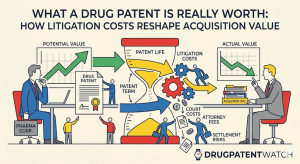
This is not a minor oversight. The median cost of a single Hatch-Waxman patent trial in the United States runs between $3 million and $10 million per party. When you factor in the revenue at stake during the litigation period, the business disruption, and the probability of an at-risk generic launch, the real cost of defending a blockbuster drug’s patent frequently exceeds $500 million in value impact. For acquirers who pay 10x or 15x revenue multiples for branded pharmaceutical assets, mispricing that risk by even a small percentage translates directly into shareholder wealth destruction.
The pharmaceutical industry spent more than $19 billion on branded drug acquisitions in Q1 2024 alone [1]. A substantial portion of that capital is deployed against assets whose IP protection is, at the moment of signing, being actively challenged — or is highly likely to be challenged within 12 to 18 months of deal close.
The irony is that the information to price this risk correctly exists. Patent filings are public. Paragraph IV certification histories are traceable. Inter partes review petitions are searchable at the USPTO. Databases like DrugPatentWatch aggregate the complete patent landscape for any drug — its Orange Book listings, expiration dates, Paragraph IV challenge histories, and associated litigation timelines — in ways that no competent deal team has any excuse for ignoring. The problem is not information availability. The problem is that deal teams routinely treat IP due diligence as a legal checkbox rather than a valuation input.
This article lays out exactly how patent litigation costs flow through to acquisition value, what the actual numbers look like across real deal scenarios, and what a rigorous litigation-adjusted valuation framework looks like in practice.
Patent Valuation in Pharma M&A: The Basics and the Blind Spots
What You’re Actually Buying When You Buy a Patent
A pharmaceutical patent is not a guarantee of market exclusivity. It is a government-issued right to sue infringers. The distinction matters enormously when you are paying a 40% acquisition premium.
The legal right to exclude competitors from making, using, or selling a patented compound does not automatically translate into the ability to exercise that right economically. The right must be enforced, and enforcement costs money, takes years, and produces uncertain outcomes. Generic manufacturers know this and have built entire business models around the gap between a patent’s nominal protection and the practical cost of defending it.
When a company acquires a pharmaceutical asset, it is acquiring a bundle of rights: compound patents, formulation patents, method-of-use patents, process patents, and potentially device or delivery mechanism patents. Each category carries a distinct litigation risk profile. Compound patents tend to be the most defensible but also the most targeted. Formulation and method-of-use patents are more vulnerable to invalidity challenges, particularly on obviousness grounds.
Beyond patents, the acquirer is also buying regulatory exclusivity periods that run independently of patent law. New chemical entity (NCE) exclusivity provides five years of market protection regardless of patent status. Orphan drug exclusivity provides seven years. Pediatric exclusivity adds six months. These exclusivity periods are not subject to Paragraph IV challenge and are often more durable than the underlying patent estate — a point that significantly affects how litigation risk should be modeled in any given deal.
Understanding which portion of projected cash flows depends on patents versus regulatory exclusivity is the first analytical step any serious acquirer needs to take. It is also a step that a surprisingly large number of acquirers perform inadequately.
The Gap Between Nominal Patent Life and Effective Market Exclusivity
A drug patent filed at the time of an IND application might have 20 years of nominal life from its priority date. But by the time a drug reaches FDA approval — which takes an average of 10 to 15 years from initial patent filing — the remaining patent term is often just 5 to 10 years [2]. Regulatory agencies grant patent term extensions under the Hatch-Waxman Act to compensate for time spent in FDA review, capped at 5 additional years, but this restoration is itself subject to complex calculations and disputes.
The practical effective market exclusivity period for a branded drug, from first commercial sale to generic entry, averages roughly 12.5 years for drugs that successfully defend their patents — but only about 7.9 years when Paragraph IV challenges succeed [3]. That four-to-five-year difference in commercial exclusivity, applied to a drug generating $2 billion in annual revenue, represents a present-value difference measured in the billions of dollars.
The core error in standard pharma valuation models is treating the statutory patent expiration date as equivalent to the date of generic entry. It is not. Generic manufacturers can and do enter the market before patent expiration when they prevail in litigation. They sometimes enter on an “at risk” basis while litigation is still pending. And even when they lose at trial, the mere act of filing Paragraph IV certifications — and the associated litigation — consumes years of commercial exclusivity through management distraction, legal costs, and investor uncertainty.
Why Acquirers Routinely Get This Wrong
Pharma deal teams face a structural incentive problem. The bankers and management teams driving a transaction are compensated on deal completion, not on deal outcome. The IP lawyers performing patent due diligence are specialists in identifying whether claims are valid, not in quantifying what invalidation risk means in NPV terms. The financial analysts building DCF models are skilled at projecting revenue curves but have limited training in patent law. The result is that each specialist knows their own domain and nobody prices the intersection of legal risk and financial outcome.
A 2023 survey by KPMG found that IP-related issues account for approximately 23% of post-close M&A disputes in the life sciences sector [4]. These disputes are almost never about whether patents were disclosed — they almost always were. They are about whether the litigation risk associated with those patents was correctly priced into the acquisition consideration.
The second structural problem is timeline compression. Competitive deal processes move fast. Patent due diligence done well requires reviewing prosecution histories, analyzing claim construction, researching prior art, modeling generic entry scenarios, and consulting with litigation specialists. Doing it in three weeks during a compressed sale process is possible but always incomplete. Acquirers who win competitive auctions often do so by compressing due diligence timelines — and they pay for that compression in post-close litigation costs.
The Anatomy of Drug Patent Litigation
Hatch-Waxman Paragraph IV Challenges: The Primary Battlefield
The Drug Price Competition and Patent Term Restoration Act of 1984 — universally known as Hatch-Waxman — created the legal framework within which virtually all small-molecule drug patent disputes occur. Understanding its mechanics is not optional for anyone involved in pharmaceutical M&A.
When a generic manufacturer files an Abbreviated New Drug Application (ANDA) with the FDA, it must certify with respect to each listed patent in the Orange Book. A Paragraph IV certification asserts that the listed patents are invalid, unenforceable, or will not be infringed by the generic product. Filing a Paragraph IV certification is itself an act of patent infringement under the statute, which allows the branded company to sue immediately.
The ANDA filer that is first to file a substantially complete Paragraph IV ANDA earns 180 days of generic market exclusivity if it prevails. That exclusivity is enormously valuable — typically worth hundreds of millions of dollars for a major drug — and it creates fierce competition among generic manufacturers to be first to file. The result is that any commercially significant drug approaching patent expiration will almost certainly face multiple Paragraph IV certifications, often filed simultaneously by competing generic manufacturers.
From an acquirer’s perspective, the Paragraph IV challenge is not merely a legal risk. It is a near-certainty for any acquisition target with meaningful branded drug revenues and patents within 10 years of expiration. The relevant questions are not “will there be a Paragraph IV challenge” but rather “when will it come, which patents will be challenged, what is the probability of each patent being invalidated, and what are the revenue consequences of each outcome.”
The 30-Month Stay: A Feature, Not a Bug
When a branded company receives notice of a Paragraph IV certification and files suit within 45 days, Hatch-Waxman automatically triggers a 30-month stay on FDA approval of the generic ANDA. During this stay, the FDA cannot grant final approval to the generic product. This gives the branded company time to litigate without facing immediate generic competition.
The 30-month stay is often described as a mechanism that protects branded innovation. It is also a mechanism that generic manufacturers have learned to price and plan around. A sophisticated generic filer will plan its regulatory timeline, manufacturing scale-up, and commercial launch preparation to align with the end of the stay period. By the time the stay expires, a successful generic challenger is ready to ship product the day a court rules in its favor — or the day it decides to launch at risk.
The stay’s value to an acquirer depends on the stage of litigation when the deal closes. If a target company is acquired 24 months into a 30-month stay, the acquirer has at most six months of protection before the FDA can clear the generic for approval. If the stay expires before litigation concludes — which happens more often than deal teams assume — the acquirer faces the realistic possibility of generic entry before the case is decided.
When the Stay Expires Before the Verdict Arrives
Hatch-Waxman patent trials take an average of approximately 18 to 30 months from the filing of the complaint to a district court judgment [5]. This timeline frequently runs longer than the 30-month stay. When it does, the period between stay expiration and the final judgment is one of the highest-risk windows in pharmaceutical patent litigation.
During this window, the generic company has three options. It can wait for the court to decide. It can negotiate a settlement. Or it can launch at risk. An at-risk launch means the generic company begins selling its product even though the case has not been decided, accepting the possibility that if the branded company ultimately prevails, it will owe substantial damages for the revenues it earned during the at-risk period.
At-risk launches are not rare. They occurred in the disputes over Plavix (clopidogrel), OxyContin (oxycodone), and Protonix (pantoprazole sodium), among dozens of others. In the Protonix case, Wyeth’s at-risk launch damages claim against Teva exceeded $4.2 billion [6]. An acquirer closing a deal during an active Paragraph IV dispute must model the at-risk launch scenario as a realistic, probability-weighted outcome — not a tail risk.
Inter Partes Review: The Second War
The America Invents Act of 2011 created the Inter Partes Review (IPR) proceeding at the Patent Trial and Appeal Board (PTAB). An IPR allows any party to challenge the validity of issued patents on grounds of anticipation or obviousness over prior art, outside of federal court. IPR proceedings are faster, cheaper for challengers, and statistically more favorable to patent challengers than federal court litigation.
From 2013 through 2023, the overall institution rate for IPR petitions in the pharmaceutical sector averaged approximately 67% [7]. Of instituted IPRs, roughly 73% result in at least some claims being canceled or amended. These numbers mean that a challenged pharmaceutical patent faces genuine probability of claim cancellation even when the branded company has substantial resources to defend it.
For acquirers, IPR risk is separate from and cumulative to Paragraph IV litigation risk. A generic company that files a Paragraph IV certification can simultaneously file an IPR petition against the same patents. Even if the branded company wins the Hatch-Waxman trial in district court, the PTAB can independently cancel the patent claims. And because PTAB decisions can be appealed to the Federal Circuit but rarely reversed, an IPR loss is often permanent.
The strategic implications for M&A are concrete. Any acquisition target whose core patents are within the statutory window for IPR challenge (any patent that has been issued for fewer than nine years at the time the petition is filed) carries IPR risk that must be separately modeled from Hatch-Waxman trial risk. A drug entering its fifth year of commercialization, with several years remaining on its core compound patent, may face simultaneously a Paragraph IV trial and one or more PTAB proceedings. The legal costs of fighting on two fronts, combined with the probability of losing on at least one, can materially erode the value of an acquisition.
At-Risk Generic Launches and Their Financial Consequences
The financial math of an at-risk launch is sobering and worth examining in explicit terms.
A branded drug generating $1.5 billion in annual U.S. net revenues typically experiences 80% to 90% volume erosion within 12 months of a generic launch, as payers and pharmacy benefit managers aggressively substitute [8]. If a generic company launches at risk and the branded company does not obtain a preliminary injunction — which courts grant only when the branded company can demonstrate a strong likelihood of success on the merits — the revenue impact begins immediately.
Preliminary injunctions in pharmaceutical patent cases are rare. The Federal Circuit’s 2006 decision in Abbott Laboratories v. Andrx Pharmaceuticals established a framework that makes it very difficult to obtain an injunction without a clear showing on the merits, which is rarely available before trial. Courts are also reluctant to issue injunctions that would prevent a lower-cost medicine from reaching patients, a consideration that has become more prominent in recent years.
The practical result is that once a generic launches at risk, the branded company’s revenue decline begins before any legal verdict. Even if the branded company eventually wins the trial and obtains a damages award, the time value of those lost revenues, the cost of the litigation itself, and the disruption to commercial operations mean that a victory on the merits does not fully compensate for the at-risk period.
For an acquirer that closes a deal while Paragraph IV litigation is pending, this is a material risk that should be quantified, probability-weighted, and reflected in the deal price. It almost never is.
What Drug Patent Litigation Actually Costs
Direct Legal Costs: Counsel, Discovery, and Expert Witnesses
The American Intellectual Property Law Association’s 2023 Report of the Economic Survey found that the median total cost of a patent infringement case with more than $25 million at risk is approximately $5.5 million per side through final disposition [9]. For pharmaceutical patent cases — which routinely involve more than $1 billion at stake, multiple patents, complex scientific discovery, and expert-intensive trials — the actual costs are substantially higher.
A well-resourced branded company defending a major Hatch-Waxman case against several generic filers can expect to spend $20 million to $40 million in legal fees over the life of the litigation. This includes outside counsel fees (typically $500 to $1,500 per hour for lead partners at major IP firms), discovery costs (which in complex cases with millions of documents can exceed $5 million before trial begins), and expert witness fees (pharmaceutical chemists, pharmacologists, clinical experts, and patent law experts charge $400 to $800 per hour and may bill 1,000 or more hours in a complex case).
These numbers do not include the internal cost of litigation. A major patent trial requires significant time from the company’s own scientists, regulatory staff, and senior management. Key opinion leaders who serve as inventors on the challenged patents become witnesses. Medical affairs personnel prepare scientific materials. The opportunity cost of redirecting these resources from productive work to litigation support is rarely captured in legal budget estimates but can easily exceed the direct legal costs for a large organization.
When litigation spans multiple fronts — a federal district court trial plus one or more PTAB proceedings plus state court proceedings plus European Patent Office oppositions — the total cost multiplies. AbbVie’s decade-long defense of its Humira (adalimumab) patent portfolio involved litigation on multiple continents, more than 250 patent applications, and legal costs that industry analysts estimated at several hundred million dollars over the full litigation period [10].
Indirect Costs: Management Distraction, R&D Reallocation, and Investor Confidence
Direct legal costs are visible and quantifiable. Indirect costs are less obvious but often larger.
A pharmaceutical company defending major patent litigation devotes significant executive attention to the case. The CEO, General Counsel, Chief Scientific Officer, and Chief Commercial Officer all become regular consumers of litigation updates, strategy sessions, and settlement discussions. For a company with one or two major revenue-generating drugs under patent challenge — which describes many mid-cap acquirers — this distraction has measurable effects on other business priorities.
Clinical trial timelines slow when senior scientists spend time on litigation preparation. Business development activities slow when the M&A team is preoccupied with due diligence for ongoing disputes. Strategic planning becomes uncertain when the company’s primary revenue source is subject to potentially imminent generic competition.
Investor confidence is also a quantifiable cost. Markets discount the equity of companies facing Paragraph IV litigation against major revenue-generating products. Academic research estimated that for large-cap branded pharmaceutical companies, the announcement of a Paragraph IV certification filing against a major product reduces market capitalization by an average of 3.6% in the two days following the announcement [11]. For a company with a $30 billion market cap, that is more than $1 billion in value evaporation from a single filing that may not produce a verdict for three to five years. <blockquote> “A Paragraph IV certification against a major branded drug reduces the reference product sponsor’s market capitalization by an average of 3.6% within two trading days — a loss that frequently exceeds $1 billion for large-cap pharmaceutical companies, before a single day of trial has occurred.” — Kyle & McGahan, *Review of Economics and Statistics*, 2012 [11] </blockquote>
For an acquirer, this dynamic creates a double problem. First, if the target company’s stock is publicly traded and a Paragraph IV certification was filed before the deal was announced, the market has already partially discounted the target’s equity for patent risk. The acquirer that fails to perform its own independent analysis of that risk may be paying a premium on top of a market price that has already been partially impaired. Second, if the Paragraph IV certification is filed after deal announcement but before close, the acquirer faces a renegotiation dynamic.
The Hidden Cost of Uncertainty: Delayed Commercial Decisions
The most invisible cost of drug patent litigation is what it prevents companies from doing during the litigation period.
When a major patent is under challenge, commercial decision-making freezes in ways that have concrete financial consequences. Companies are reluctant to make major investments in capacity expansion for a product whose patent might be invalidated. Sales force expansion and marketing investment are throttled. Partnership and licensing decisions are deferred. Co-promotion arrangements with partners are renegotiated with litigation risk pricing baked in.
For an acquirer, the target company’s conduct during a pending Paragraph IV dispute matters. A company that has been conserving investment in a product under patent challenge — quite rationally — may be delivering artificially low near-term revenues that represent a baseline from which the acquirer’s projections will launch. If the litigation resolves favorably, those deferred investments become necessary at scale and at the acquirer’s expense. If it resolves unfavorably, the revenue projections on which the deal was premised evaporate.
Case Studies: Litigation That Transformed Deal Value
AbbVie and Allergan: An IP Stack Under Scrutiny
AbbVie’s $63 billion acquisition of Allergan, completed in May 2020, provides an instructive case study in how patent portfolio complexity interacts with acquisition value. The deal was primarily valued on Allergan’s aesthetics franchise (Botox, Juvederm) and its pipeline, but it also brought a substantial pharmaceutical patent estate that included products facing various stages of IP challenge.
Allergan’s Restasis (cyclosporine ophthalmic emulsion) had already lost its patent protection at the time of the deal’s announcement, following a controversial effort to transfer patents to the St. Regis Mohawk Tribe to avoid PTAB review — a strategy that the courts ultimately rejected. The Restasis revenue line, approximately $1.5 billion annually before generic entry, had already collapsed by the time the deal closed, which was factored into the deal structure. But the manner in which that patent loss occurred raised questions about the robustness of Allergan’s IP strategy more broadly.
For acquirers studying this deal, the lesson is that the identity of the patent holder matters as much as the patents themselves. AbbVie’s acquisition brought significant IP management capabilities to bear on Allergan’s portfolio, but it also inherited the reputational and legal consequences of Allergan’s more aggressive patent defense strategies. The integration of two large pharmaceutical patent estates is itself a legal project that generates ongoing compliance risk.
Bristol-Myers Squibb and Celgene: Revlimid’s Scheduled Cliff
Bristol-Myers Squibb’s $74 billion acquisition of Celgene in November 2019 was one of the largest pharmaceutical deals in history. Its central analytical challenge was one of the most complex patent valuation problems any deal team has faced: how to price the anticipated revenue decline of Revlimid (lenalidomide), which accounted for approximately 63% of Celgene’s revenues at the time of the deal.
Celgene had negotiated a series of settlements with generic manufacturers that established a structured entry schedule for generic lenalidomide. These settlements allowed generic companies to enter the market at specified future dates with volume-limited licenses. The first authorized generic was scheduled to enter in March 2022, with additional generics and volume escalation through 2026.
BMS thus acquired an asset with a known, contractually scheduled revenue cliff. The patent litigation had already been fought and settled. What BMS was pricing was not litigation uncertainty but settlement certainty — a cleaner valuation problem, but one that still required sophisticated modeling of how quickly Revlimid revenues would erode as generic volumes increased under the settlement terms.
The BMS-Celgene deal is notable for two reasons. First, it illustrates that settled Hatch-Waxman litigation, while it eliminates trial uncertainty, creates a different kind of valuation complexity: modeling the precise revenue erosion trajectory specified by the settlement agreement. Second, it shows that patent litigation outcomes — in this case, settlements rather than verdicts — directly structure the post-acquisition revenue profile in ways that have multi-billion-dollar consequences.
BMS has since navigated the Revlimid generic entry on terms broadly consistent with its pre-acquisition models, but analysts who tracked the deal noted that the volume ramp of generics and the price erosion curve moved faster than some of BMS’s public projections suggested [12]. The settlement structure gave generic manufacturers strong incentives to compete aggressively on price as their volume limits increased — a dynamic that accelerated branded revenue erosion.
Pfizer and the Lyrica/Pregabalin Litigation
Pfizer’s experience defending the Lyrica (pregabalin) franchise offers a case study in litigation across multiple jurisdictions with asymmetric outcomes. Lyrica was one of Pfizer’s highest-revenue products, generating approximately $4.6 billion globally in 2017 before generic entry began in various markets.
In the United Kingdom, the Court of Appeal ruled in 2018 that Pfizer’s method-of-use patent covering Lyrica’s use in neuropathic pain was valid and had been infringed. This decision confirmed that method-of-use patents could provide meaningful protection even when the compound itself had lost patent coverage. The UK victory extended Lyrica’s exclusivity period for neuropathic pain indications.
In the United States, the compound patent for pregabalin expired in 2018, at which point multiple generics entered. But Pfizer retained method-of-use patents covering specific dosing regimes and specific indications, which it licensed to authorized generic manufacturers. The resulting revenue structure was a blend of branded sales, authorized generic revenue under license, and the competitive pressure of unauthorized generics that ultimately paid damages.
For acquirers of assets with similar profiles — compounds approaching compound patent expiration with subsidiary method-of-use or formulation patents still in force — the Lyrica situation is instructive. The economic value of these secondary patents is real but contested and jurisdiction-specific. A deal team that models full exclusivity through method-of-use patent expiration will overprice the asset. A deal team that ignores secondary patents entirely will underprice it. Getting the analysis right requires detailed claim-by-claim analysis, a probability-weighted assessment of each patent’s defensibility, and separate modeling for major international markets.
Mid-Cap Deals Where Paragraph IV Risk Was Underpriced
Not every cautionary tale involves a $50 billion deal. Mid-cap transactions in the $500 million to $5 billion range are where patent litigation mispricing is most common and most destructive on a relative basis.
Consider the general pattern of a specialty pharma acquirer purchasing a branded cardiovascular or CNS drug with three to five years of apparent remaining patent life. The deal team performs financial modeling based on the statutory patent expiration dates. They retain IP counsel who review the patent portfolio and note that while Paragraph IV certifications have not yet been filed, the commercial significance of the drug means they are likely to come.
The acquirer models a patent expiration date consistent with the most defensible patent in the portfolio, applies a 75% probability that litigation, if it occurs, will be successfully defended, and closes the deal at a 12x revenue multiple.
Eighteen months later, three Paragraph IV certifications arrive simultaneously. The litigation that follows consumes $15 million in legal fees over 30 months. The generic manufacturers prevail on two of the three challenged patents. Generic entry occurs 28 months before the acquirer’s model assumed. Peak revenue had already been achieved, and the acquirer’s projected post-deal growth story evaporates.
This pattern has repeated itself with enough regularity across specialty pharma M&A that it should be treated as a known failure mode rather than a surprising outcome. Data from DrugPatentWatch and the FDA’s ANDA approval database shows that for drugs with more than $200 million in annual U.S. sales and more than 24 months of patent life remaining, the probability of a Paragraph IV certification filing within 36 months of any given date exceeds 70% [13]. Any deal team acquiring such an asset without specifically modeling Paragraph IV risk is not performing adequate due diligence.
How Litigation Risk Reshapes Deal Structure
Contingent Value Rights: Moving Risk to the Seller
The contingent value right (CVR) is the pharmaceutical deal world’s primary tool for allocating patent litigation risk between buyer and seller. A CVR is a contractual promise by the acquirer to make an additional payment to target shareholders if a specified future event occurs. In patent-sensitive deals, that event is often a favorable patent outcome: a trial victory, a patent surviving IPR review, or generic entry not occurring before a specified date.
CVRs are used when patent risk is material enough to affect deal pricing but the parties cannot agree on the probability-adjusted value of the underlying asset. Rather than arguing about whether a patent will survive a likely Paragraph IV challenge, the deal structure transfers a portion of the economic consequences of that outcome to the seller, who presumably has better information about the strength of the IP.
The Bristol-Myers Squibb/Celgene deal included a notable CVR structure tied to three pipeline assets. While these CVRs were tied to regulatory rather than patent milestones, the structure illustrates how contingent consideration bridges valuation gaps in complex pharmaceutical transactions. BMS ultimately did not trigger the CVR payments, and the CVRs fell from $3 to $5 each after deal close to near zero [14].
This outcome illustrates both the value and the risk of CVR structures. For sellers, CVRs provide upside participation in patent outcomes they believe are favorable — but this upside is contingent on outcomes that a court or the PTAB may not deliver. For acquirers, CVRs provide protection against paying full price for IP that subsequently fails — but they also create ongoing administrative complexity and, if the patent outcome is favorable, significantly increase the total consideration paid.
CVR structures work best when the patent risk is specific, binary, and assessable on a defined timeline. “Will Patent X survive an IPR proceeding that has already been filed” is a better CVR trigger than “will generic competition occur before 2029,” because the latter involves multiple interacting uncertainties that make pricing the CVR nearly impossible.
Earnout Provisions Tied to Patent Outcomes
Earnout provisions serve a related but distinct function from CVRs. Where a CVR is typically a tradeable security representing a specific contingent payment, an earnout is a contractual obligation for the acquirer to pay additional consideration based on the acquired business achieving specified performance milestones.
In patent-sensitive pharmaceutical acquisitions, earnouts are sometimes structured around commercial performance milestones that are explicitly or implicitly tied to patent outcomes. An earnout that pays the seller an additional $500 million if annual revenues exceed $1.5 billion in any of the three years following close is, in practice, a bet on the combined outcome of commercial execution and patent defense, since generic competition would prevent the revenue milestone from being hit.
This structure transfers patent risk to the seller implicitly rather than explicitly. The seller retains upside if the patents hold — because the revenue milestone can only be hit if exclusivity is maintained — and accepts downside if the patents fall, because the milestone will not be triggered. The acquirer pays less upfront, accepting the possibility that it will owe more if the IP performs as the seller claimed.
Earnout disputes are expensive and common. Research by SRS Acquiom found that approximately 38% of life sciences deals with earnout provisions end in disputes, and the pharmaceutical sector accounts for a disproportionate share [15]. When earnout disputes involve patent-related milestones, they layer IP litigation risk onto commercial dispute risk, creating legal costs that can exceed the earnout payment itself.
Indemnification Clauses and Their Practical Limits
Every pharmaceutical acquisition agreement contains representations and indemnification provisions relating to intellectual property. The seller typically represents that the patents are valid, that there are no pending or threatened challenges, that the patents have been properly prosecuted and maintained, and that the seller is not aware of prior art that would invalidate the claims.
These representations sound robust. They are frequently inadequate.
The core problem with IP representations in pharmaceutical M&A is that “to the knowledge of the seller” qualifications reduce the practical scope of the indemnification to matters the seller is actually aware of. A seller that has not searched for invalidating prior art has no knowledge of prior art. Its representation that it knows of no invalidating prior art is technically accurate but substantively useless.
Indemnification caps — typically set at a percentage of the purchase price, commonly between 10% and 25% — further limit the protection available to acquirers. If a $3 billion drug acquisition contains a $300 million (10% cap) indemnification for IP breaches, and a successful Paragraph IV challenge destroys $1.5 billion in value, the indemnification covers 20% of the loss. The acquirer absorbs the rest.
Time limits on indemnification claims also constrain protection. Pharma patent litigation can drag on for five to seven years. Most acquisition agreement survival periods for IP representations are 18 to 36 months. A Paragraph IV verdict that arrives at month 42 post-close is typically beyond the scope of any indemnification claim.
Acquirers who understand these limitations negotiate hard for longer survival periods, higher indemnification caps, and specific indemnities for known or pending patent challenges rather than relying on general representations. But even well-negotiated indemnification provisions are a poor substitute for correct pricing of patent risk at the time of the deal.
Representations and Warranties Insurance in IP-Heavy Deals
Representations and warranties (R&W) insurance has grown substantially as a tool in pharmaceutical M&A over the past decade. The product provides coverage to the acquirer for losses arising from breaches of representations and warranties in the acquisition agreement, with the insurer paying claims rather than the selling entity.
R&W insurance has meaningful limitations in the context of pharmaceutical patent risk. Most R&W policies exclude coverage for “known” risks — matters identified in due diligence or disclosed in the disclosure schedules. A Paragraph IV certification that was already filed before deal close is, by definition, a known risk and falls outside R&W policy coverage. IPR petitions that were pending at close are similarly excluded.
Specialized IP representations and warranties insurance products do exist, offered by a small number of insurers willing to underwrite patent validity risk specifically. These products require detailed IP due diligence, independent opinion of counsel on patent strength, and claim-specific analysis. Premiums are substantial — typically 2% to 5% of the insured limit — and available limits may be insufficient for major pharmaceutical patent exposures. But for mid-size deals where patent risk is concentrated in one or two key patents, specialized IP insurance can be a cost-effective risk transfer mechanism.
The Due Diligence Framework That Actually Works
Freedom-to-Operate Analysis
A freedom-to-operate (FTO) analysis asks a specific question: can the acquirer make, use, and sell the target product without infringing patents held by third parties? This is distinct from the question of whether the target’s own patents are valid and defensible. An FTO analysis addresses the risk that the acquired product itself might infringe someone else’s IP.
FTO risk in pharmaceuticals is real and frequently underassessed. Synthetic process patents, manufacturing method patents, and formulation patents held by third parties can render an acquired product vulnerable to infringement claims that the acquirer inherits along with the asset. These claims are separate from Hatch-Waxman challenges — they are offensive claims by patent owners other than the branded company against the branded company’s commercial activities.
A thorough FTO analysis requires searching patents and published patent applications in all relevant jurisdictions, identifying potentially relevant claims, analyzing whether those claims read on the target’s commercial product and manufacturing process, and assessing the strength and remaining term of identified patents. This is labor-intensive work that requires both technical and legal expertise, and it cannot be fully completed in a short due diligence window.
For acquirers, the practical approach is to prioritize FTO analysis for the highest-revenue products and the manufacturing processes that are most likely to use patented technology. Synthesis routes for complex molecules, especially biologics with complex cell culture processes, carry greater FTO risk than simple small-molecule APIs manufactured by conventional organic chemistry.
Patent Landscape Analysis: Where Tools Like DrugPatentWatch Come In
Effective patent due diligence requires a comprehensive map of the IP landscape surrounding the target’s products. This map needs to include the target’s own patents, the patents listed in the FDA’s Orange Book, the Paragraph IV certification history for those Orange Book patents, the status of any ongoing Hatch-Waxman litigation, patent term extension certificates, and any PTAB proceedings affecting the relevant patents.
Building this map from raw USPTO and FDA data is time-consuming but feasible. Specialized databases make it dramatically faster. DrugPatentWatch aggregates patent expiration data, Orange Book listings, Paragraph IV challenge histories, ANDA filing information, and litigation records for virtually every drug on the U.S. market. For a deal team performing due diligence on a pharmaceutical acquisition, DrugPatentWatch provides the starting point for patent landscape analysis that would otherwise require days of manual searching across multiple government databases.
A patent landscape analysis generated through DrugPatentWatch will typically reveal, for any major branded drug, the full list of patents protecting the product, the expiration dates of each (accounting for patent term extensions), any Paragraph IV certifications that have been filed, the names of the generic filers, and the current status of any related litigation. This information is invaluable for identifying which patents are actually protecting commercial revenues and which are merely listed in the Orange Book as a defensive measure without material commercial significance.
The analysis also identifies patterns that should prompt deeper investigation. A drug with ten Orange Book-listed patents but only two that have survived prior Paragraph IV challenges occupies a materially different position than a drug whose entire patent estate remains unchallenged. A drug whose formulation patent has already been held invalid in a different jurisdiction faces obvious risk in U.S. proceedings. These patterns are visible to anyone who takes the time to map the landscape systematically.
Prosecution History and Claim Construction Review
The prosecution history of a patent — the complete record of communications between the patent applicant and the USPTO examiner during the examination process — is one of the most important and most frequently overlooked components of pharmaceutical patent due diligence.
Prosecution history matters because statements made by the applicant during prosecution can limit the scope of the issued claims. If a patent applicant argued during examination that its compound was novel over a particular piece of prior art by claiming a specific structural feature, that argument may prevent the applicant from later claiming that the patent covers compounds without that feature. This doctrine of prosecution history estoppel can significantly narrow the effective scope of issued claims in ways that are invisible from reading the patent itself.
A competent claim construction review looks at both the patent and its prosecution history together and identifies any arguments or amendments that might limit claim scope in litigation. For pharmaceutical patents specifically, claim construction disputes frequently arise over terms like “substantially all,” “about,” “effective amount,” and similar qualitative language that appears throughout the pharmaceutical patent literature. If a patent’s key claims use language whose scope is genuinely uncertain, it faces elevated invalidity risk.
Invalidity Analysis and Prior Art Searches
The most direct assessment of patent litigation risk is an independent invalidity analysis. This requires retaining technically qualified experts to perform a comprehensive search for prior art that might anticipate or render obvious the claims of the key patents in the target’s portfolio.
A thorough invalidity analysis for a small-molecule drug patent searches the scientific literature (journals, conference proceedings, theses), patent literature (both U.S. and international), regulatory filings (FDA submissions are sometimes prior art to subsequently filed patent claims), and commercial databases of chemical structures. For biologics patents, the search also covers cell culture techniques, expression systems, purification processes, and formulation chemistry.
The goal is to identify the strongest arguments for invalidity before a deal closes, not to prove invalidity — that is the generic manufacturer’s job. The analysis serves a different purpose: it tells the acquirer what arguments generic manufacturers are likely to make, how those arguments compare to the prior art actually available, and which claims are most likely to survive challenge. This risk-stratified view of the patent portfolio is the foundation for realistic patent risk modeling.
For priority assessment, the most important patents to analyze in depth are those protecting products in the three-to-eight year window before their stated expiration. These are the patents most likely to face imminent Paragraph IV challenges — close enough to expiration to be attractive targets for generic manufacturers already planning their ANDA submissions, but far enough away that invalidation would represent a meaningful acceleration of generic entry.
How Courts and the USPTO Are Changing the Patent Math
IPR Survival Rates: The Data
The Patent Trial and Appeal Board’s track record in pharmaceutical patent proceedings has evolved significantly since IPR was established in 2012. Understanding that evolution is essential to any current assessment of IPR risk.
In the early years of IPR, institution rates were high and claim cancellation rates were even higher. The PTAB was sometimes characterized as a “patent death squad.” Courts and Congress have since introduced modifications that have somewhat improved the odds for patent owners. The institution rate for pharmaceutical IPRs declined from approximately 77% in fiscal year 2016 to around 63% in fiscal year 2022, reflecting the PTAB’s more rigorous threshold analysis for institution [16].
The NHK-Fintiv rule, codified by the PTAB in 2020, gave the Board discretion to deny institution of an IPR petition when related district court litigation is advanced enough that a parallel PTAB proceeding would be inefficient. This rule modestly favored patent owners by allowing them to use the timing of their district court cases to block IPR petitions. The rule’s application has been inconsistent and was the subject of proposed rulemaking in 2022, adding another layer of uncertainty to IPR timing strategy.
For pharmaceutical patent claims that have survived IPR review, the federal courts have generally granted them greater deference. A claim that the PTAB has already reviewed and declined to cancel carries persuasive weight in district court — though not formal legal deference — when a challenger raises the same invalidity arguments in Hatch-Waxman litigation.
For acquirers, the current IPR landscape means that a core pharmaceutical patent that has already faced and survived an IPR petition is genuinely more defensible than one that has not yet been tested at PTAB. The drug patent landscape tracked in resources like DrugPatentWatch includes IPR petition histories and outcomes alongside Hatch-Waxman litigation records, allowing deal teams to identify which patents have already demonstrated IPR survivability and which remain untested.
The In re Cellect Decision and Patent Term Adjustment Risk
A 2023 Federal Circuit decision in In re Cellect introduced a new and underappreciated dimension of pharmaceutical patent risk. The case addressed the interaction between patent term adjustment (PTA) — the additional patent term granted to compensate for USPTO examination delays — and the doctrine of obviousness-type double patenting (ODP).
ODP is a judicially-created doctrine that prevents a patent owner from extending market exclusivity by obtaining multiple patents with claims that are not patentably distinct from each other. The traditional application of ODP required that any “second” patent expire no later than the “first” patent.
In Cellect, the Federal Circuit held that PTA granted to one patent does not extend the date on which ODP requires a terminal disclaimer — the filing by which a patent owner agrees to limit the patent’s term to expire with a related patent. The practical effect for pharmaceutical companies with large patent families is that patents with substantial PTA may be subject to ODP challenges that limit their effective term to less than the PTA would suggest.
For pharmaceutical M&A, this decision creates genuine due diligence complexity. A patent with a nominal expiration date of 2031 that includes three years of PTA might be vulnerable to an ODP challenge that limits its effective term to 2028. If a generic manufacturer raises this argument successfully in a Paragraph IV proceeding or IPR, the revenue protected by the assumed 2031 date disappears three years early.
Deal teams reviewing patent portfolios after Cellect need to flag all patents with substantial PTA, identify the related patent family members whose expiration dates might limit the PTA-adjusted term, and assess the ODP risk on a patent-by-patent basis. This analysis requires specialized patent law expertise that is beyond standard legal due diligence and must be specifically requested.
35 U.S.C. § 101 and Method-of-Treatment Claims
The Supreme Court’s 2012 decision in Mayo Collaborative Services v. Prometheus Laboratories established a framework for analyzing whether method-of-treatment claims are eligible for patent protection under Section 101. The decision has had ongoing reverberations for pharmaceutical patents that claim methods of treatment rather than novel compounds.
Method-of-treatment patents that recite steps of administering a drug to a patient and observing a natural phenomenon face Section 101 eligibility challenges on the grounds that they claim a law of nature plus conventional steps. Personalized medicine patents and pharmacogenomics patents are particularly vulnerable. Drug-diagnostic combination patents — which are increasingly common as precision medicine advances — face the highest Section 101 risk.
For pharmaceutical M&A, Section 101 risk is most relevant for acquired assets that rely substantially on method-of-treatment patents for commercial exclusivity. If the compound patent on an acquired drug has expired or is weak, and the primary remaining protection comes from a method-of-use patent of the type challenged under Mayo and its progeny, the Section 101 vulnerability of those claims must be specifically assessed. An acquired drug whose primary IP protection rests on a method-of-treatment patent claiming a biomarker-guided dosing regimen may have significantly less effective protection than the patent’s expiration date would suggest.
Regulatory Exclusivity vs. Patent Protection: A Distinction That Costs Acquirers Money
NCE, Orphan Drug, and Pediatric Extensions
Pharmaceutical acquirers who conflate patent protection with regulatory exclusivity routinely overpay for early-stage assets and underpay for mature assets. Understanding the distinction between these two forms of market protection is not just a regulatory technicality — it directly affects the risk profile of the IP being acquired.
New Chemical Entity exclusivity provides five years of protection against ANDA filings for drugs containing an active moiety that has never been approved by the FDA. During the NCE exclusivity period, a generic company cannot even file a Paragraph IV certification. This protection is absolute within its scope and entirely independent of the patent landscape. An acquired drug that is still within its NCE exclusivity period has zero Paragraph IV litigation risk during that window — a material risk reduction that should lower the litigation risk premium in the valuation.
Orphan drug exclusivity provides seven years of protection for drugs designated to treat rare diseases affecting fewer than 200,000 Americans. This exclusivity also prevents FDA approval of competing products for the same indication, which is even stronger than NCE exclusivity in its scope. An acquired drug with orphan status and seven years of remaining orphan exclusivity may have far more durable commercial protection than its patent estate alone would suggest.
Pediatric exclusivity adds six months to any other exclusivity period or patent protection when a company conducts FDA-requested pediatric studies. This extension is not enormous in absolute terms, but for a drug generating $2 billion annually, six months of additional exclusivity represents $1 billion of incremental revenue — and the cost of the pediatric studies needed to earn it is a fraction of that value.
For acquirers, the key analytical discipline is to map the target’s regulatory exclusivity landscape separately from and alongside its patent landscape, and to understand which exclusivity type is providing protection during which time periods. A drug that loses its primary compound patent in 2026 but retains NCE exclusivity until 2027 and pediatric extension until mid-2027 has a materially different risk profile than a drug whose only protection is a compound patent expiring in 2026 with no regulatory exclusivity.
The Interplay Between Regulatory and Patent Cliffs
The interaction between regulatory exclusivity expiration and patent expiration creates a bifurcated risk profile for acquired pharmaceutical assets. When regulatory exclusivity expires before patent protection, generic manufacturers can file ANDAs (including Paragraph IV certifications) but cannot receive FDA approval until the patents expire or are invalidated. When patent protection expires before regulatory exclusivity, the drug is protected from generic approval regardless of patent status.
The practical importance of this sequencing is that regulatory exclusivity expiration is when Paragraph IV certifications typically get filed — not at patent expiration. Generic manufacturers watch regulatory exclusivity dates closely because that is when they can begin the ANDA filing process. An acquired drug with four years of remaining NCE exclusivity and seven years of remaining compound patent protection may face its first Paragraph IV certification filing in approximately four years — not seven. The litigation clock starts running at regulatory expiration, not at patent expiration.
This sequencing effect means that the litigation preparation timeline for an acquired asset needs to start from the regulatory exclusivity expiration date, not the patent expiration date. Acquirers who organize their IP defense strategy around patent expiration may find themselves receiving their first Paragraph IV notifications — and facing the 45-day response deadline — without adequate preparation.
Biosimilar Patent Litigation: A Different Animal
The BPCIA “Patent Dance” and Its Strategic Weaponization
Biologic drugs — proteins, antibodies, and other large-molecule therapies manufactured through biological processes — are subject to a separate regulatory and patent litigation framework established by the Biologics Price Competition and Innovation Act of 2010 (BPCIA). The BPCIA’s patent resolution mechanism, known as the “patent dance,” is more complex than Hatch-Waxman and creates distinct strategic opportunities for both the reference product sponsor and the biosimilar applicant.
Under the patent dance, a biosimilar applicant that files a Biologics License Application (BLA) with the FDA must, within 20 days of the FDA accepting the application for filing, provide the reference product sponsor with a copy of the BLA and all related manufacturing information. The reference product sponsor then has 60 days to provide a list of patents it believes could be infringed by the commercial marketing of the biosimilar. The parties then engage in a negotiation process to determine which patents will be litigated in an initial wave, with remaining patents available for later proceedings.
The patent dance creates strategic optionality that does not exist in Hatch-Waxman. Biosimilar applicants can elect to skip portions of the dance, triggering different legal consequences depending on the step skipped. Reference product sponsors can use the dance to delay biosimilar entry by maximizing the number of patents in the initial litigation wave. The interplay of these choices creates complex game-theoretic dynamics that are beyond the scope of standard pharma M&A due diligence.
For acquirers of biologics assets, the relevant questions are: which BPCIA-listed patents are most vulnerable, how many biosimilar applicants have filed BLAs against the reference product, at what stage is the patent dance in each case, and what is the realistic timeline to biosimilar entry given the litigation status. Answering these questions requires specialized expertise in the BPCIA framework that is distinct from Hatch-Waxman expertise.
The financial stakes are comparable to small-molecule situations. Biosimilar entry for major biologics has demonstrated market share erosion curves that are somewhat slower than small-molecule generic entry — typically 40% to 60% branded volume loss in the first two years rather than 80% to 90% — because biosimilars are generally not automatically substitutable at pharmacy and require active prescriber and payer decisions. But on drugs generating $5 billion to $15 billion in annual revenue, a 40% volume loss still represents a multi-billion-dollar revenue impact that must be modeled in any acquisition.
Interchangeability Status and Its Effect on Market Value
A biosimilar that achieves FDA designation as “interchangeable” with the reference product can be substituted by pharmacists without prescriber intervention, just as a small-molecule generic can be substituted for a branded drug. This designation substantially accelerates market share erosion compared to a biosimilar without interchangeability designation.
As of 2024, a growing number of biosimilars have received interchangeability designation, including products that compete with major reference biologics. The commercial impact of interchangeability designation on a reference product is significantly greater than biosimilar competition without it. An acquirer of a biologic reference product should specifically model the scenario in which one or more competing biosimilars obtains interchangeability designation during the deal’s financial projection period, as this scenario has materially higher revenue impact than standard biosimilar competition.
Patent Thickets: Asset or Liability?
AbbVie’s Humira Strategy and Its Lessons for M&A
AbbVie’s construction of a patent thicket around Humira (adalimumab) is the pharmaceutical industry’s most studied example of using patent portfolio depth as a competitive moat. At its peak, the Humira patent estate comprised more than 250 U.S. patents and similar numbers internationally, covering the compound, its manufacturing process, its formulations, its dosing devices, and various methods of use. The result was that potential biosimilar competitors had to navigate an enormous legal obstacle course rather than a single patent.
The strategic logic was sound. AbbVie’s settlement of U.S. biosimilar patent disputes pushed the first U.S. biosimilar entry to January 2023, approximately five years after European biosimilar entry began. At Humira’s peak U.S. revenue of approximately $15 billion annually, five years of extended U.S. exclusivity represented an enormous economic value. The legal cost of maintaining that thicket — including litigation, prosecution, and defense costs across multiple proceedings — was substantial but dwarfed by the revenue preserved.
For acquirers considering biologic assets, the Humira strategy raises a dual question: does the acquisition target have a patent thicket that provides durable protection, and is that thicket the result of genuine innovation or primarily a defensive filing strategy?
A thicket built on genuinely innovative IP — novel formulations that actually improve patient outcomes, manufacturing processes that are truly non-obvious over the prior art, methods of use supported by clinical data — is a more defensible competitive asset. A thicket built primarily on obvious variations of the core compound, filed strategically to multiply the litigation burden on biosimilar developers, is more vulnerable. Biosimilar developers have become increasingly sophisticated at identifying weak patents in a thicket, using IPR proceedings to attack them selectively, and rendering the thicket porous rather than impassable.
When a Thicket Becomes a Liability
Patent thickets can create liability for acquirers in ways that are not immediately obvious. A company with an aggressive patent portfolio strategy may have made arguments in patent prosecution or litigation that create prosecution history estoppel or judicial estoppel in related proceedings. Statements made to secure one patent claim may limit the scope of other claims. Arguments made to distinguish prior art in one proceeding may undermine invalidity defenses in another.
Thickets also create antitrust risk. The Federal Trade Commission and Department of Justice have scrutinized patent thicketing strategies in the pharmaceutical industry as potential anticompetitive conduct. AbbVie itself faced FTC investigation over its Humira patent strategy. An acquirer that takes ownership of an aggressive patent portfolio strategy inherits the antitrust exposure associated with that strategy, including the risk of ongoing investigations, litigation, and potential consent orders that limit how the acquired IP can be used.
For acquirers, the due diligence question is not just “how strong is the patent thicket” but “what legal and regulatory obligations has the target company incurred through the construction and defense of that thicket, and do those obligations survive acquisition.” The answer to that question requires regulatory counsel alongside patent counsel — a combination that not every deal team assembles.
Building a Litigation-Adjusted Valuation Model
Probability-Weighted NPV: The Mechanics
Standard pharmaceutical asset valuation uses probability-adjusted net present value (rNPV) to account for clinical and regulatory uncertainty. The same framework applies to patent litigation risk, but with different probability inputs and a different structure for the scenario tree.
The starting point is identifying all patents that protect the target’s commercial products and mapping each to the revenues it protects. Not every patent in the portfolio contributes equally to commercial value. The compound patent protects the full revenue stream. Formulation patents may protect only the branded product’s specific delivery mechanism. Method-of-use patents protect specific indications. The first step is attributing revenue protection to specific patents.
The second step is assigning probability of litigation. For commercially significant drugs, this is not a binary probability — it is a timeline probability. What is the probability that a Paragraph IV certification will be filed within 12 months? 24 months? 36 months? This probability increases as a drug approaches regulatory exclusivity expiration and as generic manufacturers become aware of its commercial significance. Data from the FDA’s ANDA database and historical Paragraph IV filing rates, available through resources like DrugPatentWatch, provides empirical grounding for these probabilities.
The third step is assigning probability of success conditional on litigation occurring. This requires patent-by-patent analysis: compound patent validity probability, formulation patent validity probability, method-of-use patent validity probability. A reasonable prior for a well-prosecuted compound patent facing a well-resourced generic challenger might be 55% to 65% probability of survival. Formulation and method-of-use patents facing obviousness challenges have lower survival rates.
The fourth step is modeling the revenue consequences of each outcome: full exclusivity to statutory expiration, partial exclusivity with some patents surviving, or generic entry at various dates corresponding to different litigation timelines.
The final step is discounting these probability-weighted revenue outcomes to present value, incorporating the direct litigation costs in each scenario, and arriving at a litigation-adjusted NPV that reflects the realistic value of the patent estate rather than its face value.
Scenario Weighting: Base, Bear, and Bull Cases
A rigorous litigation-adjusted valuation presents at least three scenarios, each with distinct patent assumptions.
The bull case assumes that key patents survive all challenges through their statutory expiration dates. Generic entry occurs at the model’s latest defensible date. Litigation costs are incurred but ultimately vindicated. The probability assigned to this scenario for a well-constructed pharmaceutical patent estate might be 30% to 45%.
The base case assumes that some patents survive and some do not. Generic entry occurs two to four years before the statutory expiration of the most defensible patent, reflecting a settlement or a court outcome on secondary patents. The branded company retains a meaningful exclusivity period but gives up tail revenues. Litigation costs are incurred and partially productive. The probability assigned to this scenario might be 40% to 50%.
The bear case assumes that the core compound patent falls to an invalidity challenge or that a court finds non-infringement. Generic entry occurs well before the model expected, eroding revenues by 80% or more within 12 months of entry. Litigation costs are incurred and ultimately wasted. The probability assigned to this scenario for a patent with moderate defensibility might be 15% to 25%.
These scenario probabilities and the revenue outcomes in each scenario should be calibrated against empirical data from comparable patent litigation outcomes. The PTAB’s published statistics, federal court tracking services, and the historical record of Paragraph IV outcomes available through patent databases provide the empirical foundation for calibration.
The output of this three-scenario analysis is a probability-weighted value that should be materially different from a simple face-value-of-patents valuation. For a drug with $2 billion in annual revenues, a 20% bear case probability and a bear case scenario that brings forward generic entry by five years can reduce the probability-weighted NPV of the asset by $1.5 billion to $2.5 billion, depending on the discount rate and the revenue erosion curve. If the deal is priced without this adjustment, the acquirer has paid between $1.5 billion and $2.5 billion for a risk that was fully quantifiable from public information.
Royalty Stacking and Third-Party Licensing Exposure
An acquired pharmaceutical asset may carry licensing obligations that reduce the net commercial value of the underlying IP. Royalty stacking — the accumulation of multiple royalty obligations to different parties for different aspects of a drug’s technology — can reduce net revenue margins by 5% to 20% or more for complex technologies.
Common sources of royalty obligations in pharmaceutical acquisitions include licenses under platform technology patents (manufacturing processes, formulation technologies, delivery systems), licenses under foundational research tools or compositions of matter, co-ownership arrangements from academic or research collaborations, and reach-through royalty obligations from research tool licenses that apply to products discovered using the tool.
For an acquirer, royalty obligations are not merely a cost item — they are also a governance issue. Royalty agreements frequently contain assignment provisions that restrict or limit the assignment of the license to an acquirer, require consent from the licensor for a change of control, or trigger renegotiation rights for the licensor upon acquisition. An acquirer that discovers post-close that a key license is not validly assigned faces significant commercial disruption.
The due diligence checklist for royalty stacking analysis should cover all licenses to which the target is a party, the assignment and change-of-control provisions of each, the royalty rates and bases (net sales, operating profits, etc.), the scope of any sublicensing rights, and the dispute history with each licensor.
Market Share Erosion Curves Post-Generic Entry
One of the most consequential inputs in pharmaceutical patent litigation valuation is the market share erosion curve assumed after generic entry. Acquirers routinely underestimate the speed of branded revenue erosion following generic competition, particularly for oral solid dosage forms where pharmacy substitution is automatic.
The historical data on branded drug revenue erosion following generic entry is unambiguous. For oral solid dosage forms facing unrestricted generic competition, branded volume typically falls to 10% to 20% of pre-generic levels within 12 to 18 months of generic entry [17]. Branded price maintenance in the face of generic competition is possible only in niche markets with high prescriber loyalty, specialty drugs requiring administration or monitoring, or brands with active patient assistance programs.
For specialty drugs — oncology, rheumatology, neurology — the erosion curve is somewhat slower but still steep. A specialty drug facing its first generic entrant might retain 40% to 50% of branded volume at 12 months post-entry, declining to 25% to 35% at 24 months. A second generic entrant typically accelerates this decline.
The choice of erosion curve in a valuation model carries enormous sensitivity. The difference between assuming 12-month branded volume retention of 30% versus 50% after generic entry — a seemingly modest difference — translates to hundreds of millions of dollars in NPV for drugs with peak revenues above $1 billion. Getting the erosion assumption right requires empirical grounding in the specific therapeutic area, the number of anticipated generic filers, and the formulary dynamics of the relevant payer landscape.
International Patent Risk in Cross-Border Deals
European Patent Office Opposition Proceedings
Cross-border pharmaceutical acquisitions face patent risk not just in U.S. courts and at the PTAB, but in European Patent Office proceedings that can invalidate pan-European protection for acquired drugs.
The EPO opposition proceeding allows any party to challenge the validity of a European patent within nine months of its grant. Opposition proceedings are available on grounds including lack of novelty, lack of inventive step (the European equivalent of obviousness), insufficiency of disclosure, and added matter. Unlike U.S. IPR proceedings, EPO oppositions are conducted in writing before a three-member Opposition Division and can lead to complete revocation, amendment, or confirmation of the European patent.
Statistics from the EPO show that approximately 35% of all opposed patents are revoked in their entirety, and approximately 37% are maintained in amended form — meaning that fewer than 30% of opposed European patents survive opposition unchanged [18]. For a pharmaceutical patent generating significant European revenues, an EPO opposition is a material valuation risk.
An acquirer conducting due diligence on a European pharmaceutical asset should specifically verify whether an EPO opposition has been filed against any key patents and, if so, should treat the opposition proceedings as a material litigation risk with its own probability and cost analysis.
Supplementary Protection Certificates
Supplementary Protection Certificates (SPCs) are an EU mechanism that extends the market protection for a patented medicine beyond the 20-year patent term to compensate for the regulatory approval period, analogous to U.S. patent term extensions. SPCs can add up to five additional years of market protection for branded medicines, plus an additional six months for pediatric extensions.
SPCs are national rights rather than pan-European rights. Like the underlying patent, they can be challenged through national courts in each EU member state. SPC duration calculations are complex — the duration depends on the date of patent filing, the date of first European marketing authorization, and compliance with specific regulatory conditions — and errors in SPC calculations have led to significant litigation in European courts.
An acquirer analyzing European patent protection should specifically review the SPC certificates for each key product, verify the duration calculations, and assess any pending SPC challenges in relevant EU jurisdictions. This review is distinct from the patent analysis and requires country-specific SPC expertise.
What Smart Acquirers Do Differently
Patent Assertion Entities in Pharma: A Growing Risk
The pharmaceutical sector has historically been less affected by patent assertion entities (PAEs) than the technology sector. This is changing. As pharmaceutical patents have become more valuable, financially sophisticated PAEs have acquired pharmaceutical patent portfolios and have begun asserting them against branded drug companies.
PAE-held pharmaceutical patents are particularly problematic for acquirers because the PAE typically has no operating business, which means the branded company cannot counterclaim for infringement of its own patents — the most common defense mechanism against aggressive patent assertion in the technology sector. The only defense is to challenge the asserted patents directly on validity grounds — expensive, time-consuming, and uncertain.
PAE claims against pharmaceutical companies often involve platform technologies: drug delivery systems, manufacturing processes, analytical methods, or digital health tools used broadly across the industry. An acquirer that does not specifically search for PAE-held patents covering the target’s manufacturing processes or drug delivery technologies may discover post-close that ongoing royalty obligations or litigation defense costs are required.
The growth of pharmaceutical PAE activity traces in part to the increasing liquidity of the patent market. Financial investors can purchase pharmaceutical patent portfolios from universities, failed biotechnology companies, and even branded pharmaceutical companies seeking to monetize non-core IP. The result is that pharmaceutical patents are more likely than they were a decade ago to wind up in hands optimized for assertion rather than innovation.
Cross-Licensing Agreements and Acquirer Freedom
Many pharmaceutical companies participate in cross-licensing arrangements with competitors or technology developers. These arrangements — under which two companies agree to license their respective patent portfolios to each other, often royalty-free or at reduced royalties — can provide the target company with freedom to operate in technology areas that it would otherwise infringe.
Cross-licensing agreements frequently contain provisions that terminate the license upon a change of control. An acquisition of a company that relies on a cross-license for freedom-to-operate in a commercially important area may inadvertently terminate that freedom-to-operate at closing — leaving the acquirer exposed to infringement claims from the cross-license counterparty.
Acquirers need to specifically identify all cross-licensing arrangements in the target company’s patent portfolio, review the change-of-control provisions of each, and assess whether any cross-license is material to the target’s freedom-to-operate. Where a material cross-license is at risk of termination upon closing, the acquirer should either negotiate a new license before closing, obtain consent from the counterparty to the assignment of the existing license, or factor the cost of post-close license negotiation into the deal price.
The Pre-Deal Patent Audit Checklist
Synthesizing the analysis in this article into a practical tool, the following represents a minimum checklist for pharmaceutical patent due diligence in an M&A context. Any deal team that cannot check every item on this list before signing should treat the unchecked items as priced risks rather than unexamined risks.
For each commercially significant product: confirm the complete list of Orange Book patents and verify expiration dates (including PTA) independently from the target’s representations. Cross-check against DrugPatentWatch for any Paragraph IV certification history that the target may not have disclosed or may have characterized as resolved.
Identify all pending ANDA filings that list the product as the reference listed drug. The existence of pending ANDAs without yet-filed Paragraph IV certifications is a forward-looking indicator of imminent patent challenge.
Review the prosecution history of the most commercially important patents for estoppel risks and claim scope limitations. Obtain an independent opinion on the validity of at least the top two or three patents by expected commercial importance.
Verify all regulatory exclusivity periods independently against FDA records — not from the target’s representations.
Review all licensing agreements (in and out) for change-of-control provisions, royalty obligations, and sublicensing rights.
Map the European SPC landscape for products with material EU revenues. Confirm SPC duration calculations and identify any pending EPO oppositions.
Quantify the direct litigation cost budget for each pending or anticipated patent challenge. Add this to the valuation model as a deduction from the revenue-based NPV.
Run three-scenario patent analysis (bull, base, bear) and probability-weight the outcomes. The weighted average should be the basis for deal pricing, not the bull case.
Key Takeaways
The relationship between drug patent litigation and acquisition value is not a peripheral legal concern. It is a core financial variable that directly determines whether a pharmaceutical acquisition creates or destroys shareholder value.
Patent litigation does not just impose direct legal costs. It restructures the timeline of commercial revenue, creates risk of accelerated generic entry, generates management distraction and commercial investment deferral, and introduces regulatory interactions — SPC, PTAB, EPO — that each carry their own probability-weighted value impacts.
The information to price these risks correctly is publicly available. Paragraph IV certification histories, ANDA filings, PTAB petition records, and patent expiration data are accessible through the USPTO, FDA, and specialized databases like DrugPatentWatch. The question is not whether the information exists, but whether deal teams commit the resources and time to use it properly.
Deal structure can allocate patent litigation risk between buyer and seller through CVRs, earnouts, and indemnification provisions — but these mechanisms are imperfect, litigated frequently, and no substitute for correct pricing at the time of the deal.
The litigation-adjusted valuation framework is not conceptually complex. It requires mapping patent protection to revenue streams, assigning probability of litigation and probability of patent survival, modeling revenue consequences under each scenario, and probability-weighting the outcomes. What makes it difficult is the specialized legal and scientific expertise required to calibrate the probability inputs correctly.
Acquirers who consistently outperform in pharmaceutical M&A are those who treat patent due diligence as a financial discipline rather than a legal formality. They build probability-weighted patent models before signing term sheets. They negotiate deal structures that reflect patent uncertainty rather than assuming it away. They retain litigation counsel to assess the target’s IP posture from an adversarial perspective — asking not how the target would defend its patents, but how a well-resourced generic manufacturer or biosimilar developer would attack them.
The cost of getting this wrong is not abstract. Across the pharmaceutical sector, the aggregate value destroyed by patent-risk mispricing in M&A transactions runs to tens of billions of dollars over any meaningful measurement period. The cost of getting it right is a few months of careful analysis and a deal team willing to let patent uncertainty influence deal structure.
Frequently Asked Questions
Q1: How does a Paragraph IV certification filing differ from a PTAB IPR petition in terms of strategic impact for an acquiring company?
A Paragraph IV certification triggers the 30-month stay and positions a specific generic manufacturer to enter the market if it prevails. An IPR petition challenges patent validity before the PTAB on narrower grounds (prior art only) but can be filed by any party, does not require an ANDA filing, and can coexist with or precede Hatch-Waxman litigation. For an acquirer, the material difference is that winning a Hatch-Waxman trial does not prevent a subsequent IPR petition on different prior art, and winning an IPR does not automatically resolve the Hatch-Waxman case. An acquirer may therefore need to litigate the same patents in two separate forums simultaneously, with independent probability of loss in each.
Q2: What is the correct way to model “at-risk launch” probability in a pharmaceutical acquisition NPV model?
At-risk launch probability should be modeled as a conditional probability: given that a generic manufacturer files a Paragraph IV certification and the 30-month stay expires before a verdict, what is the probability that the generic will choose to launch before judgment? Historical data suggests at-risk launches occur in roughly 15% to 25% of cases where the stay expires before the verdict, and are more likely when the generic company has already prevailed on some claims, when the damages exposure from an at-risk launch is manageable relative to the revenue opportunity, and when the generic company is the first filer with 180-day exclusivity at stake. Each of these factors should be specifically evaluated for the target drug.
Q3: How should acquirers treat existing settlement agreements with generic manufacturers when valuing a pharmaceutical asset?
Existing Hatch-Waxman settlement agreements eliminate the uncertainty of litigation outcome for settled patents — but they contractually commit the branded company to allow generic entry on a specific schedule, often before patent expiration. An acquirer needs to review each settlement agreement for the specific entry dates, volume restrictions on authorized generics, most-favored-entry provisions (which can accelerate generic entry if the branded company settles with other manufacturers on better terms), and any provisions that might be triggered by a change of control. The revenue implications of these contractual commitments must be modeled explicitly.
Q4: What specific metrics from tools like DrugPatentWatch should a deal team prioritize when assessing a target company’s patent risk exposure?
The highest-priority metrics are the Paragraph IV certification filing history (whether any certifications have been filed against each product’s Orange Book patents, and if so, the outcome), the ANDA count (the number of generic manufacturers that have filed ANDAs referencing each product), the patent expiration timeline for each product (accounting for PTA), and the presence of any IPR or PTAB proceedings involving the relevant patents. Secondary metrics include the Orange Book listing status of each patent and the patent grant date (which determines the remaining window for IPR petition filing).
Q5: How does a large pharmaceutical company’s existing patent litigation infrastructure affect the value it should assign to an acquired patent estate compared to a smaller acquirer?
A large pharmaceutical acquirer with existing litigation infrastructure — experienced in-house IP litigation team, established relationships with specialized IP litigation firms, organizational experience managing multiple concurrent ANDA proceedings — can defend an acquired patent estate more cost-effectively than a smaller acquirer without these capabilities. This means the large acquirer has a genuine competitive advantage in valuing IP-intensive acquisitions: its cost to defend a given patent estate is lower, which increases the net value of the IP to it specifically. For smaller acquirers without litigation infrastructure, the cost of building or accessing these capabilities should be factored into the deal valuation as a transaction cost. Many mid-cap specialty pharmaceutical companies have paid full value for patent estates that they subsequently lacked the litigation resources to adequately defend — a structural disadvantage that should be priced into smaller deals as a discount to NPV.
References
[1] IQVIA Institute for Human Data Science. (2024). Global trends in R&D 2024: Overview through 2023. IQVIA.
[2] Congressional Budget Office. (2021). Research and development in the pharmaceutical industry. CBO. https://www.cbo.gov/publication/57126
[3] Ernst & Young. (2023). Firepower report 2023: Biopharma deal intelligence. EY Global.
[4] KPMG. (2023). Life sciences M&A outlook: IP risk and post-close disputes. KPMG International.
[5] Grabowski, H., Long, G., Mortimer, R., & Boyo, A. (2014). Updated trends in US brand-name and generic drug competition. Journal of Medical Economics, 17(7), 524-530. https://doi.org/10.3111/13696998.2014.925396
[6] In re Protonix Antitrust Litigation, No. 06-cv-5511 (D.N.J.), settlement proceedings record.
[8] Berndt, E. R., & Newhouse, J. P. (2012). Pricing and reimbursement in U.S. pharmaceutical markets. In P. Danzon & S. Nicholson (Eds.), The Oxford handbook of the economics of the biopharmaceutical industry. Oxford University Press.
[9] American Intellectual Property Law Association. (2023). Report of the economic survey 2023. AIPLA.
[10] Feldman, R. (2018). May your drug price be evergreen. Journal of Law and the Biosciences, 5(3), 590-647. https://doi.org/10.1093/jlb/lsy022
[11] Kyle, M. K., & McGahan, A. M. (2012). Investments in pharmaceuticals before and after TRIPS. Review of Economics and Statistics, 94(4), 1157-1172.
[13] U.S. Food and Drug Administration. (2024). ANDA paragraph IV certifications: Historical filing database. FDA. https://www.fda.gov/drugs/abbreviated-new-drug-application-anda/paragraph-iv-certifications
[14] Celgene Contingent Value Rights (CELG-RT) trading history, NYSE, 2019-2022.
[15] SRS Acquiom. (2023). 2023 life sciences M&A study: Earnout and CVR disputes. SRS Acquiom. https://www.srsacquiom.com
[16] U.S. Patent and Trademark Office. (2023). Patent trial and appeal board statistics. USPTO. https://www.uspto.gov/patents/ptab
[17] Grabowski, H., & Vernon, J. (1992). Brand loyalty, entry, and price competition in pharmaceuticals after the 1984 Drug Act. Journal of Law and Economics, 35(2), 331-350.