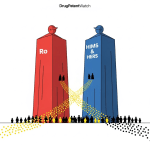
The Boundary Between Pharmacy Practice and Unapproved Manufacturing
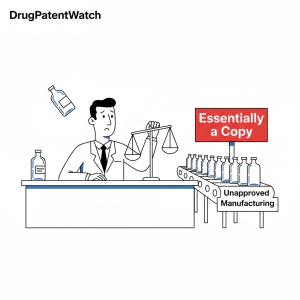
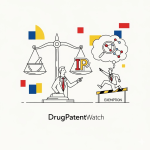
The pharmaceutical industry currently stands at a critical inflection point where the historical accommodations for pharmacy compounding are colliding with the rigid exclusivity frameworks of modern patent law. The unprecedented demand for glucagon-like peptide-1 (GLP-1) receptor agonists, specifically semaglutide and tirzepatide, has transformed what was once a niche practice of customized medication into a multi-billion-dollar shadow industry. While federal law has long carved out exceptions for pharmacists to mix custom medications for individual patients, the sheer scale of current operations has blurred the line between “traditional pharmacy practice” and “unapproved manufacturing.” For intellectual property (IP) attorneys, regulatory affairs directors, and biopharma executives, the urgent question is no longer theoretical: At what point does the volume, scale, and marketing of a compounded drug cease to be a regulatory exemption and become actionable patent infringement?
This report provides an exhaustive analysis of the legal, regulatory, and commercial mechanics governing this conflict. We examine the statutory friction between the Drug Quality and Security Act (DQSA) and the Patent Act, the weaponization of the “essentially a copy” doctrine, and the strategic litigation currently reshaping the market. We will analyze the specific legal theories deployed by Eli Lilly and Novo Nordisk, the defensive postures of the outsourcing facilities, and the economic imperatives driving this “gray market” entrenchment.
Statutory Framework: The Evolution of Section 503A and 503B
To understand where infringement begins, one must first master the regulatory shield that compounders use to deflect patent claims. The Federal Food, Drug, and Cosmetic Act (FD&C Act) divides compounders into two distinct categories, each with different privileges and liabilities regarding patent law and manufacturing standards. This bifurcation is not merely administrative; it is the result of decades of legislative and judicial struggle to define the outer limits of pharmacy practice.
The Historical Context of Section 503A
Section 503A describes the “traditional” compounding pharmacy. Historically, this provision was designed to protect the pharmacist’s right to create a liquid version of a pill for a patient who cannot swallow solids, or to remove a dye for an allergic patient.1 The Food and Drug Administration Modernization Act of 1997 (FDAMA) added Section 503A to the FD&C Act to clarify the status of pharmacy compounding under Federal law.2 The intent was to ensure that continued access to compounded medications for patients with specific medical needs did not inadvertently create a loophole for unapproved drug manufacturing.
However, the legal status of 503A was immediately challenged in the courts. In Thompson v. Western States Medical Center (2002), the Supreme Court struck down the advertising restrictions in FDAMA as unconstitutional violations of the First Amendment.4 The Court held that while the government had a substantial interest in preventing the industrial-scale manufacturing of unapproved drugs, banning the advertisement of truthful information about compounding services was more extensive than necessary.6 The Court suggested that the government could instead regulate the use of commercial-scale manufacturing equipment or the volume of interstate distribution to distinguish between compounding and manufacturing.8 This judicial intervention left a regulatory vacuum that persisted until the catastrophic fungal meningitis outbreak of 2012, caused by the New England Compounding Center (NECC), which resulted in over 60 deaths and 750 infections.9
The Compounding Quality Act and the Creation of 503B
In response to the NECC tragedy, Congress passed the Drug Quality and Security Act (DQSA) in 2013. This legislation reinstated Section 503A (minus the unconstitutional advertising provisions) and added a new section, 503B, creating a hybrid entity: the “Outsourcing Facility”.9
Section 503A Characteristics:
Patient Specificity: Production must be pursuant to a valid prescription for an identified individual patient.1
Scale Limits: Pharmacies cannot compound “regularly or in inordinate amounts” any drug products that are essentially copies of a commercially available drug product.12
Exemptions: 503A facilities are exempt from Current Good Manufacturing Practice (CGMP) requirements, labeling with adequate directions for use, and—crucially—New Drug Application (NDA) approvals.13
Interstate Restrictions: Without a Memorandum of Understanding (MOU) between the state and the FDA, interstate distribution is limited to 5% of total prescription orders.14
Section 503B Characteristics:
No Prescription Required for Manufacturing: Outsourcing facilities can manufacture large batches of drugs for inventory/stock and sell them to healthcare facilities for “office use”.1
Higher Standards: They must comply with full CGMP regulations (21 CFR Parts 210 & 211) and submit to risk-based FDA inspections.1
Reporting: They must report the drugs they compound to the FDA biannually and register as an outsourcing facility.9
The Patent Implication:
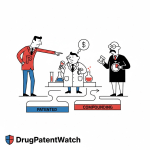
503B facilities are the primary threat to pharmaceutical patent holders. They operate at a “commercial scale”.15 Because they manufacture in bulk without specific prescriptions, their operations mirror generic drug manufacturers, yet they do not file Abbreviated New Drug Applications (ANDAs) and do not certify against patents under the Hatch-Waxman framework. This creates a “gray market” generic industry that bypasses the patent dance entirely.16
Industry Insight: “The 503B model is a capital-intensive, high-compliance, high-stakes business… An entity operating under 503B functions less like a pharmacy and more like a specialized, agile pharmaceutical manufacturer. Their strategic advantage lies in their ability to reliably produce high-quality sterile products at scale.” 16
The “Essentially a Copy” Doctrine: Regulatory Definitions and Patent Implications
The primary mechanism the FDA uses to protect the integrity of the new drug approval process—and by extension, the exclusivity of patent holders—is the restriction on compounding drugs that are “essentially a copy” of an approved drug. This doctrine serves as the functional equivalent of patent protection within the regulatory sphere, preventing compounders from eroding the market exclusivity of NDA holders.
Defining the “Copy” for 503B Facilities
For a 503B outsourcing facility, the definition of “essentially a copy” is rigorous. A compounded drug is considered a copy if it is identical or nearly identical to an FDA-approved drug, or if it differs only in ways that do not produce a “clinical difference” for the patient.10
The Criteria for “Essentially a Copy” 18:
Identical Formulation: If the compounded drug has the same active ingredient, route of administration, and dosage strength as an approved drug, it is a copy.
Bioequivalence: Even if excipients differ, if the drug produces the same clinical effect without a significant difference in safety or efficacy profile, it may be deemed a copy.
Regular Production: Producing small amounts occasionally might be permissible, but “regularly or in inordinate amounts” triggers enforcement.12
The “Significant Clinical Difference” Exemption:
A compounder can legally make a copy if the prescribing practitioner documents a “significant difference” required for the patient. For example, if a patient is allergic to a specific preservative in the branded formulation, a compounder can remove it. However, the FDA has clarified that this difference must be relevant to the patient’s clinical needs, not merely a minor formulation change designed to evade regulation.17
The Enforcement Gap and Patent Rights
While producing a copy violates FDA regulations, it does not automatically trigger patent litigation damages under the Patent Act. However, it removes the regulatory shield. If a compounder is operating outside the bounds of 503A/503B (by making copies of available drugs), they lose their exemptions. They become an unapproved manufacturer distributing misbranded drugs.10 This status allows patent holders to sue not just for infringement, but for unfair competition and false advertising, arguing that the compounder is illegally trading on the safety profile of the approved drug while selling an unapproved, potentially dangerous imitation.
The Salt Form Controversy: Chemical Identity and Regulatory Evasion
A critical battleground in the current GLP-1 litigation involves the chemical form of the active ingredient. Novo Nordisk’s and Eli Lilly’s patents typically cover the base molecule (e.g., semaglutide) and specific formulations. Many compounders, unable to source the patent-protected base, use salt forms such as semaglutide sodium or semaglutide acetate.19
The “Salt vs. Base” Argument
Compounders argue that using a salt form constitutes a different chemical entity, thereby avoiding direct literal infringement of patents claiming the base molecule. Furthermore, they argue this chemical difference exempts them from the “essentially a copy” rule.
The Pharma Response:
Pharmaceutical companies and the FDA have taken a hard line against this practice.
Regulatory Stance: The FDA has explicitly stated that salt forms of semaglutide are not the same as the approved drug and have not been shown to be safe and effective.20 The agency warns that salt forms may have different pharmacokinetic profiles and impurity risks.22
Impurity Risks: Litigation filings have highlighted that bulk synthetic semaglutide often contains higher levels of impurities, including formaldehyde adducts and dimers, compared to pharmaceutical-grade equivalents.22
Patent Implications: From a patent perspective, using a salt form often falls under the Doctrine of Equivalents. If the salt form performs substantially the same function, in substantially the same way, to achieve substantially the same result as the patented invention, it infringes. Moreover, many pharmaceutical patents explicitly claim “pharmaceutically acceptable salts” of the active moiety, closing this loophole entirely.
Table 1: The “Essentially a Copy” Analysis: Branded vs. Compounded GLP-1s
Feature
Branded (e.g., Wegovy)
Compounded (Standard)
Compounded (Salt Form)
Regulatory Status
Active Ingredient
Semaglutide Base
Semaglutide Base
Semaglutide Sodium
Salt forms are unapproved new drugs 19
Formulation
Sterile Injectable
Sterile Injectable
Sterile Injectable
“Essentially a copy” unless clinical difference shown
Additives
None (standard excipients)
B12, L-Carnitine
B12, L-Carnitine
Addition of B12 is often deemed “medically unnecessary” 23
Clinical Trials
Extensive (Phase I-III)
None
None
No safety data for salt forms
Patent Status
Protected
Infringing (Literal)
Infringing (Equivalents)
High Litigation Risk
The Drug Shortage Loophole: Mechanics of the 503B Surge
The most significant loophole in the protection of pharmaceutical IP is the FDA Drug Shortage List. Under Section 503A and 503B, the restriction on making “essentially a copy” of a commercial drug is suspended if the drug appears on the FDA’s shortage list.20
The Mechanism of Value Destruction
When a blockbuster drug like Tirzepatide (Mounjaro) enters the shortage list, the regulatory floodgates open. 503B facilities can legally manufacture unlimited quantities of “essentially copies” of the drug without a specific prescription.20 This creates a bifurcated market where the patent holder is constrained by supply chain limitations, while competitors are unleashed to fill the void.
Quantifying the Market Impact:
During the GLP-1 shortage (late 2022 to late 2024), the compounded market exploded. In 2024, the global GLP-1 market was valued at approximately $49.90 billion.24 Compounded versions captured a significant share of volume, particularly in the “cash-pay” segment where insurance coverage for weight loss was denied. Analysts noted that even after shortages resolved, utilization of compounded products continued to rise, driven by price arbitrage and established patient habits.25
The “Tirzepatide Shock” of Late 2024
The tension came to a head in October 2024 when the FDA declared the Tirzepatide shortage “resolved”.26
Immediate Consequence: The “essentially a copy” restriction snapped back into place. 503Bs were suddenly prohibited from mass-producing the drug.
The “60-Day” Rule: FDA policy typically allows a grace period (often 60 days) for outsourcing facilities to fulfill existing orders, but prohibits initiating new production of the removed drug.20
Judicial Review of Agency Action: The OFA v. FDA Litigation
The end of the shortage precipitated immediate legal action. The Outsourcing Facilities Association (OFA) sued the FDA (Outsourcing Facilities Association v. FDA), arguing that the agency’s decision to declare the shortage resolved was arbitrary and capricious.28
The Legal Arguments
Rulemaking vs. Adjudication: The OFA argued that removing a drug from the shortage list effectively created a new rule binding the entire industry, and thus required a notice-and-comment period under the Administrative Procedure Act (APA).29 They contended the FDA failed to engage the public before making a decision that obliterated a billion-dollar market segment.
Data Reliability: The OFA claimed the FDA relied solely on Eli Lilly’s representations of supply sufficiency rather than independent verification, ignoring evidence of continued regional scarcity.29
Harm to Patients: The plaintiffs argued that sudden cessation of compounding would harm patients who had stabilized on compounded regimens.
The Outcome:
A federal judge in the Northern District of Texas denied the OFA’s motion for a preliminary injunction, affirming the FDA’s decision.28 The court emphasized the agency’s broad discretion in managing the drug shortage list and found that the plaintiffs had not demonstrated sufficient irreparable harm to warrant judicial intervention against the regulator. This ruling effectively re-armed Eli Lilly, allowing them to proceed with aggressive litigation against compounders who refused to stop production.
Patent Infringement Defenses: The Limits of Safe Harbor (35 U.S.C. § 271(e)(1))
Compounders often attempt to use the “Safe Harbor” provision of the Hatch-Waxman Act (35 U.S.C. § 271(e)(1)) as a shield against patent infringement claims. This statute states it is not an act of infringement to make, use, or sell a patented invention “solely for uses reasonably related to the development and submission of information under a Federal law which regulates the manufacture, use, or sale of drugs”.31
Why Safe Harbor Fails for Commercial Compounding
The Safe Harbor was designed to allow generic manufacturers to produce small batches of a patented drug to conduct bioequivalence testing before the patent expires, so they can launch on Day 1 of expiration.31 It was not intended to shield perpetual commercial sales.
Key Legal Precedents:
Commercial Intent: Courts have ruled that “commercial scale” compounding for the purpose of selling to patients—rather than for gathering data for an FDA submission—does not fall under Safe Harbor protection.33 The Supreme Court in Merck KGaA v. Integra Lifesciences I, Ltd. expanded the scope to include preclinical research, but it did not extend it to routine commercial sales.
The “Classen” Precedent: In Classen Immunotherapies, Inc. v. Biogen IDEC, the Federal Circuit held that routine submission of information to the FDA (such as adverse event reporting) does not retroactively immunize commercial sales from infringement liability. Since 503B facilities are required to report product lists and adverse events, they cannot claim these mandatory reports constitute “development of information” sufficient to trigger the Safe Harbor.31
For a commercial compounding pharmacy, the Safe Harbor is a mirage. If the primary activity is selling drugs to patients for revenue, they are exposed to full patent infringement liability.33
The Shift to Trademark and False Advertising Litigation
Given the complexities of patent litigation—including the difficulty of proving infringement against thousands of small entities—Big Pharma has pivoted to Trademark Law (Lanham Act) and Consumer Protection Laws as more effective weapons.
The Pivot to False Advertising (Lanham Act)
Instead of arguing “You stole our invention,” companies like Novo Nordisk and Eli Lilly are arguing “You are lying to patients.”
The Argument: By marketing a compounded drug as “Semaglutide” or “Generic Ozempic,” the pharmacy is deceiving the consumer because the compounded version lacks FDA approval, safety data, and often uses a salt form (Semaglutide Sodium) rather than the approved base.34
Strategic Goal: An injunction under the Lanham Act stops the sale of the product immediately based on consumer deception, whereas patent litigation can take years to reach a damages verdict.
Case Study Analysis: Eli Lilly v. Empower Pharmacy
In July 2025, Eli Lilly filed a lawsuit against Empower Clinic Services, LLC (Empower), a major 503B outsourcing facility, in the Southern District of Texas.34
The Complaint’s Key Allegations 23:
False Designation of Origin (15 U.S.C. § 1125(a)): Lilly alleged that Empower’s marketing of “Tirzepatide” misled consumers into believing the products were genuine, FDA-approved Mounjaro or Zepbound, or bioequivalent to them.
Unfair Competition: Empower was accused of “unlawfully manufacturing and selling untested, unapproved weight loss drugs on a large scale,” bypassing the R&D costs Lilly incurred (over $2.6 billion) to bring the drug to market.37
Deceptive Trade Practices: The complaint highlighted Empower’s sale of “Tirzepatide ODT” (orally disintegrating tablets) and “Tirzepatide/Niacinamide” injections. Lilly argued that there is no clinical data supporting the efficacy of oral tirzepatide or the combination with niacinamide, making the safety claims inherently false.23
“Knockoff” Labeling: Lilly termed the products “knockoffs” that trade on the credibility of the branded drug while delivering a substandard, unverified product.
Strategic Implication: By attacking the integrity of the product rather than just the rights to the molecule, Lilly frames the issue as one of public safety, which resonates more strongly with judges and the public than a pure IP dispute.
Case Study Analysis: Novo Nordisk v. Wells Pharmacy Network
Novo Nordisk’s litigation against Wells Pharmacy Network illustrates the pitfalls of relying solely on regulatory violations in civil court. Novo sued Wells for false advertising and unfair competition, alleging that Wells sold compounded semaglutide with impurities.22
The Standing Challenge:
The court initially ruled against Novo Nordisk on certain claims, reiterating that private parties cannot sue to enforce the FD&C Act; only the FDA has that authority.39 This “preemption” doctrine means a competitor cannot sue a compounder simply for violating FDA rules (like the “essentially a copy” provision). They must show that the violation results in false advertising or patent infringement that directly harms the competitor.40
The Pivot: Novo adjusted its strategy to focus on the economic injury caused by the diversion of sales and the reputational harm caused by patients confusing inferior compounded products with the branded drug. The court found that Novo sufficiently stated an economic injury-in-fact because every sale of compounded semaglutide was likely a lost sale for Novo.40
The Telehealth Intermediaries: Corporate Practice of Medicine and Induced Infringement
A unique feature of the GLP-1 compounding boom is the role of telehealth platforms. Companies like Mochi Health, Henry Meds, and Fella Health do not manufacture drugs; they connect patients to doctors and pharmacies.
Induced Infringement (35 U.S.C. § 271(b))
Pharma companies are targeting these platforms for induced infringement. By advertising the drug, providing the prescription via contract doctors, and directing the order to a specific compounding pharmacy, these platforms “actively induce” the direct infringement committed by the pharmacy and the patient.41
Evidence of Intent: Marketing materials that explicitly compare the compounded drug to “Wegovy” or “Ozempic” are used as evidence of specific intent to induce infringement of the method-of-treatment patents covering those drugs.42
Corporate Practice of Medicine (CPOM)
Lilly has opened a new front by alleging that these telehealth entities violate state laws prohibiting the “corporate practice of medicine”.41
The Allegation: Lilly claims that the corporate entities (the tech platforms) are exerting undue influence over the medical decisions of the contracted physicians, steering them to prescribe compounded drugs for financial gain rather than medical necessity.43
The Goal: If successful, this strategy would sever the link between the high-volume marketing platforms and the prescribing doctors, effectively choking off the demand channel for the compounders.
Economic Impact Assessment: Market Valuation and Revenue Erosion
The legal battles are driven by staggering economic stakes. The compounded GLP-1 market alone has generated revenue estimated in the billions, siphoning direct revenue from Novo Nordisk and Eli Lilly.
Market Size and Growth
The global GLP-1 market was valued at $49.90 billion in 2024 and is projected to reach $879.90 billion by 2034, growing at a CAGR of 33.24%.24 In the US alone, the market generated nearly $10 billion in 2024.44
Compounded Share: While exact figures are opaque, IQVIA reported that compounded prescriptions for semaglutide and tirzepatide continued to rise through 2025 despite regulatory headwinds.25
Revenue Erosion: In Q2 2024, Novo Nordisk reported that sales growth “slowed sharply” due to competition from Lilly and “compounded copycat drugs,” causing a significant dip in stock price.45 This direct financial correlation serves as the damage model in infringement lawsuits.
Price Arbitrage
The primary driver of the gray market is price.
Branded Price: ~$1,000 – $1,300 per month (cash pay).
Compounded Price: ~$200 – $300 per month.47 This massive delta creates an inelastic demand for the compounded product, forcing Pharma to litigate rather than compete on price.
Table 2: Comparative Economics of GLP-1 Supply Channels
Metric
Pharmaceutical Manufacturer (e.g., Lilly)
503B Outsourcing Facility
Telehealth Platform (e.g., Hims)
Development Cost
>$2 Billion (Clinical Trials)
Low (Reverse Engineering)
Marketing & Tech Stack Only
Regulatory Burden
High (NDA, PV, FDA Audits)
Medium (CGMP, Reporting)
Low (State Med Board)
Patient Acquisition
DTC Ads, Reps to Doctors
Direct Sales to Clinics
Digital Ads, Social Media
Pricing Power
High (Patent Protected)
Low (Commodity Pricing)
Medium (Subscription Model)
Litigation Risk
Plaintiff (Enforcer)
Defendant (Infringement)
Defendant (Inducement/CPOM)
Strategic Intelligence and Risk Monitoring
For pharmaceutical companies, the sheer volume of 503B facilities (roughly 75 registered) and thousands of 503A pharmacies makes manual policing impossible. This is where advanced data analytics becomes a defensive necessity.
The Role of DrugPatentWatch
Platforms like DrugPatentWatch have become essential for IP and business development teams to monitor the compounding landscape. By aggregating data on patent expirations, litigation filings, and 503B registrations, these tools allow companies to:
Litigation Tracking: Monitor Paragraph IV certifications and Lanham Act suits in real-time. A high number of challenges against a patent may signal industry weakness, while settlement terms reveal a brand’s risk tolerance.16
Formulation Intelligence: DrugPatentWatch provides deep dives into formulation details and identifies bulk API vendors. This helps brands identify if a compounder is sourcing illicit API from non-compliant jurisdictions.16
Risk Mitigation: The platform enables “Freedom to Operate” analysis and probability-weighted modeling of litigation outcomes. For 503B facilities, it helps identify “at-risk” assets where patent protection is ending, allowing for legitimate market entry planning.48
Shortage Monitoring: By correlating patent data with FDA shortage lists, companies can predict when the “shortage loophole” will open or close, allowing for proactive legal positioning.19
The Manufacturing Standard: CGMP vs. USP
A core component of the legal argument against compounders is the quality disparity.
CGMP (Current Good Manufacturing Practice): Required for drug manufacturers and 503B facilities. It mandates validation of every process, rigorous environmental monitoring, and batch testing for sterility and potency.1
USP : The standard for 503A pharmacies. It focuses on the sterility of the compounding environment but does not require the same level of finished product testing or process validation as CGMP.
The Legal Argument:
Pharma companies argue that 503A pharmacies producing GLP-1s at scale are effectively manufacturing without CGMP compliance. This creates a public health risk (insanitary conditions) which supports the argument for a preliminary injunction—courts are more likely to shut down a business if there is a plausible risk of patient harm.10
Conclusion and Key Takeaways
The battle over compounded prescriptions is not merely a dispute over market share; it is a fundamental stress test of the U.S. drug approval system. The “industrialization of exceptions” has allowed a parallel manufacturing sector to emerge, exploiting regulatory gaps to bypass patent exclusivity.
Key Takeaways
The Shortage Switch is Absolute: Patent rights against compounders are effectively dormant while a drug is on the FDA Shortage List. The moment the FDA declares the shortage resolved, the “essentially a copy” prohibition returns, and compounders face immediate liability for manufacturing unapproved new drugs.
Lanham Act > Patent Act: In the current litigation wave, accusing compounders of false advertising (selling “fake” or “unapproved” drugs) creates faster, more damaging injunctions than traditional patent infringement claims. The “false designation of origin” argument effectively weaponizes the FDA’s regulatory definitions in civil court.
The “Salt” Trap: Compounders using salt forms (e.g., semaglutide sodium) to avoid patent claims on the base molecule are walking into a regulatory trap. The FDA considers these “unapproved new drugs,” and courts are increasingly viewing them as deceptive products, stripping them of the 503A/B exemptions.
503B is the Real Threat: While local pharmacies (503A) are numerous, Outsourcing Facilities (503B) operating at commercial scale are the true threat to pharmaceutical revenue. They mimic generic manufacturers without the regulatory burden of ANDAs, capturing billions in value.
Data is Defense: In a fragmented market, utilization of intelligence platforms like DrugPatentWatch is the only scalable way to identify high-value targets for litigation, monitor the “gray market” supply chain, and track the shifting status of patent expirations and drug shortages.
FAQ: Compounding and Patent Law
Q1: Can a compounding pharmacy legally make a copy of a patented drug if the patient is allergic to an inactive ingredient in the brand-name version?
A: Yes, generally. Under Section 503A and 503B, if a prescriber determines that a patient has a specific medical need (like an allergy to a dye or preservative) that the commercial product cannot satisfy, the pharmacist can compound a customized version. This constitutes a “significant clinical difference,” exempting it from the “essentially a copy” restriction. However, this must be done on a patient-by-patient basis with valid documentation; mass-producing such a formulation for patients without the allergy would be a violation.
Q2: Does adding Vitamin B12 to a GLP-1 drug protect a compounder from patent infringement?
A: Likely not. While adding an ingredient changes the formulation, the FDA guidance states that a compounded drug is still “essentially a copy” unless the change produces a significant clinical difference for the patient. Merely adding a vitamin to evade regulations is viewed by the FDA (and increasingly by courts) as a regulatory sham. Furthermore, selling it might still induce infringement of the patent covering the underlying therapeutic method or composition.
Q3: Why don’t pharmaceutical companies just sue every compounding pharmacy for patent infringement?
A: It is a resource allocation issue. Suing thousands of small entities is prohibitively expensive and yields low damages per case. Furthermore, suing medical practitioners can damage a company’s reputation. Instead, Pharma targets the “aggregators”—the 503B outsourcing facilities and the telehealth platforms (like Hims or Ro) that drive the volume—using Lanham Act claims which are easier to prove and carry the threat of immediate injunctions.
Q4: How does the FDA “Shortage List” override a valid US Patent?
A: It doesn’t legally invalidate the patent. However, it creates a regulatory exemption (under the FD&C Act) that allows compounders to manufacture the drug without an NDA. While a patent holder could theoretically sue for infringement during a shortage, judges are unlikely to grant an injunction (stopping sales) because doing so would harm public health by denying patients access to a drug that the patent holder cannot supply. Once the supply is restored, the equitable argument for the compounder evaporates.
Q5: What is the difference between “Commercial Availability” and “Commercial Scale” in this context?
A: “Commercial Availability” refers to whether the brand-name drug is currently for sale and not in shortage. “Commercial Scale” refers to the equipment and volume used by the compounder. If a 503A pharmacy uses “commercial scale” equipment (industrial mixers, etc.) to produce large amounts of a drug in anticipation of prescriptions, they may be deemed a “manufacturer” by the FDA and lose their 503A exemptions, opening them up to both FDA enforcement and patent litigation.
Compounded Drug Products That Are Essentially Copies of Approved Drug Products Under Section 503B of the Federal Food, Drug, and Cosmetic Act – FDA, accessed December 19, 2025, https://www.fda.gov/media/98964/download
Declaratory order: resolution of shortages of tirzepatide injection products (Mounjaro and Zepbound) – FDA, accessed December 19, 2025, https://www.fda.gov/media/184606/download
Safe Harbor for Preclinical Use of Patented Inventions in Drug Research and Development: Merck KGaA v. Integra Lifesciences I, Ltd. – EveryCRSReport.com, accessed December 19, 2025, https://www.everycrsreport.com/reports/RL33114.html