This is not an overview. It is a field manual for IP counsel preparing a motion, portfolio managers modeling the revenue impact of an at-risk launch, BD leads stress-testing a licensing deal against patent expiry timelines, and R&D leads assessing which assets in a pipeline are genuinely defensible versus those that look stronger than they are.
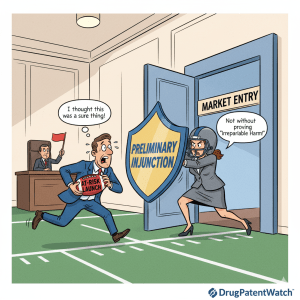
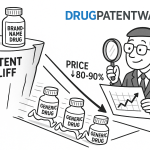
The pharmaceutical preliminary injunction is the most consequential procedural event in drug patent litigation. It decides, before a single day of trial, whether a brand-name drug keeps its market monopoly or watches 80% of its prescriptions evaporate inside 90 days. Getting this wrong is not a legal error. It is a balance-sheet catastrophe.
This guide dissects every component of the four-factor test in technical detail, maps the IP valuation stakes for specific drugs and companies, models the economic logic of at-risk launches, and provides litigation analytics frameworks that legal and business teams can deploy immediately.
The Post-eBay Revolution: How the Standard Was Rewritten
The Old World: Presumption as Default Weapon
Before 2006, a brand-name company that could show a credible infringement case could expect an injunction to follow almost automatically. The Federal Circuit operated on a near-categorical rule: patents confer the right to exclude, infringement of that right causes irreparable harm by definition, and courts should enjoin infringers absent highly unusual circumstances. This presumption made preliminary injunctions a dominant-strategy tool. A brand filing suit on a strong-looking patent faced almost no friction in obtaining emergency relief that could freeze generic entry for the entire duration of litigation — often 18 to 30 months.
That logic collapsed in two moves.
eBay Inc. v. MercExchange (2006): Equity Reasserts Itself
The Supreme Court’s unanimous opinion in eBay Inc. v. MercExchange, L.L.C. ended the Federal Circuit’s categorical rule for permanent injunctions. The Court held that patent cases are not exempt from the traditional four-factor equitable test that governs all injunctive relief. No presumptions, no special rules for IP. The patent holder bears the full burden of proof on all four factors, and district courts exercise genuine discretion. The Court did not specify a new outcome; it mandated a new process.
The eBay opinion targeted permanent injunctions entered after trial. But its logic traveled immediately into preliminary injunction doctrine. If a patent holder cannot presume irreparable harm after winning a full trial, the premise that it could presume such harm before trial became untenable.
Winter v. Natural Resources Defense Council (2008): The Standard Crystalizes
Winter v. Natural Resources Defense Council closed the loop. The Supreme Court held that a plaintiff seeking a preliminary injunction must demonstrate that irreparable harm is likely — not merely possible — in the absence of relief. The word ‘likely’ displaced what had previously been a more permissive ‘possibility’ standard in some circuits. With Winter, the modern four-factor test acquired the teeth it still has today. Courts must find that all four factors independently support the injunction; a compelling showing on one does not automatically compensate for a weak showing on another.
The practical consequence for pharmaceutical litigation was immediate and lasting. Generic companies contemplating at-risk launches — entering the market after the Hatch-Waxman Act’s 30-month stay expires but before underlying patent litigation resolves — faced a meaningfully lower probability of being enjoined than they had pre-eBay. The brand’s most powerful deterrent, the near-certain injunction, had become uncertain. That uncertainty shifted negotiating leverage, emboldened aggressive Paragraph IV filers, and contributed to the growth of the at-risk launch as a commercial strategy.
Key Takeaways: The Post-eBay Landscape
The presumption of irreparable harm is gone. It cannot be invoked, implied, or partially resurrected through creative framing.
Brands must build an independent, evidence-intensive case on each of the four factors.
The at-risk launch became a commercially rational strategy precisely because the injunction became uncertain.
Generic companies now have a structural advantage at the injunction stage that did not exist before 2006.
The Four-Factor Test: Every Element, Fully Decoded
A preliminary injunction in a pharmaceutical patent case requires the moving party — almost always the brand — to establish four independent elements by clear evidence:
A reasonable likelihood of success on the merits.
A likelihood of irreparable harm in the absence of relief.
That the balance of hardships tips in the movant’s favor.
That an injunction serves the public interest.
Courts weigh these factors together, but failure on any single element is generally sufficient to deny the motion. The district court has broad discretion, and the Federal Circuit reviews preliminary injunction decisions for abuse of that discretion. Findings of fact beneath the decision get reviewed for clear error.
Factor 1: Likelihood of Success on the Merits
What ‘Likelihood of Success’ Actually Requires
The brand must show two things: that the accused generic product infringes the asserted claims, and that those claims will likely survive the generic’s invalidity challenges. Neither prong has a particularly high threshold in absolute terms, but in practice, this element forces both parties to run a compressed version of the full trial at the outset of litigation, often on limited discovery and a truncated briefing schedule.
The infringement analysis at the injunction stage requires claim construction — the court must interpret the scope of the patent claims before it can determine whether the generic product falls within them. Disputed claim terms that would ordinarily be briefed over months get resolved on an accelerated schedule. A brand whose patent relies on a claim term with an ambiguous construction faces a real risk of losing the likelihood-of-success argument even if its underlying infringement case is strong.
Raising a ‘Substantial Question’ of Invalidity
The generic does not need to prove invalidity by clear and convincing evidence to defeat the injunction. It only needs to raise a ‘substantial question’ — a defense that the brand cannot demonstrate lacks substantial merit. This is a lower bar, and sophisticated generics exploit it deliberately.
The most commonly deployed invalidity arguments at the preliminary injunction stage are obviousness under 35 U.S.C. § 103 and anticipation under § 102. Obviousness is particularly potent because it permits the generic to combine multiple prior art references, increasing the probability that at least one combination creates a credible challenge. Anticipation is cleaner — a single reference that discloses every claimed element — but harder to find.
Enablement and written description challenges under § 112 are also deployed, particularly against formulation and dosing patents where the specification may not fully support the claimed range. Indefiniteness attacks are less common at the preliminary injunction stage because courts often decline to rule on indefiniteness without more extensive claim construction proceedings.
The ‘Mini-Trial’ Problem and Strategic Disclosure
The compressed nature of the preliminary injunction hearing creates a strategic problem for both sides: revealing your trial arguments early. A brand that presents its strongest expert testimony at the PI stage has disclosed its theory of infringement to the generic before fact discovery closes. The generic can then spend the rest of the litigation building a targeted rebuttal. The same problem runs the other way — a generic that deploys its best invalidity arguments early gives the brand time to reinforce its prosecution history and prepare counter-experts.
Some brands deliberately file for a preliminary injunction with a subset of their strongest claims, preserving the rest for trial. This is a calibrated decision: the more claims you assert, the more the generic can attack, but asserting too few may weaken the appearance of the overall portfolio.
IP Valuation Note: What the Patent Portfolio Is Actually Worth at This Stage
From an IP valuation perspective, the likelihood-of-success factor is where the market-assigned value of a patent gets its first real stress test. A brand whose patent has never been challenged in inter partes review (IPR) before the Patent Trial and Appeal Board (PTAB) carries a theoretical validity premium in any DCF model of the drug’s future revenue stream. The moment a generic files a Paragraph IV certification and the brand moves for a preliminary injunction, that theoretical validity premium becomes observable market information.
If the court grants the injunction and finds likelihood of success, the market updates the patent’s implied value upward, typically driving the brand’s stock price. If the court denies it and signals weakness in the claims, the market writes down the drug’s future revenue in the brand’s valuation. For portfolio managers tracking IP-intensive pharmaceutical equities, the district court’s preliminary injunction order is more market-relevant than most quarterly earnings releases.
Key Takeaways: Factor 1
A brand wins this factor by showing clear infringement theory plus a patent that survives the generic’s best invalidity punch — not by proving absolute validity.
Obviousness challenges are the most common invalidity vehicle at the PI stage because they permit combining prior art references.
Early strategic disclosure of trial arguments is the hidden cost of seeking a PI, and experienced counsel must weigh it explicitly.
The court’s ruling on Factor 1 functions as a real-time, publicly observable IP valuation signal for the market.
Factor 2: Irreparable Harm — The Central Battlefield
Why This Factor Is Decisive
More preliminary injunction motions are won and lost on irreparable harm than on any other factor. The brand’s likelihood-of-success showing can be excellent, but if it cannot independently demonstrate that monetary damages after trial will be inadequate to make it whole, the motion fails. Post-eBay, courts are explicit on this point: a strong patent is not itself evidence of irreparable harm.
The challenge is structural. Pharmaceutical market losses from generic entry are, in theory, traceable to lost revenue. Revenue is money. Courts can and do award money damages after trial. The generic’s obvious counter-argument — ‘pay us damages if we’re wrong, and you’ll be fine’ — resonates with courts precisely because it sounds like common sense applied to a financial dispute.
The brand’s job is to break that logic by demonstrating that its actual harm has no monetary equivalent.
Price Erosion: The Most Potent Irreparable Harm Argument
Price erosion is the strongest arrow in the brand’s quiver. The argument works as follows. When a generic enters the market, the brand faces immediate pressure to slash its net price — driven by PBM formulary tier changes, state substitution mandates, and the negotiating leverage of payers who can now credibly threaten to exclude the brand from formulary entirely. These price concessions become the new baseline for every future contract negotiation, government program reimbursement, and Medicaid rebate calculation. Even if the generic is later pulled off the market after a brand victory at trial, no commercial logic exists that allows the brand to restore its original pricing structure. Payers do not forget the lower price they achieved. The brand’s pricing power is permanently impaired.
Courts have accepted this argument, but with an important caveat: the brand must document the causal mechanism with specificity. A general assertion that ‘generics cause price erosion’ is not enough. Experienced economic experts model the specific drug’s payer mix, formulary dynamics, and historical price response curves to build a defendant-specific projection of permanent pricing damage. The quality of this modeling is often what separates successful irreparable harm arguments from failed ones.
Market Share and Substitution Velocity
State generic substitution laws are the second structural pillar of irreparable harm. In most states, pharmacists are legally permitted, and in some states required, to dispense a generic equivalent for a branded prescription unless the prescriber writes ‘dispense as written.’ The result is a substitution rate that, for most oral solid dosage forms, reaches 80-90% of prescription volume within the first three to six months of generic entry. For some drugs — particularly those used to treat prevalent chronic conditions with broad prescriber bases — 80% of volume can shift in as few as three weeks, as documented in post-launch data for Pravachol and Zoloft.
The irreparability argument here is that prescribing habits, once broken, rarely reconstitute. Physicians who switch their default reflex to the generic are not easily recaptured by the brand, even after a legal victory. The clinical relationship between the brand and the prescriber — built through years of detailing, real-world evidence studies, and patient support programs — gets severed by generic substitution in a way that a damages check cannot repair.
R&D Pipeline Disruption: Connecting the Revenue Cliff to Future Innovation
The most sophisticated version of the irreparable harm argument traces the revenue collapse from an at-risk launch directly into the R&D pipeline. The argument requires showing a documented, project-specific chain: generic entry causes a specific revenue decline, that decline triggers specific budget cuts, those cuts delay or cancel identified R&D programs, and those programs were at a stage where their value is being actively destroyed rather than merely deferred.
Vague assertions that ‘our innovation depends on this revenue’ do not work. What works is a vice president of R&D testifying that three specific Phase II programs are funded by the cash flows from the drug at issue, that the budget cut required to offset the revenue loss would eliminate two of them before they complete efficacy readouts, and that those readout windows cannot be extended without losing competitive advantage to a rival’s parallel program. This level of specificity, grounded in contemporaneous budget documents, converts an abstract policy argument about innovation incentives into a concrete, non-economic harm that no damages award can remedy.
Non-Economic Harms: Workforce and Institutional Knowledge
AstraZeneca v. Apotex established that credible testimony about planned workforce reductions constitutes sufficient evidence of non-economic irreparable harm. A brand can argue that the revenue shortfall from an at-risk launch will force manufacturing layoffs, dismantlement of specialized scientific teams, and loss of institutional knowledge accumulated over years of drug-specific manufacturing optimization. The loss of a specialized quality control team for a complex formulation process, for example, cannot be straightforwardly reconstructed even if a damages award later funds a hiring push. People leave, expertise dissipates, and the FDA may require costly revalidation of manufacturing processes if the production line is restarted.
The Generic’s Counter-Arguments
Generic companies attack the irreparable harm showing on three fronts.
First, they argue that every form of alleged harm the brand describes ultimately converts to a lost revenue number, and lost revenue is the textbook definition of reparable harm. They will often post a substantial bond to demonstrate the point concretely: by offering to put, say, $500 million in escrow, the generic tells the court that a financial remedy is not just theoretically adequate but is immediately available.
Second, they attack causation. After the Federal Circuit’s decision in Incyte v. Sun, brands must demonstrate that the harm they allege is directly caused by the infringement during the remaining patent term, not by market dynamics that would occur regardless of the litigation outcome. In Incyte, the court found that Sun’s multi-year head start in the market for deuterated ruxolitinib was inevitable because Incyte’s own competing product would not launch until after the patent expired. The infringement before expiration therefore did not cause the irreparable harm that Incyte was complaining about.
Third, where the brand is a large, diversified pharmaceutical company, the generic argues that the drug at issue represents a manageable fraction of total corporate revenue and that the company’s financial health will not be materially threatened by a temporary revenue disruption. This argument is more powerful against a company like Pfizer, for which any single product represents a modest percentage of global revenue, than against a single-product biotech whose entire valuation rests on one asset.
Key Takeaways: Factor 2
Irreparable harm requires independent proof. A strong patent does not carry the showing across.
Price erosion is the most persuasive argument, but it requires drug-specific economic modeling, not general assertions.
R&D disruption arguments require named programs, dated budgets, and specific consequences — not policy claims about innovation incentives.
After Incyte v. Sun, brands must establish direct causation between the infringing act during the patent term and the specific harm alleged. Generic teams should scrutinize every harm narrative for its causal logic.
Bond offers by the generic are a strategic tool that courts read as evidence of reparability.
Factor 3: Balance of Hardships
Corporate Pain on Both Sides of the Scale
The balance-of-hardships analysis requires the court to compare the harm the brand suffers if the injunction is denied against the harm the generic suffers if it is granted. This is a head-to-head comparison of corporate injury, and the outcome depends heavily on how the lawyers frame each side’s position.
The brand argues that denial of the injunction triggers immediate, irreversible market destruction. Its pricing power collapses permanently. Its prescriber relationships dissolve through substitution. Its R&D budget gets cut in ways that cascade forward for years. The harm the generic would suffer from an injunction, by contrast, is a delay in realizing profits from a product it has not yet launched. Delay in future profits is, by definition, quantifiable and temporary.
The generic argues the opposite. An injunction strands its entire investment in the product — R&D for the ANDA, manufacturing scale-up, quality systems validation, warehousing, commercial readiness. For a generic whose only pending product is this ANDA, an injunction is not a delay; it is a corporate death sentence, because while it sits enjoined, competing generics who filed later may obtain their own FDA approvals and eliminate the first-filer’s commercial opportunity entirely. The 180-day exclusivity the first-filer earned by taking the Paragraph IV risk can be forfeited or rendered commercially worthless if the launch window closes.
Single-Product vs. Diversified Company Dynamics
Chief Judge Stark’s analysis in Noven Pharmaceuticals v. Watson Laboratories shows how the balance-of-hardships analysis plays out in practice. The court found that Noven would suffer genuine harm without an injunction, but that the generic’s harm from being kept off the market during the four months remaining until trial was greater. The injunction was denied. This outcome illustrates a principle that practitioners understand but that sometimes gets lost in briefing: when trial is imminent, the balance of hardships can tip toward the generic even if the brand has a stronger infringement case, because the economic harm of an injunction over a short period can be disproportionate to the generic’s sunk costs.
The balance-of-hardships factor also intersects with corporate structure in ways that matter for IP valuation. A single-product specialty company facing generic entry on its only commercial drug presents a far more compelling balance-of-hardships argument than a company like a top-ten branded pharmaceutical firm with a diversified portfolio. The brand’s legal team should tailor its hardship narrative to the specific financial structure of the company, not use boilerplate descriptions of harm.
Investment Strategy Note: Hardship Analysis as a Settlement Pricing Signal
Portfolio managers and arbitrageurs following pharmaceutical patent litigation can read the balance-of-hardships argument as a settlement pricing signal. When a brand’s hardship narrative is clearly stronger than the generic’s — particularly where the brand is a single-product company with documented revenue concentration — the probability that the generic will accept a settlement offer to avoid a protracted injunction rises. Conversely, when the generic has a compelling hardship narrative (multiple products waiting on the same manufacturing line, FDA approval imminent for follow-on products), the brand will need to offer materially better settlement economics to close the deal before or during the injunction hearing.
Key Takeaways: Factor 3
The balance of hardships rewards specificity. Broad descriptions of corporate injury on either side are less persuasive than documented, asset-specific financial exposure.
Trial imminence changes the calculus: a four-month delay versus a multi-year delay produces entirely different hardship profiles for the enjoined generic.
Single-product company status significantly strengthens a brand’s hardship argument and weakens a large generic’s counter-argument.
For investors: hardship asymmetry between the parties is a direct input into settlement probability modeling.
Factor 4: Public Interest
Two Legitimate Goods in Direct Conflict
The public interest factor requires courts to look past the two corporate litigants and evaluate the broader societal effect of granting or denying the injunction. Two legitimate policy goals pull in opposite directions.
The brand argues that enforcing valid patents is itself a public interest. The Bayh-Dole innovation system — in which government-funded research converts to private patents, private capital flows into clinical development, and the patent term provides the return on investment that makes that capital commitment rational — depends entirely on the expectation that courts will enforce the exclusivity that the patent system promises. Systematic under-enforcement of pharmaceutical patents does not just harm the company holding the patent; it undermines the economic logic that produces new drugs.
The generic argues that immediate price competition is the public good that patients and payers experience in real time. Generic drugs have saved the U.S. healthcare system an estimated $2.2 trillion in the ten-year period through 2020, according to IQVIA data. An injunction that keeps a branded drug at monopoly pricing for an additional 18 to 30 months imposes a directly quantifiable cost on patients, insurers, and government programs. In an environment where the Inflation Reduction Act’s drug price negotiation provisions are actively reshaping the pharmaceutical pricing landscape, the argument that brand drug prices should be protected by preliminary injunctions carries a political valence that competent generic counsel will not hesitate to exploit in their briefing.
Drug Shortages and Access as a Decisive Tiebreaker
When the public interest factor is genuinely contested, the analysis can turn on drug supply. If the brand cannot reliably supply the market — whether due to manufacturing capacity constraints, a Form 483 observation from an FDA inspection, or an active shortage designation from the FDA Drug Shortages program — the generic’s access argument becomes compelling evidence, not mere rhetoric. Courts have denied preliminary injunctions where the brand could not demonstrate it could actually supply the patients who would be denied the generic alternative.
A brand’s legal team preparing a PI motion should perform an FDA inspection history review on its own manufacturing sites before filing. An undisclosed manufacturing compliance problem that surfaces during the hearing destroys credibility on every factor simultaneously.
Key Takeaways: Factor 4
The public interest factor rarely decides the motion on its own, but it shapes how courts frame the equities.
Drug shortage evidence is the most potent tool a generic has on this factor; brands should audit their supply chain before filing.
The political environment around drug pricing matters. In high-scrutiny periods, courts are more sensitive to access arguments.
For policy-facing litigation (state AG involvement, amicus filings), the public interest factor is where the strategic messaging lives.
Evergreening Technology Roadmaps: How Brands Engineer Multiple Injunction Opportunities
What Evergreening Is and Why It Matters for Injunction Strategy
Evergreening refers to the accumulation of secondary, tertiary, and sometimes quaternary patent layers around a core molecule or biologic, each layer capable of supporting an independent infringement claim and triggering an independent injunction motion. A well-constructed evergreening strategy does not just extend the effective period of market exclusivity; it multiplies the number of legal barriers a generic must overcome, and each barrier creates its own opportunity for a preliminary injunction.
Understanding the technology roadmap of an evergreening strategy is essential for both brands building defensive IP portfolios and generics conducting FTO (freedom-to-operate) analysis before launching.
Layer 1: Compound Patents — The Foundation
The compound patent, covering the active pharmaceutical ingredient (API) itself, is the primary asset. It is listed in the FDA’s Orange Book and is the most direct target of a Paragraph IV challenge. Its expiry date is the starting point for every generic company’s market entry timeline. Compound patents are typically filed during or shortly after the discovery phase, meaning they have often consumed 10 or more years of their 20-year term by the time the drug reaches commercial launch.
Layer 2: Formulation and Composition Patents
Formulation patents cover the specific delivery system: the excipients, the tablet matrix, the coating, the controlled-release mechanism, or the specific salt or polymorph of the API. These patents typically expire 3 to 7 years after the compound patent. Their strategic value is not in the initial injunction — a generic can often design around a specific formulation — but in the forced complexity of the generic’s development process. A generic that must prove non-infringement of a formulation patent while simultaneously proving non-infringement of the compound patent is fighting a multi-front campaign, each front requiring separate technical development and litigation work.
Polymorph patents deserve specific attention. A polymorph is a distinct crystalline form of a chemical compound with the same molecular formula but a different spatial arrangement. The FDA requires that approved drug products maintain their approved polymorphic form throughout shelf life, which means a generic must use the approved polymorph. If the brand holds a patent on that polymorph, the generic faces an infringement problem it cannot design around without reformulating the product in a way that may require additional bioequivalence studies and a new NDA.
Layer 3: Method-of-Use Patents
Method-of-use patents cover specific therapeutic indications, dosing regimens, patient populations, or treatment algorithms rather than the drug compound itself. These are the foundation of the ‘skinny label’ strategy deployed by generics to carve patented indications out of their proposed labeling. They are also the focal point of some of the most sophisticated inducement-of-infringement litigation in Hatch-Waxman history.
The strategic value of method-of-use patents for injunction purposes is significant. Even after a compound patent expires, a brand can pursue an injunction against a generic whose label language — even after carving — is found to encourage physicians toward the patented method. AstraZeneca v. Apotex remains the defining case: FDA-mandated titration language was sufficient to establish inducement liability even though Apotex explicitly removed references to the patented once-daily regimen. Brands that can demonstrate that the generic’s label, in practice, leads prescribers to the patented indication can sustain an injunction claim well past the compound patent’s expiry.
Layer 4: Pediatric Exclusivity and Regulatory Data Exclusivity
Pediatric exclusivity under the BPCA (Best Pharmaceuticals for Children Act) adds six months to every Orange Book-listed patent and every period of regulatory exclusivity. This is a regulatory rather than patent-based protection, but it functions as an additional injunction window. A brand that conducts qualifying pediatric studies and obtains a Written Request from the FDA can extend its exclusivity position, and the NDA holder can leverage this extension in PI briefing to argue that the full term of lawful exclusivity has not yet expired.
Five-year new chemical entity (NCE) exclusivity and three-year new clinical study exclusivity are additional FDA-granted protections that prevent generic approval, but they do not independently support a PI motion after the exclusivity period expires. However, the existence of layered regulatory exclusivities alongside patent protection is a key input into IP portfolio valuation.
Layer 5: Combination Product and Device Patents
For drugs delivered via device — autoinjectors, prefilled syringes, dry powder inhalers, transdermal patches — device patents add another independent infringement vector. A generic seeking to market an authorized generic via the same device platform, or a biosimilar seeking to use a reference biologic’s delivery device, may find itself navigating device patents that the brand has carefully listed in the FDA’s Purple Book (for biologics) or that it is prepared to assert in district court litigation even if not Orange Book-listed.
Device patents are particularly useful for injection-delivered biologics where the reference product’s device is integral to the dosing experience and where switching to a different device may require additional clinical data for the biosimilar.
Evergreening IP Valuation Framework
For IP valuation purposes, each patent layer in an evergreening stack should be modeled as a conditional expected revenue extension:
Compound patent value = peak annual revenue x probability of surviving IPR/Paragraph IV challenge x remaining term
Formulation patent value = revenue during overlap period x probability of blocking generic entry x design-around difficulty coefficient
Method-of-use patent value = revenue from patented indication x probability of preventing induced infringement via skinny label x likelihood of successful PI motion on that specific claim type
Device/combination patent value = revenue preserved by device exclusivity x probability of claim survival x regulatory switching cost imposed on biosimilar/generic
Summing these conditional values and discounting for litigation risk gives an IP portfolio value for the drug that is more precise than a simple ‘patent cliff date’ model.
Key Takeaways: Evergreening and IP Architecture
Every patent layer in the evergreening stack creates an independent injunction opportunity, not a redundant one.
Polymorph patents are particularly difficult for generics to design around because the FDA mandates polymorphic form consistency.
Method-of-use patents can sustain an injunction case after compound patent expiry if the generic’s label can be shown to encourage the patented use.
Device patents are an under-appreciated injunction tool, especially for biologic reference product sponsors.
IP portfolio valuation should model each layer separately with its own litigation risk discount, not collapse the entire portfolio into a single ‘last patent expiry’ date.
IP Valuation Deep Dives: What Is at Stake for Each Drug
At the time of the AstraZeneca v. Apotex litigation, Pulmicort Respules generated approximately $600 million to $800 million in annual U.S. net sales. The patent at issue — covering the once-daily method of use — was a secondary patent filed well after the compound patent. Its primary commercial value was not in protecting the budesonide molecule, which was long off-patent, but in protecting the dominant dosing regimen that had become the standard of care for pediatric asthma management.
The IP valuation of that method patent was, in effect, the present value of two to three years of uncontested Pulmicort Respules revenue during the period between the compound patent’s expiry and the method patent’s expiry. For a drug generating $700 million annually, even a 24-month exclusivity extension at a 75% probability of litigation success is worth approximately $1.0 billion in expected value. This calculation explains why AstraZeneca fought aggressively for the PI and why the non-economic harm argument (potential layoffs) was worth developing carefully: the economic stakes justified spending on every argument available.
Entresto (Sacubitril/Valsartan) — Novartis
Entresto generated approximately $6 billion in global net sales in 2024, with U.S. net sales accounting for roughly $3.5 billion. The drug’s IP position is complex. Sacubitril, the novel component in the sacubitril/valsartan combination, is covered by a compound patent. The combination itself is covered by a separate composition patent. Formulation patents and dosing-regimen patents provide additional layers.
The trade dress element litigated in Novartis v. MSN represented a separate, non-patent IP protection. Novartis’s strategy was to use the distinctive visual appearance of the Entresto tablet — its specific shape, color, and scoring — as an additional barrier to generic substitution, arguing that pharmacists and patients would associate that appearance exclusively with Entresto’s clinical efficacy. When U.S. District Judge Evelyn Padin found those trade dress elements functional rather than source-identifying, the decision removed an entire non-patent IP layer from Novartis’s exclusivity architecture.
For IP valuation purposes, the trade dress loss at the PI stage reduced the expected value of Entresto’s exclusivity extension by whatever probability had previously been assigned to the trade dress claims surviving challenge. With peak U.S. revenues of $3.5 billion annually and a two-year period over which trade dress protection was being asserted, the expected value of the lost trade dress claims — at, say, a 30% pre-ruling probability of success — was approximately $2.1 billion in present value terms.
The Namenda litigation was not a patent case. It was an antitrust case. But its IP valuation implications are significant. Namenda IR, the immediate-release formulation of memantine, was the company’s highest-revenue product, generating approximately $1.5 billion annually at its peak. As generic entry became imminent, Forest launched Namenda XR, the extended-release formulation covered by a separate patent with a later expiry.
The ‘hard switch’ strategy — withdrawing Namenda IR from the market to force patient migration to Namenda XR — was designed to make pharmacist substitution of the forthcoming generic IR product commercially meaningless. If all patients had already switched to the XR formulation on physicians’ charts, generic IR would launch into a market where no one was being prescribed it. The IP valuation thesis was straightforward: extend the effective commercial life of the memantine franchise by migrating revenue from the expiring IR platform to the protected XR platform, without needing to win a patent case.
The Second Circuit’s injunction blocking the hard switch dismantled this strategy. The court’s ruling made clear that pharmaceutical companies cannot use product lifecycle management to effectively extend market exclusivity through anticompetitive product withdrawal, even when the new product is independently innovative. The IP valuation consequence was a permanent impairment: Namenda XR could no longer capture the automatic migration revenue that Forest had modeled into its strategic plan.
Evista (Raloxifene) — Eli Lilly
Evista generated approximately $1 billion in annual U.S. net sales at the time of the Lilly v. Teva litigation. The IP significance of that case lies not in the patent claims but in what it revealed about how procedural conduct affects the effective period of patent exclusivity. By obtaining an extension of the 30-month stay due to Teva’s late-stage reformulation disclosure, Lilly effectively won injunctive relief through a procedural mechanism rather than a four-factor equitable analysis. The IP valuation implication is that the effective exclusivity period for a drug is not just a function of patent expiry dates; it is also a function of how the brand manages litigation conduct to maximize the period of market protection. Every month of additional exclusivity on a $1 billion drug is worth approximately $83 million in gross revenue.
Leqselvi (Deuruxolitinib) — Sun Pharmaceutical vs. Incyte
Sun Pharmaceutical’s deuterated ruxolitinib product, Leqselvi, obtained FDA approval for alopecia areata. Incyte’s competing deuterated ruxolitinib was under development. Incyte’s patent expires in December 2026; its own product was not expected to launch until years after that date.
The IP valuation of Incyte’s patent, in this context, was practically nil for the purpose of blocking Sun. A patent that expires before the patentholder’s product launches cannot generate the market exclusivity that was its primary commercial purpose. The Federal Circuit’s ruling in Incyte v. Sun made the causation analysis explicit: because Sun’s head start in the market was inevitable regardless of the injunction, the patent conferred no expected exclusivity value against Sun’s product. This represents an important principle for IP valuation: a patent’s commercial value is a function not just of its legal strength but of whether the timing of the patentholder’s own commercialization allows the exclusivity to be exercised.
The BPCIA vs. Hatch-Waxman Asymmetry: Why Biologic Brands Have a Harder Fight
No Automatic Stay Under the BPCIA
The Biologics Price Competition and Innovation Act of 2010, which governs biosimilar approval through the 351(k) pathway, does not include an automatic 30-month stay equivalent to the one Hatch-Waxman provides for small-molecule generics. Under Hatch-Waxman, a brand that files an infringement suit within 45 days of a Paragraph IV certification automatically triggers a 30-month stay of FDA approval, giving the brand time to litigate without the urgency of an imminent launch. Under the BPCIA, no such automatic stay exists. A biosimilar can receive FDA approval and launch while the reference product sponsor is still in early stages of the ‘patent dance.’
This makes the preliminary injunction the critical — and often only — mechanism for a biologic brand to prevent a biosimilar launch during pending litigation. The PI motion is not one option among several; it is the only tool. Reference product sponsors should file for a PI as part of their standard litigation preparation, not as a contingency plan.
The Patent Dance and Its Strategic Implications
The BPCIA’s ‘patent dance’ is a structured information exchange between the biosimilar applicant and the reference product sponsor. It begins when the biosimilar applicant provides its 351(k) application and manufacturing information to the reference product sponsor, which then identifies patents it believes would be infringed. The parties then negotiate a list of patents for the first phase of litigation and a separate list for later phases.
A biosimilar applicant that opts out of the patent dance entirely — as permitted under the Supreme Court’s 2017 ruling in Sandoz v. Amgen — eliminates the structured information exchange but can still be sued for patent infringement. The opt-out strategy is a calculated decision: it speeds up the process and removes the reference product sponsor’s ability to shape the litigation through the dance, but it also deprives the biosimilar applicant of advance notice of which patents the brand considers most commercially important.
For preliminary injunction purposes, a reference product sponsor whose biosimilar applicant opted out of the patent dance faces a harder likelihood-of-success argument because it may have less discovery into the biosimilar’s manufacturing process, which is often the basis for infringement claims on process patents. Courts are aware of this dynamic, and a reference product sponsor that moves for a PI without having engaged the patent dance process needs to explain to the court how it can demonstrate infringement of process patents with limited process information.
12-Year Regulatory Exclusivity vs. Patent Term
Biologic reference products receive 12 years of regulatory data exclusivity under the BPCIA, independent of any patent protection. During this period, FDA cannot approve a 351(k) biosimilar application. This exclusivity is non-patent-based, which means a PI motion is irrelevant to it — the FDA simply will not approve a competing product. The patent landscape only becomes injunction-relevant after the 12-year exclusivity expires, when biosimilar approval becomes legally possible.
For IP valuation of biologics, this means the reference product sponsor has a relatively certain 12-year revenue baseline that requires no litigation to protect. The litigation-contingent value — the premium associated with enforceable patents that extend exclusivity beyond the 12-year period — is what the PI analysis actually protects.
Key Takeaways: BPCIA vs. Hatch-Waxman
The BPCIA offers no automatic stay; preliminary injunctions are the brand’s only mechanism to delay biosimilar entry pending litigation.
The patent dance shapes the evidentiary record for a PI motion; reference product sponsors should engage the dance strategically rather than treating it as a burden.
Biosimilar opt-out from the patent dance creates a discovery disadvantage for the brand at the PI stage.
Biologic IP valuation must separate the 12-year regulatory exclusivity baseline (litigation-independent) from the patent-based premium that requires active enforcement.
At-Risk Launch Economics: Modeling the Generic’s Gamble
The Decision Framework
A generic company’s decision to launch at risk after the 30-month stay expires is a formal decision-theoretic problem with four principal variables: the probability of winning the underlying patent case, the revenue available during the at-risk period, the damages exposure if the generic loses, and the value of first-mover advantage in the generic market.
The revenue available during the at-risk period is the easiest variable to model: it is the branded drug’s peak annual revenue multiplied by the generic price discount (typically 20-30% below brand for the first generic, declining to 70-80% below brand when four or more generics are in the market) multiplied by the fraction of market share the first generic captures.
The damages exposure is the most frightening variable. If the generic loses the underlying patent case after an at-risk launch, it faces a damages award measured by the brand’s lost profits during the infringement period. For a drug with $2 billion in annual U.S. sales and an at-risk period of 18 months, the brand’s lost profits could exceed $1.5 billion. If the infringement is found willful — a determination courts make based on whether the generic had actual knowledge of the patent and launched anyway — damages can be enhanced up to three times that amount. The $2 billion-plus damages award in the Protonix (pantoprazole) litigation, paid by Teva, is the most cited example of the scale of this downside.
Why Generics Still Launch: Expected Value Math
The expected value of an at-risk launch is positive when the probability of winning the patent case is high enough to offset the expected damages exposure. If a generic has a 75% probability of winning based on its invalidity analysis, and the at-risk period generates $800 million in net revenue while the expected damages if it loses are $500 million (discounted for probability), the launch is positive expected value.
Data from NBER research on at-risk entry confirms that generics make this calculation deliberately and are more likely to launch at risk when they have strong invalidity arguments (particularly those tested in IPR), when the 180-day exclusivity period is at stake, and when the brand’s likely irreparable harm argument is structurally weak.
The Protonix Case: A Worked Example of the Downside
Teva launched pantoprazole (generic Protonix) at risk in January 2008 against Wyeth’s Orange Book-listed patents. The 30-month stay had expired, and Teva was confident in its invalidity arguments. Wyeth moved for a preliminary injunction. The district court denied it, finding the irreparable harm showing inadequate. Teva proceeded to capture significant market share. After protracted litigation, Teva was found to have infringed valid Wyeth patents. The damages award exceeded $2 billion — one of the largest patent damages awards in pharmaceutical history. The expected-value model that justified Teva’s at-risk launch turned out to be wrong on its core input: the probability of winning.
Key Takeaways: At-Risk Launch Economics
At-risk launches are rational when the probability of winning exceeds the damages exposure weighted by that probability of loss.
The Protonix case shows that expected-value models are only as good as the underlying validity analysis. IPR outcomes are the best empirical test of a patent’s real validity probability before committing to a launch.
The brand’s PI motion is a direct tax on the at-risk launch: even a moderate probability of being enjoined reduces the expected value of the at-risk strategy.
For generics, the at-risk decision should incorporate judge-specific PI grant rates and the brand’s documented history of irreparable harm advocacy, not just the legal merits of the patent challenge.
The 180-Day Exclusivity Bounty: Calculating the Financial Logic
What the 180 Days Actually Generates
The 180-day exclusivity period granted to the first Paragraph IV ANDA filer under the Hatch-Waxman Act is the primary financial incentive that drives pharmaceutical patent challenges. During this period, FDA will not approve any other generic application for the same drug, creating a de facto duopoly between the brand and the first generic. The first generic can price at 20-30% below the brand rather than 70-80% below brand, which is where pricing lands once five or more generics are in the market.
The commercial value of the 180-day period depends heavily on the drug’s peak revenue, the speed of substitution, and the first generic’s market share capture during the window. For a blockbuster drug with $5 billion in annual U.S. net sales, a 180-day exclusivity period at 30% market share and 25% price discount generates approximately $562 million in net revenue. This is why Paragraph IV filings happen aggressively against every major patent-protected drug: the bounty justifies the litigation cost.
Forfeiture Risk: How a Preliminary Injunction Threatens the Bounty
If a first-filer generic is enjoined during its 180-day exclusivity window, the clock on that exclusivity can still run — meaning the first filer burns through its exclusivity period while being unable to sell. The rules governing forfeiture of 180-day exclusivity are complex, but an at-risk launch that results in an injunction, followed by an appeal, can consume months of exclusivity time. Subsequent filers who may have received FDA approval during that period are waiting to enter the market the moment the first filer’s exclusivity expires, regardless of whether the first filer actually captured meaningful revenue.
This creates a specific litigation urgency for first-filer generics: they cannot simply wait out the injunction. Every month of delay has a direct and measurable economic cost measured in foregone exclusivity revenue.
Key Takeaways: 180-Day Exclusivity
The 180-day bounty is the financial engine of Paragraph IV litigation. It justifies the cost of challenging even strong-looking patents.
Brands can use the PI motion to strategically threaten the first filer’s exclusivity window, creating pressure for settlement.
First-filer generics cannot afford to litigate a PI appeal slowly; the exclusivity clock may run regardless.
For investors: the erosion of the 180-day exclusivity value through injunction litigation is a direct NPV impairment to the first-filer generic’s pipeline asset.
Case Studies: Five Litigation Battles That Redrew the Map
Case Study 1: AstraZeneca v. Apotex (Pulmicort Respules) — The Skinny Label That Failed
Apotex’s skinny label strategy for budesonide inhalation suspension carved out explicit references to the patented once-daily dosing regimen. What Apotex could not carve out was the FDA-mandated instruction to titrate patients down to the lowest effective dose — language that AstraZeneca argued would inevitably lead clinicians to the once-daily regimen. The Federal Circuit agreed. It found that Apotex was aware of the infringement problem posed by the label, chose to launch anyway, and that fact established the specific intent required for induced infringement.
AstraZeneca’s irreparable harm argument rested heavily on undisputed testimony from its president about planned workforce reductions. This was a strategically sophisticated choice: rather than relying entirely on lost sales calculations that the generic could characterize as compensable by money damages, AstraZeneca embedded a concrete, non-economic harm narrative that was specific, credible, and difficult to monetize. The court accepted it.
The IP valuation lesson: the once-daily method patent was worth fighting for precisely because the method had become clinical standard-of-care. Even without the compound patent, controlling the preferred dosing method controlled the commercial product.
Case Study 2: Eli Lilly v. Teva (Evista) — Procedural Conduct as Exclusivity Extension
Teva’s decision to change the composition of its generic raloxifene product 18 months into litigation, with only 8 months until trial, was a litigation strategy choice that backfired. The Hatch-Waxman Act requires both parties to ‘reasonably cooperate in expediting the action,’ and Teva’s late-stage reformulation forced Lilly to redo substantial discovery and analysis it had already completed.
The district court used its statutory authority to extend the 30-month stay as a sanction for Teva’s non-cooperation, effectively granting Lilly an injunction through procedural enforcement. No four-factor equitable analysis was required. The Federal Circuit affirmed.
For litigation counsel, the practical lesson is that the 30-month stay is a managed asset, not a static entitlement. Brands that monitor the generic’s development and disclosure obligations can identify procedural violations and seek stay extensions that achieve the same market protection as a traditional PI motion without requiring proof of irreparable harm.
Case Study 3: Novartis v. MSN (Entresto) — The Non-Patent IP Lesson
Novartis’s trade dress claim on Entresto’s tablet appearance was a logical addition to a multi-layer IP protection strategy. Non-patent IP including trade dress, trademarks on pill appearance, and design patents around delivery devices has become an important tool in brand IP portfolios, particularly as compound patents age.
The court’s functionality finding in Novartis v. MSN was a doctrinal clarification with broad implications: trade dress that is functional — meaning it affects the product’s use, cost, or quality — cannot be protected, even if it has acquired distinctiveness. Novartis had to demonstrate that the tablet’s appearance was purely source-identifying, with no utilitarian purpose. It could not.
For brand IP teams building non-patent exclusivity strategies around product appearance, the case establishes that functionality arguments are the most direct attack on trade dress claims. Generic counsel should conduct functionality analysis on every non-patent IP element the brand asserts early in litigation, not as an afterthought.
Case Study 4: New York v. Actavis (Namenda) — When Antitrust Law Grants the Injunction
The Namenda hard-switch case represents the clearest example of preliminary injunction relief granted not under patent law but under the Sherman Act. The State of New York successfully argued that Forest’s withdrawal of Namenda IR was a coercive act designed to eliminate the generic substitution mechanism built into state pharmacy law. It was not pro-competitive product improvement; it was the use of a market exit as a weapon against competition.
The Second Circuit’s analysis was nuanced: launching a new, improved product (Namenda XR) was unobjectionable. Launching the new product while simultaneously forcing the old product off the market, with the express purpose of capturing patients before the generic could enter, was the illegal act. The combination made the difference.
Brand lifecycle management teams must read this case carefully. Any strategy that involves withdrawing a product before its natural commercial decline — particularly where the timing of that withdrawal is clearly correlated with imminent generic entry — requires antitrust review before implementation. The Namenda precedent has been cited in subsequent product-hopping challenges and is the governing authority in the Second Circuit on this issue.
Case Study 5: Incyte v. Sun (Deuruxolitinib) — Causation as the New Frontier
The Federal Circuit’s reversal in Incyte v. Sun marks the most recent evolution of irreparable harm doctrine: even when harm is plausible, the brand must prove that the harm flows specifically from the defendant’s infringing activity during the patent term, not from market dynamics that are independent of the patent.
The logic is rigorous. Incyte’s patent expires in December 2026. Incyte’s own product was not expected to launch until substantially after that date. Even if Incyte won the litigation and received an injunction keeping Sun off the market until December 2026, Sun would immediately launch after expiry and still have years of market presence before Incyte’s product arrived. The head start was therefore not caused by the infringement; it was caused by Incyte’s own product development timeline. An injunction would not have fixed the problem.
For brand legal teams, the case imposes a pre-filing analysis obligation: before moving for a preliminary injunction, map the causal chain from the alleged infringement, through the patent term, to a specific harm that would be prevented by the injunction. If the analysis shows that any alleged harm would occur regardless of the injunction, the motion is likely to fail on irreparable harm regardless of how strong the patent looks on the merits.
Litigation Analytics: Turning Patent Data Into Injunction Strategy
The Move from Institutional Knowledge to Empirical Data
Historically, the best intelligence about how to win a pharmaceutical preliminary injunction lived in the case files and accumulated memory of a small number of IP litigation partners at elite firms. Which judges in the District of Delaware grant PIs at what rate? Which obviousness fact patterns are most persuasive in the District of New Jersey? Which economic experts have won or lost the irreparable harm argument most reliably? This was tacit knowledge, transmitted through apprenticeship, and it created significant information asymmetries in the market.
Litigation analytics platforms aggregate this knowledge empirically. By systematically coding outcomes from thousands of pharmaceutical patent cases, these platforms generate judge-specific grant rates, claim-type-specific outcomes, jurisdiction-level trends, and expert witness performance data. The result is a shift from anecdote-driven strategy to evidence-based strategy.
Key Analytical Data Points for PI Strategy
Judge-specific grant rates for preliminary injunctions in pharmaceutical patent cases are arguably the most valuable single data point in PI strategy. The District of Delaware and the District of New Jersey handle a disproportionate share of Hatch-Waxman litigation, and individual judges within those districts have developed identifiable patterns in how they weigh irreparable harm arguments. A brand filing for a PI against a judge who has granted only 15% of pharmaceutical PI motions in the past five years should recognize that its standard PI brief will not be sufficient; it needs to be materially better than what that judge has seen before.
Claim construction patterns matter for likelihood-of-success arguments. If the assigned judge has historically given broad construction to ‘therapeutically effective amount’ claim language in formulation patents, a brand with such language in its claims has a structural advantage. If the judge has historically construed such terms narrowly, the brand may want to build its infringement case around claims with less contested scope.
Invalidation rate data by argument type helps generics prioritize their invalidity arguments for the PI stage. If obviousness challenges to once-daily dosing method patents have a higher than average success rate in a particular jurisdiction, the generic should lead with that argument rather than a more complex enablement challenge that may take longer to develop and present.
Expert witness track records are undervalued inputs. Courts form opinions about specific experts based on their prior appearances. An economic expert who has been found credible and persuasive in irreparable harm arguments before the assigned judge is worth significantly more than an equally credentialed expert who has no prior appearance in that court.
Investment Strategy: Using Litigation Data to Model Patent Litigation Risk
Portfolio managers and event-driven investors should treat litigation analytics outputs as inputs into their patent cliff models rather than relying on street consensus estimates of generic entry timing. The following framework structures this analysis:
Start with the Paragraph IV filing date and identify the specific claims being challenged. Run a validity probability estimate based on IPR outcomes for similar claim types in comparable art units at the PTAB. Overlay the district court’s historical PI grant rate for the specific judge. Model three scenarios: PI granted (brand keeps exclusivity through trial), PI denied but brand wins at trial (at-risk period damages recovered), and PI denied and brand loses at trial (immediate, permanent generic competition). Weight these scenarios by their litigation-derived probabilities, discount future cash flows appropriately, and compare to the market’s implied patent cliff date in the brand’s current valuation.
Where the market’s implied generic entry date is materially later than the litigation-probability-weighted expected entry date, the stock may be overvalued. Where the market has priced in near-certain near-term generic entry but the litigation data suggests a meaningful PI grant probability, there may be asymmetric upside.
Key Takeaways: Litigation Analytics
Judge-specific PI grant rates are more predictive of near-term outcomes than general rules about the four-factor test.
Expert witness selection should be based on prior performance before the assigned judge, not just credentials.
For investors: litigation-probability-weighted generic entry dates are more accurate inputs into patent cliff models than single-scenario expiry date assumptions.
The democratization of litigation analytics has reduced the information advantage of elite IP firms, raising the strategic bar for all participants.
Investment Strategy for Portfolio Managers and Institutional Investors
Reading the PI Motion as a Market Signal
The filing of a preliminary injunction motion is a discrete, observable event that carries measurable information content. A brand that files for a PI within days of an at-risk launch is signaling high conviction in its patent case and a willingness to engage in expensive, public litigation. A brand that waits weeks or months to file — or does not file at all — is signaling doubt about its irreparable harm case, which in turn signals doubt about the underlying patent’s commercial defensibility.
Event-driven investors tracking pharmaceutical patent litigation should monitor PI filing timelines relative to the at-risk launch date. A rapid PI filing, accompanied by a request for an emergency temporary restraining order, is a meaningful signal that the brand’s legal team believes it has a strong irreparable harm case. A delayed filing, or no filing, is a signal that the brand may be calculating that a PI motion would likely fail and that settlement is preferable.
PI Hearing Outcomes and Stock Price Reaction
Academic studies of pharmaceutical patent litigation outcomes confirm that preliminary injunction decisions generate measurable abnormal stock returns. A PI grant for the brand is associated with a positive return for the brand and a negative return for the generic challenger, with the magnitude depending on the revenue concentration of the drug and the competitive dynamics of the category. A PI denial produces the opposite pattern.
The market reaction is asymmetric: PI denials tend to produce larger negative moves for brands than PI grants produce positive moves, because the grant merely confirms an expectation of exclusivity that was already priced in, while the denial introduces a new scenario — permanent generic competition — that was previously discounted.
Settlement Probability Modeling
The preliminary injunction hearing is a negotiation accelerant. The filing of a PI motion, and particularly the scheduling of a hearing date, creates a deadline that both parties must plan around. Experienced pharmaceutical litigation observers note that a disproportionate fraction of Hatch-Waxman settlements occur in the weeks immediately before a scheduled PI hearing. The hearing concentrates minds about litigation risk on both sides and creates a binary outcome event that both sides would prefer to avoid if settlement economics can be agreed.
For investors in brand companies facing generic challenges, a scheduled PI hearing date with no settlement announcement in the preceding four to six weeks is a signal that the economics of settlement are not closing, which suggests either that the brand has a strong enough case that it prefers trial, or that the parties are too far apart on settlement terms. Either interpretation has implications for the probability distribution of litigation outcomes.
Key Takeaways: Investment Strategy
PI filing speed signals brand conviction about irreparable harm. Use it as an early read on patent strength.
PI hearing outcomes generate asymmetric market reactions; denials tend to move stocks more than grants.
Settlement clustering around scheduled PI hearing dates is observable and should be incorporated into event-driven models.
Litigation-probability-weighted patent cliff models outperform single-scenario expiry date models in predicting actual generic entry timing.
Emerging Trends: IPR, AI, and the Next Frontier
IPR as a Pre-Launch Validity Test
The strategic use of inter partes review at the PTAB has fundamentally changed how generics evaluate the risk profile of an at-risk launch. An IPR institution decision — where the PTAB agrees to review a patent’s validity — is interpreted by the market as an early signal that at least one claim faces a ‘reasonable likelihood’ of invalidation. An IPR final written decision finding claims unpatentable eliminates the brand’s likelihood-of-success argument for those claims entirely.
Generics that file IPR petitions before or concurrent with their ANDA filing can use the IPR as a no-cost validity test before committing to an at-risk launch. If the PTAB institutes review, the generic has an empirically grounded argument that its validity challenge has merit. If the PTAB denies institution, the generic knows that its obviousness or anticipation arguments are weaker than it hoped and can recalibrate its at-risk launch risk model before incurring the launch cost.
Brands, in response, have become much more sophisticated about drafting claims that are IPR-resistant from the outset. Claim drafting that anticipates IPR art searches — building claim scope that sits in the gap between the prior art and the structural limitations the patent examiner would require — is a discipline that top pharmaceutical patent prosecution firms have developed specifically in response to the post-AIA IPR environment.
AI in Drug Discovery and Patent Validity
The integration of AI into drug discovery creates novel legal questions that will define the next generation of pharmaceutical patent litigation. On the inventorship question, if an AI system generates the novel molecule or the novel formulation, current U.S. patent law does not permit a machine to be named an inventor. A patent application for an AI-generated invention that does not name the human who ‘directed’ the AI’s conception faces an inventorship challenge that could render the patent invalid.
For the preliminary injunction analysis, an inventorship challenge creates a substantial question of validity under § 102 / § 101 that the generic can raise even if the conventional prior art arguments are weak. A brand whose pipeline assets are generated by AI platforms — which includes a growing fraction of small molecules developed by firms like Recursion, Insilico Medicine, and Exscientia — should audit its patent prosecution process to ensure that human inventorship is documented with contemporaneous records that reflect genuine inventive contribution, not merely the direction of a prompt.
On the prior art side, AI-driven prior art search tools increase the quality of invalidity arguments by identifying obscure references that human researchers would miss. This raises the baseline quality of obvious-combination arguments that generics can present at the PI stage, likely increasing the rate at which generics can successfully raise a ‘substantial question’ of invalidity on likelihood-of-success.
Predictive Settlement Analytics
Machine learning models trained on historical Hatch-Waxman settlement data are beginning to generate probabilistic settlement timelines and economic ranges. These models incorporate patent characteristics, litigation stage, judge assignment, generic filer profile, drug revenue, and PTAB history to generate posterior distributions of settlement outcomes. For brand business development teams managing portfolio prioritization and for generic companies managing ANDA filing strategy, these models will increasingly supplement — and eventually partially replace — the case-by-case judgment calls that have historically driven these decisions.
The Inflation Reduction Act’s Effect on PI Calculus
The Inflation Reduction Act’s drug price negotiation provisions, fully implemented for small molecules beginning in 2026 and for biologics shortly thereafter, alter the patent-protection-revenue equation that underlies all pharmaceutical PI strategy. If a drug subject to IRA negotiation has its net price reduced by 25-50% through the MSSP negotiation process, the revenue that the brand is protecting through a preliminary injunction is substantially lower than the pre-negotiation peak. The expected value of winning an injunction — and thus the expected value of the patent itself — declines proportionally.
This has a second-order effect on at-risk launch economics: if the brand’s revenue is lower due to IRA negotiation, the damages exposure the generic faces in an at-risk launch is also lower, making at-risk entry more economically attractive. Brands whose drugs are subject to IRA negotiation face a weakened PI deterrent precisely because the financial stakes of the litigation are reduced.
Key Takeaways: Emerging Trends
IPR has become a pre-launch validity test that materially informs the at-risk launch risk model. Brands should treat IPR resistance as a patent drafting criterion from the start.
AI-generated inventions face inventorship validity challenges that brands must anticipate in prosecution strategy.
IRA drug price negotiation reduces the revenue stake that PIs protect, which weakens the deterrent effect of the PI threat and improves at-risk launch economics for generics.
Predictive settlement analytics will progressively shift Hatch-Waxman strategy from intuition-driven to model-informed decision-making.
Comprehensive FAQ
1. How does the BPCIA ‘patent dance’ affect the irreparable harm analysis in biosimilar preliminary injunction motions?
The patent dance directly affects how quickly a reference product sponsor can access the manufacturing process information it needs to build an infringement case and, by extension, a likelihood-of-success argument. A biosimilar applicant that engages the dance gives the reference product sponsor its 351(k) application and detailed manufacturing process information, which allows the brand to identify which process patents are infringed and to prepare expert testimony on those claims for a PI motion. An applicant that opts out denies the brand this early process disclosure, forcing the brand to rely on publicly available information or early discovery to establish infringement of process patents. This information gap weakens the likelihood-of-success showing at the PI stage and, because a weaker infringement case correlates with lower irreparable harm probability in most courts’ analysis, indirectly weakens the irreparable harm argument as well.
2. If a brand has previously licensed the patent at issue, how does that affect the irreparable harm argument?
Prior licensing of a patent is the single most damaging fact for the brand’s irreparable harm position. The core logic of irreparable harm — that money damages cannot fully compensate the patentee — depends on the assertion that the harm from infringement is not simply a lost licensing fee. If the brand has licensed the same patent to a partner, it has established that it is willing to accept money in exchange for the right to use the patent. The generic will argue, with considerable force, that the correct remedy for infringement is the same royalty rate at which the brand has licensed the patent before, paid as a damages award after trial. Courts often find this argument persuasive. Brands that have licensed patents to authorized generic arrangements or to foreign licensees must prepare specific evidence distinguishing why the harm from a fully infringing generic — one that operates without negotiated quality controls, manufacturing standards, or market restrictions — is categorically different from the harm addressed by a controlled license.
3. What is the strategic role of the injunction bond, and how should each side argue about its size?
Under Federal Rule of Civil Procedure 65(c), the moving party must give security in an amount the court considers proper to compensate the enjoined party if the injunction is later found to have been wrongfully granted. The injunction bond is a major point of contention. The brand wants a nominal bond because a large bond requirement signals that the court doubts the injunction’s appropriateness, and because the brand genuinely believes it will win and wants to minimize its cost exposure. The generic wants the largest possible bond — ideally equal to its full projected lost profits during the injunction period — both as compensation insurance and as a deterrent. A $300 million bond requirement may cause the brand to withdraw its PI motion or accelerate settlement discussions, even if the court has granted the motion. For the brand’s legal team, projecting confidence about the PI’s appropriateness by affirmatively requesting a nominal bond is itself a strategic communication to the court.
4. How does the ‘skinny label’ doctrine work in practice, and what does post-Amarin case law say about its limits?
A skinny label, formally called a section viii carve-out under Hatch-Waxman regulations, allows an ANDA filer to seek approval only for unpatented indications of a drug, carving patented indications out of the proposed label. This strategy works when the patented and unpatented uses are genuinely separable and when no other label language can be read as encouraging the patented use. AstraZeneca v. Apotex established that FDA-mandated language can undermine a skinny label defense by effectively directing patients to the patented use even without explicit instruction. The ongoing Amarin v. Hikma and GSK v. Teva litigations have refined the limits further: courts now look at the entire label holistically, including the ‘clinical pharmacology’ and ‘adverse reactions’ sections, not just the ‘indications and usage’ section, to determine whether the label, read as a whole, encourages the patented use. A skinny label that creates a facially reasonable non-infringement argument can still fail if the brand can present prescribing data showing that physicians are in fact using the generic in the patented indication at a high rate.
5. How should a brand calculate the ‘price erosion’ component of irreparable harm to make it legally persuasive rather than speculative?
Courts have rejected price erosion arguments that are based on general industry data or theoretical models that do not account for the specific drug’s market structure. Persuasive price erosion testimony requires: a PBM formulary analysis showing that preferred formulary placement for the brand is contractually conditioned on price concessions below current net price; a Medicaid best price analysis showing that any price cut the brand makes to compete with the generic will be passed through as a higher mandatory rebate to state Medicaid programs, permanently affecting the government pricing baseline; and an historical precedent analysis showing how other drugs in the same therapeutic category have permanently lost pricing power after generic entry, rather than recovering to pre-entry levels after the generic exits or is enjoined. This specific modeling, performed by an economic expert who can be cross-examined on their assumptions, converts the price erosion argument from a policy assertion into an empirical claim with a defensible methodology.
6. From an investor’s perspective, what litigation signals predict that a brand will settle rather than litigate to a PI hearing?
Settlement before a PI hearing is more likely when: the drug represents 30% or more of the brand’s total revenue, because the economic downside of an adverse PI ruling is existential; the brand has a history of licensing the asserted patents, because its irreparable harm argument is structurally weak; the assigned judge has a below-average PI grant rate in pharmaceutical cases; the generic has already filed and received an IPR institution decision on the asserted claims; or the brand’s prior-year earnings guidance was issued with the assumption that generic entry would not occur in the current fiscal year, making a failed PI motion an immediate earnings revision event. Conversely, brands are more likely to fight to the PI hearing when the drug is their last major commercial product, when they have a polymorph or device patent that is difficult to design around, or when the generic is a small company with limited ability to withstand a large bond requirement.
Master Key Takeaways
On the legal framework: The post-eBay and post-Winter world requires brands to prove every element of the four-factor test independently. No presumptions apply. The standard is exacting by design, and courts enforce it consistently. Brands that prepare for a PI motion with the rigor of a full trial will win more often than those that treat it as a routine procedural filing.
On irreparable harm: Price erosion is the most powerful argument but must be drug-specific and supported by detailed PBM, Medicaid, and formulary analysis. R&D disruption arguments require named programs and documented budget consequences, not policy claims. After Incyte v. Sun, every harm narrative must survive a causation test: prove that the harm flows from the infringement during the patent term, not from market dynamics that occur regardless.
On IP valuation: Every patent layer in an evergreening stack is a conditional expected revenue extension, and each should be modeled independently. The preliminary injunction hearing is the first real market test of a patent’s commercial value. Courts’ PI rulings function as real-time IP valuation signals.
On the BPCIA: The absence of an automatic stay means preliminary injunctions are not one tool among many for biologic brands — they are the only mechanism for blocking biosimilar entry during pending litigation. Reference product sponsors should treat PI filing as a standard litigation step, not an emergency fallback.
On at-risk launch economics: The at-risk launch is a rational expected-value calculation, not a reckless gamble. Its rationality depends entirely on the quality of the underlying validity analysis. IPR institution decisions are the best available empirical test of that validity before the launch commitment is made.
On litigation analytics: Judge-specific grant rates, claim-type outcomes, and expert witness track records are empirically measurable and materially predictive of PI motion outcomes. Strategies built on this data outperform strategies built on intuition.
On investment strategy: PI filing speed signals conviction. PI hearing outcomes generate asymmetric market reactions. Settlement clustering around PI hearing dates is observable and informative. Litigation-probability-weighted patent cliff models are more accurate than single-scenario expiry date models.
On emerging trends: IPR resistance should be a patent drafting criterion from day one. AI inventorship challenges will become a standard invalidity vehicle. IRA price negotiation reduces the revenue stake that PIs protect, weakening their deterrent effect and improving at-risk launch economics for generics.
This analysis is prepared for informational purposes for pharmaceutical IP professionals, portfolio managers, and R&D decision-makers. It does not constitute legal advice. Case-specific strategy should be developed with qualified patent litigation counsel.