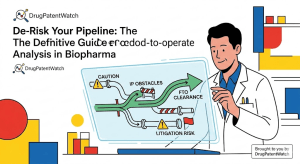
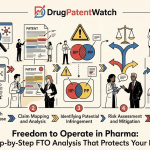
Freedom-to-operate analysis is one of the most misunderstood concepts in biopharma. Ask ten executives what it means, and you’ll get ten different answers. Some will describe it as a green light to commercialize. Others will call it a liability shield. A few will mention it in the same breath as a patent clearance opinion or a validity study. All of them are partially wrong.
At its core, FTO analysis answers a single question: can a company make, use, sell, offer to sell, or import a specific product or process without infringing a valid, enforceable patent claim held by a third party in a given jurisdiction? [1] That question sounds simple. Answering it with any confidence is not.
The analysis does not tell you that you own a patent. It does not tell you that no patent exists covering your product. It does not certify safety, efficacy, or regulatory approval. What a rigorous FTO opinion does, when conducted properly by qualified patent counsel, is identify the universe of relevant patents, map your product’s features against those patents’ claims, assess the likelihood of infringement, and recommend a strategy for managing that risk.
The word “freedom” is also somewhat aspirational. A negative FTO result — meaning your product appears to infringe one or more valid claims — does not necessarily stop you from proceeding. It tells you where the risk lives and what you need to do about it. That might mean designing around the patent, licensing rights from the holder, challenging the patent’s validity through an inter partes review (IPR) or post-grant review (PGR), or accepting the risk of litigation if you believe the patent is weak or expired. FTO analysis is a risk management tool, not a permission slip.
This distinction matters enormously in biopharma, where the cost of getting it wrong is not a fine or a cease-and-desist letter. It is an injunction that halts a product launch months before patent expiry, a $1.6 billion damages award like the one Bristol-Myers Squibb faced in its Eliquis litigation, or the slow suffocation of a startup that cannot raise its next round because its IP position is too clouded to attract institutional capital. [2]
FTO vs. Patentability vs. Validity
These three concepts get conflated regularly enough to cause expensive mistakes. They address entirely different questions and require different types of analysis.
Patentability asks whether your own invention is eligible for patent protection. It is the analysis your prosecution counsel conducts before filing a patent application. The criteria — novelty, non-obviousness, utility, and adequate written description — govern what you can claim as your own. Patentability analysis is forward-looking: can we protect this?
Validity asks whether an existing third-party patent, one that concerns you in the context of your own product development, is legally sound. A patent that issues from the U.S. Patent and Trademark Office (USPTO) carries a presumption of validity, but that presumption can be overcome. Prior art that the examiner never saw, prosecution history estoppel that narrows a claim’s scope beyond what its plain language suggests, double patenting, or inadequate disclosure can all render a patent invalid. Validity analysis looks backward: does this patent deserve to exist?
FTO asks whether your specific product, in its specific commercial form, falls within the scope of a valid, enforceable claim. It is neither backward nor forward-looking in isolation. It is contemporaneous. It asks: right now, as we prepare to launch, can we move?
The practical implication is that FTO analysis often incorporates elements of validity analysis. If you identify a patent that appears to read on your product, the next question is whether that patent is actually valid. If a strong invalidity argument exists, the FTO risk diminishes significantly. This is why a thorough FTO opinion from a competent patent firm will not simply flag infringement risk; it will also assess the strength of the patents it identifies.
The “Safe Harbor” Misconception
One of the most common misreadings in biopharma IP involves the research safe harbor under 35 U.S.C. § 271(e)(1), sometimes called the Hatch-Waxman safe harbor. The provision exempts from patent infringement liability activities that are “solely for uses reasonably related to the development and submission of information under a Federal law which regulates the manufacture, use, or sale of drugs.” [3]
The key phrase is “solely for uses reasonably related.” Courts have interpreted this broadly enough to encompass most clinical trial activities and FDA submission preparation. The Supreme Court’s Merck KGaA v. Integra Lifesciences decision in 2005 extended the safe harbor to cover preclinical research that might reasonably lead to an FDA submission, even if the specific compound being studied never makes it through the pipeline. [4]
What the safe harbor does not cover is equally important. It does not protect basic research conducted purely for scientific curiosity, commercial activities that extend beyond regulatory submissions, manufacturing activities in preparation for a commercial launch, or the sale of research tools to third parties. If your contract research organization (CRO) is making a patented compound to sell to academic labs, the safe harbor offers no protection. If you are scaling up manufacturing capacity in anticipation of approval, you are outside its reach.
The practical consequence for FTO timing is direct. A company can proceed through preclinical and clinical development with some comfort that its activities fall within the safe harbor, but it needs a completed FTO analysis well before NDA or BLA filing, and certainly before any commercial manufacturing begins. Companies that treat the safe harbor as a general-purpose shield until launch day frequently discover their error at the worst possible moment.
Why Biopharma Is Different
The Patent Thicket Problem
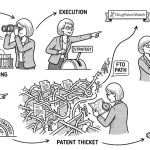
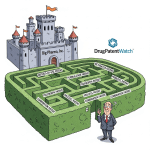
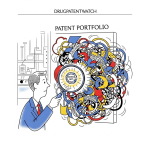
Biopharma is not a patent system. It is a patent ecosystem — and in some therapeutic areas, it more closely resembles a patent jungle. The pharmaceutical industry has constructed multi-layered IP portfolios around drug products over decades, exploiting the legal separation between patents covering the active molecule, its formulations, its methods of manufacture, its methods of use, its metabolites, its salt forms, its polymorphs, its dosing regimens, and its combination with other agents.
The term “patent thicket” was popularized in technology policy discussions, but its application to pharma is more severe than in most other industries. A 2021 study published in JAMA Internal Medicine found that the 12 best-selling drugs in the United States were protected by a combined 853 patents, with only 18 percent of those patents covering the active ingredient itself. The remaining 82 percent covered formulations, delivery devices, manufacturing processes, and new indications — a scaffolding of secondary patents that extended market exclusivity years or decades beyond the expiration of the original compound patent. [5] <blockquote> “The 12 top-selling drugs in the U.S. are covered by 853 patents in total, yet only 18 percent cover the active ingredient. The remaining 82 percent are secondary patents — on formulations, devices, processes, and new uses — that keep competitors out long after the core molecule patent expires.” — Feldman & Frondorf, JAMA Internal Medicine (2021) [5] </blockquote>
AbbVie’s Humira program stands as the most documented example. As of 2023, AbbVie had accumulated more than 250 patents related to adalimumab in the United States alone, organized in what critics called a “patent thicket” specifically designed to delay biosimilar competition. The first adalimumab patent — U.S. Patent No. 6,090,382 — expired in 2016. Biosimilar competitors did not actually reach U.S. patients until 2023, seven years later, because of the thicket of secondary patents covering formulation, manufacturing, and dosing that AbbVie had erected and licensed strategically. [6]
For a company conducting FTO in the small-molecule space, a patent thicket means that a negative outcome on the core compound patent is not the end of the analysis. You must search formulation patents that might cover your preferred delivery vehicle. You must check method-of-use patents that might limit the indications you can pursue. You must examine manufacturing process patents that could prevent you from using the most efficient synthesis route. And you must account for continuation patents — offspring of the original filing that can have claims that differ substantially from the parent, sometimes issued years after the parent expires.
Biologics present an even denser landscape, for reasons discussed in the next section.
Biologics vs. Small Molecules
The distinction between small-molecule drugs and biologics is not merely chemical. It has profound implications for FTO analysis because the two categories involve different patent strategies, different regulatory frameworks, different competitive dynamics, and different types of IP risk.
Small molecules are chemically synthesized compounds, typically with molecular weights below 1,000 daltons, precise atomic structures, and the ability to be manufactured identically by any competent chemist following a known synthesis route. The core patent protecting a small-molecule drug covers the specific molecular structure — the compound claim — and this patent is usually the most powerful and most targeted piece of IP in the portfolio.
Biologics are large, complex molecules — proteins, antibodies, cell therapies, gene therapies — manufactured in living cell systems and inherently more variable. Because you cannot synthesize a biologic exactly, you cannot truly copy it. What biosimilar manufacturers produce is highly similar to, not identical to, the reference product. This biological variability means that compound-style claims are less dominant in the biologics IP landscape. Instead, patent protection clusters around cell lines, manufacturing processes, protein sequences, antibody epitopes, glycosylation patterns, formulation buffers, and purification methods.
For FTO in the biologic space, this means the patent search is structurally different. You cannot simply search for your molecule’s name and examine the compound patents that come up. You must map your manufacturing process against process patents. You must compare your cell line against cell-line patents. You must examine formulation patents covering your specific buffer system, and you must assess whether antibody patents covering the same target antigen — even if claiming different epitopes — might create freedom-to-operate concerns.
The biosimilar approval pathway under the Biologics Price Competition and Innovation Act (BPCIA) adds a further wrinkle. The “patent dance” provisions of the BPCIA require biosimilar applicants to exchange information with reference product sponsors and negotiate a list of patents to be litigated before launch. This statutory process is itself a form of institutionalized FTO analysis, with procedural consequences for companies that fail to conduct it correctly or on time. [7]
Combination Therapies and Multi-Patent Landscapes
Modern oncology has made combination therapy the standard of care in most solid tumors. Immuno-oncology combinations, targeted therapy plus CDK inhibitor regimens, antibody-drug conjugates combined with checkpoint inhibitors — the list of approved and investigational combination therapies is long and growing. Each component in a combination may be protected by its own IP estate, creating an FTO analysis that requires examining multiple portfolios simultaneously.
The problem compounds when you consider method-of-use patents. Even if both components of your combination are off-patent, a third party may hold a valid method-of-use patent covering the specific combination in your indication. Pfizer discovered this dynamic in reverse: its combination of palbociclib with letrozole for HR+/HER2- breast cancer was covered by use patents that gave it market exclusivity even after the palbociclib compound patent’s expiration was approaching. Competitors who sought to develop similar CDK4/6 inhibitor combinations had to navigate not just Pfizer’s compound patents but its method-of-use portfolio. [8]
For companies developing fixed-dose combinations, the FTO analysis must also examine third-party patents covering the specific ratio, the specific dosage form, and any synergistic interaction that may itself be claimed. A formulation patent can be surprisingly powerful: if the only commercially viable way to co-formulate your two compounds requires a specific excipient system that someone has patented, you face a real infringement risk regardless of the freedom you have with respect to the active ingredients.
The Anatomy of an FTO Analysis
Step 1: Defining the Product and Scope
The quality of an FTO analysis is determined at the beginning, not the end. Before any patent search begins, the team conducting the analysis must define precisely what is being analyzed. This seems obvious. It is routinely botched.
A product description sufficient for FTO purposes must capture every commercially relevant embodiment you intend to bring to market. This includes the active ingredient or biologic in its specific form; the formulation, including excipients, salt forms, and delivery device; the manufacturing process, including cell lines, synthesis routes, and purification steps; the intended indication or indications; the dosing regimen; and the target patient population.
If you define the scope too narrowly, you will conduct a clean FTO analysis for a product you never actually launch, while remaining blind to the patents that cover your real commercial product. If you define it too broadly, you will consume enormous resources searching for patents that never come close to covering your actual product.
The geographic scope must also be specified upfront. FTO analysis is jurisdiction-specific because patent rights are territorial. A patent held by Roche in the United States gives Roche no rights in India. An FTO clean bill of health in the European Union provides no comfort if you plan to launch in Japan. Standard practice is to conduct FTO analysis in the markets where you intend to commercialize, which for a global pharmaceutical launch typically means the United States, the European Union (with special attention to Germany, France, the United Kingdom, and Spain, which are the key litigation venues), Japan, China, and Canada at minimum.
Step 2: Prior Art and Patent Searching
Patent searching is a discipline that sits at the uncomfortable intersection of legal knowledge, technical expertise, and database fluency. It is not a Google search. A competent searcher uses multiple databases, applies multiple search strategies, and iterates based on what the early results reveal.
The core databases for pharmaceutical patent searching include the USPTO’s Patent Full-Text and Image Database (PatFT), the European Patent Office’s Espacenet, the World Intellectual Property Organization’s PatentScope, Derwent Innovation, and commercial platforms including those offered by companies like Clarivate, Lexis IP, and Questel. Each database has different coverage, different search syntax, and different strengths. No single database is comprehensive.
The search strategy for a typical pharmaceutical FTO analysis involves at least four parallel approaches. The first is keyword searching using the compound’s generic name, brand name, synonyms, and common chemical descriptors. The second is chemical structure searching, which identifies patents claiming the specific chemical structure or related structures using substructure search tools. The third is assignee searching, which finds all patents held by your known competitors, which have the highest base rate of relevance. The fourth is classification searching, which uses the International Patent Classification (IPC) or the Cooperative Patent Classification (CPC) to find patents in the relevant technical area regardless of keyword.
For a biologic, the search must also include sequence searching — using your protein, nucleic acid, or antibody sequence against patent databases that store sequence data. The World Intellectual Property Organization maintains a sequence database, and commercial tools from companies like GenomeQuest allow searchers to identify patents claiming sequences that overlap with yours even when those claims are written in ways that keyword searching would not find. [9]
One of the most persistent sources of FTO failure is inadequate attention to pending patent applications. A search that examines only granted patents misses the applications that are still under examination — applications that could issue as patents with claims broad enough to cover your product after your launch date. Published patent applications are accessible in most major databases after an 18-month delay from the priority date, which means that some applications remain confidential during a portion of their prosecution. This is an irreducible blind spot in any FTO analysis, and competent practitioners will note it explicitly in their opinions.
Tools like DrugPatentWatch serve an important function here. The platform aggregates patent data specifically for pharmaceutical compounds, including Orange Book patent listings, patent expiration dates, and competitive intelligence on biosimilar and generic challenges. For any FTO involving a product in the vicinity of an existing approved drug, DrugPatentWatch’s organized presentation of the relevant patent landscape can accelerate the initial screening phase significantly, giving your legal team a curated starting point rather than forcing them to build the landscape from scratch through raw database searches. [10]
Step 3: Claim Mapping
Once the patent search is complete, you have a list of potentially relevant patents. The next step is the hardest, most technically demanding part of the analysis: claim mapping.
Patent claims are the legal operative part of a patent. The title, drawings, and specification matter for context and for claim construction, but it is the claims that define the scope of patent rights. An independent claim stands on its own. A dependent claim adds limitations to an independent claim and is narrower in scope. For FTO purposes, you care most about independent claims, because if your product does not fall within an independent claim, it does not infringe any dependent claim of that patent either.
Claim mapping involves reading each claim element — called a limitation — and asking whether your product, method, or process includes that limitation. Infringement requires that your product meet every limitation in a claim. If you lack even one limitation, you do not literally infringe. This is called the all-elements rule.
The analysis becomes more complex when you consider the doctrine of equivalents. Even if your product does not literally satisfy every claim limitation, it may infringe under the doctrine of equivalents if each missing limitation is met by something that performs substantially the same function in substantially the same way to achieve substantially the same result. Prosecution history estoppel constrains the doctrine of equivalents: if the patent owner narrowed a claim during prosecution to overcome a prior art rejection, that narrowing may prevent the owner from recapturing the surrendered ground through the doctrine of equivalents.
For a biologic product, claim construction in antibody patents can be particularly contentious. Antibody claims may be written functionally (claiming an antibody that binds to a specific epitope with a specific affinity), structurally (claiming specific CDR sequences), or by reference to a deposit (claiming an antibody produced by a specific hybridoma deposited with the ATCC). The scope of each type of claim is legally distinct, and the FTO risk they present differs substantially.
Claim mapping for a complex pharmaceutical product typically produces a matrix: rows representing each patent claim, columns representing each feature of your product, and cells indicating whether your product meets each limitation. This matrix becomes the evidentiary foundation for the FTO opinion and, if litigation follows, a key document in any infringement analysis.
Step 4: Risk Assessment and Opinion
After claim mapping, patent counsel — and ultimately qualified legal professionals must conduct this step for the opinion to have legal weight — renders a risk assessment for each potentially infringing patent. The traditional categories are: infringes, does not infringe, or unclear/requires further analysis.
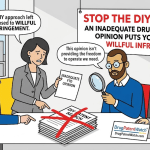
A “does not infringe” opinion that covers a valid claim provides some protection against enhanced damages in subsequent litigation. The Supreme Court’s Halo Electronics decision in 2016 clarified that willful infringement — which can trigger trebled damages — requires that the infringer act despite a known risk of infringement. A good-faith FTO opinion that reaches a “does not infringe” conclusion, even if ultimately incorrect, is evidence of non-willfulness. Companies that proceed without any FTO analysis have no such protection. [11]
Risk assessment must also account for the commercial importance of the patent to its owner. A patent held by a non-practicing entity (NPE) with no product of its own may be licensed or litigated aggressively regardless of the technical merits of any infringement claim. A patent held by a competitor that has a commercial product to protect is more likely to be enforced as a market exclusivity tool. The identity and likely behavior of the patent owner is a material input to the risk analysis, even though it does not appear in most formal claim maps.
The NPE threat in pharmaceutical patent litigation has grown substantially since 2010. While pharmaceutical NPE litigation was historically less prevalent than in the technology sector, NPE activity targeting branded and generic pharmaceutical companies has increased measurably, driven partly by the high damages potential in pharmaceutical cases where a single blockbuster product can generate billions in annual revenue. NPEs that acquire pharmaceutical patents through bankruptcy proceedings, from patent trolls, or from academic institutions looking to monetize unused IP represent a distinct category of FTO risk from the competitor-held patents that form the traditional focus of pharmaceutical IP strategy.
The Paragraph IV landscape has also attracted NPE activity. Entities that acquire broad formulation or delivery system patents and then assert them against ANDA filers have become a persistent feature of the generic pharmaceutical IP environment. Unlike the brand-versus-generic dynamic, these NPE assertions do not automatically trigger the Hatch-Waxman 30-month stay — because the NPE’s patent may not be listed in the Orange Book — but they can delay generic launches through preliminary injunctions or force costly litigation that generic manufacturers must finance independently of any 180-day exclusivity reward.
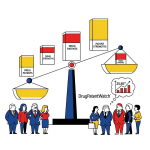
Patent validity deserves serious independent attention at this stage. The USPTO grants patents under a preponderance-of-the-evidence standard, which means approximately 50 percent certainty that the claims are valid. Courts apply a clear-and-convincing evidence standard to validity challenges, which is higher, but post-issuance proceedings at the Patent Trial and Appeal Board (PTAB) apply the same preponderance standard as examination. [12] Many pharmaceutical patents that create FTO headaches would not survive a serious PTAB challenge. Identifying strong invalidity arguments is not just an academic exercise; it is a core risk mitigation strategy.
Step 5: Strategy Options
An FTO analysis that identifies risk but offers no strategic options has limited value. The final step is developing a concrete path forward, which typically involves one or more of the following:
Designing around the patent is often the preferred first option. If a specific structural feature, process step, or formulation component is the source of the infringement risk, modifying your product to eliminate that feature — while preserving therapeutic performance — may be possible. Design-arounds are not always available, and they must be evaluated for their scientific feasibility and regulatory implications (a significant design change after Phase 2 data collection can require additional clinical work), but they should always be examined.
Licensing is the commercially cleanest resolution when a patent is valid, infringed, and cannot be designed around. The challenge is that licensing negotiations require the other party’s cooperation, which means you must approach the patent holder before you have maximum leverage. Many companies delay licensing discussions until litigation is imminent, at which point royalty rates and deal terms are far worse than they would have been in an early, pre-commercial conversation.
The economics of pharmaceutical patent licensing vary significantly by product category, commercial stage, and patent holder identity. In the small-molecule space, royalty rates on net sales for blocking compound patents typically range from 3 to 10 percent depending on the strength of the patent, the commercial stage of the product, and the relative bargaining positions of the parties. For formulation or process patents that create narrower FTO exposure, royalties are typically lower. For foundational platform patents in the biologic or gene therapy space, where the patent holder’s technology underlies the entire therapeutic approach, royalty demands can be substantially higher.
The timing of licensing outreach matters beyond the obvious negotiation leverage dynamic. Patent holders who learn about your development program through public sources — published clinical trial registrations, conference presentations, or journal publications — will approach you with whatever information they have gathered, often at a disadvantageous moment. Companies that proactively identify relevant patent holders during their FTO process and initiate licensing discussions early, before clinical data has established obvious commercial value, frequently achieve better terms than companies that are approached by patent holders after Phase 2 success.
PTAB challenges through IPR or PGR proceedings offer a cost-effective alternative to district court litigation for challenging patent validity. IPR petitions must be filed within one year of service of a patent infringement complaint, but can also be filed proactively before litigation begins. The PTAB has maintained a historically higher institution rate and higher invalidity finding rate than district court proceedings, though recent procedural changes have modestly reduced institution rates. [13]
Waiting for patent expiration is sometimes a viable strategy when the relevant patent has a remaining term of only a few years and your development timeline means you cannot launch commercially until near that expiry date regardless. This must be combined with close monitoring of any continuation applications that might extend the coverage.
Tools of the Trade
Patent Databases and Search Platforms
No single database covers the global patent landscape completely. Professional FTO practitioners use a combination of free and subscription-based tools, each with distinct advantages.
The USPTO’s PatFT and AppFT provide full text of U.S. granted patents (back to 1976 for full text, back to 1790 for bibliographic data) and published applications. Espacenet covers more than 100 million patent documents from approximately 100 countries. Google Patents has improved substantially in recent years and offers useful citation analytics and a clean semantic search interface, though it lags behind commercial platforms in pharmaceutical chemical structure searching.
Derwent Innovation (Clarivate) offers the Derwent World Patents Index, which provides expert-written abstracts that normalize the different terminology used in patents from different jurisdictions — essential when searching across patent families where the same invention may be described differently in German, Japanese, and U.S. filings. Questel’s Orbit platform offers strong analytics features, including patent family analysis, forward citation tracking, and assignee portfolio mapping that can rapidly identify the key players in a specific technology area.
For chemical structure searching specifically, SciFinder (CAS), STNext, and Reaxys provide reaction database integration that no pure patent database can match. The ability to search not just for compound patents but for every patent that cites a specific compound in any context — as a starting material, an intermediate, or a comparator — is critical for thorough pharmaceutical FTO.
DrugPatentWatch and Competitive Intelligence
For pharmaceutical professionals conducting or commissioning FTO analysis, DrugPatentWatch occupies a distinct niche. The platform focuses specifically on drug patents, linking patent data to FDA approval information, Orange Book listings, and generic entry timelines in ways that general-purpose patent databases do not. [10]
When you are conducting FTO on a small molecule with structural similarity to an existing approved drug, DrugPatentWatch lets you rapidly survey the patent estate protecting that drug, identify which patents are listed in the Orange Book and thus have regulatory significance, track any paragraph IV challenges that have been filed against those patents, and monitor upcoming patent expirations that may change the competitive landscape around your target product.
This competitive intelligence function extends beyond the target drug itself. If you are developing a new formulation or delivery system for a generic compound, DrugPatentWatch’s formulation patent data helps you identify whether your preferred excipient combination or dosage form is already claimed. If you are developing a biosimilar, the platform’s biologics data helps you map the reference product’s patent estate as a starting point for the more detailed FTO work your counsel will need to complete.
DrugPatentWatch is not a substitute for professional patent counsel. It does not provide claim mapping, legal opinions, or analysis of unpublished applications. What it provides is a well-organized, pharmaceutical-specific starting point that reduces the time your legal team spends building basic landscape context from scratch — which is where a significant portion of FTO budget gets consumed without adding distinctive analytical value.
AI-Assisted Patent Analysis
The application of machine learning to patent analysis has moved from novelty to utility over the past five years. Several commercial platforms now offer AI-assisted claim parsing, semantic patent search, and claim mapping automation. The question is not whether these tools exist; it is how much analytical weight they can carry.
AI patent search tools have demonstrated real improvements in recall — finding patents that keyword searches miss because they use different terminology to describe the same concept. Semantic search models trained on patent corpora can identify conceptual similarity across language barriers and across different levels of claim abstraction. For the initial screening phase of an FTO analysis, where the goal is to cast the widest possible net, these tools reduce the risk of missing relevant patents through terminology blind spots.
Where AI tools remain limited is in the precise legal reasoning required for claim construction and infringement analysis. Reading a pharmaceutical patent claim, understanding how prosecution history estoppel constrains its scope, applying the doctrine of equivalents in a legally coherent way, and forming a defensible opinion on infringement risk — these tasks require the judgment of a skilled patent attorney. AI tools can flag patents for human review, help prioritize the claim mapping workload, and surface prior art for validity analysis, but they are inputs to human analysis, not replacements for it.
A 2023 survey by the International Association for the Protection of Intellectual Property (AIPPI) found that 67 percent of IP professionals at pharmaceutical companies had incorporated AI tools into their patent search workflows, but only 11 percent relied on AI for substantive claim analysis without human expert review. [14] That ratio reflects appropriate calibration: AI earns its keep in the labor-intensive search and screening phases, while qualified attorneys retain responsibility for the analysis that determines legal strategy.
Patent Monitoring as a Continuous Function
A single FTO analysis commissioned at IND filing and never revisited is a liability management failure. The patent landscape is not static. Competitors file new applications daily. Continuation patents issue with claims that may differ substantially from the parent patents you already analyzed. PCT applications enter national phase in new jurisdictions. PTAB rulings invalidate patents that previously clouded your FTO picture. Litigation settlements produce cross-licenses that alter the competitive IP balance. Each of these events can change your FTO status without any action on your part.
Best practice in pharmaceutical IP management treats FTO as a continuous monitoring function rather than a one-time project. This means setting up patent watch alerts on key technology classifications and assignees in your competitive space, subscribing to prosecution monitoring services that alert you when continuation applications are filed by identified competitors, tracking PTAB proceedings that might invalidate patents in your landscape, and reviewing your FTO opinion against the current patent landscape at each major clinical milestone — typically at Phase 1 completion, Phase 2 completion, and pre-NDA/BLA preparation.
The cost of continuous monitoring is substantially lower than the cost of a fresh comprehensive FTO analysis at each milestone. A well-structured monitoring program, using a combination of automated database alerts and periodic brief reviews by outside counsel, can be maintained for a fraction of the cost of a full-scope FTO opinion while ensuring that material changes to the patent landscape are caught before they create commercial surprises.
For biologics in development, monitoring the biosimilar landscape requires tracking not just the originator brand’s patents but the patent applications of competing biosimilar developers. A biosimilar patent that you would infringe — because it covers a formulation or process that you share — is an FTO risk from a different direction than the typical originator-versus-generic scenario. The biosimilar patent landscape is becoming increasingly populated as early biosimilar developers secure proprietary IP around their own manufacturing and formulation innovations.
Building an In-House FTO Capability
Companies that progress from startup to mid-size commercial enterprise frequently reach a point where the cost-effectiveness calculation shifts toward building in-house IP analytical capability rather than outsourcing every analysis to outside counsel. The question is not whether to maintain outside counsel relationships — every sophisticated biopharma company does — but how to structure the internal team to maximize the value of those relationships.
An effective in-house IP function for FTO purposes requires three capabilities. The first is technical: a team member with deep patent search expertise, familiarity with pharmaceutical databases and chemical structure search tools, and the judgment to distinguish relevant patents from background noise. The second is legal: a qualified patent attorney or agent who can perform preliminary claim mapping, identify the highest-risk patents for detailed external analysis, and communicate fluently with outside counsel about technical facts and legal strategy. The third is commercial: someone who understands the company’s commercial timeline and can translate IP risks into business language that the executive team and board can act on.
The division of labor between in-house and outside counsel in a mature FTO program typically works as follows: in-house conducts the initial patent search and landscape screening, identifies the candidate patents that require detailed claim analysis, and briefs outside counsel on the highest-priority concerns. Outside counsel performs the formal claim mapping and drafts the written FTO opinion on the patents that in-house has flagged as material risks. This hybrid model reduces outside counsel fees substantially while maintaining the legal rigor that formal opinions require.
Design-Around Strategies in Pharmaceutical Development
Designing around a blocking patent is the most commercially satisfying FTO outcome: you eliminate the infringement risk without licensing fees, without litigation exposure, and — if done well — you may create patentable innovations of your own in the process. Pharmaceutical design-arounds fall into several broad categories, each with specific technical and regulatory implications.
Structural modification is the most familiar design-around approach for small-molecule drugs. If a blocking patent claims a specific core scaffold with substituents at defined positions, a medicinal chemist may be able to identify modifications that preserve or improve the therapeutic activity while placing the new compound outside the patent’s literal scope and beyond the doctrine of equivalents. The challenge in pharmaceutical design-around is that biological activity is exquisitely sensitive to molecular structure — minor changes that easily avoid patent claims may dramatically reduce potency or introduce toxicity. The design-around must be medically viable, not just legally elegant.
Formulation design-arounds address blocking formulation patents rather than compound patents. If a competitor holds a patent on a specific polymer-based sustained-release matrix that you would need to use for your preferred once-daily dosing, a formulation design-around explores alternative matrix technologies, different polymer types, or entirely different release mechanisms (osmotic pumps, coatings, multi-layer tablets) that achieve the same clinical goal through a different technological approach. Formulation patents are often narrower in scope than compound patents, making design-arounds more accessible — but the resulting formulation must undergo bioequivalence testing or comparative clinical work before regulatory approval.
Process design-arounds are relevant when the blocking patent covers a specific synthesis route, purification step, or manufacturing platform. For small molecules with multiple viable synthesis routes, switching to an alternative route is often achievable with modest development investment. For biologics, where the manufacturing process and the product quality attributes are intimately linked, process design-arounds require demonstrating that the alternative process produces a product with comparable quality attributes — a regulatory challenge that can be significant.
The regulatory implications of design-arounds must be evaluated in parallel with the patent analysis. A structural modification significant enough to avoid a compound patent is likely significant enough to require entirely new clinical data, which means it is essentially a new drug rather than a design-around. A formulation change that requires new bioequivalence studies or comparative clinical data adds time and cost to the development timeline. The practical value of a design-around must be assessed against the full cost — technical, regulatory, and commercial — of implementing it, not just the elegance of the patent avoidance argument.
Humira and the Biosimilar Patent Wars
The Humira case is not a story of FTO failure. It is a story of FTO success — for AbbVie. For the biosimilar manufacturers who spent years in litigation trying to enter a market worth more than $20 billion per year in U.S. revenue alone, it demonstrates what happens when the originator brand has conducted a more sophisticated long-term patent strategy than its competitors anticipated. [6]
AbbVie began constructing its Humira patent thicket in the early 2000s, years before the first adalimumab patent was set to expire. The strategy involved filing patents not just on the antibody itself but on every commercially important aspect of the product: high-concentration formulations, citrate-free formulations that reduced injection-site pain, manufacturing cell lines, antibody purification processes, and dosing regimens for specific indications. Some of these patents were filed as continuations of earlier applications, which extended their priority dates while issuing well after the original patents.
When biosimilar manufacturers including Amgen, Samsung Bioepis, and Sandoz began filing 351(k) applications for adalimumab biosimilars in the 2015-2018 period, they faced a patent landscape of unprecedented complexity. Under the BPCIA’s patent dance, AbbVie identified hundreds of patents it asserted were relevant to the biosimilar products. Litigation ensued in multiple venues simultaneously.
The resolution came not through courtroom victories but through settlement. AbbVie licensed its U.S. patent portfolio to virtually every biosimilar developer between 2018 and 2023, granting entry rights that became effective in January 2023, seven years after the initial compound patent’s expiration. The settlement terms were confidential, but analysts estimated that AbbVie secured royalties that significantly offset the revenue loss from biosimilar competition, while the biosimilar manufacturers gained a clear commercial path. [6]
The lesson for companies conducting FTO analysis on biologics is that the compound patent is almost never the whole story. A clean FTO opinion on the reference antibody sequence provides false comfort if you have not examined the formulation, process, and dosing patents that form the commercial product’s actual IP scaffold. An FTO analysis that costs $150,000 and takes three months is cheap insurance against the litigation costs that can exceed $30 million per proceeding, not including the cost of delayed market entry.
The Teva-GSK Pregabalin Dispute
The pregabalin litigation in the United Kingdom provides a case study in method-of-use patent risk — an FTO consideration that generic manufacturers frequently underweight relative to compound patents.
Pregabalin, the active ingredient in Lyrica, is effective for two primary indications: neuropathic pain and epilepsy. Pfizer’s original compound patent covering pregabalin expired in the United Kingdom in 2013. Generic manufacturers, including Teva, obtained licenses to sell pregabalin for the epilepsy indication under the compound patent. What they miscalculated was the force of Warner-Lambert’s method-of-use patent covering the use of pregabalin for neuropathic pain. [15]
The UK litigation was complex and produced conflicting decisions at different levels. At issue was whether generic pregabalin sold by Teva and other manufacturers, even when labeled only for epilepsy, was being prescribed and dispensed for neuropathic pain — thereby infringing the method-of-use patent. The courts grappled with “skinny labeling” — the practice of securing regulatory approval for only the off-patent indication while excluding the still-patented indication from the approved label.
The Supreme Court of the United Kingdom ultimately ruled in 2021 that Warner-Lambert’s patent for the neuropathic pain indication was invalid due to insufficiency of disclosure, rendering the infringement question academic. [15] But the years of litigation, the uncertainty about whether generic prescribing constituted infringement, the injunctions that temporarily restricted supply, and the disruption to healthcare systems across the UK demonstrated that method-of-use patents are not merely theoretical FTO risks. They can and do produce commercial disruptions even when the compound patent has long expired.
For any company developing a compound for multiple indications, or for any generic or biosimilar manufacturer whose product might be prescribed off-label for a still-patented use, method-of-use patents require dedicated attention in the FTO analysis. The search strategy must specifically target patents claiming the use of your compound — not just claims to the compound itself — and must cover each indication where your product might realistically be used, regardless of your approved label.
Myriad Genetics and BRCA Patents
The Myriad Genetics saga occupies a unique place in pharmaceutical patent history because it involved patents that were ultimately ruled invalid — but only after they had reshaped an entire field of medicine, suppressed competing diagnostic products for more than a decade, and reached the Supreme Court. The FTO implications are instructive even though the outcome ultimately favored competition.
Myriad Genetics held patents on the BRCA1 and BRCA2 gene sequences, isolated DNA molecules, and methods of analyzing those sequences to assess breast cancer risk. From the early 1990s through 2013, Myriad used these patents to maintain a monopoly on BRCA testing in the United States, preventing competing laboratories from offering the test and preventing researchers from developing alternative testing methodologies without Myriad’s license. [16]
Any company that wished to offer BRCA testing or develop BRCA-related therapeutics during this period faced a daunting FTO landscape. Myriad’s patent portfolio was extensive, covering not just the sequences themselves but methods of detecting mutations, methods of correlating mutations with cancer risk, and isolated DNA compositions. An FTO analysis conducted in 2005 would have found substantial infringement risk across multiple patent families, and counsel would have correctly advised that proceeding without a license carried serious litigation exposure.
The Supreme Court’s 2013 decision in Association for Molecular Pathology v. Myriad Genetics held that naturally occurring DNA sequences are not patentable subject matter, invalidating the claims to isolated genomic DNA. The companion claims to cDNA were preserved. [16] The decision effectively cleared the FTO landscape for BRCA testing overnight.
The Myriad case illustrates a paradox in FTO analysis. Valid, enforceable patents that create real FTO risk can exist for decades before their fundamental validity is successfully challenged. A company that built a BRCA testing business in the 1990s based on a clean FTO opinion would have been wrong: the landscape was dominated by Myriad. A company that commissioned an FTO analysis after 2013 would find the landscape much cleaner. The same underlying science, the same sequence, the same potential product — but radically different FTO outcomes depending on the legal environment at the time of analysis.
This temporal sensitivity is built into every FTO opinion: it reflects the state of the law at a specific point in time. Patents that are valid today may be invalidated tomorrow. Patents that have not issued today may issue with broader claims than you anticipated. A one-time FTO analysis is not a durable IP strategy; it is a snapshot.
Gilead’s Sofosbuvir and the Idenix Litigation
The litigation between Merck-owned Idenix and Gilead over sofosbuvir — the compound at the heart of the hepatitis C blockbuster Sovaldi — illustrates FTO exposure at the highest commercial stakes. Sofosbuvir generated $10.3 billion in its first full year of sales in 2014, making it one of the most commercially valuable drugs in history at that time. It also became the subject of a billion-dollar patent dispute that centered on whether Gilead’s development and commercialization of sofosbuvir infringed Idenix’s broad nucleoside patents.
Idenix had filed broad composition-of-matter claims covering nucleotide analogs with specific stereochemical features at the 2′ position of the ribose sugar. Gilead had conducted its own assessment of these patents before launching sofosbuvir and believed — based on what it represented as its own FTO analysis — that its product did not infringe. A Delaware jury disagreed and awarded Idenix $2.54 billion in damages in 2016, at the time the largest patent infringement verdict in U.S. history. The verdict was subsequently overturned on appeal based on invalidity, but the decade of litigation and the sequence of a massive first verdict illustrated the catastrophic financial exposure that can result from an FTO assessment that proves wrong. [30]
The Idenix case is instructive for several reasons. First, it demonstrates that even large, sophisticated pharmaceutical companies with substantial in-house IP teams and access to top-tier outside counsel can misjudge infringement risk at the highest commercial stakes. Second, it shows that FTO is not merely a startup concern: Gilead had annual revenues exceeding $20 billion when the verdict issued. Third, the case involved disputed claim construction — specifically, whether Idenix’s claims covered sofosbuvir’s specific stereochemistry — which was ultimately resolved in ways that turned on technical nuances that required deep organic chemistry expertise to understand properly. This illustrates why FTO analysis in chemistry-intensive pharmaceutical cases must involve counsel with genuine chemistry expertise, not just patent law expertise.
The appeals court’s invalidity ruling in Gilead’s favor on written description grounds showed that validity arguments can save an FTO position that infringement analysis could not. The court found that Idenix’s specification did not adequately support the full scope of its broad claims. This result validates the principle that a credible invalidity analysis is an essential companion to any infringement analysis in pharmaceutical FTO: the patent you believe you infringe may not actually be valid.
Building an FTO Strategy for Early-Stage Companies
When to Commission an FTO
Timing an FTO analysis involves balancing the cost and disruption of conducting it too early against the risk and potential devastation of conducting it too late. The right answer depends on the company’s stage, the nature of its product, and the specific patents in the relevant landscape.
Too early means commissioning a comprehensive FTO before your product concept is adequately defined. If your lead compound is still one of fifteen candidates in a discovery program, a full FTO on all fifteen is an inefficient allocation of legal budget. A preliminary patent landscape analysis — sometimes called a “freedom-to-operate screening” or “patentability/FTO search” — is more appropriate at this stage. It identifies the major patent families in the space without undertaking the full claim-mapping exercise, giving the scientific team the intelligence to make portfolio decisions with awareness of the IP environment.
Too late means discovering a major FTO problem after you have committed significant clinical development resources to a product that requires a license or redesign. The rule of thumb used by experienced biopharma IP counsel is that a full FTO analysis should be completed before you commit to any program that will require more than one year of significant development spending, and certainly before you file an IND. By IND filing, you have demonstrated enough proof of concept to attract attention from competitors and patent holders; the compound is no longer a secret; and your development trajectory is public enough that potential patent holders will be monitoring it. [17]
Specific trigger events that should automatically prompt FTO analysis include: lead candidate selection from a discovery program, initiation of a licensing negotiation where the asset’s IP position affects valuation, a merger or acquisition where the target’s product pipeline carries unknown IP risk, preparation for a significant fundraising round, and the start of any Phase 3 clinical trial, when commercial launch becomes a realistic near-term scenario.
The Cost-Benefit Calculus
Biopharma executives sometimes balk at the cost of FTO analysis. A thorough FTO opinion from a top-tier patent firm for a complex biologic can cost $100,000 to $300,000 or more, depending on the number of patents identified, the complexity of the claim mapping, and the number of jurisdictions covered. For an early-stage company, this is not a trivial expense.
The correct frame is not “what does FTO analysis cost?” but “what does an FTO problem discovered after Phase 3 cost?” The average cost of a Phase 3 clinical trial for a new drug ranges from $20 million to $300 million depending on indication and patient population. [18] Phase 3 is where investors pour in the most capital. Discovering at Phase 3 or later that a competitor holds a blocking patent — one you can neither design around nor license on reasonable terms — means facing the choice between either abandoning the program with its sunk costs or proceeding to launch with known litigation risk. Neither option is good. Both are worse than the cost of the FTO analysis that might have caught the problem early enough to change the development path.
The math gets more specific when you consider injunctions. A preliminary injunction that prevents launch while patent litigation proceeds can eliminate an entire launch window in a competitive market. In oncology, where first-mover advantage is material and where clinical practice patterns formed around the first approved drug in a class can be difficult to displace, losing even six months of market exclusivity has measurable revenue consequences. Teva’s entry into the aripiprazole market was delayed by patent litigation in a way that cost it hundreds of millions in potential generic revenue. [19] The FTO analysis that might have identified a design-around earlier in development would have paid for itself many times over.
Working with Patent Counsel
FTO analysis conducted without qualified patent counsel is not FTO analysis. It is a patent search with false authority. The distinction matters because the opinion — the legal conclusion about whether your product infringes, and what the risk level is — provides legal significance only when it comes from a qualified practitioner who has applied legal principles to the facts.
Selecting patent counsel for FTO involves several considerations. Technical background matters: a patent attorney who has prosecuted pharmaceutical patents in the relevant technology area (small molecules, antibodies, gene therapies) will construct better searches, write better claim analyses, and give more practically useful strategic advice than a generalist. Litigation experience matters: counsel who has handled infringement litigation understands how courts construct claims and how opposing counsel will challenge a non-infringement opinion.
The working relationship between the company’s scientific team and patent counsel is the variable that most determines FTO quality. Patent attorneys who receive inadequate technical briefing on the product will write opinions based on incomplete product definitions. Scientists who do not understand claim construction will not recognize when a claim element applies to their product. The FTO process works best when it includes a structured technical briefing session where the scientific lead walks patent counsel through the product in full detail, including the formulation, manufacturing process, and mechanism of action, before the patent search begins.
Privilege is another practical consideration. FTO opinions from outside counsel are protected by attorney-client privilege. If litigation follows and the defendant asserts a good-faith non-infringement belief based on its FTO opinion, it may need to waive privilege over that opinion to use it as a defense. This creates a strategic tension: the opinion is most valuable as a shield against willfulness findings, but using it requires disclosure. In-house legal analysis of the patent landscape may enjoy work-product protection rather than full privilege, affecting the strategic calculus differently. This is a topic that warrants specific discussion with outside counsel at the start of the engagement.
FTO in the Due Diligence Process
What VCs and Partners Look For
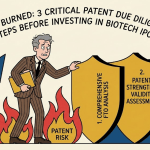
Sophisticated investors in biopharma have developed increasingly rigorous IP due diligence practices, driven partly by high-profile failures caused by IP problems that were discoverable before the investment. A fund that backed a promising oncology program only to watch it stall in Paragraph IV litigation has learned the cost of inadequate IP diligence. [20]
When institutional investors or potential acquirers evaluate a biopharma company, IP due diligence typically covers several dimensions. The first is ownership: does the company actually own the patents it claims to own? Assignment chains, especially in academic spinouts, frequently contain gaps. IP created by founders during their university employment may belong to the university. IP created by a CRO under a contract that lacks a clear work-for-hire provision may belong to the CRO. The company that believes it owns three core patents may actually own zero of them outright.
The second dimension is FTO: what is the risk that the company’s commercialization plans will be blocked by third-party patents? Sophisticated investors want to see a current FTO opinion, not a self-assessment by the company’s in-house team. They want to know what patents were searched, how claims were mapped, and what the counsel’s actual risk assessment was — not just a summary conclusion of “we believe we have FTO.”
The third dimension is patent quality: are the company’s own patents actually enforceable? A portfolio full of patents written by inexperienced counsel with claims that are either too narrow to provide meaningful protection or so broad that they would not survive validity challenge in litigation is not an asset. It is a liability.
Investors also increasingly want visibility into the competitive patent landscape. They want to know who the major patent holders in the space are, what their filing patterns suggest about future claims, and how the company’s own patent strategy positions it relative to that landscape. This is where tools like DrugPatentWatch can support the diligence process efficiently, providing organized landscape intelligence that lets an acquirer quickly map the field before commissioning more detailed analysis. [10]
Large pharmaceutical companies evaluating in-licensing opportunities apply a variant of the same diligence framework, but with one additional layer: they assess whether the target’s IP position is compatible with their own portfolio and development plans. A target whose lead compound is covered by a key patent also held by a company in the acquirer’s existing competitive alliance can create deal complications that pure FTO analysis does not reveal. The acquirer needs to model not just “does the target have FTO” but “does the combined entity have FTO after the transaction closes.”
For private equity buyers acquiring commercial-stage biopharma assets, the IP diligence focus shifts toward patent term remaining, anticipated generic entry dates, and the strength of any barriers to that entry. The financial model for a pharmaceutical acquisition depends critically on how many years of protected commercial exclusivity remain. A drug with apparent patent protection until 2031 but with a weak Orange Book patent estate and an active Paragraph IV challenge filed two years ago is a very different commercial proposition from a drug with the same nominal expiry date and a clean litigation history. Understanding that distinction requires the kind of integrated patent-and-regulatory analysis that connects Orange Book data to patent status to litigation history — precisely the function that specialized pharmaceutical IP databases provide.
Red Flags That Kill Deals
Several specific IP issues consistently derail biopharma transactions or produce major downward valuation adjustments. Understanding them in advance allows companies to address them before they become deal-killers.
Broken chain of title is among the most common. In academic spinouts, it is not unusual to find that the founding scientists published the core technology before a patent application was filed, that assignments from university to company are incomplete, or that a co-inventor who left the project early was never added to the patent as a named inventor. Inventorship errors can render patents unenforceable if they result from intentional deception, and they create ownership disputes that cloud title regardless of intent.
An unaddressed blocking patent is the most severe FTO red flag. If a company is aware of a patent that appears to read on its lead product and has taken no steps to address it — no opinion, no design-around effort, no license negotiation — this suggests either negligence or willful avoidance. Neither is acceptable to a sophisticated investor. A company that has identified a blocking patent, commissioned a validity analysis that identifies strong invalidity arguments, and initiated a licensing conversation has done the right things. A company that has done none of these things has not.
Overbroad prosecution of the company’s own patent applications is a subtler risk. If a startup’s patent attorney has prosecuted claims to capture subject matter that the company clearly did not invent and did not disclose adequately in the specification, those claims face material invalidity risk if litigation ever arises. Paradoxically, patents that look impressively broad on paper can be less valuable than narrower claims written with precision, because overbroad claims invite invalidity challenges that can collapse the entire patent.
Failure to pay maintenance fees — a purely administrative issue — can convert an important patent into an unintended abandonment. Due diligence regularly finds gaps in maintenance fee payments, particularly for early-stage companies that went through periods of financial stress. Abandoned patents can sometimes be revived, but the window is limited and the process is not guaranteed.
How to Present FTO Findings
For companies preparing for fundraising, licensing negotiations, or acquisition discussions, the way FTO findings are presented to potential partners matters as much as the substance of the findings. The goal is to demonstrate sophisticated awareness of the IP landscape, not to hide or minimize problems.
Investors and acquirers respond well to IP presentations that follow a clear structure: what is the patent landscape for our product category, what specific patents did we identify as potentially relevant, what was our analysis of each, what risk level do we assign, and what is our risk mitigation strategy? This structure signals that the company has thought about IP as a business risk management problem, not as a compliance exercise.
Companies that present IP analysis with excessive hedging (“we believe we generally have FTO but have not completed a comprehensive analysis”) raise flags immediately. Companies that present it with unjustified certainty (“we have complete FTO across all markets”) raise different flags. The most credible presentations acknowledge the uncertainty inherent in FTO analysis, identify specific areas of risk, and explain the concrete steps being taken to address each risk.
Where outside counsel’s written opinion is available, sharing its conclusions — or offering to share the full opinion under appropriate confidentiality terms — significantly increases due diligence efficiency. Many investors will want their own counsel to review the opinion, but seeing that a credible firm has conducted a rigorous analysis and reached a defensible conclusion is itself important information.
Regulatory Overlap: FTO and the FDA
The Orange Book and Patent Certification
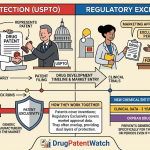
The United States has a unique regulatory-patent interface that does not exist in most other jurisdictions. The Hatch-Waxman Act of 1984 created a system where patent information for approved drugs is listed in the FDA’s “Approved Drug Products with Therapeutic Equivalence Evaluations,” universally known as the Orange Book, and where generic applicants must make specific certifications about those listed patents as part of their ANDA (abbreviated new drug application) filings. [21]
For originator companies, the Orange Book listing requirement creates both an opportunity and a responsibility. Patents covering the active ingredient, approved formulations, and approved methods of use can be listed in the Orange Book if they “claim the drug for which the applicant submitted the application or which claims a method of using such drug for which the applicant submitted the application.” [21] Listing a patent in the Orange Book gives it a specific regulatory significance: any generic applicant must certify how its product relates to each listed patent.
For FTO purposes, the Orange Book has a specific utility: it identifies the patents that an originator brand has determined are commercially significant enough to list. When DrugPatentWatch compiles Orange Book data alongside patent expiration dates and generic challenge histories, it gives companies a curated view of the most strategically important patents protecting approved drugs, which is often the most useful starting point for FTO work in the small-molecule space. [10]
The Orange Book does not list all patents held by the originator brand. Many formulation patents, process patents, and additional method-of-use patents may never be listed because they do not meet the listing criteria or because the brand prefers to keep them outside the Hatch-Waxman framework. This is why Orange Book analysis, while a valuable starting point, is not a complete substitute for the broader patent search required for thorough FTO analysis.
Paragraph IV Challenges
The Paragraph IV certification is the mechanism through which generic manufacturers challenge Orange Book-listed patents. By certifying under Paragraph IV that the brand’s listed patents are either invalid or not infringed by the generic product, the ANDA applicant invites a patent infringement suit and, by doing so, potentially triggers a 30-month stay of FDA approval while the litigation proceeds. [21]
For a generic or biosimilar manufacturer conducting FTO, the Paragraph IV system is a double-edged instrument. On one hand, successfully certifying under Paragraph IV and winning the subsequent litigation (or having the brand decline to sue, which is treated as acquiescence to the certification) clears the specific Orange Book-listed patents for the generic’s launch. On the other hand, the Paragraph IV certification effectively announces the generic’s intention to enter the market, triggering litigation that may prevent launch for up to 30 months.
From the FTO perspective, what Paragraph IV litigation reveals is which patents the brand believes are most important to defend. A brand that sues on two of its ten Orange Book-listed patents, but declines to sue on the other eight, is implicitly telling the market something about the relative strength of those other eight patents. Monitoring Paragraph IV litigation histories — the suits that were filed, the ones that settled, the ones that produced claim construction rulings, and the ones that ended in invalidity findings — is a rich source of intelligence for any company operating in a crowded therapeutic space.
The first generic applicant to file a Paragraph IV challenge to each Orange Book-listed patent earns a 180-day exclusivity period if it successfully challenges those patents. This first-filer exclusivity is a substantial commercial prize that shapes generic entry dynamics profoundly. Multiple generic applicants routinely race to be first, and the resulting competition to file applications and certifications has driven an increasingly sophisticated industry of generic patent challenge preparation.
The 30-Month Stay and Its Strategic Value
The 30-month stay that Hatch-Waxman grants the brand upon filing a patent suit against a Paragraph IV ANDA applicant is one of the more powerful procedural tools in pharmaceutical patent strategy. It freezes FDA approval for the generic for 30 months from the date the brand receives notice of the Paragraph IV certification, regardless of the merits of the infringement claim. [21]
For brand companies, the 30-month stay is worth its weight in gold. At average U.S. branded pharmaceutical pricing in major therapeutic categories, 30 months of additional market exclusivity represents hundreds of millions or billions of dollars in protected revenue. The incentive to list patents in the Orange Book and to sue on every listed patent when a Paragraph IV certification arrives is financially rational regardless of the ultimate strength of the IP position.
For generic and biosimilar manufacturers, the 30-month stay is a cost of entry that must be factored into the FTO-to-launch timeline. A company that expects to have FDA approval for its generic 18 months after filing should not plan commercial launch for that date if an Orange Book-listed patent remains unchallenged. The 30-month clock typically begins running before FDA review is complete, so for many generic applications, the stay expires before FDA would have approved the application in any event — but in cases where FDA is fast and patent litigation is slow, the stay is the binding constraint.
The BPCIA creates an analogous mechanism for biosimilars, though the patent dance provisions are more complex and the timelines differ. A biosimilar applicant that provides its 351(k) application to the reference product sponsor and participates in the patent dance creates an opportunity for the reference product sponsor to seek a preliminary injunction that can delay the biosimilar’s commercial launch. Companies developing biosimilars need FTO analysis completed well before their 351(k) filing so they can approach the patent dance with a clear view of their infringement exposure on each potentially relevant patent. [7]
International FTO Considerations
PCT Applications and Multi-Jurisdictional Risk
The Patent Cooperation Treaty (PCT) system allows an inventor to file a single international application that preserves the right to enter national patent office examination in more than 150 member countries. PCT applications are published 18 months after the earliest priority date, and national phase entry deadlines typically fall 30 months after that priority date. During the period between international filing and national phase entry, the PCT application is a potential threat: it may ultimately issue as granted patents in dozens of jurisdictions, but its claims during this period are not yet enforceable.
For FTO purposes, PCT applications represent both a searchable intelligence resource and a timing risk. They are searchable because they are published, allowing you to identify pending applications that might issue as problematic patents before they actually become enforceable. The risk is that you cannot know with certainty which countries the applicant will ultimately enter, what the examination outcomes will be in each country, or whether claims will be amended during national phase prosecution in ways that make them more or less relevant to your product.
Standard practice is to identify relevant PCT applications during the search phase and flag them as pending risks. The FTO opinion should note that the identified PCT applications could issue with materially different claim scope in each jurisdiction and should recommend monitoring them through their national phase prosecution.
Key Markets and Their Nuances
FTO analysis for a global pharmaceutical product must account for the substantial differences in patent law, patent scope, and patent enforcement between major markets.
The United States applies a broad doctrine of equivalents, allows method-of-use claims, and maintains an increasingly aggressive PTAB as a post-issuance validity check. U.S. FTO analysis must grapple with the possibility of patent infringement not just under literal claim reading but under the doctrine of equivalents, while also considering the enhanced opportunities for invalidity challenge that PTAB provides.
The European Patent Convention creates patent rights that are enforced nationally. A European patent granted by the European Patent Office (EPO) must be validated in each member state where enforcement is desired, and national courts apply their own national patent law to infringement and validity questions. Germany is the most important European pharmaceutical patent venue: it has a bifurcated system where infringement and validity are handled by different courts, which has historically allowed injunctions to issue against infringers before any validity determination. The Unified Patent Court, operational since June 2023, introduces a new pan-European venue that changes this dynamic for patents that are registered as Unitary Patents or for litigation brought in the UPC against European bundle patents whose proprietors opt them into the UPC system. [22]
Japan, South Korea, and China have each developed substantial pharmaceutical patent litigation ecosystems. China’s pharmaceutical patent linkage system, reformed significantly in 2021, now more closely resembles the U.S. Hatch-Waxman framework. Chinese pharmaceutical FTO has become materially more complex and more commercially significant as the Chinese pharmaceutical market has grown, and Chinese companies have simultaneously become significant patent holders with both defensive and offensive IP strategies. [23]
India occupies a unique position due to Section 3(d) of the Indian Patents Act, which prevents the grant of patents on new forms of known substances unless they demonstrate significantly enhanced efficacy over the known form. This provision has blocked the patenting in India of many pharmaceutical compounds and formulations that receive broad patent protection in the United States and Europe. India’s pharmaceutical IP environment thus creates a specific FTO landscape that differs materially from any other major market.
Patent Term Extensions and SPCs
Patent term extensions (PTEs) in the United States and supplementary protection certificates (SPCs) in the European Union extend the effective commercial exclusivity period of pharmaceutical patents to compensate for time lost to regulatory review. Under 35 U.S.C. § 156, U.S. patent term extensions can restore up to five years of patent term that was consumed by FDA review, subject to limits that cap the extended term at 14 years from FDA approval. [24] European SPCs provide up to five additional years of protection beyond the patent’s normal expiry.
For FTO purposes, PTEs and SPCs mean that the nominal expiration date of a patent is not always the date on which the patent actually expires. A patent that nominally expires in 2025 may have a PTE that extends it to 2027. FTO analysis must specifically check for PTEs and SPCs on all relevant patents, because overlooking them can produce a clean FTO opinion based on a patent you believe has expired that is actually still in force.
Patent term adjustments (PTAs) in the United States add additional complexity. PTAs compensate patent holders for delays in USPTO examination by adding days to the patent’s term. A patent with a nominal 20-year term from its priority date may have a PTA that extends it by six months or several years. These adjustments are recorded in USPTO records but must be specifically retrieved and reviewed during FTO analysis; they are not always immediately apparent from the patent’s face.
The Future of FTO
AI and Machine Learning in Patent Search
The role of artificial intelligence in patent analysis is evolving faster than the IP profession has fully absorbed. As of 2025, several transformative applications are either commercially available or in advanced development that will materially change how FTO analysis is conducted over the next decade.
Large language models trained on patent corpora have demonstrated substantial ability to understand claim language, identify technical relationships between patents, and perform preliminary claim-charting tasks. These models can read a claim and a product description and produce an initial assessment of whether each claim limitation is met — a task that previously required hours of attorney time per patent. The output requires legal review before it can be used as the basis for a formal opinion, but it dramatically compresses the time required to produce an initial draft claim chart for a large number of patents.
AI tools for prior art searching are already commercially deployed and demonstrably reduce the rate of “false negative” misses in patent searches — cases where the relevant patent exists but the searcher’s keywords did not find it. Semantic search models trained on millions of patents can identify conceptually similar claims even when they use entirely different vocabulary, a capability that rule-based keyword searching cannot replicate.
Predictive analytics tools that estimate the probability that a specific patent claim will survive PTAB challenge, based on historical outcome data from similar claims in similar technology areas, are in development at multiple companies. These tools would allow FTO analysis to incorporate quantitative risk estimates for patent validity — replacing the qualitative “strong invalidity argument” or “weak invalidity argument” language that currently characterizes most opinions with probability-weighted risk assessments. [25]
The most realistic near-term trajectory is a hybrid model where AI tools handle the search and initial screening phases, including preliminary claim mapping and prior art identification, while experienced patent attorneys apply legal judgment to the resulting candidates, form the strategic conclusions, and write the formal opinion. This model reduces the cost of FTO analysis substantially while maintaining the legal rigor that makes the opinion useful.
Several law firms and corporate IP departments have begun publishing proprietary data on their AI-assisted FTO programs. The early results consistently show reductions of 30 to 50 percent in initial patent screening time and meaningful improvements in the completeness of the patent universe identified. What they do not show — because it cannot yet be shown — is that AI-assisted analysis produces fewer legal errors than expert human analysis in the critical claim-mapping and strategic conclusion phases. The appropriate role for AI in FTO is expanding, but it remains circumscribed by the irreducible need for legal judgment at the opinion-writing stage.
Patent Thickets and Policy Reform
The pharmaceutical patent thicket problem has attracted sustained attention from policymakers, academics, and patient advocates. Multiple proposals for reform are under active discussion in the United States and Europe.
The most direct approach is limiting the number of Orange Book-listed patents per drug or requiring that listed patents meet a higher relevance standard before triggering the Hatch-Waxman 30-month stay. A 2023 FDA rule proposed requiring certification that each listed patent meets specific statutory criteria, with FDA authority to remove improperly listed patents. [26] If implemented fully, this reform would reduce the number of patents that generic applicants must certify against, potentially accelerating generic entry timelines.
The FTC has also entered the pharmaceutical patent thicket debate from an antitrust direction. The agency has published analyses of “product hopping” — the practice of minor reformulation followed by aggressive patent listing and contracting strategies designed to shift patients to the new formulation before the original product faces generic competition. From the FTO perspective, product hopping creates a specific challenge for generic developers: the reformulated product may have formulation patents that extend commercial exclusivity even when the original formulation’s patents have expired or been invalidated, and the market may have shifted substantially toward the reformulation by the time the original compound faces generic competition.
PTAB has been a de facto policy lever in the patent thicket debate. By providing a cost-effective, expert tribunal for invalidity challenges, it has held many secondary pharmaceutical patents to a higher evidentiary standard than they would have faced if challengers were required to proceed in district court. The institution rate for pharmaceutical PTAB petitions, while lower than the cross-industry average, has been sufficient to invalidate numerous Orange Book-listed and continuation patents that might otherwise have extended brand monopolies further.
Senator Amy Klobuchar and others have introduced legislative proposals that would create a presumption that certain types of secondary pharmaceutical patents — specifically continuation patents filed more than five years after the initial application with no substantial new claims — are invalid unless the patent holder demonstrates that the new claims represent a genuine additional invention. While this specific proposal has not yet advanced to law, the legislative attention signals that secondary patent strategies are under increasing scrutiny and that the FTO landscape for brand pharmaceutical products could shift materially if such reforms succeed.
The European Medicines Agency’s increased focus on SPC transparency and the European Commission’s proposed regulation on compulsory licensing for crisis situations signal that European policymakers are actively scrutinizing pharmaceutical patent exclusivity as a public health issue, not just a commercial one. For companies conducting FTO in the EU, the policy environment is moving in a direction that may reduce the practical enforceability of secondary pharmaceutical patents in certain circumstances, though the precise legal form these changes will take remains uncertain.
mRNA, Gene Therapy, and Emerging FTO Challenges
The new generation of therapeutic modalities — mRNA vaccines and therapeutics, CRISPR-based gene editing, CAR-T cell therapies, RNA interference (RNAi) therapies, and microbiome-based interventions — has created patent landscapes that are still forming and that present FTO challenges qualitatively different from those in the small-molecule or conventional biologic space.
The CRISPR patent dispute between the Broad Institute and the University of California, Berkeley consumed years of interference and appeal proceedings and produced a decision that allocated foundational CRISPR-Cas9 patents between the two institutions in ways that left significant uncertainty about the freedom to operate for therapeutic CRISPR applications. [27] Companies developing CRISPR therapeutics must navigate overlapping foundational patents held by competing academic institutions, each licensed non-exclusively to multiple commercial entities, while also addressing the newer generation of base editing, prime editing, and guide RNA patents that have been filed around CRISPR improvements.
The mRNA space has a parallel foundational patent dispute centered on lipid nanoparticle (LNP) delivery systems, where Moderna, BioNTech/Pfizer, Arbutus, and Alnylam have all asserted competing patent rights. The COVID-19 pandemic accelerated the commercial validation of mRNA technology and simultaneously intensified the IP disputes around every component of the delivery platform. Companies developing mRNA therapeutics post-COVID must conduct FTO analysis not just on the mRNA sequence itself but on every component of the LNP formulation, the manufacturing process, and the delivery device — a multi-layer analysis that mirrors the biologic FTO challenge but in a regulatory environment that is still developing clarity around what combinations of features constitute distinct inventions. [28]
The Moderna-Arbutus dispute over ionizable lipid patents is instructive for any company entering the mRNA space. Arbutus Biopharma and its predecessor Protiva developed the foundational LNP technology that enables mRNA delivery into cells. Moderna has built much of its therapeutic platform on LNP technology and has spent years challenging Arbutus patents through PTAB proceedings, seeking to invalidate claims that Arbutus argued covered Moderna’s delivery systems. The outcome of these proceedings — which has been mixed, with some claims surviving and others being invalidated — directly affects the FTO landscape for every company using ionizable lipid-based LNP delivery. A company entering the mRNA space today needs FTO analysis that tracks the current status of the Moderna-Arbutus proceedings, the surviving claim scope after PTAB review, and the licensing landscape that Arbutus and its licensees have created around their portfolio.
Gene therapy FTO is structurally similar to biologic FTO but with additional complexity around vector patents. Adeno-associated virus (AAV) serotypes, capsid variants, promoter sequences, and transgene constructs are all subject to patent protection by multiple academic institutions and companies. A company developing an AAV-based gene therapy for a rare disease faces a foundational IP landscape controlled largely by academic institutions — Penn, CHOP, Massachusetts Eye and Ear — that have licensing programs with specific terms and conditions that affect FTO for any commercial development. [29]
The commercial implications of foundation patent stacking in gene therapy became visible in the pricing decisions of early approved products. Spark Therapeutics’ Luxturna, approved for RPE65 mutation-associated retinal dystrophy in 2017, carried a list price of $850,000 per treatment — a price that reflected in part the cost of licensing multiple foundational technology patents that the product required. For companies developing their own gene therapies, understanding the license cost structure embedded in the foundational patent landscape is not just an FTO question; it is a profitability question that must inform commercial strategy from early development.
CAR-T cell therapy represents a further variation on the emerging modality FTO challenge. The foundational CAR construct patents held by the National Institutes of Health and licensed to commercial developers, the manufacturing process patents covering ex vivo T-cell expansion, the vector integration patents covering stable transgene insertion, and the clinical use patents covering lymphodepletion conditioning regimens all create a complex multi-layer FTO landscape. Bristol-Myers Squibb’s acquisition of Juno Therapeutics and Celgene — which themselves held key CAR-T patents through a licensing arrangement with St. Jude Children’s Research Hospital — was driven in part by the need to secure IP positions in a space where foundational patents were held by multiple parties with overlapping and sometimes conflicting claims.
The common thread across these emerging modalities is that FTO analysis requires broader technical expertise and access to a more diverse patent corpus than conventional pharmaceutical FTO. The searcher needs deep technical knowledge of the modality’s components, not just pharmaceutical chemistry. The claim construction challenges are often novel because the technology itself is novel. And the competitive landscape is populated by academic institutions and nascent biotechs whose patent strategies differ from those of established pharmaceutical companies.
Key Takeaways
FTO analysis is a risk management tool, not a permission slip. A clean FTO opinion means the risk has been assessed and found manageable, not that no risk exists. The opinion is time-stamped: patents that are valid today may be invalidated tomorrow, and new applications may issue with broader claims than you anticipated.
Biopharma patent thickets mean the compound patent is rarely the whole story. Any FTO analysis that examines only the core composition-of-matter claims without also examining formulation, manufacturing, and method-of-use patents is incomplete. AbbVie’s Humira strategy demonstrates that a single drug product can sit beneath a 250-patent thicket, the vast majority of which covers nothing about the active molecule itself.
Timing matters enormously. Conducting FTO before significant clinical development resources are committed is far cheaper than discovering a blocking patent at Phase 3 or later. The sweet spot is before IND filing, and the analysis should be updated at each major clinical milestone. The cost of a comprehensive FTO opinion is trivial relative to the cost of a Phase 3 program built on an unexamined IP foundation.
Tools like DrugPatentWatch accelerate the landscape phase of FTO analysis by providing organized, pharmaceutical-specific patent data linked to FDA regulatory information — reducing the time and cost of building the initial landscape from scratch and allowing legal teams to focus their analytical resources on the patents that actually matter.
The doctrine of equivalents and prosecution history estoppel require analysis beyond literal claim reading. A product that avoids a claim literally may still infringe under the doctrine of equivalents, and understanding prosecution history is essential for accurate claim scope assessment.
PTAB has changed the FTO risk calculus by providing a cost-effective invalidity challenge pathway. A patent that appears valid and infringed may have significant vulnerability to a PTAB challenge — and that vulnerability is a material input to the FTO risk assessment and to any licensing negotiation.
International FTO requires jurisdiction-specific analysis. The same product may have clean FTO in India under Section 3(d) considerations and significant infringement risk in Germany, the United States, and Japan simultaneously. The Unified Patent Court has raised the stakes of European FTO risk by creating a single venue where an injunction can apply across the entire participating EU territory.
Design-arounds are not just escape routes — they are potential innovation opportunities. The discipline of designing around a blocking patent occasionally produces formulations, synthesis routes, or compound variants that are both patentable in their own right and superior to the original approach. The FTO constraint becomes a source of differentiation.
AI tools are improving FTO search quality and reducing analysis costs meaningfully, but they do not replace qualified patent counsel for the legal judgment component of the opinion. The appropriate model is AI for search and screening, attorneys for claim construction and strategic conclusions.
An NPE holding a broad pharmaceutical patent is a distinct threat from a competitor holding the same patent. The NPE has no product to protect and no market share to balance against litigation costs: its only economic interest is in extracting license fees or damages. FTO analysis must assess the identity and likely behavior of patent holders, not just the technical merit of their claims.
FAQ
Q1: What is the difference between an FTO analysis and a patentability opinion?
A patentability opinion addresses whether your own invention can be protected by a patent — whether it is novel, non-obvious, and otherwise meets the criteria for patent grant. It is conducted before or during prosecution of your own patent applications and answers the question: can we claim this? An FTO analysis is entirely separate. It asks whether your product, as you intend to commercialize it, would infringe valid patents held by third parties. You can have a highly patentable invention that also infringes someone else’s patent — these two questions are legally and analytically independent. In practice, biopharma companies often conduct both analyses in parallel, but conflating them produces confused thinking about IP risk.
Q2: How long does a thorough FTO analysis take, and what drives the timeline?
For a small-molecule drug with a focused therapeutic target and a mature competitive landscape, a well-executed FTO covering the major markets can take six to twelve weeks from initial briefing to written opinion. For a complex biologic, a gene therapy, or a product in a crowded space with hundreds of potentially relevant patents, the timeline can extend to four to six months. The primary drivers of timeline are the scope of the patent search (how many jurisdictions, how many technology areas), the number of patents that require full claim mapping, the technical complexity of the claim analysis, and the availability and responsiveness of the client’s scientific team to answer technical questions from patent counsel. Companies that try to compress FTO timelines below these ranges typically do so by narrowing the scope of the search or reducing the depth of the claim analysis — which increases the risk of missing a material FTO problem.
Q3: Can a startup with limited capital conduct a meaningful FTO without a full-service patent firm?
Yes, but with important caveats. A meaningful preliminary FTO — a landscape analysis that identifies the major patent families in the space and flags the most likely areas of risk — can be conducted more affordably than a full formal opinion. A combination of a thorough in-house patent search using professional databases, a targeted landscape analysis using pharmaceutical-specific tools like DrugPatentWatch, and a more limited engagement with outside patent counsel focused on the highest-risk patents identified in the landscape can provide substantive IP risk intelligence at lower cost than a comprehensive opinion. What this approach cannot provide is the legal protection against willfulness findings that a formal non-infringement opinion from qualified counsel offers. For a startup preparing for a significant fundraising round or for any program within 18 months of potential commercial launch, the incremental cost of a formal opinion is worth the legal protection it affords.
Q4: What happens if an FTO analysis identifies a blocking patent that cannot be designed around?
This is where FTO analysis earns its value. Identifying a blocking patent before significant resources are committed to the affected program allows the company to pursue several strategic options that are unavailable or prohibitively expensive post-launch. First, it creates an opportunity for early-stage licensing negotiations, when the company has maximum flexibility and the patent holder has maximum interest in reaching a deal before the product’s value is fully established. Second, it triggers a validity analysis that may identify prior art or prosecution history weaknesses that could invalidate the blocking claim through PTAB or district court proceedings. Third, it may reveal design-around opportunities that preserve the therapeutic concept while avoiding the specific claim elements at issue. Fourth, in cases where none of these options is viable, it allows the company to redirect development resources to a different program or indication before Phase 3 investments are made — a costly but far better outcome than a post-launch injunction.
Q5: How does FTO analysis interact with the new Unified Patent Court in Europe?
The Unified Patent Court (UPC), which became fully operational for European patents in June 2023, fundamentally changes pharmaceutical FTO in Europe by creating a single venue where a patent holder can obtain an injunction that applies across all participating EU member states with a single proceeding. [22] Before the UPC, a pharmaceutical company facing infringement litigation in Europe had to fight on a country-by-country basis — a dispute in Germany would not affect France. Under the UPC, a single infringement ruling or preliminary injunction could block commercialization across the entire participating EU territory. This centralization significantly increases the stakes of any European FTO risk that materializes in litigation. For FTO purposes, it means that European patents whose claims present meaningful infringement risk deserve more serious attention than they might have received under the fragmented pre-UPC regime, because the cost of being wrong is now a pan-European injunction rather than a single-country dispute.
Citations
[1] 35 U.S.C. § 271(a) (2023). Patent Infringement. United States Code.
[2] Staton, T. (2019, February 14). Bristol-Myers Squibb, Pfizer hit with $1.6B Eliquis patent verdict. FiercePharma. https://www.fiercepharma.com/pharma/bristol-myers-squibb-pfizer-hit-1-6b-eliquis-patent-verdict
[3] 35 U.S.C. § 271(e)(1) (2023). Patent Infringement Exemptions. United States Code.
[4] Merck KGaA v. Integra Lifesciences I, Ltd., 545 U.S. 193 (2005).
[5] Feldman, R., & Frondorf, E. (2021). Drug patent thickets and secondary patenting: A study of top-selling pharmaceuticals. JAMA Internal Medicine, 181(7), 916–922. https://doi.org/10.1001/jamainternmed.2021.0330
[6] Rosenthal, E. (2023, January 22). The Humira Patent Mess. The New York Times. https://www.nytimes.com/2023/01/22/health/humira-adalimumab-biosimilar.html
[7] 42 U.S.C. § 262 (2010). Biologics Price Competition and Innovation Act. United States Code.
[8] Silverman, E. (2017, October 6). Pfizer patent strategy around palbociclib (Ibrance) draws scrutiny. STAT News. https://www.statnews.com/2017/10/06/pfizer-patent-ibrance/
[9] World Intellectual Property Organization. (2024). WIPO Sequence: Bioinformatics tools for patent sequence data. https://www.wipo.int/patentscope/en/programs/patent_biology/sequence_listings.html
[11] Halo Electronics, Inc. v. Pulse Electronics, Inc., 579 U.S. 93 (2016).
[12] Microsoft Corp. v. i4i Ltd. Partnership, 564 U.S. 91 (2011).
[13] Patent Trial and Appeal Board. (2024). PTAB statistics: Institution rates and outcomes FY2019–2024. United States Patent and Trademark Office. https://www.uspto.gov/patents/ptab/ptab-statistics
[14] International Association for the Protection of Intellectual Property (AIPPI). (2023). AI in intellectual property: Survey of IP professional practices. AIPPI Congress Report.
[15] Warner-Lambert Company LLC v. Generics (UK) Ltd (t/a Mylan) [2021] UKSC 2.
[16] Association for Molecular Pathology v. Myriad Genetics, Inc., 569 U.S. 576 (2013).
[17] Picard, J., & Thiery, M. (2022). Freedom-to-operate analysis: When and how to commission. Nature Biotechnology, 40(3), 278–281. https://doi.org/10.1038/s41587-022-01254-6
[18] Wouters, O. J., McKee, M., & Luyten, J. (2020). Estimated research and development investment needed to bring a new medicine to market. JAMA, 323(9), 844–853. https://doi.org/10.1001/jama.2020.1166
[19] Feldman, R. (2018). May your drug price be evergreened. Duke Law Journal, 1(2), 71–92.
[20] Munos, B., & Karlsberg Schaffer, S. (2021). IP due diligence in biopharma venture capital: A practitioner survey. Drug Discovery Today, 26(4), 999–1006. https://doi.org/10.1016/j.drudis.2021.01.015
[21] 21 C.F.R. § 314.53 (2024). Submission of patent information. Code of Federal Regulations.
[22] Unified Patent Court. (2023). Agreement on a Unified Patent Court: Overview and jurisdiction. https://www.unified-patent-court.org
[23] Li, X., & Gao, J. (2022). China’s pharmaceutical patent linkage system: Reform and implications. Journal of World Intellectual Property, 25(1), 57–75. https://doi.org/10.1111/jwip.12222
[24] 35 U.S.C. § 156 (2023). Extension of patent term. United States Code.
[25] van Zeebroeck, N., & Graham, S. J. H. (2021). Comparing patent litigation across jurisdictions: Evidence from PTAB and district court outcomes. Research Policy, 50(4), 104210. https://doi.org/10.1016/j.respol.2021.104210
[26] Food and Drug Administration. (2023). Listing of patent information in the Orange Book: Proposed rule (Docket No. FDA-2023-N-0867). Federal Register, 88, 42170.
[27] Board of Patent Appeals and Interferences. (2022). Interference No. 106,048: Broad Institute v. University of California. United States Patent and Trademark Office.
[28] Dolgin, E. (2021). The tangled history of mRNA vaccines. Nature, 597(7876), 318–324. https://doi.org/10.1038/d41586-021-02483-w
[29] High, K. A., & Roncarolo, M. G. (2019). Gene therapy. New England Journal of Medicine, 381(5), 455–464. https://doi.org/10.1056/NEJMra1706910
[30] Idenix Pharmaceuticals LLC v. Gilead Sciences Inc., No. 13-cv-1987-LPS (D. Del. 2016); rev’d in part, 941 F.3d 1149 (Fed. Cir. 2019).
This article reflects the state of pharmaceutical patent law and practice as of 2025. It does not constitute legal advice. Companies facing specific FTO issues should consult qualified patent counsel.