Welcome. If you’re reading this, you likely live and breathe the central paradox of our industry. On one hand, the generic pharmaceutical sector is the bedrock of modern healthcare, an indispensable engine of access and affordability. In the United States alone, our products account for over 90% of all prescriptions filled, yet they represent only about 18% of total prescription drug spending.1 This staggering efficiency generates hundreds of billions of dollars in savings annually—$408 billion in 2022, to be precise—enabling health systems to function and providing patients with life-altering treatments that would otherwise be prohibitively expensive.5 The societal value we create is, without question, immense.
On the other hand, for those of us competing within this arena, it is a brutal, high-stakes gauntlet.7 The very forces that make generics a public good—intense competition, relentless price pressure, and stringent quality standards—are the same forces that threaten the industry’s long-term sustainability. Today’s environment is a “chaotic whirlwind of interconnected challenges”: collapsing profit margins, a complex and fragmented global regulatory maze, fragile and geopolitically vulnerable supply chains, and disruptive government policies that constantly rewrite the rules of market entry.4
In this landscape, the old playbook is obsolete. Survival, let alone profitable growth, is no longer guaranteed by scale or speed alone. It demands a deliberate, disciplined transformation—a journey from chaos to clarity. This report is designed to be the definitive roadmap for that journey. It is a strategic guide for you, my fellow business professionals and portfolio managers, who are tasked with converting the overwhelming complexity of the current market into a source of tangible, sustainable competitive advantage.
Our central thesis is this: the future of the generic drug industry will be defined not by who can be the cheapest, but by who can be the smartest. It requires a fundamental pivot toward higher-barrier, higher-value products like complex generics and biosimilars. But this is not simply about adding a few difficult-to-make products to the pipeline. It requires a new set of corporate capabilities centered on scientific innovation, advanced analytics, and strategic resilience. It requires us to break down the barriers of complexity, not by avoiding them, but by mastering them. This is our playbook for turning complexity into clarity, and clarity into a winning portfolio.
Part I: Deconstructing the Labyrinth – The Anatomy of a Complex Generic Portfolio
Before we can forge order, we must first understand the nature of the chaos. The modern generic drug market is not defined by a single challenge but by a confluence of intense, interconnected pressures that have fundamentally altered the industry’s risk-reward calculus. To build a winning portfolio, you must first become an expert architect of this labyrinth, understanding every wall, every dead end, and every hidden passage.
What Makes a Generic “Complex”? A Multi-Dimensional Framework
The term “complex generic” has become a cornerstone of modern portfolio strategy, but what does it actually mean? The U.S. Food and Drug Administration (FDA) provides a foundational definition, characterizing them as products with complex active ingredients, formulations, routes of delivery, or as drug-device combination products.8 This is a useful starting point, but for a portfolio strategist, this definition is insufficient. We need a more granular, multi-dimensional framework to truly assess the opportunities and risks.
Complexity is not a monolithic attribute; it is a spectrum across multiple, interlocking domains. A product might be simple in one dimension (e.g., a known API) but fiendishly difficult in another (e.g., a novel delivery device). A successful portfolio strategy depends on your ability to deconstruct this complexity and align it with your company’s unique capabilities.
Scientific Complexity
This is the most intuitive dimension, rooted in the fundamental science of the drug product itself. It can be broken down into three key areas:
Active Pharmaceutical Ingredient (API): The complexity begins at the molecular level. We’re no longer just dealing with straightforward small molecules. The new frontier includes APIs that are inherently difficult to characterize and replicate, such as peptides, large polymeric compounds, complex mixtures of multiple active ingredients, or APIs derived from natural sources.9 Each of these presents unique challenges in synthesis, purification, and analytical characterization.
Formulation: This is where much of the value—and difficulty—now lies. Innovator companies are increasingly using sophisticated formulation technologies to extend patent life and improve product performance. As generic developers, we must reverse-engineer and replicate these. Examples include liposomes and colloids, which are nano-scale delivery vehicles, or the long-acting injectable (LAI) suspensions and implants that rely on biodegradable polymers like poly(lactic-co-glycolic acid) (PLGA) to achieve controlled release over weeks or months.9 Ophthalmic emulsions, gels, and other complex topical formulations also fall into this category, each requiring a deep understanding of physical chemistry and material science.10
Route of Delivery: How the drug gets into the body is another critical axis of complexity. This category includes products that are not intended for systemic absorption but act locally. Think of dermatological creams, complex ophthalmic solutions for the eye, or otic suspensions for the ear.9 It also includes sophisticated delivery systems like transdermal patches that deliver medication through the skin over an extended period, or inhalation and nasal products that require precise particle engineering to reach the deep lung.8
Regulatory & Bioequivalence (BE) Complexity
This is arguably the most significant barrier and the true heart of the complex generic challenge. The entire abbreviated pathway for generics is built on the principle of proving bioequivalence (BE) to the brand-name drug. For a simple oral tablet, this is relatively straightforward: you measure the concentration of the drug in the blood of healthy volunteers over time.
However, for many complex generics, this is impossible. How do you measure the blood concentration of a topical cream that is designed to work only on the skin? Or an inhaled corticosteroid that acts directly on the lungs?.11 This is the core regulatory problem. The inability to use a simple blood test means we must rely on alternative, often more complex, expensive, and uncertain methods to prove our product works the same as the brand. This can involve large, time-consuming, and costly comparative clinical endpoint studies, essentially mini-efficacy trials.12
Furthermore, the regulatory pathway itself can be unclear. For many novel complex products, the FDA may not have issued specific guidance documents (Product-Specific Guidances, or PSGs) that lay out the exact requirements for approval.10 This uncertainty adds significant risk to the development program, requiring early and intensive engagement with the agency to align on a viable path forward.
Manufacturing & Supply Chain Complexity
It’s one thing to create a complex formulation in a lab; it’s another to manufacture it consistently at commercial scale. Manufacturing complexity involves significant scale-up challenges and often requires specialized facilities and expertise.11 For example, producing sterile complex injectables demands sophisticated aseptic processing environments to prevent contamination. Drug-device combination products, like auto-injectors or metered-dose inhalers, add another layer of complexity, requiring not just pharmaceutical manufacturing prowess but also expertise in device engineering, assembly, and human factors testing to ensure the device component performs identically to the brand’s.9 Quality assurance for these combination products is a Herculean task, as it must comply with regulatory standards for both drugs and devices.12
Intellectual Property Complexity
Finally, complex products are almost invariably protected by a more formidable intellectual property (IP) fortress. While a simple generic might face a handful of patents centered on the active molecule, a complex product is often shielded by a dense “patent thicket”.13 These thickets include dozens, sometimes hundreds, of overlapping patents covering every conceivable aspect of the product: the specific formulation, the crystalline structure of the API, the manufacturing process, every approved method of use, and, critically, the delivery device itself.13 Navigating this legal minefield requires enormous resources and a highly sophisticated IP strategy, making the legal barrier to entry just as high as the scientific one.
This multi-dimensional view reveals a critical strategic truth. “Complexity” is not just a scientific hurdle to be overcome; it is a strategic moat to be built. Each axis of complexity—scientific, regulatory, manufacturing, and IP—acts as a barrier to entry. While simple oral solids might see a dozen or more competitors flood the market within months of patent expiry, a complex long-acting injectable might only ever face one or two challengers. This is because very few companies possess the unique combination of scientific expertise, manufacturing capability, regulatory savvy, and financial firepower required to cross all these barriers.
Therefore, the strategic goal for a modern generic company is not to avoid complexity. It is to consciously and deliberately choose which forms of complexity to master. The most successful portfolios are built not on the easiest products, but on products whose specific complexities align perfectly with the company’s core, defensible strengths. This is how you transform a barrier into a competitive advantage.
The Unforgiving Economics: Price Erosion, Buyer Power, and the Affordability Paradox
At the very core of the generic industry’s chaos lies a brutal economic reality: the relentless and predictable erosion of price.4 The moment a generic drug enters the market, it begins a precipitous race to the bottom, a dynamic that has become so severe it threatens the viability of producing many essential medicines. Understanding these unforgiving economics is the absolute prerequisite for building a portfolio that can withstand the storm.
The Price Erosion Cliff
Let’s be clear: price erosion in our industry is not a gentle slope. It is a cliff. The value proposition of a generic drug is its affordability, a benefit delivered through intense competition. However, the sheer ferocity of this competition has created a pricing death spiral. Data from decades of market observation paints a stark and consistent picture. The entry of just a single generic competitor typically slashes the price of a drug by 30% to 39% compared to the brand.7 This initial drop is significant, but it is only the beginning.
As more players enter the market, the floor gives way. With just two or three competitors, the price plummets by 50% to 70%.7 By the time a market becomes crowded with six to ten or more competitors—a common scenario for high-volume oral solids—the average manufacturer price can fall by a staggering 80% to 95% relative to the original brand price.2
This extreme level of price erosion means that for many mature products, margins become “razor-thin or non-existent,” making continued production economically unsustainable for all but the most scaled and cost-efficient manufacturers.4 A portfolio strategy based on the simple peak revenue of the branded drug is doomed to fail. Your financial models must be built around a realistic, risk-adjusted forecast that treats this price cliff not as a possibility, but as an inevitability.
The following table crystallizes this dynamic. For a portfolio manager, this isn’t just data; it’s a predictive tool. It allows you to immediately model the revenue lifecycle of a potential product based on competitive intelligence about Abbreviated New Drug Application (ANDA) filings. It makes the abstract concept of “price erosion” a concrete input for your financial models and powerfully illustrates the immense value of being a first- or second-to-market entrant.
Number of Generic Competitors
Approximate Price Reduction vs. Brand Price
Strategic Implication for Portfolio Managers
1
30% – 39%
The “first generic” window offers the highest potential margins. This is the primary target and justification for high-risk, high-cost Paragraph IV patent challenges.
2
50% – 54%
A significant price drop occurs. Profitability remains viable but requires efficient cost structures and strong market access.
3-5
60% – 79%
Competition becomes intense. Margins begin to compress severely. The market becomes challenging for higher-cost producers.
6-10+
80% – 95%
Margins are razor-thin or non-existent. Only the most efficient, high-volume manufacturers with the lowest cost of goods can sustain profitability. These products are often candidates for portfolio rationalization.
(Data synthesized from 4)
The Buyer’s Gauntlet
The downward pressure on prices is not just a function of competitor numbers; it is massively amplified by the consolidated power of the buyers. Over the past two decades, the U.S. healthcare landscape has been reshaped by the rise of powerful intermediaries: Pharmacy Benefit Managers (PBMs), Group Purchasing Organizations (GPOs), and large wholesale buying consortia.4 These entities now control access to vast swaths of the market.
For a generic company, gaining access to a major GPO’s formulary is essential for achieving volume, but it comes at the cost of steep discounts and rebates that further compress already thin margins.4 This structural power imbalance puts generic firms in a perpetual defensive crouch, often forced to accept terms that are dictated to them.4
The business model of PBMs can create particularly challenging dynamics. While their stated goal is to control costs for their clients (insurance plans), a significant portion of their revenue is often derived from rebates paid by brand-name manufacturers in exchange for preferred formulary placement.16 This can lead to what are often described as “perverse incentives,” where a PBM might favor a high-list-price brand drug that offers a large rebate over a low-net-price generic that does not. These practices can effectively block or delay patient access to newly approved, cheaper generics, undermining the very purpose of our industry and complicating the commercial calculus for any new launch.16
The Affordability Paradox and the Anatomy of a Drug Shortage
This brings us to one of the most critical and least understood dynamics in our industry: the “affordability paradox”.19 While the high volume of generic prescriptions at a low cost is a massive societal benefit, the very mechanism that drives this affordability—intense price competition—paradoxically creates profound fragility within the supply network.
Here is how the chain of events unfolds: The relentless downward pressure on prices from both competitors and powerful buyers leads to those razor-thin profit margins. To survive, manufacturers are forced to pursue aggressive cost-cutting measures. This severely limits their ability to make crucial investments in supply chain resilience, such as building redundant manufacturing capacity, qualifying multiple API suppliers, or implementing advanced quality improvement systems.19 Instead, the market incentivizes consolidation and a heavy reliance on a small number of low-cost API producers, often concentrated in a single geographic region like China or India.19
The result is a supply chain that is hyper-efficient but dangerously brittle. When a disruption hits—a quality control failure at a single plant, a natural disaster, or a geopolitical event—there is often no redundant capacity in the system to pick up the slack. The supply chain breaks, and the inevitable result is a drug shortage.7
This is not a theoretical risk. Data from the FDA and the Department of Health and Human Services (HHS) shows that drug shortages are a persistent and growing crisis. Between 2018 and 2023, shortages of generic drugs were more than twice as common as shortages of brand drugs.21 These shortages disproportionately affect sterile injectable products, which are more complex to manufacture. Injectables make up half of all drug shortages and, critically, these shortages last a median of 4.6 years—nearly three times as long as shortages for oral drugs (1.6 years).21
This reveals a sobering truth: drug shortages are not an unforeseen operational failure. They are a predictable, systemic consequence of the market’s core economic structure. The market’s relentless optimization for the lowest possible price systematically strips out the resilience required to withstand inevitable disruptions. For a portfolio manager, this changes everything. The assessment of a potential product can no longer be limited to its market size and IP landscape. A deep analysis of the “brittleness” of its supply chain—the number of API suppliers, their geographic locations, the complexity of the manufacturing process—is now a critical, non-negotiable input into the decision-making process. A product with a single API source in a high-risk region is a high-risk asset, no matter how large its projected revenues may be.
Part II: Navigating the Gauntlet – The Three Great Filters of Generic Success
Having mapped the complex terrain, we now turn to the journey itself. Bringing a complex generic to market is like navigating a treacherous gauntlet, one with three distinct and unforgiving filters: the regulatory filter, the intellectual property filter, and the supply chain filter. A product candidate may look brilliant on paper, but it must pass through all three of these gates to have any chance of commercial success. A winning portfolio strategy is one that rigorously assesses every candidate against these filters from the earliest stages of consideration.
The Regulatory Filter: Mastering the ANDA and Beyond
The regulatory pathway is the formal gateway to the market. In the past, regulatory affairs might have been seen as a downstream, box-checking exercise. Today, it has transformed into a dynamic, high-stakes risk management function that can dictate a product’s commercial viability from day one.7
The Abbreviated New Drug Application (ANDA) Pathway
The foundation of the U.S. generic industry is the Abbreviated New Drug Application (ANDA) pathway, established by the landmark Drug Price Competition and Patent Term Restoration Act of 1984, better known as the Hatch-Waxman Act.9 This legislation was a grand bargain. It allowed generic manufacturers to gain FDA approval without conducting their own costly and duplicative clinical trials to re-prove safety and efficacy. Instead, we can rely on the FDA’s prior findings for the innovator drug, provided we can demonstrate that our product is pharmaceutically equivalent and bioequivalent.24 This abbreviated process is what makes affordable generics possible.
The ANDA submission itself is a comprehensive dossier of scientific evidence. It must prove that the generic drug has the same active ingredient, strength, dosage form, and route of administration as the brand-name Reference Listed Drug (RLD). It must also contain exhaustive data on Chemistry, Manufacturing, and Controls (CMC) to prove the product can be made consistently and to high-quality standards, in compliance with Current Good Manufacturing Practices (cGMP).26 And, at its heart, it must contain the pivotal bioequivalence studies.
The GDUFA Double-Edged Sword
The modern ANDA process is governed by the Generic Drug User Fee Amendments (GDUFA). This program has been a double-edged sword for the industry.7 On one hand, by allowing the FDA to collect user fees from manufacturers, GDUFA has provided the agency with the resources to hire more reviewers and modernize its processes. This has led to more predictable review timelines, with the FDA setting performance goals of responding to most standard applications within 10 months.7
On the other hand, these fees represent a significant financial hurdle. As of fiscal year 2025, the ANDA filing fee is over $320,000, with additional substantial fees for Drug Master Files (DMFs) and annual program and facility participation that can run into the millions.7 This upfront capital investment acts as a barrier to entry, particularly for smaller companies or those targeting niche products with modest revenue potential. The decision to file an ANDA is no longer just a scientific and legal one; it’s a major capital allocation decision. This financial pressure forces companies to be highly selective, prioritizing products with a high probability of a first-cycle approval and a sufficient market size to justify the six- and seven-figure regulatory investment.
The Scientific Crucible of Bioequivalence (BE)
The scientific cornerstone of any ANDA is the demonstration of bioequivalence.
Standard BE: For most simple, systemically absorbed drugs like oral tablets, the process is well-established. It involves pharmacokinetic (PK) studies in a small group of healthy volunteers. We administer both the generic (Test) and the brand (Reference) product and measure the concentration of the drug in their blood over time. From this data, we calculate two key parameters: Cmax (the maximum concentration the drug reaches) and AUC (the Area Under the Curve, which represents the total drug exposure).27 To be deemed bioequivalent, the 90% confidence interval for the geometric mean ratio of Test/Reference for both Cmax and AUC must fall within the narrow window of 80.00% to 125.00%.27
Complex BE: This is where the real challenge—and opportunity—lies. For complex generics, this standard blood-level study is often insufficient or irrelevant. As discussed, you cannot prove a topical cream is effective by measuring blood levels. This forces us to use a hierarchy of alternative approaches, each with increasing complexity and risk.12 These can include sophisticated in vitro studies that mimic the product’s environment (e.g., assessing adhesion for a transdermal patch), pharmacodynamic (PD) studies that measure a drug’s effect on the body (a biomarker), or, in the most challenging cases, comparative clinical endpoint studies that measure actual therapeutic outcomes in patients.10 These studies are far more expensive, time-consuming, and uncertain than a standard PK study. The FDA’s Drug Competition Action Plan (DCAP) and the Center for Research on Complex Generics (CRCG) are actively working to develop new tools and methodologies to streamline these pathways, but for now, this remains a major hurdle.9
A Tale of Two Systems: U.S. (FDA) vs. E.U. (EMA)
For any company with global ambitions, mastering the FDA’s ANDA process is only half the battle. The European Union, the world’s second-largest market, operates under a distinctly different regulatory framework. While the core scientific requirements for proving bioequivalence are highly harmonized, the pathways to market and the intellectual property protections are not. A successful global portfolio strategy requires a nuanced understanding of these differences.
The U.S. system is monolithic: one ANDA submitted to one agency (the FDA) for access to one large market. The E.U. is a multi-track system. A company can seek a Marketing Authorisation (MA) via several routes 27:
Centralised Procedure (CP): A single application to the European Medicines Agency (EMA) yields an MA valid in all E.U. member states. This is the “all-or-nothing” approach, ideal for a blockbuster generic with a planned pan-European launch.
Decentralised Procedure (DCP): The most common route for new generics, allowing for simultaneous submission and approval in a select group of member states.
Mutual Recognition Procedure (MRP): Used to extend an existing national approval from one member state to others.
These different pathways offer strategic flexibility that the U.S. system lacks, allowing for more targeted, phased rollouts that can be tailored to the unique pricing and reimbursement landscapes of individual European countries.
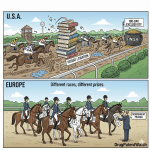
The most profound strategic difference, however, lies in the interplay between regulation and intellectual property. The U.S. Hatch-Waxman system, with its Paragraph IV challenge and 180-day exclusivity, is fundamentally designed to incentivize and structure patent litigation as the primary path to early market entry. The E.U. system provides a more predictable, fixed period of protection for innovators (an 8-year data exclusivity period plus a 2-year market exclusivity period), which clearly defines the earliest possible submission and launch dates for generics without rewarding litigation risk-taking in the same way.27
This fundamental divergence demands different strategic approaches. A successful U.S. strategy often hinges on legal prowess and a high tolerance for litigation risk. A successful E.U. strategy relies more on regulatory efficiency and navigating the complexities of multiple national reimbursement systems.
The following table provides a strategic dashboard comparing these two critical markets. For a global portfolio manager, understanding these distinctions is not an academic exercise; it is essential for optimizing launch sequencing, allocating resources, and building a coherent global commercialization plan.
Feature
FDA (U.S.)
EMA (EU)
Strategic Implication
Application Type
Abbreviated New Drug Application (ANDA)
Marketing Authorisation (MA) via Centralised (CP), Decentralised (DCP), or Mutual Recognition (MRP) Procedure
The EU’s multi-track system allows for flexible, targeted, or broad market entry strategies not available in the U.S. monolithic system.
Legal Basis
Hatch-Waxman Act of 1984
Directive 2001/83/EC
The U.S. system is fundamentally designed to incentivize and structure patent litigation as the primary path to early market entry.
Bioequivalence Standard
90% CI for ratio of geometric means for Cmax and AUC must be within 80.00% – 125.00%
90% CI for ratio of geometric means for AUC must be within 80.00% – 125.00%. For Cmax, the same interval applies but may be widened for highly variable drugs.
Standards are highly harmonized, allowing a single global BE study program to support submissions in both regions for most products.
Data Exclusivity
5 years for a New Chemical Entity (NCE); 3 years for new clinical studies on a previously approved drug.
8 years. A generic MA application cannot be submitted during this period.
The EU provides a longer and more predictable period of data protection for innovators, clearly defining the earliest possible submission date for generics.
Market Exclusivity
180-day exclusivity for the first successful Paragraph IV patent challenger.
2 years (in addition to the 8-year data exclusivity). A generic can be approved after 8 years but not marketed for 10 years (the “8+2” rule). Can be extended to 11 years for a new indication.
The U.S. system rewards litigation risk-taking with a powerful first-mover advantage. The EU system provides a fixed, non-litigation-based period of market protection.
Review Timelines
Governed by GDUFA goals; standard review goal is 10 months, but multiple cycles are common.
Centralised Procedure has a statutory timeline of 210 days (excluding “clock stops” for the applicant to answer questions).
The EMA’s statutory timeline for the CP is generally more predictable. GDUFA has significantly reduced FDA review times, but backlogs and multiple review cycles remain a challenge.
User Fees
Significant fees for ANDA submission, DMFs, and annual facility/program participation under GDUFA.
Fees are charged by the EMA for scientific assessment under the Centralised Procedure.
GDUFA fees in the U.S. are a major financial consideration and can be a barrier to entry, particularly for smaller companies or niche products.
(Data and analysis based on 27)
This deep dive into the regulatory filter reveals a crucial shift. The move toward complex generics is forcing a fundamental change in the industry’s business model. The traditional generic company was a “fast-follower,” excelling at efficient replication and operational scale. However, to succeed in the world of complex generics, a company must become a “scientific innovator.” It must invest heavily in novel R&D to crack complex bioequivalence challenges where no clear path exists. It must build deep expertise in regulatory science to negotiate novel pathways with the FDA. It must, in essence, adopt many of the capabilities and the mindset of a specialty or innovator pharma company. This is a profound strategic pivot, not a simple product line extension, and it must be supported by a corresponding transformation in culture, talent, and capital allocation.
The Intellectual Property Filter: From Patent Cliff to Patent Thicket
If the regulatory pathway is the gate, the intellectual property (IP) landscape is the minefield that surrounds it. For any generic product, the primary catalyst is the “patent cliff”—the moment a brand-name drug loses its core patent protection.16 But in the modern era, particularly for complex and high-value drugs, this is rarely a simple, single event. The path to market is a treacherous journey through a dense and deliberately constructed “patent thicket.”
The Hatch-Waxman Act as a Litigation Framework
To understand the U.S. IP landscape, one must appreciate that the Hatch-Waxman Act is not just a regulatory framework; it is a system designed to provoke and manage patent litigation.27 The central mechanism is the Paragraph IV certification. When filing an ANDA, a generic company must make a certification for each patent listed in the FDA’s Orange Book for the brand drug. A Paragraph IV (PIV) certification is a bold declaration: that the brand’s patent is invalid, unenforceable, or will not be infringed by the proposed generic product.16
This filing is legally defined as an “artificial act of infringement”.30 It is a deliberate, calculated move designed to invite a lawsuit from the patent holder. If the brand company sues within 45 days, it triggers an automatic 30-month stay on the FDA’s ability to grant final approval to the generic.27 This gives the brand a period of protected revenue to litigate the patent dispute. The entire system is built to channel conflict into the courts as the primary mechanism for a generic to enter the market before all of a brand’s patents have expired.
Deconstructing the “Patent Thicket”
Brand-name manufacturers do not leave their blockbuster products lightly defended. They employ sophisticated lifecycle management strategies to extend their monopoly far beyond the expiration of the original composition-of-matter patent. One of the primary tactics is “evergreening,” the practice of obtaining secondary patents on incremental modifications to an existing drug.31
This leads to the creation of “patent thickets”—dense, overlapping portfolios of numerous patents covering a single product.13 These secondary patents don’t just cover the active ingredient. They can claim, among other things:
New Formulations: Such as an extended-release version of an immediate-release drug.13
Different Crystalline Structures (Polymorphs): Variations in the solid-state form of the API that might offer improved stability or manufacturing characteristics.13
Methods of Use: Patents on new indications for treating a particular disease.13
Delivery Devices: Patents covering the specific design and function of an inhaler or auto-injector.13
Manufacturing Processes: Novel methods used to produce the drug.13
The case of Teva’s own innovative drug, Copaxone, is a classic example of these strategies in action. Well before the patent on the original 20mg daily injection expired, Teva developed and launched a new 40mg three-times-a-week version, a practice known as “product hopping.” This new version was protected by its own set of patents, forcing competitors to re-start their development and legal challenges and encouraging physicians to switch patients to the newer, longer-protected product.33 This was combined with a formidable patent thicket to defend the franchise for years.
The High-Stakes Gambit of Paragraph IV
Navigating this thicket via a PIV challenge is a high-risk, high-reward gambit.
The Risk: The 30-month stay can significantly delay your launch, and litigation is enormously expensive, often costing millions of dollars.16 Furthermore, if you lose the case and are found to infringe a valid patent, the financial damages can be catastrophic.
The Reward: 180-Day Exclusivity: This is the “golden ticket” of generic development.16 The first generic applicant to file a “substantially complete” ANDA with a PIV certification is eligible for a 180-day period of marketing exclusivity. During these six months, the FDA is prohibited from approving any other generic competitors for the same drug. This creates a temporary duopoly between the brand and the first-filer, allowing the generic to launch at a smaller discount (perhaps 15-30% below the brand price) and generate “supranormal profits”.16 This period of enhanced profitability is the primary financial incentive designed to reward the risk of litigation and fund the associated legal costs.
Hidden Blockades: Regulatory Exclusivities
The IP filter is not limited to patents. The FDA also grants various periods of regulatory exclusivity, which are independent of patent status and can act as formidable barriers to generic approval.13 A savvy portfolio manager must screen for these just as carefully as for patents. Key exclusivities include:
New Chemical Entity (NCE) Exclusivity: 5 years of data exclusivity for a new drug, which prevents the FDA from even accepting a generic application for 4 years.16
New Clinical Investigation Exclusivity: 3 years of protection for new clinical studies on a previously approved drug that were essential for the approval of a change (e.g., a new indication or formulation).27
Orphan Drug Exclusivity (ODE): 7 years of market exclusivity for drugs that treat rare diseases.16
Pediatric Exclusivity (PED): An additional 6 months of protection added to any existing patents and exclusivities as a reward for conducting pediatric studies at the FDA’s request.16
Missing one of these non-patent exclusivities can upend a project’s timeline and financial viability just as surely as a strong patent.
The modern IP battle reveals a crucial evolution in strategy. It is often won not just on the legal merits of a single patent, but on economic attrition. A brand company’s patent thicket is a financial weapon as much as it is a legal one. While many of the secondary patents in a thicket may be weak and ultimately vulnerable to an invalidity challenge, a generic competitor must bear the cost and time of litigating or settling each one. The sheer economic burden of fighting through a thicket of dozens of patents can make a challenge financially unviable, even if the generic company believes it would ultimately win in court.
This transforms the strategic decision-making process. The critical question is no longer simply, “Is this patent valid?” It becomes, “What is the fully-loaded, risk-adjusted ROI of spending millions of dollars over several years to invalidate this entire portfolio of patents, and can our company sustain that fight?” This elevates the role of competitive intelligence from a purely legal support function to a core financial planning instrument. Platforms like DrugPatentWatch become indispensable, as they provide not just a list of patents, but a dynamic view of the entire litigation landscape—tracking which patents are being challenged, by whom, and with what outcomes. This data allows a company to transform the patent gauntlet from an opaque legal obstacle into a strategic roadmap for identifying and capturing the most valuable market opportunities.27
The Supply Chain Filter: Building Resilience in a Brittle World
The final filter is one that has, until recently, been dangerously overlooked: the supply chain. For decades, the industry viewed the supply chain as a downstream operational concern—a matter of procurement and logistics. The crises of the past few years, from the COVID-19 pandemic to ongoing geopolitical tensions, have taught us a painful lesson: supply chain strategy is an upstream portfolio selection criterion of the highest order.
Anatomy of the Generic Supply Chain
The journey of a generic medication from concept to patient is a complex global ballet.19 It begins with the sourcing of Key Starting Materials (KSMs) and the synthesis of the Active Pharmaceutical Ingredient (API). The API is then shipped to a formulation plant, where it is combined with excipients to create the Finished Dosage Form (FDF)—the tablet, capsule, or injectable solution. Finally, the FDF is packaged and shipped through a network of distributors and wholesalers to pharmacies and hospitals.
The Geopolitical Choke Point
A critical vulnerability is baked into this global system: an extreme over-reliance on a limited number of countries, primarily China and India, for the vast majority of the world’s APIs and their chemical precursors.19 This geographic concentration creates a massive geopolitical and supply chain choke point. A trade dispute, a new environmental regulation, a localized public health crisis, or a natural disaster in one of these regions can send shockwaves through the entire global supply of essential medicines.19 This is not a theoretical risk; it is a clear and present danger to the stability of our portfolios and to public health.
The Quality Imperative
In a cost-pressured environment, maintaining impeccable quality is a constant challenge. Quality-related breakdowns—such as a contamination event or a failure to meet specifications—are a leading cause of manufacturing halts and, consequently, drug shortages.19 The globalization of the supply chain strains the oversight capacity of regulatory bodies like the FDA, increasing the risk of quality issues at overseas facilities.19 Adherence to Current Good Manufacturing Practices (cGMP) is not just a regulatory requirement; it is a fundamental pillar of supply chain reliability.27
Best Practices for Resilience
The good news is that these vulnerabilities are manageable, but it requires a proactive and strategic approach to building resilience. This is no longer about simply optimizing for the lowest cost; it’s about optimizing for reliability and continuity. Key strategies include:
Geographic Diversification & Multi-Sourcing: The single most critical step is to break the dependency on single-source suppliers. For every critical API and KSM in your portfolio, you must move to qualify secondary and, ideally, tertiary suppliers in different geographic regions. This builds redundancy and provides flexibility in the face of disruption.2
Advanced Manufacturing: Embracing new technologies is key. Continuous manufacturing, which replaces traditional batch-based processes with an integrated, non-stop flow, can dramatically improve efficiency, reduce the manufacturing footprint, and enhance product quality and consistency.35
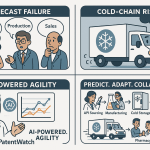
Technology & Data Analytics: The modern supply chain must be a smart supply chain. This means harnessing technology for end-to-end visibility and prediction. AI and machine learning algorithms can analyze vast datasets to produce far more accurate demand forecasts. Blockchain technology can provide a secure, unalterable ledger for tracking products through the supply chain, combating counterfeiting. And real-time visibility platforms, using IoT sensors and cloud computing, can monitor the location and condition (e.g., temperature for cold-chain products) of goods in transit, allowing for proactive intervention before a problem occurs.2
This leads to a profound shift in mindset. Supply chain strategy can no longer be a downstream operational function. It must be an upstream portfolio selection criterion. In the past, business development teams would identify a product based on its market size and patent expiry date, and only then would procurement be asked to find an API source. This is a recipe for disaster.
Today, a modern portfolio selection process must include a “Supply Chain Resilience Score” as a key decision-making input, right alongside the commercial, regulatory, and IP analyses. A potential product candidate with a single API source located in a geopolitically unstable region is an inherently flawed asset, regardless of its projected revenue. This requires the full integration of supply chain, procurement, and manufacturing teams into the earliest stages of business development and portfolio strategy. We must stop asking “Can we sell it?” and start asking “Can we reliably and sustainably source and make it?” Only products that can pass this third great filter deserve a place in a future-proof portfolio.
Part III: The Strategic Playbook – Forging Order from Chaos
Understanding the labyrinth is the first step. The next is to master it. This requires moving beyond reactive, opportunistic decision-making toward a proactive, strategic, and holistic approach to portfolio management. It’s about imposing order on the chaos. This section provides the essential frameworks for actively managing your portfolio: a systematic process for rationalization, advanced models for product selection, and a clear-eyed view on the return on investment from competitive intelligence.
The Art of the Prune: A Systematic Framework for Portfolio Rationalization
One of the most common and insidious problems plaguing established generic companies is portfolio bloat. Over years of opportunistic launches and M&A activity, portfolios can become burdened with hundreds, sometimes thousands, of older, underperforming products. These “tail” products often contribute minimally to revenue and even less to profit, yet they consume a disproportionate amount of valuable and finite resources: manufacturing capacity, supply chain attention, regulatory maintenance costs, and, most importantly, senior management’s focus.4
Product rationalization—the art of the strategic prune—is therefore not just a periodic housekeeping task; it is a continuous strategic imperative for unlocking capital, focus, and competitive advantage.
A Four-Step Rationalization Framework
A successful rationalization effort is not based on gut feel or anecdotal evidence. It requires a structured, data-driven framework. The following four-step process provides a robust and defensible methodology 2:
Analyze & Collect Data: The process begins with a comprehensive data-gathering exercise for every single product or Stock Keeping Unit (SKU) in the portfolio. You must look beyond simple revenue figures. The goal is to build a multi-faceted performance profile, including metrics such as sales volume, revenue trends, gross profit and gross margin, market share and its trajectory, Cost of Goods Sold (COGS), supply chain stability (e.g., number of API suppliers), and quality metrics (e.g., batch rejection rates). The strategic question at this stage is: “What is the true, multi-faceted performance of each product in our portfolio?”
Classify & Score: With the data in hand, the next step is to segment the portfolio. A powerful tool here is Pareto analysis, applying the classic 80/20 rule. The goal is to identify the vital few products that are driving the majority of your profitability (the “head”) and the trivial many that are consuming resources for little return (the long, low-value “tail”). To add rigor, you can develop a scoring model that ranks each product based on a weighted average of the key metrics collected in step one. This creates an objective hierarchy of value across the entire portfolio. The strategic question is: “Which 20% of our products are generating 80% of our profit? And which products form the long, resource-draining tail?”
Strategic Review: The quantitative analysis provides the “what,” but this stage provides the “so what.” Now, you must conduct a deep-dive qualitative analysis, particularly on the products in the “tail.” Not every low-profit product is a candidate for discontinuation. You must evaluate non-financial contributions. Does this product have a hidden strategic value? Is it critical to maintaining a relationship with a major GPO or a key customer? Does it have a portfolio synergy, where its presence helps sell a more profitable product? This is where cross-functional input from commercial, manufacturing, and regulatory teams is essential. The strategic question is: “Which of these quantitatively low-performing products have a hidden strategic value that justifies keeping them?”
Decide & Execute: The final step is to make a clear, decisive disposition for every product reviewed. Each product should be assigned to one of three categories:
Invest/Grow: High-potential products that warrant additional resources.
Maintain/Harvest: Stable, profitable products that should be managed for cash flow with minimal new investment.
Divest/Discontinue: Underperforming products with no overriding strategic value. For this last category, you must develop a detailed execution plan that manages the wind-down process, including final production runs, inventory management, regulatory notifications, and, crucially, customer communication to ensure a smooth transition. The strategic question is: “What is our final, focused portfolio, and what is the action plan to get there?”
This systematic process transforms rationalization from a painful, politically charged exercise into an objective, strategic one. But its true power lies in what it enables. Portfolio rationalization is not merely a cost-cutting exercise; it is the single most important mechanism for funding your company’s future.
Every “dog” product that you continue to manufacture consumes a slot in a production line, a line item in your regulatory budget, and an hour of your supply chain manager’s day. These are the very same finite resources that are required to develop, file, and launch the next generation of high-value complex generics. Therefore, the decision to not discontinue a low-value legacy product is an implicit decision to not invest in a high-value future opportunity. A disciplined, continuous rationalization process is what liberates the necessary capital, capacity, and focus to execute the strategic pivot towards a more complex, defensible, and profitable portfolio. It is, quite simply, about funding the future by divesting from the past.
Beyond NPV: Advanced Models for Product Selection
The single most critical activity in our industry is portfolio selection. The decisions we make today about which products to pursue will determine the company’s financial health for the next decade. Yet, many organizations still rely on overly simplistic financial models that are ill-suited to the profound uncertainty of pharmaceutical R&D.
A simple Return on Investment (ROI) or even a standard Net Present Value (NPV) calculation, while useful, often fails to capture the multi-faceted nature of risk and reward in our business.4 NPV, for instance, calculates the present value of future cash flows, but it treats a development program as a fixed, deterministic path. It doesn’t account for the managerial flexibility to adapt as new information emerges. To make better decisions, we need more sophisticated tools.
A Multi-Factor Decision Matrix
A more robust approach is to move from a single financial metric to a multi-factor scoring model. This provides a holistic, semi-quantitative framework for evaluating and comparing product candidates. The matrix forces a cross-functional assessment of each candidate against the key pillars of success we’ve already identified.37
The structure is straightforward but powerful. Potential products are listed in the rows. The columns represent the critical decision criteria, grouped by pillar. Each criterion is assigned a weight that reflects the company’s strategic priorities. For example, a company with a low tolerance for scientific risk might assign a higher weight to “Bioequivalence (BE) Risk” than to “Peak Market Size.” Each product is then scored on each criterion (e.g., on a 1-5 scale), and a final weighted score is calculated.
This methodology has several advantages. It forces a disciplined and comprehensive evaluation, preventing key risks from being overlooked. It makes strategic trade-offs explicit—by assigning weights, leadership must formally declare what matters most. And it creates a transparent, data-driven, and defensible rationale for the multi-million-dollar capital allocation decisions that define our business.
The following table provides a template for such a matrix. It is not a “black box” that spits out the right answer, but a structured framework for facilitating a high-quality strategic conversation.
Decision Criteria
Weight
Product A Score (1-5)
Product A Weighted Score
Product B Score (1-5)
Product B Weighted Score
Pillar 1: Commercial Viability
Market Size (Brand Revenue)
20%
5
1.0
3
0.6
Price Erosion Forecast (Competition)
15%
2
0.3
4
0.6
Payer Access / Reimbursement Risk
10%
3
0.3
3
0.3
Pillar 2: IP & Legal Landscape
Patent Thicket Density / Strength
15%
2
0.3
5
0.75
Litigation Risk & Cost
10%
2
0.2
4
0.4
Pillar 3: Scientific & Regulatory Merit
Bioequivalence (BE) Risk
15%
4
0.6
2
0.3
Regulatory Pathway Clarity (PSG?)
5%
5
0.25
2
0.1
Pillar 4: Technical & Operational Feasibility
Manufacturing Complexity
5%
3
0.15
4
0.2
Supply Chain Resilience (API Sources)
5%
2
0.1
5
0.25
Total Weighted Score
100%
3.20
3.50
Recommendation
Re-evaluate
Go
(Based on principles from 37)
Applying the BCG Matrix to Generic Portfolios
Another powerful qualitative tool is an adaptation of the classic Boston Consulting Group (BCG) Growth-Share Matrix.39 By plotting our products on a matrix of Market Growth Rate vs. Relative Market Share, we can categorize them and clarify their strategic role in the portfolio:
Stars (High Growth, High Share): These are your winners. In a generic portfolio, this would be a recently launched, first-to-file complex generic in a growing therapeutic area where you have secured a dominant market share. The strategy here is to invest to protect and grow this position.
Cash Cows (Low Growth, High Share): These are the mature, stable products that generate consistent cash flow. Think of an established simple generic for a chronic condition where you are one of a few remaining players. The market isn’t growing, but your position is secure. The strategy is to harvest—manage for maximum cash flow with minimal new investment, using the profits to fund your Stars and Question Marks.
Question Marks (High Growth, Low Share): These are the high-risk, high-reward bets. A PIV challenge against a blockbuster drug or an early-stage biosimilar development program would fall here. The market is attractive, but your future share is uncertain. The strategy requires a critical decision: invest heavily to try and turn it into a Star, or divest if the probability of success is too low.
Dogs (Low Growth, Low Share): These are the products that drain resources. A mature oral solid in a hyper-competitive market with a dozen competitors and non-existent margins is a classic Dog. The strategy is clear: divest or discontinue to free up resources for more promising opportunities. This is the primary target pool for your portfolio rationalization efforts.
Real Options Analysis (ROA): Valuing Flexibility
For the most complex, uncertain, and high-cost projects—particularly biosimilar development—even a weighted scoring matrix may be insufficient. This is where Real Options Analysis (ROA) comes in.42 Borrowed from financial theory, ROA provides a powerful lens for valuing these investments.
A traditional NPV analysis treats an R&D project as a single, all-or-nothing decision. ROA, by contrast, correctly frames the project as a series of sequential decisions, or options. The initial investment in a Phase 1 study is not the total cost of the drug; it is the price you pay to purchase an option to proceed to Phase 2 if the results are positive. Each stage of development is an option to continue, expand, delay, or abandon the project as new information reduces uncertainty.42
This approach explicitly values managerial flexibility, which is enormously important in our industry. It allows us to quantify the benefit of waiting for a competitor’s clinical trial results, or the value of having the ability to abandon a project after a disappointing interim analysis. While mathematically more complex, ROA provides a far more realistic valuation for high-uncertainty projects and encourages a more dynamic, milestone-driven approach to R&D management.
The choice of which decision-making model to use is, in itself, a strategic decision. A company that relies solely on traditional NPV is implicitly prioritizing predictable, near-term cash flows and will naturally bias its portfolio toward lower-risk, lower-reward simple generics. A company that embraces more sophisticated tools like a multi-factor matrix or ROA is explicitly valuing strategic fit, risk mitigation, and flexibility in the face of uncertainty. This will naturally bias its portfolio toward higher-risk, higher-reward assets like first-in-class complex generics or biosimilars. Therefore, adopting these more advanced valuation tools is a necessary cultural and analytical prerequisite for successfully executing a strategic pivot to a higher-value portfolio. The tools don’t just measure the strategy; they enable it.
The ROI of Intelligence: Leveraging Data for Competitive Advantage
All of these sophisticated strategic models—scoring matrices, BCG analysis, Real Options—share a common dependency: they are utterly useless without a foundation of high-quality, comprehensive, and timely data. In the modern generic market, competitive intelligence is not a “nice to have” support function; it is the lifeblood of strategic decision-making.
The return on investment from a robust competitive intelligence capability is immense. It transforms every aspect of portfolio management from a guessing game into a data-driven science. This is where specialized business intelligence platforms become indispensable tools of the trade. Services like DrugPatentWatch provide the critical, real-time data feeds that power the strategic frameworks we’ve discussed.27
A best-in-class intelligence platform allows your team to:
Monitor the Entire Patent Landscape: Go beyond a simple list of expiry dates. A sophisticated platform allows you to track the entire patent estate for a target drug, including the constant stream of new secondary patents that form the “thicket.” This provides a clear, dynamic view of the IP hurdles.30
Track Competitor ANDA Filings: Knowing which competitors have filed ANDAs, and when, is the single most important input for accurately modeling the price erosion curve. This intelligence allows you to predict how many players will be in the market at launch and build a realistic revenue forecast.30
Analyze Litigation Outcomes: A deep database of historical patent litigation allows you to assess the strength of a brand’s patents. By analyzing how similar patents from the same company have fared in court, you can better estimate your probability of success in a PIV challenge, turning a high-stakes legal gamble into a calculated risk.30
Integrate and Forecast: The true power of these platforms lies in their ability to integrate these disparate data streams—patent expiries, regulatory exclusivities, ANDA filing dates, and litigation milestones—to produce a holistic and more accurate forecast of a product’s true market entry timeline and commercial potential.34
This capability represents a fundamental evolution in our industry. In the past, patent analysis was primarily a defensive legal function, focused on ensuring “freedom to operate” and avoiding infringement. In today’s litigation-driven environment, competitive intelligence has become an offensive strategic weapon.
The data on which patents are being challenged, by whom, and with what success rate provides a powerful signal about where the market is heading and which assets are the most attractive and vulnerable. A savvy portfolio team can use a platform like DrugPatentWatch not just to de-risk its own plans, but to proactively identify and target the most promising opportunities with the highest probability of legal and commercial success. It is the crucial final step in our playbook, the one that converts the overwhelming noise of market data into a clear, strategic signal, allowing us to forge order from the chaos.
Part IV: The Future-Proof Portfolio – Case Studies and Emerging Frontiers
Strategy is meaningless without execution. In this final section, we bring the concepts and frameworks from our playbook to life. We will examine how leading companies are actively navigating the challenges of the modern generic market, making bold pivots toward higher-value, more complex portfolios. Then, we will look to the horizon, exploring the transformative technologies that are poised to redefine portfolio management in the coming decade.
The Pivot to Value: Lessons from the Leaders
The abstract principles of portfolio management become concrete when viewed through the lens of real-world corporate strategy. The following case studies offer a masterclass in how to manage complexity, rationalize legacy assets, and strategically pivot toward a more sustainable and profitable future.
Case Study: Teva’s “Pivot to Growth”
Few companies exemplify the turmoil and transformation of the generic industry better than Teva Pharmaceuticals. For years, the Israeli giant was the undisputed king of generics, but it found itself facing a perfect storm: a mountain of debt from the Actavis acquisition, crippling opioid litigation liabilities, and a struggling, low-margin U.S. generics business.47
Under the leadership of its new CEO, Richard Francis, who took the helm in early 2023, the company launched a new, aptly named “Pivot to Growth” strategy.47 This is a case study in radical portfolio re-engineering, built on four clear pillars:
Delivering on Growth Engines: The first priority was to double down on its key innovative and specialty products, primarily Austedo (for movement disorders) and Ajovy (for migraine prevention), which have become multi-billion-dollar growth drivers.51
Stepping Up Innovation: Teva is actively working to build its innovative pipeline, both organically and through business development, to create future growth engines.52
Sustaining the Generics Powerhouse: This is the crucial pivot. Instead of trying to be everything to everyone, Teva is focusing its formidable generics business. The strategy is to move up the value chain, streamlining the portfolio to concentrate on high-value, complex generics and a robust pipeline of biosimilars.51
Focusing the Business: This pillar involves aggressive rationalization and cost-cutting to fund the pivot. This includes the planned divestiture of non-core assets, like its API business, and a significant optimization of its global manufacturing footprint and workforce to generate hundreds of millions in savings.51
The Takeaway: Teva’s strategy is a clear example of a large, established player making the tough decisions required to survive and thrive. It is a deliberate shift from a strategy based on breadth and volume to one based on value and focus. By rationalizing its legacy business and reallocating capital to its innovative products and a more curated portfolio of complex generics and biosimilars, Teva is attempting to build a more resilient and profitable business model for the future.
Case Study: Sandoz, The Pure-Play Champion
For years, Sandoz operated as the highly successful generics and biosimilars division within the innovative pharma giant Novartis.55 However, this structure created inherent strategic tensions. As part of a larger, innovator-focused company, Sandoz was potentially constrained in its ability to allocate capital and pursue a strategy tailored to the unique dynamics of the off-patent market.
The solution was a bold strategic move. In October 2023, Novartis completed a 100% spin-off of Sandoz, creating a new, independent, publicly traded company.56 The strategic rationale was to unlock value for shareholders by creating two more focused companies, each with a clear investment thesis 57: a Novartis dedicated to innovative medicines, and a standalone Sandoz positioned as a “European champion and a global leader in Generics and Biosimilars.”
As an independent entity, the new Sandoz is free to pursue its own growth strategy, and that strategy is crystal clear: doubling down on the highest-value segment of the market. While maintaining its strong position in core generics, the company’s primary growth engine is its industry-leading biosimilar pipeline, which includes over 15 molecules in late-stage development.57 Sandoz is making significant investments in its biosimilar capabilities, including a new state-of-the-art production facility in Slovenia, to capitalize on the massive wave of biologic patent expiries expected over the next decade.59
The Takeaway: The Sandoz spin-off is a powerful example of creating value through strategic focus. By becoming a “pure-play” generics and biosimilars company, Sandoz can tailor its capital allocation, R&D strategy, and commercial model specifically to the off-patent market. It is a bet that specialization and focus are the keys to winning in the increasingly complex and competitive biosimilar space.
Case Study: Amgen’s “First Wave” Assault
Amgen represents a different model: a leading innovator biopharmaceutical company that has successfully built a formidable biosimilar business from within. Facing the eventual patent cliff for its own blockbuster biologics like Prolia and Xgeva, Amgen recognized the need to build a new engine for growth.65 It chose to leverage its deep, decades-long expertise in developing and manufacturing complex biologics to become a major player in the biosimilar market.
Amgen’s strategy is defined by its aggressive “first wave” launch approach.66 The company consistently aims to be among the very first competitors to launch a biosimilar for major biologic blockbusters. This high-risk, high-reward strategy requires immense investment in R&D and a willingness to engage in high-stakes patent litigation with other innovators.
The results speak for themselves. Amgen was first to market in the U.S. with a biosimilar for AbbVie’s Humira (Amjevita), Regeneron’s Eylea (Pavblu), and Johnson & Johnson’s Stelara (Wezlana).66 This first-mover advantage has allowed it to build a multi-billion-dollar biosimilar franchise, with sales reaching over $2.2 billion in 2024 and projected to grow to $4 billion by the end of the decade.66
The Takeaway: Amgen’s success demonstrates that the capabilities required to be a top-tier innovator—deep scientific expertise in biologics, world-class manufacturing, and sophisticated legal and regulatory teams—are the very same capabilities required to dominate the high-end biosimilar market. Their story validates the idea that the future of the off-patent industry, particularly in biosimilars, belongs to companies that can master scientific and regulatory complexity.
The Next Wave: AI, Machine Learning, and the Future of Portfolio Management
As we look to the horizon, it is clear that the next great transformation in our industry will be driven by data. The pharmaceutical world is now awash in it—from vast public databases of patent litigation history and clinical trial results to proprietary internal data from manufacturing sensors and formulation experiments.68 The challenge is no longer about acquiring data, but about extracting meaningful intelligence from it.
This is where Artificial Intelligence (AI) and Machine Learning (ML) are poised to become the single most disruptive force in our industry. They are moving beyond the realm of buzzwords to become core enabling technologies that will reshape every aspect of portfolio management.68
AI/ML as the Great Integrator
The true power of ML is its ability to analyze massive, complex datasets and identify subtle correlations and predictive patterns that no human team could ever hope to spot. Imagine the possibilities:
Predictive Formulation: An ML model can be trained on your entire history of formulation experiments. By feeding it the physicochemical properties of a new API and the characteristics of various excipients, it can predict the optimal formulation to achieve a desired dissolution profile or stability, dramatically reducing the time and cost of development.68
Predictive Litigation: An ML model can analyze the text of thousands of past patent litigation cases, learning the specific claim language and legal arguments that are most likely to succeed or fail in court. This could provide a powerful probabilistic forecast of success for a planned PIV challenge, transforming a legal opinion into a quantitative risk assessment.68
Predictive Supply Chain: By integrating real-time data from shipping lanes, weather patterns, geopolitical risk alerts, and historical demand, an ML model can provide early warnings of potential supply chain disruptions, allowing you to proactively shift sourcing or build inventory before a shortage occurs.2
Building the Infrastructure for Intelligence
Harnessing this power is not just a matter of buying new software. It requires a fundamental commitment to building a data-driven culture and infrastructure. The biggest obstacle in most organizations is the presence of data silos—R&D, manufacturing, commercial, and legal data all live in separate, disconnected systems. To train powerful ML models, this data must be integrated. This requires adopting a unified data governance strategy, often built on the FAIR principles: ensuring that all data is Findable, Accessible, Interoperable, and Reusable.68
The rise of AI and ML will not make the strategic portfolio director obsolete. On the contrary, it will elevate the role. Much of a portfolio manager’s time today is spent on the painstaking work of gathering, cleaning, and trying to synthesize disparate and noisy data. AI and ML models can automate this synthesis, fulfilling their core value proposition: to convert the overwhelming “noise of data into a clear, strategic signal”.68
This will free up the human decision-maker to focus on higher-level, uniquely human tasks: asking the right strategic questions, challenging the assumptions and biases inherent in the models, and making the final, nuanced judgments that involve qualitative factors—like corporate culture, team capabilities, and long-term vision—that an algorithm cannot assess. The future role of the portfolio director will be less of an analyst and more of a “systems orchestrator,” using a symphony of AI-driven insights and human judgment to manage a dynamic, resilient, and winning portfolio of assets.
Conclusion: From Complexity to Clarity and Competitive Advantage
We began this journey by acknowledging the central paradox of the generic pharmaceutical industry: it is an indispensable pillar of global health that operates under conditions of extreme economic pressure. The traditional model of competing solely on cost and scale in a commoditized market is no longer sustainable. The path forward, as we have explored, is not to flee from complexity, but to embrace and master it.
The future belongs to companies that can successfully execute a strategic pivot to higher-value, higher-barrier products like complex generics and biosimilars. But as we have seen, this is not a simple adjustment to the product pipeline. It is a fundamental transformation that touches every aspect of the organization.
It requires developing the scientific and regulatory prowess of an innovator to navigate the crucible of complex bioequivalence. It demands the legal and financial fortitude to wage multi-year battles through dense patent thickets. It necessitates building a resilient, intelligent, and geographically diversified supply chain that is treated as a strategic asset, not a cost center. And it requires a new level of strategic discipline in portfolio management—ruthlessly pruning low-value legacy products to fund the future, and adopting sophisticated, data-driven models to make better capital allocation decisions.
The path from chaos to clarity is not easy. It demands bold leadership, a willingness to challenge long-held assumptions, and a deep investment in new capabilities, from advanced manufacturing to artificial intelligence. However, for those who master this transition, the rewards will be significant. The companies that thrive in the next decade will be those that learn to deconstruct complexity, filter their opportunities through the unforgiving gauntlets of regulation, IP, and supply chain reliability, and leverage data as a true strategic weapon. They will be the ones who successfully transform the overwhelming complexity of our modern market into a source of clear, defensible, and sustainable competitive advantage.
Key Takeaways
For the time-constrained executive, here are the most critical, actionable insights from this report:
Complexity is a Strategic Moat, Not Just a Hurdle: The high scientific, regulatory, manufacturing, and IP barriers of complex generics reduce competition, leading to more durable pricing and higher margins. The goal is not to avoid complexity, but to master the specific types that align with your company’s core capabilities.
Drug Shortages Are a Predictable Economic Outcome: The relentless price pressure in the generic market leads to underinvestment in supply chain resilience. Treat supply chain risk not as a downstream operational issue, but as a critical upstream portfolio selection criterion. A product with a brittle supply chain is a flawed asset.
Complex Generics Demand an Innovator’s Mindset: Succeeding in complex generics requires a fundamental business model shift from a “fast-follower” to a “scientific innovator,” with significant investment in R&D, regulatory science, and specialized talent.
The IP Battle is Won on Economic Attrition: Modern “patent thickets” are designed to make litigation so expensive and time-consuming that it becomes economically unviable for challengers. Your IP strategy must be integrated with your financial planning from day one.
Prune the Past to Fund the Future: Portfolio rationalization is not just about cost-cutting. It is the primary mechanism for liberating the capital, capacity, and focus required to invest in a higher-value, more complex portfolio.
Upgrade Your Decision-Making Toolkit: Traditional financial models like NPV are insufficient for high-uncertainty R&D. Adopt more sophisticated tools like multi-factor decision matrices and Real Options Analysis to make better, more holistic capital allocation decisions.
Weaponize Competitive Intelligence: In a market defined by litigation and competition, real-time data on patents, ANDA filings, and legal outcomes is an offensive strategic weapon. Platforms like DrugPatentWatch are essential for identifying opportunities and de-risking your portfolio.
AI is the Great Integrator: The future of portfolio management lies in leveraging AI and machine learning to convert the noise of disparate data into a clear, strategic signal, elevating the role of the human decision-maker from analyst to orchestrator.
Frequently Asked Questions (FAQ)
1. How does the Inflation Reduction Act (IRA) and its price negotiation provisions change the financial calculus for targeting blockbuster drugs for generic development?
The IRA fundamentally alters the risk-reward calculus by transforming the “patent cliff” into a “patent slope.” Historically, the prize for a successful Paragraph IV challenge was the large gap between a high brand price and a lower generic price. The IRA’s Medicare Drug Price Negotiation Program allows the government to set a “Maximum Fair Price” (MFP) for high-spend drugs before patent expiry.4 This dramatically shrinks the potential revenue pool for a future generic competitor. The incentive to invest millions in risky litigation is severely diminished if the reward is merely the small margin between an already-reduced MFP and an even lower generic price. Portfolio strategies must now incorporate a “policy-adjusted ROI,” potentially shifting focus away from drugs most likely to be targeted for negotiation and toward assets with different risk profiles, such as complex generics with more durable, less policy-sensitive revenue streams.
2. With the high cost of failure, is a “fast-fail” culture truly achievable in the risk-averse pharmaceutical industry, and what are the practical steps to foster it?
A “fast-fail” culture is not only achievable but essential for survival. It’s about reframing failure not as a mistake, but as the efficient acquisition of knowledge. Practical steps to foster this include: 1) Decoupling Rewards from Outcomes: Reward teams for the quality and speed of their decision-making process, not just for successful project outcomes. This removes the incentive to keep a failing project alive. 2) Clear Go/No-Go Criteria: Establish objective, data-driven go/no-go criteria at the outset of each development phase. This depersonalizes the decision to terminate a project. 3) Empowered, Cross-Functional Teams: Give project teams the authority to make termination recommendations based on the data, without fear of reprisal. 4) Portfolio-Level Metrics: Senior leadership must focus on the overall health and value of the portfolio, recognizing that terminating a few weak projects quickly is what enables the successful ones to thrive. It requires a cultural shift from viewing project termination as a failure to seeing it as a strategic reallocation of resources to higher-probability assets.
3. Real Options Analysis is theoretically powerful but complex to implement. What are the key organizational prerequisites for a generic company to successfully adopt it?
Successfully implementing Real Options Analysis (ROA) requires more than just a new spreadsheet; it demands a cultural and organizational shift. The key prerequisites are: 1) Strong Cross-Functional Integration: ROA requires inputs from R&D, commercial, regulatory, and finance to accurately model probabilities and payoffs at each decision point. Siloed organizations cannot do this effectively. 2) Comfort with Probabilistic Thinking: The organization must move beyond deterministic forecasts and embrace a mindset that explicitly quantifies uncertainty. This requires training and a leadership team that understands and supports probabilistic analysis. 3) Robust Data Infrastructure: Accurate ROA models depend on high-quality historical data to inform the probabilities of technical and regulatory success. A company with poor data governance will struggle to build credible models. 4) Dynamic Governance: The governance body overseeing the portfolio must be agile enough to make the sequential decisions that ROA models. A slow, bureaucratic process negates the value of the flexibility that ROA is designed to capture.
4. Given the rise of biosimilars, will the traditional “simple generic” model become entirely obsolete, or will there always be a role for hyper-efficient, large-scale manufacturers?
The simple generic model will not become obsolete, but its role will become more specialized. The market is bifurcating into two distinct models: a “Science & Technology” model for complex generics and biosimilars, and a “Volume Operations” model for simple, commoditized generics.16 There will always be a massive market for simple oral solids, but profitability in this segment will be the exclusive domain of a few hyper-efficient, large-scale manufacturers who can win on ruthless cost efficiency. For most other players, competing in this space will be a recipe for value destruction. The strategic imperative for the majority of the industry is to move up the value chain. The simple generic business will evolve to be like a utility—essential, high-volume, but very low-margin—while the primary source of growth and profitability will come from the mastery of complexity.
5. How can smaller generic players with limited capital effectively compete against giants like Teva and Sandoz in the complex generics space? What niche strategies are most viable?
Smaller players cannot compete with giants on scale, so they must compete on focus and agility. The most viable niche strategies include: 1) Mastering a Specific Technology Platform: Instead of trying to be good at everything, a smaller company can become the world’s best at one specific type of complexity—for example, developing long-acting injectables using a proprietary polymer technology, or mastering a particular type of ophthalmic formulation. This deep expertise can create a defensible moat. 2) Targeting Niche Therapeutic Areas: Focus on complex products in smaller, less crowded therapeutic areas that may be below the revenue threshold for the giants. The profits may be smaller in absolute terms, but the margins can be higher and more durable due to limited competition. 3) Strategic Partnerships: Smaller companies can partner with larger firms, leveraging their innovation and agility in early-stage development in exchange for the larger company’s manufacturing scale and commercial reach. 4) Regulatory Arbitrage: A smaller, nimble player may be faster at navigating complex or evolving regulatory pathways, creating a first-mover advantage in a niche product category. The key is to avoid a head-to-head battle and instead redefine the terms of competition around a narrow area of defensible expertise.