Biologic Economics: Why These Drugs Cost This Much
Biologics sit at the apex of pharmaceutical complexity. Unlike a small-molecule drug, which chemists synthesize through defined reaction steps, a biologic is grown inside a living cell, harvested, purified through multiple chromatography columns, and formulated for injection or infusion. The molecule itself, a monoclonal antibody (mAb), fusion protein, or cytokine, typically has a molecular weight 100 to 1,000 times greater than a conventional drug. Each post-translational modification, including glycosylation, phosphorylation, and disulfide bond formation, affects how the drug binds its target, clears from the bloodstream, and interacts with the immune system.
That manufacturing complexity has a direct cost signature. A biologic manufacturing plant is a controlled-environment facility running at 37 degrees Celsius around the clock, with validated cell culture processes, cold-chain logistics, and real-time analytical testing at every unit operation. Capital costs for a commercial-scale bioreactor suite can exceed $300 million before the first patient dose is produced. Operating a 10,000-liter bioreactor with single-use technology, trained operators, and in-process QC costs orders of magnitude more per gram than running a tablet press. This is why biologics account for just 2% of prescription volume in the United States while consuming 37% of net drug spending.
Development timelines compound the cost. From initial target identification through Phase 3 clinical trials, the average biologic program runs 12 to 15 years at a risk-adjusted cost that industry analysts routinely model above $1 billion. Even a fully derisked Phase 3 program for a biologic indication rarely costs less than $400 million to execute. Those economics are why annual list prices for some cancer biologics exceed $200,000 and why even “mature” biologics like Humira commanded $84,000 in annual list price through 2022.
Analyst Note
The cost-per-gram for commercial mAb manufacturing declined from roughly $1,000/g in 2000 to below $50/g by 2022 as titers improved and single-use platforms matured. That efficiency gain has not translated proportionally into lower list prices, because the pricing power of a biologic under exclusivity is determined by clinical value, not cost of goods.
The Biosimilar Value Proposition: What the Market Expected
The Biologics Price Competition and Innovation Act (BPCIA) of 2009 created the U.S. abbreviated approval pathway for biosimilars, modeled on the Hatch-Waxman generic framework but designed for biologics. The legislative intent was straightforward: as reference biologics lose exclusivity, abbreviated development pathways would allow biosimilar manufacturers to demonstrate high similarity without repeating the originator’s full clinical development program. That lower development cost would translate into lower launch prices and, through competition, into lower net prices over time.
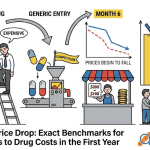
The expected price trajectory followed a generic-market logic. At generic entry for small-molecule drugs, market prices often fall 80% to 90% within 18 months. The BPCIA’s architects anticipated a similar, if slower, dynamic for biosimilars, with launch discounts of 20% to 40% versus reference list price widening over time as additional competitors entered. The European Medicines Agency (EMA), which created the world’s first biosimilar approval framework in 2006, saw exactly that pattern play out in markets for filgrastim, epoetin, and somatropin biosimilars: multiple entrants over five to seven years, prices falling 50% to 70%, and payer savings running into billions of euros across the EU-5.
The U.S. market behaved differently, for reasons this report traces through IP architecture, PBM mechanics, and benefit design. The savings accrued. The patients did not feel them.
// Key Takeaways: Biologic Economics
Biologic manufacturing complexity, multi-year development timelines, and validated cold-chain requirements structurally justify high originator prices, independent of IP monopoly.
BPCIA’s abbreviated pathway reduced biosimilar development costs to $100M-$250M versus $1B+ for originators, but that is still 25-250x the cost of a generic small-molecule development program.
The generic pricing collapse model, which assumes 80%+ price erosion at patent expiry, does not transfer to biologics without the same intensity of competition and market structure reforms.
Manufacturing efficiency gains since 2000 have compressed cost-of-goods dramatically, creating margin headroom for both originator price stability and biosimilar profitability at 30-50% discounts.
Section 02
Regulatory Pathways: BPCIA, the BLA Framework, and EMA’s Streamlined Proposal
An originator biologic earns FDA approval through a Biologics License Application (BLA), which requires a complete package of manufacturing data, preclinical pharmacology, Phase 1 safety and PK/PD, Phase 2 dose-finding, and Phase 3 efficacy and safety trials across all proposed indications. For a monoclonal antibody in a major oncology or autoimmune indication, that package typically contains data from 2,000 to 10,000 patients across 5 to 10 clinical studies. BLAs are not filed until 10 to 15 years after initial IND submission.
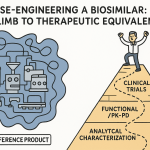
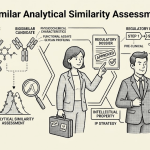
The BPCIA abbreviated pathway allows a biosimilar applicant to rely on FDA’s prior findings of safety and efficacy for the reference product. The applicant must demonstrate biosimilarity through a “totality of evidence” approach that typically begins with extensive structural and functional analytical characterization, the so-called “fingerprint” analysis, before proceeding to clinical pharmacology (PK/PD bridging) and, if residual uncertainty remains, comparative efficacy studies. The FDA has discretion to waive clinical efficacy data where analytical and PK/PD evidence is sufficient, and the agency has increasingly exercised that discretion as its biosimilar review experience has grown since 2015.
The EMA has historically applied similar totality-of-evidence logic with one important recent development. In 2025, the EMA proposed a streamlined pathway that would allow biosimilar applicants to waive comparative clinical efficacy studies entirely where analytical similarity evidence is robust. This proposal, if finalized, would cut biosimilar development costs further and accelerate time to market, particularly for newer mAbs where analytical methods have matured.
The Cost Asymmetry That Shapes Competition
Biosimilar development typically costs $100 million to $250 million and takes 7 to 8 years. That is a substantial investment, but it is also 3 to 10 times less than developing a reference biologic. The challenge is that the biosimilar developer does not get 12 years of exclusivity to recover those costs. It enters a market where the originator has deep payer relationships, established formulary positions, long-term contracts with rebates attached, and a brand perception among physicians built over a decade. A $150 million development investment recovered across a 15% to 35% price discount on a $5 billion reference market sounds viable in a spreadsheet but faces severe real-world friction.
The development cost also varies enormously by molecule. A filgrastim biosimilar, for a relatively simple 175-amino-acid protein with a well-characterized structure, costs far less to develop than an adalimumab biosimilar, where the reference product’s glycosylation pattern, aggregate profile, and immunogenicity risk require years of analytical matching work. Some biosimilar programs for complex mAbs in competitive markets have exceeded $400 million in total development cost, compressing the economics to a point where only large manufacturers with established biomanufacturing capacity can compete.
// Key Takeaways: Regulatory Pathways
The BPCIA’s “totality of evidence” standard for biosimilar approval is scientifically robust but requires substantial analytical investment before the clinical phase even begins.
EMA’s 2025 proposal to waive comparative clinical efficacy studies for well-characterized biosimilars, if adopted, would reduce development costs and timelines, accelerating European competition.
The higher cost barrier for biosimilar entry versus small-molecule generics ($100M-$250M vs. $1M-$4M) structurally limits the number of competitors per molecule, dampening price erosion versus the generic model.
Complex mAb biosimilars can cost as much as $400M to develop, making them economically viable only for large manufacturers, which concentrates the biosimilar market among a small number of players.
Section 03
Biosimilar Interchangeability: The Pharmacy Substitution Problem
The FDA’s interchangeability designation requires a biosimilar manufacturer to demonstrate, through switching studies, that alternating between the biosimilar and the reference product, at least once in each direction, produces no greater safety risk or efficacy reduction than continuous use of either product alone. This is a higher evidentiary bar than biosimilarity alone. Only a handful of U.S. biosimilars hold the designation as of early 2026.
The strategic value of interchangeability is enormous in theory. It allows a pharmacist to substitute the interchangeable biosimilar for the reference product without the prescriber’s intervention, exactly as generic drugs are substituted. In states with automatic substitution laws, an interchangeable biosimilar can capture a significant share of prescriptions without any active prescriber behavior change. In markets where biologics are physician-administered (Part B infusibles), interchangeability matters less because the substitution happens at the prescribing level, not the dispensing level. For self-administered biologics in the Part D retail channel, interchangeability is a meaningful market-access lever.
The patchwork of state pharmacy laws severely limits interchangeability’s practical reach. Roughly a dozen states require pharmacists to notify prescribers before dispensing an interchangeable biosimilar. Others require patients to affirmatively consent. Some states mandate record-keeping that creates administrative friction without clear clinical rationale. The result is a market where interchangeability designation from the FDA does not translate into the smooth substitution dynamic that drives generic market share. Each state’s substitution framework must be analyzed separately, adding market-access complexity that generic drug companies do not face.
Market Access Note
For biosimilar manufacturers pursuing interchangeability, the switching study investment typically runs $20M to $50M in additional clinical costs. The return on that investment is highly dependent on state substitution law and formulary positioning. In states where substitution is automatic and formulary is favorable, interchangeability can drive 15 to 25 percentage-point gains in market share within 12 months of launch. In restrictive states, the same investment may yield negligible additional share.
Section 04
System-Level Savings: Real Numbers by Drug
The aggregate biosimilar savings numbers are genuine. In 2022, biosimilars and generics combined generated $408 billion in savings for U.S. payers, employers, and government programs, building on $373 billion in 2021. Since the first U.S. biosimilar approval in 2015, biosimilars alone account for $36 billion in cumulative savings, with IQVIA projections modeling $129 billion in cumulative five-year savings by 2027. Average sales prices for biosimilars at launch run approximately 50% below reference biologic ASP, and competitive pressure from biosimilar entry has pushed reference biologic ASP down by an average of 25% across studied molecules.
The drug-level data shows significant heterogeneity in market outcomes.
Trastuzumab (Herceptin): The Competitive Template
Trastuzumab is frequently cited as the strongest example of biosimilar competition working as intended at the system level. When the first trastuzumab biosimilar, Kanjinti (Amgen/Allergan), entered the U.S. market, Herceptin’s (Genentech/Roche) average sales price dropped approximately 21%. By Q2 2022, trastuzumab biosimilar ASPs ranged from 28% to 58% below Herceptin’s pre-competition ASP. By Q3 2024, biosimilars held 86% of the trastuzumab market by volume, indicating near-complete substitution at the payer level. Six approved products compete in the space. Price has declined steadily each quarter as competitors have underbid each other for formulary position.
The oncology administration channel (Part B, buy-and-bill) drives that market structure. When an oncology practice purchases trastuzumab for infusion, it pays the acquisition cost and gets reimbursed at 106% of ASP. Practices purchasing lower-cost biosimilars capture the same percentage markup on a lower base, which slightly reduces their absolute margin per dose. However, group purchasing organizations (GPOs) have negotiated biosimilar contracts that deliver competitive acquisition prices, and payers have increasingly mandated biosimilar use through step therapy requirements, pushing institutional buyers toward the biosimilar options.
Infliximab (Remicade): High-Rebate Lock-In
Infliximab biosimilar market share reached 48% by Q3 2024, with average ASP for biosimilar infliximab declining 7% by Q1 2025. Those numbers tell a more complicated story than the trastuzumab experience. Remicade (Johnson & Johnson) retained a majority of the infliximab market for years after biosimilar entry because J&J structured deep rebate agreements that made Remicade’s net price competitive with biosimilar list prices for large payers. Inflectra (Pfizer) and Renflexis (Samsung Bioepis/Organon) launched but struggled to win formulary placements because payers were contractually better off, net of rebates, retaining Remicade.
Studies of infliximab patients in the commercially insured population confirmed the systemic problem: early biosimilar competition for infliximab was not associated with lower out-of-pocket costs for patients, even as the market’s net price slowly eroded. Patients whose cost-sharing was structured as coinsurance on list price saw no benefit from rebate negotiations they could not see. The infliximab market is the clearest U.S. case study for how rebate-driven formulary management can neutralize biosimilar competition for patient economics even while delivering modest payer-level savings.
Adalimumab (Humira): The Market That Should Have Transformed and Hasn’t
Adalimumab was the world’s highest-revenue drug in 2021. AbbVie’s Humira generated approximately $20 billion in global net revenue that year. The first U.S. adalimumab biosimilars launched in January 2023. By the end of 2023, despite discounts exceeding 80% on some biosimilar products (Cyltezo citrate-free at 85% discount at launch; Yusimry at $995/pen versus Humira’s list of ~$6,900/pen), biosimilars collectively held less than 2% of the adalimumab market versus brand biologics. The Humira experience in its first year post-exclusivity is the most analytically important data point in the modern biosimilar literature: price alone does not generate volume.
The mechanics of Humira’s market retention are explored in detail in the IP architecture and PBM sections below. The summary: AbbVie restructured its rebate agreements ahead of biosimilar entry, PBMs maintained Humira formulary exclusivity in exchange for AbbVie’s net pricing, and most commercially insured patients never had access to a lower-cost adalimumab alternative on their plan’s formulary during the critical first 12 to 18 months post-launch.
Pegfilgrastim and Bevacizumab: Where Patient Savings Did Appear
Not every biosimilar story runs the same direction. For pegfilgrastim, studies in commercially insured patients showed that biosimilar use in the first treatment cycle reduced patient out-of-pocket costs by 47% to 59% relative to originator Neulasta. Notably, those studies found no significant difference in health plan costs, because the rebates and discounts in the originator’s contracts were not visible in the claims data analysis. The implication is that pegfilgrastim biosimilars, because they entered a market without entrenched high-rebate lock-in to the same degree as infliximab or adalimumab, delivered genuine patient-level savings by reducing the list price on which coinsurance was calculated.
For bevacizumab, real-world analysis at a single oncology institution showed $166,894 in savings in 2020 at 34% biosimilar adoption. ASP discounts for bevacizumab biosimilars averaged 49% in Q1 2025. The oncology Part B channel again provided a structurally cleaner market: less PBM intermediation, more direct institutional purchasing, step therapy mandates from payers. Table 01 — System Savings vs. Patient OOP Impact by Molecule (U.S. Market)
Drug (Brand)
Biosimilar ASP Discount at Launch
Reference Price Reduction
Biosimilar Market Share (Q3 2024)
Patient OOP Impact
Adalimumab (Humira)
Up to 85%
Minimal (rebate-maintained)
<2%
No measurable reduction
Infliximab (Remicade)
15–35% list; 50%+ net
Modest; -7% ASP by Q1 2025
48%
No measurable reduction (cohort studies)
Trastuzumab (Herceptin)
28–58% vs. pre-comp ASP
~21% at first biosimilar entry
86%
Partially passed through via Part B
Bevacizumab (Avastin)
~49% ASP (Q1 2025)
Strong; $166,894 inst. savings/yr
90%
Partial (Part B institutional)
Pegfilgrastim (Neulasta)
Variable; ~50%+
Significant
Majority
47–59% lower OOP (commercially insured)
Filgrastim (Neupogen)
30–50%
Significant
77% (Q3 2020)
Partial
// Key Takeaways: System-Level Savings
Aggregate system savings from biosimilars are real and growing, but the distribution of those savings systematically bypasses patients in the commercial insurance market.
Oncology biologics in the Part B buy-and-bill channel (trastuzumab, bevacizumab, rituximab) have achieved deep market penetration (86%+) because the rebate intermediation layer is thinner and institutional purchasing is more price-sensitive.
Self-administered specialty biologics in the Part D retail channel (adalimumab, infliximab) have seen dramatically lower biosimilar penetration because PBM formulary decisions, driven by rebate economics, maintain originator exclusivity on most formularies.
Pegfilgrastim is the exception that proves the rule: where rebate lock-in is less entrenched, patient-level OOP savings of 47-59% are achievable at biosimilar launch.
Section 05
The OOP Disconnect: Where the Money Disappears
A cohort study published in JAMA Internal Medicine examined 7 clinician-administered biologics across a commercially insured population and found that annual patient out-of-pocket spending did not decrease after biosimilar competition began. The out-of-pocket costs for biosimilar users were similar to those of reference biologic users. For infliximab specifically, early biosimilar competition was not associated with lower patient costs. These findings align with the structural logic of the U.S. insurance system.
The mechanism is not complicated once traced through the benefit design. A commercially insured patient on a specialty biologic typically faces one of two cost-sharing structures. Under coinsurance, the patient pays a fixed percentage, often 20% to 33%, of the drug’s allowed amount after the deductible. The allowed amount is generally based on the drug’s list price or negotiated price between the insurer and the pharmacy benefit manager, not the net price after undisclosed rebates. When a biosimilar enters the market at a 30% lower list price and the manufacturer also offers a 30% rebate to maintain formulary position, the payer’s net cost is similar either way, but the patient’s coinsurance is calculated on the list price the patient actually sees. If the biosimilar is not on the formulary, the patient simply never has access to it.
Deductibles create the second structural barrier. High-deductible health plans, which cover roughly 50% of employer-sponsored enrollees, require patients to pay the full drug cost until the annual deductible is met, often $1,500 to $3,000 individually or $3,000 to $6,000 for a family. For a biologic drug with a monthly list price of $5,000 to $7,000, the patient exhausts the deductible in the first month of the year regardless of whether they take the originator or the biosimilar, unless the biosimilar is dramatically cheaper and accessible on a non-deductible tier. Most formularies do not offer that structure for specialty drugs.
Why Rebates Are the Core Structural Problem
Pharmaceutical rebates paid by manufacturers to PBMs and health plans are confidential commercial negotiations. The gross-to-net spread on a major biologic, the difference between list price and net price after all rebates, price concessions, and administrative fees, can reach 50% to 70% of list price for high-volume, well-established biologics. AbbVie disclosed in various filings that its U.S. net price for Humira is roughly 60% to 65% below the gross list price, implying that the $84,000 annual list price translates to a net of roughly $29,000 to $34,000 to the payer. The patient’s coinsurance is calculated on the gross list price. The PBM captures most of the rebate as retained spread or fee income. The plan gets a portion as a premium offset or PMPM benefit. The patient sees none of it directly.
This creates the rebate wall. AbbVie and J&J, in anticipation of biosimilar entry, structured their rebate agreements to deliver competitively low net prices to large payers contingent on maintaining Humira or Remicade formulary exclusivity or preferred tiering. The PBM’s incentive to accept that deal is clear: it retains more rebate spread on the higher-list-price product. A biosimilar offering a 35% lower list price but no retained spread gives the PBM less to work with financially, even if the net-to-payer cost is similar. The outcome is formularies that exclude biosimilars in their first years on the market, blocking the market-share capture that generates volume-based price competition.
Section 06
IP Architecture: Patent Thickets, Evergreening Tactics, and the BPCIA Patent Dance
Intellectual property strategy in biologics operates across multiple dimensions simultaneously. An originator company protecting a blockbuster biologic does not rely on a single compound patent. It constructs a layered portfolio, often spanning 100 to 300 individual patents, across the following categories: the core molecule (amino acid sequence, structural features), manufacturing process (cell line, expression conditions, purification sequences), formulation (excipients, concentration, pH stabilizers), dosing regimen and administration method, device or autoinjector, and secondary indications. This portfolio architecture is deliberately designed to make it legally difficult for a biosimilar developer to operate without either licensing rights or winning patent litigation on multiple fronts simultaneously.
The BPCIA’s “patent dance” procedure attempts to manage this complexity. After a biosimilar applicant submits its abbreviated BLA, the reference product sponsor (RPS) receives the applicant’s confidential manufacturing and clinical data (the aBLA package). The RPS then discloses which patents it believes are infringed. The parties negotiate which patents will be litigated immediately (the “Patent Dance List I”) and which will be reserved for later litigation at launch. This process was designed to front-load patent resolution before biosimilar approval, reducing the uncertainty at launch.
In practice, RPS companies use the patent dance strategically. By disclosing large patent lists and insisting on litigating numerous overlapping claims simultaneously, they increase the legal cost and management burden on the biosimilar applicant. Biosimilar developers cannot initiate patent litigation themselves until after completing expensive Phase 3 clinical trials, unlike Paragraph IV filers under Hatch-Waxman who can begin litigation much earlier in development. This timing asymmetry gives originators a structural advantage in running out the clock. Studies modeling the average biosimilar market entry delay attributable to BPCIA patent litigation land at approximately 1.8 years.
Evergreening: The Technology Roadmap for Extending Market Life
Evergreening tactics in biologics follow a technology roadmap that exploits the length and complexity of biological manufacturing. The sequencing is predictable enough that IP intelligence tools can map originator filing patterns and anticipate which product features will be protected next.
// Biologic Evergreening Technology Roadmap
01
Sequence and Structure Patents (Filing: Phase 1-2)
Core compound patents covering the amino acid sequence, structural domains, and binding regions. These are the primary exclusivity cliff and typically expire 12-20 years post-filing. Originator’s strongest IP but also earliest to expire.
02
Manufacturing Process Patents (Filing: Pre-BLA)
Cell line engineering, bioreactor control parameters, purification chromatography sequences, viral inactivation protocols. Difficult to design around because the biosimilar developer must achieve similar outputs but cannot use the same process. Historically the most litigated category in U.S. biosimilar disputes.
03
Formulation Patents (Filing: Post-Phase 3)
Excipient combinations, stabilizer concentrations, citrate-free formulations (particularly relevant for adalimumab, where citrate causes injection-site pain). AbbVie’s citrate-free Humira patents were a key evergreening tool, and the citrate-free formulation retained market share over citrate-containing biosimilars on patient comfort grounds.
04
Dosing Regimen and Method-of-Use Patents (Filing: Ongoing)
Specific dosing intervals, combination therapy regimens, patient population subsets (pediatric, renal impairment). These are often continuation applications filed from original specification, extending coverage to clinical practices that emerged during post-approval use.
05
Device and Autoinjector Patents (Filing: Post-Approval, 7-12 Years)
Prefilled syringe design, autoinjector mechanics, needle safety features, connectivity features on smart devices. These patents often have the latest expiry dates in the portfolio, extending legal risk for biosimilar developers who need device-matched presentations for patient acceptance and interchangeability studies. The device patent layer is increasingly contested in U.S. litigation.
Section 07
Drug-by-Drug IP Valuations: Adalimumab, Infliximab, Trastuzumab
Adalimumab (Humira) IP Valuation Analysis
IP Asset Spotlight
AbbVie Adalimumab Patent Portfolio: Core Metrics
Humira’s patent estate is the most extensively documented example of biologic evergreening in U.S. pharmaceutical history. Understanding its structure is essential for any biosimilar developer, investor, or IP team assessing entry risk or competitive dynamics.
200+
Active U.S. patents listed against Humira as of biosimilar entry (2023)
2014
Initial U.S. exclusivity expiry (core compound patents)
9 yrs
Duration of effective market exclusivity extension via patent thicket post-2014
~$200B
Estimated cumulative U.S. Humira revenues during extended exclusivity period 2014-2023
<2%
Collective biosimilar market share vs. brand (end of 2023)
$6,900
Approximate Humira list price per pen (2023) vs. $995 for lowest-priced biosimilar
For IP teams: The adalimumab patent portfolio’s primary commercial value is no longer in its core compound claims (which have expired) but in its formulation and device patents, which prevent biosimilar manufacturers from offering a citrate-free, autoinjector-delivered product without licensing or litigation risk. The net IP value of those secondary patents, measured by their effect on extending originator market exclusivity and premium pricing, likely exceeds $50 billion in retained U.S. revenue across the 2014-2023 period.
Infliximab (Remicade) IP and Market Position
J&J’s Remicade had primary U.S. compound patent protection expire in September 2018. Pfizer’s Inflectra and Samsung Bioepis/Organon’s Renflexis had received FDA approval years earlier, in 2016 and 2017 respectively, but market penetration remained sluggish through 2020. J&J constructed an aggressive rebate-and-contract defense: it locked major payers and hospital systems into multi-year contracts with Remicade at net prices competitive with biosimilar list prices, conditioned on Remicade maintaining preferred formulary status. The Federal Trade Commission investigated these contracting practices.
The IP residual value of Remicade’s patent estate post-2018 is modest in a traditional sense. The core compound patents have expired. What J&J defended with IP was not freedom-to-operate in a patent sense but formulary position through contractual and commercial means. This is a critical distinction for analysts: in mature biosimilar markets, the “IP value” of a reference product shifts from patent-based exclusivity to commercial lock-in derived from rebate architecture. The $8 billion annual U.S. Remicade revenue J&J maintained through 2020 was not protected by patents. It was protected by contract.
Trastuzumab (Herceptin) IP Landscape and Biosimilar Valuation
Genentech/Roche’s Herceptin had primary U.S. patent protection expire around 2019. The biosimilar market response was materially faster than for adalimumab or infliximab, driven by the oncology channel structure and less aggressive rebate contracting by Genentech versus its rheumatology-market peers. Six biosimilar trastuzumab products now compete in the U.S., with collective market share of 86% by Q3 2024. The IP value of Herceptin’s patent estate post-expiry is effectively zero in commercial terms: the market has repriced the molecule to biosimilar ASP levels, and Roche has shifted its oncology franchise toward next-generation products like Phesgo (trastuzumab/pertuzumab fixed-dose combination) and Enhertu (trastuzumab deruxtecan, a T-DXd ADC developed with Daiichi Sankyo).
The trastuzumab experience illustrates a core principle of biologic IP strategy: patent estate value is time-limited, and the long-term commercial strategy must anticipate the inevitable biosimilar commoditization of any approved molecule. Companies that generate successor compounds or reformulation innovations ahead of the biosimilar cliff, as Roche has done with T-DXd, retain revenue streams that patent expiry cannot extinguish.
// Key Takeaways: IP Architecture and Drug Valuations
Adalimumab’s 200+ patent portfolio extended effective market exclusivity nine years beyond the core compound patent expiry, generating an estimated additional $50B+ in retained U.S. revenue. The financial value of secondary and tertiary patent layers in biologics is substantial and frequently underappreciated in portfolio valuations that focus only on primary composition-of-matter claims.
Infliximab’s post-expiry market defense was commercial rather than IP-based: rebate contracting maintained formulary exclusivity even after all meaningful patent protection lapsed. IP teams should model both patent-based and contract-based exclusivity when estimating reference product revenue duration.
Trastuzumab demonstrates that rapid biosimilar commoditization (86% market share in 5 years) is achievable in the oncology Part B channel where PBM rebate dynamics are less dominant. The IP lesson for originators: succession strategy, not secondary patents, is the durable moat in oncology.
Biosimilar developers should value their pipeline molecules not just on development cost but on the patent thicket analysis, estimating litigation cost, probability of invalidation by claim category, and expected market entry delay. A biosimilar program with a $150M development budget and a three-year litigation delay requires a very different commercial model than one entering a clear patent landscape.
Section 08
PBM Mechanics: Rebate Walls, Formulary Tiering, and Copay Accumulators
Pharmacy Benefit Managers manage drug benefits for roughly 250 million Americans across commercial insurance, Medicare Part D, and Medicaid managed care. The three largest PBMs, CVS Caremark, Express Scripts (Cigna), and OptumRx (UnitedHealth), collectively cover approximately 80% of covered lives. Their economic model in the specialty drug market depends on the spread between the gross-to-net difference in drug prices they negotiate and the portion of those negotiated savings they pass through to plan sponsors versus retain.
For biosimilars to deliver patient-level savings, they must win formulary placement that either excludes the reference product or places it on a higher-cost tier. PBMs make those formulary decisions based on net cost to the plan and, critically, retained spread to the PBM. A reference biologic offering a 55% gross-to-net rebate to maintain preferred formulary status generates more PBM revenue than a biosimilar with a 20% rebate and a 35% lower list price, even if the plan’s net cost is similar. The PBM’s financial incentive, in the absence of full pass-through contracting, favors the higher-list-price product with the larger rebate.
Copay accumulator adjustment programs compound this problem for patients. These programs, now deployed by most large PBMs and health plans, strip out the value of manufacturer copay assistance from the patient’s accumulation toward their deductible and out-of-pocket maximum. A patient on Humira receiving a $5,000 annual copay card from AbbVie does not accumulate that $5,000 toward their $3,000 deductible under a copay accumulator plan. Once the copay card value is exhausted, the patient faces their full cost-sharing exposure without credit for the manufacturer’s support. Studies show patients subject to copay accumulators are significantly more likely to discontinue therapy when the assistance runs out, leading to disease exacerbations and higher downstream medical costs.
Copay maximizer programs take a different approach. They calibrate the patient’s cost-sharing to exactly match the maximum available manufacturer assistance, extracting the full coupon value rather than capping it. The patient pays zero out of pocket throughout the year but accumulates nothing toward their deductible, leaving them fully exposed if they switch drugs or if the plan changes. Both approaches shift more of the real drug cost burden to manufacturers while preventing patients from benefiting from the cost-sharing protections their deductible and out-of-pocket maximum are designed to provide.
SYSTEM-LEVEL VIEW
PATIENT-LEVEL VIEW
Biosimilar ASP: 50% below reference at launch
Payers and PBMs capture this price difference as cost savings or as leverage for reference biologic rebate negotiation.
Patient coinsurance: calculated on list price
If the patient’s formulary only covers the reference biologic, or if coinsurance applies to list price rather than net price, the biosimilar discount is invisible to the patient.
Manufacturer rebate to PBM: 55-70% of gross
PBM retains portion as spread income; passes remainder to plan as premium offset or claims reduction.
Copay accumulator strips manufacturer assistance from deductible credit
Patient exhausts copay card in Q1, then faces full deductible exposure for remainder of year.
$408B in aggregate savings reported (2022)
Real savings at the payer/employer level, passed through as premium offsets across all enrollees.
Individual patient OOP: statistically unchanged in cohort studies
Premium reductions spread across all enrollees; drug-specific patients bear the same or higher cost-sharing burden.
Section 09
Why Physicians and Patients Don’t Switch
Survey data on physician attitudes toward biosimilars is consistent across multiple studies and years: 2% to 25% of physicians cannot accurately define a biosimilar, and 65% to 67% harbor prescribing concerns. The concerns cluster around immunogenicity, the question of whether switching from a stable originator therapy to a biosimilar might trigger anti-drug antibody formation, and the “highly similar but not identical” language that regulators use to describe biosimilarity. Physicians who have seen rare but serious adverse events in their patients, particularly with biologic switches in inflammatory bowel disease, often internalize caution that the aggregate clinical trial data does not support at the population level.
Prior authorization and step therapy requirements add administrative friction even when physicians want to prescribe biosimilars. Some payers require step therapy through the originator biologic before authorizing a biosimilar, which is the inverse of the typical generic-substitution logic. Others require documentation of failure on the originator before approving the biosimilar as a cost-saving alternative. These requirements reflect the historical formulary design from an era when biosimilars were unproven, but they persist in some plans even as the biosimilar evidence base has grown substantially.
Patient hesitancy tracks physician hesitancy closely. Only 21% of patients in surveyed populations report strong understanding of what a biosimilar is. Patients who are stable on a biologic therapy are risk-averse toward switching: the downside risk, which they experience directly as disease flare or adverse event, is more salient than the upside, which is a cost reduction they may not directly see due to benefit design. Framing that emphasizes continuity of clinical management, access to additional treatment options during drug shortages, and physician endorsement substantially improves patient acceptance. Framing that leads with cost savings or that uses the word “generic” by analogy tends to trigger patient resistance.
Section 10
Policy Interventions: IRA, Medicare Part B Reform, and State Substitution Law
The Inflation Reduction Act of 2022 introduced a $2,000 annual out-of-pocket cap on Medicare Part D drug spending, which provides meaningful relief to high-cost biologic users who were previously exposed to catastrophic cost sharing. It also empowered CMS to negotiate prices directly for certain high-expenditure drugs selected for the Medicare Drug Price Negotiation Program. The first drugs selected for negotiation were announced in 2023, with negotiated prices taking effect in 2026.
The IRA creates a structurally complex interaction with biosimilar development incentives. When CMS negotiates a price for a high-sales biologic, the negotiated price applies whether the patient takes the originator or its biosimilar. If the negotiated price undercuts the biosimilar’s economically viable ASP, biosimilar manufacturers face a market in which they cannot profitably operate at scale. The Association for Accessible Medicines has modeled that the IRA’s negotiation provisions could generate $20 billion to $40 billion in annual lost savings if biosimilar programs are deterred for the negotiated molecules. The proposed policy fix, automatically delaying price-setting for any drug where a biosimilar is set to launch within two years of the negotiation effective date, has bipartisan support in principle but has not been enacted as of early 2026.
Medicare Part B reform is the structural intervention most likely to drive near-term patient savings for clinician-administered biologics. The current “buy-and-bill” reimbursement model, which reimburses providers at 106% of ASP, creates a modest positive incentive for biosimilar use only if the biosimilar’s acquisition cost is lower than 100% of ASP. Proposals for a blended ASP rate, where both originator and biosimilar reimbursements converge toward a common rate, would create stronger biosimilar prescribing incentives. Competitive bidding pilots for certain high-volume biologics administered in infusion suites could drive sharper price competition at the institutional level.
State-level substitution law reform is proceeding molecule by molecule and state by state. At least 40 states have enacted biosimilar substitution laws since 2013, but the provisions vary widely. The most permissive states allow automatic substitution of any FDA-designated interchangeable biosimilar with simple record-keeping. More restrictive states require prescriber notification within 5 days or patient consent. Harmonizing state substitution laws toward a national standard permitting automatic interchangeable biosimilar substitution without prior prescriber notification would remove a structural friction from the biosimilar market.
Section 11
Market Outlook: $72B by 2035, With Significant Caveats
The global biosimilar market is projected to reach $72.29 billion by 2035 at a compound annual growth rate of 7.5%, with some analysts modeling more aggressive growth toward $175.79 billion by 2034 at a 17.6% CAGR, depending on assumptions about regulatory streamlining, patent cliff timing, and policy support. The growth driver is clear: more than $130 billion in annual branded biologic revenue faces loss of exclusivity in the 2025 to 2030 window. Molecules approaching biosimilar entry include ustekinumab (Stelara, ~$8B U.S. annual revenue), ranibizumab (Lucentis), ocrelizumab (Ocrevus), dupilumab (Dupixent, where biosimilar entry timing depends on patent litigation), and pembrolizumab (Keytruda, where the patent landscape and development cost will determine entry economics).
Oncology biosimilars continue to drive market share gains, with bevacizumab biosimilars at 90% market penetration and trastuzumab at 86% by Q3 2024. The next growth frontier is ophthalmology (ranibizumab, aflibercept biosimilars) and immunology (ustekinumab, dupilumab, secukinumab). Ophthalmology presents a distinctive market structure: many doses are purchased by physician practices directly, without PBM intermediation, making it structurally more similar to the oncology Part B channel than the specialty pharmacy channel.
The IRA’s negotiation provisions create the primary uncertainty in the five-year market outlook. If the policy environment stabilizes in a way that protects biosimilar economic viability, the growth trajectory will likely exceed baseline projections. If negotiated prices compress biosimilar margins on high-volume molecules before those molecules achieve adequate market penetration, some manufacturers will exit, concentrating the market and slowing price erosion. No analyst model as of early 2026 has confidently resolved this policy uncertainty.
// Key Takeaways: Market Outlook
$130B+ in branded biologic revenue faces LOE between 2025 and 2030, creating the single largest wave of biosimilar opportunity in market history.
Oncology biosimilars in the Part B channel have proven the market penetration model. Immunology biosimilars in the Part D specialty channel remain the major unsolved adoption problem.
The IRA’s negotiation provisions introduce genuine downside risk to the biosimilar pipeline for high-revenue molecules. Policy resolution, specifically a negotiation delay mechanism for pre-biosimilar-entry drugs, is the most important regulatory variable for 2026-2028 biosimilar market projections.
Ophthalmology biosimilars (ranibizumab, aflibercept) represent the next structural opportunity with a favorable channel structure (less PBM intermediation) and substantial payer willingness to drive substitution to reduce catastrophic specialty drug spending.
Section 12
Investment Strategy for Analysts and Portfolio Managers
ANALYST BRIEF
Positioning Across the Biosimilar Value Chain
Screen for molecules where the reference biologic relies heavily on the PBM rebate wall for market defense rather than residual patent protection. These are the most vulnerable to policy reform (PBM transparency legislation, rebate reform) and to payer pressure as biologic drug spending becomes fiscally untenable. Infliximab’s commercial defense model has proven fragile as payers increasingly mandate biosimilar step therapy.
Weight toward oncology-channel biosimilars when evaluating near-term revenue ramp potential. Trastuzumab and bevacizumab market penetration data show 85%+ achievable in five years. The ophthalmology channel for ranibizumab and aflibercept biosimilars follows a similar institutional-purchase model and should be tracked closely for 2026-2028 revenue ramps.
Apply patent-thicket haircuts to biosimilar pipeline valuations. A biosimilar program targeting a molecule with 100+ active patents requires probability-weighting for litigation delay (expected 1.8 years on average), litigation cost ($20M to $80M), and the residual risk of adverse court decisions on manufacturing process claims, which are the hardest to design around.
Monitor IRA drug negotiation list expansion. Any molecule selected for negotiation where biosimilar entry is plausible within 24 months becomes a priority for analysis. The negotiated price-setting mechanism fundamentally changes the revenue model for both the reference product holder and its biosimilar competitors. Early entrants into a negotiated-price market may have a first-mover advantage if they can establish volume before the negotiated price floor compresses margins for all participants.
Track formulary cycle dates for major PBMs (January 1, April 1, July 1). Large-scale formulary changes that add or remove biosimilar preferred status drive measurable market-share shifts in the following quarter’s prescription data. Real-time formulary monitoring, available through specialized data services, is a legitimate alpha source in the specialty pharma sector.
Evaluate originator IP portfolios for “succession product” value. Companies that successfully transition from LOE-facing molecules to successor products, Roche from Herceptin to Phesgo and T-DXd, AbbVie from Humira to Skyrizi and Rinvoq, demonstrate sustainable revenue models despite biosimilar commoditization. The IP value of the succession product’s exclusivity period is the key financial variable to model.
FAQ
Frequently Asked Questions
Why does a patient on infliximab see no OOP reduction even after multiple biosimilars launch?
The infliximab market shows how rebate contracting can maintain originator pricing power after patent expiry. J&J structured multi-year rebate agreements with large payers and health systems that made Remicade’s net price competitive with biosimilar list prices, contingent on maintaining Remicade’s preferred formulary status. PBMs had a financial incentive to accept those deals because they retained rebate spread on the higher-list-price originator. Patients whose coinsurance was calculated on Remicade’s list price saw no benefit from the rebate reduction, because the rebate flowed to the insurer and PBM, not the patient. Cohort studies confirmed statistically that patient OOP costs did not fall despite modest market-level ASP erosion.
What makes a molecule more or less susceptible to effective biosimilar competition?
The channel of administration is the single strongest predictor. Molecules in the Part B clinician-administered channel (oncology infusibles, ophthalmology intravitreal injections, rheumatology infusibles) face less PBM intermediation and more direct institutional price sensitivity, driving faster biosimilar uptake. Self-administered specialty drugs in the Part D retail channel, where PBM formulary decisions dominate access, show dramatically slower penetration regardless of price discount. Within that structure, the size of the reference product’s gross-to-net rebate spread is the second factor: molecules where originators have built deep rebate walls are far more resistant to biosimilar entry than those where originator-to-payer contracting is more straightforward.
How should an IP team assess the residual commercial value of a biologic’s secondary patent portfolio?
Start by mapping the patent portfolio across claim categories: composition of matter, manufacturing process, formulation, method of use, and device. For each category, estimate the remaining patent term, the probability that each category would survive an IPR challenge or district court litigation, and the extent to which a biosimilar developer could design around the claims without triggering infringement. Then model the revenue protection value: if the formulation and device patents delay biosimilar market entry by 2 years on a $5B annual revenue molecule, the expected retained revenue is roughly $10B at current pricing, discounted for probability. That is the patent portfolio’s residual commercial value. The adalimumab secondary portfolio’s value, calculated this way, is one of the most consequential IP asset valuations in pharmaceutical history.
What is the practical path for a biosimilar to achieve biosimilar interchangeability designation, and is it worth pursuing?
The interchangeability designation requires switching studies demonstrating no safety or efficacy reduction across multiple switches between the biosimilar and reference product. These studies typically cost $20M to $50M in additional clinical investment and add 12 to 24 months to the development timeline. Whether that investment is justified depends on the molecule’s channel of administration and the state substitution law landscape. For a self-administered product in a state with automatic substitution laws, interchangeability can drive 15 to 25 percentage-point market share gains within the first year post-designation, making the investment clearly worthwhile. For a clinician-administered oncology infusible, where substitution happens at the prescribing level regardless of interchangeability status, the designation adds less value and the investment is harder to justify on financial terms alone.
How does the BPCIA patent dance differ from Hatch-Waxman Paragraph IV litigation, and why does the difference matter for market entry timing?
Under Hatch-Waxman, a generic manufacturer can file a Paragraph IV certification challenging patents listed in the Orange Book at any point after submitting an ANDA, even early in development, and the resulting 30-month stay and litigation process can begin while Phase 3 equivalence studies are still underway or not yet started. This allows generic manufacturers to resolve patent disputes well before their regulatory approval date. Under the BPCIA, biosimilar manufacturers typically cannot initiate litigation until after their aBLA is filed, which requires completion of costly Phase 3 manufacturing runs and the full analytical package. That timing difference gives originator companies 2 to 4 additional years of legal leverage before the biosimilar developer can formally challenge their patents. The result is the observed average 1.8-year market entry delay for U.S. biosimilars compared to what patent expiry dates alone would predict.
Primary Sources and Data References
Association for Accessible Medicines, 2022 and 2023 U.S. Generic and Biosimilar Medicines Savings Reports.
PMC: “Patient Out-of-Pocket Costs for Biologic Drugs After Biosimilar Competition” (JAMA Internal Medicine cohort study).
PMC: “Patient out-of-pocket and payer costs for pegfilgrastim originator vs biosimilars” (JMCP, 2022).
Center for Biosimilars: Trastuzumab, infliximab, adalimumab market share and ASP data, Q1-Q3 2024 and Q1 2025.
FDA: Biosimilar Product Regulatory Review and Approval documentation.
EMA: Biosimilar medicines overview and 2025 streamlined pathway proposal.
Duke Health Policy: “Originator Biologics and Biosimilars: Payment Policy Solutions” (Part B reform analysis).
Oxford Academic: “Accelerating biosimilar market access: the case for allowing earlier standing” (Journal of Law and the Biosciences, 2024).
KFF: Copay Adjustment Programs analysis.
IQVIA/ZS Associates: Biosimilar market share and ASP tracking databases.
DrugPatentWatch patent lifecycle and litigation trend data.