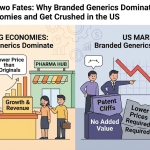
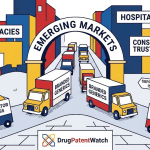
Let’s start with a number that should make any pharmaceutical strategist put down their coffee: analysts project that emerging markets will account for roughly 90% of global pharmaceutical sales growth over the coming decade, with an estimated 75% of that growth driven by branded generics [1]. If your company’s emerging market strategy consists of a single regional VP and a price-cut mandate on your existing portfolio, you’re not competing—you’re spectating.
The generic medicine is the central character in this story. It’s not glamorous. It doesn’t get keynote slots at J.P. Morgan Healthcare. But the generic is the delivery mechanism for healthcare access at scale, and in markets where 90% of people pay for medicines out of their own pockets, it is frequently the only medicine that actually reaches a patient’s bloodstream. Understanding how generics work scientifically, how they navigate intellectual property law, how they get approved by regulators in São Paulo and Johannesburg, and how they fail to reach patients despite all of that—this is the knowledge that separates companies that win in these markets from those that announce a “strategic commitment to emerging markets” every three years without meaningful results.
This article is for people who want the full picture, not the press release version. We’ll cover the regulatory mechanics, the IP chess match, the economics of generic competition, the very real quality problems, and the case studies—HIV in Africa, Hepatitis C globally, India’s ascent to pharmaceutical dominance—that demonstrate both what’s possible and what goes wrong. We’ll also cover where the intelligence tools that make this work, including DrugPatentWatch, fit into a serious market entry strategy.
The stakes are high. Let’s not waste time on platitudes.
Part One: What a Generic Drug Actually Is (And Why the Simplifications Are Dangerous)
The Bioequivalence Standard: Science, Not Faith
A generic drug is not a copy in the colloquial sense of the word. It’s a pharmaceutical product demonstrated, through rigorous pharmacokinetic study, to deliver the same amount of active ingredient into a patient’s bloodstream over the same time period as a reference brand-name drug. The FDA calls this bioequivalence (BE), and it’s the scientific cornerstone of everything that follows.
The standard studies are relatively straightforward in design—24 to 36 healthy volunteers, crossover administration of both the reference and generic product, serial blood draws, and measurement of two key pharmacokinetic parameters: AUC (area under the concentration-time curve, a measure of total drug exposure) and C-max (peak concentration) [2]. The FDA’s acceptance criterion is that the geometric mean ratios for both parameters fall within 80% to 125% of the reference product’s values, with 90% confidence intervals.
Note that 80-125% is not as loose as it sounds. The confidence interval requirement means that a poorly designed study with high variability will fail even if the point estimate is exactly 100%. This is intentional. The goal is not to allow generic companies to slide in with marginally similar products; it’s to ensure substitutability at a population level, acknowledging the pharmacokinetic variability that exists across all humans.
What a generic can differ from its brand-name counterpart: inactive ingredients—fillers, binders, colorants, coatings. U.S. trademark law frequently prevents a generic from looking identical to the brand product. These differences matter commercially, particularly in emerging markets where a tablet’s color or shape is sometimes taken as a proxy for its quality. They do not, however, affect therapeutic equivalence when properly validated [3].
The ANDA: Abbreviated in Name, Not in Complexity
The regulatory mechanism for generic approval in the United States is the Abbreviated New Drug Application (ANDA). It’s ‘abbreviated’ because the generic manufacturer doesn’t need to repeat the extensive clinical efficacy and safety trials that the innovator company already conducted to prove the drug works. The FDA’s prior finding of safety and efficacy for the reference listed drug (RLD) stands. The generic company’s job is to prove it has made the same drug and can make it reliably.
That sounds simpler than it is. An ANDA dossier contains [4]:
Manufacturing and process controls: A complete description of how the drug will be manufactured, including specifications for all ingredients and equipment. The FDA needs to be satisfied that the manufacturer can hit the same quality target batch after batch.
Bioequivalence data: The raw pharmacokinetic data, statistical analyses, and study protocols, all open to scrutiny by FDA reviewers.
Stability data: Results from stability studies conducted over months—sometimes years—proving the product doesn’t degrade and maintains its specifications throughout its shelf life.
Labeling: The proposed label, which must match the reference drug’s approved labeling except for portions still covered by active patents.
After the dossier review, FDA inspectors visit the manufacturing facility to verify the company can actually execute what the dossier describes. This is Good Manufacturing Practice (GMP) inspection, and it matters—a lot. We’ll return to what happens when GMP falls short when we discuss India’s quality controversies.
The cumulative effect of this process is that when a pharmacist in the U.S. substitutes a generic for a brand-name drug—an event that occurs in roughly 91% of all prescription fills [5]—the patient is receiving a product whose therapeutic equivalence has been verified by federal regulators. That’s not faith. That’s a system.
Why the Term ‘Generic’ Obscures More Than It Reveals
Here’s a problem worth naming directly: the word ‘generic’ bundles together products that differ dramatically in quality, manufacturing complexity, and regulatory rigor. A 500mg amoxicillin capsule manufactured by a WHO-prequalified Indian producer and sold into Sub-Saharan Africa’s HIV programs is a very different product from a vaguely labeled antibiotic sold in a street market in Nairobi. Both might be called ‘generic.’ The difference between them is the difference between life and death.
This conflation is one of the primary reasons that trust in generic medicines remains low in many emerging markets. Addressing it requires the pharmaceutical industry, regulatory agencies, and policymakers to be far more precise in their language, their quality signaling, and their market surveillance. It also means that any company entering emerging markets with a legitimate, high-quality product needs a proactive strategy to differentiate itself from the noise. You cannot assume the market will recognize quality without being shown it explicitly.
Part Two: The Emerging Market Healthcare Landscape — Specifics Matter More Than Generalities
Why ‘Emerging Markets’ as a Category Is Almost Useless
Pharmaceutical executives love the phrase ’emerging markets.’ It implies growth, potential, and strategic ambition. It also obscures enormous variation in a way that leads to expensive strategic errors.
The IMF characterizes emerging markets through a combination of attributes—growing access to international capital markets, progress toward middle-income status, and increasing global economic weight [6]. By that definition, China (GDP per capita ~$13,000, over 95% public health insurance coverage) and Nigeria (GDP per capita ~$2,000, heavy out-of-pocket reliance) are both ’emerging markets.’ They require entirely different commercial strategies, regulatory approaches, and product portfolios. Treating them as a category is not analysis; it’s a filing system.
For pharmaceutical strategy, five variables matter most in characterizing any individual emerging market:
Out-of-pocket (OOP) health spending as a percentage of total health expenditure. In India, this is approximately 48%. In South Africa, it’s around 14%. This single variable determines whether your customer is primarily the government’s procurement agency or the individual patient—and that shapes everything from pricing to channel strategy.
Physician and hospital bed density. India has roughly 9.3 physicians per 10,000 people; China has 24. Low physician density constrains prescription volume and accelerates the need for OTC-accessible medicines or strong pharmacist engagement.
Insurance architecture. Indonesia has pushed 91% of its population into public insurance. Brazil’s Sistema Único de Saúde (SUS) provides universal coverage on paper, though access varies by region. These architectures determine who controls formulary decisions.
Regulatory sophistication and timeline. As we’ll see, ANVISA in Brazil, SAHPRA in South Africa, and NMPA in China operate with very different processes, timelines, and standards—each demanding localized expertise.
Disease burden profile. The ‘dual burden’—simultaneous high rates of infectious disease and rapidly growing non-communicable diseases—varies substantially by country and determines which therapeutic categories have the greatest unmet need.
A market like China, with high insurance penetration, aging demographics, and sophisticated local competitors competing under the Quality and Efficacy Consistency Evaluation (GQEC) framework, demands a completely different playbook than a market like Kenya, where the public procurement system, donor-funded programs, and cash-pay pharmacies operate as essentially separate markets with different price points and supply chain requirements.
The Out-of-Pocket Catastrophe: What High OOP Spending Actually Means
Across many emerging economies, medicines account for 20% to 60% of total health expenditures, and close to 90% of people in developing countries buy their medicines directly [7]. The World Health Organization estimates that approximately 100 million people are pushed into extreme poverty each year by healthcare costs—a figure that is not a statistic about systemic inefficiency but about individual families choosing between food and medicine.
This has direct commercial implications. In high-OOP markets, the price of a medicine determines whether it is used. Full stop. A drug priced beyond the reach of a household’s discretionary income will not be purchased regardless of its clinical efficacy. This is why the 80-85% price reduction that generic competition typically delivers translates directly into lives saved—not metaphorically, but literally.
The Geneva Association puts the cumulative annual ‘health protection gap’ across all emerging markets at roughly $310 billion—equivalent to 1% of their combined GDP [8]. That’s the OOP spending that creates financial catastrophe for families. Generic medicines are the primary tool for reducing that gap, which is why positioning them correctly as affordable alternatives matters enormously for both public health and commercial strategy.
Leapfrogging: The Underrated Structural Advantage
Weak physical infrastructure is real in many emerging markets—unreliable electricity, poor roads, inadequate cold chain logistics. But the absence of legacy infrastructure creates an opening that wealthier markets no longer have. You cannot digitize a healthcare system that has already committed $40 billion to a different architecture.
Emerging markets can build new systems without demolishing old ones first. Mobile penetration is high across Africa, Southeast Asia, and Latin America. In markets where physical pharmacies are sparse and physician access is limited, mHealth platforms and telemedicine are not novelties—they are primary care channels. A 2016 survey of healthcare organizations across emerging markets found that 76% planned heavy investment in big data and analytics capacity [9].
For a generic drug company, this opens channels that require different marketing expertise. Reaching a diabetic patient in rural Indonesia through a mobile health platform, partnering with a pharmacy-on-wheels logistics company in West Africa, or supplying a telemedicine service that prescribes electronically to a network of rural pharmacies—these are real market entry vectors, not futuristic speculation. The companies that recognize this early are building distribution capabilities that will be extremely difficult to replicate once those platforms establish market position.
The World Economic Forum’s analysis of health system development in emerging economies notes that emulating the infrastructure path of developed nations is “neither feasible nor desirable”—it’s too slow, too expensive, and imports the same inefficiencies [10]. The better strategy is building differently from the start, leveraging technology to skip the intermediate steps. That’s an opportunity, not a consolation prize.
Part Three: The Real Barriers to Access — It’s Not Just the Price Tag
Five Layers of Obstruction
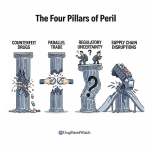
According to the World Health Organization, one-third of the global population lacks regular access to essential medicines. In the poorest parts of Africa and Asia, that figure exceeds 50% [11]. Price is the most visible barrier, but it is one layer in a stack of five distinct obstacles that all need to be addressed—sequentially or simultaneously—before a medicine actually reaches a patient.
Companies that treat emerging market access as a pricing exercise, cut their invoice price by 40%, and declare victory will have disappointing results. The real work is harder and more interesting than that.
The Regulatory Catch-22: When There Is No Reference Product
Here’s a problem that doesn’t get nearly enough attention in C-suite market entry discussions: to approve a generic drug, most national regulatory authorities require the applicant to demonstrate bioequivalence against an innovator product registered and marketed in that country. In many low- and middle-income countries (LMICs), the originator company never bothered to register its product locally—the market was too small, the regulatory process too cumbersome, or the anticipated revenue too low to justify the effort.
The result is a regulatory paradox. Generic manufacturers, often producing WHO-prequalified products that meet stringent international standards, cannot get local approval because there is no local reference drug to compare against. South Africa provides a concrete example: as of recent years, Hepatitis C drug daclatasvir—a medicine with WHO-prequalified generic versions available at accessible prices—was hindered in getting generic approvals through SAHPRA because the originator had not registered its product locally [12].
The WHO’s Collaborative Registration Procedure was designed to address exactly this problem, allowing regulators in LMICs to leverage evaluations already completed by Stringent Regulatory Authorities (SRAs) like the FDA or EMA. But the mechanism requires regulatory agencies to be willing and able to use it—and many are understaffed, under-resourced, and not structurally set up to act on international approvals efficiently.
This is a solvable problem. But it requires pharmaceutical companies to engage directly with regulatory capacity-building in these markets—not as philanthropy, but as a market access investment. If SAHPRA lacks the capacity to review your dossier in a reasonable timeframe, investing in technical assistance programs that strengthen SAHPRA helps your timeline and every other legitimate manufacturer’s.
The Falsified Medicine Problem: Real Numbers, Real Consequences
The “crisis of trust” in generic medicines across emerging markets is not simply a perception problem that can be resolved with a better marketing campaign. It has a real-world foundation. A landmark systematic review published in JAMA Network Open found that the median prevalence of substandard and falsified (SF) medicines in LMICs was 13.6% [13]. For antimalarials specifically, the rate jumped to 19.1%.
To translate that: roughly one in five malaria treatments purchased across low-income markets may not be what the label says it is. Some contain no active ingredient. Some contain harmful contaminants. Some contain partial doses that are clinically insufficient but are effective at accelerating antimicrobial resistance. The existence of these products has a market consequence that extends well beyond the individual harmed patient—it poisons the well for every legitimate manufacturer operating in the same channel.
The business logic of SF medicines is grimly straightforward. In a market where quality enforcement is weak, counterfeiting a popular generic drug is low-risk and highly profitable. The counterfeit doesn’t need to pass bioequivalence studies; it needs to look right, sell at a compelling price, and escape detection. It often does all three.
For a legitimate generic manufacturer, this environment imposes real costs: investment in track-and-trace serialization, authentication technologies on packaging, supply chain auditing, and proactive engagement with local regulators on enforcement. These are not optional. They are the cost of establishing a defensible market position. A company that enters an LMIC market with a high-quality product and no anti-counterfeiting infrastructure will find its brand gradually dragged down by products that share its name and look but not its quality.
The Infrastructure Gap: Getting Medicine to the Last Mile
Even a perfectly safe, rigorously tested, affordably priced, and duly approved generic drug is medically worthless if it can’t get from the warehouse to the patient. Infrastructure failures—poor roads, unreliable power supply, inadequate cold chain logistics, and dysfunctional procurement systems—are not background noise. They are active barriers to access.
Africa imports over 90% of its active pharmaceutical ingredients (APIs) [14]. The supply chain from an Indian API manufacturer to a patient in rural Zambia passes through multiple jurisdictions, multiple temperature changes, and multiple handling points where the cold chain can break and quality can degrade. A biologics product requiring ultra-cold storage faces an even steeper challenge.
Government procurement systems in many LMICs add another layer of complexity. Winning a public tender—often the largest single sales channel in a given country—does not guarantee payment. Delayed, incomplete, or disputed payments from government buyers are a systemic risk in markets like Nigeria and Angola that has caused legitimate pharmaceutical companies to reduce their exposure to those tenders, further restricting supply.
Innovative logistics models exist and are being deployed: drone delivery of medicines to remote areas in Ghana and Rwanda, mobile pharmacy vans serving rural communities in India, and temperature-controlled container programs managed by specialized third-party logistics providers. These are not yet standard tools in any company’s emerging market playbook, but they need to be.
Trust as a Measured Business Asset
Let’s quantify trust, because it matters commercially. In markets with high OOP spending and weak regulatory enforcement, patients who can afford to do so will pay a premium for a medicine they trust over a cheaper one they don’t. In a 2014 study in Tumkur, India, researchers found that a common belief among patients was that medicine quality correlates directly with price [15]. This belief is not irrational given the environment—it’s a sensible heuristic in the absence of reliable quality signals.
The strategic implication: trust is not a soft metric in these markets. It determines whether patients choose your product or a competitor’s when both are available, whether physicians prescribe generics or push patients toward brands, and whether your product gets recommended by the pharmacist who often serves as the primary healthcare decision-maker at the community level.
Building trust requires four concrete investments:
Quality signaling: Prominently marking FDA or EMA approval status on packaging, in local language where possible, and educating retail pharmacists on how to verify it.
Healthcare professional engagement: Working with local medical associations and pharmacy schools to deliver education on bioequivalence science—not promotional education, but the actual scientific content that helps a physician understand why a bioequivalent generic is substitutable.
Supply chain integrity: Implementing serialization and authentication technology, and making the verification mechanism easy for patients and pharmacists to use.
Consistent supply: Nothing destroys trust faster than a stockout. A reliable supply record is itself a trust signal in markets where supply disruptions are endemic.
Companies that treat these as optional extras are missing the core competitive dynamic in these markets. A company with a verifiably high-quality product, consistent supply, and a trusted brand at the pharmacist level can command a modest price premium even over cheaper competitors—and that premium compounds across large patient volumes into a meaningful margin advantage.
Part Four: The Economics of Generic Competition — The Savings Engine and Its Failure Modes
The Price Competition Mathematics
The economics of generic competition follow a predictable pattern that has been extensively documented in mature markets. When the first generic enters a market, it typically prices 15-30% below the brand, capturing share while the brand maintains its premium. As additional generics enter, price competition accelerates dramatically. U.S. Department of Health and Human Services analysis shows that prices decline by approximately 20% with three competitors, but can fall by 70-80% when ten or more competitors are present [16].
In the U.S., the downstream effect of this competition is striking. In 2022, generics accounted for 91% of all prescriptions but only 18.2% of total prescription drug spending [5]. The Association for Accessible Medicines estimated generic and biosimilar savings in the U.S. at $373 billion in a single year (2021) [17]. A single drug going generic can generate enormous savings: when generic atorvastatin entered the U.S. market, the price per pill dropped from around $4 to 20 cents, producing an estimated $2.9 billion in annual savings on that one molecule alone. <blockquote> ‘In 2022, generic drugs accounted for 91 percent of all prescriptions dispensed in the United States but represented only 18.2 percent of total prescription drug spending—a savings of over $373 billion compared to brand-name prices.’ — Association for Accessible Medicines, 2022 U.S. Generic and Biosimilar Medicines Savings Report [17] </blockquote>
For emerging markets, these numbers are not directly transferable—price competition dynamics vary with the number of market participants, the regulatory barriers to entry, and the structure of procurement—but the directional principle holds. Generic competition drives prices down, and lower prices produce measurable improvements in access. A first-line HIV regimen that cost over $10,000 annually in the late 1990s had reached $65 per patient per year by 2020 [18]. That 99.4% price reduction is the concentrated, life-saving power of generic competition operating at scale.
Market Concentration: The Hidden Fragility
The generic market is not a simple commodity with infinite suppliers. The competitive pressure that drives prices down also drives out weaker players, and the resulting market concentration creates systemic risk that governments, procurement agencies, and companies need to actively manage.
An analysis of the U.S. generic drug market found that between 2004 and 2016, 40% of generic drug markets were supplied by a single manufacturer [19]. A single-supplier market is not competitive in any meaningful sense—it’s a monopoly with lower prices than the brand, but with the same structural vulnerability. When the sole manufacturer of a generic drug has a plant shutdown, a regulatory action, or makes a business decision to exit the market, the result is a shortage that can take months or years to resolve.
This risk is compounded by the geographic concentration of pharmaceutical manufacturing. India and China together supply the bulk of the world’s APIs and a large share of finished generic products. The COVID-19 pandemic demonstrated exactly how quickly a disruption in these supply hubs ripples through global medicine supply. The reaction—a series of government initiatives pushing pharmaceutical manufacturing ‘reshoring’ or at least diversification—was predictable but slow to materialize, because building a new API manufacturing facility is not a fast process.
For companies operating in emerging markets, this supply chain fragility is both a risk and an opportunity. A company that can demonstrate consistent, reliable supply in markets where stockouts are endemic builds a competitive advantage that transcends price. Health ministries that have been burned by supply disruptions will pay a modest premium for a supplier with a demonstrated record of reliable delivery. Treating supply chain integrity as a differentiator, not just a cost center, is a genuine strategic option.
The Race-to-the-Bottom Problem
Generic manufacturing is a volume business with razor-thin margins at the commodity end. In high-competition markets for mature small molecules, the economics can become genuinely difficult: a company that has invested in regulatory approval, quality systems, and supply chain infrastructure faces price competition from producers with lower standards and therefore lower costs. The honest response to this dynamic is that quality has costs, and the incentive to cut those costs grows as margins compress.
This is not a hypothetical concern. A 2025 study published in Production and Operations Management, from Indiana University’s Kelley School of Business, found that generic drugs manufactured in India were associated with 54% more severe adverse events—including hospitalization and death—compared to their U.S.-manufactured equivalents [20]. The researchers attributed this primarily to ‘mature generics’—older off-patent products where intense price competition may erode investment in quality operations and supply chain integrity.
This study generated significant controversy in India’s pharmaceutical industry, and it deserves careful interpretation. The study controlled for confounders including patient demographics and prescribing patterns. It does not mean that all Indian-manufactured generics are unsafe—many Indian facilities produce to excellent global standards. What it suggests is that the cost pressure inherent in low-margin generic manufacturing creates quality risks that are measurable in patient outcomes, and that regulatory oversight needs to keep pace with that pressure.
For companies competing on quality rather than cost, this data is a strategic asset. It supports investment in quality systems, SRA-level manufacturing standards, and the communication of those standards to buyers—including government procurement agencies that should be (and often are) using quality criteria alongside price in tender evaluation.
Part Five: The IP Battlefield — Patents, Evergreening, and the Intelligence War
TRIPS: The Floor, Not the Ceiling
The legal framework governing pharmaceutical intellectual property worldwide is the WTO’s Agreement on Trade-Related Aspects of Intellectual Property Rights, universally abbreviated as TRIPS. Enacted in 1995 and effective for developing countries from 2005, TRIPS requires all WTO members to provide 20 years of patent protection for pharmaceutical inventions [21].
Before TRIPS, countries like India operated under a ‘process patent’ system: they could legally manufacture any patented drug molecule, provided they used a different manufacturing process. This was the legal foundation of India’s pharmaceutical industry. The 1970 Indian Patents Act explicitly excluded product patents for medicines, which is why Indian companies could manufacture affordable versions of brand-name drugs that were under full patent protection in Europe and the U.S.
TRIPS changed that globally, but it includes crucial flexibilities that are often underutilized. The 2001 Doha Declaration on the TRIPS Agreement and Public Health affirmed that member countries have the right to grant compulsory licenses—authorizing a domestic manufacturer to produce a patented drug without the patent holder’s consent in situations of national emergency, extreme urgency, or for public non-commercial use [22]. A 2003 WTO decision extended this to allow countries without domestic manufacturing capacity to import drugs made under compulsory license in other countries.
Compulsory licensing has been deployed effectively. Thailand issued compulsory licenses for HIV and cancer drugs in 2006-2008, achieving dramatic price reductions. Brazil used the threat of compulsory licensing as a negotiating lever with Abbott Laboratories, eventually reaching a voluntary price agreement on lopinavir/ritonavir. India’s Section 3(d) of its Patents Act—the provision that prevents patents on new forms of known substances that don’t show enhanced efficacy—is a national flexibilitly built into its post-TRIPS patent law that has been used to deny secondary patents.
These tools exist. The problem is that using them requires legal expertise, political will, and the willingness to absorb diplomatic pressure from innovator countries whose companies stand to lose market exclusivity. Many LMICs lack the first, are ambivalent about the second, and are acutely vulnerable to the third.
Evergreening: The Innovator’s Playbook in Detail
‘Patent evergreening’ is the practice of using the patent system to extend effective market exclusivity well beyond the original 20-year patent on a drug’s active molecule. It is legal, widely practiced, and—depending on whom you ask—either a legitimate exercise of IP rights or a systematic abuse of the system that prioritizes monopoly revenue over public health [23].
The mechanism works as follows. A company invents a new drug molecule and receives a 20-year patent. As that patent approaches expiration, the company files patents on secondary characteristics of the drug: a new crystalline form of the molecule, a new salt, a new dosage formulation, a new route of administration, a new use in a different disease, or a combination product with another existing drug. None of these secondary patents require anything approaching the novelty and inventive step of the original molecule patent—but each one has the potential to block generic entry by adding legal uncertainty.
The data on how extensively this is practiced is striking. A 2018 analysis by the Initiative for Medicines, Access, and Knowledge (I-MAK) found that Johnson & Johnson’s HIV drug Prezista had been protected by over 100 patents and exclusivities—extending its market protection by more than 16 years beyond its original patent [24]. Gilead’s Truvada had a similarly dense patent portfolio. Indivior’s Suboxone, used for opioid addiction treatment, gained over 16 additional years of market protection through 11 separate IP protections.
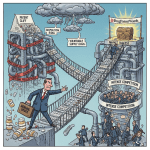
AstraZeneca’s Prilosec-to-Nexium switch is the most famous case study. As Prilosec (omeprazole) approached patent expiration, AstraZeneca introduced Nexium—the single S-enantiomer of omeprazole. Chemically, it’s one mirror-image version of the same molecule. Clinically, in controlled trials, the difference in efficacy between Nexium and generic omeprazole was clinically minimal for the vast majority of patients. But by aggressively marketing Nexium to physicians before Prilosec’s generic competition arrived, AstraZeneca migrated a large portion of the market to a newly patent-protected product. The company extended its monopoly; patients and payers paid higher prices.
India’s Supreme Court drew a line in the 2013 Novartis v. Union of India decision. Novartis had sought a patent for a new crystalline form (the beta crystalline form) of imatinib mesylate—the active ingredient in its cancer drug Gleevec (Glivec). The court denied the patent under Section 3(d) of the Indian Patents Act, ruling that the new crystalline form did not demonstrate significantly enhanced therapeutic efficacy compared to the known compound. This was a direct application of the anti-evergreening provision, and it preserved the availability of generic imatinib in India—at a fraction of the brand’s price—for millions of cancer patients.
Patent Intelligence: The Strategic Weapon for Generic Manufacturers
A generic company’s path through the patent thicket that evergreening creates requires systematic intelligence. You cannot develop a market entry strategy based on a single patent expiration date you found in a press release. The complete intellectual property landscape around a given drug—all primary patents, all secondary patents, all listed exclusivities, all ongoing litigation—needs to be mapped, assessed, and monitored.
This is not a simple task. The FDA’s Orange Book lists patents and exclusivities, but it doesn’t evaluate their validity or enforceability. A listed patent might be a rock-solid claim that would survive any challenge, or it might be a low-quality secondary patent vulnerable to an invalidity argument. A generic company needs to distinguish between these, and it needs to know what challenges other generic companies are already making.
DrugPatentWatch provides exactly this kind of consolidated patent intelligence. The platform aggregates data from the FDA’s Orange Book, the U.S. Patent and Trademark Office, court records, and regulatory filings, giving users a unified view of the complete IP landscape for any drug under analysis. This includes patent expiration timelines, exclusivity periods, paragraph IV certification history (more on that below), and ongoing litigation status. For a generic company deciding whether to pursue a particular drug for development, this intelligence answers the critical strategic question: when can I enter this market, and what legal risk do I face if I try to enter early?
The Paragraph IV (PIV) certification is the legal mechanism for challenging a listed patent before it expires. Under the U.S. Hatch-Waxman Act, when a generic company files an ANDA, it must certify its position on every patent listed for the reference drug. A Paragraph IV certification is a declaration that the generic company either believes its product doesn’t infringe the listed patent or believes the patent is invalid or unenforceable. This certification triggers an almost-automatic patent infringement lawsuit from the brand company, which in turn initiates a 30-month stay on FDA approval of the generic.
The risk is real, and the litigation is expensive. But the reward for the first generic company to successfully file a PIV certification—and either win the litigation or settle on favorable terms—is 180 days of market exclusivity. During those six months, the winning generic is the only generic competitor to the brand. In a large market, this is a business that can be worth hundreds of millions of dollars.
Sophisticated patent intelligence is the foundation of this entire strategy. You need to know whether the listed patents are weak or strong before committing to the litigation cost. You need to know whether other generic companies have already filed PIV certifications on the same drug—if a competitor filed first and is already in litigation, your 180-day exclusivity opportunity may be foreclosed. DrugPatentWatch’s tracking of ANDA filings and PIV certifications gives generic companies the competitive intelligence to make these decisions with real data rather than guesswork.
TRIPS-Plus: When Trade Policy Becomes a Barrier
The final layer of the IP landscape is also the most politically charged. Since TRIPS set the global minimum standards for pharmaceutical IP, the United States and the European Union have negotiated bilateral and regional free trade agreements (FTAs) that push for protections well beyond those minimums. These ‘TRIPS-Plus’ provisions are designed to benefit innovator pharmaceutical companies and have been consistently opposed by public health advocates.
The most damaging TRIPS-Plus provision for generic competition is data exclusivity (also called test data protection). This rule prevents a national regulatory authority from relying on the innovator’s clinical trial data—the very data that proved the drug is safe and effective—to approve a generic version for a set period, typically five to eight years. Under data exclusivity, a generic company either waits out the exclusivity period or conducts its own clinical trials to prove the drug works, at enormous cost. This creates a de facto extension of market monopoly even when no patent protection exists.
The U.S.-Jordan Free Trade Agreement, implemented in 2001, provides a documented case study of the consequences. A rigorous analysis by Oxfam and other researchers found that data exclusivity in Jordan delayed generic competition for 79% of new medicines launched between 2002 and mid-2006, and contributed to a 20% increase in medicine prices during that period [25]. The same analysis found no corresponding increase in pharmaceutical R&D investment or foreign direct investment in Jordan—the standard industry argument for why data exclusivity is beneficial did not hold.
A 2021 study analyzing 42 countries found that the implementation of data exclusivity, typically required by U.S. FTAs, was associated with an average annual increase in imported drug prices of 2.4 to 4.5 percentage points per year [26]. This translates, over the duration of an exclusivity period, into prices substantially higher than would exist in a competitive generic market—and those elevated prices are paid by health systems and patients who can least afford them.
These are not abstract policy concerns. For a generic company developing an emerging market strategy, a country’s FTA obligations determine whether and when a generic can be registered, regardless of the patent status of the molecule. A drug off-patent in the U.S. or Europe may still enjoy de facto exclusivity in a country where data exclusivity is active, meaning the earliest possible generic entry is years away. This is a market analysis input that needs to be incorporated at the beginning of country selection, not discovered after a development program is underway.
Part Six: Case Studies from the Front Lines
India: The Pharmacy of the World, and Its Quality Problem
India’s pharmaceutical industry is one of the most consequential in the history of modern medicine. Its creation was largely deliberate: the 1970 Indian Patents Act, enacted under Prime Minister Indira Gandhi, abolished product patents for medicines and replaced them with process patents, explicitly freeing Indian manufacturers to produce any drug using their own manufacturing processes [27]. This was not an accident or an oversight. It was a strategic policy choice to build domestic pharmaceutical capacity.
The result, over three decades, was an industry of extraordinary process chemistry expertise. Indian scientists became world-class at developing efficient, low-cost synthesis routes for complex molecules. Companies like Cipla, Ranbaxy, Dr. Reddy’s Laboratories, Sun Pharma, and Lupin grew from domestic generics players into global pharmaceutical companies. By the time India implemented product patents in 2005 to comply with TRIPS, it had built a manufacturing infrastructure that was genuinely difficult for any other country to replicate quickly.
The numbers today are striking. India supplies roughly 47% of U.S. pharmaceutical needs by volume—meaning that nearly half of all generics dispensed in American pharmacies originate from Indian manufacturing facilities [28]. For Sub-Saharan Africa’s HIV treatment programs, India supplies an estimated 85% of generic antiretroviral drugs procured by international donors and governments [29]. The global HIV treatment scale-up that has kept approximately 25 million people alive would not have been possible at the pace it achieved without India’s manufacturing capacity and the prices Indian producers could offer.
This is the upside. The downside is the 2025 Indiana University study that found Indian-manufactured generics associated with 54% more severe adverse events than U.S.-manufactured equivalents [20]. The researchers’ analysis pointed to ‘mature generics’—older off-patent molecules produced in high competition, low-margin markets—as the primary driver. The implication is that the cost pressure inherent in commodity generic manufacturing creates quality risks that manifest in patient outcomes.
The Indian pharmaceutical industry’s response was to challenge the study’s methodology and conclusions. That’s expected and not unreasonable—the study has genuine methodological limitations worth scrutinizing. But the broader quality challenge cannot be dismissed. The FDA has increased inspection activity at Indian manufacturing facilities. Warning letters, import alerts, and consent decrees affecting Indian plants have increased in frequency. These regulatory actions represent real quality failures, even if the patient outcome data is debated.
For the Indian industry’s global positioning, this is the central strategic challenge of the current decade. The pathway out is investment: in quality management systems, in continuous manufacturing technologies that reduce process variability, in automation that reduces human error, and in a proactive regulatory relationship with the FDA and other SRAs. Companies that make these investments will strengthen their position in global markets. Those that compete solely on price are building a fragile business.
HIV/AIDS in Africa: What Happens When the Price Barrier Actually Falls
In the late 1990s, HIV/AIDS was killing people across Sub-Saharan Africa at a rate that stunned public health officials and attracted the moral outrage of the entire world. The drugs existed—triple combination antiretroviral therapy had transformed HIV into a manageable chronic illness in wealthy countries. The problem was price. A first-line treatment regimen cost more than $10,000 per patient per year, which was simply impossible for any of the affected governments to fund at the scale needed.
The transformative intervention was generic competition, deployed at scale by Indian manufacturers. Cipla’s offer in 2001 to provide a three-drug antiretroviral combination for $350 per patient per year—a fraction of the brand price—was the moment that changed the calculus. It wasn’t charity. It was generic competition enabled by India’s then-existing patent law.
A 2007 analysis of ARV procurement data for Sub-Saharan Africa from 2004 to 2006 documented what followed: generic companies supplied 63% of antiretrovirals to the region, at prices averaging one-third of those charged by brand-name suppliers [30]. The average annual cost of a first-line regimen had dropped from thousands of dollars to approximately $114 per patient per year by 2006. By 2020, continued competition had pushed that figure to as low as $65 annually [18].
This price collapse made the impossible possible. PEPFAR, launched in 2003 with a five-year, $15 billion commitment—at the time the largest global health initiative ever by a single country—could use generic pricing to project how many patients it could treat. The Global Fund to Fight AIDS, Tuberculosis and Malaria could structure procurement tenders around competitive generic prices. By 2023, approximately 39 million people were living with HIV globally, and the UN’s UNAIDS program reported that 25 million were on treatment—a number that would have been inconceivable without affordable generic ARVs [31].
The lesson here is not just that generics are useful. It’s that when the price barrier is decisively broken, entire global health programs become structurally viable. The infrastructure and political will to treat HIV at scale existed before affordable generics were available; it was the price that made it impossible. Remove the price barrier and the rest of the ecosystem responds. This is the proof of concept for what generic competition can do when it’s allowed to operate effectively.
Hepatitis C: The Voluntary Licensing Model
The HIV story was mostly one of confrontation—advocacy groups, Indian manufacturers, and developing-country governments pushing against brand-company resistance. The Hepatitis C access story took a different shape, and it’s instructive because it shows an alternative model that, under the right conditions, can move faster.
In 2013, Gilead Sciences received FDA approval for sofosbuvir (Sovaldi), the first of a new class of Direct-Acting Antivirals (DAAs) for Hepatitis C. The drug was genuinely revolutionary—over 95% cure rates in eight to twelve weeks, with manageable side effects. The problem was the U.S. price: $84,000 for a course of treatment, which amounted to $1,000 per pill [32]. In the context of 71 million people living with chronic HCV globally—the vast majority in low- and middle-income countries—this was a cure that most people who needed it would never access.
Gilead’s response was proactive and unprecedented. The company established voluntary licensing agreements with eleven leading Indian generic manufacturers, granting them rights to produce and sell generic versions of its HCV medicines—sofosbuvir, ledipasvir, and others—in 105 developing countries. Critically, the agreements included a full technology transfer: Gilead provided its manufacturing processes and know-how, accelerating the time-to-market for the generic versions. The licensees were free to price competitively among themselves [33].
The result: competition among the Indian licensees drove prices down rapidly. In Egypt—where approximately 10% of the population had been infected with HCV, one of the highest burdens in the world—the price of a three-month cure fell from $900 in 2014 to less than $200 by 2016 [34]. Within two years of the voluntary licensing program’s implementation, over one million patients in LMICs had been treated with these medicines.
Voluntary licensing is not a perfect solution. The 105-country coverage excluded some upper-middle-income countries with significant HCV burdens—including China, Thailand, and Ukraine at the time—creating coverage gaps that required separate negotiations. The structure of these agreements, including the scope of included countries and the reach-through royalty obligations, has been criticized by access advocates. But as a mechanism for rapidly getting breakthrough medicines to large populations in LMICs, it worked demonstrably faster than compulsory licensing or litigation would have.
For pharmaceutical companies considering their access strategy, the HCV case presents a template worth studying. A voluntary licensing program, structured correctly, can build market goodwill, maintain relationships with generic producers rather than antagonizing them, and generate revenue—even at lower royalties—from markets that would otherwise see zero revenue from compulsory licenses or patent challenges.
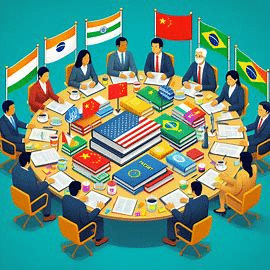
A Regulatory Map: Brazil, South Africa, China
Anyone who thinks you can file the same dossier in three different emerging markets and get consistent results has not spent much time in regulatory affairs. The regulatory requirements, timelines, and practical challenges in Brazil, South Africa, and China differ in ways that can determine the commercial viability of a market entry strategy.
Brazil (ANVISA)
Brazil’s generic medicines policy dates to Law 9.787 of 1999, which created the modern framework for generic approval under the Agência Nacional de Vigilância Sanitária. Generic applicants must demonstrate both pharmaceutical equivalence and bioequivalence against a locally registered reference product [35]. This matters because ANVISA designates its own reference products, which may differ from FDA or EMA reference drugs in formulation or manufacturing source.
ANVISA is thorough. Review timelines for standard applications can run to 120 days or more under ideal circumstances, and GMP inspections of foreign manufacturing facilities—required for registration—add another layer of complexity and cost for importers. Applicants need strong local regulatory affairs expertise; Brazilian regulatory science is sophisticated, and submissions need to match that sophistication.
The market itself justifies this investment. Brazil is the largest pharmaceutical market in Latin America, with significant public procurement through the SUS system and a growing private market. Generics account for roughly 40% of the market by volume and are growing steadily.
South Africa (SAHPRA)
South Africa’s Health Products Regulatory Authority oversees a market where generics account for approximately 90% of new drug applications. The dossier requirements—the MRF1 submission format, bioequivalence data, GMP certification—are well-defined [36]. The historical challenge has not been the technical requirements but the operational capacity of the regulator.
SAHPRA’s predecessor (the Medicines Control Council) accumulated a backlog of unreviewed applications that, at its peak, included dossiers waiting years for a first assessment. A backlog clearance program was initiated, with mixed results. For a company planning to enter the South African market, this regulatory timeline uncertainty is a real business risk that needs to be built into the market entry plan—either with a longer runway, or with a strategy to prioritize the fastest-path registration categories (such as products with existing SRA approval that qualify for expedited pathways).
China (NMPA)
China’s National Medical Products Administration has undergone the most dramatic transformation of any emerging market regulatory system over the past decade. The 2015-era reforms accelerated approval timelines, increased international harmonization, and introduced the Quality and Efficacy Consistency Evaluation (GQEC) requirement [37].
GQEC is the central fact of doing business in the Chinese generic market. The requirement mandates that generics—including many already on the market before the reform—must demonstrate equivalence to an originator or designated RLD through bioequivalence studies and often additional pharmaceutical quality testing. Products that fail to achieve GQEC compliance by regulatory deadlines are removed from the market. This has significantly raised quality standards, and it has equally significantly raised the cost and complexity of maintaining a Chinese generic portfolio.
The practical effect: lower-quality domestic producers have been forced to exit or upgrade. Better-capitalized companies with the resources to conduct proper bioequivalence studies have consolidated market position. For an international generic company considering China entry, GQEC means a substantial development program investment before launch—but it also means entering a market where the quality floor has been meaningfully raised.
Part Seven: The Next Wave — Biosimilars, Advanced Manufacturing, and What Comes After
Biosimilars: The Technical Challenge That Is Also a Market Opportunity
The original blockbuster drugs were small molecules—aspirin, statins, ACE inhibitors, proton pump inhibitors. Their generics are chemical copies synthesized from well-defined starting materials through reproducible chemistry.
The drugs that have dominated pharmaceutical revenue for the past two decades are biologics: large, complex molecules produced in living cell lines. Monoclonal antibodies, therapeutic proteins, fusion proteins. These drugs have revolutionized treatment for autoimmune diseases, cancers, and other serious conditions. They have also generated extraordinary revenue—adalimumab (Humira) was the world’s best-selling drug for a decade, peaking at nearly $21 billion in annual global sales.
Their patents are expiring. The market for follow-on versions—biosimilars—is projected to grow from approximately $25 billion in 2023 to nearly $67 billion by 2028 [38]. This is not a niche opportunity; it’s a structural shift in the off-patent medicine landscape.
Developing a biosimilar is not like developing a small-molecule generic. You cannot crystallize a monoclonal antibody and characterize it completely with mass spectrometry the way you can a chemical drug. Living cell lines are inherently variable. Manufacturing conditions—pH, temperature, nutrient levels, the specific cell clone used—all influence the structure of the final protein. Different manufacturing facilities produce biologics that differ at the molecular level even when the nominal product is identical. The FDA’s approach to this reality is to require comprehensive ‘totality of evidence’ analytical, preclinical, and clinical data demonstrating that the biosimilar has no clinically meaningful differences from the reference product [39].
The development cost reflects this complexity: building a biosimilar typically requires $100 million to $300 million in investment before approval, compared to a few million for a small-molecule generic. This creates a high barrier to entry that concentrates the market in large, well-capitalized companies—and it means that the price reduction from biosimilar competition, while real, is less dramatic than in small-molecule generic markets. In the U.S., biosimilar pricing has typically come in 15-35% below brand; in more competitive European markets, the reductions have sometimes been larger.
For emerging markets, biosimilars present a specific challenge: cold chain logistics. Many biologics require storage at 2-8°C; some require ultra-cold storage. In markets where the cold chain is unreliable, product integrity is at continuous risk from production to patient. Companies entering emerging markets with biosimilar products need cold chain infrastructure partnerships that go well beyond standard pharmaceutical distribution.
Despite these challenges, biosimilars are the frontier that serious emerging market players need to be positioning on now. The therapeutic areas where biosimilars are entering—oncology, rheumatology, gastroenterology—represent enormous and growing disease burdens in emerging markets. Patients who cannot access adalimumab or trastuzumab at brand prices may be able to access biosimilar versions at reduced cost. The public health dividend of getting this right is substantial.
Pharmaceutical manufacturing has been done in batches since the industry began. A large vat mixes raw materials, produces an intermediate, which is then transferred to another vessel for the next step, and so on through 10 to 20 sequential steps over weeks or months. Quality is assessed at the end of each batch. If something went wrong in step three, you may not know until the final product testing—and the entire batch is scrapped.
Continuous manufacturing (CM) runs the entire production process in a single, integrated, automated system. Raw materials go in one end; finished drug product comes out the other. The process is continuously monitored using real-time analytical methods, so problems are detected immediately rather than after a batch is complete. The result: dramatically shorter production cycles (days rather than months), smaller physical footprint (a CM facility can be one-fifth the size of a batch facility), lower capital cost, and inherently higher quality assurance [40].
The FDA has actively supported CM adoption, recognizing that it is fundamental modernization of pharmaceutical manufacturing. Several companies—Vertex, Johnson & Johnson, Eli Lilly—have introduced FDA-approved continuous manufacturing processes for marketed drugs.
For emerging markets, CM’s potential is particularly significant in the context of Africa’s near-total import dependence on APIs. A 2024 analysis in Reaction Chemistry & Engineering specifically examined the feasibility of establishing continuous flow manufacturing for APIs in Africa, finding that CM’s smaller scale and lower capital requirements make it considerably more accessible than traditional batch manufacturing for regional capacity building [41]. If African nations can manufacture competitive-quality APIs domestically using CM technology, the $4 billion+ annually they spend on imported pharmaceuticals represents a domestic industry waiting to be built—with corresponding improvements in health security and supply chain resilience.
3D Printing: Personalized Medicine Reaches the Last Mile
The FDA approved the first 3D-printed pharmaceutical product (levetiracetam, under the brand Spritam) in 2015. Since then, research into pharmaceutical 3D printing has expanded substantially, and the potential applications extend well beyond what that first product demonstrated [42].
Pharmaceutical 3D printing—or additive manufacturing—builds drug products layer by layer from a digital design. For standard oral solid dosage forms, this enables precision dosing that is impossible with mass-produced tablets: a specific dose for a specific patient’s weight, age, and metabolic profile, printed on demand. For pediatric medicine, this is particularly significant. Children require much lower doses than adults, yet most medicines are formulated in adult-strength tablets that are physically split or crushed—imprecise, variable, and sometimes chemically inappropriate. A 3D printer in a clinic can produce a pediatric-appropriate tablet with a precise dose in the correct formulation.
The ‘polypill’ concept is another application: a single printed tablet combining multiple drugs, each with its own designed release profile. For a patient managing hypertension, diabetes, and dyslipidemia simultaneously—a common combination in aging populations in emerging markets—consolidating three or four daily medicines into one tablet meaningfully improves adherence. Adherence directly drives health outcomes.
The long-term vision—on-demand printing at the point of care—addresses the last-mile logistics problem directly. A 3D pharmaceutical printer deployed in a remote health clinic could produce customized medicines for the local population without requiring a functioning cold chain, reliable road access, or a large pharmacy inventory. The technical and regulatory hurdles to get there are substantial, but the direction of travel is clear.
Part Eight: The Ecosystem — Advocates, Patients, and Corporate Strategy
Médecins Sans Frontières: The Watchdog That Changed the Industry
Médecins Sans Frontières (MSF) has operated at the intersection of clinical medicine and pharmaceutical access politics for decades, and their influence on the global generic medicine landscape is hard to overstate. Their Access Campaign, launched in 1999, built the intellectual and political case for compulsory licensing, voluntary licensing, and the use of TRIPS flexibilities in ways that translated directly into policy outcomes.
Their core position is stated simply: medicines are not a luxury. Treating them as luxury goods—pricing them at what the market will bear in wealthy countries, without adjustment for the public health realities of LMICs—is a choice with a body count. MSF’s role has been to make that body count visible and to identify specific policy mechanisms that could reduce it.
Their work on HIV drug pricing in the early 2000s—documenting the gap between brand prices and what poor countries could afford, calculating how many patients could be treated with generic pricing versus brand pricing—provided the ammunition for political decisions that ultimately led to PEPFAR, the Global Fund, and the scale-up of HIV treatment across Africa. Whether you agree with MSF’s broader politics or not, the counterfactual is uncomfortable: without that advocacy, the price of brand-name ARVs might have remained the ceiling rather than the floor that generic competition established.
Their ongoing Access Campaign monitors pricing trends, advocates for appropriate use of TRIPS flexibilities, and publishes regular analyses of pharmaceutical company practices on access. For pharmaceutical companies operating in this space, MSF functions simultaneously as a critic and as a market intelligence resource. Their analyses of specific medicines’ patent landscapes, pricing decisions, and access barriers are rigorous and well-documented.
Oxfam: The Tax Angle
Oxfam’s contribution to the access debate is different from MSF’s: they focus on the corporate financial architecture—particularly tax practices—that underlies the pharmaceutical industry’s pricing strategies. Their 2018 report ‘Prescription for Poverty’ documented how four major pharmaceutical companies (Abbott, Johnson & Johnson, Merck, and Pfizer) used complex networks of subsidiaries in tax havens to minimize their tax liabilities in both wealthy and developing countries [43].
The access connection is direct. Corporate taxes fund government health systems. A pharmaceutical company that uses sophisticated tax structures to minimize its contribution to those systems—while simultaneously selling medicines to those governments—is capturing public value at both ends: public research funding supports drug discovery, and minimized tax contributions reduce the public resources available for health procurement. Oxfam estimated that the four companies studied may have deprived developing countries of over $100 million annually in tax revenue.
This argument has a particular resonance in LMICs where the Abuja Declaration commitment (African Union countries to allocate 15% of annual budgets to health) has been regularly missed because governments lack fiscal resources. If pharmaceutical tax optimization reduces the government revenue that funds health procurement, it is—through an indirect mechanism—a barrier to medicine access.
The implication for companies with serious emerging market aspirations is that their tax structures will eventually be scrutinized in the same breath as their pricing and access policies. Proactive transparency on both fronts is a better long-term position than reactive defensiveness.
Patients for Affordable Drugs: The Personal Cost
Policy analysis is more compelling when anchored to specific human experiences. Organizations like Patients for Affordable Drugs bring the aggregate statistics—billions in savings, millions in treatment—back to individuals making daily decisions about whether they can afford their prescribed medications.
Their message is unambiguous: drugs don’t work if people can’t afford them. The cases they document—diabetic patients rationing insulin, cancer patients delaying treatment, families depleting savings to pay for biologics—illustrate what high drug prices mean not as a policy abstraction but as a lived reality. A patient with Crohn’s disease managing on a medicine with a $25,000 monthly list price lives with constant financial anxiety about insurance coverage changes that could make her treatment inaccessible overnight. This is not a theoretical concern. It’s a real constraint on her daily life [44].
For pharmaceutical strategy, patient advocacy organizations represent both a risk and an input. They are increasingly sophisticated at mapping patent strategies, documenting pricing decisions, and translating complex IP maneuvers into accessible arguments for policy change. Companies that engage with patient groups—honestly, not performatively—gain market intelligence and build relationships that matter when policy decisions affecting their business are being made.
The C-Suite Calculus: Localization as Non-Negotiable
Among senior pharmaceutical executives with actual track records in emerging markets, there is a consistent theme: there is no template. The executives who have successfully built commercial operations in Brazil, India, China, or Nigeria did so with specific, localized strategies that were sometimes developed over years of trial and error. The executives who failed were often those who tried to apply a modified version of their European strategy.
The framework that appears consistently in discussions of successful emerging market strategy includes four components:
Long-term commitment. Emerging markets are not fast-return investments. Regulatory approvals take time. Building trust with prescribers and pharmacists takes time. Building reliable supply chains takes time. Companies that budget for a three-year payback will exit before they’ve built anything durable. The companies with meaningful market share in India or Brazil have been there for decades.
Local talent and real authority. The most common failure mode is hiring local leadership and then managing them from headquarters with a global product playbook they’re not empowered to deviate from. Successful companies hire the best local regulatory affairs, medical affairs, and commercial talent they can find and give those teams actual decision-making authority on pricing, channel strategy, and market development. The global HQ role is resource allocation and guardrails—not operational direction.
Portfolio alignment. A company selling high-cost specialty biologics in Western markets cannot simply drop prices and expect the same products to work in a market where the healthcare infrastructure for specialty care barely exists. A portfolio strategy for an emerging market needs to start with the disease burden, move to the health system infrastructure, and then identify which products actually address addressable patient populations. This is the reverse of the standard commercial process.
Ecosystem partnership. The companies building durable market positions in LMICs are not just selling products. They’re working with governments on regulatory capacity, with logistics partners on supply chain infrastructure, with medical schools on education, and with patient groups on adherence support. This is expensive and slow, and it doesn’t show up in quarterly earnings. It also creates barriers to competitive entry that price alone cannot replicate.
Part Nine: Putting the Intelligence Together — From Data to Decision
The Patent Intelligence Workflow
A structured approach to emerging market generic strategy needs patent intelligence at every stage. Here’s how that workflow functions in practice for a company evaluating a specific drug for development.
Stage 1: Target identification. The starting point is a market analysis that identifies therapeutic categories with large and growing patient populations in the target markets, high unmet need (measured by current treatment rates versus estimated disease burden), and favorable reimbursement or procurement dynamics. This generates a list of candidate drugs worth examining further.
Stage 2: Patent landscape analysis. For each candidate drug, a comprehensive patent landscape review maps every patent associated with the molecule—primary composition-of-matter patents, secondary formulation and use patents, process patents, and any relevant Orange Book listings. DrugPatentWatch is a primary tool at this stage: its database consolidates patent data, exclusivity periods, ANDA filing history, and litigation status in a format that allows a commercial analyst to quickly assess the complexity of a specific drug’s IP situation without a law degree.
Stage 3: Market entry timing assessment. Based on the patent landscape, the analyst calculates the realistic earliest entry date in each target market, accounting for both patent expirations and data exclusivity obligations that may apply under FTAs. This is not always a single date—the expiration dates for multiple patents in the ‘thicket’ may cascade over several years, and the strategy needs to account for whether an aggressive PIV challenge is worth the litigation risk and cost.
Stage 4: Competitive intelligence. Who else is developing the same generic? Has another company already filed an ANDA with a PIV certification? If so, the 180-day exclusivity may already be allocated, fundamentally changing the commercial attractiveness of early entry. DrugPatentWatch’s ANDA filing data and paragraph IV certification tracking is directly relevant here.
Stage 5: Regulatory pathway planning. For each target market, map the regulatory requirements: what bioequivalence data is needed, what reference product is required, what is the realistic review timeline, and what GMP requirements apply to the manufacturing facility.
Stage 6: Commercial modeling. With patent timelines, competitive intelligence, and regulatory timelines established, commercial modeling can project realistic revenue scenarios under different entry timing assumptions, pricing strategies, and market share trajectories.
This workflow is iterative—new patent filings, ANDA filings by competitors, regulatory decisions, and litigation outcomes continuously update the inputs. Which is why continuous monitoring, rather than a one-time analysis, is the appropriate model for managing a generic development portfolio.
The Regulatory Harmonization Opportunity
One structural improvement that would accelerate generic access in emerging markets globally is regulatory harmonization. When every country requires its own bioequivalence studies conducted against its own locally registered reference product, in its own dossier format, reviewed on its own timeline—the cumulative cost and complexity is prohibitive for all but the largest products in the largest markets.
Harmonization efforts exist: the International Council for Harmonisation (ICH), the WHO’s collaborative registration procedure, and regional harmonization bodies like the African Medicines Regulatory Harmonisation (AMRH) initiative are all working toward more consistent standards. Progress is real but slow, and the institutional incentives for national regulatory agencies to retain their independence and their processes are understandable.
For pharmaceutical companies, the current fragmented landscape means that regulatory affairs expertise is a genuine competitive capability—not just a compliance function. Companies that can navigate multiple regulatory systems efficiently, that have established relationships with regulators across multiple markets, and that can structure submissions to maximize the reuse of data across markets have a structural cost advantage over competitors who treat each market registration as a separate, standalone project.
Key Takeaways
Generics are the mechanism, not just the product. They are the primary vehicle for pharmaceutical access at scale in LMICs. Understanding their regulatory basis, commercial economics, and quality assurance requirements is fundamental to any serious engagement with emerging market healthcare.
Access barriers are layered. Price matters, but regulatory delays, SF medicine contamination, infrastructure failures, and trust deficits all block medicine delivery independently. Effective market entry strategies address all of these, not just pricing.
The IP landscape is a full-time intelligence requirement. Patent evergreening, TRIPS-Plus data exclusivity, and Paragraph IV certification dynamics continuously change the competitive landscape. Tools like DrugPatentWatch provide the consolidated intelligence needed to make informed decisions about development targets, entry timing, and litigation risk.
Quality is a competitive differentiator, not just a compliance obligation. In markets where SF medicines erode trust in generics broadly, a verifiably high-quality product from an SRA-approved facility is a genuine market advantage—particularly when that quality is actively communicated to prescribers and pharmacists.
The HIV and HCV case studies prove the model. When price barriers were broken through generic competition (HIV) and voluntary licensing (HCV), global health programs mobilized at unprecedented scale. The economic case and the public health case are identical.
Biosimilars are the next generic frontier, with different economics. Development costs are 50 to 100 times higher than small-molecule generics, competition drives smaller price reductions, and cold chain requirements add logistical complexity—but the patient populations in emerging markets with unmet need for biologic therapies are enormous.
No emerging market strategy survives contact with the markets without localization. The regulatory environment, disease burden, health system architecture, and cultural dynamics of Brazil, South Africa, Indonesia, and Nigeria require genuinely different strategies, not global templates with regional pricing adjustments.
FAQ
1. How does a generic company determine whether to pursue a Paragraph IV challenge against a weak secondary patent versus simply waiting for it to expire?
The decision turns on three variables: the commercial value of the 180-day exclusivity period if you succeed, the strength of the invalidity or non-infringement argument (which requires a detailed patent analysis, not just a general sense that secondary patents are weak), and the cost and duration of anticipated litigation. A drug with $2 billion in annual U.S. sales and a demonstrably weak crystalline form patent—the kind that failed in the Novartis v. India Supreme Court decision—may be worth the litigation risk and cost. A drug with $200 million in annual sales and a secondary patent covering a genuinely novel delivery mechanism is a different calculation entirely. This is why patent intelligence platforms that assess not just patent existence but patent quality are essential tools, not optional ones.
2. What makes a voluntary licensing agreement structurally successful versus one that generates press releases but limited patient access?
The Gilead HCV program’s success relative to some other voluntary licensing efforts came down to four factors: scope (105 countries is broad enough to cover most of the global burden), technology transfer (actual process know-how, not just permission to manufacture), pricing freedom for licensees (enabling them to compete with each other and drive prices down), and the caliber of licensee (the eleven Indian companies chosen had established manufacturing expertise and regulatory approvals). VL agreements that cover small country lists, impose significant royalty obligations, or restrict price-setting authority produce correspondingly smaller access gains. The devil is entirely in the structural details.
3. Data exclusivity is often described separately from patent protection, but practically, how do they interact in a country market?
They operate through different mechanisms but have additive effects. Patent protection prevents any competitor from making the patented drug without a license. Data exclusivity prevents a regulatory authority from using the innovator’s clinical trial data as the evidentiary basis for approving a generic—even if the drug is off-patent. In markets where both apply, the effective monopoly period is whichever expires last. In markets where only data exclusivity applies (for example, for a drug where the core patent was never filed or has already expired), it functions as a standalone market exclusivity with no IP basis—the drug is chemically free to copy but regulatory approval is blocked. For companies analyzing a specific drug in a specific country, both layers need to be mapped, as well as whether the country’s FTA obligations require data exclusivity that its domestic law would not independently mandate.
4. The continuous manufacturing and 3D printing technologies are compelling in theory. What are the actual barriers to deploying them in low-income emerging markets in the near term?
Continuous manufacturing facilities, while cheaper than traditional batch plants, still require skilled process engineers, real-time analytical equipment, and regulatory familiarity with CM processes—capabilities that are scarce in most LMICs. The FDA and EMA have frameworks for approving CM processes; most LMICs do not yet, and NRAs would need to develop the expertise to evaluate CM-manufactured drugs. For 3D printing, the barriers are even more significant at scale: the printers need calibration and maintenance, the printing formulations need regulatory approval, and the on-demand model requires digital prescription infrastructure that often does not exist at the point of care. These are medium-to-long-term transitions, not near-term solutions. The more immediate application of CM may be in Indian and Chinese API manufacturing facilities, where it could improve quality and efficiency for existing suppliers serving global markets.
5. Given that 40% of U.S. generic drug markets are supplied by a single manufacturer, should procurement agencies in emerging markets be structuring tenders differently to build supply chain resilience?
Yes, and some are beginning to do this. The single-supplier risk in generic markets is a documented phenomenon with documented consequences—shortages, price spikes, and quality collapses. Procurement agencies can mitigate this through several mechanisms: qualification of multiple suppliers before a tender award rather than winner-take-all procurement, split-award tender structures that maintain two or three suppliers in a market simultaneously, strategic stockpiling requirements built into tender contracts, and monitoring of supplier concentration across their entire medicine procurement portfolio. The Global Fund has moved toward these approaches for some essential medicine categories. National procurement agencies in LMICs that have experienced devastating medicine shortages—Nigeria, Kenya, and others—are increasingly aware that the lowest-price single-source contract is not necessarily the best-value procurement outcome when supply continuity is accounted for.
References
[1] DrugPatentWatch. (2025, August 2). Expanding access to medicines: The role of generics in emerging markets. https://www.drugpatentwatch.com/blog/expanding-access-to-medicines-the-role-of-generics-in-emerging-markets/
[2] U.S. Food and Drug Administration. (2024). Generic drugs: Questions & answers. https://www.fda.gov/drugs/frequently-asked-questions-popular-topics/generic-drugs-questions-answers
[3] U.S. Food and Drug Administration. (2024). Generic drugs. https://www.fda.gov/drugs/buying-using-medicine-safely/generic-drugs
[4] DrugPatentWatch. (2025). The regulatory pathway for generic drugs: A strategic guide. https://www.drugpatentwatch.com/blog/the-regulatory-pathway-for-generic-drugs-explained/
[5] Association for Accessible Medicines. (2022). 2022 U.S. generic and biosimilar medicines savings report. https://accessiblemeds.org/resources/reports/2022-savings-report/
[6] International Monetary Fund. (2021, June). Miles to go: The future of emerging markets. Finance & Development. https://www.imf.org/external/pubs/ft/fandd/2021/06/the-future-of-emerging-markets-duttagupta-and-pazarbasioglu.htm
[7] Novartis. (2022). Access to medicines in the developing world. https://www.novartis.com/us-en/sites/novartis_us/files/2022-03/n_int_050236_0.pdf
[8] Morgan Stanley Investment Management. (2023). Navigating emerging markets healthcare trends. https://www.morganstanley.com/im/publication/insights/articles/article_navigatingemergingmarketshealthcare_ltr.pdf
[9] International Finance Corporation. (2020). Enabling health technology in emerging markets. https://www.ifc.org/content/dam/ifc/doc/mgrt/ifc-whitepaper-healthtech-final-web.pdf
[10] World Economic Forum. (2017). Health systems leapfrogging in emerging economies: From concept to scale-up and system transformation. https://www3.weforum.org/docs/WEF_Health_Systems_Leapfrogging_Emerging_Economies.pdf
[11] Access to Medicine Foundation. (2022). Expanding access to high-quality generic medicines in low- and middle-income countries. https://accesstomedicinefoundation.org/medialibrary/627cf6c695e6a_expanding-access-to-high-quality-generic-medicines-workshop-report.pdf
[12] Hepatitis C Coalition. (2021). Beyond intellectual property: Why is generic treatment for HCV still so hard to get. https://www.hepcoalition.org/en/advocate/campaigns/worth-the-cure/article/beyond-intellectual-property-why-is-generic-treatment-for-hcv-still-so-hard-to
[13] Ozawa, S., Evans, D. R., Bessias, S., Haynie, D. G., Yemeke, T. T., Laing, S. K., & Herrington, J. E. (2018). Prevalence and estimated economic burden of substandard and falsified medicines in low- and middle-income countries: A systematic review and meta-analysis. JAMA Network Open, 1(4), e181662. https://pmc.ncbi.nlm.nih.gov/articles/PMC6324280/
[14] Nwaka, S., & Ridley, R. G. (2003). Virtual drug discovery and development for neglected diseases through public–private partnerships. Nature Reviews Drug Discovery, 2(11), 919–928.
[15] Kamat, V. R., & Nichter, M. (2014). Perceptions of the quality of generic medicines: Implications for trust in public services within the local health system in Tumkur, India. BMJ Global Health, 2(Suppl 3), e000644. https://gh.bmj.com/content/2/Suppl_3/e000644
[16] U.S. Department of Health and Human Services, Office of the Assistant Secretary for Planning and Evaluation. (2023). Drug competition series: Analysis of new generic markets—Effect of market entry on generic drug prices. https://aspe.hhs.gov/sites/default/files/documents/510e964dc7b7f00763a7f8a1dbc5ae7b/aspe-ib-generic-drugs-competition.pdf
[17] Association for Accessible Medicines. (2022). 2022 U.S. generic and biosimilar medicines savings report. https://accessiblemeds.org/resources/reports/2022-savings-report/
[18] UNAIDS. (2021). Global HIV & AIDS statistics—fact sheet. https://www.unaids.org/en/resources/fact-sheet
[19] Berndt, E. R., & Trusheim, M. R. (2021). The evolution of supply and demand in markets for generic drugs. American Journal of Health Economics, 7(4). https://pmc.ncbi.nlm.nih.gov/articles/PMC8452364/
[20] Kelley School of Business, Indiana University. (2025, February 19). All generic drugs are not equal: Study finds generics made in India have more severe adverse events. https://blog.kelley.iu.edu/2025/02/19/all-generic-drugs-are-not-equal-study-finds-generics-made-in-india-have-more-severe-adverse-events/
[21] World Trade Organization. (1995). Agreement on trade-related aspects of intellectual property rights (TRIPS). https://www.wto.org/english/tratop_e/trips_e/trips_e.htm
[22] World Trade Organization. (2001). Declaration on the TRIPS agreement and public health (Doha Declaration). WT/MIN(01)/DEC/2.
[23] Correa, C. M. (2011). Pharmaceutical patents and evergreening. In The Cambridge handbook of investment-driven intellectual property. Cambridge University Press. https://www.cambridge.org/core/books/cambridge-handbook-of-investmentdriven-intellectual-property/pharmaceutical-patents-and-evergreening/9A97A3E6D258E9A47DCF88E5EA495F44
[24] Initiative for Medicines, Access & Knowledge. (2018). Overpatented, overpriced: How excessive pharmaceutical patenting is extending monopolies and driving up drug prices. https://www.uclawsf.edu/2020/09/24/patent-drug-database/
[25] Oxfam International. (2007). All costs, no benefits: How the US-Jordan free trade agreement affects access to medicines. Oxfam Briefing Paper 102. https://www.oxfamamerica.org/explore/research-publications/all-costs-no-benefits/
[26] Boston University Global Development Policy Center. (2021, April 21). A strict IP rule in US free trade agreements is associated with higher drug prices in importing countries. https://www.bu.edu/gdp/2021/04/21/a-strict-ip-rule-in-us-free-trade-agreements-is-associated-with-higher-drug-prices-in-importing-countries/
[27] Wikipedia. (2024). Pharmaceutical industry in India. https://en.wikipedia.org/wiki/Pharmaceutical_industry_in_India
[28] U.S. International Trade Commission. (2007). The emergence of India’s pharmaceutical industry and implications for the U.S. generic drug market. http://www.usitc.gov/publications/332/EC200705A.pdf
[29] PEPFAR. (2023). PEPFAR annual report to Congress. https://www.state.gov/pepfar/
[30] Waning, B., Diedrichsen, E., & Moon, S. (2010). HIV/AIDS drugs for sub-Saharan Africa: How do brand and generic supply compare? PLOS ONE. https://pmc.ncbi.nlm.nih.gov/articles/PMC1805689/
[31] UNAIDS. (2023). Global AIDS update 2023. https://www.unaids.org/en/resources/documents/2023/global-aids-update-2023
[32] Pollack, A. (2015, January 16). Hepatitis C treatment is hailed, but access is uneven. The New York Times.
[33] Gilead Sciences. (2017). Chronic hepatitis C treatment access: Generic agreement fast facts. https://www.gilead.com/-/media/files/pdfs/other/hcv-generic-agreement-fast-facts-11-15-17.pdf
[34] World Health Organization. (2016, October 27). Over 1 million treated with highly effective hepatitis C medicines. https://www.who.int/news/item/27-10-2016-over-1-million-treated-with-highly-effective-hepatitis-c-medicines
[35] Brazilian National Health Surveillance Agency (ANVISA). (2023). Drug products regulation. https://www.gov.br/anvisa/pt-br/english/regulation-of-products/drugs
[36] South African Health Products Regulatory Authority (SAHPRA). (2022). Bioequivalence common deficiencies in generic products. https://www.sahpra.org.za/wp-content/uploads/2022/10/Bioequivalence-Common-Deficiencies-in-Generic-Products-Submitted-for-Registration-to-SAHPRA.pdf
[37] Accestra Consulting. (2020). China generic drug regulations & guidelines. https://www.accestra.com/china-generic-drug-regulations-guidelines/
[38] DrugPatentWatch. (2024). Top 5 challenges faced by biosimilars. https://www.drugpatentwatch.com/blog/top-5-challenges-biosimilars/
[39] Cohen, H. P., & Blauvelt, A. (2019). The economics of biosimilars. American Health & Drug Benefits, 7(3). https://pmc.ncbi.nlm.nih.gov/articles/PMC4031732/
[40] Schaber, S. D., Gerogiorgis, D. I., Ramachandran, R., Evans, J. M. B., Barton, P. I., & Trout, B. L. (2011). Economic analysis of integrated continuous and batch pharmaceutical manufacturing: A case study. Industrial & Engineering Chemistry Research, 50(17).
[41] Poechlauer, P., Colberg, J., Fisher, E., Jansen, M., Johnson, M. D., Koenig, S. G., Lawton, M., Laporte, T., Manley, J., Martin, B., & O’Kearney-McMullan, A. (2024). Towards continuous flow manufacturing of active pharmaceutical ingredients in Africa: A perspective. Reaction Chemistry & Engineering. https://pubs.rsc.org/en/content/articlehtml/2024/re/d4re00299g
[42] U.S. Food and Drug Administration. (2023). CDER’s framework for regulatory advanced manufacturing evaluation (FRAME) initiative. https://www.fda.gov/about-fda/center-drug-evaluation-and-research-cder/cders-framework-regulatory-advanced-manufacturing-evaluation-frame-initiative
[43] Oxfam International. (2018). Prescription for poverty: Drug companies as tax dodgers, price gougers, and influence peddlers. https://oxfamilibrary.openrepository.com/bitstream/handle/10546/620548/cr-prescription-for-poverty-180918-en.pdf
[44] Patients For Affordable Drugs. (2024). Patient stories. https://www.patientsforaffordabledrugs.org/