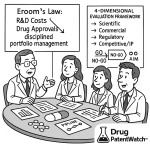
Rare disease drugs now account for 52% of all new molecular entities (NMEs) approved by FDA’s Center for Drug Evaluation and Research in 2024, up from 39% in 2017. That shift is not accidental. The Orphan Drug Act of 1983 built a regulatory architecture that makes the rare disease space financially superior to standard pharmaceutical development, producing gross profit margins above 80% versus the broader industry average of roughly 16%.
That profitability has attracted scrutiny from every direction simultaneously: Medicare negotiation provisions in the Inflation Reduction Act, bipartisan legislative pressure through the ORPHAN Cures Act, a federal appeals court decision that upended 40 years of FDA interpretation of exclusivity scope, and a publicly traded pharmacy-manufacturing hybrid built by a billionaire whose explicit stated goal is to ‘f— up the drug industry in every way possible.’
The convergence of these forces creates both risk and opportunity that IP teams and investors cannot model accurately without understanding the mechanics of each in detail. This pillar page provides that detail.
2. Mark Cuban and the Origin of Cost Plus Drugs
Cuban’s History of Attacking Market Opacity
Before the Mark Cuban Cost Plus Drug Company existed, Cuban’s track record of challenging information asymmetry was already documented. He funded Sharesleuth, an investigative outlet targeting financial fraud. He endowed the Electronic Frontier Foundation’s ‘Mark Cuban Chair to Eliminate Dumbass Patents,’ a direct shot at non-practicing entities that exploit IP without producing anything. Both efforts share a structural logic: identify a market where opacity or monopoly creates value extraction without corresponding value creation, then attack the opacity directly.
His entry into healthcare follows the same logic. After watching Martin Shkreli’s 5,000% price hike on Daraprim (pyrimethamine) and seeing generic medication shortages proliferate across hospital formularies, Cuban concluded the pharmaceutical supply chain had no functioning price signal. His public characterization of the problem was precise: ‘You simply cannot find the price or cost of drugs.’ Not ‘hard to find.’ Cannot find.
That observation, combined with a cold email from Dr. Alex Oshmyansky in 2018, produced the company.
The Oshmyansky Partnership and the PBC Structure
Oshmyansky had been operating since 2015 under the name ‘Osh’s Affordable Pharmaceuticals,’ focused specifically on generic drugs for rare diseases whose prices had been hiked dramatically. He had direct knowledge of the manufacturing and distribution mechanics and a specific thesis: that removing intermediary layers from the generic supply chain could reduce costs by 80 to 90 percent for many molecules.
Cuban invested by 2019 and agreed to rename the venture the Mark Cuban Cost Plus Drug Company, the only instance he has put his name on a company he backed rather than founded. That decision is not incidental. The brand is an explicit commercial and political statement.
The legal structure matters as much as the brand. MCCPDC is incorporated as a Public Benefit Corporation (PBC), a legal form that gives boards statutory protection from shareholder lawsuits when they pursue social objectives at the expense of short-term profit maximization. This is not window dressing. It means Cuban can undercut market prices on strategically important drugs, absorb operating losses in specific categories, or prioritize shortage drugs with thin margins, without triggering fiduciary liability. The social mission is written into the corporate DNA.
Key Takeaways: Section 2
Cuban’s MCCPDC is a logical extension of his documented pattern of attacking information asymmetry and IP system abuse, not a philanthropic detour.
The PBC corporate structure gives management legal cover to pursue mission-driven decisions that would otherwise expose a standard C-corp to shareholder litigation.
Oshmyansky’s original focus on rare disease generics remains embedded in the company’s manufacturing strategy, even as the pharmacy catalog has grown past 2,200 drugs.
3. The Orphan Drug Act: Mechanics, Incentives, and IP Architecture
Pre-1983 Baseline
Before the Orphan Drug Act passed in January 1983, the FDA had approved roughly 10 treatments for conditions affecting fewer than 200,000 U.S. patients across the entire preceding decade. The economic rationale was clear: a drug serving 50,000 patients cannot generate revenue sufficient to recover a $300 million development investment at any price the market will bear, and the U.S. patent system provides no special accommodation for small-market products.
Patient advocates, led by figures including Abbey Meyers and Muriel Seligman through the National Organization for Rare Disorders (NORD), successfully argued that market failure was not a justification for abandoning patients to untreated disease. Congress agreed and passed the ODA with a suite of financial incentives designed to change the calculus.
The ODA Incentive Stack: Full Mechanics
The ODA does not operate through a single lever. It stacks multiple incentives, and understanding how they interact is essential for accurate IP valuation of rare disease assets.
Tax Credits: The original act offered a 50% tax credit on qualified clinical testing expenses for designated orphan drugs. The Tax Cuts and Jobs Act of 2017 cut this to 25%, a reduction the industry protested vigorously and which measurably affected development economics for smaller sponsors.
Grant Funding: The FDA’s Office of Orphan Product Development (OOPD) administers grants directly covering clinical research costs for orphan-designated products. These grants reduce the capital at risk for sponsors before proof-of-concept data exists.
FDA User Fee Waivers: Prescription Drug User Fee Act (PDUFA) fees, which can reach several million dollars per application, are waived entirely for orphan drug applications. For a small biotech with one asset, this waiver can represent 20 to 30% of the cash runway available for a regulatory submission.
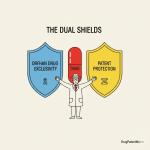
Seven-Year Market Exclusivity (Orphan Drug Exclusivity, ODE): This is the dominant economic lever. The FDA cannot approve a ‘same drug for the same disease or condition’ from a different manufacturer for seven years after approval, regardless of patent status. ODE runs independently of patent protection. A drug can be off-patent and still hold ODE. Pediatric studies can extend ODE by a further six months under the Pediatric Research Equity Act if the sponsor completes a qualified pediatric study.
Priority Review and FDA Development Assistance: OOPD provides direct protocol assistance, parallel scientific reviews, and expedited FDA feedback throughout development, compressing timeline and reducing uncertainty costs.
The combination of these incentives converts a structurally unprofitable market into a viable, and in many cases highly profitable, one. The problem regulators now confront is that the incentives were calibrated for a pre-genomics era where rare disease patients numbered in the tens of thousands and drug development was almost entirely small-molecule chemistry. Neither assumption holds today.
Regulatory Exclusivity vs. Patent Protection: Why Both Matter
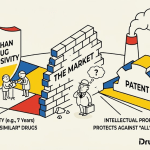
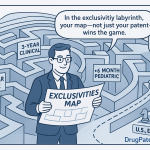
IP analysis in orphan drug contexts requires tracking at least four overlapping protection periods simultaneously. Base patent protection runs 20 years from the filing date, but average effective market exclusivity at launch is 12 to 14 years after accounting for development and review timelines. Patent Term Extensions (PTEs) under the Hatch-Waxman Act can restore up to five years of patent term lost during FDA review. New Chemical Entity (NCE) exclusivity under the Federal Food, Drug, and Cosmetic Act provides five years of data exclusivity for first-in-class small molecules, during which no generic Abbreviated New Drug Application (ANDA) can even be filed. New clinical investigation exclusivity provides three years for new uses of previously approved drugs where the sponsor conducts new studies. ODE layers on top of or alongside all of these.
For a well-structured orphan drug asset, total protected market life from first approval can exceed 14 years in some scenarios. For a poorly structured or legally challenged asset, effective exclusivity can collapse to the seven-year ODE floor or less.
Key Takeaways: Section 3
The ODA incentive stack includes five distinct components whose aggregate financial value varies significantly by asset type, sponsor size, and indication.
The 2017 tax credit reduction from 50% to 25% created the first major chill in orphan drug investment in the act’s history.
ODE and patent protection are legally independent. An orphan drug can hold ODE after all relevant patents expire, making ODE the last line of market defense for many assets.
4. Orphan Drug Exclusivity as a Core Asset: IP Valuation Framework
Valuing ODE in a DCF Model
For IP teams and portfolio managers, ODE has a quantifiable economic value that must be modeled separately from the patent estate. The core inputs are: peak annual revenue at current list price, the revenue discount rate once a competitor enters (historically 60 to 80% decline in year one post-ODE expiry for diseases with real generic competition), the probability of ODE being successfully defended through litigation or regulatory action, and the incremental exclusivity from any pediatric study extension.
In practice, the seven-year ODE clock starts on the date of first FDA approval for the designated orphan use. If a sponsor receives approval for a second indication within the same rare disease during the ODE period, the exclusivity does not reset. If a competitor can demonstrate clinical superiority, the FDA can grant approval for the same drug for the same disease despite an active ODE, creating a residual litigation risk that standard IP models often underweight.
Case Study: Adalimumab and the Orphan Incentive Arbitrage
Adalimumab (AbbVie’s Humira) holds over ten FDA-approved indications. Four of these are for rare diseases and carry orphan designation. The remaining six, including rheumatoid arthritis, plaque psoriasis, and Crohn’s disease in non-orphan populations, account for the overwhelming majority of Humira’s $21 billion peak global sales. AbbVie captured orphan tax credits, user fee waivers, and priority review benefits for the rare-disease indications while those same indications contributed a small fraction of total revenue.
This is the structural critique at the center of the ODA reform debate. The incentives were meant to pull investment toward commercially unviable rare diseases. In cases like adalimumab, they also subsidized development for indications that would have been commercially attractive without any public support. Critics call this outcome ‘orphan washing.’ Industry advocates counter that the clinical data gathered for the orphan indications benefits all patients, regardless of which indication drives revenue.
The analytical point for IP teams is this: orphan designation on any indication attached to a high-revenue asset creates ODE value that is almost entirely independent of the clinical or commercial importance of that indication. Tracking designation status and ODE timelines across all indications of a given molecule is not optional for competitive intelligence work in this space.
Investment Strategy: ODE as a Moat Metric
Portfolio managers evaluating rare disease biotech assets should apply a framework that weights ODE independently from the patent estate. A company with a molecule whose base patents expire in year three of ODE coverage carries a meaningfully different risk profile from one where ODE and base patents co-terminate. The ‘ODE Moat Gap,’ defined as the years of ODE remaining after last patent expiry, is a useful single-metric screen for pricing power durability.
For assets in the ODE window with no blocking patents, the primary risk shifts from litigation to the clinical superiority challenge threshold. Understanding that threshold requires reading the original designation letter, the approved label, and any subsequent FDA correspondence on the indication scope. DrugPatentWatch provides direct access to this documentation layer across its global database.
5. How the ODA Created ‘Blockbuster’ Rare Disease Markets
The Numbers
From ODA enactment through December 2022, the FDA’s OOPD granted 6,340 orphan drug designations, producing 882 initial approvals covering 392 rare diseases. Orphan products now represent roughly one-third of all FDA-approved drugs and biologics by count, and 52% of 2024 CDER NME approvals. By 2017, all orphan products combined generated approximately $125 billion in global prescription sales, representing 16% of the total worldwide prescription market. Projections place orphan drugs at 25% of worldwide prescription sales within the next five years.
The economic concentration is striking. The mean annual cost per patient for an orphan drug was estimated at $150,854 in 2018, versus $33,654 for a non-orphan drug, a 4.5x differential. For ultra-rare conditions with fewer than 10,000 U.S. patients, annual per-patient costs routinely exceed $200,000.
Why the ‘No Reasonable Expectation of Profit’ Premise Collapsed
The ODA’s original legal standard for designation required that a sponsor demonstrate ‘no reasonable expectation of recovering costs of developing and making available’ the drug. This standard was calibrated for an era when no one anticipated gene therapies with market sizes of a few thousand patients but price tags above $1 million per dose.
Multiple studies now document that publicly listed pharmaceutical companies holding orphan drug market authorizations have higher market valuations and greater profitability than comparably sized companies without orphan portfolios. The gross margin differential, orphan rare disease industry above 80% versus pharmaceutical average of 16%, makes the ‘no reasonable expectation of profit’ justification implausible for most current orphan drug franchises.
This is not an argument against the ODA as such. It is an argument that the incentive calibration has not been updated in 40 years while the market it created has grown to $125 billion annually. That mismatch is where the reform pressure concentrates.
Key Takeaways: Section 5
Orphan drugs are now 52% of CDER NME approvals and are projected to reach 25% of global prescription sales, making rare disease IP the most strategically valuable category in pharma.
The mean 4.5x per-patient cost premium for orphan drugs over non-orphan drugs generates margins that directly contradict the original ODA premise of commercial non-viability.
The ‘blockbuster orphan’ phenomenon is not a market failure in isolation. It reflects a 40-year mismatch between static incentive calibration and a market that grew far beyond the ODA’s design parameters.
6. The ‘Salami-Slicing’ Problem: Evergreening Tactics in Orphan Drug Development
The Core Mechanics
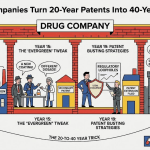
Evergreening in the orphan drug context refers to repurposing an existing, often off-patent, molecule for a new rare disease indication to obtain a fresh seven-year ODE window, a new set of tax credits, and user fee waivers on what is commercially a mature product. The drug itself may require no new formulation work. The sponsor runs a small clinical trial, often in a patient population where placebo-controlled design is ethically or practically impossible, and files for orphan designation.
‘Salami slicing’ is a distinct but related tactic: artificially subdividing a patient population by genetic subtype, disease stage, or patient age to obtain multiple orphan designations for what is functionally the same indication. Each slice receives its own seven-year ODE. A sponsor who splits a disease into three designated subpopulations can theoretically accumulate overlapping exclusivity periods that extend effective market protection well beyond what any single patent or single ODE would provide.
The 2021 HHS OIG Report and Its Implications
A 2021 study by the Department of Health and Human Services Office of the Inspector General found that half of the 40 therapies with the highest combined Medicare Part B and Part D expenditures were orphan drugs, and a significant portion of those high-expenditure orphan drugs also had major non-orphan indications. The report did not conclude fraud, but it documented a systematic pattern: the FDA’s orphan incentive program was generating fiscal benefit for drugs whose primary commercial engine was non-orphan use.
For IP teams and compliance departments, this report is a benchmark for the regulatory scrutiny environment. An asset with orphan designation on a minor indication and dominant non-orphan revenue should be stress-tested for designation validity and tax credit defensibility. The relevant case law is developing rapidly.
The Catalyst v. Becerra Decision: Exclusivity Scope Under Fire
In 2021, the Eleventh Circuit decided Catalyst Pharmaceuticals Inc. v. Becerra, rejecting the FDA’s longstanding interpretation that ODE protects only the specific approved indication rather than the entire rare disease designated at the time of application. If the Catalyst interpretation were adopted broadly, a sponsor who obtained orphan designation for ‘Lambert-Eaton myasthenic syndrome’ and won approval for a specific symptom subset would hold exclusivity over the entire designated disease, blocking any competitor drug for the full seven-year window even if the competitor’s approved indication was clinically distinct.
The FDA stated its intent to continue tying exclusivity to approved uses rather than original designations. Congressional clarification through legislation has been discussed but not enacted as of April 2026. The doctrinal uncertainty persists.
For sponsors with active ODE positions, the Catalyst decision creates an argument for broader exclusivity scope that can be deployed against competitors seeking approval for related but clinically distinct indications within the same designated disease. For competitors and generic manufacturers, the same decision creates litigation exposure. Both sides need real-time tracking of the relevant case law and FDA guidance.
Investment Strategy Note: Assets in therapeutic areas where salami-slicing is prevalent (lysosomal storage disorders, metabolic enzyme deficiencies, neuromuscular conditions) carry higher regulatory risk than their current ODE positions suggest. Model a 15 to 25% probability haircut on projected exclusivity duration for assets in crowded designated disease categories.
7. Mark Cuban Cost Plus Drug Company: Business Model Anatomy
The Pricing Formula
MCCPDC’s published pricing formula is: acquisition cost plus 15% markup, plus a flat $5 pharmacy service fee, plus a $5 shipping fee. Every input is disclosed. The company posts acquisition costs publicly.
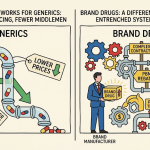
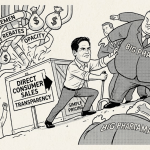
The transparency is the product. MCCPDC is not primarily competing on cost. It is competing on information. By making the acquisition cost visible, it exposes the spread between what drugs cost to source and what patients pay at traditional pharmacies using PBM-negotiated formularies. That exposure is uncomfortable for PBMs because the spread in generic drugs is often several hundred percent rather than the few percent that consumers assume.
Imatinib, the chronic myeloid leukemia generic, costs $34.50 for a 30-day supply through MCCPDC. The same drug through PBM-negotiated channels has been billed at $2,000 to $6,000 per month. Both prices reflect the ‘market price’ in their respective distribution channels. The difference is entirely a function of opacity and intermediary economics.
Quantified Savings: The Academic Record
A study published in JAMA Health Forum found that nearly 12% of generic prescriptions would have had lower out-of-pocket costs at MCCPDC versus traditional pharmacies using health insurance. The savings skewed heavily toward uninsured patients, with a median of $6.08 per prescription.
The savings in public programs are larger in absolute terms. A Journal of Urology analysis estimated $1.29 billion in potential annual Medicare Part D savings across just nine urological generic drugs at MCCPDC prices versus 2020 Medicare expenditures. A Journal of Clinical Oncology study projected $661.8 million in savings across seven generic oncology drugs.
These figures do not prove that MCCPDC can replace the traditional distribution system at scale. They prove that the pricing differential is not marginal. For 12% of generic prescriptions, the cost-plus model offers a lower total cost to the patient than insured pharmacy channels. That is not a rounding error.
The PBM Response
CVS launched its ‘Cost Vantage’ model in 2024, and Express Scripts launched ‘ClearNetwork,’ both styled explicitly as cost-plus alternatives. Neither discloses acquisition costs at the level of granularity MCCPDC provides. Industry analysts noted that ‘cost-plus’ labeled by a PBM and ‘cost-plus’ defined as disclosed acquisition cost plus fixed margin are not the same thing. The terminology has diffused into the industry without the underlying transparency mechanism.
Cuban’s critique of the PBM response is that the models are ‘cost-plus’ in name only because the underlying acquisition costs remain proprietary. Whether regulators or plan sponsors will distinguish between the two definitions is an open question with direct implications for PBM market share.
Key Takeaways: Section 7
MCCPDC’s competitive advantage is the disclosure of acquisition cost, not the margin percentage. Any competitor that does not disclose acquisition costs is offering a structurally different product regardless of the ‘cost-plus’ label.
The $1.29 billion Medicare savings projection for nine urological generics alone suggests that system-wide adoption of the MCCPDC model could produce fiscal savings measurable in the tens of billions annually.
PBM competitive responses have adopted the terminology without the mechanism. This gap is the primary risk to the established PBM business model as federal regulatory attention increases.
8. MCCPDC’s Rare Disease Strategy: From Generics to Manufacturing
The Dallas Manufacturing Facility
In 2023, MCCPDC opened a 22,000-square-foot sterile fill-finish manufacturing facility in Dallas. The facility uses robotic handling and AI-driven computer vision systems for quality control, and its design allows changeovers between drug types in approximately four hours. That production agility is the core strategic asset of the facility: it can pivot to address shortage drugs faster than a standard pharmaceutical contract manufacturer with rigid production scheduling.
The facility’s stated primary focus is injectable medications and pediatric cancer drugs, two categories with documented shortage histories and, in the pediatric oncology case, the kind of small patient populations that qualify for orphan consideration. The vertical integration from drug sourcing into manufacturing represents a structural shift in how the company can operate. Rather than relying entirely on manufacturers whose pricing reflects their own margin requirements, MCCPDC controls the production cost directly.
The manufacturing facility is explicitly designed to produce orphan drugs. This is not incidental. Oshmyansky’s original 2015 thesis was centered on rare disease drug affordability, and the manufacturing capability is the mechanism that makes affordable production of small-batch, complex medications practically feasible.
From 100 to 2,200 Drugs: Expansion Mechanics
MCCPDC launched with approximately 100 generic drugs in January 2022. By December 2023, the catalog had grown past 2,200. The expansion followed a specific sourcing strategy: identify generics where the spread between MCCPDC’s acquisition cost and traditional pharmacy retail price was large enough to produce meaningful patient savings, then add them to the catalog.
The company has stated intentions to expand into trade-name manufacturers, single-source branded drugs, and specialty biologics. The biologics category is where the orphan drug market concentration is highest. Whether MCCPDC can replicate its generic model for biologics depends on biosimilar interchangeability designations, FDA approval pathways for the specific molecules, and the manufacturing complexity of the relevant drug classes. The Dallas facility’s sterile fill-finish capability positions the company for some biologics categories, but complex biologics manufacturing requires additional infrastructure investment.
Investment Strategy Note: MCCPDC’s expansion into specialty biologics and manufacturing represents a long-duration strategic bet on reducing production costs for high-margin orphan drugs. Investors tracking orphan drug companies should model the scenario where a well-capitalized, PBC-structured manufacturer enters as a low-cost competitor within five to seven years for molecules whose ODE has expired. This is not speculative. It is the stated direction.
9. PBM Reform: Cuban’s Policy Roadmap
The Formulary Control Problem
Cuban’s published policy proposals go significantly beyond what MCCPDC does as a business. His core legislative ask on PBMs is this: remove formulary construction from PBM control entirely. Formularies, the lists of covered drugs that determine what patients pay for which medications, are currently constructed by PBMs with financial incentives that do not align with either patient outcomes or employer cost minimization.
PBMs earn rebates from drug manufacturers in exchange for favorable formulary placement. Those rebates are not fully disclosed to plan sponsors or patients. A drug might appear on a preferred tier not because it produces the best clinical outcome or the lowest net cost, but because its manufacturer offered the largest rebate. Cuban’s proposal is to transfer formulary construction to independent bodies with no financial relationship to manufacturers or distributors.
He also specifically targets ‘specialty drug’ classification as a pricing mechanism. A drug designated ‘specialty’ by a PBM faces a different cost-sharing tier with patients and often requires specialty pharmacy dispensing, which generates additional margin for PBM-affiliated specialty pharmacies. Cuban argues this classification is a ‘marketing tactic to inflate prices’ with no consistent clinical or regulatory definition. He is factually correct: ‘specialty drug’ has no standardized FDA or CMS definition, and PBMs apply the label using proprietary criteria.
340B Double-Dipping and Claims Data Transparency
Cuban specifically calls out 340B program abuse in his legislative testimony. The 340B program requires drug manufacturers to sell medications to qualifying health entities at a statutory ceiling price, typically 25 to 50% below commercial pricing. Some entities then dispense those drugs to patients while billing commercial insurance at commercial rates, capturing the spread. Cuban’s position is that full claims data transparency to employers, states, and manufacturers would expose this practice and allow remediation.
His proposals also include eliminating confidentiality clauses that currently prevent direct negotiation between plan sponsors and drug manufacturers, abolishing the Generic Cost Ratio mechanism that allows wholesalers to inflate generic prices through chargeback threats, and requiring that patients can fill prescriptions at any pharmacy rather than being directed to PBM-owned outlets.
The aggregate legislative agenda is comprehensive enough that its full adoption would restructure the economics of the three largest PBMs (CVS Caremark, Express Scripts/Cigna, OptumRx/UnitedHealth Group), which together control over 80% of U.S. prescription drug distribution.
10. The IRA’s Orphan Drug Exemption and the ORPHAN Cures Act
What the IRA Actually Does
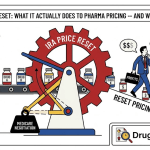
The Inflation Reduction Act of 2022 authorized CMS to negotiate Medicare drug prices directly with manufacturers for a defined list of high-expenditure drugs. The first negotiated prices took effect in 2026. The IRA includes an orphan drug exemption, but its scope is narrow: drugs approved for a single orphan indication are exempt from negotiation. A drug with two or more FDA-approved uses loses the exemption.
The intent behind the narrow exemption was to prevent high-revenue non-orphan drugs from sheltering behind a minor orphan indication to avoid negotiation. The unintended consequence is that it creates a disincentive for sponsors to seek approval for additional rare disease indications. A company whose drug treats one ultra-rare disease might deliberately decline to pursue a second rare disease indication, even if clinical evidence supports it, because adding a second indication triggers negotiation eligibility that could reduce pricing power on the primary indication.
This is not theoretical. Industry sponsors have stated explicitly in public comment that IRA negotiation exposure influences their indication expansion decisions.
The ORPHAN Cures Act (H.R. 946 / S. 1862)
H.R. 946 and its Senate companion S. 1862 propose broadening the IRA’s orphan drug exemption to cover drugs approved for multiple rare diseases, not just those with a single indication. The bills have bipartisan sponsorship and support from patient advocacy organizations including NORD.
The counterargument, made by Patients for Affordable Drugs and aligned groups, is that the ORPHAN Cures Act is a giveaway to pharmaceutical companies whose multi-indication orphan drugs are already commercially successful. Their position is that drugs with multiple rare disease approvals and high revenues can withstand negotiation without destroying innovation incentives.
The legislative resolution of this tension will shape orphan drug IP strategy for the next decade. IP teams tracking assets in late-stage development for second rare disease indications should model two scenarios: one where the ORPHAN Cures Act passes and the current exemption structure is preserved, and one where it fails and negotiation exposure applies to their second indication upon approval.
As of July 2025, the ORPHAN Cures Act was included in the Senate reconciliation megabill, suggesting meaningful probability of passage in some form.
Investment Strategy Note: For biotech companies with single-indication orphan drugs currently under IRA negotiation protection, the key IP strategic question is: does seeking a second orphan indication create negotiation exposure that exceeds the additional market revenue from that indication? Model this for each asset individually. The break-even analysis depends on the drug’s net revenue per patient, the size of the second indication population, and the projected negotiated price discount, which CMS has achieved at 38 to 79% off list in initial negotiations.
11. Catalyst v. Becerra: What the Exclusivity Litigation Means for IP Strategy
The FDA’s Prior Interpretation
For four decades, the FDA read the ODA’s market exclusivity provision to protect only the specific approved indication, not the entire rare disease category named in the original orphan designation. Under this reading, a competitor could obtain approval for a drug treating a different symptom cluster or patient subgroup within the same rare disease, even during an active ODE period, as long as the indication was clinically distinct.
This interpretation encouraged sponsors to pursue additional approvals within rare diseases because it did not risk triggering exclusivity for competitors who might want to follow a different clinical path. The FDA explicitly valued this dynamic as consistent with the ODA’s goal of maximizing available treatments for patients.
The Eleventh Circuit Decision
The Eleventh Circuit rejected the FDA’s interpretation in Catalyst Pharmaceuticals v. Becerra, holding that ODE attaches to the rare disease as designated at the outset, not to the specific approved indication. Under Catalyst, if a sponsor received designation for ‘Lambert-Eaton myasthenic syndrome’ and won approval for treatment of a specific LEMS presentation, that ODE would block any other manufacturer from obtaining approval for any treatment of LEMS, regardless of clinical distinction, for seven years.
The practical implications diverge sharply by stakeholder. Innovators with active ODE positions gain a broader exclusivity shield. Competitors seeking to enter with differentiated products face a higher legal threshold. Sponsors who have already obtained approval are now in a stronger position to challenge competitor applications within their designated disease space. Generic manufacturers planning ANDA filings timed around ODE expiration must model both the FDA’s continued preference for indication-specific exclusivity and the litigation risk that a competitor applies Catalyst to block the filing.
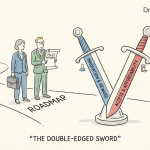
The FDA’s stated intent to continue applying indication-specific exclusivity preserves the prior administrative equilibrium, but federal courts do not require FDA agreement with their statutory interpretation. Absent legislative clarification, the jurisdictional split creates a geography-dependent legal environment where the same drug pair may face different exclusivity outcomes in different circuits.
12. Stakeholder Map: Industry, Patients, and Policymakers
Pharmaceutical Industry Position
PhRMA’s position is that orphan drug incentives remain necessary even at current profitability levels because the industry’s returns are not guaranteed at the outset of development. Average drug development costs are now estimated at $2.2 billion per asset in 2024 (Deloitte), with a 12% clinical trial success rate for drugs entering Phase I. Even accounting for orphan drug development costs averaging roughly 27% below non-orphan costs in clinical-phase spending (estimated at $166 million versus $291 million for non-orphan drugs), the concentration of that spending across a small patient population creates per-unit economics that justify current pricing.
The industry’s specific current concerns are: the IRA’s negotiation provisions, ‘Most Favored Nation’ pricing executive orders that reference international reference prices, and the Catalyst v. Becerra litigation uncertainty around ODE scope. PhRMA’s public position is that the ORPHAN Cures Act is essential to prevent the IRA from creating a de facto penalty on multi-indication rare disease development.
Patient Advocacy Organizations
NORD, Global Genes, the Celiac Disease Foundation, and disease-specific patient groups share a framework that accepts the ODA’s historical success in stimulating approvals while criticizing its failure to constrain prices. The 95% statistic is central to their argument: despite 40 years of incentives, 95% of known rare diseases still lack an FDA-approved treatment. By this measure, the ODA has succeeded in making some rare diseases commercially attractive while leaving the majority untouched.
Patient groups have been pragmatic in their partnerships. The Celiac Disease Foundation partnered formally with MCCPDC on medication access, citing shared commitment to affordability. This is not a marginal exception. As drug prices for rare diseases have risen, patient advocacy organizations have become more willing to engage with market alternatives that were once seen as outside the traditional advocacy framework.
NORD’s position on the IRA is nuanced: it supports the orphan drug exemption broadly but has expressed concern that the exemption’s narrow scope creates perverse incentives for indication development decisions.
Academic and Policy Community
The academic literature has moved toward examining ‘delinkage’ as a structural alternative to the current ODA model. Delinkage separates the financing of R&D from the pricing of the product. Under delinkage, government or a multilateral body funds drug development directly, and the resulting drug can be sold at marginal manufacturing cost because the development cost has been pre-paid. The R&D funder receives a ‘prize’ return, either through licensing revenue or through direct payment, rather than through monopoly pricing.
Delinkage remains primarily academic in the U.S. context. The regulatory and political infrastructure for large-scale R&D nationalization does not exist. But its intellectual credibility has grown, and it provides the conceptual vocabulary for proposals that fall short of full delinkage, including expanded NIH direct funding for orphan disease research, mandatory licensing provisions for publicly funded discoveries, and price caps tied to public R&D contribution.
13. Emerging Therapeutics: Gene Therapy Pricing and the Next ODA Crisis
The Gene Therapy Price Problem
Gene therapies are concentrated in rare diseases almost by definition. Their mechanism, delivering functional genetic material to correct a single-gene defect, targets conditions caused by specific mutations affecting small populations. Zolgensma (onasemnogene abeparvovec-xioi) for spinal muscular atrophy launched at $2.1 million per dose in 2019, the highest list price for any single drug at the time of its approval. Hemgenix (etranacogene dezaparvovec) for hemophilia B launched at $3.5 million per dose in 2022.
These prices are not traditional annual-cost-per-patient prices. They are one-time or single-course treatments. The health economics framing involves comparing the single payment to the net present value of lifetime disease management costs, which in some cases supports the price on a cost-effectiveness basis. But the practical access problem for payers is that a single dose triggering a $3.5 million payment is a liquidity event, not a recurring annual budget item.
The ODA was designed for a world where orphan drug development meant small-molecule synthesis and clinical trials in 200 to 2,000 patients. Gene therapies for rare diseases can treat populations of fewer than 1,000 patients globally. The development cost per patient in the clinical program can be staggeringly high even by orphan drug standards, but the per-dose price that results from that economics creates payer and access challenges the ODA’s pricing framework was never designed to address.
ODE and Patent Architecture for Gene Therapies
Gene therapy IP is structurally complex. A single gene therapy product may involve patents on the vector (typically an adeno-associated virus serotype), the therapeutic transgene, the manufacturing process, the delivery device, and the specific indication method of use. A layered portfolio covering all five categories can produce overlapping protection periods that extend effective market exclusivity significantly beyond any single patent’s term.
ODE applies to gene therapies on the same terms as small molecules. If a gene therapy receives orphan designation for a rare disease and wins approval, it holds seven years of ODE during which the FDA cannot approve a ‘same drug for the same disease.’ In the gene therapy context, ‘same drug’ analysis is genuinely complex: a therapy using the same vector but a different promoter sequence, or the same transgene in a different serotype, may or may not constitute a ‘same drug’ under the relevant FDA guidance.
This is an active area of regulatory development. IP teams working in gene therapy should model ODE scope conservatively (indication-specific, per FDA preference) and aggressively (disease-wide, per Catalyst) to bound the competitive exclusivity analysis.
Investment Strategy Note: Gene therapy assets in rare diseases combine the highest per-unit pricing in pharmaceutical history with the most legally ambiguous exclusivity framework currently in operation. The risk-adjusted IP value of these assets is high but requires scenario modeling across at least four variables: vector patent expiry, ODE scope interpretation (Catalyst vs. FDA guidance), manufacturing process patent coverage, and biosimilar/follow-on regulatory pathway development. None of these variables is stable over a ten-year investment horizon.
14. Patent Intelligence and Competitive Strategy in the Orphan Space
Why Standard Patent Tracking Fails in Rare Disease
Generic pharmaceutical IP analysis typically follows Orange Book patent listings for small molecules and Purple Book biosimilar data for biologics. Orphan drug analysis requires additional layers. ODE is not listed in the Orange Book but is tracked through FDA OOPD records. Pediatric exclusivity extensions are tracked separately. The Catalyst litigation creates a jurisdiction-specific exclusivity map that is different from the base ODE record.
A company planning ANDA entry against an orphan drug that also holds ODE must track at minimum: the base patent expiration date, any Patent Term Extension filing and grant, New Chemical Entity exclusivity expiration, ODE expiration date, any pediatric study extension, and current litigation status in all relevant circuits.
Platforms like DrugPatentWatch aggregate and cross-reference these data streams, providing a consolidated view of effective exclusivity for specific drug-disease combinations. For orphan drug competitive intelligence, this aggregation is practically necessary because manual assembly from FDA, court dockets, and OOPD records is time-intensive and error-prone.
Paragraph IV Filing Strategy in Orphan Drug Markets
Paragraph IV certifications under Hatch-Waxman allow generic manufacturers to challenge patent validity or non-infringement before the innovator’s patent expires. Filing a Paragraph IV triggers a 30-month stay of generic approval if the innovator files suit within 45 days. In orphan drug markets, the strategic calculus for Paragraph IV filing is different from standard generic markets.
Patient population size limits the commercial prize for the generic entrant. In diseases with fewer than 10,000 U.S. patients, a successful Paragraph IV challenge may yield a generic market worth $20 to $50 million annually at generic pricing, which may not justify the litigation cost and 30-month stay. For orphan drugs with broader actual use despite narrow designated indications, the commercial case for Paragraph IV improves significantly.
Tracking Paragraph IV filings against orphan drug-containing patent estates is a leading indicator of competitive entry threat. Innovators should monitor ANDA filings with Paragraph IV certifications against their Orange Book listed patents at minimum quarterly, with litigation response readiness at 45 days per the Hatch-Waxman statute.
White Space Identification in ODA Designation Data
The OOPD public designation database provides searchable records of all orphan designations, their designated diseases, and their current status. Analyzing this database against approval records identifies diseases where designations exist but approvals have not followed, which is a map of unmet clinical need combined with existing development activity. For R&D teams and BD functions, this is a starting point for identifying in-licensing opportunities, partnership targets, or de novo development programs in diseases where the competitive landscape has not yet resolved.
15. Investment Strategy: Orphan Drug Assets in a Transparency-First Market
The New Pricing Risk Factor
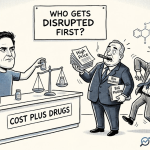
MCCPDC’s existence and growth has introduced a pricing risk factor that did not exist in orphan drug valuation models before 2022. For generic orphan drugs, including those that have passed ODE and patent expiry, MCCPDC provides a public price benchmark that is often 80 to 90% below current retail pricing. This benchmark is visible to payers, employers, and patients, creating formulary pressure that can accelerate generic substitution and price erosion.
Portfolio managers valuing orphan drug royalty streams or product portfolios that include off-patent orphan generics should apply a steeper post-exclusivity price erosion curve than historical norms suggest. The ‘sticky’ pricing dynamics of niche generic markets, where limited competition allowed prices to remain elevated for years post-patent expiry, are less durable when a well-capitalized, mission-driven competitor is actively sourcing and transparently pricing those same molecules.
The IRA Negotiation Discount as a Valuation Input
For drugs eligible for IRA negotiation (revenues above the Medicare expenditure threshold, fewer than nine years since NME approval for small molecules, fewer than 13 years for biologics), the negotiated price discount is now empirically observable. CMS achieved discounts ranging from 38% to 79% off list price in the first negotiation cycle. These discounts establish a plausible range for future negotiations.
IP teams and financial analysts valuing orphan drug assets that will become negotiation-eligible should use the low end of this range (38%) as the optimistic scenario and the high end (79%) as the stress scenario. Probability-weight each scenario by the asset’s likely negotiation sequencing, with priority given to highest-expenditure molecules.
Screening Criteria for Orphan Drug Asset Durability
A set of screening criteria for evaluating orphan drug IP durability in the current environment:
ODE years remaining beyond last patent expiry (ODE Moat Gap). Larger gaps indicate more durable pricing power absent Catalyst-style litigation. Presence of pediatric extension, adding six months to ODE and often reflecting deeper clinical investment in the asset. Indication concentration: a drug with a single orphan indication is IRA-exempt. A drug with two or more indications is not. The number of additional indications under development is a direct IRA exposure indicator. Clinical superiority defensibility: for drugs facing ODE expiration, how defensible is a clinical superiority claim that would block a competitor during the remaining ODE period? Manufacturing complexity: higher manufacturing complexity (sterile fill-finish, cell therapy, gene therapy) delays biosimilar or follow-on entry regardless of IP status. Paragraph IV exposure: whether the Orange Book patent estate has any active Paragraph IV challenges pending, and the status of those litigations.
16. Key Takeaways by Segment
For IP Teams
The Catalyst v. Becerra decision creates two legally valid interpretations of ODE scope that differ by jurisdiction. IP strategy must account for both. Indication-specific exclusivity (FDA preference) and disease-wide exclusivity (Catalyst) should both be modeled for any asset with active ODE. The interplay of NCE exclusivity, ODE, pediatric extension, and Patent Term Extension means effective market protection periods are rarely equal to any single exclusivity term. ODE expiration should be independently tracked from patent expiration for all orphan assets. The salami-slicing and evergreening practices that generated ODE value in the past are under regulatory and legislative scrutiny. Designation validity and tax credit defensibility should be audited for assets using overlapping or narrow indication strategies.
For Portfolio Managers
Orphan drug assets carry a new pricing risk factor introduced by MCCPDC’s transparent generic pricing. Apply steeper post-exclusivity price erosion assumptions for off-patent orphan generics. Model IRA negotiation exposure for all assets with multiple approved indications. The ODE Moat Gap, years of ODE remaining after last patent expiry, is a useful single metric for pricing power durability screening. Gene therapy assets require scenario modeling across at least four independent variables: vector patent expiry, ODE scope interpretation, manufacturing complexity, and follow-on regulatory pathway development.
For R&D and BD
The OOPD designation database is a white-space map for unmet rare disease need combined with existing development activity. Analysis of designations without approvals identifies partnership or acquisition targets. The IRA’s incentive structure now makes indication-expansion decisions financially complex. Adding a second rare disease indication to an IRA-exempt asset requires explicit analysis of the negotiation exposure that addition creates. PBC corporate structures are a viable model for mission-driven rare disease programs that prioritize access over margin maximization. Cuban’s model is not the only implementation, but it is the only scaled proof-of-concept currently operating.
17. FAQ
Q: How does MCCPDC’s pricing model apply to branded orphan drugs, which are not generics?
MCCPDC currently operates primarily in the generic space. Its stated expansion into specialty biologics and single-source branded drugs would require either voluntary manufacturer participation or biosimilar interchangeability designations that allow substitution. For branded orphan drugs under active ODE protection, MCCPDC has no current mechanism for offering a lower-cost alternative. The company’s relevance to branded orphan markets is indirect: it establishes a pricing transparency standard and a PBM-free distribution model whose logic, if extended, would reduce distribution margin on branded orphan drugs dispensed through specialty pharmacies.
Q: What distinguishes Orphan Drug Exclusivity from standard data exclusivity?
ODE is a market exclusivity right: the FDA cannot approve a ‘same drug for the same disease or condition’ from a different manufacturer for seven years after approval, regardless of whether the competitor has independently developed clinical data. Standard NCE data exclusivity (five years) prevents generic ANDA filers from relying on the innovator’s safety and efficacy data, but a competitor who runs its own clinical program can receive approval at any time. ODE is categorically stronger because it blocks approval regardless of the competitor’s independent data.
Q: What happens to an orphan drug’s market exclusivity if the approved indication expands beyond the original designated patient population?
The FDA can approve marketing for broader populations, including non-orphan uses, without automatically voiding ODE for the designated rare disease. The ODE protects the rare disease use specifically. However, if the drug’s primary commercial use shifts to non-orphan populations, it may become subject to IRA negotiation as revenues grow, even if ODE is still active for the rare disease indication.
Q: How does the ORPHAN Cures Act affect IRA negotiation strategy for multi-indication rare disease drugs?
If passed in its current form, the ORPHAN Cures Act exempts drugs approved for multiple rare diseases from IRA negotiation, not just single-indication drugs. This would eliminate the disincentive to pursue additional rare disease indications that the current narrow exemption creates. For companies with drugs in late-stage development for a second rare disease indication, passage of the Act would significantly improve the financial case for proceeding. IP and regulatory strategy teams should track the reconciliation bill’s progression, as the Act’s Senate inclusion as of mid-2025 gave it meaningful near-term legislative probability.
Q: What is the practical impact of Cuban’s proposals for PBM formulary reform on orphan drug market access?
Orphan drugs are frequently classified as ‘specialty’ drugs, which places them in high cost-sharing tiers that create patient access barriers. If formulary construction shifted to independent bodies without rebate incentives, specialty drug tier assignment would need to rest on clinical criteria rather than rebate economics. In practice, this could improve patient access by reducing cost-sharing for orphan drugs whose specialty classification reflects PBM rebate dynamics rather than clinical complexity. It could also reduce the formulary leverage that large PBMs exercise over orphan drug manufacturers during contracting negotiations.
This analysis reflects publicly available data current as of April 2026. Regulatory, legislative, and litigation developments referenced are subject to change. This content is for informational purposes and does not constitute legal, financial, or investment advice.
Patent data sourced from DrugPatentWatch, FDA OOPD, Orange Book, and Purple Book. Statutory text from 21 U.S.C. § 360aa-360ee. Legislative status from Congress.gov.