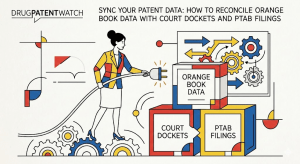
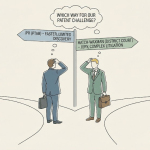
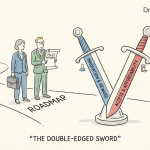
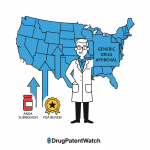
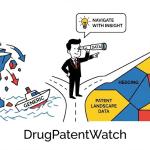
The pharmaceutical industry manages intellectual property through three disconnected systems. The Food and Drug Administration (FDA) maintains the Orange Book to track patents that brand manufacturers claim are relevant to their drugs. The federal court system records the actual litigation that erupts when a generic company challenges those patents. The Patent Trial and Appeal Board (PTAB) at the United States Patent and Trademark Office (USPTO) serves as a venue for technical challenges to patent validity. I see companies fail because they treat these as separate silos. They are not. They are parts of a single, coordinated struggle for market exclusivity. To win, you must reconcile these data sets into a single view.
The cost of a data mismatch is high. Relying on the Orange Book alone gives you a static, often outdated view. It does not show you if a patent has been challenged at the PTAB or if a district court judge has issued a scheduling order that shortens your launch window. Integrating these signals is the only way to build a predictive model of generic entry. This report establishes a framework for that integration, moving from raw data extraction to strategic intelligence.
The Data Fragmentation Problem
The primary challenge in pharmaceutical business intelligence is the lack of a shared primary key across regulatory, legal, and patent systems. The FDA identifies products by New Drug Application (NDA) numbers.1 The USPTO identifies intellectual property by patent numbers. The courts identify disputes by civil action numbers.2
I have found that linking these entities requires a relational map. This map must connect an NDA to its listed patents, then connect those patents to any active district court cases or PTAB petitions. Platforms like DrugPatentWatch do this by aggregating these signals into a unified interface.3 Without this synthesis, you are looking at fragments of a picture.
The financial risk of missing a connection is significant.
The average cost of patent litigation through trial was approximately $3 million in 2023, but in the pharmaceutical sector, that figure can easily climb to $4 million, with some cases involving damages awards exceeding a staggering $2 billion.4
The Orange Book Registry
The Orange Book, formally known as Approved Drug Products with Therapeutic Equivalence Evaluations, is the starting point for any Abbreviated New Drug Application (ANDA) strategy.5 It lists the patents that a brand manufacturer declares relevant to a drug’s active ingredient, formulation, or method of use.6
A brand manufacturer lists patents in the Orange Book to put the market on notice. This listing is a prerequisite for asserting a patent in a Hatch-Waxman suit.8 If a brand company fails to list an eligible patent, it cannot enforce that patent through the Hatch-Waxman framework. I have seen companies err on the side of over-inclusion to protect their market share, though this practice now attracts regulatory scrutiny.8
The Orange Book identifies the patents you must overcome. For each listed patent, a generic applicant must provide a certification. These certifications determine the timing of generic entry.
Certification
Legal Claim
Approval Timing
Paragraph I
No patent information is listed in the Orange Book
FDA can approve the ANDA immediately 6
Paragraph II
The listed patent has already expired
FDA can approve the ANDA immediately 6
Paragraph III
The applicant will wait until the patent expires
FDA can approve only after patent expiration 6
Paragraph IV
The patent is invalid or will not be infringed
FDA approval is delayed if the brand sues 6
Paragraph IV Certifications
The catalyst for nearly all Hatch-Waxman litigation is the Paragraph IV certification. When a generic manufacturer submits an ANDA, it represents to the FDA that the listed patent is invalid or will not be infringed by its product.2
This filing is a “constructive” act of infringement under 35 U.S.C. § 271(e)(2).2 It allows the brand manufacturer to sue the generic company before any actual product has been sold. This legal fiction is the engine that drives the pharmaceutical industry’s patent disputes.
When a generic applicant makes a Paragraph IV certification, it must notify the brand manufacturer within 20 days of the FDA filing.2 This notice starts a 45-day clock. If the brand manufacturer sues within that window, they trigger a regulatory stay.9 If they do not sue, the FDA can proceed with the generic approval process.
The 30-Month Stay
The 30-month stay is the most powerful tool in the brand manufacturer’s arsenal. It bars the FDA from authorizing generic entry until the stay period expires or the litigation is resolved in favor of the generic company.9
This stay gives the brand manufacturer and the patent holder time to assert their rights in court before a competitor reaches the market.1 I have observed that this period is often a reasonable amount of time for a patent case to resolve, though the FDA can approve the generic drug if the stay expires before the trial ends. If that happens, the generic company can launch “at-risk,” meaning they enter the market while facing the threat of massive damages if they eventually lose the case.9
The stay does not stop the FDA’s internal review. The agency continues to evaluate the safety and efficacy of the generic application.11 The stay only prevents the approval from becoming effective. Recent data shows that the 30-month stay has little effect on some drugs because the FDA review process itself often takes more than 30 months.11
NCE-1 Timing Strategies
For New Chemical Entities (NCEs), the timing of a Paragraph IV certification is restricted. A generic company cannot submit an ANDA for five years after the NCE’s approval. However, there is an exception. If the ANDA contains a Paragraph IV certification, the generic can file at the four-year mark. This is known as an NCE-1 filing.3
The race to file on the “first day of year four” is a coordinated event. Being the first to file is mandatory for companies seeking the 180-day exclusivity prize.3 This prize allows the first successful challenger to capture the majority of a product’s lifetime profit. I use DrugPatentWatch to track these NCE-1 dates because even a one-day error can result in a company losing its first-filer status.
180-Day Exclusivity and Forfeiture
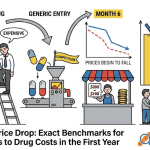
The 180-day exclusivity period is the primary reward for generic firms that challenge branded drug patents.3 It is a six-month window of limited competition. During this time, the first-filer can price its product at a 10% to 20% discount compared to the brand price. This allows the generic company to capture massive market share while maintaining high margins.3
The value of this period is rooted in price decay. Once multiple generics enter the market, the price of the drug plummets. The 180-day window often accounts for 60% to 80% of a generic drug’s total lifetime profit.3
This exclusivity is not guaranteed. It can be lost through several forfeiture triggers.
Failure to Market: The applicant fails to market the drug within 75 days of a final court decision or 30 months after submission.3
Withdrawal: The applicant withdraws the ANDA or the FDA deems it withdrawn.3
Amendment: The applicant amends the Paragraph IV certification.3
Failure to Obtain Approval: The applicant fails to obtain tentative approval within 30 months.3
Managing this “forfeiture minefield” requires constant monitoring of the FDA’s Paragraph IV list and the progress of the underlying litigation.3
District Court Litigation Realities
Once a suit is filed, the conflict moves into the federal district courts. Most cases land in specialized jurisdictions like the District of Delaware or the District of New Jersey.12 Reconciling these dockets requires an understanding of how judges manage Hatch-Waxman cases.
District courts use scheduling orders to govern the exchange of information.12 A typical order requires the generic company to produce its entire ANDA to the brand manufacturer upon the filing of a responsive pleading. The brand manufacturer must then provide a “Preliminary Disclosure of Asserted Claims,” listing every claim of every patent they allege is infringed.12
The generic company counters with “Invalidity Contentions.” These identify the prior art—previous patents or publications—that they believe make the brand’s patent invalid.12 This exchange of information is the core of the trial. I have noticed that the specific patents and claims asserted often change as the case progresses. A brand manufacturer might drop certain claims if they believe those claims are weak. I track these dropped claims because they often signal where the patent fortress is most vulnerable.7
PTAB: The Parallel Battlefield
While district courts decide infringement and validity, the PTAB provides a faster, cheaper venue for challenging a patent’s validity.13 These proceedings, created by the America Invents Act, include Inter Partes Review (IPR) and Post-Grant Review (PGR).13
An IPR petition can be filed by almost anyone other than the patent owner.13 It is the most common PTAB proceeding, accounting for 97% of all petitions.13 However, IPR is limited. You can only challenge a patent based on other patents or printed publications.13
PGR is broader. It allows challenges based on any ground of invalidity, including lack of written description or enablement.13 But PGR has a narrow window. You must file within nine months of the patent being granted.13 I see PGR being used more frequently for biologic patents than for traditional small-molecule drugs.15
IPR and PGR Statistical Divergence
The success of a patent challenge depends heavily on the forum. Many people assume the PTAB is a graveyard for patents, but the data for Orange Book drugs tells a more nuanced story.
Metric
PTAB (IPR)
District Court
All Claims Invalidated
23%
24% 16
At Least One Claim Survived
77%
76% 16
For small-molecule drugs, the invalidation rates at the PTAB and in district court are almost identical. This contradicts the conventional wisdom that the PTAB is a significantly easier venue for challengers. I have found that compound patents, which cover the active ingredient, are almost impossible to invalidate in either venue.16 Not a single compound patent for an Orange Book drug was completely invalidated at the PTAB in one major study.16
Small Molecule versus Biologic Vulnerability
The risk profile changes when you look at biologics. Biologic patents are significantly more fragile at the PTAB than Orange Book patents.
Outcome in Final Written Decision
Orange Book Patents
Biologic Patents
All Claims Unpatentable
~45%
~70% 13
All Claims Patentable
~50%
~21% 13
This divergence is striking. I attribute it to the types of patents being challenged. Orange Book patents often focus on simple compounds or formulations. Biologic patents cover complex manufacturing processes and dosing regimens that are harder to defend against the broader grounds of attack available in PGR.13 If you are an investor in biologics, you must recognize that your IP is more vulnerable than that of a traditional pharma company.
The FTC and Improper Listing Risks
The Federal Trade Commission (FTC) is now a major player in pharmaceutical patent strategy. The agency has issued a policy statement warning that it will scrutinize “improper” Orange Book listings as unfair methods of competition.18
An improper listing occurs when a manufacturer includes a patent in the Orange Book that does not claim the drug or a method of using it.18 The FTC is particularly focused on device patents—such as those for inhaler caps or autoinjectors—that do not involve the drug’s active ingredient.8
The consequences of improper listing are now financial. In 2025, Teva Pharmaceuticals agreed to pay $35 million to settle a class-action lawsuit alleging that its ProAir HFA inhaler patents were improperly listed.8 This settlement turned a theoretical regulatory risk into an economic reality. I have observed brand sponsors rapidly delisting products from the Orange Book to avoid this liability.8
Settlement Reporting and MMA Requirements
Most pharmaceutical patent cases do not end in a trial verdict. They end in a settlement. In 2023, 40% of all patent litigation cases were settled before trial.10
These settlements are regulated by the Medicare Prescription Drug, Improvement, and Modernization Act of 2003 (MMA).20 The MMA requires brand and generic companies to file their settlement agreements with the FTC and the Department of Justice within ten days of execution.21
The FTC monitors these filings for “reverse payment” settlements. This occurs when a brand manufacturer pays a generic company to stay out of the market.22 These payments can take many forms, such as “side deals” where the brand supplies the generic with an unrelated drug or agrees not to launch an authorized generic.23 I track these settlements through the FTC’s annual reports, which show that while reverse payments have become less common, complex marketing agreements are on the rise.22
Parsing and Cleaning Litigation Data
Transforming raw litigation data into a clean database is an engineering challenge. Court dockets are full of unstructured text and heterogeneous XML formats.10 You must parse these records to extract structured fields like filing dates, Markman hearing dates, and final dispositions.
One of the biggest hurdles is the “Sealed Record Problem.” In pharma litigation, parties often seal documents that contain confidential strategic information.10 This leaves gaps in the public record. Reconciling these gaps requires a hybrid methodology. I look for secondary signals—like a sudden drop in a patent’s claim count or a change in a judge’s scheduling order—to infer what is happening in the sealed portions of the case.7
Disambiguation is also critical. A single company can appear in court records under dozens of different names. Pfizer, Pfizer Inc., and Pfizer, Inc. must all be mapped to a single unique identifier to track the company’s litigation success rate accurately.10
The Role of Integrated Intelligence Platforms
The sheer volume of data makes manual monitoring impossible. A modern competitive intelligence function requires a “hybrid intelligence” architecture. This architecture leverages platforms like DrugPatentWatch to handle the heavy lifting of data collection and cleaning.25
These platforms allow you to:
Monitor Paragraph IV challenges as they are filed.
Track the status of 30-month stays and potential launch dates.
Identify “gatekeeper” patents that are blocking generic entry.25
Consolidate patent information from over 130 countries, providing a global view that the Orange Book misses.25
I have found that the most effective teams use these tools to build a predictive model. They don’t just ask “what happened?” They ask “what is likely to happen next?”.25
Strategic Business Intelligence Workflows
A data-driven playbook for pharmaceutical disputes involves several stages. It starts with parsing the Orange Book to identify the patents in suit. Then, it moves to the court dockets to track the progress of the litigation. Finally, it incorporates PTAB data to assess the vulnerability of the patents.
I use this integrated view to value assets. If a brand manufacturer has a core compound patent that is not being challenged at the PTAB, that asset is likely secure. If a brand is defending a weak formulation patent against multiple IPR petitions and a district court case, the generic launch date is likely much closer than the patent’s expiration date suggests.13
By moving beyond anecdotal evidence and legal intuition, you can build a quantitative framework for assessing risk.10 This allows your organization to move from reactively defending against legal threats to proactively modeling the future.
Key Takeaways
Orange Book data is a starting point, but it often contains errors in expiration dates and fails to track early expirations due to non-payment of maintenance fees.5
The 30-month stay is a powerful tool, but it only applies if the brand manufacturer sues within 45 days of a Paragraph IV notice.9
The NCE-1 filing on the first day of year four is the mandatory entry point for securing 180-day exclusivity.3
Compound patents are almost never invalidated at the PTAB, while biologic patents are highly vulnerable, with a 70% invalidation rate in final written decisions.13
Hatch-Waxman litigation expenses are deductible as ordinary business expenses, providing significant tax relief for generic companies.28
The FTC is aggressively challenging improper Orange Book listings for devices, leading to major settlements and delisting of patents.8
Reconciling data across the FDA, USPTO, and federal courts is the only way to predict generic launch dates accurately.30
180-day exclusivity can be forfeited if a generic company fails to obtain tentative approval within 30 months.3
“Skinny labeling” allows generics to launch for unpatented uses, but broad brand “use codes” often block this pathway.31
Settlement agreements must be reported to the FTC, which monitors them for anti-competitive “reverse payments”.20
FAQ
How do I find out if a patent has been challenged at the PTAB? You must search the USPTO’s PTAB records using the patent number. I use aggregation platforms to see these petitions linked directly to the drug’s NDA number. An IPR petition filed against a patent today is a leading indicator of future litigation.3
What happens if a brand manufacturer misses the 45-day window to sue? If the brand manufacturer does not file suit within 45 days of receiving the Paragraph IV notice, there is no 30-month stay. The FDA can approve the generic application as soon as its technical review is complete.27
Why are biologic patents invalidated more often than small-molecule patents? Biologic challenges often use Post-Grant Review (PGR), which allows for broader grounds of attack like lack of enablement. Small-molecule patents are usually challenged via IPR, which is limited to prior art in the form of patents and publications.13
Can I deduct the cost of patent litigation from my taxes? Yes. The Federal Circuit ruled in the Actavis case that Hatch-Waxman litigation expenses are deductible as ordinary business expenses. You do not have to capitalize these costs as part of the FDA approval process.28
How can I identify a “skinny label” opportunity? You must compare the brand’s method-of-use patents in the Orange Book with the FDA-approved indications for the drug. If an indication is not covered by a patent, a generic can file a Section viii statement to seek approval for that use only.31