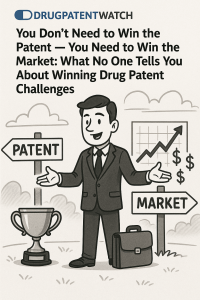
Achieving and sustaining market leadership in the pharmaceutical industry extends significantly beyond merely securing or defending patents. While intellectual property protection is a foundational element, true market victory is fundamentally defined by an organization’s adeptness in navigating complex regulatory frameworks, executing agile commercial strategies, optimizing operational readiness, and, critically, prioritizing patient access amidst intense competitive pressures.
For brand companies, market success necessitates proactive lifecycle management, including strategic pricing adjustments, the judicious launch of authorized generics, and the cultivation of robust patient loyalty programs. These measures are essential to mitigate the inevitable revenue erosion that follows patent expiry. Litigation, even when resulting in a legal affirmation of patent rights, frequently serves as a tactical delay to maximize short-term revenue rather than guaranteeing enduring market dominance.
Conversely, generic companies achieve their market objectives by aggressively challenging patents, strategically leveraging regulatory incentives such as the 180-day exclusivity period, and ensuring rapid manufacturing and supply chain readiness. Their commercial triumph is often realized through strategic settlements that facilitate early market entry, underscoring a focus on commercial gain rather than solely legal vindication.
The overarching conclusion is that the pharmaceutical market functions as a dynamic ecosystem where legal battles represent only one facet of a broader, integrated strategy for market leadership. Sustained success hinges upon a profound understanding of market access dynamics, comprehensive competitive intelligence, and an adaptive approach to product lifecycle management.
1. Introduction: Beyond the Patent Battleground – Redefining Success in Pharma
The conventional understanding of success in the pharmaceutical industry often equates it directly with the acquisition and defense of patent protection. This perspective is rooted in the fundamental role patents play in incentivizing the colossal research and development (R&D) investments required to bring new drugs to market, granting innovators a temporary monopoly to recoup these substantial expenditures.1 However, this traditional view overlooks a critical reality: the effective patent life of a drug is frequently much shorter than the statutory 20 years, primarily due to the extensive time consumed by development and regulatory review processes.6 The premise of this report, “You Don’t Need to Win the Patent — You Need to Win the Market,” directly challenges this narrow focus, asserting that legal victories alone are insufficient for achieving and sustaining market dominance.
The pharmaceutical landscape is characterized by an inherent tension between fostering innovation through market exclusivity and ensuring affordable public access to essential medicines.1 This fundamental dynamic fuels aggressive patent challenges and shapes competitive strategies. Landmark legislation, such as the Hatch-Waxman Act of 1984 and the Biologics Price Competition and Innovation Act (BPCIA) of 2010, have profoundly reshaped this environment. These acts established abbreviated pathways for the approval of generic drugs and biosimilars, respectively, thereby dramatically intensifying competition in the market.14 Furthermore, the introduction of alternative dispute resolution mechanisms, notably Inter Partes Review (IPR) before the United States Patent and Trademark Office (USPTO), has added another layer of complexity to the patent landscape by offering faster and potentially more effective avenues for challenging patent validity.22
This report aims to move beyond the confines of courtroom narratives to explore the multifaceted strategies that truly define market success in the pharmaceutical sector. It provides an in-depth analysis for executives, investors, and strategists seeking to navigate this complex and high-stakes environment, demonstrating that a holistic view of market dynamics is paramount.
2. The Legal and Regulatory Frameworks of Drug Patent Challenges
This section delineates the primary legal and regulatory mechanisms governing drug patent challenges, illuminating their intended purposes and the strategic implications they hold for market competition.
2.1. The Hatch-Waxman Act: Accelerating Generic Entry
Enacted in 1984, the Hatch-Waxman Act (formally, the Drug Price Competition and Patent Term Restoration Act) was designed to strike a delicate balance: incentivizing brand-name drug innovation while simultaneously accelerating the entry of generic drugs into the market.14 A pivotal component of this legislation was the establishment of the Abbreviated New Drug Application (ANDA) pathway. This pathway permits generic manufacturers to seek FDA approval by relying on the safety and efficacy data already established by a brand-name drug, provided they can demonstrate bioequivalence to the reference product.18
A cornerstone of the Hatch-Waxman framework is the Paragraph IV Certification. This mechanism allows a generic applicant, when filing an ANDA, to assert that a brand-name drug’s patent, listed in the FDA’s “Orange Book,” is either invalid, unenforceable, or will not be infringed by their proposed generic product.19 The filing of a Paragraph IV certification triggers a notification requirement, obliging the generic applicant to inform both the brand company and the patent holder.18 If the brand company initiates a patent infringement lawsuit within 45 days of receiving this notice, an automatic 30-month regulatory stay is imposed. During this period, the FDA is generally precluded from granting final approval to the generic application.18
This 30-month regulatory stay, while often perceived as a brand manufacturer’s defensive maneuver to delay generic entry, serves a dual purpose. For generic companies, this period is not merely a passive waiting game; it represents a predictable and critical window for strategic preparation. During this time, generic manufacturers can finalize their commercial launch plans, develop full-scale manufacturing capacity, ensure supply chain readiness, and engage in negotiations with retail and wholesale partners.27 This allows them to be fully poised for rapid market entry immediately upon the resolution of litigation or the expiration of the stay. Thus, a legal “delay” for the brand transforms into a strategic commercial advantage for the generic, enabling a swift market capture.
A significant incentive within the Hatch-Waxman Act is the 180-day exclusivity period. This valuable right is granted to the first generic company to file a substantially complete ANDA containing a Paragraph IV certification and subsequently prevail in the ensuing lawsuit (or achieve a favorable settlement).3 During these 180 days, the FDA is legally prohibited from approving any other generic applications for the same product, effectively creating a temporary duopoly between the brand and the first generic entrant.21 This phase is consistently identified as the most profitable for the generic company, allowing it to capture substantial market share at prices that are only moderately discounted from the brand’s pricing.21 The substantial economic potential of this 180-day exclusivity period profoundly influences generic companies’ strategies. While generic firms may win approximately 48% of Paragraph IV trials 32, their overall “success rate”—which includes settlements and dropped cases—climbs significantly to 76%.32 This disparity suggests that generic companies are not solely pursuing a definitive court victory but rather an outcome, often a negotiated settlement, that grants them access to this highly lucrative period of market exclusivity. The market “win” for a generic is therefore achieved through securing this temporary duopoly, even if the brand technically “wins” the patent in a legal sense.
2.2. The Biologics Price Competition and Innovation Act (BPCIA): Biosimilar Pathways
The Biologics Price Competition and Innovation Act (BPCIA), enacted in 2010 as part of the Affordable Care Act, established an abbreviated approval pathway for biosimilars, mirroring the intent of Hatch-Waxman for small-molecule generics.16 Biologics are complex, large-molecule drugs derived from living organisms, making their biosimilar counterparts “highly similar” but not identical to their reference products. This inherent complexity necessitates a more stringent approval process for biosimilars compared to generic small-molecule drugs.16
To incentivize the substantial R&D investments required for developing novel biologics, innovator companies are granted a 12-year exclusivity period from the date of FDA approval.16 This finite, albeit longer, exclusivity period compels innovators to adopt an aggressive, forward-looking patent strategy. Companies are advised to “not only maximize their market dominance but also prepare for the legal and competitive battles that will follow”.16 This preparation involves strategically constructing a robust portfolio of patents that extend beyond the core composition of the drug to include aspects such as formulation, delivery systems, and manufacturing processes.16 This multi-layered patenting approach aims to create a formidable “fortress” of interlocking intellectual property designed to deter or complicate biosimilar entry, even after the core biologic patent eventually expires. The legal “win” for biologic innovators thus becomes about creating comprehensive barriers to entry for the
entire product ecosystem, not just the initial molecule.
The BPCIA also includes a structured, and often litigious, process for managing patent disputes between innovator biologics and biosimilar applicants, commonly referred to as the “patent dance”.16 This “dance” commences with the biosimilar applicant providing detailed information about their product’s composition and manufacturing process to the original biologic manufacturer early in the application process.16 This early disclosure offers a strategic opportunity for biologic innovators to assess potential infringement of their patents and proactively identify which claims might be challenged. In turn, biosimilar developers gain the opportunity to dispute infringement claims or directly challenge the validity of the innovator’s patents. While designed to resolve disputes preemptively, this process frequently culminates in litigation as innovators seek to enforce their patents and biosimilar developers aim to clear the path for market entry.16
2.3. Inter Partes Review (IPR): An Alternative Challenge Forum
Enacted in 2012 as part of the America Invents Act, Inter Partes Review (IPR) provides an administrative procedure for challenging the validity of U.S. patents before the Patent Trial and Appeal Board (PTAB) at the USPTO.22 This mechanism allows third parties, most commonly generic manufacturers, to contest patentability based solely on grounds of novelty (35 U.S.C. § 102) or non-obviousness (35 U.S.C. § 103), using only prior art consisting of patents or printed publications.23
IPRs offer several distinct advantages for challengers compared to traditional district court litigation. They are generally faster and less expensive, making them a more accessible avenue for patent challenges.22 The PTAB has demonstrated a high success rate in invalidating patent claims, with estimates around 60-70% in some cases.24 Companies strategically employ IPRs to clear a path for their own products, to defend against patent infringement lawsuits, or as a potent negotiation tool in broader disputes.22
The ability of IPRs to directly impact market dynamics is significant. Successful IPR proceedings have demonstrably led to “dramatic price reductions” (up to 98%) and “accelerated market entry” for generic versions of drugs such as rivastigmine (for dementia) and glatiramer acetate (for multiple sclerosis).25 This direct cause-and-effect relationship between a legal challenge and a market outcome highlights how IPRs serve as a powerful, accessible mechanism for generic companies to influence market prices and patient access by invalidating patents. This means that a brand’s legal “win” in a district court, while important, can be undermined or rendered commercially irrelevant by a successful IPR in a different forum. The market “win” can thus be achieved through a distinct legal pathway.
2.4. Roles of FDA and USPTO in Patent Disputes
The Food and Drug Administration (FDA) plays a crucial, yet specific, role in the context of drug patents. Its primary responsibility is drug approval and the maintenance of the “Orange Book,” which lists patent information submitted by new drug application (NDA) holders for brand-name drugs.18 It is critical to understand that the FDA explicitly states it “does not enforce patents, or evaluate patent validity or infringement”.18 Instead, the FDA’s function is to use the patent and exclusivity information provided by brand companies, combined with certifications from generic drug applications (ANDAs), to inform when generic drugs can legally enter the market.18
The United States Patent and Trademark Office (USPTO) is responsible for granting patents and is focused on ensuring that the patent system incentivizes and protects investments in life-saving drugs and biologics. Concurrently, the USPTO aims to prevent the improper use of the patent system to delay the availability of more affordable generic drugs and biosimilars.33 The USPTO also collaborates with the FDA on drug and biologic patent policy.33
A significant 2024 report issued by the USPTO debunks several common narratives often associated with pharmaceutical patenting practices.34 The report found that simply counting the number of granted patents associated with a product offers no meaningful correlation with the timing of generic entry or the actual period of market exclusivity. The average market exclusivity observed in the study was only 11.4 years, significantly less than the statutory 20-year patent term.34 Furthermore, the report clarified that “follow-on” patents, which cover improvements to an existing product (e.g., new formulations or delivery methods), do not inherently extend the market exclusivity period of the
original drug or prevent the introduction of generics for that original version once its core patents expire. These patents merely protect the specific improvement.34 The USPTO also affirmed that only
issued patents listed in the Orange Book, not pending or abandoned patent applications, provide exclusivity that impacts the timing of generic drug approval.34 Finally, the report noted that the practice of covering a single product with multiple patents is common across many complex technology industries and is not unique or nefarious to the pharmaceutical sector.34
These findings highlight a crucial distinction: a brand company may “win” numerous patents from the USPTO, but if these patents are not relevant for Orange Book listing, or if they are “follow-on” patents that do not block the original formulation, they offer no market exclusivity for the core product. This creates a critical disconnect where a legal victory in patent granting does not automatically translate to a market victory in exclusivity. The FDA’s limited role in patent enforcement means that the ultimate market impact is determined by regulatory listing and the outcomes of subsequent litigation, rather than solely by the sheer number of patents issued.
Table 1: Key Mechanisms of Drug Patent Challenges in the U.S.
Mechanism
Purpose/Goal
Key Features/Timelines
Strategic Implication for Brands
Strategic Implication for Generics
Hatch-Waxman Act
Balance innovation incentives with rapid generic entry and affordability.
ANDA Pathway: Abbreviated approval process based on bioequivalence.
Develop robust primary and secondary patents; manage Orange Book listings.
Identify and challenge vulnerable patents; demonstrate bioequivalence.
Paragraph IV Certification
Assert patent invalidity/non-infringement to enable early generic entry.
Generic notifies brand within 20 days of ANDA acceptance. Brand has 45 days to sue.
File suit within 45 days to trigger 30-month stay; leverage stay for lifecycle management.
Proactive filing to secure first-filer status; prepare for litigation/settlement.
30-Month Regulatory Stay
Provide brand time for litigation; prevent premature generic approval.
Automatic stay triggered if brand sues within 45 days of PIV notice.
Utilize period for product hopping, authorized generics, patient conversion, and settlement negotiation.
Use period for manufacturing scale-up, supply chain readiness, and commercial launch planning.
180-Day Exclusivity
Incentivize first generic challenger to contest patents.
Granted to first PIV filer who prevails/settles; FDA blocks other generics for 180 days.
Consider authorized generic launch to capture market share during duopoly.
Accelerate market entry and capture significant market share at higher prices.
Biologics Price Competition and Innovation Act (BPCIA)
Create abbreviated pathway for biosimilars; balance innovation with access.
aBLA Pathway: Abbreviated approval for “highly similar” biologics.
Proactively assess infringement; strategically select patents for litigation to delay entry.
Challenge innovator patents; design around claims; weigh litigation risks vs. settlement.
Inter Partes Review (IPR)
Provide faster, cheaper administrative challenge to patent validity.
Petition filed with PTAB; challenges based on novelty/non-obviousness using prior art.
Defend patents vigorously; consider parallel litigation; utilize as negotiation leverage.
Target weak patents; leverage PTAB’s technical expertise and speed to invalidate patents and accelerate market entry.
3. Defining and Measuring “Winning the Market” in Pharmaceuticals
Defining “winning the market” in the pharmaceutical sector extends far beyond the confines of legal victories in patent disputes. It fundamentally encompasses the successful commercialization, strategic communication, differentiated positioning, and sustained profitability of pharmaceutical products.35 This requires effectively reaching and influencing a diverse array of key stakeholders, including physicians, clinicians, and end-consumers.36 For brand companies, market success means maximizing market dominance and proactively preparing for competitive battles as patent exclusivity inevitably wanes.16 For generic manufacturers, it translates to achieving rapid market penetration and capturing substantial market share immediately upon entry.6
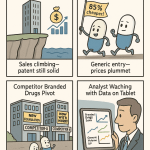
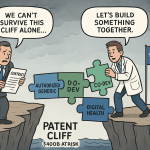
The pharmaceutical industry is currently facing an unprecedented “patent cliff,” with over $200-300 billion in annual revenue at risk through 2030 due to patent expirations.13 This phenomenon consistently leads to dramatic revenue and market share erosion for brand-name drugs, often resulting in an 80-90% loss within a year following generic entry.37 This consistent data underscores that even a legally robust patent provides only temporary protection. The true measure of market success for brand companies therefore shifts from maintaining an absolute monopoly to effectively managing this decline, transitioning patients to new formulations or authorized generics, and retaining a profitable market segment through sophisticated commercial strategies. For generic companies, success is precisely about capitalizing on this inevitable erosion through rapid and aggressive market capture. This redefines “winning” as an adaptive commercial response to the inherent, time-limited nature of patent protection.
3.2. Key Market Success Metrics in Pharmaceuticals
A comprehensive evaluation of market success in pharmaceuticals requires a multi-dimensional approach, incorporating financial, patient-centric, and operational indicators.
Financial Performance
Revenue and Market Share: These are direct and immediate indicators of commercial success.13 The projected loss of over $200-300 billion in annual revenue for brand-name drugs through 2030 13, coupled with the typical 80-90% market share loss within a year of generic entry 37, highlights the immense financial stakes involved in patent challenges and expirations.
Profitability: Key Performance Indicators (KPIs) such as gross margin, net profit, and return on investment (ROI) are crucial for assessing the financial health and viability of a company’s strategies.45 The 180-day exclusivity period granted to first-to-file generics is particularly profitable due to the ability to charge higher prices with limited competition, often accounting for the majority of the generic manufacturer’s return on investment.21
Patient Access and Outcomes
Market access is a critical component of pharmaceutical success, defined as the range of strategies, policies, and negotiations that ensure patients receive the right drug at the right time and at an affordable price.46 It bridges the gap between pharmaceutical innovation and actual patient care.47 This involves intricate negotiations with payers (e.g., insurance companies, national health services), distributors, and other healthcare providers to secure favorable reimbursement terms and ensure product availability.46
Key patient access metrics (KPIs) include:
New Scripts: A fundamental measure of the effectiveness of sales and marketing efforts, indicating initial physician adoption and patient uptake.49
Enrollments: Tracking patient enrollment in support programs provides an indicator of the program’s potential impact on new patient starts, overall access, and medication adherence.49
Engagement: Measures how long patients remain engaged with support programs, correlating directly with long-term medication adherence and sustained sales growth.49
Time to Fill (Speed-to-Therapy): This metric assesses the efficiency of processes like prior authorizations, which can otherwise delay treatment and lead to prescription abandonment.49
Refills: Analyzing refill patterns offers insights into medication adherence, which is vital for both patient health outcomes and sustained revenue.49
Covered Dispenses & Reimbursement Rates: These metrics indicate the level of insurance coverage for a drug and the quality of the pharmacy network, directly impacting patient affordability and access.49
The emphasis on patient access as a definitive measure of market success signifies a crucial evolution in the pharmaceutical industry’s definition of “winning.” Beyond merely achieving sales figures, true market success increasingly encompasses the ability to ensure broad patient reach, affordability, and adherence to treatment. This alignment of commercial goals with public health objectives suggests that companies prioritizing patient access are better positioned for long-term market sustainability and reputation, even when facing significant patent challenges.
Operational Excellence
Time-to-Market: A critical factor in a fiercely competitive landscape, where swifter market entry can provide a significant advantage.50
Supply Chain Optimization: This involves a systematic approach to improving material flow, information systems, and operational processes from raw material sourcing through final patient delivery. It requires balancing cost efficiency with stringent regulatory compliance, cold chain management, and life-critical delivery requirements.51
Productivity and Efficiency: KPIs in this area assess how effectively resources are utilized and how efficiently production targets are met, including the turnaround time for drug development.45
The importance of operational readiness cannot be overstated, particularly for generic companies. A legal victory in a patent challenge is only valuable if the company possesses the operational capacity to immediately manufacture and distribute the drug at scale.27 This means that operational excellence and supply chain optimization are not merely supporting functions but are critical, market-winning capabilities. A company might secure a patent victory but fail to capture the market if it cannot meet demand or distribute its product effectively, underscoring the non-legal dimensions of market success.
Compliance Monitoring
Adherence to the myriad of regulatory standards governing the pharmaceutical sector is non-negotiable.45 KPIs like audit pass rates and the frequency of adverse events are closely monitored to ensure compliance and maintain the highest standards of safety and quality.45
Table 2: Key Market Success Metrics in Pharmaceuticals
Category
Metric
Relevance to Market Success
Financial Performance
Revenue
Direct measure of sales and market presence.
Market Share
Indicates competitive standing and market penetration.
Profit Margin (e.g., Gross, Net, ROI)
Reflects financial viability and efficiency of operations.
Patient Access & Outcomes
New Prescriptions (New Scripts)
Measures initial adoption and physician prescribing behavior.
Patient Enrollments (in support programs)
Indicates uptake of patient support initiatives and potential adherence.
Patient Engagement & Adherence Rates
Crucial for long-term therapy success, patient outcomes, and sustained sales.
Time to Fill (Speed-to-Therapy)
Efficiency of market access processes (e.g., prior authorizations).
Covered Dispenses & Reimbursement Rates
Reflects insurance coverage, affordability, and payer acceptance.
Operational Excellence
Supply Chain Efficiency
Ensures timely and cost-effective delivery of products to market.
Time-to-Market (for new products/generics)
Critical for competitive advantage and capturing early market share.
Manufacturing Capacity & Readiness
Ability to meet market demand immediately upon approval.
Productivity & Operational Efficiency
Effective resource utilization and streamlined processes.
Intellectual Property & Innovation
Pipeline Health (new drug development)
Long-term sustainability and ability to replace expiring assets.
Patent Portfolio Strength
Foundation for market exclusivity and defense against challenges.
Compliance & Reputation
Compliance Rates (e.g., audit pass rates)
Adherence to regulatory standards, crucial for maintaining market presence.
Brand Recognition & Loyalty
Sustained preference for brand even after generic entry.
4. Strategic Playbook for Brand Manufacturers: Sustaining Dominance Post-Patent Challenge
Brand-name pharmaceutical companies deploy sophisticated, multi-layered strategies to sustain market dominance and mitigate revenue erosion as their core patents face challenges or approach expiration.
4.1. Proactive Lifecycle Management: Extending Product Value
A primary strategy involves “evergreening,” where brands actively seek to extend market exclusivity by applying for additional patents on various aspects of their existing drugs. These can include new formulations (e.g., extended-release versions), novel delivery methods, combinations with other drugs, isomers, metabolites, prodrugs, or new indications and methods of use.1 This practice often leads to the creation of
“patent thickets”—a dense web of numerous, overlapping patents covering a single product.12 These thickets are strategically designed to deter generic competition by increasing the cost and complexity of litigation for potential challengers.12
However, the USPTO’s 2024 report provides an important clarification regarding evergreening. While widely practiced, the report states that “follow-on” patents, which cover improvements to an existing product, do not inherently extend the market exclusivity period of the original drug or block generics from copying the original version once its core patents expire.34 These patents only protect the specific improvement. This apparent contradiction reveals a nuanced reality: while evergreening might create a formidable legal barrier—deterring some generic challenges due to increased litigation costs and complexity—its direct impact on extending the
market monopoly of the original product is often overstated. Brands may “win” more patents, but these victories primarily serve as a deterrent or protect incremental innovations, not necessarily the core product’s long-term market share. The market success here is about managing the rate of decline rather than preventing it entirely.
4.2. Commercial Defense: Retaining Market Share
Beyond patent strategies, brand manufacturers employ robust commercial defenses to retain market share. A key approach is the launch of Authorized Generics (AGs). This involves the brand company introducing its own generic version of the drug, often through a subsidiary or a third-party agreement.27 AGs offer several strategic advantages: they help brands capture a portion of the generic market, maintain manufacturing volume and efficiency, preserve relationships with distribution channels, and can potentially discourage more aggressive generic competition.55 This strategy has been shown to significantly slow revenue erosion, with some drugs retaining up to 50% market share post-patent expiry.40 This approach signifies a fundamental shift from pure patent defense to a market-centric strategy that acknowledges the inevitability of generic competition. Brands achieve market success not by preventing generic entry, but by strategically participating in the generic space themselves, thereby retaining a share of the post-exclusivity revenue and managing the “patent cliff” more effectively.
Brand companies also implement strategic pricing adjustments in anticipation of or response to generic entry, often lowering their prices to remain competitive.6 This can involve tiered pricing for different market segments, value-based pricing arrangements tied to clinical outcomes, and various rebate or discount programs.39 Furthermore,
patient loyalty programs are crucial for retaining existing patients and prescribers. These programs include copay assistance, financial support, medication adherence tools, disease management education, and patient communities.40 Strong brand recognition and consumer loyalty can prove valuable even when cheaper generic alternatives become available.9
4.3. Litigation and Settlement: Leveraging Legal Processes for Market Advantage
Brand manufacturers aggressively leverage legal processes to gain market advantage. In response to Paragraph IV certifications, they typically file patent infringement lawsuits to trigger the automatic 30-month regulatory stay.18 This is a strategic maneuver where the commercial benefit of delay often outweighs the outcome of the legal battle itself. Even if the brand ultimately “loses” the patent challenge in court (e.g., the patent is found invalid or not infringed), the delay provided by the 30-month stay and subsequent appeals can extend effective market exclusivity by months or even years, generating substantial additional revenue, particularly for blockbuster medications.13 This illustrates a critical aspect often overlooked: a brand can legally “lose” a patent case but still “win” commercially by delaying generic entry, thereby securing billions in additional revenue. This underscores that for brands, legal battles are frequently a means to a commercial end, where the value lies in the
delay rather than a definitive legal victory.
To avoid the uncertainties and costs of prolonged litigation, brand manufacturers may also enter into strategic settlement agreements with generic challengers.18 These agreements can include negotiated generic entry dates, licensing agreements (sometimes involving royalty payments), or, controversially, “pay-for-delay” agreements, which have faced significant antitrust scrutiny.9 Additionally, forward-thinking brand companies engage in
proactive patent vulnerability assessment. This involves conducting internal reviews to identify potential weaknesses in their patent portfolios before generic challenges arise, allowing them to develop preemptive counterarguments or remedial strategies.63
5. Strategic Playbook for Generic Manufacturers: Accelerating Market Entry and Capture
Generic pharmaceutical companies employ aggressive and highly strategic approaches to challenge patents, accelerate their market entry, and rapidly capture market share.
5.1. Aggressive Paragraph IV Challenges: Maximizing Incentives
Generic manufacturers systematically monitor the patent landscape to identify high-value Paragraph IV challenge opportunities.27 This assessment involves a careful consideration of market size, the vulnerability of existing patents, the technical feasibility of developing a bioequivalent product, the competitive landscape, and the likelihood of securing first-filer status.27 Drugs in larger markets are notably more likely to face such challenges.28
The 180-day exclusivity period, granted to the first ANDA applicant to file a Paragraph IV certification and subsequently succeed in the challenge, represents a powerful financial incentive.18 This period allows the first generic entrant to capture a significant portion of the market share at price points that are only moderately discounted from the brand’s pricing.21 This exclusivity can be the most profitable phase of a generic product’s lifecycle.21
The strategic objective for generic companies is often market entry rather than a pure litigation victory. While generic companies’ win rate at trial for Paragraph IV challenges can be around 48% 32 or even as low as 2% on specific issues 64, their overall “success rate”—which includes settlements and dropped cases—is significantly higher, reaching 76%.32 This disparity indicates a strong preference for settlements, as they expedite market entry and mitigate the inherent risks and costs associated with full-blown litigation.24 This underscores that generic “success” is defined by market entry and subsequent profitability, not necessarily by a definitive legal ruling in their favor, directly supporting the central argument of this report.
5.2. Navigating the Patent Landscape: Strategic Challenges
Generic manufacturers meticulously navigate the patent landscape to identify and exploit weaknesses. They focus on challenging patents based on grounds of prior art, obviousness, or unenforceability.24 Notably, secondary patents—such as those covering formulations or methods of use—are often easier to invalidate than primary active-ingredient patents.24
Inter Partes Review (IPR) proceedings before the PTAB offer a faster, cheaper, and often more successful avenue for challenging patent validity compared to district court litigation.22 Generic companies frequently combine IPRs with district court litigation to exert additional pressure on patent holders.24 This strategic deconstruction of patent thickets allows generic companies to achieve market success not by passively waiting for all patents to expire, but by actively dismantling the brand’s multi-layered patent defenses, piece by piece. This aggressive, targeted approach to patent challenges accelerates market entry, even if a core patent remains technically valid, demonstrating a sophisticated understanding of how to leverage the legal framework for commercial gain.
Furthermore, generic companies may choose to design around existing patents by modifying their manufacturing processes or formulations. This strategy aims to create a product that achieves bioequivalence without infringing on the brand’s patent claims, thereby clearing a direct path for market entry.16
5.3. Operational and Commercial Readiness: From Lab to Market
Operational and commercial readiness are paramount for generic companies to capitalize on legal victories. During the 30-month regulatory stay triggered by a Paragraph IV challenge, generic companies meticulously prepare for commercial launch.27 This preparation includes developing full-scale manufacturing capacity, ensuring supply chain readiness, and negotiating with retail and wholesale partners.27
Manufacturing and supply chain optimization are critical for meeting market demand immediately upon approval.51 This involves implementing strategies such as multi-sourcing of raw materials, improving material availability and visibility across the value chain, digitizing quality control and batch release processes, and employing smart logistics solutions like cold chain monitoring and real-time traceability.52 The ability to effectively manage these operational aspects is a fundamental prerequisite for market capture. A generic company may achieve a legal victory in a patent challenge, but if it lacks the operational capacity to manufacture and distribute the drug at scale immediately, it will fail to capture the market. This highlights that legal victories are merely enabling factors; true market success relies heavily on robust operational execution and supply chain optimization, making commercial readiness as crucial as legal prowess.
Generic companies also develop tailored go-to-market strategies for their products, often focusing on targeting pharmacists for substitution, given the nature of generic drug sales.59
5.4. Pricing and Market Penetration: Rapid Market Capture
Generic entrants typically employ aggressive pricing strategies, launching their products at significantly lower prices than the brand-name drug. Initially, this can be 15-30% below the brand price, with prices often declining further to as little as 10-20% of the original branded price as more competitors enter the market.2
This aggressive pricing strategy facilitates rapid market share capture. Generics aim for swift market penetration, frequently capturing 50% of market sales within one year of entry.43 Correspondingly, brand-name products typically experience a dramatic loss of 80-90% of their market share within one year of multiple generic entries.13 The rapid and substantial price decline and market share shift driven by generics serve as the most tangible and undeniable evidence of their “market win.” This phenomenon, often referred to as the “patent cliff,” demonstrates that even if a brand maintains its patent, the market dynamics introduced by generic competition fundamentally alter its commercial viability, reinforcing the central argument of this report.
Table 3: Comparative Strategic Approaches for Brand vs. Generic Companies
Strategic Area
Brand Company Approach
Generic Company Approach
Patent Strategy
Offensive/Defensive: “Evergreening” (new formulations, indications, delivery methods); building “patent thickets” to deter challenges; seeking patent term extensions.
Offensive: Aggressive Paragraph IV challenges; targeting weak secondary patents; leveraging Inter Partes Review (IPR) for faster invalidation; designing around patents.
Market Penetration: Aggressive low-price entry; rapid market share capture; leveraging 180-day exclusivity; direct targeting of pharmacists for substitution.
Operational Readiness
Efficiency/Diversification: Optimizing manufacturing for existing products; investing in R&D for new pipeline products; adapting supply chains for lifecycle changes.
Speed/Scale: Developing manufacturing capacity during 30-month stay; ensuring supply chain readiness; negotiating distribution channels; focus on bioequivalence.
Litigation Goals
Delay/Deterrence: Triggering 30-month stays to extend revenue; defending patents to maximize exclusivity; engaging in strategic settlements (e.g., pay-for-delay, licensing).
Accelerated Entry/Profitability: Achieving early market entry (often via settlement); securing 180-day exclusivity; invalidating patents to clear market path.
Key Market Incentives
Maintaining premium pricing for as long as possible; recouping R&D investments; protecting brand value; transitioning patients to new formulations.
Capturing significant market share quickly; high profitability during 180-day exclusivity; providing affordable alternatives; expanding patient access.
6. Case Studies: Illustrating Market Success Beyond Patent Wins
This section provides concrete examples that demonstrate how market outcomes can diverge from, or be influenced by, legal patent victories.
The experience of several brand-name pharmaceutical companies illustrates that even with patent wins or extensive patenting, significant revenue and market share erosion can occur, and true resilience stems from commercial adaptation.
Pfizer’s Lipitor, a cholesterol-lowering drug, faced patent expiration. To counter the inevitable entry of generic versions, Pfizer did not rely solely on its patent position. Instead, it employed aggressive marketing campaigns, including direct-to-consumer advertising, and offered co-pay assistance programs to retain patients on their branded drug.41 This proactive commercial approach enabled Pfizer to retain a significant market share even after the patent expired. This example powerfully demonstrates that a patent victory, while foundational, is insufficient on its own; sustained market presence and profitability require a sophisticated, multi-pronged commercial strategy that adapts to the inevitable entry of generics. The “win” becomes about managing the transition and retaining value, not about perpetual monopoly.
Similarly, AbbVie’s Humira, a blockbuster anti-inflammatory drug, was surrounded by dozens of patents, a strategy that successfully delayed biosimilar entry by seven years after the principal patent expired in the U.S..38 However, despite this extensive patent thicket and legal maneuvering, Humira’s U.S. sales are still predicted to steadily shrink due to the eventual arrival of biosimilar competition.38 This illustrates that while a strong patent portfolio can delay competition, it cannot prevent it indefinitely, and commercial strategies must be in place to manage the eventual decline.
Pfizer’s Viagra (sildenafil citrate) provides another compelling illustration. Pfizer aggressively litigated to protect Viagra’s patent, securing a court decision that delayed Teva’s generic entry.9 However, Pfizer also demonstrated a pragmatic approach by strategically settling with Teva, allowing an earlier generic launch in exchange for royalty payments.9 This balanced strategy, combined with maintaining premium pricing for branded Viagra while positioning an authorized generic at a competitive price point, allowed Pfizer to manage its revenue streams and leverage brand recognition even as generic competition emerged.9 This case highlights that brand resilience is a commercial achievement, not purely a legal one, demonstrating how strategic settlements and commercial adaptations can be more impactful than prolonged, absolute legal defense in securing market value.
6.2. Generic Breakthroughs: Strategic Challenges Leading to Market Impact
Generic companies often achieve market success by directly challenging patents, leading to significant market shifts. The cases of rivastigmine (a drug for dementia) and glatiramer acetate (a treatment for multiple sclerosis) exemplify this. Successful Inter Partes Review (IPR) proceedings for these drugs led to the cancellation of patents that were deemed wrongly granted.25 This legal success directly translated into dramatic price reductions (up to 98%) and accelerated market entry for generic versions.25 The PTAB’s technical expertise and its faster review process were highlighted as crucial factors in these cases, enabling a quicker resolution than traditional district court litigation.25 These examples powerfully demonstrate that generic companies can achieve a market victory not by passively waiting for patents to expire, but by actively and successfully challenging them. The legal “win” (patent invalidation) directly translates into a commercial “win” (market entry, lower prices, increased patient access), illustrating the profound power of strategic legal action in shaping market dynamics.
6.3. The Paradox of Legal Victory: Patent Win, Market Share Loss
A fundamental reality in the pharmaceutical industry is the potential for a company to achieve a significant legal victory in a patent dispute yet still experience a substantial loss of market share or revenue due to broader market forces. The case of Gilead Sciences versus the U.S. Government regarding HIV prevention drugs illustrates this nuance. Gilead won a landmark patent infringement trial, with a federal jury finding the government’s patents invalid.67 This was a clear legal victory for Gilead, affirming its intellectual property rights. However, the context of the lawsuit—supported by HIV-AIDS activists advocating for lower drug prices 67—reveals that public and policy sentiment can exert significant pressure on market dynamics, even when patents are legally upheld. While Gilead successfully defended its patents from government claims, this legal win did not insulate the company from the ongoing societal demand for affordable access to essential medicines, which continues to shape the broader market landscape. The legal “win” was about protecting
their patents from government claims, not necessarily about maintaining market dominance against generic competition in the long run if other avenues for generic entry exist or if public sentiment shifts.
This phenomenon is most broadly exemplified by the “patent cliff” itself. Pharmaceutical companies may legally “win” by diligently securing and defending their patents for a period. However, the finite nature of these protections, coupled with aggressive generic strategies and established regulatory frameworks, ensures a dramatic loss of market share and revenue upon patent expiry.13 Blockbuster drugs can lose 80-90% of their market share within a year of generic entry 13, even if the original patent was “won” and defended for its full effective term. The USPTO’s findings that follow-on patents do not extend the original drug’s exclusivity further contribute to this reality.34 This constitutes the most direct validation of this report’s central thesis: a company can legally “win” a patent, but if that patent protects a product facing the “cliff,” or if public and regulatory pressure for affordability is high, the market outcome can still be a significant loss of revenue and market share. The patent “win” serves as a temporary shield, not an impenetrable fortress, highlighting that market forces ultimately dictate commercial success.
7. The Broader Economic and Policy Landscape
Drug patent challenges are not isolated legal events; they are deeply embedded within a wider economic and policy landscape, with profound societal implications and evolving future trends.
7.1. The “Patent Cliff”: Financial Implications and Industry-Wide Shifts
The “patent cliff” is a term coined to describe the sharp, rapid decline in revenue experienced by pharmaceutical companies when their blockbuster drugs lose patent protection.13 This phenomenon is projected to put an estimated $200-300 billion in annual revenue at risk for the industry through 2030.13 This substantial financial exposure forces major pharmaceutical companies to fundamentally adapt their strategies.
The patent cliff acts as a powerful catalyst for industry transformation. It compels companies to accelerate the development of innovative new drugs, diversify their product portfolios (e.g., by investing in niche therapies, personalized medicine, and gene therapies), and optimize their operational efficiency to replace lost revenue.37 This means the patent cliff is not merely a consequence of patent expiry; it is a powerful economic and strategic driver that reshapes the entire pharmaceutical industry. It pushes companies to evolve their business models from a historical reliance on blockbuster monopolies to a more diversified, innovation-driven, and operationally agile approach. Therefore, the definition of a “market win” in the future will increasingly be characterized by adaptability and strategic diversification rather than simply defending existing assets.
7.2. Balancing Innovation and Access: The Societal Trade-off
The pharmaceutical patent system is designed to incentivize the colossal R&D expenditures—often billions of dollars and over a decade of time—required to bring new drugs to market.1 This patent protection grants a temporary monopoly, allowing innovators to recoup their investments.
However, a core function of the system is also to ensure affordable access to medicines once these protections expire. Generic competition plays a vital role in this, significantly lowering drug prices (often 80-85% cheaper than their brand-name counterparts) and dramatically increasing patient access.66 This competition saves healthcare systems hundreds of billions of dollars annually.2 For instance, generics account for approximately 90% of U.S. prescriptions while representing only about 22% of total drug costs.43
This creates a fundamental tension: rewarding pharmaceutical innovation through patent protection (which leads to high drug prices during exclusivity) versus ensuring affordable access to essential medicines once that protection expires.1 The entire system of drug patent challenges, including Paragraph IV certifications and IPRs, can be viewed as the market’s dynamic mechanism for constantly re-evaluating and rebalancing this societal trade-off. For either side, “winning the market” is therefore deeply intertwined with this broader societal and policy objective of balancing innovation with public health needs.
7.3. Future Trends: Evolving Market Dynamics
The pharmaceutical market is continuously evolving, driven by several key trends:
Increasing Regulatory Scrutiny on Pricing: Governments and insurance providers are exerting increasing pressure on drug pricing.47 The Inflation Reduction Act (IRA) in the U.S. is a notable example, with provisions that have the potential to impact launch prices and even delay product launches.37
Shift Towards Niche and Specialized Therapies: As blockbuster drugs face patent cliffs, companies are increasingly investing in niche therapies, personalized medicine, and treatments for rare diseases.37 This strategic shift aims to reduce reliance on mass-market drugs while maintaining profitability.
Technological Integration: There is a growing adoption of digital technologies, artificial intelligence (AI), and machine learning across various stages of the pharmaceutical lifecycle, from drug discovery and development to marketing and supply chain optimization.50
Global Market Complexity: The varying patent laws and regulatory approval processes across international markets necessitate highly localized strategies for companies operating globally.9
The future of “winning the market” in pharmaceuticals will likely involve less emphasis on broad, mass-market dominance and more on successfully navigating complex regulatory environments for specialized, high-value therapies. Market success will increasingly depend on a company’s ability to demonstrate value to payers and patients in highly segmented markets, rather than simply protecting a broad patent.
Table 4: Illustrative Impact of Generic Entry on Brand Prices and Market Share
Time Since First Generic Entry
Number of Generic Competitors
Average Brand Price Reduction (relative to pre-generic price)
Average Brand Market Share Loss
Initial Entry (0-6 months)
1-2
15-25% 27
Significant, but brand may retain 50-70% 43
1 Year
3-5
38-48% (physician-administered), ~25% (oral) 13
50% within 1 year 43; 80-90% within 1 year of multiple generic entry 13
3 Years
10+
70-80% 44
Substantial, often >80% 37
8. Conclusion: The Integrated Approach to Pharmaceutical Market Leadership
The analysis presented in this report underscores a fundamental truth in the pharmaceutical industry: while patents are indispensable for incentivizing innovation and providing initial market exclusivity, they represent only one, often temporary, component in the intricate equation of pharmaceutical market leadership. True and sustained success is achieved through a dynamic interplay of robust legal strategies (for both defense and challenge), agile commercialization (encompassing pricing, marketing, and patient programs), and efficient operational execution (including manufacturing and supply chain management).
To navigate this complex pharmaceutical market effectively, several key recommendations emerge:
Holistic Intellectual Property Strategy: Organizations must develop a comprehensive patent portfolio that covers both core innovations and follow-on improvements. Critically, there must be a clear understanding that the value of these patents is ultimately tied to their ability to translate into tangible market exclusivity and revenue, not merely their legal existence.
Proactive Lifecycle Management: Companies should implement aggressive lifecycle management strategies, including the strategic use of authorized generics and adaptive pricing models. These measures are vital for mitigating the severe impact of patent cliffs and ensuring a smooth transition for patients and revenue streams.
Agile Commercialization: Both brand and generic manufacturers must invest in sophisticated market analysis, develop meticulous go-to-market plans, and adopt patient-centric strategies. For brands, this ensures sustained loyalty and value retention, while for generics, it facilitates rapid market penetration.
Operational Readiness as a Priority: It is imperative to recognize that robust manufacturing capacity, resilient supply chains, and efficient distribution networks are critical enablers of market success. This is particularly true for generic companies, where the ability to rapidly scale production and distribution can make or break market capture following a patent challenge.
Leverage Competitive Intelligence: Continuous monitoring of competitor patent filings, market activities, and regulatory changes is essential. This proactive intelligence gathering allows companies to anticipate threats, identify emerging opportunities, and adapt their strategies swiftly.
Patient-Centric Approach: Integrating patient access metrics and value-based considerations into core business strategies is increasingly vital. Long-term market sustainability is progressively dependent on demonstrating genuine value and ensuring the affordability of treatments for patients.
In essence, “winning the patent” marks a legal milestone; “winning the market” is a continuous strategic journey that demands adaptability, foresight, and a profound understanding of the multifaceted forces shaping the pharmaceutical landscape.