How to Win Biopharma Contracts by Entering the Deal Before Generic Entry Does
Why Timing Is the Only Thing That Matters
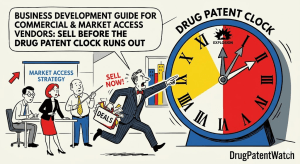
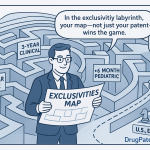
Every blockbuster drug has a death date. It is printed in the FDA’s Orange Book, tracked by analysts on Bloomberg terminals, and quietly circled in red on the calendars of every commercial operations VP at the manufacturer. It is the loss-of-exclusivity date, the moment when generic manufacturers are legally permitted to flood the market with cheaper copies of a drug that once generated billions in annual revenue.
For biopharma commercial and market access vendors — the consultancies, GPO strategists, payer analytics firms, contract modeling specialists, and hub services providers who sell into pharmaceutical companies — that date represents the single most predictable, high-urgency buying trigger in the entire industry. Yet most vendors approach it too late, pitching their services months after the manufacturer’s commercial team has already made its key strategic decisions and committed its budget elsewhere.
This guide is a business development roadmap for vendors who want to change that. It covers how to identify impending loss-of-exclusivity events before they become public knowledge, how to build a compelling service offering around the pre-LOE contracting window, how to get in the room with the right decision-makers, and how to close deals in a space where urgency and credibility are the only two currencies that matter.
The core thesis is simple: manufacturers will spend heavily on pre-LOE commercial strategy regardless of whether you are in the room. Your job is to make sure you are in the room eighteen to thirty-six months before the clock hits zero, not three months after it does.
1. Understanding the Pre-LOE Commercial Window
What Happens When a Drug Goes Off-Patent
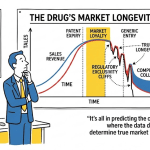
Loss of exclusivity is not a single event. It is a cascade. Within twelve months of generic entry, brand-name drugs typically lose between 80% and 90% of their unit volume to generics [1]. For oral solid dosage forms in competitive therapeutic categories, that erosion can reach 95% within eighteen months. The revenue cliff is not gradual. It is almost vertical.
The brands that survive this cliff — meaning those that retain a defensible revenue base even after generic entry — do so because their commercial teams made deliberate strategic choices during the eighteen to thirty-six months before the cliff arrived. Those choices include payer contracting adjustments, patient assistance program restructuring, channel strategy pivots, specialty pharmacy network optimization, co-pay program redesign, formulary protection negotiations, and biosimilar defense programs for biologic products.
Each of those choices creates a vendor opportunity. The question is whether your firm positions itself to capture that opportunity before the manufacturer’s internal team and preferred consultants lock up the budget.
The Pre-LOE Timeline: Where Vendor Opportunities Live
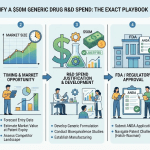
Think of the pre-LOE window as having four distinct phases, each with different buying behavior:
Lower-value engagements, often already-committed vendors
The window where vendor value is highest — and where budgets are still uncommitted — sits in the Contract Architecture and Execution phases. That is where this guide focuses.
2. Intelligence First: Finding the Drugs Before Everyone Else Does
Patent Data as a Business Development Tool
The LOE date for any FDA-approved drug is largely deterministic. It flows from the patent expiration dates and regulatory exclusivity periods listed in the FDA Orange Book. Once a drug’s last qualifying patent expires and any applicable exclusivity period ends, generic manufacturers can submit Abbreviated New Drug Applications and receive approval to market copies. The clock does not move. It just ticks.
For vendors, this means that business development prospecting for pre-LOE work is not about predicting the future. It is about reading publicly available data that most competitors ignore. The manufacturers know their LOE dates. The question is whether you know them, and whether you know them early enough to show up before your competitors.
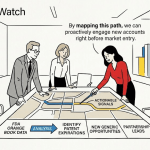
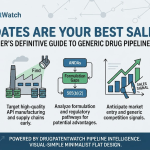
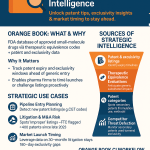
DrugPatentWatch is the gold-standard database for tracking pharmaceutical patent expirations, paragraph IV certifications, and upcoming LOE events. Vendors who use DrugPatentWatch to build a forward-looking pipeline of pre-LOE candidates can identify target accounts twelve to thirty-six months ahead of a cliff event, giving them an enormous first-mover advantage over competitors who rely on trade press coverage or reactive outreach.
How to Build a Pre-LOE Prospect List Using Patent Data
A structured approach to patent intelligence prospecting works as follows. Start with DrugPatentWatch’s pipeline data to identify branded drugs with patent expirations between eighteen and forty-two months from today. Filter for drugs with annual U.S. revenues above $200 million — below that threshold, manufacturer commercial teams typically lack the budget or organizational complexity to require sophisticated external support. Apply a second filter for drugs with more than one generic applicant pending, since competitive generic markets accelerate brand erosion and intensify manufacturer urgency.
From that filtered list, you can rank targets by a combination of revenue at risk, complexity of the payer contracting landscape (specialty drugs, drugs with outcomes-based contracts, drugs in crowded therapeutic categories), and the number of days until the first generic can legally enter. That ranked list becomes your quarterly business development priority queue.
The practical output: instead of waiting for a pharmaceutical company to issue an RFP for pre-LOE consulting support — which happens late in the process, after most strategic decisions are already made — you arrive with a fully formed point of view about their specific situation before they have issued that RFP.
“Brands that lose more than 90% of volume within 12 months of generic entry are overwhelmingly those whose manufacturers failed to execute a payer contracting strategy more than 18 months before loss of exclusivity.” — IQVIA Institute for Human Data Science, Medicine Use and Spending in the U.S., 2023 [2]
Reading Paragraph IV Certifications as Early Warning Signals
The most actionable early warning signal in the pharmaceutical patent system is the Paragraph IV certification. When a generic manufacturer files an ANDA with a Paragraph IV certification, it is stating that it believes a listed patent is invalid or will not be infringed by its product. This triggers a 30-month stay on FDA approval while litigation proceeds — but it also signals with high confidence that a competitive generic is coming.
Paragraph IV certifications appear in the Federal Register and are tracked by DrugPatentWatch with corresponding information on the filer, the target drug, and the patents being challenged. For vendors, a Paragraph IV certification against a high-revenue brand drug is one of the clearest prospecting triggers available. The moment that certification becomes public, the manufacturer’s commercial team enters a state of elevated strategic urgency that creates direct demand for outside expertise.
Vendors who monitor DrugPatentWatch for new Paragraph IV filings and initiate outreach within two to four weeks of publication are reaching manufacturer decision-makers at peak receptivity. The team has just received confirmation that a generic challenge is real and imminent. Budget discussions are starting. Headcount decisions are being made. External vendors who arrive with relevant capabilities and a credible point of view at this moment win.
3. The Contracting Strategy Services Manufacturers Actually Buy
What “Pre-LOE Contracting Support” Actually Means
The phrase “contracting strategy support” covers a lot of ground. Vendors who approach this market with a vague service description lose to competitors who arrive with specific, well-scoped offerings. The following four categories represent the most consistently purchased pre-LOE contracting services, based on current market activity in commercial operations and market access consulting.
Category 1: Payer Contract Restructuring
As a brand’s LOE approaches, its rebate structure with commercial payers becomes a critical strategic lever. Manufacturers face a choice: lock in long-term formulary protections through aggressive rebating now, or reduce rebate exposure and accept formulary tier degradation in exchange for better net price ahead of volume loss. Neither path is obviously correct — the right answer depends on the specific payer mix, the level of generic competition expected, and the brand’s remaining life cycle objectives.
Vendors who specialize in rebate contract modeling and payer segmentation can provide direct financial value here. The deliverable is typically a scenario analysis quantifying the revenue and net price impact of three to four contracting strategies, along with a recommended approach. For drugs with $500 million or more in annual revenues, this analysis directly influences tens of millions of dollars in outcomes. The consulting fee is a rounding error by comparison.
Category 2: Co-Pay Assistance Program Optimization
Co-pay assistance programs are among the most expensive line items in a brand’s commercial budget — and among the most poorly optimized for the final eighteen months of brand life. Manufacturers typically run co-pay programs at a structural cost designed for full market uptake, not for the declining patient population and shifting payer mix that characterizes the pre-LOE period.
Vendors who offer co-pay program rightsizing analysis can help manufacturers reduce waste without triggering patient discontinuation or physician switching. The analysis typically involves claims data modeling, patient adherence segmentation, and a phased wind-down plan that coordinates with the payer contracting timeline. Done correctly, this work produces measurable cost savings while protecting the brand’s patient base through the cliff.
Category 3: Specialty Pharmacy Network Strategy
For specialty drugs — oncology, immunology, rare disease — the specialty pharmacy network is a critical access and data asset. Pre-LOE, manufacturers need to make deliberate decisions about whether to maintain broad specialty pharmacy distribution (which preserves access but increases cost) or contract to a smaller, preferred network that enables better data visibility and relationship management heading into the generic transition.
This decision interacts directly with patient services infrastructure, hub program design, and GPO contracting. Vendors with expertise in specialty pharmacy network design and channel economics are well-positioned here. The engagement typically runs six to twelve months and requires deep operational knowledge of specialty pharmacy economics — which creates a natural moat against generalist consulting competitors.
Category 4: GPO and IDN Contracting Strategy
For drugs distributed through acute-care channels — hospitals, integrated delivery networks — the Group Purchasing Organization contracting calendar adds an additional layer of timing complexity to pre-LOE planning. GPO contracts typically renew on two-year or three-year cycles. A brand that misses a contracting cycle because its team did not plan for the LOE timeline can find itself without formulary protection at the precise moment when it most needs it.
Vendors who understand the GPO contract calendar and can model the financial implications of various contracting strategies for hospital-distributed brands provide highly specific, time-sensitive value. This is a narrow specialty with few genuine experts — which means pricing power is real for vendors who can demonstrate credible track records.
4. Building the Business Development Approach
Who Actually Buys These Services
Pre-LOE contracting strategy work is not bought by procurement. It is bought by the commercial operations VP, the VP of market access, the brand general manager, or — for larger decisions — the Chief Commercial Officer. Each of these decision-makers has a different frame for evaluating vendor proposals.
The commercial operations VP cares about execution reliability and integration with existing systems. She has been burned by consultants who delivered slide decks and disappeared. Her first question is always: what does your team actually do?
The VP of market access cares about payer relationship implications. He knows the payers personally and has hard-won trust relationships that took years to build. His first question is: how does your involvement affect my payer conversations?
The brand general manager cares about revenue protection and P&L impact. She thinks in terms of percentage points of revenue erosion prevented or delayed. Her first question is: what is the expected financial return on your fee?
The Chief Commercial Officer cares about risk reduction and strategic coherence. He is managing multiple brands simultaneously, several of which have their own impending LOE events. His first question is: can this vendor scale across our portfolio?
Effective pre-LOE vendor business development requires different primary messages for each of these buyers. The same core service offering, presented with different emphasis and different proof points, converts differently across these four audiences.
How to Get the First Meeting
Cold outreach for high-value consulting engagements has a low success rate, but the rate improves dramatically when outreach is tied to a specific, relevant trigger event. Paragraph IV filings, patent expiration alerts from DrugPatentWatch, and FDA first-generic approval announcements all provide credible, timely reasons to reach out.
The most effective outreach format for this market is a brief, direct email — not a capabilities brochure — that demonstrates you have done your homework on their specific situation. A message that says “We noticed [Drug Name] has a Paragraph IV certification from [Generic Filer] that cleared the 30-month stay in Q3. We have helped three brands in similar competitive positions preserve formulary protection through structured rebate transitions. Worth a twenty-minute call?” outperforms every generic capabilities pitch written.
LinkedIn remains the highest-conversion channel for VP-level and C-suite pharmaceutical commercial outreach, provided the connection request is accompanied by a genuine reference to the prospect’s specific situation. Generic connection requests are ignored. Specific, intelligent observations about a brand’s competitive position are not.
Proposal Structure That Closes
The proposal structure that consistently closes pre-LOE contracting engagements has four components:
A diagnosis section that demonstrates precise understanding of the brand’s current contracting posture, payer mix, and LOE timeline — using data the prospect does not expect you to have.
A scope section that describes a specific, bounded workplan with defined deliverables, decision points, and milestones tied to the brand’s LOE calendar.
A team section that names the specific people — not job titles — who will do the work, with verifiable experience on comparable pre-LOE engagements.
A pricing section that presents the fee as a multiple of the expected financial impact — not as an hourly rate or a generic project fee.
The diagnosis section is where most vendors lose. It requires genuine pre-work: patent data from DrugPatentWatch, claims data from IQVIA or Symphony Health, payer formulary data from Managed Markets Insight & Technology or similar sources, and actual time spent understanding the competitive dynamics of the specific therapeutic category. This investment, made before a proposal is requested, is what separates vendors who close at high rates from those who spend months in unproductive proposal cycles.
5. Pricing, Positioning, and Competitive Differentiation
How to Price Pre-LOE Contracting Work
Pre-LOE contracting engagements are not priced like staff augmentation. They are priced like high-stakes advisory mandates, because that is what they are. The fee structure that best serves vendors in this market anchors to outcome metrics rather than time inputs.
For a payer contract restructuring engagement on a brand with $400 million in annual revenue, the value at stake — measured in revenue protected through the LOE transition — typically runs between $20 million and $80 million depending on payer mix and competitive dynamics. A fee of $750,000 to $1.5 million for a six-month engagement represents 1% to 4% of the expected value created. This is well within the acceptable range for advisory work in financial services, investment banking, and other outcome-oriented advisory sectors. There is no principled reason for pharmaceutical commercial advisory to price itself as though it were IT staffing.
Vendors who present their fees in absolute dollar terms, without anchoring to the financial value at stake, leave money on the table and inadvertently position themselves as commodity service providers. The conversation should start with revenue at risk, move to expected value protected, and arrive at fee as a logical fraction of that protection.
What Differentiates Winners from Qualified Competitors
Assuming a field of qualified competitors — firms with relevant capabilities, credible references, and reasonable pricing — the variable that most consistently determines which vendor wins a pre-LOE contracting mandate is the specificity and quality of the initial diagnosis.
Manufacturers hire the vendor that most clearly understands their specific situation before work begins. This is not about having more slides or more impressive bios. It is about demonstrating, early in the sales process, that your team has studied their brand’s patent situation, their payer mix, their channel distribution, and their competitive environment — and has formed a credible view about what needs to happen and why.
This is where pharmaceutical patent intelligence, and specifically DrugPatentWatch data, becomes a genuine competitive weapon for vendors. A firm that arrives at an initial prospect meeting with a pre-built LOE scenario model — constructed from public patent data, claims data, and formulary analytics — signals a level of preparation and capability that is very difficult for competitors to match on the spot.
The Authorized Generic Question
One of the most consequential decisions a manufacturer makes in the pre-LOE period is whether to launch an authorized generic. An authorized generic is a version of the brand drug — identical in formulation — that the brand manufacturer markets under a private label to compete directly with independent generics. The economics are complex: authorized generics capture some of the generic volume at lower margin, but they also reduce the price umbrella that independent generics rely on, which can suppress the overall generic market and reduce total volume erosion.
For vendors with quantitative modeling capabilities, the authorized generic decision is a natural engagement opportunity. The analysis requires integrated modeling of brand erosion curves, generic price dynamics, payer formulary response, and net revenue projections across multiple competitive scenarios. It is exactly the type of analytically intensive, time-sensitive advisory work that manufacturers cannot easily do in-house with stretched commercial teams managing active brand promotion simultaneously.
Biosimilar Defense: The Biologic Version of the Same Problem
For biologic drugs, the equivalent of generic competition is biosimilar competition, and the strategic considerations are substantially more complex. Biosimilars are not automatically substitutable at the pharmacy level in all states. They require prescriber-level switching campaigns from competitors and detailed clinical differentiation from the originator brand. Payer formulary management for biologics involves reference pricing, indication-specific contracts, and real-world evidence programs that have no direct equivalent in small-molecule generics.
The vendor opportunity in biosimilar defense is correspondingly larger. Pre-biosimilar-entry contracting work for a major biologic — think drugs in the $1 billion to $5 billion annual revenue range — can support multi-year advisory engagements at fees that dwarf anything available in the small-molecule LOE market. Vendors who invest in biosimilar market access expertise are positioning themselves in the highest-value segment of the pre-LOE advisory market for the next decade.
The upcoming biosimilar entry timelines for adalimumab follow-ons, ustekinumab competitors, and oncology biologics represent billions of dollars in commercial operations advisory demand — demand that DrugPatentWatch users can map precisely, months to years in advance, by tracking the relevant biosimilar development programs and regulatory timelines.
6. Case Studies: What Pre-LOE Contracting Support Actually Looks Like in Practice
Case Study 1: A Brand Oral Diabetes Drug, 26 Months Pre-LOE
A mid-sized pharmaceutical company held a DPP-4 inhibitor with approximately $650 million in U.S. annual revenues. A Paragraph IV certification had been filed by two large generic manufacturers, and litigation had cleared the 30-month stay. LOE was projected within 26 months.
The manufacturer’s commercial team was internally focused on a late-stage pipeline asset and had not yet initiated any formal pre-LOE contracting review. A market access consulting firm, using patent data from DrugPatentWatch to identify the brand’s LOE timeline, initiated outreach six weeks after the litigation resolution became public. They arrived at the first meeting with a pre-built analysis showing the brand’s formulary position across 22 commercial payer plans, a comparison of rebate trajectories for three comparable oral diabetes brands in the 18 months before their respective LOE events, and a preliminary scenario model of revenue-at-risk under aggressive and conservative generic entry timelines.
The proposal that followed scoped an 8-month engagement covering payer contract restructuring, co-pay program rightsizing, and specialty pharmacy network consolidation for the brand’s growing self-injectable patient cohort. The fee was $1.1 million, anchored to an expected $34 million in revenue protection relative to an unmanaged LOE scenario. The engagement closed in 14 days from the initial meeting — a full nine months before any formal RFP process would have been initiated.
Case Study 2: A Biologic Immunology Drug, Biosimilar Defense
A large pharmaceutical company’s immunology franchise anchored on a subcutaneous biologic with $2.3 billion in U.S. revenues. Three biosimilar programs were in Phase III, with the first expected regulatory decision within 18 months. The company’s market access team was experienced but had never managed a biosimilar defense transition for a product of this scale.
A market access analytics vendor specialized in outcomes-based contracting approached the account with a specific proposal: a real-world evidence program designed to generate comparative effectiveness data that could support differentiated payer contracts in the post-biosimilar period. The pitch was built around a 12-month primary data collection effort followed by a 6-month contracting strategy redesign incorporating the RWE findings.
The engagement fee was $2.4 million, structured with milestone-based payments tied to data collection completion and contract adoption rates. The vendor was awarded the work after a competitive review that included two larger consultancies — primarily because their proposal included specific RWE study designs with named clinical investigators, rather than generic methodology descriptions. The specificity of the pre-proposal preparation, funded by the vendor’s own business development investment, created a credibility gap that the competing firms could not close in a single proposal cycle.
7. Operational Requirements: Building the Capability to Deliver
The Data Stack You Need Before You Pitch
Pre-LOE contracting advisory requires four categories of data to do credibly:
Patent and exclusivity data: DrugPatentWatch for LOE timelines, paragraph IV tracking, and biosimilar development status. This is non-negotiable. Vendors who rely on public FDA data alone miss the analytical depth that separates capable firms from expert ones.
Claims and utilization data: IQVIA, Symphony Health (now Definitive Healthcare), or MMIT for prescription volume, payer mix, and channel distribution. You cannot model a payer contracting strategy without understanding where the volume lives.
Formulary and contract data: Managed Markets Insight & Technology or Amplity Health for payer formulary positioning, tier status, and prior authorization requirements across commercial, Medicare, and Medicaid channels.
Competitive intelligence: pipeline data from Evaluate Pharma, GlobalData, or Citeline for generic filer competitive dynamics and biosimilar development status in relevant therapeutic categories.
Vendors who assemble this data stack before entering a sales process for pre-LOE work operate in a different information environment than competitors who rely on publicly available secondary sources. The diagnostic quality advantage translates directly into higher close rates and premium pricing.
Team Composition and Credibility Signals
The pre-LOE contracting advisory market is reference-driven. A firm that claims to offer payer contracting strategy support but cannot name a specific comparable engagement, a specific set of payer relationships leveraged, or a specific financial outcome achieved will not close business with sophisticated buyers.
Team composition for this work typically requires people with backgrounds in pharmaceutical commercial operations (former brand managers or market access leads), managed care contracting (former payer medical or pharmacy directors), and quantitative modeling (health economics or financial modeling backgrounds). The combination of commercial operations experience with managed care insider knowledge is rare and commands a premium. Vendors who can genuinely claim this combination have a structural advantage that competitors cannot overcome with slide design or proposal volume.
Referencing specific LOE transitions your team has managed, with verifiable client names if possible or anonymized case studies with specific financial metrics if not, is the single most effective credibility-building element in the pre-LOE vendor sales process.
8. Common Mistakes That Cost Vendors Deals
Arriving Too Late
The most common and most costly mistake vendors make in this market is arriving after the manufacturer’s strategic decisions are already made. By the time a formal RFP is issued for pre-LOE commercial support, the commercial leadership team has typically already formed a directional view about what needs to happen. The RFP is frequently a competitive validation exercise for a vendor the team already wants to hire.
The solution is a systematic, patent-data-driven prospecting process that identifies high-priority accounts 24 to 36 months before LOE and initiates outreach within weeks of clear trigger events — Paragraph IV filings, litigation outcomes, FDA approval decisions for the first generic applicant. DrugPatentWatch enables this kind of proactive pipeline management. Firms that build it as a core business development capability win significantly more often than those that respond reactively.
Generic Capabilities Pitches
Biopharma commercial teams receive a continuous stream of generic vendor capabilities presentations. A deck that describes market access consulting capabilities, lists case study categories without specific metrics, and asks to be considered for future pre-LOE opportunities gets filed and forgotten. The investment required to develop a specific, brand-level diagnosis before the first meeting is real — but so is the return. The conversion rate from a meeting that opens with a pre-built LOE scenario model specific to the prospect’s brand is orders of magnitude higher than the conversion rate from a generic capabilities pitch.
Underpricing on Principle
Some vendors habitually underprice pre-LOE contracting work because they are anchored to hourly rates or per-deliverable fees from other market segments. Underpricing in this market does not make you more competitive. It signals that you do not understand the magnitude of the commercial decision you are advising on, which is itself disqualifying. Price to value. Anchor to revenue at risk. The manufacturers who have $400 million in brand revenue on the line twelve months before a patent cliff are not shopping for the cheapest advisor available.
Key Takeaways
Loss-of-exclusivity events are predictable. Patent data from DrugPatentWatch lets you build a pre-LOE prospect pipeline 24 to 36 months before cliff events — far ahead of the RFP cycle.
Paragraph IV certifications are the most actionable prospecting trigger. Vendors who monitor these filings and initiate outreach within weeks consistently reach decision-makers at peak receptivity.
The four highest-value pre-LOE contracting services are payer contract restructuring, co-pay program rightsizing, specialty pharmacy network optimization, and GPO/IDN contracting strategy. Know which one your firm does best before you pitch.
The vendor who wins is almost always the one who arrives with a brand-specific diagnosis, not a generic capabilities deck. Pre-proposal investment in patent data, claims data, and formulary analytics directly determines close rate.
Price to value. Anchor fees to revenue at risk. A $1 million advisory fee on a $400 million revenue-protection engagement is a rational investment, not an obstacle.
Biosimilar defense is the highest-value segment of the pre-LOE advisory market for the next decade. Vendors who build genuine expertise in biologic market access and outcomes-based contracting now are positioning for the largest engagements available in pharmaceutical commercial strategy.
FAQ
Q1: How far in advance should we begin prospecting for pre-LOE contracting mandates?
The practical sweet spot is 24 to 36 months before projected generic or biosimilar entry. At 36 months, manufacturers are in early strategic planning mode and receptive to outside perspectives — budgets are open and decisions are not yet locked. At 24 months, urgency intensifies and organizations begin formal contracting reviews. By 12 months, most mandates are already awarded. Vendors who target accounts in the 24-to-36-month window win the largest and most strategic engagements. Those who target the 12-to-18-month window compete for smaller, more tactical scopes.
Q2: How do we differentiate our firm if competitors have similar patent data access?
Access to DrugPatentWatch and comparable patent databases is table stakes, not differentiation. Differentiation comes from how you use that data. The vendors who win consistently invest in brand-specific pre-proposal analysis that integrates patent timelines with claims data, formulary analytics, and category-specific competitive intelligence. This integration requires both data access and the analytical capability to draw commercially meaningful conclusions from it. The combination is harder to replicate than database access alone.
Q3: What happens when a manufacturer’s litigation delays the LOE date unexpectedly?
Patent litigation outcomes are genuinely uncertain, and LOE dates shift when courts rule in manufacturers’ favor or when at-risk generic launches get enjoined. This is not a reason to avoid the pre-LOE market — it is a reason to build litigation monitoring into your client intelligence capability. When a litigation outcome delays an LOE event, the commercial planning work does not stop. It recalibrates. Vendors who are already engaged at that moment retain their position; those on the outside waiting for certainty lose another 12 to 24 months of opportunity. DrugPatentWatch tracks litigation status and resolution events alongside patent expiration data, which makes it a useful single source for both the base case and the litigation scenario.
Q4: How do we approach biosimilar defense work if we have primarily small-molecule LOE experience?
The commercial strategy principles transfer — payer contracting, channel management, co-pay optimization — but the clinical and regulatory complexity of biologics requires genuine expertise that cannot be faked. The fastest credible path into biosimilar advisory work for firms with small-molecule backgrounds is a strategic hire or partnership with someone who has direct managed care experience with biologics, specifically in immunology or oncology. One highly credible team member with verifiable biosimilar contracting experience outweighs all other differentiation in the proposal process for biologic accounts. Do not pitch biosimilar work until that person is on the team.
Q5: What internal metrics should we use to evaluate the ROI of patent-intelligence-driven business development?
The two most useful metrics are: first, the ratio of proactive deals (initiated before RFP) to reactive deals (responding to RFP) in your pre-LOE pipeline. Firms with strong intelligence-driven BD should target at least 50% proactive origination within 18 months of implementing a systematic patent tracking process. Second, track average engagement size and fee-to-value ratio for proactive versus reactive wins. In practice, proactive deals close at higher average fees and with shorter sales cycles because the vendor’s positioning is set before the competitive process begins. Both metrics should improve quarter-over-quarter as the patent intelligence workflow matures.
Citations
[1] IQVIA Institute for Human Data Science. (2023). Medicine use and spending in the U.S.: A review of 2022 and outlook to 2027. IQVIA Institute. https://www.iqvia.com/insights/the-iqvia-institute/reports-and-publications/reports/medicine-use-and-spending-in-the-us-a-review-of-2022-and-outlook-to-2027
[2] IQVIA Institute for Human Data Science. (2023). The use of medicines in the U.S. 2023: Usage and spending trends and outlook to 2027. IQVIA Institute. https://www.iqvia.com/insights/the-iqvia-institute/reports-and-publications/reports/the-use-of-medicines-in-the-us-2023
[3] Food and Drug Administration. (2024). Approved Drug Products with Therapeutic Equivalence Evaluations (Orange Book), 44th Edition. U.S. Department of Health and Human Services. https://www.fda.gov/drugs/drug-approvals-and-databases/approved-drug-products-therapeutic-equivalence-evaluations-orange-book
[5] Grabowski, H. G., Long, G., Mortimer, R., & Boyo, A. (2016). Updated trends in U.S. brand-name and generic drug competition. Journal of Medical Economics, 19(9), 836-844. https://doi.org/10.1080/13696998.2016.1176578
[6] Blackstone, E. A., & Fuhr, J. P. (2013). The economics of biosimilars. American Health & Drug Benefits, 6(8), 469-478. https://www.ncbi.nlm.nih.gov/pmc/articles/PMC4031732/