A deep-dive strategic guide for pharma IP teams, portfolio managers, R&D leads, and institutional investors on the regulatory, patent, and procurement mechanics shaping the $700B+ global generics industry.
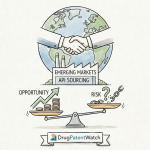
1. The Scale of the Shift: Emerging Markets Now Drive Global Pharma Growth
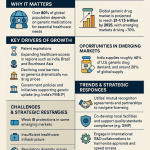
The global pharmaceutical industry’s center of gravity has moved. The markets that once defined industry strategy, North America, Western Europe, and Japan, now account for a shrinking share of global growth. By 2025, the largest emerging markets, a cohort anchored by China, India, Brazil, and South Africa but extending across Southeast Asia, the Middle East, and Sub-Saharan Africa, collectively represent approximately 31% of global pharmaceutical market value. More consequentially, these geographies are projected to contribute up to 90% of the industry’s incremental revenue growth through 2030.
This is not primarily a story about volume. It is a story about structural transformation driven by three simultaneous forces. First, rapid income growth is producing a new consumer class with both the means and the motivation to purchase healthcare. Second, governments across these markets are expanding public health coverage through insurance schemes, essential medicines lists, and centralized procurement programs, creating large, predictable demand pools that did not exist a decade ago. Third, the epidemiological profile of these populations is shifting. As longevity increases and urbanization accelerates dietary and lifestyle changes, the disease burden is shifting away from acute infectious conditions toward chronic, non-communicable diseases: type 2 diabetes, cardiovascular disease, hypertension, cancer, and respiratory conditions. These are diseases that require consistent, long-duration, often multi-drug regimens. Affordability is not a preference in that context. It is a clinical prerequisite.
Generic medicines are the primary mechanism through which governments intend to meet this demand without exhausting their health budgets. The generic drug is not, in these markets, an afterthought or a commodity play. It is the structural backbone of public health policy.
The global generic drugs market was valued at approximately $450 billion in 2024 and is projected to exceed $728 billion by 2034, growing at a compound annual growth rate of roughly 5%. Emerging markets will drive the bulk of that growth. For any company with serious ambitions in this space, the policy environment of these four countries, India, China, Brazil, and South Africa, is not background context. It is the primary variable determining success or failure.
2. What a Generic Drug Actually Is: Bioequivalence, IP, and the ANDA Pathway
The word ‘generic’ obscures more than it reveals. In regulatory practice, a generic drug is a product that demonstrates pharmaceutical equivalence and bioequivalence to an approved reference listed drug (RLD). Pharmaceutical equivalence means the same active pharmaceutical ingredient (API), the same strength, the same dosage form, and the same route of administration. Bioequivalence means the generic delivers the same amount of the API into systemic circulation at essentially the same rate as the RLD, typically established through a pharmacokinetic study measuring Cmax (peak plasma concentration) and AUC (area under the concentration-time curve).
The regulatory framework that codifies this in the United States is the Hatch-Waxman Act of 1984, which created the Abbreviated New Drug Application (ANDA) pathway. An ANDA applicant does not need to repeat the full suite of preclinical animal studies and Phase I/II/III clinical trials that the originator company conducted. They must prove bioequivalence and demonstrate that their manufacturing process meets current Good Manufacturing Practice (cGMP) standards. This dramatically compresses both development cost and timeline. A typical ANDA costs between $1 million and $5 million to prepare, compared to the $1.3 billion or more (including the cost of failures) that originators spend to bring a new molecular entity to market.
Most major emerging markets have built equivalent abbreviated approval pathways modeled on the ANDA structure. India’s Central Drugs Standard Control Organisation (CDSCO) operates under the Drugs and Cosmetics Act and has progressively tightened its bioequivalence requirements to align with FDA standards. Brazil’s ANVISA created a specific generic drug registration category in 1999 that requires full bioequivalence data. China’s National Medical Products Administration (NMPA) formalized its bioequivalence requirements through the Generic Quality Consistency Evaluation (GQCE) launched in 2016. South Africa’s Health Products Regulatory Authority (SAHPRA) operates under a post-reform framework that accepts data packages from WHO-prequalified facilities.
Inactive ingredients, the excipients that function as fillers, binders, colorants, and coatings, may differ between an originator and its generic. This is why generic tablets are often different colors or shapes. These differences are permissible provided they do not affect pharmacokinetics or safety. For complex dosage forms, particularly modified-release formulations, inhalation products, and topical dermatological preparations, the acceptable range of excipient variation narrows considerably, and regulators frequently require additional studies to confirm equivalence.
The entire generic model is contingent on the expiration of the innovator company’s market exclusivity, which derives primarily from patent protection. Under the TRIPS Agreement administered by the World Trade Organization, member countries must grant a minimum patent term of 20 years from the filing date. A drug reaching market ten years after its patent filing therefore has approximately ten years of protected commercial life before generic entry becomes legally possible. In practice, the window is often shorter after accounting for the time value of late-stage clinical development and regulatory review. Patent Term Extensions (PTEs), available in the US and EU, partially compensate for this regulatory delay. Emerging markets vary considerably in whether they offer PTEs, and this variation directly affects the effective market exclusivity period in each jurisdiction.
3. The Dual Mandate: Why Governments Push Generics Hard
Governments in emerging markets pursue generic drug policies with urgency that their counterparts in developed markets rarely match. The reason is the convergence of two distinct but mutually reinforcing pressures.
The first is fiscal. Healthcare costs in these countries are growing faster than GDP. Out-of-pocket spending on medicines pushes millions of households below poverty thresholds annually. The World Health Organization estimates that approximately 100 million people globally are impoverished each year by the cost of healthcare, with pharmaceutical expenditures constituting a disproportionate share of that burden in lower-income settings. A government managing a national health insurance scheme with limited tax revenue has an existential interest in keeping drug costs down. Generic entry after patent expiry, when five or more competitors enter a market, can drive prices down by 85% or more relative to the originator’s peak price. At scale, across an essential medicines formulary, this represents tens of billions of dollars in annual procurement savings.
The second pressure is industrial. Pharmaceutical manufacturing is technically sophisticated, creates high-quality jobs, generates export revenue, and builds scientific capacity. India’s experience demonstrates this comprehensively: its generic industry, built on deliberate policy choices, now supplies approximately 20% of global generic drug volume by unit and 40% of generic drugs consumed in the United States. China similarly treated API production as a strategic industrial sector for decades, investing in chemical manufacturing infrastructure that now dominates global supply chains for raw materials. Brazil and South Africa, operating at different scales, are using their procurement power to build domestic manufacturing ecosystems through technology transfer agreements and local production requirements.
These two pressures, fiscal and industrial, are sometimes in tension. A policy that maximizes price competition in public tenders may simultaneously undermine the commercial viability of domestic manufacturers who need some margin to invest in quality upgrades. A compulsory license that saves the health ministry money today may deter future innovator investment in the country tomorrow. Navigating this tension is the central challenge of pharmaceutical policy in every major emerging market, and the specific trade-offs each government makes define the competitive landscape for all players in that market.
4. The Government Toolkit: Regulatory, IP, and Economic Levers
Regulatory Gatekeeping: NRAs, GMP, and Quality Consolidation
National regulatory agencies are the primary gatekeepers of market access, and their capacity and standards vary enormously across emerging markets. The CDSCO in India, ANVISA in Brazil, the NMPA in China, and SAHPRA in South Africa each occupy different points on the spectrum from mature, internationally recognized regulatory authority to agency with significant capacity gaps.
The FDA’s Global Generic Drug Affairs program and WHO’s prequalification system have provided frameworks through which emerging market NRAs can benchmark and upgrade their standards. The FDA’s Generic Drug Cluster initiative, which brings together agencies from multiple countries to harmonize scientific requirements for bioequivalence studies and manufacturing standards, has accelerated this convergence. When ANVISA or SAHPRA adopts a requirement that mirrors FDA guidance, it narrows the divergence that previously allowed separate development programs for each market.
For generic manufacturers, this harmonization trend cuts in two directions. On the positive side, a development program built to FDA or EMA standards is more likely to be accepted by other regulatory agencies, reducing the per-market cost of registration. On the negative side, the capital requirements for facility compliance with cGMP standards at the level expected by multiple mature agencies are substantial. The FDA has cited Indian manufacturing facilities for warning letters and import alerts at a rate that has forced collective compliance spending estimated at nearly $1 billion annually across the Indian industry. This quality pressure acts as a consolidation mechanism: manufacturers who cannot sustain that investment exit the market, leaving space for those who can.
The regulatory dynamic also creates an information asymmetry opportunity. Agencies like SAHPRA are still clearing a significant registration backlog, which means generic drugs that have been approved and marketed in Europe or the US for years may not yet have market authorization in South Africa. First-mover advantage in registration therefore has real commercial value in markets where NRA capacity constrains entry timelines.
The IP Chessboard: Patents, Evergreening, Data Exclusivity, and TRIPS Flexibilities
Patent strategy in pharmaceuticals is not a single clock counting down from twenty years. It is a layered, actively managed portfolio of intellectual property rights that originators use to extend effective market exclusivity well beyond the primary compound patent’s expiry. Understanding this structure is the core competency of any generic company’s IP team.
The primary compound patent covers the API itself, typically filed during or before Phase I clinical development. This is the ‘base’ patent that attracts the most attention in generic development timelines. Around it, originators file secondary patents covering formulation technologies (controlled-release coatings, nanoparticle delivery systems, specific salt forms), methods of use (new therapeutic indications), dosing regimens, metabolites, and manufacturing processes. A complex small molecule drug may have fifteen to fifty active patents covering different aspects of the commercial product. This ‘patent thicket’ forces generic entrants to either design around each individual patent, challenge their validity through inter partes review or equivalent proceedings, or wait until all significant patents expire.
Evergreening, the practice of filing secondary patents to extend commercial exclusivity, is particularly consequential in emerging markets because these markets often lack the litigation resources and legal infrastructure to challenge secondary patents effectively. A generic company in India or Brazil may challenge a primary compound patent successfully under local patentability standards, only to face a separate infringement claim based on a formulation patent that would be difficult and expensive to invalidate.
Data exclusivity adds a separate layer. Even where no patent blocks the generic’s API, regulators in some markets will not accept an abbreviated application that relies on the originator’s clinical trial data for a defined exclusivity period. The US grants five years of data exclusivity for new molecular entities. The EU grants eight years. China’s evolving data exclusivity framework, currently under formal rulemaking, proposes up to six years of protection for innovative new drugs. India does not grant data exclusivity in the traditional sense, a policy stance that has been a persistent point of contention in trade negotiations with the US and EU.
The TRIPS Agreement’s ‘flexibilities,’ though they were embedded in the agreement from its 1994 inception, became operational tools only after the 2001 Doha Declaration explicitly affirmed their scope. The most powerful of these is the compulsory license (CL): a government authorization for a third party to produce or import a patented product without the patent holder’s consent, subject to payment of a royalty. The Doha Declaration clarified that each country has the right to determine what constitutes a national emergency or a circumstance of extreme urgency justifying a CL. HIV/AIDS, tuberculosis, malaria, and other public health crises have all been invoked.
The second major flexibility is parallel importation: procuring a patented product from a third country where it is sold at a lower price than in the domestic market, without the patent holder’s consent. Countries that adopt an international exhaustion doctrine (patent rights are exhausted on first sale anywhere) can engage in parallel importation; countries using national exhaustion cannot. Most emerging market pharmaceutical laws allow parallel importation for public health purposes, at least conditionally.
The Bolar provision, or its local equivalent, allows generic manufacturers to conduct the research necessary for regulatory approval before the relevant patent expires. Without a Bolar exception, a generic company would have to wait until day one of post-patent availability to begin development work, delaying market entry by years. With it, regulatory approval can be achieved before patent expiry, enabling a launch the moment exclusivity ends. This dramatically compresses the originator’s post-patent monopoly period and increases the commercial pressure to negotiate lower prices.
Economic Muscle: Price Controls, VBP, Public Procurement, and Industrial Incentives
Every major emerging market government imposes some form of price control on pharmaceuticals, though the mechanisms vary in sophistication and severity. India’s National Pharmaceutical Pricing Authority (NPPA) sets ceiling prices for drugs on the National List of Essential Medicines (NLEM), currently covering over 900 formulations. Brazil’s Medicines Market Regulation Chamber (CMED) oversees a price cap system. South Africa operates a Single Exit Price (SEP) mechanism that caps the price at which manufacturers and importers can sell into the supply chain. China, as discussed below in detail, has moved beyond administrative price caps to a market mechanism that achieves price reductions through competitive tendering.
Public procurement is the most direct economic lever governments deploy. In countries where the government is the largest single buyer of medicines, winning a national or state tender is existentially important. These tenders are typically awarded primarily on price, with quality compliance as a threshold criterion. The volume involved in a single large tender can represent multiples of a manufacturer’s entire existing output for that product, creating powerful incentives to bid aggressively on price, sometimes below sustainable margin. This dynamic, when it becomes structural, degrades the entire supply ecosystem.
Industrial incentives function as the counterweight: investments designed to build the domestic manufacturing base that the price competition pressures might otherwise hollow out. India’s Production Linked Incentive (PLI) Scheme for Pharmaceuticals, announced in 2021 with an allocation of approximately Rs 15,000 crore (roughly $1.8 billion), directly incentivizes production of critical Key Starting Materials, Active Pharmaceutical Ingredients, and complex finished formulations. The scheme pays manufacturers a percentage of their incremental sales over a base year, rewarding actual production rather than promised investment. China has used analogous mechanisms through its Five-Year Plans to build API manufacturing infrastructure. Brazil’s Product Development Partnerships (PDPs) provide guaranteed procurement to companies that manufacture specified products domestically, making procurement contingent on technology transfer and local production.
5. India: The Pharmacy of the World Faces a Tariff Storm
The 1970 Patents Act: Process Patents and the Birth of an Industry
The Indian pharmaceutical industry’s global dominance traces directly to a single legislative decision made in 1970. The Patents Act of that year abolished product patents for pharmaceutical compounds, permitting only process patents. Any Indian company could legally manufacture and sell any drug, including one still under product patent in other countries, provided it used a different synthesis route. This effectively legalized reverse engineering of the global pharmacopeia.
The consequences were profound. The Indian chemical and pharmaceutical industries developed exceptional expertise in process chemistry: the ability to devise alternative synthetic routes to complex molecules. Companies like Cipla, Dr. Reddy’s, Ranbaxy, and Sun Pharma built large-scale manufacturing operations serving both the domestic market and export markets in countries that did not recognize the original product patents. By the time India joined the WTO and committed to implementing TRIPS-compliant product patent protection (effective January 1, 2005), the Indian generic industry had thirty-five years of manufacturing expertise, deep technical talent, and established export relationships. It was prepared to compete in a product-patent world.
India now supplies approximately 20% of global generic medicine volume. It exports pharmaceuticals worth over $26 billion annually, with the United States being the largest single destination, absorbing approximately $8 billion in generic drugs from India each year. The US market takes Indian-manufactured generics accounting for roughly 40% of all generic prescriptions dispensed in American pharmacies. This dependency is a strategic asset for India and a structural risk for the US healthcare system.
Section 3(d): India’s Anti-Evergreening Wall and Its IP Valuation Impact
When India implemented TRIPS-compliant product patent protection in 2005, it embedded a provision in its Patents Act, Section 3(d), that has no direct equivalent in the IP law of any other major jurisdiction. Section 3(d) bars patent protection for new forms of known substances, including new salts, esters, polymorphs, metabolites, and new uses, unless the applicant demonstrates that the new form produces ‘significantly enhanced efficacy’ compared to the known substance. The term ‘efficacy’ has been interpreted narrowly by Indian courts to mean therapeutic efficacy, not merely improved pharmacokinetics or manufacturability.
The practical effect is that a large proportion of the secondary patents that constitute an originator’s evergreening strategy in the US and EU cannot be obtained in India. A new crystalline polymorph of an existing API, which might generate a US patent valid for years, receives no Indian patent protection unless it demonstrably improves clinical outcomes. This provision directly reduces the effective IP exclusivity period for many branded drugs in India, accelerating the date on which generic competition is legally permissible.
For IP valuation purposes, the IP portfolio of any drug company with India exposure must be evaluated against Section 3(d) as a separate analytical layer. A compound patent expiring in 2028, supported by a polymorph patent expiring in 2032, might have an effective Indian market exclusivity of 2028 rather than 2032. The value of the secondary patent portfolio in the Indian market is substantially discounted relative to its value in the US. Analysts and acquirers performing due diligence on pharma IP assets must model this jurisdiction-specific discount explicitly. The Novartis v. Union of India Supreme Court decision of 2013, which upheld the rejection of Gleevec’s (imatinib mesylate) patent application under Section 3(d), remains the definitive legal precedent and has been cited in patent disputes in South Africa, Brazil, and other jurisdictions that are considering similar provisions.
The PLI Scheme: Reshoring APIs, Reducing China Dependency
The Indian pharmaceutical industry’s deepest structural vulnerability is its dependence on China for API supply. Industry estimates suggest that 60% to 70% of India’s API needs, and over 80% for certain critical antibiotic precursors, are sourced from Chinese manufacturers. This dependency became a strategic concern during the COVID-19 pandemic when Chinese export restrictions and logistics disruptions threatened India’s own manufacturing output, and by extension, the global supply of critical medicines.
The PLI Scheme for Pharmaceuticals directly targets this dependency. Three categories of products receive PLI support: Category 1 covers complex and high-value products including biopharmaceuticals, complex generics, patented drugs nearing expiry, orphan drugs, special empty capsules, complex excipients, and phytopharmaceuticals. Category 2 covers APIs, intermediates, and Key Starting Materials (KSMs) for drugs in the NLEM. Category 3 covers repurposed drugs, auto-immune drugs, anti-cancer drugs, anti-diabetic drugs, anti-infectives, cardiovascular drugs, and others on an approved list.
The incentive rate ranges from 10% to 20% of incremental sales over the base year, declining over the six-year scheme duration. For Category 1, the scheme requires minimum incremental investment thresholds and domestic manufacturing commitments. A company receiving PLI support for an API that was previously sourced from China must actually produce that API domestically, at the required quality standard, in the quantities specified in its commitment.
The scheme has attracted interest from major domestic manufacturers including Sun Pharma, Cipla, Divi’s Laboratories, and Dr. Reddy’s, as well as from CDMOs. The strategic logic is clear: reducing API import dependency from China simultaneously addresses supply chain resilience, creates domestic API manufacturing capacity that can serve export markets, and builds the technical capability needed to compete in next-generation biologics and complex generics.
PMBJP: Domestic Access and the Jan Aushadhi Network
The Pradhan Mantri Bharatiya Janaushadhi Pariyojana (PMBJP), launched in 2016 and significantly expanded since, operates a network of dedicated generic medicine retail outlets, Jan Aushadhi Kendras, that sell only unbranded generic medicines at prices averaging 50% to 80% below branded equivalents. As of early 2026, the network has grown to over 12,000 outlets across India, procuring medicines through a centralized tender administered by the Bureau of Pharma PSUs of India (BPPI).
The PMBJP matters for generic manufacturers in two ways. First, it represents a large, price-sensitive, centrally procured demand channel that rewards cost-efficient producers. Companies supplying the Jan Aushadhi network compete primarily on price and must meet quality specifications set by the BPPI, which conducts third-party testing. Second, the program’s growth is a deliberate policy signal: the government intends to normalize generic prescribing and generic dispensing throughout the country, reducing the brand loyalty that previously allowed multinational companies and domestic branded generic players to charge premiums far above API cost.
For multinationals operating in India’s private market with branded products, the PMBJP is a long-term erosion of the pricing environment. For cost-efficient domestic generic manufacturers, it is a stable, growing revenue channel with predictable volume.
US Tariff Risk and the Indian Generic Supply Chain
The prospect of US pharmaceutical tariffs targeting Indian imports represents the most acute near-term risk facing the Indian generic industry. In 2025, the Trump administration floated tariff rates on pharmaceutical imports as high as 25%, with subsequent rhetoric suggesting rates as high as 200% for certain categories. The market response was immediate: shares of Dr. Reddy’s Laboratories, Sun Pharma, and Cipla fell 3% or more on the day of the announcement.
The structural problem with pharmaceutical tariffs on Indian imports is that the US has no near-term domestic manufacturing alternative for a substantial proportion of its generic drug supply. Indian generics account for 40% of US generic prescriptions. The API supply chains for these products run through India and China. Reshoring this production to the US would require five to ten years of capital investment, facility construction, workforce training, and regulatory approval, with costs that would dramatically exceed any tariff revenue generated. Namit Joshi, Chairman of Pharmexcil, noted publicly that Indian manufacturers already operate on thin margins and would face existential pressure from a 25% tariff, while American patients would face drug shortages and price increases. The economic reality is that a tariff on Indian pharmaceuticals is, functionally, a tax on American patients with chronic diseases.
Indian companies are not passive in response. Several large manufacturers are actively evaluating or have already begun establishing or expanding US manufacturing footprints, partly as a hedge against tariff risk and partly to capture PLI-style incentives that might be available from US federal and state programs. The longer-term scenario, if tariffs are implemented and sustained, accelerates the trend toward more diversified manufacturing geographies and higher US drug prices.
Key Takeaways: India
India’s dominance in global generic supply is built on a foundation of process chemistry expertise, cost efficiency, and thirty years of manufacturing scale development. The industry’s primary risks today are not technical. They are geopolitical (US tariff policy), supply chain (China API dependency), and regulatory (ongoing FDA compliance costs). Section 3(d) remains a durable anti-evergreening mechanism that materially reduces the effective IP exclusivity of many drugs in the Indian market, with significant implications for IP valuation in M&A transactions. The PLI Scheme is the government’s primary tool for addressing supply chain vulnerability, and companies participating in it are building capabilities that position them well for biosimilar and complex generic competition over the next decade.
Investment Strategy: India
Portfolio managers evaluating Indian pharmaceutical equities should differentiate sharply between companies with high US export concentration (higher tariff risk), those with diversified geographic revenue including Europe and emerging markets (lower tariff risk), and API-focused manufacturers participating in the PLI Scheme (beneficiaries of domestic reshoring policy). Divi’s Laboratories, which is heavily API-focused with a global customer base, sits in a different risk/opportunity profile than a company like Alkem Laboratories, whose revenue is primarily domestic. For IP teams conducting M&A due diligence on Indian generic companies, the Section 3(d) filter must be applied explicitly to assess effective exclusivity periods in the Indian market for each product in the target’s pipeline. Companies with strong Paragraph IV filing histories in the US are generating first-filer exclusivity value that is often underweighted in headline valuations.
The GQCE Revolution: Retroactive Quality Standards
Before 2016, the Chinese domestic generic market was characterized by fragmentation and inconsistent quality. Tens of thousands of generic drug approvals had been granted over decades under standards less rigorous than those applied in the US, EU, or Japan. Many domestically produced generics were perceived by Chinese physicians as inferior to originator products, and prescribing behavior often reflected this perception, with branded drugs commanding significant price premiums even after patent expiry.
The Generic Quality Consistency Evaluation (GQCE) launched in 2016 mandated that all existing generic drugs on the Chinese market must demonstrate bioequivalence to the originator reference drug by passing new bioequivalence studies under current international standards. Products failing to pass by the designated deadlines faced de-registration and removal from the market. This was retroactive quality regulation applied to an installed base of thousands of products simultaneously.
The GQCE has been operationally consequential in multiple ways. It eliminated a large number of marginal products from the market, concentrating volume among manufacturers with both technical capability and financial resources to conduct new bioequivalence studies. It created a two-tier market: GQCE-passing products, which are eligible for Volume-Based Procurement inclusion, and non-passing products, which are excluded. It built physician and patient confidence in domestic generics, reducing the perceived quality gap with originators. The NMPA estimates that over 4,000 products have completed GQCE assessment as of 2025, with hundreds more in process.
For foreign generic companies considering Chinese market entry, GQCE passage is the gateway to VBP participation. Without it, a product is confined to the smaller, less strategically important non-VBP market. The capital cost and timeline of the GQCE process must therefore be factored into market entry economics from the outset.
Volume-Based Procurement: The Winner-Takes-All Tender That Rewrote Pricing
China’s Volume-Based Procurement system is the most consequential pharmaceutical pricing policy of the past decade, globally. Its mechanics are straightforward: the National Healthcare Security Administration (NHSA) aggregates the annual purchasing volume of public hospital systems across multiple regions for a specified drug, invites manufacturers of GQCE-passed products to bid for the supply contract, and awards the contract to the lowest bidder, with the winning manufacturer receiving a guaranteed volume commitment representing 60% to 80% of the total market for that drug. Non-winners retain the remaining volume but without any procurement guarantee.
The results have been extreme. The first round of VBP in 2019 (‘4+7 Cities’ pilot) achieved an average price reduction of 52%, with some individual drugs declining by over 90%. Subsequent national rounds have maintained or exceeded this magnitude. By 2022, the NHSA reported cumulative savings of over RMB 260 billion (approximately $36 billion) from VBP since its inception. As of 2025, over 370 drugs across multiple therapeutic categories have been included in successive VBP rounds.
The strategic implications are profound and specific. A drug included in VBP faces binary commercial outcomes: win the contract and receive enormous volume at a margin of approximately 5% to 10% above direct cost, or lose the contract and cede the public hospital market almost entirely. There is no middle ground. The economics that once supported large hospital sales forces, medical representative programs, and physician education efforts evaporate under VBP: the winning price leaves no room for marketing expenditure, and the losing company has no meaningful hospital market to defend.
VBP has accelerated market consolidation. Large, cost-efficient manufacturers with low API costs, often because they manufacture their own API in-house, are the VBP winners. Smaller manufacturers without vertical integration cannot compete on price. Many have exited categories entirely or are repositioning toward non-VBP markets such as traditional Chinese medicine products, vitamins, and cosmeceuticals.
For originator companies, VBP removes the post-patent-expiry strategy of maintaining branded pricing through physician relationships and perceived quality differentiation. In a VBP round, the originator product competes directly on price against domestic generics. AstraZeneca, Pfizer, and other MNCs have participated in VBP tenders, in some cases winning at prices 70% or more below their previous branded levels. The alternative, exclusion from the public hospital channel, removes the majority of Chinese hospital prescribing volume from reach.
Patent Linkage and Data Exclusivity: China’s Emerging IP Architecture
While VBP is compressing generic prices at the commercial end, China is simultaneously building a more sophisticated upstream IP architecture designed to attract pharmaceutical innovation. These two policies serve different parts of the same dual strategy: control the cost of existing medicines while incentivizing the development of new ones.
China’s patent linkage system, implemented through 2021 regulations, connects the drug approval process to patent protection. When a generic manufacturer files a marketing authorization application for a drug that is still under patent, they must certify either that the relevant patents have expired, that they will not commercialize before patent expiry, or that the patents are invalid or not infringed (a ‘Paragraph IV’-equivalent certification). This certification triggers a 9-month stay on NMPA approval while the patent dispute is resolved, providing a window for originators to seek judicial or administrative patent protection. This is a substantial change from the previous system, where generic approvals proceeded entirely independently of patent status.
Data exclusivity is the other key pillar. China’s NMPA released draft rules in 2025 proposing six years of data exclusivity for new chemical entities and three years for new indications. During the exclusivity period, generic applicants cannot rely on the innovator’s undisclosed clinical data to support their own applications. This framework, once finalized, would align China more closely with the data protection standards of the US and EU, potentially delaying the date at which generics for newly approved drugs can enter the Chinese market.
These IP developments represent a direct response to US and EU trade pressure to strengthen patent protection in China, and they reflect China’s own strategic interest in fostering a domestic innovative pharmaceutical sector. Companies like BeiGene, Zai Lab, and Innovent Biologics are building clinical development programs that would benefit from stronger domestic data protection. For generic companies, the tightening of patent linkage and data exclusivity in China means longer de facto exclusivity periods for new originator products entering the market.
API Dominance as Geopolitical Leverage
China’s control over the global API supply chain is a form of pharmaceutical sovereignty that has no parallel in any other industry. Chinese chemical manufacturers produce the bulk of global supply for antibiotics (including penicillin precursors and cephalosporins), analgesics, vitamins, heparin, and hundreds of small-molecule APIs. A US National Security Commission report estimated that over 90% of US generic drugs depend on active ingredients or precursors sourced from China or India, with China being the upstream supplier to India in many cases.
This concentration creates a fragility that governments are now actively addressing through industrial policy. India’s PLI Scheme is partly designed to build an alternative API supply base. The US BIOSECURE Act, and similar proposals in Europe, aim to diversify pharmaceutical supply chains away from Chinese manufacturers. But the timeline for meaningful diversification is measured in years or decades, not months. Chinese API manufacturers have decades of accumulated process optimization, environmental compliance infrastructure, and cost efficiency that new entrants in other countries cannot replicate quickly.
For generic companies, the decision of whether to source APIs from China involves a trade-off between lowest current cost and supply chain risk. Companies that have invested in qualifying multiple API suppliers, including non-Chinese sources, carry higher input costs today but face less operational disruption risk from geopolitical events.
Key Takeaways: China
China’s generic drug market has undergone a structural reset driven by two government policies: the GQCE, which rebuilt quality credibility, and VBP, which stripped out margin across most commoditized categories. The domestic market now rewards scale, vertical integration, and cost efficiency above all else. The emerging IP architecture (patent linkage, data exclusivity) will lengthen effective exclusivity for new innovative products. API supply chain concentration in China remains a global risk that governments and manufacturers worldwide are spending billions to address.
Investment Strategy: China
VBP has made most China-focused generic equity investments in traditional small-molecule categories unattractive on a standalone basis. The compelling opportunities are in two areas. First, complex generics and biologics that are not yet subject to VBP: injectables, biosimilars, and novel formulations where fewer manufacturers have passed GQCE equivalence testing and where VBP inclusion lags product complexity. Second, API manufacturers with export revenue, where VBP pressure does not apply and where global supply chain diversification trends create incremental demand. Institutional investors should note that the NHSA’s reallocating of VBP savings to fund reimbursement of innovative drugs creates a policy tailwind for domestic biotech companies developing novel therapies. The domestic biotech market (represented by companies listed on Hong Kong’s Chapter 18A) represents a more attractive risk-adjusted opportunity than traditional generics under current policy.
7. Brazil: Compulsory Licensing as a Negotiation Weapon
The 1999 Generic Drug Act and ANVISA’s Bioequivalence Standards
Brazil’s formal generic drug framework originated with Law 9787 of 1999, which created two categories: the generic (generico), which must demonstrate bioequivalence to a reference drug and is identified by its INN, and the similar (similar), which at the time of the law’s passage had less stringent requirements. Subsequent regulation upgraded the requirements for ‘similars’ to require bioequivalence as well, largely closing the quality gap between the two categories.
ANVISA’s bioequivalence standards are among the most demanding in Latin America. Study design requirements include specific statistical acceptance criteria (the 90% confidence interval for the ratio of test-to-reference geometric means for Cmax and AUC must fall within 80% to 125%), specific requirements for subject selection and confinement conditions, and requirements for the accreditation of bioequivalence study centers. ANVISA has historically required physicians to be physically present during the confinement period of a bioequivalence study, a requirement that goes beyond FDA or EMA practice, though this has been subject to regulatory evolution.
ANVISA also maintains specific requirements for reference drugs. The reference drug for bioequivalence purposes must be the product marketed by the innovator company in Brazil or, where no Brazilian reference product exists, a WHO-recognized reference product. This can create complications for drugs where the Brazilian innovator product differs in formulation from the US or EU originator, requiring additional bridging data.
The Brazilian generic market has grown to approximately $22-23 billion annually as of 2024, representing roughly 30% to 35% of total pharmaceutical market value by revenue but over 60% by volume. The private market, served through pharmacy chains and individual prescriptions, is the dominant channel, unlike India or China where public procurement drives a larger share of volume.
The Efavirenz Compulsory License: A Detailed Case Study
Brazil’s most documented exercise of compulsory licensing authority provides a template that other governments have studied and referenced in their own negotiations with pharmaceutical companies.
By the mid-2000s, efavirenz, a non-nucleoside reverse transcriptase inhibitor marketed by Merck as Stocrin (or Sustiva in other markets), had become the backbone of Brazil’s first-line HIV/AIDS treatment regimen. The drug was on patent in Brazil. Merck held the Brazilian patent and sold the product at a price that the Brazilian Ministry of Health calculated was significantly above the generic equivalent price available from manufacturers in India. Negotiations between the Ministry and Merck during 2006 and early 2007 failed to reach a price agreement. Merck offered successive price reductions, ultimately to around $1.10 per tablet per day, which the Ministry assessed as still significantly higher than the Indian generic price of approximately $0.45 per tablet per day.
On May 4, 2007, President Luiz Inácio Lula da Silva signed Presidential Decree 6108, issuing a compulsory license for efavirenz for non-commercial, public health purposes. The license authorized the Ministry of Health to import generic efavirenz from Farmanguinhos, a Brazilian public laboratory, which would initially source the product from the Indian manufacturer Ranbaxy, later transitioning to domestic production. The government projected savings of approximately $237 million over five years compared to continued purchase at the Merck price.
Three aspects of this case are particularly instructive for strategic analysis. First, the compulsory license was used as a public health mechanism, not a trade measure. It was grounded explicitly in TRIPS Article 31 and the Doha Declaration. Second, the royalty paid to Merck was set at 1.5% of the acquisition price of the imported generics, well below the 5% that is sometimes cited as a standard royalty rate in CL contexts. Third, Merck’s global reputation suffered a reputational cost that complicated its market relationships across other middle-income countries, demonstrating that the costs of failing to reach a negotiated price agreement extend well beyond the bilateral dispute.
The efavirenz case has been cited in subsequent price negotiations in Thailand, Ecuador, and other countries and informed the broader strategy of using the credible threat of CL issuance to extract price concessions from patent holders. Several pharmaceutical companies, having witnessed Brazil’s willingness to follow through on CL threats, adopted more flexible pricing approaches in middle-income markets in the years following 2007.
PDP Agreements: Technology Transfer as Industrial Policy
Brazil’s Product Development Partnerships (PDPs) are a distinct mechanism that links government procurement to domestic manufacturing capacity building. Under a PDP, the Brazilian Ministry of Health agrees to purchase a specified product exclusively from a domestic manufacturer for a defined period, on the condition that the domestic manufacturer receives technology transfer from a partner (typically a multinational innovator or a foreign generic company) sufficient to enable independent domestic production by the end of the partnership.
The PDP model has been used for biopharmaceuticals including vaccines, blood derivatives, monoclonal antibodies, and recombinant proteins. Fiocruz (Fundacao Oswaldo Cruz), the Brazilian public biomedical research institution, has been the domestic partner in several major PDPs. The Ministry of Health signs long-term supply agreements that guarantee domestic partners the revenue needed to invest in the required manufacturing infrastructure and technology absorption. For the foreign partner, the PDP provides access to the Brazilian public health market (primarily SUS procurement) that might otherwise be inaccessible or commercially unattractive.
PDPs represent a sophisticated use of procurement power that goes beyond simply buying the cheapest product. They are designed to build permanent domestic capability, ensuring that Brazil is not perpetually dependent on foreign manufacturers for critical health products. The success of PDPs has been variable: some have transferred technology effectively and established sustainable domestic production, while others have struggled with the technical complexity of biopharmaceutical manufacturing and the time required to achieve it.
The Branded Generic Market: EMS, Hypermarcas, and the Middle Class
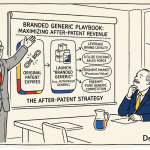
Brazil’s private pharmaceutical market is characterized by a strong branded generic segment that does not exist in most comparable emerging markets. A branded generic is chemically equivalent to other generic versions of the same product but is marketed under a company brand name, with sales force support, physician detailing, and patient awareness campaigns. It commands a price premium over unbranded generics, often 20% to 40% higher, while remaining substantially cheaper than the originator branded product.
Companies like EMS (Grupo NC), which is the largest domestic pharmaceutical company in Brazil, and Eurofarma have built substantial businesses around this model. EMS, which posted revenues exceeding R$12 billion annually in recent years, has an extensive branded generic portfolio combined with growing capabilities in biosimilars. The company’s strategic move into the GLP-1 receptor agonist market, producing semaglutide-related products for the rapidly growing obesity and diabetes treatment market, reflects the sophistication with which leading Brazilian generic companies are now targeting complex, high-value categories rather than competing solely on price for commodity products.
For international companies entering Brazil, the branded generic market means that a pure price strategy is suboptimal. Brazilian physicians and patients, particularly in the private market served by supplementary health insurance (planos de saude), respond to brand equity, detailing, and quality reputation. Building this brand presence requires investment in medical affairs and sales infrastructure that generic-first companies often lack.
Key Takeaways: Brazil
Brazil’s pharmaceutical market is the most complex in Latin America, combining a large and quality-demanding NRA (ANVISA), a government with demonstrated willingness to use compulsory licensing, a public procurement system (SUS) that functions as a price benchmark for the entire market, and a private market where branded generic differentiation has real commercial value. The PDP mechanism makes technology transfer and domestic manufacturing a condition of access to public procurement in key biopharmaceutical categories. Companies that treat Brazil as a simple price-driven tender market will consistently underperform relative to those that invest in brand equity, regulatory relationships, and long-term manufacturing partnerships.
Investment Strategy: Brazil
For investors, Brazil’s generic market offers exposure to a growing middle class and a large public health system, but with significant execution risk. ANVISA regulatory timelines are long: typical approval timelines for new generic registrations range from three to five years, and backlog management has been a persistent challenge. FX volatility in the Brazilian real adds P&L complexity for companies reporting in USD or EUR. The highest-quality Brazilian generic/biopharma investment stories are companies like EMS, with diversified portfolios including complex generics and biosimilars, and Hypermarcas/Hypera Pharma, with strong private market brand presence. The SUS compulsory licensing risk is real but manageable for companies that engage proactively with the Ministry of Health on pricing before products reach the CL negotiation stage.
8. South Africa: NHI Will Collapse the Two-Tier Model
The Public/Private Split: Single Exit Price vs. State Tenders
South Africa’s pharmaceutical market is defined by a structural duality that has few equivalents globally. Approximately 84% of the population relies on the public health system, funded by government and operated through provincial health departments. This segment is served primarily by generic medicines, procured through competitive national tenders, and represents roughly 35% of total pharmaceutical market value. The remaining 16% of the population is covered by private medical aid schemes and pays for healthcare privately. This private segment generates approximately 65% of total pharmaceutical expenditure by value, driven by branded and originator products at prices set under the Single Exit Price (SEP) mechanism.
The SEP system, introduced in 2004 through amendments to the Medicines and Related Substances Act, prohibits manufacturers and importers from selling the same product at different prices to different customers at the same level of the supply chain. The SEP is the maximum price at which a product can exit the manufacturer or importer into the distribution chain. Dispensing fees are regulated separately. Annual SEP increases are subject to government approval and have often been set below inflation, creating gradual real-price reductions for existing products.
The consequence of this structure has been a cross-subsidization model. Multinational pharmaceutical companies operating in South Africa historically generated their South African profitability primarily from the private market, where branded products command significant premiums. The margin earned in the private market allowed these companies to also bid on public tenders at prices that, in isolation, might not justify the investment. Remove the private market premium, and the economics of sustaining public tender participation deteriorate sharply.
NHI Mechanics: Single-Payer Procurement and Its Pricing Implications
The National Health Insurance Act, signed into law in 2023 but still in early implementation stages as of 2026, establishes the legal framework for a universal healthcare system in which the NHI Fund operates as the single payer for all healthcare goods and services for all South Africans. The current two-tier structure would be replaced by a unified system in which medical aid schemes are limited to covering services not covered by the NHI benefit package.
The procurement implications are transformative. Under full NHI implementation, the NHI Fund would consolidate the purchasing volumes currently split between public tenders (serving 84% of the population) and private medical aids (serving 16%). This consolidation creates a buyer with unprecedented market power. Combined purchasing volume at NHI scale would allow price negotiations well below current public tender prices, because even tender pricing has been calibrated against a competitive landscape that includes private market profitability as a sustaining factor.
The NHI also creates a mechanism for preferred domestic supplier status. The current government has indicated that local manufacturing, where it can meet quality and supply reliability standards, will receive preference in NHI procurement decisions. This preference, if implemented as policy rather than aspiration, would provide a structural commercial advantage to South African manufacturers like Aspen Pharmacare and Adcock Ingram relative to imported products from India or Europe.
NHI implementation faces substantial challenges. The South African fiscal position is under pressure. Healthcare infrastructure in the public sector requires massive investment before universal coverage becomes operationally feasible. Legal challenges from the medical aid industry are working through the courts. The implementation timeline has already slipped from initial projections. Nevertheless, the direction of policy is clear, and companies operating in South Africa must plan for an NHI scenario even if the timing remains uncertain.
Aspen Pharmacare: An IP Valuation Case Study
Aspen Pharmacare is the largest pharmaceutical company headquartered in sub-Saharan Africa and provides a useful case study in how IP strategy functions in an emerging market context. Founded in 1997 by Stephen Saad and Gus Attridge, Aspen grew through a combination of domestic generic manufacturing, licensing deals for branded products from multinationals, and a series of manufacturing acquisitions in Europe (particularly in the anesthetic and thrombosis markets).
Aspen’s IP strategy has been primarily a licensing and manufacturing play rather than an originator innovation play. The company holds manufacturing licenses for complex products including heparin, low-molecular-weight heparins, and oncology drugs. Its acquisition of AstraZeneca’s thrombosis brand portfolio and Merck’s branded established pharmaceutical products in selected markets gave it ownership of products with residual brand equity and proprietary manufacturing processes, even where primary compound patents had expired. This hybrid model, combining the cost structure of a generic manufacturer with the margin profile of a branded specialty company, is reflected in Aspen’s IP portfolio valuation: the value lies not in composition-of-matter patents but in manufacturing know-how, brand licenses, and regulatory approvals.
Aspen’s 2021 deal to manufacture Johnson & Johnson’s COVID-19 vaccine at its Gqeberha facility in South Africa was motivated partly by the same logic: access to a large, guaranteed-demand product, manufacturing capability demonstration, and geopolitical goodwill with the South African government, all of which support its positioning for NHI-era procurement preferences. For analysts valuing Aspen or comparable emerging market branded generic companies, the relevant IP value components are license agreements (duration and renewal terms), manufacturing technology exclusivity, and the regulatory approval portfolio across markets, rather than primary compound patent estates.
SAHPRA Capacity and the Registration Backlog Problem
The South African Health Products Regulatory Authority (SAHPRA) replaced the former Medicines Control Council (MCC) in 2018. The transition was intended to address the chronic registration backlog that had accumulated under the MCC. At its peak, the backlog exceeded 3,000 applications, meaning products that had been approved and marketed in major jurisdictions for years could not legally be sold in South Africa.
Progress has been made since SAHPRA’s establishment, including through the use of international reference pathways that allow faster registration of products already approved by stringent regulatory authorities such as the FDA, EMA, or Health Canada. But the backlog remains a real operational constraint. For generic companies, the registration timeline in South Africa means that a product reaching market in the US or EU may not receive South African registration for three to seven years, depending on application complexity and SAHPRA’s workload. This delays revenue realization and frustrates the public health benefit of timely generic access.
The backlog also creates a first-mover advantage structure within the South African market that is different from more efficient regulatory environments: the company that files early and navigates SAHPRA’s process successfully earns a registration exclusivity that is de facto rather than legal, lasting until competitors clear the approval queue.
Key Takeaways: South Africa
South Africa’s generic market is currently in a transitional period between the current two-tier model and NHI. The NHI will fundamentally restructure the market by eliminating the private premium that has sustained much of the industry’s profitability. Local manufacturing footprint will become a competitive differentiator in the NHI procurement environment. SAHPRA’s registration backlog creates de facto first-mover advantages that reward early filers. Aspen Pharmacare’s IP strategy illustrates that value in South African pharmaceutical assets is captured through licensing arrangements, manufacturing competency, and regulatory portfolios rather than primary compound patents.
Investment Strategy: South Africa
South Africa-focused pharmaceutical equities carry a specific risk premium tied to NHI policy uncertainty and broader South African macroeconomic and political risk. The investment case for companies like Aspen, Adcock Ingram, and Cipla Quality Chemical (listed in Kampala but serving South African and East African markets) depends heavily on assumptions about NHI implementation pace and the degree to which local manufacturing preference is operationalized in procurement rules. The most defensible positions are companies with both public sector scale and emerging private market branded generic portfolios, as well as those with manufacturing infrastructure capable of meeting NHI quality standards. Pan-African distribution networks represent an additional dimension of value as several countries in Eastern and West Africa are developing their own pharmaceutical manufacturing and generic access policies.
9. Policy Contagion: How China’s VBP Is Reshaping Tender Pricing Globally
China’s VBP has become the most-studied pharmaceutical pricing policy in global health economics. Health ministries from Vietnam to Colombia to Saudi Arabia have sent delegations to study the NHSA’s implementation experience. The core appeal is straightforward: VBP demonstrates that a government can achieve price reductions of 50% to 90% on off-patent medicines without a corresponding collapse in supply quality, provided the quality prerequisite (the GQCE) has been established first.
Countries are beginning to adapt VBP principles to their own procurement environments. Vietnam piloted a centralized tendering system for selected generic categories in 2023. Saudi Arabia’s National Unified Procurement Company (NUPCO) has moved toward larger, consolidated national tenders with price benchmarking against global reference markets. Thailand has used VBP-adjacent mechanisms for hospital formulary management.
The strategic implication for generic companies is that the extreme price compression seen in China is not a local phenomenon. It is a template being replicated globally at varying speeds. Products that were generating acceptable margins in a given market may face VBP-style price reductions within five to ten years if that market adopts the Chinese model.
This realization has two strategic responses. The first is cost structure optimization: manufacturing at the scale and efficiency level necessary to survive VBP-level pricing requires vertical integration into API production, continuous manufacturing technology, and relentless overhead reduction. The second is portfolio migration toward categories that are structurally resistant to VBP-style competition: complex injectables, biologics, inhaled products, and transdermal delivery systems where fewer manufacturers have the technical capability to pass bioequivalence testing and where price competition is correspondingly less severe.
10. TRIPS Flexibilities as Bargaining Chips: The Compulsory License Threat Premium
The strategic use of compulsory licensing as a negotiation tool has evolved substantially since the Doha Declaration. The threat of a CL, rather than the CL itself, is now the primary instrument. Governments have learned that they do not need to actually issue a compulsory license to achieve significant price reductions; the credible signaling of intent is sufficient.
The mechanics of this negotiation dynamic work as follows. A health ministry identifies a high-cost patented drug whose price is unaffordable within the national health budget. It initiates price negotiations with the patent holder, typically citing the cost of comparable generics available in other markets. If initial negotiations fail, the ministry publicly announces a formal review of whether a compulsory license is warranted, citing national public health need. This announcement moves the negotiation from a commercial context to a geopolitical and reputational context for the patent holder. The potential issuance of a CL generates negative press coverage, complicates the company’s relationships with other governments, and creates secondary market uncertainty. Faced with these costs, most patent holders offer additional price reductions. The ministry accepts or rejects, and the process either concludes or escalates to actual CL issuance.
This dynamic means that the value of a drug patent in an emerging market is not simply the discounted cash flow of its projected revenue stream. It must be discounted further by the CL threat premium: the probability that the government will initiate negotiations, the likely negotiated price outcome (typically a reduction of 50% to 75% from the initial price), and the probability of actual CL issuance if negotiations fail. Originators pricing drugs in middle-income markets should model this explicitly rather than treating emerging market pricing as a sovereign risk afterthought.
For generic companies, the CL threat creates opportunities: when a CL is issued or threatened, the generic producer positioned to supply the relevant product (often an Indian generic manufacturer with existing API capabilities and manufacturing capacity for the molecule) can move quickly to supply the government buyer. Companies that maintain a watching brief on active CL negotiations globally, and that pre-position regulatory dossiers for likely CL candidates, can capture significant incremental business.
11. The Complex Generics Imperative: Injectables, Inhalation, and Transdermal Products
The simple oral solid dosage form, the tablet or capsule, is the most commoditized product in the global pharmaceutical supply chain. VBP and similar procurement mechanisms have compressed margins on these products to levels that leave minimal room for profitability except at very large scale. The strategic response for any generic company with ambitions beyond pure-volume low-margin supply is migration toward complex dosage forms.
Complex generics are defined by the FDA as drug products where the complexity arises from the drug substance (e.g., a protein of non-biological origin, a mixture of active moieties, a drug-device combination), the drug product formulation (e.g., liposomal formulations, modified release systems), the route of administration (e.g., ophthalmic, otic, inhalation), or some combination of these. The generic development of complex products requires more sophisticated formulation science, more extensive characterization, and often additional in vitro or clinical studies beyond standard bioequivalence testing. This complexity creates barriers to entry that protect margins even in competitive markets.
Inhaled products, particularly dry powder inhalers (DPIs) and metered-dose inhalers (MDIs) for respiratory conditions, are among the most technically demanding complex generic categories. Demonstrating bioequivalence for an inhaled product requires lung deposition studies and device performance characterization in addition to standard pharmacokinetic data. The number of manufacturers globally with the capability to develop and manufacture generic inhaled products at cGMP quality is small. This structural scarcity supports pricing well above commodity generic levels.
Injectable products, including both simple aqueous injectables and the growing category of complex lipid-based and nanoparticle formulations, represent another high-barrier category. Sterile injectable manufacturing requires specialized facilities, validated contamination control processes, and continuous quality monitoring that most oral solid dosage form manufacturers cannot simply replicate. Emerging market governments are significant buyers of injectable products, particularly in oncology and hospital care. Companies with sterile injectable manufacturing capabilities in India (Dr. Reddy’s, Aurobindo, Strides Pharma), Brazil (União Química), and South Africa (Aspen) are positioned to benefit from NHI-driven and SUS-driven procurement growth in this category.
Transdermal drug delivery systems, including patches for contraception, nicotine replacement, pain management, and hormone therapy, require polymer formulation expertise and complex manufacturing processes. The patent thicket around transdermal delivery technologies means that generic developers must navigate not only the primary compound patent but also formulation and device patents on the delivery system itself.
12. Biosimilars in Emerging Markets: The Next Regulatory and Commercial Frontier
Biologics, drugs produced in living cell systems rather than through chemical synthesis, include some of the most commercially significant and therapeutically important medicines ever developed. Adalimumab (AbbVie’s Humira), bevacizumab (Roche’s Avastin), trastuzumab (Roche’s Herceptin), and the growing class of GLP-1 receptor agonists for obesity and diabetes represent product categories with combined global revenues in the hundreds of billions of dollars. As the primary biologic patents expire, governments globally are pushing for biosimilar entry to capture savings comparable to those achieved with small-molecule generics.
Biosimilar development is fundamentally more complex than small-molecule generic development. A biosimilar cannot be made identical to its reference biologic because biological manufacturing processes introduce inherent variability. The developer must demonstrate ‘biosimilarity’: that the product has no clinically meaningful differences from the reference in terms of safety, purity, and potency, despite not being identical. This requires cell line development, extensive analytical characterization using techniques such as mass spectrometry and X-ray crystallography, comparative clinical pharmacology studies, and in some cases phase III clinical trials. Total development costs for a biosimilar typically range from $100 million to $300 million, compared to $1 million to $5 million for a small-molecule ANDA.
In India, the biosimilar regulatory pathway has been established since 2012 and has been revised multiple times to progressively align with WHO guidelines. India’s biosimilar market is already among the world’s largest by volume, driven by domestic demand and export to markets in Asia and Latin America where regulatory requirements are less stringent. Cipla, Biocon, Dr. Reddy’s, and Reliance Life Sciences are among the major domestic biosimilar producers. The Indian government has included biopharmaceuticals in the PLI Scheme’s Category 1, signaling intent to support the development of a biosimilar export industry competitive with established Western biosimilar developers.
Brazil’s SUS represents a critical demand driver for oncology and immunology biosimilars. The Ministry of Health has been actively incorporating biosimilars onto the National Formulary, and PDPs have been used to develop local biosimilar manufacturing capability for products such as etanercept and insulin glargine. Fiocruz and private partners have pursued domestic production of monoclonal antibodies through PDP agreements with originator companies including Sanofi and Roche.
China’s NMPA has established a biosimilar pathway that requires comparative analytical, non-clinical, and clinical data. The domestic biosimilar market has grown rapidly as Chinese companies including CSPC Pharmaceutical, Shanghai Henlius, and 3SBio have built biologic manufacturing capabilities. VBP is being extended to some biologic categories, and price pressure on biosimilars in China is intensifying. A product entering the Chinese biosimilar market today faces a shorter window of premium pricing than its predecessors enjoyed.
For IP teams, the biosimilar landscape presents a distinct challenge: the IP around reference biologics is more extensive and more complex than for small molecules. Manufacturing process patents, cell line patents, formulation patents, and device patents (for autoinjector-delivered biologics) create patent thickets that require careful navigation. The litigation history around adalimumab biosimilars in the US, where AbbVie executed a global settlement strategy with biosimilar developers that delayed US market entry by years, illustrates the sophistication with which originator companies can use IP to manage biosimilar competition timing.
13. Patent Intelligence as Competitive Infrastructure: Tracking Expiries, Paragraph IV, and Litigation
The entire generic drug business model is built on patent timing. A company that files its ANDA or equivalent application one day too early, before it has a valid design-around or patent challenge strategy, faces an infringement suit and a regulatory stay. A company that files one day after a competitor secures a 180-day first-filer exclusivity loses the most valuable period of generic market exclusivity. The difference between a correct and an incorrect patent assessment can be worth hundreds of millions of dollars.
In the US market, the Paragraph IV certification pathway allows an ANDA applicant to file before a relevant patent expires by certifying that the patent is invalid, unenforceable, or not infringed by the generic product. If the patent holder sues within 45 days, a 30-month regulatory stay is triggered, during which the FDA cannot approve the ANDA. If the Paragraph IV filer wins the patent litigation, they typically earn 180 days of marketing exclusivity over other generic filers. This exclusivity period, the first-mover generic exclusivity, can generate enormous revenues in markets where the branded product had significant sales volume.
Paragraph IV filings and the resulting patent litigation are therefore a primary source of competitive intelligence. A Paragraph IV filing against a major drug’s patent signals that a generic company believes the patent is vulnerable. Tracking these filings, the courts in which patent litigation is filed, and the legal arguments being pursued gives competitors meaningful advance notice of potential generic entry ahead of the scheduled patent expiry date.
The patent landscape for any given drug is typically more complex than the primary compound patent. Orange Book listings (in the US context) may include method-of-use patents, formulation patents, metabolite patents, and process patents. Non-Orange Book patents may also be asserted in litigation. Global markets add further complexity: a drug may have different patent expirations in India, the EU, Brazil, and China, creating different market entry windows in each jurisdiction.
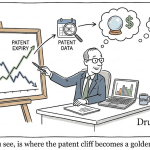
Specialized patent intelligence platforms that consolidate patent data across jurisdictions, track ANDA filings and Paragraph IV certifications, monitor patent litigation dockets, and flag upcoming patent expiry events are now essential infrastructure for any generic company with ambitions in multiple markets. The ability to identify an approaching patent expiry in a $1 billion drug category six to seven years before the expiry date, and to begin ANDA development in time to be first to file, is the most direct path to outsized generic returns.
14. Cross-Country Comparative Analysis
The four markets examined above follow distinct strategic models that create different competitive dynamics. The table below summarizes the key dimensions of each national framework.
NMPA pathway aligned with WHO; VBP extending to biosimilars
ANVISA pathway established; PDP-driven
SAHPRA guidelines; small current market
The most important strategic lesson from this comparison is that generic market success in any one of these countries does not transfer automatically to the others. A company optimized for China’s VBP environment, competing on price with scale and vertical API integration, will find its core competency largely irrelevant in Brazil’s private branded generic market. A company with deep ANVISA registration expertise and physician detailing infrastructure will struggle to win India’s price-driven public tenders. Market-by-market strategic customization is not an option. It is the minimum entry requirement.
15. Frequently Asked Questions
Which government policy is most disruptive to the global generic drug market right now?
China’s Volume-Based Procurement (VBP) system has the broadest global impact. Its documented ability to achieve 50% to 90% price reductions without supply collapse has made it a reference model for health ministries worldwide. The secondary effect, the ‘policy contagion’ in which other governments adopt VBP-adjacent tender structures, accelerates the commoditization of the global generic market in ways that affect manufacturers operating across multiple jurisdictions.
How should a company assess whether a patent in India is likely to block generic entry?
Any patent assessment for the Indian market must explicitly apply the Section 3(d) filter. Secondary patents covering new crystalline forms, esters, salts, or metabolites of an existing API are presumptively unpatentable in India unless the applicant demonstrates enhanced therapeutic efficacy. The Novartis v. Union of India Supreme Court decision provides the operative legal standard. IP teams should assess each patent in an originator’s portfolio against this standard, then compare the resulting effective exclusivity date in India against the dates in the US and EU to identify the Indian-specific patent cliff.
What is the ‘branded generic paradox,’ and where does it appear?
The branded generic paradox describes situations where originator branded products retain significant market share and price premiums after generic entry, despite the generic being bioequivalent. This occurs in markets where physician prescribing is driven by brand habit and trust rather than INN prescription, and where patients associate brand name with quality. It is most pronounced in Brazil’s private market and India’s private market. Governments address it through mandatory generic substitution requirements at the pharmacy level and INN prescription mandates in public facilities.
How does a company quantify compulsory license risk in its emerging market IP valuation?
A rigorous CL risk adjustment requires modeling four variables: the probability that the drug’s price will become a government priority for CL review (typically higher for drugs on WHO essential medicines lists, used in public health programs, or priced significantly above comparator markets); the expected negotiated price outcome if CL negotiations occur (typically 40% to 60% of current price); the probability that negotiations will fail and an actual CL will be issued; and the royalty rate the government would set under an actual CL. These variables can be estimated from historical CL cases in Brazil, Thailand, Ecuador, and India. The resulting CL-risk-adjusted net present value of the emerging market revenue stream is often 20% to 40% lower than an unadjusted projection.
Why are complex generics a better commercial opportunity than standard oral generics in the current environment?
Standard oral solid dose generics face structurally deteriorating margins in every major emerging market due to price-based tender competition, VBP-style procurement expansion, and increasing numbers of generic entrants per product following GQCE and similar quality upgrading programs. Complex generics, including sterile injectables, inhaled products, and transdermal delivery systems, require specialized manufacturing capabilities that limit the number of qualified entrants. Fewer competitors produce less price compression. The regulatory pathway is also longer, creating a de facto exclusivity period for early movers.
What is the minimum footprint a generic company needs to participate effectively in the NHI-era South African market?
Under the NHI framework as currently designed, local manufacturing capacity will be a procurement preference criterion. Companies without South African manufacturing will be at a disadvantage relative to domestic manufacturers for NHI-covered product categories. Foreign companies seeking durable NHI market access should evaluate joint venture arrangements with South African manufacturers, technology licensing deals that enable local production, or acquisition of SAHPRA-registered manufacturing capacity. Companies that cannot justify manufacturing investment should focus on categories where NHI is likely to import for supply security reasons (e.g., complex biologics) rather than commodity generics where local preference will be strongest.
This analysis draws on publicly available regulatory filings, government policy documents, peer-reviewed literature, and industry data. Patent data cited in this report can be tracked and monitored through DrugPatentWatch’s global patent intelligence database, which covers drug patent landscapes across 134 countries.