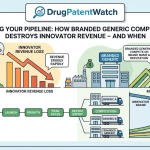
Every quarter, brand-name pharmaceutical manufacturers risk losing billions in revenue because a generic competitor files an Abbreviated New Drug Application (ANDA) with a Paragraph IV certification they did not see coming. Every quarter, generic manufacturers waste months on patent challenges that brand-name companies anticipated and prepared for. In both cases, the loss traces back to the same failure: inadequate Orange Book monitoring.
That failure is now a revenue stream for biopharma regulatory and legal service firms that have packaged Orange Book surveillance into subscription products. The opportunity is real, the demand is durable, and the renewal rate for a well-built monitoring service rivals anything in the SaaS world. When a client’s patent portfolio and market exclusivity depend on knowing what is in a federal register on a Tuesday morning, they do not cancel.
This article explains how the Orange Book monitoring subscription market works, who the buyers are, what the best services cover, and how regulatory and legal firms can build a product that clients genuinely cannot afford to drop.
What the Orange Book Actually Does
The FDA’s Approved Drug Products with Therapeutic Equivalence Evaluations, universally called the Orange Book, is a public listing of patents and exclusivity periods that brand-name pharmaceutical companies submit to the FDA when their drug receives approval. The FDA does not verify the validity or relevance of these patents. It lists them. That distinction matters enormously.
When a generic manufacturer files an ANDA seeking approval for a bioequivalent version of a brand drug, it must certify with respect to each patent listed in the Orange Book. A Paragraph IV certification says the listed patent is invalid, unenforceable, or will not be infringed by the generic product. That certification triggers an automatic 30-month stay on FDA approval of the generic, during which the brand-name manufacturer must bring a patent infringement lawsuit or the generic moves forward.
The Orange Book, then, is not merely a reference document. It is the legal and commercial battlefield on which most major pharmaceutical market exclusivity fights are conducted.
The 30-Month Stay: Where Billions Are Made or Lost
The 30-month stay mechanism in Hatch-Waxman is the feature that makes Orange Book monitoring so financially critical. A brand-name manufacturer that lists additional patents in the Orange Book before a generic files its ANDA can secure additional 30-month stays. A manufacturer that misses a new patent listing by a competitor, or fails to delist an expired patent that is leaving their product exposed, can lose market exclusivity months or years earlier than expected.
For a top-selling drug with $3 billion in annual revenue, the difference between defending exclusivity for an additional 18 months and failing to do so is roughly $4.5 billion in revenue retained. That is not a theoretical number. It is the calculus that biopharma companies run on every major product in their portfolio, every year.
The 30-month stay also works in the other direction. A generic manufacturer that receives notice of a Paragraph IV lawsuit has a critical 45-day window in which the brand-name company must file suit to trigger the stay. If the brand misses the window, the generic can receive final approval as soon as the FDA completes its scientific review. Generic firms need to know whether the brand filed in time, whether the patents in question have been challenged before, and what prior litigation outcomes looked like.
Both sides need Orange Book intelligence, and both sides need it continuously, not quarterly.
New Listings, Delistings, and Use Codes: The Three Monitoring Signals
The Orange Book changes constantly. The FDA publishes monthly updates that add new patent listings, remove expired or delisted patents, modify use codes, and update exclusivity data. Three types of changes are operationally critical for pharma legal and regulatory teams.
New patent listings require immediate review by generic manufacturers. When a brand-name company adds a new patent to the Orange Book after a generic has already filed its ANDA, the generic must amend its application with a certification for the new patent. Missing a new listing means missing a certification deadline and potentially facing an ANDA rejection.
Delistings are equally significant. When a brand-name manufacturer delists a patent, it removes a legal weapon from its exclusivity defense. Generic companies need to know immediately because a delisting can accelerate approval timelines for pending ANDAs. Brand-name companies need to track competitor delistings to understand shifts in competitive patent strategies.
Use code changes are the most underappreciated monitoring signal. A use code defines what indication the listed patent covers. When a brand company changes a use code, it can affect whether a generic’s proposed labeling carve-out is valid, and it can trigger or eliminate Paragraph IV certification requirements. This is the kind of change that gets missed when teams rely on periodic manual checks rather than automated surveillance.
Why Regulatory and Legal Firms Are Building Subscriptions
The market for Orange Book monitoring services was not created by entrepreneurial law firms or regulatory consultancies. It was created by the complexity of modern pharmaceutical patent landscapes. The average drug approved today carries five to eight listed patents, up from two to three in the 1990s [1]. A mid-size generic manufacturer with 40 active ANDAs is monitoring Orange Book changes for 40 reference listed drugs simultaneously. Doing that manually, reliably, is not feasible.
Regulatory and legal service firms identified the gap between what pharma companies need to know and what their internal teams could realistically track. The subscription model is the logical product response. It converts what would otherwise be an irregular consulting engagement into recurring, predictable revenue for the firm, and converts what would otherwise be an ad hoc monitoring burden into a managed service for the client.
“The number of Orange Book patent listings for small-molecule drugs has increased by over 40% since 2010, driven largely by secondary patents on formulation, method of use, and dosing regimen.” — IQVIA Institute for Human Data Science, 2023 [2]
That 40% increase in listing volume is not just a workload problem. It represents 40% more potential Paragraph IV triggers, 40% more potential stays, 40% more potential litigation, and 40% more potential revenue-at-risk for every company competing in a reference drug’s market. The subscription model sells peace of mind to the people responsible for managing that risk.
The Intelligence Gap That Drives Demand
Most pharmaceutical companies, including large ones, run their patent operations with smaller teams than outside observers would expect. A large brand-name manufacturer might have four or five people monitoring the entire competitive patent landscape for a product line generating $10 billion in annual revenue. A mid-size generic company might have two people handling Orange Book monitoring for its entire ANDA pipeline.
Those teams are capable, but they are not infinite. They have vacation days, job transitions, and organizational priorities that compete with the unglamorous work of checking FDA databases on the second Tuesday of every month. Service firms that offer automated monitoring with human interpretation on top provide something those teams cannot reliably replicate internally: consistent, uninterrupted coverage with professional accountability.
The intelligence gap is also informational, not just operational. A brand-name manufacturer monitoring its own patents sees only its own Orange Book listings. A service firm monitoring across the entire Orange Book database sees patterns. It sees which patents generic manufacturers are challenging most aggressively, which use codes are generating the most litigation, and how brand companies in a given therapeutic area are structuring their patent portfolios. That competitive intelligence context is something an internal team rarely develops because they are focused on their own products.
Who Buys and Why They Renew
The buyers for Orange Book monitoring subscriptions split into two distinct segments: brand-name manufacturers protecting exclusivity and generic manufacturers tracking entry opportunities. Each segment has distinct needs and distinct renewal drivers.
Brand-name manufacturers buy monitoring services because they need early warning when a generic company files a Paragraph IV against one of their products, when a new generic filer’s patent challenge could affect their litigation strategy, and when Orange Book changes by competitors signal strategic shifts they should respond to. For a brand company, the ROI calculation is simple: one missed Paragraph IV notification on a $2 billion product justifies ten years of monitoring subscription fees.
Generic manufacturers buy monitoring services to track when brand patents expire or get delisted, to identify open lanes for ANDA filing, and to ensure their existing applications stay current with Orange Book changes. A generic firm that files on a drug before its competitors and wins the 180-day exclusivity period granted to the first filer can generate $200 to $500 million in additional revenue on a single product. The subscription fee that enabled that intelligence is irrelevant in that context.
Renewal rates are high for a structural reason. Unlike software tools that clients can replace or workflows they can internalize, a monitoring subscription that has been embedded in a company’s regulatory compliance process becomes very difficult to remove. The alternative to renewing is hiring someone to do the work internally, with the attendant risk of coverage gaps during onboarding and turnover. Most legal and regulatory teams choose to renew.
Building the Subscription Product: Three Tiers
Successful Orange Book monitoring subscriptions are not monolithic. The firms generating the best economics from this market structure their offerings in tiers that correspond to different client sizes and risk profiles. The three-tier model is the most commercially durable structure.
Tier One: Alert Services
The entry-level tier delivers automated alerts when Orange Book changes occur for a defined set of monitored drugs. A generic manufacturer with 20 active ANDAs might subscribe to a service that notifies their regulatory team within 24 hours when any of the 20 reference listed drugs receives a new patent listing, a delisting, a use code change, or an exclusivity update.
This tier requires the least professional labor from the service firm. The technical infrastructure does most of the work: a system that queries the Orange Book database against the client’s monitored drug list and generates alerts when changes occur. Pricing for this tier runs between $18,000 and $45,000 annually depending on the number of monitored drugs and the speed of alert delivery.
The margin profile on Tier One is attractive because the marginal cost of adding clients is low once the monitoring infrastructure is built. The limitation is competitive fragility. Alert services are replicable, and several vendors, including DrugPatentWatch, already provide sophisticated Orange Book monitoring platforms that law firms and regulatory consultancies are competing against directly if their Tier One offering is undifferentiated.
Tier Two: Competitive Intelligence Packages
The middle tier combines automated monitoring with periodic analytical reports that contextualize the raw Orange Book data. A brand-name manufacturer subscribing at this tier receives not just an alert when a new ANDA is filed against their product, but an analysis of the filer’s litigation history, prior Paragraph IV outcomes on related patents, and a preliminary assessment of the patent’s vulnerability based on the certification type.
This is where professional expertise adds measurable value above the automated alert layer. The analytical component requires attorneys and regulatory scientists who understand patent prosecution history, FDA patent listing standards under 21 CFR 314.53, and the landscape of pharmaceutical patent litigation outcomes. Service firms that can staff this tier with genuine subject matter expertise can price it between $75,000 and $200,000 annually, depending on portfolio complexity and report frequency.
Tier Two also opens cross-sell opportunities. A client reviewing a competitive intelligence report on an incoming Paragraph IV challenge is naturally positioned to engage the service firm for litigation support, expert witness services, or FDA submission assistance. The monitoring subscription becomes the top of a revenue funnel.
Tier Three: Integrated Legal Advisory
The premium tier integrates Orange Book monitoring into an ongoing legal advisory relationship. Rather than delivering reports, the service firm functions as an extension of the client’s IP and regulatory team, providing real-time consultation when Orange Book events occur, preparing formal responses to Paragraph IV notifications, and advising on proactive patent listing strategies.
This tier is where law firms have a structural advantage over pure regulatory consultancies. The ability to file suit, draft demand letters, and represent clients in ANDA litigation gives law firms a capability that regulatory-only firms cannot replicate. Pricing at this tier operates as either a fixed retainer, typically $250,000 to $600,000 annually, or as a monitoring retainer with defined hourly rates for event-triggered advisory work.
The renewal dynamics at Tier Three are the strongest of any tier. A client whose outside counsel is embedded in their Orange Book monitoring workflow, who receives calls when patent challenges arrive and participates in strategic discussions about how to respond, does not switch service providers at contract renewal. The institutional knowledge accumulated over two to three years of integrated advisory work creates switching costs that are genuinely prohibitive.
The Data Layer: How DrugPatentWatch Changes the Game
Any honest discussion of Orange Book monitoring services must address DrugPatentWatch, the most comprehensive pharmaceutical patent intelligence database available. DrugPatentWatch aggregates Orange Book data, patent expiry information, Paragraph IV certification histories, ANDA filing data, and litigation outcomes into a searchable platform that both service firm professionals and their clients can access directly.
DrugPatentWatch does not eliminate the need for monitoring services. It defines what those services need to do better. A generic manufacturer can query DrugPatentWatch for Orange Book data on a reference drug. What they cannot get from a database query is professional interpretation, regulatory context, litigation strategy, and ongoing surveillance calibrated to their specific portfolio and filing schedule. Service firms that understand this are building products that treat DrugPatentWatch as a data foundation rather than a competitor.
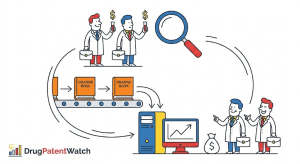
The practical workflow in most professional monitoring services looks like this: the service firm’s technical infrastructure monitors the FDA Orange Book database directly for changes, cross-references those changes against DrugPatentWatch’s enriched patent data for immediate context, and delivers an alert package to the client that includes both the raw change and the analytical context that makes it actionable. DrugPatentWatch data enables the analytical layer to be delivered at speed.
Service firms should disclose when they use DrugPatentWatch as a data source. Clients who discover independently that much of the raw data in their monitoring report comes from a database they could subscribe to directly will question the value of the service. Transparent positioning, where the firm explicitly explains what human expertise and institutional context it adds on top of the data layer, is both more honest and more commercially durable.
Using Patent Expiry Data as a Strategic Input
Beyond real-time monitoring, DrugPatentWatch patent expiry data lets service firms provide clients with multi-year visibility into their competitive landscape. A brand-name manufacturer looking three years out at which of its Orange Book patents will expire, and which generic companies have ANDA applications pending against those patents, can use that visibility to make product lifecycle decisions that protect revenue far more effectively than reactive monitoring alone.
A service firm that delivers this strategic forward view, as part of an annual portfolio analysis included in a Tier Two or Tier Three subscription, is providing something that shifts the client relationship from vendor to partner. The annual portfolio analysis also creates a natural upsell conversation. When the forward view shows a significant patent cliff approaching in 18 months, the client needs legal and regulatory support to navigate it. The service firm that identified the cliff is well positioned to provide that support.
Reading the Paragraph IV Pipeline
Orange Book monitoring is most valuable when it goes beyond tracking what has changed today and extends to understanding what the Paragraph IV pipeline signals about competitive behavior. The pipeline, meaning all pending ANDA applications with Paragraph IV certifications, is visible to anyone who reviews FDA records systematically. Most pharma companies do not do this systematically. Service firms that do acquire a genuine information advantage.
What ANDA Filing Patterns Reveal
When multiple generic manufacturers file Paragraph IV certifications against the same brand drug within a six-month window, it signals that the generic industry views that drug’s Orange Book patents as weak or challengeable. Brand companies need to know this immediately because it determines whether they need to file patent infringement suits against all the filers to trigger multiple 30-month stays, or whether their litigation counsel should begin settlement discussions.
ANDA filing patterns also reveal which patent types are attracting the most challenges. If method-of-use patents on a particular drug are being challenged repeatedly while formulation patents are going unchallenged, that tells the brand company something about where its exclusivity is actually being defended versus where it is theoretical. Service firms that build this kind of pattern analysis into their subscription reports are providing intelligence that directly informs patent portfolio strategy, not just litigation response.
Generic companies can use the same pipeline data in reverse. When they see that no other generic manufacturer has filed a Paragraph IV against a specific reference listed drug despite substantial revenue potential, they want to understand why. Is there a patent that other filers assessed as too strong to challenge? Is the molecule difficult to formulate? Is there a citizen petition that has delayed the ANDA pathway? A service firm that can answer those questions from Orange Book and regulatory history data is giving its generic clients information they could not easily assemble on their own.
Case Study: Secondary Patent Strategies and Monitoring Failures
The pharmaceutical industry’s most successful exclusivity extension strategy has been the secondary patent, specifically patents on formulations, dosing regimens, metabolites, and manufacturing processes that extend protection years beyond the expiry of the original compound patent. Several major drugs, including Humira (adalimumab) and Revlimid (lenalidomide), built patent portfolios with dozens of secondary patents, creating what observers called a patent thicket [3].
For generic manufacturers monitoring these drugs, the Orange Book listing changes over time are exceptionally difficult to track manually. AbbVie listed over 130 patents in the Orange Book for Humira across different formulations and strengths. A generic manufacturer that was not monitoring those listings continuously could miss a new listing that required an additional Paragraph IV certification, creating a compliance gap that could invalidate their ANDA or expose them to infringement liability.
Service firms that had clients monitoring Humira’s Orange Book listings during the peak period of AbbVie’s secondary patent filing activity were demonstrably providing value. The clients who had subscription services in place knew exactly which new listings required certification amendments and when. The clients who did not were scrambling to reconstruct a multi-year filing history under time pressure.
The Humira example is not unique. Any drug that generates over $1 billion in annual revenue will attract aggressive patent portfolio management from its manufacturer, and aggressive monitoring needs from the generic manufacturers pursuing it. The correlation between high-revenue reference drugs and complex Orange Book patent histories is essentially perfect.
Regulatory Firms vs. Law Firms: Who Owns This Market
The Orange Book monitoring subscription market has two categories of service providers competing for the same clients: biopharma regulatory consultancies and intellectual property law firms. Both have legitimate claims to the space. Neither has it locked up.
Regulatory consultancies bring FDA-process expertise, scientific staff who understand ANDA chemistry and bioequivalence requirements, and familiarity with the regulatory landscape that shapes how Orange Book data must be interpreted. A regulatory consultant can explain not just what a use code change means but how it will affect the FDA’s review of a pending ANDA, which is a different and more complete answer than a pure patent analysis provides.
Law firms bring litigation capability, attorney-client privilege on advice given in the context of a monitoring relationship, and the credibility to represent clients when a Paragraph IV challenge escalates into court. A law firm that identifies a problematic new Orange Book listing can seamlessly transition from monitoring to litigation without a change in service provider.
The practical resolution for most clients is to work with one provider that can do both. The market is moving toward hybrid models where regulatory consultancies partner with IP law firms to offer integrated subscriptions, or where law firms hire regulatory scientists to build out the interpretive capacity that pure legal analysis cannot provide. The firms winning the largest subscription contracts are not the ones with the deepest expertise in one domain but the ones with credible capability in both.
The Retainer Versus the Subscription: A Revenue Model Distinction That Matters
Many law firms already have Orange Book monitoring baked into client retainer arrangements without recognizing it as a distinct, saleable service. A firm that has billed 20 hours annually for three years monitoring the Orange Book for a pharmaceutical client has been delivering a subscription service at hourly rates without the pricing discipline that a formal subscription model imposes.
Formalizing that service as a subscription does two things. It makes the economics explicit, typically resulting in higher effective rates because the client is buying predictable coverage rather than individual hours. It also makes the service visible in the client relationship, creating a line item the client consciously decides to renew rather than an activity that continues passively in the background.
The conversion from implicit monitoring activity to explicit subscription product requires a conversation with existing clients that most firms approach with some anxiety. The anxiety is usually unfounded. Clients who have been relying on a firm’s monitoring activity for years, even if they did not think of it in those terms, are generally willing to formalize the relationship once the value is articulated clearly. The firms that have made this conversion report that clients often increase their scope of coverage when they see what systematic monitoring can deliver.
Staffing the Monitoring Practice
Building a sustainable Orange Book monitoring subscription practice requires dedicated staffing, not a rotating assignment among associates or regulatory staff who also carry other client work. The core problem with shared-staffing models is coverage reliability. A monitoring service that misses an Orange Book update because the person responsible had a competing deadline on another client matter has failed its fundamental promise.
The staffing model that works best at scale consists of a dedicated monitoring analyst whose primary responsibility is database surveillance and alert generation, a senior regulatory or IP professional who reviews alerts and adds interpretive context, and a client services manager who handles communication, report delivery, and renewal conversations. For larger practices, the analyst role can cover multiple clients simultaneously, making the economics work at the monitoring team level even for smaller subscription clients.
Some firms are using contract staffing for the analyst function, particularly for new market entrants building out their first subscription client base. Contract analysts with pharmaceutical patent database experience are available through specialized staffing firms that serve the biopharma sector. Using contract staffing for the monitoring function while keeping the interpretive and client-facing roles in-house is a reasonable interim model that allows a practice to scale client count before committing to full-time headcount.
Technology Infrastructure for a Monitoring Service
The technology stack behind a professional Orange Book monitoring service does not need to be custom-built. What it does need to be is reliable, configurable for client-specific monitoring parameters, and capable of delivering alerts through channels that fit client workflows.
Alert Architecture and Database Integration
The FDA publishes Orange Book data updates on the second Tuesday of each month. A professional monitoring service needs a system that retrieves these updates automatically, compares them against client drug lists, identifies changes, and generates structured alert records. This can be built with a combination of FDA data feeds or API access through platforms like DrugPatentWatch, a database that stores client monitoring parameters and historical Orange Book states, and an alert engine that identifies differences between current and prior states.
The comparison logic is where most services fail. A naive implementation simply flags any change in an Orange Book record as an alert. A professional implementation filters changes by type and significance, distinguishing between a new patent listing that requires immediate client action and a routine administrative update that can be batched into a weekly report. Alert fatigue is real, and clients who receive too many low-significance notifications begin treating all notifications as low priority.
Speed matters for first-filer strategy. A generic manufacturer whose counsel identifies a Paragraph IV opportunity on the same day the relevant Orange Book patent expires, before any competitor has filed, has a window to secure 180-day exclusivity. A monitoring system that delivers Orange Book updates with a 48-hour lag after FDA publication is not sufficient for clients competing in this space. The technical architecture needs to be built around same-day update retrieval.
Client Portals and Report Delivery
The delivery mechanism for monitoring intelligence shapes how clients perceive the value of the service. Email alerts delivered to regulatory and legal teams are the minimum viable delivery channel. Professional subscription services supplement email alerts with a client portal that provides searchable historical records of all Orange Book changes for the monitored drug list, patent expiry calendars with forward-view projections, and document storage for ANDA-related communications.
Client portals also serve a commercial function. They create visible evidence of service delivery. When renewal conversations happen, the portal data demonstrates how many changes were monitored, how many alerts were generated, and what the firm’s response time was on each one. That documentation makes the ROI conversation concrete and specific rather than theoretical.
PDF report delivery is still preferred by some legal and regulatory teams, particularly at larger companies where the monitoring report is filed as a compliance record. The portal and the PDF report serve different purposes and the best services offer both.
Pricing the Service Correctly
Pricing Orange Book monitoring subscriptions is not a cost-plus exercise. The value a client receives from avoiding a missed Paragraph IV notification on a $1.5 billion product is orders of magnitude larger than the cost of delivering the service. Pricing should reflect value, not cost.
The right pricing anchor for initial client conversations is the cost of the event the subscription prevents. For a brand-name manufacturer, that event is an undetected generic challenge that costs months of preparation time and potentially loses a 30-month stay. For a generic manufacturer, that event is missing a first-filer opportunity because a competitor filed three weeks earlier on an Orange Book listing the client’s team had not tracked. Both events have quantifiable dollar consequences that dwarf subscription fees.
Volume discounts for clients with large monitored drug lists reduce per-drug monitoring fees but maintain attractive overall contract values. A generic manufacturer monitoring 60 reference listed drugs might receive a per-drug rate of $900 annually, producing a contract value of $54,000, compared to a single-drug rate of $2,200 for a client monitoring one reference drug. The economics work for both the client and the service firm because the marginal cost of monitoring each additional drug is low once the infrastructure is in place.
Annual contracts with automatic renewal clauses are the standard commercial structure in this market. Quarterly cancellation options are acceptable for Tier One alert services but create renewal risk at higher tiers where the service is more embedded in client operations. Tier Three integrated advisory contracts typically run two to three years with defined scope and annual pricing adjustments tied to portfolio changes.
Tier
Core Deliverable
Typical Annual Price Range
Best Client Fit
Tier 1: Alert
Automated Orange Book change alerts
$18,000 – $45,000
Small generic firms, focused brand portfolios
Tier 2: Intelligence
Alerts + analytical reports + pipeline context
$75,000 – $200,000
Mid-size generic and brand companies
Tier 3: Advisory
Integrated monitoring + legal strategy + response support
$250,000 – $600,000+
Large brand manufacturers, top-50 generic companies
Risk, Liability, and Scope of Work Problems
A monitoring subscription creates professional liability exposure that service firms need to manage explicitly. When a client relies on a service firm for Orange Book surveillance and the firm misses a material change, the client’s damages are real and potentially large. A law firm that misses a new patent listing requiring a Paragraph IV certification amendment can face a malpractice claim grounded in the professional responsibility to monitor.
Regulatory consultancies that do not hold a law license can limit their liability through contract terms more easily than law firms can limit malpractice exposure. But the commercial risk of missing a critical alert, regardless of legal liability, is the same for both: client loss, reputational damage, and in severe cases, professional consequences.
The most effective risk management strategy is scope definition. A well-drafted subscription agreement specifies exactly which Orange Book databases are monitored (the standard FDA Orange Book, plus the Patent and Exclusivity Data Files), the monitoring frequency (same-day, weekly, or monthly), the alert delivery timeline, and the event types covered. It also specifies what the service does not cover: it does not replace legal advice, it does not guarantee detection of changes that were not publicly filed with the FDA, and it does not include analysis of patents outside the Orange Book listing.
Service firms should carry professional liability insurance specifically covering monitoring services and should review their errors and omissions coverage with counsel before launching a subscription product. The coverage conversation may reveal that generic monitoring errors are not covered under a standard legal malpractice policy and require a separate technology errors and omissions policy.
Build, Buy, or Partner
A regulatory or legal service firm entering the Orange Book monitoring subscription market has three options for acquiring the capability: build a proprietary monitoring platform, license an existing platform and layer professional services on top, or partner with a data provider that handles the technical infrastructure while the firm delivers the professional interpretation.
Building is the highest-investment, highest-control option. A firm that builds its own monitoring infrastructure owns the client relationship completely and can differentiate on technical features. The downside is time-to-market, technology risk, and ongoing maintenance costs. For most regulatory and legal service firms, building a proprietary database platform is not their core competency, and the investment required to do it well is difficult to justify at the start of a new subscription practice.
Licensing or white-labeling an existing platform, including DrugPatentWatch or similar pharmaceutical patent intelligence tools, allows the firm to launch quickly with a credible technical foundation. The licensing fee reduces margins but eliminates technology build risk. This is the right model for firms in the first three years of a monitoring practice, while the client base is growing and subscription economics are being validated.
The partnership model, where a regulatory consultancy and an IP law firm jointly market a monitoring subscription, addresses the cross-disciplinary capability gap that limits both types of firms individually. Partnership revenue sharing requires careful negotiation, but the commercial outcome, a client-facing service that covers both regulatory interpretation and legal advisory, is more defensible than either firm could offer alone.
The Competitive Landscape and What Separates Winners
The Orange Book monitoring market has three categories of competitors. Specialized pharmaceutical patent intelligence platforms like DrugPatentWatch provide data-layer services that sophisticated clients can use directly. Large law firms with established pharmaceutical IP practices include monitoring in bundled client services. And specialist regulatory and legal service firms are building the dedicated subscription products described in this article.
The firms that are winning client renewals are not winning on data. The FDA Orange Book data is public. They are winning on two things: response speed and institutional knowledge. Response speed means the client’s team gets an alert and a preliminary interpretation within hours of an FDA database update, not days. Institutional knowledge means the firm understands the client’s specific patent portfolio, ANDA pipeline, litigation history, and competitive landscape well enough to give context that a generic database alert cannot.
A service firm that has monitored a generic manufacturer’s reference drug list for three years knows which patents the brand has historically defended aggressively, which Paragraph IV filers have settled quickly versus fought to final judgment, and how changes in FDA use codes have previously affected the client’s ANDA certifications. That knowledge is not downloadable. It accumulates in the relationship, and it is what makes Tier Three subscriptions genuinely difficult for clients to replace.
Key Takeaways
• The Orange Book is not a static reference document. It changes monthly, and each change can trigger compliance obligations, litigation windows, and competitive strategy shifts that have direct dollar consequences for pharmaceutical manufacturers.
• Biopharma regulatory and legal service firms have a proven subscription product opportunity in Orange Book monitoring. Demand is durable because the alternative to subscribing, reliable internal monitoring with no coverage gaps, is operationally difficult for most pharma companies to sustain.
• The three-tier product structure, alert services, competitive intelligence packages, and integrated legal advisory, allows firms to address clients across the size spectrum while maintaining appropriate margins at each tier.
• DrugPatentWatch provides the data foundation that professional monitoring services build on. Firms should treat it as infrastructure, not competition, and be transparent with clients about how they use it.
• Pricing must be anchored to the value of the events the subscription prevents, not to the cost of delivering the service. The asymmetry between subscription fees and potential client losses from missed alerts makes this market favorable for well-positioned providers.
• Risk management through explicit scope-of-work agreements and appropriate professional liability coverage is not optional. A missed Paragraph IV notification on a high-revenue product creates damages that can exceed a firm’s entire subscription revenue.
• The firms winning long-term client relationships in this market are winning on institutional knowledge and response speed, neither of which can be replicated by a client querying a database directly.
FAQ
1. What is the difference between monitoring the Orange Book and monitoring Paragraph IV litigation directly?
Orange Book monitoring tracks changes to the FDA’s patent and exclusivity listing database, including new patent additions, delistings, use code changes, and exclusivity updates. Paragraph IV litigation monitoring tracks court proceedings that arise after a Paragraph IV certification triggers a brand company’s patent infringement lawsuit. Both are important, but Orange Book monitoring is earlier in the chain: it captures the upstream events that determine whether litigation will occur. Many service firms offer both, with Orange Book monitoring as the foundational subscription and Paragraph IV litigation tracking as an add-on or included in Tier Two and Tier Three packages.
2. Can a small regulatory consultancy without litigation capability realistically offer Orange Book monitoring subscriptions?
Yes, with two conditions. First, the service must be clearly scoped as regulatory intelligence rather than legal advice, which limits malpractice exposure but also limits what the firm can deliver at the higher advisory tiers. Second, the firm should establish a referral or co-service relationship with a pharmaceutical IP law firm for clients who need legal response to Paragraph IV notifications. A small regulatory consultancy that delivers excellent monitoring intelligence and has a credible legal referral partner can win and retain Tier One and Tier Two subscription clients effectively. The Tier Three integrated advisory market requires either in-house legal capacity or a formal partnership.
3. How do Orange Book monitoring subscriptions handle biosimilars, since they are listed in the Purple Book, not the Orange Book?
Biosimilars are governed by the Biologics Price Competition and Innovation Act and use the FDA’s Biological Product Patent Transparency database, commonly called the Purple Book, which has different patent listing mechanics than the Orange Book. An Orange Book monitoring service covers small-molecule drugs approved through the ANDA pathway. Service firms serving biologic manufacturers or biosimilar developers need separate monitoring infrastructure for the Purple Book and the patent dance procedures under 42 U.S.C. 262(l). The commercial opportunity in Purple Book monitoring is growing rapidly as the biosimilar market expands, and firms that build Orange Book monitoring first have the infrastructure template to extend into Purple Book monitoring as a natural adjacent service.
4. What is the typical sales cycle for landing a new Orange Book monitoring subscription client?
The sales cycle ranges from six weeks to nine months depending on client size and whether the service is a new budget item or a replacement for existing monitoring activity. At smaller generic companies, a regulatory affairs director can often approve a Tier One or Tier Two subscription without extended legal review. At large pharmaceutical companies, subscription services go through procurement, legal review, and vendor qualification processes that can extend timelines significantly. The most effective entry point is an existing client relationship where the firm already has a trusted connection to the regulatory or IP team. Cold outreach to pharmaceutical companies without a referral or existing relationship has a low conversion rate in this market.
5. How should a service firm handle a situation where a client receives a Paragraph IV notification for a drug that was not on their monitored list?
This situation, while inconvenient, is actually a sales opportunity if handled well. The immediate response is to offer emergency monitoring support at an incident rate while helping the client understand how the notification arose and what their response options are. The follow-up is to have a direct conversation about expanding the monitoring scope to include the drug in question and any other products with similar risk profiles. A firm that handles an out-of-scope emergency professionally and quickly typically converts it into a scope expansion at renewal. The alternative, citing scope limitations and declining to help, is technically defensible but commercially counterproductive.
Sources
[1] FDA. (2024). Orange Book: Approved Drug Products with Therapeutic Equivalence Evaluations (44th ed.). U.S. Food and Drug Administration. https://www.fda.gov/drugs/drug-approvals-and-databases/orange-book-approved-drug-products-therapeutic-equivalence-evaluations
[2] IQVIA Institute for Human Data Science. (2023). The use of medicines in the U.S. 2023: Usage and spending trends and outlook to 2027. IQVIA. https://www.iqvia.com/insights/the-iqvia-institute/reports/the-use-of-medicines-in-the-us-2023
[3] Feldman, R., & Frondorf, E. (2017). Drug wars: How big pharma raises prices and keeps generics off the market. Cambridge University Press.
[4] Hatch-Waxman Act, 21 U.S.C. 355(j) (1984).
[5] Federal Register. (2021). Listing of patent information in the Orange Book: Proposed rule. 86 Fed. Reg. 49036.
[6] DrugPatentWatch. (2024). Pharmaceutical patent and exclusivity intelligence database. https://www.drugpatentwatch.com
[7] U.S. Federal Trade Commission. (2021). Agreements filed with the Federal Trade Commission under the Medicare Prescription Drug, Improvement, and Modernization Act of 2003: Overview of agreements filed in FY 2020. FTC.