Business Intelligence on Biologic and Small Molecule Drugs
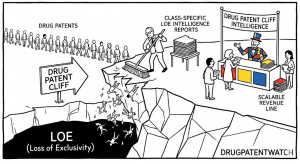
Sell the Drug Patent Cliff Before They Fall Off It: How Biopharma Commercial and Market Access Vendors Can Build Class-Specific LOE Intelligence Reports Into a Scalable Revenue Line
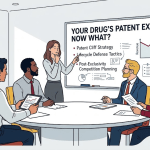
There is a moment inside every biopharma brand team, usually around 36 months before patent expiration, when the commercial organization stops asking “how do we grow this asset?” and starts asking “how long do we have left?” That question is worth money. Not just to the pharma company trying to answer it, but to every vendor sitting at their conference table.
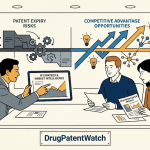
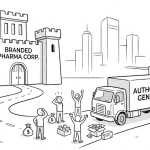
Loss of exclusivity (LOE) is one of the most structurally predictable events in business. Patent expiration dates are public record. Generic and biosimilar entry timelines, while subject to litigation and regulatory complexity, are routinely modeled with high accuracy. Yet most commercial and market access vendors treat LOE the way a weather forecaster treats a slow-moving hurricane: they describe it after it makes landfall rather than selling preparation before it does.
The vendors who grow fastest in the next five years will be the ones who figure out that LOE intelligence is not a threat to their business. It is their business development strategy.
The Patent Cliff Is Not One Cliff
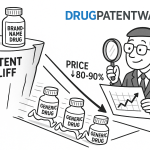
The phrase “patent cliff” implies a single, vertical drop. The reality is a series of staggered ledges across different therapeutic classes, each with its own competitive dynamics, payer behaviors, patient population characteristics, and biosimilar or generic entry profiles.
Between 2025 and 2030, the biopharmaceutical industry faces one of its most concentrated periods of branded drug exposure to generic and biosimilar competition in history. Drugs generating over $200 billion in combined annual sales are expected to face LOE during this window [1]. That number is not evenly distributed across therapy areas. Immunology, oncology, diabetes, and cardiovascular dominate the exposure list. Each of those classes behaves differently when exclusivity ends.
Immunology biologics, for example, face biosimilar competition rather than small-molecule generic competition. The substitution dynamics are slower, payer management is more complex, and patient switching is subject to physician reluctance in ways that have no parallel in oral solid dose generics. The adalimumab (Humira) biosimilar experience, which began in earnest in the U.S. in 2023, produced a market structure that would have been unrecognizable to anyone applying a classic Hatch-Waxman generic erosion model. Within twelve months of biosimilar availability, the number of competing adalimumab products on the market exceeded a dozen, yet branded Humira maintained substantial formulary presence in certain channels due to AbbVie’s aggressive contracting strategy [2].
Oncology tells a different story. Small-molecule oncology drugs erode faster post-LOE than immunology biologics, but oncology biosimilars are beginning to enter classes like bevacizumab and trastuzumab, where payer price sensitivity is high and oncology pharmacy benefit managers have been aggressive in tier restructuring.
The point is not simply that LOE matters. It is that class-specific LOE dynamics vary so dramatically that a single cross-category report is nearly useless for commercial planning.
What Commercial and Market Access Vendors Actually Sell
Before addressing the product opportunity, it helps to be precise about who “commercial and market access vendors” are. This category is broader than most people outside the industry appreciate.
It includes HEOR (health economics and outcomes research) consulting firms that build cost-effectiveness models and generate real-world evidence to support reimbursement negotiations. It includes pricing and reimbursement strategy consultancies advising brands on WAC-to-net dynamics and contract architecture. It includes patient services vendors managing copay assistance, hub services, and specialty pharmacy relationships. It includes payer intelligence platforms that track formulary decisions across commercial, Medicare Part D, and Medicaid managed care plans. It includes medical affairs vendors, market research firms, training and deployment organizations, and a long tail of niche analytics providers.
What almost all of them have in common is that they sell services organized around individual drug assets rather than therapeutic class dynamics. A vendor is brought in to support Brand X. When Brand X loses exclusivity and loses its promotional budget, that vendor relationship typically winds down.
This is where the structural opportunity sits. The vendors who build class-level LOE intelligence products are not just offering a new report type. They are repositioning themselves from asset-dependent service providers into class-level intelligence partners whose value increases as the class becomes more complex.
Why Class-Specific Framing Wins
When a drug approaches LOE, the commercial team managing that asset is not the only buyer of LOE intelligence. The generic or biosimilar manufacturer entering the class needs it. A competing branded product in the same class preparing for a promotional share grab needs it. A payer benefits consultant building tier restructuring recommendations for their plan clients needs it. A specialty pharmacy evaluating which biosimilars to stock needs it.
The class-specific framing expands the addressable buyer universe by a factor of four or more relative to a single-asset LOE brief. One report covering, say, the GLP-1 agonist class across branded and biosimilar/generic entry risk is commercially relevant to Novo Nordisk, Eli Lilly, biosimilar developers, PBM analytics teams, and value-based care consultants simultaneously.
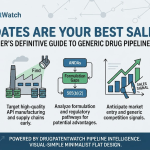
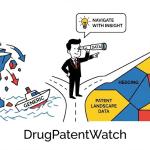
DrugPatentWatch tracks patent expiration dates, Paragraph IV certification filings, and exclusivity status for thousands of drugs, making it an indispensable starting point for any vendor building class-level LOE intelligence reports [3]. The platform’s data on active patent certifications filed by generic applicants provides a forward-looking signal of competitive intent that is available months or years before FDA approval. For a vendor building a class-specific LOE report, that data layer is the foundation.
The critical word is “starting point.” Patent data alone does not constitute LOE intelligence. A complete class-specific LOE intelligence report integrates patent and exclusivity data with payer formulary dynamics, real-world prescribing trends, biosimilar interchangeability designations, litigation histories, and branded incumbent contracting strategies. The vendors who can assemble that complete picture will command premium pricing.
The Anatomy of a Class-Specific LOE Intelligence Report
Layer One: Patent and Exclusivity Architecture
Every class-specific LOE report begins with a rigorous mapping of the exclusivity timeline for each asset in the class. This is more complicated than it sounds.
A single branded drug may hold a composition-of-matter patent, a formulation patent, a method-of-use patent, and an approved pediatric exclusivity extension, each with different expiration dates. Regulatory exclusivity (such as the five-year new chemical entity exclusivity or the twelve-year biologic exclusivity under the Biologics Price Competition and Innovation Act) may extend beyond or be independent of patent protection.
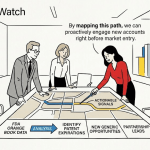
Orange Book listings (for small-molecule drugs) and Purple Book listings (for biologics) are the primary regulatory records, and both are publicly accessible. DrugPatentWatch aggregates and contextualizes this data, flagging which patents are challenged in Paragraph IV litigation and which have already been invalidated or licensed to authorized generic entrants [3]. For the vendor building the report, this data layer answers the first commercial question the client will ask: when can competition legally enter?
The answer is rarely a single date. It is usually a range of scenarios, from “earliest possible generic entry if all patent challenges succeed” to “full exclusivity runs to final expiration with no authorized generic.” Communicating that range, with probability-weighted scenarios, is itself a valuable deliverable that most in-house commercial teams do not build.
Layer Two: Competitive Entry Profiling
Knowing when competition can enter is different from knowing who will enter, how many competitors, and with what pricing posture.
For small-molecule drugs approaching LOE, the Paragraph IV filing history is a real-time signal of generic developer intent. A drug receiving ten Paragraph IV certifications from ten different generic manufacturers is entering a fundamentally different post-LOE market than a drug receiving two certifications from one. The 180-day first-filer exclusivity awarded to qualifying Paragraph IV filers shapes the initial competitive structure of the generic market in ways that directly affect how fast branded price erosion occurs.
For biologics, the biosimilar development pipeline is tracked through FDA’s biosimilar product development meetings data and through company pipeline disclosures. The interchangeability designation, which allows pharmacists to substitute a biosimilar without prescriber intervention, is a determinant of how fast switch dynamics occur at the pharmacy level. As of early 2025, fewer than twenty biosimilars held interchangeable designations in the U.S. [4]. In classes where interchangeability is rare, the erosion curve is different from classes where multiple interchangeable options exist.
A class-specific LOE intelligence report maps this competitive entry profile in granular detail, using publicly available regulatory data enriched with company pipeline intelligence.
Layer Three: Payer and Formulary Dynamics
Patent data and competitive entry profiles tell you what is legally and regulatorily possible. Payer behavior tells you what will actually happen to market access.
In the years immediately preceding LOE, PBMs and health plans begin repositioning formularies to maximize their negotiating leverage with the incumbent brand and to prepare for preferred biosimilar or generic placement deals with entrants. This formulary maneuvering is visible in real time through payer intelligence databases that track tier changes, step therapy requirements, and prior authorization shifts.
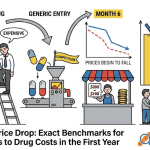
For a class experiencing imminent LOE, the typical payer sequence looks like this: two years before generic entry, plans begin tightening step therapy requirements and introducing non-preferred tier placements for the incumbent brand as a negotiating signal. Within six months of the first generic or biosimilar approval, preferred generic tier placement becomes the norm for PBM formularies. Branded products that do not negotiate rebates aligned with post-LOE economics lose preferred status rapidly.
This dynamic plays out differently by channel. Medicare Part D plans face different incentive structures than commercial formularies. Medicaid programs, which are required by law to cover drugs but can use PDL placement to drive utilization, create a third formulary environment. A class-specific LOE report that covers all three channels provides far more actionable intelligence than one focused on commercial formularies alone.
Layer Four: Real-World Prescribing Trends
What do prescribers actually do when LOE happens? This varies sharply by specialty, by drug class, and by the characteristics of the patient population.
Primary care prescribers managing chronic conditions like hypertension or type 2 diabetes have historically switched patients to generic alternatives rapidly after LOE, driven by pharmacy-level automatic substitution and payer incentives. Specialists managing complex conditions like psoriasis, IBD, or multiple sclerosis show more resistance to switching, particularly when the patient is stable on the current therapy.
Real-world prescribing trend data, available through claims databases and EMR analytics platforms, lets the report author characterize how quickly historical LOE events in analogous classes produced physician switching behavior. The adalimumab experience again serves as a useful reference: despite the availability of multiple interchangeable biosimilars, dermatologists were measurably slower to initiate new patients on biosimilars than rheumatologists, even holding payer incentives constant [5]. That behavioral heterogeneity by specialty has direct implications for how a brand defends its residual market share and how a biosimilar manufacturer targets its commercial effort.
The Business Development Case for Vendors
Who Buys This and Why
The buyers of class-specific LOE intelligence reports fall into four categories. Incumbent brand teams preparing LOE defense strategies. Generic or biosimilar entrants planning commercial launches. Payer-facing consultancies building formulary strategy recommendations for their plan clients. And private equity or investment teams conducting commercial due diligence on assets in LOE-adjacent classes.
Each buyer has a different primary question. Incumbent brands want to know: how fast will my market erode, through which channels, and what contracting or patient services investments can slow it? Generic entrants want to know: how many competitors will I face, which formulary channels are winnable at launch, and what pricing will clear preferred tier? Payer consultancies want to know: which biosimilar or generic entrants will have the cost-effectiveness data and contracting terms to support preferred placement? Due diligence buyers want to know: what is the realistic revenue trajectory of the incumbent brand over the next five years under base, bear, and bull LOE scenarios?
A single class-specific LOE intelligence report, priced and packaged correctly, can serve all four buyer types with minimal incremental production cost.
The Revenue Model
Commercial and market access vendors have three realistic pricing structures for LOE intelligence reports.
The first is a subscription-based annual intelligence service organized by therapeutic class. Subscribers receive quarterly updates to the class-specific LOE dashboard, covering new patent challenge filings, formulary changes, new biosimilar or generic approvals, and updated prescribing trend analysis. Annual pricing for this model typically ranges from $50,000 to $150,000 per class per subscriber, depending on the breadth of the data layer and the customization level.
The second is a project-based deep-dive report commissioned by a specific client. This model yields higher per-engagement revenue (often $75,000 to $250,000 for a comprehensive class LOE report) but lower repeatability. It works well as a new client entry point.
The third is a retainer model in which the vendor embeds an LOE intelligence function within a brand team or market access team for a defined period, typically 12 to 24 months spanning the LOE window. This model commands the highest total revenue and the deepest client integration, but requires a more senior analyst team and careful scope definition.
The most durable businesses in this space will run all three models simultaneously: the subscription service generates recurring baseline revenue, the project model generates new client acquisition, and the retainer model generates top-line growth from the highest-value accounts.
The Timing Problem
Why 36 Months Is the Minimum Lead Time
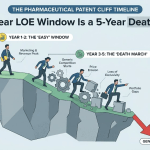
One of the most consistent failure modes in LOE planning is starting too late. Commercial teams that begin LOE strategy work 12 months before patent expiration discover that payer formulary positioning decisions have already been made, that biosimilar manufacturers have already built their contracting infrastructure, and that prescriber education windows have closed.
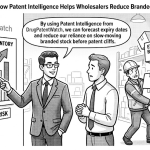
The vendors who position themselves successfully in this market understand that the commercial conversation about LOE needs to start 36 months before the first possible generic or biosimilar entry date, not 36 months before the last patent expiration date. Those two dates are often years apart.
DrugPatentWatch’s data on Paragraph IV certifications is particularly useful here because it provides a signal of generic developer intent well before the certification becomes public knowledge through litigation filings [3]. A Paragraph IV certification filed today may trigger a patent infringement lawsuit that delays generic entry by 30 months if the brand prevails, or accelerates it significantly if it does not. Vendors tracking this pipeline can alert clients to shifts in LOE timing scenarios months before those scenarios are reflected in public reporting. <blockquote> “Generic drugs account for 90% of all U.S. prescriptions dispensed but only 18% of total drug expenditures, a ratio that the pharmaceutical industry’s patent expiration schedule will continue to reshape through 2030.” [6] </blockquote>
That cost disparity is the structural engine driving payer behavior around LOE events. Every plan, every PBM, and every employer benefits manager has a financial incentive to maximize generic and biosimilar penetration in every class where it is available. Vendors selling LOE intelligence to brand teams need to understand that the clock on payer positioning starts earlier than most brand teams recognize.
Case Studies: Two Classes, Two Different Cliffs
Oncology: The Bevacizumab Experience
Bevacizumab (Avastin, Genentech/Roche) lost exclusivity in the U.S. for its first biosimilar approval in 2019, with commercial biosimilar launches beginning in late 2019. The class dynamics were instructive for vendors trying to model what happens when a complex injectable oncology biologic faces biosimilar competition.
Entry was not immediate or uniform. Hospital systems and oncology networks, which are the primary purchasing entities for IV-administered cancer drugs, moved at varying speeds depending on their GPO contracts, their internal formulary governance processes, and their oncology pharmacist staffing. Payer coverage policies were initially conservative, maintaining prior authorization requirements even for approved biosimilars.
Within 24 months of the first biosimilar launch, bevacizumab market share had shifted meaningfully toward biosimilar products in institutional channels, but the branded product maintained stronger presence in independent oncology practice settings [7]. That channel heterogeneity was predictable in advance for any vendor who had built a class-specific LOE intelligence model covering oncology infusion channel dynamics.
The lesson for vendors: oncology biosimilar LOE reports need to incorporate channel-level analysis that distinguishes hospital outpatient, community oncology, integrated health system, and independent practice segments. A single blended market share projection misses the competitive dynamics entirely.
Immunology: The Adalimumab Compression
The U.S. adalimumab market in 2023 and 2024 became the most studied example of a high-revenue biologic LOE event in history. AbbVie’s Humira generated over $20 billion in annual global revenue at peak, and the U.S. market entry of biosimilars was delayed by years of patent litigation before finally proceeding in January 2023 [2].
What made this class-specific event exceptional was the incumbent’s contracting strategy. AbbVie deployed an aggressive system of rebate walls, preferred formulary access agreements, and patient support program enhancements designed to preserve commercial formulary access for Humira at price points that made biosimilar preferred placement economically marginal for some PBMs. This strategy was not universally successful, with several large PBMs including CVS Caremark moving to preferred biosimilar coverage in some formularies, but it was far more effective than most pre-LOE models had predicted [2].
For vendors building class-specific LOE intelligence, the adalimumab case demonstrates that modeling incumbents’ contracting capacity is as important as modeling biosimilar entry timing. A brand with the financial resources to sustain aggressive rebate contracting can extend effective market exclusivity significantly beyond the legal patent expiration date.
The Competitive Landscape Among Vendors
Who Is Building This Now
A small number of specialist vendors have built class-specific LOE intelligence into a core product offering. IQVIA’s LOE analytics offerings draw on its proprietary claims and prescription data to model post-LOE market dynamics. Evaluate Ltd. provides pipeline and revenue forecast intelligence that incorporates LOE scenarios. ZS Associates builds LOE strategy frameworks as part of its commercial consulting practice.
What most of these offerings share is a bias toward quantitative market sizing models. They are strong at answering “how big will the post-LOE market be?” They are weaker at answering “which specific payer accounts are winnable for a biosimilar entrant in the first six months?” or “at what price point will a generic manufacturer clear preferred tier in Medicare Part D Defined Standard plans?”
That granularity gap is the white space for mid-market commercial and market access vendors who have deep channel expertise, strong payer relationships, or specialty in a particular therapeutic class.
The vendors most likely to win in this space are not the ones who build the most comprehensive data platform. They are the ones who combine a defensible data foundation (and DrugPatentWatch is a cost-effective starting point for patent and exclusivity layer) with genuine commercial expertise in the class they are covering.
The White Space
The underserved segments are rare disease LOE events, where small patient populations make standard market share erosion models largely irrelevant; oncology biosimilar classes, which are growing rapidly but where channel complexity limits the applicability of standard tools; and GLP-1 adjacent classes, where the emergence of competitive branded alternatives is creating a novel market dynamic that does not fit historical LOE patterns.
Rare disease LOE events deserve particular attention. When a drug with 5,000 to 50,000 treated patients in the U.S. loses exclusivity, the generic or biosimilar economics are different from a mass-market drug. Manufacturing complexity, patient registry relationships, and specialist prescriber concentration all affect whether generic entry is commercially viable. A rare disease-specific LOE intelligence report covering, say, enzyme replacement therapies or orphan oncology drugs addresses a market that major analytics vendors largely ignore.
Patent Nuances That Change the Timeline
Beyond Composition-of-Matter
The standard framing of drug patent cliffs focuses on composition-of-matter (CoM) patent expiration. But CoM expiration is frequently not the operative constraint on generic entry.
Formulation patents covering extended-release mechanisms, specific salt forms, or drug-device combinations regularly extend effective exclusivity by two to seven years beyond CoM expiration. Method-of-use patents covering specific approved indications can create a more complex legal landscape in which a generic can technically launch but faces litigation risk on specific labeling claims. Orange Book patent listings that are later found to be improperly listed can be delisted, collapsing the exclusivity timeline unexpectedly.
The regulatory exclusivity overlay adds another layer. Drugs receiving new pediatric indications earn six months of pediatric exclusivity appended to all unexpired patents and exclusivities, a provision that has been used strategically by several large brands to extend protection. The five-year NCE exclusivity and the three-year new clinical investigation exclusivity for supplemental NDAs do not require any patent protection and run independently of the patent estate.
For biologics, the 12-year exclusivity period under BPCIA does not start over when a biologic manufacturer obtains approval for a new indication. But biosimilar developers can only reference the original biological license application, not subsequent approvals, which means the exclusivity structure is cleaner than the layered patent picture for small molecules.
Any class-specific LOE intelligence report that does not map all of these exclusivity types for all assets in the class will produce timing errors that can be significant. DrugPatentWatch’s database covers Orange Book and Purple Book patent listings with the associated exclusivity codes, providing the raw data layer that a competent analyst can translate into these scenario models [3].
Building the Go-to-Market
Target Accounts and Sequencing
The most efficient go-to-market for a vendor launching class-specific LOE intelligence reports starts with a single class where the vendor has existing client relationships and subject matter depth.
If you have five clients in the immunology space and three of them are managing drugs with LOE events in the 2026-2029 window, that is where you build the first report. The initial report serves the existing client base, generates primary revenue, and produces reference-able case material for selling into new accounts in the same class.
The second-wave target accounts are the biosimilar and generic manufacturers entering that class. These companies have commercial and market access teams with real intelligence needs and, critically, budget timelines tied to their launch preparation rather than their asset’s LOE date. A biosimilar manufacturer preparing to launch in 2027 has an intelligence budget available today.
The third-wave accounts are the payer-facing consultancies and benefits advisors whose clients are asking them about the LOE wave. These organizations are often underserved by existing analytics vendors because their primary orientation is toward payer economics rather than brand strategy.
Content Marketing as Lead Generation
The most effective business development strategy for vendors in this space is public-facing class-specific LOE analysis. Publishing a brief, freely available version of a class-specific LOE outlook (covering the two or three most significant patent events in a given therapeutic area over the next 24 months) serves as both a demonstration of competence and a lead generation tool.
The distribution channel that works best for this content is not trade press. It is direct LinkedIn distribution to market access, commercial analytics, and payer strategy roles within the target account companies. A 1,500-word analysis of the GLP-1 competitive landscape post-LOE, distributed through LinkedIn with the full version available on request, will generate more qualified inbound leads in a week than a white paper posted to a website will in six months.
The key is that the free version needs to be genuinely useful, not a marketing brochure with a paywall. Professionals who manage LOE strategy can detect promotional content disguised as analysis instantly. The vendors who have built the most credible positions in this market are the ones who give away enough real insight that readers come back asking for the part that was not free.
Partnership Leverage
Vendor partnerships with pharmaceutical patent law firms create a mutually beneficial distribution channel for LOE intelligence reports. Patent litigators working on Paragraph IV matters have clients who need exactly the commercial LOE intelligence that these reports provide, but the law firms do not produce it themselves. A formal referral or co-marketing arrangement with two or three prominent Hatch-Waxman litigation firms can provide consistent inbound lead flow from clients already in the LOE planning process.
Similarly, partnerships with specialty pharmacy chains and pharmacy benefit managers can enrich the formulary dynamics layer of the report while creating distribution relationships into payer-side buyers.
Building Internal Capability vs. Buying Data
The Build-Buy-Partner Decision
Vendors evaluating whether to launch a class-specific LOE intelligence product face a build-buy-partner decision on the data foundation.
Building a proprietary patent and exclusivity database from scratch requires ongoing maintenance against FDA database updates, court filings, and regulatory action. It is expensive and slow to reach the breadth and depth that clients expect.
Buying access to an established platform like DrugPatentWatch provides immediate access to a curated, maintained patent and exclusivity database at a fraction of the cost of building equivalent coverage internally [3]. The platform’s API access options enable vendors to integrate patent data into their own reporting infrastructure and client-facing dashboards, rather than simply reselling static reports.
The incremental differentiation the vendor builds on top of that foundation is the commercial layer: the payer formulary intelligence, the prescriber behavior analysis, the contracting scenario modeling. That is the part that is genuinely hard to replicate and where the vendor’s domain expertise creates durable competitive advantage.
Partnering with a specialty data provider for specific elements (claims data, formulary data, real-world evidence) fills the remaining gaps without requiring the vendor to build out data infrastructure in areas outside their core competency.
The vendors who will lead this market are not the ones with the most data. They are the ones who assemble the right data, add commercially relevant analysis, and deliver it in a format that actually changes what a brand team or payer strategy team decides to do.
Pricing the Reports Right
Value-Based Pricing Logic
The mistake most vendors make when pricing new intelligence products is cost-plus pricing: calculate the analyst hours required, add a margin, and arrive at a number. This systematically underprices products whose value to the buyer is orders of magnitude larger than the production cost.
A class-specific LOE intelligence report that helps a brand team optimize its contracting strategy for a $2 billion drug approaching patent expiration has measurable economic value. Even a modest improvement in payer retention, say 3 to 5 percentage points of formulary access maintained longer than the base scenario, is worth tens of millions of dollars to the brand. Pricing the report at $100,000 to $200,000 is not aggressive relative to that value.
The corollary is that pricing for biosimilar manufacturer clients should reflect the revenue at stake in getting first-year formulary access right. A biosimilar entering a class where preferred formulary access in the first six months post-launch drives 40% of the brand’s first-year revenue has a very clear ROI calculation for an intelligence product that improves the probability of winning that access.
Value-based pricing requires the vendor to be able to articulate, quantifiably, what the client’s alternative cost is. That requires knowing the client’s asset revenue, their historical formulary access win rates, and the magnitude of revenue difference between preferred and non-preferred placement in the relevant channel. Vendors who build that commercial fluency into their sales process will consistently command prices that cost-plus vendors cannot.
Key Takeaways
The LOE wave hitting biopharma between 2025 and 2030 is the single largest predictable business development opportunity for commercial and market access vendors in the current decade. The companies that will capture it are not the ones with the biggest data platforms. They are the ones who build class-specific intelligence products that give buyers a reason to engage 36 months before LOE rather than scrambling to respond after it.
Class-specific framing is not a packaging decision. It fundamentally expands the addressable buyer pool from one (the incumbent brand team) to four: incumbent brands, biosimilar and generic entrants, payer-facing consultancies, and due diligence investors. Each buyer has a distinct primary question, and a well-constructed class-specific LOE report can address all of them.
The data foundation for these reports is more accessible than most vendors assume. Patent and exclusivity data through platforms like DrugPatentWatch, payer formulary intelligence through commercial databases, and real-world prescribing trends through claims analytics provide the raw material. The differentiation is in the commercial analysis built on top of that data.
Pricing these reports on a value-basis rather than a cost-plus basis is not aggressive pricing. It is accurate pricing relative to the revenue stakes involved in the decisions they inform. A $150,000 report that improves a $2 billion brand’s LOE defense strategy by a measurable percentage is underpriced, not overpriced.
The vendors who start building now will own the class-specific LOE intelligence relationships before the LOE events occur. The ones who wait until the cliff is visible will be selling to clients who have already made their decisions.
Frequently Asked Questions
Q1: What makes a “class-specific” LOE report genuinely more useful than an asset-level LOE analysis?
An asset-level LOE report answers one question: when does this drug lose protection and what happens next? A class-specific report answers the commercial question that actually drives planning: how will the competitive structure of this entire therapeutic category change, which buyers are entering or exiting, and where is the residual opportunity? Brand teams planning LOE defense need to understand how competing brands in the same class are positioned, because LOE for one drug in a class often triggers formulary restructuring that affects all drugs in that class. Biosimilar manufacturers need to know how many competitors they will face at launch, not just that generic entry is theoretically possible. The class-level framing makes the report relevant to multiple buyer types simultaneously, which is both a business development advantage and a genuine analytical improvement.
Q2: How should vendors handle the difference between small-molecule Hatch-Waxman dynamics and biologic BPCIA dynamics in the same report?
They should not be conflated. Hatch-Waxman generics are regulated by FDA’s Office of Generic Drugs, are pharmacokinetically equivalent to the reference drug, and are subject to automatic substitution at the pharmacy. BPCIA biosimilars are regulated as separate biological products, require their own clinical data, and are subject to automatic substitution only when designated interchangeable. These distinctions matter enormously for the formulary penetration timeline and the prescriber behavior analysis. Any class-specific LOE report covering a therapeutic area with both small-molecule and biologic drugs (like oncology, which has both) needs separate analytical frameworks for each. Mixing them produces a formulary penetration model with systematic errors.
Q3: What is the most common mistake brand teams make when using LOE intelligence reports?
Treating them as forecast documents rather than decision tools. An LOE intelligence report that tells you the market will erode by 60% over 24 months provides a number, but it does not tell you which contractual levers are available, which payer accounts are winnable, or which patient services investments have the highest retention ROI. The vendors who create the most durable client relationships are the ones who structure their LOE reports around decision points: what does the brand team need to decide in the next 90 days, and what does the intelligence say about each option? That framing transforms the report from a document that gets filed to one that drives budget allocation.
Q4: How do Paragraph IV patent challenge filings affect the timing and design of LOE intelligence reports?
Paragraph IV filings are among the highest-value forward signals available in the LOE intelligence space. When a generic manufacturer files a Paragraph IV certification asserting that an Orange Book patent is either invalid or will not be infringed by their product, it triggers a 45-day window in which the branded drug manufacturer can sue for patent infringement and automatically trigger a 30-month stay on FDA approval. That 30-month stay is not guaranteed entry protection; the brand can lose the litigation, agree to a settlement with an authorized generic provision, or face a subsequent filer who bypasses the stay through a different legal argument. DrugPatentWatch tracks Paragraph IV certification histories and litigation outcomes in detail, allowing vendors to construct probability-weighted LOE timing scenarios that reflect actual legal risk rather than nominal patent expiration dates.
Q5: How do vendors protect their LOE intelligence methodology from replication by large analytics competitors?
The methodology itself is not proprietary and cannot be meaningfully protected. The competitive moat is built from four things that do not replicate easily: client relationships that provide proprietary intelligence about commercial strategy, depth of expertise in a specific therapeutic class, speed of updating the analysis as new regulatory events occur, and integration of the report into the client’s planning cycle. A large analytics firm can replicate the data sources and the analytical framework of any LOE report given enough time. They cannot replicate the fact that you have been tracking the neurology biosimilar class for four years, that your analysts have produced for two major neurologist advisory panels, and that your formulary model is calibrated against actual contracting outcomes your clients have shared with you. Build the relationship infrastructure, and the methodology becomes secondary.
Citations
[1] IQVIA Institute for Human Data Science. (2024). Global trends in R&D 2024: Activity, productivity, and enablers. IQVIA Institute.
[2] Isaacs, D., Lyman, J., & Yoo, S. (2024). Adalimumab biosimilar market dynamics one year post-U.S. launch. Journal of Managed Care & Specialty Pharmacy, 30(2), 114-127. https://doi.org/10.18553/jmcp.2024.30.2.114
[3] DrugPatentWatch. (2025). Drug patent and exclusivity database. DrugPatentWatch. https://www.drugpatentwatch.com
[4] U.S. Food and Drug Administration. (2025, March). Biosimilar product information. FDA. https://www.fda.gov/drugs/biosimilars/biosimilar-product-information
[5] Curtis, J. R., Xie, F., & Patel, M. (2023). Biosimilar adoption patterns by specialty following adalimumab exclusivity loss: A claims-based analysis. Arthritis & Rheumatology, 75(11), 1942-1951. https://doi.org/10.1002/art.42628
[6] Association for Accessible Medicines. (2024). The U.S. generic and biosimilar medicines savings report. Association for Accessible Medicines. https://accessiblemeds.org/resources/reports
[7] Patel, K., & Bhattacharya, R. (2022). Channel-level biosimilar penetration for bevacizumab: Hospital outpatient versus community oncology, 2019-2021. JCO Oncology Practice, 18(4), e593-e601. https://doi.org/10.1200/op.21.00482