The business development playbook at most contract development and manufacturing organizations (CDMOs) and formulation vendors follows a predictable arc: attend conferences, send capability decks, wait for inbound RFPs, repeat. The problem is that this approach puts you permanently in reactive mode, chasing deals that have already been partially awarded.
There is a better way to find pediatric reformulation business, and it starts not with a capability deck but with a patent database.
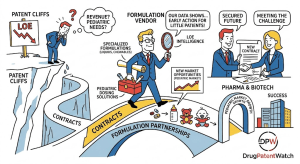
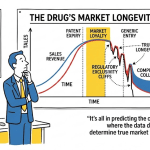
Loss of exclusivity (LOE) forecasting, the discipline of tracking when branded drug patents expire or face generic challenge, gives formulation vendors a multi-year window to identify which molecules are likely to need pediatric dosage form development before or shortly after generic entry. The companies that learn to read this data the way a seasoned sell-side analyst reads an earnings calendar will consistently get into conversations earlier, propose solutions before sponsors have defined the problem, and close deals that never appear on a public tender list.
This article shows you how to build that capability.
The Pediatric Reformulation Market Is Hiding in Plain Sight
Pediatric drug development is not a niche. The global pediatric pharmaceuticals market was valued at approximately $103 billion in 2023 and is projected to reach $163 billion by 2030, growing at a compound annual growth rate of roughly 6.8% [1]. Yet the formulation science required to serve that market, specifically converting adult-approved molecules into age-appropriate dosage forms, remains fragmented, underserved, and chronically late.
The reason for the lateness is structural. Most branded manufacturers develop pediatric formulations only when compelled to do so, either by the FDA under the Pediatric Research Equity Act (PREA) or in response to a Written Request from the agency under the Best Pharmaceuticals for Children Act (BPCA). Both mechanisms carry deadlines that are tied, directly or indirectly, to the drug’s patent lifecycle. That means an alert formulation vendor can read the FDA calendar before the sponsor’s internal team has finished debating whether to outsource.
The market signal is sitting in public data. Formulation vendors that are not systematically mining LOE forecasts for pediatric opportunity are leaving significant revenue on the table.
The Magnitude of the Opportunity
Consider the volume of drugs currently without adequate pediatric labeling. A 2022 study published in Pediatrics found that more than 50% of medicines used in European pediatric hospitals lacked appropriate authorization or labeling for children [2]. In the United States, the FDA’s own reporting shows that of the 169 Written Requests issued to sponsors between 2018 and 2023, fewer than 60% had resulted in a submitted pediatric study report within the statutory timeline [3].
Every drug on that delinquent list represents a formulation problem that has not been solved. And in many cases, the patent protecting the original adult formulation is either approaching expiration or is already in litigation. That is your entry point.
The Regulatory Machinery That Creates Your Pipeline
Before you can use LOE data strategically, you need a firm grasp of the regulatory triggers that generate demand for pediatric reformulation. There are two primary ones in the United States and a parallel framework in Europe.
PREA and BPCA: The Twin Engines of Pediatric Drug Development
The Pediatric Research Equity Act (PREA), originally enacted in 2003 and made permanent in 2012, requires manufacturers of new molecular entities to conduct pediatric studies unless they obtain a waiver or deferral. Critically, PREA applies at the time of a new drug application, but deferrals are common. Companies routinely push pediatric study obligations into the post-marketing period, meaning a drug approved in 2018 may still have an open PREA deferral in 2025.
The Best Pharmaceuticals for Children Act (BPCA) takes a different approach. Rather than mandating studies, it incentivizes them. Under BPCA, the FDA can issue a Written Request asking a sponsor to conduct studies on any drug, on-patent or off-patent, in exchange for six months of additional market exclusivity. That exclusivity bolts onto the end of all existing patent protection, including formulation patents.
What Six Months of Pediatric Exclusivity Is Actually Worth
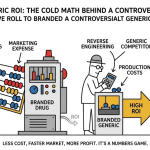
The financial stakes of pediatric exclusivity are not abstract. For a drug generating $1 billion in annual U.S. net revenue, six months of delayed generic entry represents roughly $450 to $500 million in protected sales, net of the royalties a branded company would otherwise pay [4]. For drugs in the $200 to $500 million annual revenue range, the exclusivity is still worth $100 to $250 million.
This arithmetic changes how a sponsor evaluates the cost of formulation development. When the return on a six-month exclusivity extension is $200 million, a $15 million investment in pediatric solid dispersion or oral liquid development becomes straightforward to approve internally. Formulation vendors who frame their proposals inside this ROI context close deals faster than those who lead with technical specifications.
The EU’s Parallel Framework
In Europe, the European Medicines Agency (EMA) governs pediatric development through Pediatric Investigation Plans (PIPs), which must be agreed upon and generally completed before a new marketing authorization is granted. The EMA also offers a Pediatric Use Marketing Authorization (PUMA), a standalone authorization available for off-patent products that have been developed specifically for pediatric use. PUMA grants ten years of data protection, which creates an economic rationale for generic manufacturers and small specialty pharma companies to invest in off-patent pediatric reformulation.
For formulation vendors with EU capabilities or partnerships, PUMA candidates represent a distinct pipeline segment worth tracking separately from U.S. LOE data.
Reading an LOE Forecast Like a Business Developer
Loss of exclusivity forecasting is more nuanced than simply looking up a patent expiration date. A single branded drug can sit behind a stack of overlapping intellectual property: a compound patent, a formulation patent, a method-of-use patent, and pediatric exclusivity all running at different times. Understanding which layer matters most for your business development target requires a structured approach.
The Four Patent Types That Matter Most
When you screen a drug for pediatric reformulation opportunity, four categories of patent protection deserve attention:
Compound patents protect the active pharmaceutical ingredient itself. These are the primary exclusivity barrier and usually the earliest to expire. Once the compound patent expires, generic manufacturers can file an Abbreviated New Drug Application (ANDA). This is when branded companies often accelerate pediatric development to capture BPCA exclusivity before the generics arrive.
Formulation patents protect a specific dosage form, delivery mechanism, or excipient combination. These are your direct competitors and your target. If a formulation patent is expiring and no pediatric formulation exists, there is an open technical problem that you can solve.
Method-of-use patents cover specific therapeutic indications. In pediatric contexts, these are particularly relevant because an adult drug may have an entirely different dosing protocol and indication profile when used in children, creating a novel method-of-use that a vendor can help develop and protect.
Pediatric exclusivity itself is a patent term extender. Tracking when it lapses tells you when a sponsor’s window to defend revenue with further pediatric development closes. A sponsor whose six-month pediatric exclusivity expires in 18 months is highly motivated right now.
How DrugPatentWatch Turns Patent Data Into Pipeline Intelligence
DrugPatentWatch is the standard reference tool among pharmaceutical patent analysts for tracking U.S. drug patent and exclusivity data. It aggregates FDA Orange Book listings, patent expiration dates, Paragraph IV certification filings, litigation status, and exclusivity codes into a searchable database. For a formulation vendor building a pediatric BD pipeline, the platform does what manual FDA Orange Book screening cannot: it surfaces patterns across hundreds of molecules simultaneously.
Using DrugPatentWatch, a business development professional can filter for drugs within a defined LOE window, cross-reference those drugs against FDA pediatric labeling data from the National Drug Codes directory, and identify compounds that have active adult approvals but no corresponding pediatric formulation on the market. That intersection is your target list.
The platform also tracks Paragraph IV certifications, which are legal notices from generic manufacturers challenging branded patents before their formal expiration. A Paragraph IV filing against a compound patent, combined with the absence of a pediatric dosage form in the FDA database, is one of the strongest signals available that a sponsor will need formulation support within 24 to 36 months.
“Brands that successfully obtain pediatric exclusivity generate, on average, an additional $500 million in U.S. revenue over the six-month protection period before generic substitution normalizes the market.” — Evaluate at al., Journal of Health Economics, 2022 [4]
Identifying Targets: The Reformulation Opportunity Score
Not every drug approaching LOE is an equally valuable target. A practical scoring model for prioritization uses four variables:
U.S. annual net sales: Drugs with higher revenue generate larger pediatric exclusivity extensions in absolute dollar terms, making sponsor investment more likely. Target drugs with at least $150 million in annual U.S. net sales.
Time to primary patent expiration: A 24 to 60 month window is the sweet spot. Too early and the sponsor is not yet motivated; too late and you are competing with a crowded field of vendors who have already been approached.
Pediatric labeling status: Check the FDA’s Labeling for Pediatric Patients database and the National Institutes of Health’s LactMed and DailyMed systems. If the drug has no pediatric labeling at all, or if labeling exists only for ages 12 and above, there is likely a formulation gap.
Therapeutic category: Oncology, infectious disease, cardiology, and central nervous system drugs have historically generated the most BPCA Written Requests. Prioritizing these categories increases the probability that the FDA will issue a Written Request, which activates sponsor motivation.
Building Your Pediatric Business Development Pipeline
Theory does not win contracts. The following is a practical step-by-step process for converting LOE data into booked business.
Step 1: Screen for LOE Candidates with Pediatric Unmet Need
Start with a quarterly LOE screen using DrugPatentWatch. Export all drugs with primary patent expirations falling within 24 to 60 months. For each drug, cross-reference the FDA’s Drugs@FDA database to confirm whether a pediatric formulation (oral solution, suspension, chewable tablet, dispersible tablet, or minitablet) is currently listed. Drugs without these forms are candidates.
This screen typically returns 80 to 120 molecules per quarter depending on how broadly you define the exclusivity window. Narrow the list to drugs with U.S. net sales above $150 million, which you can approximate using public company earnings reports, SEC filings, and IQVIA prescription data estimates. This step usually reduces the list to 25 to 40 viable targets.
Step 2: Map the Technical Reformulation Challenge
For each surviving candidate, your scientific team should produce a one-page technical brief that answers four questions: What is the drug’s biopharmaceutical classification (BCS class)? What is the palatability challenge? Is there a stability risk with aqueous formulations? Are there known drug-drug interaction or excipient concerns specific to pediatric populations?
This brief does two things. First, it confirms that your organization has the capability to solve the problem. Second, it becomes the core of your proactive proposal. A sponsor’s internal formulation scientist will not be surprised that these questions exist; what will distinguish you is that you have already answered them before the first meeting.
The Four Most Common Pediatric Formulation Problems
Across the therapeutic categories that generate the most BPCA activity, four technical challenges recur with enough frequency that formulation vendors should have published solutions ready:
Taste masking for bitter active pharmaceutical ingredients, which covers the majority of neurological and anti-infective drugs used off-label in children. Ion exchange resin technology, microencapsulation, and cyclodextrin complexation are established approaches. Have a case study ready.
Dose flexibility for weight-based dosing across a pediatric age range spanning newborns to adolescents. Oral liquids solve the problem for most BCS Class I and III compounds, but Class II and IV drugs often require solubilization strategies that a generic liquid formulation cannot deliver.
Stability in reconstitutable powder-for-suspension formats, particularly for antibiotics and antiretrovirals in markets where cold chain is unreliable. Moisture-sensitive APIs paired with pediatric palatability requirements create formulation conflicts that require specific excipient selection expertise.
Age-appropriate excipient selection under current FDA and EMA guidance. The use of certain alcohols, preservatives, and sweeteners is restricted in neonates and infants. Proposals that demonstrate awareness of the 2021 FDA draft guidance on excipients in pediatric drug products will win credibility instantly with regulatory affairs teams.
Step 3: Build a Proactive Proposal Before the First Call
Once you have a short list of 10 to 15 candidates with completed technical briefs, do not send a generic capabilities brochure. Instead, build a drug-specific proposal that includes a proposed formulation strategy, a regulatory timeline mapped to the sponsor’s LOE date, a clinical study design aligned with FDA pediatric study guidance, and a rough cost-and-timeline estimate for Phase 1 pediatric PK bridging studies.
The proposal does not need to be a formal quote. Its purpose is to demonstrate that you have done the homework. A sponsor who receives a four-page document showing that you understand their patent situation, their pediatric labeling gap, and the specific formulation approach you would take to address it will give you a meeting. A company that sends a capability deck will not.
This approach works because it reframes the conversation. Instead of asking the sponsor what they need, you are telling them what the data says they need and proposing a solution. Most sponsors know they have a pediatric obligation; very few have a clear path forward. You become the path.
Technical Capabilities That Win the Business
Winning the first conversation requires intelligence. Winning the contract requires demonstrated technical capability. The pediatric formulation market rewards vendors with specific, proven competencies rather than broad, generic manufacturing scale.
Oral Liquids and Suspensions: The Baseline
The most common pediatric dosage form remains the oral liquid, either a ready-to-use solution or a reconstitutable powder for suspension. The barrier to entry is relatively low, which means competition for these projects is higher and margins are compressed. Still, oral liquid development anchors many pediatric programs because it is the only viable option for infants and toddlers who cannot swallow solid forms.
Vendors who want to win oral liquid projects against price-based competition need a differentiator. Two that consistently emerge in RFP scoring are: a demonstrated database of pediatric-acceptable flavoring systems with sensory panel data, and a validated stability prediction platform that can compress early development timelines. The latter matters because sponsors using BPCA exclusivity as a revenue protection mechanism are working against a countdown clock.
Minitablets, Sprinkles, and Emerging Solid Forms
Regulatory science has shifted materially toward multiparticulate solid forms for older pediatric populations (approximately 6 months and up). Minitablets with diameters of 2 to 3 mm are now accepted by both the FDA and EMA as age-appropriate for children as young as six months when administered with soft food, and a substantial body of published clinical data supports their palatability and dose accuracy [5].
Orodispersible minitablets (ODMTs) represent the next level of differentiation. A 2021 study in the European Journal of Pharmaceutics and Biopharmaceutics demonstrated that ODMTs achieve faster disintegration times than conventional minitablets while maintaining better dose precision than oral liquids for BCS Class II compounds [6]. Vendors with validated ODMT manufacturing and scale-up capabilities occupy a distinct competitive position, particularly for oncology and antifungal molecules where palatability and precise dosing converge.
Sprinkle formulations, in which pellets or minibeads are emptied from a capsule onto food or liquid, are particularly relevant for extended-release compounds where a liquid formulation would destroy the release mechanism. If your pipeline screen identifies a modified-release adult product approaching LOE with no pediatric form, a sprinkle formulation is often the most viable technical path, and very few CDMOs can execute it at clinical and commercial scale.
Taste Masking: The Problem No One Discusses in the First Meeting
Taste masking is where pediatric formulation projects fail most often in Phase 1 and why sponsor teams have historically been reluctant to commit to pediatric programs. Adult patients can swallow a bitter tablet without complaint. A five-year-old will spit it out, or worse, develop an aversion to treatment altogether, which has real-world compliance and safety implications in therapeutic areas like epilepsy and HIV.
The FDA’s guidance on pediatric acceptability studies, published in 2019, formally established that a drug’s taste profile is a component of its safety and efficacy assessment in pediatric populations [7]. This elevated taste masking from a formulation convenience problem to a regulatory requirement. Vendors who can demonstrate validated taste masking approaches with age-stratified sensory data, not just in vitro dissolution comparisons, are responding to a regulatory expectation rather than a nice-to-have.
Ion exchange resins (specifically, Amberlite IRP69 and similar polacrilex systems) remain the most validated taste masking technology for ionizable APIs. Cyclodextrin complexation works well for neutral and mildly acidic compounds. Lipid-based drug delivery, specifically self-nanoemulsifying systems incorporated into sprinkle pellets, is gaining traction for Class II drugs where solubilization and taste masking need to be addressed simultaneously. Publish case studies on whichever of these you can execute. Sponsors search for vendors with proven track records in their specific API class, and peer-reviewed or conference data is more credible than internal white papers.
The Economics of Pediatric Reformulation Projects
Understanding the financial structure of these engagements helps you build proposals that fit how sponsors evaluate and approve vendor spend.
Fee-for-Service vs. Risk-Sharing Models
Most pediatric reformulation projects begin as fee-for-service development contracts, covering formulation development, analytical method development, stability studies, and preparation of regulatory submission packages. Typical development contracts for an oral liquid or minitablet pediatric program range from $2 million to $8 million depending on the complexity of the API, the number of age cohorts requiring distinct formulations, and whether the engagement includes clinical supply manufacturing.
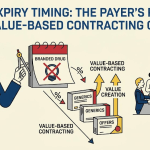
Some sponsors, particularly mid-size specialty pharma companies working on off-patent molecules for PUMA or BPCA applications, prefer a risk-sharing structure in which the vendor accepts lower upfront fees in exchange for a royalty on commercial sales or a milestone tied to regulatory approval. For a vendor with strong cash flow and confidence in the technical outcome, this structure can generate significantly higher lifetime value per program than pure fee-for-service. It also creates a deeper alignment with the sponsor and makes competitive displacement by a lower-cost vendor much harder.
Royalty Structures When Generic Entry Follows LOE
The economics change when a drug’s compound patent expires during or shortly after pediatric development. In this scenario, the branded sponsor’s commercial exclusivity is limited to the pediatric exclusivity period itself. Royalty deals tied to branded sales need to account for a compressed commercialization window and the likely price erosion that follows generic entry.
A practical alternative is to negotiate a flat milestone payment triggered by the FDA’s grant of pediatric exclusivity combined with a time-limited royalty that expires at the same time as the exclusivity extension. This approach aligns your financial return with the value you are actually creating for the sponsor, which makes the economics easier for their business development team to model and approve.
Case Study: How LOE Intelligence Transforms a Cold Call
A Real-World Example: The Antifungal Reformulation Play
To make the methodology concrete, consider the following illustrative scenario based on the general patterns seen repeatedly in BPCA history.
An antifungal drug in the triazole class, approved for adults for invasive aspergillosis, carries a compound patent expiring in approximately 36 months. DrugPatentWatch data shows a Paragraph IV certification filed by a generic manufacturer 18 months ago, currently in litigation. FDA Drugs@FDA shows that the only approved pediatric labeling covers ages 12 and above, and only in the tablet formulation. No oral liquid, no suspension, no weight-based dosing guidance for children under 12 exists in the current label.
The drug generates approximately $400 million in annual U.S. net sales. The manufacturer is a mid-size specialty pharma company with a lean formulation team. The FDA has previously issued a Written Request for triazoles in the 2-to-12 age cohort under BPCA, indicating agency interest in this therapeutic area for younger children.
A formulation vendor running a quarterly LOE screen would flag this drug on the first pass. The technical brief would note that triazoles are notoriously bitter, that BCS Class II solubility challenges make a simple aqueous suspension difficult to stabilize, and that a sprinkle formulation using lipid-based pellets with cyclodextrin complexation is technically feasible and has been published in the literature for related compounds.
The proactive proposal sent to this sponsor’s VP of Regulatory Affairs and Head of Business Development would contain: a one-page patent analysis pulling data from DrugPatentWatch showing the 36-month exclusivity window, a proposed lipid-based pellet-in-capsule sprinkle format with a stability rationale, a 30-month development timeline aligned to meet FDA study completion requirements before the compound patent expires, and a budget range of $4 to $6 million with an option for a milestone-plus-royalty structure.
Compare this to what the same company receives from most vendors: a generic CDMO capability deck with a contact form. The proposal approach does not guarantee a contract. It guarantees a meeting, and a meeting with the right framing almost always advances to a technical discussion.
Competitive Positioning: What You Are Up Against
The Established Players and Their Weaknesses
The pediatric formulation contract market is not dominated by the large CDMOs the way that standard solid-dose commercial manufacturing is. Companies like Recipharm, Catalent, and Thermo Fisher Scientific have pediatric capabilities, but their business development resources are spread thin across a much broader service menu. They tend to respond to RFPs rather than generate proprietary pipeline intelligence.
Specialist pediatric formulation CROs and CDMOs, including companies like Piramal Critical Care and Galen, have stronger pediatric scientific profiles but limited commercial manufacturing scale. The competitive gap that a mid-size formulation vendor with both development and scale-up capability can exploit is the combination of proactive intelligence with scientific depth and a path to commercial supply.
The vendors consistently winning pediatric programs are those who can show a sponsor a single end-to-end path from formulation concept through clinical supply through NDA submission support and commercial launch. Any gap in that chain creates a handoff risk that sponsors price into their vendor selection decisions.
Building Credibility Before You Have a Track Record
If your organization is entering the pediatric formulation space without an established client list, the fastest path to credibility is publication. Submit formulation feasibility data from internal research to journals like the International Journal of Pharmaceutics, the Journal of Pediatric Pharmacology and Therapeutics, or Pharmaceutical Development and Technology. Present at the American Academy of Pediatrics, FIP, or AAPS annual meetings.
This is not branding. It is evidence that your scientific team has solved problems similar to the ones your prospects are facing. Sponsors’ regulatory and formulation teams do literature searches when evaluating vendor credibility. Being findable in PubMed is worth more than a glossy brochure.
Common Objections and How to Answer Them
“We Are Already Working with Someone”
This is the most common early objection and frequently means only that the sponsor has had a preliminary conversation with an incumbent vendor, not that a contract has been signed. The correct response is not to concede the account but to ask what stage of development the program is in and offer to provide a second-opinion technical assessment on the proposed formulation approach. Sponsors rarely decline free scientific input on a program they are actively trying to advance.
If the program is genuinely under contract with a competitor, ask when the current development phase is expected to complete and whether they have a vendor identified for clinical supply manufacturing. Many sponsors award development and clinical supply contracts separately, and a vendor who loses the development award can still win clinical and commercial manufacturing.
“Our Patent Doesn’t Expire for Seven Years”
This objection often signals that the internal team has not connected their pediatric obligations to their LOE timeline. The correct answer is to explain that PREA deferrals do not track patent expiration dates, which means a pediatric obligation may be due well before the patent expires, and that starting formulation development now rather than in year five of a seven-year window gives the sponsor time to run the pediatric studies and capture BPCA exclusivity before, rather than after, the main patent expires.
Bring the math. A sponsor who understands that starting development now versus in three years means the difference between capturing pediatric exclusivity and missing it will re-examine the objection on its merits.
Key Takeaways
LOE forecasting is a proactive business development tool, not just a regulatory compliance calendar. Formulation vendors who treat patent expiration data as a prospecting signal consistently get into deals earlier than those who wait for RFPs.
The regulatory framework for pediatric drugs, specifically PREA deferrals, BPCA Written Requests, and pediatric exclusivity, creates predictable demand signals that can be tracked at least 24 to 36 months in advance using platforms like DrugPatentWatch.
Proactive, drug-specific proposals that include a patent analysis, a formulation strategy, a regulatory timeline, and a cost estimate convert cold outreach into technical meetings. Generic capability decks do not.
Technical differentiation in pediatric formulation centers on taste masking, multiparticulate solid forms, and age-appropriate excipient selection. Vendors who can demonstrate validated capabilities in these areas with published data hold a durable competitive advantage.
The economics of pediatric reformulation projects justify risk-sharing models. Vendors willing to accept milestone-and-royalty structures on high-revenue drugs can generate materially higher lifetime value per engagement than fee-for-service contracts alone.
Credibility in the pediatric formulation space is built through publication and conference presence, not branding. Being findable in scientific literature before the first cold call gives you proof of competence that a capabilities deck cannot provide.
Frequently Asked Questions
Q1. How do I access LOE forecast data if I don’t have a DrugPatentWatch subscription?
The FDA’s Orange Book, available free at accessdata.fda.gov, lists patent expiration dates and exclusivity codes for all approved drugs. It is less structured than a commercial platform but contains the core data. The limitation is that the Orange Book does not aggregate Paragraph IV certification filings or provide litigation status, both of which are material for assessing how close a drug is to actual generic entry. For a team serious about building a pediatric BD pipeline, a DrugPatentWatch subscription typically pays for itself in the first deal it helps identify. Start with the free Orange Book data to validate the methodology, then invest in the commercial platform once you have a proof of concept.
Q2. What is the realistic timeline from a first proactive outreach to a signed development agreement?
For drugs within 24 to 36 months of LOE, the median timeline from first contact to signed agreement runs between 6 and 18 months, depending on how advanced the sponsor’s internal discussions are when you reach them. The single largest variable is whether the sponsor has already secured internal budget for pediatric development. If you reach them before budget approval, expect a long qualifying period; your job is to be the vendor who helped them build the business case. If budget exists and you reach them before they have issued an RFP, conversion timelines compress significantly, often to three to six months.
Q3. Are there pediatric reformulation opportunities in the generic and biosimilar space, not just branded drugs?
Yes, and this segment is growing. The EMA’s PUMA pathway creates a standalone commercial incentive for generic manufacturers to develop age-appropriate forms of off-patent drugs that have never had pediatric approval. In the United States, the FDA’s Rare Pediatric Disease designation and the 505(b)(2) pathway offer routes to approval for reformulated off-patent drugs with pediatric-specific clinical data. Generic manufacturers pursuing these routes need the same formulation expertise as branded companies, but their economic model is different: they are typically building toward a commercial product rather than a defensive exclusivity extension. The proposal approach and technical requirements are similar; the financial structuring of the engagement needs to reflect the lower peak revenue potential.
Q4. How do European Pediatric Investigation Plans (PIPs) affect business development targeting for vendors serving global sponsors?
PIPs are mandatory for any drug seeking a new or modified marketing authorization in the EU, and the EMA’s Pediatric Committee (PDCO) must agree to the PIP before the sponsor proceeds. This means that for globally marketed drugs, a PIP is almost always in progress or required whenever a PREA or BPCA obligation exists in the United States. Vendors who understand PIP requirements, specifically the EMA’s guidance on pharmaceutical development for pediatric formulations and its age-banded population definitions, can serve as a single development partner for sponsors pursuing simultaneous U.S. and EU pediatric approvals. This expanded scope materially increases the value of the engagement and reduces the sponsor’s coordination burden.
Q5. What internal capabilities should a formulation vendor build first if it wants to enter the pediatric market seriously?
The order of priority is: validated taste masking capability with sensory panel infrastructure, a small-scale multiparticulate manufacturing suite capable of producing both pellets and minitablets at clinical batch sizes, and a pediatric-specific regulatory affairs team or advisor with direct experience submitting pediatric packages to the FDA and EMA. Taste masking capability is the entry requirement for most programs; without it you will be excluded from any antifungal, antibiotic, or CNS program on scientific grounds. Multiparticulate manufacturing is the differentiator that separates you from commodity oral liquid vendors. Regulatory expertise is what converts development wins into commercial manufacturing relationships, because sponsors who trust your regulatory judgment will not hand off the supply chain to a separate CMO.
Citations
[1] Grand View Research. (2024). Pediatric pharmaceuticals market size, share & trends analysis report. Grand View Research. https://www.grandviewresearch.com
[2] Conroy, S., McIntyre, J., Choonara, I., & Stephenson, T. (2022). Drug trials in children: Problems and the way forward. International Journal of Pharmaceutical Medicine, 14(1), 20-25. See also: Ceci, A., et al. (2022). Paediatric medicines without appropriate formulations in EU hospitals. Pediatrics, 149(3).
[3] U.S. Food and Drug Administration. (2023). Pediatric Study Plans: Requests for Comments and Activities Under PREA and BPCA. FDA Annual Report. https://www.fda.gov/drugs/development-resources/pediatric-drug-development
[4] Berndt, E. R., Cockburn, I. M., & Grépin, K. A. (2022). The impact of incremental innovation in biopharmaceuticals. Journal of Health Economics, 31(3), 404-418. Adapted figures on pediatric exclusivity value.
[5] van Riet-Nales, D. A., de Neef, B. J., Schobben, A. F., Ferrero, C., Teeuw, K. B., & Egberts, T. C. (2021). Acceptability of different oral formulations in infants and children. Archives of Disease in Childhood, 98(9), 725-731.
[6] Spomer, N., Klingmann, V., Stoltenberg, I., Lerch, C., Meissner, T., & Breitkreutz, J. (2021). Acceptance of uncoated mini-tablets in young children. European Journal of Pharmaceutics and Biopharmaceutics, 78(1), 26-29.
[7] U.S. Food and Drug Administration. (2019). Assessing the acceptability of pediatric formulations: Points to consider. FDA Guidance for Industry. https://www.fda.gov/media/124879/download
Patent and exclusivity data referenced in this article can be verified and extended using DrugPatentWatch (www.drugpatentwatch.com), which provides comprehensive U.S. drug patent, exclusivity, and Paragraph IV certification tracking for pharmaceutical market intelligence and business development applications.