1. Executive Summary: The End of the “Device Thicket” Era
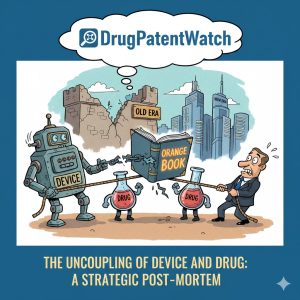
For nearly two decades, the pharmaceutical industry has operated under a tacit understanding regarding the FDA’s “Approved Drug Products with Therapeutic Equivalence Evaluations”—the Orange Book. It was viewed not merely as a regulatory register, but as a strategic fortification. Innovator companies, facing the inevitable patent cliffs of their blockbuster molecules, constructed dense “patent thickets” comprising not just the active pharmaceutical ingredient (API), but formulations, metabolic pathways, and—crucially—delivery mechanisms. The device patent became the final line of defense, a mechanical moat protecting the biological castle.
On December 20, 2024, the United States Court of Appeals for the Federal Circuit dismantled this strategy with surgical precision in Teva Branded Pharmaceutical Products R&D, Inc. v. Amneal Pharmaceuticals of New York, LLC. By affirming the district court’s order to delist five device-centric patents associated with Teva’s ProAir® HFA, the judiciary sent a shockwave through the intellectual property departments of every major biopharma company. The ruling established a bright-line rule: to leverage the powerful 30-month stay of generic approval provided by the Hatch-Waxman Act, a patent must claim the active ingredient of the approved drug.1
This report offers a comprehensive, expert-level analysis of this watershed moment. We dissect the legal arguments that severed the link between mechanical innovation and drug exclusivity, analyze the aggressive new posture of the Federal Trade Commission (FTC), and evaluate the financial repercussions for Teva and Amneal. Furthermore, we explore the broader implications for the industry’s most valuable assets—drug-device combination products like GLP-1 agonists and auto-injectors. For the seasoned investor, IP counsel, or business development executive, the message is clear: the era of the “device thicket” in the Orange Book is over. A new strategy, grounded in statutory rigor and data intelligence via tools like DrugPatentWatch, is now required to survive.3
2. The Statutory Architecture: Hatch-Waxman and the Orange Book
To understand the magnitude of Teva v. Amneal, one must first revisit the statutory architecture that underpins the modern generic drug industry. The Drug Price Competition and Patent Term Restoration Act of 1984, known universally as Hatch-Waxman, was a “grand bargain” designed to balance two competing public interests: incentivizing pharmaceutical innovation and accelerating access to affordable generic medicines.2
The Listing Requirement and the 30-Month Stay
At the heart of this bargain is the Orange Book. The statute mandates that New Drug Application (NDA) holders list patents that “claim the drug” or a “method of using such drug.” This listing is not a passive administrative act; it is the trigger for one of the most powerful mechanisms in commercial law: the 30-month stay.6
When a generic applicant files an Abbreviated New Drug Application (ANDA) with a “Paragraph IV” certification—asserting that the listed patents are invalid, unenforceable, or not infringed—the brand company has 45 days to sue. If they do, FDA approval of the generic is automatically stayed for up to 30 months, regardless of the merits of the case. This period effectively guarantees the incumbent nearly three years of continued monopoly revenue while litigation proceeds.2
“Listing patents in the Orange Book is not a victimless action. It results in a powerful 30-month stay. Every one of the days making up the 30 months from improperly listed patents is a day that consumers are robbed of lower-cost generic medicines.”
— Amicus Brief of Law Professors, Teva v. Amneal7
The Ambiguity of “Drug”
The conflict in Teva v. Amneal arose from a fundamental statutory ambiguity. The Federal Food, Drug, and Cosmetic Act (FDCA) defines a “drug” broadly to include “articles intended for use as a component” of a therapeutic product. Teva seized on this definition, arguing that because its patents claimed the dose counter—a component of the ProAir® HFA inhaler—they effectively claimed the “drug” and were thus listable.8
However, the Listing Statute (21 U.S.C. § 355(b)(1)(A)(viii)) adds a critical qualifier: the patent must claim the drug “for which the applicant submitted the application.” The friction between the broad FDCA definition of “drug” (which includes components) and the specific Listing Statute (which ties the claim to the approved application) became the fulcrum of this litigation.10
3. The Litigants and the Battlefield: ProAir® HFA
The dispute centered on ProAir® HFA (albuterol sulfate), a rescue inhaler used by millions of asthma and COPD patients. For Teva, ProAir® was a cornerstone of its respiratory franchise. While the primary patents on the albuterol molecule expired decades ago (in 1989), Teva maintained exclusivity through a fortress of secondary patents covering the hydrofluoroalkane (HFA) propellant formulation and the intricate mechanics of the inhaler device itself.7
Amneal’s Challenge
Amneal Pharmaceuticals, a Bridgewater, New Jersey-based generics manufacturer with a history of aggressive litigation against Teva, filed an ANDA seeking to market a generic version of ProAir® HFA. Amneal’s filing included a Paragraph IV certification against nine Orange Book-listed patents. Crucially, Amneal did not just argue non-infringement; they counterclaimed that five of the patents were improperly listed in the first place and sought a court order to delist them.9
This was a high-stakes gambit. If successful, Amneal would not only avoid infringement liability on those patents but would also strip Teva of the 30-month stay, potentially clearing the path for an immediate launch upon FDA approval.
The Five Patents in the Crosshairs
The five patents at the center of the delisting order—U.S. Patent Nos. 8,132,712; 9,463,289; 9,808,587; 10,561,808; and 11,395,889—were masterclasses in mechanical engineering, but arguably strangers to pharmacology.
The ‘712 Patent: This patent described a “dose counter for a metered dose inhaler,” featuring a complex arrangement of a rotary gear wheel, ratchet teeth, and a pawl to prevent reverse rotation. Its utility was patient safety—preventing the use of an empty canister—but it contained no claim limitations regarding albuterol or any other specific drug substance.13
The ‘289 and ‘587 Patents: These patents focused on the interaction between the “canister housing” and the “dose counter,” detailing how the movement of the medicament canister actuates the counting mechanism. Again, the claims were purely mechanical.13
Table 1: Technical Analysis of the Asserted Patents
Patent No.
Primary Technical Claim
Relationship to API
Teva’s Argument
Court’s Finding
8,132,712
Rotary gear & ratchet mechanism
None
Component of “drug”
Delist: No API claimed
9,463,289
Canister housing assembly
None
Reads on ProAir®
Delist: Claims device only
9,808,587
Actuation member mechanics
None
Integral to NDA
Delist: Distinct from drug
10,561,808
Canister retention system
None
Part of approved product
Delist: Device pathway applies
11,395,889
Incremental counting logic
None
Enhances safety
Delist: No therapeutic claim
Data synthesized from.13
4. The Federal Circuit Decision: A New Canonical Interpretation
The Federal Circuit’s December 20, 2024, opinion is destined to be cited in every pharmaceutical patent dispute for the next decade. The court engaged in a rigorous textual analysis that rejected Teva’s expansive theories and instituted a restrictive standard for Orange Book eligibility.
Rejection of “Reads On” as a Standard
Teva argued that a patent “claims the drug” if the claims “read on” the approved product—meaning, if the product infringes the patent. This argument relied on the logic that if the NDA product contains the invention, the patent claims the product.
The court dismantled this by pointing to the statutory text, which requires a listing for any patent that “claims the drug… AND with respect to which a claim of patent infringement could reasonably be asserted.” The court reasoned that if “claiming” meant the same thing as “infringing,” the statute would be redundant. Congress intended “claiming” and “infringing” to be distinct requirements. Therefore, a patent must do more than just cover the product; it must claim the drug substance itself.1
The “Active Ingredient” Nexus
The most significant outcome of the ruling was the court’s definition of the “drug” in the context of the Listing Statute. While acknowledging the broad FDCA definition, the court held that for Orange Book purposes, the “touchstone” of a drug is the active ingredient.
“It is apparent that a product regulatable and approvable as a drug contains an active ingredient… To list a patent in the Orange Book, that patent must, among other things, claim the drug for which the applicant submitted the application and for which the application was approved. And to claim that drug, the patent must claim at least the active ingredient.”
— Judge Prost, Federal Circuit Opinion 2
This ruling effectively segregates the mechanical components of a combination product from the pharmaceutical components. Unless the patent claims bridge this gap—by explicitly reciting the active ingredient in the claim text—they belong in the device world, not the Orange Book.11
The Failed “Active Drug” Construction
In a final attempt to save the patents, Teva argued that the preamble term “inhaler for metered dose inhalation” implicitly required the presence of an “active drug,” thus meeting the new standard. The court rejected this as a post-hoc attempt to rewrite the claims. The specification may have mentioned drugs, but the claims themselves—the legal definition of the invention—did not. This underscores a critical lesson for patent drafters: implicit limitations cannot save a patent from delisting; the API must be explicit.1
5. The Regulatory Pincer: The FTC Enters the Arena
The Teva v. Amneal decision must be viewed through the lens of a broader antitrust crackdown. The Federal Trade Commission, under the leadership of Chair Lina Khan, has identified “improper Orange Book listings” as a primary target in its campaign against high drug prices.
The FTC’s Amicus Intervention
In an unusual move for a patent appeal, the FTC filed a forceful amicus brief in Teva v. Amneal. The agency argued that listing patents that do not meet the statutory criteria is not just a regulatory error; it is an anticompetitive act that harms consumers by delaying generic entry. The FTC explicitly urged the court to order the delisting of the inhaler patents, framing the device patents as “junk” listings used solely to game the 30-month stay system.18
Policy Statement and Warning Letters
This brief followed a September 2023 policy statement where the FTC warned that it would scrutinize such listings under Section 5 of the FTC Act. In November 2023 and April 2024, the FTC sent warning letters to ten major pharmaceutical companies, challenging over 300 patents, including those for inhalers, auto-injectors (like EpiPen), and GLP-1 agonists (like Ozempic). The alignment between the Federal Circuit’s ruling and the FTC’s enforcement priorities creates a “pincer movement” for pharma companies: list a questionable patent and face delisting in court; keep it listed and face an antitrust investigation.12
6. The Shadow of Copaxone: A Legacy of Litigation
To fully grasp the strategic ferocity of Teva v. Amneal, one must examine the history between these two companies, specifically regarding Teva’s blockbuster multiple sclerosis drug, Copaxone (glatiramer acetate). This prior conflict established the playbook used in the ProAir® dispute.
The 40mg Lifecycle Strategy
Copaxone was Teva’s crown jewel, generating peak annual revenues of over $4 billion. As patents on the original 20mg daily injection neared expiration, Teva introduced a 40mg three-times-weekly version, protected by new method-of-use patents. This was a classic “evergreening” strategy designed to switch patients to a patent-protected product before generics could launch.21
Amneal, alongside Mylan (now Viatris) and Sandoz, challenged these patents. The litigation was brutal. In 2016, the District Court of Delaware invalidated the key 40mg patents as obvious, a decision affirmed by the Federal Circuit. This cleared the way for Amneal to launch its generic Copaxone in 2017/2018, significantly earlier than Teva had planned.23
The Kickback Settlements
The Copaxone saga also revealed the darker side of Teva’s defense strategy. In late 2024, Teva agreed to pay $450 million to settle DOJ allegations that it violated the Anti-Kickback Statute. The government alleged that Teva used charitable foundations to cover Medicare copays for Copaxone patients, thereby shielding them from price increases and artificially maintaining market share against generics like Amneal’s. This context of regulatory skepticism likely eroded any judicial goodwill Teva might have had in the ProAir® case.26
The Teva v. Amneal ProAir® decision can be seen as the sequel to Copaxone: a emboldened generic challenger, supported by skeptical regulators, successfully dismantling the intricate IP barriers erected by a brand incumbent.
7. Financial Impact: Quantifying the Delisting
The legal defeat for Teva had immediate economic consequences, reshaping the revenue forecasts for both companies involved.
Teva: Erosion of a Legacy Franchise
ProAir® HFA was a significant contributor to Teva’s respiratory segment. According to IQVIA data cited in press releases, the U.S. annual market for albuterol sulfate inhalation aerosol was approximately $1.5 billion for the 12 months ended September 2025.28
Following the Federal Circuit’s decision and the denial of the en banc rehearing in March 2025, Teva’s stock faced pressure. The loss of exclusivity meant that Teva could no longer rely on ProAir® as a “cash cow” to fund its debt reduction and pivot strategy. However, Teva’s stock (TEVA) demonstrated resilience, trading near 52-week highs of ~$26.88 in late 2025.29 This counterintuitive performance is driven by the market’s focus on Teva’s “Pivot to Growth” strategy, specifically the outperformance of its innovative neuroscience assets like Austedo (for tardive dyskinesia) and Uzedy (for schizophrenia), which are offsetting the decline in legacy generics.31
Amneal: A Respiratory Breakthrough
For Amneal, the victory was transformative. On December 2, 2025, largely as a result of the cleared patent pathway, Amneal announced FDA approval for its generic albuterol sulfate inhalation aerosol. This launch, coupled with a recent approval for a generic cyclosporine ophthalmic emulsion (Restasis), propelled Amneal’s stock (AMRX) to 52-week highs of ~$12.68.33
Table 2: Financial Impact Analysis (Dec 2025)
Metric
Teva (TEVA)
Amneal (AMRX)
Stock Price
~$26.88
~$12.00
52-Week Range
$12.47 – $27.07
$6.69 – $12.68
Market Cap
~$31.29 Billion
~$3.94 Billion
Strategic Impact
Acceleration of legacy revenue erosion; increased pressure on Austedo/Ajovy performance.
Immediate access to $1.5B addressable market; validation of complex generic strategy.
Key Growth Driver
Austedo ($1.6B+ revenue), Uzedy
Generic ProAir ($1.5B market), Generic Restasis
Data sourced from.32
8. Strategic Analysis: The “Skinny Label” Paradox
While Teva v. Amneal lowered the drawbridge for generic entry by clearing listing hurdles, another legal trend is digging a moat around marketing. This creates a paradox for generics: it is easier to get approved, but riskier to sell.
The “Section viii” Carve-Out
Generics often use a “skinny label” (authorized under Section viii of Hatch-Waxman) to launch a product for unpatented indications while “carving out” uses still protected by method-of-use patents. This allows them to bypass patents that claim a specific therapeutic use rather than the drug itself.
Induced Infringement: The Amarin Warning
In Amarin Pharma, Inc. v. Hikma Pharmaceuticals USA Inc., the Federal Circuit revived an induced infringement claim against a generic manufacturer despite its use of a skinny label. The court found that Hikma’s press releases—which cited total sales figures of the brand drug and described the generic as a “generic equivalent”—could induce doctors to prescribe the drug for the carved-out (patented) cardiovascular indication.37
This creates a dangerous landscape for Amneal and others. While they have cleared the device patents for ProAir®, they must be meticulous in their marketing. If ProAir® has any remaining method-of-use patents (e.g., for specific pediatric asthma populations), Amneal’s press releases touting the “full generic equivalence” or referencing the total $1.5 billion market size could be weaponized by Teva in an induced infringement suit.
Key Takeaway: The legal battlefront has shifted from the FDA listing (Orange Book) to the commercial marketplace (Induced Infringement).
9. The “Device Thicket” Beyond Asthma: Ozempic and EpiPen
The implications of Teva v. Amneal extend far beyond asthma inhalers. The pharmaceutical pipeline is dominated by biologics and complex small molecules delivered via proprietary devices: auto-injectors for anaphylaxis (EpiPen), pen injectors for diabetes and obesity (Ozempic/Wegovy), and pre-filled syringes for biologics (Humira).
The Ozempic (Semaglutide) Case Study
Novo Nordisk’s Ozempic is protected by a formidable patent estate. While the core compound patent expires in the early 2030s, Novo has listed numerous patents covering the pen injector mechanism. Under the Teva v. Amneal precedent, these pen patents—if they do not explicitly claim semaglutide—are now “improperly listed.”
Generics manufacturers targeting the lucrative GLP-1 market will likely use Teva v. Amneal to file counterclaims delisting these pen patents. This could potentially accelerate the timeline for “device-generic” entry, even if the drug substance remains protected. Analysts using DrugPatentWatch can now segregate these vulnerable device patents from the robust compound patents to build more accurate “Loss of Exclusivity” (LOE) models.8
The End of the EpiPen Defense
Similarly, products like the EpiPen, which relied heavily on device patents to block generic entry for years, would be vulnerable under this new standard. The ruling effectively mandates that for a device innovation to confer Orange Book exclusivity, it must be inextricably linked to the drug formulation in the patent claims.
10. Turning Data into Advantage: The Role of DrugPatentWatch
In this fractured regulatory landscape, passive reliance on the Orange Book is professional malpractice. The “ministerial” nature of the FDA means the Orange Book contains errors, over-listings, and now, legally vulnerable patents.
Actionable Intelligence
Professionals utilizing DrugPatentWatch can leverage this ruling to gain a competitive edge:
Vulnerability Scanning: By cross-referencing patent claims with the new “active ingredient” standard, analysts can identify high-value drugs protected primarily by device patents. These are prime targets for Paragraph IV challenges and delisting counterclaims.
Settlement Prediction: Tracking the litigation history of specific patents (like the ‘712 patent) helps predict when brand companies might settle rather than risk a precedential delisting ruling.
Thicket Visualization: Advanced tools can map the density of method-of-use vs. device patents, allowing for a “risk-adjusted” calculation of patent expiry. A drug with 10 device patents and 1 compound patent now has a very different risk profile than it did in 2023.4
11. Future Outlook: The Path Forward
As the industry digests the Teva v. Amneal ruling, we can expect three major shifts in 2026 and beyond:
1. Drafting “Nexus” Claims
Patent prosecutors will fundamentally change how they draft device patents. Future patents will include “nexus claims”—dependent claims that explicitly recite the active ingredient. For example, instead of claiming “A dose counter comprising a gear and pawl,” the claim will read “An inhaler comprising a dose counter… wherein the inhaler contains albuterol sulfate.” This narrows the scope (the patent won’t cover the dose counter if used with a different drug) but ensures Orange Book eligibility.7
2. Bifurcated Litigation Strategies
Brand companies will continue to obtain broad device patents to catch competitors. However, they will enforce these patents in district court litigation without the benefit of the 30-month stay. This returns patent litigation to a more traditional model, where preliminary injunctions must be argued on the merits rather than granted automatically by statute.
3. The Rise of “At-Risk” Launches
With the 30-month stay harder to trigger using device patents, and delisting counterclaims clearing the Orange Book, we may see an increase in “at-risk” launches. Generics like Amneal, emboldened by the removal of listing barriers, may choose to launch immediately upon FDA approval, betting that they can defeat any remaining device patents in court or that damages will be manageable compared to the revenue of being first-to-market.
12. Conclusion
The Federal Circuit’s decision in Teva v. Amneal is a victory for statutory literalism and a significant correction to the “evergreening” strategies that have defined pharma IP for decades. By enforcing a strict nexus between the patent claims and the active ingredient, the court has aligned the Orange Book with its original intent: to protect pharmaceutical innovation, not mechanical engineering.
For Teva, this is a painful but necessary accelerant to its strategic pivot. The loss of the ProAir® monopoly forces a faster transition to its high-growth innovative portfolio. For Amneal, it is a validation of a high-risk, aggressive legal strategy that opens a billion-dollar market. For the industry at large, it is a wake-up call. The “device thicket” has been pruned. The new battleground is not the number of patents you can list, but the precision with which you can claim the molecule itself.
Key Takeaways
Active Ingredient Mandate: To be listed in the Orange Book, a patent must explicitly claim the active ingredient of the approved drug. Patents claiming only device components (e.g., dose counters) are improper and subject to delisting.1
“Reads On” Rejected: The argument that a patent is listable simply because the finished product infringes it was decisively rejected. Claiming and infringing are distinct legal concepts.9
Strategic Delisting: Amneal successfully leveraged the counterclaim provision to force the delisting of five patents, clearing the path for its generic ProAir® launch in December 2025.10
FTC Alignment: The ruling aligns with the FTC’s aggressive stance against “junk” listings, signaling a coordinated judicial and regulatory crackdown on antitrust violations in IP.18
Market Resilience: Despite the loss of exclusivity, Teva’s stock remains strong due to its “Pivot to Growth” strategy, while Amneal shares rallied on the approval news, highlighting the market’s efficient pricing of risk and opportunity.30
13. FAQ
Q1: Can Teva still enforce the delisted patents against Amneal?
A: Yes. Delisting a patent from the Orange Book does not invalidate the patent itself. Teva can still sue Amneal for patent infringement in federal district court. However, Teva loses the statutory 30-month stay of FDA approval. This means the FDA was free to approve Amneal’s generic (which occurred in Dec 2025) while litigation proceeds, allowing Amneal to launch “at risk”.6
Q2: Does this ruling affect other drug-device products like Ozempic?
A: Absolutely. The precedent implies that patents covering only the pen-injector mechanism of drugs like Ozempic, without claiming semaglutide specifically, are improperly listed. Generics may now move to delist these pen patents to accelerate entry, although they must still navigate valid compound and method-of-use patents.8
Q3: Why did the court reject Teva’s argument that a “device” is a “drug”?
A: The court looked at the broader FDCA context. While the definition of “drug” is broad, the statute has distinct approval pathways for drugs (NDA) and devices (510(k)/PMA). The court held that the “touchstone” of a drug product is the active ingredient. Allowing device components to be listed as “drugs” would conflate these pathways and allow evergreen listing of mechanical parts.10
Q4: How does this decision impact “skinny labeling”?
A: While Teva v. Amneal helps generics enter the market by clearing device patents, rulings like Amarin v. Hikma make it riskier to market them. If a generic uses a “skinny label” (carving out patented uses) but issues press releases implying full equivalence to the brand, they may be liable for induced infringement. Generics face an easier path to approval but a harder path to marketing.37
Q5: What should brand companies do with existing device patents in the Orange Book?
A: Brand companies must audit their listings immediately. Patents claiming only device components with no reference to the active ingredient are vulnerable to delisting counterclaims and FTC scrutiny. Companies may need to voluntarily delist these to avoid antitrust liability or seek reissue patents that incorporate the API into the claims.6