Generic and biosimilar drugs saved the U.S. healthcare system $445 billion in 2023 alone, accumulating to over $2.9 trillion across the prior decade. The entire mechanism that makes those savings possible, from ANDA submissions to biosimilar patent litigation, runs through one contested scientific and legal activity: pharmaceutical reverse engineering.
This guide exists because the subject is underserved at the level of technical and legal density that IP teams, portfolio managers, R&D leads, and institutional investors actually need. Most treatments of the topic either flatten the science into a paragraph or reduce the law to a Hatch-Waxman overview. Neither helps you make a billion-dollar decision.
What follows is a forensic reconstruction of every layer of the problem: the deformulation science and its limits, the full architecture of innovator IP defense from compound patents to trade secrets, the precise mechanics and current case law of global safe harbor provisions, and the offensive IP strategy that separates market leaders from also-rans. The biologics section goes beyond the standard ‘process is the product’ summary to map the actual patent thicket construction tactics used by companies like AbbVie and Amgen. The AI section addresses inventorship law as it actually stands in 2025-2026, not as policy advocates wish it would.
The audience is practitioners. The standard is high.
Section I: The Science and Commercial Logic of Deformulation
1.1 What Deformulation Actually Involves — Analytically and Legally
Pharmaceutical deformulation is the systematic analytical process of separating, identifying, and quantifying every component in a formulated drug product. The target list includes the active pharmaceutical ingredient (API), the full excipient matrix (binders, fillers, disintegrants, lubricants, coatings, plasticizers, solvents), and the physical arrangement of those components within the dosage form. ‘Reverse engineering’ is the commercial and legal term; deformulation is the laboratory work.
The legal significance of this distinction matters. Patent law, trade secret law, and the safe harbor provisions all operate on what a company does with information, not on the label applied to the activity. A company conducting deformulation using only the commercially available product, standard analytical equipment, and publicly available scientific literature is engaged in a legally defensible activity in every major jurisdiction. A company that uses confidential information obtained from a partner, employee, or misappropriated document has crossed into trade secret misappropriation, regardless of how sophisticated its laboratory work is.
The practical objective of deformulation is not to produce a perfect molecular replica. It is to gather sufficient compositional and structural information to formulate a new product that achieves bioequivalence to the reference listed drug (RLD). The FDA’s bioequivalence standard for ANDA approval does not require identical formulation; it requires that the generic product performs in the human body the same way the innovator product does, within defined statistical parameters. This means a generic developer can, and often must, substitute certain excipients with functionally equivalent alternatives, provided bioequivalence is maintained and no patent on the specific excipient choice is infringed.
1.2 The Analytical Toolkit: Techniques, Limits, and Strategic Implications
Modern pharmaceutical deformulation draws on a multi-technique analytical workflow. No single technique is sufficient for a complex formulation, and the sequence in which techniques are applied reflects both scientific logic and cost management.
Solvent extraction and matrix isolation come first. The goal is to separate the organic and inorganic components from each other and from the polymer matrix before attempting identification. The choice of solvent system is itself a technical decision that can determine whether the analysis succeeds; a poor extraction fails to isolate minor components, and a harsh extraction can degrade thermally sensitive excipients before they reach the spectrometer.
Fourier Transform Infrared Spectroscopy (FTIR) gives a chemical fingerprint of the bulk formulation. It reliably identifies the major organic components, particularly the primary polymer binder, by matching absorption patterns to reference libraries. Its structural limitation is concentration sensitivity: components present below roughly 1% by weight produce signals that are obscured by the spectral noise of the dominant ingredients. For a typical modified-release tablet, FTIR identifies the release-controlling polymer and the API, but frequently misses the plasticizers, surfactants, and antioxidants that determine the product’s stability and release kinetics over its shelf life.
Gas Chromatography/Mass Spectrometry (GC/MS) addresses the volatile and semi-volatile components that FTIR cannot reliably quantify. Solvents, residual monomers, and certain preservatives are identified and measured in this phase. Pyrolysis GC/MS extends the technique to polymers: thermal decomposition at approximately 700°C produces characteristic fragment patterns that allow structural inference of the original polymer, even when the intact polymer is not amenable to direct GC analysis.
Liquid Chromatography/Mass Spectrometry (LC/MS) is the workhorse for non-volatile, high-molecular-weight components including most surfactants, complex antioxidants, and specialized stabilizers. These are precisely the components most likely to be covered by formulation patents and most likely to be the subject of trade secret protection, because they represent the solved problem of product stability and bioavailability enhancement. LC/MS operating in high-resolution mode can detect components at sub-100 ppm concentrations, which is critical for identifying materials present in trace quantities but with outsized functional importance.
Scanning Electron Microscopy with Energy Dispersive X-ray Analysis (SEM/EDXA) and X-ray Diffraction (XRD) characterize inorganic components. After organic material is removed by controlled ashing, SEM/EDXA determines the elemental composition of the residue. XRD then identifies the crystalline phase, distinguishing titanium dioxide from zinc oxide or calcium carbonate from calcium phosphate. This matters because specific inorganic excipients can be the subject of both formulation patents and trade secret protection in high-performance drug delivery systems.
Solid-state Nuclear Magnetic Resonance (ssNMR) and Differential Scanning Calorimetry (DSC) handle polymorphic and amorphous form characterization. A drug’s solid-state form directly affects its dissolution rate, physical stability, and bioavailability. DSC reveals melting point and glass transition temperatures that are diagnostic of specific crystalline or amorphous phases. ssNMR provides atomic-level structural information confirming the specific polymorph present. This analysis feeds directly into the patent landscape: a developer who identifies that the innovator uses a specific patented polymorph must either design a non-infringing alternative form or challenge the polymorph patent before proceeding to ANDA submission.
1.3 Technical Complexity as a Non-Patent Barrier to Entry
The analytical challenge of deformulation is routinely underestimated in market entry assessments. A drug’s listed patent expiration date tells you when legal exclusivity ends; it tells you nothing about how long it will take a competitor to successfully characterize and replicate the formulation.
Modern drug delivery systems can contain 20 to 40 distinct components. Extended-release matrix tablets combine release-controlling polymers with specific plasticizer ratios that determine membrane permeability. Amorphous solid dispersions use high-energy polymer-drug mixtures where the physical state, not just the chemical identity of the polymer, governs dissolution behavior. Nanosuspensions and lipid-based drug delivery systems involve particle size distributions and surfactant packing geometries that cannot be fully characterized by bulk analytical methods alone.
Innovator companies exploit this complexity deliberately. Designing a formulation around a novel co-polymer, a combination of five surfactants at sub-threshold concentrations, or a proprietary solid-state dispersion manufactured by hot-melt extrusion under specific thermal conditions creates a technical barrier that persists independently of the patent estate. A generic developer facing such a product may spend 18 to 36 additional months and tens of millions of dollars on formulation development work even after the IP landscape is cleared, simply because the science is hard. This de facto market protection does not appear in patent expiration databases. It must be assessed separately, and it must be priced into any commercial model built around a target product.
For IP teams and portfolio managers evaluating a generic development program, technical feasibility is a first-order risk factor equal in weight to the patent thicket. A product with a thin patent estate but a highly complex formulation may represent a worse risk-adjusted opportunity than a product with more patents but a well-understood delivery system.
1.4 Commercial Context: The Generic Engine and Its IP Valuation Imperative
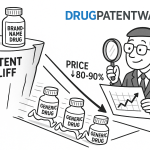
The commercial logic underlying pharmaceutical reverse engineering is well-established: generic and biosimilar entry collapses drug prices at rates that are among the most predictable economic dynamics in any industry. Two generic competitors reduce prices by an average of 54% relative to the branded reference price. Six or more competitors push that reduction to 95%. This price cliff is a direct function of the generic’s ability to reverse-engineer the reference product and achieve regulatory approval at a fraction of the innovator’s development cost.
The global generic drug market was valued at $435.3 billion in 2023 and is projected to reach $655.8 billion by 2028. Biosimilars represent the fastest-growing segment, driven by patent expirations on major biologics over the 2022-2030 window. These figures are not background context; they are the capital base that justifies the legal and technical investment described throughout this guide.
For portfolio managers, the key valuation consideration at the product level is the gap between the reference product’s current revenue and the probable post-generic market price, discounted by the probability and timing of generic entry. A patent thicket that delays generic entry by three years on a $5 billion annual revenue product is worth approximately $7 to $10 billion in net present value to the innovator, net of litigation costs. Conversely, a Paragraph IV challenge that successfully invalidates a blocking patent and opens the market to 180-day first-filer exclusivity is worth hundreds of millions of dollars to the generic challenger. These valuations drive the legal strategies documented in Sections III through V.
Key Takeaways: Section I
The core analytical challenge of deformulation is not identifying the API; the API is usually publicly known. The challenge is identifying and quantifying the 10 to 30 minor excipients that determine performance, stability, and bioavailability. Each of those components is a potential patent and trade secret risk.
Technical deformulation complexity and patent complexity are separate risk factors that must be evaluated independently. A cleared patent landscape does not mean a fast path to ANDA submission.
Generic entry dynamics are highly predictable in direction and approximately predictable in magnitude. The commercial case for investing in reverse engineering is strong wherever the technical and legal barriers are manageable, and the revenue base of the reference product is large.
Section II: The Innovator’s IP Fortress — Architecture, Valuation, and Lifecycle Strategy
2.1 Composition of Matter Patents: The Core Asset and Its Valuation
Composition of matter patents are the highest-value assets in a pharmaceutical IP portfolio because they claim the physical substance itself. The owner of a valid, broad composition of matter patent covering an API controls the molecule regardless of how it is formulated, what it is used for, or who makes it. This breadth is what gives these patents their commercial power and their valuation premium.
In early drug development, composition claims are typically drafted at the genus level: a structural core with variable substituents defined by Markush groups, allowing a single patent claim to cover potentially millions of specific molecular species. The commercial product is one species within that genus. As development advances and the lead compound is selected, narrower species claims covering the exact molecule are prosecuted with priority dates that can substantially precede FDA approval.
The IP valuation implication is significant. A composition of matter patent on a high-revenue drug is the anchor of the product’s intrinsic value. Its expiration date defines the hard boundary of branded exclusivity absent other IP protection. Analysts discounting a drug’s cash flows must treat this expiration as the central variable in a probability-weighted DCF model, layering in the incremental exclusivity provided by secondary patents and regulatory exclusivities as discussed below.
For a blockbuster drug generating $3 to $10 billion in annual revenue, a valid composition patent with 5 years remaining is worth, at a 10% discount rate and assuming 75% price erosion upon generic entry, approximately $12 to $30 billion in protected revenue on a net present value basis. This is why innovator litigation defending these patents is funded at levels that would constitute a top-10 legal budget for most industries.
2.2 Polymorph and Salt Patents: Where the Real Term Extension Lives
Polymorph and salt patents are the most commercially important secondary patent category because they routinely expire 8 to 12 years after the primary compound patent and they create direct technical barriers for generic developers.
A single API can exist in multiple crystalline forms (polymorphs), each with distinct physicochemical properties. Differences in melting point, solubility, dissolution rate, hygroscopicity, and compressibility among polymorphs are not marginal: they directly affect bioavailability, manufacturing feasibility, and product stability. The therapeutically superior polymorph, once identified and characterized, is patentable as a distinct invention from the parent compound.
The Farxiga (dapagliflozin) case, developed by AstraZeneca, illustrates the commercial stakes precisely. AstraZeneca’s patent on a specific crystalline form of dapagliflozin was set to expire over nine years after its primary compound patents, effectively extending exclusivity into a period when the API itself had long been prior art. A generic developer targeting dapagliflozin could not simply manufacture the API in any convenient solid form; it had to avoid the patented crystalline form and demonstrate that its own chosen solid-state form achieves bioequivalence. Both requirements carry development cost and litigation risk that depress the economic attractiveness of the generic opportunity.
Salt patents operate on similar logic. The pharmaceutical salt form of an API determines its solubility, its crystallization behavior, and its compatibility with excipients. A patent on the mesylate salt of an API whose free base is already prior art can confer years of additional protection, particularly if the salt form is the only commercially viable form for a given dosage route.
For generic developers, these patents mean that deformulation work must include solid-state characterization by ssNMR and XRD as a standard component of the pre-ANDA analytical package, and FTO analysis must include a dedicated search for polymorph and salt claims. An ANDA that proposes a solid-state form not covered by any listed patent does not thereby avoid litigation; the innovator can still file suit based on unlisted patents, though the dynamics of the 30-month stay do not apply.
2.3 Formulation Patents: The Delivery System as Proprietary IP
Formulation patents claim the combination of API with specific excipients or excipient systems. Their commercial value is lower than composition of matter patents in absolute terms, but they are often the last line of IP defense that a generic must defeat before market entry.
The claims in formulation patents typically define a product in terms of key excipient types and concentration ranges, the physical form (immediate-release tablet, osmotic pump, transdermal patch), and performance characteristics like drug release profile or particle size distribution. A well-drafted formulation patent creates a difficult technical problem for the generic developer: to avoid infringement, the developer must formulate outside the claimed excipient ranges while still achieving bioequivalence. If the patented ranges represent the only formulation space that reliably achieves bioequivalence, the generic is technically blocked even if it tries to design around the claims.
From an IP valuation perspective, formulation patents are best assessed not individually but as a system. A drug protected only by formulation patents, with its composition patent already expired, is in a commercially vulnerable position: the incremental revenue protected by the formulation patents is a fraction of what the composition patent protected, and a determined generic developer with a sufficient analytical and formulation budget can often engineer around them. Conversely, formulation patents that are tightly integrated with a difficult-to-characterize delivery system represent a more durable barrier, because even a successful design-around may be undetectable by the generic developer until clinical bioequivalence studies confirm or deny it.
2.4 Evergreening Tactics — Method of Use and Process Patents
Evergreening is the formal term for a patent lifecycle strategy that files new, later-expiring patents on established drugs. The mechanism relies on the statutory breadth of patentable subject matter: any novel, non-obvious, and useful invention is eligible, regardless of whether the underlying molecule is already commercialized.
Method of use patents are the primary evergreening instrument for marketed drugs. These claims cover the use of a drug to treat a specific patient population, via a specific dosing regimen, or through a specific route of administration. They do not require any change to the drug itself. An analysis of FDA-approved drugs found that 41% of patents filed after the initial approval date are for new methods of use, reflecting the systematic deployment of this strategy across the industry.
The commercial implications for generic developers are significant. Even after the composition patent expires and the generic product is approved for the reference drug’s original indication, method of use patents can preclude marketing for newer, more commercially important indications. This requires the generic applicant to file a ‘skinny label’ ANDA that expressly carves out the patented indication, accepting a smaller addressable market in exchange for earlier entry. Whether that skinny label fully protects against infringement claims is the subject of active litigation, particularly after the Federal Circuit’s GlaxoSmithKline v. Teva (2021) decision significantly tightened the standards for induced infringement on carved-out labels.
Process patents gain their greatest strategic importance in biologics, where the manufacturing process determines the product’s molecular identity. For small-molecule drugs, process patents are a secondary IP layer: a competitor who can manufacture the same molecule by a demonstrably different process does not infringe a process patent on the original synthesis route. Product-by-process claims, which define a product by the method used to produce it, are patentable only in the U.S. when the product itself is novel and non-obvious, not merely when the process is novel, establishing a limiting principle that prevents process patents from becoming de facto composition monopolies for small molecules.
2.5 The Patent Thicket: How Blockbusters Are Defended
The patent thicket is the deliberate construction of a dense, overlapping, and strategically timed portfolio of patents that collectively extends a drug’s IP protection far beyond the life of any individual patent. The goal is not to secure a single unbeatable patent; it is to force any competitor into a multi-front, high-cost legal conflict where the probability of navigating all barriers cleanly is low.
The construction logic follows a timeline:
During preclinical and Phase I development, genus-level composition patents on the API and key intermediates are filed. These establish the broadest possible structural claims with early priority dates.
During Phase II and Phase III, narrower species claims are filed, along with polymorph patents on the selected clinical solid-state form and salt patents if applicable. Formulation patents covering the clinical formulation are filed as the commercial dosage form is finalized.
At or before NDA submission, the commercial product patents are filed and submitted to the FDA for listing in the Orange Book. The Orange Book listing is the mechanism that activates the Hatch-Waxman litigation framework: any ANDA referencing the drug triggers the patent holder’s 45-day window to file suit and invoke the 30-month stay.
After approval, method of use patents covering newly discovered indications, new patient populations, and new dosing regimens are filed on a rolling basis. Additional formulation patents covering second-generation delivery systems (extended-release, once-daily, pediatric, etc.) are filed as those line extensions are developed.
AbbVie’s management of Humira’s IP estate is the most documented example of this strategy at industrial scale. The drug’s adalimumab molecule is protected by a composition patent that expired in 2016 in the United States. The surrounding portfolio of formulation patents, manufacturing patents, method of use patents, and dosing regimen patents extended effective exclusivity to 2023, seven years beyond the primary composition expiration. The portfolio exceeded 250 individual U.S. patents at its peak. No single competitor successfully challenged the entire portfolio at once; the litigation settlement agreements that ultimately allowed biosimilar entry were individually negotiated and collectively managed to sequence entry in a way that preserved branded revenue for the maximum feasible period.
2.6 Trade Secrets: The Invisible Layer of the Fortress
Trade secrets protect the information a company deliberately keeps out of the public record. In pharmaceutical manufacturing, this means the specific cell line used for a biologic’s production, the exact parameters of the purification sequence, the concentration and sequence of media components in a bioreactor run, and the process analytical technology specifications used to define a batch as conforming.
The Defend Trade Secrets Act (DTSA), the primary federal framework in the U.S., defines misappropriation as acquisition of a trade secret by improper means or the disclosure and use of a trade secret known to have been improperly acquired. The DTSA explicitly excludes reverse engineering of a commercially available product from the definition of improper means. A company may legally purchase a competitor’s approved drug, deformulate it using standard analytical methods, and use the resulting data to guide its own development program.
The line is crossed when acquisition is tainted. If the product was obtained through theft or espionage, if confidential information was accessed through a breach of an NDA or MTA, or if a newly hired employee brings their former employer’s proprietary data to the new company, the analysis is contaminated regardless of how technically sound the subsequent laboratory work is.
For pharmaceutical companies, the specific trade secret risk that deformulation-adjacent activities create is the allegation that the developer used confidential process information rather than observable product characteristics to guide formulation development. An innovator who believes a generic has produced a suspiciously accurate copy of a complex formulation too quickly and with too few development iterations has standing to allege that trade secret misappropriation explains the efficiency. This allegation does not require proving how the information was obtained; the circumstantial case can be built from comparisons of development timelines, internal communications, and the backgrounds of the development team’s members.
The implication for generic developers is that rigorous, documented clean room protocols are not a legal luxury; they are the only viable defense against these allegations. This is addressed in full in Section V.6.
Key Takeaways: Section II
Composition of matter patents are the highest-value assets in a drug’s IP portfolio. Their expiration date is the primary variable in any revenue-at-risk model. Polymorph and salt patents represent the most commercially durable secondary protection, routinely extending exclusivity 8 to 12 years beyond the primary composition patent. Formulation patents are technically beatable through design-around development but require significant analytical and formulation investment to navigate cleanly.
The patent thicket is not a metaphor. It is a deliberate legal construction requiring active management over the full product lifecycle. AbbVie’s Humira portfolio demonstrates that effective lifecycle management can add 7 or more years of de facto exclusivity beyond the primary composition patent expiration, worth tens of billions of dollars in protected revenue.
Trade secret protection is not a residual or supplementary IP layer. For biologics, it is often the primary barrier to entry. A generic or biosimilar developer that underestimates the trade secret dimension of the competition will face both legal risk and technical failure.
Investment Strategy: Section II
Portfolio managers evaluating branded pharma holdings should model the full IP estate, not just the composition patent expiration. Products with late-expiring polymorph patents, dense formulation patent portfolios, and complex manufacturing trade secrets warrant higher multiples on near-term revenue because their cash flows are more durable than the lead patent expiration date suggests.
Short positions or out-of-the-money puts on branded products are most attractive when the patent thicket is thin, the formulation is technically accessible, and multiple credible generic filers have already submitted ANDAs with Paragraph IV certifications. The 30-month stay clock, once it starts, is public information in litigation dockets and patent expiration tracking databases.
Section III: The Safe Harbor — Legal Architecture and Judicial Limits
3.1 The Hatch-Waxman Act: Grand Compromise, Structural Mechanics
The Drug Price Competition and Patent Term Restoration Act of 1984, known as the Hatch-Waxman Act, restructured the economic framework of pharmaceutical competition in the United States. Its core bargain allocated benefits on both sides of the innovator-generic divide.
Innovators received patent term extension to compensate for patent life consumed during FDA regulatory review (up to five years, capped at 14 years of remaining patent term post-approval) and new periods of regulatory data exclusivity that operate independently of patents. A new chemical entity receives five years of data exclusivity during which no ANDA can even be filed; a new clinical investigation of a previously approved drug can earn three years.
Generic manufacturers received the ANDA pathway, which eliminates the obligation to replicate the innovator’s safety and efficacy trials. Bioequivalence demonstration substitutes for original clinical data, reducing development cost for a generic from the $1-2 billion range for an NDA to roughly $1-5 million for a straightforward ANDA. The Act also provided the statutory safe harbor from patent infringement that permits the development work necessary to prepare an ANDA submission during the innovator’s patent term.
3.2 35 U.S.C. § 271(e)(1): Text, History, and the Bolar Correction
The safe harbor provision at 35 U.S.C. § 271(e)(1) was Congress’s direct legislative correction of the Federal Circuit’s 1984 decision in Roche Products v. Bolar Pharmaceutical Co. In Roche v. Bolar, the court ruled that Bolar’s use of a patented drug to conduct FDA-required clinical studies during the patent term constituted infringement. The practical effect was a de facto patent term extension far beyond the statute authorized: generic developers could not begin the multi-year development and testing process until after the patent expired, guaranteeing a delay of several years between patent expiration and actual generic availability.
Congress enacted § 271(e)(1) to eliminate that gap. The statute states:
‘It shall not be an act of infringement to make, use, offer to sell, or sell within the United States or import into the United States a patented invention solely for uses reasonably related to the development and submission of information under a Federal law which regulates the manufacture, use, or sale of drugs.’
Two phrases in that statute have generated decades of litigation. ‘Solely for uses’ suggests that any activity with a dual commercial purpose falls outside the protection. ‘Reasonably related to the development and submission of information’ defines the qualifying purpose but leaves undefined how close the connection between the activity and the eventual regulatory submission must be.
3.3 Supreme Court Doctrine: Eli Lilly, Merck KGaA, and the Broad Scope Rule
The Supreme Court has addressed the scope of § 271(e)(1) in two landmark decisions that collectively establish a broad and pragmatic reading of the statute.
In Eli Lilly & Co. v. Medtronic, Inc. (1990), the Court ruled that the safe harbor extends to medical devices, not only drug products. The reasoning was structural: since the Hatch-Waxman Act’s patent term extension provisions apply to any product subject to premarket regulatory review, the safe harbor that serves as the counterweight to those provisions must apply equally broadly. This decision established the interpretive principle that the safe harbor provisions of Hatch-Waxman are to be read in functional harmony, not as product-specific exemptions.
In Merck KGaA v. Integra Lifesciences I, Ltd. (2005), the Court rejected the Federal Circuit’s narrow reading that would have limited the safe harbor to activities conducted during formal clinical trials. The Court held that the exemption covers preclinical research, provided there is a ‘reasonable basis for believing’ the experiments will generate information relevant to an FDA submission. The protection applies even if the research ultimately fails, the compound is abandoned, or the data is never actually submitted. What matters is the reasonable purpose of the research at the time it is conducted, not its ultimate outcome. This decision effectively extended the safe harbor over the entire R&D journey from early discovery to Phase III, giving generic developers confident legal cover for the full deformulation and formulation development process.
3.4 ‘Solely For’ vs. ‘Reasonably Related’: The Persistent Gray Zone
Despite the Supreme Court’s broad framework, the interaction between ‘solely for uses’ and ‘reasonably related to’ has produced persistent litigation over activities that sit at the boundary between pure R&D and commercial preparation.
The contested scenario recurs in one form: a generic company manufactures a batch of API or finished product that is used for bioequivalence studies required for ANDA submission. That same batch, however, may have been manufactured at a commercial scale, in a validated facility, using the validated process that will be used for commercial production. The argument that the batch was manufactured ‘solely for’ regulatory submission is undercut by the fact that it simultaneously validated the commercial manufacturing process.
Innovator litigants argue that any activity with a substantial commercial dimension falls outside the ‘solely for’ protection because the statutory language requires exclusivity of purpose, not merely primacy of purpose. The counter-argument holds that ‘reasonably related’ is the operative phrase, and that manufacturing at commercial scale is reasonably related to regulatory submission because FDA requires demonstration of the commercial manufacturing process in the application. Courts have not resolved this tension uniformly. Some decisions give primary weight to the ‘reasonably related’ prong and find that commercially-scaled batches used for FDA-required manufacturing validation fall within the safe harbor. Others give independent weight to ‘solely for’ and conclude that activities serving a substantial commercial purpose independently of any regulatory submission are not protected.
This ambiguity is not a theoretical concern. The cost of getting it wrong is material: if a court finds that a specific activity falls outside the safe harbor, the conduct during that activity is patent infringement, regardless of intent. For a multi-year ANDA development program, this could expose a generic developer to damages measured from the date of the infringing activity.
3.5 2025 Case Law: Jazz v. Avadel, Incyte v. Sun, and Emerging Tactical Warfare
Two significant Federal Circuit decisions from 2025 illustrate the tactical evolution of safe harbor litigation.
In Jazz Pharmaceuticals v. Avadel CNS Pharmaceuticals, the district court had issued a permanent injunction prohibiting Avadel from commencing new clinical studies of its competing product, Lumryz. The Federal Circuit reversed that component of the injunction, holding that a forward-looking injunction that facially prohibits protected safe harbor activities is improper as a matter of law. The court’s reasoning had structural importance: the safe harbor is not merely an affirmative defense that a defendant must prove at trial. It is a statutory limitation on the scope of infringement itself. A patentee cannot use an injunction to prohibit activities that the statute declares non-infringing.
The Jazz decision also flagged an unresolved question about the artificial infringement created by § 271(e)(2), which treats the filing of an ANDA as a constructive act of infringement to create subject matter jurisdiction for pre-market patent litigation. The court noted but declined to resolve whether this artificial infringement provision applies to all patents covering the drug, or only to patents listed in the FDA’s Orange Book. The commercial stakes of this unresolved question are substantial: if § 271(e)(2) applies only to Orange Book-listed patents, innovators have an incentive to keep certain patents off the Orange Book to preserve litigation options outside the Hatch-Waxman framework’s compressed timeline and automatic stay provisions.
In Incyte Corp. v. Sun Pharmaceutical Industries, the Federal Circuit dismissed Incyte’s appeal of an adverse PTAB decision for lack of Article III standing. Incyte had not yet demonstrated a sufficiently concrete and imminent investment in developing a competing product to establish that it faced an injury-in-fact from Sun’s patent. The dissent by Judge Hughes captured the resulting strategic bind precisely: to have standing to challenge a blocking patent, a company must first invest heavily in a product that may infringe it; yet making that investment is commercially irrational until the patent’s validity is confirmed or denied. This Catch-22 effectively raises the financial ante for companies seeking to clear patent risk early in their development pipelines, before large capital commitments force a go/no-go decision on a possibly blocked product.
Key Takeaways: Section III
The § 271(e)(1) safe harbor is broad, thanks to Supreme Court decisions that extend it to preclinical research and to medical devices. It is not, however, unlimited. Activities with substantial dual commercial purposes remain legally contested, and the ‘solely for’ language has not been read out of the statute by any binding authority.
Innovator companies have shifted tactical emphasis away from arguments that specific R&D activities fall outside the safe harbor and toward procedural barriers: challenging standing, seeking broad injunctions that test the safe harbor’s boundaries, and litigating which patents are properly subject to the Hatch-Waxman litigation framework.
For generic developers, the practical consequence is that the cost of market entry must now include a budget for pre-market patent challenges that may need to be initiated earlier, at higher capital risk, to preserve standing and avoid being frozen out of the legal mechanisms designed to facilitate generic competition.
Section IV: Global Bolar Provisions — Jurisdiction-by-Jurisdiction Playbook
4.1 European Union: Fragmentation, the Pharma Package, and TRIPS Tension
The EU Bolar exemption is established by Article 10(6) of Directive 2001/83/EC, which protects ‘necessary studies and trials’ and ‘consequential practical requirements’ conducted for the purpose of obtaining a marketing authorization for a generic or biosimilar product. The provision is a minimum harmonization directive, meaning each of the 27 Member States was required to implement it but was free to implement broader protection. The result is a patchwork of national laws that differ on every material dimension.
The material scope ambiguity centers on what counts as ‘necessary studies.’ Clinical bioequivalence trials are universally covered. Studies required for health technology assessments (HTA) and pricing and reimbursement (P&R) submissions sit in a gray zone: some member states cover them, others do not, and the same pharmaceutical activity can be infringing in one EU jurisdiction and protected in another. Third-party API suppliers face a related problem: the text of the directive protects the generic manufacturer seeking approval, but it is not settled across all member states whether a contract manufacturer producing the API for use in those studies is also protected.
The EU Pharma Package, under active legislative development as of early 2026, proposes to resolve the major ambiguities through harmonizing legislation rather than relying on the directive’s minimum standards. The European Parliament and Council proposals both explicitly extend Bolar coverage to HTA and P&R activities. The Council’s version goes further, proposing to include participation in public procurement tenders within the exemption’s scope. This last proposal has drawn significant scrutiny from IP scholars because procurement activity is not obviously connected to regulatory submission in the way clinical trials are, and coverage of commercial-preparatory activities at this level may strain the boundaries of TRIPS Article 30’s three-step test for permissible exceptions to patent rights.
Territorial scope remains unaddressed in all proposals. The EU framework does not explicitly protect activities conducted in an EU member state for the purpose of seeking regulatory approval in a non-EU country. This gap is commercially significant for companies conducting EU-based analytical work in support of FDA submissions, though some member states have adopted broader national provisions by statute or judicial interpretation.
4.2 Japan: The Broadest Interpretation in the G7
Japan’s research exemption under Section 69(1) of the Patent Act covers working of a patented invention ‘for the purposes of experiment or research.’ The Japanese Supreme Court’s 1999 decision established that this general provision includes clinical trials conducted for drug regulatory approval, creating Japan’s Bolar-equivalent exemption without specific pharmaceutical legislation.
The Japanese IP High Court’s 2021 decision in X v. Amgen K.K. expanded this interpretation in a direction unique among major jurisdictions. The court ruled that Section 69(1) protects clinical trials conducted by an innovator company for its own new drug, even if that drug falls within the scope of a third party’s patent. Amgen was conducting ‘bridging studies’ in Japan for T-VEC (talimogene laherparepvec, marketed as Imlygic), which was already approved in the US and EU. These studies were required by Japan’s PMDA for local marketing authorization. The court found they were protected by the research exemption.
The implication is that in Japan, a patent does not grant its holder the exclusive right to be the only entity conducting clinical testing of compounds within the patent’s scope. A competing innovator conducting its own Phase III program on a drug that falls within the patent claims has as much right to conduct those trials as the patent holder does. This is a more liberal reading than any other major jurisdiction has adopted. For companies managing global clinical development programs, Japan’s framework is an asset when their compounds overlap with third-party patent claims in ways that could create friction in other jurisdictions.
4.3 Canada: Statutory Clarity and Explicit Extraterritoriality
Canada’s safe harbor provision at Section 55.2(1) of the Patent Act is among the clearest and best-drafted in the world. The statute protects making, constructing, using, or selling a patented invention ‘solely for uses reasonably related to the development and submission of information required under any law of Canada, a province or a country other than Canada’ that regulates product sales.
Two features distinguish Canada’s provision. First, it is not limited to pharmaceuticals. Any patented invention in any technology sector that requires premarket regulatory approval can be the subject of protected R&D. Second, the explicit extraterritorial reach, encoded directly in the statutory text, covers activities conducted in Canada for foreign regulatory submissions. There is no ambiguity, no need for judicial interpretation, and no gap in the legislative record to exploit. A generic developer conducting bioequivalence studies in Canada for an FDA submission is definitively within the statute.
Canadian courts have interpreted ‘reasonably related’ broadly, protecting activities that generate information potentially useful to a regulatory submission even if that specific information is not included in the final filed dossier. This is consistent with the U.S. Supreme Court’s approach in Merck v. Integra and reflects a shared judicial preference for purposivist rather than textualist interpretation of the regulatory intent behind safe harbor provisions.
4.4 India: Export Legality and the Global API Hub Doctrine
India’s Bolar provision, Section 107A of the Patents Act 1970, explicitly covers ‘any act of making, constructing, using, selling or importing a patented invention solely for uses reasonably related to the development and submission of information required under any law for the time being in force, in India or in a country other than India.’ The final clause makes India’s provision the broadest among major pharmaceutical markets on the dimension of territorial application.
The most commercially significant interpretation of Section 107A came through a series of high-profile cases involving Bayer AG and Indian generic manufacturers, particularly Natco Pharma. The Delhi High Court determined that ‘selling’ within Section 107A includes exporting a patented product to another country, provided the purpose of the export is to support the recipient’s regulatory development activities in that country. The court established a framework of evidentiary considerations: Does the export agreement specify regulatory use? Is the quantity consistent with R&D use rather than commercial distribution? Is there documentation of the downstream regulatory purpose?
This doctrine makes India the anchor of global generic API supply chains for regulatory-stage development. A generic developer in the EU or US can source patented API from an Indian manufacturer under a properly structured research supply agreement, conduct bioequivalence studies on that material domestically, and submit the resulting data to the FDA or EMA, with the Indian supply protected under Section 107A and the downstream use protected under the receiving jurisdiction’s own safe harbor. This is not legal arbitrage in a pejorative sense; it is the intended operation of a regime specifically designed to support global generic development. But it requires careful documentation at both ends of the transaction.
4.5 Regulatory Arbitrage: The Strategic R&D Footprint Decision
The asymmetric legal framework across jurisdictions creates genuine strategic optionality for pharmaceutical companies with global development operations. The choice of where to conduct specific R&D or manufacturing activities is a legal and commercial decision, not only a scientific and logistical one.
Indian and Canadian law provide explicit statutory protection for manufacturing activities conducted in support of foreign regulatory submissions. The EU currently does not provide clear protection for all such activities. A company conducting API synthesis in India or Canada for use in FDA-required bioequivalence studies faces lower legal risk than a company conducting the same activity in, say, Germany or France, where the Bolar provision’s scope may not cover manufacturing for a non-EU regulatory submission.
This jurisdictional asymmetry also applies to analytical work. Characterization studies conducted in Canada to support an ANDA filing are clearly protected under Section 55.2(1). The same studies conducted in Belgium might be protected under Belgium’s national implementation of the EU directive, or might not be, depending on whether Belgian courts have addressed the question of territorial scope.
Companies building global development programs should map their planned R&D activities against each jurisdiction’s safe harbor provisions before committing capital. Moving API synthesis to Canada or India is a straightforward decision when the alternative is conducting legally ambiguous manufacturing in an EU jurisdiction during a patent’s term. The incremental cost of operating in a more permissive jurisdiction is typically far lower than the cost of litigating a safe harbor defense in a restrictive one.
Jurisdiction Comparison Matrix
Jurisdiction
Statutory Basis
Preclinical Covered
Extraterritorial Scope
Notable Feature
United States
35 U.S.C. § 271(e)(1)
Yes (Merck v. Integra)
Limited to FDA submissions
Dual-purpose activities remain contested; standing doctrine creates early challenge barriers
Judicial doctrine confirms export for regulatory purposes is lawful (Bayer line of cases)
Key Takeaways: Section IV
The global Bolar framework is not uniform. The United States, Canada, and India provide the broadest and most clearly articulated protections. The EU is actively working to harmonize its fragmented national implementations but has not yet done so. Japan’s provision is uniquely broad in covering innovator-vs.-innovator patent conflicts during clinical development.
Companies with global development pipelines should structure their R&D footprint to maximize safe harbor coverage. Manufacturing activities in India and Canada for FDA or EMA submissions are protected by explicit statute. The same activities in some EU member states may not be.
Section V: Offensive IP Strategy — FTO, Para IV, IPRs, and Clean Room Defense
5.1 Freedom-to-Operate Analysis: Continuous, Not Periodic
Freedom-to-Operate (FTO) analysis is the systematic process of identifying patents that could be infringed by a planned product and assessing the risk each patent poses. In pharmaceutical reverse engineering, FTO analysis begins before the deformulation laboratory work starts and continues through ANDA filing and litigation.
The first step is target selection. A patent landscape analysis of the reference drug should inform the decision to pursue the product at all. A drug protected only by a composition patent expiring in 18 months with no secondary patents is a very different commercial opportunity from one with a polymorph patent expiring in 2034 and 40 Orange Book-listed formulation patents. These analyses are not static documents; they must be updated as new patents are filed and as litigation modifies the landscape.
The most efficient FTO work combines commercial patent databases with manual claim-chart analysis. Database searches identify the patent universe; claim-chart analysis maps the specific claims of each patent against the proposed product’s formulation, process, and intended indication. Claims that cover the proposed product as currently designed identify infringement risk. Claims that cover only a subset of the product’s design space, or that cover the innovator’s specific excipient choices rather than the generic function those excipients perform, identify design-around opportunities.
Databases like DrugPatentWatch add significant analytical efficiency by integrating patent expiration data, Orange Book listings, ANDA filing information, and litigation history in a single view. A developer can identify, in a single search, which patents are listed against a reference drug, which have been challenged by prior filers, which challenges succeeded, and how courts ruled on specific claim interpretations. This is not just time-saving: it reveals the litigation history of specific patent claims, which is often the best predictor of their vulnerability to an IPR or Paragraph IV challenge.
5.2 Patent Thicket Dissection: How to Map an Innovator’s Full Portfolio
Mapping an innovator’s full patent portfolio around a target drug requires a more expansive search than the Orange Book listing. Orange Book listing covers only patents that, under the statute, meet specific criteria for listing: patents that claim the drug substance, the drug product, or a method of using the drug. Process patents, manufacturing patents, and many method of use patents are not listed. They can still be asserted post-approval in non-Hatch-Waxman litigation.
A complete portfolio map should include:
All patents in the Orange Book for the reference drug, with a claim-by-claim analysis of their relevance to the proposed generic product. All patents in the innovator’s published portfolio that reference the API, whether or not listed. Patent applications still under prosecution, which can be identified through USPTO public prosecution history databases and which may mature into assertable patents before or after ANDA approval. Patents held by licensees, collaborators, or related entities if the innovator’s manufacturing or distribution involves contractual arrangements that could transfer or sublicense relevant IP. Foreign counterparts of US patents, which matter for manufacturing activities conducted outside the US under safe harbor provisions that differ by jurisdiction.
The competitive intelligence value of this mapping extends beyond litigation planning. A detailed analysis of the innovator’s formulation patent claims reveals the specific excipient systems they considered and protected, which is itself a roadmap to their thinking about what achieves bioequivalence. Where the claims are broad, the innovator may have solved the formulation problem with multiple excipient approaches; where the claims are narrow and specific, the innovator may have found only one workable solution, and designing around it may require substantial formulation development investment.
5.3 The Paragraph IV Pathway: Economics, Timing, and 180-Day Exclusivity
A Paragraph IV certification is a formal declaration by an ANDA filer that one or more Orange Book-listed patents are invalid, unenforceable, or will not be infringed by the proposed generic product. Filing a Paragraph IV certification is simultaneously a regulatory act and an offensive legal maneuver. The filing constitutes artificial patent infringement under § 271(e)(2), which gives the patent holder an immediate right to sue in federal court before any alleged infringement has actually occurred.
The economics are straightforward and powerful. The first generic applicant to file a substantially complete ANDA with a Paragraph IV certification on any listed patent earns 180 days of marketing exclusivity from the date of first commercial marketing. During that 180-day window, the FDA may not approve any other ANDA for the same drug. On a drug with $2 billion in annual branded revenue, this exclusivity period is worth approximately $500 million to $1 billion in generic revenue at typical day-one pricing, before erosion from subsequent entrants.
The 30-month stay activated by the patent holder’s suit is the primary mechanism innovators use to delay generic entry. If the patent holder files suit within 45 days of receiving the Paragraph IV notice, ANDA approval is automatically stayed for 30 months from the date the notice was received. If the litigation is not resolved before the stay expires, the FDA may approve the ANDA at that point regardless of the litigation’s outcome.
For IP teams, the practical implication is that Paragraph IV litigation strategy must be mapped against the 30-month stay calendar from the day the ANDA is filed. If the innovator’s case is strong on a key patent, the generic developer wants to resolve that patent dispute before the stay expires through IPR, district court summary judgment, or settlement. If the generic’s validity arguments are strong, it wants to accelerate resolution before the 30-month stay expires so it can enter the market at the earliest possible date with litigation risk behind it.
5.4 Inter Partes Review: Clearing the Underbrush at the PTAB
Inter Partes Review (IPR) is a trial-like proceeding before the Patent Trial and Appeal Board that allows a third party to challenge the validity of issued patent claims on grounds of prior art. The PTAB grants review if the petitioner demonstrates a ‘reasonable likelihood’ of prevailing on at least one claim. If review is granted, the proceeding is completed within 12 months (extendable to 18 months for good cause) and results in either cancellation of the challenged claims, confirmation, or a narrowed set of surviving claims.
IPRs offer several advantages over district court patent challenges. The evidentiary standard for invalidity at the PTAB is ‘preponderance of the evidence,’ lower than the ‘clear and convincing evidence’ standard required to invalidate a patent in district court. The proceeding is faster and cheaper than district court litigation. PTAB judges have technical expertise in the relevant subject matter, making claim construction decisions more predictable. And an IPR decision canceling claims is binding on the petitioner’s district court litigation, removing the challenged claims as a barrier.
For a generic developer facing a patent thicket with dozens of formulation and method of use patents, IPRs are the right tool to ‘clear the underbrush.’ Rather than defending against every patent in Paragraph IV district court litigation, the developer can use IPRs to sequentially attack the weaker patents in the portfolio, reducing the litigation burden and improving the probability of a clean market entry. The timing of IPR filings relative to district court litigation requires strategic coordination: an IPR filed too early may create estoppel issues for district court invalidity arguments; an IPR filed too late misses the opportunity to obtain a PTAB stay of district court proceedings pending review.
5.5 Design-Around Development: Engineering Non-Infringement from Day One
Design-around development is the deliberate engineering of a product to achieve the same clinical performance as the reference product while remaining outside the scope of valid, assertable patent claims. It is the most strategically elegant form of IP risk mitigation because it eliminates infringement liability rather than contesting it.
Effective design-around work requires integration between the FTO legal team and the formulation development team. The FTO analysis identifies specific claim limitations that define the patent’s scope; the formulation team tests whether those limitations can be avoided while maintaining bioequivalence. Where the patent claims a specific excipient, the formulation team evaluates functionally equivalent alternatives outside the claim. Where the patent claims a specific concentration range, the formulation team tests whether formulations outside that range can achieve the required dissolution profile and bioequivalence.
For polymorph patents, design-around means identifying a non-patented solid-state form that achieves acceptable bioavailability. For method of use patents, design-around means carving out the patented indication from the product’s labeling (the ‘skinny label’ approach) while accepting the commercial limitation of a smaller addressable market. For process patents, design-around means developing an alternative synthetic route to the API that does not use the patented process steps.
The risk in design-around development is that the work may fail: the patent’s scope may effectively cover the only formulation space that achieves bioequivalence, or the non-patented polymorph may be commercially unviable due to poor manufacturability or stability. When design-around is not feasible, the developer must either challenge the patent directly through IPR or Paragraph IV or wait for its expiration. This determination should be made as early as possible in the development process to avoid investing years of formulation work before discovering the IP dead end.
5.6 Clean Room Protocols: Building the Misappropriation Defense Before You Need It
A clean room protocol is a set of documented procedures that ensures a development program was conducted using only publicly available information and the observable characteristics of the commercial reference product, without any input from the innovator’s confidential information. It is both a real-time process control and a litigation defense framework.
The documentation discipline is the foundation. Laboratory notebooks must record the sources of every piece of information used in formulation decisions: published literature, patent text, analytical results from deformulation of the commercial product, and regulatory guidance. If a formulation approach is adopted, the notebook should record why it was selected and what public information supported the selection. This creates an auditable paper trail demonstrating independent development.
The personnel dimension is equally critical. Development team members who previously worked for the innovator or for contractors with access to the innovator’s formulation data present a specific and serious risk. The hiring company must document, at onboarding, that the new employee understands their confidentiality obligations to their former employer, has not brought and will not use any confidential materials from that employment, and will seek legal review before using any technical approach that might reflect knowledge from their prior role. This documentation must be more than a checkbox in an HR system: it must be a substantive, signed attestation with specific representations about the classes of information the employee possessed and their commitment not to use them.
Physical and digital access controls reinforce the documentation framework. The clean room development team’s access to the broader company’s information systems should be limited to what they need for their own development program. Confidential information received from partners, vendors, or regulators in other contexts should be segregated from the clean room team’s work environment. Email systems, shared drives, and laboratory information management systems should be configured to prevent commingling.
When litigation arises, as it frequently does for commercially significant generic programs, this documentation is the primary evidence that the development was independent. Without it, even a technically competent defense against a trade secret misappropriation claim becomes speculative. With it, the defense is structured and credible.
Key Takeaways: Section V
FTO analysis is a continuous program that must precede deformulation work and run in parallel with formulation development. The patent thicket extends well beyond the Orange Book, and unlisted patents can be asserted in non-Hatch-Waxman litigation.
Paragraph IV challenges are the primary mechanism for proactive patent clearance in the U.S. market. The 180-day first-filer exclusivity is the economic engine that justifies the litigation cost. IPRs are an efficient complement to Paragraph IV district court litigation for attacking secondary patents in a dense thicket.
Clean room documentation is not optional for any program targeting a commercially significant innovator product. A clean room defense that must be constructed retrospectively from incomplete records is a weak defense. One built prospectively from day one is a strong one.
Investment Strategy: Section V
Generic pharmaceutical companies with demonstrated competencies in Paragraph IV litigation are a distinct and more attractive investment class than generic manufacturers without patent challenge experience. The 180-day exclusivity mechanism creates a winner-take-most dynamic for the first filer in any given market, and the skill set required to execute Paragraph IV strategy — FTO analysis, IPR petition drafting, district court litigation management — is not uniformly distributed across the industry. Companies with a track record of successful Paragraph IV challenges warrant premium valuations relative to peers that compete only on post-exclusivity commodity generics.
Section VI: Biologics — When the Process Is the Product and the IP Is Everything
6.1 Why Small-Molecule Deformulation Logic Fails for Biologics
The reverse engineering framework that works for small-molecule drugs does not transfer to biologics. The foundational reason is structural: a small-molecule drug is a defined chemical compound whose identity is fully specified by its molecular formula and structure. Two batches of the same small molecule, made by different processes in different facilities, are identical at the molecular level. Bioequivalence between a generic and a reference small-molecule drug is demonstrable through a single set of pharmacokinetic studies.
A biologic is not a defined compound in this sense. A monoclonal antibody is a large, complex protein with a molecular weight typically in the 140,000 to 150,000 dalton range, containing multiple disulfide bonds and extensive glycosylation patterns that vary based on the cell line, culture conditions, and purification process used to produce it. The glycosylation pattern, in particular, directly affects the antibody’s half-life, efficacy, and immunogenicity. Two batches of the same antibody produced by different processes will have different glycan profiles and different biological activity profiles, even if their amino acid sequences are identical.
This reality is what gives rise to the ‘process is the product’ principle for biologics. The innovator’s manufacturing process is not merely a means of producing the drug; it is an integral determinant of the drug’s identity. A biosimilar developer cannot reverse-engineer the molecule to determine the process; it must develop an independent process capable of producing a molecule that is ‘highly similar’ to the reference product with ‘no clinically meaningful differences,’ the statutory standard under the Biologics Price Competition and Innovation Act (BPCIA).
6.2 The Humira Blueprint: 250 Patents and the Decade-Long Delay
AbbVie’s management of adalimumab (Humira) IP is the defining case study in biologic patent thicket construction. The drug’s primary composition patent expired in the United States in 2016. The surrounding portfolio, built over the drug’s 15-year commercial life, comprised over 250 U.S. patents covering formulation compositions, manufacturing processes including specific steps in the cell culture and purification sequences, dosing regimens, devices (prefilled syringe and autoinjector), and methods of treating specific patient populations.
No single biosimilar developer successfully challenged the entire portfolio. Amgen, the first biosimilar applicant (for Amjevita, the adalimumab biosimilar), entered into a settlement agreement with AbbVie in 2023 that permitted U.S. market entry on January 31, 2023, seven years after the primary composition patent expired. Other biosimilar developers entered similar settlement agreements, typically permitting entry in late 2023.
The mechanism by which AbbVie extended effective exclusivity was not primarily litigation victory; it was litigation management. By maintaining a portfolio large enough that no single IPR or Paragraph IV challenge could clear the path to market on its own, AbbVie created a negotiating dynamic in which settlement on AbbVie’s preferred entry timeline was the rational outcome for every biosimilar developer. The cost of litigating through the entire 250-patent portfolio vastly exceeded the expected value of any incremental earlier entry.
The IP valuation implication is clear: Humira generated approximately $20 billion in U.S. revenue annually at its peak. Seven years of extended exclusivity beyond the primary patent expiration, at that revenue level, represents roughly $140 billion in gross revenue protection. The investment in building and maintaining a 250-patent portfolio was orders of magnitude below the value it protected.
6.3 The Biosimilar Developer’s Mandate: Invent the Process, Don’t Copy It
The biosimilar development mandate is not to reverse-engineer the innovator’s process; it is to invent an independent process that produces a sufficiently similar molecule. This is a more capital-intensive and scientifically demanding task than ANDA-based small-molecule development.
The biosimilar developer begins with the innovator’s commercial product as the reference standard. Extensive analytical characterization of the reference product provides a target specification: the amino acid sequence (publicly available from the innovator’s published data), the predominant glycan species and their relative abundance, the folding pattern as measured by circular dichroism and other structural techniques, and the biological activity profile including binding affinity, effector function, and pharmacokinetics.
The developer then builds its own production system from scratch: selecting a host cell line (typically Chinese Hamster Ovary cells for antibodies), engineering that cell line to express the target protein, optimizing the cell culture process to achieve acceptable yield and product quality, and developing a purification process that removes host cell protein contaminants, DNA, viral particles, and process-related impurities to the levels required by regulatory guidelines.
The analytical similarity package, which must demonstrate that the biosimilar is highly similar to the reference product across a comprehensive set of quality attributes, is the scientific core of the biosimilar development program. FDA guidance specifies a tiered approach: critical quality attributes with a high likelihood of impacting clinical outcomes receive the most analytical attention and are evaluated for both structural similarity and functional equivalence. The resulting analytical package, which may document several hundred individual characterization studies, is submitted as the foundation of the BLA.
This development pathway costs between $100 million and $250 million for a typical monoclonal antibody biosimilar, compared to $1 to $5 million for a small-molecule ANDA. The higher cost is justified only when the reference biologic has sufficient remaining market life and commercial scale to generate an adequate return on that investment.
6.4 Biosimilar Interchangeability: The Commercial and Legal Barrier
The BPCIA creates two regulatory designations for approved biosimilars: ‘biosimilar’ and ‘interchangeable.’ A biosimilar designation permits the product to be prescribed as an alternative to the reference biologic but does not allow pharmacist substitution without prescriber authorization. An ‘interchangeable’ designation, the higher standard, allows automatic pharmacist substitution, the same commercial dynamic that generic small-molecule drugs benefit from at the pharmacy level.
To obtain interchangeability designation, a biosimilar developer must demonstrate through switching studies that the patient’s risk of adverse outcomes from alternating between the biosimilar and the reference product is no greater than the risk from using the reference product exclusively. These studies are expensive and add typically $30 to $50 million to development costs.
The commercial significance of interchangeability is contested but real. In markets where formularies, pharmacy benefit managers (PBMs), and hospital systems drive substitution decisions, an interchangeable designation provides automatic substitution rights at the pharmacy level that a non-interchangeable biosimilar lacks. In markets where physician prescribing drives utilization and formulary placement is determined by rebate negotiations rather than designation, the incremental value of interchangeability is lower.
From an IP standpoint, interchangeability switching studies create a distinct legal exposure: the studies involve repeatedly administering both the biosimilar and the reference product to subjects, meaning the innovator’s reference biologic is being ‘used’ in a clinical trial context. The § 271(e)(1) safe harbor covers these uses; the switching studies are explicitly for the purpose of obtaining regulatory approval. But any argument that these studies have an independent commercial validation purpose — confirming that the biosimilar performs as well as the reference product, for example — raises the same dual-purpose safe harbor challenge documented in Section III.4.
6.5 The BPCIA ‘Patent Dance’: Mechanics, Tactics, and Gamesmanship
The BPCIA’s patent litigation framework, widely termed the ‘patent dance,’ establishes a structured information exchange and litigation sequencing process between biosimilar applicants and reference product sponsors.
The sequence begins when the biosimilar applicant receives a license from FDA for its BLA. Within 20 days, the applicant must provide the sponsor with a copy of its BLA and manufacturing process information. The sponsor then has 60 days to identify patents it believes are infringed. The applicant has 60 days to respond with its infringement and validity contentions. The parties then negotiate a list of patents to litigate in a first round; those not agreed upon remain available for a second round of litigation after the biosimilar is on the market.
The tactical gamesmanship within this structure has been extensive. Biosimilar developers have argued that the initial BLA disclosure step is optional, not mandatory, a position ultimately rejected by the Supreme Court in Sandoz v. Amgen (2017), which held that the disclosure is not mandatory but that refusing to disclose eliminates the applicant’s ability to force the patent dance to proceed on the statutory timeline. Reference product sponsors have used the information disclosure step to expand their patent filings based on disclosed manufacturing details, a practice that critics argue converts the patent dance’s disclosure mechanism into a tool for extending the patent estate at the competitor’s expense.
6.6 IP Valuation in Biosimilar Portfolios
A biosimilar company’s IP portfolio carries a different risk and value profile than a traditional generic company’s. The biosimilar developer must both clear the innovator’s patent estate (the offensive challenge) and protect its own manufacturing process innovations (the defensive asset).
The defensive IP portfolio for a biosimilar is built around the developer’s proprietary manufacturing process, analytical methods, formulation for the biosimilar product, and any improvements to the reference molecule’s delivery system. These are genuine innovations; developing an independent process for a complex biologic requires inventive work in cell culture optimization, purification chemistry, and analytical methodology. Patents on these innovations provide commercial protection against second-wave biosimilar competitors who would otherwise copy the first biosimilar developer’s own manufacturing advances.
For investors in biosimilar companies, the relevant IP valuation question is whether the company’s manufacturing process innovations are protected by defensible patents or only by trade secrets, and how durable that protection is against the company’s own future biosimilar competitors. A company with patented manufacturing processes has disclosed them and can enforce against copying; a company whose protection is purely trade secret-based relies on secrecy, which erodes when employees change employers.
Key Takeaways: Section VI
The ‘process is the product’ principle means that biosimilar development is an invention process, not a replication process. The biosimilar developer must build an independent manufacturing process and demonstrate that its product meets a high similarity standard. The capital required, typically $100 to $250 million, is two orders of magnitude above small-molecule ANDA development.
AbbVie’s Humira portfolio management extended effective U.S. exclusivity by 7 years beyond the primary composition patent expiration through deliberate thicket construction, not through any single strong patent. This model is now widely imitated across the biologic industry.
Biosimilar interchangeability designation provides automatic pharmacist substitution rights but requires expensive switching studies. The commercial value of interchangeability depends on market structure and formulary dynamics in the target market.
Investment Strategy: Section VI
Investors evaluating reference biologic companies should model the gap between primary composition patent expiration and estimated effective exclusivity end, based on the density and quality of the secondary portfolio. Companies with demonstrated competence in patent thicket construction around their biologic franchises, as AbbVie demonstrated with Humira, warrant higher revenue longevity multiples.
Investors evaluating biosimilar companies should assess the target’s remaining exclusivity window net of all secondary IP (not just the composition patent), the developer’s manufacturing capabilities and process IP position, and whether the company has obtained or applied for interchangeability designation. Biosimilar programs targeting reference products with thin secondary IP estates in large-revenue markets represent the most attractive risk-adjusted opportunities.
Section VII: AI-Driven Drug Discovery and the Inventorship Crisis
7.1 AI as Deformulation Accelerant: What Changes in Practice
Artificial intelligence changes the speed and scale at which pharmaceutical deformulation and formulation development can proceed, but the legal framework governing those activities does not change with it.
On the analytical side, machine learning models trained on large spectral databases can accelerate the interpretation of FTIR, LC/MS, and ssNMR data, particularly in identifying components present at low concentrations. Pattern recognition algorithms can match unknown spectra to reference libraries with higher sensitivity than manual analysis, reducing the time to identify trace excipients from weeks to days. In formulation development, AI models trained on published dissolution data, solubility parameters, and excipient compatibility data can generate and prioritize formulation hypotheses that narrow the experimental design space, reducing the number of laboratory iterations required to achieve bioequivalence.
For FTO analysis, natural language processing models can accelerate claim-chart analysis across large patent portfolios, flagging relevant claims for attorney review more efficiently than manual searches. This is not a replacement for expert legal judgment but a triage tool that directs attorney attention to the highest-risk claims in a portfolio of hundreds.
None of these AI applications change the legal rules that govern what a developer can do with the information they generate. An AI system that identifies a formulation that falls within a patent’s claims does not provide protection against infringement; it provides a faster identification of the infringement risk. Similarly, an AI system that generates formulation designs outside existing patent claims does not guarantee freedom to operate; it generates candidates that still require FTO analysis.
7.2 The Inventorship Problem: DABUS, Human Conception, and the Legal Vacuum
Current patent law in the United States and in every major jurisdiction requires that inventors be human beings. This requirement is not a matter of statutory interpretation open to creative lawyering; it is embedded in the structure of patent law, including the USPTO’s formal position, affirmed in the context of applications listing the AI system DABUS as inventor, and the Federal Circuit’s 2022 decision in Thaler v. Vidal confirming that the Patent Act’s definition of ‘inventor’ requires a natural person.
The legal problem for pharmaceutical AI applications is not that AI is being explicitly listed as an inventor. No company is doing that, given the established legal prohibition. The problem is subtler: how much of the inventive contribution can an AI system make before the human researchers’ contribution no longer meets the legal standard for inventorship?
Under U.S. patent law, an inventor is a person who conceives of the claimed invention. Conception is the formation, in the mind of the inventor, of a definite and permanent idea of the complete and operative invention. If an AI system generates the idea of a specific compound structure, identifies that it has optimal binding properties, and flags it as a lead compound without any human researcher having independently conceived of that specific structure, the human’s contribution is arguably reduction to practice or experimental confirmation, not conception. These are not inventive contributions sufficient for inventorship under current law.
The commercial exposure is serious. A drug developed through a heavily AI-assisted discovery process may be unpatentable if the human researchers’ contributions are limited to operating the AI system and validating its outputs. The competitive advantages generated by AI-driven discovery, which are most valuable when protected by patents, are precisely the advantages most at risk of being unprotectable.
7.3 Strategic Documentation Protocols for AI-Assisted R&D
The practical response to the inventorship risk is to ensure that AI is used as a tool that augments human decision-making rather than as an autonomous decision-maker, and that the human researchers’ conceptual contributions are documented in real time throughout the discovery process.
The documentation standard should capture several specific elements. At each step where an AI system generates output, the laboratory record should document what human judgment directed the AI’s parameters, what selection criteria the human researchers applied to the AI’s outputs, what modifications the human researchers made to the AI’s proposed structures or processes, and what alternative approaches the researchers considered and rejected based on their own technical expertise.
The objective is to establish that human researchers were not merely verifying AI outputs but were exercising genuine conceptual judgment about the direction and content of the research. In a landscape where inventorship doctrine has not yet fully adapted to AI-assisted research, building a dense record of human intellectual contribution is the most reliable hedge against a future invalidity challenge based on non-human inventorship.
Key Takeaways: Section VII
AI accelerates deformulation analysis, formulation hypothesis generation, and FTO search, but does not change the legal framework governing pharmaceutical IP. The safe harbor rules, patent infringement standards, and trade secret doctrines apply identically to AI-assisted research.
The inventorship doctrine is the primary legal risk created by AI in drug discovery. If AI makes the key inventive contribution, the resulting patent may be unenforceable due to improper inventorship. This risk is managed through documentation protocols that capture the human researchers’ conceptual contributions, not by limiting AI’s role in the research itself.
Section VIII: Landmark Disputes — Case Studies with Forensic Analysis
8.1 Gilead Sciences v. Merck & Co.: Unclean Hands and the Nullification of a $200M Portfolio
The Gilead v. Merck dispute over the hepatitis C drug sofosbuvir (Sovaldi, Harvoni) is the most instructive recent case on the intersection of confidential information, NDA governance, and patent enforceability.
The sequence of events began with a collaboration discussion between Merck and Pharmasset, the company that originally developed sofosbuvir before its acquisition by Gilead. The discussions took place under an NDA. A Merck patent attorney who was actively prosecuting Merck’s own hepatitis C patents participated in a confidential call and learned the chemical structure of Pharmasset’s lead compound. He had misrepresented his firewall status, claiming to be excluded from Merck’s hepatitis C program when he was in fact prosecuting patents directly relevant to it. After the call, he used the confidential structural information to amend Merck’s pending patent applications to specifically claim the compound.
A jury found that Gilead’s commercialization of sofosbuvir infringed Merck’s resulting patents and awarded $200 million in damages. The district court judge then set aside the verdict and declared Merck’s patents unenforceable on unclean hands grounds. The court found that Merck’s systematic breach of the NDA, combined with false representations under oath about the firewall arrangement, constituted inequitable conduct of the kind that forfeits patent rights entirely regardless of the substantive merit of the patents.
The case teaches a lesson that is both narrow and broad. The narrow lesson is that breach of an NDA in the course of patent prosecution can render the resulting patents unenforceable, not merely give rise to contract damages. The broad lesson is that pharmaceutical IP portfolios built on information obtained through bad faith are structurally vulnerable, regardless of the subsequent investment in prosecution and litigation. For companies engaging in partnership discussions, co-development arrangements, or licensing negotiations, the legal and ethical governance of those interactions is not separate from IP portfolio health; it is a determinant of it.
8.2 AstraZeneca v. Ranbaxy (Nexium): Evergreening in Practice
AstraZeneca’s Nexium patent dispute illustrates the mechanics and legal vulnerabilities of an isomer-based evergreening strategy.
AstraZeneca’s original proton pump inhibitor, Prilosec (omeprazole), was a racemic mixture of two enantiomers, the R- and S-forms of the molecule. As Prilosec’s patent estate approached expiration, AstraZeneca developed and patented Nexium, which contained only the S-enantiomer (esomeprazole). AstraZeneca argued that the S-enantiomer was a distinct, patentable invention: it had different metabolism, longer half-life, and marginally improved efficacy compared to the racemic mixture. The patent on esomeprazole extended AstraZeneca’s period of exclusivity substantially beyond the expiration of the omeprazole composition patent.
Ranbaxy and other generic manufacturers challenged the esomeprazole patent on the grounds that isolating a known active enantiomer from a known racemic mixture was obvious to a person skilled in the art, not a novel inventive step sufficient for patentability. The litigation was extensive and the legal outcome was mixed: courts in different jurisdictions reached different conclusions on the obviousness question, reflecting genuine uncertainty about how to apply the non-obviousness standard to chiral resolution strategies.
The commercial outcome was clear regardless of the legal rulings: AstraZeneca successfully extended its proton pump inhibitor franchise for years beyond the Prilosec patent expiration, migrated a substantial portion of its patient base to Nexium before generic omeprazole arrived, and used the resulting Nexium revenue base to justify continued investment in its GI franchise. For generic developers, the case quantified the risk in evergreening challenges: isomer patents, polymorph patents, and other secondary composition patents are legally contestable but genuinely uncertain in outcome. The non-obviousness standard applied to incremental pharmaceutical innovations is not predictably favorable to challengers.
8.3 Bayer v. Indian Generic Exporters: The Section 107A Export Test
The series of cases between Bayer AG and Indian generic manufacturers, including Natco Pharma and Alembic Pharmaceuticals, established the legal contours of India’s regulatory export exemption in the most commercially significant jurisdiction for global API supply.
The core legal question was whether Section 107A’s protection for activities ‘reasonably related to the development and submission of information required under any law…in a country other than India’ extended to the physical export of a patented product to another country for use in that country’s regulatory testing program. Bayer argued that export was a commercial act not encompassed by the regulatory exemption. The Delhi High Court disagreed, finding that ‘selling’ within Section 107A logically includes export when the purpose of the sale is regulatory development, and that restricting the exemption to activities physically conducted in India would defeat its purpose.
The court established a factual test for qualifying exports: the agreement governing the export must specify a regulatory development purpose, the quantity must be consistent with research use rather than commercial distribution, and the exporter should be able to demonstrate the downstream regulatory program. These are evidentiary requirements, not prohibitive barriers. A properly structured supply agreement documenting the regulatory purpose, the specific receiving company’s development program, and the quantities required for the planned studies will typically satisfy the test.
The practical consequence for global pharmaceutical supply chains is substantial. Indian API manufacturers can supply patented compounds to generic developers in the US, EU, and other markets for use in bioequivalence studies and other regulatory development activities, with the supply protected under Section 107A. This makes India’s generic API industry a direct participant in global drug development programs during the innovator’s patent term, a commercial advantage that has cemented India’s role as the world’s supplier of off-patent and in-development generic APIs.
Key Takeaways: Section VIII
The Gilead v. Merck case establishes that patent portfolios built on information obtained through bad faith conduct carry structural enforceability risk. The ‘unclean hands’ doctrine can nullify an entire patent portfolio even if the underlying science was sound and the prosecution was otherwise proper.
The Nexium dispute demonstrates that secondary composition patents on isomers, polymorphs, and other structural refinements of established drugs are legally contestable but uncertain in outcome. A patent on an incremental structural advance is not automatically invalid just because the advance required only routine chemistry.
The Bayer v. Indian exporters line of cases defines the operational framework for using India as a regulatory development supply base. A properly structured export supply agreement satisfies Section 107A’s requirements and permits patented API export for foreign regulatory purposes.
Strategic Recommendations for IP Teams and Portfolio Managers
Integrate IP Analysis into R&D from Day One
The patent thicket and the technical deformulation challenge are both determinants of the expected time and cost to ANDA or BLA approval. Both must be assessed before committing significant development capital to a target product. A product with an expiring composition patent but a dense secondary patent estate and a technically complex formulation may have a negative expected value at standard commercial discount rates. This assessment requires coordinating the IP team, the analytical chemistry team, and the commercial forecasting function before any significant R&D spend is authorized.
Design the Global R&D Footprint Around Jurisdictional Safe Harbor Law
India and Canada provide statutory protection for manufacturing and analytical activities conducted in support of foreign regulatory submissions. Companies with development operations in those jurisdictions face lower legal risk for activities that would be ambiguous in EU member states or that the safe harbor’s ‘solely for’ language would complicate in the US context. This is not a theoretical consideration; it affects capital deployment decisions for API synthesis, formulation development, and bioequivalence study drug product manufacture.
Invest in Litigation Infrastructure Before You Need It
First-time Paragraph IV filers face a steep learning curve in litigation management, expert witness selection, claim construction strategy, and settlement negotiation. The 180-day first-filer exclusivity is worth pursuing, but capturing it requires executing a complex legal program with precision on a compressed timeline. Companies building generics pipelines should develop litigation infrastructure, internal patent counsel capabilities, and relationships with specialized outside counsel before they have an active Paragraph IV dispute in progress.
Trade secret misappropriation allegations are predictable in any competitive generic or biosimilar development program targeting a commercially significant innovator product. The documentation that constitutes a complete defense must be built prospectively, from the first day of development. Retrospective reconstruction is neither reliable nor credible. The clean room protocol is as much a legal product as a scientific one; it should be designed by IP counsel and implemented by the development team as an integrated part of the program’s operating procedures.
Treat AI’s Inventorship Risk as a Compliance Obligation
The inventorship crisis created by AI-assisted drug discovery is not a future problem; it applies to development programs running today. Every company using AI tools in compound identification, formulation optimization, or process development should have a formal protocol for documenting human conceptual contributions to inventions that will be claimed in patent applications. This protocol should be developed by patent counsel, reviewed annually as AI’s role in the research evolves, and applied uniformly across all programs. The cost of developing and implementing this protocol is trivial compared to the cost of discovering, post-filing, that a key patent is unenforceable due to improper inventorship.
For Biosimilars, Model Effective Exclusivity, Not Nominal Patent Expiration
The Humira case makes clear that nominal composition patent expiration is a poor predictor of when a biosimilar can actually enter the market. Effective exclusivity depends on the density of the secondary patent estate, the likelihood of settlement versus full litigation, the regulatory timeline for biosimilar approval including interchangeability studies, and the innovator’s negotiating posture. Biosimilar development programs should be financially modeled against a range of entry timing scenarios, weighted by the probability of each, and the investment decision should be robust across that range.