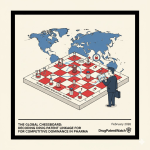
Introduction: The €1 Billion Chess Game – Why SPCs are the Endgame for European Generic Market Entry
In the high-stakes world of European pharmaceutical commerce, the launch of a generic or biosimilar drug is not a simple race to a patent’s 20-year finish line. It is a complex, multi-dimensional chess match where the final, decisive moves are played out in the arcane territory of the Supplementary Protection Certificate (SPC). For strategic planners, portfolio managers, and intellectual property counsel, understanding this landscape is not merely a legal formality; it is the central determinant of market entry, profitability, and competitive success. An SPC, by extending a product’s market exclusivity, represents the most valuable and fiercely contested barrier between an innovator’s blockbuster revenue stream and a generic’s market opportunity.
The economic stakes are staggering. A 2018 study by Copenhagen Economics for the European Commission found that for medicinal products where an SPC is the last form of protection to expire, it adds an average of 2.6 years of market exclusivity.1 This extension directly delays the entry of generic competition, which typically triggers an average price drop of around 50%.1 For a multi-billion-euro drug, each additional day of SPC protection translates into millions in revenue for the innovator, while simultaneously representing millions in deferred savings for Europe’s healthcare systems and a direct delay to the generic manufacturer’s return on investment.3 This inherent economic tension makes the SPC system one of the most litigious and strategically critical areas of pharmaceutical law.
The challenge for generic and biosimilar companies is compounded by the system’s complexity. The foundational legal text, Regulation (EC) No 469/2009, was drafted in an era of simpler, small-molecule drugs and has been stretched to its interpretive limits by the advent of complex biologics, combination therapies, and novel drug delivery systems.5 This has led to a fragmented landscape where national patent offices and courts across the European Union (EU) often arrive at divergent conclusions, creating a patchwork of legal uncertainty that can derail even the most carefully planned launch.9 As Michal Nitka, a senior executive at Teva Pharmaceuticals, notes, the generics industry operates under “unsustainable pressure,” making strategic clarity and precision in navigating these barriers more vital than ever.10
This report is designed to provide that clarity. It is a definitive strategic playbook for generic and biosimilar planners, transforming the legal complexities of the European SPC system into an actionable framework for competitive advantage. We will deconstruct the core regulations, analyze the landmark court decisions that have created crucial openings for challengers, and dissect real-world litigation case studies to extract replicable strategic lessons. From navigating the double-edged sword of the SPC Manufacturing Waiver to preparing for the seismic shifts of the forthcoming Unitary SPC system, this guide will equip you with the expert-level insights needed to turn information into market dominance.11 The European SPC system is a maze, but for the well-prepared, it is a maze with a clear path to victory.
Chapter 1: Deconstructing the SPC – The Legal Blueprint for Generic Planners
To effectively challenge an innovator’s extended monopoly, a generic planner must first understand the architecture of the fortress they intend to breach. The Supplementary Protection Certificate is a unique, sui generis intellectual property right, distinct from a patent but inextricably linked to it. Its legal framework, though contained in a relatively brief regulation, is layered with nuance and interpretive ambiguity that provides fertile ground for strategic challenges.
1.1 The Rationale: Balancing Innovation and Access
The foundational purpose of the SPC system is explicitly stated in the recitals of its governing regulation. The EU legislature recognized that the period between filing a patent for a new medicinal product and receiving the necessary Marketing Authorisation (MA) to sell it erodes the effective period of patent protection.5 This delay, consumed by mandatory and lengthy preclinical and clinical trials, can significantly shorten the 20-year patent term, making it “insufficient to cover the investment put into the research”.1 On average, it takes 12-13 years to bring a new medicine to market, meaning more than half of the standard patent term can be lost before a single sale is made.16
The SPC was therefore created as a compensatory mechanism, designed to restore a portion of this lost patent term to encourage continued pharmaceutical R&D within Europe and prevent research centers from relocating to jurisdictions with more favorable protection.6 The European Federation of Pharmaceutical Industries and Associations (EFPIA) describes these incentives as “the foundations on which innovation is built”.16
However, this pro-innovation rationale is perpetually balanced against the interests of public health and access to affordable medicines.17 The regulation acknowledges this tension by strictly limiting the scope and duration of the SPC. This core conflict—between rewarding costly innovation and ensuring the timely entry of cost-saving generics—is the philosophical underpinning of nearly every major SPC legal battle. For a generic challenger, the most effective legal arguments are often those that demonstrate how a particular SPC grant oversteps its intended compensatory purpose and becomes an unwarranted extension of a monopoly, thereby harming public health interests by delaying access to more affordable treatments.3
1.2 The Core Regulation: A Strategic Reading of (EC) No 469/2009
A deep understanding of the key articles of Regulation (EC) No 469/2009 is non-negotiable. For a generic planner, this is not an academic exercise; it is the process of identifying the precise legal levers that can be used to dismantle an opponent’s market exclusivity.
Article 1: The Definitions that Define the Battlefield
The regulation’s definitions are the building blocks of every legal argument.
‘Medicinal Product’: Broadly defined as any substance presented for treating or preventing disease in humans or animals.5
‘Product’: This is a critical definition. It means “the active ingredient or combination of active ingredients of a medicinal product”.19 The distinction between a single active ingredient and a combination is the legal fault line upon which landmark cases like Teva v. Gilead (Truvada) and the ongoing Janumet disputes are fought.
‘Basic Patent’: A patent that protects a ‘product’ as such, a process to obtain it, or an application of it.5 A single product can potentially be protected by multiple patents held by different entities, opening complex strategic questions about which patent can support a valid SPC.24
The inherent ambiguity in how these terms, drafted in 1992, apply to modern, complex medicines is a primary source of opportunity for generic challengers. The original drafters did not fully envision a world where a patent for active ingredient ‘A’ would be used to seek an SPC for a combination product ‘A+B’. This mismatch between the legal text and modern pharmacology is the fundamental weakness that skilled legal teams consistently exploit.
Article 3: The Four Conditions for Granting—A Challenger’s Checklist
Article 3 lays out the four cumulative conditions that must be met for an SPC to be granted. For a generic company, this article is a checklist of potential vulnerabilities. An SPC is invalid if it fails to meet even one of these conditions.
Article 3(a): The product is protected by a basic patent in force. This is the most heavily litigated clause and the subject of Chapter 2. The question of what “protected by” truly means has been the subject of numerous, landscape-altering CJEU rulings.
Article 3(b): A valid authorisation to place the product on the market as a medicinal product has been granted. The MA must be valid in the member state where the SPC is applied for.19 This can be a national MA or a centralized one from the European Medicines Agency (EMA).25
Article 3(c): The product has not already been the subject of a certificate. This condition is designed to prevent multiple SPCs for the same product. It is a key point of contention for combination drugs, where an innovator may already hold an SPC for one of the active ingredients as a monotherapy.18
Article 3(d): The authorisation referred to in point (b) is the first authorisation to place the product on the market as a medicinal product. This clause became a powerful tool for generics following the CJEU’s landmark Santen decision, which clarified that the “first” MA is the very first time an active ingredient was approved, irrespective of its formulation or therapeutic use.
Articles 4 & 5: The Narrow Scope of Protection
These articles establish a crucial limitation that every generic planner must understand. An SPC confers the same rights as the basic patent but is strictly confined to the specific ‘product’ (the active ingredient or combination) that was covered by the MA.5 This means that while the basic patent may have broad claims covering a whole class of compounds, the SPC’s protection is laser-focused on the single drug that went through the regulatory process. This narrow scope can create opportunities for generics to design around the SPC with related but distinct products that might have fallen under the original patent but are not covered by the SPC’s limited protection.19
1.3 Calculating the Clock: Duration, Expiry, and the Paediatric Extension
Accurately forecasting the expiry date of an SPC is a fundamental task in generic strategic planning. The calculation, dictated by Article 13, is a multi-step process with potential pitfalls.
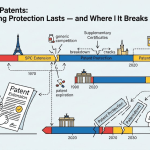
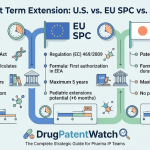
The duration of an SPC is calculated as the period elapsed between the date of the basic patent application filing and the date of the first MA granted anywhere in the European Economic Area (EEA), from which five years are subtracted.12 The result of this calculation is then capped at a maximum of five years.
The total period of market exclusivity conferred by the patent and the SPC together cannot exceed 15 years from the date of the first EEA MA.5
A critical point of diligence for generic planners is verifying the date of the first MA across the entire EEA (EU member states plus Iceland, Liechtenstein, and Norway). An innovator might base their SPC application on a later MA in a major market, but if an earlier MA exists in any other EEA country, that earlier date must be used for the calculation, potentially shortening the SPC’s term or invalidating it altogether if the filing deadline was missed.18
The Paediatric Extension: A Mandatory Six-Month Delay
A crucial complication to this timeline is the paediatric extension. Regulation (EC) No 1901/2006 provides a six-month extension to the term of an SPC as a reward for conducting studies on the medicinal product in children, in accordance with an agreed Paediatric Investigation Plan (PIP).17 This extends the maximum possible SPC duration to five and a half years and the total exclusivity cap to 15.5 years.19
For generic planners, this six-month period is a critical, and often unavoidable, delay that must be factored into all financial models and launch timelines. The extension is granted based on compliance with the agreed PIP, not on whether the results were positive or if the drug was ultimately approved for paediatric use.31 This means the reward is often granted even if the studies show the drug is not effective or safe in children.
Furthermore, the timing of the extension can create strategic uncertainty. Innovators must apply for the extension no later than two years before the SPC is due to expire, but the final confirmation can come much later.33 This creates a six-month window of ambiguity that can disrupt a meticulously planned generic launch. As the industry body Medicines for Europe has pointed out, a paediatric extension can even be granted while a generic manufacturer is already operating under an SPC manufacturing waiver, creating further legal and commercial confusion.34 Generic planners must therefore develop contingency plans, modeling scenarios both with and without the extension to ensure supply chain and marketing readiness for either eventuality.
Chapter 2: The Battleground of Interpretation – How CJEU Case Law Creates Openings for Generics
The SPC Regulation provides the blueprint, but the Court of Justice of the European Union (CJEU) is the ultimate architect of the European SPC landscape. The regulation’s text, drafted decades ago, is often ambiguous when applied to modern pharmaceuticals. This has led national courts across the EU to repeatedly refer questions to the CJEU for clarification. The resulting body of case law is not merely an academic footnote; it is a dynamic and evolving set of rules that has consistently created—and sometimes closed—strategic pathways for generic and biosimilar challengers. For any serious generic planner, monitoring and understanding this jurisprudence is paramount.
2.1 The CJEU: Supreme Arbiter and Source of Strategic Opportunity
The EU’s SPC system is fundamentally fragmented. Applications are filed and granted by national patent offices, and disputes are first heard in national courts.13 This inevitably leads to divergent interpretations of the same EU regulation. The German patent office might reject an SPC that its Spanish counterpart grants, leading to a patchwork of protection across the single market and significant legal uncertainty.9
The CJEU serves as the essential harmonizing force. Through the preliminary ruling procedure, national courts can ask the CJEU to provide a definitive interpretation of EU law. These rulings are binding on all national courts and have repeatedly reshaped the competitive landscape. A single CJEU judgment can invalidate hundreds of SPCs across Europe in one fell swoop, making it the most powerful tool in a generic challenger’s arsenal.
2.2 The “Protected by a Basic Patent” Conundrum (Article 3(a))
The requirement in Article 3(a) that the product be “protected by a basic patent in force” appears simple but is the most complex and litigated aspect of the entire regulation. For years, the debate raged over whether “protected by” simply meant that the product would infringe the patent’s claims. The CJEU has definitively rejected this simple “infringement test,” ruling that something more is required.38 The struggle to define that “something more” has produced two critical tests that form the bedrock of modern SPC challenges.
The Teva v. Gilead Two-Part Test
The landmark 2018 ruling in Teva v. Gilead (Case C-121/17), concerning the HIV combination drug Truvada®, provided the first clear, structured test for Article 3(a).38 The CJEU ruled that for a product to be considered “protected,” two cumulative conditions must be met:
The product (e.g., a combination of active ingredients) must necessarily, in the light of the description and drawings of the patent, fall under the invention covered by that patent.
Each of the active ingredients must be specifically identifiable, in the light of all the information disclosed by that patent, by a person skilled in the art at the patent’s filing or priority date.
This test provides a powerful framework for challenging SPCs for combination products where the underlying patent is primarily focused on only one of the components. In the Truvada case itself, Gilead’s patent disclosed and claimed tenofovir disoproxil (TD) but only vaguely referred to combinations with “other therapeutic ingredients,” without ever mentioning the second active, emtricitabine (FTC). The UK courts, applying the CJEU’s new test, found that while the combination might fall within the patent’s claims, FTC was not “specifically identifiable” from the patent’s disclosure. The SPC was therefore invalid.38 This ruling created a clear legal pathway for invalidating a whole class of SPCs based on tenuous links between a patent’s core invention and a later-developed combination product.
The Royalty Pharma “Independent Inventive Step” Corollary
Two years later, in Royalty Pharma (Case C-650/17), the CJEU added another crucial layer to the Article 3(a) analysis.41 The case concerned a patent for a class of compounds (DP-IV inhibitors) defined by their function. The specific drug, sitagliptin, fell within this functional class but was developed years after the patent was filed.
The Court ruled that a product is not protected by a basic patent if it was developed after the filing date of the patent application and required an independent inventive step. This decision is a direct strike against SPCs based on early, broad “genus” patents that claim a vast therapeutic territory, where the specific marketed drug (the “species”) is the product of a separate, later inventive process. For generic and biosimilar planners, this provides a potent argument against SPCs for drugs that are not explicitly disclosed in the basic patent and whose discovery required significant, non-obvious research that occurred after the patent was filed. The Paris Court of Appeal has already applied this logic to reject SPCs for monoclonal antibodies that were developed years after the filing of a broad functional patent.41
2.3 The “First Authorisation” Firewall (Article 3(d))
Just as the CJEU has narrowed the interpretation of Article 3(a), it has also provided definitive and pro-generic clarity on Article 3(d), which requires the MA supporting the SPC application to be the “first authorisation to place the product on the market.”
For a time, the CJEU’s 2012 decision in Neurim (C-130/11) had opened the door for innovators to obtain new SPCs for new therapeutic uses of previously approved active ingredients. This created significant uncertainty for generics, as it suggested a potential “evergreening” strategy where an innovator could perpetually extend exclusivity by finding new indications for an old drug.
This uncertainty was decisively ended in 2020 by the CJEU Grand Chamber’s ruling in Santen (C-673/18).19 The Court explicitly overturned
Neurim, ruling that an MA for a new therapeutic application of an active ingredient cannot be considered the “first authorisation” if that same active ingredient has already been placed on the market as a medicinal product for any other purpose.
The strategic impact of Santen cannot be overstated. It effectively closes the door on obtaining SPCs for drug repurposing or new formulations of existing drugs. This provides immense legal certainty for generic and biosimilar manufacturers, allowing them to plan launches with confidence that an innovator cannot obtain a new SPC based on a second or third medical use. Even after Brexit, UK courts have confirmed that the Santen decision is part of retained EU law and have applied it to reject SPC applications, demonstrating its enduring influence.43
Table: Landmark CJEU SPC Cases and Their Strategic Implications for Generics
To distill this complex legal history into a practical tool, the following table summarizes the key CJEU rulings and their direct, actionable takeaways for generic planners. This serves as a quick-reference guide for assessing the vulnerability of a target product’s SPC based on established legal precedent.
Case Name (CJEU Ref.)
Key Legal Question
CJEU Ruling (The “Test”)
Strategic Takeaway for Generics
Medeva (C-322/10)
Can an SPC be granted for a combination product if only one active is claimed in the patent?
An SPC can only be granted for active ingredients specified in the wording of the claims of the basic patent. A patent holder can obtain only one SPC per patent.
Confirmed the possibility of SPCs for combination products but established strict limits, setting the stage for future, more refined challenges.45
Teva v. Gilead (C-121/17)
When is a combination product “protected by” a basic patent for one of its components?
Established the two-part test: the product must fall under the “invention” covered by the patent, and each active ingredient must be “specifically identifiable” from the patent’s disclosure.
Provides the primary legal framework for invalidating SPCs for combination products where the patent does not explicitly disclose the combination as its core technical contribution.38
Royalty Pharma (C-650/17)
Can a product developed after the patent filing be “protected by” that patent?
No, if the product was developed after the patent’s filing date as a result of an “independent inventive step.”
A powerful tool to challenge SPCs based on early, broad “genus” patents when the specific marketed “species” was invented through a separate, later research program.41
Santen (C-673/18)
Can an MA for a new therapeutic use be the “first authorisation” if the active ingredient was previously authorised for another use?
No. The “first authorisation” under Article 3(d) is the very first time the active ingredient was placed on the market as a medicinal product in the EEA, regardless of its use or formulation.
Decisively shuts down SPCs for drug repurposing and new formulations of existing drugs, providing significant legal certainty and preventing a major “evergreening” strategy.19
Chapter 3: The Innovator’s Fortress vs. The Generic’s Siege Engine – Real-World SPC Litigation Case Studies
Theoretical legal principles and court rulings are valuable, but their true strategic importance is only revealed in the crucible of real-world commercial conflict. By dissecting pivotal SPC litigation battles, generic planners can move beyond understanding the law to mastering its application. These case studies are not just historical accounts; they are strategic blueprints, revealing the tactics, risks, and rewards of challenging an innovator’s last line of defense.
3.1 Case Study: The Truvada Takedown (Teva/Mylan/Lupin v. Gilead)
The battle over Gilead’s SPC for the HIV drug Truvada® stands as a masterclass in strategic litigation by the generics industry. It demonstrates how a coordinated, pan-European legal assault, aimed at clarifying a fundamental point of law, can dismantle a blockbuster’s extended monopoly.
The Target: Truvada® is a fixed-dose combination of two active ingredients: tenofovir disoproxil (TD) and emtricitabine (FTC). Gilead’s SPC was based on its European patent (EP 0 915 894), which disclosed and claimed TD specifically. However, the patent made only a vague, general reference to using TD in combination with “other therapeutic ingredients,” and crucially, did not mention emtricitabine at all.38 This presented a clear vulnerability under Article 3(a) of the SPC Regulation.
The Generic Strategy: Led by Teva, a consortium of generic companies launched coordinated invalidity actions in multiple European jurisdictions, including the UK. Their core argument was that the SPC was invalid because the combination of TD and FTC was not the actual “invention” protected by the basic patent.40 The strategy was not merely to win a national case but to persuade a national court—in this instance, the highly respected Patents Court of England and Wales—to refer the fundamental legal question to the CJEU. This was a calculated move to obtain a binding, EU-wide precedent that would resolve the ambiguity of Article 3(a) in their favor once and for all.40
The Outcome & Lessons: The strategy was a resounding success. The CJEU’s response to the UK court’s referral was the landmark ruling that established the two-part “Teva test” (discussed in Chapter 2). When the case returned to the UK, Mr Justice Arnold applied this new test and swiftly invalidated Gilead’s SPC.38 This decision was mirrored in other jurisdictions and opened the door for generic Truvada to enter the market years earlier than anticipated. The economic impact was immense; in France alone, the delayed entry of generics due to the SPC was projected to cost the healthcare system an additional €815 million.46 Strategic Blueprint: The Truvada case provides a replicable playbook for generic challengers:
Identify the Weakness: Target SPCs for combination products where the basic patent is clearly focused on only one component.
Coordinate the Attack: Launch parallel invalidity proceedings in key jurisdictions to apply maximum pressure and increase the likelihood of a CJEU referral.
Frame the Legal Question: Argue not just the specific facts, but the underlying legal principle, aiming to clarify the law in a way that benefits the entire generics industry.
Leverage the Precedent: Once a favorable CJEU ruling is secured, use it to rapidly knock down the remaining national SPCs.
3.2 Case Study: The Janumet Stalemate (MSD v. Teva/Viatris/Clonmel)
If Truvada represents a decisive victory, the ongoing, multi-jurisdictional war over the SPC for MSD’s diabetes drug Janumet® illustrates the frustrating and costly reality of Europe’s fragmented enforcement landscape. It is a cautionary tale about how even a strong legal case can lead to a protracted and uncertain commercial battle.
The Target: Janumet® is a combination of sitagliptin and metformin. MSD held a basic patent covering sitagliptin and had already been granted an SPC for sitagliptin as a monotherapy (marketed as Januvia®). It then obtained a second SPC from the same patent for the Janumet® combination.47
The Generic Strategy: Generic challengers, including Teva and Viatris (formerly Mylan), attacked the Janumet® SPC on two primary grounds: first, under Article 3(a), arguing the combination was not the core invention of the patent (similar to the Truvada case); and second, under Article 3(c), arguing that the “product” (sitagliptin) had already been the subject of the Januvia® SPC.47
The Outcome & Lessons: The results have been a study in contradiction.
Germany: The German Federal Patent Court invalidated the SPC, finding that the combination was not a separate, independent invention disclosed in the basic patent.47
France: In a surprising departure from its own previous case law in similar disputes, the Paris Court of Appeal upheld a preliminary injunction against the generic company, preventing a market launch.50
Ireland: The Irish High Court also granted an interlocutory injunction in favor of MSD, emphasizing the generic company’s failure to proactively “clear the way” by challenging the SPC’s validity earlier.51
This judicial disarray has forced the national supreme courts of Finland and Ireland to refer the core legal questions to the CJEU for a definitive ruling.53Strategic Blueprint: The Janumet stalemate offers critical lessons in risk management:
Expect Fragmentation: A win in one EU member state does not guarantee a win in another. Planners must budget for multiple, parallel, and potentially contradictory legal battles.
Country-Specific Tactics Matter: The legal culture and procedural rules of each country are critical. The Irish court’s focus on “clearing the way” highlights the need for early legal action, while the French court’s unpredictability suggests a more cautious approach may be warranted there.
The CJEU is the Endgame: Ultimately, for contentious, pan-European issues, all roads lead to the CJEU. The outcome of the pending referrals will likely decide the fate of Janumet® generics across the entire bloc.
3.3 Case Study: The Humira Patent Thicket & Biosimilar Entry
The story of Humira® (adalimumab), the world’s best-selling drug for many years, provides an essential comparative lesson for biosimilar developers. It starkly illustrates the differences between the US and European IP landscapes and underscores why SPC strategy is the lynchpin of biosimilar success in Europe.
The Target: AbbVie’s blockbuster monoclonal antibody, Humira®. In the United States, AbbVie constructed a formidable “patent thicket” of over 247 patent applications, covering not just the molecule but also formulations, methods of use, and manufacturing processes. This strategy successfully delayed US biosimilar entry until 2023, nearly seven years after the primary patent expired.56
The Biosimilar Strategy in Europe: The European patent system is less tolerant of such “evergreening” strategies. AbbVie filed significantly fewer patents in Europe (around 76), and many of its attempts to secure secondary patents after 2002 were withdrawn, refused, or successfully revoked by challengers.57 Consequently, the primary patents and their associated SPCs became the final and most critical barrier to entry. Biosimilar manufacturers like Amgen, Sandoz, and Samsung Bioepis focused their legal firepower on these core IP rights.
The Outcome & Lessons: Following the expiry of the primary SPC in October 2018, multiple adalimumab biosimilars launched across Europe.58 The commercial impact was immediate and dramatic. Competition drove down the price of adalimumab by as much as 80-90% in some national markets, and Humira’s international revenues plummeted by over 31% in 2019 alone.58 Strategic Blueprint: The Humira case provides a clear message for biosimilar planners:
Europe is a Different Battlefield: Unlike the US, where a war of attrition against a “patent thicket” is often necessary, the European strategy can be more focused. The basic patent and its SPC are the key targets.
SPC Invalidation is the Goal: A successful challenge to the validity of an SPC, or simply waiting for its expiry, can unlock the entire European market in a way that defeating a single secondary patent in the US cannot.
First-Mover Advantage is Critical: The rapid price erosion following biosimilar entry in Europe means that being one of the first to launch is commercially vital. This places immense pressure on having a clear, accurate forecast of the SPC expiry date and a robust legal strategy to ensure freedom to operate on that date.62
Chapter 4: The Manufacturing Waiver – A Double-Edged Sword for EU Generics
In 2019, the EU introduced a significant amendment to the SPC system: the manufacturing and stockpiling waiver. Enacted through Regulation (EU) 2019/933, it was designed as a pro-competitive tool to bolster the EU’s domestic generic and biosimilar manufacturing base.17 However, in practice, the waiver has become a complex and legally contentious instrument, a double-edged sword that offers significant commercial opportunities but is fraught with litigation risk and uncertainty.
4.1 The Promise: Leveling the Global Playing Field
Prior to the waiver, an EU-based manufacturer was at a significant competitive disadvantage. While an SPC was in force in Europe, a competitor in India or China could freely manufacture a generic version of the drug for export to countries where patent protection had already expired or never existed. The EU manufacturer was barred from doing so, effectively forcing the delocalization of manufacturing outside of Europe to serve global markets.63
The waiver was created to remedy this by establishing two key exceptions to SPC protection 25:
The Export Waiver: Allows an EU-based company to manufacture an SPC-protected product at any time during the SPC’s term, for the exclusive purpose of exporting it to a non-EU/EEA country.
The Stockpiling Waiver: Allows an EU-based company to manufacture an SPC-protected product during the final six months of the SPC’s term for the purpose of storing it, with the intent to launch it on the EU market on “Day 1” after the SPC expires.
The intended economic benefits were clear: to encourage investment in European manufacturing, create jobs, and ensure that EU-based generics could compete effectively both globally and for a Day 1 launch at home.16
4.2 The Pitfalls: Notification, Due Diligence, and Ambiguity
To balance the rights of generic makers with those of SPC holders, the regulation imposes several safeguards and procedural hurdles that manufacturers must clear to use the waiver. These requirements, detailed in Article 5 of the amended regulation, have become a major source of friction and litigation.
A manufacturer intending to use the waiver must, no later than three months before commencing production:
Notify the Authorities: Inform the national patent office in the member state of manufacture using a standard form.25
Notify the SPC Holder: Directly inform the SPC holder of their intent, providing the same information.25
Apply a Logo: Affix a specific “EU export” logo to the outer packaging of products intended for export to prevent diversion back into the EU market.16
Perform Due Diligence: Inform all parties in their supply chain (e.g., contract manufacturers, distributors) that the product is under the waiver and cannot be sold within the EU until the SPC expires.67
While intended as safeguards, industry bodies like Medicines for Europe have strongly criticized these provisions. They argue that the notification requirements force the disclosure of highly sensitive commercial information—such as manufacturing locations and supply chain partners—to a direct competitor (the SPC holder), opening the door to strategic or “abusive” litigation designed to disrupt or delay the generic’s plans.34
4.3 The Litigation Minefield: Conflicting National Interpretations
The most significant challenge in deploying the waiver is the profound legal uncertainty created by conflicting interpretations in national courts. The vague wording of the regulation has allowed for starkly different judicial philosophies to emerge, meaning the legality of a manufacturer’s actions can depend entirely on which side of a national border their factory is located.
The Restrictive German View: In a pivotal 2023 case involving Janssen’s Stelara® SPC and the biosimilar developer Formycon, the Munich District Court adopted an extremely narrow and restrictive interpretation of the waiver’s requirements.63 The court ruled that Formycon’s notification was deficient because it did not include a marketing authorisation number for the intended country of export. It further suggested that the waiver only applies if the export is to a country where the product is completely free of any relevant IP rights. These requirements are not explicitly stated in the regulation. This ruling was heavily condemned by Medicines for Europe as being “in conflict with the objectives of the SPC manufacturing waiver” and fundamentally misunderstanding its purpose.73
The Pragmatic Dutch and Belgian View: In stark contrast, courts in the Netherlands and Belgium have taken a much broader, purpose-driven approach.63 They have ruled that the regulation does not require the inclusion of an MA number in the notification, nor does it require the manufacturer to verify the patent status in the export destination. These courts reasoned that the purpose of the waiver is to level the playing field, and imposing such extra-legal hurdles would defeat that purpose. The responsibility for enforcing patents in a third country, they argued, lies with the patent holder in that country, not with the EU-based generic manufacturer.
This judicial schism creates an untenable situation for companies planning a pan-European manufacturing strategy. An action that is perfectly legal in the Netherlands could result in a preliminary injunction and significant damages in Germany. This uncertainty has a chilling effect on investment and, as reported by industry surveys, has led some companies to abandon plans to manufacture in the EU altogether, directly undermining the waiver’s primary goal.34
This legal ambiguity has effectively transformed the waiver from a simple competitive tool into a complex risk management exercise. The commercial value and viability of the waiver are now dictated less by the text of the EU regulation and more by the evolving case law of the specific member state chosen for manufacturing.
Furthermore, a structural flaw in the waiver’s design significantly disadvantages biosimilar manufacturers. The six-month stockpiling window is often insufficient for the production of complex biologics, which can have manufacturing timelines exceeding 12 months.34 A non-EU competitor, unconstrained by this limitation, can begin manufacturing well over a year in advance to prepare for a Day 1 launch in Europe. The EU-based biosimilar maker, even when using the waiver, cannot. This critical flaw means that for many of the most valuable and complex medicines, the waiver fails to achieve its goal of promoting EU manufacturing for the European market, forcing companies to continue relying on non-EU facilities for their initial launch supply.
Chapter 5: The Strategic Playbook – Turning SPC Intelligence into Market Advantage
In the intricate and high-stakes environment of European generic drug launches, reactive strategies are doomed to fail. Success is not achieved by simply responding to an innovator’s SPC filing or waiting for a patent to expire. It is the result of a deliberate, proactive, and intelligence-driven approach that anticipates threats, identifies opportunities, and meticulously calculates risk long before a product launch is imminent. This chapter outlines the strategic playbook for transforming complex SPC data into a decisive commercial advantage.
5.1 The Intelligence Framework: Proactive Monitoring
The foundation of any robust SPC strategy is a comprehensive and continuous intelligence-gathering operation. Given the fragmented nature of the European system, this cannot be a passive or periodic activity. It requires a dedicated framework for actively monitoring multiple data streams across all key jurisdictions:
SPC Application Tracking: Systematically monitoring the patent office registers of all relevant EU member states for new SPC applications, their designated basic patents, and their claimed expiry dates.
Examination and Opposition Monitoring: Tracking the progress of SPC applications through national examination procedures, paying close attention to any third-party observations or formal oppositions filed by other generic competitors.
Litigation Intelligence: Actively monitoring national court dockets and legal news services for any new SPC validity challenges, infringement actions, or preliminary injunction proceedings. Crucially, this includes tracking referrals made by national courts to the CJEU, as these often signal a forthcoming shift in the legal landscape.
Innovator Portfolio Analysis: Continuously analyzing the patent portfolios of originator companies to identify potential secondary or formulation patents that could be designated as a “basic patent” for a future SPC application, creating unforeseen extensions of exclusivity.
This proactive framework allows a generic company to move from a defensive posture to an offensive one, identifying vulnerable SPCs and planning challenges years in advance, rather than scrambling to react when a launch is just months away.14
5.2 The Essential Toolkit: Leveraging Platforms like DrugPatentWatch
Executing such a comprehensive intelligence framework manually across 27+ jurisdictions is a Herculean task, prone to error and inefficiency. This is where specialized business intelligence platforms become indispensable strategic assets. Services like DrugPatentWatch are designed to solve the core problem of information fragmentation by aggregating vast, disparate datasets into a single, searchable, and analyzable platform.76
For a generic planner focused on the European SPC landscape, the value of such a tool is multifaceted:
Centralized Global Patent and SPC Data: These platforms provide integrated databases that track drug patents and their term extensions, including SPCs and paediatric extensions, across more than 130 countries.76 This allows a planner to see the complete global IP picture for a target drug, understand how the European SPC fits into the broader lifecycle, and identify potential export markets for the manufacturing waiver. One user praised the service for providing “Information you don´t find anywhere else”.76
Litigation and Competitor Tracking: A key feature is the ability to monitor ongoing patent and SPC litigation.76 This provides invaluable competitive intelligence. By seeing which other generic companies are filing challenges, planners can assess the likely level of competition upon market entry and adjust pricing and volume forecasts accordingly. It also allows them to “study failed patent challenges to develop a better strategy,” learning from the successes and failures of others before committing their own legal resources.76 As one user noted, the platform’s comprehensive results revealed “who potential competitors are and what they are planning based on not only their NDAs and patents, but also references to clinical trials”.76
Accurate Forecasting and Strategic Alerts: By consolidating data on basic patent expiry, SPC application status, calculated SPC expiry dates, and potential paediatric extensions, these tools enable the creation of more accurate and reliable launch timelines and financial models. Automated alerts for key events—such as the grant of an SPC, the filing of a lawsuit, or an approaching expiry date—ensure that strategic teams can react swiftly to changes in the market landscape.75
Ultimately, the core function of platforms like DrugPatentWatch is to provide the raw data and analytical tools necessary to “turn information into advantage”.15 They are the engine that powers the strategic playbook, enabling companies to make informed, data-driven decisions about portfolio selection, litigation strategy, and market entry timing.
5.3 The At-Risk Launch: A Calculated Gamble
One of the most consequential decisions a generic company can make is to launch a product “at-risk”—that is, before a blocking SPC has been formally invalidated by a court or has expired. This is a high-stakes gamble that pits the enormous commercial rewards of being the first generic on the market against the potentially catastrophic financial risk of an infringement ruling and damages.
A robust decision-making framework is essential to evaluate this gamble systematically. This framework should involve a cross-functional team of legal, commercial, and regulatory experts and should weigh several key factors:
Legal Risk Assessment: What is the probability of successfully invalidating the SPC? This requires a deep analysis of the SPC’s compliance with Article 3, viewed through the lens of the latest CJEU case law. Is it a combination product vulnerable to the Teva test? Is it based on a second medical use and therefore invalid under Santen?
Financial Risk Exposure: What are the potential damages if the at-risk launch fails and the SPC is upheld? This involves calculating the innovator’s lost profits during the period of infringement, which can run into the hundreds of millions for a blockbuster drug.
Commercial Opportunity: What is the value of a successful at-risk launch? This includes forecasting the revenue and market share that can be captured by being the first—and for a time, only—generic competitor. The price erosion that occurs with each subsequent generic entrant means the first-mover advantage is immense.14
Jurisdictional Factors: The risk-reward calculation must be made on a country-by-country basis. Launching at-risk in a jurisdiction with slow-moving courts might allow for a longer period of sales before an injunction is granted, while launching in a fast-moving, innovator-friendly jurisdiction like Germany carries a much higher immediate risk.
The at-risk launch is the “legal and commercial soul of the generic lifecycle”.15 It is not a decision to be taken lightly, but with a rigorous, intelligence-driven framework, it can be a powerful strategic weapon.
Table: European Country SPC Risk/Opportunity Matrix
To aid in strategic planning and resource allocation, this matrix provides a high-level summary of the SPC landscape in key European markets. It synthesizes the complex national differences in legal interpretation, judicial procedure, and market dynamics into a practical tool for prioritizing launch and litigation efforts.
Country
Market Size / Generic Uptake
SPC Granting Body Stance (Known Precedents)
Litigation Speed & Cost
Manufacturing Waiver Interpretation
Strategic Recommendation
Germany
High / High
Historically strict but meticulously follows CJEU precedent.
Very fast, relatively low cost. Bifurcated system (infringement and validity heard separately) can be complex.81
Highly Restrictive (Munich Court precedent is a major risk).63
High-reward market, but high legal risk for at-risk launches due to fast injunctions. Avoid for waiver-based manufacturing until legal interpretation is clarified.
United Kingdom
High / High
Closely follows pre-Brexit CJEU precedents (Teva, Santen).43 Well-developed body of case law provides legal predictability.
Moderate speed, high cost. A single court handles both infringement and validity.
Separate UK waiver legislation is in place but less litigated than in the EU.19
A primary target for “clearing the way” litigation due to legal certainty. A win here can have significant persuasive effect elsewhere.
France
Large / Moderate
Can be unpredictable. Courts have shown a willingness to diverge from previous national rulings while awaiting CJEU guidance.50
Slower than Germany, moderate cost.
Less developed case law.
High uncertainty makes it a riskier jurisdiction for first-wave launches. Often a “wait-and-see” market, launching after securing a win in a key country like the UK or Germany.
Netherlands
Moderate / High
Pragmatic, commercially-focused judiciary. Often willing to grant cross-border injunctions (“spider-in-the-web” actions).
Very fast and efficient.
Favorable / Broad (Rechtbank Den Haag precedent).63
A prime candidate for waiver-based manufacturing operations. Also a good venue for seeking early, favorable rulings that can influence proceedings elsewhere.
Spain
Large / Moderate
Generally follows CJEU rulings.
Slower and less costly than Northern European jurisdictions.
High number of waiver notifications filed, suggesting a favorable industrial environment.70
A key volume market. A strong candidate for waiver-based export manufacturing due to a large domestic production base.
Chapter 6: The Horizon – Navigating the Future of European SPCs
The European SPC landscape is not static. It is on the cusp of its most significant transformation since its inception, driven by the rollout of the Unitary Patent system and a comprehensive legislative overhaul proposed by the European Commission. For generic and biosimilar planners, these changes represent both profound new opportunities and significant new risks. Understanding the trajectory of this reform is essential for future-proofing any European market access strategy.
6.1 The Unitary Future: The Unitary Patent and Unitary SPC
The launch of the Unitary Patent and the Unified Patent Court (UPC) in 2023 began a new era for European patent litigation.9 To align with this new system, the European Commission has proposed the creation of a
Unitary SPC.11 This would be a single, unified SPC title that extends the protection of a Unitary Patent across all participating member states (currently 17, including Germany, France, and Italy).
This development presents a double-edged sword for generic challengers:
The Opportunity: Centralized Invalidation. The single greatest advantage of the new system is the ability to launch a single revocation action at the UPC that, if successful, could invalidate an SPC across most of the EU market in one proceeding.82 This offers a dramatic increase in efficiency and a massive reduction in cost compared to the current system of fighting dozens of parallel national lawsuits, as seen in the Janumet case. It transforms a war of attrition into a single, decisive battle.
The Risk: The “All Eggs in One Basket” Problem. The flip side of centralized enforcement is the risk of a single point of failure. If a generic company challenges a Unitary SPC at the UPC and loses, the SPC’s validity is confirmed across a vast economic territory, effectively slamming the door on an at-risk launch strategy.84 As one patent attorney noted, companies in the pharma arena, where single patents protect very high profits, are “nervous of the ‘all-eggs-in-one-basket’ nature of the unitary patent” and its associated SPC.84 The stakes of each legal challenge will be exponentially higher.
6.2 A New Battleground: Centralised Examination and Pre-Grant Opposition
Alongside the Unitary SPC, the reform package proposes a centralized examination procedure for all SPCs based on a European patent (whether unitary or a traditional “bundle”) and a centralized MA from the EMA.13 This procedure would be managed by the European Union Intellectual Property Office (EUIPO), with examination panels composed of EUIPO staff and experienced examiners from national patent offices.
The most strategically significant element of this new procedure for generics is the introduction of formal mechanisms for third-party challenges before an SPC is granted:
Third-Party Observations: Similar to the system at the European Patent Office, any third party will be able to submit observations during the examination phase, arguing why an SPC application fails to meet the legal requirements.11
Pre-Grant Opposition: A formal opposition procedure will be established, allowing competitors to challenge a positive examination opinion before the SPC is officially granted.11
These mechanisms represent a paradigm shift. They give generic and biosimilar companies a powerful, cost-effective, and low-risk opportunity to prevent a weak or invalid SPC from ever coming into force. Challenging an SPC application is far cheaper and less complex than launching full-scale invalidation litigation against a granted right in the UPC or national courts. This new front in the SPC battle will allow well-prepared generics to “weed out” weak applications early, increasing legal certainty for their future launch plans. Innovator groups, however, have raised concerns that these opposition procedures could be used tactically by generics to create procedural delays, even for legitimate SPC applications.13
6.3 The Bigger Picture: The EU Pharmaceutical Package
The SPC reforms do not exist in a vacuum. They are a key component of the EU’s broader and highly contentious pharmaceutical legislative package, which also proposes significant changes to other incentives, most notably the periods of regulatory data protection (RDP) and market protection.90 The Commission’s proposals aim to recalibrate the balance of incentives, potentially shortening the standard RDP period but offering extensions for launching in all member states or addressing unmet medical needs.
The EU is attempting a delicate balancing act across this entire legislative package. On one hand, the creation of a Unitary SPC and a centralized examination system offers a more streamlined and efficient process, which is ostensibly beneficial to innovators. On the other hand, the CJEU’s continued strict interpretation of SPC eligibility criteria, coupled with the introduction of powerful pre-grant opposition rights for generics, acts as a significant countervailing force.
The overarching policy direction appears to be a drive towards higher-quality, more legally robust SPCs. The future system is designed to make it more efficient to obtain and enforce a valid SPC, but also more efficient for competitors to challenge and eliminate an invalid one early in its lifecycle. The fragmented, uncertain landscape that allowed questionable SPCs to survive through sheer litigation cost and complexity is being deliberately dismantled.
6.4 Concluding Thoughts
The European SPC landscape is in a period of profound and dynamic evolution. The era of navigating a fragmented patchwork of national laws is drawing to a close, to be replaced by a more centralized, but no less contentious, system. For generic and biosimilar planners, the future will demand a dual focus. They must continue to master the substantive legal arguments forged in the CJEU—the Teva test, the Santen firewall—as these principles will remain the bedrock of any validity challenge. Simultaneously, they must develop new procedural expertise to leverage the opportunities and mitigate the risks of the new centralized examination, opposition, and litigation forums. Success will belong to those who combine deep legal-commercial integration with the strategic agility to adapt and thrive in this new, unified European battleground.
Key Takeaways
For the time-constrained executive, the strategic implications of this deep dive into the European SPC landscape can be distilled into the following critical takeaways:
SPCs are the Primary Hurdle: In Europe, the SPC is often the final and most commercially significant barrier to generic and biosimilar market entry. Unlike the US “patent thicket,” a successful SPC challenge in Europe can unlock the market immediately upon expiry of the basic patent.
CJEU Case Law is Your Arsenal: The Court of Justice of the EU has fundamentally narrowed SPC eligibility. The “Teva test” for combination products and the “Santen” ruling against second medical use SPCs are powerful, non-negotiable tools for invalidating weak certificates. A strategy that ignores these precedents is destined to fail.
Fragmentation Demands a Country-by-Country Strategy: Until the Unitary SPC system is fully implemented, Europe remains a patchwork of national jurisdictions with divergent court procedures and interpretations. A victory in one country does not guarantee success elsewhere. Launch and litigation strategies must be tailored to the specific risks and opportunities of each key market.
The Manufacturing Waiver is a Jurisdictional Minefield: The waiver offers a significant competitive advantage but is plagued by legal uncertainty. The restrictive interpretation by German courts versus the pragmatic approach in the Netherlands means the choice of manufacturing location is now a critical strategic decision with major legal and financial consequences.
Proactive Intelligence is Non-Negotiable: Success requires a continuous, proactive intelligence operation to monitor SPC filings, litigation, and competitor activity across Europe. Specialized platforms like DrugPatentWatch are essential tools for aggregating this fragmented data into actionable competitive insights.
The Future is Centralized: The upcoming Unitary SPC and centralized examination system will revolutionize the landscape. The key opportunity for generics will be the new pre-grant opposition mechanism—a powerful, cost-effective tool to eliminate weak SPCs before they are ever granted.
Legal and Commercial Strategy Must Be Integrated: Navigating the SPC maze is not solely a legal task. The decision to challenge an SPC, launch at-risk, or utilize the manufacturing waiver is a complex commercial calculation that requires seamless integration between IP, legal, regulatory, and business development teams.
Frequently Asked Questions (FAQ)
Q1: How can we challenge an SPC for a combination product if both active ingredients are mentioned in the patent claims?
A: This is a sophisticated question that goes to the heart of the CJEU’s evolving case law. Merely being mentioned in the claims is no longer sufficient. Following Teva v. Gilead, the first step is to assess if the combination itself is the core “technical contribution” or “invention” of the patent. If the patent’s description, examples, and inventive focus are clearly on discovering Active Ingredient A, and it only mentions that A can be combined with other known compounds like B, you can argue that the combination does not “fall under the invention” as required by the first part of the Teva test.
More recently, the CJEU’s 2024 decision in the joined Teva/Merck cases (concerning Janumet) introduced a new, more explicit “invention test.” The Court held that to obtain an SPC for a combination A+B based on a patent, it must be demonstrated that the combination itself is an invention claimed by that patent. It is not enough that the patent discloses the innovative ingredient A and separately discloses that it can be combined with B. This ruling makes it significantly more difficult for innovators to secure SPCs for combinations unless the patent provides clear evidence that the combination itself was a key part of the invention, for example by demonstrating a synergistic effect.
Q2: What are the first steps to take if we receive a warning letter from an SPC holder after filing a manufacturing waiver notification?
A: This situation requires a rapid and robust response, as it is often a precursor to a preliminary injunction application. The first steps should be:
Immediate Legal Engagement: Engage local legal counsel with demonstrated expertise in SPC litigation within the specific jurisdiction of manufacture. The legal interpretation is highly country-dependent.
Jurisdictional Compliance Review: Your counsel must immediately assess your notification and planned activities against the specific case law of that country. If you are manufacturing in Germany, for example, did your notification meet the strict requirements set out by the Munich court (e.g., regarding MA numbers)? If manufacturing in the Netherlands, is your position aligned with the more permissive local rulings?
Prepare a Robust Defense: Work with counsel to prepare a detailed legal response to the warning letter. This should assert full compliance with the regulation as interpreted in that jurisdiction, argue that your activities fall squarely within the waiver’s purpose, and frame any threatened litigation as the type of “abusive” or “frivolous” action that industry bodies like Medicines for Europe have warned against.
Assess the Risk of Injunction: Your legal team must provide a realistic assessment of the likelihood of an injunction being granted. This will inform your commercial decision on whether to proceed with manufacturing, pause production, or shift manufacturing to a more legally favorable jurisdiction if possible.
Q3: Is a UK SPC still influenced by CJEU case law post-Brexit?
A: Yes, very significantly. The EU (Withdrawal) Act 2018 incorporated a vast body of existing EU law into UK domestic law. This includes the SPC Regulation and the entire body of CJEU case law interpreting it that existed up to 31 December 2020. This “retained EU law” remains binding on all UK courts, with the exception of the Court of Appeal and the Supreme Court, which have the power to depart from it.
To date, the UK courts have shown very little appetite to diverge from established CJEU precedents on SPCs. For example, UK IPO hearing officers and courts have consistently applied the CJEU’s decision in Santen to reject SPC applications based on second medical uses. For generic planners, this means that for the foreseeable future, the legal tests established in landmark CJEU cases like Teva v. Gilead and Santen remain the primary and most reliable basis for assessing the validity of an SPC in the UK.
Q4: What is the biggest risk and biggest opportunity with the new Unitary SPC system?
A: They are two sides of the same coin: centralization.
Biggest Risk: The “Central Attack.” The most significant risk is the “all eggs in one basket” problem. A generic company could invest millions in a single, centralized invalidity action at the Unified Patent Court (UPC). If that action fails, the Unitary SPC’s validity is confirmed across all 17+ participating member states, effectively eliminating any possibility of a national at-risk launch strategy in Europe’s largest markets. A single loss has continent-wide consequences.
Biggest Opportunity: Centralized Invalidation and Pre-Grant Opposition. The greatest opportunity is the inverse. A single successful invalidity action at the UPC can provide freedom to operate across the entire territory, representing a massive, cost-effective victory compared to fighting dozens of costly and time-consuming national lawsuits. Even more impactful may be the new pre-grant opposition system. This provides a cheaper, lower-risk mechanism to challenge a weak SPC application before it is granted, potentially preventing the need for expensive litigation altogether and providing legal certainty much earlier in the planning process.
Q5: For a complex biosimilar, is the SPC manufacturing waiver’s stockpiling provision commercially useful?
A: In its current form, for many complex biosimilars, the stockpiling provision is commercially challenging and potentially unviable. The regulation limits manufacturing for the EU Day 1 launch to the final six months of the SPC term. However, the manufacturing process for a complex biologic—from cell line cultivation to finished product—can easily take 12 months or more. This creates a fundamental mismatch. A non-EU competitor can begin their full manufacturing cycle over a year in advance to ensure ample supply for a Day 1 launch across the EU. An EU-based manufacturer relying on the waiver cannot. They would either have to launch with limited supply or miss the Day 1 window, ceding critical first-mover advantage. This structural flaw is a key point of lobbying for the biosimilars industry, which argues for either an extension of the six-month period or a unified waiver without a distinction between export and stockpiling.
Supplementary protection certificates and their impact on access to medicines in Europe: case studies of sofosbuvir, trastuzumab and imatinib – PMC, accessed August 16, 2025, https://pmc.ncbi.nlm.nih.gov/articles/PMC6958714/