Russia’s Drug Machine: Inside the Industry That Rewired Itself Overnight
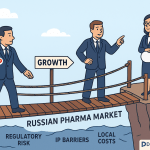
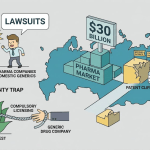
In 2024, the total value of the market reached 2.85 trillion roubles, up 10% year-on-year. That headline number would impress any industry observer. Then you convert it. In U.S. dollar terms, the market was essentially flat at $30.9 billion. In euros, it shrank by 0.5%. The rouble growth is real — driven by genuine volume increases, inflation, and state procurement surges — but it obscures a more complex and fascinating story about what is actually happening inside one of the world’s most rapidly transforming pharmaceutical sectors.
That transformation is the subject of this article. Russia’s pharmaceutical industry is not simply an emerging market story of catching up with the West. It is a deliberate, state-engineered pivot toward something that has no precise Western equivalent: a system in which industrial policy, intellectual property law, national security doctrine, and market competition all feed into the same machine. Understanding how that machine works — who built it, who benefits from it, and where it breaks down — is essential reading for anyone operating in global life sciences.
The data in this analysis draws on market research from DSM Group and IMARC Group, regulatory filings tracked through databases including DrugPatentWatch, corporate disclosures, and open-source intelligence from Russian commercial registries. Where expert perspectives are cited, they reflect documented public statements and published analyses from pharma industry professionals.
Part One: The Architecture of a Sovereign Drug Market
How the 1990s Created Today’s Obsession With Self-Sufficiency
To understand why Russia’s pharmaceutical bureaucracy behaves the way it does, you need to start in the rubble of the Soviet pharmaceutical system.
The USSR ran a vertically integrated drug production apparatus. It synthesized active pharmaceutical ingredients (APIs) domestically, operated manufacturing plants across the republics, and distributed medicines through a state monopoly. The system was clunky and chronically underinvested, but it was self-sufficient. When the Soviet Union dissolved in 1991, that apparatus collapsed within a few years. Western pharmaceutical companies flooded the newly opened Russian market with imported finished drugs, displacing domestic production almost entirely. By the late 1990s, Russia was importing roughly 70-80% of the medicines its citizens consumed. Domestic manufacturing capacity had hollowed out. The skills, the equipment, and the institutional knowledge were largely gone.
For the generation of policymakers and executives who lived through that collapse, the experience left a lasting imprint. The destruction of a sovereign industrial capability — and the subsequent dependence on foreign suppliers — became the foundational trauma that drives Russian pharmaceutical policy to this day. When you read government documents and ministerial speeches about “technological sovereignty” and “pharmaceutical security,” you are reading the language of people who watched an entire industry disappear in a decade and do not intend to let it happen again.
This is not peripheral context. It is the primary lens through which every regulatory decision, every procurement rule, and every intellectual property policy in modern Russian pharma must be read.
Pharma 2020, Then Pharma 2030: The Blueprint That Superseded Everything
Russia’s first systematic attempt to rebuild its domestic drug industry came in 2009, with the launch of the “Strategy for the Development of the Pharmaceutical Industry until 2020,” universally known as Pharma 2020. The strategy injected state subsidies into domestic manufacturers, established special economic zones for pharmaceutical production, and created preferential procurement rules that gave Russian-made drugs an advantage in government tenders.
Pharma 2020 worked, unevenly. Domestic production capacity did grow. A handful of companies — most notably Pharmstandard and BIOCAD — used the decade of state support to build manufacturing infrastructure that could compete with international standards. By 2020, the share of Russian-made medicines in the domestic commercial market had risen from roughly 20% to around 37% in monetary terms, and about 63% in volume terms (a gap that reflects the higher unit prices of patented foreign drugs).
But Pharma 2020 had a structural flaw: it focused on finished-dose manufacturing while leaving the API supply chain essentially untouched. Russian companies were assembling tablets and capsules, but the raw chemical substances inside them — the APIs that actually do the therapeutic work — were still coming almost entirely from China and India. By the early 2020s, Russian companies depended on imported APIs for an estimated 80-95% of their production. They had built factories without fixing the supply chain those factories depended on.
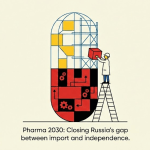
Pharma 2030, launched in 2020 and accelerated dramatically after the 2022 invasion of Ukraine, is an attempt to fix that flaw. The strategy sets explicit targets for API localization, mandates full-cycle domestic production for a growing list of essential medicines, and introduces a procurement scoring system that rewards manufacturers who can document Russian-sourced raw materials. The “Second Extra” rule — which gives preferential state contract access to companies producing both the API and the finished dose domestically — is the operational mechanism driving this push. <blockquote>”Russia’s Pharma 2030 strategy is less an economic development plan than it is an industrial security doctrine,” one European pharmaceutical consultant who works with Russian manufacturers told an industry conference in 2024. “The procurement incentives are the carrot, but the compulsory licensing threat is the stick.”</blockquote>
The strategy also sets international ambitions. By 2030, Russia aims to increase pharmaceutical exports to 900 billion roubles and position domestic companies as significant suppliers to non-Western markets, particularly in Africa, Southeast Asia, and Latin America.
Part Two: The Market in Numbers
Size, Segments, and the Dual-Track Structure
The Russian pharmaceutical market has two distinct operating environments that require separate analytical frameworks.
The commercial market — retail pharmacy sales to consumers — is the larger and more visible segment. It reached approximately 1.6 trillion roubles in 2024, representing growth of around 12% year-on-year. This market is demand-driven, shaped by consumer preferences, physician prescribing behavior, and the chronic disease burden of Russia’s aging, high-smoking population. Cardiovascular disease is the dominant therapeutic category; Bayer’s Xarelto (rivaroxaban) and Pfizer’s Elikvis (apixaban) held the top two sales positions in 2024, with revenues of 18.08 billion and 18.02 billion roubles respectively. Both are foreign-developed drugs, which tells you something important about where innovation still comes from in this market.
The government procurement market — drug purchases for hospitals, the state drug benefit program (DLO), and specialized treatment programs — functions by entirely different rules. Access to this segment requires navigating a complex web of procurement regulations, including the “Third Extra” rule (which disqualifies foreign suppliers from tenders where two or more Russian manufacturers bid), mandatory registration on the GRLS state drug registry, and increasingly, documentation of domestic production depth. This market is where state industrial policy has the most direct bite, and where domestic manufacturers have made their most decisive gains. <blockquote>According to DSM Group’s 2024 annual pharmaceutical market analysis, the top 10 distributors in Russia controlled 81.6% of total market distribution volume — up 4.1 percentage points from 2023, a concentration level that makes distributor relationships the single most critical commercial variable for any manufacturer operating in the country.</blockquote>
The Volume-Value Paradox
One data point deserves particular attention: in physical terms (number of packages sold), Russian-made drugs account for roughly 63% of the market. In monetary terms, they account for only 37%. That 26-percentage-point gap reflects the persistent reality that domestic manufacturers still dominate the low-cost generic segment, while high-value patented drugs — which drive disproportionate revenue — remain largely foreign.
This is the fundamental tension at the heart of Russian pharmaceutical policy. The government wants domestic manufacturers to move up the value chain — into biologics, biosimilars, and eventually original innovative drugs — precisely because that is where the margin lives. The companies that have successfully made that move, chiefly BIOCAD, are the ones that command the most attention from both state sponsors and international competitors.
Online Pharmacy: The Quietly Significant Growth Segment
One structural change that rarely makes Western headlines is the rapid growth of Russian pharmaceutical e-commerce. Online pharmacy sales were legalized during the COVID-19 pandemic, and the segment has grown explosively since. Estimates from industry trackers suggested the Russian pharmaceutical e-commerce market was on track to double between 2022 and 2024. Digital pharmacy platforms — including Apteka.ru, EAPTEKA, and others — have become meaningful distribution channels, particularly for OTC products and chronic disease medications. This creates new data flows, new pricing transparency, and new competitive dynamics that are reshaping how manufacturers think about consumer-facing strategy in Russia.
Part Three: The Domestic Champions
Pharmstandard: The Industrial Anchor
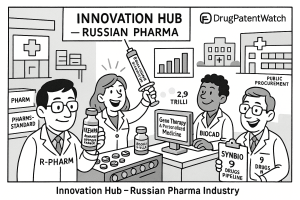
Pharmstandard is Russia’s largest domestic pharmaceutical manufacturer by sales. Founded in 2003, the company has grown through a combination of organic manufacturing expansion and strategic acquisitions into a company with over 400 products in its portfolio, an annual production capacity of 1.7 billion packages, and manufacturing sites in Kursk, Ufa, and Tomsk.
Its strategy is built on scale and government alignment rather than innovation. Pharmstandard’s commercial engine runs on high-volume production of essential medicines — drugs on the Vital and Essential Drugs (VED) list that the government mandates be available domestically. Its portfolio is heavily weighted toward cardiology, diabetes, neurology, and oncology generics. The margins are thin, but the volumes are enormous, and the government procurement contract pipeline provides revenue certainty that purely commercial companies lack.
What makes Pharmstandard strategically distinctive is its role as a localization platform for Western multinationals. When a foreign pharmaceutical company decides it wants “Made in Russia” status for its products — a designation increasingly required for meaningful access to government contracts — Pharmstandard is often the partner they call. The company contract-manufactures finished-dose products for multinationals including Pfizer and Sanofi, providing them with the regulatory documentation needed to qualify for Russian procurement preferences while keeping their own manufacturing assets outside Russia. This arrangement suits both sides: Pharmstandard gets contract revenue and technology exposure, the multinationals get market access without capital commitment in a politically volatile environment.
Pharmstandard also owns Otisipharm, one of Russia’s dominant OTC pharmaceutical brands. Otisipharm produces Arbidol (umifenovir), Russia’s most commercially successful antiviral, and Pentalgin, a top-selling analgesic. These consumer-facing brands give Pharmstandard significant cash flow independent of government procurement cycles.
The company holds a 20% stake in BIOCAD, acquired years ago in a transaction that also involved a Millhouse affiliate (connected to Roman Abramovich). That stake links the industrial scale of Pharmstandard’s manufacturing capacity to BIOCAD’s biotech pipeline — a combination that gives both companies strategic optionality the other would lack independently.
BIOCAD: The Biotech Flag-Bearer
BIOCAD occupies a unique position in Russian pharmaceutical history. Founded in 2001 with an explicit mandate for full-cycle drug development — from basic research through clinical trials, manufacturing, and commercialization — the company has become the clearest evidence that Russia can produce pharmaceutical innovation, not just pharmaceutical manufacturing.
The company’s facilities in Saint Petersburg (at the Neudorf Special Economic Zone in Strelna) and Moscow house research capabilities that were, by any objective measure, world-class at the time they were built. BIOCAD operates its own phage display antibody library, runs its own clinical development organization, and has pioneered the use of in silico structure-optimization algorithms for antibody engineering — capabilities that most Russian companies have never attempted.
Its commercial portfolio began with biosimilars of Roche’s oncology blockbusters — rituximab (MabThera), trastuzumab (Herceptin), and bevacizumab (Avastin) — which it launched in Russia at prices significantly below the originator drugs. Those biosimilars had a material clinical impact: they expanded patient access to cancer biologics in a country where many patients previously could not afford or access them. The biosimilar strategy also established BIOCAD’s manufacturing credentials and generated the revenue needed to fund its innovative pipeline.
That pipeline is where BIOCAD has placed its long-term bets. The company developed Ivlizi (divozilimab), an original molecule for multiple sclerosis treatment, making it one of very few Russian companies to have developed a first-in-class biologic. It also developed Elsira (levilimab) for cytokine release syndrome, which gained attention during the COVID-19 pandemic as a treatment for severe inflammatory complications. In oncology, BIOCAD has multiple checkpoint inhibitors in various stages of development, targeting PD-1 and other immune checkpoints — the same therapeutic mechanism as global blockbusters like Keytruda and Opdivo.
Internationally, BIOCAD has been building export capabilities, with a joint venture with Shanghai Pharmaceuticals Holding in China representing its most ambitious non-Russian market play. The company has also historically maintained research partnerships with European universities, though those relationships have become more complicated in the post-2022 environment.
BIOCAD’s political capital is considerable. The company has been an active participant in shaping Russian pharmaceutical regulation, most visibly as an advocate for the “Second Extra” rule, which — unsurprisingly — benefits companies with full-cycle domestic production capabilities like BIOCAD’s.
R-Pharm: The Government’s Strategic Partner
R-Pharm occupies a different niche: it is the company Russia calls when it needs a drug manufactured fast, at scale, for strategic purposes.
Founded by Alexey Repik, R-Pharm has built a business model around contract development and manufacturing for government priority programs, particularly in high-cost hospital drugs. Its portfolio covers oncology, HIV, hepatitis C, and autoimmune diseases — all areas where the government runs specialized drug access programs with dedicated procurement budgets.
During the COVID-19 pandemic, R-Pharm demonstrated its strategic manufacturing capabilities by producing the AstraZeneca vaccine under license for the Russian market. It also developed Coronavir (favipiravir), an antiviral drug that became one of Russia’s most-distributed COVID-19 treatments. The speed with which R-Pharm moved from licensing negotiations to full-scale production gave it significant credibility with the Ministry of Health and established a template for how it intends to operate going forward.
R-Pharm’s vulnerability is its historical dependence on Western technology licensing. Its business model has long relied on acquiring rights to foreign molecules and manufacturing them in Russia — a strategy that worked well when those licensing relationships were stable but faces pressure as Western companies scale back their Russian engagement. The company has responded by opening a dedicated research center in Moscow’s Technopolice SEZ in late 2024, a 2,100-square-meter facility focused on developing original and import-substituting drugs in oncology, sterile injectables, and inhalation formulations. It has also signed a research partnership with Siberian State Medical University in 2025. These moves signal a pivot toward internal R&D that will take years to produce clinical results.
Geropharm: Insulin Sovereignty
Geropharm is, in a narrow but strategically critical sense, Russia’s most successful pharmaceutical company of the past five years. Its focus is insulin — and its execution of a full-cycle domestic insulin production strategy has made it the dominant supplier to Russia’s government procurement program for diabetes treatment.
By 2024, Russian insulin manufacturers led by Geropharm captured 44% of government procurement contracts for insulin — a remarkable market share gain in a category previously dominated by Danish giant Novo Nordisk and French company Sanofi. Geropharm achieved this by doing what Pharma 2030 demands but few companies have actually managed: synthesizing the insulin substance domestically, rather than importing API from foreign suppliers and simply filling and finishing in Russia. That full-cycle capability gives Geropharm products a procurement scoring advantage that imported insulins cannot match under current Russian procurement rules.
The company’s international ambitions are equally notable. Geropharm has signed production agreements in Algeria and has been exporting to Venezuela — positioning itself explicitly as an alternative insulin supplier for non-Western markets that want to reduce dependence on European and American pharmaceutical companies. If that strategy succeeds at scale, Geropharm will have used Russian state procurement policy as a development subsidy to build a genuinely competitive global niche.
Promomed: The Opportunist
Promomed gained national prominence during the COVID-19 pandemic and has since built a reputation as the company most willing to move aggressively into market gaps left by Western pharmaceutical exits.
Its most visible recent move was the rapid commercialization of a semaglutide biosimilar — the active ingredient in Novo Nordisk’s blockbuster obesity and diabetes drug Ozempic. After Novo Nordisk suspended supplies to Russia in 2023, the Russian government issued a compulsory license to Geropharm and Promomed. Promomed’s version, branded Quincenta, reached the market with notable speed. Within a year, the two Russian generics effectively captured the entirety of the domestic semaglutide market volume — a textbook example of how compulsory licensing translates from legal mechanism to commercial reality in the Russian system.
Promomed’s portfolio focuses on endocrinology, antibiotics, and neurology. Its willingness to operate aggressively in legally and commercially ambiguous situations — the semaglutide compulsory license being the clearest example — makes it a useful proxy for how a segment of Russian pharma thinks about intellectual property: as an obstacle to be managed through legal mechanisms, not an external constraint to be deferred to.
OTCPharm: The Branded Consumer Giant
OTCPharm rounds out the domestic champion picture on the consumer side. The company is among the top five domestic pharmaceutical companies by revenue and has achieved its position through branded OTC success rather than prescription drug manufacturing. Its portfolio includes Arbidol (also sold under the Pharmstandard umbrella via Otisipharm) and Pentalgin — two of Russia’s most recognized consumer health brands.
OTCPharm’s strength is marketing and distribution depth in the retail pharmacy channel. It has less exposure to government procurement risk and less dependence on foreign API supply chains than prescription drug manufacturers. In an environment of significant uncertainty, that combination of consumer brand equity and procurement independence represents a defensible competitive position.
Part Four: The Patent Landscape
How Russia’s IP System Actually Works
Russia is a member of the World Intellectual Property Organization and a signatory to the TRIPS Agreement, which means its intellectual property framework formally aligns with international norms. In practice, the application of those norms has become increasingly selective and context-dependent.
Russian pharmaceutical patents are registered and administered through Rospatent (the Federal Service for Intellectual Property). Patent terms run for 20 years from the filing date, with supplementary protection certificates (SPC equivalents) available for certain drug innovations. The GRLS (State Register of Medicines) serves as the primary database for approved drugs, and patent linkage — the formal connection between drug approval and patent status — is less robust in Russia than in the U.S. or EU systems. This means that generic manufacturers can sometimes register a drug with the health authorities without the patent holder being automatically notified, a gap that creates opportunities for at-risk generic launches.
Monitoring Russian patent filings is a specialized task that requires access to Rospatent records alongside international patent databases. Tools like DrugPatentWatch help researchers track where molecules have patent protection, when that protection expires, and what new filings from both domestic and foreign companies suggest about R&D pipelines. For companies trying to understand their competitive exposure in Russia — either as patent holders watching for generic threats or as generic companies watching for patent expirations to target — that kind of systematic IP intelligence is no longer optional.
The “Third Extra” Rule: Procurement as Industrial Policy
The most consequential IP-adjacent rule in Russian pharmaceutical procurement is not technically an intellectual property regulation at all. The “Third Extra” rule governs government tender eligibility. When two or more Russian manufacturers (including locally manufacturing subsidiaries of foreign companies) submit bids for a government drug contract, all purely imported products from that tender are automatically disqualified. The third competitor, in other words, is excluded.
The practical effect of this rule is profound. It means that any foreign pharmaceutical company without Russian manufacturing — either its own facilities or a contract manufacturing arrangement — cannot reliably access the government procurement market, regardless of patent status. This is particularly significant for the drugs on Russia’s Vital and Essential Drugs list, where government procurement is the dominant purchasing channel.
The rule has driven a wave of localization investments and contract manufacturing deals. Companies that once sold finished imported drugs into Russia have been forced to choose: establish or fund Russian production, or accept exclusion from the state market. Pharmstandard has been the primary beneficiary of this dynamic, collecting contract manufacturing business from multinationals that want to maintain their procurement eligibility.
The “Second Extra” Rule: Rewarding Full Vertical Integration
Building on the Third Extra framework, the Second Extra rule creates a second tier of procurement preference. When at least two manufacturers can document full-cycle Russian production — meaning both the API and the finished dose are made domestically — companies that can only document finished-dose localization are themselves disqualified, regardless of their Russian manufacturing status.
This rule targets the structural weakness Pharma 2020 left unaddressed: the dependence on imported APIs. It creates a direct financial incentive for companies to push localization beyond the finishing stage and into chemical synthesis. BIOCAD, as the company that most vocally advocated for this rule, is also the company best positioned to benefit from it — no coincidence.
The cumulative effect of these procurement rules is a tiered market access system in which the depth of Russian production determines the quality of government contract access. Foreign companies importing finished drugs are at the bottom. Foreign companies manufacturing finished doses in Russia are in the middle. Russian companies manufacturing full-cycle domestically are at the top. This hierarchy is not merely stated in policy documents; it is operationalized through scoring systems in actual tender evaluations.
Compulsory Licensing: The Legal Weapon Russia Actually Uses
Article 1360 of Russia’s Civil Code allows the government to authorize the use of a patented invention without the patent holder’s consent in cases of “extreme necessity” related to the security and defense of the state, environmental protection, or citizens’ health. This is Russia’s compulsory licensing mechanism, and it has gone from a theoretical legal provision to an active policy tool.
The most high-profile recent application involves semaglutide. After Novo Nordisk suspended supplies of Ozempic to Russia in 2023, the Russian government issued a compulsory license to Geropharm and Promomed. The Russian Supreme Court upheld the license in 2025, ruling that the withdrawal of the original drug constituted a direct threat to public health, satisfying the “extreme necessity” criterion. Novo Nordisk is entitled to compensation under the license terms, though the rate and payment history are not fully public.
The semaglutide case was not an isolated event. It followed an earlier compulsory license for the antiretroviral drug dolutegravir (a ViiV Healthcare product), issued in 2017, and represents part of a pattern in which Russia treats compulsory licensing as a legitimate policy tool for ensuring drug access — or, less charitably, as a mechanism for facilitating domestic genericization of foreign blockbusters when commercial relationships break down.
For patent holders, this creates a particular kind of strategic calculation. Maintaining supply to Russia — even in a market where margins are compressed by procurement rules and currency risk — may be preferable to suspension of supply, which triggers the “extreme necessity” justification for compulsory licensing. Novo Nordisk’s experience suggests that exit is not a cost-free option.
Patent Disputes in Russian Courts: The AstraZeneca-Axelpharm Case
A 2024-2025 patent dispute between AstraZeneca and domestic generic company Axelpharm illustrates the multi-front nature of intellectual property battles in Russia.
After Axelpharm registered a generic version of an AstraZeneca-patented drug, AstraZeneca pursued two simultaneous legal strategies: a standard patent infringement lawsuit and a complaint to the Federal Antimonopoly Service (FAS) alleging that Axelpharm’s at-risk launch constituted “unfair competition.” The FAS ruled in AstraZeneca’s favor in November 2024, imposed a substantial fine on Axelpharm, and ordered it to cease sales. Axelpharm challenged the ruling in court, and in May 2025, the Arbitration Court of Moscow overturned the FAS decision — finding that the antimonopoly service had failed to establish adequate evidence of infringement, had not properly demonstrated competitive overlap, and had misapplied the relevant law.
The case makes two things clear. First, patent disputes in Russia are not purely legal events fought in patent courts; they intersect with competition law, antimonopoly regulation, and state industrial policy in ways that create genuine strategic uncertainty for both sides. Second, the outcomes are not predetermined in favor of Russian domestic companies — but the litigation environment is complex enough that even a “win” for a foreign patent holder requires navigating multiple agencies and court systems simultaneously.
Part Five: Innovation Pipelines and the Biosimilar Economy
Why Biosimilars Are Russia’s Dominant Innovation Strategy
The language of “innovation” gets used loosely in discussions of the Russian pharmaceutical industry. Most of what domestic companies produce is not innovative in the Western pharmaceutical sense — it is either generic small-molecule reproduction or biosimilar development. But it is worth understanding why biosimilars specifically have become the dominant innovation strategy for the most ambitious Russian companies, because the logic is not simply about cost.
Biosimilars — large-molecule drugs that are highly similar to already-approved reference biologics — require genuine scientific and manufacturing sophistication to develop. You cannot simply copy a protein the way you can copy a small-molecule chemical compound. The development process involves cell line development, fermentation optimization, analytical characterization, and comparability studies that demand real biotech expertise. For Russian companies like BIOCAD, building biosimilar programs was a credible way to develop the scientific capabilities needed for original drug development — using reference molecules as a technical benchmark while building internal know-how.
The commercial logic also works. Russia’s largest-selling foreign drugs in therapeutic categories like oncology and rheumatology are biologics. Trastuzumab, rituximab, bevacizumab, adalimumab — these are expensive, widely prescribed drugs where a domestic biosimilar that can win government procurement contracts through the Third Extra rule represents an enormous revenue opportunity. BIOCAD’s biosimilar for rituximab (Acellbia) has been commercially dominant in Russian oncology procurement for years.
The biosimilar route also provides a pathway to export markets. Several Russian biosimilars have been filed for registration in countries outside Russia — including in the EU, where the EMA has reviewed at least one BIOCAD biosimilar submission. The technical standards required for Western market approval force Russian developers to build quality systems and data packages that are internationally competitive, not just domestically acceptable.
Original Molecules: What Russia Has Actually Developed
Beyond biosimilars, a small number of Russian pharmaceutical companies have developed genuinely original drugs — molecules not derived from existing approved therapies. The list is short but meaningful.
BIOCAD’s Ivlizi (divozilimab) is the clearest example. It is a monoclonal antibody targeting CD20, developed for relapsing-remitting multiple sclerosis, and represents an original molecular entity rather than a copy of an existing drug. BIOCAD designed the molecule internally, conducted its own clinical program, and brought it to Russian approval. The drug is positioned to compete with Biogen’s natalizumab and Roche’s ocrelizumab in the MS market — both products that are either unavailable or less accessible in Russia following Western companies’ partial exits.
BIOCAD’s Elsira (levilimab), a monoclonal antibody targeting the interleukin-6 receptor, is another original molecule. It was developed initially for rheumatoid arthritis and gained prominence during COVID-19 as a treatment for cytokine storm syndrome in severe cases — a use for which it was approved on an accelerated basis in Russia.
R-Pharm’s Coronavir (favipiravir), while not a newly invented molecule — favipiravir was originally developed by Japanese company Fujifilm Toyama Chemical — was developed into a Russian-approved antiviral formulation through R-Pharm’s localization and clinical work during the pandemic. Its commercial significance has faded post-COVID, but its development demonstrated Russia’s capacity to rapidly operationalize a therapeutic under emergency conditions.
Pharmasyntez, a Siberian manufacturer, has built a less publicized but commercially significant pipeline of generics targeting HIV antiretrovirals and tuberculosis drugs — categories that matter enormously for Russia’s public health burden and its government specialty drug procurement programs.
The Oncology Priority
Oncology is the therapeutic area where Russia’s domestic pharmaceutical innovation ambitions are most concentrated and where the state procurement stakes are highest. Cancer treatment costs are enormous, cancer incidence in Russia is high, and the drugs involved — checkpoint inhibitors, targeted therapies, ADCs — are among the most expensive in global medicine.
The Russian government has made cancer treatment a national priority under the “Health System” national project. That means dedicated procurement funding, which means companies that can supply oncology drugs domestically have access to one of the largest and most reliably funded purchasing pools in Russian healthcare.
BIOCAD has built what may be Russia’s most ambitious original oncology pipeline. Its PD-1 inhibitor, BCD-100 (prolgolimab), has completed clinical trials and received Russian approval for melanoma, non-small-cell lung cancer, and cervical cancer. If positioned correctly in global oncology terms, prolgolimab’s mechanism is exactly what the market wants — the same checkpoint immunotherapy approach as Keytruda (pembrolizumab) and Opdivo (nivolumab). Whether it can reach quality and efficacy documentation standards that enable registration outside Russia remains the critical open question.
R-Pharm and its academic research partner, the Pushchino Scientific Center, are also pursuing an antitumor drug development program, announced in 2025. The scope and timeline of that program are not fully disclosed, but the institutional partnership model — combining commercial manufacturing infrastructure with academic research networks — mirrors the approach that worked for BIOCAD a decade ago.
The Sputnik V Vaccine: What the COVID Experience Revealed
No discussion of Russian pharmaceutical innovation is complete without Sputnik V. Developed by the Gamaleya National Research Center and launched in August 2020 — before Phase 3 trial completion — Sputnik V became both a genuine scientific achievement and a geopolitical instrument.
The vaccine uses a dual-adenoviral vector platform (two different adenovirus vectors for the first and second doses) that is genuinely novel. The Lancet published peer-reviewed Phase 3 efficacy data in February 2021 showing 91.6% efficacy against symptomatic COVID-19, a result that was credible and widely cited. Sputnik V was subsequently registered in more than 70 countries, primarily in Africa, Latin America, and parts of Asia.
What Sputnik V revealed about Russian pharmaceutical infrastructure was as important as the vaccine itself. Russia demonstrated the ability to move from concept to large-scale production at a speed that surprised Western observers. R-Pharm was among the manufacturers that scaled up production for both domestic and export supply. The manufacturing network that supported Sputnik V is the same network that Russian authorities are now directing toward other domestic production priorities.
The Sputnik V experience also revealed the limits of Russian pharmaceutical soft power. Several EU member states that provisionally ordered Sputnik V never received deliveries at promised volumes. Regulatory approval by the EMA was applied for but never completed, partly due to manufacturing inspection complications. The vaccine’s international trajectory became entangled with geopolitics in ways that constrained its commercial potential. Russia’s pharmaceutical export ambitions for the post-2022 period will have to contend with those credibility questions.
Part Six: The Foreign Pharmaceutical Companies Still in Russia
Who Stayed, Who Scaled Back, and Who Left
The post-2022 period produced a wide spectrum of responses from Western pharmaceutical companies operating in Russia, and it is worth being precise about what actually happened rather than accepting the simplistic framing of a mass Western exit.
A small number of companies did exit or near-exit Russia entirely. Abbott suspended several operations. Eli Lilly stopped supply of some non-essential products. But the dominant pattern was not exit — it was “scale back without leaving.” Most major Western pharmaceutical companies continued supplying essential medicines to Russia while halting new investment, new clinical trial enrollment, and new product launches. The stated logic: patients who depend on life-saving medications should not bear the consequences of geopolitical decisions made by governments.
Bayer, Novartis, and AstraZeneca remained among the top three pharmaceutical companies in Russia by revenue through 2024 — a remarkable fact given the geopolitical context. Pfizer continued to supply Elikvis (apixaban), Russia’s second-best-selling drug. Sanofi maintained its insulin supply relationship even as Novo Nordisk suspended theirs. The choices companies made were driven by product-by-product decisions about essentiality, IP risk, reputational exposure, and contract obligations.
The companies that stayed have faced a progressively more difficult operating environment. Price controls on VED-list drugs mean that many essential medicines are sold at regulated prices that no longer cover input costs when rouble-denominated, particularly as foreign currency costs for imported APIs have risen. Companies that stay are effectively making a long-term bet that the business relationship can eventually normalize, while absorbing near-term financial pressure.
The Localization Calculation
For companies that want to maintain meaningful access to Russian government procurement — not just continued presence in the commercial retail market — localization decisions have become unavoidable. The procurement preference rules described earlier mean that the choice is not simply “stay or go” but “stay with what level of manufacturing commitment.”
Sanofi has invested in Russian manufacturing capacity. Pfizer has worked with Pharmstandard on finished-dose contract manufacturing for some products. Servier, the French privately held pharmaceutical company, has operated a Russian subsidiary and invested in Russian manufacturing, with a localized production strategy that predates the current geopolitical period. These companies have made explicit calculations that the Russian market is large enough — even under current conditions — to justify the operational and reputational complexity of deep localization.
The companies that have struggled most are those in the middle: large enough that their Russian revenue matters to global earnings, but without the manufacturing depth to defend their procurement access under the Second and Third Extra rules. They face a choice between increased capital commitment in a high-risk environment and gradual market share erosion as domestic manufacturers take procurement contracts they cannot compete for.
Part Seven: The API Problem — Russia’s Structural Vulnerability
Why 95% Import Dependency is an Existential Risk
Estimates from multiple industry sources place Russian pharmaceutical companies’ dependence on imported APIs at between 80% and 95% of total production requirements. The precise figure varies by product category — it is lower for some older, simpler chemical entities and higher for complex biologics — but the aggregate picture is stark: Russian drug manufacturing is overwhelmingly dependent on raw material supply chains that run through China and India, two countries with their own geopolitical trajectories and industrial policies.
This API dependency is the most significant structural vulnerability in Russia’s pharmaceutical sovereignty project. You can build factories domestically and train a domestic workforce, but if the chemical substance inside your drug comes from a Wuhan or Hyderabad API plant, your supply chain security is only as good as that geopolitical relationship. The COVID-19 pandemic demonstrated globally how vulnerable API supply chains can be; Russia’s extreme concentration made the risk particularly acute.
Pharma 2030 addresses this directly, with targets for domestic API synthesis investment and procurement rules that reward it. The VEB.RF Development Institute announced plans in 2023-2024 to allocate more than 180 billion roubles to support manufacturers of approximately 200 API substances used in vital and essential medicines — a significant investment, though the timeline for translating capital into operating synthesis capacity is measured in years, not months.
India Steps In
India has emerged as Russia’s dominant pharmaceutical supplier following the partial Western retreat. Indian exports of finished medicines to Russia increased by approximately 3% in 2023, reaching nearly 294 million boxes — a volume relationship that makes India the largest single-country pharmaceutical supplier to Russia by package volume. Indian government representatives at the 2024 St. Petersburg Economic Forum highlighted collaboration opportunities in API manufacturing and R&D, with discussions about Indian companies establishing local production in Russia.
Twenty Indian pharmaceutical companies were engaged in active negotiations with Russian counterparts as of mid-2024, covering local production of APIs, injectables, and essential medicines. For Indian companies, Russia represents a market where Western competition has reduced, procurement volumes are significant, and the regulatory environment — while complex — offers a relatively clear path for manufacturers with existing WHO GMP certification.
The India-Russia pharmaceutical axis is likely to deepen. Both governments have explicitly prioritized it, Russian procurement rules create structural demand for it, and Indian pharmaceutical companies are large enough and technically capable enough to deliver at scale.
Part Eight: Clinical Trials After the Western Exit
What Happens When Your CRO Ecosystem Fractures
Before 2022, Russia was a meaningful clinical trial destination for Western pharmaceutical companies. The country offered a large patient population, high prevalence of the cardiovascular and oncological conditions that are the most common targets for drug development, competitive site costs, and a regulatory framework that, while not seamlessly integrated with EU or U.S. systems, was workable for global trial programs. Major Contract Research Organizations — ICON, IQVIA, Covance — operated substantial Russian practices.
The post-2022 period disrupted this ecosystem significantly. Most Western sponsors stopped enrolling new Russian sites in global trials. Several large CROs reduced or ended their Russian operations. The regulatory complexity of running trials that involve Russian patient data under GDPR-relevant frameworks, combined with the impossibility of standard international banking and financial transfers, made the practical operation of global-standard trials in Russia extremely difficult.
The Russian response has been to build domestic clinical trial infrastructure that can support Russian drug development independently of Western CRO networks. Several domestic CROs have grown their capacity. Academic medical centers — Sechenov University, which has a clinical research partnership with R-Pharm, and others — have expanded their trial operations. The regulatory agency, Roszdravnadzor, has maintained approval processes for domestically sponsored trials.
The practical consequence is a bifurcation of the clinical evidence base. Russian drugs approved after 2022 will increasingly be approved on the basis of clinical data generated in Russia, primarily in Russian patients. That data package may not meet EMA or FDA standards — not necessarily because the science is inferior, but because the comparators, endpoints, and statistical frameworks may differ from what Western regulators require. This will create a long-term challenge for Russian companies that aspire to international registration, and it means the quality of evidence supporting Russian drug approvals may become increasingly opaque to international observers.
Part Nine: The Regulatory Environment
Roszdravnadzor and the GRLS
Russia’s pharmaceutical regulatory structure has two primary components. Roszdravnadzor (the Federal Service for Surveillance in Healthcare) is the regulatory authority responsible for licensing pharmaceutical companies, inspecting manufacturing facilities, approving drugs for market, and conducting post-market surveillance. The GRLS (State Register of Medicines) is the official database of approved drugs, the essential gateway through which any drug must pass before it can be legally sold in Russia.
The GRLS is publicly accessible and contains approval dates, formulation data, and manufacturer information for all registered drugs. It does not contain patent linkage information — the connection between a drug’s registration and any patents covering it — in the robust way that the U.S. Orange Book does. This gap creates the at-risk generic launch opportunities described in the AstraZeneca-Axelpharm case.
Roszdravnadzor’s inspection capacity for manufacturing facilities has been an ongoing area of development. The agency has been expanding its Good Manufacturing Practice (GMP) inspection program to cover both domestic facilities and, in theory, foreign manufacturing sites supplying the Russian market. In practice, inspection resources have been stretched by the expansion of domestic manufacturing and the complexity of international coordination in the current geopolitical environment.
Price Controls on Essential Medicines
A significant and often underappreciated regulatory constraint is the price control system for VED-list drugs. The government sets maximum retail and wholesale prices for drugs on the VED list, and those prices are updated infrequently relative to the pace of rouble depreciation and input cost inflation. For manufacturers selling VED-list drugs, this means that real margins can compress significantly when the rouble weakens, because prices are rouble-denominated but input costs — particularly for imported APIs — are effectively dollar or euro denominated.
This has created financial pressure for both domestic and foreign manufacturers of essential medicines. Some companies have sought to renegotiate price ceilings with the Ministry of Health; others have responded by focusing investment on non-VED products where prices are market-determined. The tension between the government’s goal of affordable access to essential medicines and the commercial sustainability of domestic manufacturing is real and unresolved.
Part Ten: The Competitive Intelligence Picture
Using Patent Data to Map the Competitive Landscape
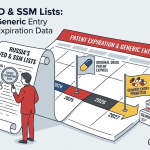
For analysts, investors, and competing pharmaceutical companies trying to understand the Russian market, patent intelligence is one of the most valuable and underutilized data sources available. Rospatent filings reveal R&D priorities years before clinical trial announcements or product launches. Expiration dates on existing patents identify the window during which domestic generic or biosimilar companies are likely to file competing registrations. The activity of specific companies in specific therapeutic areas provides a forward-looking view of competitive dynamics.
DrugPatentWatch tracks pharmaceutical patent data across multiple jurisdictions, including Russia, and can be used to identify which molecules held by foreign companies are approaching patent expiry in Russia, what new molecules BIOCAD or other domestic innovators have filed patents on, and where the “white spaces” exist in Russian pharmaceutical IP — therapeutic areas with limited domestic patent activity that might represent partnership or licensing opportunities for foreign companies with differentiated technology.
For generic and biosimilar companies globally, the Russian patent landscape is particularly interesting because of the speed with which compulsory licensing or at-risk generic strategies can be deployed in a market where the regulatory and legal environment is, in some ways, more permissive than Western markets. Tracking when key blockbuster patents expire in Russia — and how domestic companies are positioning their registration timelines relative to those expirations — is a material competitive intelligence function.
The “Hit List” in Plain Sight
The top-selling foreign drugs in Russia constitute what amounts to a public roadmap for domestic pharmaceutical strategy. Of the ten best-selling drugs in Russia in 2024, eight were produced by foreign companies — including Xarelto (rivaroxaban), Elikvis (apixaban), Nurofen (ibuprofen), and Detralex (diosmin/hesperidin). These products are not merely commercially significant; they are targets. The Russian government’s import substitution policy, combined with the procurement preference rules, creates sustained pressure on each of these foreign products to either localize or face domestic competition.
For the foreign companies that make them, the strategic question is not if domestic challengers will emerge but when and through which mechanism — generic registration, biosimilar filing, compulsory licensing, or a combination of all three deployed sequentially. Companies that have not already war-gamed these scenarios for their Russian portfolios are operating with insufficient situational awareness.
Part Eleven: The Export Ambition
Russia as a Pharmaceutical Exporter to the Global South
One of the more ambitious and less-examined elements of Russia’s pharmaceutical strategy is the explicit goal of becoming a major exporter to non-Western markets. The Pharma 2030 strategy sets a target of 900 billion roubles in annual pharmaceutical exports by 2030 — a target that would require a dramatic expansion from current export volumes.
The strategic logic is coherent. If Russia can demonstrate full-cycle manufacturing capability for complex drugs, it can position itself as an alternative supplier to countries in Africa, Latin America, and Southeast Asia that want to reduce dependence on Western pharmaceutical companies. Geropharm’s insulin exports to Venezuela and its production agreement in Algeria are early examples of this model in action. The Sputnik V vaccine established a global footprint — however imperfect — that showed Russian biological manufacturing could reach markets in more than 70 countries.
The obstacles are significant. Russian pharmaceutical manufacturing has historically not been certified under WHO prequalification standards that many international procurement agencies require. GMP inspection credibility with non-Russian regulators has been inconsistent. The reputational complications of the post-2022 geopolitical environment affect the receptiveness of some markets to Russian supply. These are real barriers, but they are not insurmountable for a well-capitalized company with a decade-long commitment to export market development.
BIOCAD’s China joint venture is the most strategically interesting export play. The partnership with Shanghai Pharmaceuticals Holding — one of China’s largest pharmaceutical distributors — gives BIOCAD potential access to the world’s second-largest pharmaceutical market through a channel that does not depend on Western regulatory acceptance. If even a fraction of BIOCAD’s oncology biosimilar portfolio can be commercialized in China at competitive prices, the commercial scale implications dwarf anything achievable in Russia alone.
Part Twelve: What This Market Looks Like to an Investor
The Risk-Return Profile in Plain Terms
Investing in Russian pharmaceutical assets — whether in domestic manufacturers or in debt instruments tied to the sector — carries risks that are genuinely exceptional relative to other emerging markets. Currency convertibility is constrained. Sanctions compliance creates significant legal exposure for Western investors. Corporate governance standards at domestic companies vary enormously. The rule of law as it applies to property rights and commercial contracts is not reliable in the way investors in developed markets expect.
Against those risks, the growth story is real. The market grew 10% in local currency terms in 2024. State procurement budgets for pharmaceutical spending continue to expand. The structural shift away from foreign drug suppliers toward domestic manufacturers creates secular tailwinds for the best-positioned Russian companies that will run for years. And the valuations at which domestic pharma assets have traded — for those with the ability and legal standing to access them — have reflected the risk discount without fully pricing in the growth optionality.
For non-Russian investors, the more practical investment expression of the Russian pharmaceutical growth story may be through companies that serve Russia’s pharmaceutical supply chain without operating inside Russia — Indian API manufacturers expanding their Russian sales, Chinese contract manufacturers growing Russian business, or global equipment companies supplying pharmaceutical production technology to Russian plant expansion projects.
The Indian and Chinese Pharmaceutical Angles
India’s pharmaceutical sector is the clearest indirect beneficiary of Russian pharmaceutical market dynamics. As Western pharmaceutical companies reduced their Russian engagement, Indian companies expanded theirs. Sun Pharma, Dr. Reddy’s Laboratories, Cipla, and Lupin all have established Russian distribution relationships. The government-level pharmaceutical partnership discussions at St. Petersburg and elsewhere signal sustained political support for that trade relationship.
For Indian companies, Russia is a market where their generics face fewer Western competitors than in most other global markets, where their pricing is competitive against both imported Western drugs and domestically produced Russian generics, and where growing government pharmaceutical budgets provide procurement opportunities across a range of therapeutic categories.
Chinese pharmaceutical companies are more quietly present but increasingly active, particularly in API supply relationships and in biosimilar technology transfer discussions with Russian partners.
Key Takeaways
The rouble-dollar divergence is the first thing to understand. Russia’s pharmaceutical market grew 10% in local currency terms in 2024, but remained flat in USD terms. Every financial analysis of this market that does not account for this divergence is incomplete.
State procurement rules are not background context — they are the primary competitive mechanism. The Third Extra and Second Extra procurement rules determine which companies win government contracts. Understanding them is prerequisite to understanding the competitive landscape.
Four domestic companies drive the industry’s strategic direction. Pharmstandard (scale and localization partnerships), BIOCAD (biotech innovation), Geropharm (insulin sovereignty), and Promomed (aggressive genericization) each represent a different model for competing in the post-Western-retreat environment.
Compulsory licensing is an active tool, not a theoretical one. The semaglutide case confirmed that Russia will use Article 1360 when foreign companies withdraw supply of commercially significant drugs. This has direct implications for how foreign companies calculate the cost of Russia market exit.
API dependency is the industry’s structural weakness. Domestic manufacturing depth is growing, but the 80-95% dependence on Chinese and Indian APIs means that Russia’s pharmaceutical sovereignty project is incomplete, and will remain so for at least another decade under realistic investment timelines.
India is the most important foreign actor in Russian pharma right now. Having surpassed Western countries as Russia’s top pharmaceutical supplier, India’s pharmaceutical companies are positioned to deepen that relationship — and track that relationship through patent and trade data provides the clearest forward-looking signal of market evolution.
Patent intelligence is underused as a strategic tool in this market. Whether you are a foreign company protecting your intellectual property in Russia, a domestic company targeting expiring patents for generic development, or an analyst mapping competitive dynamics, systematic tracking of Russian patent filings and expirations through resources like DrugPatentWatch provides insight that is not available from market share data alone.
The export ambition is real but unproven at scale. Russia’s 900-billion-rouble pharmaceutical export target for 2030 represents a significant ambition. Geropharm’s Latin American moves and BIOCAD’s China JV are the most credible early evidence that it is more than a policy aspiration.
Frequently Asked Questions
Q: Are Russian pharmaceutical companies genuinely innovative, or just generic manufacturers with better political connections?
A: The honest answer is: both, and the distinction matters depending on which company you are looking at. Pharmstandard is a sophisticated generic and contract manufacturer, not an innovator in the Western pharmaceutical sense. BIOCAD is a genuine biotech company with original molecule development capabilities — Ivlizi (divozilimab) and Elsira (levilimab) are not generic copies of existing drugs. Geropharm is innovative in process terms: it built full-cycle insulin synthesis capability from scratch, which is technically demanding even if the insulin molecule itself is not new. The industry contains a genuine spectrum of capabilities, and analysts who treat all Russian pharmaceutical companies as functionally equivalent are missing material differences in competitive positioning.
Q: What happens to foreign pharmaceutical companies’ patent rights when Russia issues a compulsory license?
A: The patent right itself is not extinguished — it continues to exist. What the compulsory license does is authorize a domestic manufacturer to use the patent without the holder’s consent, in exchange for compensation set by the government. The compensation rate is typically a percentage of the licensee’s revenue from the licensed product, and patent holders have the right to challenge the rate (and the license itself) in Russian courts. In the Ozempic/semaglutide case, Novo Nordisk is entitled to compensation from Geropharm and Promomed, though the commercial significance of that compensation relative to the Russian revenue Novo Nordisk was generating before it withdrew supply is a separate calculation. The practical implication for patent holders is that withdrawal from the Russian market does not eliminate IP risk — it may actually trigger the legal mechanism that most directly undermines their patent position.
Q: How does the Russian pharmaceutical regulatory process compare to the FDA or EMA in terms of drug approval standards?
A: The formal regulatory framework in Russia has been developed with reference to international standards, and Roszdravnadzor has made sustained efforts to align with ICH (International Council for Harmonisation) guidelines. In practice, drug approvals in Russia can occur on the basis of data packages that would not satisfy FDA or EMA requirements — particularly for drugs reviewed under accelerated or emergency procedures. The clinical trial data required for Russian approval may involve smaller patient populations, shorter follow-up periods, or non-standard comparators compared to what Western regulators would demand. This has two implications: Russian-approved drugs can reach patients faster than they would in Western markets (which can be beneficial), and the evidence base supporting Russian approvals may be harder for Western regulators to evaluate if a company later seeks international registration. For drugs that aspire to global markets, Russian approval is not a substitute for the more rigorous Western processes.
Q: How is the distribution system structured, and what does it mean for companies trying to enter or expand in the Russian market?
A: The distribution sector is highly concentrated. The top 10 distributors — including Puls, Protek, and Katren — control approximately 81.6% of the market, up from 77.5% the previous year. This level of concentration means that a manufacturer without established relationships with two or three of those leading distributors has extremely limited practical reach. The distributors operate extensive cold-chain and logistics networks across Russia’s eleven time zones, and their infrastructure is genuinely hard to replicate. For foreign companies, the distributor relationship is usually the first commercial decision — and often the most consequential one — when entering the Russian market. For domestic companies, control over distribution access is a competitive moat that the leading distributors guard carefully.
Q: What is the most plausible long-term scenario for the structure of the Russian pharmaceutical market over the next decade?
A: The most plausible scenario involves continued domestic market share gains by Russian manufacturers in government procurement, sustained foreign company presence in the higher-value commercial retail segment, and a gradual growth of Russian pharmaceutical exports to non-Western markets. The structural shift away from import dependency will be slower than Pharma 2030 targets suggest, because API synthesis capacity cannot be built at the speed that political timelines demand, and because quality systems adequate for export to regulated markets take years to develop. The companies best positioned for the next decade are those — like BIOCAD and Geropharm — that have invested in genuine technical capability rather than purely regulatory arbitrage. The companies most exposed are those that depend on continued access to Western technology licensing and have not built independent R&D pipelines. Within ten years, Russian pharmaceutical exports will likely be a meaningful global factor in markets across Africa and Southeast Asia, even if they remain minimal in the EU and U.S. markets.
Data and market figures sourced from DSM Group’s 2024 Russian Pharmaceutical Market Report, IMARC Group, Alpha Research & Marketing, and patent intelligence resources including DrugPatentWatch. Corporate pipeline data reflects publicly available disclosures and peer-reviewed publications as of early 2025.